Sony has released a firmware update for the SLT-a77 II, its 24MP semi-pro APS-C camera. Firmware 2.00 claims improved autofocus speed in all light conditions, but notably a 2.5x improvement in low light. Support for XAVC-S full HD video recording is also added. Read more
Tag: Sony
-
Adobe releases Camera Raw 8.7.1 with Sony a7 II support
Adobe Camera Raw and DNG Converter 8.7.1 final releases are now available, adding support for the Sony Alpha 7 II and a handful of lens profiles. A bug related to chromatic aberration with the Samsung NX1 has also been addressed in this update. Read more
-
Sony World Photography Awards judges revealed as deadline for entries nears
The World Photography Organization has announced its judges for the 2015 Sony World Photography Awards. Photo editors from major publications around the world make up the judging committee. The competition is open to youth, amateurs and pros alike and is accepting entries until early January. The organization has also released a selection of standout submissions. Read more
-
9 December, 2014 – Sony A7 MKII Hands-On Report
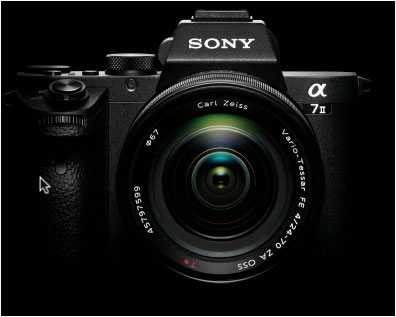
Some companies (you know who I mean) are slow, stodgy, conservative and cautious. None of these adjectives can be applied to Sony. They are impetious, aggressive, innovative and overall risk takers. If they screw up, as they sometimes do, they simply brush themselves off and forge ahead. With the recently introduced Sony A7 MKII we see a continuing evolution of what was once the NEX brand and is now just Sony’s Alpha brand using the new full frame FE mount.
I have had a week to work with the new MKII. With its redesigned body, in-body stabilization and superior autofocus this is the best 7 series camera yet, and one of the most interesting new cameras of 2014. I already have one on order.
Read my report here.
-
Sony Alpha 7 II real-world sample gallery posted
A production-ready Sony Alpha 7 II just landed in our office and we wasted no time getting together some real-world samples. Sony’s follow-up to the a7 comes with a 24MP full-frame CMOS sensor with 5-axis sensor-shift image stabilization. Its Hybrid AF system claims to be 30% faster and 1.5x better at tracking compared to its predecessor, and boasts a number of design refinements. See gallery
-
Sony A6000 Mirrorless Camera Review and Example Images
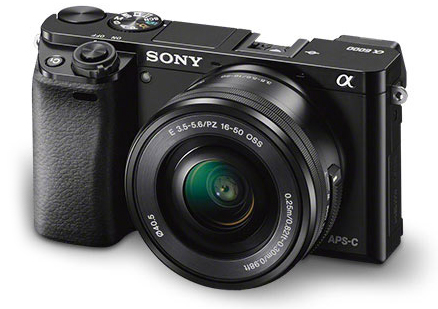
If the Sony A7R is a champion heavyweight in its prime, the Sony A6000 is the scrappy younger brother with a leaner frame, faster feet and a few tricks up its sleeve that big brother hasn’t bothered to learn.
Having spent almost a year with the A7R as my main camera, I’ve become very familiar with the current Sony Alpha system, so I hit the ground running with the A6000. Here is my Sony A6000 review along with a load of example images from my most recent road trip.

For this shot I used my Canon 24-105mm with the hated Metabones Adapter.
Sporting a 24.3 Megapixels APS-C sensor, this mirrorless camera crams a lot of horsepower into a tiny little box and the E-Mount (like the A7R) means you have some nice Sony/Zeiss glass to choose from. You can also use an adapter for the E-Mount which will allow you to use a wide variety of lenses. If you already own some nice Leica, Nikon, or Canon glass for APS-C cameras, you can throw those on the A6000 with the right adapter.
The Price is Right
For just under $ 800 you can walk away with the Sony A6000 and the 16-50mm kit lens, or get the body only for around $ 600. For image quality like this in a tiny package that boasts a lot of versatility, that’s a keen price. When you compare it to the likes of the full frame A7R and the A7S, it’s a total bargain.
Image Quality
Lets face it, Sony are the world leaders when it comes to image sensors and they know how to get the most out of them. While you won’t get ultra low noise, or A7R-like sharpness out of the A6000, you’ll certainly get great image quality and enough sharpness to suite most requirements. This sensor has the same ability to pull up shadow detail like the A7R (although with more noise than its counterpart), while keeping the file sizes at a much more manageable, yet very print-worthy level.

This shot was made with the E PZ 16-50mm F3.5-5.6 OSS kit lens
Faster Focus
One of the main selling features of the A6000 is its super fast hybrid autofocus and focus tracking. While these are features I would rarely use, I can see the attraction for sport, wildlife shooters and parents hoping to capture images of their kids at play. With a burst rate of 11 fps, you’ll have a good chance of catching those golden moments.
Small Form Factor
I actually prefer the feel of the A6000 to the A7R. This camera is clearly all about being small, lightweight, and discreet. The A7R was designed to take advantage of big wide angle and telephoto lenses so it never felt big enough. The A6000 however, feels exactly right for its purpose and for me, that is to get the best image quality out of the smallest package possible.
With the 16-50mm kit lens this camera looks and feels wonderfully miniature. As more premium E-mount lenses become available from Sony/Ziess you’ll be able to get much better image quality but still retain that perfect small form factor. I doubt the prices of that premium glass will be small though.

The 16-50mm Kit Lens
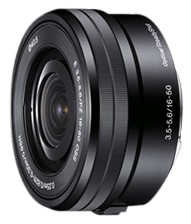
I often find that kit lenses get a bad rap. They are deliberately made to feel shabby next to their more deluxe siblings, but if you know how to squeeze the best out of your glass you’ll be able to get some decent image quality from the 16-50mm.
The sharpest aperture was f/8 with a very noticeable drop in image quality when you select wider or narrower apertures. Sadly there is a very noticeable edge vignette even at f/8, which I thought very shabby of Sony. It’s not a great lens at this price but if you’re prepared to do a bit of tweaking in post, you’ll achieve some decent shots. The main challenge with this budget lens is getting tight focus with the pathetic focus ring of misery.
OSS – Optical Steady Shot
Apparently, image stabilization is performed inside the Sony lenses that have this feature but enabling/disabling the OSS has to be done in the menu. I much prefer a switch on the lens to turn this feature on and off.
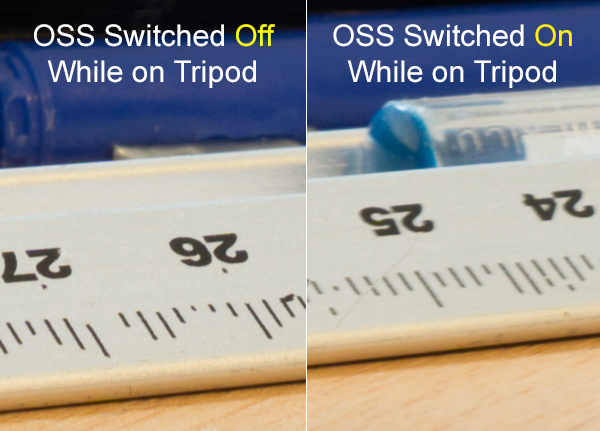
If you plan on shooting on a tripod you’ll want OSS switched OFF. It’s really only any use for hand held shots. Here’s an example of the OSS on and off while used on a tripod. You can see that the numbers on the ruler look much sharper with OSS switched OFF. You’ll find the same results of most cameras that have some form of image stabilization.
Video Quality
While the A6000 records superior video to the A7R, it’s actually not as good as the video quality you can get with the even cheaper A5100 mirrorless camera which boasts the XVID codec. You’ve got to wonder what Sony is playing at with these silly configurations. I’m sure it would have been a small thing to include XVID video recording on the A6000 but Sony in their wisdom decided to forego it to make the A5100 more attractive.
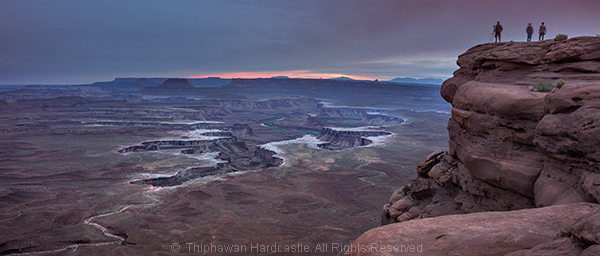
The Sony A5100 as an Alternative
The one thing that stopped me from choosing the A5100 over the A6000 was the lack of dedicated buttons and dials for controlling your settings. Although it has the exact same 24.3 MP sensor, the A5100 is even smaller than the A6000 and that means you’re forced to dig into the menu system in order to play with your settings. This would have resulted in me having a full blown frustration tantrum on a mountaintop and launching the A51000 off a cliff, so I chose the A6000 due to its two dials and three customizable buttons, way more user friendly but man I miss that XVID codec.
The Viewfinder of Mediocrity
If you’re switching from DSLR to a Sony Mirrorless, be prepared to be completely underwhelmed by the horrifically pixelated joke of an electronic viewfinder. DSLR users will look through that thing and feel that there is no chance their image will turn out well. Don’t be dismayed. Just use the viewfinder to set your focus and view your settings but don’t for one second think that your lovely RAW file will remotely resemble the grainy atrocity on display through that poxy peephole.
Apparently the viewfinder on the RX1 is infinitely better, but at almost $ 2800 it should be. If you can live with the lame EVF of the A6000 which is the same as on the much more expensive A7R, you’ll be fine. It took me a bit of getting used to when I switched from DSLR but once you’ve seen those gorgeous RAW files, you’ll come around.
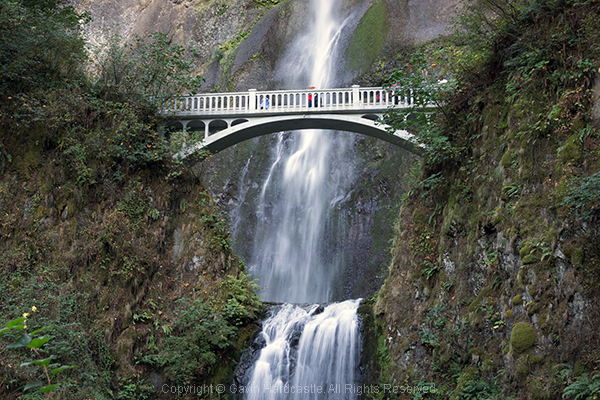
Hot Shoe Accessories for the Sony A6000
Flash fanatics will be delighted to learn that the A6000 has a multi-interface hot shoe slot on the top of the camera. This is also great for videographers who want to add the external mic. Sadly there are no software audio level controls when recording video on the A6000 and that is a MAJOR let down. Again, Sony could have included that software which is available on the A7R but in their wisdom, decided not to.
Apps for the Sony A6000
Like all of the current alpha range, the A6000 allows you to install Sony apps for extended functionality (and cost). The Time Lapse app had an update a few months ago that has made it much more usable. Other apps include remote control, star trails and a bunch of other awful ideas I’ll never bother to download or use.

Built-in Flash
The A6000 does have a built in flash that pops up dramatically. You can even angle the flash to point up at the ceiling to bounce the light.
Tilt Screen
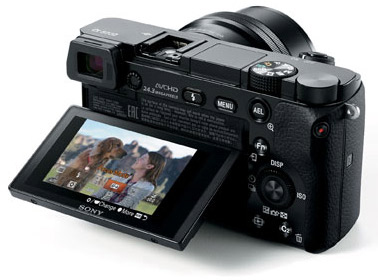
Like the A7, A7R and A7s, the A6000 has a tilt screen which you can angle for low or high shots and still be able to view the screen comfortably. I love this feature and although the A6000 has a smaller screen than the A7R, it works well while fitting into the smaller frame of the chassis. When cameras at this price point all seem to be able to include this technology it baffles me why the likes of Canon and Nikon exclude this feature on their high end cameras.
While I’m delighted that the A6000 does have a tilt screen, it has to be said that the screens image quality is pretty shabby compared to the screens you’ll see on the likes of the Olympus OM-D EM1. I heard a rumour that Sony makes those screens for Olympus so why not include that technology in the A6000? Perhaps that would have jacked up the price to a place where Sony didn’t feel comfortable.

Battery Life Woes
Although nowhere near the longevity of a Canon DSLR battery, the FW50 batteries last longer in the A6000 than they do in the A7R. Just like the A7R, you won’t get a battery charger with the A6000 either so your options are to connect the charger cable directly to the camera or buy a third party charger. I’d recommend the latter as you’ll soon wear out the multi/charge socket on the camera.
Shutter Noise
This is a non-issue with the A6000. Unlike its noisy big brother the A7R, which has a super loud shutter noise (that I love), the A6000 has a very quiet shutter so you won’t startle the koala bears.
What I love about the Sony A6000 Mirrorless Camera
- Small form factor feels great in the hand – it’s discreet
- Great image quality if you don’t need full frame
- Uses the same batteries as the current Alpha family of mirrorless cameras
- Tilt screen is really useful for low to the ground shots
- Competitive price
- Has a built-in flash
- Shoots 59 fps video in AHVCD
- Features the E-Mount lenses
- MU hot shoe
- I can assign any setting to the three custom function buttons
What I hate about the Sony A6000 Mirrorless Camera
- No digital level like on the A7R
- No audio level control like on the A7R
- No XVID codec like on the a5100 which is cheaper
- Poor quality display on both the EVF and tilt screen
- I can’t seem to reverse the EV dial operation
- I hate the position of the mode dial, I keep hitting it by mistake when I change my aperture setting because that’s where my thumb falls naturally
- There’s no C1, C2 setting on the mode dial. I have to dig into the menu to call these up.
Should You Buy the A6000?

Yours truly. Dynamic range is surprisingly good with great highlight recovery and shadow detail.
That depends on your needs. If like me, you use the A7R as your main camera, the A6000 is the logical choice for your backup camera. It shares the same menu, batteries, lens mount and can be configured to be almost identical in operation to the A7R.
If you’re a DSLR user that’s used to the APS-C sensor size, the main thing you’ll struggle with is the EVF. Once you’ve gotten used to that, you’ll enjoy the superior image quality, customizable controls and most of all, the adorably small size of this wrist saving camera. Shoot with one of these for a week and then try going back to your clunky DSLR. Your old camera will feel like a breeze block.
Canon videographers will find little reason to switch due to the average codec and lack of audio level controls on the A6000.
First time camera buyers will love this camera because of its image quality, portability and price.
With that well considered summary, I’m awarding the Sony A6000 four out of five stars. They could have achieved five stars with a better quality LCD that included touch screen functionality.
The post Sony A6000 Mirrorless Camera Review and Example Images by Gavin Hardcastle appeared first on Digital Photography School.
-
Not dead yet: Sony announces three A-mount lenses
Among all of the excitement around the a7 II, Sony quietly announced a new A-mount lens last week. The 70-300mm F4.5 – F5.6 G SSM II lens for A-mount offers faster AF tracking, a new Nano AR coating, and weatherproofing, and will be available in February for $ 1150. The company also announced the development of Vario-Sonnar T* 24-70mm F2.8 ZA SSM II and 16-35mm F2.8 ZA SSM II A-mount lenses, which will arrive next Spring with similar improvements. Read more
-
Ten things you need to know about the Sony Alpha 7 II
Sony announced the Alpha 7 II last week relatively quietly, introducing a new member to its full-frame mirrorless family. The a7 II brings 5-axis in-body stabilization to a full-frame camera for the first time, claiming 4.5 stops in shake reduction. Other updates include improved ergonomics – you can see these for yourself in our hands-on overview of the a7 II. Here’s what you need to know about Sony’s newest Alpha camera. Read more
-
Sony announces US pricing for full-frame Alpha 7 II
Sony Electronics has announced US pricing and availability for its recently announced Alpha 7 II camera. The a7 II is the world’s first full-frame camera with in-body image stabilization (5-axis, no less), and also offers improved controls, focusing performance, and video specs. It will be available on December 9th for $ 1700 body only and $ 2000 with the 28-70mm F3.5-5.6 FE lens. We’ll be getting our hands on a beta version shortly and will post samples as soon as possible. Read more
-
Sony announces Alpha 7 II full-frame mirrorless camera with 5-axis IS
Sony has announced its Alpha 7 II, which the company has managed to keep very close to its vest. The big story on this 24MP full-frame mirrorless is its 5-axis sensor-shift image stabilization – the first that we’ve seen in a full-frame camera. Sony claims that this IS system can reduce shake by 4.5 stops using the CIPA standard. The Hybrid AF system has also been improved upon, offering 30% faster speeds and a 1.5X improvement in tracking. The a7 II also sports a larger grip, new front dial, and sensibly relocated shutter release. Read more.