RSS
 

Posts Tagged ‘small’

A small project: iFixit Samsung NX Mini disassembly guide

17 Apr

iFixit Samsung NX Mini disassembly guide

As far as small cameras go, the Samsung NX Mini is one of the most impressively small we’ve come across. The Mini manages to fit a 20.9MP 1″-type sensor into a super-slim body that’s just 22.5mm thick. It’s been discontinued, but when we saw iFixit post a disassembly guide for the littlest NX we just had to see what was inside. See some of the highlights from a safe distance here, and if you’re feeling adventurous head over to iFixit and find a step-by-step guide to taking the NX Mini apart.

iFixit Samsung NX Mini disassembly guide

After removing the battery and various screws from the battery compartment and external flash port, you’ll be ready to unscrew the lens mount. That teeny, tiny lens mount.

Image courtesy of iFixit

iFixit Samsung NX Mini disassembly guide

Removing a few more screws from the bottom of the camera frees the front housing, revealing the sensor and NFC chip. Relative to the camera body, the 1″-type sensor looks pretty big.

Image courtesy of iFixit

iFixit Samsung NX Mini disassembly guide

The NFC target lives on top of the battery compartment, which can be removed as seen here to reveal the motherboard underneath. The sensor cover has also been removed at this stage, giving a better view of the 20MP chip underneath. And that’s the next bit to go…

Image courtesy of iFixit

iFixit Samsung NX Mini disassembly guide

A little spudger action frees the sensor module from the motherboard so it’s ready to be carefully removed.

Image courtesy of iFixit

iFixit Samsung NX Mini disassembly guide

There’s one more screw to remove to disconnect the motherboard, and just above it is the Wi-Fi antenna. Of course, you’ll want to carefully disconnect the ribbon cables connected to the motherboard before it goes anywhere.

Image courtesy of iFixit

iFixit Samsung NX Mini disassembly guide

This step requires some careful spudger work to release the ribbon cables…

Image courtesy of iFixit

iFixit Samsung NX Mini disassembly guide

…and once those have all been removed the motherboard is free.

Image courtesy of iFixit

iFixit Samsung NX Mini disassembly guide

The flash assembly is the last piece to come out of the chassis, and takes with it the Wi-Fi antenna as it’s removed.

Image courtesy of iFixit

iFixit Samsung NX Mini disassembly guide

The tilting LCD twists free of the housing and there you have it – one tiny camera in lots of tiny pieces. Check out the whole guide on iFixit for the play-by-play disassembly instructions.

Image courtesy of iFixit

Articles: Digital Photography Review (dpreview.com)

 
Comments Off on A small project: iFixit Samsung NX Mini disassembly guide

Posted in Uncategorized


Small but mighty: hands on with the Panasonic GX85/GX80

05 Apr

Introducing the GX85 / GX80

The Panasonic Lumix DMC-GX85 (known as the GX80 outside of North America) is Panasonic’s latest mid-range Micro Four Thirds model. It sits in the company’s ‘GX’ series which is used to denote that it’s targeted towards dedicated enthusiast photographers but priced as a mid-range model.

It’s a 16MP model that’s capable of 4K video shooting but features a viewfinder and several features carried-over from the older GX7, including a built-in, bounceable pop-up flash.

As such, it’ll sit below the GX8 in the company’s lineup but the more budget-conscious user may well find that the GX85 offers a lot of its big brother’s capabilities. And, thanks to a redesigned shutter mechanism intended to minimize shutter shock, may even offer some practical advantages.

Body

The GX85’s body is noticeably smaller than the GX8’s. In fact it looks a little like a GX7 that’s been left in the wash and has shrunk a little. This downsizing leaves it with fewer customizable buttons, no focus mode switch and a smaller battery compartment, but most of those changes still leave it as being broadly comparable with the GX7.

Despite the lower price point, it’s still a very solid-feeling camera. Unlike the GX8, it’s not weather-sealed, but it doesn’t feel like corners have been cut, either. The body has a pleasantly dense feeling to it, with no sense of flex or weakness.

The viewfinder is borrowed from the GX7 but it no longer hinges upwards. Its 2.7 million-dot equivalent resolution translates as 1280 x 720 pixels refreshed one color at a time (a process called field sequential update). This is a 16:9 aspect ratio, which is fairly unusual. Like the GX7, the GX85’s rear screen tilts up and down, and is touch-sensitive. It’s a 3:2 aspect ratio panel with 1.04M-dots, which works out as 700 x 480 pixels.

Stills and video

One of the biggest areas in which economies have been made is in the reversion to using a 16MP Four Thirds sensor. This probably isn’t going to be a deal-breaker for many people, and Panasonic has sweetened the pill slightly by doing away with the anti-aliasing filter in front of the chip.

This lack of AA filter should allow it to capture slightly more fine detail (Panasonic claims an improvement of as much as 10%), though comes with a slightly higher risk of moiré when used with a sharp lens. Panasonic says its JPEG engine will detect and remove the false color of moiré when it detects it.

The camera also shoots 4K video at 30p or 24p (25p in the GX80 model outside North America).

Redesigned shutter

The GX85 hasn’t simply been assembled from a bin of existing parts, though. It becomes the first Panasonic to use an electromagnetically driven shutter, rather than the motor and spring arrangement used in existing models.

This allows the shutter to be opened and closed in a more controlled manner, reducing the impact of any shutter shock, as well as making the shutter operation quieter. The new design doesn’t appear to introduce much in the way of compromise: the maximum mechanical shutter speed is 1/4000 seconds, and the flash sync speed is 1/160th. This is a little bit behind the GX8’s 1/8000th mechanical shutter a 1/250th sync speed but is a match for the less expensive G7 model.

Panasonic, rather cautiously, only says that the new shutter reduces shake, not that it eliminates it. We’re told that an electronic first-curtain shutter (which obviates the need to open the mechanical shutter to start an exposure, essentially eliminating shutter shock), would require faster sensor read-out.

5-axis image stabilization

Like the GX8, the GX85 offers a Dual IS system which augments two axes of stabilization if you use a lens with built-in stabilization. Unlike the GX8’s in-body stabilisation, even without a stabilised lens the GX85 offers 5-axis stabilisation.

Most impressively, Panasonic says that the IS continues to work in all 5 axes when you’re shooting 4K video – the first camera we can think of that does this. The digital component of IS used in video requires the camera to read lines off the sensor above and below the standard output region, then use gyro sensors to predict where on the sensor the original framing is now being projected. Most sensors can’t read out a large enough section of the sensor fast enough to stabilize 4K video, but the GX85 claims to do so.

Video capabilities

The GX85 continues Panasonic’s history of offering high-end video capabilities across much of its range, with this latest camera able to shoot UHD 4K at 30p or 24p. It shoots this 4K footage as MP4s at up to 100Mbps, which is pretty respectable for a consumer-focused model. It can also capture 1080p footage at up to 28Mbps as MP4 or AVCHD.

We say ‘consumer-focused’ because the GX85 lacks not only the slightly flatter ‘CinelikeD’ color profile offered by the GH4 but also neglects to include a microphone socket, which will limit anyone with any real video-shooting aspirations. And to think we complained about the non-standard 2.5mm socket on the GX8.

The camera does, however offers the ‘Live Cropping’ feature first introduced on the ZS100 (and demonstrated in our review of that camera). This lets you specify a start an endpoint to produce 1080p footage that appears to either pan or zoom, but does so from the 4K capture – meaning you can fix the camera on a tripod and not have to worry about how smoothly you can pan or zoom. It’s a handy option if you aren’t using sophisticated editing software.

Stills from 4K

Off the back of the camera’s 4K video capture, Panasonic offers its usual array of clever modes that produce stills from 4K capture.

Top of the heap is the 4K Photo mode in which the camera captures bursts of 8MP images at up to 30 frames per second. More than simple grabs from video, this doesn’t have to be in the 16:9 aspect ratio and the camera can be set to continuously record, then present you with the thirty images before and after you choose to hit the shutter button. A handy touchscreen interface lets you choose the perfect shot.

The Post Focus mode is similar, but it racks the camera’s focus across the depth range it detects in the scene and shoots 4K video while doing so. Tapping on the point you want in-focus pulls the frame from the video that was focused at the specified point.

Finally, the new Light Composition mode again uses the camera’s 30 frames per second 8MP image capability, this time to create a composite image. The mode uses only the brightest value from a series of frames you select, so scenes such as fireworks displays can be created from multiple images.

Other new features

In addition to the upgraded shutter mechanism, the GX85 gains a couple of features that stills shooters might find handy. Rather than limiting itself to exposure and white balance bracketing, the GX85 can also bracket focus or aperture setting across several shots.

There’s also an extra monochrome mode (such things having apparently become popular of late). The L Monochrome Photo Style promises ‘deep black and rich gradation like that of B/W film.’ We’ve not yet had a chance to put it to much use but we’ll make sure to include some more examples in our forthcoming samples gallery.

Wi-Fi

The GX85 features built-in Wi-Fi, which allows remote control of the camera from a smart device, as well as opening up the option to transmit images from the camera. To make full use of this, the GX85 includes in-camera Raw conversion so that pictures can be tweaked and perfected before they’re shared with the world.

Like a couple of recent Panasonic models, the initial Wi-Fi connection is established by displaying a QR Code on the back of the camera, which can then be read by the iOS or Android app. It’s not clear whether the slightly faster NFC method has been abandoned to keep cost down or because it excludes Apple devices.

Kit options

The GX85 will be available as a kit bundled with the tiny, collapsible 12-32mm F3.5-5.6 zoom that was created for the similarly minuscule GM models. It’s not a bad little lens, though you pay for its convenient size through having to accept its modest reach. Panasonic USA says it currently has no plans to sell the camera body-only.

Panasonic’s MSRP for this combination is $ 799, which compares very favorably to the $ 999 body-only price that Panasonic asked for the very similar GX7 just two and a half years ago. Obviously the cost of technology falls over time, but $ 799 with a simple lens looks competitive with Fujifilm’s $ 699 X-E2S camera body or Nikon’s $ 899 list price for the D5500 with 18-55mm VR II zoom, not least as none of its immediate peers is capable of shooting 4K video.

Overall

Interestingly the GX85 is called the GX7 Mark II in the Japanese market and, if you place the two side-by-side, that makes some sense: it’s not radically different in spec or control layout. That gives a hint about its intentions – it may not have all the GX8’s specifications, but it has enough that it could have sat at the top of the lineup just a few years ago.

Most of the omissions compared to the GX7 (tilting viewfinder, AF/MF switch) aren’t necessarily essential features. Indeed the retention of the built-in pop-up flash actually gives it an advantage over the more expensive GX8. Sadly, there is one feature that’s been removed that we think will be sorely missed: the lack of any microphone input is likely to come as a real blow to anyone wanting a keenly-priced stills/video hybrid.

Overall though, so long as the new shutter mechanism has settled the shutter shock problem, the GX85’s capability and price mean it looks to wear both the mid-range and enthusiast labels comfortably.

Articles: Digital Photography Review (dpreview.com)

 
Comments Off on Small but mighty: hands on with the Panasonic GX85/GX80

Posted in Uncategorized


Apple patent describes use of curved image sensor to design small camera module

29 Jan

A patent was recently granted to Apple describing how a spherical image sensor can be used to design a very compact camera module. The sensor is spherically curved and eliminates the need to correct for curvature of field, meaning a simpler, brighter and ultimately smaller lens design can be used. Read more

Articles: Digital Photography Review (dpreview.com)

 
Comments Off on Apple patent describes use of curved image sensor to design small camera module

Posted in Uncategorized


Small Footprints: London’s First Pedestrian & Bicycle Bridges

06 Dec

[ By WebUrbanist in Architecture & Cities & Urbanism. ]

london minimalist bridge crossing

Bucking the trend of extravagant elevated parks, this new walking-and-cycling-only bridge uses tight spirals on either side to minimize land usage with a slender tension-supported pathway (suspended from twin spires) stretched elegantly in between.

london spiral foot bicycle

Designed by Bystrup, a Danish firm, the crossing will span the River Thames in West London and beat out more lofty and complex proposals by other contributing architects.

london bridge at night

While certain other vehicular bridges accommodate non-motorized traffic in London, this one (if constructed before its close cousin, discussed below) is slated to be the first exclusively dedicated to walkers and bikers.

london operable bridge

This somewhat heftier structure is designed to be raised on demand, requiring a bit more bulk as a result (as well as waiting areas when the central portion is lifted to let boats pass).

london brige raised

Meanwhile, across town, another new bridge by ReForm is also in the works between Canary Wharf and Rotherhithe.

From the architects: “Our design will do this, creating an internationally recognisable landmark. Its unique and elegant form and operation will become an attraction for visitors. It will enhance the views along and across the Thames, providing scale and interest in the way that the ships on the river itself do.”

london night view

This latter bridge is integrated to pathways and green spaces both extant and planned on either side of the Thames.

london canary wharf bridge

Both bridges will help cut commuting times across London and help make the city friendlier toward those on foot or traveling by bike. Each also aims to become a defining feature of the city, without overwhelming existing bridges or architecture.

Share on Facebook


[ By WebUrbanist in Architecture & Cities & Urbanism. ]

[ WebUrbanist | Archives | Galleries | Privacy | TOS ]


WebUrbanist

 
Comments Off on Small Footprints: London’s First Pedestrian & Bicycle Bridges

Posted in Creativity


It’s the little things: Nikon Small World Photomicrography Competition winners

17 Oct

Thirty years after it first began, the Nikon International Small World Competition continues to highlight outstanding photography of the invisible world right in front of our eyes – the world captured by photomicrography. The competition is open to professionals and amateurs alike worldwide, and first prize nets the winner $ 3,000 toward the Nikon gear of their choosing. Read more

Articles: Digital Photography Review (dpreview.com)

 
Comments Off on It’s the little things: Nikon Small World Photomicrography Competition winners

Posted in Uncategorized


Smart Style for Small Spaces: 12 Compact Sets & Modules

31 Aug

[ By Steph in Design & Fixtures & Interiors. ]

compact apartment accordion shelves

City dwellers are making do with smaller and smaller spaces these days, but that doesn’t mean we have to sacrifice style and function. From bathroom fittings that clamp onto a towel bar to luggage-like portable kitchens and even furniture that folds down as small as a notebook, these 12 clever designs for compact spaces make the most of the limited square footage that tiny apartments have to offer.

Bathroom in a Box

compact apartment bathroom in a box

compact apartment bathroom in a box 2

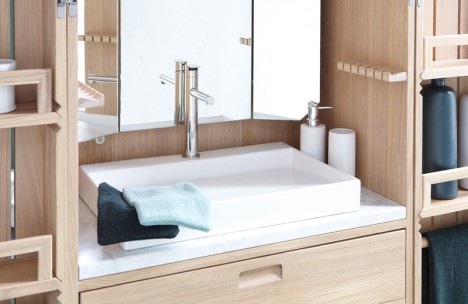
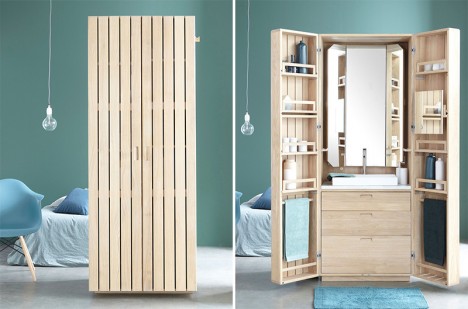
Inspired by the cabins on ships, this wooden all-in-one bathroom design looks like a wardrobe when it’s closed, but opens to reveal a sink, mirror, towel holders, drawers and shelves for all of your toiletries. It’s small enough to fit inside most standard bathrooms, so the only other items you need are a toilet and shower.

Simplify: Flexible Bathroom Fittings

compact apartment bathroom set 2

compact apartmetn bathroom set

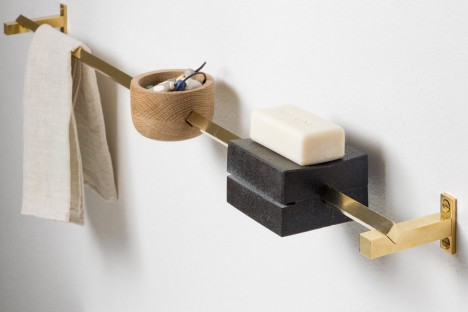
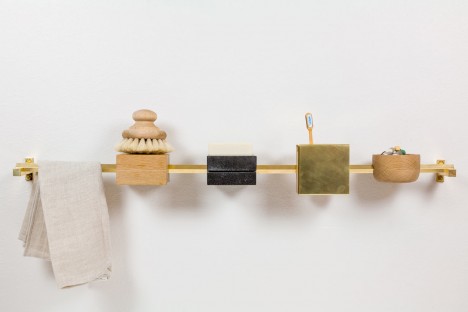
A space-saving set that’s easy to adapt to virtually any existing bathroom, the ‘Simplify’ set by Groupworks slots small accessories onto a special towel bar to keep them up out of the way. There’s a soap dish, a vessel for small items like rings, and a larger box that can hold toothbrushes and combs.

Make the Most of Balcony Space

compact apartments balcony set

compact apartments balcony set 2 compact apartments balcony set 3

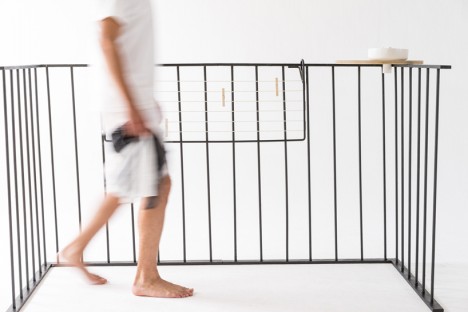
Even apartment dwellers who are lucky enough to get access to a balcony usually don’t have enough space for tables and chairs, planters and clothes drying racks all at once. The ’Sigh’ set by Spanish designer Pola Clapés is made specifically for such small outdoor spaces and includes tables in three sizes, a three-tier hanging planter and a clothesline, all of which easily hook onto a standard railing.

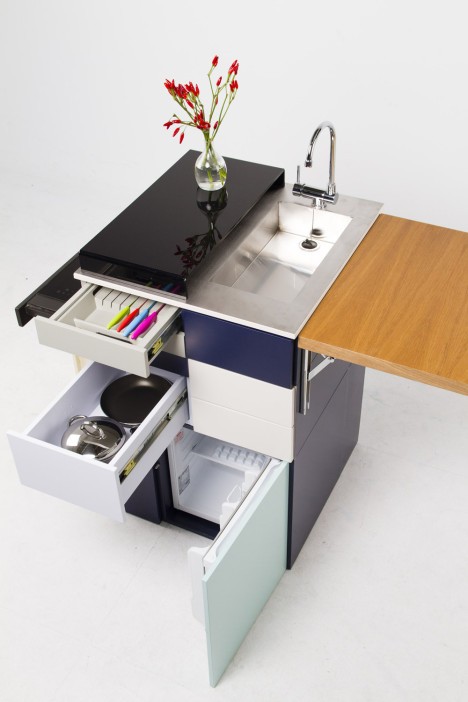
Luggage-Like Modular Kitchen Set

compact apartment modular kitchen

compact apartment modular kitchen 2

Literally any space with plumbing and a bathroom can become a studio apartment with the addition of the ‘Gali’ module by designer Ana Arana, which makes most basic kitchen functions portable. Four luggage-like modules come together to offer an induction cooktop, refrigerator, sink, drawers and a combination prep/dining table. The idea is that single people who do minimal cooking can just take their kitchen with them from one living space to another, and don’t have to sacrifice precious square footage for functions they don’t need.

Next Page – Click Below to Read More:
Smart Style For Small Spaces 12 Compact Sets Modules

Share on Facebook


[ By Steph in Design & Fixtures & Interiors. ]

[ WebUrbanist | Archives | Galleries | Privacy | TOS ]


WebUrbanist

 
Comments Off on Smart Style for Small Spaces: 12 Compact Sets & Modules

Posted in Creativity


4 Things Commercial Photographers Need to Discuss with Their Small Business Clients

20 Apr
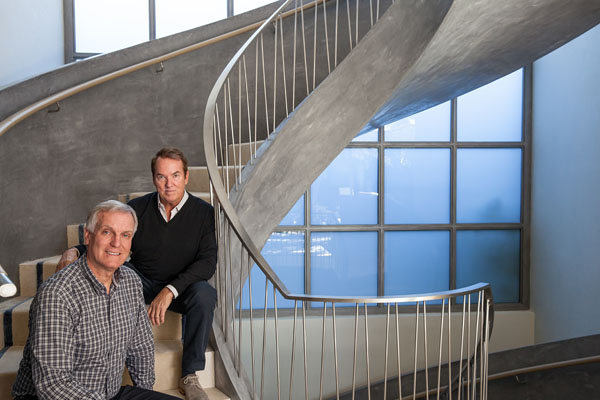
Lead architects of a high-end design firm.

Lead architects of a high-end design firm.

Providing successful images for a business can be very rewarding, especially when it’s for a budding business that you get to witness growing. While all businesses, big and small, essentially have the same demands, a small business is most likely still learning how to work with various professionals and creating their processes as they go. Diving into a project with a small business can lead to lots of time and money being wasted if terms and project details are not discussed openly, early on. The following are some key factors to discuss with your small business client during an initial consultation so that conflicts can be avoided down the line:

1. Brand

Large family-run urban farm.

Large family-run urban farm

While we are hired in part because of the individual style that we have developed over time, a business’s brand is the first thing that needs to come across to their audience. When working with a small business especially, the branding should be clearly defined in order to be able to provide images that will be a great benefit to them. Do they have certain color palettes they work with? Are their graphics portraying a more formal brand, or a very casual brand? Are they nature-oriented, or do they work in traditional office spaces? What clientele are they catering to? All of these are questions that should be addressed in the initial consultations. A small business may still be developing their brand or creating a branding package, so without a brand to guide the images, there may be a need for updated photos once the brand is clearly defined. Expressing this to a client will not only help them understand that professional photography is an investment intended to last a long time, but it will also show them that you are keeping their best interest in mind for their long-term success.

2. Budget

Small businesses will typically have very low budgets, so the decision to invest in professional photography services will be a big one for them. Regardless of the cost for your services, there is likely to be very little (if any) wiggle room in their budget allowance. Being aware, and respectful, of the client’s budget restrictions will not only help ensure that there is less run-around in the planning stages, but it will also give the client more confidence that you are an ally. If you offer packages geared towards commercial work, consider having several options to select from, or to use as a kick-off for budget discussions. Often a custom quote is required depending on their specific needs, but some packages to give the client a ballpark idea of pricing can let them know what they can expect to spend.

Independent financial advisor.

Independent financial advisor

3. Timeline

Depending on how experienced your small business client is, their timeline for getting final images may not be very realistic. This is where it’s your job to educate clients on your process and, more importantly, on your specific ability to turn around jobs in a time crunch. Knowing their expectations about timing and delivery will be vital in creating a quote, coordinating any vendors (venue, props, assistants), and making sure that the client gets their images in time to use them.

Do they require any extensive editing techniques or talent that requires outsourcing? Did they request a location or backdrop that requires reservations and a long wait for booking? Will they need models, and if so, do they have specifics in mind? Are they planning on using these images for a specific event, or marketing campaign that has a set date? Which leads to the final factor to keep in mind…

Home-based food business products.

Home-based food business products

4. Usage

Many folks will assume that if they hire you to take photos, they then get to keep the photos and do as they wish with them. In reality, commercial work is generally very specific about what usage is permitted. If they are planning to use the photos on a product label, do you get any royalty from that product sale? If they are hiring you because of a large print marketing campaign, can they then use the images in email campaigns several years down the line? Are you granting them use for a certain amount of time, or can they use these images forever? Once you turn over the images, are they allowed to do any alterations to them?

While there is no one answer to these questions, be sure to discuss the planned use of these images and to clearly specify it in a contract. Both parties need to be in agreement with what is decided, and having this discussion up front will once again show your client that you value your work and intend to be completely open with them about terms.

Owner of a co-working space.

Owner of a co-working space

Although there are many factors to discuss with your client at the beginning of a project, these four points will help get the basic information clarified, and get both parties on the same page. These discussion points will also go a long way to helping you create a quote for them that is accurate and all-inclusive; avoiding time-consuming confusion farther into the project.

Do you have any additional points of conversation that are a must for initial client consultations? Please share in the comments below.

googletag.cmd.push(function() {
tablet_slots.push( googletag.defineSlot( “/1005424/_dPSv4_tab-all-article-bottom_(300×250)”, [300, 250], “pb-ad-78623” ).addService( googletag.pubads() ) ); } );

googletag.cmd.push(function() {
mobile_slots.push( googletag.defineSlot( “/1005424/_dPSv4_mob-all-article-bottom_(300×250)”, [300, 250], “pb-ad-78158” ).addService( googletag.pubads() ) ); } );

The post 4 Things Commercial Photographers Need to Discuss with Their Small Business Clients by Natalia Robert appeared first on Digital Photography School.


Digital Photography School

 
Comments Off on 4 Things Commercial Photographers Need to Discuss with Their Small Business Clients

Posted in Photography


CP+ 2015 Sigma Interview – “small office, big factory”

05 Mar

At this year’s CP+ show in Yokohama Japan we made time to sit down with several senior executives from major manufacturers, including Sigma. In this interview with Kazuto Yamaki, CEO of Sigma, we spoke about the challenges of making lenses for ever-increasing pixel counts, the company’s ‘small office, big factory’ philosophy and why the company is continuing to make cameras. Read more

Articles: Digital Photography Review (dpreview.com)

 
Comments Off on CP+ 2015 Sigma Interview – “small office, big factory”

Posted in Uncategorized


Weekly Photography Challenge – Using a Small Aperture

28 Feb

Time to try out your aperture range. Last week you were encouraged to shoot wide opened using a large aperture.

Now you need to crank it the opposite direction and get some maximum depth of field in this weekly photography challenge of using a small aperture.

Michael Chen

By Michael Chen

Weekly photography challenge

First let’s define small aperture. Usually when photographers talk about a large aperture it’s in the f/1.8 to f/4 range. Small apertures would include f/11 and smaller (f/16-f/32). What that means is the lens is letting in less light due to the smaller opening – and it also means more of the scene is in sharp focus, or deep depth of field.

You may need to use a tripod for this one as the small aperture consequently also means you’ll need to use a longer shutter speed. Keeping the ISO low will help you avoid noise as well and keep sharpness to the maximum.

Here are a few more examples:

Zman Z28

By zman z28

Michael Bohlander

By Michael Bohlander

Vasile Hurghis

By Vasile Hurghis

Photograph Lavender perspective by Peter Zelei on 500px

Lavender perspective by Peter Zelei on 500px

Share your small aperture images here:

Simply upload your shot into the comment field (look for the little camera icon in the Disqus comments section) and they’ll get embedded for us all to see or if you’d prefer upload them to your favourite photo sharing site and leave the link to them. Show me your best images in this week’s challenge. Sometimes it takes a while for an image to appear so be patient and try not to post the same image twice.
googletag.cmd.push(function() {
tablet_slots.push( googletag.defineSlot( “/1005424/_dPSv4_tab-all-article-bottom_(300×250)”, [300, 250], “pb-ad-78623” ).addService( googletag.pubads() ) ); } );

googletag.cmd.push(function() {
mobile_slots.push( googletag.defineSlot( “/1005424/_dPSv4_mob-all-article-bottom_(300×250)”, [300, 250], “pb-ad-78158” ).addService( googletag.pubads() ) ); } );

The post Weekly Photography Challenge – Using a Small Aperture by Darlene Hildebrandt appeared first on Digital Photography School.


Digital Photography School

 
Comments Off on Weekly Photography Challenge – Using a Small Aperture

Posted in Photography


Small Flash Portraits on Location with Adorama TV

04 Jan

How to light portraits with a small flash or speedlight is a common topic request from our readers here at dPS.

In this video tutorial Daniel at Adorama goes over how to use a speedlight both on-camera and off-camera to take quick and easy portraits on location. He shows tips for modifying the light, balancing with the ambient or available light in the scene, and even using a gel for color balance.

Get some great tips from this video:

Have you tried these techniques before? Had any success? Share any tips you have in the comments below.

googletag.cmd.push(function() {
tablet_slots.push( googletag.defineSlot( “/1005424/_dPSv4_tab-all-article-bottom_(300×250)”, [300, 250], “pb-ad-78623” ).addService( googletag.pubads() ) ); } );

googletag.cmd.push(function() {
mobile_slots.push( googletag.defineSlot( “/1005424/_dPSv4_mob-all-article-bottom_(300×250)”, [300, 250], “pb-ad-78158” ).addService( googletag.pubads() ) ); } );

The post Small Flash Portraits on Location with Adorama TV by Darlene Hildebrandt appeared first on Digital Photography School.


Digital Photography School

 
Comments Off on Small Flash Portraits on Location with Adorama TV

Posted in Photography