RSS
 

Posts Tagged ‘Shutter’

Have Shutter, Will Travel: Some Considerations for Travel Photography

11 Mar

Travel and photography could be considered a thing unto itself, kind of like macaroni and cheese or peas and carrots. Travel has a natural allure to photographers, promising unique views of life and existence that can only be experienced — and photographed — by throwing yourself into new worlds and meeting new people. While there’s something to be said for the Continue Reading

The post Have Shutter, Will Travel: Some Considerations for Travel Photography appeared first on Photodoto.


Photodoto

 
Comments Off on Have Shutter, Will Travel: Some Considerations for Travel Photography

Posted in Photography


26 Speed Busting Fast Shutter Speed Images

06 Feb

Last week we saw some ethereal and mysterious long exposure photos. Now let’s go the opposite way and look at some images there would not be possible without fast shutter speeds (with a couple that have some help using flash to freeze motion too).

Images at either end of the shutter speed scale give us a chance to capture life in an altered state; one we cannot see with our eyes. Long exposures blur things beyond recognition and add mystery. Short exposures freeze things in time and space and capture literally a millisecond of time in an image.

Add flash and you can stop bullets, speeding arrows and more. Enjoy the world of high speed photography:

Photograph Bubbles by Chloe Veltkamp on 500px

Bubbles by Chloe Veltkamp on 500px

Photograph Jump to the beach by Lily Nedolya on 500px

Jump to the beach by Lily Nedolya on 500px

Photograph Patience my friend, patience.  by Lasse Lundh on 500px

Patience my friend, patience. by Lasse Lundh on 500px

Photograph Spinning Reverse by Rajat Bhargava on 500px Spinning Reverse by Rajat Bhargava on 500px

Photograph Focus by Tin Man on 500px

Focus by Tin Man on 500px

Photograph Dancing on the Water by Teddy Winanda on 500px Dancing on the Water by Teddy Winanda on 500px

Photograph High Flyer by Tony Antoniou on 500px

High Flyer by Tony Antoniou on 500px

Photograph The flying car by Tristan Shu on 500px The flying car by Tristan Shu on 500px

Photograph skaugvold451 by Peter Skaugvold on 500px

skaugvold451 by Peter Skaugvold on 500px

Photograph Jump ! by Rarindra Prakarsa on 500px Jump ! by Rarindra Prakarsa on 500px

Photograph Super Dog by Abbrar Cheema's photography on 500px

Super Dog by Abbrar Cheema’s photography on 500px

Photograph Volley by Mary Ruiz on 500px Volley by Mary Ruiz on 500px

Photograph Soft Touch by Max Rinaldi on 500px

Soft Touch by Max Rinaldi on 500px

Photograph A Splash of Rose by Anthony Chang on 500px A Splash of Rose by Anthony Chang on 500px

Photograph Head shake by Derek Watt on 500px

Head shake by Derek Watt on 500px

Photograph Show Time by Max Rinaldi on 500px Show Time by Max Rinaldi on 500px

Photograph Oops~! by kimerajam . on 500px

Oops~! by kimerajam . on 500px

Photograph Crossing the river by Edwin Leung on 500px Crossing the river by Edwin Leung on 500px

Photograph Splash!!! by Ástur Montes on 500px

Splash!!! by Ástur Montes on 500px

Photograph JOYFUL by Ario Wibisono on 500px JOYFUL by Ario Wibisono on 500px

Photograph Inle Smoker by Vichaya Pop on 500px

Inle Smoker by Vichaya Pop on 500px

Photograph Bang by Jinsoo Park on 500px Bang by Jinsoo Park on 500px

Photograph Burn Crew Concept by Philippe Lejeanvre on 500px

Burn Crew Concept by Philippe Lejeanvre on 500px

Photograph Turkestan Shrike ‹Lanius phoenicuroides› hunting Spiny-tailed  Lizard by igano Kabamaru on 500px Turkestan Shrike ‹Lanius phoenicuroides› hunting Spiny-tailed Lizard by igano Kabamaru on 500px

Photograph Mudskipper (Oxudercinae) by igano Kabamaru on 500px

Mudskipper (Oxudercinae) by igano Kabamaru on 500px

Photograph Watch Out! by Gary Brookshaw on 500px Watch Out! by Gary Brookshaw on 500px

googletag.cmd.push(function() {
tablet_slots.push( googletag.defineSlot( “/1005424/_dPSv4_tab-all-article-bottom_(300×250)”, [300, 250], “pb-ad-78623” ).addService( googletag.pubads() ) ); } );

googletag.cmd.push(function() {
mobile_slots.push( googletag.defineSlot( “/1005424/_dPSv4_mob-all-article-bottom_(300×250)”, [300, 250], “pb-ad-78158” ).addService( googletag.pubads() ) ); } );

The post 26 Speed Busting Fast Shutter Speed Images by Darlene Hildebrandt appeared first on Digital Photography School.


Digital Photography School

 
Comments Off on 26 Speed Busting Fast Shutter Speed Images

Posted in Photography


6 Ways to Use Shutter Speed Creatively

05 Feb

In many ways, shutter speed is an inaccurate term. I read an article a few years ago and the photographer referred to shutter speed as shutter time. The logic was spot on. A shutter always opens or closes at the same “speed”. The key value is how long the shutter stays open, hence shutter time. On Canon cameras the shutter speed function (shutter priority) on the mode dial is abbreviated to Tv, which stands for “Time Value”, and is a more accurate description of what this article is about. I am going to refer to shutter time as opposed to shutter speed, it sounds crazy, but it will make more sense. The reason this definition is important is because, we are going to be looking at how you can use the time that the shutter is open (and gathering light onto the sensor) creatively.
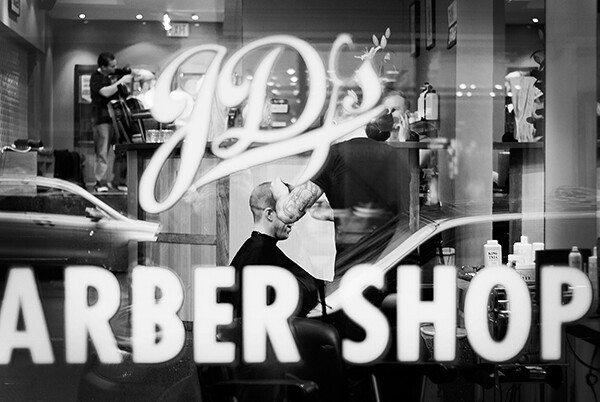
Waiting for an image to unfold requires patience

In a sense, shutter time is a bit like time travel. You camera’s shutter can open and shut in 1/8000th of a second. Think about that. Take one second, divide it by 8000 and one of those units is the time your shutter was open. That is very quick. On the other end of the spectrum, you can shoot super long exposures of 20 or 30 minutes. That means the shutter stays open for that length of time. Again, amazing. Think of all that light falling onto the sensor during that time, and the images that can be created doing so.

The shutter time becomes more than simply a moment in time, it could be a split second (literally) or a few seconds. The resulting image will capture and freeze the moment or, with a longer shutter time, there will be blurred movement. This is the fun part of photography. In many ways, your camera can “see” events that happen which you cannot. The camera can capture a frozen moment and suspend your subject in that moment forever, this is like magic. The compelling images are amazing to see and are reasonably easy to make, so let’s take a look at a few of them and see how they are done.

6 Ways to Use Shutter Speed Creatively

1. Freezing the moment

These are the images we all know about; ones that have captured a frozen moment in time. Normally these are sports images, the winning goal, or the knockout punch connecting. They are intriguing to most people and are compelling because we can’t freeze the moment in our eyes. We see a moving, continuous rendition of the events happening in front of us. You have seen “slo-mo” shots of the winning goal; the frozen moment image is that equivalent.

These images take a bit of practice to get right. Lets assume for a moment, you are photographing a soccer match. It is great to get action shots, but you will want to get any shots of the teams scoring goals. You will then need to have the correct lens. In sports photography, it will be a pretty long zoom or telephoto lens. Most sports photographers will use 400mm and longer. You will also need to keep your camera steady. A tripod in these cases is somewhat impractical as you need to be able to move the camera quickly and easily to follow the game. A monopod is normally what works best.
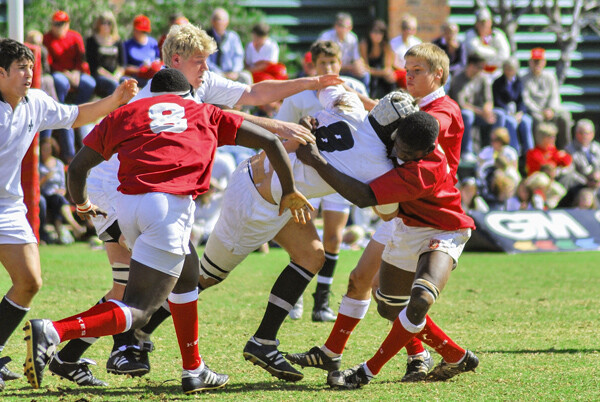
freeze action 2

Depending on the lighting conditions you need to make sure you have a shutter time that captures the players in mid-action. You also need to take the lighting into consideration. If you are shooting in an outdoor arena, the natural light may be sufficient, but if you are in an indoor arena, you might need to be more aware of your exposure. In that case, you may need to push your ISO up high enough to allow you to freeze your subject. In most sports 1/1500th of a second is the starting point for freezing action. In very fast sports like ice hockey, soccer, rugby and so on, you may need to be shooting at even faster speeds than that. This is how you set up the shots.

Technique

How to do it: Set your aperture to an aperture setting of f/2.8 or f/4.5. This will allow for a quicker shutter time, which will in turn freeze the action. If you are shooting a sporting event in the sunlight, you may need to have your shutter time set to 1/1500 or faster. If this is still not freezing the action, make the shutter time even quicker. Try and anticipate the action and release the shutter at the moment you think it will happen. Be aware that your focus will need to be spot on. With a wide aperture, you run the risk of misfocusing and missing a shot. I once heard a sports photographer say this ” If you see the goal in your viewfinder, you missed the shot”. When you do get that shot though, it will be worth it.

2. The decisive moment

Henri Cartier-Bresson coined the phrase, “The Decisive Moment”. Do a google image search on Cartier-Bresson and the decisive moment, you will see many of his great images. He was well known as a street and people photographer, and he believed that you need to choose the precise moment when something happens to hit the shutter release. As you can imagine, this is not easy. Sometimes this might mean you need quick reflexes. Freeze actionMost of the time, it requires patience. He would often set up the shot, get the framing right and then wait. You don’t want to wait for hours, but be patient, sit there for 20 or 30 minutes and watch the scene. Take note of how people are moving into, and out of your frame. When time is right, or the perfect subject (person, vehicle, animal, whatever you choose) moves into the best position, release your shutter at that moment. This will take practice and more than a few shots to get it right, but when you do, you will be ecstatic. The shot will look candid, but you will know what it took to get that image. Many people assume Cartier-Bresson’s images were simply shot quickly from the hip, but much of the time they were planned and he waited patiently for the decisive moment.

Technique

How to do it: You need to think of a scene you would like to capture, visualize it. You may want to capture the comings and goings at a coffee shop in your city. You may want to have someone with a red coat sitting outside, sipping coffee. You should then set up and frame your shot, then sit there until the scene unfolds. Someone with a yellow jacket may sit down, which might work too. So be flexible, but be patient, sooner or later the shot will unfold.

3. Abstract and creative blur

As I said earlier, shutter time is a bit like time travel. You can capture an infinitesimally small slice of a moment, and in other cases you can capture seconds, or even minutes. When the shutter is open, light is coming through your lens and falling onto the cameras sensor. If you allow this to happen for a long enough time, some part of your image will blur. Sometimes blur in an image is unwanted. This happens when your shutter time is too long, your camera moves unintentionally, and the image is ruined.

A close up image of a flower, shallow depth of field blurs the background, but the yellow stamens are in focus

A close-up image of a flower, shallow depth of field blurs the background, but the yellow stamens are in focus.

The kind of blur I am talking about here is intentional blur. This technique can be used to make slightly, or completely, abstract images, depending on the shutter time. The longer the shutter time, the more movement there is, and the more blur you will see. Blurring can be the result of your subject moving, you moving the camera, or both. If your subject is moving and the camera moves, the blur can be very dynamic. If your camera is on a tripod and the subject moves, this creates a sense of speed.

Technique

How to do it: Set your aperture to f/5.6 or higher (smaller opening). Attempt this in low light conditions, just before and just after sunset. Set your shutter time to 1/10th of a second or longer. Release the shutter and move the camera quickly from left to right. You can rotate the camera, move it up and down, or even just shake it in your hand while the shutter is open. In this technique, you will be moving the camera and the scene could have moving elements in it too (i.e. a car or a bus could be driving past, or people could be walking in the scene). The results will be random and unusual, but with practice, you can create some pretty compelling abstract images.

Camera swirl, this image was made by rotating the camera anti-clockwise while the shutter was open

Camera swirl, this image was made by rotating the camera anti-clockwise while the shutter was open

4. Low light exposures

The goal in low light exposures is to have the scene in focus, and only one part in the scene moving. This is particularly interesting at night when you get light trails from a vehicle driving through your scene. You can do this in the early evening or evening if it has become dark. These images are compelling because the light trails from the vehicle seem to hang magically in the air while the vehicle itself is invisible. Another great time to shoot longer exposures is during the blue hour; the 20 to 30 minutes of soft blue light that fills the sky after the sun has set. This is a great time to do longer exposures too as the sky will look blue and your subject (a city or a landscape scene) will be well lit.

Technique

How to do it: Set your camera up on your tripod. Select an aperture setting of f/8 to f/11. Set your shutter time to expose correctly for the scene. Depending on the light your shutter time could be anywhere from 1/10th of a second to three or four seconds. As it gets darker, your shutter time will need to increase. Set yourself up in a position where something will be moving – cars, boats or even people can work well for this. Take a few shots to see how it is all working and make any adjustments. The important technique here is timing. If you want to get a shot with the car lights streaming through your shot, time it so that you release the shutter as the car is in the best place in your scene, similar to the decisive moment.
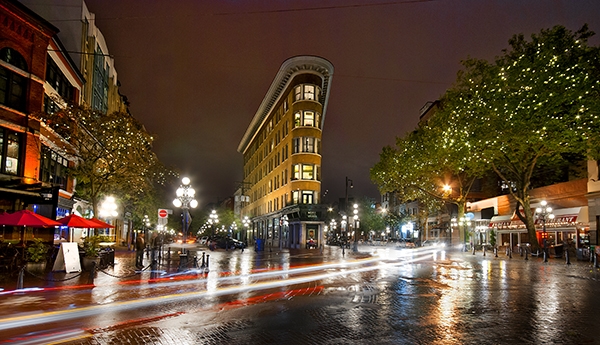
This scene works well because the light trails add some dynamic interest to the image

This scene works well because the light trails add some dynamic interest to the image

5. Long exposures

As the name suggests, these are longer shutter times. In some cases, they may be 20-30 seconds long, but for some really interesting images, you will want keep the shutter open for 15-20 minutes. Long exposures require the use of a 10 stop Neutral Density filter. This filter will block out the light sufficiently to allow you to open your shutter for long periods of time. The results can be amazing. You can use the ND filter in the day to make your shutter time longer. “Why would I want to do that?”, you might ask. You might have a scene with a windmill in it and you want to blur the movement of the windmill as it rotates. You might also want to create a seascape scene where the waves look silky and smooth. In these cases, an ND filter will be very useful.

Technique
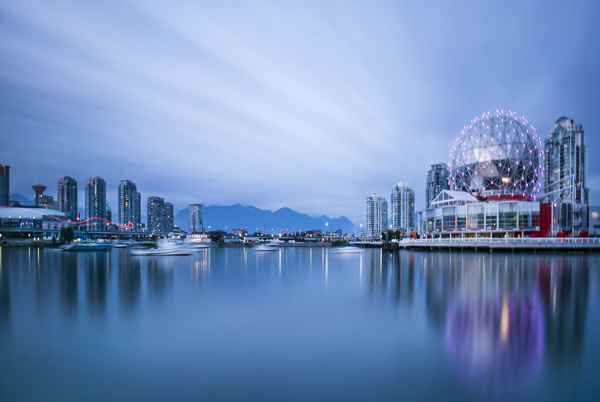
Long exp 2

ISO 100, f/11, just under 13 minute exposure.

How to do it: Set up your camera on a tripod. Set your aperture to anywhere between f/11 and f/16. In these images, you will want to have an exposure time of 15-30 seconds and longer. You will need a cable release to go beyond 30 seconds on your exposure. You want a lot of movement in the scene, whether it is light trails or clouds moving across the sky. The longer you have the shutter open, the more surreal the image will become.

If you have an ND filter, set up your shot first, use autofocus to get everything in focus, then switch your camera to manual focus. The reason is, once you put the ND filter on your lens, the scene will become very dark. If your camera is on autofocus, it may struggle to find a focal point. If that happens, your lens will “hunt” for something to focus on and you won’t be able to get the shot, or it may be out of focus. So, once you have focused your image, switch to manual focus and mount the ND filter onto your lens to make the shot. Be aware, long exposure photography can really eat up battery life, so carry spare batteries if you have them, especially on cold winter evenings!
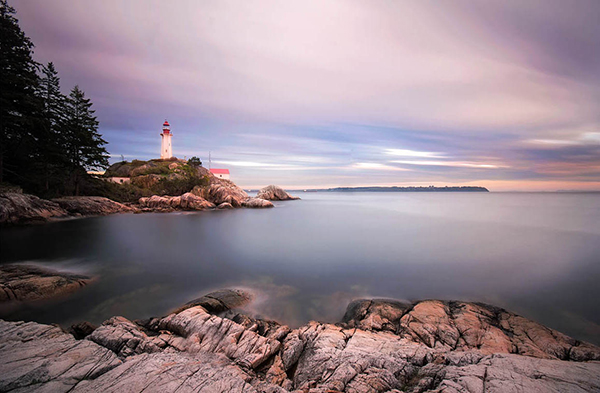
This image was exposed for 4 minutes, which softened the water and the clouds

This image was exposed for four minutes, which softened the water and the clouds

6. Panning

This technique, when done correctly, can produce amazing results, but it’s not easy. Panning is when you focus on a subject that is moving, and you move your camera in a horizontal plane with them. During that movement, you will release the shutter. Your exposure time will depend on the subject and the light, but in this technique you don’t want to freeze the action, you want to suggest movement. A longer shutter time is preferable, so you may be shooting at 1/30th or slower. To pan effectively, you will need to practice a few shots, here are some pointers.

Technique

How to do it: Firstly, stand with a wider stance than normal. When you pan with your subject, move your body from the hips up. Timing is key, release the shutter when you think the subject is in a good position in the frame. Follow through, don’t stop the movement when you release the shutter, keep moving with your subject (and at the same speed as the subject) until the shutter closes (think golf swing).
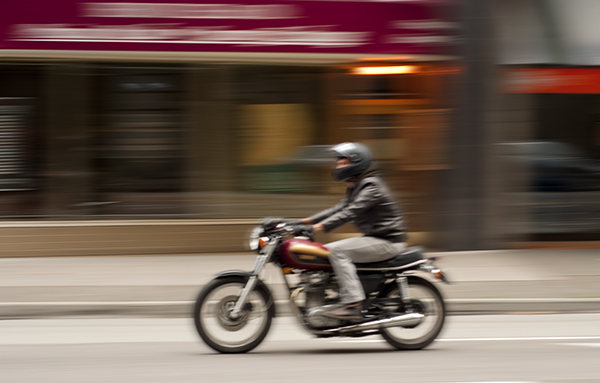
A panning shot creates a very unique sense of movement

A panning shot creates a very unique sense of movement.

The next step is to go out there and get these shots. I would recommend you make an effort to try at least 20 to 30 shots of each of these techniques. Play with the settings, see what works and what doesn’t. Let me know what you think and maybe even put some of the results in the comments, lets see what you get.

googletag.cmd.push(function() {
tablet_slots.push( googletag.defineSlot( “/1005424/_dPSv4_tab-all-article-bottom_(300×250)”, [300, 250], “pb-ad-78623” ).addService( googletag.pubads() ) ); } );

googletag.cmd.push(function() {
mobile_slots.push( googletag.defineSlot( “/1005424/_dPSv4_mob-all-article-bottom_(300×250)”, [300, 250], “pb-ad-78158” ).addService( googletag.pubads() ) ); } );

The post 6 Ways to Use Shutter Speed Creatively by Barry J Brady appeared first on Digital Photography School.


Digital Photography School

 
Comments Off on 6 Ways to Use Shutter Speed Creatively

Posted in Photography


Moment phone case brings two-stage shutter button to iPhone 6

30 Jan

Moment, a Seattle-based company that is known for its high-quality smartphone accessory lenses has launched a Kickstarter campaign for its latest product idea, the Moment case. The Moment case is a case for the Apple iPhone 6 that offers a two-stage shutter button, allowing you to half-press to lock focus and exposure. The connection to the phone is electronic without any mechanical components. The grip links to the iPhone via a low-energy bluetooth connection. Read more at connect.dpreview.com

Articles: Digital Photography Review (dpreview.com)

 
Comments Off on Moment phone case brings two-stage shutter button to iPhone 6

Posted in Uncategorized


Tips for Using Shutter Speed Creatively

23 Nov

Shutter speed is one of those things that is initially a problem to be solved, but once you do that it becomes a tool that allows you to take better and more creative photos.

First you should understand how shutter speed works and how to change it. You will need to make sure it is fast enough that your pictures turn out crisp. But once you’ve mastered those things, you can start using shutter speed to your advantage. You can slow it down to create a sense of movement, or speed it up to stop the action.

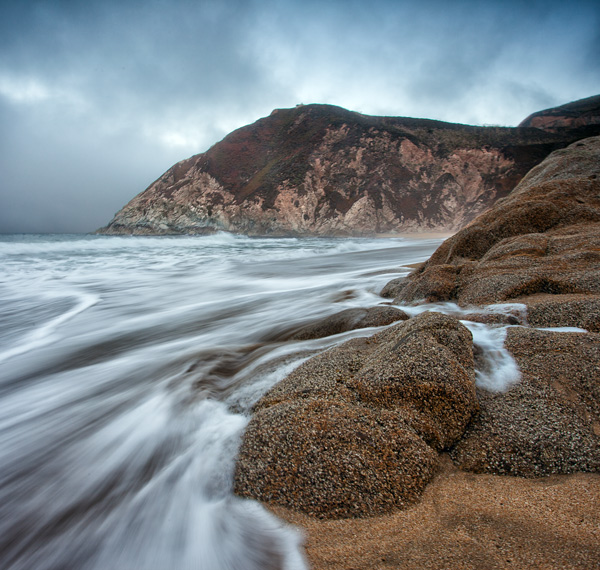
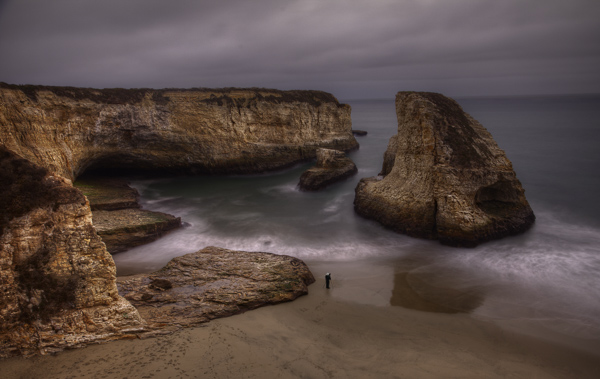
GreyWhale

Grey Whale Cove: 1/4 second at f/16, ISO 100

This article will show you the basics of what you need to know regarding shutter speed and get you started with some creative effects using different shutter speeds.

What is Shutter Speed?

Shutter speed is simply the amount of time the shutter inside the camera is open, allowing light onto the digital sensor to expose the picture. The longer you hold the shutter open, the more light is let in to the camera to expose the picture.

But holding the shutter open longer than a tiny fraction of a second has consequences. The camera must be held completely still during the exposure or the picture will be blurry. Without using a tripod or some other means of support, you cannot hold the camera still for longer than about 1/60th of a second and blur will start to creep in to the picture (more on this in a second).

Shutter speed is recorded in fractions of a second. So a shutter speed that says 1/60 (it may just show 60) means that when you take the picture the camera will open the shutter for 1/60th of a second.  Most cameras have shutter speed ranges between 1/4000 of a second (on the short side) and about 30 seconds (on the long side). In addition, many cameras have a Bulb mode that allows you to hold the shutter open as long as you wish.

Make Sure Your Shutter Speed is Fast Enough

One of the first issues you will confront as a photographer is making sure your shutter speed is fast enough. If you have a tripod, this will not matter as much and you can leave the shutter open a long time (sometimes even several minutes). But assuming you are hand-holding your camera, a long shutter speed will introduce camera shake and make your image look blurry.

But how fast is fast enough? There is something called the Reciprocal Rule designed to help you with that answer. This rule states that your shutter speed should be at least the reciprocal of your focal length. That sounds complicated, but don’t worry it is easy to figure out. You just put a one over your focal length and that is your minimum shutter speed.  So, for example, if your focal length is 60mm, just make sure your shutter speed is 1/60th of a second or faster. If you are zoomed in and your focal length is 200mm, make sure your shutter speed is 1/200 of a second or faster (remember to consider lens factor as well if you have an APS-C sensor) Any slower than that and it is time to break out the tripod (or raise open your aperture and raise the ISO).

Beam

1/200th at f/2.8, ISO 3200

Changing Shutter Speeds

The next question you will confront is how to change your shutter speed. The actual physical changing of the shutter speed is pretty simple, it’s typically done via a dial on top of your camera. The more important question is how are you to offset the change to shutter speed, assuming you are in manual mode (if you are in Aperture priority or Program mode the camera will make the change for you).

If you use a faster shutter speed, the shutter is not open as long so the camera gathers less light. So, without something else changing, your picture will be underexposed by using a shorter shutter speed. To make a proper exposure, additional light has to come from somewhere. You can add that extra light to offset the use of a faster shutter speed in one of two ways:

  1. Open up the aperture: The aperture is the hole your the lens that allows light to pass into the camera. A larger aperture allows more light into the camera. So if you open up your aperture by one stop, you are letting in twice as much light during the same period of time.  But be careful, a larger aperture also creates a shallower depth of field, which you might not want.
  2. Increase the ISO: The ISO is the rating assigned to how sensitive your digital sensor is to light. It is adjustable, and the higher the number, the more sensitive you make your camera’s digital sensor to light. But this comes at a cost, digital noise, which increases as you increase the ISO.

There are separate controls on your camera to make these changes.  Use either of these methods to add more light to your exposure whenever you are shortening your shutter speed.

Using Shutter Speed Creatively

Now that you understand shutter speed a little bit, you will want to put it to use creatively. There are several ways to do this, and we will work through some of them from the faster shutter speeds to the slowest.

Stopping the Action

In times of high action or drama, you can stop the motion by using a very fast shutter speed.

To do this, you will want your shutter speed to be 1/250 of a second or faster. At times, like with the picture below of the water droplets being flipped through the air, you may want the shutter speed to be significantly faster. This particular picture was shot at 1/8000th of a second.

Water

1/8000th at f/2.8, ISO 250

Accomplishing shutter speeds this fast, even on bright sunny days, will require offsetting moves. For example, you will need to open up the aperture to its widest setting. Doing so will result in a shallow depth of field, but in this sort of picture that usually won’t matter. You will also probably need to increase the ISO (a little on bright days, a lot on cloudy days or indoors).

Another key for these type of shots where you are stopping the action, is to anticipate the shot. With the speeds at which modern cameras shoot, you may often want to just hold the shutter button down and blast away, this rarely works though. The decisive moment is usually only captured by anticipation and triggering the shutter at precisely the right moment.

Panning

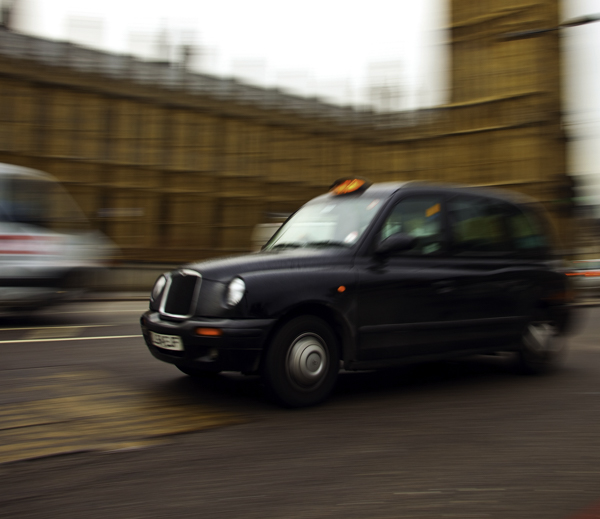
Another way to use shutter speed creatively in times of action is to pan the subject. Panning is where you move the camera during the exposure to follow the subject. Done properly (or when you get lucky) the subject is relatively sharp, while the background is blurred and conveys a sense of motion.

LondonCabPan

1/15th at f/7.1, ISO 50

Accomplishing this is usually best at slower shutter speeds between 1/8 and 1/30 of a second. Being able to slow down the shutter speed is typically welcome news, as it will mean you do not have to crank up your ISO, or make other offsetting moves. Getting a good result will frequently require at least a few attempts, while you gauge the speed, and other settings.

If possible, get your exposure set up before you attempt to pan. That way you are only thinking about the panning during the shot, as opposed to worrying about all your other settings.

Creating a Sense of Motion

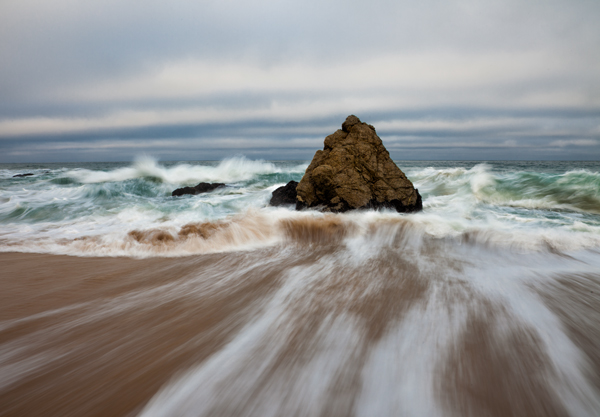
Still another creative use of shutter speed is slowing it down to create a sense of motion. This is accomplished when the subject is moving slightly through the frame during the exposure. This idea is for the subject to be identifiable, but slightly blurred.

GreyWhaleRock

1/4 second at f/16, ISO 50

Shutter speeds for this type of shot are between 1/4 and 1/10th of a second. That is virtually always too slow for you to hand-hold your camera, so you will probably need to break out the tripod for this type of shot.

Long Exposures

The final creative use of shutter speed we will cover here is a long exposure. This is where you hold the shutter open for a long time and allow certain parts of your picture to move through the frame. You will always need a tripod for this technique.

DavenportRock

20 seconds at f/8, ISO 400

Long exposure shutter speeds are between 10 and 30 seconds. Most cameras offer you the ability to go even longer by using Bulb mode, where the shutter will stay open as long as you hold the shutter button down. A remote shutter release, which is always a good idea when you are shooting from a tripod, is almost a necessity for this type of shot.

Long exposure is a great technique whenever there is moving water involved, such as coastal scenes, rivers, and waterfalls. It is also great for streaking lights in night photography.

Whereas most of the time, your challenge with shutter speed is to get enough light into the camera; in this context getting the shutter speed you want usually involves the opposite problem. The challenge is to limit the amount of light entering the camera so that you can leave the shutter open a long time without overexposing the image. To do that, first close down the aperture to its smallest setting and use the lowest ISO setting on your camera. The lowest ISO setting is usually 100, but some cameras contain an expandable ISO range that will allow you reduce the ISO further, so be sure to check your camera’s menu for that.

But if those moves don’t restrict the light enough, you will need to use a neutral density filter. These are filters that restrict the amount of light coming into your camera. They come in different strengths, with typical values between two and 10 stops of light. Get one of these (or a few different strengths) and keep it in your bag if you think you will have any long exposures in your future.

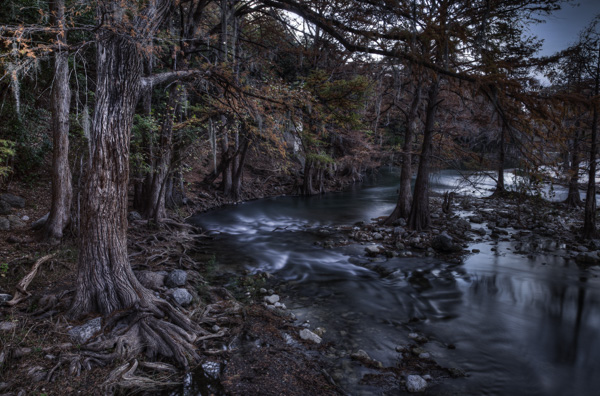
Guadalupe

15 seconds at f/8, ISO 500

Conclusion

Once you have mastered the basics of shutter speed, it is a great tool for adding creativity to your photography. It is perhaps the most effective way to make our photos more interesting. So lock down the basics, and then give some of these techniques a try.

The post Tips for Using Shutter Speed Creatively by Jim Hamel appeared first on Digital Photography School.


Digital Photography School

 
Comments Off on Tips for Using Shutter Speed Creatively

Posted in Photography


Using Slower Shutter Speeds to Show Motion in Your Images

15 Jul

Changing shutter speed not only changes the amount of light that enters the camera, it also changes the way your images look. By changing the shutter speed, you’re allowing the film or digital sensor to be exposed for a longer or shorter period of time. That affects how motion is portrayed in your image. A short (or ‘fast’) shutter speed will freeze motion, whereas a long (or ‘slow’) shutter speed will allow you to show motion.

Let’s take a look at a few examples using slower shutter speeds to show motion in your images:

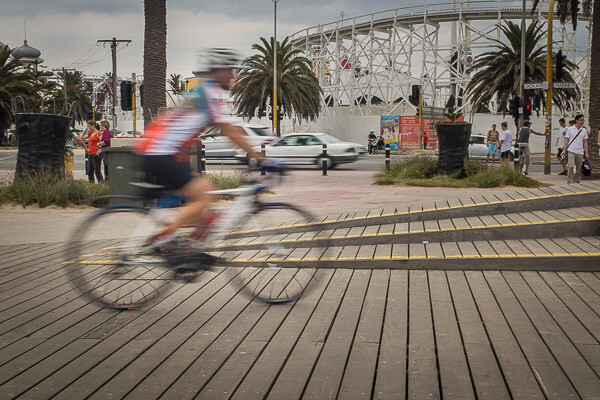
Img 1 Cycling on the boardwalk Melbourne 600px

Slow speeds – camera stationary

The image above shows what happens when you use a slow shutter speed while holding the camera still. In this case the shutter speed was 1/40th of a second, which allowed me to hand-hold the camera while still showing some motion on the cyclist. The slower the shutter speed, the more movement in your subject.

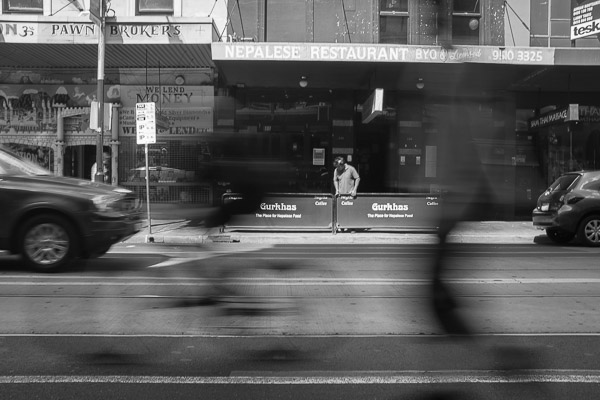
The image below was made with a shutter speed of 1/15th of a second. That’s starting to get a little slow for hand-holding so I rested the camera on the top of a fence rail on the side of the road. The image shows a cyclist riding along the road, followed closely by a skateboarder. Both the cyclist and skateboarder are blurred quite a lot, but they’re still identifiable, while the rest of the image is still in focus. It gives a feeling of movement, without moving the camera.

Img 2 Skateboard and bicycle Melbourne 600px

Panning the camera to add motion

Moving the camera while making an exposure is another way to show movement in an image. Instead of keeping the camera still and using a long shutter speed – you move, or pan, the camera with your moving subject as you expose the image. That way the subject remains sharp, while the background becomes blurred.

This image of another cyclist riding along a boardwalk was also taken at 1/40th of a second, panning with the rider and following him from right to left as he passed by. The shutter speed was slow enough that the background is blurred, while the bicycle and rider are relatively sharp.

Img 3 Orange bicycle Melbourne 600px

Remember, the subject doesn’t have to be ‘tack sharp’ when you’re showing movement. Sometimes a little blur on the subject helps to enhance the feeling of movement in the image, as it does in this case. Notice the spokes of the bicycle’s wheels are blurry too, which also helps to show movement. Using a faster shutter speed while panning would have resulted in the background not being as out of focus and the wheels would have been frozen in time with the spokes clearly visible. In essence, the cyclist would have looked like he was stationary and balancing on the boardwalk, not moving as he actually was.

Moving water

Cyclists and other fast moving objects are not the only subjects for slow shutter speeds. What about shots including moving water. I think it’s fair to say we’ve all seen images of the sea or a river with water that looks buttery smooth. That smoothness is also achieved by using a slow shutter speed.

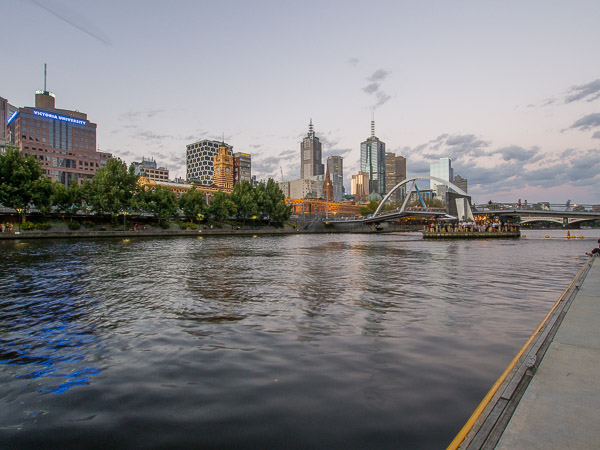
The following three images were all taken from the same location on the side of the Yarra River in Melbourne, Australia. The camera was mounted on a tripod for stability and the images were made at different exposure values. The first image was made with a shutter speed of 1/4 of a second, which is relatively fast for this type of photograph. The individual ripples in the water are clearly visible. You can see some movement, but not much.

Img 4 Melbourne skyline Melbourne 600px 2

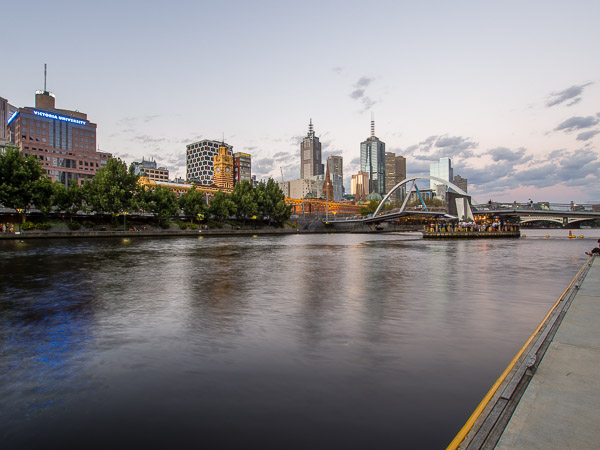
The second image was made with a shutter speed of 2 seconds. The water is starting to get smoother due to the longer shutter speed. The individual ripples are starting to disappear.

Img 5 Melbourne skyline Melbourne 600px

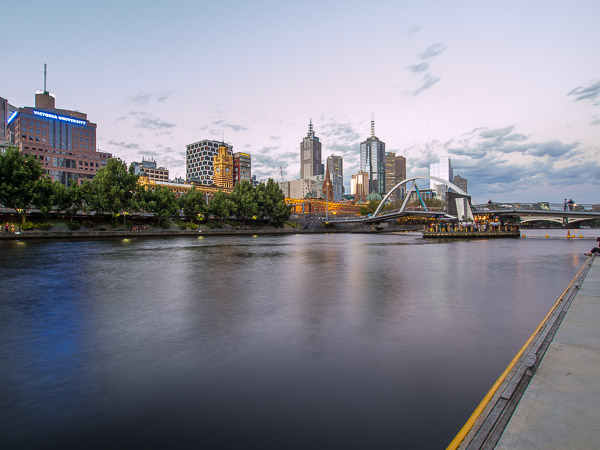
The final image in this series was exposed for five seconds. The water has now become much smoother due to the movement while the shutter was open. Photography is an art form and there is no right or wrong way to photograph any subject, but for me, the third image with the smooth water is much more appealing than the first two versions.

Img 6 Melbourne skyline Melbourne 600px 3

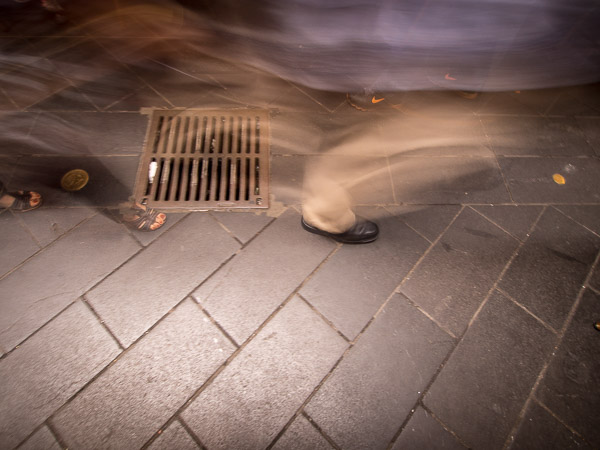
Why not experiment with different shutter speeds next time you go out to make photographs. It’s a great way to add interest to an otherwise static and maybe boring subject! All it takes is a little imagination and patience and you can come away with some really interesting and different images – like this water drain for example, which was hand-held with a shutter speed of one second. The ghostly images passing over the drain make it a little more interesting than just the drain grate itself. The most important thing is to experiment – and have fun!

Img 7 Ghostly legs Melbourne 600px

The post Using Slower Shutter Speeds to Show Motion in Your Images by Ken Lyons appeared first on Digital Photography School.


Digital Photography School

 
Comments Off on Using Slower Shutter Speeds to Show Motion in Your Images

Posted in Photography


Phase One introduces 40-80mm Schneider leaf shutter lens

03 Jun

P1_40-80_onCam_w.jpg

Phase One has announced a new leaf shutter lens for its 645 camera platform. The new Schneider Kreuznach 40-80mm LS f/4.0-5.6 joins the existing Schneider Kreuznach 75-150mm f/4.0-5.6 leaf shutter zoom lens, and allows for flash synchronization up to 1/1000sec. Supposedly on a par with prime lenses in terms of critical image quality, the new lens is available now for $ 8990 / €6990. Click through for the press release

News: Digital Photography Review (dpreview.com)

 
Comments Off on Phase One introduces 40-80mm Schneider leaf shutter lens

Posted in Uncategorized


Olympus updates PEN E-P5 with electronic shutter ‘0 sec anti-shock’

14 May

shared:download-button.png

Olympus has updated the firmware of its PEN E-P5 mirrorless camera, introducing improved Wi-Fi remote control functionality and a ‘0 sec’ anti-shock setting. The latter should help prevent blurred images at certain shutter speeds – our main gripe when we reviewed the camera. There’s also an update for the Stylus 1 enthusiast compact with similarly-enhanced Wi-Fi control. Both updates are available to download and install now. 

News: Digital Photography Review (dpreview.com)

 
Comments Off on Olympus updates PEN E-P5 with electronic shutter ‘0 sec anti-shock’

Posted in Uncategorized


Nikon to offer D600 shutter replacement to address ‘dust’ issue

26 Feb

nikon_d600.png

Nikon has issued a worldwide technical service bulletin regarding ‘dust’ issues on its D600 DSLRs. Nikon says that it has evaluated user reports and has ‘determined’ that spots on the sensor are caused by dust particles which are visible in images taken in certain situations. The company will be offering all D600 owners a full inspection, cleaning, and replacement of the shutter mechanism in their cameras, free of charge and regardless of warrantee status.  Read more and find out how to get your camera serviced.

News: Digital Photography Review (dpreview.com)

 
Comments Off on Nikon to offer D600 shutter replacement to address ‘dust’ issue

Posted in Uncategorized


The Hardest Part: What Happens Before Clicking The Shutter

11 Nov

It’s late afternoon and I’m headed to a location that should have interesting subject material to photograph. Did I leave enough time to get there? Is the weather going to cooperate? Is the light going to be right? Will I even make it in time to set up before the light hits? More importantly and most unnerving in the back of my mind the biggest question hits, “Will I even be able to find something worthy of photographing?” This important question isn’t about physically finding something, it has to do with mentally being able to see something worthy of photographing and showing to others.

The hardest part of photography happens before the shutter even clicks. It’s easy to fret over logistical concerns, but my biggest source of anxiety is not being able to mentally picture a photo worth taking and showing. Consider this stage fright for an audience of one, the twilight zone of a photographer’s universe.

Over time I’ve tackled insecurities about technical concerns, but without fail this one powerful question always creeps into my mind on every shoot. The “art of seeing” is about experience, practice, breaking habits, but most importantly clarity of mind. Whether out in the field or in a studio it is the same, idle time fuels doubtful thoughts. As soon as I step foot into the environment I am photographing this anxiety inducing question is quickly drowned out.  Why? Because what I photograph and “see” is a reflection of my passion. What I love to photograph I know inside and out. Even if I didn’t have a camera in hand my natural curiosity and mind’s eye would fill my brain with ideas when immersed in an environment I love. The best trick I learned when in an environment I may not love, but need to get the shot is to extrapolate ideas and techniques I’ve applied in “loved” environments in new environments.

Whether you’re new to photography or if you’re a seasoned professional I am 100% certain you’ve had this doubtful question creep into your mind. While it goes unspoken because we’re either too proud or insecure, we’re all in the same boat and subject to the same self doubt. Just be sure if fuels you, rather than consumes you.

Recommended & Related Reading

  • One of Photography’s Great Paradoxes
  • Pro Tip: Always Check the Views Behind You
  • Nature, Creativity and Seeing Plus
  • Two Quotes of Note On The Topic of “Art of Seeing”
Bonus Quote of Inspiration

Clarity of mind means clarity of passion, too; this is why a great and clear mind loves ardently and sees distinctly what it loves.

Blaise Pascal

French mathematician, physicist (1623 – 1662)


Copyright Jim M. Goldstein, All Rights Reserved

The Hardest Part: What Happens Before Clicking The Shutter

The post The Hardest Part: What Happens Before Clicking The Shutter appeared first on JMG-Galleries – Landscape, Nature & Travel Photography.


Related Stories

  • The Hardest Part: What Happens Before Clicking The Shutter – Enclosure
  • The Ancients – Bristlecone Pine Forest, California – Enclosure
  • The Ancients – Bristlecone Pine Forest, California
Feed Ads by FeedBlitz
powered by ad choices


JMG-Galleries

 
Comments Off on The Hardest Part: What Happens Before Clicking The Shutter

Posted in Equipment