RSS
 

Posts Tagged ‘Shows’

CP+ 2016: Canon shows off new EOS-1D X Mark II, EOS 80D and G7 X Mark II

26 Feb

CP+ 2016: Canon shows off new DSLRs and G7 X Mark II

As usual at the CP+ show in Yokohama, one of the longest lines can be found Canon’s booth. This year, Canon’s EOS 80D and EOS-1D X Mark II were in huge demand from both press and public attendees alike, and we fought our way through the crowd to get hands on with both new models – and the surprisingly nice PowerShot G7 X Mark II.

CP+ 2016: Canon shows off new DSLRs and G7 X Mark II

First up is the Canon EOS 80D. The 80D features a 24MP APS-C CMOS sensor, 45-point all cross-type autofocus system, and the company’s DIGIC 6 processor. Cosmetically similar to the popular 70D, the new model offers a number of significant updates.

CP+ 2016: Canon shows off new DSLRs and G7 X Mark II 

The 80D will be familiar to users of the 70D of course, but operationally it shares a lot of features from much earlier cameras in Canon’s EOS lineup, going right back to the original D30 of 2000. It’s easy to dismiss this kind of homogeneity as conservative – even unimaginative, but there’s a reason that DSLRs in 2016 still look and function much like DSLRs from the early 2000s. It works. 

CP+ 2016: Canon shows off new DSLRs and G7 X Mark II 

When using live view or recording video users can take advantage of the 80D’s improved Dual Pixel CMOS AF system, which provides phase-detection autofocus with the mirror locked up in Live View. This particular iteration is Canon’s first attempt at Servo AF using Dual Pixel technology – and it works very nicely in our initial testing with moving subjects. So nicely, in fact, that we can’t to see it extended to all Canon DSLRs… and maybe even, well, that’s a lot of wishful thinking.

The 3″ rear LCD is touch sensitive and fully articulating, which is handy for shooting from low and high angles, and also for video. The 80D can record 1080/60p video and offers sockets for both a microphone and headphones. Wi-Fi is also built in, with support for NFC.

CP+ 2016: Canon shows off new DSLRs and G7 X Mark II

Although it lacks 4K, the 80D is a capable HD video camera. With the addition of the PZ-E1 Power Zoom Adapter (currently only compatible with the new 18-135mm kit zoom) and DM-E1 shotgun microphone it’s a powerful and surprisingly ergonomic package. We suspect that most serious Canon videographers will look towards the Cinema EOS line but students and beginner filmmakers will appreciate the 80D’s ease of use, and potentially its excellent autofocus – with no hunting – in video. 

CP+ 2016: Canon shows off new DSLRs and G7 X Mark II

One camera that is definitely of interest to professionals is Canon’s new flagship stills model the EOS-1D X Mark II. The 1D X Mark II builds on the basic concept behind the 1D X, but offers increased resolution (from 16 to 20MP) increased speed (14fps in live view mode, 12fps in conventional DSLR mode) and 4K video capture. 

CP+ 2016: Canon shows off new DSLRs and G7 X Mark II

The EOS-1D X Mark II’s autofocus system has also been upgraded. The 61-point AF array covers a greater area, and these AF points work in concert with a 360,000 pixel metering sensor which should, in theory, mean better tracking of moving subjects. 

CP+ 2016: Canon shows off new DSLRs and G7 X Mark II

Ergonomically, the EOS-1D X Mark II is – like the 80D – very similar to its predecessors. Professional users are even less accepting of change than enthusiasts because with years of muscle memory built up, they need key controls to stay more or less in the same place from model to model. As such, the EOS-1D X Mark II looks and operates a lot like its predecessor, and indeed some key controls have barely moved since the original film EOS-1.

CP+ 2016: Canon shows off new DSLRs and G7 X Mark II

The EOS-1D X Mark II’s battery (which fits horizontally inside the base of the camera) should be good for more than 1200 images in normal use – a major differentiator of professional DSLRs compared to lower-end models (and any current mirrorless camera). Needless to say, the EOS-1D X Mark II is fully weather-sealed and feels like it’s been milled from a solid lump of something very solid, very expensive and very heavy.

CP+ 2016: Canon shows off new DSLRs and G7 X Mark II

Who would have thought that after 16 years, professional Canon DSLRs would still be using CompactFlash cards? But here we are in 2016, and the same media that fit inside the original EOS-1D can still be used in the EOS-1D X Mark II. New in the current flagship though is a second slot for cosmetically similar (but physically incompatible) C-Fast cards. C-Fast cards are capable of greater data throughput, which will help if you’re one of those people that likes to shoot extended bursts of 170 Raw files at 14fps.

CP+ 2016: Canon shows off new DSLRs and G7 X Mark II 

If you are one of those people, you should pay attention ti the warning inside the EOS-1D X Mark II’s card slot. Don’t go burning your fingers after shooting. It gives a new meaning to the term ‘blazingly fast’…

CP+ 2016: Canon shows off new DSLRs and G7 X Mark II

Ethernet? Why yes. Although the EOS-1D X Mark II features built-in Wi-Fi, a 330Mbps wired connection is still the best option for absolute speed when shooting intensely at (say) the Olympics. It’s no coincidence that Canon (like Nikon) likes to release new professional cameras in Olympic years. 

CP+ 2016: Canon shows off new DSLRs and G7 X Mark II 

At the other end of Canon’s camera range is the 20MP PowerShot G7 X Mark II. We really liked the original G7 X for everyday ‘carry everywhere’ shooting but it had some limitations. The Mark II has not been significantly changed when it comes to ergonomics or core features (inside you’ll find the same excellent 20MP 1-inch sensor and 24-100mm equivalent lens), but Canon has made some improvements. 

CP+ 2016: Canon shows off new DSLRs and G7 X Mark II

One of those improvements is a front dial that can be switched from clicking to non-clicking operation, and a subtle front grip, in place of the smooth body of the original G7 X. 

CP+ 2016: Canon shows off new DSLRs and G7 X Mark II

A new Digic 7 processor brings very welcome performance improvements, especially in Raw mode. Raw capture is now possible at 8fps and while standing at Canon’s booth we shot for more than 20 frames before the camera that we used started to slow. Finally, a Canon PowerShot G-series compact that is genuinely usable in Raw mode… 

CP+ 2016: Canon shows off new DSLRs and G7 X Mark II 

The G7 X Mark II’s rear screen is a multi-angle 3.0-inch capacitive  model with 1.04 million dots, capable of tilting up to 180° upwards (for selfies) and 45° down (for other things). The G7 X Mark II will be available in May for $ 699.

Articles: Digital Photography Review (dpreview.com)

 
Comments Off on CP+ 2016: Canon shows off new EOS-1D X Mark II, EOS 80D and G7 X Mark II

Posted in Uncategorized


To the point: LensRentals shows how to use Autofocus Fine Tune

23 Jan

DSLR autofocus has been the Gold standard for decades but the higher accuracy and precision offered by some mirrorless cameras risks tarnishing this image. However, many modern DSLRs include an option to fine-tune the autofocus behavior to help optimize their performance. Guest writer Joey Miller has written a short guide to how to make use of this feature, over on the LensRentals blog.

You don’t necessarily need any specialist equipment to fine tune your lenses. But if you’re going to go to all this effort, it might be worth it. Photo: Joey Miller

The article builds on the work Roger Cicala has already done, looking at the reasons that fine tuning is needed, with one of the main reasons being to cancel-out the effect of the combined tolerances of your camera body interacting with the combined tolerances of the specific copy of the lens you’re using.

As we reach higher pixel counts, this imprecision is being highlighted in ever more detail (it was always there, but your camera wasn’t letting you examine the problem in such fine detail).

Miller uses a Canon setup as an example, with up to two corrections per lens being possible (a ‘Wide’ and ‘Tele’ value being available for zoom lenses). But even this is a rather blunt instrument when it comes to achieving perfect accuracy. Given the variation we encounter using off-center focus points, a more complete solution would require something more like the Olympus system for Four Thirds lenses, which allowed two values per lens, per focus point. The best correction value can also change with subject distance, which is why Sigma’s USB dock offers the ability to set four different values for four different subject distances.

Even if such control over calibration were possible for the end-user, it would be so arduous as to be nearly impossible. Products such as Reikan FoCal can help, but it’s still fairly involved, and the situation-to-situation, day-to-day variability we’ve noted with some systems means even these don’t completely solve the problem. Thankfully, the process looks as if it’s about to be made simpler, with Nikon’s D5 and D500 gaining something we’ve been proposing for several years now: an automated fine tune system that checks the results of its contrast-detect AF in live view mode to calculate the corrections needed to fine tune its secondary sensor phase-detection system. It’s rather rudimentary in that only one value can be entered for any lens and body combination, but it’s certainly a step in the right direction. 

Articles: Digital Photography Review (dpreview.com)

 
Comments Off on To the point: LensRentals shows how to use Autofocus Fine Tune

Posted in Uncategorized


Olympus shows gains in first half financials

13 Nov

Olympus has released its Q2 results for the financial year ending March 2016, showing some positive growth in OM-D and PEN series camera sales in Japan and Europe. Read more

Articles: Digital Photography Review (dpreview.com)

 
Comments Off on Olympus shows gains in first half financials

Posted in Uncategorized


Sony Xperia Z5’s 4K display shows most content at 1080p

19 Sep

The new Sony Xperia Z5 Premium, announced at IFA, is the first production smartphone with a 4K display. However, Sony also claims the new device offers approximately two days of battery life on a single charge. How does it manage such impressive battery life with a high resolution display? Sony explains. Read more

Articles: Digital Photography Review (dpreview.com)

 
Comments Off on Sony Xperia Z5’s 4K display shows most content at 1080p

Posted in Uncategorized


Pete Ashton’s ‘Sitting In Stagram’ shows image degradation after 90 reposts

19 Aug

What happens when you screen-cap and re-post a photo to Instagram 90 times? Artist Pete Ashton’s ‘Sitting In Stagram’ project shows just that – and it’s not pretty. Read more

Articles: Digital Photography Review (dpreview.com)

 
Comments Off on Pete Ashton’s ‘Sitting In Stagram’ shows image degradation after 90 reposts

Posted in Uncategorized


Density Sensor: Real-Time Data Shows Which Places are Packed

10 Aug

[ By WebUrbanist in Gadgets & Geekery & Technology. ]

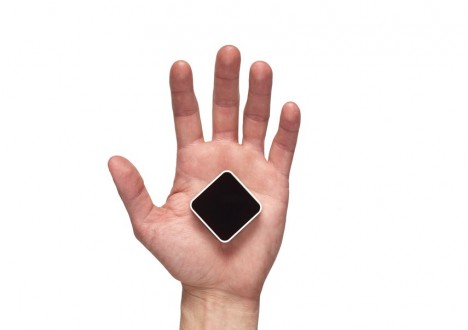
density location sensor

Online reviews indicate how popular your favorite place is in general, but cannot tell you whether now is a good time to drop by or if you may be stuck in a crowd or waiting in line – this is where the Density Sensor comes into play.

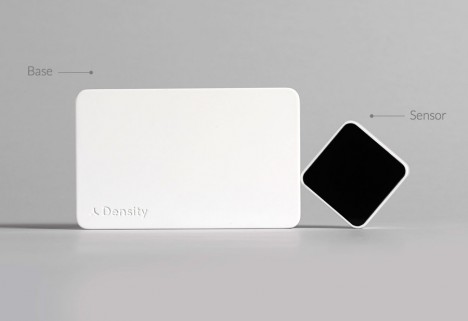
density sensor tracking

No need to resort to complex spatial mapping or real-time video sensors with this gadget, a people-counting device that simply tracks passages through doors (attached to the frame). Some more obvious applications include specific bars, restaurants, coffee shops and other businesses that have time-of-day and day-of-week cycles to contend with, but the same data can also help you pick the DMV or grocery store with the shortest line.

density incoming outgoing people

In turn, businesses can choose what data to share with customers and what to keep for optimization purposes, offering discounts during less busy times or adjusting when to open and close. Compared to non-networked break-beam technology or real-time surveillance cameras, there is no need to wait for data or face privacy concerns.

density sensor box

Of course, up-to-the-minute incoming and outgoing traffic are just a starting point – architecture firms, for instance, could use extended datasets to anonymously track customer or employee flows through a building and use that data to optimize going forward, shaping extensions or remodels. Ultimately, one could imagine this system being replaced by more detailed heat-mapped trackers keeping tabs on entire spaces, but for now this is a cheap solution to a long-standing problem.

Share on Facebook


[ By WebUrbanist in Gadgets & Geekery & Technology. ]

[ WebUrbanist | Archives | Galleries | Privacy | TOS ]


WebUrbanist

 
Comments Off on Density Sensor: Real-Time Data Shows Which Places are Packed

Posted in Creativity


How To Shoot Fashion Shows Easily With These 6 Simple Tips

21 Jul

How To Shoot Fashion Shows

Hi there FashionPhotographyBlog.com readers, today we have a special guest joining us. Based in the Netherlands, Sander Van Leeuwen, has worked in fashion and commercial photography as well as film. He’s also been a loyal follower of FPBlog for many years now and had taken the time to write to us in a response to an article we had previously posted on how to shoot fashion shows.


We thought what he wrote was so insightful and it listed factors that the original post oversaw, that we decided that it would benefit a lot of you who may be trying to shoot fashion shows for the first time and not quite sure what to expect of the experience. We have invited Sander Van Leeuwen to share with us his 6 simple tips that can make shooting through the commotion of a fashion show just a little bit easier by being prepared for the experience.


We do want to want to make a disclaimer though before we start, and remind everyone that fashion shows are live events, and can be, by nature, a stressful affair. Like in wedding photography, if you miss the moment, you miss the moment. There is no going back!  The buzzing environment of fashion shows may not be everyone’s cup of tea, (perhaps not even for Sander) though some people thrive in these kind of situations. We just want you to be prepared, so you can be on your game and not miss those moments photographing powerful shots of the models on the runway. Take it away, Sander!


Hi folks, actually it’s kind of stupid that a lot of camera people (were) shooting the same show… the craziness during a show I did (the Amsterdam International Fashion Week 2009)… It was my first big show. I actually liked some of the parts (the parties and being with a lot of famous people (and) designers), but I hated the actual shooting, since it was kind of stressful. My experience:


1. Professional shows have good light: especially with the good high ISO performance, nowadays this is not an issue.


2. 70-200 mm is a good range. The only thing is most of the time you can’t shoot full body on the turn. But with 200 mm you can shoot nice full body shots during the whole runway and you can make some nice close ups of accessories.


3. DON’T USE FLASH! With a lot of photographers the chance is big you’re ruining someone else s picture with your flash, or someone else is ruining yours. Good organizations even officially forbid to use flash (if not other photographers will look at you (like) they are going to kill you).


4. A monopod is a must have. It happens that there is very little space and you can stand steady between all other photographers.


5. Take a bottle of water with you since waiting can be really make you tired and thirsty.


6. If it’s a multiple show even, try to make friends with some of the photographers so you can help each other when this is needed (save good spots for example) and you can have a nice chat while waiting… Did I mentioned waiting already? 😉


I hope this helps some photographers a little!


Kind Regards, Sander

Savale.nl


Did you find these tips useful? Please share this post on social media if you did 🙂


Also, if you have your own tips not covered in this list, please write them in the comments box. We will love to hear what tips you have.


Lastly, if you would like to be featured as a guest writer like Sander Van Leeuwen did, do send us a message and get in touch with us. We would like to hear from you. For more details on how to contribute to FashionPhotographyBlog.com click here –> CONTRIBUTE TO FPBLOG HERE


Fashion Photography Blog

 
Comments Off on How To Shoot Fashion Shows Easily With These 6 Simple Tips

Posted in Uncategorized


Moon video recorded with 83x zoom Nikon Coolpix P900 shows Earth’s rotation

30 Jun

With a 2000mm equivalent zoom range, the Nikon Coolpix P900 leads the current ultrazoom class in terms of reach. While there’s no question that the camera has an impressive zoom range, a nature photographer based in Germany has made it ever-so-obvious just how powerful this little ultrazoom is. His YouTube video of the moon shows that at 83x optical zoom the magnification is so powerful, the rotation of the Earth is easily seen as the subject drifts through the frame. Read more

Articles: Digital Photography Review (dpreview.com)

 
Comments Off on Moon video recorded with 83x zoom Nikon Coolpix P900 shows Earth’s rotation

Posted in Uncategorized


CP+ 2015: Sony shows off new technology

15 Feb

We swung by the Sony booth at CP+ 2015 in Yokohama, Japan, where they had displays of the latest technologies in their cameras and lenses, as well as an elaborate diorama of a bird in flight over a fabricated landscape, amongst other things. We even sat down with a couple of engineers at Sony to talk about the Alpha 7 lineup. Check out some of the interesting things we learned during our time here with Sony

Articles: Digital Photography Review (dpreview.com)

 
Comments Off on CP+ 2015: Sony shows off new technology

Posted in Uncategorized


CP+ 2015: Canon shows off new EOS 5DS and 5DS R

14 Feb

By far the biggest lines at this year’s CP+ show in Yokohama are at the Canon booth, and they’re made up almost entirely of people eager to see just two cameras – the new EOS 5DS and EOS 5DS R. Canon’s highest resolution DSLRs by far, both cameras offer an incredible 50MP pixel count, and almost identical ergonomics to the EOS 5D III. Click through for some hands-on pictures

Articles: Digital Photography Review (dpreview.com)

 
Comments Off on CP+ 2015: Canon shows off new EOS 5DS and 5DS R

Posted in Uncategorized