RSS
 

Posts Tagged ‘Shoot’

Don’t Know What to Shoot? These 4 Photography Exercises Will Keep You Motivated

19 Jun

Whether you’re just getting into photography, or if you’ve been at it for years; you can keep yourself rejuvenated, and keep the creative juices flowing by always trying new things.

If you’re feeling uninspired photographically, that’s a sign that you need to shake things up by trying something completely different, or at least something that isn’t your usual style. You might be surprised at how small exercises can boost your creativity while teaching you new techniques and solidifying old principles in your mind.

Who knows, you might even discover a new passion!

To give your brain a little kick in the butt, challenge yourself to try some of these photography exercises. Even if they aren’t new to you, going out shooting with a new purpose feels refreshing and may lead to something completely new.
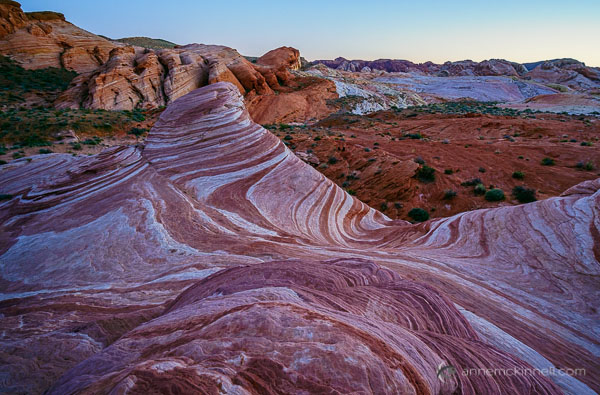
Fire Wave at Valley of Fire State Park, Nevada, by Anne McKinnell

Fire Wave at The Valley of Fire State Park, Nevada, taken from a high perspective on an opposite hilltop

1. Change your perspective

Photographers often get in the habit of shooting at eye-level which tends to make photos repetitive and somewhat common. We know this, and so we take the odd shot on our knees or even occasionally lying on the ground.

But is this really enough? Aren’t there other vantage points?

Challenge yourself to go out shooting and never shoot from eye-level for a whole day. Instead, find a new vantage point any time you take a picture. Get yourself up high above your subject, and crouch and shoot from a low angle. But that’s just the beginning. Ideally, you should try shooting your subject from a variety of angles.

Take one shot from below and one from above. Then, take one even lower, and one even higher, if possible. Then, step back a bit. Then step forward. Move to your right, and move to your left. Taking the same picture from many positions adds variety and will help you understand it better. Plus, you may discover a way of seeing something that you didn’t expect.

If you resolve to do this with every picture you take, you’ll begin to really understand the subtle effect that perspective has on an image, which points of view work for which subjects, and how this can inform your shooting style from here on out.
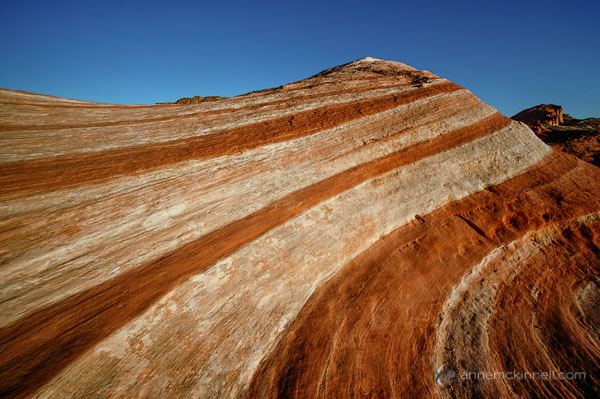
Fire Wave at Valley of Fire State Park, Nevada, by Anne McKinnell

Another perspective on Fire Wave, this time taken up close, from a low angle.

2. Create a story

Rather than trying to capture your subject in one single image, try doing a series instead. Create what LIFE Magazine coined a “photo essay” – a series of images surrounding a single subject or group of subjects, each of which pinpoints a different aspect of its nature. This can be as simple as zooming in on its finer details, or photographing it in different contexts. This method of doing things defines the subject not only by how it appears in a single moment, but also by the way it changes (and the way it stays the same) over several moments. It also helps to craft your visual storytelling abilities.

Choose one subject and cover it completely, the way a journalist would. Do this either by photographing every aspect of it you can think of, photographing it through the course of a day, or by revisiting it over and over throughout a week. Include shots at different distances and using different focal lengths – include some close-up details and some wide compositions – and whittle all the shots down to around ten final images, making sure that no two photos are alike. When you have your picks, try to organize them in an order that tells a coherent story, whether it’s narrated or implied.
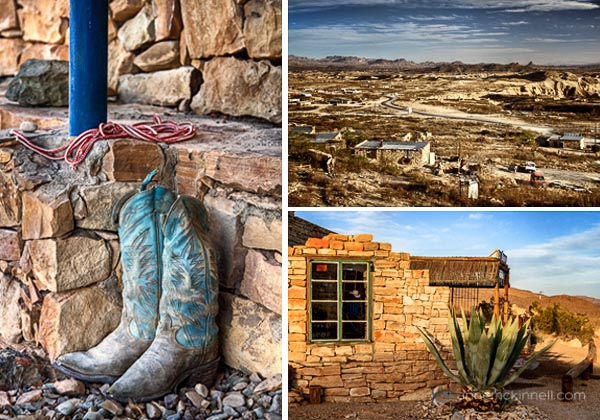
Terlingua Ghost Town Texas by Anne McKinnell

These three photos are from Terlingua, a ghost town in Texas.

3. Shoot in Black and White

For a whole day, turn your camera to Black and White mode and don’t take it off. Of course, you can convert your RAW images to black and white after-the-fact in post-processing, but as an exercise, try shooting them in Black and White.

At first the limitation may seem frustrating, but Black and White photography requires a completely different way of seeing the world in terms of shape, form, and contrast, rather than through the common visual cues that you’re used to. Composing your photos in this way will invariably improve your compositions in colour photography, too. You can play with contrast settings in-camera or in post-processing to perfect the highlight to shadow ratio which defines a good monochrome image.
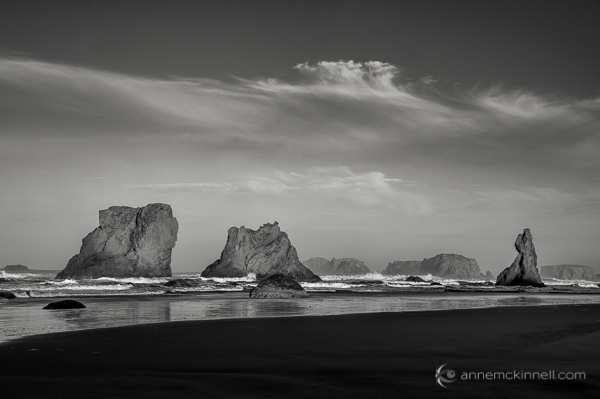
Bandon Beach, Oregon, by Anne McKinnell

Bandon Beach, Oregon.

4. Make manual long exposures

For this exercise, you’re going to take full advantage of digital photography’s instant feedback, and use it to play with making manual long exposures.

With your DSLR mounted firmly on a tripod, set the ISO to 100, set the aperture to the smallest opening (the largest f number like f/22 for example), and set the shutter speed to Bulb mode. When the camera is to Bulb mode, the shutter will stay open for as long as the shutter button is held down, but it’s a better idea to attach a wired remote shutter release to prevent camera shake.

Once you have your composition and your focus set, press and hold the button on the remote to hold the shutter open for a few counted seconds. Just guess how many seconds will be required based on the light level. Then, check your results. If the image is too bright, try again, but count half as many seconds. If the image is too dark, count twice as many seconds – or more, if necessary. Do this over and over again, in different scenarios and lighting situations. This practice will hone your ability to read the levels of light present at any given time.

You’ll get the most interesting results if there is a certain amount of movement in your frame, such as drifting clouds in the sky, crowds of people, or running water. The longer your exposure is, the more blurred that movement will appear to the point where water may seem like nothing more than mist, and people will disappear from the image altogether. If you have a solid neutral density filter your exposures can be even longer, creating more extreme effects.
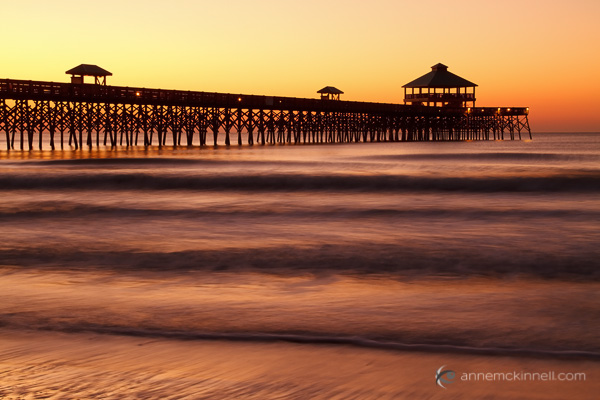
Folly Beach Pier, Charleston, South Carolina by Anne McKinnell

Folly Beach Pier, Charleston, South Carolina – 2 second exposure.
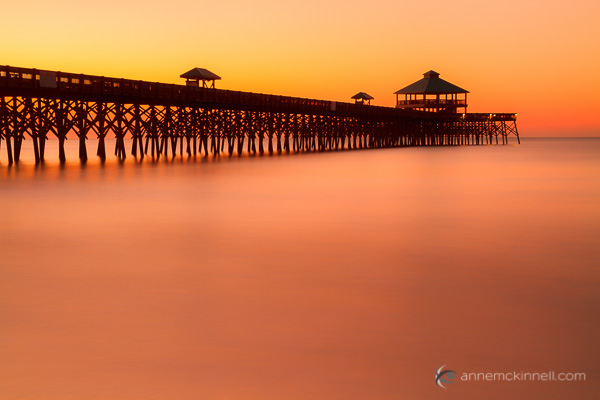
Folly Beach Pier, Charleston, South Carolina by Anne McKinnell

Folly Beach Pier, Charleston, South Carolina – 30 second exposure.

Don’t wait until you start feeling uninspired to try these exercises! Keep your photography energized and creative by trying something new on a regular basis. Even if it doesn’t turn out to be your “thing”, it’s fun and you’re bound to learn something.

The post Don’t Know What to Shoot? These 4 Photography Exercises Will Keep You Motivated by Anne McKinnell appeared first on Digital Photography School.


Digital Photography School

 
Comments Off on Don’t Know What to Shoot? These 4 Photography Exercises Will Keep You Motivated

Posted in Photography


Deep Dive: Inside Benjamin Von Wong’s shipwreck photo shoot

13 Jun

VonWong_Underwater_Tulamben-11.jpg

Benjamin Von Wong isn’t afraid of a little drama. His work incorporates elements of fantasy, turning models into otherworldly creatures and fire-breathers. So who else might you expect to find at the helm of an underwater shoot with two models, a team of divers and a shipwreck? Yep, he went there. Take a look at some of the photos and watch a behind the scenes video to see how he pulled it off. See gallery

News: Digital Photography Review (dpreview.com)

 
Comments Off on Deep Dive: Inside Benjamin Von Wong’s shipwreck photo shoot

Posted in Uncategorized


Top 10 Photo Shoot Tips Using UV Paints

10 Jun

Hong Linh Photography UV Paint Shoot inspired by African Tribes featured on Fashion Photography Blog (FashionPhotographyBlog.com)Last time FashionPhotographyBlog.com spoke to Linh Le from Hong Linh Photography she had informed us that she had finished a photo shoot over a weekend that involved UV paints. The results resulted in a beauty shoot inspired by African tribes. From the feedback that we received about that post, we asked Linh if she could tell us more about the technical aspects of putting a shoot together for our readers. Linh shares with us her top tips for photographers who are thinking about taking on a shoot with UV paints and the key things to look out for.

1) Control all lights, including the ambient light! Linh revealed that failure to do so can have unflattering results, as she explained “My rehearsal shoot was a complete disaster! I set everything up in my living room and it was quite late at night, so there was no light coming through the window blinds, doors etc. My plan was to use our dim light as the ambient light. But the results were just horrible. The skin looked extremely uneven and red. It was really frustrating; I tried all sorts of settings. But that was not the problem; the problem was the lighting, the colour temperature of the lights. They were too yellow. So, I changed the LED fairy lights, which I used as back light, to a different set and because the shoot was during the day, I was able to use the daylight coming through the thin curtains and the results were completely different.”

Hong Linh Photography UV Paint Shoot inspired by African Tribes featured on Fashion Photography Blog (FashionPhotographyBlog.com)

2) Use a tripod, Linh recommends, in order to get sharp images, it is essential to use a tripod here.

3) Use a fast shutter setting and a low ISO, the settings Linh used were 1/8 sec, f2 and ISO 200.

4) To help your camera focus in such low light, Linh also recommends that it is also helpful to use a torch.

5) Test the colors first – Linh advises that “Some of the colours such as gold and silver glow less than others, so make sure you test them out first and mix them if necessary.”

6) You don’t need to go all out on expenses. You can pretty much get all you need cheaply in one site as the photographer revealed that “Getting all the supplies for the UV shoot was easier than I expected. I ordered the colours and two UV light tubes on Amazon, which were about £60 altogether.”

7) Use low wattage for subtle effects as Linh explained “As I did not want the glowing effect to be too extreme, I only used 20W UV lights, so this will depend on your personal style and taste.”

8) Using fabric as backdrops has its advantages. You can play with the effects of different backgrounds simply by changing the color or pattern of fabrics. Linh shared that “For the background, I bought curtain fabric which was dark but had interesting patterns on them which I wanted to be visible on the image.”

9) To get some back light in order to separate the model from the background, you can use fairy lights as the photographer has done on her shoot.

10) When asked if she can give us one last secret, Linh shared that getting the balance of lighting right is essential, “I think the secret lies in finding the perfect balance between the UV light and the ambient light, which is a matter of trial and error.”

There you have it, according to Linh Le, that’s basically all you need to set up a shoot with UV paints. Of course, shoot requirements may vary, depending on the result you want to achieve.
According to the photographer, the biggest challenge with doing UV shoots is to find the best lighting setup and camera settings and finding the right balance for your shoot can only be figured out through experimentation.

I hope this anyone who is thinking of doing a UV shoot and don’t know where to start. We’d love to see and hear about your results! Once again, we’d like to thank Linh Le from Hong Linh Photography for sharing her top tips for doing a shoot using UV paints. Do you have another tip? Post them in the comment section below.

Hong Linh Photography UV Paint Shoot inspired by African Tribes featured on Fashion Photography Blog (FashionPhotographyBlog.com)

To find out more information and see all the images from Linh Le’s UV shoot as well as other shoots, you can check the blog on her website www.honglinhphotography.com

You can contact her via e-mail: mhlinh.le@gmail.com

message Linh on her website: www.honglinhphotography.com
or Facebook page (Hong Linh Photography).

Photo Credits:
Photographer: Hong Linh Photography
Make Up Artist: Sophie Le
Models: Wendy Ng & Ana Santos


Fashion Photography Blog

 
Comments Off on Top 10 Photo Shoot Tips Using UV Paints

Posted in Uncategorized


How To Shoot Unique Travel Photos Like You Wouldn’t Believe

06 Jun

In our world of digital photography, it’s tough to take one-of-a-kind travel photos. For example, let’s say you’re visiting the Leaning Tower of Pisa in Tuscany, Italy. With your camera around your neck, you stroll into the Piazza dei Miracoli and are struck by the strange bell tower’s architectural beauty. But you also notice the crowds of tourists snapping pictures like the paparazzi at Continue Reading

The post How To Shoot Unique Travel Photos Like You Wouldn’t Believe appeared first on Photodoto.


Photodoto

 
Comments Off on How To Shoot Unique Travel Photos Like You Wouldn’t Believe

Posted in Photography


Photographer takes Panasonic GH4 on test shoot around Seattle

13 May

GH4_H_FS14140_slant.png

The headline feature of the Panasonic GH4 is that it’s a Micro Four Thirds camera that can shoot 4K video for under $ 2000, capturing either Quad HD (3840 x 2160) at up to 29.97p or ‘Cinema 4K’ (4096 x 2160) at up to 24p. Seattle-based photographer Erik Hecht recently took the new Panasonic GH4 for a spin to test the dynamic range and to see how well it takes color correction. See video

News: Digital Photography Review (dpreview.com)

 
Comments Off on Photographer takes Panasonic GH4 on test shoot around Seattle

Posted in Uncategorized


How to Plan the Perfect Portrait Shoot

22 Apr

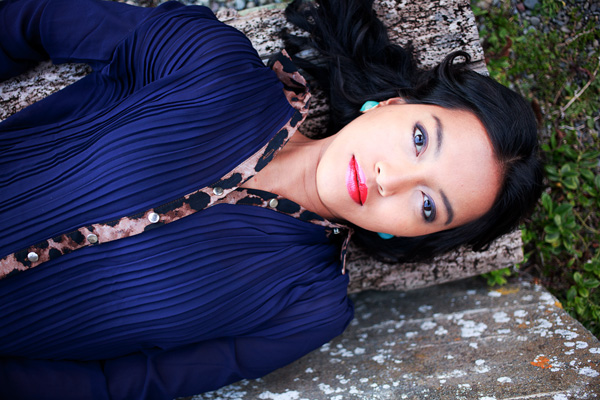
Natural lIght portrait

In my last article I gave you five reasons to use natural light for portraiture. The next step in creating the perfect portrait shoot is planning. The more details you figure out in advance, the more likely you are to come away from the shoot with some beautiful portraits to make you proud.

Generating ideas

The creative side of portrait photography is something that some photographers seem to find easy, and others really challenging. One approach to generating ideas is to look at the work of others and let their portraits inspire you.

You’re probably familiar with the main photo sharing sites already (Flickr, 500px and 1x) and there’s no doubt that you will find plenty of inspiration if you take the time to search them. To help you out I’m going to give you a short list of portrait photographers and websites to look at. The work you will see here will open your eyes to the possibilities within the world of portrait photography.

For high quality black and white portraits take a look at the work of Betina la Plante, Eduardo Izq and Phil Sharpe (Phil has a lot of colour portraits in his portfolio too).

For beautiful colour portraits view the portfolios of Cristina Hoch, Alex Benetel, Alessio Albi, Emily Soto, Ling Li, Anna Karnutsch and Sarah Ann Wright. You can gain greater insight into how some of these photographers work by checking out my interviews with portrait photographers.

Other websites where you can see more work by portrait photographers are Faded & Blurred (leans towards the fine art and documentary side) and The D Photo (leans towards the creative side).

Creating mood boards

If you’ve had a good look through some of those links you’re probably feeling a little confused. That’s no surprise, I selected the photographers because they represent a wide variety of styles and techniques. So, how do you make sense of it all?

My favourite technique is to create a mood board with Pinterest. A mood board is a place where you gather photos that you like in order to communicate the feel or mood that you want to create. You’re not copying the photos you’ve added to your mood board, but using them for inspiration and to communicate to potential models what you’d like to achieve.

Creating mood boards is easy with Pinterest. You can make as many as you like, pin photos and move photos between different boards. Here is one of mine as an example, containing black and white portraits of men or this one on the dPS board – Portrait Inspiration.

Mood boards are also a good way to get a handle on what sort of portraiture appeals to you. When I look at my mood board of black and white portraits of men, it tells me that I like dark, moody portraits taken with natural light. As you look at your own mood boards you will see patterns emerge as to what style of portrait appeals to you. Use this feedback to inspire your portrait shoots.

Finding locations

Finding locations depends on where you live and the style of portrait photography you’d like to pursue. You may shoot in a studio and that makes the decision easy. Others may prefer to shoot outside, utilizing local beauty spots and other interesting locations. Here are some things to consider:

Are you looking for an urban environment or a rural one? If your mood boards contain photos taken in natural environments like forests or fields, then that is the sort of location you should look for. Going back to my mood board of black and white portraits, I can see that I have mostly chosen ones taken in gritty urban environments. I need a similar location to create portraits consistent with the feel of the images in this mood board.

Natural lIght portrait

The background in this photo was a bush, giving it a rural feel. Can you imagine how different this portrait would be if it had something like a concrete wall as a background? The atmosphere would be completely different.

How public or private is the location? You may prefer quiet places without many people around where you can concentrate on your portrait shoot.

Choose a lens

What lens will you be using? This is important when choosing a location. If you use a wide-angle lens, you will be including a great deal of the location in the photo. If you use a telephoto lens, you may only utilize a small part of the location, and that may be out of focus if you shoot at a wide aperture. Telephoto lenses give you more freedom when selecting locations because they can transform a small area such as a fence or wall into a beautiful background.

Natural lIght portrait

The portrait on the left was taken with a wide-angle zoom (focal length 26mm) and the one on the right with a short telephoto lens (85mm). Can you see how the focal length affects the background? Wide-angle lenses include more of the background, therefore you need a location suitable to this approach. Telephoto lenses include much less, and can turn mundane locations into interesting backgrounds.

Read my article How to Choose the Perfect Portrait Lens for more information on this topic.

What will the light be like at your location when you are there? Think about what time of day you will be shooting, and where the light will be coming from. The weather is a major factor, the nature of a location and its suitability for portrait photographer depends on both the weather conditions and time of day.

Natural lIght portrait

This portrait was taken at the end of the day as the sun was setting, casting a beautiful soft light with a red glow over the scene.

Build a dossier of locations

With these things in mind build up a mental dossier of locations close to where you live that you can use for portrait shoots. Keep your eyes open when you are out and about and you will find yourself seeing the potential of locations in a new way.

Natural lIght portrait

I took this portrait in a children’s playground. Every day places like this can become interesting locations. Take note whenever you find somewhere new that could one day be used for a portrait shoot.

Finding models

The final step is finding models to work with. By now you should have a fairly good idea of what type of portraits you’d like to create, and where you’d like to take them. Now you need a model to make that happen.

You may be lucky enough to have friends or family members who would make good models. If have to search a little harder, a good place to start is Model Mayhem. There are other websites where models and photographers can connect, but Model Mayhem is my favourite because it lets you search by location. You can centre the search around the city or town you live in, and save time wading through profiles of models from other parts of the country.

The good thing about websites like Model Mayhem is that its members are people genuinely interested in modelling. You will find that the models who come up in your search range from inexperienced to professional. You may feel most comfortable looking for somebody whose experience matches yours. For example, if you are new to portrait photography then you may feel a little intimidated by an experienced model, and prefer to approach somebody who is also starting out.

Bear in mind that if you have the budget, one advantage of using professional models is that you will benefit from their experience and expertise with posing. Inexperienced models will expect you to direct them. Depending on the style you are pursuing, you may learn quicker and create better portraits with a professional.

There are downsides to websites like Model Mayhem. Some of the models you approach won’t respond and others won’t like your style of photography. Some might let you down at the last minute. But on the whole, my experience has been positive, and I’ve found some of my best models here.

Here are a couple of other ideas that photographers I know have used successfully for finding models. One put up a sign at her local university (where she was also a student) and found models that way. Another friend of mine had some business cards made and approached people in the street to ask them if they would like to model for him. Not all responded, but he found a few good models that way.

By the way, if you’re a model based near Wellington in New Zealand, then feel free to get in touch. Contact details on my website (link below).

Perhaps the readers can share some of their experiences about searching for models. I would like to hear your stories, both the positive experiences and the negative.

Putting it all together

Hopefully these ideas have given you a head start in planning the perfect model shoot. What are your experiences with creating portraits? What advice would you give other photographers? Let us know in the comments.


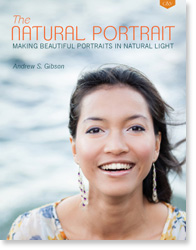
The Natural Portrait photography ebookThe Natural Portrait
My ebook The Natural Portrait teaches you how to take beautiful portraits in natural light. This 240 page ebook, published by Craft & Vision, takes you through the entire process of natural light portrait photography through from finding a model, deciding where to shoot, working with natural light and post-processing your images. Click the link to learn more or buy.
The post How to Plan the Perfect Portrait Shoot by Andrew S. Gibson appeared first on Digital Photography School.


Digital Photography School

 
Comments Off on How to Plan the Perfect Portrait Shoot

Posted in Photography


Ryan Brenizer on how to shoot engagement sessions

20 Apr

Screen_Shot_2014-04-18_at_9.13.57_AM.png

Engagement photo sessions are not only an additional source of income for photographers but, as New York City-based wedding photographer Ryan Brenizer explains, these shoots provide the perfect opportunity to establish a relationship with the couple and learn how to make them feel comfortable in front of the camera before the big day. See video

News: Digital Photography Review (dpreview.com)

 
Comments Off on Ryan Brenizer on how to shoot engagement sessions

Posted in Uncategorized


Shoot Pro Quality Videos (Without a Hollywood Budget)

10 Mar

Extra photos for bloggers: 1, 2, 3

Whether the Oscars inspired you to shoot like the greats, or displeased you to the point of “I could do better,” NOW is the time to step up your video shootin’ game!

Take up your trusty DSLR, a Focus Shifter, the Oh! Wow. Ring Light and start writing that acceptance speech.

The Oh! Wow. Ring Light surrounds your lens in LEDs that provide even light at three brightness settings. It has a constant mode (perfect for videos) and also flash mode for stills.

The Focus Shifter fits snug on any lens, giving you a handle for max control of your focus ring and a marker board to set your focus points before you shoot.

Just don’t forget to thank the Academy, your mom and Photojojo. 🙂

See more example pix from our Ring Light
$ 99 at the Photojojo Shop

Learn More about the Focus Shifter
$ 49 at the Photojojo Shop


© laurel for Photojojo, 2014. |
Permalink |
No comment |
Add to
del.icio.us

Post tags:


Photojojo

 
Comments Off on Shoot Pro Quality Videos (Without a Hollywood Budget)

Posted in Equipment


Extreme Exposures: Light Landscapes Take Hours to Shoot

03 Mar

[ By WebUrbanist in Art & Photography & Video. ]

light art figure ground

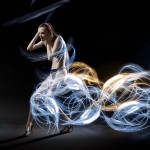
Most light photographers focus on making a shape in the foreground in a matter of seconds, then setting it against a dark static backdrop – this artist often animates every inch of the frame.

light art flowing energy

light art room interior

Finnish artist Janne Parviainen of Helsinki takes these all-encompassing, long-exposure shots over many minutes (even hours at times), each line representing mere seconds along the way.

light art crouching portrait

light drawing laying down

As surreal as they look, there is no post-production involved. Aside from props and plans, even their creator cannot really see what he is making them until they are completed.

light drawing water monster

Parviainen was an oil painter previously, but pivoted when an accidental long-duration photo of streetlights, clicked on a nighttime walk, triggered a fascination with lighting. Now using light as paint, he employs a new series palettes and brushes. Glowsticks, light strings, strobes and flashlights help him animate everything from human figures to abandoned cars.

light drawing figures circle

light drawing orange room

light art surreal scen

He begins tracing what is there and then adds his own haunting portraits and inventive twists to the scenes he sets. The results are so saturated with light that it is sometimes hard to tell what is really behind them and what he created from scratch along the way – what is foreground, background or sheer imagination.

Share on Facebook


[ By WebUrbanist in Art & Photography & Video. ]

[ WebUrbanist | Archives | Galleries | Privacy | TOS ]


WebUrbanist

 
Comments Off on Extreme Exposures: Light Landscapes Take Hours to Shoot

Posted in Creativity


Anatomy of a Concert Photography Shoot

24 Feb
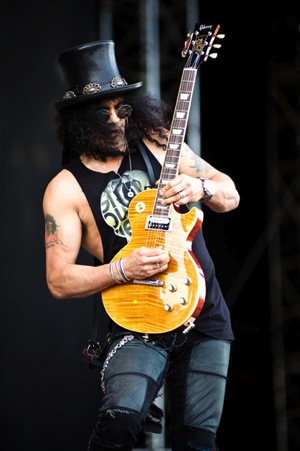
Concert photography Slash

Slash from Guns N’ Roses

In my last article 6 tips for budding concert photographers I explained the basics (and camera settings) of how to start your career as a concert photographer. I would like to say a big thank you for your awesome feedback and your ongoing comments on that post. It really means a lot to me and shows how many talented and hard working concert photographers are out there.

This article is a follow up, and I will go into more details about the “anatomy of a concert photography shoot“. Especially when you are new to concert photography, it can be overwhelming to stand in the photo pit all alone with your camera. The venue lights go out, the band enters the stage and you have only three songs (average 10 minutes) to get your awesome shots. Honestly, in the beginning it was also scary for me, but trust me, after you have shot some concerts you’ll feel much more comfortable in front of the stage and you’ll learn to know your camera settings by heart.

One of the points that are often undervalued is the fact that a band consists of various individuals. It is tempting to only shoot the lead singer (the key person), but this would be just one out of the whole band. There’s also a guitarist, drummer, bass player and additional musicians that are worth taking a closer look. Hence, it is more difficult to photograph the other band members, but you definitely should try to catch everyone on stage.

Let´s break it up:

The Lead Singer (The celebrity of the band)

This guy is the one whose name is often linked to the bands name such as Iggy Pop, Morrissey, David Bowie, Neil Young or Leonard Cohen.

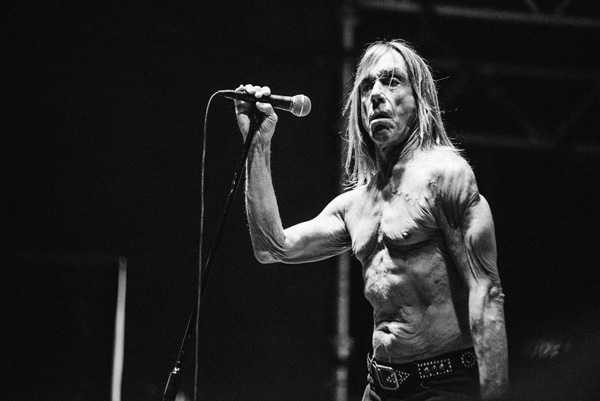
They are the celebrities and will be shown on every VIP party and on TV. So, to photograph this person is a must have. From a concert photographers perspective, this is the easiest member to photograph. They are always at the front of the stage and get the best lighting. I always focus on the lead singer first and once I’ve got some awesome shots, I will follow up on the other band members.

Concert photography Iggy Pop

Iggy Pop

The Guitarist and the Bass Player

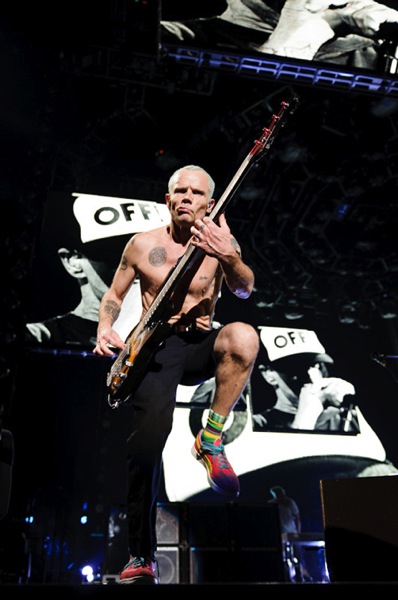
Next I focus on the guitarist and bass player. Both of them are standing on one side of the stage, either behind the singer or on the same level. I’ve shot concerts where the bass player was standing in total darkness, so I won´t have a chance (even with a full frame sensor DSLR, f/1.4 lens, and ISO 6400) to get a decent picture. These are the hard times of a concert photographer and you just have to accept it sometimes. However guitarists and bass players provide great shots when you catch them e.g. posing when playing a solo or jumping around.

(See photo below of Flea from the Red Hot Chili Peppers and Slash from Guns N’ Roses top of the article)

Concert photography Flea bass player

The Drummer

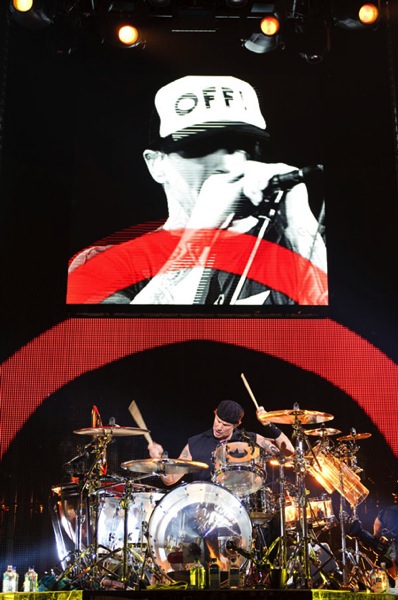
The drummer is the “heart“ of the band and the pulse generator. A rock band without a drummer doesn’t work, but photographers tend to ignore them in their pictures. The drummer is also the one who gets you awesome action shots if you catch them in the right moment. However, these guys are almost always in the back of the stage and therefore you need a telephoto lens like the 70-200mm to capture his presence. On bigger stages (like festivals) it can happen that the drummer is so far away, that it is not always possible to reach him with your basic lens kit. But try your best, and your efforts will be rewarded.

Concert photography drummer

Chad Smith, Red Hot Chili Peppers

The Band

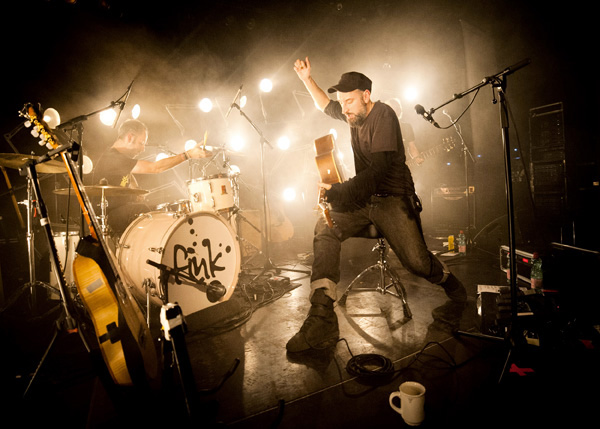
Also try to get a picture of the entire band. Your best bet is the use an ultra wide-angle lens such as a 14mm lens. This will allow you to get the whole stage in one picture. If you are allowed to shoot the complete show (you have to ask the band first), try to get other viewpoints such as from a balcony, from the back of the venue, or on stage.

Concert photography band

Fink

The Audience

In addition, you can also take pictures of the audience. Just turn around in the photo pit and you are facing the screaming fans squeezed into the first row. This is a tricky one, because there is lack of lighting there and you need a ultra wide angle lens to capture some good action shots. Try to catch them when they are ecstatic about the band.

Concert photography Audience

Some general notes for you as concert photographer:

  • I always try to get the musicians with their instruments. So when I shoot the lead singer, I take care to include the microphone. When shooting the guitarist, get the guitar in the shot and the drummer needs to show his drumsticks, otherwise it looks strange when someone sits behind a huge drum kit, but you can’t actually see him playing.
  • In general I try to frame my pictures in a way that I don´t chop off guitar necks, bass bodies or keyboards. For a close shot of the drummer you need to crop the drum kit. Thats fine, just try to get a clear framing.
  • Shooting famous bands like Metallica, Iron Maiden, Red Hot Chili Peppers, they always provide good lighting on stage. It gets more difficult in smaller clubs where you are confronted with poor lighting conditions.
  • Try to get some details shots too. Shoes, tattoos, fancy stage outfits such as lamps, visuals or flags. Some bands can be very creative.

Summary:

  • Get to know your gear by heart first (camera settings, lenses)
  • Even though the lead singer is the celebrity of the band, try to also get the other band members
  • For the drummer, you often have to use a telephoto lens
  • Show the context in your pictures e.g. The singer with a microphone, drummer with drumsticks, etc.
  • Frame your pictures to avoid cropping off the instruments
  • Get pictures of the band, audience and details on stage
  • The more famous the band, the better lighting on the stage (rule of thumb)


The post Anatomy of a Concert Photography Shoot by Matthias Hombauer appeared first on Digital Photography School.


Digital Photography School

 
Comments Off on Anatomy of a Concert Photography Shoot

Posted in Photography