Tag: ship

  • Samyang AF 14mm F2.8 for Sony E-mount set to ship in September

    Samyang Optics has completed its launch of five new lenses over the summer with the announcement that its full-frame 14mm F2.8 autofocus lens for Sony E-mount is ready to hit stores.

    The Samyang AF 14/2.8 FE, as it is known, includes 14 elements in 10 groups, 3 of which being aspherical and two extra-low dispersion. The lens has nearly a 114° field-of-view when mounted to a full-frame body and about 90° on a crop body. The 14mm has a minimum focus distance of 20cm/7.9in and sports 7 circular aperture blades.

    The lens will be available in September for €699. US and UK pricing was not available at press time.

    Press release:

    Samyang Announces the Release of AF 14/2.8

    August 15th, 2016, Seoul, Korea – The global optics brand, Samyang Optics (http://www. samyanglensglobal.com) today announced the long-awaited release of autofocus lens: 14mm F2.8 for Sony E mount Mirrorless cameras with full frame sensor size. The new Samyang AF 14/2.8 FE is the widest lens in its class offering superb quality images to photographers. This launch follows the recent availability announcement of Samyang AF 50/1.4 FE.

    Optimised Optical Design for Full Frame Mirrorless Camera Lens
    Samyang AF 14/2.8 FE is specifically designed to work in harmony with full frame mirrorless cameras in Sony E mount. The flow of light is devised based on the uniqueness of the distance from glass to sensor in mirrorless cameras to create optimal performance. Along with portability of mirrorless lenses, the 14mm F2.8 is compatible with full frame sensors to deliver the wideness and sharpness of image to photographers.

    The 14mm F2.8 is the widest angle available in the market in its class, broadening the sight of photographers to capture the world. Based on Samyang Optics’ exceptional optical technology, Ultra Multi Coating and three aspherical lenses have been included among 14 glasses in 10 groups to minimise aberration and unnecessary light dispersion, delivering high resolution from the centre to the corners of the image.

    AF Performance and Ergonomic Design Based on Class-Leading Technology
    This new product will be one of the first autofocus lenses in over 40 years of Samyang’s class-leading core optics technologies. Samyang has captured the essence of world leading image technology with their manual focus lenses and reinterpreted it into autofocus lenses. Photographers now can enjoy the prime manual lens image quality and autofocus lens. Samyang AF 14/2.8 FE is compatible with both phase detect and contrast detect sensors to operate fast and accurate focus detection.

    The 86mm of maximum diameter is also the result of years of R&D for best handling, by adding stability. Also the minimal and sleek design and metal-housing solidify the build quality with the internal focus system.

    Available from September 2016
    This launching expands the boundaries of Samyang Optics photo lens line-up from manual focus only, to now include autofocus lenses. With the addition of 14mm to 50mm, Samyang now has two autofocus lenses along with 39 manual focus photo & cine lenses and 6 professional cine lenses, XEEN. The lens will be globally available from September, and the suggested retail price is EUR 699.

    More information will be released soon on Samyang Optics official website (http://www.samyanglensglobal.com), Facebook page (http://www.facebook.com/samyanglensglobal) and Instagram (http://www.instagram.com/samyanglensglobal).

    Samyang AF 14mm F2.8 specifications

    Principal specifications
    Lens type Prime lens
    Max Format size 35mm FF
    Focal length 14 mm
    Image stabilization No
    Lens mount Sony FE
    Aperture
    Maximum aperture F2.8
    Minimum aperture F22
    Aperture ring No
    Number of diaphragm blades 7
    Optics
    Elements 14
    Groups 10
    Special elements / coatings 3 aspherical elements + Ultra Multi Coating
    Focus
    Minimum focus 0.20 m (7.87″)
    Maximum magnification 0.12×
    Autofocus Yes
    Focus method Internal
    Distance scale No
    DoF scale No
    Physical
    Weight 505 g (1.11 lb)
    Diameter 86 mm (3.37″)
    Length 98 mm (3.84″)
    Sealing No
    Colour Black
    Hood supplied Yes
    Tripod collar No

    Articles: Digital Photography Review (dpreview.com)

  • Floating Forest: Trees Rise From Corpse of Abandoned Ship

    [ By Steph in Abandoned Places & Architecture. ]

    floating forest 6

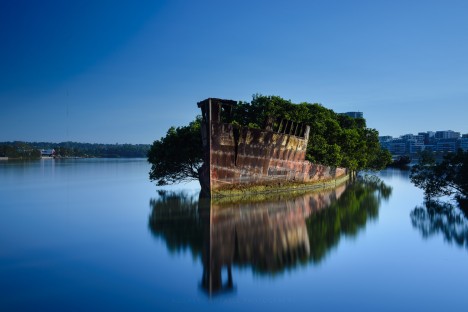
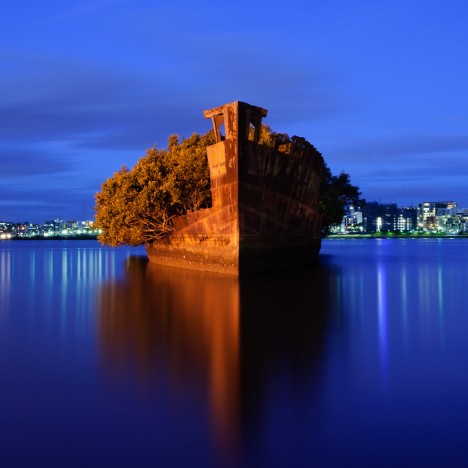
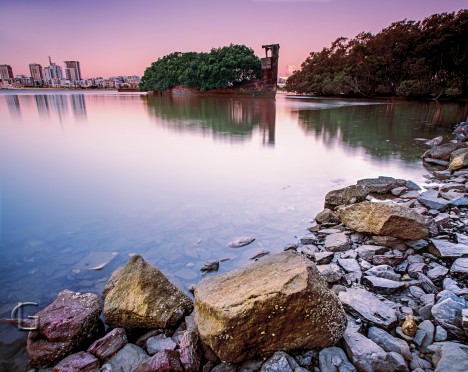
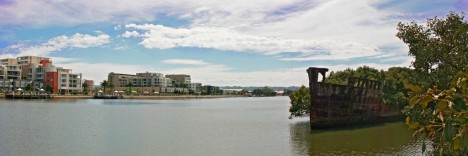
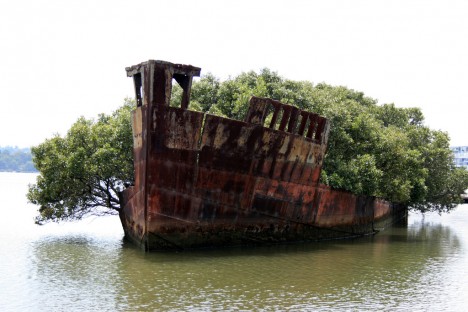
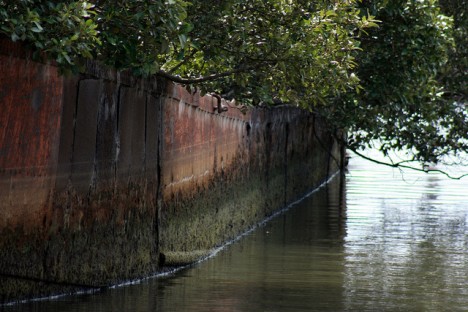
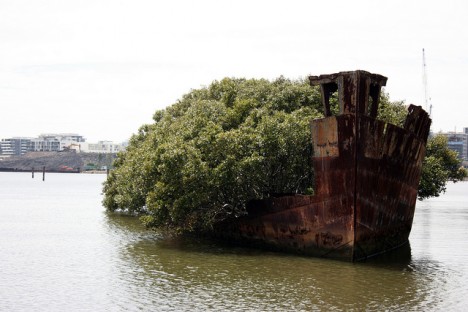
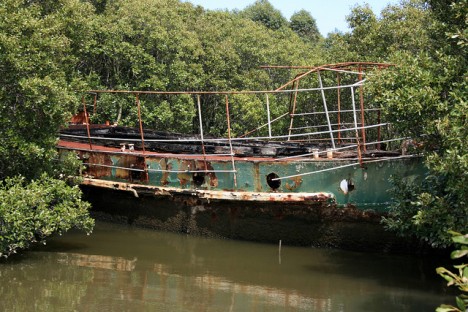
    Rusted and half-sunken yet still somehow afloat on the waters of Sydney’s Homebush Bay, the remains of a century-old ship have become fertile ground for a thriving forest. Located on the south bank of the Parramatta River on the inner west side of the city, the bay was a hub for industrial activity in the mid-20th century and became a dumping ground for unwanted materials of all kinds, from busted ships to toxic waste.


    floating forest 7

    floating forest 4

    The bay was ultimately rehabilitated, but many of the ships remain, lurking among a tangle of mangrove trees. Among them is the SS Ayrfield, which the mangroves clearly found quite hospitable, transforming it into a sort of artificial floating island. In its former life, the Ayrfield was used to transport supplies to American troops stationed in the Pacific during World War II before operating as a collier. It was sent to Homebush for disposal in 1972 after sixty years of service.

    floating forest 1

    floating forest 2

    floating forest 3

    floating forest 5

    Awash in brilliant hues of red and orange, the hull of the 1,140-ton SS Ayrfield pokes up from the surface of the water, the Sydney skyline looming in the distance. Other ghostly ships in the bay include the steam tugboat SS Heroic and the steel boom defense vessel HMAS Karangi, which helped defend Darwin Harbour from Japanese attack in 1942.

    Photos: Jason Baker, gerryligon, rodney campbell / Flickr Creative Commons

    Share on Facebook


    [ By Steph in Abandoned Places & Architecture. ]

    [ WebUrbanist | Archives | Galleries | Privacy | TOS ]

    WebUrbanist

  • Droneport: New UAV Hub to Ship Medical Supplies Across Rwanda

    [ By WebUrbanist in Architecture & Public & Institutional. ]

    drone airport emergency medical

    This architect-designed drone airport will be the first of its kind, created to facilitate an unmanned aerial vehicle supply chain servicing remote areas of Africa, addressing urgent medical and other ongoing needs. Just as much of the continent skipped landlines and went straight to mobile phones, this strategy could jump steps in the development of infrastructure for delivering for physical goods.

    drone airport vaulted brick

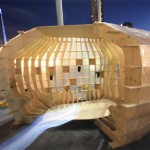
    Developed by Afrotech in collaboration with Foster + Partners, work is set to begin next year with a pilot program completed by 2020. The vaulted brick structure will have spaces for drone building and repair as well as packaging, shipping and storage of goods both medical and otherwise. The architecture is intentionally open, simple and able to be constructed with local materials and labor.

    drone airport side view

    Two systems will function simultaneously to provide emergency and ongoing supplies, respectively. The Redline will include small situation-specific drones that can serve targeted emergency needs, carrying over 20 pounds. Larger 200-pound-capacity Blueline drones will manage more sizable shipments of less urgent supplies.

    drone airport rwanda

    “The Droneport offers a new typology for a building which we hope will grow into a ubiquitous presence, much like petrol stations have become dispersed infrastructure for road traffic,” acting as a network of stopping, refueling and repair stations.

    drone alternative shipping routes

    Currently, only a small percentage of the African population lives within a mile of year-round accessible roads, while UAVs from the Droneport will be able to more quickly, easily, safely and reliably access nearly half of Rwanda’s citizens.

    drone airport commerce

    “We require immediate bold, radical solutions to address this issue. The Droneport project is about doing ‘more with less’, capitalising on the recent advancements in drone technology – something that is usually associated with war and hostilities – to make an immediate life-saving impact in Africa.”

    drone airport hillside

    “It is inevitable on a crowded planet, with limited resources, that we will make more intensive use of our sky using flying robots to move goods faster, cheaper, and more accurately than ever before. But it is not inevitable that these craft or their landing sites will be engineered to be tough and cheap enough to serve poorer communities who can make most use of them. Droneport is an attempt to make that happen, and to improve health and economic outcomes in Africa – and beyond.”

    Share on Facebook


    [ By WebUrbanist in Architecture & Public & Institutional. ]

    [ WebUrbanist | Archives | Galleries | Privacy | TOS ]


    WebUrbanist

  • Abandoned Ship: Artist Paints Figure Onto Floating Ruins

    [ By Steph in Art & Street Art & Graffiti. ]

    ship graffiti 2

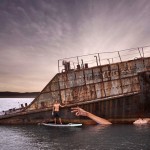
    Hawaiian artist HULA paints the head and arm of a floating woman onto the rusted steel surface of an abandoned ship, all while balancing on a surfboard. The woman’s face appears and disappears with the tides, the rising water sometimes only revealing her hand. This large-scale guerrilla mural is the latest waterside work to be completed by HULA, who’s known for his unusual balancing act technique.

    ship graffiti 3

    Otherwise known as Sean Yoro, the Oahu-born, NYC-based artist gained attention this summer for translating his oil paintings on canvas to urban surfaces located along canals or other bodies of water. HULA’s favorite subjects are bathing women, painted with photorealistic detail onto crumbling concrete.

    ship graffiti 1

    The artist was inspired to create ‘Ho’i Mai’ (which translates to ‘Come Back’) on the stern of a half-sunken ship off the Hawaiian coast after watching the water rise and fall as the tides change throughout the day.  Floating out to work alongside the ship on his paddle board, HULA hand-painted the image without the apparent use of a projector or, in fact, anything other than a few cans of paint and some brushes.

    ship graffiti 4

    Yoro hopes to turn the ship into a public work of art rather than just a forgotten vessel left to slowly sink into the water over the decades. The painting won’t last forever, though, as the artist uses traditional oil paints knowing they won’t stand up to the elements for long.

    ship graffiti 5

    “I use it in a traditional old masters’ technique, mixing both loose brushwork with very tight strokes of sharp lines,” he told CNN. “I’m always trying to make the paint have a juicier texture to really help the portrait come alive. Oil paint outdoors definitely isn’t the best and it doesn’t last nearly as long as acrylics, but I kinda like that my figures have their own lifespan.”

    Share on Facebook


    [ By Steph in Art & Street Art & Graffiti. ]

    [ WebUrbanist | Archives | Galleries | Privacy | TOS ]


    WebUrbanist

  • Abandoned Ship: Spacecraft Discovered in Huge Derelict Hangar

    [ By WebUrbanist in Abandoned Places & Architecture. ]

    space shuttle destroyed prototype

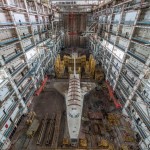
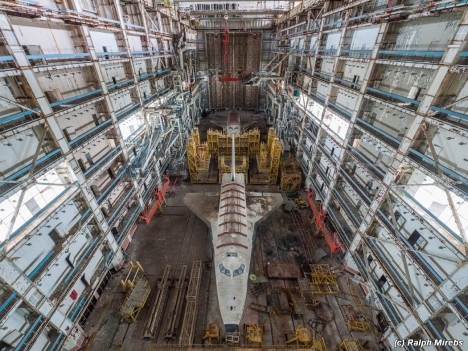
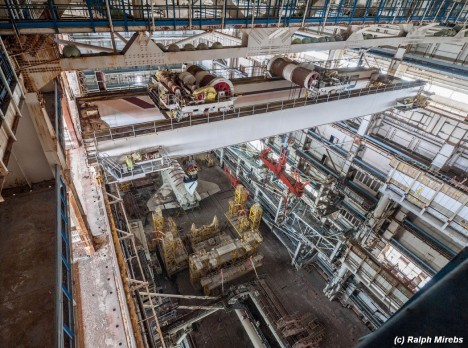
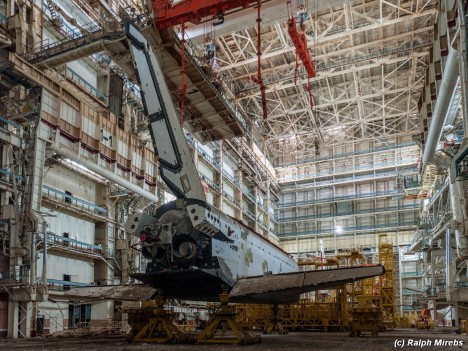
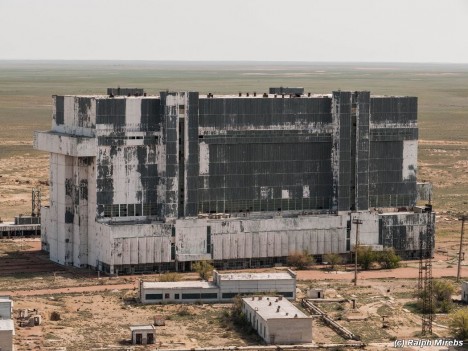
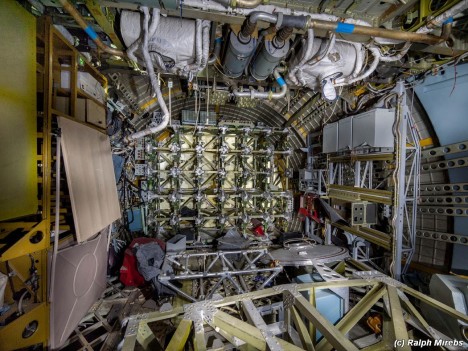
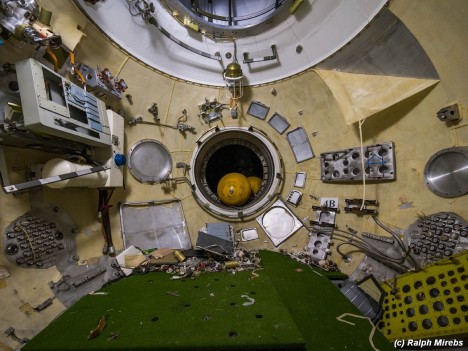
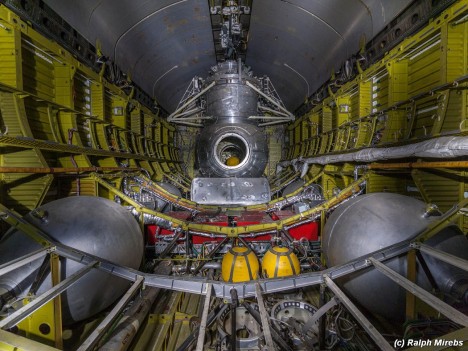
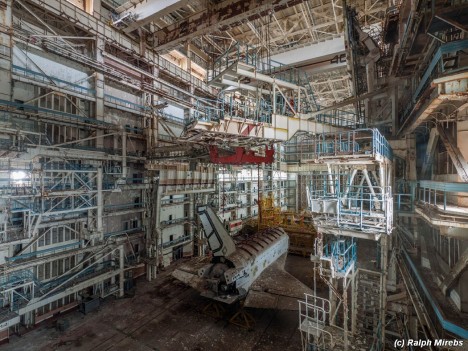
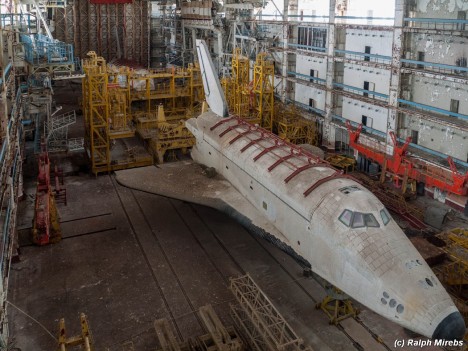
    Remarkably intact and beautifully documented by a Russian urban explorer, this space shuttle prototype rests in a massive above-ground graveyard at the Baikonur Cosmodrome, deserted due to the collapse of the Soviet Union. Originally destined to dock with Soviet space station Mir, the model was almost finished and had even completed a test flight when the facility was shut down in the early 1990s.

    space shuttle view above

    space shuttle interior angle

    space craft close up

    space shuttle tail section

    space shuttle building exterior

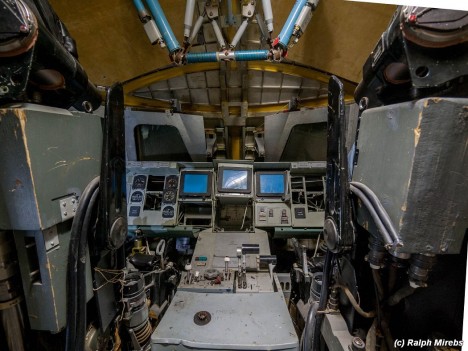
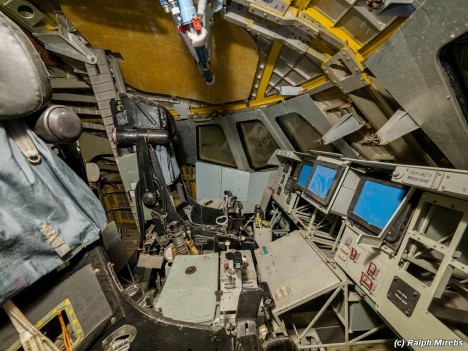
    Photographer Ralph Mirebs identified the massive (yet somehow still unassuming) structure as an excellent target for exploration, but did not know just how many surprises were in store for him when he took his camera into the ruins. Positioning himself on catwalks and even entering spacecraft models, he was able to take pictures of an amazing array of spaces and equipment.

    space shuttle cockpit view

    space shuttle cockpit side

    space shuttle interior debris

    space shuttle inside

    space shuttle looking back

    As incredible as the outside of the craft may be, the insides are all the more fascinating, filled with the equipment intended to take it to space that somehow seems surprisingly fragile right here on the ground.

    Next Page – Click Below to Read More:
    Abandoned Ship Spacecraft Discovered In Huge Derelict Hangar

    Share on Facebook


    [ By WebUrbanist in Abandoned Places & Architecture. ]

    [ WebUrbanist | Archives | Galleries | Privacy | TOS ]


    WebUrbanist

  • Junked Ship: Japan Ditches Hadid’s 2020 Olympic Stadium Design

    [ By WebUrbanist in Architecture & Public & Institutional. ]

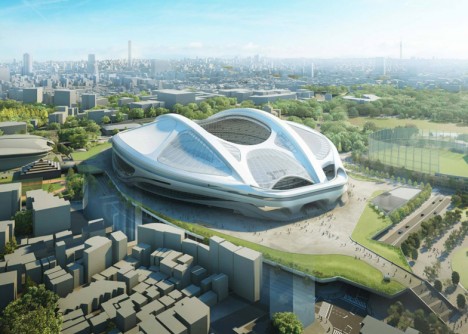
    japan stadium hadid ditched

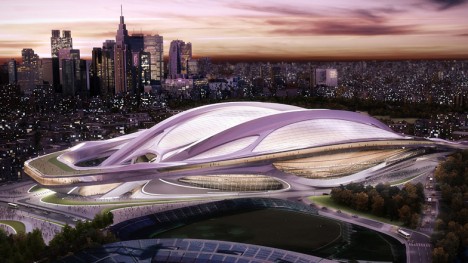
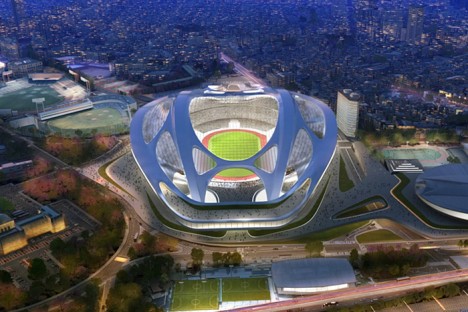
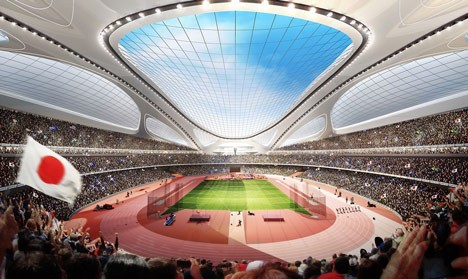
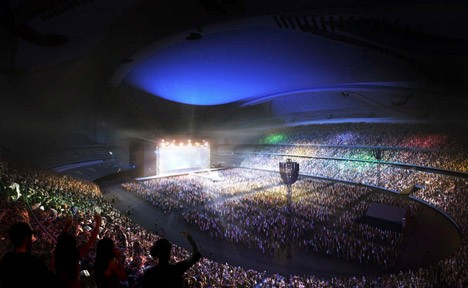
    Scheduled to land like an otherworldly spacecraft in Tokyo, the curvaceous, controversial but competition-winning National Stadium designed for the 2020 Olympics by Zaha Hadid Architects (ZHA) will be restarted from scratch.

    tokyo stadium design

    The structure has been criticized for everything from its mounting construction costs to its design that arguably clashes with the surrounding historic portions of the city and violates local height limits. After years of growing issues and complaints, Prime Minister Shinzo Abe finally announced a change of course: “We have decided to go back to the start on the Tokyo Olympics-Paralympics stadium plan, and start over from zero. I have been listening to the voices of the people for about a month now, thinking about the possibility of a review.”

    tokyo stadium plans

    tokyo stadium interior

    Intended to be a sports center to last a century, the price tag has repeatedly climbed beyond original estimates, recently reaching a reported $ 2,000,000,000, in part due to expensive materials but also the complex shape. A number of Japanese architects also weighed in, signing a petition to scrap the project – Hadid, meanwhile, as a London-based Iraqi architect, has contended that their criticism is based on the selection of a designer from outside of the country.

    tokyo stadium at night

    Whether the 80,000-seat stadium will now be designed by another firm or simply restarted by Zaha Hadid is unclear as yet, but 7 years after she won the competition for this concept one might hope they will give her another chance to cut costs or come up with an alternative. For now, her firm has officially defended the direction they took, claiming the icon is worth the cost and comparable to other world-class sporting arenas in major cities around the globe and that local labor costs are part of the problem: “We have used our experience on major sports and cultural projects, including the hugely successful London 2012 Games and legacy, to design a stadium that can be built cost-effectively and still deliver the flexible and robust National Stadium that the Japan Sports Council requires.” Perhaps the final design solution will more closely mimic the famously futuristic 2020 Neo-Tokyo Olympic Games as predicted and portrayed in the famous 1988 anime Akira.

    Share on Facebook


    [ By WebUrbanist in Architecture & Public & Institutional. ]

    [ WebUrbanist | Archives | Galleries | Privacy | TOS ]


    WebUrbanist

  • Mole Delivery: Automated Pipelines to Ship Goods Underground

    [ By WebUrbanist in Conceptual & Futuristic & Technology. ]

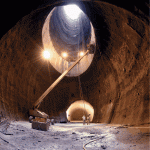
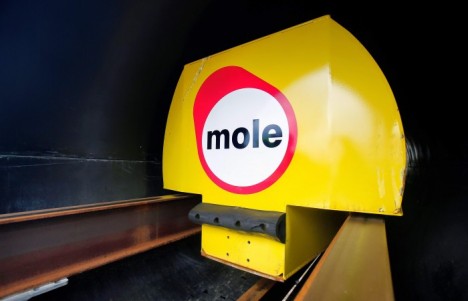
    mole underground delivery network

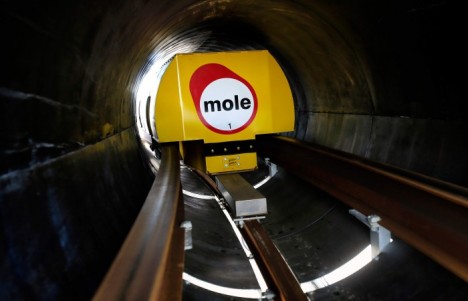
    In a world obsessed with aerial drones, this new system could fly in under the radar and revolutionize shipping, delivering goods automatically via unmanned vehicles using magnetic wave propulsion through subterranean tubes. We are used to transporting liquids in bulk below ground – including water, waste and fuel – at its simplest, this system proposes doing something similar with solids, but the effects could revolutionize supply chains locally and globally.

    mole cargo units intermodal

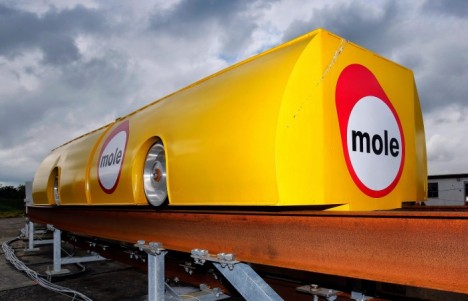
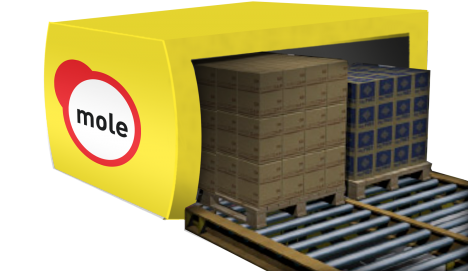
    Like pneumatic tubes or underground trains of the digital age, the UK-based MOLE system is automated and secure from one end to the other, able to carry two pallets and tap into paths for existing underground transit and service infrastructure. Costs of this system are estimated to be as little as 10% of traditional above-ground shipping methods, and the pallet-based system makes the approach compatible with other intermodal systems including freight shipping containers.

    mole solutions pallet offloading

    The company boasts the potential of the system on green as well as efficiency fronts, including low energy usage and environmental impact as well as 24/7 unmanned operations, automatic loading and unloading. There are also subtler benefits, like reducing road congestion on the streets above.

    mold test rail system

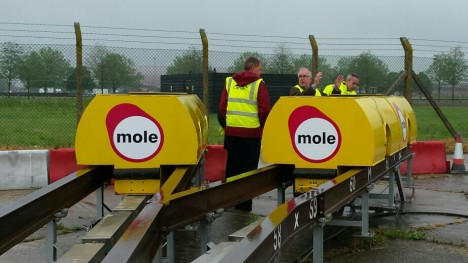
    MOLE has also already run a series of tests and is aiming to first deploy in the realm of industrial shipping, helping mines and factories connect raw and finished materials with target buyers and refiners. Eventually, the goal is to create smaller business-to-business connections on a commercial scale.

    mole shipping container unit

    From from MOLE: “Mole Solutions is currently developing cost-effective, safe and environmentally friendly underground freight pipelines for solid cargoes. The system is designed to integrate with existing supply chains and transfer some of the high volume of products that travels by road into capsules running in pipelines laid beside or under existing and planned transport infrastructure.”

    Share on Facebook


    [ By WebUrbanist in Conceptual & Futuristic & Technology. ]

    [ WebUrbanist | Archives | Galleries | Privacy | TOS ]


    WebUrbanist

  • IKEA to Produce & Ship 10,000 Flat-Pack Emergency Shelters

    [ By WebUrbanist in Architecture & Houses & Residential. ]

    ikea shanty village

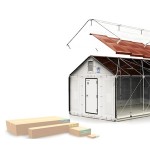
    With 40 test units created and deployed since 2013, IKEA is now ready to begin mass-producing its $ 1,000-per-unit temporary flat-pack house to destinations in need around the world. Much like IKEA’s everyday products, these shelters are ready to use right out of the box – some assembly required but all assembly tools included.

    ikea flat pack home

    ikea emergency housing

    Recognizing the need for more robust shelters in refugee camps and disaster areas, where temporary housing often has to hold up to severe weather and longer-than-expected durations, IKEA developed Better Shelter as a low-cost alternative to conventional equivalents.

    ikea modular solution

    Supplied to the United Nations Refugee Agency (UNHCR) by the Ikea Foundation, these new units will find homes in places they are currently used (like Ethiopia and Iraq) as well as other destinations.

    ikea emergency shelter design

    ikea house interior

    At close to 200 square feet per unit, these are perhaps not spacious but some standards but are much larger than most emergency housing solutions. Panels, pipes, connectors, wires as well as solar power panels for the roof are all packed flat in boxes for easy shipping. While standardized, the modules are also designed to be adapted to regional climate conditions.

    ikea house parts

    ikea flat pack house

    Shaun Scales, UNHCR’s chief of shelter and settlement, said in a statement: “The refugee housing unit (RHU) is an exciting new development in humanitarian shelter and represents a much needed addition to the palette of sheltering options mobilised to assist those in need. Its deployment will ensure dramatic improvement to the lives of many people affected by crises.”

    Share on Facebook


    [ By WebUrbanist in Architecture & Houses & Residential. ]

    [ WebUrbanist | Archives | Galleries | Privacy | TOS ]


    WebUrbanist

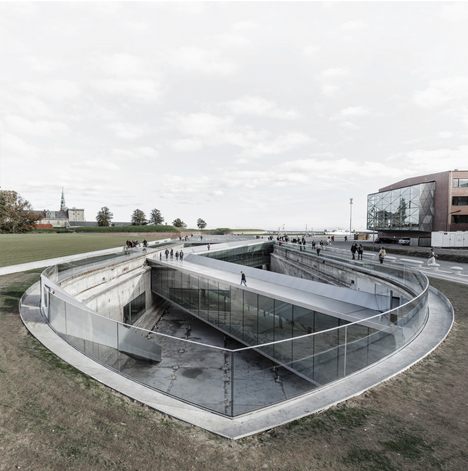
  • Ship Shaped: Undergound Maritime Museum in Dry Dock Void

    [ By WebUrbanist in Architecture & Public & Institutional. ]

    ship nautical museum void

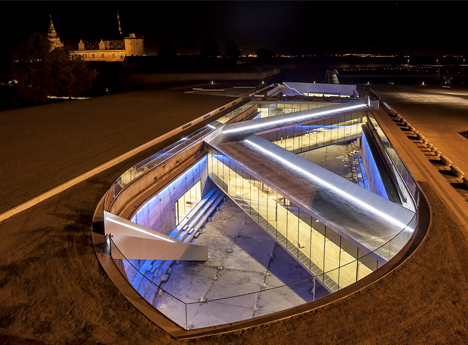
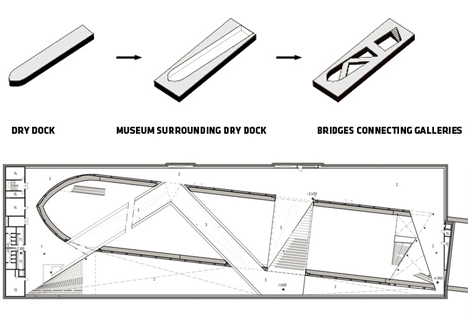
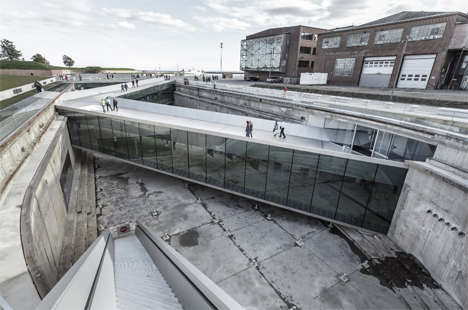
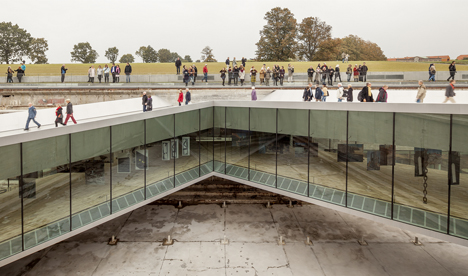
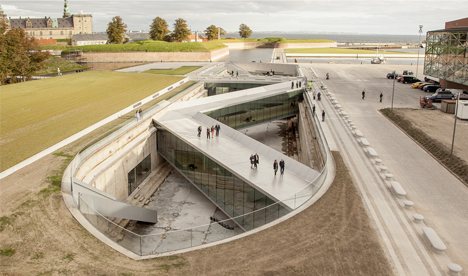
    Using the existing vessel-shaped space of a six-decades-old dry dock, the Danish National Maritime Museum in Helsingor, Denmark takes visitors on a unique subterranean tour of the areas used to build, maintain and repair ships.

    ship sea vessel museum

    ship museum plans diagrams

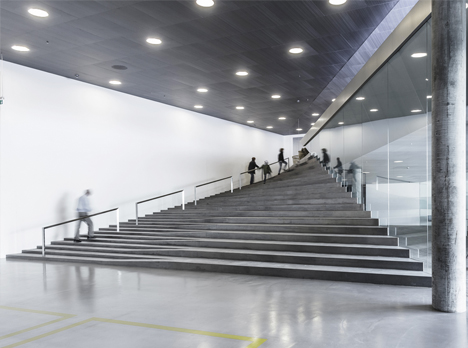
    Historically, the zone would be drained to bring in or assemble vessels then flooded to send them back out into open waters. Today, thanks to BIG architects (images by Rasmus Hjortshøj and Luca Santiago Mora), people can follow a staircase directly down and enter the area at the lower levels then cross through it via interior sloping skyways.

    ship auditorium presentation space

    ship lower level spaces

    maritime museum bridge entry

    Alternatively, a grand entry path begins above via the bridge system that zigs and zags along the length of the museum to a main entry just below ground level. This route offers a gentle slope and stellar views of everything happening below and on all sides. Passers by can also enjoy a good look down when traversing a smaller connecting bridge that simply spans from one side to the other.

    ship museum bridge design

    ship surrounding area view

    ship void site context

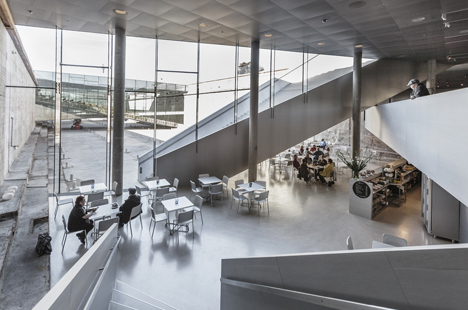
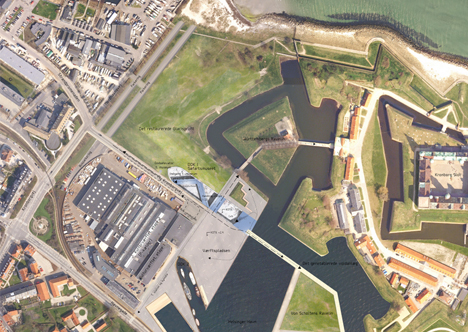
    The main museum exhibition, auditorium, classroom, office and cafe areas are arrayed around the outdoor void on the levels below. Their borders are in turn defined by an off-axis rectangle the emphasizes their contrast with the curved ship shape of the center space and connect to other nearby attractions, monuments and landmarks.

    Share on Facebook


    [ By WebUrbanist in Architecture & Public & Institutional. ]

    [ WebUrbanist | Archives | Galleries | Privacy | TOS ]


    WebUrbanist

  • 1 June, 2013 – Boarding The Ship

    In a few hours we board the True North and will be out of touch for a week as we cruise and photograph the remote Kimberley Coast of Western Australia.

    The new Home Page photograph was taken last night and will be the last posting here till the 9th.

    You can continue to follow me and the expedition via my Facebook page (link above) where I’ll be posting via a satellite texting device. The messages are geocoded and will show our current location on a map on your browser. 

    …
    The Luminous Landscape – What’s New