RSS
 

Posts Tagged ‘ship’

Sigma announces price and ship date of 105mm F1.4 ‘bokeh master’ Art lens

26 May

Sigma’s special ‘bokeh master’ 105mm F1.4 DG HSM Art lens made quite a splash when it was first announced back in February, and now Sigma is finally revealing when it will ship and how much it will cost. If you’re in the market for this behemoth of a lens—seriously, we got a hands on at CP+… it’s huge—for either Nikon, Canon, or Sigma mounts, you’ll have to pony up $ 1,600 USD and wait until “late June” to get it.

For Canon and Sigma shooters, this is a whole new speed of lens that you’ve never had access to before. For Nikon shooters, it’s an opportunity to save $ 600 on the Nikon 105mm F1.4E ED lens, which is currently going for $ 2,200.

To learn more about this lens, check out our hands-on coverage from CP+, read the full pricing and availability press release below, or visit the Sigma website.

Press Release

Sigma Announces Pricing and Availability for Its 105mm F1.4 DG HSM Art Lens

The “Bokeh Master” will begin shipping in Canon, Nikon and Sigma mounts in late June for a retail price of $ 1,599.00 USD

Ronkonkoma, NY – May 25, 2018 – Sigma Corporation of America, a leading still photo and cinema lens, camera, flash and accessory manufacturer, today announced that its 105mm F1.4 DG HSM Art lens will be available in Canon, Nikon and Sigma camera mounts in late June for $ 1,599.00 USD through authorized US dealers. The Sony E-mount availability will be announced later.

The “Bokeh Master” with Longest Focal Length Among Sigma Wide-Aperture F1.4 Art Lenses

The Sigma 105mm F1.4 DG HSM Art is the ninth lens in the Sigma F1.4 line-up designed for full-frame cameras. To combine outstanding wide-aperture, mid-telephoto performance with F1.4 brightness at maximum aperture, this lens incorporates 17 optical elements in 12 groups, including three FLD glass elements, two SLD glass elements and one aspherical lens element. This optical setup minimizes axial chromatic aberration to deliver ultra high resolution along with ample peripheral light volume, which minimizes vignetting. As a result, the area in focus is extremely sharp, while the out-of-focus area features a beautiful bokeh effect with highly natural colors, making this a desired lens for portrait photography. The optical design also minimizes sagittal coma flare, making it an excellent choice for capturing starry skies.

Featuring the Sports line level dust- and splash-proof design, this lens can be used in varying weather conditions. The high-speed, high-accuracy autofocus helps photographers react in an instant to capture those special moments.

Other lens highlights include carbon fiber reinforced plastic hood for durability and compatibility of the Canon mount lens with the Canon Lens Aberration Correction function.

Articles: Digital Photography Review (dpreview.com)

 
Comments Off on Sigma announces price and ship date of 105mm F1.4 ‘bokeh master’ Art lens

Posted in Uncategorized


Tokina Fi?RIN 20mm F2 FE AF lens will ship June 1st, costs $950

17 Apr

Tokina announced the Fi?RIN 20mm F2 FE AF—its second prime lens in the premium Fi?RIN lens lineup for mirrorless cameras—back in February, and we got to see it in person at CP+. But it was only this month that they revealed when the lens would ship, and only earlier today that we finally know the price.

According to Tokina itself, the autofocus lens for Sony full-frame mirrorless cameras lens will begin shipping on June 1st; and according to online retailers who finally put the lens up for pre-order today, the price will be $ 950.

There’s not much more we can say about the lens that we didn’t already reveal in the announcement post and hands-on at CP+. The Fírin 20mm F2 FE AF is simply the autofocus version of Tokina’s first high-end Fírin lens. The two lenses share an optical formula, and the addition of AF is simply meant to offer “more options for end-users to choose from according to the purpose and style of shooting.”

To learn more about the Tokina Fírin 20mm F2 FE AF lens, dive into the optical design, and see some sample images captured with this lens, visit the Tokina website.

Press Release

New Tokina Fi?RIN 20mm F2 FE AF

April 06, 2018 – Kenko Tokina Co., Ltd. is proud to announce the sales release of Tokina Fi?RIN 20mm F2 FE AF – the second prime lens in Tokina’s premium lens series Fi?RIN for mirrorless cameras.

Name Origin

Fi?RIN 20mm F2 FE AF belongs to the newly launched “Fi?RIN” series of Tokina lenses for mirrorless cameras (or ILCs – Interchangeable Lens Compacts) marking a new epoch in Tokina history. Fi?RIN is a variation of Fi?rinne – the old Irish word for “truth”. It means “that what is real” and signifies “being true to someone or something”. It represents a promise from Tokina to photographers to help them capture the truth in their images with this revolutionary new lens.

Overview

Fi?RIN 20mm F2 FE AF is the long-awaited autofocus version of the existing Fi?RIN 20mm F2 FE super wide angle lens for full-frame Sony E-mount. Being specially designed for Sony E-mount and adopting the same optical design as in MF model, Fi?RIN series now offers more options for end-users to choose from according to the purpose and style of shooting.

Estimated time of arrival: June 1, 2018 EAN code: 4961607634509

For more information about the product refer to Fi?RIN 20mm F2 FE AF product page.

Articles: Digital Photography Review (dpreview.com)

 
Comments Off on Tokina Fi?RIN 20mm F2 FE AF lens will ship June 1st, costs $950

Posted in Uncategorized


Nikon’s ES-2 film digitizing adapter for the D850 will finally ship in March

04 Mar

The ES-2 film digitizing adapter that Nikon introduced alongside the D850 DSLR back in August will finally ship at the end of March. The ES-2 has been available for pre-order since it was first announced, but the product is marked as ‘backordered’ on the Nikon USA website, and the official ship date has been slipping backwards.

The Film Digitize Adapter ES-2 is designed to be used by those wanting to digitize their 35mm negatives and transparencies using their digital SLR, and works by holding your film the correct distance away from a macro lens.

Nikon recommends using the ES-2 with the NIKKOR AF-S Micro 60mm F2.8, having designed the adapter to work easily with the minimum focusing distance of that lens. And while the ES-2 is compatible with a range of Nikon DSLRs, the company suggests pairing it with the D850 because of the camera’s high resolution and the built-in film digitizing mode, which automatically inverts the image and saves a digitial positive as a JPEG.

The Nikon Film Digitize Adapter ES-2 kit—which includes a film strip holder for negatives and transparencies, a slide holder for mounted slides, and a pair of 62mm adapter rings for use with different macro lenses—is due to cost $ 150. However, if you’re looking for a cheaper option, the old ES-1 is still available for $ 60, and designed to be used with the 55mm F2.8 Micro-Nikkor and the PK-13 tube.

For more information, visit the Nikon website.

Articles: Digital Photography Review (dpreview.com)

 
Comments Off on Nikon’s ES-2 film digitizing adapter for the D850 will finally ship in March

Posted in Uncategorized


Red’s Hydrogen One holographic super-phone to ship this summer

24 Jan

Red, best known for its high-end video products, has dripped out some pre-order and release date information about its Hydrogen One super-smartphone, which was announced last July and first demoed IRL in August.

The most notable feature of this phone is its 5.7″ 1440p display, which can display 2D and “better than 3D” holographic images. It can also shoot 3D or 4V (holographic) content using its onboard cameras, and stereo sound is converted to spatial audio when played back. The One uses Qualcomm’s new Snapdragon 835x processor, dual SIM card slots, a monster 4500 mAh battery and support for add-on modules like external batteries and a ‘cinema-grade’ camera.

The new info came via Red’s forums, where the company revealed that pre-orders for the Hydrogen One are expected to begin in April, with ship dates sometime this summer. The aluminum model will be priced at $ 1195, while the titanium version will set you back $ 1595.

Articles: Digital Photography Review (dpreview.com)

 
Comments Off on Red’s Hydrogen One holographic super-phone to ship this summer

Posted in Uncategorized


Ghost Ship: Wire Mesh Sails Make an Eerie Sight in Italy’s Bay of Sapri

24 Aug

[ By SA Rogers in Art & Sculpture & Craft. ]

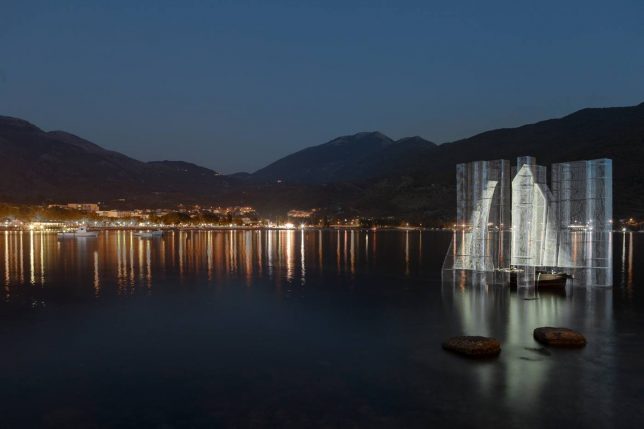
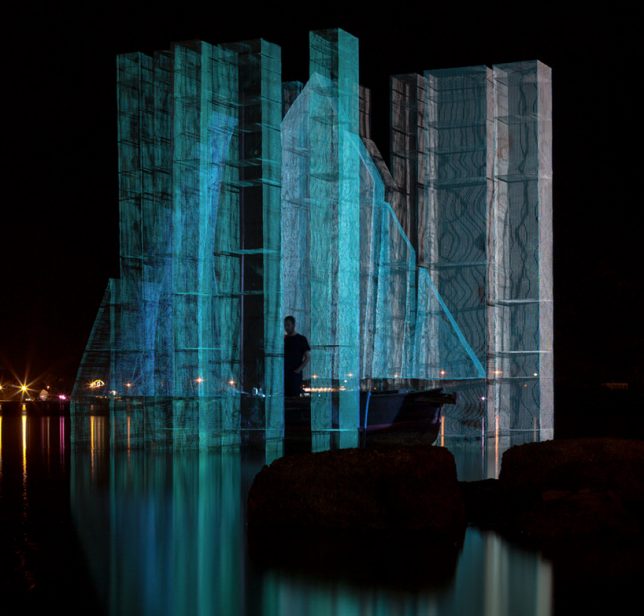
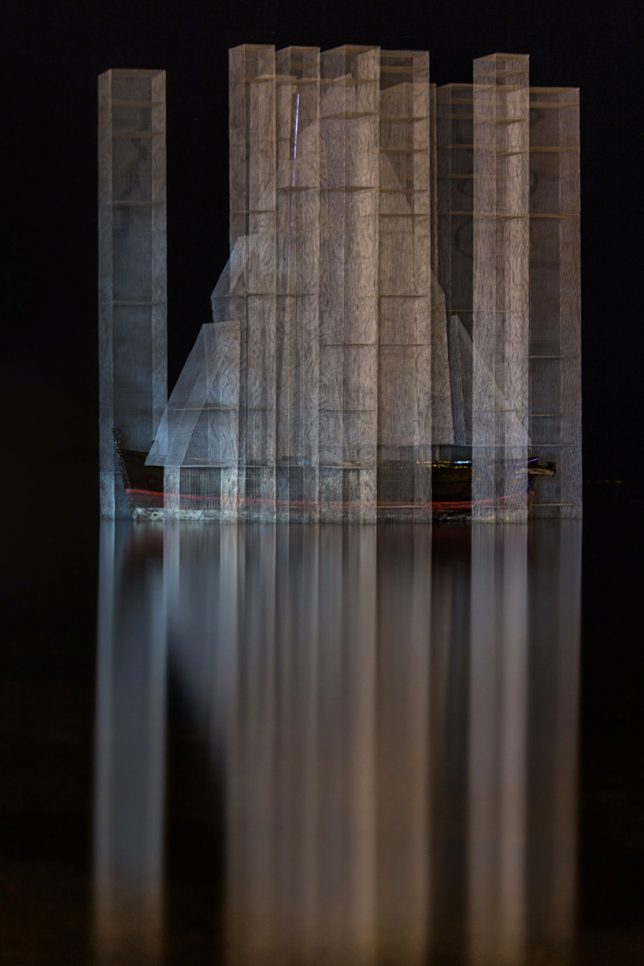
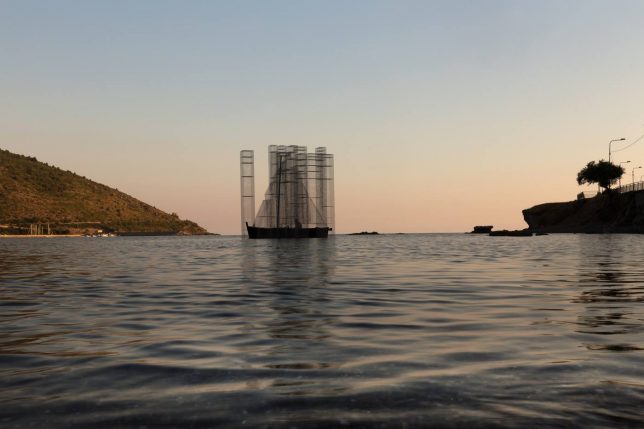
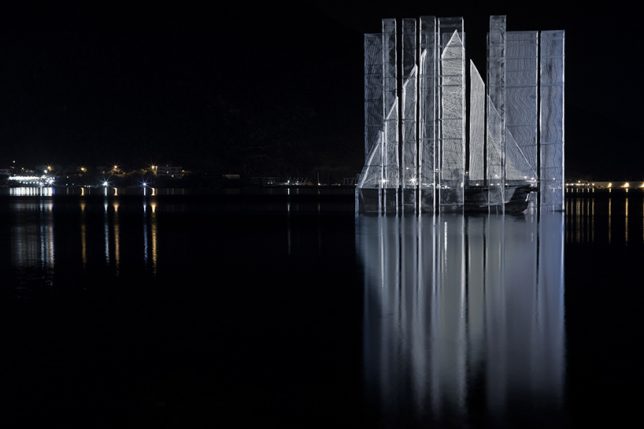
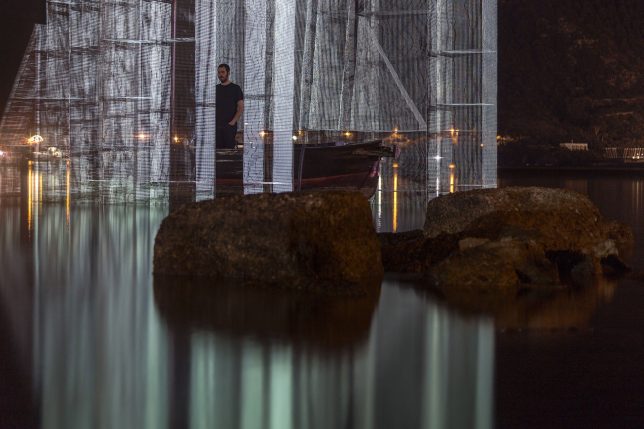
A ghostly ship sails through the Bay of Sapri in Southern Italy, just translucent enough for onlookers to doubt whether they’re imagining it, its silhouette obscured by a jumble of rectilinear columns. The latest wire mesh masterwork by artist Edoardo Tresoldi, ‘Locus’ is a collaboration with Italian musician IOSONOUNCANE, bringing sculpture and music together in a public performance enjoyed by a crowd gathered on the nearby shore.

The musician debuted his unreleased composition during the installation, presented as part of Sapri’s Derive Festival, an experimental art, music and poetry project curated by Antonio Oriente. The combination of the ship’s visuals, the lighting, the music and the setting truly made it a one-of-a-kind experience, with the sounds amplified by the water.

“Sapri Bay become sone of the characterizing elements of the event, acquiring a temporal and performative dimension,” states the Derive website (translated from Italian. “Collaboration blends different contemporary languages, redefining the relationship between audience and artist in a kind of hic et nunc [here and now] unrepeatable.”

Edoardo Tresoldi is known for his eerily beautiful wire compositions, which are typically architectural in nature, recreating entire classical and historic structures like echoes of churches that fell into ruins centuries ago and palatial interior installations augmented by flying birds.

Share on Facebook


[ By SA Rogers in Art & Sculpture & Craft. ]

[ WebUrbanist | Archives | Galleries | Privacy | TOS ]


WebUrbanist

 
Comments Off on Ghost Ship: Wire Mesh Sails Make an Eerie Sight in Italy’s Bay of Sapri

Posted in Creativity


Haunting photos from inside the wrecked cruise ship Costa Concordia

09 Jul

In August of 2014—two years and seven months after the cruise ship the Costa Concordia sank off the coast of the Tuscan island Giglio, claiming 32 lives—photographer Jonathan Danko Kielkowski swam aboard to document what was left.

At that point, the ship had only recently been raised from the bottom of the ocean, having spend two and a half years partially submerged—a home for sea life and wild superstitions about how its sinking was some sort of omen. After all, it did sink almost exactly 100 years after the Titanic.

But Kielkowski wasn’t going there to document fantasy. He wanted to capture raw, abandoned, decrepit reality.

To his credit, when the ship arrived in Genoa to be scrapped, Kielkowski tried to get a permit and capture the photos legally. But a permit was impossible to acquire, and after being turned back by the Coast Guard once, he tells DIYP he finally succeeded in swimming to the ship in the dark, camera gear and clothes towed along in a small rubber dinghy.

He got in, set up, and once the sun came up he got to shooting. Using his Canon 5D Mark II with a EF 16-35mm F2.8 attached and a small, sturdy tripod, he wandered around the wreck for 6 hours and captured some 500 photos.

“It was pitch black inside the wreck and most parts of the ship had no lights installed at that time,” he wrote in response to one photographer’s criticism, explaining how the photos were captured. “The expose time for most of the images is well over 5 minutes.”

Technique aside, for Kielkowski, those photos provide a distant echo of the nightmarish fear 4,000 passengers must have felt as they tried to evacuate a sinking ship.

The photos above and many others besides were eventually collected into a photo book, Concordia, published by White Press. To learn more about or order the book, visit this link. And if you’d like to see more of Jonathan’s work, visit his website or give him a follow on Facebook and Instagram.


All photos © Jonathan Danko Kielkowski, used with permission.

Articles: Digital Photography Review (dpreview.com)

 
Comments Off on Haunting photos from inside the wrecked cruise ship Costa Concordia

Posted in Uncategorized


Ship & Swim: Mobile Cargo Container Pool & On-Demand Hot Tub for Homes

17 May

[ By WebUrbanist in Design & Fixtures & Interiors. ]

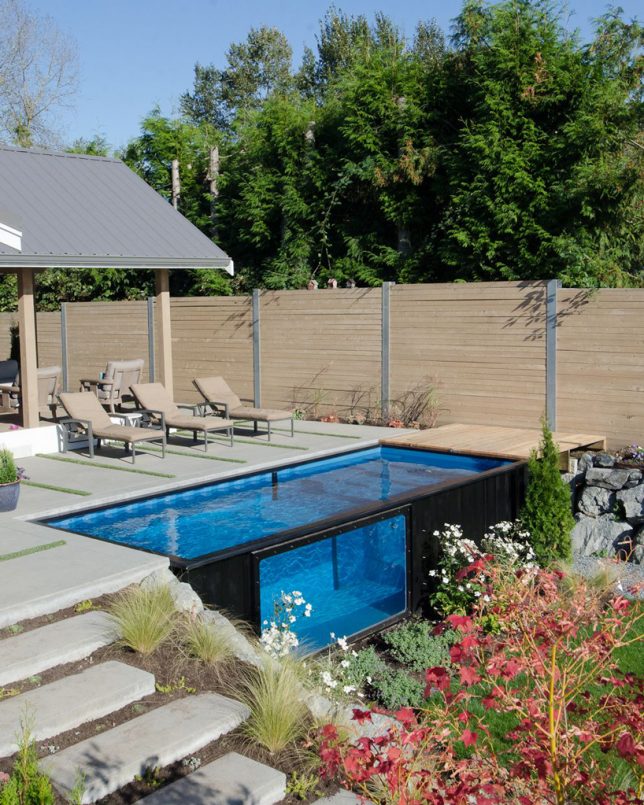
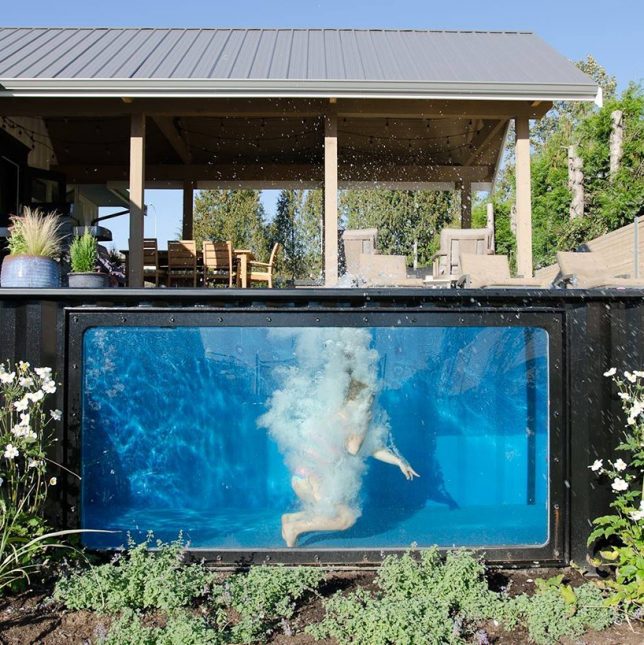
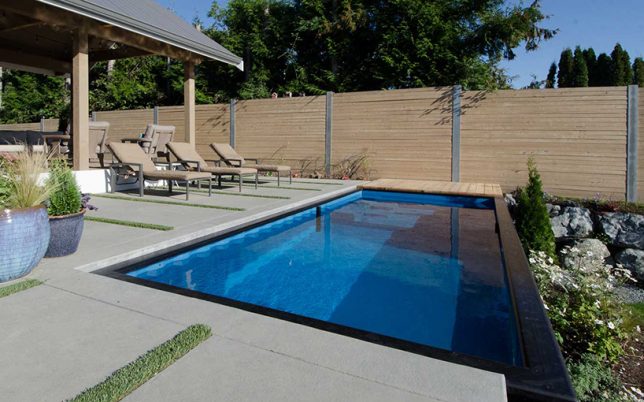
More stable and versatile than a typical temporary above-ground pool and less likely to tank your home real estate value than a built-in one, this modular plug-and-play swimming pool is the best of both worlds.

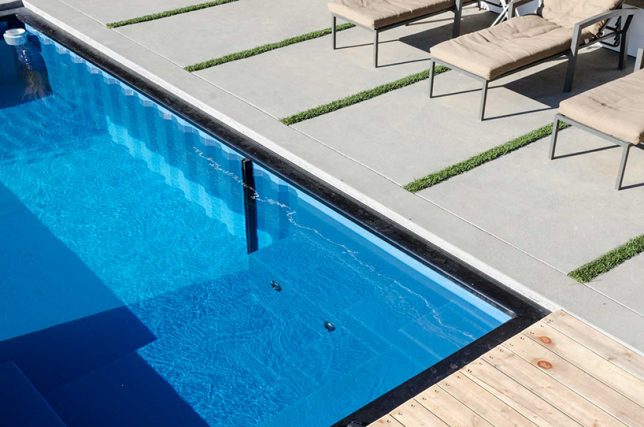
Developed by Canadian company Modpools, these converted shipping containers measure 8 by 20 feet (or 8 by 40), can be used year-round and can be converted for use as a hot tub on demand (via a segmenting module).

Using the relatively light but sturdy shape of the container as a framework, these pools can be lifted and loaded onto trucks and trains (just like any other inter-modal unit). They can also be plugged in and set to go in minutes, then rearranged on a lot should a resident decide to expand their existing home or reconfigure their yard.

Historically, having a carved-out backyard pool has been known to actually reduce real estate values, leading many homeowners to fill theirs in before putting a house up for sale. With this solution, the pool can simply be relocated to a new residence or resold and used somewhere else.

Currently priced around $ 27,000 they don’t come cheap, but offer correspondingly more flexibility — the twice-as-long 40-footer is also not much more expensive at $ 35,000 for those with the space.

The pools come with bonus technology features, too, like the ability to control the lighting and heating remotely, letting users crank up the warmth while on the way home to take a swim in the pool or a soak in the hot tub.

Share on Facebook


[ By WebUrbanist in Design & Fixtures & Interiors. ]

[ WebUrbanist | Archives | Galleries | Privacy | TOS ]


WebUrbanist

 
Comments Off on Ship & Swim: Mobile Cargo Container Pool & On-Demand Hot Tub for Homes

Posted in Creativity


Fujifilm medium-format GFX 50S to ship in late February for $6500

21 Jan

$ (document).ready(function() { SampleGalleryV2({“containerId”:”embeddedSampleGallery_9285245724″,”galleryId”:”9285245724″,”isEmbeddedWidget”:true,”standalone”:false,”selectedImageIndex”:0,”startInCommentsView”:false,”isMobile”:false}) });

Back at Photokina in September, Fujifilm took the wraps off of its new mirrorless medium-format camera, the GFX 50S. Today they’re released all of the details, including price and ship date.

The GFX 50S uses a 51.4MP ‘Fujifilm G Format’ medium-format sensor (43.8 x 32.9mm), which is 1.7x the area of a full-frame sensor. The lens mount is known as G-mount and, like all medium-format cameras, it has a ‘reverse’ crop factor of 0.79x, so that new 63mm F2.8 lens is equivalent to 50mm. The camera has a 117-point contrast-detect AF system, and users can set the focus point using the touchscreen or a joystick on the rear plate. Its NP-T125 lithium-ion battery is rated for 400 shots on a single charge (meaning you’ll probably get many more in most real-world usage).

The weather-sealed body is made of a magnesium alloy and weighs just 825g/43oz with battery and memory card installed. It has a 3.2″ dual-tilt touchscreen LCD display and a 2.36M-dot OLED viewfinder, to which you can add a ’tilt adapter’ allowing it to tilt upward by 90° and rotated left or right by 45° (that’s a lot of tilting). On the top plate is a 1.28″ LCD which displays current shooting settings. There are two SD card slots, both of which support high-speed UHS-II media.

The GFX 50S has Fujifilm’s Film Simulation modes, including a new Color Chrome Effect option. It can capture Full HD video at up to 30p, with a bit rate of 36 Mbps. As one would expect from a camera in this class, the GFX 50S supports tethered shooting from a PC. Optional accessories include a battery grip, H-Mount adapter for use with classic Fujinon HC lenses and a ‘View Camera Adapter G’ that lets you use the GFX as a digital back.

Along with the GFX come three new lenses, with three more to follow by the end of the year. The initial trio of lenses including a 110mm F2 (equivalent to 87mm), 23mm F4 (18mm equiv.) and 45mm F2.8 (35mm equiv.).

The GFX 50S will ship in late February at an MSRP of $ 6499/£6199.

GROUNDBREAKING FUJIFILM GFX 50S MEDIUM FORMAT MIRRORLESS CAMERA DELIVERS ULTRA-HIGH IMAGE QUALITY

FUJIFILM GFX 50S combines an extraordinary sensor, processor and design with FUJINON lenses to give users the ultimate photography experience

Valhalla, N.Y., January 19, 2017 – As the leader in innovation for photographers, FUJIFILM North America Corporation today announces the FUJIFILM GFX 50S medium format mirrorless digital camera that will launch late February, 2017 with an initial selection of three FUJINON lenses – the GF63mmF2.8 R WR, the GF32-64mmF4 R LM WR, and the GF120mmF4 R LM OIS WR Macro. These lenses encapsulate the design philosophy of FUJINON lenses that are renowned by photographers around the world.

The innovative GFX system utilizes a Fujifilm exclusive 43.8 x 32.9mm (FUJIFILM G Format) 51.4MP CMOS sensor. The GFX 50S combines the heritage of over 80 years of imaging and the innovative award-winning functional design of our X Series digital camera system in the relentless pursuit of image quality.

The FUJIFILM GFX 50S Revealed

The FUJIFILM GFX 50S mirrorless digital camera uses the new 51.4MP FUJIFILM G Format 43.8 x 32.9mm sensor with approximately 1.7x the area of a 35mm sensor. In addition to the camera are three new FUJINON GF Lenses that will be followed by three additional lenses later in 2017.

The GFX 50S 51.4MP sensor shows its true potential when making large format prints, capturing majestic landscape photos or reproducing historical documents. Compared to a full size sensor with equivalent megapixels, both resolution and sensitivity are dramatically better due to the larger size of each pixel. As a result, the sensor captures great textures and subtlety of tone that is unique to large size sensors. The texture and tone combine to give a unique three-dimensional effect creating extremely high quality photography. Images captured can be reproduced down to the smallest detail, conveying the texture of the subject, a three-dimensional feeling, and the atmosphere of the scene.

For flash photography in the studio or outdoors during the day, the GFX 50S sensor has a native ISO of 100. The sensor can also be adapted to various aspect ratios, including 4:3, 3:2, 16:9, 1:1, 65:24, 5:4, 7:6, all of which are available in large and medium format film cameras.

The FUJIFILM GFX 50S uses the X Processor Pro (also used in the X-Pro2 and X-T2 cameras) and allows photographers to use Fujifilm’s proprietary Film Simulations with a Medium Format sensor. The camera supports Full HD recording at 29.97p/25p/24p/23.98p. Users can enjoy high quality video with no post-processing required by using Film Simulation modes just like they would with a still image. The GFX 50S introduces a new Color Chrome Effect feature that reproduces subtle tones in highly saturated subjects.

Ultimate Performance in a Compact Body

With a compact and lightweight body constructed from magnesium alloy, the FUJIFILM GFX 50S weighs approximately 43 ounces when paired with the FUJINON GF63mmF2.8 R WR, and weighs approximately 60% of a medium format DSLR camera equipped with a sensor of the same size. When compared to a full frame, the weight is almost identical. Overall camera body height and width have also been minimized for maximum flexibility, overturning the common perceptions regarding the mobility of medium format digital cameras.

Bright, Crystal Clear Viewfinder and Large Touchscreen

The FUJIFILM GFX 50S gives users a 3.69M dot organic EL electronic viewfinder and 2.36M dot touchscreen LCD back panel for easy viewing. The EVF is detachable to allow for flexible operation. Users can attach the accessory EVF-TL1 EVF tilt adapter (sold separately) to allow the finder to be tilted to 90° vertically and swung ±45°. A 3.2 inch, 2.36M dot touch panel is used for the rear monitor, with touch operation for the menu, focusing points and image playback. A three-directional tilting LCD screen improves operability and makes viewing images and checking focus even easier.

FUJINON Lenses Guarantee Image Perfection

As part of the GFX system, Fujifilm is launching newly developed, ultra-high resolution FUJINON GF lenses. Taking advantage of the mirrorless system’s structure, the G Mount has a short flange back distance of just 26.7mm that reduces the back focus distance as much as possible. This prevents vignetting and achieves edge-to-edge sharpness. All FUJINON GF Lenses have been designed to support sensors of over 100MP.

GFX lens barrels feature an aperture ring in the same manner as FUJINON XF lenses, for intuitive operation. A new C (Command) Position has been added to the aperture ring, allowing users to change the aperture with the camera’s command dial. The A (Auto) Position and C Position feature a locking button installed on the aperture ring that must be disabled to implement changes.

Built for the Professional, and the Enthusiast

Just as with the flagship X Series models, the FUJIFILM GFX 50S features dedicated dials to independently set aperture, shutter speed, and ISO, the important factors in determining exposure.

Aperture and ISO feature a C (Command) and the shutter speed dial has a T (Time) Position. Setting the dial to this position allows the user to change exposure settings using the command dials on the front and rear of the camera body. The user can choose between these two operation methods according to their preference, ease of use, and the shooting environment.

The GFX 50S is equipped with a 1.28 inch LCD sub monitor on the top of the body. Important exposure data such as aperture and shutter speed is displayed on this screen. This display is extremely useful when shooting on a tripod or tethered to a computer.

A 117-point (9 x 13 / maximum of 425 points when miniaturized) contrast AF system is used on the GFX 50S. High-precision AF on the imaging sensor dramatically improves focusing accuracy with the shallow depth of field produced by medium format lenses. First adopted in the FUJIFILM X-Pro2, focus point selection can be performed by using the Focus Lever, which allows intuitive movement of the focus point. Alternatively, users can select the focus point from the touch panel LCD screen.

Initial Lens Lineup Will Include the Following Three FUJINON Options:

  1. GF63mmF2.8 R WR (equivalent to 50mm in 35mm format)
  2. GF32-64mmF4 R LM WR (equivalent to 25-51mm in 35mm format)
  3. GF120mmF4 Macro R LM OIS WR (equivalent to 95mm in 35mm format)

FUJINON GF63mmF2.8 R WR

The optical system features a construction of 8 groups and 10 elements, including 1 ED lens element. This lens construction is the most suitable for high resolution in compact and stylish design, the external form of this small and lightweight lens has a diameter of just 84.0 x 71.0mm with a weight of only 14.2 ounces \ 405 grams. Using the front group for the focus, aberrations due to focus distance are suppressed, achieving high resolution performance even when wide open from the center to the edges of the lens.

FUJINON GF32-64mmF4 R LM WR

The FUJINON GF32-64mmF4 R LM WR features a construction of 11 groups and 14 elements, 3 aspheric elements, 1 ED lens and 1 super ED lens, allowing this lens to achieve image quality rivalling prime lenses. As a result, the lens demonstrates extremely high performance from the center all the way to the edges. The lens uses internal focusing, reducing the weight of the focus lens and achieving fast and silent AF by driving focus using a linear motor.

FUJINON GF120mmF4 R LM OIS WR Macro

The FUJINON GF120mmF4 R LM OIS WR Macro has a construction of 9 groups and 14 elements, including 3 ED lens elements. By adopting a floating focus method using a linear motor, silent high-speed autofocusing is achieved while aberrations are corrected, dramatically increasing the resolution. Furthermore, by arranging the ED lenses properly, chromatic aberrations are also properly corrected, contributing to high quality images. In designing this lens the quality of the out of focus area both in front and behind the plane of focus were considered, giving this lens beautiful bokeh. This lens is equipped with optical image stabilization (OIS) effective up to 5.0-stops, making this lens perfect for handheld shooting in low-light situations.

Three Additional FUJINON GF Lenses to be Announced Later in 2017:

  1. GF110mmF2 R LM WR (equivalent to 87mm in 35mm format)
  2. GF23mmF4 R LM WR (equivalent to 18mm in 35mm format)
  3. GF45mmF2.8 R WR (equivalent to 35mm in 35mm format)

GFX 50S Accessories (sold separately)

  1. Vertical Battery Grip VG-GFX1 – high-performance battery grip is designed to place the release button, dials, and function buttons in the same positions when shooting vertically. The battery grip can be loaded with one NP-T125 dedicated battery, lowering the frequency that batteries need replacing. Also, by connecting the AC-15V accessory (sold separately), it is possible to charge the battery within the grip in approximately 2 hours.
  1. EVF Tilt Adapter EVF-TL1 – mounting this accessory between the camera body and EVF, the angle of the EVF can be changed to angles from 0°?90° vertically and from -45°?+45° horizontally. Doing this allows the user to shoot at various angles while using the viewfinder, greatly increasing the versatility of the finder for different subjects.
  1. H Mount Adapter G – allows you to use SUPER EBC FUJINON HC interchangeable lenses developed for the FUJIFILM GX645AF medium format film camera (discontinued). By attaching this adapter to the GFX 50S, a total of 9 SUPER EBC FUJINON HC interchangeable lenses and 1 tele-converter developed for the GX645AF can be used. While the focusing method will be limited to manual focusing, the lens aperture can be changed using the command dial on the camera body, and shooting with the leaf shutter built in to the lenses is also possible. Using this lens shutter will allow high speed flash synchronization up to a maximum speed of 1/800 sec.

    Also, the adapter is equipped with electrical contacts that can communicate with the camera body, independently creating, saving, and applying correctional data for each lens. The adapter supports Manual and Aperture Priority AE exposure modes.

*A removable tripod foot is included to mount the camera with a heavy or long focal length lens.

  1. View Camera Adapter G – allows the GFX 50S to be used as a digital back. The view camera adapter allows the GFX 50S to be mounted to the standard universal-type back of a view camera. This allows the use of FUJINON large format camera lenses, such as the CM-W FUJINON lens series. The camera or lens shutter can be triggered, allowing the user to choose the optimum method. The large image circle and the bellows of the view camera can be used with tilt, shift and swing movements, effective for product and architectural photography.
    *There may be instances in which the adapter cannot be mounted depending on the shape of the view camera.
  1. Tethered Shooting Solutions – We have the following tethering solutions for photographers, including: X Acquire to transfer images from the camera to a hot folder on your computer for use with your preferred imaging software, Tether Shooting Plug-in PRO for Adobe® Photoshop® Lightroom® and HS-V5 for Windows (sold separately).

    By connecting the GFX 50S to a PC via USB cable and using this software, it is possible to transfer photographed images directly to the PC, as well as control the camera from the PC. Also, by using the Control Panel Window newly added to Tether Shooting Plug-in PRO for Adobe® Photoshop® Lightroom®, additional camera functions become available.

  1. RAW FILE CONVERTER EX2.0 – powered by SILKYPIX (free of charge) RAW development software and Adobe® Photoshop® Lightroom® / Adobe® Photoshop® CC (sold separately). RAW development software is used for detailed corrections and advanced image processing that isn’t supported by the in-camera RAW conversion. Both software support Fujifilm’s “Film Simulation” modes, allowing creation of image data that is extremely close to Fujifilm’s advanced color reproduction.

FUJIFILM GFX 50S Key Features:

  • 51.4MP Medium Format 43.8 x 32.9mm sensor for superior sharpness and image quality for all photographers
    • Adaptable to various aspect ratios, including 4:3 (default), 3:2, 16:9, 1:1, 65:24, 5:4, 7:6
  • FUJIFILM G Mount with short flange back distance of just 26.7mm
  • X-Processor Pro imaging processor
  • Detachable electronic viewfinder
  • Weather and dust resistant; operation to as low as 14 degrees Fahrenheit \ -10 degrees Celsius
  • File formats include three different JPEG settings (SUPER FINE, FINE, NORMAL), as well as two different RAW settings (uncompressed, compressed). TIFF output is also possible with in-camera RAW development
  • Full HD for Movie Mode: 1920×1080 29.97p/25p/24p/23.98p 36Mbps, in Film Simulation modes
  • Light body weighs approximately 43oz. \ 825g (including battery and memory card)
  • Uses SD Cards (UHS-II recommended)
    • Equipped with dual slots
    • Supports three different types of recording methods, “Sequential,” in which recording can be continued according to shooting order, “Backup,” which records the same data on two cards simultaneously, and “Sorting,” which records RAW and JPEG data on separate cards
  • Uses newly developed NP-T125 high capacity battery for approximately 400 photos (with Auto Power Save ON)
  • All FUJINON GF Lenses are dust and weather resistant, built to withstand operation at temperatures as low as 14 degrees Fahrenheit \ -10 degrees Celsius allowing photographers to take them outdoors with confidence in challenging weather conditions.
  • The new FUJINON GF Lenses feature an aperture ring, a popular feature in the X Series, and have a new C (Command) Position on the ring to enable aperture adjustments with the Command Dial on the camera body
  • A Fluorine coating applied to the front lens element creates a hydrophobic coating that repels moisture.

The GFX 50S and FUJINON GF lenses culminate to create a new camera system capable of creating the world’s highest level of photographic expressions by combining the thorough incorporation of knowledge regarding camera operation, optical design, image capture, and image processing.

Availability and Pricing

The new FUJIFILM GFX 50S Medium Format Camera Body will be available Late February, 2017 in the U.S. and Canada for USD $ 6,499.95 and CAD $ 8,499.99.

Also available in February, 2017 will be the first three FUJINON GF lenses. GF63mmF2.8 R WR for USD $ 1,499.95 and CAD $ 1,899.99, GF32-64mmF4 R LM WR for USD $ 2,299.95 and CAD $ 2,999.99, and GF120mmF4 R LM OIS WR Macro for USD $ 2,699.95 and CAD $ 3,499.99.

Fujifilm GFX 50S specifications

Price
MSRP $ 6499/£6199
Body type
Body type Mid-size SLR
Body material Magnesium alloy
Sensor
Max resolution 8256 x 6192
Image ratio w:h 1:1, 5:4, 4:3, 3:2
Effective pixels 51 megapixels
Sensor size Medium format (44 x 33 mm)
Sensor type CMOS
Processor X Processor Pro
Color space sRGB, Adobe RGB
Color filter array Primary color filter
Image
ISO Auto, 100-12800 (expands up to 102400)
Boosted ISO (maximum) 102400
White balance presets 7
Custom white balance Yes
Image stabilization No
Uncompressed format RAW + TIFF
JPEG quality levels Super fine, fine, normal
File format
  • JPEG (Exif v2.3)
  • Raw (14-bit RAF)
  • TIFF (via Raw conversion)
Optics & Focus
Autofocus
  • Contrast Detect (sensor)
  • Multi-area
  • Center
  • Selective single-point
  • Tracking
  • Single
  • Continuous
  • Touch
  • Face Detection
  • Live View
Manual focus Yes
Number of focus points 117
Focal length multiplier 0.79×
Screen / viewfinder
Articulated LCD Tilting
Screen size 3.2
Screen dots 2,360,000
Touch screen Yes
Screen type OLED
Live view Yes
Viewfinder type Electronic
Viewfinder coverage 100%
Viewfinder magnification 0.85×
Viewfinder resolution 3,690,000
Photography features
Minimum shutter speed 360 sec
Maximum shutter speed 1/4000 sec
Maximum shutter speed (electronic) 1/16000 sec
Exposure modes
  • Program
  • Aperture priority
  • Shutter priority
  • Manual
Built-in flash No
External flash Yes (via hot shoe or flash sync terminal)
Flash modes Auto, standard, slow sync, manual, off
Flash X sync speed 1/125 sec
Drive modes
  • Single
  • Continuous
  • Self-timer
  • Remote
Continuous drive 3.0 fps
Self-timer Yes (2 or 10 sec)
Metering modes
  • Multi
  • Center-weighted
  • Average
  • Spot
Exposure compensation ±5 (at 1/3 EV steps)
AE Bracketing ±5 (2, 3, 5, 7 frames at 1/3 EV, 1/2 EV, 2/3 EV, 1 EV, 2 EV steps)
WB Bracketing Yes
Videography features
Format MPEG-4, H.264
Modes
  • 1920 x 1080 @ 30p / Mbps, MP4, H.264, Linear PCM
  • 1920 x 1080 @ 25p / Mbps, MP4, H.264, Linear PCM
  • 1920 x 1080 @ 24p / Mbps, MP4, H.264, Linear PCM
  • 1920 x 1080 @ 23.98p / Mbps, MP4, H.264, Linear PCM
Microphone Stereo
Speaker Mono
Storage
Storage types SD/SDHC/SDXC (dual slots, UHS-II supported)
Connectivity
USB USB 3.0 (5 GBit/sec)
HDMI Yes (micro-HDMI)
Microphone port Yes
Headphone port Yes
Wireless Built-In
Wireless notes 802.11b/g/n
Remote control Yes (via cable or smartphone)
Physical
Environmentally sealed Yes
Battery Battery Pack
Battery description NP-T125 lithium-ion battery & charger
Battery Life (CIPA) 400
Weight (inc. batteries) 740 g (1.63 lb / 26.10 oz)
Dimensions 148 x 94 x 91 mm (5.83 x 3.7 x 3.58)
Other features
Orientation sensor Yes
Timelapse recording Yes
GPS None

Articles: Digital Photography Review (dpreview.com)

 
Comments Off on Fujifilm medium-format GFX 50S to ship in late February for $6500

Posted in Uncategorized


Olympus OM-D E-M1 II will ship in December for $2000 body-only

02 Nov

Olympus has taken wraps off availability and pricing details for its flagship OM-D E-M1 II. Announced at Photokina, the E-M1 II will cost $ 2000 body-only and is set to ship at the end of December. The E-M1 II’s predecessor was introduced just over three years ago and started at $ 1400 body-only.

That $ 600 premium buys some notable advancements including a faster processor, 20.4MP sensor with 121 phase-detection AF points and a stabilization system claiming an unearthly 6.5 stops of shake correction. Like the Mark I, the E-M1 II is built to withstand hostile conditions with a dust, splash and freeze-proof design. 

Read our Olympus OM-D E-M1 II
Shooting Experience

Press release:

REVOLUTIONARY CAMERA PERFORMANCE: THE OLYMPUS OM-D E-M1 MARK II ARRIVES

The new flagship Micro Four Thirds® camera boasts world’s fastest sequential shooting1, superior autofocus accuracy, and world’s most effective image stabilization performance2

CENTER VALLEY, Pa., — November 2, 2016 — Olympus announces that its new flagship camera, the Olympus® OM-D E-M1 Mark II, is set to go on sale at the end of December 2016 for the manufacturer’s suggested retail price of $ 1999.99 USD and $ 2499.99 CAD. The OM-D® E-M1 Mark II is the latest addition to the award-winning OM-D series and features incredible speed, outstanding image resolution and a host of new shooting features to meet the needs of the professional photographer.

The OM-D E-M1 Mark II is equipped with the newly-developed high-speed TruePic VIII Image Processor, which is 3.5 times faster than the previous TruePic processor used in the OM-D E-M1, and a new 20.4 megapixel Live MOS sensor equipped with 121 points of cross-type on-chip phase detection and contrast detection AF. These technologies work together with the camera’s silent electronic shutter to provide full-resolution RAW images at up to an unprecedented 60 frames per second in AF and AE lock, and up to 18 frames per second with continuous AF and AE tracking.

The OM-D E-M1 Mark II boasts a wide array of shooting features including the new Pro Capture Mode for lag-free shooting that enables the capture of split-second moments, a 50 Megapixel High-Res Shot Mode for images with incredible detail rivaling that of full-frame DSLRs, in-body 5-Axis Image Stabilization that provides up to 5.5 shutter speed steps of compensation performance3, and 5-Axis Sync IS that provides the world’s most effective 6.5 shutter speed steps of compensation2 when combined with the new M.ZUIKO® Digital ED 12-100mm f4.0 IS PRO.

The OM-D E-M1 Mark II is weather sealed to be dustproof, splashproof and freezeproof (down to 14°F/-10°C) in a compact lightweight design, ideal for shooting in all types of outdoor conditions.

Main Features

1. High-Speed Sequential Shooting and Superior AF Performance

Live MOS sensor and TruePic VIII Image Processor
The newly developed high-speed TruePic VIII Image Processor and a new 20.4 megapixel Live MOS Sensor works in concert with the camera’s electronic shutter to provide full-resolution images at a maximum 60 frames per second in AF and AE lock, and up to 18 frames per second with continuous AF and AE tracking.

The TruePic VIII Image Processor boasts a dual quad core system with four CPU cores and four image processing cores to achieve image processing speeds approximately 3.5 times faster than the TruePic VII Processor. Because camera operation and image processing functions are carried out in unison, transfer speeds and menu operations are vastly improved over previous models. 

Pro Capture Mode
The new Pro Capture Mode provides lag-free shooting so users can capture high-quality full-resolution images at precise moments with no compromises. Using the silent electronic shutter, Pro Capture buffers a running series of JPEG / RAW images when users press the shutter release halfway. Then, by fully pressing the shutter button, users can capture that moment’s image plus up to 14 previous frames all at once.

Advanced Dual FAST Autofocus
The advanced Dual FAST AF automatically chooses between on-chip phase detection AF and contrast detection AF, or utilizes both phase and contrast detection simultaneously. This system boasts 121 cross-type on-chip phase detection focus points in order to dramatically improve accuracy. The simultaneous use of contrast detection and on-chip phase detection AF enables accurate focus in difficult lighting conditions, while a new moving subject tracking algorithm rapidly and continuously measures the subject-to-camera distance to precisely maintain focus. Finally, the in-camera AF Limiter function is included to achieve faster focusing by limiting the focus range of the lens, thus preventing time-consuming focus hunting.

Autofocus functions such as AF Target Mode4, AF target position and face/eye priority AF are easily set with a single button press. AF operations are enhanced with a new subject-tracking Cluster Display, which illuminates active sensors to assure the user of focus-subject accuracy. The AF Targeting Pad feature allows users to select the AF point by sliding their finger on the rear touch LCD monitor while looking through the viewfinder.

High-magnification, high-speed electronic viewfinder
The performance of the 1.48x (35mm equivalent) high-magnification, high-resolution electronic viewfinder rivals those of professional full-frame interchangeable lens cameras. With high-speed operation that includes a maximum refresh rate of 120 fps and a minimum response time of five milliseconds, users never lose track of fast-moving subjects.

High-speed response
The significantly improved shutter release lag time, now reduced by approximately 30% from that of the previous model, facilitates response time so users never miss a photo opportunity. In addition, frame-advance speed during playback is approximately three times quicker for faster scrolling and review of images.

2. Outstanding Portability and Reliability

A compact, lightweight system with excellent portability
The OM-D E-M1 Mark II features weatherproof construction in a compact and lightweight design. Coupled with an Olympus M.ZUIKO lens, the OM-D system is extremely compact, providing the ultimate in portability for shooting and transportation. Handheld super-telephoto shooting is possible with the M.ZUIKO Digital ED 300mm f4.0 IS PRO lens (600mm focal length in 35mm equivalent), and this camera and lens combination is compact enough to store in carry-on luggage when flying.

Weatherproof construction and Super-Sonic Wave Filter dust reduction system
The OM-D E-M1 Mark II features high-performance weather sealing for excellent dustproof, splashproof and freezeproof (down to 14°F/-10°C) performance so that users can shoot in the harshest of conditions. This weatherproofing is not limited to the camera body alone: it is extended across the entire OM-D system, including the dustproof, splashproof and freezeproof M.ZUIKO PRO lens lineup5. In addition, a Supersonic Wave Filter (SSWF) dust reduction system vibrates the image sensor more than 30,000 times a second to virtually eliminate any dust that may land on the sensor while changing lenses.

High-performance shutter
A newly developed shutter is rated for 200,000 actuations6 to withstand consistent daily use in professional environments. Floating shutter construction is employed so that shutter shock is not easily transmitted to the camera body.

Dual memory card slots
The OM-D E-M1 Mark II features dual memory card slots to allow simultaneous use of two SD cards for more versatile shooting. The slots are positioned in a staggered layout, making cards easier to insert and remove. Users can select from four settings: Standard Mode records to the specified card; Automatic Switching Mode automatically switches to the second card when the first card becomes full; Dual Independent Mode records to both cards according to the specified image quality setting assigned to each; and Dual Same Mode records identical files to both cards simultaneously. Slot 1 supports UHS-II and UHS-I cards, while Slot 2 supports UHS-I cards.

High-capacity battery and rapid charger
The new BLH-1 lithium-ion rechargeable battery has a capacity that’s approximately 37% higher than that of the BLN-1 used in the previous model, providing approximately 440 shots on a single charge (CIPA standards-compliant). The OM-D E-M1 Mark II displays the remaining battery life percentage on the rear monitor so users are not surprised by a depleted battery. Also, the new BCH-1 charger is 50% faster than the previous version.

3. Exceptional Image Quality

Higher resolution and improved dynamic range
The new 20.4 megapixel Live MOS sensor offers 25% higher resolution than the previous model, and the absence of a low-pass filter further enhances image quality. A higher dynamic range7 improves the reproduction of highlight and shadow detail, and an anti-reflective coating on both sides of the sensor’s sealing glass further enhances contrast performance.

Improved image quality at high ISO settings

The newly-developed TruePic VIII Image Processor dramatically improves image quality when shooting at high ISO settings, making it possible to capture images with minimal noise. The normal sensitivity ISO (ISO AUTO) range has been expanded to ISO 6400 for greater flexibility in a variety of shooting scenarios, and Fine Detail Processing II ensures that no detail is lost due to oversharpening.

ISO 64 equivalent ISO LOW setting
The ISO LOW setting is equivalent to ISO 64, providing greater flexibility to shoot at wider apertures even in brightly lit situations, making it possible to achieve beautiful, shallow depths of field.

50 Megapixel High-Res Shot Mode
A High-Res Shot Mode utilizes the Voice Coil Motor (VCM) system of the 5-Axis Image Stabilization System to precisely shift the sensor in half-pixel increments while capturing a total of eight shots. The camera automatically composites the shots into a single 50-megapixel equivalent ultra-high resolution image8. This unique Olympus technology is a benefit for any still life photographer or anyone who requires ultrafine detail reproduction. The TruePic VIII Image Processor effectively suppresses blur due to subject movement, making it possible to utilize High-Res Shot Mode in a wide variety of shooting conditions, such as gently blowing grass, tree leaves or ocean waves. In addition to 80 megapixel RAW and 50 megapixel equivalent JPEG images, it is possible to select a smaller 25 megapixel equivalent file size.

In-body 5-Axis Image Stabilization
The Olympus OM-D E-M1 Mark II is equipped with the latest in-body 5-Axis Image Stabilization to compensate for all types of camera shake. An optimized correction algorithm boasts outstanding compensation performance with approximately 5.5 shutter-speed steps of compensation3. Also, when combined with Olympus lenses equipped with in-lens image stabilization, 5-Axis Sync IS provides the world’s most effective 6.5 shutter-speed steps of compensation2 for blur-free handheld shooting of stills and video.

4. Stunning UHD Video Capture

Digital Cinema Standard 4K videos
The OM-D E-M1 Mark II supports Digital Cinema Standard 4K (4096×2060 pixels) video capture9 at a 24P frame rate and a bit rate of up to 237 Mbps for authentic movie production. The 20.4 megapixel Live MOS sensor provides a read speed three times faster than that of the previous model for effective suppression of movement distortion, resulting in sharp, clear image quality. The video-specific picture mode “Flat” is ideal for color grading and finishing the footage exactly as envisioned by the videographer.

5-Axis Image Stabilization combined with electronic stabilization for video
With four times the resolution of Full HD, 4K videos are easily affected by camera movement and typically require a tripod, mini jib, crane and other specialized accessories for movie recording. The OM-D E-M1 Mark II pairs its advanced 5-Axis Image Stabilization with electronic stabilization specialized for video (M-IS)10 to effectively reduce camera shake, making handheld 4K video capture possible. This outstanding image stabilization system allows videographers to easily shoot movies with virtually no visible camera shake. The camera’s rear vari-angle LCD monitor can be adjustable to the user’s preferred angle for shooting convenience.

HDMI monitor connection and recording synchronization
The HDMI monitor connection provides the ability to view live video output on a larger display while shooting. Users are able to select from Monitor Mode for an external monitor and Recording Mode to capture uncompressed video directly from the HDMI port. The OM-D E-M1 Mark II is equipped with a synchronization signal so that video recording to an external device can start or stop from the camera. A 4:2:2 external output is provided to meet a wider color correction range. An audio synchronization function makes it easy to synchronize audio recording when using Olympus’ Linear PCM Recorder LS-100 while recording video, and a Slate Tone function facilitates the syncing of recorded audio and video.

5. Advanced Shooting Functions

Silent Mode
Silent Mode utilizes the silent electronic shutter to eliminate all mechanical noises while shooting. Silent Mode is especially useful for shooting in situations where noise of any kind is not appropriate, including stage performances, concerts and even sleeping children. Also, it is possible to deactivate the AF Illuminator, AF confirmation beep and flash for virtually silent operation.

Focus Stacking/Focus Bracketing Modes
Depth of field is especially shallow when taking macro photos, making it difficult to capture an image that is completely in focus from the foreground to background, even at smaller apertures. Focus Stacking Mode captures eight shots at different focal positions and composites them to form a single shot that is entirely in focus. The depth of field provided by Focus Stacking is far deeper than even the smallest aperture at close distances. Focus Stacking Mode is compatible with seven Olympus M.ZUIKO lenses for a variety of shooting scenes11.

Focus Bracketing Mode automatically captures up to 999 shots with different focal points, allowing users to choose shots with the optimal focus point or use commercially-available software to composite all images into one picture with stunning depth of field.

Live Composite/Live Bulb Modes
Live Composite Mode is available for shooting fireworks and cityscapes against starry backgrounds. While using Live Composite, the exposure of dark areas remains constant, while areas of light that change during the exposure are updated, creating trails of light from stars or fireworks. Live Bulb and Live Composite Modes allow users to easily check the image on the LCD monitor in real time, instead of relying on intuition.

Keystone Compensation
The camera is equipped with Keystone Compensation for photographing architecture. Keystone Compensation digitally provides tilt and shift functions with all M.ZUIKO lenses, and because trapezoidal compensation may be applied simultaneously to both vertical and horizontal directions, it is possible to shoot various subjects in a wide range of situations.

Tethered shooting with Olympus Capture
Olympus Capture™ is now available in Version 1.2 and supports tethered shooting with the Olympus OM-D E-M1 Mark II. High-speed data processing and transfer via the USB 3.0 Type C port is four times faster than with Olympus Capture Version 1.1. A cable clip is bundled for securing and stabilizing the cable to a strap when the camera and computer are connected.

Additional features

  • Customizable C-AF tracking sensitivity allows users to choose the best setting for their subject to optimize C-AF tracking performance.
  • AF Scan allows users to adjust the lens scan operation settings in low-contrast environments to prevent unnecessary hunting.
  • Preset MF lets users quickly set a preferred focus distance when using manual focus.
  • AF Home Settings is assignable to a customizable function button. Users are able to program their most frequently used AF target position, AF Target Mode and AF Mode as an AF Home setting.
  • Lowest Shutter Speed Setting on the camera allows users to predefine a minimum shutter speed so that the ISO sensitivity increases in low-light situations rather than slowing down the shutter speed. This is convenient for handheld shooting in low-light environments.
  • Users are able to back up customized camera settings on a computer so that they can be reapplied to the camera whenever necessary, which is especially useful for using the same settings on multiple cameras or maintaining settings after a firmware update.
  • Specify Folder function lets users select a folder as a recording destination and create new folders to make image editing and management easier.
  • Grid settings allow users to set a highly visible grid color for display as a guide when shooting in dark locations such as theaters.
  • The Date/Time/Second display lets users organize images by a second unit. This is an effective feature for high-speed sequential shooting.

Optional Accessories

HLD-9 Power Battery Holder
This dustproof, splashproof and freezeproof power battery holder is specifically designed for the OM-D E-M1 Mark II. With the HLD-9, users have the power of one BLH-1 lithium-ion rechargeable battery in the camera body and a second one in the HLD-9. The rear of the HLD-9 power battery holder is equipped with the same directional pad, two control dials, two function buttons and shutter release, as on the camera body, for identical controls whether the camera is held in a vertical or horizontal position. An optional AC-5 AC adapter can be used for studio photography or other situations when using the camera for long periods of time.

FL-900R Weatherproof High-Intensity Flash
This is a high-intensity flash boasting a maximum guide number of 58m. This accessory on-camera flash has the highest sequential shooting tracking performance in its class at 10 fps12. It features a lightweight weatherproof design with a wireless RC mode for simultaneous control of multiple flash units, and supports Multi Flash, High Res Shot, Focus Stacking and Focus Bracketing Modes. The FL-900R is also equipped with a built-in LED light for recording videos. For additional details, please see the FL-900R press release.

STF-8 Weatherproof Macro Flash
The STF-8 is the world’s first macro flash built with dustproof, splashproof and freezeproof construction13. The flash heads and controller features a lightweight compact design. When combined with the Olympus OM-D E-M1 Mark II, Focus Stacking and Focus Bracketing modes are supported for flash photography, useful for capturing flowers, insects and commercial photos in the studio. The bundled adapter ring is compatible with the M.ZUIKO Digital ED 30mm f3.5 Macro, M.ZUIKO Digital ED 60mm f2.8 Macro and M.ZUIKO Digital ED 12–40mm f2.8 PRO. When using both flash heads the GN is 8.5m. In addition to a TTL Auto Sync Mode for precision control, users can set the flash in 1/3-step increments on the camera when in Manual Mode and in one-step increments with the flash dial. The main flash can also be used as a commander to control multiple flash units. The flash head angle is adjustable within a range of -60 to 40 degrees.

RM-CB2 Release Cable
This release cable with a pin jack terminal (2.5mm diameter) features a bulb lock function convenient for long exposures. The connector terminal features an L-shaped design ensuring a compact form when connected to the camera.

PT-EP14 Underwater Case
This compact underwater housing provides water depth resistance up to 60 meters. It provides a clear field of view to each corner of the screen, designed to be easy to hold to frame and zoom your shot easily. In addition, the PPO-EP03 Macro Lens Port provides compatibility with the M.ZUIKO Digital ED 60mm f2.8 Macro and M.ZUIKO Digital ED 30mm f3.5 Macro14.

  1. Sequential shooting speed as of September 2016, when using Silent Sequential Shooting H Mode S-AF.
  2. OM-D E-M1 Mark II with M.ZUIKO Digital ED 12-100mm f4.0 IS PRO, focal length: 100mm (35mm equivalent focal length: approx. 200mm); halfway release image stabilization: OFF; CIPA standard compliant, when correction is carried out on two axes (Yaw/Pitch); as of September 2016.
  3. OM-D E-M1 Mark II with M.ZUIKO Digital ED 12-40mm f2.8 PRO; focal length: 40mm (35mm equivalent focal length: approx. 80mm); CIPA standard compliant, when correction is carried out on two axes (Yaw/Pitch); as of September 2016.
  4. Four modes of AF targeting include the new 5-Point Cross, All Point, Single Point, and 9-Point Group.
  5. Dustproof, splashproof and freezeproof (-10°C) performance applies to the following non-M.ZUIKO PRO lenses as well: M.ZUIKO Digital ED 60mm f2.8 Macro, M.ZUIKO Digital ED 12-50mm f3.5-6.3 EZ and M.ZUIKO Digital ED 14-150mm f4.0-5.6 II.
  6. According to Olympus internal testing.
  7. As of September 2016, according to Olympus internal testing.
  8. In RAW+JPEG Mode, three types of images are saved including 50M JPEG, 80M RAW (ORF) and 20M RAW (ORI). 80M RAW images can be processed to 50M JPEG images on the camera. 80M JPEG images can be processed using Olympus Viewer 3 (64-bit OS). Please use a tripod.
  9. 4K video capture (3842×2160 pixels) also possible.
  10. The angle of view is narrowed when using electronic stabilization for movies (M-IS1).
  11. Lenses compatible with Focus Stacking Mode: M.ZUIKO Digital ED 7–14mm f2.8 PRO, M.ZUIKO Digital ED 8mm f1.8 Fisheye PRO, M.ZUIKO Digital ED 12–40mm f2.8 PRO, M.ZUIKO Digital ED 40–150mm f2.8 PRO, M.ZUIKO Digital ED 300mm f4.0 IS PRO, M.ZUIKO Digital ED 30mm f3.5 Macro and M.ZUIKO Digital ED 60mm f2.8 Macro.
  12. When paired with the OM-D E-M1 Mark II, at a flash ratio of 1/32.
  13. Among ring flashes and twin flashes currently on sale as of September 2016, according to Olympus research.
  14. Any lens with the appropriate diameter may be used with a commercially available step-up ring.

Articles: Digital Photography Review (dpreview.com)

 
Comments Off on Olympus OM-D E-M1 II will ship in December for $2000 body-only

Posted in Uncategorized


Architect Overboard: Rusted Ship Hull Flipped into Arts Pavilion

25 Aug

[ By WebUrbanist in Architecture & Public & Institutional. ]
rusted lead

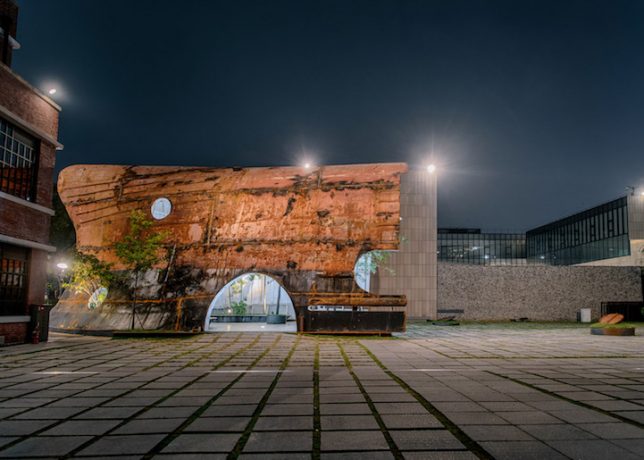
Cut from a massive decaying sea vessel, this hollowed-out section of hull has been transformed into a seating and performance space outside of the National Museum of Modern and Contemporary Art in South Korea.

rusted pavillion space

rusted gutted sea vessel

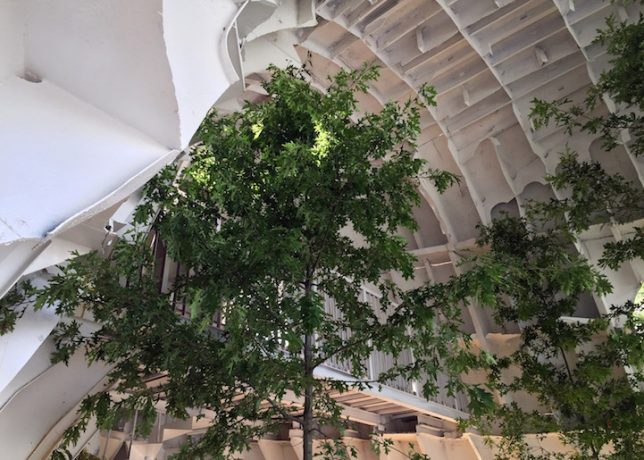
Located in Seoul, the Temp’L features an original corroding exterior that contrasts with its freshly-painted white interior and an array of greenery adorning it inside and out.

rusted museum seoul

A balcony and spiral staircase let visitors wind their way up inside this partial shell of the old ship, making their way to a semi-enclosed alcove shrouded by trees.

rusted old and new

The red-and-white theme plays off of concrete and brick on the adjacent museum building while the shape and texture set it starkly apart.

rusted exterior display

“Any great cultural vestiges can lose their function,” says Shinslab Architecture. “In the same way, a material can also lose its original value over time.”

rusted trees interior

“The fact that the destiny of cultural relics is to be dismantled, should make us reflect upon what we need to consider for future generations.”

rusted visitors

rusted entryeway

“Temp’L is designed from recycled steel parts from an old ship. It shows not only a beauty of structure, but it has also a recycling purpose…It provokes thought about beauty in our time, coming from a recent past.”

Share on Facebook


[ By WebUrbanist in Architecture & Public & Institutional. ]

[ WebUrbanist | Archives | Galleries | Privacy | TOS ]


WebUrbanist

 
Comments Off on Architect Overboard: Rusted Ship Hull Flipped into Arts Pavilion

Posted in Creativity