RSS
 

Posts Tagged ‘Seeing’

Seeing Space in New Ways: 13 Creative Maps & Navigational Guides

03 Oct

[ By SA Rogers in Art & Drawing & Digital. ]

map-art-topographic-3

With the advancement of technology, the ways in which we perceive information have become increasingly visual, interactive and all around multi-dimensional – so why shouldn’t maps evolve to reflect it? These map concepts, installations and renderings in a variety of materials and forms let navigational data pop off the page into 3D creations, or blend the information with functional objects to tell a story.

3D Tube Map of London Made of Pipes

map-art-london-tube-1

map-art-london-tube-2

British designer Nick Fraser used a network of copper pipes on a black wall to create a map of London’s tube system, making the nickname literal. To differentiate the different lines, Fraser uses a series of colored washers.

Neon Subway Lights by Petr Koll

map-art-neon-1

map-art-neon-2

london_gif

Subway maps for various unnamed cities are rendered in vivid neon lights by designer Petr Koll for this fun series. What you can’t see in the still images is that the lines light up one at a time and then blink together.

‘Philadelphia Explained’ Installation Art by Paula Scher

map-art-philadeliphia

map-art-philadelphia-2

map-art-philadelphia-3

A hand-drawn map of Philadelphia is fitted to the interior surfaces of a gallery using dimensional modeling, immersing visitors in a navigational experience as “a personal reaction to information overload.” Famed designer Paula Scher worked with students at her alma mater, the Tyler School of Art, to create the installation.

Rijksmuseum Paper Pathfinder

map-art-paper-pathfinder-1

map-art-paper-pathfinder-3

How do you explain to visitors in clear visuals how they can navigate 8,000 objects spanning 800 years of art spread through 80 individual galleries in the same building? Graphic designer Marjin van Oosten came up with a refreshingly simple analog solution: a pop-up paper model of the building with color-coded and labeled ‘floors.’ It lets you see the whole building at once and physically hold a model of it in your hands to get a better idea of where things are.

3D Map of Tokyo’s Subway System

map-art-tokyo-subway-1

map-art-tokyo-subway-2

The surprising number of dips and turns in Tokyo’s subway system, hidden from sight, are revealed in this rollercoaster-like model by Takatsugu Kuriyama. Different colored liquids pulse through the various tubes to show movement in each line.

Next Page – Click Below to Read More:
Seeing Space In New Ways 13 Creative Maps Navigational Guides

Share on Facebook


[ By SA Rogers in Art & Drawing & Digital. ]

[ WebUrbanist | Archives | Galleries | Privacy | TOS ]


WebUrbanist

 
Comments Off on Seeing Space in New Ways: 13 Creative Maps & Navigational Guides

Posted in Creativity


Seeing is believing: Panasonic Lumix DMC-CM1 camera review

27 May

Panasonic’s Lumix DMC-CM1 smartphone goes above and beyond the typical mobile device camera specs with a 20MP 1″-type sensor, F2.8 lens and 4K video capture. With its impressive camera specification and unusual design it’s the closest thing to a true hybrid device we’ve seen yet in the current marketplace. Read on to find out how it performs in our full review. Read more

Articles: Digital Photography Review (dpreview.com)

 
Comments Off on Seeing is believing: Panasonic Lumix DMC-CM1 camera review

Posted in Uncategorized


Seeing in Depth of Field: A Simple Understanding of Aperture

18 May

Photography can be simply defined as: painting with light.

When you are painting with light, you are creating a story in a split second. That’s what photography is all about. Technically, your camera is measuring the light in the scene, and you are telling it how much of that light you want to use to create a properly exposed image. This becomes your story.

There are three main settings used to control that light; Shutter Speed, ISO and my favorite, Aperture. Each of these settings has its own individual way of measuring light. When all three are balanced correctly, you create a proper exposure.

1 Aperture Range 3265

Though each of these three settings measures light, they also have unique characteristics that create artistic qualities in your photographs. By understanding them, you have control over the full story you want to tell.

Shutter speed captures movement or freezes it. ISO helps control how sensitive your camera is to the available light in a scene. Finally, the aperture creates depth of field. This is where the real story comes from; it is with aperture that you control what is in focus, and what is out of focus.

As a photographer, how do you decide what you want your viewer to focus on? How do you create a story? That’s what aperture is all about, and that’s why I love it.

WHERE IS IT AND WHAT DOES IT DO?

Aperture is located in your lens, not in the camera body. The lens opening expands and contracts to control light. By selecting a specific aperture size, you are telling the lens how much light you want to hit, and register on, the sensor.

It is very similar to how the human eye works. Your pupils expand and contract based on the available light in the scene. Like when you first walk into a dark movie theater. At first you can’t see, then your eyes adjust. Your pupils expand, allowing your eyes to see as much light as possible in the dark room.

Again, when you go outside on a sunny day, at first it’s too bright to see. Your pupils adjust by contracting, letting in less light. Your lens aperture works the same way. Changing aperture settings is like your pupils dilating or contracting.

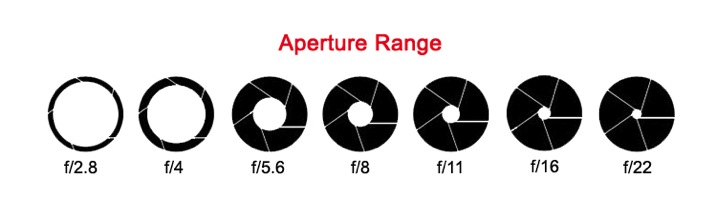
The size of a lens aperture is measured in what we call f-stops (fractional stops). Just like all settings on a camera, there is a general range.
2 aperture range2

The numbers aren’t necessarily important to memorize. What’s important is to see the range in the settings. Here is the trick; the smaller the f-stop number (like f/1.8), the larger the aperture opening. This means more light will enter through your lens at once, and vice versa. The larger the f-stop number (e.g. f/22), the smaller the aperture opening, and less light will enter your lens.

Think of these f-stops as fractions. Just replace the F with the number one. 1/4 of a pie is much more than 1/16 of a pie.

A quick note: Not all lenses are built the same. Different lenses have different apertures. Some lenses have a wider range and some have less. Standard lens will range from F3.5–F22. Specialty lenses go as low as F1.2 or more. See: What the Numbers on your Lens Mean for more on this.

SEEING IN DEPTH OF FIELD

Here is where it gets fun. While measuring light, when the lens expands and contracts, it also measures depth of field. Again, your eyes do the same thing!

As you look at the screen to read this, these words are mostly in focus to your eyes. In your peripherals, you can see other things, but they aren’t in focus.

Notice, your hands on the keyboard, they are in the foreground, and perhaps a bookshelf is in background. You can see them but they are not in focus. You are seeing in depth of field.

A great photograph does just that. It captures a foreground, a mid-ground and background. By setting your aperture you are controlling which of these areas is in focus. It is all based on your intention, your story.

DEFINING DEPTH OF FIELD

With your camera’s focal point (that little square in the middle of your viewfinder), you focus on a particular part of the scene. This point becomes the sharpest part of your image. There is an area in front of that point in focus, and an area behind it in focus as well. The distance from front to back that is acceptable focus is considered your depth of field. You decide what is acceptable by choosing a specific aperture size.

3-Uluwatu-Monkey-8427

This is a story about a monkey on a cliff. The bushes in the foreground and the temple on the cliff in the background are out of focus. They are out of the depth of field. This brings your attention to the focal point; the monkey in the middle (no pun intended).

Remember, the lower the f-stop number, the bigger the opening, the more light comes through the lens. This means less of your scene is in focus and you have a shallow depth of field. The opposite is also true. The larger the f-stop number, the smaller the opening, the less light comes through the lens. In this case, more of your scene is in focus and you have a greater depth of field.

Simply put, the larger the f-stop number, the more will be in focus. The smaller the f-stop number, the less well be in focus.

A DEEPER LOOK AT DEPTH OF FIELD

As you lock your camera’s focal point on a specific spot, that spot creates a focal plane. Everything that is the same distance away from the lens is on the same focal plane, and will be in focus.

4 focal plane explained

At a shallow depth of field (low number), the focal plane is very thin. As your depth of field becomes greater (high number), the focal plane becomes deeper.

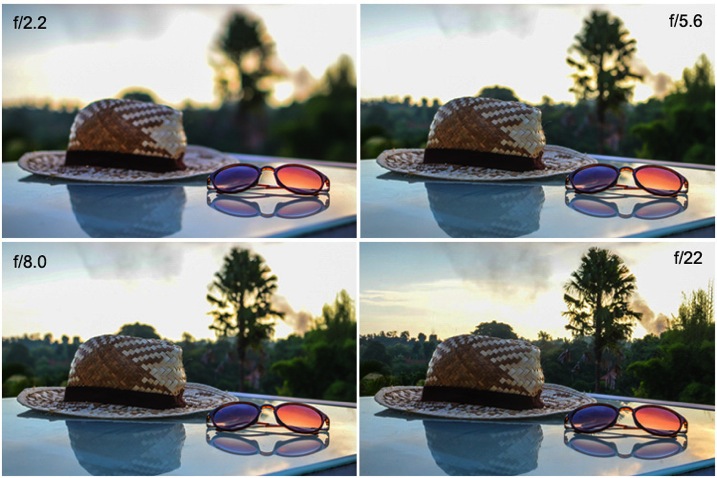
Here is the same scene photographed with different aperture settings. Notice that the depth of field changes how much of the image is in focus.
5 aperture example

At f/2.2 only the sunglasses are in focus. At f/5.6 the hat is also in focus. By using f/8.0 you can start to make out the trees in the background. Finally, at f/22 everything in the image is in focus.

Which one tells the best story? You as the photographer, get to decide.

PRACTICE TIPS AND TRICKS

Now that you’ve got a good grasp on the basics, it’s time to play! Here are some great tips to start your practice.

Set your camera to Aperture Priority mode. You will have full control of the aperture, without having to worry about proper exposure. This way you can just focus on depth of field. It’s a great way to fully understand what your lens is doing as you change your aperture settings.

Pick a subject or scene, and stick with it. Photograph your scene from many different angles. Choose different parts of the scene to focus on using the full range of aperture settings.

Use these guidelines to capturing depth of field in different scenarios:

6 Aperture Range 9748

When shooting single subjects, like a portrait of a child, it is best to use a lower f-stop like f/1.2-f/2.8. Creating a shallower depth of field brings attention to the subject’s face, which is always most important in a portrait.

7 Aperture Range 2145

When shooting a small group of people (2-5), choose an aperture of f/4-f/8. This, being a slightly deeper depth of field, guarantees that everyone in the group will be in focus.

8 Aperture Range 6150

Any time you have a wide-open scene, for instance a landscape, and you want all of that landscape in focus, choose a setting above f/10.

These are just guidelines. Photography is a form of art. Be creative, and remember, it’s all about telling a story.

What story do you want to tell? Share your images here and show how you’ve used depth of field to create a great story.

All Images in this article are © 2015 Danielle Werner and DEW Imagery & Design

Bio

Danielle Werner is a free-spirited photographer, designer and retoucher, on an endless journey around the world. She is also a passionate writer and educator who teaches photography workshops wherever she goes. Read Danielle’s inspirational travel stories at LiveWonderful.com, and check out more of her adventure and lifestyle photography at DEW Imagery & Design. You can also connect with her via:

https://twitter.com/ImageryDEW

https://www.facebook.com/livewonderfulblog

googletag.cmd.push(function() {
tablet_slots.push( googletag.defineSlot( “/1005424/_dPSv4_tab-all-article-bottom_(300×250)”, [300, 250], “pb-ad-78623” ).addService( googletag.pubads() ) ); } );

googletag.cmd.push(function() {
mobile_slots.push( googletag.defineSlot( “/1005424/_dPSv4_mob-all-article-bottom_(300×250)”, [300, 250], “pb-ad-78158” ).addService( googletag.pubads() ) ); } );

The post Seeing in Depth of Field: A Simple Understanding of Aperture by Danielle Werner appeared first on Digital Photography School.


Digital Photography School

 
Comments Off on Seeing in Depth of Field: A Simple Understanding of Aperture

Posted in Photography


New Artificial Lighting Tricks Human Brain into Seeing Sunlight

18 Feb

[ By WebUrbanist in Design & Fixtures & Interiors. ]

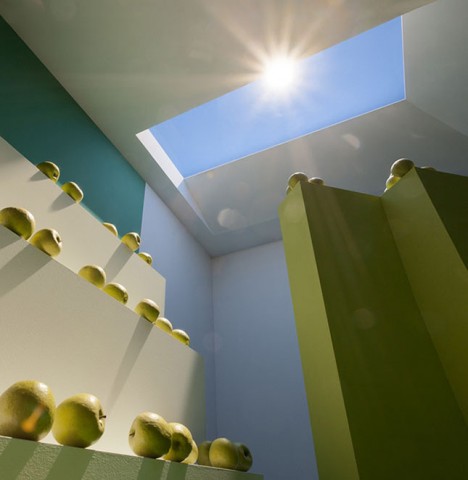
skylight

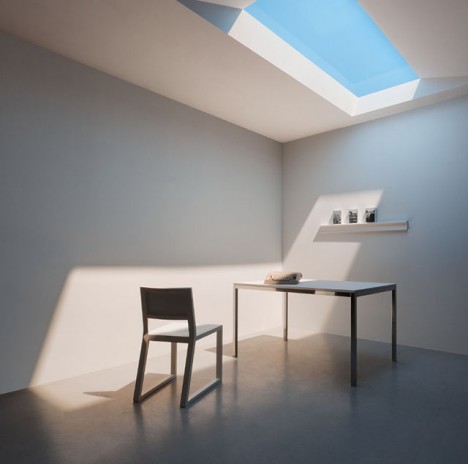
Access to natural daylight has long been one of the biggest limiting factors in building design – some solutions involve reflecting real daylight from the outdoors, but until now no solution has been able to mimic natural refraction processes and fool our minds into thinking we are surrounded by actual sunlight.

artifical snlight interior image

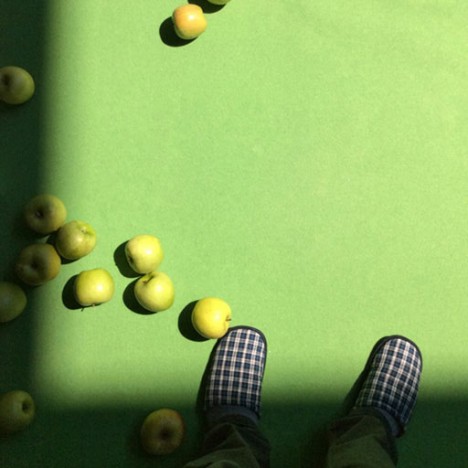
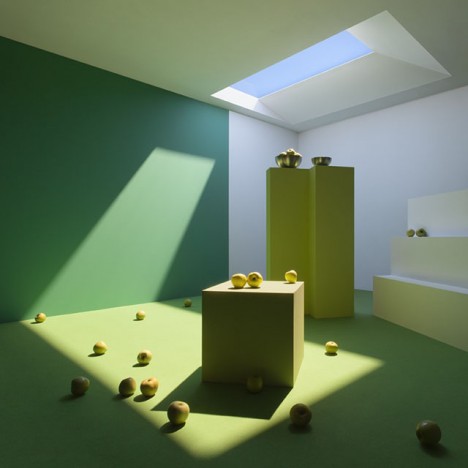
Developed by CoeLux in Italy, this new form of artificial light is able to dupe humans, cameras and computers alike using a thin coating of nanoparticules to simulate Rayleigh scattering, a natural process that takes place in Earth’s atmosphere causing diffuse sky radiation. It was not enough to make the lights brighter or bluer – variegation and other elements were needed as well.

artficial skylight system design

light bring to market

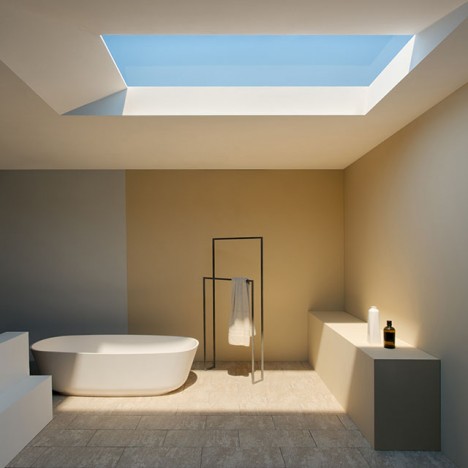
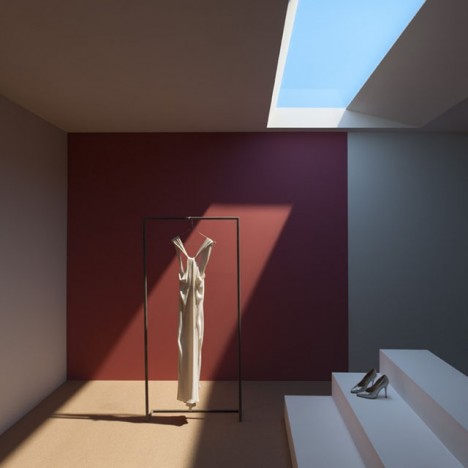
The result is an effect that carries the same qualities we are used to experiencing outside, from color to light quality. The company also boasts that these photos are untouched and that their fake skylights in showrooms fool people in person just as effectively, appearing to have infinite depth just like one would expect looking up into the sky (James Turrell’s skyspaces and this work by Christo come to mind).

artificial light photo shoot

daylight light soucre innovation

The potential applications are effectively endless, from lighting deep indoor spaces to replacing natural light in places where winters drag on and daylight hours are short. The company sees opportunities in areas like healthcare facilities where it may not be possible to put patients near real windows for spatial or health reasons.

lux live winner award

light real simulation design

Currently, three lighting types are on offer to simulate various broad regions – Mediterranean, Tropical and Nordic – featuring various balances of light, shade, hue and contrast. They are also working on additional offerings, including simulated daytime sequences (sunrise through sunset) and color variations to reflect different kinds of weather conditions.

Share on Facebook


[ By WebUrbanist in Design & Fixtures & Interiors. ]

[ WebUrbanist | Archives | Galleries | Privacy | TOS ]


WebUrbanist

 
Comments Off on New Artificial Lighting Tricks Human Brain into Seeing Sunlight

Posted in Creativity


creativeLIVE presents Frans Lanting ‘The Art of Seeing’

12 Nov

creativeLIVE is hosting two days of ‘instruction and inspiration’ from renowned nature and wildlife photographer Frans Lanting. His class includes presentations about creative ideas and technical skills, and also features landscape and wildlife photography instruction during special field workshop sessions at prime photographic destinations along the California coast. Click through for a link

Articles: Digital Photography Review (dpreview.com)

 
Comments Off on creativeLIVE presents Frans Lanting ‘The Art of Seeing’

Posted in Uncategorized


Seeing More Creatively with Bryan Peterson

21 Jul

creativity2

Bryan Peterson is well known for his photography books and workshops. He’s also now one of the featured photography teachers on Adorama TV. You can get his book Learning to See Creatively on Adorama.com.

In these three videos Bryan gives us a few tips on doing just that.

Seeing Creatively

This first video is a quick tip on using Selective Focus:

In this second video Bryan is leading a workshop, ironically on the Oregon coast where I was just two weeks ago. This video shows how to get creative shooting things on the beach.

Make note they are shooting a starfish but they did not harm it or pull it off the rocks which can damage his little arms (please take care to do that if you are shooting on a beach for last week’s photography challenge). 

Lastly this video shows three quick tips on how to add motion to your images in an abstract and creative way.

Hopefully these have given you some ideas to get out and shoot.

The post Seeing More Creatively with Bryan Peterson by Darlene Hildebrandt appeared first on Digital Photography School.


Digital Photography School

 
Comments Off on Seeing More Creatively with Bryan Peterson

Posted in Photography


Winters’ Road to Seeing Finally Shipping

02 Feb

The seemingly mythical Dan Winters: The Road to Seeing is finally, actually in stock and shipping from Amazon. But even now, over a month after release, they are saying it might take an extra 1-2 days to process.

Because Curse of New Dan Winters Book, I guess.

Seriously, this thing disappeared pretty much as soon as it arrived (pre-orders?) and was never planned to be a big press run. So if you want it, you best make hay while the sun shines.


Strobist

 
Comments Off on Winters’ Road to Seeing Finally Shipping

Posted in Photography


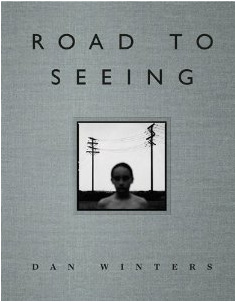
Dan Winters: Road to Seeing

25 Dec

I am at a loss for a quick way to describe Dan Winters' just-shipped book, Road to Seeing. That's because it defies nearly any category of photo book I have seen to date.

It's nearly 700 pages long, and is far and away the deepest journey into the photographic process I have ever read. It includes technique, but in the context of the journey covered in this book technique is almost an afterthought. And appropriately so.

Best way I can put it: Road to Seeing is not so much a book as it is a mentorship.

Read more »
Strobist

 
Comments Off on Dan Winters: Road to Seeing

Posted in Photography


Seeing and Street Photography

20 Aug
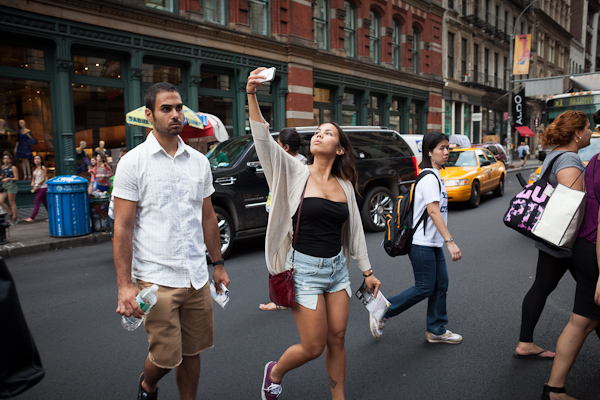
The Pose of a Generation.

The Pose of a Generation.

The next time you are out shooting street photography, try this.  Put your camera down at your side and just look around for awhile.  Watch things happen and let moments develop in front of your eyes.

It sounds simple but it goes against our natural instincts to throw the camera in front of our face every time we see something remotely interesting.  That is especially true with digital.

The camera is the tool, but it can get in the way sometimes.

The camera can be easy to hide behind and it can become a crutch.  It’s so easy to rev the engine and just start clicking away, trying to capture everything.  Meanwhile, in the haste the most important moments go unnoticed.

Most of the work that goes into capturing a good photo is done before you put the camera to your eye and after you take it away, in editing.  You need to see the photograph or the potential for a photograph with your eyes before you can get to the point of trying to capture it.

The key is to hold back, slow yourself down and scan the area until you finally see something,  Then you can pounce.  Often, just seeing something isn’t enough and you’ll have to wait for the situation to develop further.

Always think, can this be better?

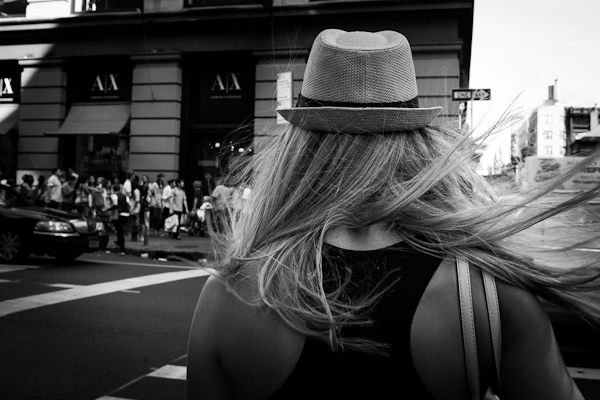
Gust, SoHo.

Gust, SoHo.

It’s better to be proactive instead of reactive.  You need to see the potential for a moment before it occurs.  Of course there will be great images that will suddenly spring out at you and you will have to photograph them as fast as you can, but that’s only a fraction of the time.

An important tip is to try to notice people from further away, especially in a crowd.  Scan the area and go from person to person.  If you’re only first noticing people as they are 8 or 10 feet away from you, then there’s nothing you can do but react.  Yes, some brilliant photos are created this way, of course, but if you instead focus on the people coming towards you from say 25 feet away, then you’ll have much more of a chance to get in position and capture the moment if it occurs.

The camera is just a tool to capture what your eye sees.  And the more your eye is able to see without the camera, the better your photographs will be.

Post originally from: Digital Photography Tips.

Check out our more Photography Tips at Photography Tips for Beginners, Portrait Photography Tips and Wedding Photography Tips.

Seeing and Street Photography


Digital Photography School

 
Comments Off on Seeing and Street Photography

Posted in Photography


Lenses and Seeing

21 Jul

Lenses and Seeing article

The lens is the ‘eye’ of the camera. The selected focal length and aperture determine the look of the photo. The lens you are using may also have other characteristics that contribute to the look.

These influence your approach to composition. The idea is to work with the visual characteristics of the lens you are using rather than fight against them. Ask yourself how you can get the best out of the lens you are using.

To start, you will need to understand why a telephoto lens is different from a wide-angle, and how depth-of-field is affected by aperture choice and focal length.

Let’s look at some examples taken with lenses that I have owned:

Sigma 50-150mm f2.8 lens

Lenses and Seeing article

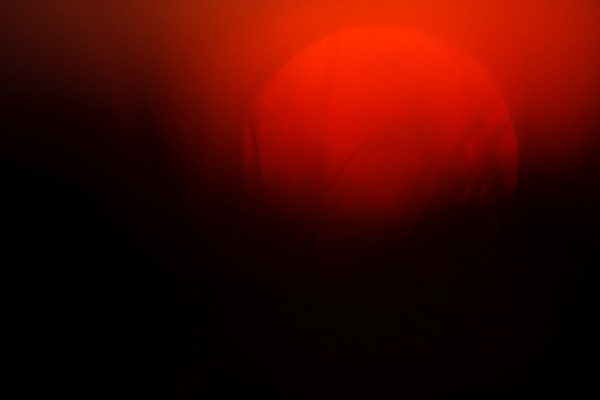
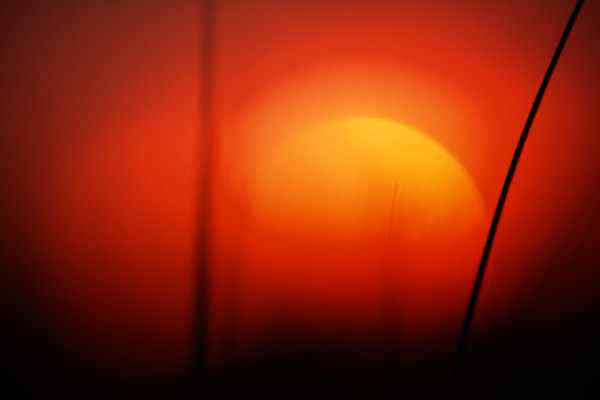
I created this image by setting the focal length of the lens to 150mm and the aperture to f2.8. I focused on the grass in the foreground to throw the setting sun out of focus. By the way, I didn’t look through the viewfinder at the setting sun. That’s potentially dangerous. I used Live View to compose the image instead.

This is how the lens and aperture choice affected the photo:

Narrow depth-of-field: The combination of wide aperture, long focal length and close focusing means the depth-of-field is extremely shallow. Anything other than the blade of grass I focused on is out of focus, including the setting sun.

Compression: The long focal length appears to compress perspective, making the sun look bigger and closer to the foreground than it really is.

Narrow field-of-view: The telephoto lens has a narrow field-of-view and captures just part of the subject. This focal length is good for capturing detail, but not for including the entire scene.

Canon 18-55mm f3.5-5.6 kit lens

Lenses and Seeing article

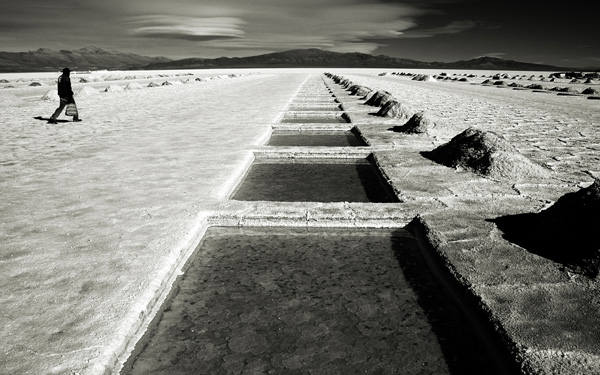
I set the focal length of the lens to 18mm, its widest setting, and the aperture to f11 when I made this image. These are the effects:

Depth-of-field: The small aperture was required because of the bright sun, but it also ensures that the entire scene is in focus. Every detail has been captured by the camera.

Perspective: I was drawn to this scene by the holes cut in the salt, and the lines created as they disappear into the distance towards the mountains. The focal length emphasises the lines and pushes the horizon into the distance, making it seem further away than it really is.

Wide field-of-view: The 18mm focal length has a wide field-of-view, which enabled me to capture the entire scene.

In many ways the focal lengths used to create the photos above are opposites. The telephoto lens brings the subject closer. Only part of the scene is in focus thanks to the wide aperture.

The wide-angle end of the kit lens, on the other hand, captures the entire scene and creates a sense of space by making the horizon seem further away that it really is. A narrow aperture ensures everything is in focus.

Canon 85mm f1.8 lens

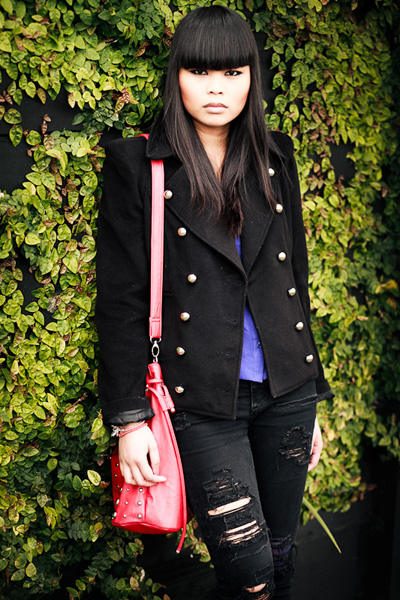
Here’s a portrait taken with another of my favourite lens, an 85mm prime set to f2.8:

Lenses and Seeing article

Depth-of-field: My model is in focus, and so is part of the background. There is more depth-of-field than there is in the photo taken with the 50-150mm lens set to 150mm. And there is less than in the photo taken with the wide-angle lens.

Perspective: The 85mm lens is a short telephoto lens and it records perspective accordingly. Again, it falls somewhere in-between the 150mm and 18mm focal lengths. Like the telephoto lens the 85mm lens is good for capturing details. You cannot capture as much of the scene as you can with a wide-angle.

Holga lens

Finally, I’d like to show you a photo taken with a Holga lens. You can buy these plastic lenses for digital cameras from Holga Direct. This really is a good example of how the lens determines the look of the photo:

Lenses and Seeing article

Holga lenses have the following characteristics:

Lack of sharpness: A Holga lens is made from plastic and is not intended to give a good quality image.

Vignetting: Photos taken with this lens are characterised by heavy vignetting at the edges.

Conclusion

Hopefully the examples in this article have drawn your attention to how the focal length of the lens you are using and the aperture affect the look of the photo. The lens is the camera’s eye, and the characteristics of the focal lens you choose determine the look of the photo. With practise, you will learn to make the best use of your lenses.

Mastering Photography

Lenses and Seeing article

My latest ebook, Mastering Photography: A Beginner’s Guide to Using Digital Cameras introduces you to digital photography and helps you make the most out of your digital camera. It covers concepts such as lighting and composition as well as the camera settings you need to master to take creative photos like the ones in this article.

Post originally from: Digital Photography Tips.

Check out our more Photography Tips at Photography Tips for Beginners, Portrait Photography Tips and Wedding Photography Tips.

Lenses and Seeing


Digital Photography School

 
Comments Off on Lenses and Seeing

Posted in Photography