RSS
 

Posts Tagged ‘Scenes’

Behind the scenes: An interview with the heads of Canon’s L lens factory

22 Mar
From left to right, Mr Hayakawa, Mr Okada and Mr Izuki, the three men in charge of development and keeping things running smoothly at Canon’s Utsunomiya lens plant. 

Following the CP+ 2017 show in Japan, we headed to Canon’s Utsunomiya lens factory to take a tour (see what we found) and interview the gentlemen who oversee all operations and development. This included Kenichi Izuki, the Plant Manager, Masato Okada, Deputy Chief Executive of Image Communication and Products Operations and Shingo Hayakawa, Deputy Group Executive of Image Communication and Products Operations.

The Utsunomiya plant is where all Canon’s L series, cinema, and broadcast lenses are produced. It’s also where all Canon lenses are designed. Many of those designs can be attributed to the three men pictured above. In fact just before we started the interview Mr Izuki informed us that he had been lead designer of the EF 35mm F2 IS lens we’d chosen to document the factory tour. So there’s also a pretty good chance you have one of them to thank for your favorite Canon glass!

Please note that this interview was conducted through an interpreter, and has been edited slightly for clarity and flow.


The magic place where all Canon L lenses are born.

What percentage of L lenses are manufactured in the Utsunomiya lens plant?

Because this is the ‘mother’ factory, 100% of L lenses are made here.

How many different lenses can be manufactured simultaneously in this plant?

Basically, we create all lenses every day [including L-series EF, Cinema EOS and broadcast]. The only exception is some of the broadcast lenses.

Which lenses in particular are the most difficult to manufacture and why?

Any large super telephoto lenses because of the size of the glass elements. In terms of skill required for lens assembly: the TV broadcast lenses are most difficult.

How many lenses are produced at this lens plant every year, both in terms of types of lenses and total units?

We do not disclose total production for this plant. That said, Canon has produced a total of 120 million lenses over the years. Of course, many of those are kit lenses, which are not produced here, but in our facility in Taiwan.

Mr Izuki, the plant manager, teaching us about the lens production process. 

Tell us a little bit about the history of the plant.

The facility as a whole has been here for forty years, however prior to 2005, we were located in an older building on the other side of the property. And the land where the current plant sits was initially owned by the Du Pont family. When they returned it to the prefecture, we bought it.

The current lens facility opened in 2005. When we moved in we completely revamped our lens-making machines and devices. Not all, but the majority. This helped to push [us] to a higher standard of quality.

Over the past 40 years, lenses have changed a lot, with autofocus introduced, aspherics, etc., what was the largest paradigm shift in lens technology?

We are reaching the 30th anniversary of the introduction of the EOS line. It was at that time, in 1987, that we moved into autofocus. When we did that, I believe we were the first ones to go fully-electronic mount autofocus. Because the motors were built into the lens we had a significant competitive edge.

As DSLR resolution increases, it can be a challenge to achieve precise focus because AF errors are more noticeable. How do you reduce this risk in the manufacturing and quality control process?

Overall precision is something customers are increasingly requiring. In this factory, we have increased the level of precision of our machines so that lenses have more accurate autofocus.

A lens going through QC testing. Information from the test will be saved on a chip in the lens.

During the tour it was mentioned that Canon lenses now store their quality control test data using on-board memory. Can that data be used to improve autofocus reliability?

We do store data from final lens testing on each unit. I won’t be able to speak in greater detail other than saying, yes, in theory, that data could be used to achieve higher autofocus performance [better AF precision] with a DSLR.

How long does it take a lens like the Canon EF 16-35mm f/2.8L III USM to make its way from start to finish in the assembly line?

From raw material being polished, to the final tested product being boxed: about 24 hours of work, in theory. But the physical production would actually take longer. This is because we are producing parts in batches and there are machines that need to be fitted. These variables aside, if you take the actual time of labor, assembly and packaging, it is about 24 hours.

You mentioned you were looking to hit an 80% automation rate in this facility. What kind of efficiency gain does that represent?

It’s difficult to say in terms of time, but I can say it use to take about 70 people to make a lens like that prior to automation, now we need about 6 or 7.

As production becomes more automated will you require fewer skilled manual workers?

In one sense yes. But it’s not about firing the rest of these people, it’s about allowing them the time to build up their skills. This way they can face challenges and difficulties like increasing precision and performance. So we’ve essentially been able to allocate these workers to a different environment.

A lens in the final assembly process. It can take 25-30 years to become an Assembly Meister at Canon’s Utsunomiya plant. 

Typically how long does someone train before they attain the title of ‘Meister’?

In terms of the level of ‘Lens Meister,’ it would take 30-35 years. For ‘Assembly Meisters”, 25-30 years.

Now that the process for assembly, element polishing and quality control is so automated, we’re curious how many lenses pass QC the first time vs those that have to go back for re-calibration.

In terms of maintaining a level of quality before going into mass production, we do a lot of checking and scenario building [using a super computer] to make sure everything will go right. Once a lens goes into mass production we can safely say that we have seen no lenses returned for further calibration.

What impact did the 2011 have on this facility and how long did it take to recover?

A lot of the ceilings came down. We took a big hit in that regard. But, we were able to come back into operation within about 2 to 3 months.

While not the most exciting photo, if you look very carefully, you might see some minor impressions on the linoleum. This is (subtle) evidence of the 2011 earthquake, which caused some ceilings to collapse. The yellow tape line is used by computerized robots in the factory.

Did you implement any changes as a result of the earthquake?

We have fortified the building, so that it is more earthquake-proof. And the assembly tools we use are put together in such as way that they are shake-proof.

Are there major differences in how you QC test broadcast and cinema lenses vs EF lenses?

The concept for testing is basically the same. But, in terms of broadcast/cinema lenses there are some unique customizations that we offer depending on the particular cameraman or filmmaker. If they want to zoom by hand, for instance, we can accommodate the pressure of the mechanism to their requirements.

A lot of your users use EF lenses for video creation. Has that changed the way you design some EF lenses?

In terms of stills shooter, when it comes to autofocus, the faster the better. On the other hand, videographers tend to require a variance in autofocus speed. Sometimes they want a slow effect. So we had to create a motor that could actually do both fast and slow focus. This is why we introduced Nano-USM. It’s in both the 18-135mm F3.5-5.6 IS USM and the 70-300mm F4-5.6 IS II USM.

Will that kind of autofocus be used more in the future as video becomes more of a requirement for users?

Yes. 

At any given time, how many new lenses are in development at this facility?

I can not give you a number, unfortunately. But I can say that new lenses are in development as we speak. So I hope you look forward to them.

Results of a QC test.

Editors note (by Dan Bracaglia):

Let me begin by saying how grateful I was to be given access to Canon’s lens factory and what an honor and privilege it was to sit down and interview the creators of some of Canon’s most legendary glass. In my six and a half years writing about photography, this was one of my most memorable and rewarding experiences. 

As you might expect, there were nearly endless points of fascination. Some of which are covered in this interview, others in our factory tour slideshow. Something that particularly interested me is the fact that all the information from a lens’ final calibration and quality control check is saved on a chip within the lens itself. The idea here is this information can been used, in theory, when a lens comes back in for cleaning or recalibration. It also means that at some point, perhaps camera bodies will be able to access this information, which could lead to better AF precision. This is solid forward thinking on Canon’s part. 

I was also intrigued to find that Canon manufactures every L lens in the same factory. Not only that but every current lens in the L series is being made every day. As you might imagine, security at the facility is very tight. 

“Canon, it seems, recognizes just how important pushing lens development is”

Also hearing Canon put a concrete number on their automation goals (80%) was interesting. Of course you could read that as Canon displacing workers with machines, but throughout the tour and the interview, our guides made it clear that automation wasn’t about replacing workers, rather dedicating more workers to research and development. Canon, it seems, recognizes just how important pushing lens development is, all while maintaining a high level of quality control. Automation offers just this. 

And I’m not ordinarily one to be starstruck, but when Mr. Izuki told me he designed the Canon EF 35mm F2 IS, my jaw dropped a little. There’s nothing quite like standing of front of the creator of one of your favorite lenses. Speaking of favorites, we also asked Mr. Hayakawa, Mr Okada and Mr Izuki which Canon lens they’ve designed/worked on over the years they are most proud of. We got some great answers. We’ll be posting those in a separate article soon, so stay tuned!

Barney, just prior to entering the factory floor. We also went through a room that blasted us with air. Dust is the enemy in a lens factory. 


Articles: Digital Photography Review (dpreview.com)

 
Comments Off on Behind the scenes: An interview with the heads of Canon’s L lens factory

Posted in Uncategorized


Behind the scenes with Seattle PI photographers

06 Mar

Grant Hindsley and Genna Martin, the two staff photographers for the Seattle PI. The PI published its last print edition in 2009 and has been online-only ever since.

Photojournalism isn’t what it was. Gone are the days when newspapers and photo agencies employed armies of staffers and stringers, around the world, and gone too (sadly) are the days when newspapers and current affairs magazines could rely on newsstand sales and advertising to invest in their reporting. There are fewer magazines around now than there were, and fewer newspapers. Those publications that do still exist tend to operate on tighter budgets, with fewer full-time staff members. Many have stopped printing altogether, and exist now only online. The Seattle PI is one of them. 

‘Genna Martin and Grant Hindsley bring compassion and joy to their jobs and it shows in their work.’ (Sarah Rupp – Executive Producer, Seattle PI)

In this article, we go behind the scenes with Grant Hindsley and Genna Martin, staff photographers for the Seattle PI, following them on two assignments – the Seattle Women’s March, on January 21st, and the annual King County homelessness survey, a few days later. 


January 21st


Grant Hindsley has the flu.

‘I slept between every one of my assignments yesterday, I was so out of it’. One of those assignments was a protest at the University of Washington where a man was shot and badly wounded, in circumstances that remain unclear. Grant captured images leading up to the confrontation, and graphic images of the aftermath, most of which will remain unpublished.

‘I feel a bit better today, but as soon as I stand still or sit down I start coughing again’. As I am about to find out, Grant doesn’t stand still or sit down much. As one half of a two-person photography team at the Seattle PI, there’s not much opportunity for time off. 

A line line of people, numbering more than 100,000, march through Seattle downtown during the 2017 Women’s March. 

Photograph: Grant Hindsley for the Seattle PI. Used with permission.

Today, I’m tagging along with Grant as he covers the Women’s March, which is due to start in half an hour or so, from a park in Seattle’s Central District. In an early sign that the city’s attendance estimate of 50,000 people might be a little conservative, there are no cabs available, bus lines stretch for entire city blocks, and demand for ride-sharing services has sent Uber and Lyft prices sky-rocketing to more than $ 120 for the 2-mile trip.

Running late, we cram our gear into Grant’s girlfriend’s tiny car (‘it’s easier to park’) with the idea of jumping out as close as we can to the rally point, then walking the rest of the way. Hopefully, issuing parking tickets won’t prove to be a major law-enforcement priority for Seattle’s finest this Saturday.

‘Grant likes the slow photo, the in-between or off moments. He shoots the fringes of events, the stuff that people usually miss or overlook’ (Genna Martin)

As the first marchers join the route, photojournalists and camera-toting enthusiasts have formed a loose line at the vanguard of the group. They look a bit like a participants in a police search line, except that instead of having their eyes glued to the ground, the photographers have their lenses aimed at the marchers. And instead of walking forwards, they’re walking backwards.

An experienced photojournalist from another publication is attempting to corral the photographers to a traffic island a little further down the road, at a point where they can all get an unobstructed shot of the head of the march.

Police clear the route ahead of the women’s march, as it  begins.

Photograph: Grant Hindsley for the Seattle PI. Used with permission.

I ask Grant about working alongside other photographers at big events – is there some kind of honor code, when it comes to getting in the way of someone else’s shot, or lining up with them to take the same picture? ‘Not really, we tend to just work around each other, but it depends. If there are a lot of press at a relatively small event, then you’re all going to get the same picture anyway, that’s just the way it goes. Nobody has ever really gotten in my way when I’m working.’

‘Actually’ he says, after darting into the crowd and snapping a couple of shots, ‘that’s not true. Broadcast guys tend to shove you around a bit. If I ever have to throw an elbow out at anyone it’s usually at a broadcast guy’. 


What’s in Grant’s bag?

  • Canon EOS-1D X
  • Canon EOS 5D Mark III
  • Canon EF 35mm F2 IS (‘go-to’ lens)
  • Canon EF 70-200mm F2.8 IS L II
  • Canon EF 85mm F1.8
  • Bag: Think Tank Shape Shifter (v1)

You must have shot a lot of protests at this point, I ask Grant – what kind of images do you try to capture?

‘My first internship was at the AP and one of the things I learned there was not to take pictures of signs. I mean, you can, and sometimes it just can’t be avoided, but signs are mostly just words, and if words were all we needed we’d just send writers to these things, not photographers’.

There’s no arguing with that logic, but signs are unavoidable at a march of this size. Almost everyone, from toddlers to wheelchair-bound pensioners is carrying some kind of a sign or banner. ‘What I try to do is avoid redundancy’, Grant tells me. But he’s not worrying about his employment prospects: ‘Images from protests can end up just all looking the same. I try to find pictures that will still make sense after the march is over, which put it in context. I shoot a lot more events than I used to so I look for something weird that tells the story.’

‘A lot of photographers lean back on the super wide at F16, and spray, but I never really shoot wider than 35mm.’ (Grant Hindsley)

‘The most meaningful encounters I’ve had come from intimate story telling. Sometimes that amounts to years of photographing the same subjects, sometimes it’s something quick that strikes deep’.

A father and son watch the progress of the march through Seattle’s downtown.

Photograph: Grant Hindsley for the Seattle PI. Used with permission.

Initially though, Grant admits, he’s just grabbing as many pictures as he can, as the march starts winding through Seattle’s Central District, en route to the Seattle Center three and a half miles away. ‘My approach is to take a lot of pictures early on, to cover myself, and start sending them in before things get too busy. Once I know I’ve got a few images in the bag, that’s when I slow down and start looking for more interesting scenes’. 

‘Anyone can take a pretty picture. It can be with a phone or with $ 100,000 of equipment, but everyone can do it with some practice. Photojournalists on the other hand, are trained in serendipity’ (Grant Hindsley)

Filing images on the go isn’t entirely straightforward. Grant plugs his battered iPhone directly into his Canon EOS 5D Mark III using a jerry-rigged USB cable and Lightning Port adapter, ingests images into his phone’s camera roll, then emails them back to the office. It’s slow, and the fragile wired connection breaks frequently. And literally. 

A participant in the march pauses to become the subject of a quick portrait. 

Photograph: Grant Hindsley for the Seattle PI. Used with permission.

With one camera plugged into his phone, and a CF card clamped between his teeth, Grant continues shooting with his second camera, a Canon EOS-1D X, with a 35mm F2 attached. Both cameras and lenses are owned by the PI, but remain in his possession as his everyday kit, and get used for everything from taking pictures of an unseasonal snowstorm to Seahawks games. Cameras and lenses alike are shiny and scuffed from use. 

Governer Jay Inslee speaks to one of the participants in the Women’s March, in Seattle.

Photograph: Genna Martin for the Seattle PI. Used with permission. 

Towards the end of the afternoon, Grant drops by the Seattle PI office to file some images. While he’s doing that, I meet up with Genna Martin – the other half of the PI photo team, who’s been covering the march too.

Genna was named 2015’s Best New Journalist by the regional chapter of the Society for Professional Journalists, and today, she’s filing images from inside the nearby Komo News Plaza, alongside Bettina Hansen from the PI’s main rival, The Seattle Times. They’re discussing an image shot earlier by another Seattle Times staffer, veteran photojournalist Alan Berner. Grant and I bumped into him on the march, posted up on a busy corner, standing on a step stool to get shots of the participants snaking along 4th Avenue.

Photograph by Alan Berner, Seattle Times.

Used with permission (see the full Seattle Times gallery here)

In Bettina’s opinion ‘it’s the shot of the day’. Taken from a slightly elevated position (probably the step-stool), the picture shows the march receding to infinity. A relatively shallow depth of field highlights four figures standing side by side, wearing the pink ‘pussy hats’ that have become emblematic of the event. Walking into the sun, all four figures are also wearing sunglasses. There’s plenty of signage in the photograph, but the signs aren’t the main focal point of the image, and they’re mostly outside of the zone of focus.

So why is this such a good image? ‘It has everything’, Genna explains. ‘The symmetry, and the central positioning of the four main subjects. It has everything you’d want from a picture of a march. And it’s not a sign picture’.

‘I hate sign shots. I hate protest photos that are just about the sign, and not about the person holding it.’ (Genna Martin)

Another Seattle Times photographer, Erika Schultz, is also here covering the march. Between them, Erika and Bettina have almost 25 years of professional experience, and have been recognized with several major awards. Alan Berner adds another 30+ years of experience, and even more awards, including the title of NPPA Regional Press Photographer of the Year seven times. The two publications might be rivals, but the only rivalries in this group are friendly. Every year, the PI’s ‘Photographs of the Year’ slideshow is hosted in a bar run by Bettina’s fiancé. 

The march ends around sunset, when the final participants arrive at Seattle’s iconic Space Needle. Genna and I join up with Grant, and together we shoot a few pictures of the crowds before heading off to find some dinner. The last of the day’s images are filed by 7pm, over slices of pizza in Grant’s apartment.  

See Grant and Genna’s images from the march


January 27th


A few days after the Women’s March, on January 27th, I join Genna for a very different assignment – shooting the annual King County Point in Time (PIT) Count. This is a survey of homelessness, which takes place all over King County on a single night (in fact a very early morning) in January.

Volunteers gather in the early hours of the morning, before embarking on Seattle’s annual ‘Point in Time’ homelessness count. 

Photograph: Genna Martin for the Seattle PI. Used with permission.

Tonight, between 2-6am, volunteers will comb through Seattle, counting sleeping bags, tents, occupied vehicles and encampments. Once collated, the results of the count will become one of the metrics used to determine public policy around homelessness. Grant shot last year’s count, and when it came up in conversation a few days ago he offered me the kind of cheery ‘well, I hope you have fun!’ that strongly suggests that he thinks I won’t.

‘Genna is a marvelous, classic photojournalist but with a fresh twist. So often she sees things I just glance over. Her eye is always on the story and the people and she really feels for the people she photographs.’ (Grant Hindsley)

Volunteers gather at a center on Alaska Way at 2am. When we arrive, the center is packed with volunteers, guides, and puffy-eyed journalists. Across the crowded main room, several boom microphones are visible, arcing over the assembly like construction cranes. Local broadcast news crews are doing the rounds, alongside several photographers – including Erika Schultz of the Seattle Times.

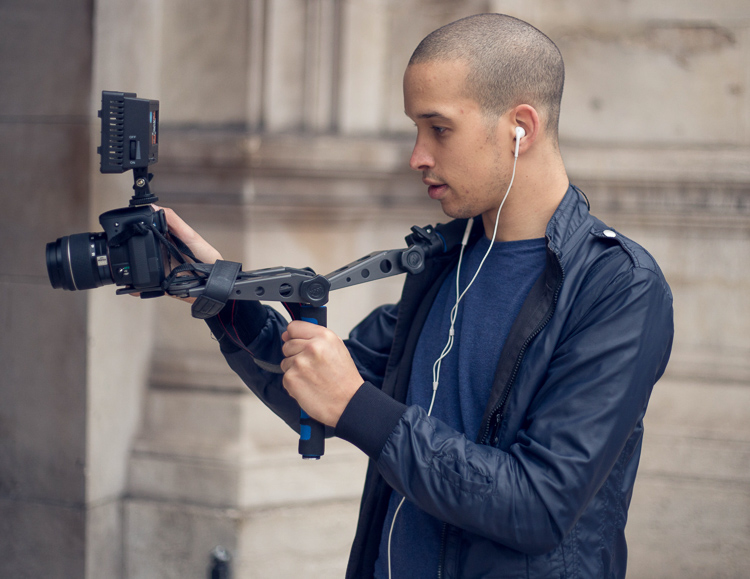
There’s another crew here, too. A big one, made up of strikingly similar-looking men carrying new and very expensive equipment. They’re doing their best, pushing through the crowded room with stabilized Sonys held aloft, attempting overhead tracking shots with pivoted carbon-fiber stabilizing rigs that resemble hip-bones from some prototype killer robot. They’re wearing secret service-style earpieces, and won’t say who they’re shooting for.


What’s in Genna’s Bag?

  • Canon EOS-1D X
  • Canon EOS 5D Mark III
  • Canon EF 24-70mm F2.8 II
  • Canon EF 70-200mm F2.8 II
  • Canon EF 35mm F1.4 II
  • Canon EF 50mm F1.8
  • Safety glasses and mask (for protest coverage)
  • Duct tape.

There’s a rumor that the mayor is going to address the media before the groups of volunteers leave for their search areas, but he’s running late. He might not turn up at all, but should we wait, I ask Genna, to see if he shows up? It’s already close to 3am and she’d rather get going. ‘I’ve seen the mayor plenty of times, and I’ve not seen him even more times than that’.

A group of volunteers consults a map. 

Photograph: Genna Martin for the Seattle PI. Used with permission.

Our group is assigned to a relatively affluent area of Seattle, near the University of Washington. Mostly made up of members of a UW ‘Service Sorority’, our group is impressively perky for 3am, and apparently they’re planning on attending class in a few hours. As we start walking, I’m at the opposite end of the stamina scale, and I get the sense that Genna is somewhere in the middle.

One of several tents under a bridge in our search area. This is a non-invasive survey, so all photographs must be taken using only natural light. 

Photograph: Genna Martin for the Seattle PI. Used with permission.

Most of our search area is residential, and even though it’s a clear, relatively mild night, very few people are sleeping outdoors. Despite the lack of activity, Genna and I are quite enjoying ourselves, combing through the bushes with by the light of our iPhone screens, and peering into alleyways.

It is, we decide, a bit like a scavenger hunt. Albeit one which, we shamefully concede, ‘you shouldn’t really want to win’.

‘Realising that you don’t have to shoot everything is the first step. And from there, being able to calm down and focus in on particular moments, and good photos, rather than just photos that show what’s happening’ (Genna Martin)

Inevitably, the few times when we do come across a huddled figure, or a tent, are occasions for muted celebration. The volunteers get to put a checkmark in a box on their list, and Genna gets to take pictures of something actually happening. The survey is meant to be non-invasive. The aim is to observe and report, not engage or disturb. I hope we didn’t wake anyone up.

Compared to the women’s march, Genna takes relatively few images. As we were trudging through the darkened streets, she shared some good advice, from Dan Bates, one of her former colleagues at the Everett Herald: ‘Look for hundred dollar bills rather than a bunch of quarters’ I.e. it’s better to get one good picture than lots of mediocre ones.

Volunteers record the location of a tent found during the survey.

Photograph: Genna Martin for the Seattle PI. Used with permission.

Genna got her start at the Everett Herald in 2011. I asked her why she decided to take up photojournalism: ‘When I was in 8th grade, my class went on a trip to Washington D.C. We went to the Newseum and there was an exhibit there on Pulitzer Prize winning photos and the stories behind how they were made. I was enthralled and from that moment on I was set on having a career as a photojournalist’.

Her work has made a difference, too. In 2014, when Oso resident Tim Ward lost his wife and his home in a landslide, Genna’s work on a profile on Ward lead to hundreds of donations from members of the public, to help him get back on his feet. Ward recently re-married and moved to Florida.

‘I think most of the photos we take will make a difference to someone at some point. Whether its the person in the photo who gets to feel special because they’re in the news for a day, or a historian 50 years from now’ (Genna Martin)

Of all the assignments that Genna has done since joining the PI, tonight’s is probably among the least eventful. As well as the Oso landslide, she photographed the horrific collision of an amphibious ‘Duck’ tour vehicle on Seattle’s Aurora Bridge in 2015, and she’s been in harm’s way a number of times, covering natural disasters, protests and violent incidents. Her forearm still bears a vivid scar caused by a police stun grenade deployed during Seattle’s May Day protests in 2016, and a couple of nights after the homelessness count, she’ll be ‘lightly pepper-sprayed’ (her words) while covering a sit-in at Seattle-Tacoma International Airport. 

Protesters occupy an area of Sea-Tac airport, following the overnight imposition of a travel ban by the Trump Administration.

Photograph: Genna Martin for the Seattle PI. Used with permission.

For his part, over the course of a 7-year career, Grant has survived his fair share of protests too, outrun some ‘wicked storm fronts’ and been chased with a machete. 

Tonight is quiet by comparison. At 5am we decide we’ve done enough and head home, leaving our group to complete the survey. On the way back to Genna’s car, we spot another group of volunteers at the end of a road, the outline of a robot-like stabilizing camera rig clearly visible in the early morning mist, silhouetted under a street light. Good luck to them.

I’m fast asleep by the time Genna has her images processed and uploaded to the PI’s servers.


The Seattle PI has a proud tradition of high-quality photojournalism and despite tight budgets and a small staff, both photographers turn in high-quality work, day after day and week after week.  

Genna offered her thoughts on why their job matters:  

‘Photojournalists are the witnesses of history. They go to things so you (the public) don’t have to. They provide a living record. A photo of a person or event is always going to provide a better connection to the reader than words will’. 

In Grant’s words: ‘a photograph is one, single powerful moment in time. Writing is an analysis after the fact. Video is wonderful, but it is not timeless and it is harder to take in than a photograph.’

Oh the glamor. Grant rests his back while Genna organizes images from the Seattle Center lawn, at the end of the women’s march. 

As Genna told me, ‘seeing is believing’ might be a cliche, but there’s a reason for that. Just recently, her photographs of the protest at Sea-Tac airport were used to prove that Port of Seattle police pepper-sprayed protesters – something they initially denied.

Following Grant and Genna was an amazing experience. Although I was shooting literally alongside them, both photographers captured images which I simply didn’t see. Grant describes it as ‘a learned ability to be in the right place at the right time’, to which I would add ‘and point your camera at the right place, at the right time, too’. 


Our thanks to Genna Martin, Grant Hindsley and Sarah Rupp of the Seattle PI. Also Alan Berner, Bettina Hansen and Erika Schultz of the Seattle Times for their help in putting together this article.

Articles: Digital Photography Review (dpreview.com)

 
Comments Off on Behind the scenes with Seattle PI photographers

Posted in Uncategorized


Strange Manger: The World’s Weirdest Nativity Scenes

26 Dec

[ By Steve in Art & Sculpture & Craft. ]

nativity-scene-1a

No room at the inn? No kidding – the denizens of these strange nativity scenes would get even the kindest innkeeper flipping the switch on the No Vacancy sign.

nativity-scene-1b

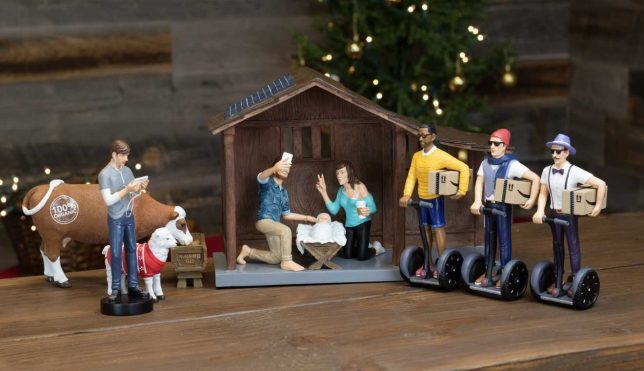
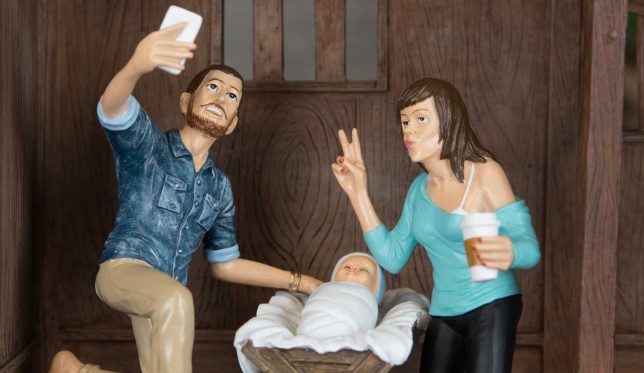
The Modern Nativity Hipster Nativity Set throws tradition out the window and recasts the original nativity in a modern mold. “We started joking about how religions would be different if their sacred texts were set in modern times,” explains creator Casey Wright, who whipped up the concept while enjoying a few beers with his buddies. How hipster-ish is The Modern Hipster Nativity Set? Well, Joseph sports a man-bun and wears a denim shirt while he takes a selfie with Mary, who’s holding a coffee from a certain popular java purveyor as she puckers up with her best duck-face.

nativity-scene-1d

nativity-scene-1c

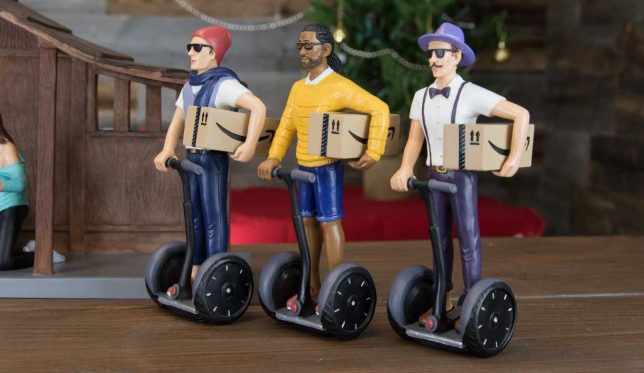
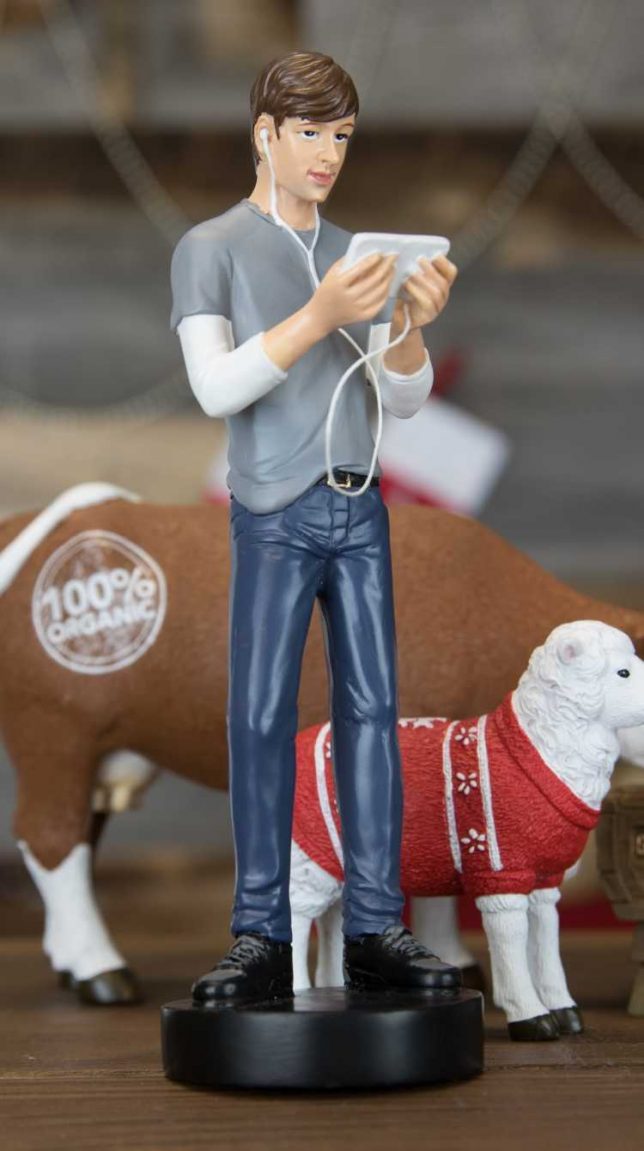
Meanwhile, the fashionably sunglassed Three Wise Men roll in on Segways bearing gifts bought online at Amazon. The shepherd captures the miraculous event for posterity by posting it on Instagram using the hashtag #babyjesus. Clean green electric power for his tablet provided via solar panels on the manger’s roof because global warming.

That Ain’t Kosher

nativity-scene-9a

nativity-scene-7b

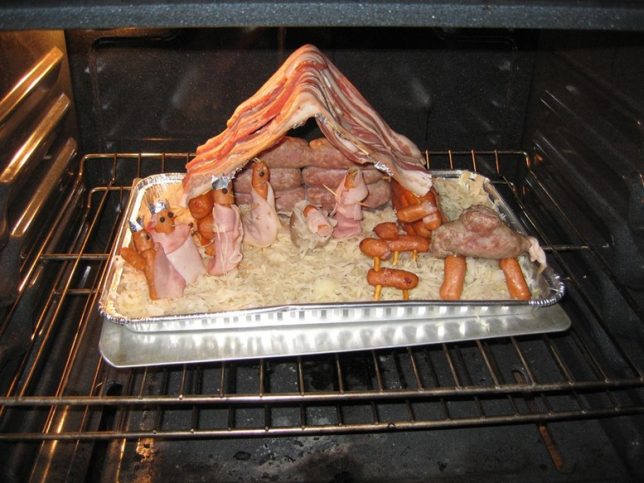
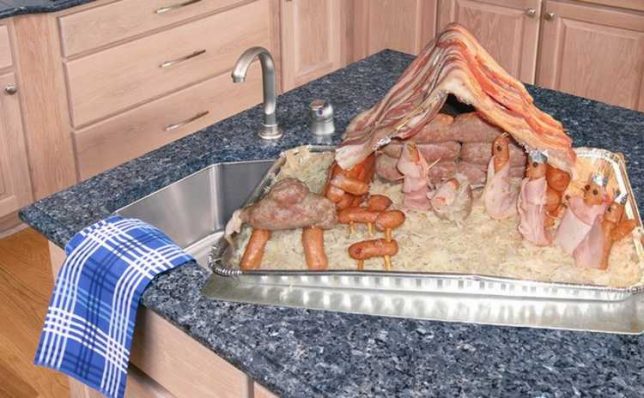
Y’know, we liked The Last Supper a lot better when Leonardo da Vinci painted it but hey – not everyone’s a vegetarian. Flickr user quik86 uploaded this iconic image of a baking bacon and sausage nativity back in December of 2010 but some things never get old, especially when they’re smothered in bacon.

Kitty Nativity

nativity-scene-3a

nativity-scene-3b

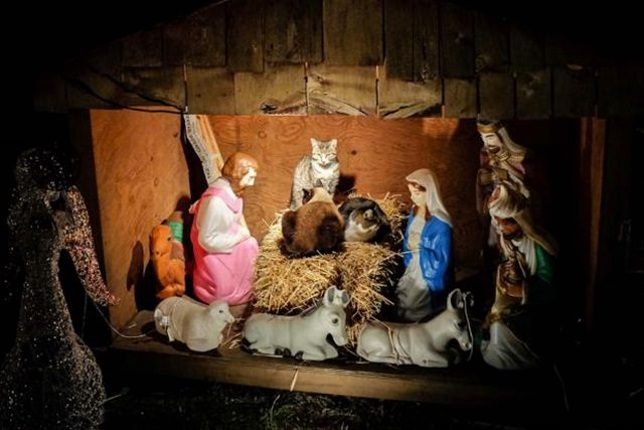
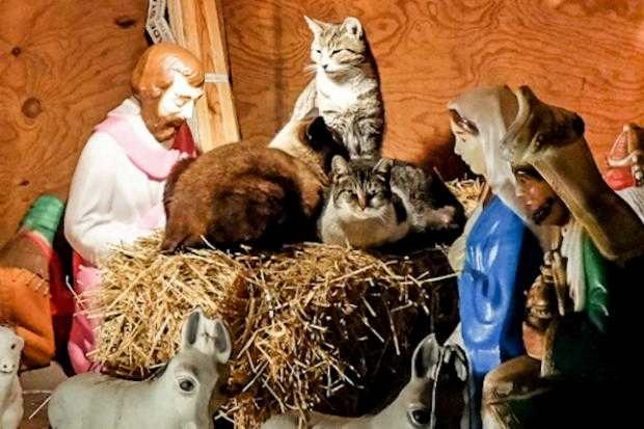
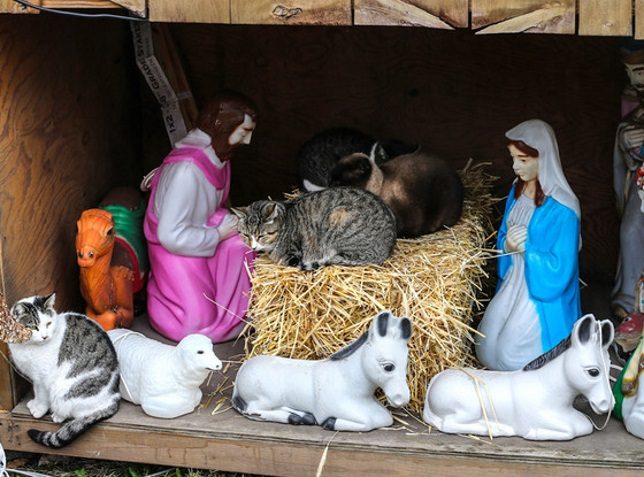
For over ten years, sisters Annette and Sue Amendola have been setting up a classic nativity scene outside their home in Red Hook, Brooklyn. The scene itself wasn’t out of the ordinary… at least it wasn’t until a bunch of stray cats arrived and made it their own.

nativity-scene-3c

The clowder of kittehs was first attracted by food the Amendola sisters would leave out but then stayed to enjoy the replica manger’s comfy bales of hay. “When the figurine of baby Jesus does finally appear on the hay bale,” explains Annette, “the cats usually push him right off to take their rightful spot.” Cats: doing the devil’s work since 0 AD.

Praise Cheeses

nativity-scene-10a

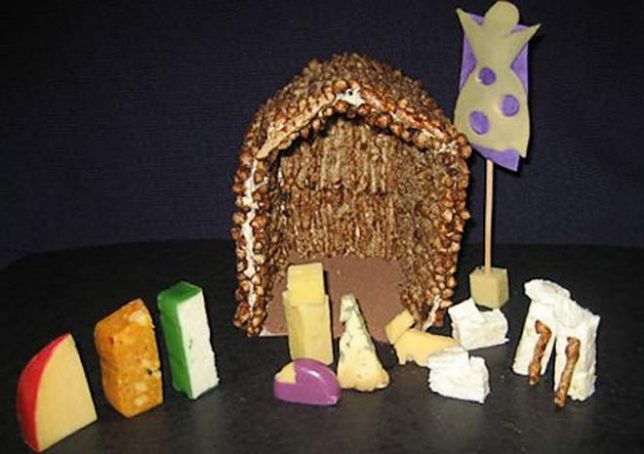
We’ve got your cheesy nativity scene right here, highlighted by a Babybell Jesus and an Emmental angel personifying Oh Hole-y Night. Not suitable for the lactose intolerant.

Next Page – Click Below to Read More:
Strange Manger The Worlds Weirdest Nativity Scenes

Share on Facebook


[ By Steve in Art & Sculpture & Craft. ]

[ WebUrbanist | Archives | Galleries | Privacy | TOS ]


WebUrbanist

 
Comments Off on Strange Manger: The World’s Weirdest Nativity Scenes

Posted in Creativity


Greatest hits: Behind the scenes with Ben Liebenberg, lead photographer for the NFL

24 Dec

Behind the scenes at the NFL with Ben Liebenberg

NFL Senior Photo Editor and Lead Photographer Ben Liebenberg and Seattle Seahawks’ Richard Sherman ©Ric Tapia/NFL

You may see Ben Liebenberg running down the field trying to out pace the Seattle Seahawks’ Richard Sherman after a game to grab a shot (above photo) or photo bombing the annual NFL draft ceremony from backstage. As Senior Photo Editor and lead photographer for the NFL, Liebenberg’s responsibilities range from coordinating all aspects of the photo department, curating images for the NFL Network and NFL.com, as well as photographing games, events and capturing portraits of players throughout the year.

What started as a hobby in high school evolved into a degree in photojournalism once Liebenberg realized he could turn his interest in photography into a career. While in college, Liebenberg worked as an assistant to Sports Illustrator photographers. ‘SI didn’t have staffers in the Bay Area,’ Liebenberg explains, ‘so they would fly people in and I did a lot of assisting for them. That’s where my sports background came from.’

After graduating college, Liebenberg interned for a number of small newspapers, but in the early 2000’s nobody was hiring. By chance, he made some connections in the music world and began traveling internationally and in the U.S. to photograph various artists and tours. In 2005, he began working at Wire Image, handling the NFL archives, and continued there for several years until Getty—which had its own sports department—purchased Wire Image.

As Liebenberg was winding down his time a Wire Image, the NFL called him about working for the new NFL.com. He interviewed and got the job the same day in 2007. Almost ten years later, the NFL.com’s team has grown from a handful of people to a staff of hundreds in Los Angles, with additional offices in New York and, for NFL films, New Jersey.

For a fascinating glimpse behind the scenes preparing for and shooting the Super Bowl, as well as what keeps Liebenberg busy shooting and planning between games, read on.

Behind the scenes at the NFL with Ben Liebenberg

Super Bowl LI football at the famous La Carafe Bar in Houston; © Ben Liebenberg

The Super Bowl is coming up in February. How far in advance do you start preparing for the game?

The location of the Super Bowl is decided several years in advance, so we have a lot of lead time. I took the first photos for Super Bowl LI, which will be played on February 5 at NRG Stadium in Houston, back in August 2015.

This is the third year we’ve done a style guide, where I’ll photograph a football with the Super Bowl logo for that year on location in the host city. Last year, I photographed the Super Bowl 50 ball in some of San Francisco’s iconic locations like the Golden Gate Bridge. One of the locations for the Super Bowl LI style guide shoot was La Carafe—believed to be the oldest bar in Houston. The building’s on the National Register of Historic Places and has a wooden bar that’s rich with history from the carvings made by patrons. I really liked the texture the carvings provided as a background for the shot.

Behind the scenes at the NFL with Ben Liebenberg

Liebenberg scoped out the NRG Stadium in Houston to make plans for the Super Bowl months ahead of the big game. ©Ben Liebenberg

You traveled to Houston again this past September/October to make preparations for your team at the game. How did you spend your time?

I went out there to shoot a game because I’ve never been to the stadium. I looked at the lighting, the sidelines, etc.

This was the first meeting I went to, although there were several other meetings earlier in the year. But now that we know where things are happening, we can plan around it. We went to all the venues for opening night, NFL Honors, the game.

We went through a lot of logistics like where is the photo workroom going to be in the stadium, where is the media center during the week, what’s backstage like for the NFL Honors ceremony so we can plan to do a series of portraits there. We had three packed days of meetings, site surveys and walkthroughs.

Behind the scenes at the NFL with Ben Liebenberg

Shooting with a 70-200mm lens, Liebenberg captured Kevin Benjamin’s game winning touchdown against the background of a crowded stadium. ©Ben Liebenberg

What gear do you shoot with?

I have a pretty standard set of equipment that I bring. Usually three cameras (Canon EOS-1D X Mark II), 400mm, 70-200mm, 24-70mm, 50mm, 16-35mm and 15mm lenses. That’s my standard setup that I take to almost every football game—it’s what I know and what I’m comfortable with. The upcoming Super Bowl is inside and it’s going to be at night but if it was a day game, I would consider bringing a 600mm but with a little less light, I’ll probably leave that at home. I shot the Rams earlier this year in LA—it was 1:00 and sunny, so I took a 300mm and 600mm instead of the 400mm.

Canon Professional Services (CPS) will be on site and Canon’s very helpful if we need something—an extra camera or lens. They’ll also send us long lenses and extra cameras if we need them.

Behind the scenes at the NFL with Ben Liebenberg

Liebenberg captured this image of Carolina Panthers quarterback Cam Newton throwing the ball at last year’s Super Bowl 50.

How many people will you have shooting at the Super Bowl? Where will they be positioned?

My team will consist of eight photographers: six on the field and two overhead. I’ll be on the field. We have four positions on the field that are stationary—one in each corner of the end zone. Two of the field positions are roaming, one on each sideline.

We have two photographers shooting overhead for a different perspective. We generally have one in the end zone and one at the 40-50 yard line. They usually have a seat so they can get up and roam around a bit but are always sensitive to not block the fans’ view.

During the game last year, I was on the Panthers sideline. I would move back and forth along the sideline shooting action. A lot of times I was behind the line of scrimmage, which is good for capturing the quarterback throwing. Then when the team gets ready to score, I’ll go down to the goal line. We’ll have two people in the end zone at either end, so if there’s an interception and the action moves back to the other side, we’ll have people there for the touchdowns.

Before we get to game day, we’ll have a photographers’ meeting and everyone will get their game assignments. Everybody has a specific role, especially for post game. We may have the photographers shooting overhead change position, especially for half time or post game.

Behind the scenes at the NFL with Ben Liebenberg

Beyonce performs at halftime of Super Bowl XLVII between the Baltimore Ravens and the San Francisco 49ers. © Ben Liebenberg

What’s it like shooting the half-time show? Has your experience shooting music helped when covering the half-time show?

My experience was shooting in small venues and having access backstage, so shooting halftime is really different. It’s tricky since it’s a kind of a free for all and we never know where we’ll get to shoot. We always ask the artist if we can get backstage and whether we can be with them when they come out but a lot of times we get shut down. We do the best that we can to get into the best positions.

For half-time there are about 150 photographers, some of them are only credentialed to shoot half-time—you may have entertainment photographers from Getty and other agencies. It’s not a little pit—you have the whole sideline behind the bench and while it’s 100 yards long, obviously the center is going to be more crowded.

I usually shoot with a 400mm or a 70-200mm lens. I’ll always use a wide angle to get a general stadium shot to photograph what’s going on. It’s a real spectacle with things going on in the stands and the light shows, so I try to capture a bit of everything.

I carry three cameras at all times but usually have an assistant. At half-time, for example, the assistant might be holding a camera with a 400mm lens attached; the other two cameras are always attached to me with F2.8 lenses or faster. We might bring step stools to shoot the half-time show to get a better angle.

Fortunately, there are no restrictions at half-time. You can shoot as much as you want and none of the artists make you sign a contract that they own the images or anything like that.

Behind the scenes at the NFL with Ben Liebenberg

Denver Broncos quarterback Peyton Manning after the Broncos won the NFL Super Bowl 50. ©Ben Liebenberg

What kinds of images are you looking for post-game?

Everybody has specific assignments—to shoot the quarterbacks post game or shoot the coaches shaking hands. We’ll also have photographers assigned to shoot the losing team, others to photograph the general celebration. We generally have a couple of people on the winning quarterback and someone to photograph the losing quarterback. I’m usually roaming but will break off and get into position to shoot the trophy presentation.

Behind the scenes at the NFL with Ben Liebenberg

Carolina Panthers quarterback Cam Newton is under pressure from the Denver Broncos defense during Super Bowl 50. ©Ben Liebenberg

Obviously you want to get images published as quickly as possible throughout the game. Tell us a little about how image files are transmitted and edited.

I don’t do any of the photo editing at the Super Bowl. We have five editors on site and probably four editors back at the office. We try to do as much editing on site as possible and try to assign no more than two photographers to each on site editor. Even then, you could be looking at close to 10,000 photographs per editor.

We hardwire Cat 5 and fiber optics to the four stationary positions on the field (one in each corner of the end zone), so we can have two cameras connected at once. If the photographer likes the image, they press a button and the image goes to the editor in seconds. From the field to NFL.com takes about a minute or two. The only lag time is how fast the photo can be cropped and uploaded into the system. There are times when you can have something on the website before they’re done showing the replay.

The two positions on the sidelines have runners but we’re looking into ways to wirelessly transfer those photos. But when you’re talking Wi-Fi , that’s a little more difficult to work out because there’s a limited amount of bandwidth. We’re not using Wi-Fi at the Super Bowl but have been testing the technology to work towards sending images wirelessly. It’s okay but not as foolproof as being hardwired since a lot of things can go wrong.

We tested it earlier this year at several stadiums around the league and found a couple of dead zones. About 25% of the time we got no signal, which isn’t surprising if you figure there were about 50,000 people on their cell phones. We’d like to get technology that’s foolproof because you don’t want those issues at the Super Bowl.

Behind the scenes at the NFL with Ben Liebenberg

Headshot of Alabama running back Derrick Henry at the 2016 NFL Combine ©Ben Liebenberg

What are the other major events on your calendar?

Of course, the Super Bowl is our marquee event but there are plenty of other events that we cover including the Hall of Fame, the kickoff game for each season and the Draft Combine. For the Combine, I’ll shoot about 20-25 portraits in two days, along with about 350 headshots over the course of 5 days.

Last year for the portraits, we used a specially designed metallic background and varied the lighting set up a little—we’d turn one of the lights on or off. We used strip banks and Chimera collapsible beauty dishes and switched up the diffusers for variation.

For the headshots, we use a four-foot wide seamless and two softboxes to keep the images fairly consistent. The headshots are particularly important and are used for the scouting Combine app that coaches and scouts reference as sort of a fact book for all the players. They’ll also be posted on NFL.com and included in the Madden video game. It’s not a huge setup but we try to keep it simple.

Behind the scenes at the NFL with Ben Liebenberg

Denver Broncos defensive end DeMarcus Ware poses for a portrait in the NFL Studio in Culver City, California. ©Ben Liebenberg

Do you ever get any downtime?

Very little. We don’t slow down until the middle of June to the middle of July when the teams shut down until training camp. That’s when everybody takes a vacation.

Even when I’m not traveling, I’ll work in the office planning—a lot of work goes into getting ready for the season. And I do a lot of portrait work. I can do 2-3 portraits a day here [at the office] if players are coming into town. Although we don’t have a dedicated photo studio, we have two very large sound stages with various open spaces for shoots. I’ve taken portraits against a cement wall, in green rooms and we have built different flat backgrounds that we can use. I’ve shot in pretty much anyplace on the property that you can imagine. We’ve gotten pretty creative!

Articles: Digital Photography Review (dpreview.com)

 
Comments Off on Greatest hits: Behind the scenes with Ben Liebenberg, lead photographer for the NFL

Posted in Uncategorized


How to Improve Your Photography by Shooting Behind the Scenes of a Short Film Shoot

15 Nov

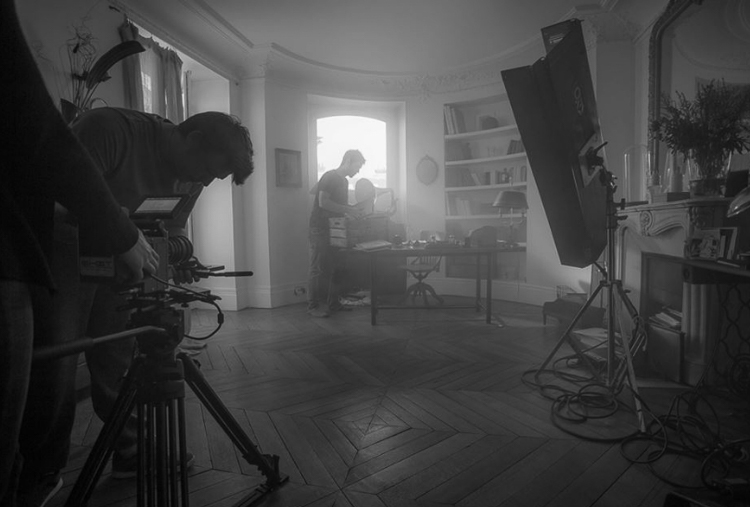
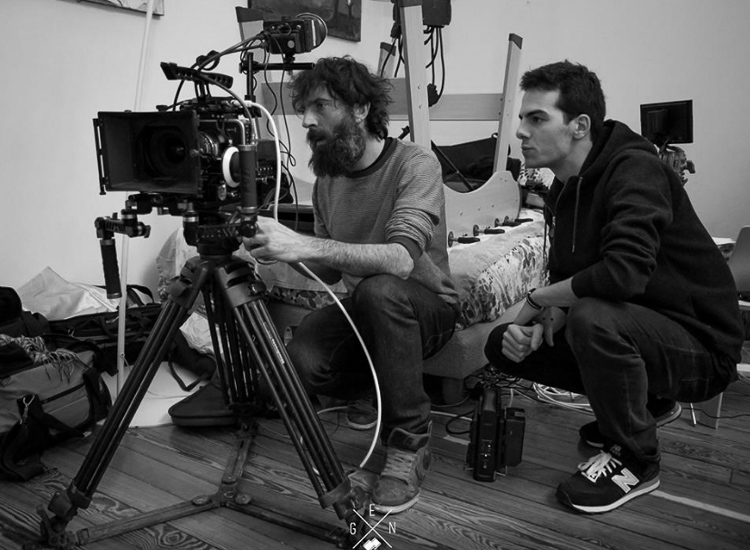
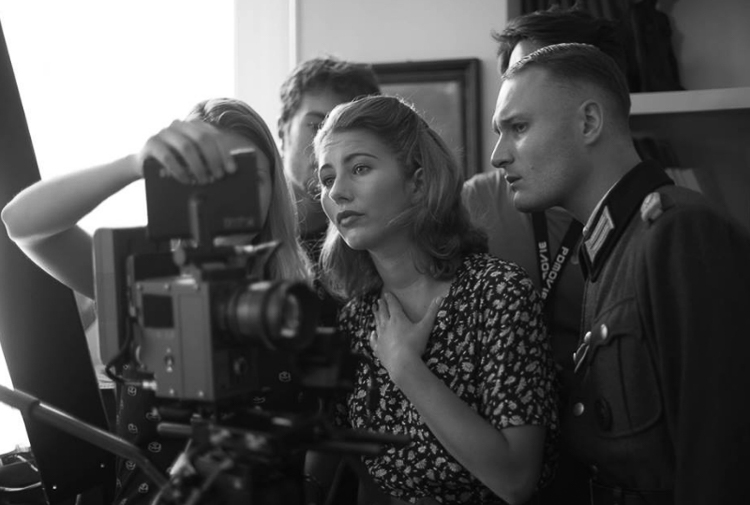
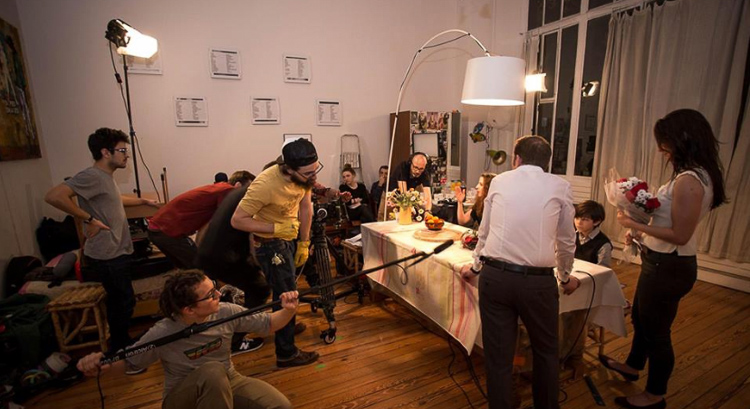
For any creative photographer, shooting behind the scenes of a short film sounds like a boring idea. That’s what I thought until my friend called me to shoot for one of his school projects (he is in a film school and had to shoot three sequences). I wasn’t going to refuse so I showed up that day and little did I know, I ended up learning so many things and got to meet a lot of people. The best part is that I took some of the best images since I first picked up my camera.

Article bts short film

Here are some reasons why you should consider shooting behind the scenes images and how it can benefit your photography:

#1 – It’s an opportunity for a photoshoot

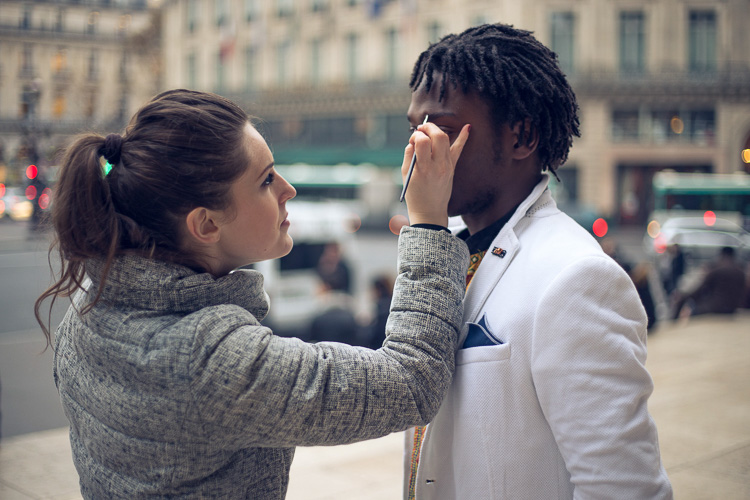
During a shoot for a short film, most of the actors are used to modeling and aren’t afraid of a camera. There is a director of photography who works on the lighting, and there is a make-up artist (of course there are more people on set who take care of the sound, costumes, assistant, etc.). A short film is basically a photo shoot but instead of taking images, people act and they are being filmed.

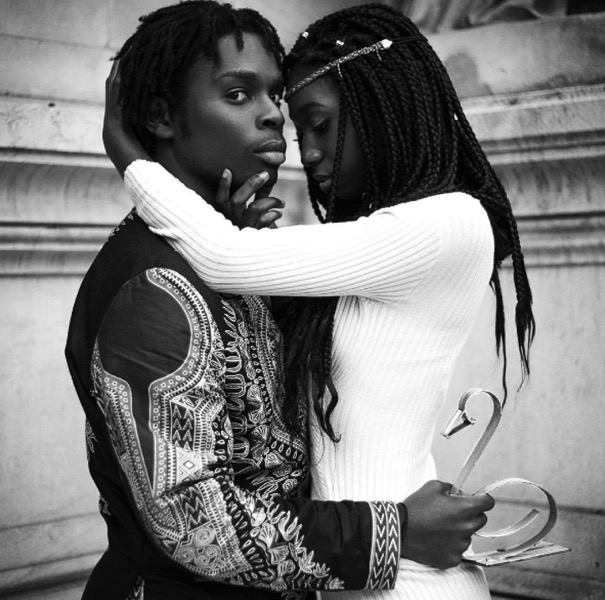
Actors have their costumes, they have had their hair and make-up done, and the director of photography just did the entire lighting for you. You have to see it as an advantage because they spend weeks planning and you’re just here to take beautiful photos with perfect conditions. I took my most beautiful images during short films and I would not have had been able to reproduce the scenes, costumes, and ambience on my own.

Article bts short film1

Article bts short film9

Even if you don’t really like the theme or would rather plan a photoshoot on your own, trying other people’s ideas can also put you out of your comfort zone and help you progress.

#2 – You’re surrounded with creatives

Working with other creatives has helped me so much. The best thing is the shared interest and not wanting to disappoint. Working with people who want to create gives you an extra boost and it pushes you to do your best. Most people on a film crew need these images. Looking at all the work they put into creating their projects, whether it’s for auditions to find the perfect actors, negotiating to borrow super expensive filming equipment, let’s not forget the make-up artists who stay on set all day, and all the detailed planning of the sequences. You can’t really disappoint with average images, so you automatically try to get stunner shots.

Article bts short film12

article-bts-short-film6

It’s quite difficult because you can only take images after the scenes when the actors are briefed by the film director. So they’re not actually posing for you, you just have to walk around without attracting any attention to get some nice images. Do not take any images when the video camera is rolling. The sound of your shutter can throw a whole scene away, and trust me you do not want to be in that situation. Just patiently wait for the director to say cut and then you can start taking your images.

Article bts short film13

When an actor is not included in a scene, you can kindly ask them to pose for you. Most of them need portraits for their website or their portfolios so they will most likely say yes. If they say no, just tell them that if they change their minds, you’re always fine with taking portraits.

Article bts short film3

Article bts short film5

#3 – You may get to work with these people on future projects

A whole day of filming can take up to eight hours or more. You’re going to meet a lot of people (depending on the size of the crew) and you will have a lot of time to get to know everyone. I would highly recommend socializing during the breaks over a cup of coffee and getting to know everyone. Most of them have the same passion as you, whether it’s the assistant or the sound team, you can speak about previous or future projects, have tech discussions about camera gear, you name it.

The actors are the most talkative, especially when they have a few hours without any scenes. Tell them about your photography. If you like their profile ask them if they would like to have a photoshoot with you in the coming weeks. The make-up artists are also great contacts to have, take their business card and contact them for your next photo shoot if you need someone for make-up and hair.

Article bts short film8

One make-up artist I met had a little girl who wanted to start modeling. We met a couple weeks later and I photographed her daughter. I ended up having a solid image that went directly into my portfolio.

Get your images ready to show them quickly

One tip I can give is to work on the images as soon as possible. Once these people see your images they will start spreading the word to other people in their school or entourage, share your images on social media, etc. (that is of course if you had good results). You will probably end up being Facebook friends with most of the crew and you can keep in contact that way.

Article bts short film2

Article bts short film11

Most of them will post on Facebook or directly contact you if they need a photographer. Once you do a good job, they will most likely call you back. Their friends will start calling you then you will meet other actors and make-up artists, and increase your contacts even more.

#4 – You will learn a lot of technical things

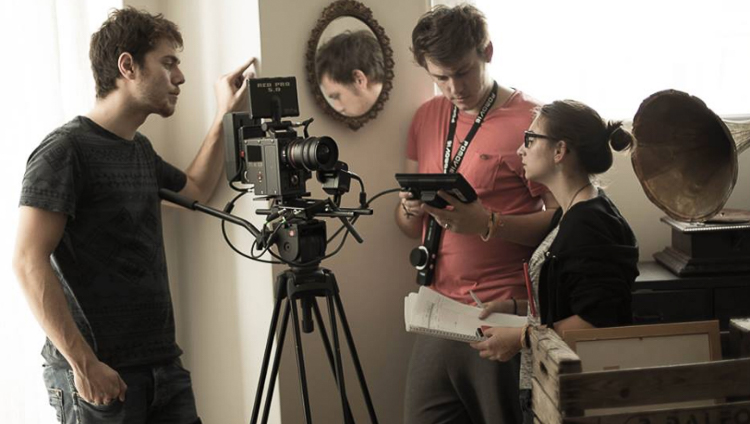
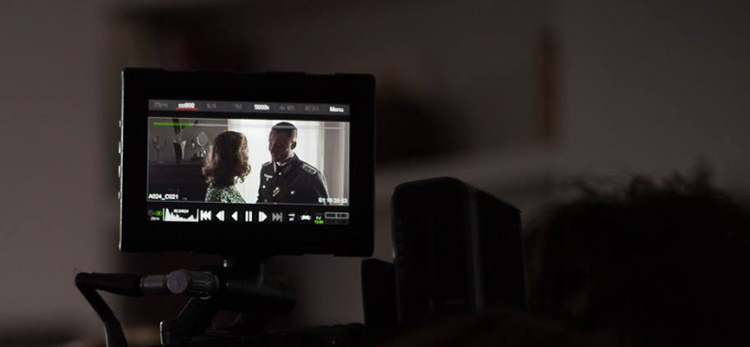
Most film crews use a lot of advanced equipment. By watching them set up everything, you will learn a lot about cameras, the choice of lenses, framing, lighting, sound, communication with actors, team work, tracking shots, and organization. Even if you’re passive in this process, open your eyes and try to absorb as much information as you can.

Article bts short film7

Article bts short film4

Most directors of photography will use different lighting techniques with some hair light, key light, harsh light, soft light, back-light with different modifiers. Pay attention to their work and try to replicate what you see later at home, you can also take images of the light set up to know exactly how each light is placed on set.

Conclusion

Those are just a few ways you can benefit from shooting behind the scenes on a film set. If you’ve had the experience of doing this, please share your thoughts and images in the comments below.

googletag.cmd.push(function() {
tablet_slots.push( googletag.defineSlot( “/1005424/_dPSv4_tab-all-article-bottom_(300×250)”, [300, 250], “pb-ad-78623” ).addService( googletag.pubads() ) ); } );

googletag.cmd.push(function() {
mobile_slots.push( googletag.defineSlot( “/1005424/_dPSv4_mob-all-article-bottom_(300×250)”, [300, 250], “pb-ad-78158” ).addService( googletag.pubads() ) ); } );

The post How to Improve Your Photography by Shooting Behind the Scenes of a Short Film Shoot by Yacine Bessekhouad appeared first on Digital Photography School.


Digital Photography School

 
Comments Off on How to Improve Your Photography by Shooting Behind the Scenes of a Short Film Shoot

Posted in Photography


Behind the Scenes of Marvellous Macro Insect Imagery

19 Sep

This project by British photographer Levon Bliss and the Oxford University Museum of Natural History is a breathtaking. Levon spends weeks taking thousands of images of a single insect and then edits them together into incredibly high resolution images of these tiny creatures.

See more of Levon’s work on the Microsculpture site.

Learn About Macro Photography

While not on the scale of Levon’s project above we’ve compiled some Macro tutorials for those of you inspired to begin to explore this space.

  • Everything You Need to Know about Macro Photography
  • Getting Started Guide to Macro or Close-Up Photography
  • Macro Photography for Beginners (also see Part 2)
  • Tips for Depth of Field Control in Macro Photography
  • Macro Photography on a Budget: An introduction to Close-up Filters
  • It’s a Bug’s Life – 27 Super Macro Photography Images

googletag.cmd.push(function() {
tablet_slots.push( googletag.defineSlot( “/1005424/_dPSv4_tab-all-article-bottom_(300×250)”, [300, 250], “pb-ad-78623” ).addService( googletag.pubads() ) ); } );

googletag.cmd.push(function() {
mobile_slots.push( googletag.defineSlot( “/1005424/_dPSv4_mob-all-article-bottom_(300×250)”, [300, 250], “pb-ad-78158” ).addService( googletag.pubads() ) ); } );

The post Behind the Scenes of Marvellous Macro Insect Imagery by Darren Rowse appeared first on Digital Photography School.


Digital Photography School

 
Comments Off on Behind the Scenes of Marvellous Macro Insect Imagery

Posted in Photography


Exclusive interview: Behind the scenes with Canon at the Rio Olympics

05 Aug

Behind the scenes with Canon at the Rio Olympics

As sports fans around the world get ready for the official opening of the 2016 Rio Olympics, Canon’s Professional Services team are preparing too.

We spoke to Elizabeth Pratt, Director of Professional Products Marketing at Canon Professional Services about how Canon is preparing for the biggest event in the sporting calendar.

Behind the scenes with Canon at the Rio Olympics

The first shift of CPS staff, starting at 7:30AM, pauses to pose for a group photo.

What exactly are you doing in Rio right now?

I’m down here with Canon Professional Services, and there are also some folks here from our broadcast team. CPS provides event support for all kinds of things, any time a lot of media gathers — events like the Super Bowl, the Indy 500, the Kentucky Derby, the political conventions that we recently attended. These are very important assignments for photographers and we want to be on-site to ensure everything goes smoothly.

Elizabeth Pratt, Director of Professional Products Marketing at Canon Professional Services.

Elizabeth is currently in Rio for the 2016 Summer Olympics

We offer cleaning and checks on equipment to make sure that everything is working at factory spec.  Also in situations like this, for someone shooting with an older model camera we like to give them the opportunity to shoot with the latest equipment.

And then of course photographers also have a need for remote cameras, but not everybody takes six cameras to an event so they can use four of them as remotes.  So we loan additional cameras to help them out.

Behind the scenes with Canon at the Rio Olympics

With over 70 Canon staff supporting photographers and broadcasters, coordinating schedules is no easy task.

How long does it take to plan your presence at an event as big as the Olympics?

We started planning at least a year ago, just trying to determine how much equipment we were going to need to be able to support all of our customers, how we were going to get it all into and out of the country, through customs… It’s a collaboration between the home country, the CPS folks who are based in Rio, Canon USA is supporting with a lot of equipment, Canon Europe is contributing to the equipment as well, and we’re all sending staff. So the planning really starts at least a year in advance.

Behind the scenes with Canon at the Rio Olympics

Racks of lenses and professional Canon DSLRs, ready to be distributed to photographers at the 2016 Olympics in Rio.

Can you give us an idea of exactly how much equipment you’re sending?

Almost 1600 lenses and about 900 DSLR bodies. That’s EOS 7D II, EOS-1D X II and EOS 5DS cameras. We also have 78 staff. We have what we call our Professional Market Specialists, whose job is to support professional photographers and filmmakers by answering questions and giving people advice and support. In addition to these people we have logistics folks on site, and then actual technicians who are working on the cameras.

At most events we just do cleaning and checks, but here in Rio we have virtually a complete repair center set up where we’re doing much more extensive repairs than we normally do on-site.

How many languages do you have represented among your staff over there?

Twelve languages including English.

Behind the scenes with Canon at the Rio Olympics

The EOS-1D X II is a capable video camera, as well as being designed to capture fast sequences of still images.

Are you supporting any photographers in Rio who are using the EOS-1D X II for video, or for broadcast?

There are plenty of people shooting video with the EOS-1D X II – not necessarily for broadcast, but certainly several independent agencies and teams. Under the terms of the IOC, photographers are not permitted to shoot video at the Olympics but our big clients like Getty and AP are incorporating video more and more. We talk about video a lot to photographers and they’re being asked to shoot more video and to learn about video.

We’re starting to see newspapers and publications even merge departments and cross-train people [for stills and video].

Behind the scenes with Canon at the Rio Olympics

Canon has worked with Getty, which is creating a submersible remote camera setup using the EOS-1D X II and the 11-24mm wide-angle zoom, specifically to shoot underwater events at the Olympics.

How closely do you work with agency clients ahead of big events like this?

We’ve worked very closely with the big agencies in preparation for the Olympics. We have some robotic cameras down here and we worked with the agencies to develop them for their needs. These robotic solutions are amazing. You can shoot remotely on them from the press center with multiple remote cameras attached to one computer, and switch back and forth. It allows perspectives on the Olympics that we’ve never seen before.

We’ve been helping to support an underwater system, which was developed by Getty. It’s an EOS-1D X Mark II and 11-24mm lens. The camera is in an underwater housing, and it’s networked so that it can be controlled remotely. The flexibility of control is exceptional, and the 11-24mm has really nice distortion correction — you don’t have the kind of distortion at the frame edges that you might get with other wide-angle lenses.

Behind the scenes with Canon at the Rio Olympics

A Canon technician uses an illuminated loupe to check for dust on the sensor of an EOS-1D X II.

How many of this sort of major events have you personally been involved in?

I started off as a professional market specialist with Canon and my first Olympics was Athens in 2004.

We’re much more collaborative now in the way that we work with clients. We reach out to them well in advance and talk to them about their workflow and how their needs are changing. Then we customize solutions to meet those needs.

When I started with Canon years ago, we just made cameras and said ‘here you go’. Our whole mindset has really changed, to try and figure out how to change and adapt as the industry changes.

How will the next Olympics in 2020 be different?

I think we’re at a very interesting place now with technology, with the integration of 4K into DSLRs and the ability to grab incredibly high resolution, beautiful frames from that video. I think there’s potential to change the way that photographers work. I don’t want to try to predict the future but I think that’s probably going to be one of the biggest factors that influences what’s going to change and what new equipment will bring in the next four years.

Articles: Digital Photography Review (dpreview.com)

 
Comments Off on Exclusive interview: Behind the scenes with Canon at the Rio Olympics

Posted in Uncategorized


Behind the Scenes: Hidden Collections Storage at the Smithsonian

22 Apr

[ By WebUrbanist in Art & Photography & Video. ]

smithsonian behind the scenes

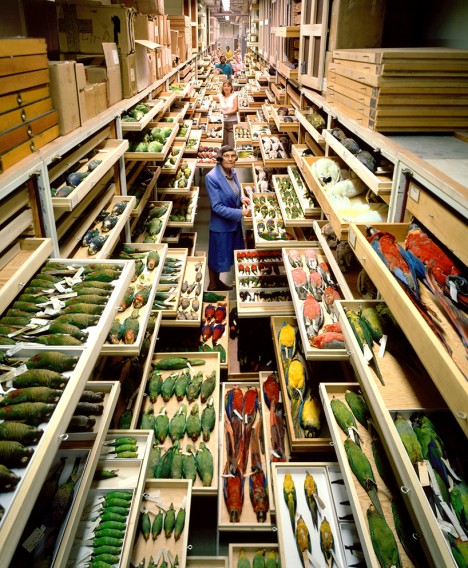
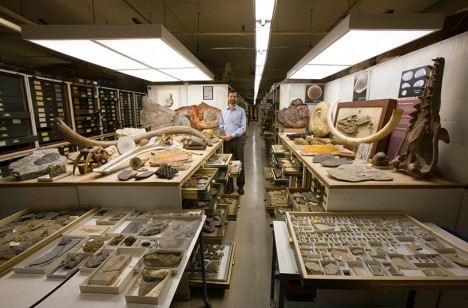
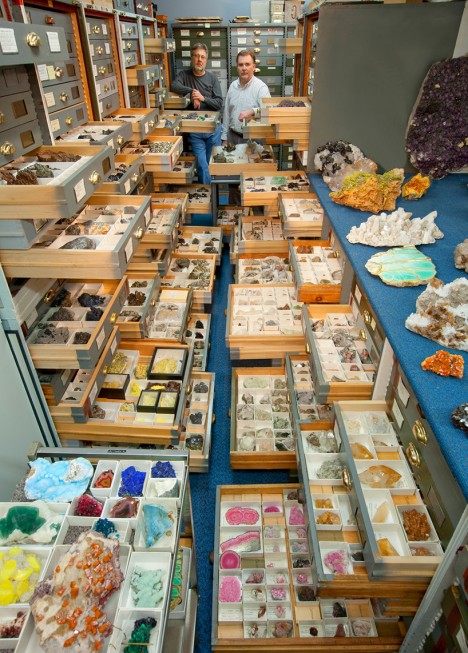
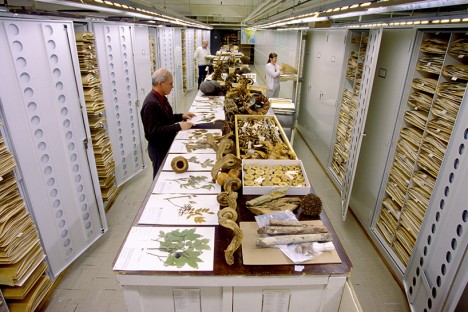
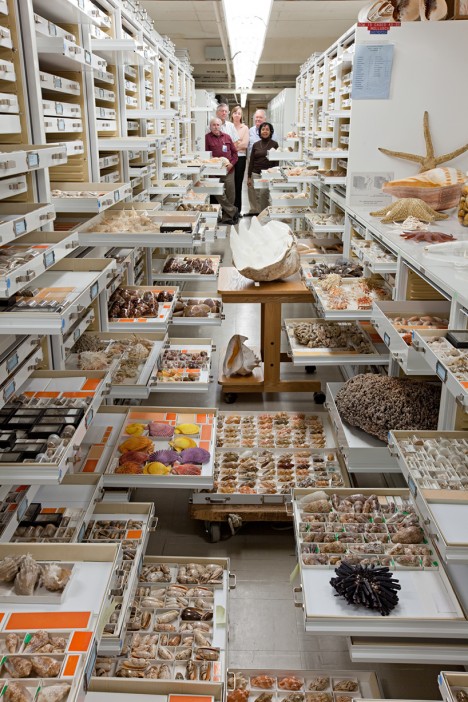
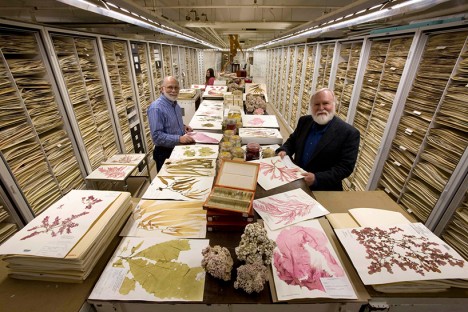
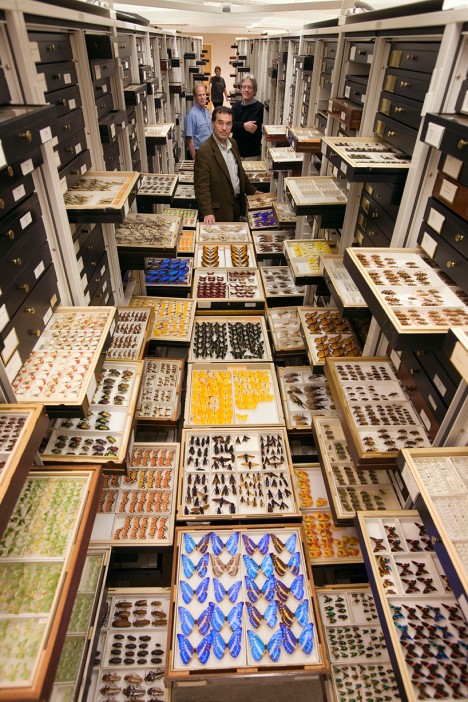
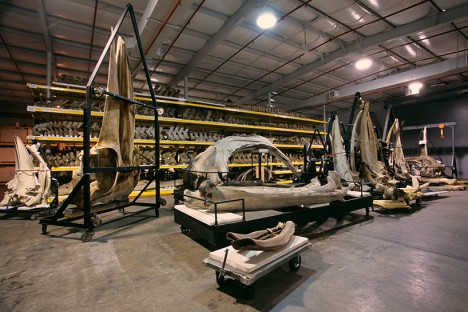
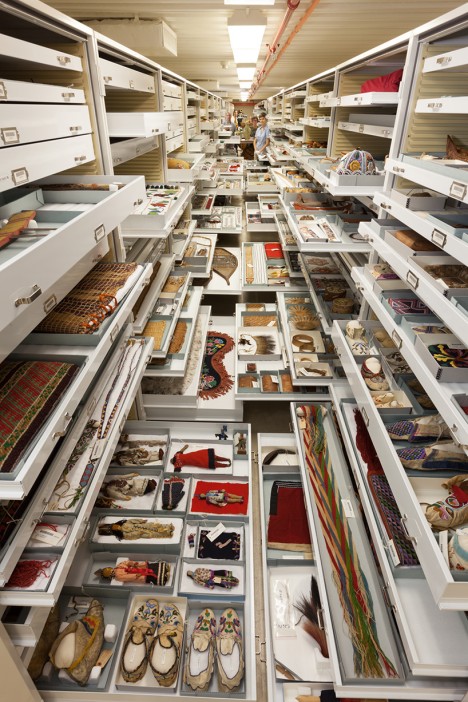
It is hard to imagine just how extensive, colorful and generally amazing the plant, animal, fossil and rock archives at the Smithsonian Museum of Natural History (NMNH) in Washington, D.C. really are … at least until you see the shelves slide out, as shown in this stunning photo series (by Chip Clark).

museum paleobiology

museum rocks minerals

The museum staff has meticulously collected and cataloged plant and animal species as well as rock, fossils and other organic wonders from around the world. Some are on display, but many more live behind the scenes, shelved for reference and study.

museum botany collection

museum zoology collection

Examining these artifacts helps give researchers and scientists insights into biological diversity and evolutionary relationships, but also assist environmentalists studying conservation and climate change.

museum botany algae

smithsonian butterfly collection

There is something particularly humanizing about these images, shot over the decades by a single staff photographer, which feature not on the each collection but in many cases his colleagues as well.

museum mammals

museum anthropology

Departments shown here include botany and algae, invertebrate zoology, mammals, mineral sciences, paleobiology and anthropology.

Share on Facebook


[ By WebUrbanist in Art & Photography & Video. ]

[ WebUrbanist | Archives | Galleries | Privacy | TOS ]


WebUrbanist

 
Comments Off on Behind the Scenes: Hidden Collections Storage at the Smithsonian

Posted in Creativity


Behind the scenes at Fujifilm’s factory in Sendai, Japan

02 Feb

Behind the Scenes of Fujifilm’s Factory in Sendai, Japan

After the official launch of the X-Pro2 recently in Tokyo, Fujifilm invited a select group of press to visit its Taiwa assembly plant near Sendai to see the camera being put together. As well as the X-Pro2, we were also able to see the assembly lines for the X-T1, X100T, and several lenses. Fujifilm has been making optics since the 1940s, and although the construction workers of that time would not recognize much of the technology used in lens construction today, a lot of the assembly is still done fairly traditionally, by hand. 

The first step when visiting any assembly plant, is to sterilize yourself. No, not like that, but by donning head-to-foot protective clothing and scrubbing your hands with alcohol. It’s a time-consuming, uncomfortable but necessary step in order to prevent contamination of the assembly line. I do very much regret keeping a sweater on underneath the overalls though. 

Behind the Scenes of Fujifilm’s Factory in Sendai, Japan

Here, a worker in Fujifilm’s Taiwa plant uses a sonic motorized screwdriver to assemble the company’s 56mm F1.2 prime lens. 

Behind the Scenes of Fujifilm’s Factory in Sendai, Japan

Journalists take photographs of the various lens groups that make up the new 100-400mm zoom, laid out on a table at Fujifilm’s Taiwa plant, which is about 20 miles outside of the city of Sendai. 

The elements themselves are not ground and polished in Sendai, but like other components they are shipped in, ready to be turned into complete lenses. Fujifilm has three additional facilities in Japan that mold and polish glass lens elements and machine various other components.

Behind the Scenes of Fujifilm’s Factory in Sendai, Japan

Here, a worker performs the delicate job of attaching the PCB to Fujifilm’s new 100-400mm telezoom. 

Behind the Scenes of Fujifilm’s Factory in Sendai, Japan

The 100-400mm zoom takes roughly 4 hours to assemble, in its progress from a box of bits to a finished lens. These lenses are almost complete, and await the final assembly and testing phases of their construction. 

Behind the Scenes of Fujifilm’s Factory in Sendai, Japan

Fujifilm’s new 100-400mm telezoom being assembled. As with other factories we’ve visited in Japan, a lot of the assembly is done by hand, and aside from calibration, there’s little automation in the assembly lines of either lenses, or cameras in Fujifilm’s factory. 

Behind the Scenes of Fujifilm’s Factory in Sendai, Japan

Here, a 100-400mm zoom undergoes final testing. This process (which involves racking the zoom and focus ring to various points, repeatedly) is partly automated – presumably to avoid the human operators from getting repetitive strain injury.

Almost all of the other calibration tests and checks are confidential, which means no photos. None taken by humans, anyway.

Behind the Scenes of Fujifilm’s Factory in Sendai, Japan

A 100-400mm gets the finishing touches added, prior to being boxed up for shipping. 

Behind the Scenes of Fujifilm’s Factory in Sendai, Japan

Several completed 100-400mm zooms are placed in plastic trays before being wrapped and boxed-up for shipping.

Behind the Scenes of Fujifilm’s Factory in Sendai, Japan

Here, a worker examines one of the groups destined to become part of Fujifilm’s much smaller 35mm F2 prime lens. 

Behind the Scenes of Fujifilm’s Factory in Sendai, Japan

Again, a majority of the steps in the assembly of this lens are manual, with little automation. 

Behind the Scenes of Fujifilm’s Factory in Sendai, Japan

We were impressed by just how many of the stages in assembly appear to be visual inspection. A single worker might inspect hundreds of these components in a day.

Behind the Scenes of Fujifilm’s Factory in Sendai, Japan

Here, lens groups are arranged in trays ready to be inspected.

Behind the Scenes of Fujifilm’s Factory in Sendai, Japan

Ultraviolet light is used to ‘cure’ the cement that holds elements securely in their groups. Gone are the days of screwing elements together using friction and using shims to adjust their precise alignment.  

Behind the Scenes of Fujifilm’s Factory in Sendai, Japan

Here, several 35mm F2 primes sit in trays awaiting the final stages of their assembly.  

Behind the Scenes of Fujifilm’s Factory in Sendai, Japan

The front bezel of the 35mm F2 is attached with four screws. Once this is done, the screws will be concealed by the nameplate ring. 

Behind the Scenes of Fujifilm’s Factory in Sendai, Japan

And here are the finished lenses with their nameplates attached, ready to be boxed and shipped. Much simpler than the 100-400mm zoom, the 35mm prime takes only about 80 minutes to assemble, in total. 

Behind the Scenes of Fujifilm’s Factory in Sendai, Japan

The day we toured Fujifilm’s factory was the first ‘official’ day of production for the new X-Pro2. Of course workers have been putting final shipping cameras together now for some time, under a veil of secrecy ahead of the product launch in mid-January.

Behind the Scenes of Fujifilm’s Factory in Sendai, Japan

Although outwardly similar to the original X-Pro1, the X-Pro2 is a completely redesigned, considerably more complex camera than the first X-series ILC. It should be – Fujifilm has had four years to gather feedback from users of the original camera. 

Behind the Scenes of Fujifilm’s Factory in Sendai, Japan

Like the lenses, the X-Pro2 arrives in Sendai as a collection of partly-finished components ready for final assembly. Here, a worker performs the delicate job of connecting the various wires and ribbon connectors that will bring the camera to life.

Behind the Scenes of Fujifilm’s Factory in Sendai, Japan

The X-Pro2’s firmware isn’t ‘hardwired’ but has to be manually uploaded to every camera individually, in one of the final stages of assembly before the cameras are boxed up for shipping. Doing it at this late stage decreases the risk that firmware will need to be loaded more than once if an update is required. 

Behind the Scenes of Fujifilm’s Factory in Sendai, Japan

Here, a worker is attaching the small plastic window over the X-Pro2’s focusing lamp before applying the leatherette material that covers much of the outside of the camera’s body.

Behind the Scenes of Fujifilm’s Factory in Sendai, Japan

One of the trickiest (and most manual) stages in the construction of the X-Pro2 is applying the leatherette material to the camera body. This is done slowly, carefully, and entirely by hand.

Behind the Scenes of Fujifilm’s Factory in Sendai, Japan

The material is carefully pressed into place around the lens throat, and various control points. Bubbles are worked out by scraping the material gently with a plastic ‘spudger’. 

Behind the Scenes of Fujifilm’s Factory in Sendai, Japan

The X-Pro2’s grip is attached using a very strong adhesive, and firm adhesion is ensured by placing the camera in a mechanical press that applies firm and even pressure to the join. 

Behind the Scenes of Fujifilm’s Factory in Sendai, Japan

Here, finished X-Pro2 bodies await final checks before being boxed up for shipping. 

Behind the Scenes of Fujifilm’s Factory in Sendai, Japan

The X-Pro2 isn’t the only camera that is put together in Sendai. Fujifilm also assembles the X-T1 in the same facility. Here, a collection of X-T1 top-plates await assembly.

Behind the Scenes of Fujifilm’s Factory in Sendai, Japan

And this is what happens next. The X-T1’s magnesium-alloy top-plates are introduced to the electronic viewfinder assembly, ready to be mated with the main body of the camera, further down the assembly line.  

Behind the Scenes of Fujifilm’s Factory in Sendai, Japan

Dials! Thousands of dials! Here, trays and trays of X-T1 ISO dials sit waiting to be introduced to their host cameras. 

Behind the Scenes of Fujifilm’s Factory in Sendai, Japan

A well as the X-Pro2 and X-T1, the Sendai plant is also home to the X100T assembly line. We wanted to take this lonely-looking X100T home with us, but apparently that’s not allowed.

Behind the Scenes of Fujifilm’s Factory in Sendai, Japan

That’s OK – we like the black ones more anyway. Here, a number of almost-finished X100T bodies sit in trays waiting for their rear control plate and LCD screens to be added. 

Sendai was badly hit by the earthquake of 2011, and some of the buildings at Fujifilm’s Taiwa plant had to be abandoned due to structural damage. One of those buildings housed the original assembly line for the X100, and after the earthquake, assembly was moved across the street and into the building that we visited.  

Behind the Scenes of Fujifilm’s Factory in Sendai, Japan

And here’s where they all end up – X-Pro2s, X-T1s, X100Ts and lenses. These large boxes contain finished products, ready to be shipped to retailers and distributors worldwide. 

Behind the Scenes of Fujifilm’s Factory in Sendai, Japan

Well, almost ready. Even once they’re placed in their retail packaging and stacked in the larger shipping boxes, one in 10 of all the cameras and lenses assembled in the factory are removed, unboxed, and checked by hand to ensure that any given batch is free from manufacturing defects. ‘Made in Japan’ really does mean something, even today. 

Behind the Scenes of Fujifilm’s Factory in Sendai, Japan

Happy 5th anniversary, Fujifilm X-series!

Articles: Digital Photography Review (dpreview.com)

 
Comments Off on Behind the scenes at Fujifilm’s factory in Sendai, Japan

Posted in Uncategorized


Impossible Landscapes: Distorted Scenes Disrupt Reality

28 Nov

[ By Steph in Art & Photography & Video. ]

impossible landscapes 4

The laws of physics no longer apply as landscapes bend and flip, air and water blend together so that porpoises swim through the sky, surfers catch waves of clouds and the moon grows to many times its normal size. Jakarta-based graphic designer Jati Putra digitally blends photographs of nature, architecture and human subjects to create otherworldly scenes.

Screen Shot 2015-11-27 at 9.46.21 AM Screen Shot 2015-11-27 at 9.47.03 AM Screen Shot 2015-11-27 at 9.47.17 AM

These creative compositions masterfully combine images that don’t really go together in the real world, but match up beautifully in mood, tone and color so the results are surreal, yet somehow almost believable. It makes it easy to imagine a world in which you can walk up to the edge of a cliff and see the moon floating in the clouds just off in the distance.

impossible landscapes 1 impossible landscapes 2 impossible landscapes 3

Other manipulations create Inception-like landscapes that fold upon themselves in strange ways, the shape of the Earth and gravity temporarily suspended. But some are so subtle it takes a moment to realize that the trees in a forest are mirrored, with roots and another soil surface where the leaves and sky should be.

impossible landscapes 7

impossible landscapes 5

Screen Shot 2015-11-27 at 9.52.54 AM

Check out more of Putra’s work at his Instagram, @jatiputra.

Share on Facebook


[ By Steph in Art & Photography & Video. ]

[ WebUrbanist | Archives | Galleries | Privacy | TOS ]


WebUrbanist

 
Comments Off on Impossible Landscapes: Distorted Scenes Disrupt Reality

Posted in Creativity