The Olympus OM-D E-M1 Mark III is the third iteration of the company’s sports and action-oriented Micro Four Thirds model. It uses a 20MP Four Thirds sensor and inherits many of the capabilities of the larger E-M1X, including its multi-shot handheld High Res mode.
Olympus says the Mark III is designed with portability and agile shooting prioritized over the better handling and operability of the larger ‘X’ model. And, while it doesn’t offer the E-M1X’s plane / train / motor vehicle-recognition AF modes, the E-M1 III has the latest TruePic IX processor, which brings a couple of features of its own.
Key Specifications
20MP Four Thirds sensor
121-point autofocus system with deep learning-based subject recognition
Handheld high-res shot mode
Up to 60 fps Raw + JPEG capture (up to 18 fps with autofocus)
Pro Capture mode records frames before you hit the shutter
Image stabilization rated at 7.0 (CIPA standard), up to 7.5EV with ‘Sync IS’ lenses
‘Live ND’ multi-shot mode simulates ND filters
Large 2.36M-dot LCD viewfinder able to work at up to 120 fps
420 shots per charge (CIPA) battery life rating
Dual SD card slots (1x UHS-I, 1x UHS-II)
Extensive direct control, AF joystick, articulating touchscreen
UHD 4K/30p video and DCI 24p at up to 237Mbps
Extensive, IPX1-rated weather sealing
USB charging (using USB PD standard)
The Olympus OM-D E-M1 Mark III is available now for a body-only MSRP of $ 1800 ($ 2400 CAD). It’s also sold with the 12-40mm F2.8 Pro lens for $ 2500 ($ 3300 CAD) or the 12-100mm F4.0 IS Pro for $ 2900 ($ 3800 CAD).
What’s new and how it compares
The E-M1 Mark III gains a series of features from the E-M1X as well as improved eye-detection AF. We look at what’s been updated.
Read more
Body and controls
There’s an AF joystick and some interface updates on the Mark III, but we were most stuck by the flexible way the camera’s Custom modes now work.
Read more
Initial impressions
The E-M1 Mark III sits more comfortably alongside the E-M5 III than its predecessor did. And we think the balance of features and capabilities remains competitive.
Read more
Image quality
The E-M1 III’s 20MP sensor is familiar from previous models. Expect lovely JPEG colors and and good dynamic range considering its format. Also check out the 80MP High-res mode!
Read more
Autofocus
Autofocus performance is good when used in a traditional manner, but subject tracking lags behind the competition. Still, face and eye-detect work well.
Read more
Video
The EM1 III is capable of good-looking 4K footage and offers some of the best in-body video stabilization you’ll find anywhere.
Read more
Conclusion
This is a well-rounded camera and easily our favorite Micro Four Thirds body for stills-oriented shooters. Still, there are more capable cameras for the cash.
Read more
Sample gallery
The DPR editorial staff and the DPRTV team have been shooting with the E-M1 III for a while and we’ve created a gallery that gives you a taste of what it can do.
The GF 30mm F3.5 R WR is a wide angle prime lens for Fujifilm’s medium format GFX system, with a focal length equivalent to 24mm on full frame. It offers impressive sharpness, but not without a few compromises. Watch our review to learn more.
Subscribe to our YouTube channel to get new episodes of DPReview TV every week.
Intro
Sample photos
Size and design
Chromatic aberration
Minimum focus
Flare control
Autofocus speed
More sample images!
Bokeh
Sharpness
Who's it for?
Sample gallery from this episode
$ (document).ready(function() { SampleGalleryV2({“containerId”:”embeddedSampleGallery_6872107241″,”galleryId”:”6872107241″,”isEmbeddedWidget”:true,”selectedImageIndex”:0,”isMobile”:false}) }); Articles: Digital Photography Review (dpreview.com)
The M10-R is Leica’s newest rangefinder camera. It’s also the first M-series model to push resolution beyond 24MP, making the jump to a 40MP sensor. We take a look at what’s new – and what stays the same – in our hands-on review.
Subscribe to our YouTube channel to get new episodes of DPReview TV every week.
Intro
Flower sample photos
Similarities to the M10-P
Displays
Visoflex issues
File size and buffer
Stability
Street photography
Shutter
Battery life
Image quality
Who's it for?
Sample gallery from this episode
$ (document).ready(function() { SampleGalleryV2({“containerId”:”embeddedSampleGallery_7410958786″,”galleryId”:”7410958786″,”isEmbeddedWidget”:true,”selectedImageIndex”:0,”isMobile”:false}) }); Articles: Digital Photography Review (dpreview.com)
The post Fujifilm X-T4 Review: The Best APS-C Camera on the Market (For a Price) appeared first on Digital Photography School. It was authored by Jaymes Dempsey.
If you’re trying to decide whether the Fujifilm X-T4 is the right camera for you, then this comprehensive Fujifilm X-T4 review is exactly what you need.
For several weeks, I’ve been putting Fujifilm’s newest camera through its paces, with the goal of answering a few key questions:
What does the X-T4 offer over the X-T3?
How does the X-T4 compare to other options on the market?
And, ultimately, is the X-T4 worth the price?
All these questions, and more, will be answered in this review.
The Fujifilm X-T4 comes as the latest addition to Fujifilm’s flagship lineup, previously headed by the Fujifilm X-T3. Note that Fujifilm explicitly indicated that the X-T4 does not replace the X-T3, but enters the lineup as a sister model.
In many ways, the X-T3 and the X-T4 are the same; the ergonomics and aesthetics are exceedingly similar, plus you get 26 MP X-trans sensors, dual card slots, and 4K/60p video.
But there are also some fundamental differences. While there’s certainly still room for the X-T3 in a Fujifilm lover’s gear bag, the truth is, the X-T4 is the better camera (though significantly pricier!).
In fact, I’d go so far to say that the X-T4 is one of the absolute best cameras I’ve ever used, and certainly one of my favorites, thanks to its Fujifilm retro charm, as well as its generally strong performance across the board.
Fujifilm X-T4 | Fujifilm XF 16-80mm f/4 | 32.5 mm | 1/250s | f/8 | ISO 200
Fujifilm is in the business of making all-around cameras: Mirrorless models that can do pretty much anything at a high level, from action to landscape to video. The X-T4 is simply another level of this superb well-roundedness, giving a combination of top-notch handling, improved autofocus, blazing-fast continuous shooting speeds, high-powered video, and excellent image quality.
Here are a few key Fujifilm X-T4 specifications:
26 MP APS-C sensor
4K/60p video
Continuous shooting up to 20 fps with electronic shutter (15 fps with mechanical shutter)
3.68M-dot electronic viewfinder
500 shot-per-charge battery
Dual SD card slots
In-body image stabilization
Note that, in purchasing the X-T4, you also get access to Fujifilm’s very impressive array of lenses. Many of these are very reasonably priced, not to mention optically stellar, which is why I consider Fujifilm to be something of a dark horse in the photography world.
That said, there are some drawbacks to buying the X-T4.
While it’s a fantastic all-around camera, it has no particular specialties, which means that it’s probably not the right choice if you’re seeking to capture, say, high-level sports or nothing but detailed HDR landscape photos.
So to find out more about the X-T4, both the good and the bad, read on.
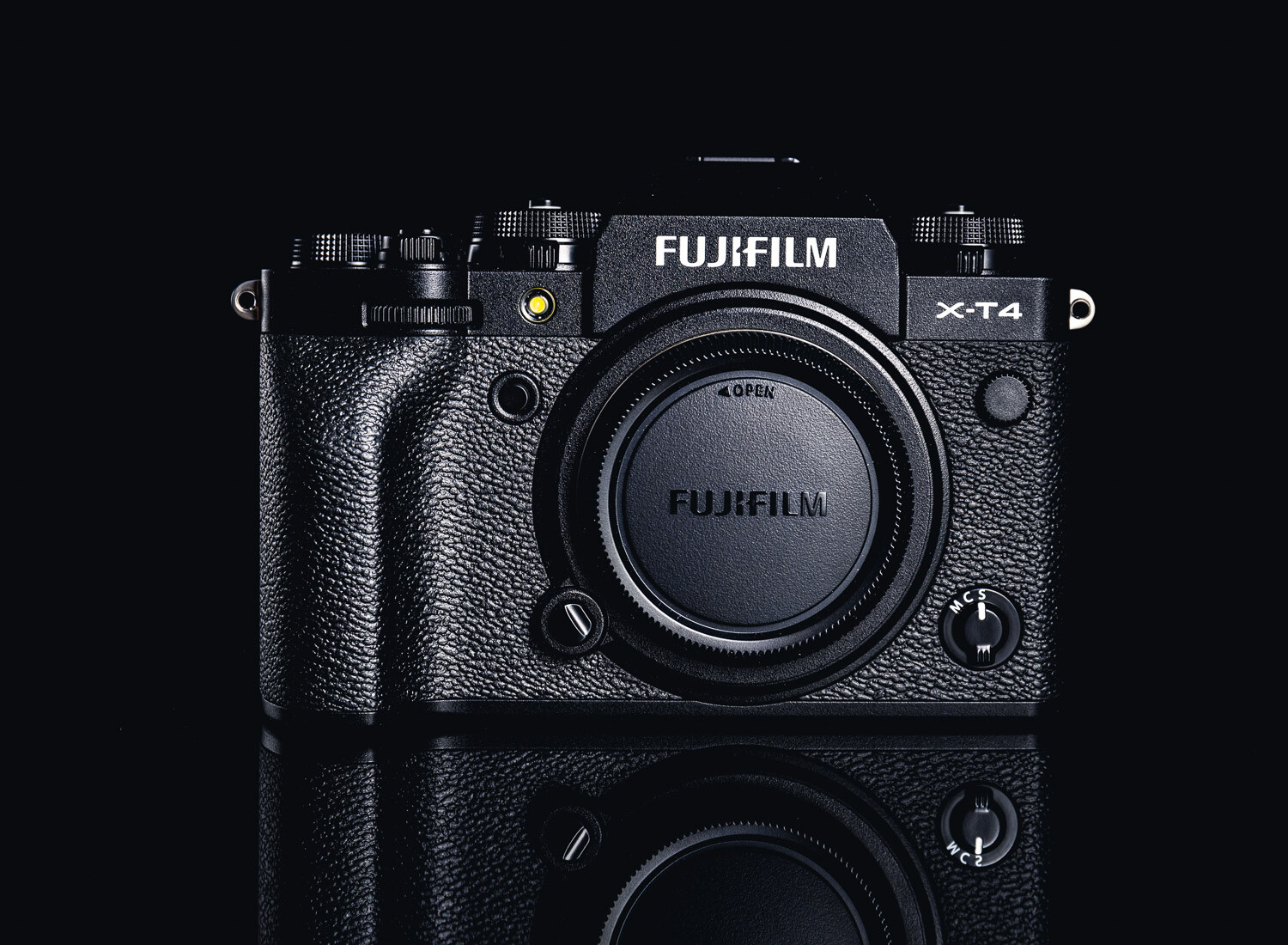
If you’re a long-time Fujifilm shooter, the design of the X-T4 will feel familiar to you. It’s very much in line with the X-T3’s thin, metallic form, though it’s gained a slight amount of bulk, presumably due to the inclusion of IBIS.
For non-Fujifilm shooters, however, holding the X-T4 for the first time may offer a bit of a shock.
First, it feels like a squashed brick; you get a very well-made body, compressed into a compact form. And while the X-T4 does offer a decent-sized handgrip, it’s not as large as what you might expect from a Nikon or Canon camera (and certainly not a Nikon or Canon DSLR), which might take some getting used to.
The Fujifilm X-T4 is weather-sealed, and it feels it; honestly, the whole body just screams durability, which means that you can feel comfortable taking the X-T4 in inclement weather (always important for serious outdoor and nature shooters).
I know I mentioned it above, but I really am a huge fan of the Fujifilm retro aesthetic, which somehow makes the X-T4 feel like less of a finely-crafted tool and more of a camera that works with you.
Handling
As with all Fujifilm cameras, handling is excellent, assuming you don’t mind the old-school dials and switches.
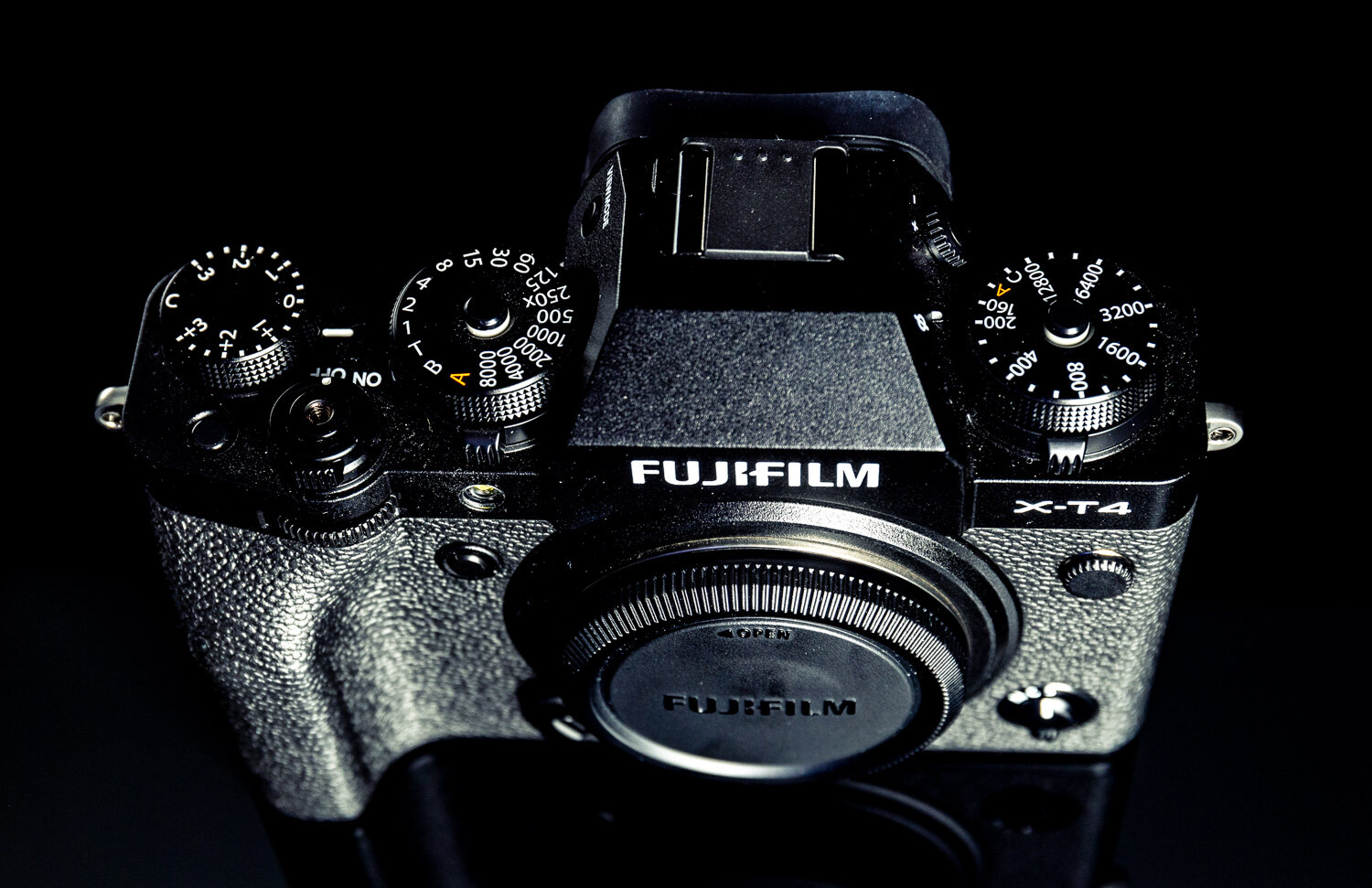
Note that this old-school aesthetic manifests in the form of a dedicated aperture ring on Fujifilm’s lenses, which means that you have to select the aperture by turning the ring on the lens rather than turning a dial on your camera. Also part of the old-school aesthetic is the dedicated ISO, exposure compensation, and shutter speed dials on the top of the X-T4.
I can see how this very external, dial-based handling would annoy some photographers. It’s certainly not built for speed and muscle memory in split-second action, but there’s something really wonderful about setting your shutter speed and ISO via dials on the top of the camera, as opposed to through your camera knobs or touchscreen.
The X-T4’s buttons are well-placed, and I like the focus mode dial on the front (also present on other Fujifilm models); it’s much easier to access in the heat of the moment.
A noticeable upgrade over the X-T3 here is the addition of in-body image stabilization, which allows you to get up to 6.5 extra stops of handholding. This is a huge deal for anyone who frequently shoots in low light, and is a fantastic addition to the X-T4 over the X-T3. In fact, if you haven’t used IBIS before, then you’re going to want to check the X-T4 out immediately. It’s a big help for handheld landscape photography, macro photography, walkaround photography, and much more, further increasing the X-T4’s versatility.
One last handling upgrade worth noting:
The X-T4 comes with a brand-new battery, one that’s rated at 500 images per charge. As with most battery ratings, this one seems to (happily!) undershoot reality. There were at least a few days when I shot over 500 images and still had significant charge left to work with.
For me, and for many shooters out there, this is a big deal. For one, if you’re shooting in adverse conditions, you want to swap batteries as infrequently as possible.
Plus, the better the battery life, the fewer batteries you need to take with you when traveling, for outdoor trips, etc.
The electronic viewfinder looks spectacularly life-like and features a 3.68M-dot resolution. Personally, I neither love nor hate EVFs (they can be great in some situations and terrible in others), but I do think that a minimum resolution of 3.68M-dots is required for good viewing, at least for me, personally, and the X-T4 brings that to the table.
There was never a time when I wished for an optical viewfinder while using the X-T4, and the clarity of the EVF was a huge benefit when working with Fujifilm’s Film Simulation modes (more on these later!).
You also get a fully-articulating rear LCD. This is useful for anyone who prefers to shoot without the EVF to their eye, but it’s especially important for macro photographers, architectural photographers, and landscape photographers in particular; basically, anyone who sets up their camera at odd angles.
With the X-T4’s articulating screen, you can get down-low perspective shots without having to get dirty (and without having to hurt your neck!).
Note that the X-T4’s screen does offer touch functionality, though it’s pretty much limited to setting the autofocus points. This is just fine in my book, because that’s really all I like to use touch screens for since it’s far faster than moving between points with the AF joystick.
Autofocus and Continuous Shooting
The Fujifilm X-T3 was a decent autofocus performer in its own right, but the X-T4 improves on this AF prowess, primarily in terms of tracking. Honestly, I’ve always been impressed by the X-T3’s focusing capabilities, which makes me all the more pleased with the X-T4.
Focusing on still subjects was extremely snappy, even in more difficult lighting situations.
In terms of tracking, I found the X-T4 able to follow predictably moving subjects with ease (e.g., cars), and while my keeper rate wasn’t 100 percent, I was very pleased with the results. Face and eye detection are a bit variable, especially in lower light, but are far from bad.
One of the great things about Fujifilm cameras is the continuous shooting speeds, which are blazing-fast by any metric. On the X-T4, you get 20 fps shooting using the electronic shutter, and this drops to a very respectable 15 fps using the mechanical shutter (up over the 11 fps mechanical shutter on the X-T3).
In fact, continuous shooting is one of the many reasons why the X-T4, and Fujifilm’s top cameras more generally, are such excellent all-around options. While they aren’t really designed as action cameras, you can certainly use them for fast-paced street photography, sports photography, and wildlife photography, assuming you can get the autofocus to work for you.
The X-T4 packs a 26 MP, APS-C sensor, and while it doesn’t offer many changes over the X-T3, it’s still pretty darn powerful.
I tend to be conservative in terms of my tolerance of noise levels, but I feel comfortable pushing the X-T4 to at least ISO 800. Really, noise doesn’t start to become noticeable until around ISO 1600, and images can remain usable through ISO 6400 or so, depending on your purpose.
This is a good performance, especially for an APS-C camera; to my eye, it’s around a half-stop better than the Sony a6600 and pretty much on par with the Nikon Z50. And while the X-T4 can’t quite compete with the full-frame heavy hitters, it’s still plenty useful for photographers seeking a camera that can handle itself in low light.
As mentioned above, one of the benefits of a Fujifilm camera is the film simulation modes, and here the X-T4 doesn’t disappoint. You get 12 high-quality options; it’s a lot of fun to toggle between them, just to see how the world will look with different types of film.
I find these modes to be especially useful for types of shooting where noticeable color grading is acceptable, such as street photography and portrait photography. However, you always have the option of experimenting with film simulation and making changes in post-processing if you’re not pleased.
At the time of writing, the Fujifilm X-T4 costs $ 1700 USD, which is $ 500 USD more than its X-T3 sibling, and is nearly $ 1000 USD more than the X-T30.
And this is where things get a little tricky because while the X-T4 does offer some serious upgrades over the X-T3, I’m just not sure it’s enough to justify $ 500. If I were trying to decide between the X-T3 and the X-T4, I’d feel more tempted by the X-T3, unless I desperately needed the IBIS or autofocus improvements.
Another issue with the X-T4’s price point is that it puts the camera on par with full-frame options such as the Nikon Z6, and only a few hundred dollars cheaper than the Sony a7 III. This isn’t going to make the X-T4 compelling for DSLR photographers looking to make the leap to mirrorless, or non-Fujifilm mirrorless shooters looking for a more powerful camera.
That said, if you’re already a Fujifilm shooter, or you’re a photographer who appreciates the unique design and all-around capabilities of the X-T4, the $ 1700 may be worth it.
But I’m an even bigger fan of the X-T4, mostly thanks to the addition of in-body image stabilization, which makes the camera even more impressive for low-light shooting. It’s the ultimate generalist camera for hobbyists and professionals, and it’s an excellent addition to any kit.
Is the X-T4 the best APS-C camera out there?
Truthfully, I think it is. You get excellent image quality, blazing-fast continuous shooting, great handling, dual card slots, good autofocus, and more.
My only reservation is the price, which feels a bit high compared to the X-T3. But you do get in-body image stabilization, as well as improved autofocus, so if you have the extra money to spend, go for it!
You won’t be disappointed.
?????
The post Fujifilm X-T4 Review: The Best APS-C Camera on the Market (For a Price) appeared first on Digital Photography School. It was authored by Jaymes Dempsey.
The Syrp Genie One is a motion control system for creating automated time-lapse sequences or live-action video. In fact, it could even turn your existing slider into a programable motion control rig.
Subscribe to our YouTube channel to get new episodes of DPReview TV every week.
Can Chris pass as a Kiwi from New Zealand?
Introduction
User interface
Time-lapse examples
Design and functions
Time-lapse functions
Live action function
Compared to the competition
One last time-lapse!
New to time-lapse? Watch our Introduction to time-lapse photography episode!
Watch our introduction to time-lapse photography video
The EOS R6 promises to be the full frame mirrorless camera from Canon that many have been waiting for. Does it hit the mark? We put it through the wringer for both stills and video to find out. Filmed on a pre-production Canon EOS R5.
Subscribe to our YouTube channel to get new episodes of DPReview TV every week.
Intro
Design and handling
Sensor
Video capabilities
Japanese garden sample photos
In-body image stabilization (IBIS)
Displays and battery life
The Lethbridge Viaduct
Low light and dynamic range
HEIF recording
Autofocus
Evening photo shoot
Who's it for?
Sample gallery from this episode
$ (document).ready(function() { SampleGalleryV2({“containerId”:”embeddedSampleGallery_9217763098″,”galleryId”:”9217763098″,”isEmbeddedWidget”:true,”selectedImageIndex”:0,”isMobile”:false}) }); Articles: Digital Photography Review (dpreview.com)
The post Gear Review: Tamron 70-180mm f/2.8 for Sony appeared first on Digital Photography School. It was authored by Suzi Pratt.
Earlier this year, the highly anticipated Tamron 70-180mm f/2.8 telephoto lens finally hit the shelves. Made for full-frame Sony E-mount cameras, this lens is very compact and affordable, coming in at more than half the price of the Sony G-Master version. What are the pros and cons of getting this lens? Read on to find out!
The Tamron “Holy Trinity” is complete
Photographers often refer to the “holy trinity” of zoom lenses that cover a wide range of focal lengths. Traditionally, the holy trinity consists of a wide-angle lens (16-35mm), a midrange lens (24-70mm), and a telephoto lens (70-200mm). Tamron has been working on their own version of the holy trinity that includes the 17-28mm f/2.8, 28-75mm f/2.8, and now the 70-180mm f/2.8.
All three of these Tamron lenses complement each other in that they are very affordable, compact in size, and even use the same filter thread size of 67mm. The low cost is probably the most attractive feature. You can have the Tamron holy trinity of f/2.8 lenses for just under US$ 3,000. In comparison, buying all three Sony G-Master lenses would cost a whopping US$ 7,000.
Canon 5D Mark III with Canon 100mm f/2.8 – 1/60 sec, f/7.1, ISO 400
Specs
The formal name of this lens is the Tamron 70-180mm f/2.8 Di III VXD. Tamron claims this is the “world’s lightest and most compact package,” and it’s hard to disagree when comparing this lens to similar focal lengths. The lens is 5.9 inches (149mm) long and weighs 1.8lbs (816 grams). The Tamron 70-180mm also has moisture resistance and weather sealing.
This is an autofocus lens with two rubber barrels – one controls focus and the other zooms. The front part of the lens extends when zoomed in. There is just one minimal locking switch on the lens to keep it from extending when not in use. No other physical buttons or switches are on the lens. The minimum focusing distance is 33.5 inches, however, you can focus down to 10.6 inches when using manual focus at 70mm.
One last thing to mention about this and every Tamron lens is the 6-year warranty for USA residents. The warranty period is much longer than Sony’s and just about any lens manufacturer out there.
Canon 5D Mark III with 100mm f/2.8 – 1/60 sec, f/7.1, ISO 400Canon 5D Mark III with 100mm f/2.8 – 1/60 sec, f/7.1, ISO 400Canon 5D Mark III with 100mm f/2.8 – 1/60 sec, f/7.1, ISO 400
Ease of use
The Tamron 70-180mm f/2.8 is very easy to use, especially if you’ve ever shot with a 70-200mm f/2.8. In practice, it’s almost not fair to compare these two lenses. The Tamron is considerably smaller and lighter than any 70-200mm f2/.8 on the market. It weighs 1.46 lbs lighter than the Sony G-Master, and it easily fits inside of medium-sized bags that a traditional 70-200mm lens would never fit into. Thus, it’s no longer a second thought on whether this lens should be packed on a hiking trip, or whipped out to shoot a quick photo.
To keep the lens small, 20mm was shaved from the long end which might be a problem if you really need to be shooting at 200mm. However, Sony full-frame shooters have the option of shooting in APS-C mode to get a zooming effect (roughly 270mm with the 1.5 crop factor). When shooting with a high-resolution camera such as the Sony a7rIV and its 61 megapixels, you also have more megapixels, so cropping is a viable option.
The autofocus performance on this lens is phenomenal. You have access to all of the autofocus features in your Sony E-mount camera including face and eye detect for humans and animals.
Autofocus was snappy and accurate when shooting a still or moving subject. This lens feels just like using a native Sony lens in a much lighter and cheaper body.
Like the rest of the lenses in the Tamron holy trinity, the 70-180mm is missing image stability built into the lens. Tamron claims it isn’t needed because many Sony full-frame cameras come with in-body image stabilization (IBIS, or SteadyShot).
While this might seem like a downside, Tamron might be onto something. In practice, the 70-180mm shot incredibly stable handheld video, even at 180mm. Stills photography was also very sharp and spot-on in every scenario. Along those lines, let’s talk about image quality.
When reviewing images, the Tamron 70-180mm f/2.8 leaves little to be desired. Photos are tack sharp and crisp with excellent color. Thanks to the lens coating, there is also very little ghosting and flare, even in the most backlit conditions.
Conclusion
This is a rather short review, because there honestly isn’t a lot to say about this lens other than it is impressive on every level. If you want an ultra-compact f/2.8 telephoto zoom at a very affordable price, this is the one for you.
However, you’ll want to act fast since this lens has been back-ordered ever since it was announced, and for good reason.
The Canon EOS R6 is a 20MP full-frame mirrorless camera aimed at enthusiast photographers and videographers. It sits below the R5 much as the EOS 6Ds did beneath the 5D DSLRs, and offers a well-rounded combination of features for both disciplines.
It’s also one of the first enthusiast-level cameras to shoot both stills and video that can exploit the capabilities of the latest high-dynamic range displays.
Key specifications:
20MP Dual Pixel CMOS Sensor
In-body stabilization rated at up to 8EV of correction
Dual Pixel AF II with AI-trained subject tracking and 100% AF coverage
20 fps shooting with e-shutter, 12 fps mechanical
UHD 4K shooting at up to 60p, 1080 at up to 120p
10-bit 4:2:2 internal recording in either C-Log or HDR PQ
10-bit HDR photos in HEIF format
3.68M dot EVF
1.62M dot fully-articulated rear touchscreen
New battery rated at around 380 shots per charge (EVF)
The R6 will be available from late August with a recommended price of $ 2499, body-only. It will also be available in a kit with the 24-105mm F4L for $ 3599 or with the 24-105mm F4-7.1 STM IS for $ 2899.
What’s new and how it compares
The EOS R6 can’t boast 8K video but it’s got a solid feature set nonetheless, including the same IS and AF as its big brother.
Read more
Body, controls and handling
The R6 has elements of the original EOS R to its design but it also gains a fair amount from Canon’s DSLR range. We think the combination works nicely.
Read more
Initial impressions
We’ve been shooting with the EOS R6 and think Canon users (and, in particular, Canon DSLR users) will find a lot to like about the camera.
Read more
Sample gallery
We’ve put together a gallery from the EOS R6, to show what its image quality looks like.
The Canon EOS R5 is a 45MP full-frame mirrorless camera that shoots full-width 8K video, has next-generation Dual Pixel autofocus and a stabilization system that provides up to eight stops of shake correction with a variety of lenses. It can also capture 10-bit HDR stills and video for HDR display. Designed for advanced amateurs and professionals, the EOS R5 is the spiritual (mirrorless) successor to Canon’s 5D-series DSLR cameras and appears to leapfrog the competition in some significant ways.
Key specifications:
45MP full-frame Dual Pixel CMOS sensor
8K video, with option for Raw or 10-bit 4:2:2 C-log or HDR PQ
Up to 4K/120p, or oversampled 4K up to 30p
100% coverage Dual Pixel II AF system with human and animal detection trained by machine learning
12 fps / 20 fps bursts (mech. / elec. shutter)
5.76M-dot OLED EVF with 120fps max refresh rate
3.2″ 2.1M-dot fully articulating touchscreen
10-bit HDR photos in HEIF format
1x CFExpress slot, 1x UHS-II SD slot
Claimed weather-sealing to EOS 5D Mark IV levels
2.4/5Ghz Wi-FI with Bluetooth and FTP connectivity
CIPA rated to around 320 shots (using EVF)
Resized out-of-camera JPEG from a pre-production EOS R5. ISO 250 | 1/60 sec | F11 | Canon RF 28-70mm F2L @ 28mm
As you can see from the spec list, there’s a lot to cover. Follow along with us as we take an in-depth look at all that Canon has to offer in its latest high-end mirrorless camera. The EOS R5 will be available at the end of July for $ 3899 USD body-only, or $ 4999 with the RF 24-105mm F4L.
Editor’s note: All images from the pre-production camera used for this review have been resized at Canon’s request.
What’s new and how it compares
The EOS R5 has a lot of new features inside and out. We’ll go through what they are, and why they matter, here.
Read more
Body, controls and handling
Canon has banished the EOS R’s touchbar and put a very nice AF joystick in its place. Overall, the R5 is a really pleasant camera to use.
Read more
Initial impressions
So, is the EOS R5 the long-awaited ‘mirrorless 5D’? Find out what we think after having spent some time with it.