RSS
 

Posts Tagged ‘reveal’

Kowloon Walled City: Drone Photos Reveal a Re-Growth of Urban Density

15 Jun

[ By SA Rogers in Drawing & Digital. ]

Once notorious both for its lawlessness and a maze of urban density so intense that sunlight couldn’t penetrate to its lowest levels, Kowloon Walled City was demolished in the 1990s, but a new version of it is rising from the ashes. Standing in stark contrast to the modern towers of Hong Kong just beyond its borders, Kowloon was an autonomous ‘city of anarchy’ built up from the ground like lasagna. 500 buildings were packed into less than seven acres, and there were no municipal services like trash collection or running water.

Outsiders called it the City of Darkness, and it certainly had a squalid appearance, but former residents remember it with fondness as a friendly and tight-knit community where everyone worked together to uphold their own poor but inventive society. But Hong Kong (and later, Britain – check out our previous coverage for the history) wasn’t too fond of the fact that it was run by the mob and packed with gambling dens and brothels, not to mention concerns about its structural soundness. So in 1993, all 50,000 inhabitants were cleared out and the whole thing was razed to the ground.

In its place came a 330,000-square-foot park full of paths and pavilions named after the city’s former streets and buildings. Ponds, gardens and floral walkways took the place of layer after layer of haphazard architecture. That park is still there – but it seems that the wild profusion of growth associated with Kowloon’s spirit couldn’t be contained. It may be modernized, with orderly rows of skyscrapers instead of a labyrinthine network of mismatched towers, but it’s growing more packed every year, and this level of density is creeping into the rest of Hong Kong, too.

Photographer Andy Yeung proves as much with his new drone photography series, Walled City. “The Kowloon Walled City was once the densest place on Earth. Hundreds of houses stacked on top of each other enclosed in the center of the structure. This notorious city was demolished in 1990s. However, if you look hard enough you will notice that the city is not dead.”

“Part of it still exists in many of current high density housing apartments where the only view out of the window is neighbor’s window. I hope this series can get people to think about claustrophobic living in Hong Kong from a new perspective.”

See the whole series at Andy Yeung’s website or on 500px.

Share on Facebook


[ By SA Rogers in Drawing & Digital. ]

[ WebUrbanist | Archives | Galleries | Privacy | TOS ]


WebUrbanist

 
Comments Off on Kowloon Walled City: Drone Photos Reveal a Re-Growth of Urban Density

Posted in Creativity


Photojournalists reveal their favorite publications to work with and what they pay

02 May
Photographer Genna Martin on assignment for Seattle PI.

Columbia Journalism Review recently surveyed a group of photojournalists on their favorite publications to work with based on several criteria, including arguably the biggest one – pay. As a result, they’ve published an article revealing the day rates for some top publications as well as some insight into other factors, such as balancing a lower day rate with exposure to a wider audience.

So by the numbers, how do top publications stack up for freelance photographers? CNN comes out on top with the best day rate at $ 650, though National Geographic is close behind with typical rates between $ 500-650. Harper’s Magazine’s rate was hard to pin down but reported rates varied from $ 500 up to $ 1000 per day. 

The New York Times’ recently boosted rate of $ 450 per day makes it more competitive with the top-paying outlets, but CJR notes that the photographers they spoke with acknowledged the Times’ wider reach and top-notch editorial staff go a ways to compensate for the lower pay. Coming in with the lowest day rate of the bunch is the Washington Post, offering $ 350. 

Check out the full article at Columbia Journalism Review for some interesting insights on working for these top publications.

Articles: Digital Photography Review (dpreview.com)

 
Comments Off on Photojournalists reveal their favorite publications to work with and what they pay

Posted in Uncategorized


Anatomical Street Art: Sliced Animal Murals Reveal Disturbing Details

04 Apr

[ By WebUrbanist in Art & Street Art & Graffiti. ]

sliced spider

Marvelous if also a bit morbid, these highly detailed murals show the complex workings inside giant-sized animals, revealing muscle, sinew, tendons, veins and bones in various different configurations.

animal mural

Nychos is a street artist from Austria who creates spectacular, detailed artworks. He “grew up in a little village near Graz (Styria, South of Austria). He calls it the green hell. Born into an Austrian hunter’s family, he saw, at a very young age, things which normal people would consider as cruel and brutal.”

exploded whale

The scale of works by Nychos plays to the level of detail, and each piece is crafted differently, almost like an experiment in sequential dissections by a scientist or medical student. His subjects span the animal kingdom as well, from kangaroos and rats to whales and alligators (as well as humans).

cut dog

Some of the murals are sliced cleanly while others operate like layered x-rays, revealing various depths at different points along their length.

anamial

sliced snake

Still others feature intertwined animals at various stages of dissection or translucency, like the two snakes above, or act alike exploded axonometric drawings with pieces pulled out from the core.

translucent

While Nychos also exhibits in galleries and makes smaller-scale prints, his large public pieces are particularly compelling (if somewhat disturbing).

Share on Facebook


[ By WebUrbanist in Art & Street Art & Graffiti. ]

[ WebUrbanist | Archives | Galleries | Privacy | TOS ]


WebUrbanist

 
Comments Off on Anatomical Street Art: Sliced Animal Murals Reveal Disturbing Details

Posted in Creativity


Japanese Joinery: Captivating Gifs Reveal Ancient Secrets of Wood Assembly

25 Jan

[ By WebUrbanist in Design & Furniture & Decor. ]

giffed

Before screws, nails, glue and other fasteners, joinery was a matter of complex interlocking forms that shaped not only the structure but also the aesthetic of what was built.

joinerygifs

For generations, Japanese wood craftsmen and their carpentry guilds were known to carefully protect trade secrets of their construction techniques. Even as the approaches found visual representation in print publications, it was often hard to visualize how they worked.

These animated 3D representations communicate the inner workings of these traditional techniques in a way that no static rendering or model could hope to do, depicting them in motion through the assembly process.

Created by a Japanese fan of woodworking, they were made using Fusion360 and derived from historical documents and precedents. He has so far posted dozens of these joinery techniques, many of them highly complex (featuring multiple interlocking parts, twists and turns).

While modern-day technologies have replaced historical joints in most everyday applications, they could also be positioned to bring them back into play — with 3D-printing devices readily available, the sophisticated cutting that used to be done by hand can be done by machine.

Share on Facebook


[ By WebUrbanist in Design & Furniture & Decor. ]

[ WebUrbanist | Archives | Galleries | Privacy | TOS ]


WebUrbanist

 
Comments Off on Japanese Joinery: Captivating Gifs Reveal Ancient Secrets of Wood Assembly

Posted in Creativity


Earth from a New Perspective: ‘Overview’ Aerial Shots Reveal Hidden Beauty

01 Nov

[ By SA Rogers in Art & Photography & Video. ]

Planned community of Sun Lakes, Arizona

Other than a few brief glimpses near airports, few of us ever get to see the Earth from high up in the sky, taking in all of the complex textures and patterns created by nature and human activity. If we could, we might feel more inclined to do all that we could to protect it. This phenomenon, as experienced by astronauts when viewing our small, fragile planet from space, is called the ‘overview effect,’ and it serves as the inspiration behind a series of stunning aerial photographs by Benjamin Grant.

Tulip fields, Lisse, Netherlands
A highway interchange in Jacksonville, FL
World's largest aircraft storage facility, Tucson, Arizona
World’s largest aircraft storage facility, Tucson, Arizona
Residential communities in Boca Raton, FL

‘Overview: A New Perspective of Earth’ is a new hardcover book full of over 200 aerial images taken of sites all over the world, from industrial areas of South Korea and fields in Ethiopia to planned communities in South Florida. Grant initially started the project as an Instagram series in December 2013, selecting high-resolution satellite photographs that reveal the extent to which we have altered the surface of the planet upon which we live and curating them into a thoughtful, emotional collection.

Port of Singapore
Port of Singapore
Industrial district, Ansan, South Korea
Agricultural development, Addis Ababa, Ethiopia
Residential neighborhood in Delray Beach, FL

“What I’m really trying to get across here is that we’ve entered an important time in human history where our home has been significantly altered,” Grant told Wired in a 2015 interview.

The Gemasolar Thermosolar Plant, Seville, Spain
Olive tree groves in Cordoba, Spain
Mexico City
Mexico City
Burning Man, Black Rock, Nevada

Grant searches aerial shots relating to a specific current event or environmental issue to find the ones that have the biggest impact, striking us as visually beautiful even when the imagery depicts tragedy. Some examples include shots of a refugee camp in Kenya, shrinking ice sheets and the choked streets of the world’s most populated cities. Take a look through the feed on DailyOverview.com, or order the book on Amazon.

Share on Facebook


[ By SA Rogers in Art & Photography & Video. ]

[ WebUrbanist | Archives | Galleries | Privacy | TOS ]


WebUrbanist

 
Comments Off on Earth from a New Perspective: ‘Overview’ Aerial Shots Reveal Hidden Beauty

Posted in Creativity


Painting with Paper: Quilled Portraits Reveal the Expressiveness of Aging

13 Sep

[ By SA Rogers in Art & Sculpture & Craft. ]

brodskaya quilled paper 4

Expanding upon a previous body of work that’s more graphic in nature, paper artist Yulia Brodskaya presents a new portrait series capturing the expressive qualities of aging faces in vibrant hues. The Russia-born artist and illustrator is known for rolling strips of paper into ‘quills’ and painstakingly gluing them together into colorful, three-dimensional designs. The new portraits are named Jade, Topaz and Amethyst, and reveal a more painterly method that tightly packs folded pieces of paper into each composition.

brodskaya quilled paper 7

brodskaya quilled paper 5

The effect mimics the look of brushstrokes, with wrinkles, folds and other sculptural details rendered in lush jewel tones for an expressionistic result. The former graphic design major discovered her love for the tactile qualities of paper art and abandoned computer programs, producing hundreds of projects and commissions over the last 7 years.

brodskaya quilled paper 8

brodskaya quilled paper 3


“The new expressive way of using the strips of paper that I discovered recently (and first time used as a primary technique in the Wimbledon artwork) is really exciting – it allows me to achieve more ‘sketchy,’ artistic look for the paper art and I’m excited to keep experimenting with it (though it’s a shame that this method is not much faster than the neat and refined way of gluing strips one by one)… Despite the slow process I enjoyed working on this portrait tremendously: the abundance and richness of colors makes me feel good,” says Brodskaya.

brodskaya 9

brodskaya 10

brodskaya 11

brodskaya 12

“I used to say that I’m ‘drawing with paper’, now I found a way of ‘painting with paper.’ These artworks are all about color and the unique tactile feel that paper strips add to it. The portrait resembles an oil/acrylic painting (especially from the distance,) but with a paper twist…”

Share on Facebook


[ By SA Rogers in Art & Sculpture & Craft. ]

[ WebUrbanist | Archives | Galleries | Privacy | TOS ]


WebUrbanist

 
Comments Off on Painting with Paper: Quilled Portraits Reveal the Expressiveness of Aging

Posted in Creativity


LEGO Shadow Show: Masses of Toy Bricks Reveal Surprising Silhouettes

27 Aug

[ By SA Rogers in Art & Sculpture & Craft. ]

LEGO GIF

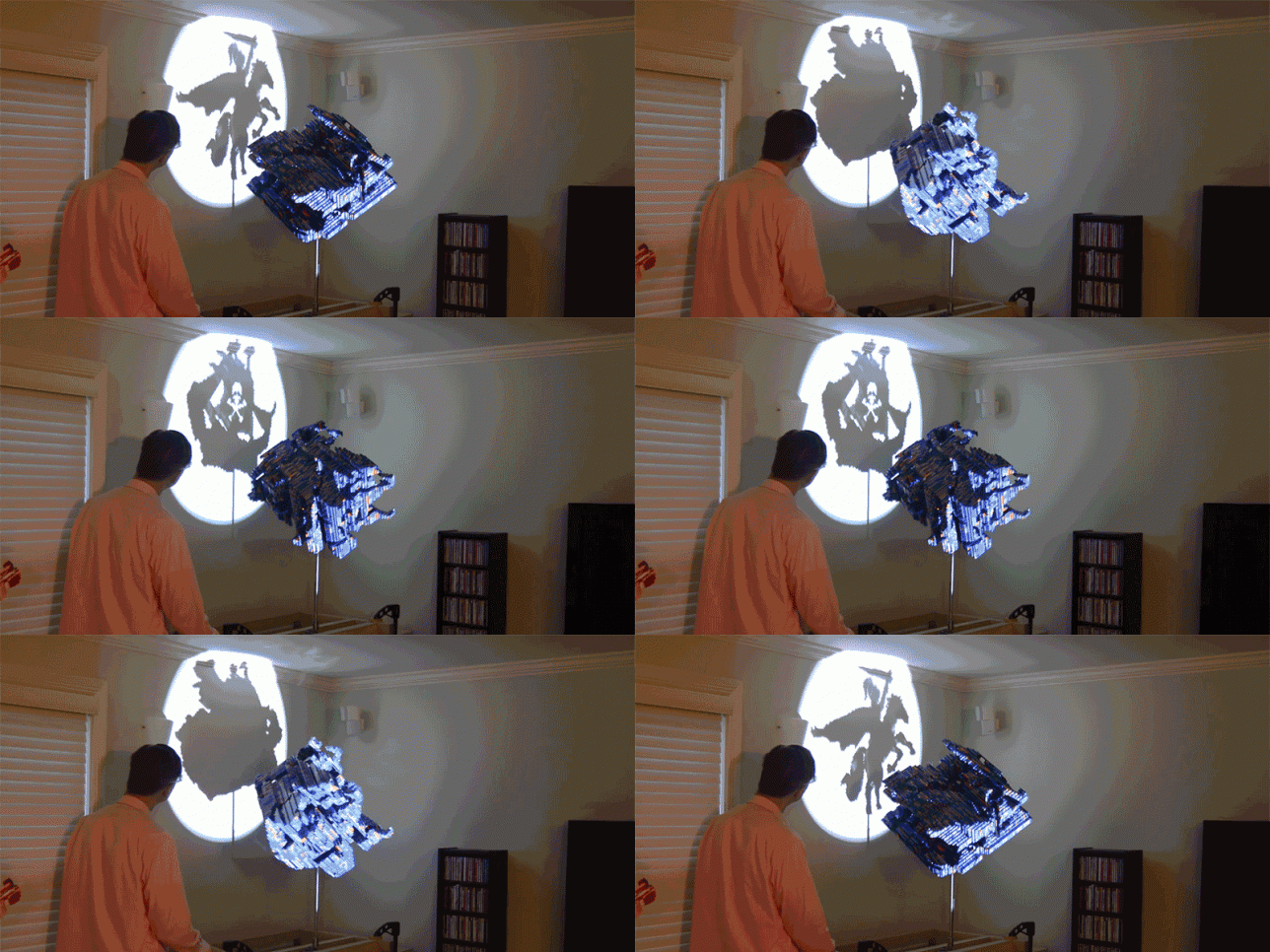
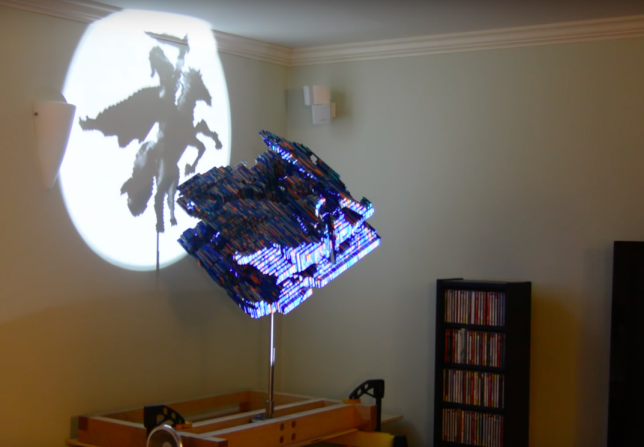
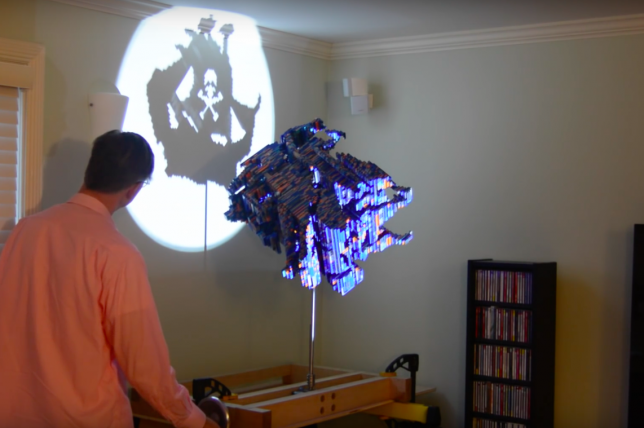
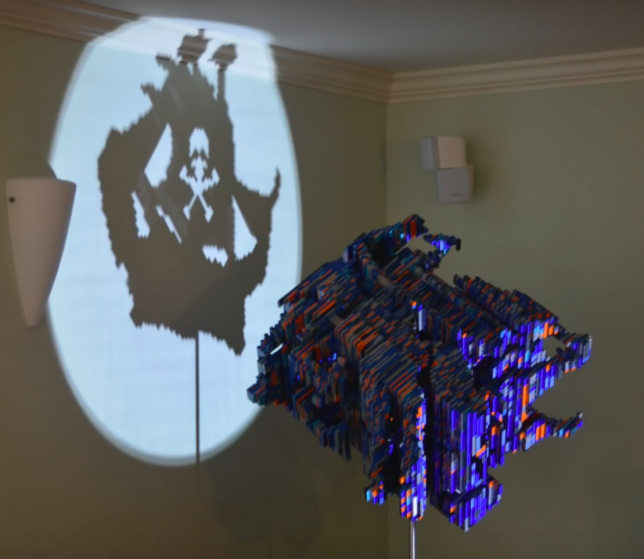
What looks like no more than an unweildy mass of Lego bricks stuck together into an abstract shape reveals itself to be not just one but two separate intricate shadow-casting designs. Artist John V. Muntean mounts his unusual sculptures on a special table to rotate them into just the right position in front of a spotlight so we can see what’s hidden within the positive and negative spaces created by the bricks.

LEGO Shadows 6

LEGO Shadows 1

The artist calls it a ‘magic angle sculpture,’ and it’s just the latest of an impressive collection he’s created over the past couple decades. This appears to be the first time he’s worked with Lego bricks, though – the rest are sculpted wood.

LEGO Shadows 5

lego sculpture 2

lego sculpture

“As a scientist and artist, I am interested in how perception influences our theory of the universe,” says Muntean in his artist statement. “A Magic Angle Sculpture appears to be nothing more than an abstract wooden carving, skewered with a rod and mounted on a base. however, when lit from above and rotated at the magic angle (54.74 degrees) it will cast three alternating shadows. Every 120 degrees of rotation, the amorphous shadows evolve into independent forms. Our scientific interpretation of nature often depends upon our point of view. Perspective matters.”

Share on Facebook


[ By SA Rogers in Art & Sculpture & Craft. ]

[ WebUrbanist | Archives | Galleries | Privacy | TOS ]


WebUrbanist

 
Comments Off on LEGO Shadow Show: Masses of Toy Bricks Reveal Surprising Silhouettes

Posted in Creativity


Instagram profiles reveal user depression in new machine learning study

19 Aug

A team of researchers with the University of Vermont and Harvard have published a new study detailing Instagram profiles and the hidden clues they may hold about the photographer’s mental state. Using machine learning, the team was able to identify signs of depression based off an Instagram profile’s photos, metadata, and things like facial recognition. The study looked at 43,950 photographs from 166 individual Instagram users, and had a 70-percent accuracy rate when identifying users with clinical depression.

The artificial intelligence system ultimately proved more capable of detecting depression than general practitioners, which have been found to have somewhere around a 42% accuracy rate. Hints about the photographer’s mental state lie in many things the researchers refer to as ‘markers’: the type of lighting used in the photographs, for example, and the colors of filters applied to photos. 

Dark and gray colors are often signs of depression, as well as gap in posting frequency which may indicate a depressed mental state. The number of times a photo is ‘liked’ and commented on, as well as the number of faces detected in the photos, are also notable markers. Interestingly enough, the study found that depressed Instagram users are less likely to use any photo filter, but if they do, they tend to go with ‘Inkwell.’

Via: Digital Trends

Articles: Digital Photography Review (dpreview.com)

 
Comments Off on Instagram profiles reveal user depression in new machine learning study

Posted in Uncategorized


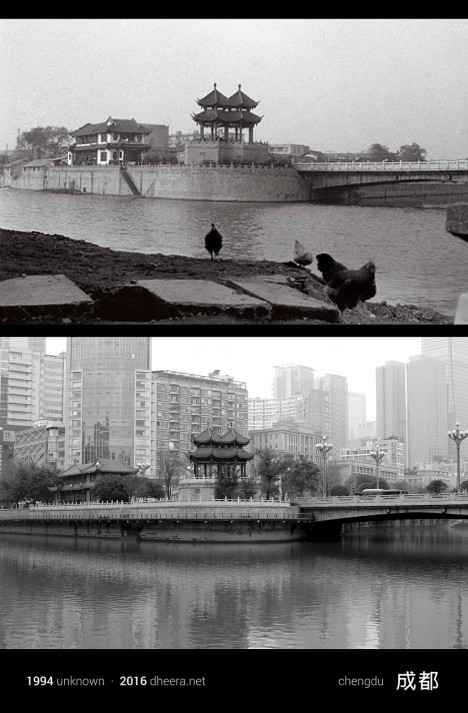
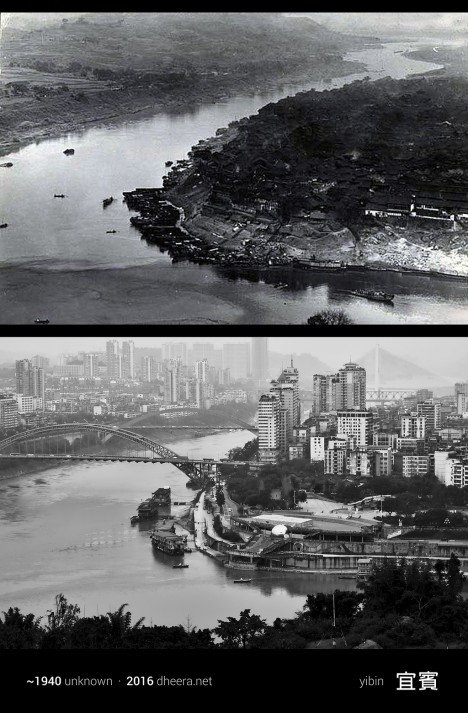
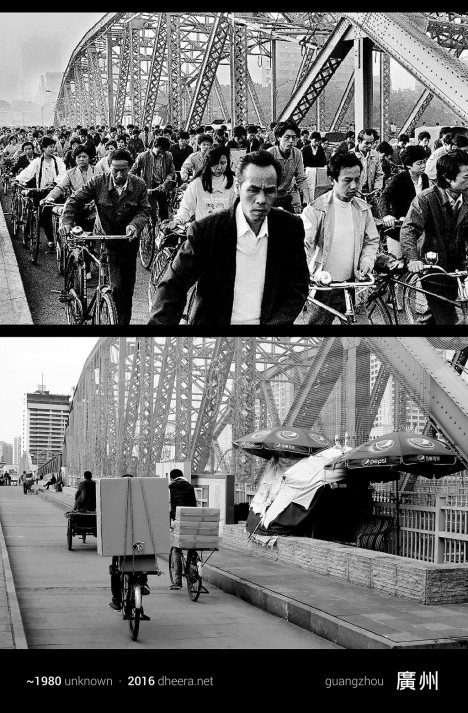
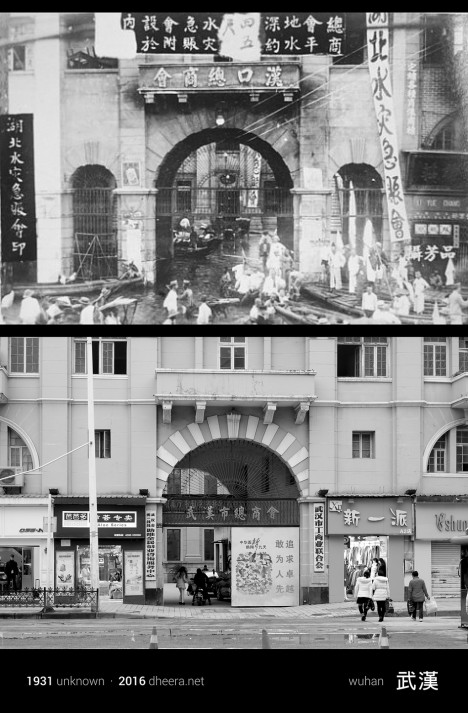
Time Travel in China: Photos Reveal A Century of Dramatic Growth

15 Apr

[ By Steph in Culture & History & Travel. ]

time travel china 1

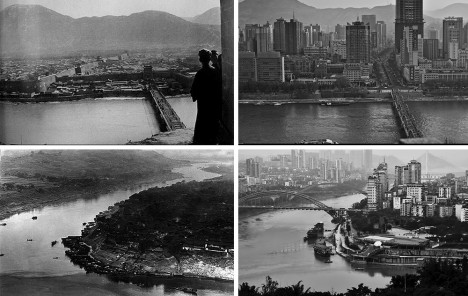
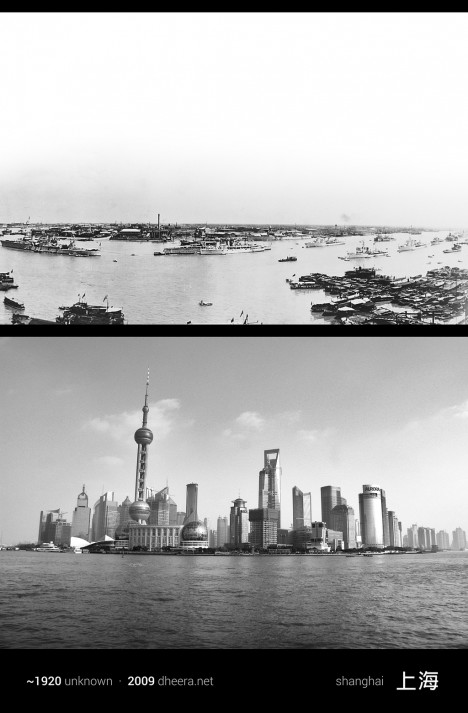
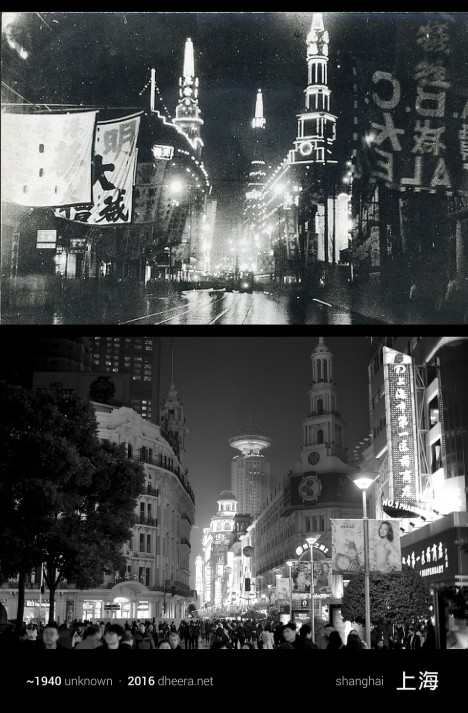
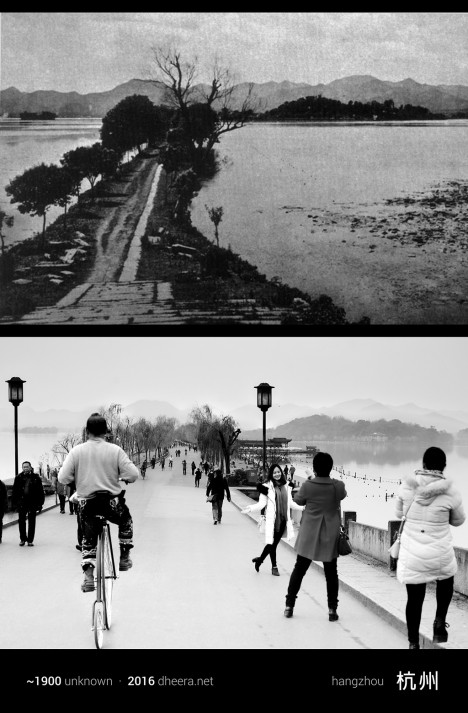
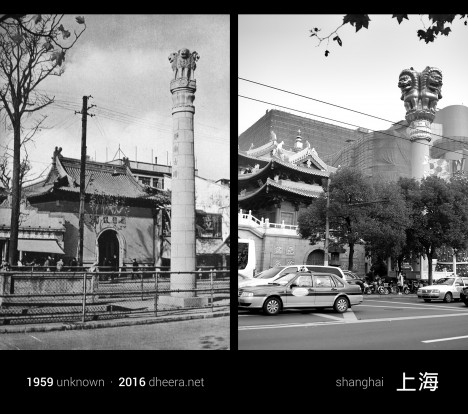
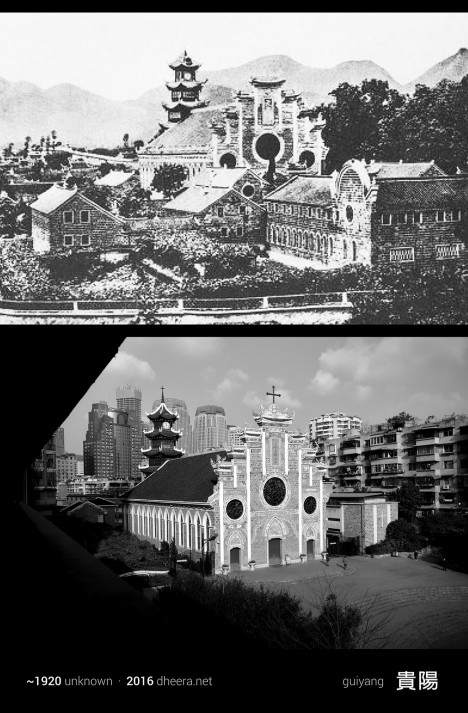
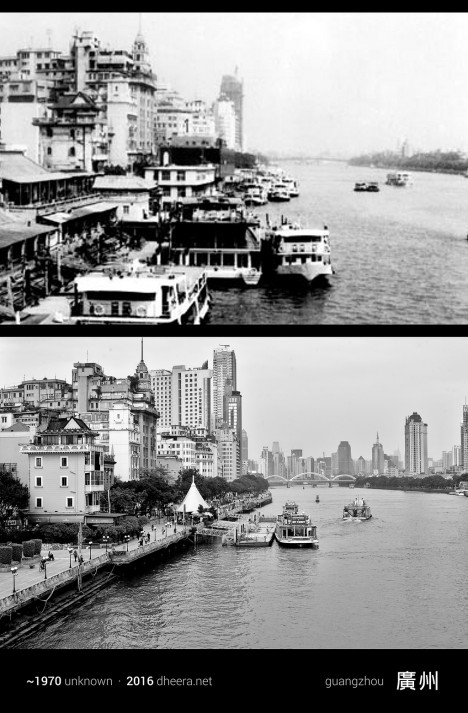
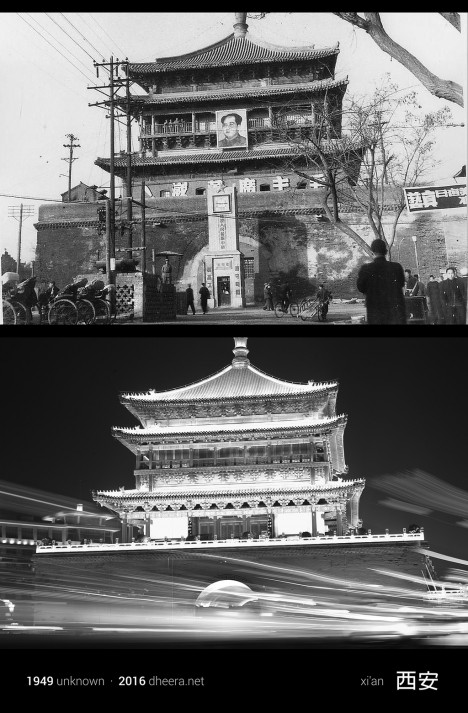
Few nations have experienced quite the explosive rate of growth over the last century as China, and a new photo series shows us just how dramatic those changes actually look on the ground. Photographer, computer scientist and MIT alum Dheera Venkatraman pored through books and archives to find images taken in the 20th century and then went out and re-took them, shot by shot, attempting to frame them exactly as they were originally photographed. All of the new imagery has been converted to black and white to highlight what’s different and what has managed to survive after decades of frantic industrialization.

time travel china 11

time travel china 5

The result is a series called Time Travel in China, creating pairs of images that Venkatraman likens to a ‘spot-the-difference’ game. Agricultural fields become towns, skyscrapers shoot up into the air, bridges stretch across waterways, dirt roads are paved, infrastructure becomes more complex.

time travel china 6

time travel china 7

time travel china 2

Yet not only do the contours of the land and the silhouettes of the mountains remain the same, a surprising number of buildings do, too, especially temples and historical structures. In some cases, the only notable shifts in a forty- or even eighty-year period are the vehicles, some lights and a handful of modern towers.

time travel china 12

time travel china 14

time travel china 3

time travel china 10

“When most people travel, they think of traveling in space,” she says. “Whether it’s hiking through a national park or learning about a distant culture, it’s usually about the destination. This time, I decided to travel in time.”

time travel china 8

time travel china 9

time travel china 4

“It wasn’t always easy to get that perfect angle match,” she continues in a post on PetaPixel. “In some places, the vantage point ended up being in a private location, and in some cases there was a large obstruction or building preventing me from getting the same view. But nonetheless, I managed to capture several shocking contrasts over the past century of Chinese history.”

Share on Facebook


[ By Steph in Culture & History & Travel. ]

[ WebUrbanist | Archives | Galleries | Privacy | TOS ]


WebUrbanist

 
Comments Off on Time Travel in China: Photos Reveal A Century of Dramatic Growth

Posted in Creativity


Panasonic and Fujifilm reveal joint sensor development, offering global shutter

05 Feb
Cross-sectional image of conventional Back Side Illumination (BSI) CMOS sensor compared to Panasonic’s Organic Photoconductive Film (OPF) sensor. (Image courtesy of Panasonic.)

Panasonic has announced that it has developed a new sensor using Organic Photoconductive Film (OPF), developed by Fujifilm, that is capable of recording a much wider range of tones (up to 3 EV greater dynamic range) than current silicon-based sensors, and in which each pixel is read out simultaneously to effect a true global shutter.

We first heard about this collaboration back in 2013, and it appears that the companies have made progress during that time. Similar to InVisage Quantum Film technology, the OPF sensor employs a thin, light-sensitive film on top of CMOS silicon circuitry. Panasonic says that the separation of the light conversion medium and electronic charge storage removes some design trade-offs that need to be made with conventional CMOS designs. The design allows for a larger active pixel area that makes it 1.2x more sensitive to light than normal photodiodes. Decoupling the photoconversion and storage areas also allows for the ability to store more total charge (higher full well capacity), resulting in 10x, or 3 EV, greater dynamic range. 

Additionally, the OPF layer is only 0.5 microns thick, or four to six times thinner than silicon photodiodes that are typically 2-3 microns in depth. According to Panasonic this expands the incident angle of light that can be collected to 60 degrees, compared to 30-40 degrees for conventional silicon sensors, which should allow greater flexibility in lens design. It should also help reduce false color and vignetting.

In addition to better sensitivity and dynamic range, the new technology brings other benefits as well. In particular, the OPF-based sensor will provide global shutter, by allowing all pixels to be exposed essentially at the same time by turning on and off the entire photosensitive area at once. The net effect is that all the lines of the sensor are essentially exposed simultaneously, as opposed to line-by-line as is the case with traditional ‘rolling’ electronic shutters. This helps avoid the dreaded ‘jello effect’ often seen in video, or the distortion of fast moving objects. It also helps avoid flickering and banding with artificial light sources, which with a ‘rolling’ shutter otherwise result in different rows on the sensor being exposed while the pulsating light source is on vs. off.

When combined with Panasonic’s historical strength in video-oriented products this will likely get the attention of the videography crowd. The potential benefits don’t stop there though. Panasonic has also developed a method of recording sequences of images at slightly different exposure values, that it calls Variable Sensitivity Multiple Exposure Technology. The process can track the direction of motion in the scene by tracing the subject as it moves across the scene becoming gradually darker from one frame to the next. If the camera knows it applied less exposure to the second frame than to the first, it can determine in which direction the subject is moving and at what speed. This could be of great assistance to AF algorithms.

The company is not absolutely clear about what practical uses it will put this new sensor to, but says ‘We expect this technology to be used widely in motion capture applications and also extend to other applications that have been thought to be difficult to realize unless high saturation global shutter or variable sensitivity multiple exposure.’ Panasonic is also developing a system for using cameras that replace wing mirrors in cars, and this technology will probably see the light of day in that area first, but the lessons learned will be very useful for its regular camera business. 

Press release:

Panasonic develops 10times Higher Saturation & Highly Functional Global Shutter Technology by controlling of Organic-Photoconductive-Film on CMOS Image Sensor

Osaka, Japan – Panasonic Corporation today announced that it has developed a new highly functional global shutter[1] technology for CMOS image sensor using organic photoconductive film (OPF)*1. This technology enables to capture high speed moving object up to 10 times brighter*2 scene in global shutter mode. In OPF CMOS image sensor, charge-storage function and photoelectric-conversion function can be set independently. By utilizing the unique feature of OPF CMOS image sensor, this technology solves the degradation of saturation signal[2] in conventional image sensor with global shutter function. Motion direction can be detected from acquired object’s signal level in one picture by fine control of shutter sensitivity by changing applied voltage to OPF which is hardly realized by conventional CMOS image sensors.

The newly developed highly functional global shutter technology contributes to high speed image sensing of moving objects without image distortion which appears in conventional shutter operation under very bright scene. We expect this technology to be used widely in motion capture applications and also extend to other applications that have been thought to be difficult to realize unless high saturation global shutter or variable sensitivity multiple exposure.

The new technology has the following advantages.

1. Wide incident angle (60 degrees), high sensitivity, high saturation and highly-functional circuits due to a unique feature of OPF, in which an OPF for photoelectric-conversion and a readout circuits are independent.

2. High saturation signal up to 10 times larger*3 than conventional image sensors with global shutter function due to Photoelectric Conversion Controlled Global Shutter Technology.

This development is based on the following new technologies.

1. CMOS Image Sensor Design Technology, in that, an OPF photoelectric-conversion part and a circuit part can be designed independently.

2. Photoelectric Conversion Controlled Global Shutter Technology that is realized by controlling of organic photoconductive film sensitivity.

3. Variable Sensitivity Multiple Exposure Technology which can detect the motion and its direction by changing image capturing sensitivity in each frame.

Panasonic holds 60 Japanese patents and 41 overseas patents (including pending) related to this technology.

Panasonic will present part of the research at the international conference ISSCC (International Solid-State Circuit Conference) 2016 which is to be held in San Francisco, USA on January 31 to February 4.

Notes:

*1: We are using an organic photoconductive film (OPF) that FUJIFILM Corporation has developed.

*2: Saturation signal per pixel area, compared with conventional silicon based CMOS image sensor with global shutter function.

More on the Technology

1. The OPF CMOS Image Sensor Design Technology, in that, photoelectric-conversion part and a circuit part can be designed independently.

The conventional image sensor consists of a silicon photodiode for capturing light, metal interconnects and an on-chip micro-lens. And, both a photoelectric-conversion function and a signal charge-storage function are executed by a silicon photodiode. On the other hand, in an OPF CMOS image sensor, a photoelectric-conversion function is executed by an OPF, instead of a silicon photodiode, and a signal charge-storage function is executed by circuits beneath the OPF. Both functions are almost independent, so an OPF CMOS image sensor can achieve the following features.

Expansion of the incident light range to 60 degrees and reproduction of faithful color.

An OPF with high optical absorption coefficient[3], instead of a silicon photodiode, is adopted, the thickness of an OPF has been reduced to just 0.5 microns, four to six times thinner than silicon photodiodes. Since the conventional silicon photodiode needs at least 2 – 3 microns in depth, the range of incident angles was limited to around 30 – 40 degrees. An OPF, achieved with the OPF CMOS image sensor technology, has enabled the expansion of this range to 60 degrees, efficiently utilizing light entering at an angle for faithful color reproduction with no color mixing. It also gives greater flexibility in lens designs, facilitating the reduction of overall camera size.

Boost of sensor sensitivity by 1.2 times compared to conventional silicon image sensors to deliver clear images, particularly in dark conditions.

The transistors and metal interconnects in each pixel, fabricated using Panasonic’s semiconductor device technology, are coated with an OPF. The area of the light receiving section becomes limited in conventional image sensors because of the existence of metal interconnects and the need to form a light shield film to prevent light incidence into areas other than the photodiode in each pixel. However, an OPF CMOS image sensor technology coats the sensor with an OPF, which can harvest all the light received on the sensor. This unique structure and high quantum efficiency of OPF boosts sensor sensitivity by 1.2 times compared to conventional silicon image sensors to deliver clear images, particularly in dark conditions.

Cross-sectional image of conventional Back Side Illumination (BSI) CMOS image sensor and OPF CMOS image Sensor

Design of OPF and circuits completely independent and realization of high-performance (high-saturation)

In the architecture of an OPF CMOS image sensor, the OPF, that converts light into electric signals, and the circuits, that store electric signal charges and readout electric signals, are designed completely independently. Therefore, by selecting an OPF, photoelectric-conversion characteristics, wavelength, sensitivity, etc., can be set with flexibility.

Moreover, in conventional image sensors, it is necessary to place both a silicon photodiode and circuits (transistors and capacitors) on silicon substrate in each pixel, so an area of circuits is limited. On the other hand, in an OPF CMOS image sensor, it is not necessary to place a silicon photodiode, so high-performance circuits, such as high-speed or wide dynamic range[4], can be formed on a silicon substrate.

In particular, in an OPF CMOS image sensor, by providing a large capacitor for storing signal charge, a saturation value[2] of electric signal can be significantly increased from conventional image sensors.

2. Photoelectric Conversion Controlled Global Shutter Technology that is realized by controlling of organic photoconductive film sensitivity.

Conventional CMOS image sensors with global shutter function require storage located near photoconversion area which makes it difficult to simultaneously shrink the pixel size and enlarge the saturation signal. Developed “Photoelectric conversion controlled global shutter technology” realizes shutter function by controlling of photoelectric conversion efficiency by only modulating applied voltage to OPF, without additional in-pixel circuit and no degradation of saturation signal. And developed “high saturation pixel technology” by pixel gain switching operation can capture under extremely bright scene, up to 10 times or more saturation signal per unit square pixel than conventional CMOS image sensor with global shutter function. This technology will solve imaging problems caused by rolling shutter distortion, flash bands[5] and LED flickers[6] in very bright scene.

Comparison of Global shutter pixel structure

3. Variable Sensitivity Multiple Exposure Technology which can detect the motion and its direction by changing image capturing sensitivity in each frame.

Conventional multiple exposure cannot detect the direction of motion because the capture sensitivity is fixed. Panasonic have developed “variable sensitivity multiple exposure technology” by controlling the voltage applied to OPF with elapse of time, which is hardly realized in conventional silicon based image sensor. We can get several images of different exposure time and different exposure sensitivity in one picture that enables character recognition by choosing optimum exposure time, so direction of motion can be detected by acquired object’s signal level. This technology enables sensing of moving object detection and motion directions.

Technical Terms:

[1] Global shutter

Shutter operation which can capture the image at the same time in all pixels.

Ordinary CMOS image sensor operates in rolling shutter mode in which exposure and shutter operation is executed row by row.

[2] Saturation/Saturation signals

Maximum amount of electric signal that can be handled by image sensors. Receiving a signal greater than this value leads to highlight clipping.

[3] Optical absorption coefficient

A constant value that indicates how much light is absorbed into a material, when incident light enter to the material.

[4] Dynamic range

Range of brightness that can be captured. (the ratio between highest and lowest signal can be captured by image sensor)

[5] Flash band

stripe shaped contrast appears in captured image, because light flashes during image sensor capture the image row by row pixel (rolling shutter operation).

[6] LED flicker

Imaging phenomenon resulting in incomplete image capture, caused by a LED’s (traffic, headlights, signs, etc.) frequency and a camera’s imaging speed.

Captured images of rotating propeller by different shutter mode

Multiple exposure images by Variable exposure time and sensitivity

Articles: Digital Photography Review (dpreview.com)

 
Comments Off on Panasonic and Fujifilm reveal joint sensor development, offering global shutter

Posted in Uncategorized