RSS
 

Posts Tagged ‘Reasons’

5 Reasons to Consider Concert Photography with a Wide Open Aperture (and the Secret to Perfecting it)

21 Oct

Concert photography is arguably one of the most adrenaline-filled niches you can engage in as an image maker. Musicians, magazines, fans, and record labels alike turn to skilled concert photographers to tell a story for the momentous performance. For most music photographers (due to venue constraints) there is less than ten minutes to capture enough great images to populate a full gallery. Partner this with tumultuous circumstances such as sporadic lighting and an excitable audience and you have effectively created a photographic situation that is unlike any other.

As such, shooting with a very wide open aperture might appear to be too daunting of a task! There are common misunderstandings of how to use and work with a wide open aperture! If your inner aesthete drools over soft, dreamy photographs and creamy bokeh, then you better get ready to play with some low, low, low numbers. We are here to tell you how to photograph concerts at f/1.2, f/1.4, and f/1.8!

Wide aperture concert photography tips

Why Use an Ultra Wide Aperture?

Here are 5 reasons you may want to consider shooting concert photography with a wide open aperture.

1. Aesthetic and Style

To preface, a lot of the quality and final image look is based on the type of lens used. In the past several years, photography fans are gravitating towards the shallow depth of field aesthetic. If you’re in the business of producing commercial music photography (like myself), you’re going to want to keep following the trends and adapting to what is sought after in the industry.

Aesthetic and Style with Wide Aperture Concert Photography

An added bonus is being able to niche yourself a bit in an industry that has a lot of competition, many photographers are wary of shooting fast paced events with a wide aperture due to potential focusing issues. If you can master this art, you have something that will separate you from others.


2. Low Light Capability

Low light concert photography with wide aperture

Unless you’re shooting a big name at an amphitheater, a lot of smaller venues will have very poor lighting. You’ll need to use equipment that will illuminate the frame with whatever limited lighting is available. In these low light scenarios you need a lens with a wide enough aperture to let in more light. Using a lens that goes down to f/1.2, for example, is a great way to let enough light in and make the frame bright. Remember, the aperture is the hole the light passes through in your lens. The wider the aperture, the more light that enters the camera.


3. Shallow Depth of Field

Shoot concert photography with shallow depth of field

The wider the aperture, the shallower the depth of field. Shallow depth of field is great for live concerts because the stage can be rather cluttered compositionally. From instruments to cables, background props, and other band members, there can be a lot going on in the frame at once. Only having one subject in focus with the rest blending into a creamy bokeh makes for a much more visually pleasing and simplified image. With the depth-of-field being so shallow, whatever troubles you about the background can easily melt into a beautiful creamy bokeh.


4. Detail Shots

Capture detail in your concert photography with wide aperture

On the topic of shallow depth of field, if you are photographing for an instrument company, an aperture of f/1.8 will likely become your best friend. This is because photographs taken with a large aperture allow all of the focus to lie on the subject, and the background ceases to remain a distraction. Many instrument companies love to have their products captured in a natural usable setting, such as musicians at a live show.A shallow depth of field will keep the interest solely on your single subject.


5. Sharpness

How to achieve sharpness in your concert photography with wide aperture

Due to technological constraints, lenses that open their aperture below f/2.8 are fixed millimeter lenses (they do not zoom). As a general rule, fixed millimeter lenses tend to be sharper than lenses with a range.


Let’s Talk About the Elephant in the Room: Focusing with a Wide Open Aperture

Right where all of the benefits of an f-stop of 1.2 start to break down is the focusing. The wider the aperture and the shallower the depth of field, the more difficult it can be to focus on what you want. Pair that with a live show in which the lighting is a bit of a mess, and the subjects move spontaneously in various directions, and it sounds like the perfect recipe for a photographer migraine. However, focusing with a wider aperture doesn’t have to be so difficult- it’s just a different thought process.

The Concept of Sharpness

Sharp concert photography through composition

Really, the focus stems from a desire to have an image that is sharp. But what is sharpness? Sharpness is an interesting concept. How sharp a subject appears is a matter of two things: the focus the camera captures and the amount of contrast on your subject. The term “sharpness” is, in fact, an illusion. You see, for an image to be considered sharp, it needs to have contrast. If the there is little contrast in the image, the subject will not look three-dimensional regardless of whether the focus is perfect or not. Biologically, the way that our eyes work, our vision naturally detects edges to register sharpness, and shadows and highlights in order to record the depth in a subject. This is a very important concept to understand when answering the question of how to make images look sharp. When editing your concert photography images, be attentive to the shadows and highlights. And add contrast to define your subject.


Perfect Focus

Sharp concert photography through perfect focus and wide aperture

In terms of getting your image to actually be sharp (from being in perfect focus), here is the basic concept of how focus works in a camera. When you focus your camera on a subject, it establishes a focal plane. To get your subject in focus, it has to be on the focal plane. Focal planes happen on an x (horizontal) and y (vertical) axis. This means anything along either of those axes will be in focus, and anything not on them will be out of focus. The concern with a wide open aperture is that your focal plane is quite small. As you decrease your aperture number and make the opening wider, the invisible area in front and behind the plane of focus will get smaller and smaller, leaving you with much less wiggle-room. As such, distance from the subject plays a key role in your focus.

When shooting wide open, even the smallest diversion from either of the focal plane axes will cause your subject to be out-of-focus. You cannot take a step forward or back without the need to refocus when shooting at a wide aperture. But by keeping this in mind, you can adjust your photography technique to better accommodate the small focal plane.

Single Point Autofocus

Using single point focus and wide aperture in concert photography

A trick to help make sure that what you want in focus is indeed sharp, is to use single point autofocus. By default, your camera will probably select either the object that’s closest to the camera or what’s in the center of the frame. By using single point autofocus, you tell the camera exactly where to focus, which is extremely helpful with low aperture numbers. Refer to your camera model’s manual to find how to change the focus setting!

The Real Secret

The real secret to wide aperture concert photography

Keeping in mind how the focal plane works, this is the big trick to shooting wide open at a concert: The farther away you are from the subject, the easier it is to get the subject in focus. You can get the subject in focus and still maintain and extremely creamy depth of field.

Whether you’re in a photo pit or just in the main venue floor, your position to begin the concert shoot can significantly affect your success for the rest of the shoot. Keeping in mind that for most general photography passes your time is limited, you need to be ready to jump right into the shoot the very second the music hits your ears. My suggestion is to start on the outer edges of the pit or venue and work your way to the middle. Many concert photographers all flock to the center of the shooting zone, and begin shoving to claim their dead center spot. When you start from the edge, while the other photographers are all congregating and fighting for the center, you have much more room to move freely on the outer edge. This is where you will have an advantage to be able to move a bit further away from your subject in order to expand your plane and get that perfect focus.

Shooting concert photography in wide aperture

Now that you’ve been let in to the secret, go out there and capture some awesome concert shots!

The post 5 Reasons to Consider Concert Photography with a Wide Open Aperture (and the Secret to Perfecting it) appeared first on Digital Photography School.


Digital Photography School

 
Comments Off on 5 Reasons to Consider Concert Photography with a Wide Open Aperture (and the Secret to Perfecting it)

Posted in Photography


Five Reasons Why I Finally Bit the Bullet Switched to Adobe Creative Cloud

19 Sep

When Adobe announced that they were transitioning their apps to a subscription model of the Adobe Creative Cloud in 2013, I almost fell out of my chair while clutching the cardboard box for my copy of Lightroom 4. It seemed absolutely crazy to me that Adobe would ask photographers and other creative professionals to spend money every month subscribing for software that they could simply buy once and use forever.

In the years that followed I resisted moving to Creative Cloud and continued to buy new versions of Lightroom one by one until a few months ago when I finally bit the bullet and subscribed. I was one of Adobe’s harshest critics in those intervening years and staunchly refused to buy into Creative Cloud for several reasons until I realized five important things that finally got me to switch over.

Five Reasons Why I Switched to Adobe Creative Cloud - couple portrait

Much of my hesitation to switch was due to the fact that I didn’t really understand the service Adobe was offering with their Creative Cloud Photography plan. That’s the one that lets you have Lightroom and Photoshop for $ 10/month.

What I failed to recognize was that Lightroom and Photoshop are just the tips of the iceberg, and there’s a whole slew of additional Adobe services that users have access to with a CC subscription. None of these by themselves are worth the price but when you examine all the ancillary benefits you get alongside great software it makes the idea of renting the software I used to own a lot more palatable.

Syncing between Lightroom Classic and Lightroom CC

When you subscribe to the Photography plan you get two versions of Lightroom, each with unique features and benefits designed to cater to specific types of photography workflows.

Lightroom Classic CC is the name of the traditional desktop app that has been around since 2007, now available only through a Creative Cloud subscription. This is for desktop-centric workflows where all your photos reside on a single computer.

Lightroom CC is a new different version of Lightroom designed for a cloud-centric workflow where all your photos reside in the cloud and can be edited anywhere – in a browser, on a tablet, on a phone, or even using Lightroom CC on a desktop computer.

What you might not realize is that you can use both of these programs together, with the key difference being the location where your original pictures actually reside. If you are accustomed to a traditional desktop-centric workflow you can use Lightroom Classic CC to sync specific albums in the Cloud.

This basically uploads low-resolution preview files of your photos to your Creative Cloud account. These previews, then, can be edited anywhere using Lightroom CC and the next time you load Lightroom Classic CC on your desktop all your edits are automatically synced to your original photos and catalog file.

photo editing in Lightroom CC - Five Reasons Why I Switched to Adobe Creative Cloud

I started editing this photo on my computer in Lightroom Classic CC. Then I pulled it up in my browser and made additional changes which were synced back to my desktop.

The key difference between both types of workflows is that when using albums published to the cloud from Lightroom Classic CC, your originals remain on your desktop which means you can’t export high-resolution images from Lightroom CC. However, for photographers who want to edit their pictures on the go and then return to their desktop for any final tweaking and exporting, this is an outstanding solution and one that could make the difference to those on the fence about subscribing.

One final note about this: The $ 9.99 Photography Plan includes 20GB of cloud storage, but the albums that you publish to the cloud from Lightroom Classic do not count against that 20GB. This is because they use low-resolution previews instead of your actual images which is fine for flagging, cropping, keywording, color correcting, and most of the other adjustments you would want to make on a mobile device.

family photo in Lightroom - Five Reasons Why I Switched to Adobe Creative Cloud

Having access to my photos on mobile has sped up my culling process enormously. It’s much faster for me to flag, reject, and rate photos on my iPad and the results are synced right back to my iMac in Lightroom Classic CC.

Photoshop is Included

I’ll be the first to admit that even though I call myself a photographer I rarely use Adobe Photoshop and instead do most of my post-processing in Lightroom. I do, however, have an old copy of Photoshop CS5 that I bought about eight years ago which I use when I really need to do some heavy processing.

But it’s slow, lacks a lot of modern features, and has an interface and layout that is confusing, to say the least. It also crashes on me a lot which doesn’t exactly help matters whenever I do need to use it.

Despite these issues, the fact that Photoshop is included did not do much to initially sway my barometer when it came to shelling out $ 9.99 each month for the Creative Cloud Photography plan. I forced myself to get by with what I had even though it was not really suiting my needs anymore.

image in Photoshop - Five Reasons Why I Switched to Adobe Creative Cloud

But the more I thought about subscribing to Creative Cloud the more I realized how nice it would be to have the full version of Photoshop ready when I needed it.

No need to think about buying, upgrading, or figuring out whether the version I had would really be current with the latest online tutorials. It just started to make sense for a small-time photographer like me to pay what really is a modest monthly fee to have the latest and greatest tools at my disposal for when I needed them.

Since I don’t use Photoshop all that often it would not be worth the price of a Creative Cloud plan by itself, but combined with everything else it sure did make a lot of sense.

Share albums publicly

I take a lot of photos of family, friends, and events just for personal use and like most people, I enjoy sharing these images with others. Until subscribing to Adobe Creative Cloud my workflow for this type of sharing was somewhat convoluted and involved exporting small-sized images from Lightroom, saving them to a Dropbox shared folder, generating a public link, and sending that out to others.

I couldn’t do much in the way of limiting access privileges either, and meanwhile, the images were taking up space in my Dropbox account that is perpetually near its limit anyway.

Now my process is much simpler, a lot more efficient, and results in a greater degree of control over what I can actually let other people do with my images. After publishing an album to the cloud from Lightroom Classic CC you can log in to Lightroom on the web, on mobile, or just load up Lightroom CC and generate a public link for any synced album.

Moreover, you can get an embed code, choose to allow downloads and show metadata, and even let people filter the photos according to Flag status.

album sharing - Five Reasons Why I Switched to Adobe Creative Cloud

While the images that are publicly viewable using this method are the low-resolution previews and not full-size images for printing, they are more than enough for most people.

The tradeoff in terms of overall simplicity and ease of use is more than worth it for me, and I’m not taking up valuable space in my Dropbox account or other file-sharing services.

Adobe portfolio

This might not be useful for some photographers but I have found Adobe Portfolio to be an incredible asset as a Creative Cloud subscriber and it really was one of the primary reasons I eventually chose to upgrade. Previously I was paying a service nearly $ 100/year for my photography website. But when I realized that Adobe Portfolio could do everything I need and was included with a Creative Cloud subscription I canceled my other hosting service and moved everything over to Adobe.

adobe portfolio - Five Reasons Why I Switched to Adobe Creative Cloud

Adobe Portfolio won’t give you the fanciest website in the world, but it could very well get the job done for you at not much more than what you are paying for a website now.

All Creative Cloud subscribers have access to Adobe Portfolio which, though not as full-featured as some of the other hosting providers, is more than enough for my needs and possibly yours as well. As an added bonus it syncs with Lightroom so I can create albums on my computer and have them synced automatically with my website. Something that was not possible at all with my previous hosting company.

If you are at all interested in Creative Cloud but unsure about the $ 9.99 monthly fee, I recommend looking at your current website hosting solution and comparing it to Adobe Portfolio. It is quite likely that the latter could suit your needs just fine and end up only costing you a bit more than what you are already paying for a website.

adobe portfolio - Five Reasons Why I Switched to Adobe Creative Cloud

Adobe Portfolio doesn’t have the breadth of features offered by other website platforms, but it does have a decent selection of themes and some solid options for photographers who want a simple, effective way to showcase their work online.

The price was right

As I looked at all the features offered by Adobe Creative Cloud I kept on coming back to the monthly fee, and for years I just couldn’t reconcile the idea of being locked into a perpetual contract just to use software that I could go out and buy once but use forever. However, I kept coming back to other software I had purchased like Aperture, Final Cut Express, and even other Adobe apps like Fireworks that simply wouldn’t run on my computer anymore.

Sure I had bought these apps but as time went on the only way to use them was to purchase new versions anyway. In the meantime by not upgrading I was losing out on the bug fixes, added features, and overall speed improvements offered by their newer counterparts. In some cases, like Final Cut Express, apps were simply deprecated by their developers leaving me with no choice but to upgrade anyway.

software - Five Reasons Why I Switched to Adobe Creative Cloud

I’ve paid hundreds of dollars over the years for software that I can’t use anymore, or won’t be able to use in the near future because it has been deprecated by its developers.

I still don’t like the idea of being locked into a monthly fee for software but when I considered all the benefits that came with what really was a modest price (only about $ 30 more than I was paying just for my website) the choice became clear. I’m not saying that Creative Cloud is right for everybody but it was definitely the right choice for me and, depending on your needs, it could be right for you too.

The post Five Reasons Why I Finally Bit the Bullet Switched to Adobe Creative Cloud appeared first on Digital Photography School.


Digital Photography School

 
Comments Off on Five Reasons Why I Finally Bit the Bullet Switched to Adobe Creative Cloud

Posted in Photography


4 Reasons Why You Aren’t Getting Sharp Images

04 Sep

Capturing sharp images is something most photographers aim to do, regardless of what genre you do. While it sounds easy on paper, it’s not quite as easy to come home with sharp images; especially when you are photographing in challenging conditions.

There are several reasons why you’re images aren’t as sharp as you’d like them to be but the good news is that most of them are both quick and easy to fix. In this article, we’ll look at the most common reasons and what you can do to avoid making these mistakes again.

#1 The Shutter Speed is Too Slow

The shutter speed is to blame for a lack of sharp images in 99% of the cases. A shutter speed that is too slow results in the image becoming blurry.

moody mountain scene - 4 Reasons Why You Aren’t Getting Sharp Images

A shutter speed of 1/320th of a second captured with a 24mm lens was quick enough to get this image sharp.

This is a common mistake and it’s easy to forget to change the shutter speed when you’re in the field. There’s so much to remember, right? The ISO, the aperture, composition, light… and then the shutter speed. Don’t worry though; spending time using and learning the camera will make this much easier within no time at all.

The exact shutter speed you need depends on the situation. However, a rule of thumb is to never use a shutter speed slower than 1 over the focal length for handheld photography. That means that you shouldn’t use a shutter speed slower than 1/70th of a second with a 70mm lens, or slower than 1/16th of a second for a 16mm lens.

This isn’t an exact science though and while the tip above can serve as a guideline, you still should make it a habit to zoom in on the image preview to double check if the image is sharp.

natural scene at sunset - 4 Reasons Why You Aren’t Getting Sharp Images

I used a tripod to capture this 91-second exposure

If you need to use a slower shutter speed to achieve a certain look or due to the dim conditions, it’s essential that you use a tripod. This makes it possible to increase the exposure time without worrying about the image being blurry.

#2 Your Lens is Not Good Enough

Unfortunately, an unsharp image can’t always be blamed on human error. Sometimes the camera equipment is to blame. While I often preach that camera gear won’t make you a better photographer, it is true that it does make a difference to the image quality.

A budget lens isn’t as sharp as a professional lens and sometimes this becomes quite visible. For this reason, it’s advisable to do some research about the lens before purchasing it and make sure to read what people are saying about the image sharpness.

#3 The Camera is Vibrating

So what about the times when you’re using a slow shutter with the camera placed on a tripod, and you know for a fact that the lens is good enough? The cause might be camera vibration.

road with big trees arching over - 4 Reasons Why You Aren’t Getting Sharp Images

When capturing the image above I could not for the life of me figure out why almost every image was slightly blurry when I zoomed in on the LCD screen. I used a 70-200mm with a semi-slow shutter speed, the camera was mounted on a solid carbon fiber tripod and I used a remote shutter release.

After several attempts and trying to understand what was happening I realized it was due to me not standing still when taking the image. This caused small vibrations in the unstable ground I was standing on and resulted in the camera vibrating slightly.

Camera vibration becomes more visible and is easier to cause the longer the focal length you are using. Had I used a 14mm I would most likely not have noticed it at all.

There are many reasons why you might be having some camera vibration. The example above is perhaps not the most common. It could be caused by wind, waves, the tripod is placed in a river or on a bridge, or perhaps it is from you pressing the shutter button (so get a remote trigger).

#4 The Weather is to Blame

Other times you can’t blame either yourself or the camera gear. Sometimes the weather is to blame and it makes it impossible to capture a sharp image.

The most common reason is lots of particles in the air and high temperatures. Now, I’m not going to pretend I’m smart enough to explain how this works (I’m sure someone wants to take on this task in the comments) but it’s a common issue when photographing distant subjects.

mountains in the mist - 4 Reasons Why You Aren’t Getting Sharp Images

Make sure to zoom in 100% when using a telephoto zoom to see if you’re getting sharp images.

A good practice is to use Live View and zoom into 100% magnification to check for sharpness. This should give you a good idea of whether or whether not it’s possible to capture a sharp image.

Conclusion

So I hope these tips have you to get sharp images next time you’re out shooting. Use this as a checklist of things to look out for and go over them one by one to ensure you have everything sharp.

If you have any other tips of reasons why others might be experiencing unsharp images, please share them in the comment area below.


Be sure to read my eBook The Ultimate Guide to Long Exposure Photography if you’re curious about working with slower shutter speeds. 

The post 4 Reasons Why You Aren’t Getting Sharp Images appeared first on Digital Photography School.


Digital Photography School

 
Comments Off on 4 Reasons Why You Aren’t Getting Sharp Images

Posted in Photography


7 Reasons Why a Tripod is Must for Outdoor Photographers

15 Jun

Ask any photographer what their favorite accessory is, and most will be quick to reply with “tripod”. It’s with good reason that a tripod is considered such a must-have accessory by photographers. Even if they are inconvenient, heavy to carry, and they tend to draw attention to you as a photographer, it is a price that is worth paying considering the benefits it can bring to your photos. Here are 7 reasons why a tripod is a must for all outdoor photographers.

7 Reasons Why a Tripod is Must for Outdoor Photographers - sunset shot, camera on a tripod

1. Low Light Saviour

One of the best bits of advice I was ever given when I was starting out was this “The majority of the time, if I want to capture the best possible photo at the best possible time, then a tripod is an absolute must”. This is, of course, referring to the time of the day when the light is softer and there is less of it, in other words, the golden and blue hours.

Low light conditions mean that you have two options for being able to capture a photograph at these times. Set a high ISO on your camera – which comes with the downside of noise in the photo and as a result less sharpness. Or use a tripod. You simply will not be able to handhold a camera steady enough for anything slower than 1/60th of a second where even the slightest movement can mean camera shake.

So if you are planning to photograph in low light conditions and a tripod is allowed, make sure you use one.

evening scene on the camera LCD - 7 Reasons Why a Tripod is Must for Outdoor Photographers

2. To Show Movement

One of the biggest advantages that a tripod can give you is that it allows you the flexibility to control the amount of movement that you want to show in your photos. That might be moving water like a waterfall, or it might be clouds in the sky. It can even be objects and people.

To be able to show movement in a photo you require some parts of the image to be sharp so that there is a contrast to the moving parts of the image. If the whole image is slightly blurred through camera shake, then the image will fail to show that movement. So, if you want to capture movement in your photos, then make sure that you are using a tripod.

7 Reasons Why a Tripod is Must for Outdoor Photographers - image of water flowing in a river or stream

3. Put Yourself in the Shot

On some occasions, you will arrive at a scene and after examining and framing your shot, you will quickly come to realize that there is something missing. This usually points towards a point of interest in your composition that will help capture the viewer’s attention.

You might be lucky enough to have other people around that can be your models. But sometimes you are all by yourself and there is no other way than to put yourself in the photo.

This is where the tripod can act as your photographer. Simply set your camera up, frame your shot and set the self-timer for the length of time you need to get into position. Not only does this help you capture photos that can tell a story or show an experience, but it also means you have a photo that is model released.

7 Reasons Why a Tripod is Must for Outdoor Photographers - self portrait of the photographer and landscape scene

4. Different Angles

Most photographers are guilty of capturing too many photos at the usual eye level view. But let’s be honest, how many people want to be on the ground in the cold and wet? A tripod is a great way to capture photos at slightly different elevations whether that is higher up or even close to the ground.

There are also times when a tripod can be put in places that people can’t go like over a fence, on a precarious ledge on a mountain or even in the water where you wouldn’t want to get your shoes and clothes wet.

For example, for the photo below, I was faced with a high wall with no ledge to allow me to stand on to capture this photo. As this was an old stone wall standing on it wasn’t an option as I would have probably damaged it. But I was able to position my tripod on the wall to capture this shot.

7 Reasons Why a Tripod is Must for Outdoor Photographers - sunset on the coast

5. Light Stand

Even if you are not going to be using your tripod for your camera, there might be occasions where a tripod becomes a handy light stand where you can mount your flash. This is especially useful when you are outdoors by yourself and need to light something from a different position than where you are standing.

Unless you have someone there to hold the flash, the only way to light the subject the way you want is to use a tripod.

7 Reasons Why a Tripod is Must for Outdoor Photographers - diagram

I needed to light up this woman’s face so that it wasn’t too dark. I was able to place my tripod behind the pillar on the left to light up her face slightly.

6. Better Composition

Sometimes one of the main benefits of using a tripod is that it makes you slow down and become more analytical in your approach to taking a photo.

By being able to put your camera down and take a step back you sometimes end up slowing down and that usually means an improvement in the photo. Once you have taken a shot you can evaluate and make the necessary adjustments to make any improvements to your composition.

7 Reasons Why a Tripod is Must for Outdoor Photographers - camera shooting a vertical composition

7. Take the Weight

You’ve just reached your chosen location after several hours of walking. The last thing you want to do now is to have to spend the next few hours also holding up a heavy camera and telephoto lens.

A tripod not only helps you capture great photos, but it can also sometimes give you respite from having to actually hold the camera. It is a welcome relief and will mean you can actually focus on capturing a great photo instead.

7 Reasons Why a Tripod is Must for Outdoor Photographers - full camera bag

Conclusion

A tripod can truly be a photographer’s best friend and will give you so much more flexibility when photographing something. You can control your shutter speed, depth of field, and even the way you frame your shot in a much more considered approach.

Most people forego using a tripod for the simple reason that it is cumbersome to carry around. But ask yourself if that little bit of inconvenience outweighs the improvement you will have in your photos? There will usually only be one answer.

The post 7 Reasons Why a Tripod is Must for Outdoor Photographers appeared first on Digital Photography School.


Digital Photography School

 
Comments Off on 7 Reasons Why a Tripod is Must for Outdoor Photographers

Posted in Photography


7 Great Reasons to do Early Morning Photography

27 May

An age-old question is whether you’re an early bird or a night owl. Well even if you fall into the latter category there are compelling reasons why you should get up earlier than the crack of dawn! Those reasons are of course photographic! Early morning photography can result in stunning images. Is there any other reason for getting up at 5 am?

Whether you’re in your local area or somewhere on a trip, there is always a morning photography opportunity that will benefit from you waking up early. Those can be sunrises, or perhaps the chance to see local life at the market. So let’s see why you should be up at the crack of dawn.

temples of Bagan Myanmar at dawn - 7 Great Reasons to do Early Morning Photography

This is an iconic photo of the temples in Bagan in Myanmar. It is only possible to see the mist like this at dawn.

1 – The morning atmosphere

Why wake up early in the morning when you can get just the same light in the evening? There will still be a blue hour, a golden hour, and you can sleep in!

While it’s true there will be similar light at dusk, the atmosphere in the morning is very different. Waking up in the morning gives you the chance to photograph the morning mist, this can add a lot to your photo. This morning mist can really transform a scene, moving it on from good to great.

2 – Golden light

Venice at dawn - 7 Great Reasons to do Early Morning Photography

The golden light shines on these buildings in Venice, this is only possible to see and photograph in the morning.

There are of course two golden hours per day, if you’re an early bird you’ll have enjoyed the morning one before. Of course, a lot of people will want to photograph the sunrise sky directly. Turn around though and you’ll get all those warm colors flooding over the landscape in front of you.

This opens up a new variety of photos that you could take. Perhaps instead of photographing a landscape at sunset, you could get all those golden colors on it from sunrise.

3 – You’ll have the place to yourself

tai chi at sunrise - 7 Great Reasons to do Early Morning Photography

Getting up early in the morning means you get the place more or less to yourself. These tai chi practitioners add an element of storytelling to the scene.

As discussed in a previous article, there are benefits to photographing alone. When you wake up early in the morning this is much more likely to be the case. Now photographing a popular landmark without having to deal with hordes of other people in front of you will be easier.

The early bird catches the worm as they say, and the early morning photographer has the uncrowded streets to themselves.

4 – Morning photography is more unique

dawn view of a valley - 7 Great Reasons to do Early Morning Photography

Waking early in the morning for this scene was absolutely worth it.

The most dedicated of photographers will, of course, wake up for their morning photography. That means there will be photographs showcasing the best of the early conditions.

The chance that your photograph hasn’t been taken a million times before will be much higher, it will only have been taken thousands of times before. Okay, so to get a truly unique photo may require the use of some more creative photography techniques, but you increase your odds by getting up early.

5 – The angle for specific photos only works at sunrise

sunrise in Penang - 7 Great Reasons to do Early Morning Photography

The dove jetty on Penang island in Malaysia is a great example of a photo that works better at sunrise.

Whether you’re photographing at sunrise or for the golden light, certain photos need the angle of sun which is only found early in the morning. You can figure out what angle the sun will have at various times of the year by using suncalc or an app like PhotoPills.

As with all photography, plan ahead of time. Often planning months ahead of time is what it takes to get great photos. Getting the right light for your morning photography takes effort, but it’s almost always worth it.

6 – In hot countries the morning temperature is nice

Thaipusam festival - 7 Great Reasons to do Early Morning Photography

This photo was taken during the Thaipusam festival, which started well before sunrise.

You may not live in a hot country, but if you do you’ll know that the best time of the day is morning. It’s hard work walking around much past ten o’clock. Carrying around a camera bag, and putting in the legwork you need for your photos is far easier when the temperature is kinder.

Add in some humidity as well, and you may quickly give up on doing any photography in favor of that air-conditioned coffee shop. This heat will also affect your clarity of thought, especially when you get dehydrated, and you need to think clearly to get the best photos.

7 – You’ll catch more local life first thing

park in China with people exercising and moving around - 7 Great Reasons to do Early Morning Photography

The parks in China are alive with people first thing in the morning. If you arrive much after 9am you’ll have missed everything.

You may not see crowded streets first thing, but you will see more local life. That may take the form of a local market, or fishermen getting ready for work. There is a lot of activity that goes on at the crack of dawn, all waiting for you to capture with your camera.

It’s an amazing time to be a street photographer, but there will also be opportunities for landscape photographers. What can really bring a scene to life better than a farmer tending his field first thing in the morning?

Time to wake up early for your morning photography!

Inle lake Myanmar - 7 Great Reasons to do Early Morning Photography

The morning mist on Inle Lake, Myanmar, allowed for this photo with a minimal feel.

So whether this article is preaching to the converted, or you’re already a born-again early bird – there are good reasons to get up at dawn.

Have you photographed early in the morning before, what was your experience? Did you enjoy it, and get some great photos? We’d love to see your photography from early morning expeditions in the comments section. So go to bed early, wake up fresh as a daisy, and get some amazing morning photographs!

early morning in Venice - 7 Great Reasons to do Early Morning Photography

You get to see more of the local life in Venice if you get up before everyone else!

The post 7 Great Reasons to do Early Morning Photography appeared first on Digital Photography School.


Digital Photography School

 
Comments Off on 7 Great Reasons to do Early Morning Photography

Posted in Photography


12 Good Reasons Why You Should Start a Photography Blog

20 May

Starting a photography blog was one of the best decisions I have ever made. I never would’ve guessed when I pulled the trigger on my first blog post how much good would come from it.

Hiking trails in the hills of Castlepoint

I talked briefly about starting a blog in this article, 10 Photography Lessons I’ve Learned Over 10 Years, and I decided it would be worth going deeper. The benefits of sharing your photos on your own blog are many, and I’m going to talk about 12 of them here.

This is by no means an exhaustive list, but hopefully, it will inspire you to start a photography blog of your own.

1. Having a photography blog will help you grow

It’s easy to get stale in your photography sometimes. You tend to shoot the same things the same way and post-process using the same presets.

A blog can help inspire you to get out of that stale rut and grow as a photographer because you will naturally want to share something new and exciting. Knowing that people are viewing your photography blog is a great motivator to post a better photo today than you did last week.

Lighthouse on the California Coast - 12 Good Reasons Why You Should Start a Photography Blog

2. You’ll build your own platform

Your blog is yours to do what you want with, and that means you’re building something that is 100% your own. If you only ever post your photos to social media then you’re dependent on those services, and your photography is not their priority.

Building a photography blog that is all about you and your photos will be there as long as you want it to, and it can become a platform that grows over time.

3. Display your photos your way

All blogging services will come with some form of customization, which means you can show off your photography however you want. You can use anything from simple, free themes that look great right out of the box to paid premium themes that give you more features and options.

If you really want full control over how it looks and feels, get a self-hosted blog on your own domain. They’re cheap and easy to set up, and you will own your blog forever. You can even have it double as your photography portfolio website.

Thunderstorm off the coast of Cuba - 12 Good Reasons Why You Should Start a Photography Blog

4. Share more of your photography

Your photography blog can be a great place to share your images that might not be your best work. There are a number of reasons you might want to do this.

You might want to share a collection of photos of a location or subject. You could share your before-and-after photos to illustrate a new post-processing technique. There are many reasons why you might want to share some photos that aren’t good enough for your main photography portfolio, and a blog is a great place to do that.

5. You’ll become a better storyteller

Learning to tell stories with your photos is one of the best ways to improve your photography. A good storyteller will capture people’s interest and emotions. Blogging will help you to become a better storyteller because the images you share come with a story.

The great part about a photography blog is that you can write as much as you want, and it adds to the story of the photo. The process of telling the story about the photo will develop your creative muscles and you will naturally get better at storytelling with your photography.

Friends riding bikes in Tulum - 12 Good Reasons Why You Should Start a Photography Blog

6. People will get to know you better

I like to think of my own blog as not only somewhere to teach travel photography, but where people can get to know me as a real human. I love to write travel stories on my blog, sharing not just my photos, but the stories and experiences that go along with them.

People who find and read your photography blog will see more of who you are than they will on Instagram or Facebook. It can be a place to let people get to know the person behind the camera.

7. You’ll see your growth over time

There’s nothing quite as confronting as looking back through old photos and reading old posts on your blog. It can make you cringe sometimes, but that’s a good thing.

Your blog can be a place where you document your photography journey. You will be able to see your growth over time, which can be incredibly encouraging, especially on those days when you feel like your photography sucks (we all have those days).

hiking trail in the mountains - 12 Good Reasons Why You Should Start a Photography Blog

8. It helps you critically analyze your photos

As you grow as a photographer you get better at looking at your photos more critically and curating them. A photography blog can help a lot with this as well. The process of writing a post about a photo will help you to analyze it better because you spend more time thinking about the whys, hows, whats, and ifs of the photo.

Why did I take that photo? How could I have improved it? What story does it tell? If I used a different lens, how would it have changed it? You’ll be surprised how many more questions you’ll find yourself asking as you write.

9. It can open up new opportunities

Sharing your photos is really putting yourself out there, which can be scary. One of the advantages of that is that it makes it easier for people to find you. Google loves blogs, so you’re far more likely to show up if somebody searches for something you’ve shared on your blog than if you’d just shared it on social media.

Over time, the more you share on your photography blog, the more likely you are to show up in searches. More visibility means greater potential to be discovered by photo buyers or other sites.

sunset reflection in rock pools - 12 Good Reasons Why You Should Start a Photography Blog

10. Writing exercises your creativity

You may not think of it this way, but writing can be an incredibly creative outlet. Your previous classroom experiences may be contrary to this, but it’s true.

Creative writing exercises similar parts of the brain as photography, so it makes sense that they strengthen each other. You may not think that sitting down and tapping away at a computer can help your photography, but it can. A blog is a great place to exercise your creative muscles regularly.

11. You will inspire others

I’ve lost count of how many emails or comments I’ve had from people who have read my blog and felt encouraged or inspired. This relates to my previous point about people getting to know you better.

When people read your blog and begin to get to know you it shows them that you’re just another human with a camera who’s on a journey too. A photo blog makes you more relatable, and people are more likely to be inspired by you if they feel they can relate to you.

silhouette of a tree and the night sky - 12 Good Reasons Why You Should Start a Photography Blog

12. Blogging itself can become another hobby

If you’re anything like me, you probably don’t need another hobby, but hear me out. Blogging just may not be for you. That’s fine.

On the other hand, you might absolutely love it and it may grow from an outlet for sharing your photography, into something that you do for pleasure. You won’t know unless you try.

What are you waiting for?

These are only 12 of dozens of reasons to start a photography blog. I strongly encourage you to give it a go. If you’re one of the many photographers who has a blog but has let it slip, why don’t you to pick it up again? Maybe you’ve been on the fence about it and this article will give you a push.

There are countless blogging platforms to choose from, but I strongly recommend WordPress. I also recommend the free Start a Blog course over at Problogger (another site by dPS creator Darren Rowse).

Do you have a photography blog already? What benefits have come from it? Still on the fence? I would love to hear your experiences or questions in the comments area below.

The post 12 Good Reasons Why You Should Start a Photography Blog appeared first on Digital Photography School.


Digital Photography School

 
Comments Off on 12 Good Reasons Why You Should Start a Photography Blog

Posted in Photography


4 Reasons Why Putting Your Camera Down Can Help You Take Better Photos

15 May

We’ve all been there; in a new country, a new city or just a new part of your local town. Camera in hand, you shoot and shoot and shoot as your memory card never seems to fill up. It’s thrilling and you don’t want to waste a moment because there is so much to capture. But what if putting your camera down, even just for 20 minutes, can help you take better photos?

I don’t mean leave it unattended. But I do mean put it away or leave it behind as you go for a walk in your new environment.

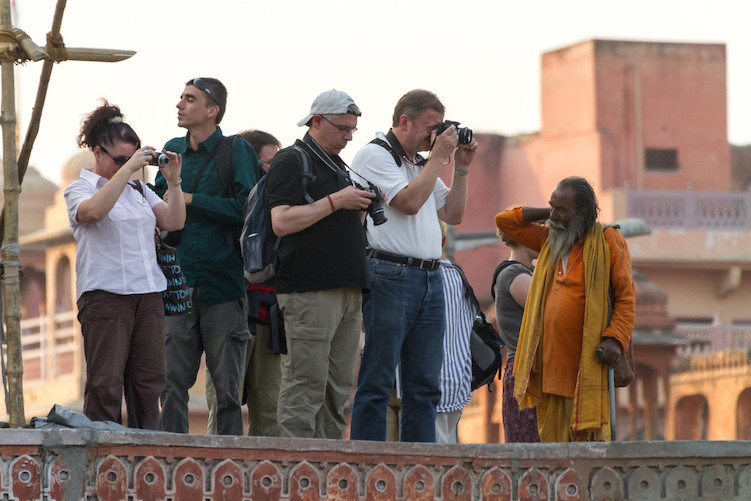
group of photographers shooting - What Happens When You Put Your Camera Down

I know some of you are getting the shakes at the mere thought of being without your camera in a new area, but indulge me for a moment. In this article, I will bring to light a few thoughts on why putting away your camera might actually help your photography.

1 – Greater Awareness

How can you truly capture the essence of a location without first experiencing it? There are always bright and colorful things to shoot. But if you go around grabbing each little scene like a bird grabbing nectar from a cherry blossom, you risk miss seeing the whole tree.

Jordan ruins at night in candlelight - 4 Reasons Why Putting Your Camera Down Can Help You Take Better Photos

I had time to visualize the shot above while watching an evening program at the Treasury in Petra, Jordan. While the program played, I was seated and limited in my movements, so I looked around at the space and tried to imagine photos from each location. At the end of the program, I was only allowed 10 minutes to get my shot (which took one minute to set up and 30 seconds to take), so my time spent gaining a greater awareness for my surroundings helped me greatly to take better photos in the time allotted.

Being aware of your surroundings is also important for safety. We all know the feeling of looking through our viewfinder, or camera screen, and losing all sense of what’s going on around us. It’s the feeling of “flow” when everything else melts away and there is just the joy of photography. That lack of awareness can work against you when in unfamiliar locations.

Beyond safety, having an awareness of your surroundings will also alert you if the clouds are about to cover the sun or if your scene is becoming more or less active. Watching others around you for clues on what to shoot is the next step.

2 – Observe Others

I love people watching in new environments. Even at home, if I go shopping with my wife I will typically end up on a bench just taking in the plethora of different shoppers passing by. Even we introverts can enjoy watching how people interact.

Look for clues about relationships and friendships while observing others. Do most people seem aloof or is there a lot of interaction? Watch how transactions are negotiated in markets. Is there a lot of haggling over price before money changes hands? These clues will help you anticipate when you can get those key shots when you return with your camera.

hat selling in Peru - take better photos

Because I took some time to people watch when the previous train came through town in the Urubamba Valley of Peru, I knew this colorful hat-seller would work the crowd when the next train arrived. So I waited and watched and was able to capture this image.

Is there a flow to the traffic of people around you? If so, look for a good location to set up and get some candid street photos. While crowds always draw attention, look for those standing back from the bustle if you want to capture a variety of everyday life.

Now is also a good time to realize who around you might not want their picture taken. Or who is charging photographers to pose for photos?

4 Reasons Why Putting Your Camera Down Can Help You Take Better Photos - officers in Jordan

In this shot of officers in Jordan, I hung around for a few moments with my camera down, said “Hi” and let the men get back to their conversations before taking the shot. I had noticed that they all looked intently at anyone new coming through the door and that wasn’t the shot I wanted. This more relaxed version was my goal.

3 – Observe Patterns

With patterns, I don’t mean just the cool shapes made by architecture or found in nature. I also mean the patterns humans create as they go about their day. Observing patterns will help you return with your camera (or simply get it out of your bag) and better anticipate the moment for shutter release and ultimately you will take better photos.

4 Reasons Why Putting Your Camera Down Can Help You Take Better Photos

For instance, watching a worker at the leather tannery in Fez, Morocco or a gentleman unloading chickens in Kathmandu, Nepal, with my camera down for a minute or two, helped me to visualize the action I wanted to capture and better time my shots.

4 – Interact Differently

Imagine someone came up to you on the street and instantly lifted a camera to snap a photo of your face. How would you feel?

Empathy for strangers and how they will react to my camera pointed in their direction is why I will typically recommend you ask permission first before taking a shot. Or better yet, with your camera down or put away, interact with your subject first. See what they are doing and ask questions if you can. Something about them made you want to take their photo, so take it one step further and interact before snapping away.

Peruvian kids - 4 Reasons Why Putting Your Camera Down Can Help You Take Better Photos

I played with these kids in Peru for a bit before having them ham it up for the lens. I don’t speak Quechuan and only poor Spanish, but I can recognize kids playing “shop” with weeds and flowers when I see it. I could tell who was in charge and I played along for a few minutes, trying in vain to get a good deal on my ugly weeds, before snapping this photo.

People will interact differently with you if you approach them first with your camera down or put away. Sometimes there is a fleeting moment that most feel needs to be caught candidly. But far more often a richer image can be created when you make human-to-human contact first. Rather than human-to-camera-to-human contact.

Conclusion

If you’ve never left your camera behind for even 10 minutes, I suggest giving it a try. It’s unnerving, I know! But it can lead to seeing your new environment in a way not possible with a camera constantly popping up to your eye.

Now you tell me; do you think you can take a walk and experience a new location without your camera? Do you think it might change the way you see the world before photographing it? Will it lead to helping you take better photos?

The post 4 Reasons Why Putting Your Camera Down Can Help You Take Better Photos appeared first on Digital Photography School.


Digital Photography School

 
Comments Off on 4 Reasons Why Putting Your Camera Down Can Help You Take Better Photos

Posted in Photography


5 Reasons Why Your Sunrise or Sunset Photos Don’t Look So Stunning

20 Apr

The holy grail of travel photography is a stunning photo looking into the vast distance taken at sunrise or sunset. It seems to just work as a blend of color, composition, and light to create something that often makes the viewer utter that famous word that any photographer wants to hear, “Wow!”.

But why is it then that so often when you look at your own sunrise or sunset photos they don’t look so stunning? Here are 5 reasons why your sunrise or sunset photos don’t live up to your expectations.

5 Reasons Why Your Sunrise or Sunset Photos Don’t Look So Stunning - sunset on the coast

#1 – What’s the point?

I remember a picture editor once told me, “This might sound controversial, but a sunrise or sunset is actually pretty boring.” What he was referring to was the lack of compelling subject matter in a photo of a sunrise or sunset like for example an empty beach with just the setting sun.

While sitting on a beach and seeing a sunset can seem like a wonderful experience, unfortunately, the camera cannot replicate that. Most successful photos of sunrises or sunsets have a point of interest in them, in that there is a subject that is the main story and the sunrise or sunset is providing the light and the atmosphere.

That story doesn’t necessarily have to be a person or an object in the frame. The story could be the beautiful scenery or the crashing waves against the coast. But the key point is that there is something that gets the viewers’ attention. So, don’t just rely on the sunrise or sunset, try to build your composition using it as an addition rather than the story.

boring sunset photo - 5 Reasons Why Your Sunrise or Sunset Photos Don’t Look So Stunning

This photo just isn’t very interesting. There’s a lack of interesting clouds or even water movement.

In this image, the big rock in the foreground, footsteps in the sand and the people all add interest and context to the photo.

#2 – Clouds or no clouds?

For example, one element that can dramatically improve your sunrise or sunset photos is some clouds. Take your generic empty beach scenario from above, but this time add some dramatic clouds that the light can bounce off and suddenly you’ll go from something mundane to something that looks fantastic.

The clouds here add drama to the scene.

Of course, you can’t control the elements and no clouds in the sky means, there’s nothing you can do. In that scenario, you just have to work harder to frame your shot and give the viewer a point of interest.

While you generally want some clouds in the sky, too much cloud cover and you will often find the light seems flat and dull and the whole photo looks uninteresting (unless the sun can set below the clouds and light them up from underneath). So, in conclusion, while you ideally want some clouds, it’s important not to have a completely overcast day. You can, of course, plan your shoots around times when you will have the best conditions.

5 Reasons Why Your Sunrise or Sunset Photos Don’t Look So Stunning

#3 – Are your highlights and shadows correct?

One of the big challenges in photographing sunrise or sunsets is the vast contrast you get between highlights and shadows. Your highlights are the light areas of your photo (such as the sky for example) and your shadows are the dark areas in the photo (for example your foreground).

If either is pushed too far you will get completely white areas for highlights and completely black areas for shadows. This means that these areas contain no pixel details and is something you want to avoid.

The problem you face when photographing sunsets or sunrises is that your sky will be bright, and your foreground will be dark (a high dynamic range). The way that you can ensure that your highlights and shadows are exposed correctly in this scenario is to use a graduated neutral density filter to balance out the difference in the highlights and shadows.

There are also other techniques such as exposure bracketing as well that can help you achieve this in post-production and actually just brightening or darkening these areas in a software like Adobe Photoshop or Lightroom. But whatever you decide, just make sure that your highlights and shadows are exposed correctly and fine-tune them if you need to in post-production.

5 Reasons Why Your Sunrise or Sunset Photos Don’t Look So Stunning - clipped shadow areas

The blue areas on this photo indicate where the shadows are being clipped (black with no detail).

Here the same image has been adjusted in post-processing to hold more detail in the shadow areas. 

#4 – The image isn’t framed correctly

One of the key elements in ensuring the final photo looks great is to frame your composition correctly.

The easiest way to do this and a good starting point for any photographer is the famous Rule of Thirds where you try to place key points of interest on the intersection of the lines. But the Rule of Thirds is also worth remembering for your horizon line. Usually, you will find that placing the horizon either on the top third or the bottom third will look better than slap bang in the middle.

Horizon centrally framed.

Using the rule of thirds, the horizon here is on the lower third – off-center.

But try to consider the whole picture when framing your shot. Think if there are any areas that are just wasted space where you can crop in tighter. Or if your camera angle is slightly off and you can benefit by just moving a little to either side.

The beauty of photography these days is that you can usually take as many photos as it takes to get your shot framed right. So, play around with your composition and capture a few alternatives that you can then review later in post-production.

5 Reasons Why Your Sunrise or Sunset Photos Don’t Look So Stunning

Your camera may have the option to display the Rule of Thirds grid when you’re shooting or in image playback mode.

#5 – You haven’t fixed mistakes

Usually, the first bit of feedback that I often give newbie photographers when I look at their sunrise or sunset photos is on elements that could easily be fixed in post-production. Whether you are an advocate of post-production or not there are certain things that you simply should not forego on any photo.

The two biggest of these are:

  1. Ensuring that your photos are straight, that means the horizon line needs to be dead straight.
  2. Making sure you have the correct white balance for the photo (if you haven’t already done so when taking the photo). Think about the scene that you are showing, is it a warm and golden scenario or is it a cool and crisp setting? Either way, tweak your white balance until it is correct.

If you do nothing else in post-production, just making sure these two settings are correct will immediately improve your photos.

5 Reasons Why Your Sunrise or Sunset Photos Don’t Look So Stunning - crooked horizon line

This image is clearly not straight as can be seen from the horizon line.

Here the image tilt has been corrected.

Conclusion

Sunsets and sunrises are wonderful times in the day to photograph things. The soft golden light can transform an ordinary scene into an extraordinary one. When done well, they are often the photos that will be the “show stoppers” in any portfolio.

But always remember that a sunset and sunrise needs to work in combination with your composition and subject matter to create a wonderful photo. Follow these tips and you’ll be on your way to capturing great photos of sunrise and sunsets.

Now it’s your turn to get involved. Share your great sunrise and sunset photos below.

The post 5 Reasons Why Your Sunrise or Sunset Photos Don’t Look So Stunning appeared first on Digital Photography School.


Digital Photography School

 
Comments Off on 5 Reasons Why Your Sunrise or Sunset Photos Don’t Look So Stunning

Posted in Photography


Six Reasons to Upgrade From Lightroom 6 to Lightroom Classic CC

25 Mar

If you’re a Lightroom 6 user you may be wondering whether it’s time to upgrade to Lightroom Classic CC. Yes, it will cost you more to move over to the Lightroom Classic subscription, but you will receive a lot of extras in compensation. Let’s take a look at what they are, so you can decide whether the upgrade is worth it for you or not.

1. The Lightroom Classic CC subscription includes Photoshop CC

Lightroom Classic CC upgrade

It’s true that many photographers do all their photo processing in Lightroom without ever moving across to Photoshop. If that’s you, then don’t feel you need to use Photoshop just for the sake of it.

But there are things you can do in Photoshop that you can’t in Lightroom. If you’d like to try any of these, then you’ll need to subscribe to Lightroom Classic CC to access to the latest version, as you can’t buy a standalone version of Photoshop CC.

These are just some of the things you can do in Photoshop that you can’t in Lightroom.

  • Use layers and masking.
  • Advanced portrait retouching.
  • Blend or composite multiple images together.
  • Swap skies or heads (in a group portrait).
  • Use Content-aware fill to remove unwanted items.
  • Make complex selections.
  • Add texture overlays.
  • Add fancy borders.
Lightroom Classic CC upgrade

I used Photoshop to add a texture layer and an interesting border to this still life photo.

2. Lightroom Classic CC lets you synchronize photos to use with the Lightroom CC mobile apps

With Lightroom Classic CC you can synchronize selected Collections and view the photos in those Collections in the Lightroom CC app (formerly known as Lightroom mobile) on a tablet or smartphone. One benefit of this is that you can download the photos to your device so that you can show them to people even when your device is offline.

This makes Lightroom CC a great way to show your portfolio to people while on the go. You can also develop photos in the Lightroom CC app, which may come in handy when you are away from home.

Lightroom Classic CC upgrade

A Collection of photos in Lightroom Classic CC.

Lightroom Classic CC upgrade

The same Collection in the Lightroom CC iPad app.

3. Lightroom Classic CC lets you display photos online

There are two ways to display your photos online using Lightroom Classic CC. The first is to make a Collection public – something you can do with any synchronized Collection. When you do this Lightroom generates a URL that you can give to other people so that they can see the photos in the Collection in a browser (also known as Lightroom Web).

This is a good way to share photos with family, friends, and even clients. If the viewer logs in with an Adobe ID they can even favorite photos and add comments.

Lightroom Classic CC upgrade

This is how the same Collection shown above looks when displayed in a browser.

The other way is to use Adobe Portfolio to build your own portfolio website. I explored this option in more detail in my article How to Create a Beautiful Online Gallery with Lightroom Classic CC and Adobe Portfolio in 15 Minutes.

Adobe Portfolio is the easiest way I know of to turn a synchronized Collection into a website portfolio.

Lightroom Classic CC upgrade

One of the pages from my Adobe Portfolio-generated website.

4. Lightroom Classic CC is faster than Lightroom 6

The latest upgrades to Lightroom Classic CC means that it runs much faster than Lightroom 6. The exact speed gains depend on your computer setup (for example, you need to have at least 12GB of RAM to take advantage of some of the speed gains in the latest Lightroom Classic CC release).

But there’s no doubt that the process of importing photos and generating previews is much faster in Lightroom Classic CC. If speed is an issue with Lightroom 6, it may be time to upgrade.

5. Lightroom Classic CC has Color Range Masking and Luminance Range Masking

These new tools give you more options when it comes to making selections and applying Radial Filters, Graduated Filters and the Adjustment Brush. They are extremely useful when it comes to making local adjustments. You will need to upgrade to Lightroom Classic CC if you’d like to use them.

Lightroom Classic CC upgrade

The Color Range Masking tool in action. I used it here in conjunction with the Adjustment Brush to apply Clarity to the red tin, but no other part of the photo.

6. Lightroom 6 is no longer supported by Adobe

While I’ve tried to emphasize what you will gain by upgrading to Lightroom Classic CC in the rest of the article, there’s no getting away from the fact that Lightroom 6 is no longer supported by Adobe. As a result, new features added to Lightroom Classic CC won’t be available to Lightroom 6 users.

The question you need to ask yourself is how important are the new features, such as Color Range Masking, to you and your workflow?

There’s no need to make an immediate decision. There’s nothing wrong with continuing to use Lightroom 6 for now and upgrading to Lightroom Classic CC in a year or two when the difference between the two is much greater.

You also need to be aware of the effect it will have on your workflow if you buy a new camera whose Raw files aren’t supported by Lightroom 6. In this situation, you can use Adobe’s free DNG Converter to convert the new camera’s Raw files to the DNG format, which can then be read by Lightroom 6. If that is too much of an inconvenience then it may be time to upgrade to Lightroom Classic CC.

Conclusion

These are the six main reasons that I can think of that Lightroom 6 users might want to upgrade to Lightroom Classic CC. If you’re considering the upgrade then take the time to think through your decision and decide which of these (if any) apply to you.

It’s important to make the right choice because once you upgrade to Lightroom Classic CC it’s extremely difficult to go back to using Lightroom 6. The reason for this is that Lightroom upgrades your Catalog so it’s compatible with Lightroom Classic CC. But the new Catalog format isn’t recognized by Lightroom 6. So make your decision wisely.

Can you think of any other reason why a Lightroom 6 user might want to upgrade to Lightroom Classic CC? Have you already upgraded? Then please let us know your thoughts in the comments below.


Mastering Lightroom ebooks

Want to get a head start with Lightroom? Take a look at my popular Mastering Lightroom ebooks, written to help photographers learn how to use all of Lightroom’s powerful features. Use the code DPS20 to get 20% off your first order.

The post Six Reasons to Upgrade From Lightroom 6 to Lightroom Classic CC by Andrew S. Gibson appeared first on Digital Photography School.


Digital Photography School

 
Comments Off on Six Reasons to Upgrade From Lightroom 6 to Lightroom Classic CC

Posted in Photography


5 Reasons Why You Might Want to Try Black and White Photography

13 Feb

5 Reasons Why You Might Want to Try Black and White Photography

There are different schools of thought when it comes to black and white photography. Some believe it was a technical limitation of the past that you need to get over and move on. While others see it as a creative choice, that needs to be explored in great depths.

As camera technology gets better, with more emphasis on improved color ranges, why would you choose to shoot or process your images in black and white? In this article, we’ll look at five reasons why you might want to shoot or convert your images to black and white.

5 Reasons Why You Might Want to Try Black and White Photography

1. B&W Helps you see differently

The old “Masters” of photography shot in black and white initially, because they had no choice. Even with the advent of Kodachrome, which introduced the world to color photography, there was still a pursuance of black and white. This was because black and white was (and still is by some people) seen as photography in its the purest form.

5 Reasons Why You Might Want to Try Black and White Photography

When you remove color the emphasis shifts to the other compositional elements of the image. These include lines, shape and texture, contrasts and tones.

With this in mind, it is obvious that not all images will translate well to black and white. So, look at all the elements and deduce what else you have to work with, besides color.

5 Reasons Why You Might Want to Try Black and White Photography

Many times black and white helps you develop a different perspective from what you are used to seeing, which nurtures your photographic eye.

2. B&W Eliminates distractions

You are used to seeing the world in color and there nothing is wrong with that view. Sometimes this contributes to other elements or details being lost or taken for granted. Some of the elements (highlighted before) required for a great photo include contrast, texture, lighting, shape, and form.

When you shoot for black and white, you challenge yourself to remove the distraction of color. These include color casts and differences in color temperature (ambient light sources), as well as specific colorful elements that are strong, which may reside in the background or take away from your story.

5 Reasons Why You Might Want to Try Black and White Photography

Monochromatic imagery forces you to focus on form, shape, and texture while composing. If your emphasis is on making colors work together, these elements are sometimes overlooked. With black and white, distracting colors are now translated into shades of gray that add to your image.

3. B&W Offers creative choice

Since your world is in color, it is safe to say that color photography depicts reality and is more realistic. Thus, black and white photography is viewed as a rendition of reality – or how you interpret what you see.

When you remove color, you not only isolate the different elements, you are compelled to find how they relate to each other. This helps you explore and create different ways to tell your story.

When you take away color, you remove what your viewer is used to seeing. Now you are charged with finding the stronger elements in the scene and figuring out how to use them to convey what you want to depict.

5 Reasons Why You Might Want to Try Black and White Photography

4. Adds emotion or mood

Something about the variance of tonal ranges, rich blacks, and deep contrasts appeal to us psychologically. It creates a connection that makes you stop and pay attention to what is being presented.

5 Reasons Why You Might Want to Try Black and White Photography

Many photographers use black and white for storytelling in travel and street photography, as well as when portraying religious or cultural activities. Monochrome in some genres connects, enhances and strengthens emotions and mood.

5. Timelessness

Even though this is lower on the list, it is one of the more common reasons why some photographers shoot in black and white. Monochromatic photography adds what is seen as a timeless quality to your images.

Black and white photos seem to transcend reality and take you back to a time gone by. Historically there were color schemes that were specific to types of film or trends in digital photography that can date your image. The removal of color makes it tougher to figure out when the image was taken/produced.

5 Reasons Why You Might Want to Try Black and White Photography

Bonus

You no longer have to imagine what your scene will look like in black and white, as current camera technology allows you to try this on the spot and see if it works. While some photographers prefer to shoot in black and white, others prefer to shoot in color and then process or convert their images to black and white to get a different or better tonal range.

Note: If you shoot RAW format and set your camera to its version of the monochrome setting, you will see a black and white preview on the LCD when you review your images. But you will still have all the color data available in the RAW file at the post-processing stage. This gives you the best of both worlds – a quick b/w preview and ability to convert later.

5 Reasons Why You Might Want to Try Black and White Photography

This image was shot in black and white using the camera’s monochrome settting.

5 Reasons Why You Might Want to Try Black and White Photography

This image was shot in color and then converted to black and white in the processing stage.

Conclusion

While black and white photography still has an important role in photography, please note that not all subjects translate well to this mode. Even though a strong composition is not color dependent, sometimes the power of the photo is its color. This is why it is good to know when to use black and white.

5 Reasons Why You Might Want to Try Black and White Photography
If you are interested in pursuing the monochromatic, look for the other elements of composition like texture, shape, form, lines, and contrast. Experiment with shooting and processing black and white images and figure out which resonates with you more.

The post 5 Reasons Why You Might Want to Try Black and White Photography by Nisha Ramroop appeared first on Digital Photography School.


Digital Photography School

 
Comments Off on 5 Reasons Why You Might Want to Try Black and White Photography

Posted in Photography