RSS
 

Posts Tagged ‘Public’

Mapping Privacy in Public Spaces – Jan 12, 2013

01 Feb

Some cool visual art images:

Mapping Privacy in Public Spaces – Jan 12, 2013
visual art
Image by BMW Guggenheim Lab
Mapping Privacy in Public Spaces Project: Findings by KRVIA Design Cell
BMW Guggenheim Lab
January 12, 2013
Dr. Bhau Daji Lad Museum
Mumbai, India

Where do Mumbaikars find privacy in their city? The KRVIA Design Cell talked about their findings from the Mapping Privacy in Public Space research project, conducted through the Lab’s run. They discussed their methodology and their experience in data collection across the Lab’s six sites, and shared the visual imagery and maps they created from their research from over 200 participants.

Photos: UnCommonSense © 2013 Solomon R. Guggenheim Foundation, New York

Mapping Privacy in Public Spaces – Jan 12, 2013
visual art
Image by BMW Guggenheim Lab
Mapping Privacy in Public Spaces Project: Findings by KRVIA Design Cell
BMW Guggenheim Lab
January 12, 2013
Dr. Bhau Daji Lad Museum
Mumbai, India

Where do Mumbaikars find privacy in their city? The KRVIA Design Cell talked about their findings from the Mapping Privacy in Public Space research project, conducted through the Lab’s run. They discussed their methodology and their experience in data collection across the Lab’s six sites, and shared the visual imagery and maps they created from their research from over 200 participants.

Photos: UnCommonSense © 2013 Solomon R. Guggenheim Foundation, New York

 
Comments Off on Mapping Privacy in Public Spaces – Jan 12, 2013

Posted in Photographs


City Camouflage: Ugly Public Buildings in Disguise

31 Jan

[ By Steph in Architecture & Cities & Urbanism. ]

City Camouflage Buildings in Disguise 1

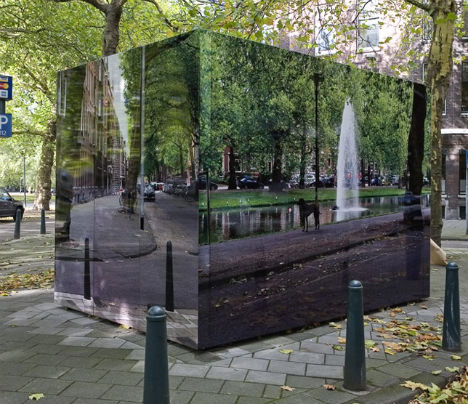
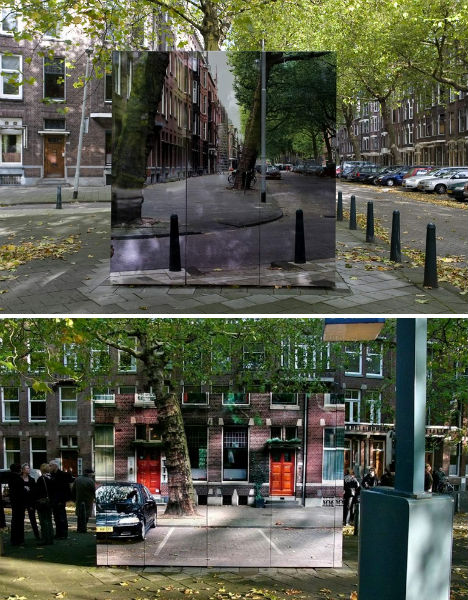
Electricity substations, bathrooms and other less-than-aesthetically pleasing public buildings can stand out as eyesores on the street, taking away from the beauty of their surroundings. Dutch designer Roeland Otten decided to disguise some of Amsterdam and Rotterdam’s worst offenders by making them blend into their environments, in both abstract and highly realistic ways.

City Camouflage Buildings in Disguise 2

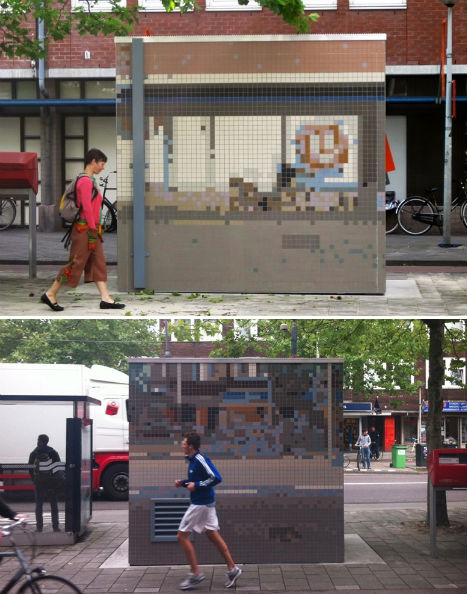
‘City Camouflage’ employs mosaic tiles, paint and photographic prints affixed to the outside of these small buildings to make them less visually offensive. The 1970s structures were unmaintained and beginning to rust.

City Camouflage Buildings in Disguise 3

High-resolution photography printed on sheets of aluminum make some of the buildings seem almost invisible. Gazing down the street, one’s view is no longer interrupted; you can see exactly what is behind each of these camouflaged buildings.

City Camouflage Buildings in Disguise 4

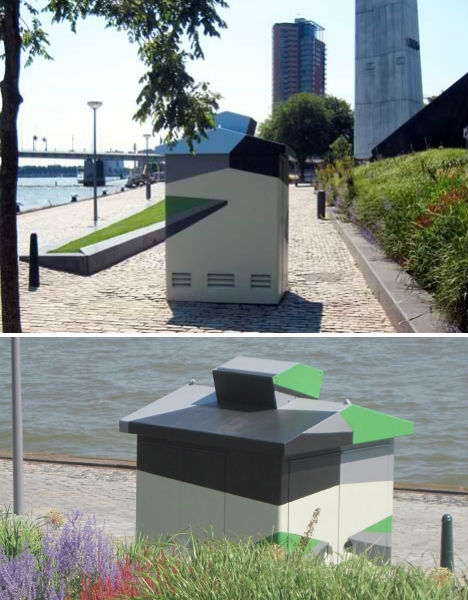
Others are covered in tiles that create a more subtle pixelated effect. One electricity substation on the water was given a bold, graphic treatment with acrylic paint so that it blends in from some angles and looks merely artistic from others.

Share on Facebook


[ By Steph in Architecture & Cities & Urbanism. ]

[ WebUrbanist | Archives | Galleries | Privacy | TOS ]


WebUrbanist

 
Comments Off on City Camouflage: Ugly Public Buildings in Disguise

Posted in Creativity


Mapping Privacy in Public Spaces – Jan 12, 2013

30 Jan

Check out these visual art images:

Mapping Privacy in Public Spaces – Jan 12, 2013
visual art
Image by BMW Guggenheim Lab
Mapping Privacy in Public Spaces Project: Findings by KRVIA Design Cell
BMW Guggenheim Lab
January 12, 2013
Dr. Bhau Daji Lad Museum
Mumbai, India

Where do Mumbaikars find privacy in their city? The KRVIA Design Cell talked about their findings from the Mapping Privacy in Public Space research project, conducted through the Lab’s run. They discussed their methodology and their experience in data collection across the Lab’s six sites, and shared the visual imagery and maps they created from their research from over 200 participants.

Photos: UnCommonSense © 2013 Solomon R. Guggenheim Foundation, New York

Mapping Privacy in Public Spaces – Jan 12, 2013
visual art
Image by BMW Guggenheim Lab
Mapping Privacy in Public Spaces Project: Findings by KRVIA Design Cell
BMW Guggenheim Lab
January 12, 2013
Dr. Bhau Daji Lad Museum
Mumbai, India

Where do Mumbaikars find privacy in their city? The KRVIA Design Cell talked about their findings from the Mapping Privacy in Public Space research project, conducted through the Lab’s run. They discussed their methodology and their experience in data collection across the Lab’s six sites, and shared the visual imagery and maps they created from their research from over 200 participants.

Photos: UnCommonSense © 2013 Solomon R. Guggenheim Foundation, New York

 
Comments Off on Mapping Privacy in Public Spaces – Jan 12, 2013

Posted in Photographs


Quad Public Art Project – Film and Media Studies

08 Dec

A few nice visual art images I found:

Quad Public Art Project – Film and Media Studies
visual art
Image by Lafayette College
Seminar Class, Art 335: Studio Theory & Practice, created a public art project. on the quad. Working with archival images and texts, the students developed these stories into full fledged audio-visual presentations that were projected onto Pardee Hall. There was also a live music at the event, which took place on May 3, 2011.

Ashley Juavinett, ’11, provides some music for the event.

OBEY campaign – VISUAL DISOBEDIENCE
visual art
Image by Leo Reynolds
Shepard Fairey OBEY campaign

Car park billboard/hoarding outside
BALTIC Centre for Contemporary Art
Gateshead, Tyne and Wear, England, UK

 
Comments Off on Quad Public Art Project – Film and Media Studies

Posted in Photographs


Public Camouflage: Make-Up Artist Makes Models Invisible

22 Nov

[ By WebUrbanist in Design & Guerilla Ads & Marketing. ]

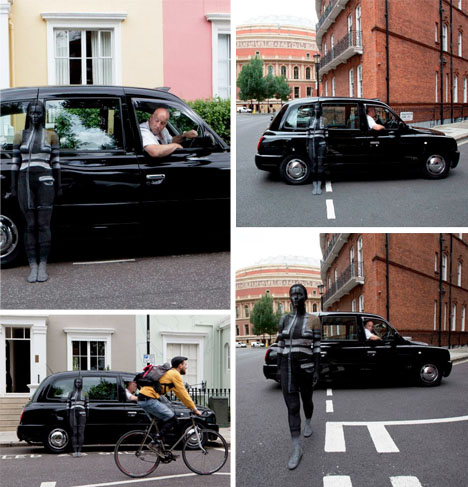
Illusion relies on expectation – we glance but only glimpse what is familiar and the rest blends neatly into the background, particularly as we go about our busy lives in a bustling urban center.

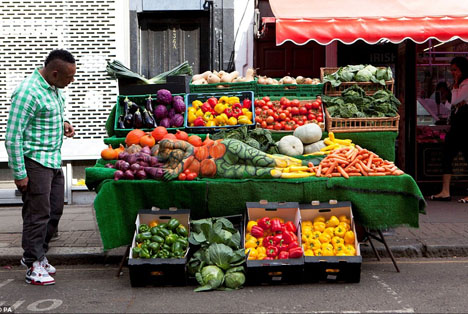
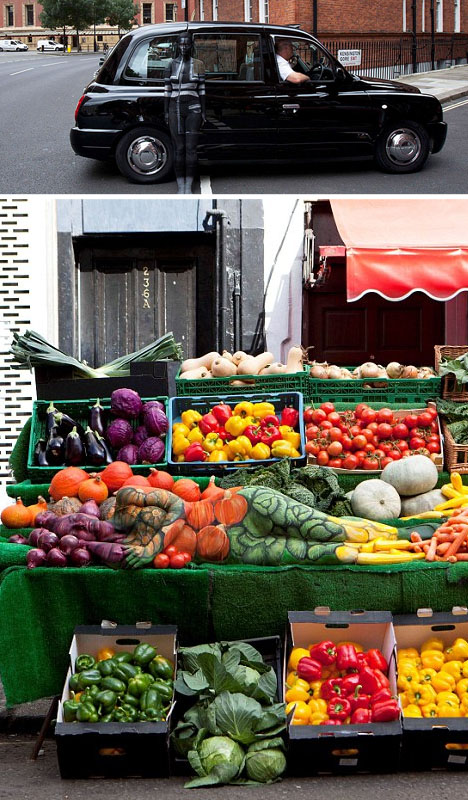
As nifty as these body-painted costumes by Carolyn Roper (via DailyMail) are, the reactions of passers by are the best part – a shocked bus rider or fruit-stand shopper caught in their moment of surprise by waiting photographers.

To complete the spectacle, every element is critical, from the lines of reflection on a vehicle to the details of fresh vegetables drawn on to carefully mimic tomatoes, beets, pumpkins and lettuce.

The stunts were a marketing move by Really TV for a CIA drama titled Covert Affairs – it is hard to say how well such guerrilla marketing campaigns translate to new viewers for television shows, but thanks to publishers picking up the story, well, surely a few of those spooked by these urban camouflaging antics will check out this show about spooks.


Want More? Click for Great Related Content on WebUrbanist:

Urban Camouflage: Liu Bolin, The Invisible Man

Chinese artist Liu Bolin painstakingly paints his subjects so that they seem to disappear into their surroundings in amazing urban camouflage photography.
12 Comments – Click Here to Read More »»


Urbex Camouflage: Hiding, Sneaking and Disguising During Urban Explorations

The ability to hide plain site can be a real advantage when exploring urban abandonments.
13 Comments – Click Here to Read More »»


Share on Facebook


[ By WebUrbanist in Design & Guerilla Ads & Marketing. ]

[ WebUrbanist | Archives | Galleries | Privacy | TOS ]


WebUrbanist

 
Comments Off on Public Camouflage: Make-Up Artist Makes Models Invisible

Posted in Creativity


2 Pay-to-Sit Projects: Privately Monetizing Public Amenities

15 Nov

[ By WebUrbanist in Architecture & Cities & Urbanism. ]

The privatization of public spaces is a contentious issue – suburban malls have turned many main streets into ghost towns. At the same time, there are legitimate difficulties when it comes to open seating . If you leave benches wide open, people may sleep in them. If you don’t nail chairs to the sidewalk, people will walk off with them.

Consider shopping carts: in the United States, you see them strewn around parking lots, or gathered by tireless employees. In many parts of the world, including Europe, a coin is inserted, allowing you to detach the card, but encouraging you to return it and get back the money you put in. Could the same system be used for seats? Vincent Wittenberg gained permission from Bat Yam, Israel, to perform a real-world test.

“We proposed to the municipality to replace existing public benches with benches that consist of individual seats. The bench itself is a docking station: using a five Shekel coin one can release a seat and place it in a different spot. The deposit is returned when one brings the seat back. The chairs introduced by the municipality cross the border between public and private and move between the sunny sidewalks to the shadow under the arcades.”

Meanwhile, Fabian Brunsing, a Berlin-based artist and designer, took a different approach to a related problem: coin deposits (but in this case non-refundable) that allow you to use a public bench. But beware: when your time is up, a warning sound signals you should stand or get spiked from below. Perhaps this project takes things too far, but, on the other hand, is it that different from toll roads and other pay-to-use amenities offered by cities or states?


Want More? Click for Great Related Content on WebUrbanist:

15 Cool Urban Art Projects and Dreamy Product Designs

Chilean artist and designer Sebastian Errazuriz creates fantastical designs and urban art. His product designs and guerrilla art are original and amazing.
6 Comments – Click Here to Read More »»


Big Screens, Big Fun: 2 Simply Silly Public Art Projects

The power of fun is often lost on grownups, but these two public art projects helped put some fun back into the daily lives of UK pedestrians.
3 Comments – Click Here to Read More »»


Share on Facebook


[ By WebUrbanist in Architecture & Cities & Urbanism. ]

[ WebUrbanist | Archives | Galleries | Privacy | TOS ]


WebUrbanist

 
Comments Off on 2 Pay-to-Sit Projects: Privately Monetizing Public Amenities

Posted in Creativity


The Charge Cycle: Bike-Powered Public Phone Charging Station

13 Nov

[ By Steph in Gadgets & Geekery & Technology. ]

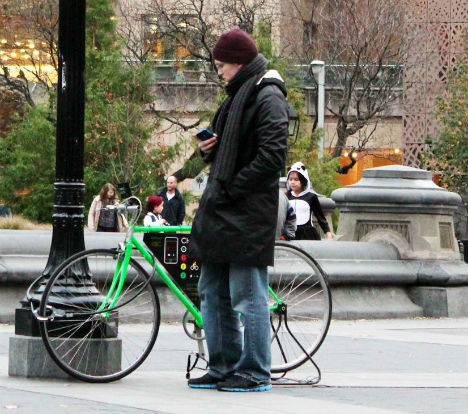
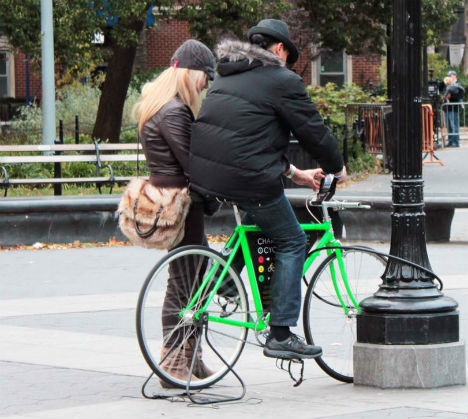
Soon, you’ll be able to charge your iPhone at strategic locations around New York City – but you’ll have to put in a little leg work. The Charge Cycle is a stationary bike equipped with an iPhone dock, so users can charge their phones with the power of their own muscles, without plugging into the grid.

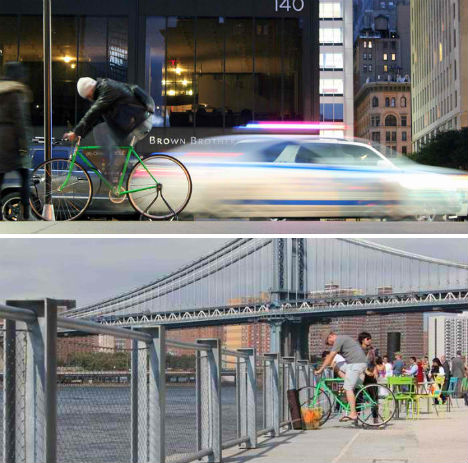
The Kickstarter-based project by David Krawczyk and Navjot Kaur aims to get at least 30 of these bikes out into the city where anyone can use them by early May 2013. Prototypes have already been placed around New York in locations like Washington Square Park, Zuccotti Park and Brooklyn Bridge Park.

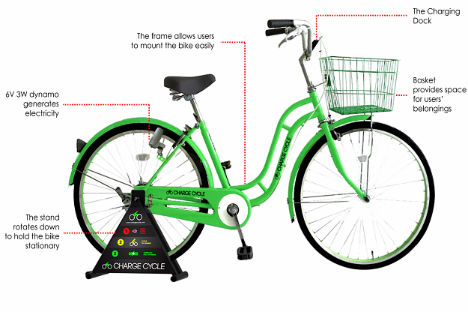
The bike is equipped with micro-USB, 30-pin and 8-pin adapters, so virtually anyone can charge their phones. It takes about the same amount of time cycling as it does plugging into a wall charger to charge up a phone, since most phones have built-in charge limiting functions to prevent overheating. The Charge Cycle will be free for public use.

To use it, you attach your phone to an adapter ad secure it to the bike with a silicone band. A 10-segment LED display bar tells you how much charge you’ve accumulated as you pedal. The basket in the front holds your belongings as you ‘ride’. Watch the video above to see it in action.

Want to support this project? Check out the Charge Cycle Kickstarter page.


Want More? Click for Great Related Content on WebUrbanist:

Dial4Light: Turning Street Lights On Via Mobile Phone

A groundbreaking cost-cutting, energy-saving program in Germany called Dial4Light requires pedestrians to activate street lights using their cell phones.
5 Comments – Click Here to Read More »»


Bike Campers: 12 Mini Mobile Homes for Nomadic Cyclists

Who says you can’t camp in luxury when taking a bicycle tour? These 12 bike trailers
5 Comments – Click Here to Read More »»


Share on Facebook


[ By Steph in Gadgets & Geekery & Technology. ]

[ WebUrbanist | Archives | Galleries | Privacy | TOS ]


WebUrbanist

 
Comments Off on The Charge Cycle: Bike-Powered Public Phone Charging Station

Posted in Creativity


Quad Public Art Project – Film and Media Studies

31 Oct

A few nice visual art images I found:

Quad Public Art Project – Film and Media Studies
visual art
Image by Lafayette College
Seminar Class, Art 335: Studio Theory & Practice, created a public art project. on the quad. Working with archival images and texts, the students developed these stories into full fledged audio-visual presentations that were projected onto Pardee Hall. There was also live music at the event, which took place on May 3, 2011.

Videos were projected through some windows in Pardee Hall for the event.

Opening Reception 2 – For Fame and Love
visual art
Image by Angels Gate
From the exhibition For Fame and Love, curated by Devon Tsuno, July19 – August 23, 2009.

Photo by AGCC Visual Arts Director Marshall Astor.

Moon-een on McCaul
visual art
Image by Sweet One
Ontario College of Art & Design
Moon-een on McCaul
Jean-Christian Knaff – Toronto, Canada
Claude Miceli – Toronto, Canada
Installation, Sculpture, Visual Art, Performance Art, Multimedia Installation
"Atmosphère, atmosphère, est-ce que j’ai une gueule d’atmosphère?" is Arletty’s famous quote in the 1938 movie, Hôtel du Nord.
At OCAD’s Nuit Blanche, the public will glide into a surrealistic milky world where clouds, floating elements and projections on screens interact in a spatial Atmosphere in the heart of a foggy night.
Meanwhile, back at the ranch on Earth cows are grazing…

 
Comments Off on Quad Public Art Project – Film and Media Studies

Posted in Photographs


Capt. Phil Harris Public Memorial

18 Aug

Friday April 30th, family, friends, and fans of Phil Harris came together on pier 91 in Seattle to pay tribute to the beloved captain from Discovery Channels Deadliest Catch. This is a portion of the memorial. For more information about Phil Harris and the program Deadliest Catch, visit dsc.discovery.com On a personal note, for years I have watched the Deadliest Catch because being a news photographer, I enjoy the challenging conditions the other photographers in the industry face when shooting. The photography is what hooked me, but it was the crew members of the boats and the risk they take for my favorite food that kept me watching. Ok, Dungeness crab is my personal favorite but Kings come in second! To the Harris Family, my thoughts are with you!
Video Rating: 4 / 5


Buchrezension: Public Private Hanoi

20 May

Public Private Hanoi

Heute möchte ich euch ein Fotobuch vorstellen, das mich sehr begeistert. Die Stadt, die es portraitiert, habe ich im vergangenen Herbst selbst kennen und mögen gelernt.
Die Fotos zeigen Szenen aus dem nächtlichen Hanoi und thematisieren den Umgang seiner Menschen mit dem öffentlichen Raum.

Es sind Szenen, wie sie sich in Gassen und Straßen, in Parks und am Ufer der Seen, in den Läden und Häusern allabendlich ereignen. Die Bilder sind eine Sequenz, eine Bewegung durch die Räume der Stadt. Sie veranschaulichen, wie sehr dort Privatheit und Öffentlichkeit miteinander verschmelzen.

Parallel zu André Lützens Bildern schafft ein Essay der Autorin und freien Journalistin Nora Luttmer mit Worten ein Portal in die Stimmungswelt dieser Stadt.

Public Private Hanoi | Seite 40 & 41

Die Straßen Hanois erscheinen wie Teile eines Bühnenbildes; seine Akteure sind die Bewohner der Stadt. Diese Momente des Spiels, des Handels und der Interaktion spiegeln sich in André Lützens Bildern wider. Mit dem Mittel der Straßenfotografie erzählt er kleine Alltagsgeschichten, erzeugt aus Details und Fragmenten Stimmungen, immer mit einem Sinn für den individuellen Charakter der Stadt.

Eine Besonderheit der vietnamesischen Kultur ist die tiefe Verwurzelung von Handel im Alltag. Nahezu jedes Haus hat einen Verkaufsraum oder mindestens einen kleinen Tresen zur Straße.

Einige Bilder des Buches zeigen immer wieder diese wunderbaren Mikrokosmen – kleine Welten im bunten Reichtum der Gemischtwaren. In Wirklichkeit sind dies aber weit mehr als nur dem Handel vorbehaltene Räume. Sie sind Lebensräume.

Public Private Hanoi | Seite 29

Eines der Bilder zeigt die Perspektive über einen Tresen hinein in einen dieser Räume. Man fühlt sich beinahe voyeuristisch, als blickte man heimlich in eine private Welt. Unscharf im Hintergrund sitzt abgewandt von der Kamera eine junge Frau – vermutlich die Verkäuferin – während sich im Vordergrund ein Stubentiger über den feilgebotenen Waren ausbreitet. Hier spürt man förmlich, wie die schwüle Luft auf die abendlichen Straßen der Stadt drückt.

In den Straßen und auf den Plätzen, auf denen tagsüber der Verkehr durchrauscht, scheinen am Abend ganze Scharen von Essständen aus dem Nichts zu wachsen.

Public Private Hanoi | Seite 84

Eins der faszinierendsten Bilder des Buches zeigt eine Szenerie, wie sie surrealer kaum sein könnte. Ein paar Herren sitzen in kleinen Gruppen auf Plastikstühlen an Tischen und genießen im Schein der Straßenlaternen gemeinsam in entspannter Runde Hanoi Bier und Zigaretten.

An sich nichts Außergewöhnliches, wenn da nicht die Betontrasse der Schnellstraße wäre, die sich aus dem Hintergrund kommend monströs über ihre Köpfe erhebt und träge die dunkle Hälfte des Bildes ausfüllt.

Public Private Hanoi* ist meine Empfehlung für alle, die sich ein Stück Leben ins Bücherregal holen möchten – für alle, die Neugier nach der Fremde haben und Vertrautheit in der Ferne suchen. Das Buch ist im Kehrer Verlag erschienen und kostet neu 40,- Euro.

*Das ist ein Affiliate-Link zu Amazon. Wenn Ihr dort etwas bestellt, bekommen wir eine kleine Provision, Ihr bezahlt aber keinen Cent mehr.


KWERFELDEIN | Fotografie Magazin

 
Comments Off on Buchrezension: Public Private Hanoi

Posted in Equipment