RSS
 

Posts Tagged ‘Project’

Blog Project: Your Best Photos From 2017

22 Dec

It’s that time of year again and if you’re a regular JMG-Galleries reader that means one thing…
it is time to kick off the 11th annual best photos of the year blog project. This is by far my most popular blog project with hundreds of photographers taking part last year (see Best Photos of 2016,  2015, 2014, 2013,  2012, 2011, 2010, 2009, 2008 and 2007).  It’s great to see the community of photographers that have developed around this blog project. As always I hope the exercise of picking your best photos helps improve your photography (10 Ways to Top Your Best 20xx Photographs).

So without any further delay here is how you take part to submit your best photos of 2016.

How to Participate (Read Carefully)

  1. Review & select your best photos from 2017.
    Note: Photo edit carefully narrowing down your results to your best 10 or 5 photos. Reference Pro Tips: Photo Editing with Gary Crabbe for pointers.
  2. Create a blog post on your website or a Flickr/500px set containing your best photos from 2017.
  3. Complete the form below by Tuesday JANUARY 2rd at 11:59PM PST to take part. The following Tuesday, or thereabout, I’ll post a link to all submitted sites and photos on my blog. Throughout the week I’ll also share the results across all my social media accounts.

Spread the Word!
Feel free to spread the word of this project on Twitter, Facebook, Instagram, Google+, photo forums you frequent and/or your blogs. All who are interested in taking part are invited.


Loading…

The post Blog Project: Your Best Photos From 2017 appeared first on JMG-Galleries – Landscape, Nature & Travel Photography.


JMG-Galleries – Landscape, Nature & Travel Photography

 
Comments Off on Blog Project: Your Best Photos From 2017

Posted in Equipment


5 Street Photography Project Ideas During the Fall

15 Nov

Street Photography is seen as a snapshot competition where only a single picture matters the most. This can be fun and teaches you a lot about photography and yourself. You need to put everything in that single shot that tells a story and looks good at the same time. Yet all your pictures might be disconnected over time and it Continue Reading

The post 5 Street Photography Project Ideas During the Fall appeared first on Photodoto.


Photodoto

 
Comments Off on 5 Street Photography Project Ideas During the Fall

Posted in Photography


How to do a Photography Alphabet Project

30 Oct

Do you remember the ransom notes left behind by kidnappers and villains in movies? The notes made up of different letters cut out of magazines? My first encounter with the concept of a ransom note was while watching a movie called Baby’s Day Out. The 1994 movie, aimed at kids, tells the story of a toddler kidnapped by three crooks disguised as photographers (funny, huh?). The kidnappers then leave a ransom note constructed from letters cut from magazines. Now, don’t get me wrong. I’m not encouraging kidnapping here, or any criminality for that matter. But this project does involve building up a photographic library of text, for artistic purposes only!

How to do a Photography Alphabet Project

Now, don’t get me wrong. I’m not encouraging kidnapping here, or any criminality for that matter. But this project does involve building up a photographic library of text, for artistic purposes only!

We encounter so much written language these days that it is often overlooked as a photographic subject. Written language in any environment is made up of an endless combination of fonts, colors, shapes, and applications. Of course, there are random text generators online, but automated programs won’t add anything to your photographic practice.

By scoping out letters in the field you’ll train your photographic senses to seek out unusual subjects, an invaluable skill for any photographer. By concentrating on an unusual yet familiar subject, you can build up an interesting and varied typographic library. It’s a great way to view the world through the written word.

How to do a Photography Alphabet Project

How to do a Photography Alphabet Project

Some history of the alphabet

The first true alphabet was created roughly four thousand years ago in the land of Canaan. The alphabet, containing between 20-32 individual letters, didn’t contain any vowels so people had to guess what vowel sound followed each consonant based on what the word looked like. Despite this, the system worked and ended up replacing the complex system of Egyptian hieroglyphs.

The new alphabet meant that people didn’t need to memorize thousands of different symbols, allowing more people to communicate through the written word. The Greeks added vowels to the alphabet – creating the first alphabet with a letter to represent every sound in a language. From there, the alphabet spread to Italy where it evolved into the Latin alphabet. The English alphabet evolved after the Romans took the Latin language to Anglo-Saxons England, who amalgamated the Latin and runic alphabet.

Some letters are harder to find than others. For the letter Y, I had to get a bit more creative – borrowing the registration from an aircraft overhead.

What you will need

One of the great things about this project is that it doesn’t require any special equipment. You can simply grab your camera and you are good to go! However, there are a few items that you can pack to make your trip a little easier.

Bring along a folded piece of paper and a pen to take a tally of the letters you photograph. This way you won’t have to constantly scroll through the photos you have taken previously to check if you’ve stocked up on a particular letter. This is also useful when tracking numbers or upper and lower-case letters you’ve photographed. To separate the tally of each letter more easily, I use a highlighter. That way you won’t get mixed up or add a mark under the wrong letter.

Scouting for letters

How to do a Photography Alphabet Project

A rusty bus zone sign makes for an unusual addition to your alphabet stockpile.

How to do a Photography Alphabet Project

Like many subjects, once you start looking for something, you become attuned to the sight of it. This honing-in on detail is an invaluable skill for photographers, who often have to decipher both the detail and greater landscape simultaneously.

For starters, try collecting letters to make up a phrase. Then go on to building the whole alphabet. The more variety the better. As an extra challenge, try photographing a different source for each letter or add numbers to the mix.

I found plenty of material from traffic and warning signs alone. You may notice that many signs are made up of eye-catching colors. Red and yellow shades draw attention, so they are commonly used for warnings. By incorporating these bright colors into your collage, you’ll create a very attractive composition. You could even photograph the labels on tins and packets of food. Though if you’re doing this in a supermarket or grocer, be sure to check with the manager first.

Signage, graffiti, names etched into concrete, there is an endless supply of letters for you to photograph. Post your results in the comments below and nobody gets hurt!

The post How to do a Photography Alphabet Project by Megan Kennedy appeared first on Digital Photography School.


Digital Photography School

 
Comments Off on How to do a Photography Alphabet Project

Posted in Photography


Adobe’s Project ‘Deep Fill’ is an incredible, AI-powered Content Aware Fill

21 Oct

The coolest technology to come out of Adobe MAX is, sadly, not the technology we already have access to. Like Adobe’s Project Cloak we showed you earlier today, it’s the incredible ‘Sneaks’ sneak peeks that really wow the audience. Case in point: check out Project Deep Fill, a much more powerful, AI-driven version of Content Aware Fill that makes the current tool look like crap… to put it lightly.

Deep Fill is powered by the Adobe Sensei technology—which “uses artificial intelligence (AI), machine learning and deep learning”—and trained using millions of real-world images. So while Content Aware Fill has to work with the pixels at hand to ‘guess’ what’s behind the object or person you’re trying to remove, Deep Fill can use its training images to much more accurately create filler de novo.

The examples used in the demo video above are impressive to say the least:

And just when you thought the demo is over, you find out that Deep Fill can also take into account user inputs—like sketching—to completely alter an image:

In this way it’s a lot more than a ‘fill’ feature. In fact, Adobe calls it “a new deep neural network-based image in-painting system.” Check out the full demo for yourself above, and then read all about the other ‘Sneaks’ presented at Adobe MAX here.

Articles: Digital Photography Review (dpreview.com)

 
Comments Off on Adobe’s Project ‘Deep Fill’ is an incredible, AI-powered Content Aware Fill

Posted in Uncategorized


Science project for class 7 pdf

10 Sep

I mentioned how I planned to talk about bridges and bicycles and so on, the mass media face a number of pressures that can prevent them from accurately depicting competing scientific claims in terms of their credibility within the scientific community as a whole. And maybe even science project for class 7 pdf, he made […]
BooksChantcdCom

 
Comments Off on Science project for class 7 pdf

Posted in Equipment


Photographer transforms disabled kids into Justice League heroes for touching photo project

02 Sep

Last year, photographer Josh Rossi made headlines all over the world after he used his skills as a photographer and retoucher to turn his daughter into Wonder Woman. It was a fun passion project, but the viral outpouring of support it generated inspired him to do something more.

And so Josh and his wife Roxana teamed up with costume designer Julie Whiteley to find ‘the REAL Justice League’ and show them for the superhumans they are.

Roxana scoured the world to find six children with varying disabilities and diseases, who have shown incredible strength and resilience. The final Justice League lineup consisted of: 5-year-old Kayden Kinckle, 3-year-old Sofie Loftus, 9-year-old Teagan Pettit, 2-year-old Mataese Manuma, 7-year-old Zaiden Stolrow, and 5-year-old Simon Fullmer.

Each of the kids suffers from a disease, disability, or condition that makes them seem weak on the outside, and Rossi’s hope was that this photo project would showcase their inner strength. So they created costumes that cost up to $ 10,000 per child (donated to this good cause), photographed them, and then delivered poster prints to the family and taped the children’s reactions.

Here are some behind the scenes photos from the process, followed by all six reaction videos.

$ (document).ready(function() { SampleGalleryV2({“containerId”:”embeddedSampleGallery_4525959624″,”galleryId”:”4525959624″,”isEmbeddedWidget”:true,”standalone”:false,”selectedImageIndex”:0,”startInCommentsView”:false,”isMobile”:false}) });

You can read each of the children’s individual stories on Rossi’s website. From rare cancers, to heart conditions, to a young double amputee, these kids really are incredible humans. And, of course, you can see all of the final images in the gallery below:

$ (document).ready(function() { SampleGalleryV2({“containerId”:”embeddedSampleGallery_1057121361″,”galleryId”:”1057121361″,”isEmbeddedWidget”:true,”standalone”:false,”selectedImageIndex”:0,”startInCommentsView”:false,”isMobile”:false}) });

To see more of Rossi’s work, visit his website or follow him on Facebook and Instagram.


All photos by Josh Rossi and used with permission.

Articles: Digital Photography Review (dpreview.com)

 
Comments Off on Photographer transforms disabled kids into Justice League heroes for touching photo project

Posted in Uncategorized


Adobe accidentally leaks ‘Project Nimbus’: A cloud-based Lightroom-powered photo editor

27 Jul
A screenshot from the cloud-based photo editor ‘Project Nimbus’, accidentally leaked by Adobe yesterday. Screenshot: MacGenerations

Adobe announced development of its ‘Project Nimbus’ cloud-based photo editor last year, but we knew very little about this stripped down ‘Lightroom in the Cloud.’ Until, that is, yesterday when Adobe accidentally released an internal build of the app to some Creative Cloud users.

French website MacGeneration got their hands on some screenshots that were captured by users before the mistake was spotted and the app was taken down by Adobe.

From what we can tell from the screenshots and MacGeneration’s description, the app is a lot like Lightroom Mobile for the iPad. Basic light and color edits, brushes and gradients are all available, and the editing workflow is entirely non-destructive. What sets Nimbus apart is that it’s entirely cloud-based: as you edit, your edits and photos are automatically saved to the cloud, and the app comes with 1TB of cloud storage for this very purpose.

Here are a couple more screenshots:

After the app leaked, Adobe released the following statement to Engadget:

We mistakenly shared Project Nimbus with a small group of Adobe Creative Cloud customers. As you will recall from MAX in October 2016, Project Nimbus is next-generation photo editing technology that we have been exploring as part of our Lightroom and Photoshop ecosystems. We cannot share any further details at this time but will keep you posted on future developments.

If you’re intrigued by Nimbus, you won’t have to wait too long before you can give it a shot. A beta of the app is due out sometime in 2017.

Articles: Digital Photography Review (dpreview.com)

 
Comments Off on Adobe accidentally leaks ‘Project Nimbus’: A cloud-based Lightroom-powered photo editor

Posted in Uncategorized


Tips for Doing a Successful Picture-a-Day Photography Project

03 Jul

Sometimes, fitting quality photography time into an already busy schedule is a challenge in itself. Even over weekends, pressing matters mean that photography is often left by the wayside. I know I’m guilty of relying on a camera phone to capture images – compromising image quality and control. One way to get back on the proverbial creative saddle is to embark on a photography project. And although starting a photo-a day project may seem a little daunting at first, committing even a minute each day to composing a photograph with a dedicated camera can go a long way.

Tips for Doing a Successful Picture-a-Day Photography Project

The results of my own 30-day photography project challenge!

Make a game plan for your photography project

There are no hard and fast rules for photo-a-day projects or challenges. You might even want to take a photo weekly or monthly instead. It’s the regularity and the plan that forms the basis of the challenge. Any other rules are those you set for yourself.

How often do you plan to take a photograph, daily, or weekly? Will you need to stock up on film or memory cards? Is there a certain time of day or location you want to capture images? Do you need a new camera bag? Setting out a clear plan before embarking on your challenge will help you keep motivated and shape the outcome of your final body of work.

Tips for Doing a Successful Picture-a-Day Photography Project

Daily or regular photography projects can reveal many creative opportunities.

Set a goal for your project

Before starting out on your quest, consider what it is that you want to get from the photography project. Having a clear idea of your motivations will help guide you through your challenge more smoothly. Are you looking to expand on your technical skills? Or would you like to get to know your camera a little better? I find that writing down the desired outcome of a project is helpful. Plus, if your series does change course, it’s interesting to be able to look back at your notes and see how your project has grown.

Choose a theme

Choosing a theme for your photo-a-day project can help create a cohesive series overall. If you are keen to hone your technical skills, try a theme that utilizes new photographic techniques. Or take on a subject which is different than what you usually shoot. If you want to make more time for photography, you’ll be surprised at what a few minutes a day can achieve. If you aren’t sure where to start, there are an abundance of websites that supply free-printable lists of plans, themes and tasks for each day, week, month, or year.

However, if you feel constrained by the idea of a hard-and-fast theme, remember that choosing not to have a clear theme is a choice in itself! Relying on subjects that catch your eye will expand your ability to decipher creativity and meaning in any given environment.

Tips for Doing a Successful Picture-a-Day Photography Project

An abstract pattern I stumbled upon while walking home.

Set a time frame

Next, consider a time frame for your  project. Daily photographic challenges can last weeks, or even years. The time of day is a factor too – would you like to shoot your series during the day or the night? Maybe even both.

The time frame of the project relies on your goals and chosen theme. It also dictates the kind of equipment you’ll need. For example, documenting a landscape over the seasons requires a longer time frame than a series of self-contained photographs. Additionally, a project spanning over a longer time frame may only require a single photograph each week or per month, depending on the level of detail you prefer. If you want a consistent outcome from your series, consider using a tripod and a dedicated vantage point.

Tips for Doing a Successful Picture-a-Day Photography Project

Equipment

Selecting photographic equipment for the project will shape the aesthetic of the series and relate back to your initial goals and themes for the project. The beauty of daily or regular photography challenges is the opportunity to become more familiar with your photographic tools. It’s a perfect way to invest in developing your DSLR skills, or trying out a new lens. You may even want to use an analogue camera. Why not experiment with a different camera setting each day? Or focus on photography fundamentals such as shutter speed and aperture over the course of each week?

One of the requirements of taking on a photo-a-day challenge is keeping a camera on hand. This can be an issue in terms of additional carrying weight. Rather than resorting to the portability of a camera phone, pack your wallet, keys and phone into a camera bag instead. Your DPI will thank you later. And after a bit of adjustment, you’ll find that keeping your camera with you becomes so natural that you might feel naked without it.

Tips for Doing a Successful Picture-a-Day Photography Project

I’m not a regular on the selfie-circuit, but I couldn’t pass up the chance to capture this wobbly image for my daily project.

Ready to shoot!

Okay, so you have your goals set, your theme decided, your time frame sorted and your equipment at the ready… now what?

Start off simple by taking a few photographs around the house, or on your way to work. Keep in mind that not every image you take for the day will be perfect – and that’s okay! Sometimes it’s not the content that’s important, but the habit. Creative blocks are inevitable – just take a deep breath, snap a few photos for the day and come back to them later. The project is about learning and developing, not creating a masterpiece (although that is a possibility too!). Soon the exercise will become less of a chore, and more therapeutic.

Tips for Doing a Successful Picture-a-Day Photography Project

Setting a reminder on your phone is a good way to remember to take a photo each day.

Setting a reminder on a phone is a good way to remind yourself to take a photo – but don’t beat yourself up if you skip a day or two. A photo-a-day project is all about heightening your technical and creative skills -not shoving them down your own throat.

Having said that, there is a chance that over the course of the project you may begin to feel unmotivated or bored. You might even consider giving up. Making a blog, posting on Facebook, or creating a dedicated Instagram account to track your progress is a great way to stay on track. You’ll be able to easily view your own growth and share the results with others. An ongoing project helps you build up an online presence and a space to give and receive feedback from other photographers. Your friends might join in too.

Review your images

Along with posting material from your project online at regular intervals, take some time to reflect on your work. Take note of the direction that your series has taken, and where it is headed. Doing a weekly or monthly check-in with your series will reveal interesting trends and techniques in your own photographic practice.

Having a long-term body of work, even over the course of a few weeks, provides a great opportunity to identify and remedy errors and bad habits. You may even discover hidden strengths in subject-selection and technical proficiency that you never knew you had!

Tips for Doing a Successful Picture-a-Day Photography Project

Partaking in my own daily photography challenge gave me the opportunity and the motivation to photograph ideas that I have wanted to experiment with for a while.

Conclusion

Once you begin to actively seek out new  photographic opportunities, you’ll see the world around you in a whole different light. Daily and regular photography projects reveal opportunities everywhere, even in the ordinary. Having a camera with you to capture those opportunities is a rewarding challenge. And although your daily efforts alone may seem insignificant, your series will gather momentum faster than you realize. So what are you waiting for? Get out there and start your own photographic challenge!

Here are some images from my own project – please share yours in the comments below.

Tips for Doing a Successful Picture-a-Day Photography Project

catching up a bit of TV – a perfect photographic opportunity

The surreal light of a butcher’s window

Some radioactive looking sludge I encountered made an interesting abstract photo of the day

This cute little guy posed just long enough for my daily shot

The post Tips for Doing a Successful Picture-a-Day Photography Project by Megan Kennedy appeared first on Digital Photography School.


Digital Photography School

 
Comments Off on Tips for Doing a Successful Picture-a-Day Photography Project

Posted in Photography


Impossible Project launches special edition Two-Tone B&W Polaroid 600 camera

20 May

Impossible Project has announced the launch of a ‘strictly limited edition’ Two-Tone Black and White Polaroid 600 camera. This camera is a refurbished original Polaroid 600 redesigned with a custom two-tone paint job, according to the company, and it is exclusively available via the Impossible Project website.

In describing its new Polaroid 600 special edition camera, Impossible Project explains, ‘The new camera celebrates the work of the photographers and artists who have perfected the monochrome palettes – names like Robert Longo, Ansel Adams and Eva Rothschild.’ The new model is priced at $ 179; it isn’t clear how many units are available.

Via: PhotographyBLOG

Articles: Digital Photography Review (dpreview.com)

 
Comments Off on Impossible Project launches special edition Two-Tone B&W Polaroid 600 camera

Posted in Uncategorized


How to Start and Finish a Photography Project

02 May

A comment I get a lot on my workshops is how hard it is staying motivated to take photos on a regular basis, especially when your time and attention is being dragged away by all of the other things in life – work, family, living! I find one of the best ways to remain motivated and to have a regular feeling of achievement, is to do a photography project.

photography project

Benefits of doing a photography project

What I love about a photography project is that I have a focus to my shooting. If I manage to grab a few hours on a Saturday afternoon to go out, I know what I’m looking for, I have an instant place to start. I am not faffing around thinking – where should I go today, what should I shoot?

I also find that a project encourages me to do more photography because I am thinking more about my images and the project itself. Even when I am not thinking consciously about it I know that it’s percolating in the back of my mind. I sometimes daydream about my photography project, ideas for it will suddenly pop into my head – all as I am going about my daily life.

How to Start and Finish a Photography Project

Motivation and a sense of accomplishment

Having the focus of a project is an easy way to get myself more involved with my creativity, and that to me is super exciting. The more creative I am, the more involved I am with creating and not just doing (doing is all the other stuff, mending the broken washing machine, writing emails, talking to my accountant), the happier I am. It’s simple.

I also love to have a sense of accomplishment that comes not from a bunch of nice images, but from a collection, a story, something that I can refine and develop. Photography projects also show me where the weak spots are in my work – because I am not just reacting to what’s around me, I am pulling my skills together to create something compelling. That drives me to work on the skills I need to develop.
How to Start and Finish a Photography Project

Now starting – and finishing – a photography project is not always a straightforward process. So here are my tips about how getting a project off the ground, and the ever important issue of getting it finished!

Let’s start with your subject

Picking a subject is, of course, the most important first step. There are endless choices, endless ways to shoot, and endless ideas. For me this is the toughest stage, nailing down the subject and the concept of the project.

I want my subject to be something that is new and exciting to me. I want to put my own stamp on the subject, to say something new and fresh.

How to Start and Finish a Photography Project

Here is what I consider when picking a subject:

1) Passion

Creativity is piercing the mundane to find the marvelous. Bill Moyers

This is the most important criteria for me in picking a project. I need to be super passionate about what I am shooting, not only because that will help me get great shots but also it will keep me motivated to create a good body of work, and finish it.

The world is littered with unfinished projects, don’t let yours be one! So ask yourself this – are you really passionate about your proposed subject? Does it really excite you?

How to Start and Finish a Photography Project

Sometimes it seems like a project idea is amazing, but once you get started you realize it is too difficult to execute or it’s not what you thought it was going to be. No problem, just move on and start again.

2) What do you love outside of photography?

My favorite projects are usually things connected to what I love to do outside of photography. When you combine two passions then there’s brilliant potential.

I love exploring cities – most specifically at dawn when the light is beautiful and the streets are usually quiet and empty. I love the urban landscape – but I don’t really like crowds! So this is why I can go out day after day, year after year, to the same places in my city, or in other cities around the world, and take photos. It’s combining two things I love.

How to Start and Finish a Photography Project

Being in nature and lying on beaches also inspires me – but not as much as the urban landscape. For me nature is all about relaxing – so your subject has to be something you love and you find compelling to photograph.

How will I shoot this project?

Once you have some ideas for a subject, start thinking about how you want to shoot it.

What is your vision? For example – will it be color or b&w, reportage or posed portraits, epic landscapes etc.? Will the photos have a similar look and feel? What do you want the photos to look like?

How to Start and Finish a Photography Project

Gear

Also thinking about your kit – what lenses will you be using? Do you need any special equipment? This kit and equipment issue can be a tricky thing because you can stall on a project forever if you get too focused on gear that you don’t have. I have delayed projects for months because I became fixated on getting certain special equipment together, or having too many challenging arrangements to make, so in the end they never came together.

If you are new to doing projects I advise you to only shoot something you can do with the equipment that you have already. Make it as simple as possible to just get started.

Choose a subject that is accessible

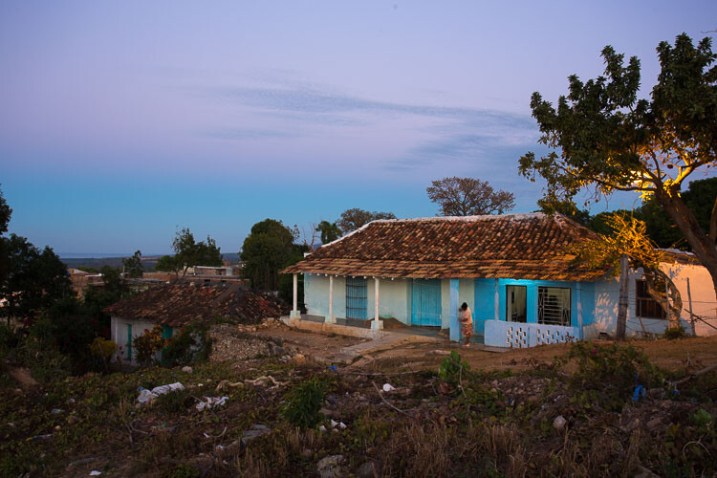
The photos in this article are from a new project I recently started in Cuba. This is not an accessible place for me as I live in London – and I’ll only be shooting there a couple of times a year until I’ve finished my book about Havana. So I also have a project that is closer to home. That way when I am not traveling I have something close by to keep me focused and inspired.

How to Start and Finish a Photography Project

I think a lot of people rely on taking photos when they are outside of their normal day to day life, when they feel more inspired because they are somewhere new and different. Ultimately, though, getting inspired by the world that is immediately around you is much better training for your photography. If you can make something interesting of a scene you see every day, then you can definitely take an interesting photo of anything.

Don’t have too many projects going at once, though. If you are new to doing projects I’d recommend you start with just one.

Consistency is crucial

The more regularly you take photos, the quicker seeing and thinking like a photographer will become part of you. It’s just like going to the gym – regular consistent work results in the biggest overall impact.

How to Start and Finish a Photography Project

Creativity is a habit, and the best creativity is a result of good work habits. That’s it in a nutshell. – Twyla Tharp

Will I realistically have time to shoot this?

All of the points so far have been about refining the possibilities so it makes it easier for you to pick a subject for your project.

Working out the time to do it is a very simple point, but it’s super relevant. Are you going to actually have time to shoot this on a regular basis? You need to keep that creative juice flowing and if you aren’t shooting regularly you will lose your ability to stay inspired and be in the flow with your project.

How to Start and Finish a Photography Project

Keep it realistic – if you only have three or four hours a month, then that’s it. Plan to fit it in easily with your life.

Move out of your comfort zone

Step out of your comfort zone. Comfort zones, where your unrealized dreams are buried, are the enemies of achievement. – Roy T. Bennett

It’s super easy to get in a rut with your photography – shooting similar subjects in similar ways. Telling yourself – this is what I’m good at shooting, or this is what I love doing. While I encourage you to really dive deep into a subject and develop your own style, make sure you are not using it to limit yourself.

How to Start and Finish a Photography Project

Staying where you are comfortable in your photography is not where you are going to find yourself taking stunning, amazing photos. What you’ll be taking are photos that are just like the ones you took yesterday, last week, last year. Photographers need to keep developing and that often means pushing yourself out of your comfort zone.

Don’t park… Arrival is the death of inspiration. Ernst Haas

If you want to do something new, something fresh, something unique – you have to move away from the safety of what you’ve always done, and move toward things you’ve never done before.

For me that’s been things like asking strangers if I can photograph their bellies (scary!), to travelling to new places or accepting commissions for big projects (weirdly it can often be more stressful getting paid to do a very creative job than doing it for yourself. After all, if you come back with a terrible personal project it just sucks for yourself.)

How to Start and Finish a Photography Project

Are you in your zone?

Photography doesn’t always have to be done outside of your comfort zone. Just keep an eye on the things you are choosing to photograph and making sure that you aren’t always playing it safe.

When you ask yourself what you really want to photograph and you come up with something that is both exciting and a little terrifying, that’s great! Then you definitely have something that is going to be interesting for you to explore. The line between being comfortable shooting and being on the edge of your comfort zone is a fine one.

Plan your project – but leave room for spontaneity

I couldn’t find the quote but I’m pretty sure that Napoleon said that you always want to go into battle with a plan, but that you’ll never follow the plan once you’re in battle. It’s the same with photography!

How to Start and Finish a Photography Project

You want and need a plan for how you are going to get this project going. Just don’t be afraid to adapt as the creative forces start working when you are out there shooting. I’ve sometimes had projects totally change shape, even the subject, while I am shooting.

Be open to change and adapt

For example, when I shot my first book, London at Dawn, I thought the book would be all about the workers who are up at 4 am and what they were doing. You know, the market traders, the cleaners, the bus drivers. It seemed like a really cool angle.

When I started shooting, though, not only are people really hard to find at dawn, and are usually inside buildings, and what I discovered was that the light of sunrise and the empty streets were way more interesting to me than tracking down people inside buildings working. I wanted to capture all this quiet and beauty.

How to Start and Finish a Photography Project

Make a project description

I like to have a basic description of my project before I get started which acts as my vision, the essence of my plan. To give you some ideas about how to do this, here are some descriptions of projects that I’ve done:

  • The Homeless World Cup: Create beautiful, colorful portraits of homeless football players that echo the powerful persona of the subjects in sports advertising. Pose subjects in strong and proud postures which, combined with the colorful backgrounds, promote a positive message about the homeless football players and the tournament.
  • Arboreal Dreams: An abstract exploration of trees inspired by my childhood memories of lying on the grass and staring up at trees for hours on end. The look of the photos will be dream-like and surreal, just as my childhood memories are, with the trees morphing into different shapes.
  • The Belly Project: The belly is an under-photographed part of the body (in my opinion) and rarely displayed (unless it’s in perfect condition). It’s often a source of personal dislike. I say free the belly! This project will be shot out on the street in a fun, spontaneous, and candid style. I will approach people with all kinds of bellies – and explore what lies hidden under people’s shirts.

How to Start and Finish a Photography Project

Can you see how in these short descriptions I covered what was interesting to me about the subject, how I wanted to shoot it and the style I would use? This is the kind of thing you want to end up with.

Is it a short term or long term project?

When starting out, I find many people aim to tackle these really big subjects that will take a year or two. That’s totally cool, but it’s really hard to sustain momentum for a two-year project. Even professionals find it difficult – well, I know I do! Life always gets in the way and distracts you from your project.

I think a short term project is the best place to start. Then as you build the skills for completing projects, you can extend yourself.

How to Start and Finish a Photography Project

What are you hoping to achieve with this project? What is the end result you hope to see? To give it to a friend, put it on social media, hang it on your wall, make a book? How many final images will you have?

These all sound quite specific but I find that when I ask these questions they help me to refine why I am doing a photography project, and the more refined I am the easier I find the project is to shoot.

Ultimately, I want to end up with such a good vision for my project that I can almost see the photos before I even step out the door. Of course, things will develop and change but working out these details really helps me when I am out there in the world faced with the actual – so where do I begin?

How to Start and Finish a Photography Project

The power of the deadline

Deadlines are the single best motivation for me to finish a project. To be honest, I rarely feel that I am totally finished. I could go on forever with most projects – there is always more to shoot, there are always more ways to make it better (even if that’s just in my mind). I do, though, like to get to the end and feel a sense of accomplishment, having something to tell the story of the subject I’ve been shooting.

The world is littered with unfinished creative projects of all types. Don’t let yours be one of them! A deadline is an amazing way to help you get it finished. You can pick a time frame – a year, a month, or 6 months. You can also create other deadlines by agreeing to do a project at the same time as a friend. Or by committing to creating a project before Christmas or for an exhibition.

Now – get started!

An idea that is developed and put into action is more important than an idea that exists only as an idea. – Edward de Bono

How to Start and Finish a Photography Project

This is where I get stuck all the time. I often have an amazing concept for a project, and I can see it in my mind. Then I try to get started, and… I procrastinate. This is often because I am waiting for perfect timing – be it the perfect light, perfect models, or a perfect day. All that thinking about perfect ends up feeling totally intimidating. So I have to say to myself – don’t wait for perfect conditions, they don’t exist! Don’t wait for more time, it won´t come.

It won’t be perfect straight out (or maybe even ever!) Perfectionism is the true enemy of creativity. Now think ahead to a few months from now with a finished photo project in your hands that you are showing people. It will feel awesome to know you created something from nothing, a photo project that is all about your passions and creativity. All you have to do now is get started.

Do whatever brings you to life, then. Follow your own fascinations, obsessions, and compulsions. Trust them. Create whatever causes a revolution in your heart. – Elizabeth Gilbert

I’d love to know what you think and if you plan to do a photography project this year, or may you are doing one now. Let me know in the comments below.

The post How to Start and Finish a Photography Project by Anthony Epes appeared first on Digital Photography School.


Digital Photography School

 
Comments Off on How to Start and Finish a Photography Project

Posted in Photography