RSS
 

Posts Tagged ‘Professional’

4 Things You Must do BEFORE Becoming a Professional Photographer

20 Jan

Are you considering making the leap from being an amateur photographer to a professional? Join the club!

There are many pro photographers today making a living off of the craft, but of course there are a fair number of challenges that come with the job. I’ve been a successful full-time professional photographer for two years now, and like most others, I have my share of things I wish I had done to prepare for the lifestyle. Here are four basic things that every aspiring professional photographer should do before they make the leap.
John Lee Maverick

By John Lee Maverick

1. Determine what kind of professional photographer you want to be

The most important thing you should carefully detail is what type of photographer you strive to be, and who is your ideal client. Do you want to shoot weddings and families, corporate events and head shots, or creative portraiture for editorial or advertising use? The answer to this question is crucial to help you identify if the market segment you choose is profitable, and if so, who is your target audience and how best to appeal to them to hire you. You wouldn’t market wedding photography services in the same way that you would sell corporate headshot services because your ideal client is different.

Once you determine the photography skills you want to market, the next step is to make sure that you have demonstrated skill in that area. Do you and the current clients you’ve worked with feel that your photography work to date demonstrates commercial viability (in other words, would enough other people pay for it)? If so, then it’s time to build an online portfolio of images demonstrating your creativity and skill. Make sure your portfolio not only contains a fair number of unique images, but also some words that introduce yourself and establish the qualities that set you apart from your competition. Don’t skimp on the words – remember that some people connect better with words over images.
Jonathan Chie

By Jonathan Chie

2. Establish your baseline expenses and make sure you have some savings

One of the biggest challenges that professional photographers can face is the instability of a reliable paycheck. Unless you can strike up long-term photography contracts with clients or find a steady stream of clients, there’s no guarantee you’ll be getting a monthly paycheck. Even if you do get clients, there’s a huge chance that payments will come in later than expected (to compensate in these instances, be sure to charge a late fee).

As a result of potential payment instability, it’s important that you assess your monthly baseline expenses and know how much you absolutely need to be making in cash each month. Next, match these expenses to how much you currently have in savings and make sure you would have enough saved away to cover yourself in case you don’t bring in enough revenue. Give yourself about six months to a year to establish your business and generate regular income; if over time you can’t cover your baseline expenses with your savings and sales, that’s the first signal that your professional photography career might need some reconsidering.
Kenny Louie

By Kenny Louie

3. Buy and insure all of the gear you will need, and know where to rent if needed

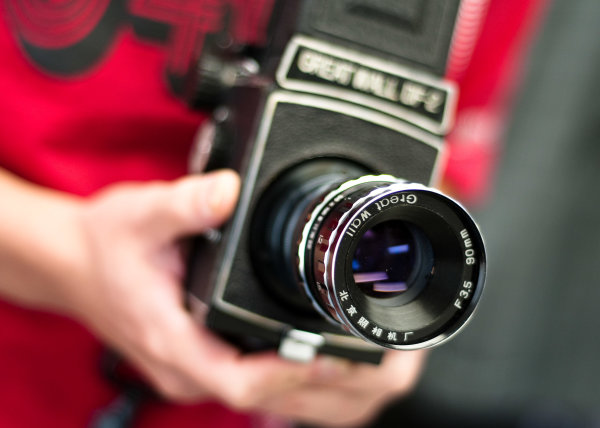
As a professional photographer, you should own, or have regular access to, all of the essential camera gear that is needed to fulfill the photography jobs that you are seeking. For example, wildlife and sports photographers absolutely need to have telephoto lenses, whereas real estate photographers need to have wide angle lenses. Do your homework and know what kind of gear you’ll need, and start acquiring it, or at least know where you can rent the gear that is too expensive or impractical to own. If you’re lucky, you’ll have a brick-and-mortar camera rental center in your town or a nice friend willing to loan out gear; if not, there are several gear rental options online worth looking into.

If you do purchase your own gear, be sure to get insurance on all of your equipment to aid in covering the expenses of needing to fix broken gear or replace stolen gear. As an amateur photographer, you’ll likely be able to have your equipment covered by personal property insurance, which is usually pretty affordable. However, as a professional photographer, you’ll need to get professional or business insurance coverage of your gear, which tends to be a bit pricier, but also more inclusive of business-related problems that could occur such as liability issues.

Vintspiration

By vintspiration

4. Get professional photography memberships

As a professional photographer, you’re entitled to some benefits if you know where to look. One of the first memberships you should look into is Canon Professional Services (CPS for Canon shooters) or Nikon Professional Services (for Nikon shooters) – there will be a membership for your brand in your country, just do some searching. The benefits of each vary but can include expedited shipping on repairs, equipment loans, and on-site support at certain events. To enjoy the full benefits of Professional Services, you’ll have to prove that you are a full-time professional or that you own a set amount of professional gear, and in the case of Canon pay an annual fee. But the value of having quicker repairs is immeasurable for professionals.

Another membership worth looking into is with the Professional Photographers of America (PPA). A non-profit association with over 27,000 members in 50+ countries, the main benefits of membership are equipment insurance and discounts and savings from select vendors, all of which are included in PPA’s annual fee. There are of course many other photography associations, distinguished mainly by the types of photographers they serve, each offering its own set of benefits. Examples include the American Photography Association, National Press Photographers Association, and North American Nature Photography Association, to name a few. This is again when it becomes pertinent to specialize in a specific type of photography. Look for similar groups in your area or country.

Are you considering becoming a professional photographer? What other questions are on your mind as you prepare?

googletag.cmd.push(function() {
tablet_slots.push( googletag.defineSlot( “/1005424/_dPSv4_tab-all-article-bottom_(300×250)”, [300, 250], “pb-ad-78623” ).addService( googletag.pubads() ) ); } );

googletag.cmd.push(function() {
mobile_slots.push( googletag.defineSlot( “/1005424/_dPSv4_mob-all-article-bottom_(300×250)”, [300, 250], “pb-ad-78158” ).addService( googletag.pubads() ) ); } );

The post 4 Things You Must do BEFORE Becoming a Professional Photographer by Suzi Pratt appeared first on Digital Photography School.

Digital Photography School

 
Comments Off on 4 Things You Must do BEFORE Becoming a Professional Photographer

Posted in Photography


The Importance of Personal Projects for Professional Photographers

15 Jan

In my last article, I talked about working on one or more personal projects as a great way to help photographers get motivated and get busy in a saturated market space. In this article I want to expand on the topic of personal photography projects: Why do you need one? How do you choose personal projects? What are some of the more popular personal projects around?

Film Photos of Christmas Ornaments in Chicago Downtown Memorable Jaunts Lifestyle Film Photographer

Why do you need personal photography projects?

#1 – Personal projects help you get out of a photography rut

Most photographers have a busy season and a slow season. Depending on where you are in your photography career, your slow season can be a few weeks or can be several months. Not picking up a camera for months on end can be disheartening and demotivating. Personal projects can help you keep going in those slow months and also help you fine tune your skills.
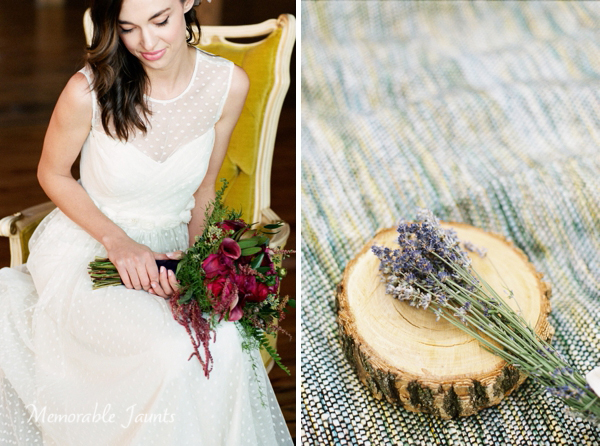
Film Wedding Portraits Memorable Jaunts Chicago Illinois Wedding Photographer

Experimenting with film ( 35mm and medium format) as one of my personal projects

#2 – Diversify your portfolio and get noticed

Depending on the type of personal project you pick, this can be a great way to diversify your portfolio and attract new clients based on your new body of work. Personal projects are just that – personal assignments. Once you take the pressures of a client out of the equation, you are free to explore, get creative and challenge yourself. This creative freedom is bound to reflect positively on your work. Your assignments can help you get noticed by your past and future clients and does have the potential of helping you get new clients who fall in love with your personal images.
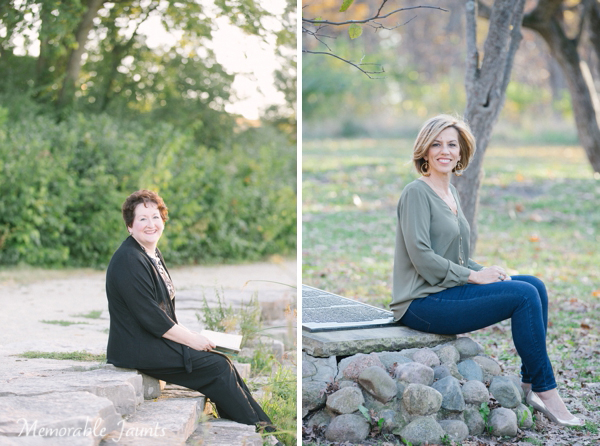
Small Business Lifestyle Headshots Outdoors Memorable Jaunts Lifestyle Photographer Naperville Illinois

What started off as a favor for a friend has turned into a new offering in my business – lifestyle headshots

#3 – Help you engage with the photographic community

Let’s face it, we all spend way too much time on the Internet. We are constantly browsing, reading and engaging with people (either actively or inactivity). Why not mix the two in a more productive way? As you are researching personal projects and assignments, you are bound to stumble upon photographers who are doing similar work. Reach out and start a conversation. Share your projects. Join a local or online community, a Facebook or Flickr group, and get active. Share you work and ask for feedback, browse the work of other artists and engage in healthy dialogue. Because this is a personal project, you are more relaxed. It certainly makes internet surfing more purposeful and useful.

#4 – Experiment outside your comfort zone

When you are thinking of personal projects, really give yourself the permission to get creative. Choose projects and assignments that really push you as an artist and challenge your existing skills and techniques. There is no right or wrong here. But recognize when a project is too easy, versus when a project really makes you work. Also remember this is a personal assignment, don’t make it so hard or unrealistic that it has an almost 0% success rate. I mean, I would love to photograph the earth from outer space – what a fantastic personal achievement that would be – but it is highly unlikely to happen in my lifetime! I will stick to photographing the moon – on a clear night, on a stormy night, and during a lunar eclipse!
Moon Photography on a clear night sky Memorable Jaunts Lifestyle Photographer Naperville Illinois

My first (and last attempt) as photographing the moon on a clear night! – it was much harder than I expected!

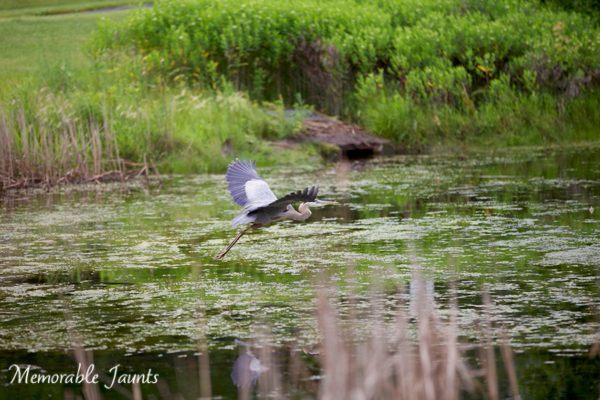
Great Grey Heron in Flight Bird Photography Memorable Jaunts Lifestyle Photographer Naperville Illinois

I love dabbling in bird photography – a nice change in subject from my normal wedding and family portrait clients

Macro Photography of Purple Flowers Memorable Jaunts Lifestyle Photographer Naperville Illinois

Macro photography is another easy subject to find in nature or with everyday household items

Now that you know why you should have one or more personal projects, the next logical question is how does one go about choosing personal projects.

How to choose personal projects

There are several ways to choose personal projects. Here are some personal techniques I use several times during the year.

#1 List your goals and derive projects and assignments that help you achieve that goal

One of my goals for 2015 is to photograph more elopement and backyard weddings, as well as do some editorial work. To help achieve that, I have reached out to a few magazine editors, as well I plan on networking with other wedding photographers to possibly second shoot with them on smaller weddings as a way to get to my goal.

#2 Write down a list of things that motivate you and pick assignments related to those items

I love the outdoors with a passion. I love travel and everything associated with it. I carry my camera everywhere I go and try to document stories not just of my travels but also of the people I meet – something I plan to do a lot more of in 2015.

#3 Look at your portfolio and see what is lacking

Portfolio reviews are a great exercise to perform several times in the year. Match the images to your goals so you know where you are lacking – where do you stand now, and where do you want to go?

#4 Review industry trends and pick topics that interest you – either related to gear, techniques or even subjects

There are easy special assignments to give yourself like photographing with only one lens for a week, photographing one subject with a wide range of lens, or black and white architectural images. Another technique that is fascinating is low light photography – really pushing the limits of your camera to change the look and mood of an image.

Popular personal project ideas to consider

  1. 365 series (a photo a day)
  2. 52 week series (a photo a week)
  3. Alphabet series (a photo for each alphabet)
  4. Gear related (a single lens for a week, prime lens only, macro, or film photography)
  5. Technique related (black and white images, low light images, leading lines or shadow play images)

I hope this article has motivated you to delve into personal photography projects and assignments. They can be extremely rewarding and satisfying no matter what the outcome. After all, anything that motivates you to pick up your camera and photograph just for the love of the art, not necessarily for money, can only be a good thing, right?

googletag.cmd.push(function() {
tablet_slots.push( googletag.defineSlot( “/1005424/_dPSv4_tab-all-article-bottom_(300×250)”, [300, 250], “pb-ad-78623” ).addService( googletag.pubads() ) ); } );

googletag.cmd.push(function() {
mobile_slots.push( googletag.defineSlot( “/1005424/_dPSv4_mob-all-article-bottom_(300×250)”, [300, 250], “pb-ad-78158” ).addService( googletag.pubads() ) ); } );

The post The Importance of Personal Projects for Professional Photographers by Karthika Gupta appeared first on Digital Photography School.


Digital Photography School

 
Comments Off on The Importance of Personal Projects for Professional Photographers

Posted in Photography


Canon updates Digital Photo Professional to version 4.1.50

18 Dec

Canon has updated its Digital Photo Professional 4 (DPP) software to version 4.1.50. The update brings support for a couple of new lenses and several camera models, improvements to multiple functions, and compatibility with 64-bit native environments, among other things. The newest version, says Canon, incorporates feedback from both APS-C and older full-frame owners eager for ‘the very latest Raw workflow solution’. Read more

Articles: Digital Photography Review (dpreview.com)

 
Comments Off on Canon updates Digital Photo Professional to version 4.1.50

Posted in Uncategorized


Canon Digital Photo Professional software update boosts camera support

01 Oct

Canon’s Digital Photo Professional software, commonly referred to as DPP, has just received updates to versions 4.0.2 and 3.14.41. Both of these were joined by updates to a roster of the company’s other photography-centric software, including the EOS Utility, EOS MOVIE Utility, and Picture Style Editor. Read more

Articles: Digital Photography Review (dpreview.com)

 
Comments Off on Canon Digital Photo Professional software update boosts camera support

Posted in Uncategorized


Canon Japan announces Digital Photo Professional and EOS Utility updates

17 Jun

shared:Canon_Logo_Lrg.png

A press release that appeared on Canon Japan’s website today indicates that Canon will be upgrading its Digital Photo Professional and EOS Utility applications. According to a translation of the release, DPP will be a ‘significant’ upgrade and will be available free as of June 26th. Read more

News: Digital Photography Review (dpreview.com)

 
Comments Off on Canon Japan announces Digital Photo Professional and EOS Utility updates

Posted in Uncategorized


Canon launches XF205 and XF200 HD professional camcorders

02 Apr

XF200_RightSide_B.png

Canon has introduced its new compact XF205 and XF200 professional camcorders aimed at broadcast news and wedding videographers. They come equipped with a wide-angle 26.8 mm (35mm equivalent) 20x optical zoom lens and support two recording formats – MXF, a file format used by broadcast stations, and MP4. The XF205 and XF200 will be available in mid-July for $ 4,400 and $ 3,900 respectively. Learn more

News: Digital Photography Review (dpreview.com)

 
Comments Off on Canon launches XF205 and XF200 HD professional camcorders

Posted in Uncategorized


Nikon announces flagship D4s professional DSLR

25 Feb

D4s_58_1.4_front34l.png

Nikon has released an update to their flagship D4 pro DSLR: the D4s. While not a major upgrade to the camera (hence the ‘s’ in the name), the D4s packs more processing power, a refined autofocus system, faster continuous shooting, and more video features (including 1080/60p support). Two other items pros will appreciate are a ‘small’ Raw size and a noticeable improvement in battery life compared to the D4. The camera will be available in early March for $ 6499.95 / £5,199.99.

News: Digital Photography Review (dpreview.com)

 
Comments Off on Nikon announces flagship D4s professional DSLR

Posted in Uncategorized


Nikon announces development of D4S professional ‘HD-SLR’

07 Jan

shared:NikonLogo.png

CES 2014: Nikon has announced it is working on the D4S which, like the D4, it describes as an ‘HD-SLR.’ Details are extremely slight, with the company promising a new image-processing engine and improved autofocus performance. All further details, including price and announcement and availability dates will follow later. The camera will be on display at the CES trade show, so we’ll try to get some pictures of it, as soon as we can.

News: Digital Photography Review (dpreview.com)

 
Comments Off on Nikon announces development of D4S professional ‘HD-SLR’

Posted in Uncategorized


Top 10 Ways to Sabotage your Professional Photography Aspirations

07 Jan

Through the various classes and workshops I teach, I inevitably run into a number of students with professional photography aspirations.  More than a few of them however, seem doggedly determined to do everything they can to make their dream of professional photography impossible.

I’m nothing, if not a helper.  So if you really want to sabotage your pro photography aspirations, here, presented in traditional count-down order, are 10 ways to make sure you’ll never turn your dream into a profession.

© Paul Burwell Photography | www.bsop.ca

Red Fox Kits playing outside their den

In no particular order how to sabotage your professional photography aspirations

1. Don’t show your work to anyone other than family or friends

  • Family and friends are great for moral support, and can really help pick you up when you’re down, but do they really know what makes a great picture and what sort of stuff is going to sell?
  • You need to get professional opinions about your work if you want to know if it is good, or what you might need to work on improving.

2. Design your web site so that it’s impossible for a photo buyer to do business with you

  • Through fear of protecting their images from being “stolen” from their web site, many photographers make it so you can’t right-click to save a picture or use flash web sites that make it almost impossible to easily save images to a local hard drive.
  • While none of these methods truly protect the images from “theft” they are a really great deterrent to the editor or photo buyer looking for images.  They can’t easily save them to run past other people, and they’ll usually just move onto the next web site.
  • While we’re at it, don’t put those huge ugly copyright notices over the center of the photo.  If you need to add a copyright watermark, add it to somewhere where it intrudes on the photograph’s story as little as possible.
© Paul Burwell Photography | www.bsop.ca

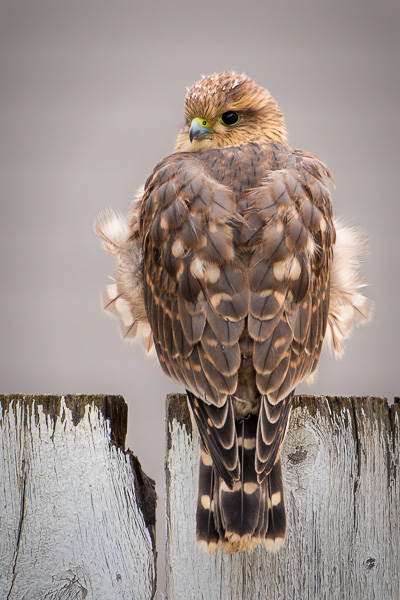
Juvenile Merlin perched on an old fence

3. Only post your “second-tier” images on your web site

  • Many folks operate under the mistaken belief that they should save their “good” stuff for when they get that National Geographic offer.  Sorry, but that isn’t going to happen until people can see the sort of great photos you can produce.

4. Bring only your best images to an image critique

  • During my photography workshops I always set aside time for people to bring some images for myself and the rest of the group to comment on.  Many folks only bring their best stuff.  I guess it’s fun to hear for the umpteenth time what a great image that is, but wouldn’t it be more useful to bring some images that you’re not sure are great?  An image you haven’t already been told 10 or 100 times that it’s a great image?  Take a risk and learn a bit.

5. Just do photography

  • I hear from some of the long-time professional nature photographers how they used to be able to make a living out of just selling images.  I wish my life were so simple.
  • The most likely way someone starting out is going to sell an image, is along with some writing.  So, you’ll want to learn how to put some words together that can support the images you’ve got.  While you’re at it, you might want to take some business management and marketing courses along the way.
© Paul Burwell Photography | www.bsop.ca

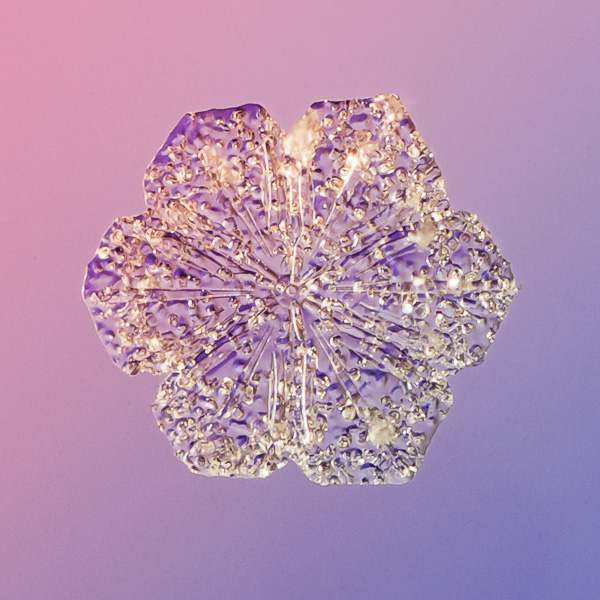
Hexagonal Plate Snowflake

6. Stop learning

  • Unfortunately, some folks figure that they’ve learned it all, they’ve got it all figured out.
  • Sorry, but in today’s digital world that just isn’t possible.  New techniques, software and equipment are constantly being developed.  You need to devote a significant portion of your time into educating yourself and keeping current.

7. Don’t look at other people’s images

  • I’ve run into a few people who can’t seem to appreciate any photos other than those they’ve created.  Holy narcissism batman!
  • If you don’t look at what your contemporaries are doing, you’re really short-changing yourself and sabotaging your aspirations.  Look around at what sells (because if you’re a pro, you NEED to care about what sells) and hang some of that on your wall.  Learn why it sells and try to use that within your own photography.

8. Don’t treat your photography like a business

  • If you want to remain an amateur, that’s great.  But if you want to be professional photographer, you have to start thinking like a professional.  Covering a subject as a pro is totally different than just going out and shooting a few snap shots.  You need to prepare in advance and have your gear and attitude ready to go.  When you start shooting, you work it until you get what you need.
  • If you’re under the mistaken impression that you need to be a great, or “one of the best” photographers in your area of interest to be a professional, get over it.  At least as important as the photography skills are your business and self-marketing skills.  Make sure you work on those non-photography skills at least as much as you do on your photography skills.

9.  Just take photos, don’t tell stories

  • For me, a great photo is one that tells a story.  If someone were to ask you about a photo and you couldn’t immediately come up with the story being told, I would argue that it isn’t a great photo.
  • Use image compositional techniques to make your photos tell great stories.

10. Treat ethics as an inconvenience to be avoided

  • While ethics are a personal matter and we all have to determine what is, and isn’t ethical for ourselves, the surest path to disaster is to have others view you as unethical.
  • Treat people the way you expect to be treated.  Be above board in all your business dealings.  Your clients should never experience negative surprises.  Follow through on your promises.

So, if you’re an aspiring pro, and bound and determined to stymie your chances of making it, I think I’ve outlined a pretty clear road map for you.

Do you have some comments or additional items to add to the list?  We’d all love to hear from you.

The post Top 10 Ways to Sabotage your Professional Photography Aspirations by Paul Burwell appeared first on Digital Photography School.

Digital Photography School

 
Comments Off on Top 10 Ways to Sabotage your Professional Photography Aspirations

Posted in Photography


MotoCMS Giveaway: Win 1×3 Professional Photography Website Template (Worth $139 Each)

11 Sep

Here on Photodoto, we know for sure what the biggest dream of every photographer is – it’s a professional, stunning portfolio website! Let your dreams come true! We’re pleased to announce a MotoCMS giveaway where all of you have a chance to win one of three premium website templates from our partners MotoCMS, spiced up with their powerful admin panel. Continue Reading

The post MotoCMS Giveaway: Win 1×3 Professional Photography Website Template (Worth $ 139 Each) appeared first on Photodoto.


Photodoto

 
Comments Off on MotoCMS Giveaway: Win 1×3 Professional Photography Website Template (Worth $139 Each)

Posted in Photography