RSS
 

Posts Tagged ‘Prime’

500px Prime goes live, photographers now get 70% not 30%

08 Mar

Screen_Shot_2014-03-07_at_4.37.16_PM.png

A few weeks ago we reported on the announcement of 500px ‘Prime’ a licensing service built into the popular photography website that was designed to allow users to make some cash from their images. Originally, the service was set to offer photographers a 30% cut of image sales at a minimum price per image of $ 250. A lot of photographers weren’t happy with the 70/30 split but now Prime is live, the terms have changed and photographers are being offered 70%, with new ‘flat rate $ 250 pricing. Click through for more details. 

News: Digital Photography Review (dpreview.com)

 
Comments Off on 500px Prime goes live, photographers now get 70% not 30%

Posted in Uncategorized


Buyers Guide – Prime Lenses vs Zoom Lenses

16 Feb
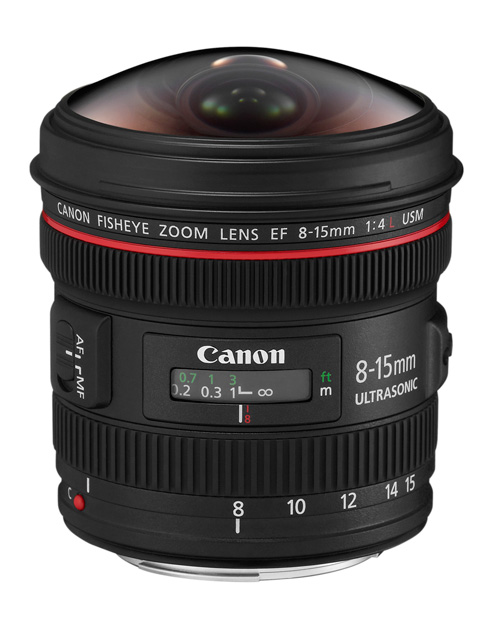
Canon 8-15mm fisheye lens

Canon’s 8-15mm f4L fisheye is an unusual lens, the only fisheye zoom that I know of. Most fisheye lenses are primes.

Following on from my article A Concise Guide to Choosing a New Lens I thought it would be interesting to go a little deeper into the question of whether to buy a prime lens or a zoom.

First, the definitions:

Prime lenses have a fixed focal length. There is no zoom ring and no way to magnify the subject other than moving closer. There are two settings to adjust: aperture (often handled by the camera) and focusing distance.

Zoom lenses have a variable focal length. There are three settings to adjust: aperture, focusing distance and focal length.

Both primes and zooms have benefits. I’m not going to try and persuade you one way or the other. Rather, the goal is to explore the benefits of both to help you decide which is the best for you.

Benefits of prime lenses

Image quality

Generally speaking, prime lenses have better image quality. It is easier to make a lens with good optical performance at a single focal length than it is to make one that performs well through the entire range of a zoom lens. This is especially true with wide-angle lenses where zooms tend to suffer from barrel distortion at the shortest focal lengths. With longer focal lengths (ie. 50mm plus), there is less difference in the performance between zooms and primes.

Barrel distortion

This photo shows the barrel distortion of an 18-135mm zoom lens set to 18mm. The curved lines in the frame should be straight.

Size and weight

Prime lenses tend to be smaller and lighter than zooms covering the same focal length range. This isn’t true all the time, high end primes are bigger because they have wider maximum apertures, which need larger lens elements to let the light in. Anyone who has used Canon’s 85mm f/1.2L prime lens knows what I mean – it’s a monster.

Don’t forget that the size and weight advantage is quickly lost if you end up buying two or more primes to cover the same focal range as a zoom. But if your aim is to use your camera with a single, lightweight lens then primes are the way to go.

An advantage of smaller lenses is that they are less obtrusive for portrait and street photography. It’s interesting how lens size affects the dynamics of a portrait shoot. In my experience models, even experienced ones, are much more relaxed in front of the camera when I use a smaller lens.
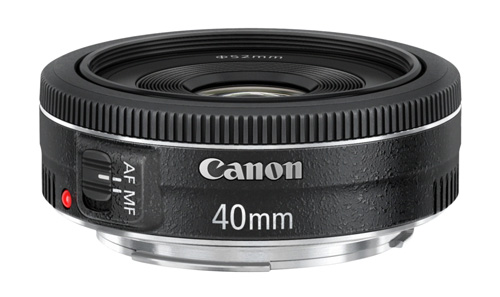
The Canon 40mm f2.8 pancake is about as small and light as you can get. Pancake lenses are the ultimate in unobtrusive lenses.

The Canon 40mm f/2.8 pancake lens is about as small and light as you can get. Pancake lenses are the ultimate in unobtrusive lenses.

Wide maximum apertures

The wider maximum apertures of prime lenses are useful for taking photos in low light or for creating beautiful bokeh. They also let more light into the lens, giving you a brighter image on cameras with optical viewfinders. However, if you have a camera with good high ISO performance you may not be so bothered about the advantages of using primes in low light.

Portrait

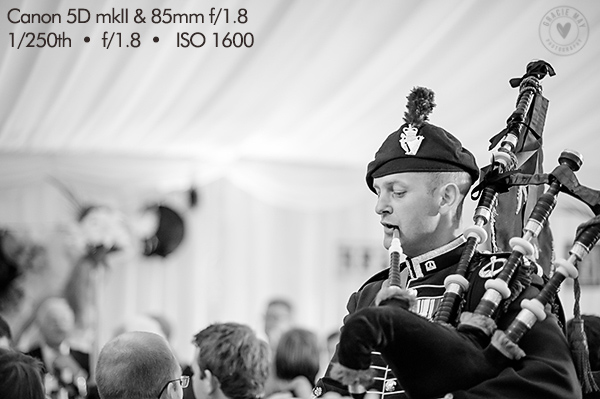
You can only take portraits like this one that have very little depth of field with prime lenses. Shot at f/1.8 with an 85mm lens.

Value for money

Prime lenses often give really good value for money, especially at the lower end of the price range. Most manufacturers have inexpensive prime lenses in their range that give superb image quality, much better than you would get from a zoom lens costing the same.

Benefits of zoom lenses

There was a time when the quality of zoom lenses was so poor that most photographers didn’t use them. Thankfully, things have changed and they have become more popular as the quality has improved. These are the main benefits of zoom lenses:

Convenience

The main benefit of zooms is the convenience arising from covering a range of focal lengths in one lens. This can save you time (swapping lenses) and money (being cheaper to buy one zoom than two or more primes). Zooms are useful as walkabout lenses, or if you are working in dusty or damp conditions where you don’t really want to take the lens off the camera.

With so many benefits, are there any disadvantages? Unfortunately the answer is yes. Here are some things to bear in mind:

The trade-offs for convenience are image quality and size. Zooms tend to be bigger than primes, and if you want one that has good image quality throughout the entire focal length range then you will need to spend some money. One tip is to go for lenses that cover a shorter focal length range, such as a 24-70mm rather than 18-200mm.
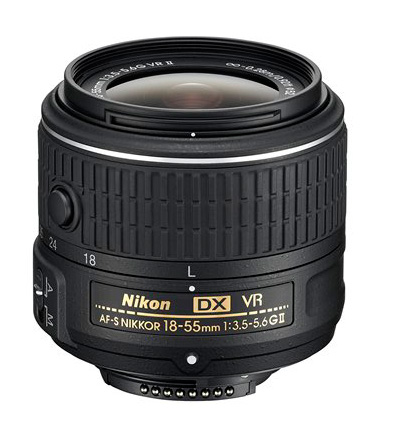
Nikon kit lens

A kit lens with variable maximum aperture. Avoid these types of zooms if you can.

Another thing to watch out for on cheaper zoom lenses is variable aperture. An example: an 18-55mm f/3.5-5.6 kit lens has a maximum aperture of f/3.5 at the 18mm end but only f/5.6 at 55mm. This makes it harder to work in manual mode (what if you have the aperture set to f/4 at 18mm and then zoom in to 55mm?) and is a general hassle all-round. Pay a bit more and get a fixed aperture zoom.

Saves you having to move

While some people will tell you that a benefit of prime lenses is that they make you zoom with your feet (ie. move closer to or further from the subject to change the composition) there are times when this isn’t possible. You may be at a sporting event, and unable to get any closer to the athletes involved. Or you may be standing near the edge of a cliff taking a landscape photo, unable to move further forward because you would fall off. Zoom lenses are invaluable in situations such as these.

Landscape photo

I took this photo standing near the edge of a cliff. I couldn’t move any further forwards, but was able to frame the image precisely using a 17-40mm zoom lens.

Your view

Now it’s your turn. What lenses do you prefer to use – zooms or primes? Have you bought any lenses recently and why did you decide to buy them? I’m looking forward to reading what you have to say.
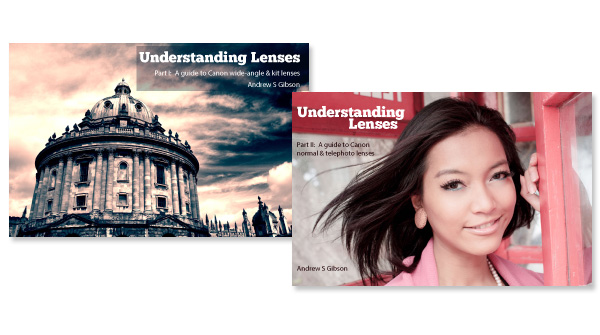

Understanding Lenses ebook bundle

Understanding Lenses ebooks

My ebooks Understanding Lenses Part I and Understanding Lenses Part II will help Canon EOS owners decide what lenses to buy for their cameras. They are both filled with lots of tips to getting the most out of your Canon lenses. Click the links to learn more.

The post Buyers Guide – Prime Lenses vs Zoom Lenses by Andrew S. Gibson appeared first on Digital Photography School.


Digital Photography School

 
Comments Off on Buyers Guide – Prime Lenses vs Zoom Lenses

Posted in Photography


500px ‘Prime’ is a licensing marketplace with 30% cut for photographers

08 Feb

Screen_Shot_2014-02-07_at_5.47.28_PM.png

Photo-sharing site 500px has launched ‘Prime’ a licensing service that it is describing as ‘the world’s most intelligent marketplace’ with fees that start at $ 250. Interestingly, the company is also claiming that the photographer will get 30% of every fee for a licensed image, no matter ‘how it is bought, who buys it, or under what license’. Click through for more details. 

News: Digital Photography Review (dpreview.com)

 
Comments Off on 500px ‘Prime’ is a licensing marketplace with 30% cut for photographers

Posted in Uncategorized


5 Easy Steps to Choose the Perfect Prime Lens for You

10 Jan

“But how will I zoom in and out?”,  I blinked my eyes in disbelief.

“You’ve got feet, don’t you?”

85mm-canon-lens

My first encounter with the concept of fixed or prime camera lenses was when they were explained to me (a baby photographer) when I met with a local wedding photographer whose work I was (and still am) crushing on. I was so surprised to hear that there were lenses that (gulp) didn’t zoom. ‘What’s the point of that?’ I wondered. Why pay more for less?

Clearly, I had lots of catching up to do!

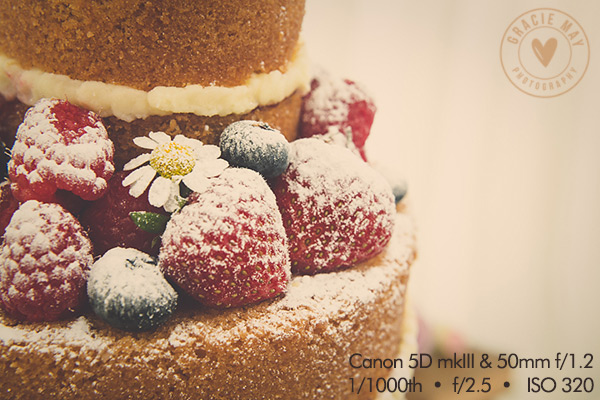
There are many merits to utilizing prime lenses in your photography. One is that you may find you can achieve mind blowing sharpness and quality with a lens that isn’t 10 lenses in one. I like to say that the 50mm prime lens doesn’t have to try to be anything other than 50mm. It only needs to focus on (pun intended) being the best 50mm it can be. Of course, there are many fantastically sharp and capable zoom lenses out there, but you will find that you’re not only paying for quality, but versatility. Prime lenses aren’t very versatile, but what they lack in versatility, they can make up for in quality which may leave you asking, “what zoom?”

How to choose

So with so many to choose from, how do you choose the perfect prime lens for you? You can be like me and buy-to-try a whopping 14 lenses in 5 years, to the tune of $ 10,250, (true story) or you can try these great 5 steps:

  1. Choose one of your existing zoom lenses
  2. Set it on a focal length and leave it there
  3. Shoot for a week or so only on that setting. Experience what it’s like to use your feet instead of your zoom. Photograph your typical subjects, ones you photograph the majority of the time, and see how that focal length feels.
  4. Repeat the exercise at different focal lengths.
  5. Assess your experience shooting at different lengths. The setting at which you felt most comfortable will be a great indication of where to start when purchasing the perfect prime lens for you.

50mm-canon-lens

Bonus tip!

If you use multiple lenses (or even just a few), there’s a super cool way to use Lightroom to see all the images taken with a particular lens. First, make sure you’re in the library module. On the left (under the smaller preview image) click ‘all photos’. Then on the top bar, click ‘metadata’. You’ll then see many sorting options depending on what photos you want to see. In the middle is the box which shows every lens you’ve used for all the images in your catalog (if you don’t see that use the pull down menu to select “lens”. How cool is that?! Then you can sort by focal length and see which one(s) you use most often.

50mm-canon-lens

My Final Choice

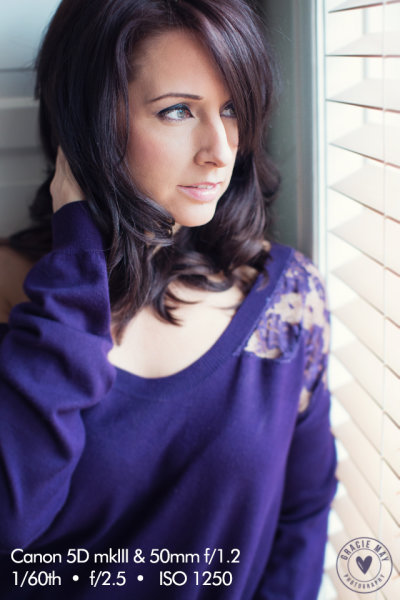
As I mentioned before, I’ve experimented with many different zoom and prime lenses. As for primes, I’ve owned the following Canon lenses: 50mm f/1.8, 50mm f/1.4, 50mm f/1.2, 85mm f/1.8, and 24mm f/2.8. After all that, the only one that remains in my collection is the 50mm f/1.2. I personally love quite tight portrait shots so although I think the quality was fantastic, the 24mm was too wide. The 85mm had phenominal sharpness and quality, but I sold it to help pay for the 50mm. I find the 50mm great on my full frame camera for wideish family shots but also tight-enough portraits. The f/1.2 means it’s my best lens for ultra low light and the sharpness is a little mind blowing. For me, it’s the perfect prime lens.

Now, there are many lenses from which to choose and that’s where you fine people come in! If you’re a prime lens aficionado or even just a fan of a particular lens, get involved below and tell us what prime lenses you have experience with, and which are your favourites!

The post 5 Easy Steps to Choose the Perfect Prime Lens for You by Elizabeth Halford appeared first on Digital Photography School.


Digital Photography School

 
Comments Off on 5 Easy Steps to Choose the Perfect Prime Lens for You

Posted in Photography


Premium prime? Nikon AF-S Nikkor 58mm f/1.4G in-depth review

31 Dec

frontpage520.png

The Nikon AF-S Nikkor 58mm f/1.4G was one of the more unexpected lens releases of 2013. It’s a fast normal prime for full frame shooters, but its $ 1699.95 / £1599.99 price tag represents a huge premium compared to the existing (and very good) AF-S Nikkor 50mm f/1.4G. What’s more, lab tests failed to show any clear sharpness advantage either. So why, exactly, is Nikon asking so much for this lens, and just how well does it perform in real-world use? Find out. Read our detailed review

News: Digital Photography Review (dpreview.com)

 
Comments Off on Premium prime? Nikon AF-S Nikkor 58mm f/1.4G in-depth review

Posted in Uncategorized


Samyang announces 10mm F2.8 manual focus wide-angle prime

06 Dec

Samyang_10mm_news-2.png

Samyang has announced the 10mm F2.8 ED AS NCS SC, a wide-angle manual focus prime for APS-C format cameras. It’s the company’s first lens to feature nano crystal coating for increased light transmission and reduced internal reflections. With a 15mm equivalent angle of view (20mm equivalent on Micro Four Thirds), it’ll be made in mounts for all current SLR and mirrorless systems. It’ll go on sale at the end of January 2014 at an RRP of £469.99 for Nikon AE mount, or £429.99 for all other versions.

News: Digital Photography Review (dpreview.com)

 
Comments Off on Samyang announces 10mm F2.8 manual focus wide-angle prime

Posted in Uncategorized


DxO Labs introduces Optics Pro 9 with ‘PRIME’ noise reduction

23 Oct

opticspro9-news.png

DxO Labs has released Optics Pro 9.0, a major update to its RAW conversion and image correction software. It offers improved highlight recovery, adds creative visual presets known as ‘Atmospheres’, and includes all-new ‘PRIME’ noise reduction technology that claims to offer significant image quality gains at high ISOs. The software is available to download now, with special a introductory price to November 20th. Click through for full details.  

News: Digital Photography Review (dpreview.com)

 
Comments Off on DxO Labs introduces Optics Pro 9 with ‘PRIME’ noise reduction

Posted in Uncategorized


LockCircle releases Prime Circle XE lenses with wireless aperture control

06 Apr

primecircle.png

Accessory maker LockCircle has announced Prime Circle XE lenses in a Canon EF mount with a wireless controller that can can change aperture remotely at distances of up to 300 feet. Ranging between focal lengths of 15mm to 135mm, the lenses feature Carl Zeiss optics in a housing designed specifically for cinematographers with large focus scales and a common 95mm front mount across the range of lenses. There is currently no information about the XE series’ price and availability.

News: Digital Photography Review (dpreview.com)

 
Comments Off on LockCircle releases Prime Circle XE lenses with wireless aperture control

Posted in Uncategorized


LockCircle releases Prime Circle XE lesnes with wireless aperture control

06 Apr

primecircle.png

Accessory maker LockCircle has announced Prime Circle XE lenses in a Canon EF mount with a wireless controller that can can change aperture remotely at distances of up to 300 feet. Ranging between focal lengths of 15mm to 135mm, the lenses feature Carl Zeiss optics in a housing designed specifically for cinematographers with large focus scales and a common 95mm front mount across the range of lenses. There is currently no information about the XE series’ price and availability.

News: Digital Photography Review (dpreview.com)

 
Comments Off on LockCircle releases Prime Circle XE lesnes with wireless aperture control

Posted in Uncategorized


Canon announces development of 35mm Cinema EOS prime lens

04 Apr

shared:logo_2x.png

NAB 2013: Canon has announced the development of a 35mm prime lens in its Cinema EOS range. It is designed to be used on movie cameras with image sensors up to 35mm full frame in size, and includes a range of features optimized for movie shooting. The company has not finalized its specifications and pricing, but says it will release further details in due course. However as the Cinema EOS primes offer T-stops that correlate closely with existing L-series primes, it seems likely the 35mm will be approximately T1.5, and of course use the EF mount.

News: Digital Photography Review (dpreview.com)

 
Comments Off on Canon announces development of 35mm Cinema EOS prime lens

Posted in Uncategorized