RSS
 

Posts Tagged ‘Powerful’

7 Ways To Create Authentic & Powerful Portraits

11 Aug

Create authentic powerful portraits 1

by Steven McConnell

Do you remember the time you were learning to drive a car?

If you’re like most people, it began as a purely technical, logical activity. You had to think about your every move. You were reacting to your environment, rather than anticipating it.

Over time, that settled into a form of unconscious competence. You began to drive by feeling the car, rather than thinking about it.

Learning to shoot portraiture is similar. Beyond the mechanical, logical world of preoccupation with gear, ISO, f-stops and focal lengths is a realm of feeling your way around your environment, connecting with your subjects, witnessing their stories and sharing them with the world through your photographs.

It’s easy to say, I hear you say. But how do I start moving in that direction?

For me personally this has been a focus of my attention for the past few years and I feel like I’m just starting to scratch the surface. Every time I discover something new I see how much more there is left to uncover.

It’s my aim here to share some of my main discoveries with you. I hope that lessons I’ve learned on my journey to becoming a portrait photographer help you along in yours.

Create authentic powerful portraits 2

1. Forget The LCD

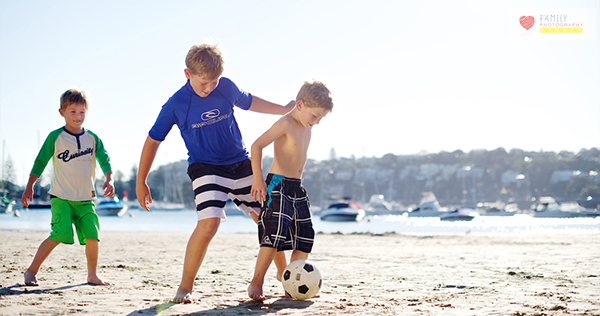
I see so many photographers take a few photos and then bend over to check what they got on the back of their camera.

Meanwhile, their subject is just standing there. Their mood is collapsing. All kinds of weird thoughts are starting to run through their head.

Checking the histograms every now and then is important, but your main job as a portraits photographer is to be aware of, and manage, your subject’s headspace.

You can’t do it effectively if you’re spending more time with your camera than you are with your subject. You need to be completely present with the person you’re photographing.

It means you need to photograph a lot and often, until know with a reasonable degree of confidence when you’ve nailed the shot – without having to check it on the LCD.
Create authentic powerful portraits 3

2. Explore Av & Tv [Aperture and Shutter Priority Modes]

There’s a sentiment in the photographer community that you must always shoot in your camera’s manual mode because “that’s what serious photographers do”.

Manual gives you great creative options in certain situations – for example, when you’re combining ambient light with strobes.

But be aware that you don’t always need it – and sometimes it will shoot you in the foot.

If you’re using only natural light, for example, and it’s likely to be changing while your subject is moving, the last thing you want is to miss moments while you’re chasing exposure.

Try shooting in aperture-priority mode (Av), using aperture to control depth of field as a creative element while dialling the exposure compensation in or out to fine-tune exposure.

3. Lose The Fat Lens

I shoot with prime lens because I like to have as few physical barriers between me and my subjects as I can.

If I can’t look them directly in the eye as I’m photographing them, then I want to look at them through as little metal, plastic and glass as possible.

Also, I think there’s a lot to be said about removing everything you can which will intimidate your subjects.

As photographers we tend to view gear as something to get excited about. But in doing so we forget that something like a 70-200 f/2.8 (even a 24-70 f/2.8!) on front of a DSLR can be unnerving to most people.

Create authentic powerful portraits 6

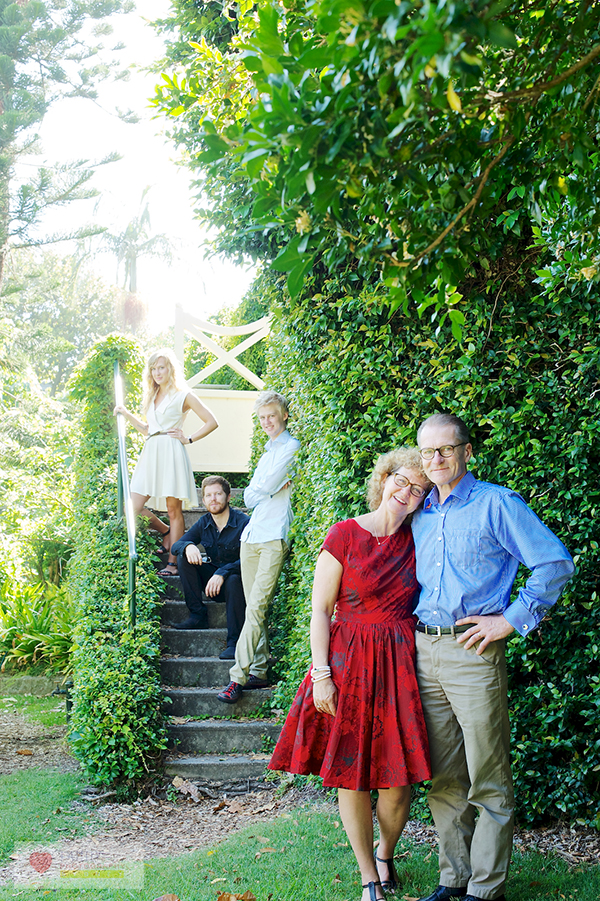
4. Research Your Subjects

When I started photography, I did enough research about cameras to be able to quote the pros and cons of just about any DSLR body out there.

But if you asked me what the person I was photographing wanted to be when they grow up, I’d have no idea.

How can a photographer tell a story about a subject through the photos if they don’t know anything about them?

What are your subject’s dreams? Obsessions? Fears? Ice-cream preferences? Why do they get out of bed in the morning? What kind of personality they have – quirky, calm, strong, bubbly or intellectual?

Answers to those questions are a great departure point for your creative choices as a photographer.
Create authentic powerful portraits 4

5. Put The Camera Down

I picked this idea up when I was watching this video of Annie Leibovitz photographing Keith Richards:

Notice how at 1:55 she puts the camera down to give him direction. It’s not accidental – by doing so, she injects a healthy dose of warmth and intimacy into their interaction. She reminds Keith that there’s a real human taking his photo.

6. Control Your Purpose

How you come across to your subjects is heavily influenced by your purpose in any moment. And that will determine how they act around you.

My default purpose is “Here I am, the photographer, about to photograph you – the subject”. Needless to say, it’s not very conducive to creating a connection of facilitating a particularly warm dynamic.

Before a shoot I literally have to shift the context through which I view the session to one which helps me set a warmer tone.

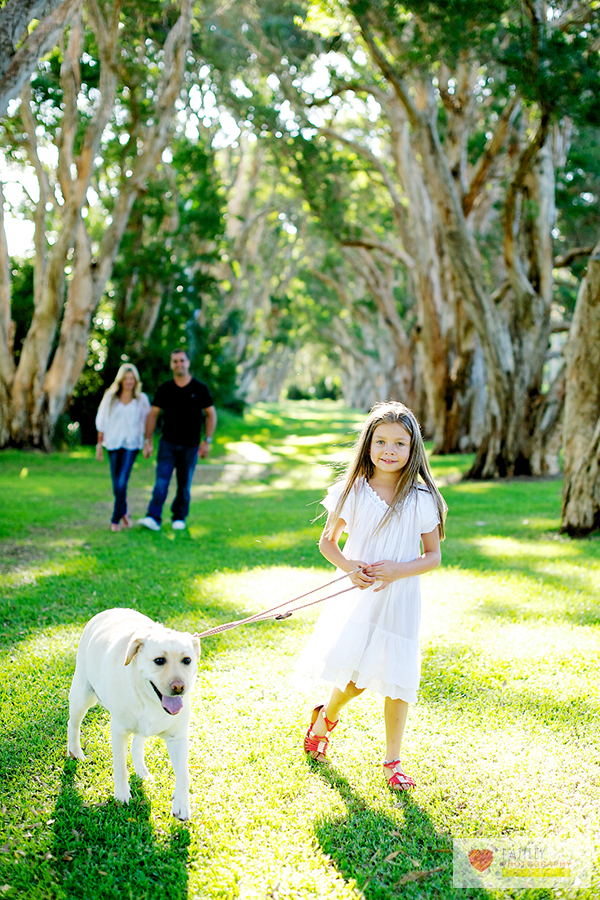
If I’m photographing kids, I’m likely to change to a space of “Let’s play – and I’m bringing my camera along”. If I’m with adults, I’ll probably take things in the direction of “Hey, let’s get to know each other – and I’ll take some shots along the way”.

Connection takes first place, photography second.
Create authentic powerful portraits 5

7. Meditate

This looks odd as a piece of advice on a photography blog. But here’s why I think it’s useful.

As photographers, we tend to be quite analytical – we go through the world thinking about it, rather than feeling our way around it. We spend a lot of time preoccupied with our thoughts, which can give our emotional tone a somewhat distant edge.

Meditating 10-15 minutes a day will helps you settle down and feel more centred. You will come across as a warmer, more approachable and confident photographer. You will also be more present with your subjects’ needs and be able to respond to them (rather than react to them).

It’s important because your subjects will largely mirror your emotional tone. The easiest way to help them settle down and connect with you is for you to be calm yourself.

Steven McConnell is a family photographer at Family Photography Sydney. You can connect with him on Google+. and Twitter.

Post originally from: Digital Photography Tips.

Check out our more Photography Tips at Photography Tips for Beginners, Portrait Photography Tips and Wedding Photography Tips.

7 Ways To Create Authentic & Powerful Portraits


Digital Photography School

 
Comments Off on 7 Ways To Create Authentic & Powerful Portraits

Posted in Photography


5 Steps to Building More Powerful Images

10 Aug

A Guest Contribution by Dan Bailey

We photographers seem to have it easy. Whereas most artists spend anywhere from hours, to months to years to manufacture their creations, we can simply point, press and be done. However, that kind of convenience doesn’t necessarily translate into great imagery.

Shooting powerful photos that have lasting visual appeal requires more than just pointing and clicking; it takes applying some fundamental compositional methods that are designed to simplify your compositions and actively engage your viewers. Here are five steps that will help you strengthen the visual impact of your imagery.

1. Use Awesome Light

Photography is all about light, and it’s the first thing that will make or break the shot. Not matter what you’re shooting, any and every subject will look better in great light. When we think of good light, we often think of Magic Hour, or the stretches of time during sunrise and sunset. As a general rule, shooting during these times will usually give excellent results.

However, be open to shooting at other times of the day, or even using other lighting sources. Fog, diffused window light or a camera flash can all make for compelling illumination. If you become proficient at wrangling the light, you can create great photos under any conditions.

NFLD HIK 100A

2. Have an Identifiable Main Subject

First and foremost, your image should have have a main subject. Period. It needs to be about something. The most powerful photographs are built around a single element that serves as the focal point of the shot. As a photographer, your job is to draw your viewer into the frame, and if you don’t give them something to lock onto, their eyes will wander aimlessly around your picture trying to figure out what they’re supposed to see. If you don’t know what your picture is about, then your viewer won’t either and they’ll just move on.

DSC8929

3. Use Relationships to Tell the Story

A powerful photograph tells a story, which essentially means that it communicates some specific message or invokes an emotional response from the viewer. The best way to do build this story is to establish relationships between your main subject and the other elements inside the frame.

The job of these secondary elements is to compliment, reinforce or contrast the main subject in some way. An effective secondary subject can be as simple as a strong, out of focus background that gives a sense of place, or it can be two or three other things in the photo that give your subject something to play off of and help to establish the narrative of how your subject “fits” within the world of your frame.

Adding strong secondary elements to your photo also gives your viewer something else to explore as their eyes scan the image, and more importantly, it gives them something to think about. Anytime you activate your viewer’s brain, you’ve gone a long way towards creating a compelling image.

UTH 100

4. Create Tension Through Framing

Depending on how you place your subjects in the frame, you determine the experience by which your viewer scans and respond to what’s in your photograph. The human eyes and brain are hard wired to see and recognize patterns, colors and imperfections in the world; it’s how we evolved to identify our surroundings and spot things like food and danger.

By using a mix of hot and cool colors and by placing your subjects in seemingly random areas in the frame, you cause an inherent uneasiness in your viewers. Their eyes will scan your image, trying to find patterns and that may not exist, and so they’ll keep looking, tracking back and forth between your different subject elements, and darting across broad patches of negative space in order to make sense of the photo. By contrast, if your composition is too perfect, or too balanced, your viewer will quickly spot this nice, easy pattern and move on. That’s not what you want.

DSF0787

5. Don’t Show Everything

A common mistake with beginning photographers is to try and show too much. This leads to cluttered, boring images that do little to engage the viewer’s brain. As I said in number 2 above, in order to create a powerful photo, you need a main subject. However, I didn’t say that you had to show the whole thing.

Abbreviating your subjects can be a very powerful method towards creating a compelling shot. Especially if I they’re things that we’re all familiar with. If you only show part of a subject, you automatically activate your viewer’s imagination as they try to picture the rest in their mind. Photography is a two way street: You have creator and viewer, and if you bring your audience into the process, you invite them to become more connected to your shot.

Remember, good photography isn’t about perfectly reproducing your subject, it’s about creating a visual representation that communicates the ideas or emotions that you had about the scene right when you pressed the shutter.

DSC2259

Further Reading

Makingcover125For more creative photography tips, I invite you to check out my eBook Making The Image – A Conceptual Guide to Creating Stronger Images. I’ll even give you a special price! Use discount code DPS you can get eBook for 50% off.
Dan Bailey is a full time professional outdoor, adventure and travel photographer based in Alaska. When he’s not off exploring in the mountains, writing about photography, or flying his little yellow bush plane, he can sometimes be found lurking in the forums right here at DPS.

Check out his blog and find him on Facebook and Google+.

Post originally from: Digital Photography Tips.

Check out our more Photography Tips at Photography Tips for Beginners, Portrait Photography Tips and Wedding Photography Tips.

5 Steps to Building More Powerful Images


Digital Photography School

 
Comments Off on 5 Steps to Building More Powerful Images

Posted in Photography


5 Important Components of a Powerful Image

27 Jul

A Contribution by Mitchell Kanashkevich – author of Powerful Imagery.

Quite often people have asked me: “What are the components of a powerful image?” I gave the question a lot of thought and decided that there’s so much in it that a whole eBook could be written on the topic, which is exactly what I did, with lots of practical examples to illustrate the points. This post is something of a sneak peak and an overview of some of the most important components that make up a powerful image.

1. Subject

Most would agree that a powerful photograph needs a subject that resonates with us for some reason. The kind of thing that makes us say “Wow!” or “I want to know more!” or “Isn’t that beautiful!”.

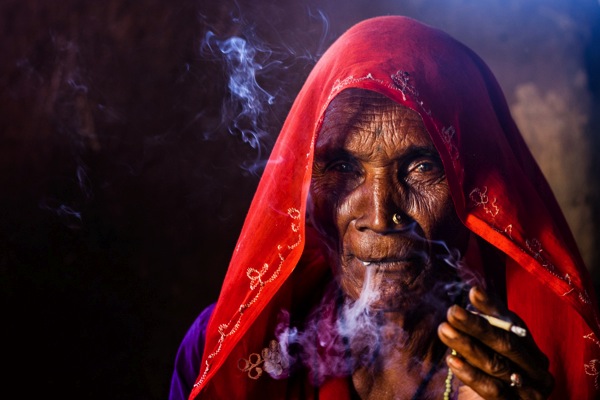
Woman smoker

This woman’s wrinkled face, full of character and stories is one example of a strong or special subject that resonates with the viewer.

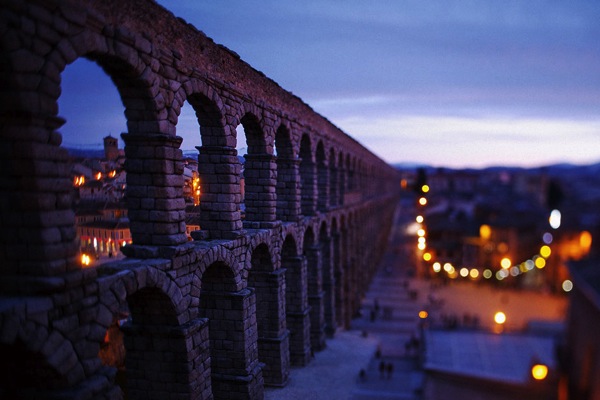
Segovia Aquaduct

The beautiful aqueduct in Segovia, Spain is a completely different, yet also powerful example.

I’m not saying that an obviously special subject is an absolute must to make a powerful photograph. We can photograph more subtle things that might not usually stand out in everyday life and make them look amazing in photographs. It’s also true that a special subject alone doesn’t make a powerful image. I am however going to put things in perspective. A special, captivating subject is definitely a good start. Ultimately, even a badly executed photograph of that special subject will, to at least some extent interest the viewer, while a masterfully executed image of something that nobody finds interesting might not do the same.

2. Strong Composition

What makes a strong composition? It’s not necessarily a framing which strictly follows the rule of thirds, or any other of the usual rules for that matter. The rules help, but they’re a means to a bigger aim, which is to make it clear what the image is about–what you are trying to communicate. Before anything else it is important that everything that does’t matter to what you’re trying to communicate is framed out, then we can think about how to position all that does matter within the frame for maximum impact. This is where the rule of thirds, use of geometry and all the other compositional theories come in.

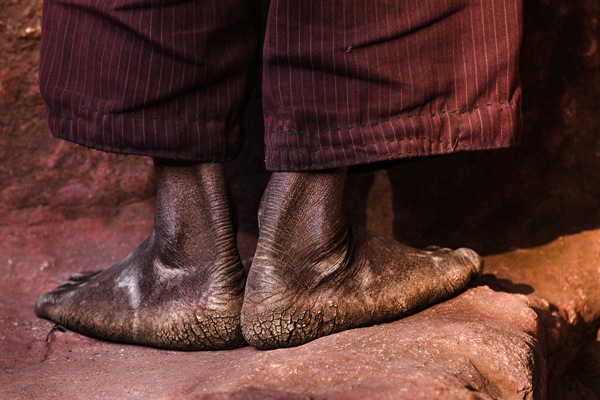
Pilgrim Feet

The image above is a good example of framing out everything that doesn’t add to the story. The story is about a pilgrim’s physical sacrifice to make the journey to the sacred town of Lalibela, Ethiopia.These are feet that have walked a lot of miles. To communicate effectively, a minimalist approach was the best one, I got in very close to the feet with a long zoom lens and framed absolutely everything else out. Imagine if I had something else in the image, we’d be distracted from the main story and as a result the impact wouldn’t be the same.

Desert Geometry

This image is about the beauty of the geometry in the landscape. Again, to make it abundantly clear that this is what I’m trying to communicate, I composed the photograph in such a way that the curves and triangles dominate the frame. Everything that doesn’t say geometry or that breaks up the rhythm is excluded. The curvy lines lead the eye around and through the photograph and that’s what makes the composition work.

And so, all in all a strong composition is one that makes it clear what it is you, the photographer are trying to communicate. No matter whether the subject is a pilgrim’s worn out feet, or curvy sand dunes.

3. Moment

Granma and Child

Capturing a moment can mean a few things – capturing an expression (a smile for example), or the wind blowing and moving the trees, or it can be a tender moment, like the one between the grandmother and her grandaughter in in the photo above.

Stork Building a Nest

A moment can be that of an action frozen in time, like this stork bringing a twig to build a nest.

Beautiful Seaside

Of course a moment can also be an instance during the day, for example an instance during the golden hour, when the light from the setting or rising sun makes everything look warm, vivid and generally more beautiful. What makes the photograph above powerful is the fact that I captured it at that moment. The landscape looks beautiful and lively. The same photo at a different moment could produce a much lesser result.

To conclude on this point, capturing a moment which is somehow special or different from what most of us consider mundane definitely contributes to the creation of a powerful image.

4. Light

Light needs a further, more detailed mention in this post. It can be crucial to creating a powerful image. Light is capable of creating a strong sense of mood, it can add to the story and, it can even become a subject in its own right, which often leads to dramatic, powerful images.

Ethiopian Kitchen

This image of Ethiopian women cooking in a traditional kitchen is a good example of light adding a strong sense of mood to the photograph. It also adds to the story by accentuating the smoky conditions in the kitchen. The image would be decent without the light beam, but with it, the photograph goes to another level, where we not only see, but feel what we see to an extent.

Moroccan Landscape

In this landscape from Morocco you could say that the trees and the hills in the background are the subject, but, the light and its’ effect is equally prominent, hence, this is an example of light actually becoming a subject in its own right. An image of the trees and the hills in a different lighting scenario would not have nearly the same impact as it does when the light is so distinct and prominent that it becomes a subject itself.

Editors Note: for a comprehensive exploration of the topic of light check out Mitchell’s best selling eBook on Natural Light.

5. Emotional Impact

Emotional impact is probably the main factor that makes an image powerful, but, it isn’t something that’s always obviously tangible. It’s sometimes hard to pin-point exactly what causes the emotional impact. It can be that the subject captures you, or that the light really sets a strong mood, or, that the moment captured is fascinating, maybe even rare. Of course, it can be a combination of all the factors I’ve mentioned here and this makes for truly powerful imagery.

You can learn more about making Powerful photographs with Mitchell’s new eBook “Powerful Imagery” released through Eyevoyage, currently on sale with our sister site SnapnDeals.

Mitchell is a travel/documentary photographer. He has an online project called Eyevoyage – a site for anyone interested in travel photography and improving their travel photos. You can learn more about making Powerful photographs with Mitchell’s new eBook “Powerful Imagery” released through Eyevoyage, currently on sale with our sister site SnapnDeals. To further your learning visit Eyevoyage Facebook page.

Post originally from: Digital Photography Tips.

Check out our more Photography Tips at Photography Tips for Beginners, Portrait Photography Tips and Wedding Photography Tips.

5 Important Components of a Powerful Image


Digital Photography School

 
Comments Off on 5 Important Components of a Powerful Image

Posted in Photography


Mastering Photoshop Textures to Create Powerful Imagery

05 Jun

Photoshop has done for photography what the road did for the wheel! That’s quite a bit in case you’re wondering… This union has made photography the worlds 2nd most popular past time… Because let’s face it; creating exciting images is indeed thrilling, and most of all, highly addictive! One such addiction is a single technique: Simple to grasp,hard to master! Continue Reading

The post Mastering Photoshop Textures to Create Powerful Imagery appeared first on Photodoto.


Photodoto

 
Comments Off on Mastering Photoshop Textures to Create Powerful Imagery

Posted in Photography


Nokia’s latest Lumia 928 smartphone offers powerful xenon flash

11 May

poster_lumia_lowlight_crop.jpg

Nokia surprised everyone today by announcing its new Lumia 928 in advance of next week’s big launch event in London. The Lumia 928 comes equipped with an 8.7-megapixel camera on a 1/3.2″ sensor, xenon flash, optical image stabilization and a f/2.0, 26mm-equivalent Carl Zeiss lens. These specs mean it’s only a relatively minor upgrade to the current Nokia flagship Windows Phone but still good news for mobile photographers: see why on connect.dpreview.com.

News: Digital Photography Review (dpreview.com)

 
Comments Off on Nokia’s latest Lumia 928 smartphone offers powerful xenon flash

Posted in Uncategorized


World’s Most Powerful Man-Made Tornado in a Museum

25 Apr

[ By Steph in Architecture & Public & Institutional. ]

World's Strongest Man Made Tornado 1

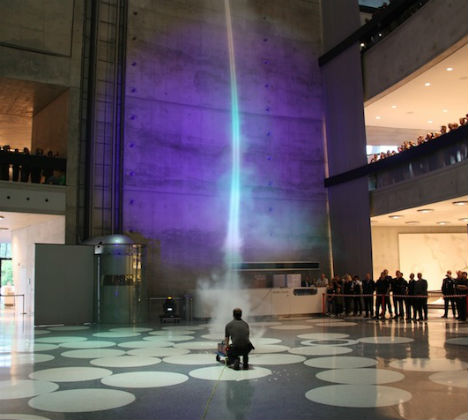
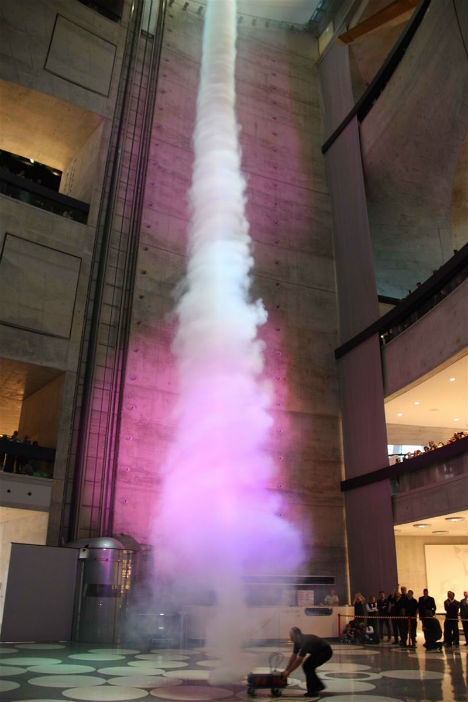
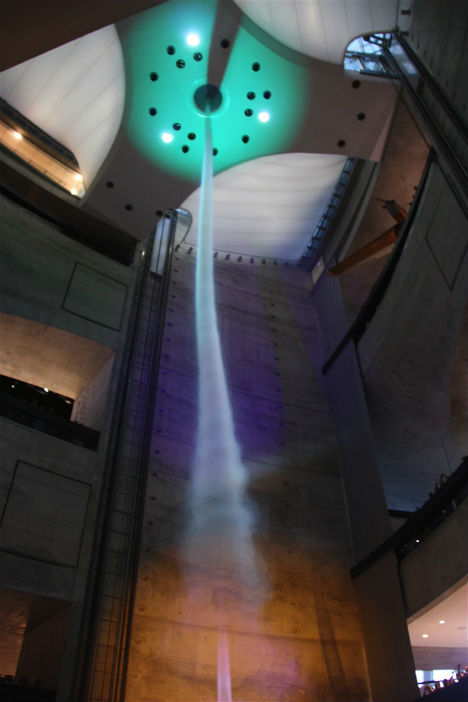
Experience the awe-inspiring power of a tornado, up-close and personal, without putting yourself in serious danger chasing a real one. The Mercedes-Benz museum in Stuttgart hosts the strongest artificially generated tornado in the world, with 144 jets spewing 28 tons of smoke in a 112-foot-high column. Why intentionally produce a tornado in a showroom full of over 150 luxury vehicles? The answer may surprise you.

World's Strongest Man-Made Tornado 5

World's Strongest Man-Made Tornado 2

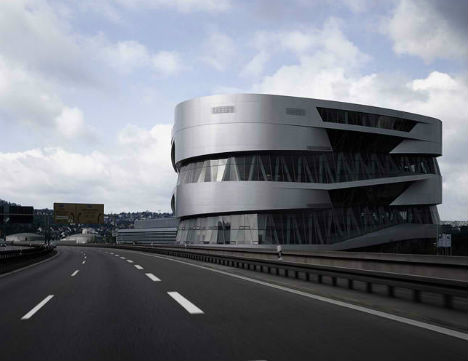
The facility, designed by Dutch architecture firm UNStudio, is one of the most cutting-edge of its kind. Reminiscent of the Guggenheim, the Mercedes-Benz Museum is a steel structure based on a double-helix, featuring a massive central atrium viewable from the floors that spiral around it. All rooms are open, all walls are curved and each of the 1800 triangular window panes on the exterior walls is unique.

World's Strongest Man-Made Tornado 3

World's Strongest Man-Made Tornado 4

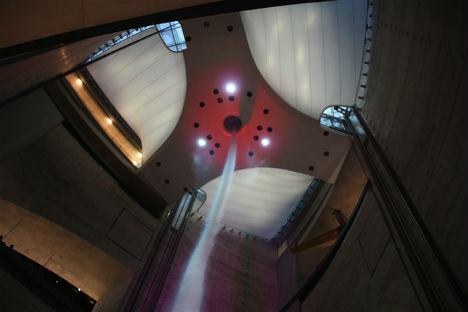
The 1500 exhibition areas contained within the space are connected without any fire zones – making them a bit of a hazard if a fire were ever to really break out. The solution? An artificial tornado created by injecting air into the interior courtyard of the museum from those 144 jets. The smoke is collected by the air currents and whisked outside.

Though it’s actually a safety measure, the tornado effect is so spectacular that it has become a bit of a tourist attraction, bringing even more people to check out the museum. See it in action above.


Share on Facebook


[ By Steph in Architecture & Public & Institutional. ]

[ WebUrbanist | Archives | Galleries | Privacy | TOS ]


WebUrbanist

 
Comments Off on World’s Most Powerful Man-Made Tornado in a Museum

Posted in Creativity


Color: A Powerful Creative Ally or an Afterthought?

19 Mar

A Guest post by Mitchell Kanashkevich who is the author behind dPS eBook – Captivating Color.

Color is one facet of photography which we often tend to overlook and take for granted. It is frequently only considered after the photograph has already been taken.

Approaching color this way however is a big mistake and a lot of us make this mistake because we simply don’t know why color is important, we don’t understand what role it can play in our photography.

The fact is, color is as much a part of visual communication as composition and light. If you are not fully aware of this fact while framing/composing color images and later when post processing them, you’re quite simply not in full control of what your photographs communicate. A knowledgeable, intentional approach however, turns color into a powerful ally that helps us convey stories, emotions, sensations and moods from within the photographic frame.

In this post I have included some of my photographs along with brief explanations of just what role color plays in every one of them. The aim here is to raise awareness of color’s potential power, particularly among those of you for whom it (color) has been more of an afterthought than a creative ally.

image_01.jpg

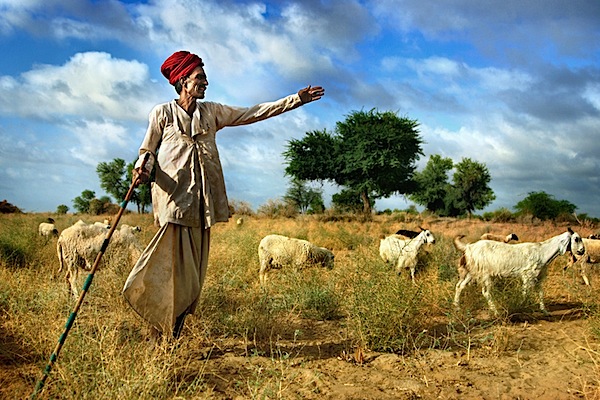
The above photograph is in large part about that attention-grabbing red. It helps me to immediately bring attention to what I considered to be the most important element to the story in this image, the turban. This turban is representative of the cultural background of the shepherd, it says that he is a man of tradition and this is something that I wanted to really highlight.

The red also leads the way in communicating how this scene felt while I was shooting it -dynamic, exciting. This is also in large part due to the overall palette, which in addition to the red is made up of other bright, vivid colors that are usually considered dynamic, lively, exciting.

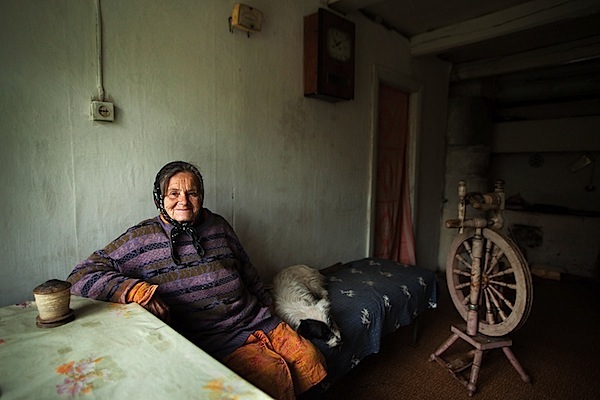
The dominant color palette in this image is fairly subdued and neutral. The mood that it creates leans towards being melancholic, but the rather subtle “splashes” of brighter colors inject a little life and excitement into the scene (without completely shifting the feel of it). I think that this is fitting, as the mood in that room was a little melancholic and somewhat lively at once.

Against the mostly subdued, neutral palette that dominates the frame those “splashes” of color inevitably demand our attention. It is as if the photograph is saying quietly, but clearly “Look here and now look there, these details are also important to the story”. Color (along with composition) helps our eye progress from the brightest, most vivid element, the central character – the woman, to all the other, less noticeable elements that add a certain level depth to the story.

image_03.jpg

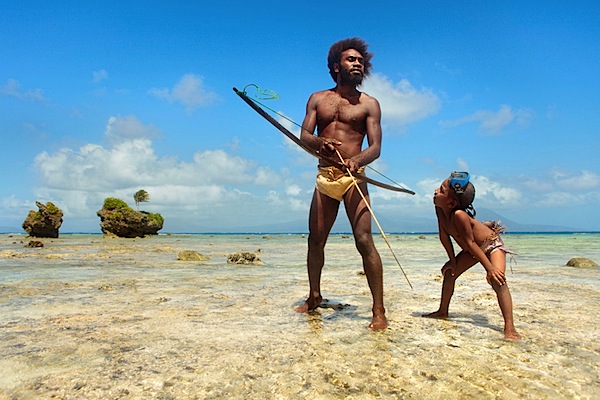
Here we’ve got bright, fairly vivid colors. Again there’s a sense of excitement, energy, perhaps an association with happy times, due to the blue sky and the brightness of everything, especially when you connect the color to the subject matter – parent and child.

The dark flesh tones really stand out against that bright blue sky, hence the presence of the father and the son is strongly felt. It’s clear that they are the central characters of the story. At the same time, the surroundings, which are also important components of the story are not completely overshadowed either, because they are so bright and vivid, their presence is strongly felt too.

image_04.jpg

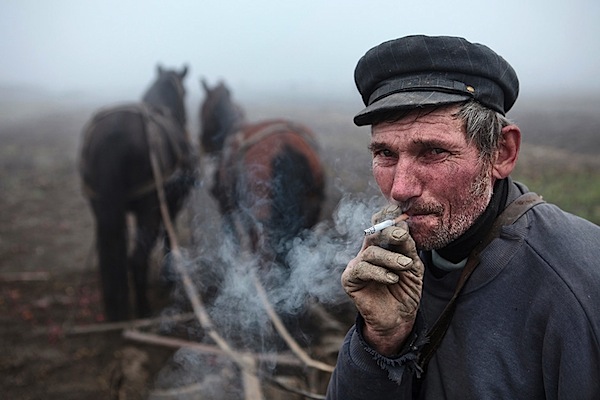
Here the colors are equally important to the mood and to the story. The subdued, earthy palette dominated by shades of grey creates a mood which is fairly sombre and that’s exactly how the scene felt. The palette is also reflective of this man’s story, his tough job of ploughing the land during a grey, foggy autumn (fall) day.

It should be noted that the absence of certain colors can be just as important to creating a mood and telling a story as their presence, and here, the absence of bright, vivid colors ensures that the somberness is communicated strongly and that the story of hard-living is clear as can be.

image_06.jpg

This image is essentially duo-tone. The simple minimal palette allowed me to emphasize the “gestures”, which are where the story is, the hand with the spear-gun pointing towards the palm leaves underwater (that’s what those things are), the legs in swimming motion. Less colors has equalled in no distractions from what’s important.

One could argue that this image would work just as well in black and white, but I feel that the blue of the water plays a strong role in speaking to the senses, it helps communicate what it’s like to be in the sea, the coolness, the powerful presence of it. Towards the bottom part of the frame, as the water becomes dark blue, things get a little mysterious, darkness (dark colors) is often associated with the unknown. This sense of mystery is what you feel in the deeper part of the sea and it’s something that I really wanted to convey through the photograph too.

image_05.jpg

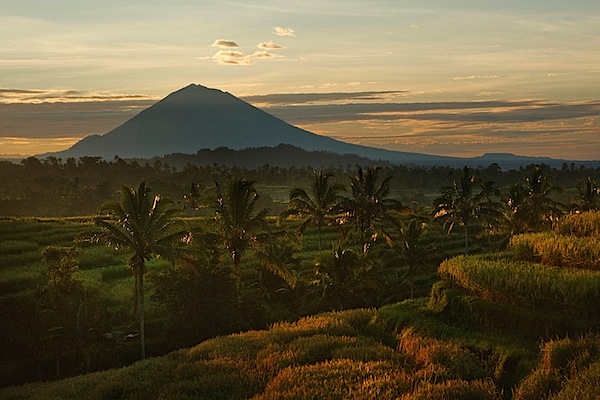
Vibrant shades of green and the warm, yellow-orange tinge created by the morning sun dominate this image. This palette is inevitably evocative of vitality and generally positive emotions.

The story in this photograph is quite simple, it’s about the beauty of the landscape, the energy and excitement of the morning and it is only through the palette dominated by those vibrant, warm colors that it can be communicated effectively.

image_07.jpg

Sometimes the color of a particular scene we see captures our imagination, gets us excited and compels us to make the photograph. Even if we aren’t aware of it, it speaks to our senses. The above image is one such example. Color lends it a somewhat surreal and mystical quality, it creates a very distinct feel. In such photographs, color and the sensory response it evokes are so important that any kind of story can in a sense become secondary. Color is what makes (or breaks) these kinds of images and without it they (the images) simply do not work.

Well, that’s all for this post. I hope that by taking a closer look at these examples of what role color can play in photography you are now a little more aware of its importance and potential. I urge those of you who make color photographs to begin taking advantage of color during your next shoot. Start thinking how you can use color to tell your own stories and to communicate the emotions, sensations or moods that you want the viewers of your photographs to feel.

About the Author: Mitchell Kanashkevich is a travel/documentary photographer who’s passionate about color. His photographs have appeared on TV, billboards, on book covers, travel and inflight publications as well as in most of the world’s top photography magazines. Prints of his work hang in private photo collections around the world.

Mitchell is also the author of DPS’s “Transcending Travel: A guide to captivating travel photography” and is the author of a brand new dPS eBook Captivating Color – a Guide to Dramatic Color Photography. Follow Mitchell on Facebook.

Post originally from: Digital Photography Tips.

Check out our more Photography Tips at Photography Tips for Beginners, Portrait Photography Tips and Wedding Photography Tips.

Color: A Powerful Creative Ally or an Afterthought?


Digital Photography School

 
Comments Off on Color: A Powerful Creative Ally or an Afterthought?

Posted in Photography


Ways to Redesign Flickr Groups to Make Them More Social, Addictive and Powerful

16 Oct

Flickr is currently in the process of redesigning the Groups section of their site. Initial comments by some beta testers have suggested that more emphasis will be placed on photos and less on discussion threads. I’m not a part of this new beta group, but I thought I’d share a list of ways that Flickr could improve Groups anyways. I believe that Groups represent Flickr and Yahoo’s greatest chance at making progress in social — an area increasingly being dominated by Google+, Facebook, Twitter, Instagram, Pinterest and other Yahoo social competitors.

Although I have not been as active in Groups over the past year, I’ve literally spent thousands of hours in Flickr Groups and feel like I understand how they work and their dynamics very well.

1. It cannot be overstated. The power of Groups are in the discussion threads. The power of Groups are in the discussion threads. The power of Groups are in the discussion threads. Discussion threads, positioned correctly, can be like crack. They can be terribly addictive. Flickr should be doing everything that they possibly can to push people to the discussion threads in Groups. This is how you turn a casual user into a hardcore top 1% Flickr user. If you can suck someone into the discussion threads you can get 100x the use of Flickr out of them. These are the most valuable members on Flickr. These are the biggest Flickr evangelists. These are the ones who will promote the site more than everyone else. Every design decision around groups should be made with the idea of how can we suck more users into the group discussion threads.

2. Toxic people are like cancer. Toxic people will drive people away from Flickr. Toxic people are the single biggest impediment for Flickr Groups to overcome today. The answer to protecting Flickr members from toxic people is simple. Create a more robust blocking mechanism which allows users to block each other. Online harassment that turns into real life harassment will drive even the most hardcore Flickr Group addict away from social. The best way to prevent this harassment is to allow users the ability to block each other. This seems so basic. Google got this super right a long time ago with Google+.

If I choose to block you then you should be made completely and entirely invisible on the site. Poof. Gone. Vanished. It’s not that you still can’t harass, but it makes it harder to harass someone when you are invisible to them in any profile they create that gains momentum on the site. This would encourage people to behave more civilly towards each other if such a tool existed.

Civility will help social for groups.

3. The goal for Flickr should be to create a page of discussion threads that are irresistible to me — an entire page of threads that I simply can’t help myself but click and converse. Any thread that is not of interest is a waste of space. Allowing me to mute or hide threads will ensure that I will be more social because I will see more opportunities to be social. There is no reason for me to see a thread about baseball that keeps popping to the top if I don’t care about baseball.

Muting threads also helps with trolling.

4. Flickr already has a super powerful tool that they are using in their help forum that they are not using in their Groups. If they’ve already coded it for the help forum it seems like a total non-brainer to simply port it to other Group discussions. This is the button that shows me posts that I’ve posted in. Obviously I care more about the threads that I’ve posted in than the threads that I haven’t.

5. Flickr needs to allow me to subscribe to threads that I’m particularly interested in and aggregate these threads on a single page sorted by recent activity. If you want people to be active in multiple groups (and you do, trust me) you want them to be able to easily follow the conversations that they care about in multiple groups. This does not happen today. Instead you have to go to group by group by group by group to hunt around for the conversations that you care about. Alternatively you can bookmark them all and go back and check them manually over and over and over again. You quickly tire of bookmarks because you are only interested in a Group conversation if there is new activity. Having a page to view subscribed threads could become the most powerful page for social on the web.

6. Flickr can’t fight anonymity at this point. It’s too late. Google and Facebook forced this issue early on by requiring users to use names that they are commonly known by. There would be too much of a revolt if Flickr even tried to institute anything like this. However, they can allow verified profiles. By allowing users to opt in to verified profiles they would give these accounts more credibility. Verification could be done similar to how Google used to do it by having users submit a Government ID or simply enter in a credit card number on a credit card. NOTE: I’m suggesting this be made voluntary and OPT IN. If people want to opt in, why not let them? If someone wants to keep their hackerboy6969 anonymous ID this is fine too.

7. Groups need to be promoted more heavily by Yahoo and Flickr across other sections of the site. Yahoo especially and Yahoo search especially, should be driving traffic to Group discussions. Although Yahoo probably has to talk to the boss (Bing/Microsoft) at this point to try to have any input on the search algorithm, if I were Yahoo I’d try to get multiplier algorithm weightings for public group conversations and general group pages. If someone is searching for information on a new Canon 5D Mark III, by all means, Yahoo should try to route them to a Canon Group on Flickr where they can find discussion about this. It’s relevant and invites them to be more social on a Yahoo property.

8. Group invitations should be super easy. New blood is vital to ensuring Group success. Flickr should make it as easy as possible both to invite other Flickr members to your Groups and also equally important to invite people outside of Flickr to your Groups. A Group invitation section should be made which will invite Facebook friends, people in your address book, etc. to your Group. A few years back Flickr made it actually harder to invite people to Groups. They probably did this due to criticism about people spamming Group invitations. Instead of making Group inviting harder, they should simply allow users to mute these notifications by category.

9. Flickr needs to come out with a super easy way to consume and converse in Group discussion threads on both iPhone and Android.

10. Create a +/@ mentioning system for Groups. If someone +/@ mentions me in a Group (or on a photo page discussion as well), I should receive a notification. This is smart and will invite and encourage me to respond.

Flickr Group discussion threads represent the future for social at Yahoo not just for the photo community that is Flickr. Group discussion threads represent the future for social ideally for millions of other topics. To this end, Flickr Photo Groups should be considered as much a social lab as anything for Yahoo. Thoughtful consideration should be made as to how to push this Group format out to the rest of the social web, inviting people to create and manage groups about everything from knitting to hang gliding. Yes, photos are important. Every Group should have a photography function, but the discussion threads really are the power.

By making Groups more about photos and less about discussions Yahoo squanders this important opportunity.

I also believe that Yahoo should consider hiring some people to live in Groups for a while. They should hire some super smart people who understand psychology and just have them live in Groups. Their entire job should just be to participate in Groups all day long and then thoughtfully consider how to make them more and more social.

Although Yahoo staffers are in some Groups today, I can’t think of any who are particularly hyperactive there. It’s hard to be social in Flickr Groups when you’re so busy writing code all day, but Yahoo does need some talent to really get in there and understand what they have — because today I don’t think they really do and I’m not sure there’s ever any HOPE that senior management at Yahoo will ever truly understand what they have with social in the form of the seedling that is Flickr Groups.


Thomas Hawk Digital Connection

 
Comments Off on Ways to Redesign Flickr Groups to Make Them More Social, Addictive and Powerful

Posted in Photography


Text Editors – Notepad Replacements – Editor with Powerful Macro Language and Syntax Highlighting

02 Jan

Boxer Text Editor supports a wide array of customizations, pop-up features such as a HTML color chart, spell check, and more.

Boxer Text Editor is a shareware text editor for Windows with a wide array of customizable options and features for developers. The software includes pop-up calendar and calculator tools, a collection of pop-up lists such as Internet country codes and metric to English conversions, a HTML color chart, ANSI character codes, and more. Syntax highlighting is supported for C#, HTML, PHP, and Ruby, as well as Ada, Fortran, LaTeX, TCL/TK, and more.

Configurable template sets allow quick inserting of C, HTML, and Pascal code, as well as smileys. A macro language is supported, with included example macros such as applying HTML markup to a file, extracting email addresses from a file, and searching for the highlighted text in Google. The software includes a spell checker supporting multiple languages and exception rules such as ignoring all uppercase text….

Read more at MalekTips.
New Computer and Technology Help and Tips – MalekTips.Com

 
Comments Off on Text Editors – Notepad Replacements – Editor with Powerful Macro Language and Syntax Highlighting

Posted in Technology