RSS
 

Posts Tagged ‘Portrait’

My Most Common Portrait Mistake

05 May
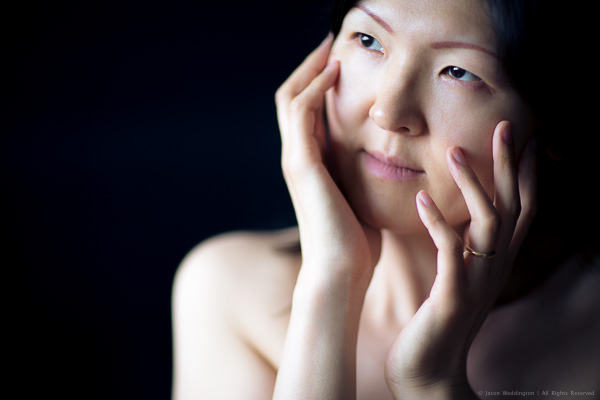
Here, I managed to avoid making the mistake, by having my subject keep both eyes on the same plane.  The look is striking, in that the depth of field drops off immediately and the image softens dramatically after the area of sharp focus around the eyes.

Here, I managed to avoid making the mistake, even though I shot the lens wide open at f/1.2,  by having my subject keep both eyes on the same plane. The look is striking, in that the depth of field drops off immediately and the image softens dramatically after the area of sharp focus around the eyes.  Exposure was 1/6400, f/1.2, ISO 200. Camera was EOS-1Ds Mark III, with EF 85mm f/1.2.


We all make mistakes.  Even the best photographers I know make a mistake now and then. And usually, we all have one we can’t get seem to stop making. For me, it’s a different mistake for each type of photography, whether it’s a portrait, a landscape, or some other type of photography.  The secret to getting better as a photographer is overcoming these mistakes and to stop making them.

When shooting portraits, my biggest problem isn’t lighting, or posing.  My problem is with my own settings, especially when using my favorite portrait lens. That would be the Canon EF 85mm f1.2L II.  This is a lens with incredibly smooth bokeh, and a unique look, especially when shot wide open. And I do love to shoot it wide open.  But it does require some extra care when doing so, which leads to my most common mistake.

When shooting the 85mm f/1.2 wide open (or even close to wide open), and close up, your depth of field is paper thin. If you were to focus on an eyelash, the eye itself would be out of focus. It’s that unforgiving. When done right, it creates a beautiful image, where the eyes are the sole focus. When done wrong, it ruins the image beyond repair.  The mistake is easily fixed; it just requires that you pay attention as the pose shifts, adjusting the aperture to give you the proper depth of field. In addition, if that paper-thin depth of field is what you want, simply adjust the pose so that it works for the shot.

This is probably my least favorite mistake, in that it’s not something that can be fixed in post.  Sometimes things happen quickly and it’s not possible to turn the dial that quickly. But sometimes taking a deep breath, and mentally running through the settings, is a good way to ensure you get the shot you want.  Is my shutter speed fast enough? Or slow enough? Do I have enough depth of field? Or too much? Is my ISO too high for the lighting conditions?  Or not high enough? It’s a mental checklist that can take only a second, but can ensure that you get the image you want.
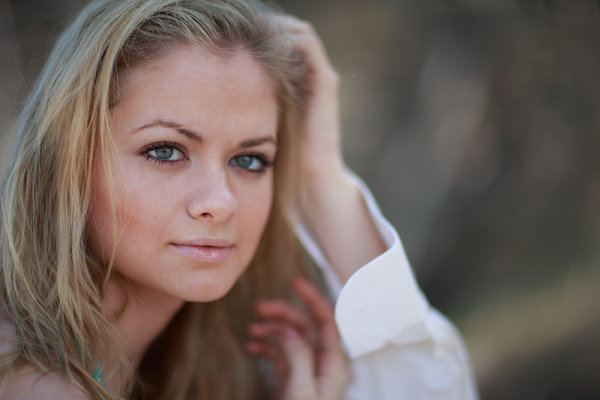
In this image, also shot at f/1.2, because the model's eyes are not on the plane, the right eye drops out of focus.  The effect is disconcerting, and a mistake I make more than I'd like. It would be so easy to turn the aperture dial and stop down enough to give me the proper depth of field. I just need to remember to do that.

In this image, also shot at f/1.2, because the model’s eyes are not on the plane, the right eye drops out of focus. The effect is disconcerting, and a mistake I make more than I’d like. It would be so easy to turn the aperture dial and stop down enough to give me the proper depth of field. I just need to remember to do that.  Exposure was 1/4000, f/1.2, ISO 100. Camera was the EOS-1D X, with EF 85mm f/1.2L II lens.
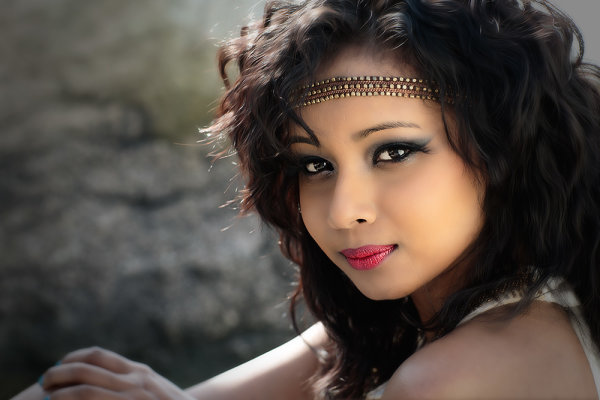
For this image, I stopped the lens down to f/5.6. This game me enough depth of field to keep both eyes sharp, while the background remained out of focus.

For this image, I stopped the lens down to f/5.6. This game me enough depth of field to keep both eyes sharp, while the background remained out of focus. Exposure for this one is 1/100, f/5.6, ISO 100. EOs-1D X with EF 85mm f/1.2L II.

Post originally from: Digital Photography Tips.

Check out our more Photography Tips at Photography Tips for Beginners, Portrait Photography Tips and Wedding Photography Tips.

My Most Common Portrait Mistake

Digital Photography School

 
Comments Off on My Most Common Portrait Mistake

Posted in Photography


Photoshop in Real Life: Portrait Series Takes Tools Literally

05 Apr

[ By WebUrbanist in Design & Graphics & Branding. ]

photoshop realism

Anyone who has used Adobe products, Photoshop or otherwise, knows that they have necessarily become quite creative in naming some of their more abstract, surreal and unusual functions.

photoshop based manipulation series

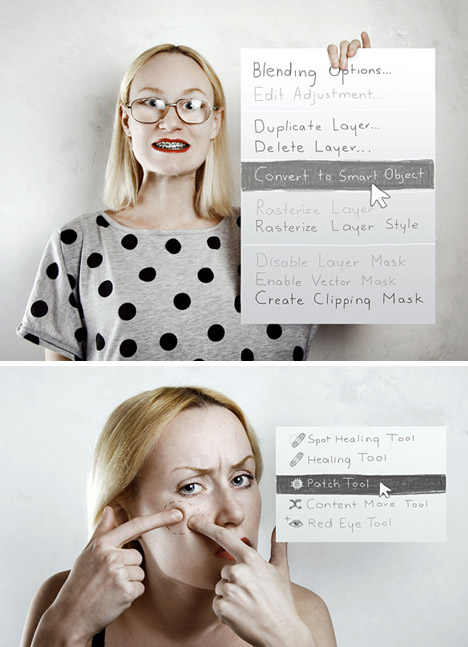
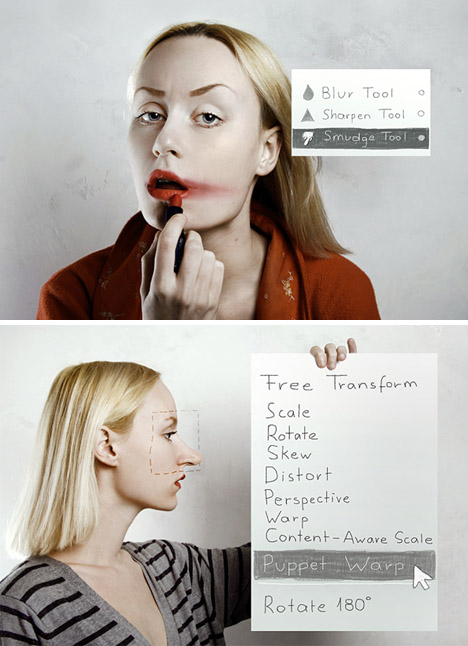
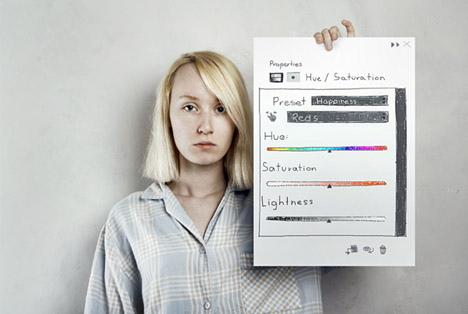
Flora Borsi of Budapest, Hungary, is a photographer and photo editor who has explored these meanings in return, taking them back out of the digital realm and applying them to ‘real life’ situations.

photoshop in real life

Through turns of phrase (‘Convert to Smart Object’) and other twisted interpretations, this series of portraits is an exploration of self, exhibition of abilities and simply fun series of mildly manipulated photos.

photo manipulations historical portraits

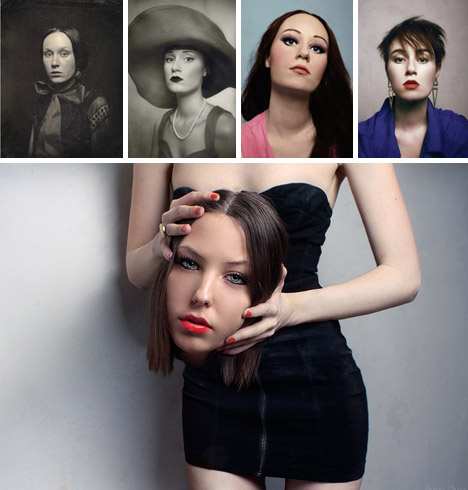
Her other series show off her capacity to understand and reproduce historical styles, but also to take and subvert visual expectations, in turn silly, serious and in some cases quite macabre.

Share on Facebook


[ By WebUrbanist in Design & Graphics & Branding. ]

[ WebUrbanist | Archives | Galleries | Privacy | TOS ]


WebUrbanist

 
Comments Off on Photoshop in Real Life: Portrait Series Takes Tools Literally

Posted in Creativity


5 Tips for Improving Your Portrait Photography

15 Mar

Here are some techniques that you may not be aware of if you’re new to portrait photography. It takes practice, but being aware of these ideas can get you experimenting, and inspire you to try shots you might not have otherwise tried.

1. Frame Tight

Next time you’re watching a movie, pay attention to the close-up shots. See the top of anyone’s head? Probably not very often.

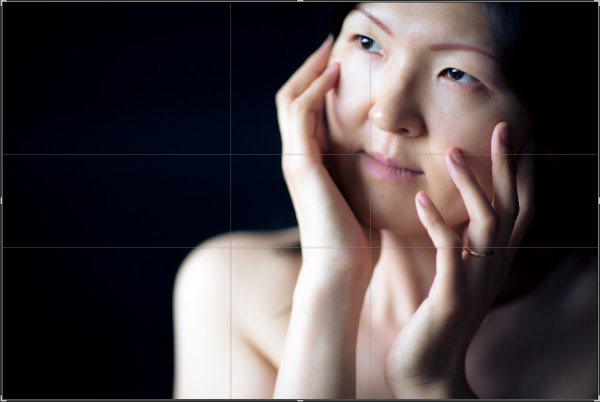
Tightly framed natural light portrait

Tightly framed natural light portrait

Leaving too much space above the head is a common mistake in portrait photography. For a close-up portrait, just cut off the top of the head. You don’t need it. I know it feels weird at first, and to be honest, I would never have tried this if someone hadn’t told me to. But it works because we connect to faces, not the tops of people’s heads. Also cropping out the top of the head (either in camera or in post) brings the eyes higher in the frame and helps you achieve rule of thirds or golden section placement of the face in the frame.

Tight portrait with golden-section crop overlay to show composition.

Tight portrait with golden-section crop overlay to show composition.

2. The eyes have it

The eyes often look best when the iris is centered in the eye. Direct the subject’s gaze to position her eyes such that the iris is about centered. By centered, I mean centered from the camera’s point of view, not the subject’s point of view.

Natural light portrait

Natural light portrait with good eye position and catchlights

I do this one of two ways, depending on the situation. If possible, I raise my left hand and have the subject follow my hand with her eyes until her eyes are positioned favorably. If this isn’t possible, I give directions like “keep your head still and just move your eyes a tiny bit to the left.”

In addition to directing your subject’s gaze to position the eyes, also take note of the catchlights in the eyes. A large, soft light source will create the most attractive catchlight. Windows without direct sunlight shining through them work great, as well as clear open sky.

3. Let the kids run wild!

You’ve heard this before but I’ll mention it again. When photographing children, one of the best ways to get natural smiles and fun photos is to shoot them in their natural habitat, which probably isn’t a photo studio.

Boy on a swing

And he only kicked me once.

Aside from a great portrait tip, this is also good all around practice to improve your photography skills. Kids at play are fast and unpredictable. Learning to frame, focus, and shoot before the moment has passed takes practice and patience.

4. Watch the hands

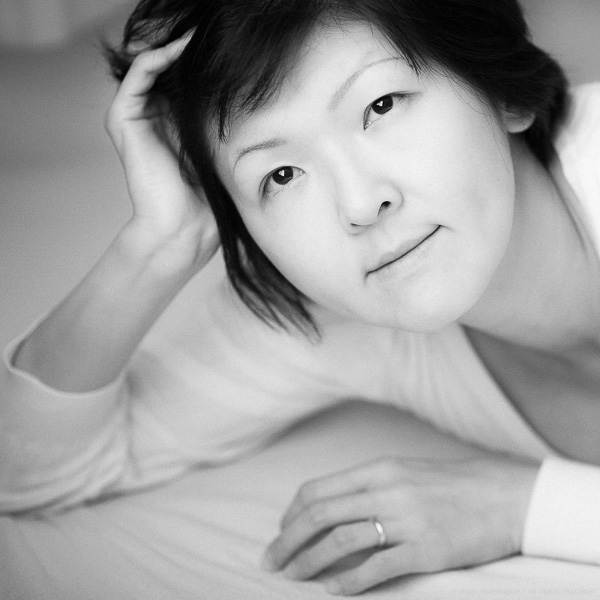
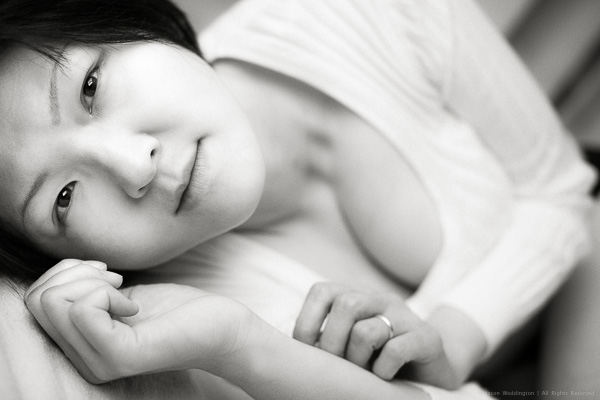
When it comes to portrait photography, hands are rarely neutral. Usually they are either adding to your photo, or taking from it. Make it a point to pay attention to your subject’s hands.

When photographing women, showing the hand in profile with the fingers curled works well. Often this looks more feminine and alluring than showing the back of the hand. Consider this example:

Natural light portrait

For portraits of women, showing the hand in profile with the fingers curled often works well.

Have you ever heard a subject complain “I don’t know what to do with my hands?” If you’ve ever stood in front of a large group of people to give a speech, then you know this feeling. When we’re put on the spot, it’s hard to do know what to do with our hands.

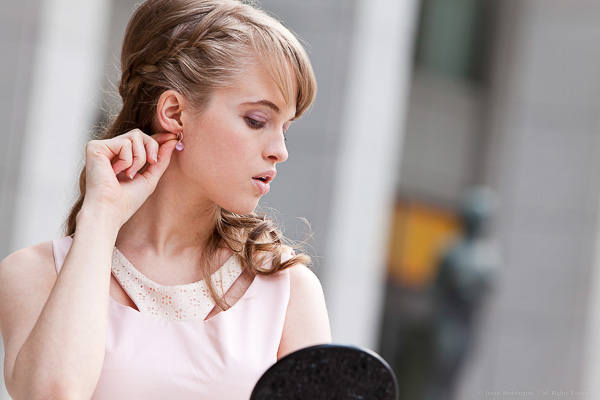
If idle hands are messing with your portrait, then put them to work. Sometimes solving the hand problem is as simple as handing the hands something to handle. Think creatively about using a prop to give your subject something to do with her hands.

Woman trying on an earring

Woman trying on an earring

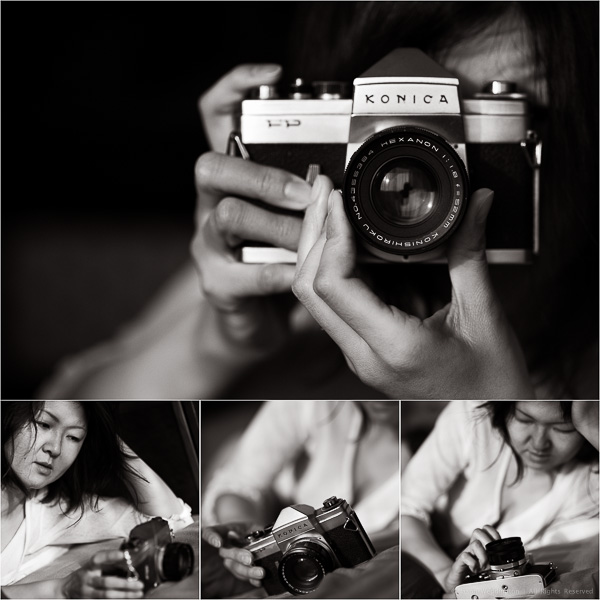
Woman playing with a classic Konica

Woman playing with a classic Konica

5. Shoot into the sun

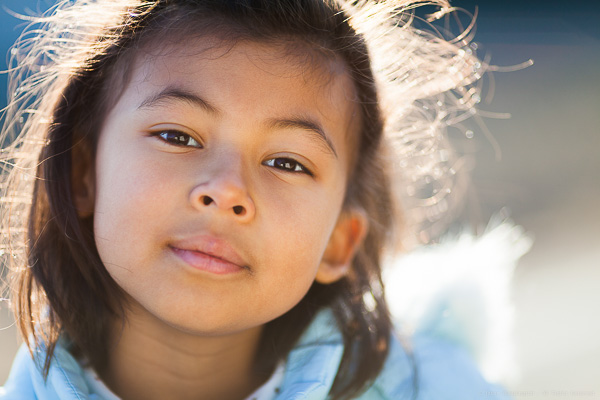
Morning and evening are great times for backlit portraits. When the sun is low in the sky, you can use it as a rim light to highlight the subject’s hair. This works best if you can position your subject against a darker background, like a shaded area, without loosing the light on the subject’s head.

Backlit portrait using the sun as a rim light

Backlit portrait using the sun as a rim light

I hope I’ve given you a few new ideas to try next time you set out to shoot a portrait. Let me know your thoughts on this article by commenting below or reaching out to me on my Facebook page. I do my best to respond to questions and comments.

Post originally from: Digital Photography Tips.

Check out our more Photography Tips at Photography Tips for Beginners, Portrait Photography Tips and Wedding Photography Tips.

5 Tips for Improving Your Portrait Photography


Digital Photography School

 
Comments Off on 5 Tips for Improving Your Portrait Photography

Posted in Photography


Melbourne Portrait Workshop: Limited Tickets Now on Sale

13 Mar

Here at dPS we’ve been producing daily tutorials and tips for almost 7 years and in that time we’ve regularly been asked by readers if we’d ever run some live – face to face – training.

Today I’m excited to announce our first ever live workshop – in Melbourne Australia (where our HQ is based).

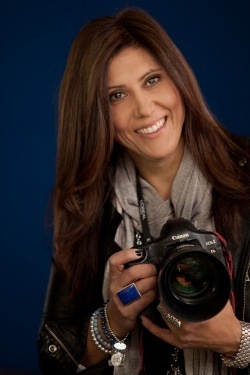
GinaMilica12-1WEB.jpgProfessional photographer Gina Milicia, author of our ‘Portraits, Making the Shot‘ will take you through everything there is to know about capturing pixel perfect portraits over a fun and informative day.
A world-class portrait photographer in her own right Gina also has an amazing gift for making the all technical jargon easy to understand, and importantly help you apply it to your own photography.

It’s sure to be a fun, inspiring and rewarding day.

Tickets are now on sale via our Eventbrite Page.

This workshop is strictly limited to 20 people.  We wanted to keep it small and intimate to ensure there will be a heap of personal interaction with Gina. So don’t delay grabbing your spot – we expect it to fill fast.

Event Details

  • Date: Saturday 20 April 2013
  • Where: Gina Milicia’s studio in Kensington, Melbourne
  • Price: full price is $ 497 (AUD)
  • What: a full day with portrait photography pro Gina Milicia

This is our first ‘hands on ‘ photography workshop and we are filling it with lots of practical exercises and information.

What you will learn:

  • How to prepare for a shoot
  • Camera settings
  • Quality of light
  • Deciding on lighting style
  • Using a light meter and correct exposure for beautiful skin tone
  • Poses/ basic go-to poses
  • How to direct with confidence
  • Workflow
  • Basic post-production techniques

Gina Milicia will be sharing her experience over 25 years of photographing celebrities and events.  At the end of the day you’ll be equipped to take stunning portraits of your own.

Learn more (including seeing a FAQ and a rundown of the day) and Grab Your Tickets Today here.

Post originally from: Digital Photography Tips.

Check out our more Photography Tips at Photography Tips for Beginners, Portrait Photography Tips and Wedding Photography Tips.

Melbourne Portrait Workshop: Limited Tickets Now on Sale


Digital Photography School

 
Comments Off on Melbourne Portrait Workshop: Limited Tickets Now on Sale

Posted in Photography


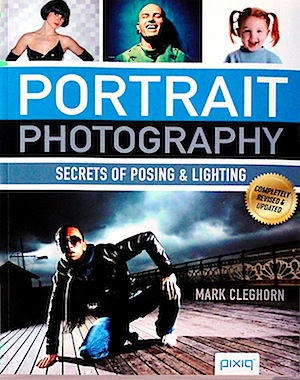
Portrait Photography: Secrets of Posing & Lighting [Book Review]

12 Mar

Portrait Photography.jpgPortrait photography, IMHO, is up there in degrees of difficulty with wildlife and sports/action photography … but at least, when faced with a tiger or a pole vaulter, you don’t have to face a possibly irate subject when you’ve finished the shot. Hopefully!
With portrait photography you not only have to face the sitter during and after the session but you also have to deal with that particular person if they’re also the client!

The book’s author Mark Cleghorn has been a pro photographer for over 30 years, specialising in ‘creative’ wedding and portrait photography. He is a member of a number of pro associations and has won a number of awards for his work as well as running many training workshops and seminars.

In Cleghorn’s view ‘Understanding the fundamentals of posing and lighting is crucial to successful portrait photography.’

You might also add the stricture — KISS! His own personal motto is ‘Natural light before reflector, reflector before flash, and flash as a last resort.’ He also suggests you should understand how to use and manipulate natural ambient light before you complicate things with technology …. Got me!

The chapter headings are informative:

  • So much equipment, so little money.
  • Poses and expressions.
  • Studio lighting made simple.
  • Creative lighting techniques.
  • On location.

First up, choosing a camera and lenses. The advice is that while a bulky, expensive medium format camera gives a better quality of image and delivers huge file sizes that are perfect for advertising, they are overkill for a simple portrait.

The DSLR is a preferable choice due to its comparatively reasonable cost, moderate size, along with access to a wide range of lenses and access to complete camera control.

This is followed by a rundown of the three types of flash available: accessory, shoe-mounted; power pack kits; monolights. Considerable detail is given on how to modify their flash output, the use of gels, metering, softboxes, reflectors, snoots and spotlights, diffusion, etc.

A key chapter covers posing and expression, which is where the human interface is at its most important and Cleghorn displays his extreme knowledge of the human figure and how to show it off at its best: ‘Every pose … starts with the feet, as it is the way in which the subject stands that determines whether or not he or she looks comfortable.’

His advice on how to photograph children is golden: keep things simple, allow the expressions to tell the story, work on the same level and, with very young children, encourage them to move around the studio, make it seem like a game.

And how to cope with problems like a subject’s bald head, spectacles, double chins, squinting and those who are obviously overweight, disabled subjects, those with ‘sleepy eyes’, big ears or noses and (with couples) differing heights. The advice is magic!

Moving on to lighting, there’s detailed discussion on how to place lights, control fill, hair and backlights and control their output. Low, mid and high key lighting is covered in considerable detail, with excellent examples shown.

Some off the wall techniques are demonstrated, like the projection of another image onto the subject, introducing a surreal effect. The use of a single light source and softlight are discussed as well as the role of the cross processing effect achievable in Photoshop.

Quite a few pages are given over to the searching for and use of suitable locations, natural exteriors and shooting in the home.

I often wonder, having read such a useful book, as to the sanity of such a high end and obviously successful photographer in this field in giving away such seriously useful hints, tips and advice.

This is the ‘go to’ book on the subject!

Author: M Cleghorn.
Publisher: pixiq.
Size: 28x22x1cm. 128 pages.
ISBN 978 1 4547 0243 6.
Price: get a price on Portrait Photography: Secrets of Posing & Lighting at Amazon (currently 36% off).

Post originally from: Digital Photography Tips.

Check out our more Photography Tips at Photography Tips for Beginners, Portrait Photography Tips and Wedding Photography Tips.

Portrait Photography: Secrets of Posing & Lighting [Book Review]


Digital Photography School

 
Comments Off on Portrait Photography: Secrets of Posing & Lighting [Book Review]

Posted in Photography


Guardian photographers share tips for getting a portrait in ten minutes

09 Mar

Kofi-Annan-010.jpg

British newspaper The Guardian is known for its editorial photography, but like all working pros, the staff photographers sometimes only get a few minutes to capture their subjects. In an article posted on the Guardian’s Photo Blog, several of the paper’s photographers share their tips for getting portraits in a hurry. Click through for some pictures, and a link to the article at guardian.co.uk.

News: Digital Photography Review (dpreview.com)

 
Comments Off on Guardian photographers share tips for getting a portrait in ten minutes

Posted in Uncategorized


5 Fail Proof Portrait Poses

16 Feb

In this post Gina Milicia – author of our brand new eBook “Portraits: Making the Shot” shares 10 tips on directing a portrait shoot like a Pro.

When I was starting out as a portrait photographer, I began creating a visual diary and mimicking the images I loved. Some people will tell you that it’s wrong to copy but for centuries, every generation of artist has imitated the masters before them. Once they’ve mastered the technique they move on to develop their own style.

Photography is no different.

You don’t have to come up with a thousand new ways to pose someone. Use the ways that work for you and your model.

Here are 5 of my “go to” poses

1. The Controposto (or S) pose

SundayFS06 2

This is one of my go-to poses. It’s a great starting point for both men and women because it’s flattering for almost any body shape and doesn’t require any special props or locations.

2. Lean on me (or working the wall)

Getaway11 100
This is a particularly good pose for people who are really awkward. Some people have a real awareness of their body and they will always look comfortable, but it’s not as easy as that for others. Simply giving your model something to do, like leaning against the wall, can be enough to relax them.

3. Jump in my Car

Valentine08 198

A car is another great prop. On a bright sunny day, the shade of a car will give you great light and again, your model will have something to do to help them relax.

4. A leap of Faith

CTM Robotless 1
As with many of the other poses mentioned, if someone is awkward simply standing, giving them something to do can really bring the photo to life.

It’s not always easy but you can introduce some life and movement into the person and their clothes by getting them to jump or leap.

5. Walk the line

SundayFS06

The walking shot is great if you want to capture groups, couples and singles.
I like to shoot from a low angle with a fast shutter speed to freeze motion.

Enjoy this post? Check out more of Gina’s advice in her new eBook – Portraits: Making the Shot (and get a bonus one free for the next few days only).

Portraits_468x190px.jpeg

Post originally from: Digital Photography Tips.

Check out our more Photography Tips at Photography Tips for Beginners, Portrait Photography Tips and Wedding Photography Tips.

5 Fail Proof Portrait Poses


Digital Photography School

 
Comments Off on 5 Fail Proof Portrait Poses

Posted in Photography


Panasonic puts 43mm F1.2 portrait lens and 150mm F2.8 on lens roadmap

02 Feb

43mm.png

CP+ 2013: Panasonic has added a 42.5mm F1.2 portrait lens and 150mm F2.8 super-telephoto prime to its lens roadmap for Micro Four Thirds, for release in the near future. The lenses, shown in prototype form at Photokina 2012, last September, are shown as being ready for release just after the 14-42mm II APSH. kit zoom launched this week.

News: Digital Photography Review (dpreview.com)

 
Comments Off on Panasonic puts 43mm F1.2 portrait lens and 150mm F2.8 on lens roadmap

Posted in Uncategorized


10 Ways to Direct a Portrait Shoot like a Pro

30 Jan

In this post Gina Milicia – author of our brand new eBook “Portraits: Making the Shot” shares 10 tips on directing a portrait shoot like a Pro.

Mallory Janson New York: photo by Gina Milicia

1. Check your Mood

Have you ever been served by a rude shop assistant or waiter that was in a bad mood? How did it make you feel?

Your mood on the day of your shoot is going to have a huge impact on the people around you. If you want the people you photograph to look and feel relaxed then you should look and feel relaxed too.

2. Try to be interested rather than Interesting

A great portrait photographer knows how to speak to their models and make them feel comfortable, confident and relaxed.

A persons name is the sweetest sound to their ears so remember it and use it often.

Most people’s favorite topic of conversation is themselves. Ask questions, be interested and really listen to their answers

3. “Be yourself, everyone else is already taken.” Oscar Wilde

Ditch the boring clichés, saying stuff like “make love to my camera” just sounds really creepy

Work with a language you are totally comfortable with. If you are softly spoken then this is how you should give direction. Trying to be someone else will just make directing awkward for you and your model.

Daniel Macpherson: photo by Gina Milicia

4. “By failing to prepare, you are preparing to fail.” Benjamin Franklin

As the photographer you should always be the first to arrive and the last to leave.

Always have your lighting, poses and location worked out in advance. Your model will already be feeling nervous and vulnerable. Subjecting them to lighting tests and your uncertainty is only going to make them feel worse.

5. YOU need to know how to Pose

Practice posing to learn which positions will flatter a body and which shapes looks good from different angles. Or be a model for another photographer and experience what it’s like to be directed by someone else.

Then explain the pose in different ways.

  1. Get in there and do the pose for them. Show them what you want.
  2. Explain it to them at the same time.
  3. Then get your model to do the pose before you start shooting.

This is not only the quickest and most effective way to get your sitter into the pose, it helps you develop a rapport. Once your model knows how nice the pose looks on you (and realizes they won’t look foolish), they will be much happier to do what you’re asking.

Lachy Hulme: photo by Gina Milicia

6. Use Visual rather than Verbal Cues

I hear and I forget. I see and I remember. I do and I understand.” – Confucius

The quickest and most effective way to direct a person is by giving them visual rather than verbal cues.

Telling my clients how to stand with verbal cues would sound something like this

Stand with your feet adjacent to each other, weight on your back foot, hips side on, front toe to camera, right arm on hip, left arm in pocket, chest ¾ to camera , head slightly right…. No sorry my right. Now move your head left… sorry, I mean right. Now step left… sorry I mean right

Verbal cues become incredibly confusing and can really diminish rapport with your client. You become frustrated because your client keeps moving the wrong way and your client is confused, uptight and lacking in confidence.

I have found that visual cues are by far the best way to pose your clients.

I simply swap places with my client walk onto the set and go into the pose so they can see exactly what I’d like them to do.

Once your client is in the correct position continue to use visual cues to direct them.

Some examples of this would be;

Turn your face towards that tree” instead of “turn your face to the left

Move your face towards the window and move your eyes back to look into my camera” instead of “turn your face to the right and look at me

7. Praise and Encourage

Give positive feedback when your model is doing the right thing. It’s classic positive reinforcement but it works. Ignore the bad and praise the good.

Talking to your model will keep them relaxed so they don’t worry about what you’re thinking behind the camera (because that’s exactly what they’re worrying about).

Shaun Micaleff: Photo by Gina Milicia

8. One Size does not Fit All

A photograph is just a tiny slice of a subject. A piece of them in a moment. It seems presumptuous to think you can get more than that.” – Annie Leibovitz

It’s really important to choose poses that fit your model.

Trying to foist a particular style and attitude onto the shoot is a short cut to your model looking and feeling uncomfortable. Most great portrait photographers are masters at letting their model’s personality come through in their shots.?

9. Eye, eye, eye

You can’t hide your lying eyes” – The Eagles

Everything you think about is mirrored in your eyes. I actually notice this in the eyes of women more than men.

Even if you’ve nailed the pose, the lighting, and the location, an insincere smile or eyes that lack emotion can ruin your shot.

How do you get your sitter to switch off?

While you can’t actually stop your sitter from thinking, you can direct them to a better headspace to reduce any negative thought patterns.

Here are a few visualization techniques I use

  1. Favorite holiday destination
  2. Dream job scenario
  3. Meeting one of their idols

Ask your sitter to look away from the camera, and then back again after each frame. This is especially useful on a long shoot as it distracts your sitter long enough to give them fresh, thoughtful eyes for each shot.

Make small variations on the pose to make it a little more interesting, such as asking your sitter to make their smile bigger or smaller.

Just keep talking

10. The quiet moments in between frames

Some of my best portraits have been captured in those moments between frames when the model thought I wasn’t shooting and relaxed their “pose face” or glanced/laughed off camera. Watch for these moments. They are gold.

Enjoy this post? Check out more of Gina’s advice in her new eBook – Portraits: Making the Shot (and get a bonus one free for the next week only).

Post originally from: Digital Photography Tips.

Check out our more Photography Tips at Photography Tips for Beginners, Portrait Photography Tips and Wedding Photography Tips.

10 Ways to Direct a Portrait Shoot like a Pro


Digital Photography School

 
Comments Off on 10 Ways to Direct a Portrait Shoot like a Pro

Posted in Photography


Glitter Portrait: How I Took It

27 Jan

4406946969.jpeg

Recently while surfing through some shots on Flickr I came across the shot above – taken by CT Pham (aka Phamster on Flickr).

The shot was eye catching and an interesting portrait and under it was a description of how it was taken with a link to see some behind the scenes shot. I messaged CT Pham to see if he’d be willing for us to share it on dPS and he agreed. Here’s the behind the scenes info. I’d love to see some shots inspired by this in comments below!

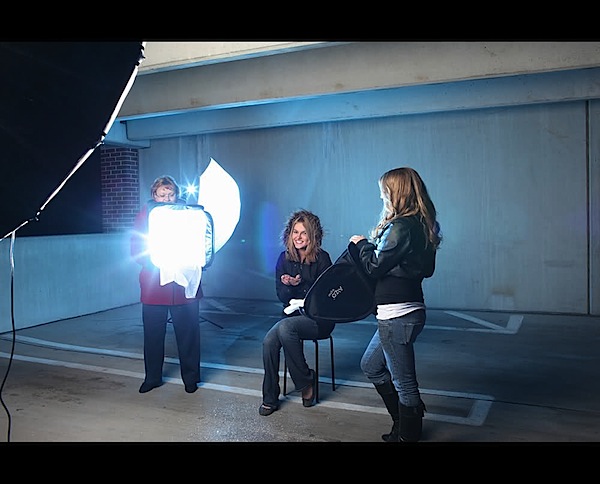
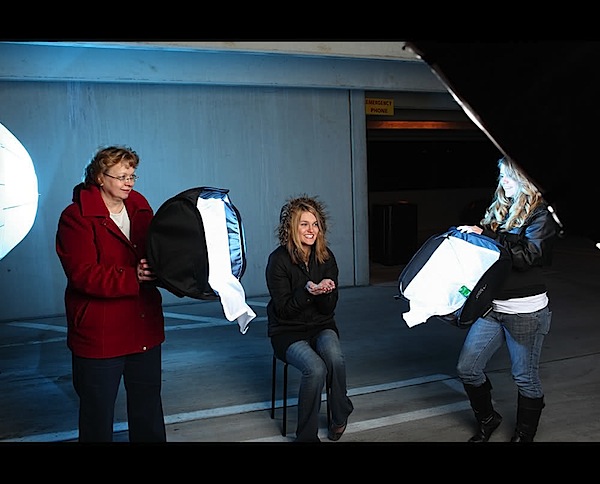
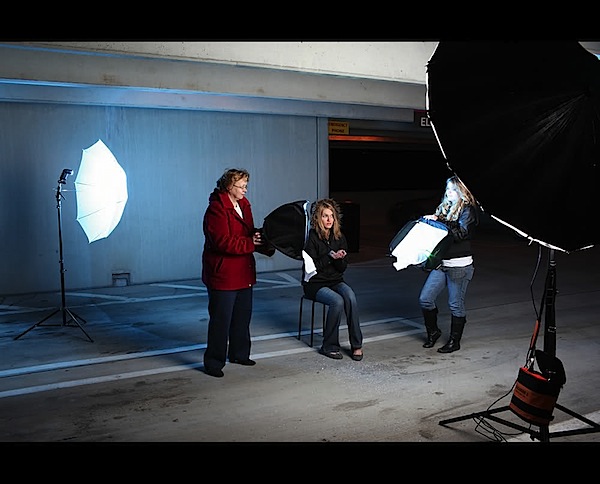
This shot was done in a parking garage with 3 speed lights and a single alien bee strobe AB1600.

I had the glitter cross lit by 2 speedlights gelled with blue and green (the green wasn’t showing up too well).

It is a project I have been thinking of doing for a while and hadn’t had a chance – but last night presented it self.

Setup:

  • 1 speed light in the rear and a shoot thru for the wall and partial side lighting
  • 2 speed lights for the cross lighting
  • 1 AB 1600 for the key light 64PLM was used
  • all speed lights were full power
  • the AB1600 was just below 1/4 power being it was really close to Katie
  • lots of glitter was used – LOL. Really fun shot!

Camera: Canon EOS 5D Mark II
Exposure: 0.006 sec (1/160)
Aperture: f/9.0
Focal Length: 85 mm
ISO Speed: 500
Exposure Bias: 0 EV
Flash: Off, Did not fire

Here are the behind the scenes shots of the setup!

_o8un1x.jpg

_vnfq7d.jpg

_2z5reyr.jpg

Check out more of Phamster’s work on Flickr or on his site.

Post originally from: Digital Photography Tips.

Check out our more Photography Tips at Photography Tips for Beginners, Portrait Photography Tips and Wedding Photography Tips.

Glitter Portrait: How I Took It


Digital Photography School

 
Comments Off on Glitter Portrait: How I Took It

Posted in Photography