RSS
 

Posts Tagged ‘Portrait’

Our Perfect Portrait Pack of eBooks – 73% Off Today Only

21 Dec

It is day 9 of our 12 deals of Christmas and it is one we know many of you have been waiting for – crazy deals on our Portrait Photography eBooks by Gina Milicia.

We’ve got a brilliant bundle option for those new to Gina’s teaching or deals on each individual eBook for those who just want to complete the set.

Portraits bundle gina

Either way we’re so confident you’ll love them we’re offering a satisfaction guarantee.

We do this because they’ve already helped 10s of thousands of people improve their portrait photography.

It’s your turn today.

Any of our portrait ebooks just $ 7 (normally $ 19.95)

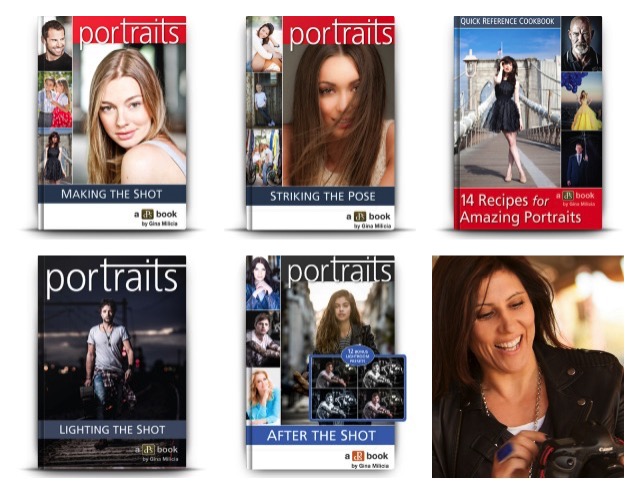
  • Portraits: Making the Shot $ 7 – Practical tips for bringing your portraits to life
  • Portraits: Lighting the Shot $ 7 – Discover the secrets of beautiful portrait lighting
  • Portraits: Striking the Pose $ 7 – Your go-to guide of natural posing positions
  • Portraits: After the Shot $ 7 – Master portrait post production and workflow

Learn more about each eBook and grab yours here.

Save Even More and Get a Bonus eBook When You Bundle Them

Pick up the whole set for just $ 21 and get our 14 Recipes for Amazing Portraits ebook as a special bonus. That’s 5 books at 73% off.

I think this deal speaks for itself and I know you’ll love these eBooks for years to come.

But don’t hesitate – this deal lasts just 24 hours and the clock is already counting down.

googletag.cmd.push(function() {
tablet_slots.push( googletag.defineSlot( “/1005424/_dPSv4_tab-all-article-bottom_(300×250)”, [300, 250], “pb-ad-78623” ).addService( googletag.pubads() ) ); } );

googletag.cmd.push(function() {
mobile_slots.push( googletag.defineSlot( “/1005424/_dPSv4_mob-all-article-bottom_(300×250)”, [300, 250], “pb-ad-78158” ).addService( googletag.pubads() ) ); } );

The post Our Perfect Portrait Pack of eBooks – 73% Off Today Only by Darren Rowse appeared first on Digital Photography School.


Digital Photography School

 
Comments Off on Our Perfect Portrait Pack of eBooks – 73% Off Today Only

Posted in Photography


Getting the Most Out of Each Portrait Location Spot

29 Nov

159

Some photographers are very inefficient when it comes to shooting in a portrait location. They will take a photo here by this tree, then move over to another tree, then by the pathway, and one at the rock. Then they can’t figure out where to shoot next, because they’ve already used every “backdrop” they can see in that area, and they only have a handful of shots to show for their efforts.

I’d like to share a few tips with you for using your locations fully and completely, without leaving any leaf, tree, stone, or pose unturned. You’ll speed up your sessions, and get a lot more useable photos by adopting these habits.

158

First, find a background that you like. Look for good light, elements that frame your subject, colors that complement, something to lean or sit on, etc. Once you’ve found a spot or background to start with, use it completely and quickly before you move on to a new spot.

161

I’ve created a few lists that can help you remember all the ways that you can pose your subject(s), and use a background fully, before you move on. Use these ideas to create your own list that you can carry with you until “wearing each spot out completely” becomes second nature.

All subjects with any background

  • Standing
  • Seated
  • Smiling
  • Serious
  • Laughing
  • Looking away
  • Close-up
  • Far away
  • Portrait (vertical) orientation
  • Landscape (horizontal) orientation
  • Full body
  • Head shot
  • With a prop
  • Without a prop
  • Unexpected composition (such as subject on the very edge of the frame, subject centered right in the middle, etc.)

162

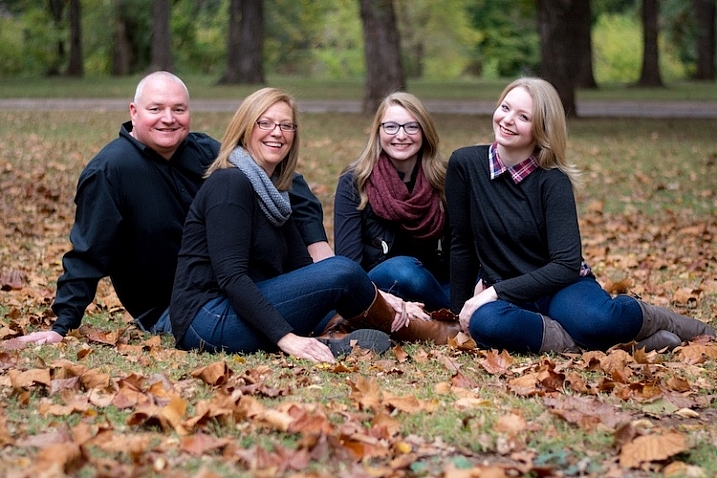
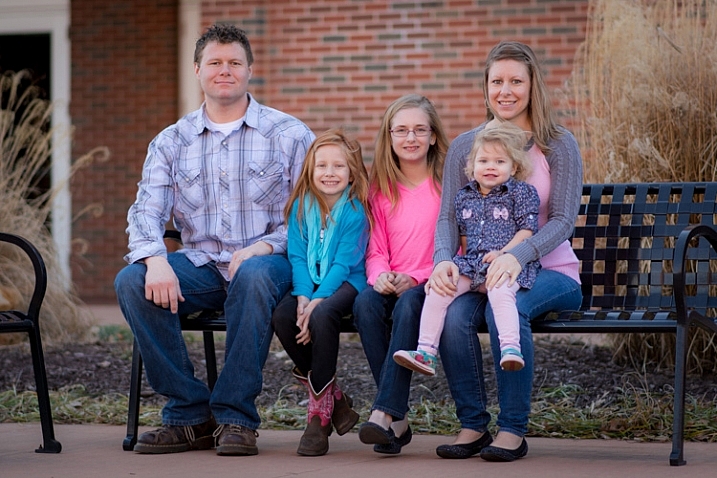
Families, couples, or groups with any background

  • All looking at the camera  and smiling
  • Looking at each other
  • Hugging
  • Laughing
  • All sitting
  • All standing
  • Some sitting, some standing
  • Parents
  • Kids
  • Boys
  • Girls
  • Parent with child
  • Individual portraits of each family member
  • Couple hugging facing each other
  • Couple hugging, one behind the other
  • Holding hands
  • Walking towards you
  • Walking away from you

171

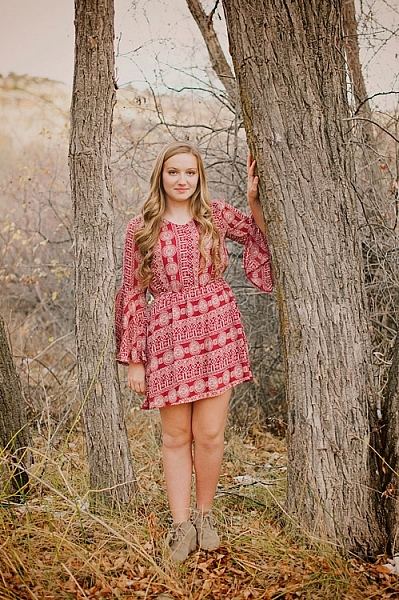
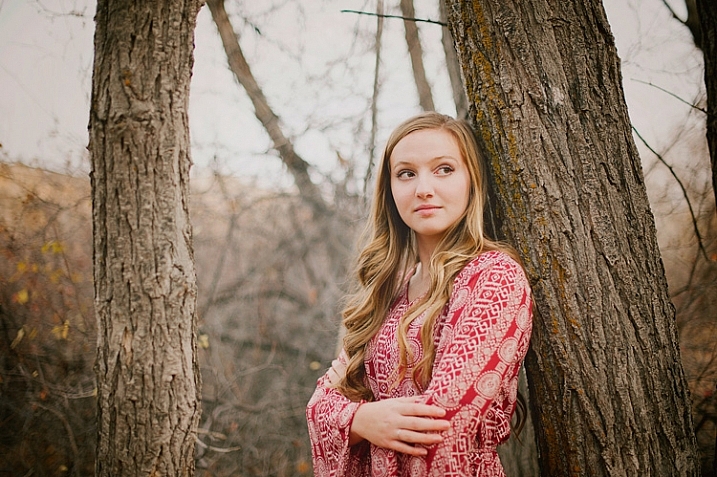
Individual with trees or walls (something to lean against)

  • Shoulder leaning on a wall or tree
  • Back to the wall or tree, looking at the camera
  • Hand to the tree or wall
  • Head leaning on the tree or wall
  • Arms folded
  • Hands in pockets
  • Hand on hip
  • Sitting against the tree or wall
  • Any of the above, looking away from camera
  • Funny/silly looking around tree or wall

169

If you move quickly through each of these poses, your subject won’t feel like she’s stuck in one place forever, but you will have so many options to choose from when you are sorting through the photos later. You might not choose to edit every pose, in every location. But, you may find as you go through the photos later, that you really like the serious face in one location, and you really love the close-up in a different location. Shooting so many options in each location at that moment gives you that choice, instead of being stuck with the one and only option you thought of in that moment.

168

Some of your photos may end up looking very similar to each other, but you may decide that you really like the full body pose better than the tighter shot. If you had only shot that location with a cropped pose, you wouldn’t have that option. Alternatively, if you don’t shoot a cropped-in pose at that time, youhave the option to crop it later, but you will lose photo quality by cropping it the file smaller.

173

As you learn to use each location fully, you will find that you can get many more useable photos in much less time, with less effort, and in locations that you might not have even noticed before. One tree and one person could be one photo, or it could end up being a hundred photos if you are extremely creative and efficient.

Give yourself a challenge to figure out at least 10 different photos in one location spot, and share a couple of your favorites in the comments! I’d love to see what you come up with.

googletag.cmd.push(function() {
tablet_slots.push( googletag.defineSlot( “/1005424/_dPSv4_tab-all-article-bottom_(300×250)”, [300, 250], “pb-ad-78623” ).addService( googletag.pubads() ) ); } );

googletag.cmd.push(function() {
mobile_slots.push( googletag.defineSlot( “/1005424/_dPSv4_mob-all-article-bottom_(300×250)”, [300, 250], “pb-ad-78158” ).addService( googletag.pubads() ) ); } );

The post Getting the Most Out of Each Portrait Location Spot by Melinda Smith appeared first on Digital Photography School.


Digital Photography School

 
Comments Off on Getting the Most Out of Each Portrait Location Spot

Posted in Photography


PPE 2015: Interview with portrait photographer Victoria Will

28 Nov

Trained as a photojournalist, Victoria Will found herself gravitating toward portraiture as she honed her skills at the New York Post. She’s now known for her celebrity portraits, including a series of tintype portraits created at the Sundance Film Festival. We sat down with her at PPE 2015 to learn more about what led her to where she is now and how she connects with her subjects. Read more

Articles: Digital Photography Review (dpreview.com)

 
Comments Off on PPE 2015: Interview with portrait photographer Victoria Will

Posted in Uncategorized


3 Reasons to Have Your Own Portrait Taken

19 Nov

I teach a six-week class at Oklahoma State University called “Preparing Online Instructors” which is designed to give faculty who have never taught internet-based classes, a solid foundation upon which they can build a successful online course. The class is delivered mostly online, and structured much like any other: it has quizzes, homework assignments, and required online discussions. One of the goals for my class is to put college instructors in the role of a student, so they get to experience an online class firsthand. This gives them a better understanding of the needs and challenges that any normal college student might face when taking online classes.

In the most recent offering of this POI course one of the participants, who is a tenured professor with decades of teaching experience under his belt, remarked at how strange it was to once again have homework and quizzes. “I haven’t taken a class like this in almost 30 years,” he said to me at the end of our third week, “And I think I finally understand why my students have so much trouble meeting due dates.” As photographers it’s essential that we take the same approach from time to time: put down our cameras and experience what it’s like to be on the other side for a change.

have-your-photo-taken-family-leaves

A few weeks ago my wife and I had a friend of ours take some photos of our family, and it was a nice opportunity to remove my photographer’s hat, and just go along for the ride as a person being photographed. We had a fantastic time, and along the way I realized a few things that have not only helped me, but I believe would benefit you and many other photographers as well.

#1 It helps you understand your clients’ perspective

Most of the time we photographers see things from our own side, and when we go to a photography session we look at things that are important to us; lighting, backgrounds, props, camera gear, and so on. When our clients show up, we’re often in full photographer mode telling people what to do, where to look, how to pose, and generally asking them to meet our needs. Switching things around and allowing yourself to be photographed helps you see all these things in an entirely different perspective—one that could make all the difference in your own work.

have-your-photo-taken-family-bench

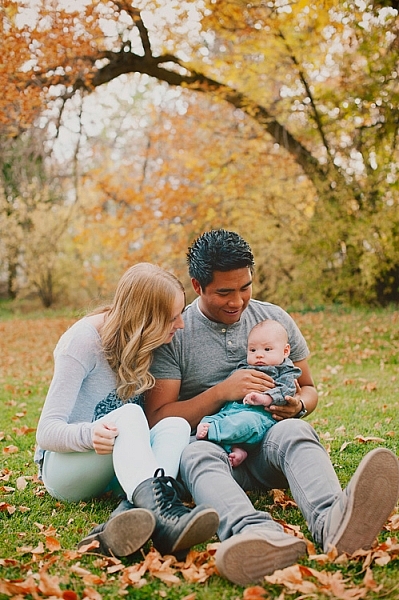
Having photos taken with my own kids gave me a whole new appreciation for what this family must have gone through before I took their pictures.

When we went out to our recent family session I realized there was a whole lot going on behind the scenes before we even met up with our photographer, and even though I was aware of this intrinsically, I had never actually experienced it firsthand. My wife and I bought new shirts for ourselves and our two little boys, we all got haircuts, and there were all sorts of last-minute hassles from diaper changes to shoe switches. When we arrived on location with our photographer we were frazzled, our boys were anxious, and we desperately tried to keep all the clothes clean just long enough for some pictures that were bound for our Christmas card.

have-your-photo-taken-baby-blanket

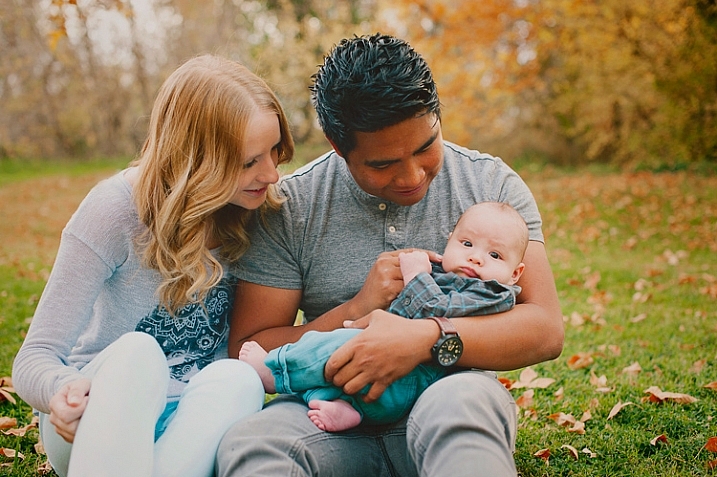
Knowing what it took to get my own kids prepared for a photo session, I can only imagine what this baby’s parents must have gone through to get him ready.

Normally when I take photos I don’t pause to consider everything my subjects may have gone through leading up to the shoot, and if people arrive late, or seem like they are not paying attention, I can get a little frustrated (though I try to never let it show). However, after putting myself in the role of a client, I have a new appreciation for just how hectic things can be, and have tried to loosen up much more ever since.

If someone seems distracted, maybe there’s a good reason. If parents seem exasperated with their kids, maybe they spent hours before the shoot trying to get everyone to put on their nice clothes, or even, if there are toddlers, put on any clothes at all. There’s a lot going on in the lives of our clients, and if we don’t take time to be in that role ourselves from time to time, it can cause us to lose touch with reality and get stuck with photography tunnel vision. Even though it might seem counterintuitive to suggest that one of the best ways to improve as a photographer is to stop taking pictures and let yourself be photographed, I certainly found this to be the case for me.

have-your-photo-taken-senior-hat

Watching a photographer take pictures of my four-year-old helped give me new ideas for taking photos of high school seniors.

It helps you understand other photographers’ perspective

When I’m doing a photo session I’m often thinking about technical details; where the light is coming from, whether I will need to manipulate light with reflectors or strobes, what exposure settings will produce the results I want, and so on. I, of course, make sure to smile and interact with my subjects too, and all this makes for a tricky combination. Having my own photos taken helped me understand all this much more than I ever have before, and has helped me see my own role as a photographer in a new way.

have-your-photo-taken-baby-basket

The woman who took our pictures was a consummate professional. She was friendly, she spent time with our kids, she suggested fun poses but gave us plenty of leeway to have our own input, and she even brought her own daughter to help get our kids to smile. I honestly don’t know how she did all this, because we spent much of the session coralling our boys who were more interested in getting their new jeans dirty, than having their pictures taken (although she did get plenty of fun candid shots when that happened).

Being on the other side of the lens helped me have a new understanding of what a good photographer needs to do in order for a session to go smoothly, and helped me see some glaring flaws in my own technique that need to be addressed. I learned from our session that I need to be more patient, while also being more confident. I appreciated when our photographer told us where to go, what to do, how to pose, and do other sorts of things that I sometimes have trouble saying. I wanted our photographer to take charge, and that’s precisely what she did. She walked a good line between friendly and firm, while also paying attention to the setting and the the technical aspects of her camera gear.

It’s one thing to experience this from your own perspective, but letting your guard down and allowing yourself to be photographed can help you not just appreciate the role of photographer but find ways to improve your own skills.

have-your-photo-taken-fourth-grader

It gives you new ideas for photographs

Like any good photographer I like to study the work of others, from portrait artists like DaVinci and Rembrandt, to the landscapes of Ansel Adams and modern masters like Steve McCurry. Learning from other practitioners is one of the best ways you can grow. Even just browsing through Instagram or Flickr often helps inspire me, and give me new ideas for my own photography. But nothing was quite like getting our own pictures taken by a professional photographer.

We had our photo session at a park on the south side of town that is one of my favorite places to shoot. I know what I like in terms of setting, lighting, and background, and while I am quite pleased with the images I bring back from my own shoots I was surprised at what our photographer was able to get from the exact same location. She had vastly different ideas for our pictures than I would have ever come up with on my own, and seeing her go through the mental and physical process of creating our pictures gave me all sorts of new ideas for my own photography.

I often get inspiration from other pictures, and enjoy watching tutorials online where people discuss how they got certain shots, but being part of the creative process as the subject instead of the photographer put all this in a whole new light. I came back from our session full of new ideas to try the next time I go there, or anywhere else, to take photos.

have-your-photo-taken-high-school

It’s kind of ironic that one of the best ways to improve as a photographer is to put down your camera and let someone else do all the work, but I am so glad I had this experience and wish I had done it a lot sooner. It’s not always easy or even possible to do this sort of thing. For example, if you are a wedding photographer but are already married, you probably won’t get to go through the experience of being the bride or groom being photographed. If there is a way, though, I highly recommend making it happen, and at the very least you should end up with some nice pictures of yourself and your family

Just like some of the professors who take my class at OSU, I found myself learning so much more than I ever would have realized, simply by putting myself in someone else’s shoes.

What about you—what are some things you have learned from being photographed? What are some of your favorite pictures that illustrate how you have grown? Leave your thoughts and any examples in the comments below.

googletag.cmd.push(function() {
tablet_slots.push( googletag.defineSlot( “/1005424/_dPSv4_tab-all-article-bottom_(300×250)”, [300, 250], “pb-ad-78623” ).addService( googletag.pubads() ) ); } );

googletag.cmd.push(function() {
mobile_slots.push( googletag.defineSlot( “/1005424/_dPSv4_mob-all-article-bottom_(300×250)”, [300, 250], “pb-ad-78158” ).addService( googletag.pubads() ) ); } );

The post 3 Reasons to Have Your Own Portrait Taken by Simon Ringsmuth appeared first on Digital Photography School.


Digital Photography School

 
Comments Off on 3 Reasons to Have Your Own Portrait Taken

Posted in Photography


David Stewart’s ‘Five Girls’ wins £12,000 Taylor Wessing Photographic Portrait Prize

18 Nov

A photographer who has charted the growing up of his daughter and four of her friends has won the Taylor Wessing Photographic Portrait Award with a re-staged picture he entered into the 2008 competition. Five Girls 2014 shows the group six years on from an original image that was taken right before their GCSE school exams (11th grade). Read more

Articles: Digital Photography Review (dpreview.com)

 
Comments Off on David Stewart’s ‘Five Girls’ wins £12,000 Taylor Wessing Photographic Portrait Prize

Posted in Uncategorized


How to do Basic Processing on a Portrait in 5 Minutes Using Lightroom

11 Nov

There’s a Triangle of Service that you may have seen before which goes something like this: You have three options available (cheap, quick, quality) but can only choose two. I first saw this on a sign in an automotive shop years ago, but it applies in almost any professional setting where goods and services are produced for consumption, and is especially true in photography.

As a photographer you don’t have unlimited time, but you and your clients expect quality results, and doing so is not always cheap or easy. Fortunately Lightroom makes it simple to do a basic portrait processing job in only a few minutes, which you can then copy and paste to other similar photos, to make your work even faster.

five-minute-lightroom-portrait-processing-headshot

Before I get too deep into this article I want to make clear that the following steps are a process that works for me, but your unique solution might be a bit different. The important lesson is to find a workflow that is easy to replicate and repeat, so you don’t spent all your time doing the same types of edits over and over.

As you work with any editing program – whether it’s Lightroom, Photoshop, Capture One, or even a free tool like Photos or Picasa – it’s a good idea to find an editing style that matches your photography style. I know the look I’m going for when I edit a portrait or headshot, which might be entirely different from what you prefer. Knowing how to achieve my particular style has taken me a while, but now I find that my editing is a lot quicker, because I start each photo with a particular set of steps:

  1. White Balance
  2. Tone
  3. Sharpening
  4. Vignette

These steps are quick, usually get me 90% of the way towards a finished image, and will often result in a finished portrait with no additional editing required. Let’s look at each step one by one:

five-minute-lightroom-portrait-processing-step1-import

This original is decent but it needs some tweaks before it’s good enough to give to my client.

Step 1: White Balance

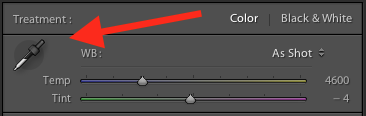
One advantage of shooting in the RAW format is that you can calibrate the White Balance of your images afterwards, whereas shooting in JPG leaves you much less leeway to edit not just White Balance, but most other aspects of the photo as well. Of course, one drawback of shooting in RAW is that calibrating the White Balance can take a lot of time, but much of this can be mitigated by using Lightroom’s eyedropper tool (targeted adjustment tool) instead of fiddling with the sliders on your own.

five-minute-lightroom-portrait-processing-white-balance

To quickly adjust the White Balance, click the eyedropper icon, then find a part of your image that is neutral in color – think slightly gray instead of pure white. The eyedropper tool might not get you the perfect overall color, but it will quickly get you close to your target, after which you can adjust the Temperature and Tint sliders to your liking.

Another tip to speed things up is to click directly on the Temperature and Tint numbers and use the up/down arrows to adjust their values, or hold down the [shift] key while doing so to make larger incremental changes.

Step 2: Tone

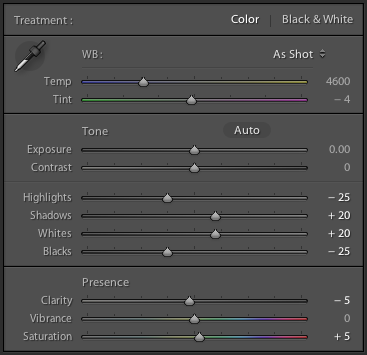
After you get your initial White Balance set, it’s time to make some initial adjustments using the rest of the Basic panel in the Develop module. To get my particular look, I almost always start off with the following values. You can change each one quickly by highlighting the numbers, entering new values, and pressing [Tab] to move to the next set of numbers instantly.

five-minute-lightroom-portrait-processing-basic-panel

Exposure 0, Contrast 0. I don’t change these values until I make the following adjustments you see below. Because they are global, and affect the entire image, that is not usually what I want to do right away. If the image is still too light or dark after doing the rest of the basic adjustments, I’ll increase or decrease exposure accordingly, but rarely do I need to adjust contrast and you’ll see why in the steps below.

Highlights -25. This helps even out the bright portions of the portrait so any spots that are a little bright are brought down a bit.

Shadows +20. This is a way of brightening just the dark parts of the portrait to bring out a little more color and definition.

Whites +20, Blacks -25. I use these sliders instead of adjusting the contrast because it gives me more granular control over the look and feel of my portraits. I’m essentially making the whites and blacks more pure, which helps give the portrait a richer look overall. Some people skip this step and make adjustments to the Tone Curve, but it’s all a matter of personal preference, though I usually find the white/black adjustments to be quicker.

Clarity -5. Most people bump up the clarity slider which essentially affects edge contrast mostly in the midtones, but I like a slightly more subdued look so I usually start by lowering it a few notches.

Vibrance 0 (zero). This slider mostly affects colors outside the normal range of human skin, so it can be useful if you shoot outdoors and want to make the nature colors pop. I leave it at zero as a general rule, and then adjust later as necessary.

Saturation +5. I usually like a bit more color to start things off, so I start with a small value increase here, and then go up or down as necessary.

I always start with these adjustments, and then tweak as necessary. The whole process only takes a minute and almost always results in an image that is dramatically improved over the initial import.

five-minute-lightroom-portrait-processing-step2-color

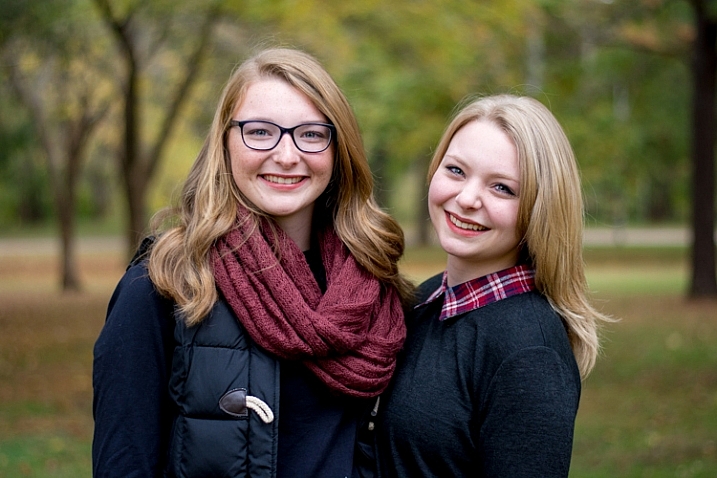
This image is already more vibrant than the initial picture even though most of the adjustments were very basic.

Step 3: Sharpen

After the color and tonal adjustments are finished, I almost always apply some degree of sharpening to the image. With portraits, it’s essential that the eyes be in focus and sharp, so the next thing after Basic adjustments, is to use the Detail panel to get the sharpening you want.

five-minute-lightroom-portrait-processing-step3-sharpen

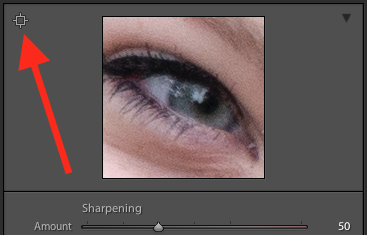
Click the targeting symbol in the top-left corner and then click on your subject’s eye to get a zoomed in view, then adjust your sharpening accordingly. I usually start with a value of 50 and then tweak additional parameters like Radius or Detail if I need to, but this basic adjustment is quick and usually gets me right near where I want.

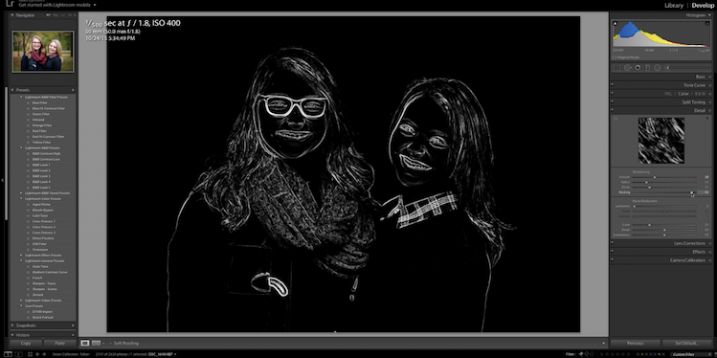
I also apply a mask to the sharpening so it doesn’t apply to areas like faces. This helps keep the eyes sharp without adding unwanted texture to people’s skin. If you hold down the ALT key while you click the Masking slider you will see something like this (below). The white areas are where sharpening will be applied, the black areas will not. Use this to decide how far you want to take the masking on your portrait.

five-minute-lightroom-portrait-processing-step3-sharpen-mask

Step 4: Vignette

This one is a bit controversial – some people like vignettes, and some think they are an abomination unto modern photography, but as I said in the beginning this is all about finding a style and workflow that works for you. I usually add a slight vignette to my portraits, but if that’s not your thing then you can skip this step altogether. It’s not part of everyone’s five-minute workflow but it fits neatly in with mine, which is why I’m including it here. I only use a little bit of highlight priority, dark vignette, and try to keep the effect subtle.

five-minute-lightroom-portrait-processing-step3-vignette

That’s it – finished

Doing these four steps won’t always lead you to a finished portrait, but as the title of this article implies, you can usually get to a very nicely-edited portrait in under five minutes with these simple steps. You might have additional adjustments like adjustment brushes, spot removal, or red-eye corrections to do afterwards, but this will get most of the essentials out of the way.

five-minute-lightroom-portrait-processing-step1-import

Before

five-minute-lightroom-portrait-processing-step3-vignette

After – subtle but you can see the differences

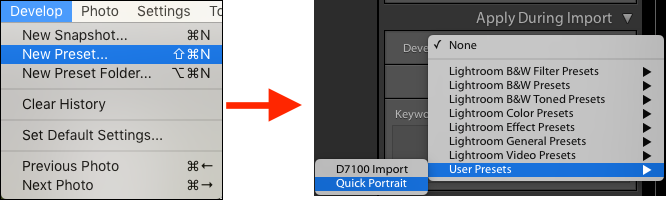
Save your settings as a Preset

One final way to speed things up even more is to create a preset based on your workflow, which you can then apply to all photos on import.

five-minute-lightroom-portrait-processing-new-preset

If you take this angle, be sure to err on the side of caution and be a bit more conservative with your edits when creating the preset. You probably won’t want want to apply the same dramatic alterations to every single photo, but if you do find yourself reusing the same workflow over and over it might be worth your time to do an import preset.

Alternatively, you can create a preset and apply it at will after import by right-clicking on any photo in the Develop module, and choosing your preset from the “Develop Presets” shortcut (or find it in the Develop Presets panel on the left side panel of Lightroom).

What quick portrait processing tips work for you? Are there any specific actions you have found that save you a great deal of time? Share your thoughts in the comments below, and any example images of what your finished portraits look like are always welcome.

googletag.cmd.push(function() {
tablet_slots.push( googletag.defineSlot( “/1005424/_dPSv4_tab-all-article-bottom_(300×250)”, [300, 250], “pb-ad-78623” ).addService( googletag.pubads() ) ); } );

googletag.cmd.push(function() {
mobile_slots.push( googletag.defineSlot( “/1005424/_dPSv4_mob-all-article-bottom_(300×250)”, [300, 250], “pb-ad-78158” ).addService( googletag.pubads() ) ); } );

The post How to do Basic Processing on a Portrait in 5 Minutes Using Lightroom by Simon Ringsmuth appeared first on Digital Photography School.


Digital Photography School

 
Comments Off on How to do Basic Processing on a Portrait in 5 Minutes Using Lightroom

Posted in Photography


How to Create a Hollywood Film Noir Portrait

02 Nov

I have always had a soft spot for 1940s and 50s Film Noir, where there is always a gorgeous Femme Fatale, whose charms are most likely going to get you killed. The light in those movies is the key to the ambience of mystery and danger, and I love the way the scenes are composed with smoke, shadows, and the black and white high drama with dim light aesthetic.

These movies were mostly low-budget productions shot on location in city streets, with an abundance of night scenes, where crime is the main plot. Low-key lighting is the common thread of Film Noir, with harsh light that create deep shadows, resulting in a high contrast black and white.

As a photographer the actresses’ portraits that were used by the studios for promotion really fascinate me, and I guess it influences a lot of my portraiture work.

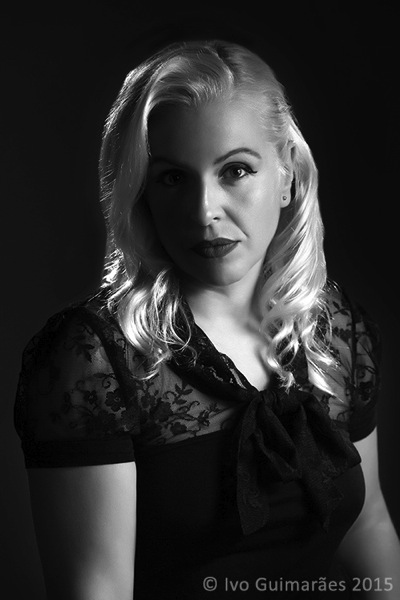
01b

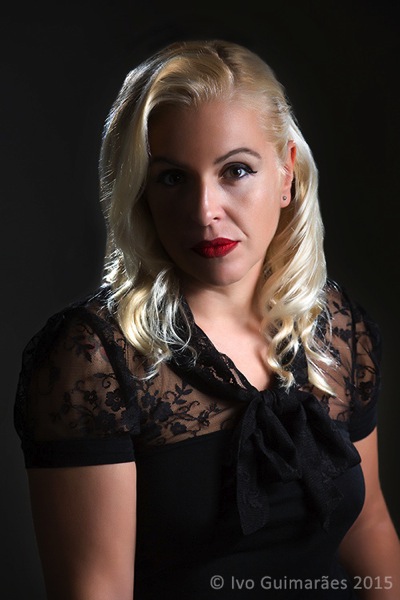
In this article I am going to follow the steps to create this image that is a recreation of a Hollywood Film Noir portrait, done with modern equipment, and digital post-production techniques.

Research

As for every photography work, it is always a good idea to do some research, and look for inspiration. Here I used references from one of my favorite movies of all time, “Touch of Evil”, directed by the great Orson Welles in 1958.

Camera and lens

The choice of equipment is an important starting point. In this particular case I used a Canon 5D III body with a Canon EF 85mm f/1.2L II USM lens. This is my favorite lens when it comes to portrait work, it offers the perfect combination of good sharpness and awesome bokeh.

Lighting equipment

These images were originally lit, in most cases, with incandescent high-power bulbs, and the quality and direction of the light was mostly controlled with barn doors and Fresnel spotlights.

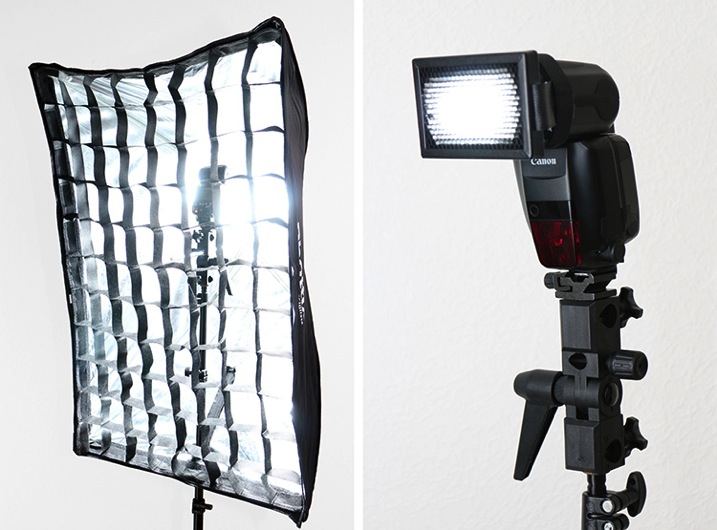
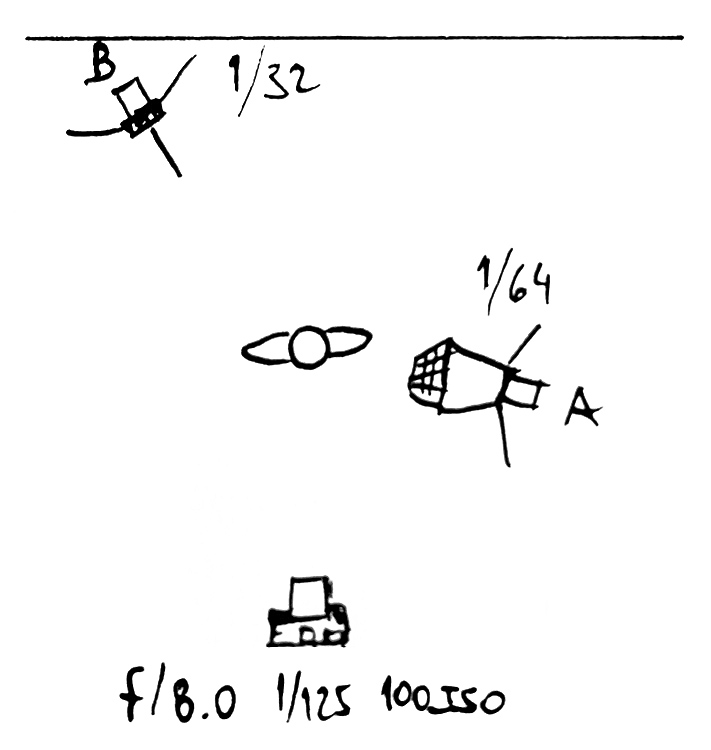
I decided to use two Canon 600EX-RT Speedlites, controlled by a Canon ST-E3-RT Speedlite transmitter. This created a simple setup with a gridded softbox working as a hard key light on the model’s face, and a 20º grid as a hair light to separate the model from the background.

02

Exposure

Usually in studio portrait images, I try to decide the exposure based on the depth of field I want to create on the image. In this particular case, I chose to use f/8.0, as it gave me enough depth of field in the face area, with the 85mm focal length.

The shutter speed is the second important factor and I chose to use 1/125, as it blocked any possible ambient light, and only register the light from the flash.

The ISO 100 is enough for the flash power available, and offers me a clean and noiseless image.

Lighting diagram

Every time I have an idea for an image I try to put it on paper. Most of the time it is just doodles in my little black book, but it helps me to visualize the setup, and the light ambiance that I want to create. Here is the quick sketch I did for this image, which represents the lighting diagram and technical information for the photo shoot.

03

Light metering

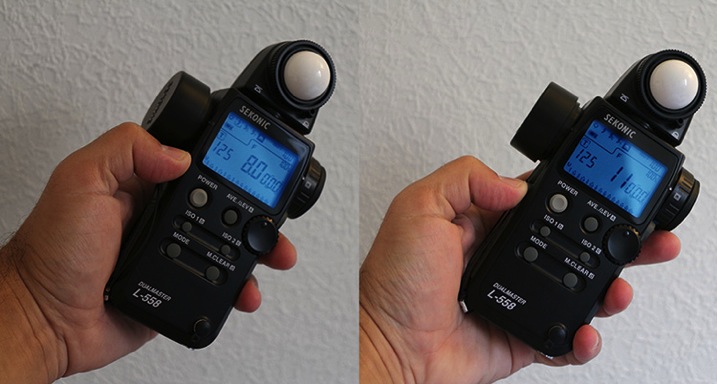
After setting the starting point values for the camera, it’s time to calculate the light position and power, to create the desired effect.

The background was white so a distance to subject of seven feet was enough to turn it black, which works much better with a blonde model.

The idea was to have light on half of the model’s face, and a quick fall-off to the other side, creating a mysterious mood in the image. The gridded softbox was ideal for this effect. The 20º grid created a rim light on the hair and a ratio of 2:1 to the main light, so metering was f/8.0 for the main light and f/11 for the hair light.

04

The click time

Now that everything is set, it’s time to click. Even tough the final image was meant to be black and white, I captured it in color mode as it gives me better choices for conversion in post-production.

05b

Post-production

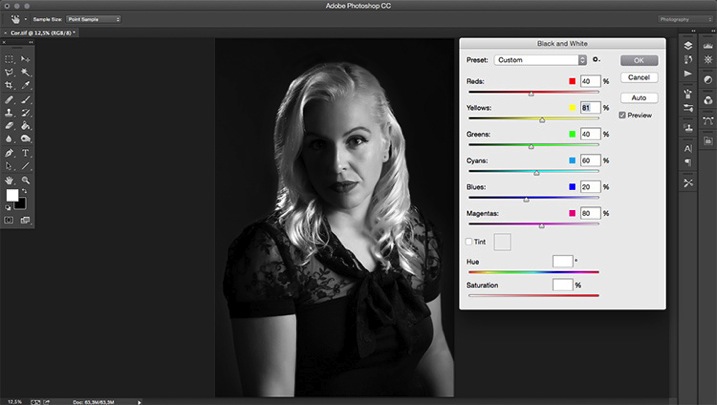
There are many tools and plugins for black and white image conversion. In this case I used the Photoshop’s black and white tool which is a simple but effective solution.

Image > Adjustments > Black & White

06b

A few adjustments to the red and yellow channel gave me the right contrast on the skin and overall image, creating the dramatic mood.

So, here is my approach to the Film Noir portrait. It sure was fun. If you give this technique a try, please share your results and images in the comments below.

googletag.cmd.push(function() {
tablet_slots.push( googletag.defineSlot( “/1005424/_dPSv4_tab-all-article-bottom_(300×250)”, [300, 250], “pb-ad-78623” ).addService( googletag.pubads() ) ); } );

googletag.cmd.push(function() {
mobile_slots.push( googletag.defineSlot( “/1005424/_dPSv4_mob-all-article-bottom_(300×250)”, [300, 250], “pb-ad-78158” ).addService( googletag.pubads() ) ); } );

The post How to Create a Hollywood Film Noir Portrait by Ivo Guimaraes appeared first on Digital Photography School.


Digital Photography School

 
Comments Off on How to Create a Hollywood Film Noir Portrait

Posted in Photography


3 Body Language Hacks to Improve Your Portrait Photography

01 Nov

DPSarticle 1main

I’m going to ask you to put your camera down for now. I know it’s a lot to ask, but the secret I’ve discovered to better portrait photography has, in fact, very little to do with your camera.

One of the most common mistakes budding portrait photographers make is to be so focused on getting the technical aspects right, they completely forget about the most important feature of a portrait – the person standing in front of their lens.

I’m not saying that your camera and technique aren’t important, they absolutely are. But even when you have the best technique in the world, you will not have a good portrait if your subject feels, and looks, uncomfortable.

The secret to helping your subject be relaxed and look good in pictures is body language – both yours and their’s.

Body Language

DPSarticle 2bodylanguage

Body language is how our bodies communicate our feelings and intentions, and it makes up for a majority of how we communicate. Some studies found that as much as 92% of our communication is nonverbal, and experts all agree that, as humans, we rely first on what we see and feel, before believing any spoken word.

Why is this important in portrait photography? Because body language is the language spoken in our portraits.

Within one second of seeing a photograph, we make a snap judgment about the person – or people – in the image, and what our brain relies on to make this judgment is their body language. Big cues like slouched shoulders or crossed arms are obvious, but it’s also the small cues like a fake smile, tense hands, slightly pursed lips, or squinting eyes, that tell our brains on an instinctive level, how that person is feeling. Furthermore, if the feelings are negative, it can ruin your portrait.

So, what can you do? Let’s look at three things you can start doing right now to help your subject settle into relaxed and positive body language.

1. Identify discomfort

DPSarticle 3discomfort

It’s pretty uncomfortable for most people to have their portrait taken, even if they are really looking forward to it. This tension appears mainly through blocking and pacifying cues.

Blocking gestures occur when we put something between ourselves and an uncomfortable situation. Crossed or closed arms are the most obvious signs, but the person may also be holding something like a bag or a laptop in front of them, turning their bodies away from you, and even crossing their legs tightly when standing.

Rubbing or pressure movements are called pacifying gestures. You will observe this when she’s playing with her necklace, rubbing her arms or legs, or he’s playing with his clothes, or squeezing his fingers together. Another place to look for pacifying gestures is the mouth. Lip pressing and licking, and tongue movements pressing inside the cheeks or lips show high levels of stress.

When you see this happening before or during the shoot, your subject is feeling uncomfortable and it’s going to show up in your portraits. Let’s look at how you can help them relax.

2. Show, don’t tell

DPSarticle 4showdonttell

People feel uncomfortable during a photo shoot mostly because they don’t know what to do. It’s really stressful to be in front of a lens and be told to pose or act natural. They have no idea what you want from them, and telling them doesn’t help.

A client of mine shared this story with me;

At my last photo shoot, the photographer asked me to smile. So I smiled. “No! Not like that!” he said “you know, relax and smile!” All I could think is “Damn, I’m not relaxed, how do I relax?” which made me stress even more, and the more he was telling me to relax, the less I was! It was horrible! I look like I’m growling in all the photos. I hate them!

So if telling them what to do doesn’t help, what can you do? Show them! People can easily mirror what you want them to do. Ask them to mirror you, and show them exactly the pose you want them to take. Not only this will help them relax, it also allows you to get them into the right body language for the picture. When working with children, you can turn this into an imitation game, and they will be playing along with you in seconds.

Mirroring is a key bonding behavior in human body language. This interaction creates an immediate connection between you and your subject, and allows them to shift their attention away from the lens and focus on you instead.

3. Be in control -even when you’re not

DPSarticle 5incontrol

From the minute you meet your subject, until they walk away from the session, it’s vital that you appear in control by using confident body language, keeping your energy up, using positive words, and never showing any signs of stress – even when you’re freaking out because the settings you’re trying aren’t working.

I know this one is tough when you’re starting out, and you have to think of a million things – camera settings, composition, lighting, backgrounds, etc., and now I’m asking you to also think about what your client’s body is saying! But let’s think about this for a minute. How do you think your subject feels when they are working with a silent, stressed out, and fidgety photographer who is focusing all their attention on the camera or the lights? Not so great right? Guess where that’s going to show up? In your pictures.

They need to know that you’re in control, even when you’re not! This is a, “fake it until you become it” moment in your life. Talk to them. Explain what you’re doing. You might be concerned that they won’t take you seriously, but really, they are just curious about what’s going on. If they feel that you’re in control, that you know what you’re doing, you will keep the connection with them and help them to relax.

The best part is that you’re also going to feel more in control. Recent studies on body language have found that by changing our posture and behavior, we actually change our feelings too. Not only will you appear more confident, you’re actually going to feel more confident.

What’s next

DPSarticle 6next

This is really just the very beginning of how body language can help you with your portrait photography. The choice of body language cues you’re going to use in your portraits will also have a huge impact on the feeling and quality of your images, and your relationships with your subjects.

Understanding body language is not just an option if you want to be a portrait photographer, it’s a vital skill; as vital as breathing is to a singer, or taste is to a chef. You will not be able to consistently create beautiful portraits of people, or create a fun experience for them if you ignore it.

The good news is that this is a skill you are born with, and have unconsciously practiced since your youngest age. However, most of us simply don’t pay attention to it because nonverbal communication is not part of our training curriculum, at school or later. Just like a musician will be more alert to sounds through practice, and a chef to taste through experience, I’m confident that you will soon become attuned to your subjects body language if you put in a little work.

Soon you will have mastered an amazing skill that will not only be useful in your work as a photographer, but also in everyday life.

Do you have another other tips about body language? Please share in the comments below along with any images demonstrating body language in your portraits.

googletag.cmd.push(function() {
tablet_slots.push( googletag.defineSlot( “/1005424/_dPSv4_tab-all-article-bottom_(300×250)”, [300, 250], “pb-ad-78623” ).addService( googletag.pubads() ) ); } );

googletag.cmd.push(function() {
mobile_slots.push( googletag.defineSlot( “/1005424/_dPSv4_mob-all-article-bottom_(300×250)”, [300, 250], “pb-ad-78158” ).addService( googletag.pubads() ) ); } );

The post 3 Body Language Hacks to Improve Your Portrait Photography by Dee Libine appeared first on Digital Photography School.


Digital Photography School

 
Comments Off on 3 Body Language Hacks to Improve Your Portrait Photography

Posted in Photography


Pro Portrait Tips

28 Oct

When snapping portraits, it can be difficult to fulfill your vision with so many variables. The options of lighting, background, makeup, clothing and poses seem overwhelming at times.

Thankfully, we found a few stellar portrait tips from celeb photographer, Greg Gorman. They work great for pros and enthusiasts alike.

  • Learn body language – For instance, if the head is angled in opposition to the body, it creates a look of insecurity.
  • Minimize the lighting situation – Try perfecting portraits with a single light source.
  • Get a bigger boat screen – Review your test shots on a screen larger than the back of your camera. Download them first onto a laptop, or even a tablet with good resolution. (Eye-fi much?)

Read all the tips, and get an eyeful of pretty celebs (hey, Jared Leto) in Greg’s article here.

Photo of Sofia Loren by Greg Gorman


© Erin for Photojojo, 2015. |
Permalink |
No comment |
Add to
del.icio.us

Post tags:


Photojojo

 
Comments Off on Pro Portrait Tips

Posted in Equipment


10 Crucial Things You Need to Think About for Portrait Photography

20 Oct

Darlene’s Portrait Fundamentals course is on sale for $ 75 (50% off) now until November 3rd only. Find out more or grab the deal over at Snapndeals.com.


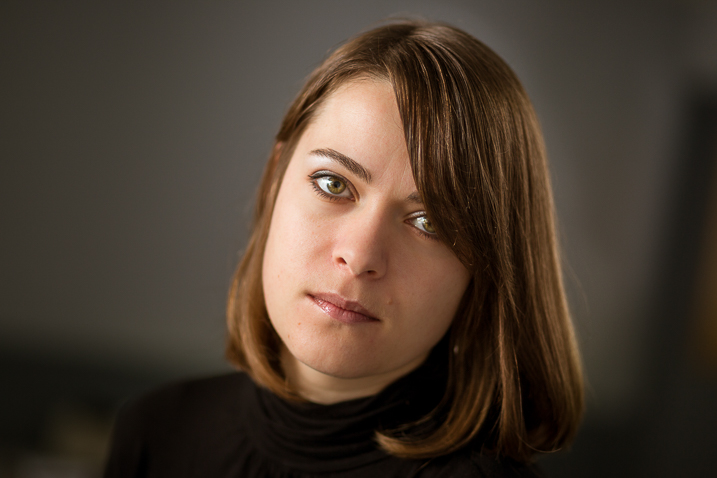
There are many pieces to doing a portrait – it’s not easy. You have to think about the technical stuff like exposure and focus, as well as the non-technical stuff like composition and working with a live subject. It can be daunting if you’re just starting out doing portrait photography so let’s break it down into all the pieces so you can work on one at a time, then put it all together.
Portrait tips dps717px 04

Here are the 10 crucial elements you need to think about when doing portrait photography:

  1. Lighting Pattern
  2. Lighting Ratio
  3. Quality of light
  4. Lens selection
  5. Background
  6. Exposure/metering
  7. Sharpness – getting it in focus
  8. How to position the subject (posing)
  9. Facial view and camera position
  10. Expression

THE TECHNICAL STUFF

#1 Lighting pattern

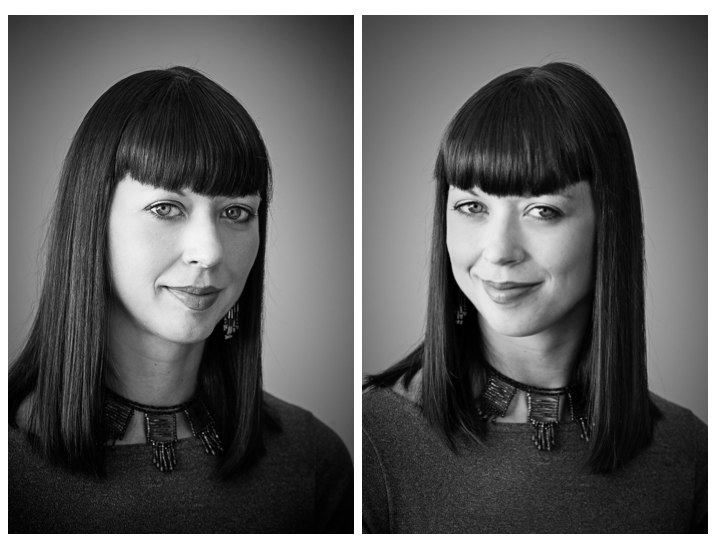
This is how the light falls on the subject’s face. How you set up the light will determine the mood of the final portrait and whether or not the subject is flattered. Lighting partner is a critical piece to get right. There are four main type of patterns and two styles, they are:

  • Split lighting
  • Loop lighting
  • Rembrandt lighting
  • Butterfly lighting
  • Short lighting
  • Broad lighting
Portrait tips 02

Left – Split lighting. Right – Loop lighting.
Portrait tips 01

Left: Broad lighting. Right: Short lighting. Notice how different she looks in each image, particularly her nose!

Knowing what each looks like and when to use them is very important. Read more here: 6 Portrait Lighting Patterns Every Photographer Should Know.

#2 Lighting ratio

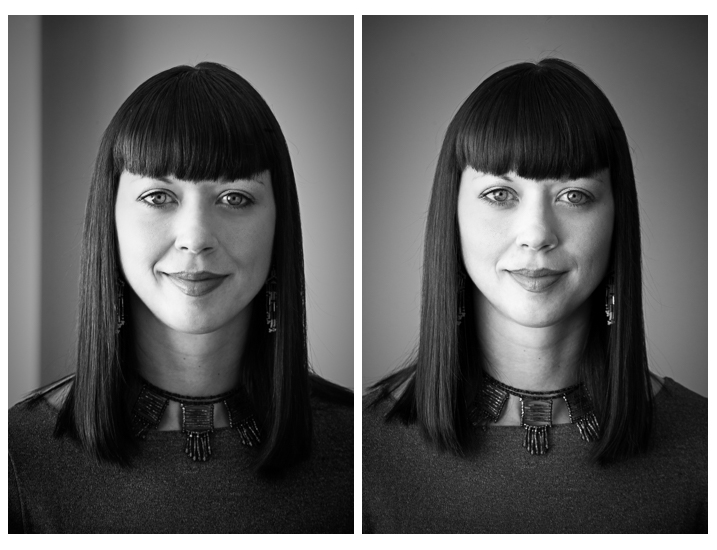
A ratio is a comparison of one thing to another and in terms of lighting it is comparing the dark and light sides of the face. How much difference is there is from the shadow, to the highlight side? The greater the ratio, the more contrast the image will have, and the more moody the portrait will become. The lower the ratio, the less contrast, and the portrait will have a lighter, fresher feeling.

Look at the following examples:
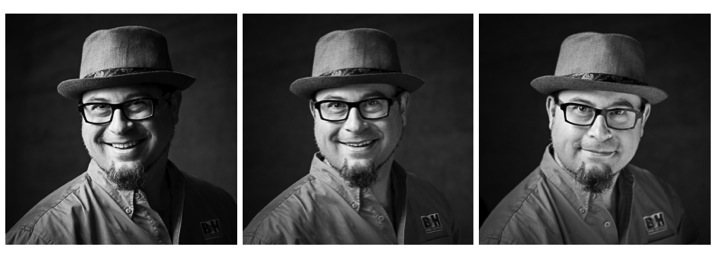
Portrait tips 03

In the images above the ratio on the left is very strong, about 16:1 or four stops. The missing is about 4:1 or two stops, and the right is almost 1:1 or even. The only difference from one to the next is use of a reflector. Notice how the mood and feel of the portrait changes, as the contrast is adjusted.

For more detail on ratios read: Lighting Ratios to Make or Break your Portrait

#3 Quality of light

Another aspect of lighting you need to decide is whether you will use hard or soft light.

Hard light is produced by a small light source and is characterized by high contrast, enhanced texture of the subject, added drama, and harsh well edge-defined shadows. Examples of hard light sources are:

  • The sun (even though it is large, it is far away so its relative size is small)
  • A bare light bulb
  • The small built-in flash on your camera (including your speedlight without modifiers)

Here are two portraits done using hard light. Which is more appropriate use of this type of lighting for the subject?
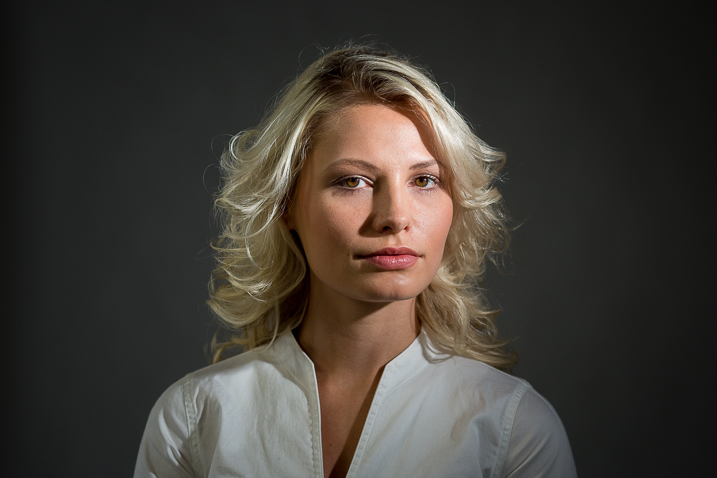
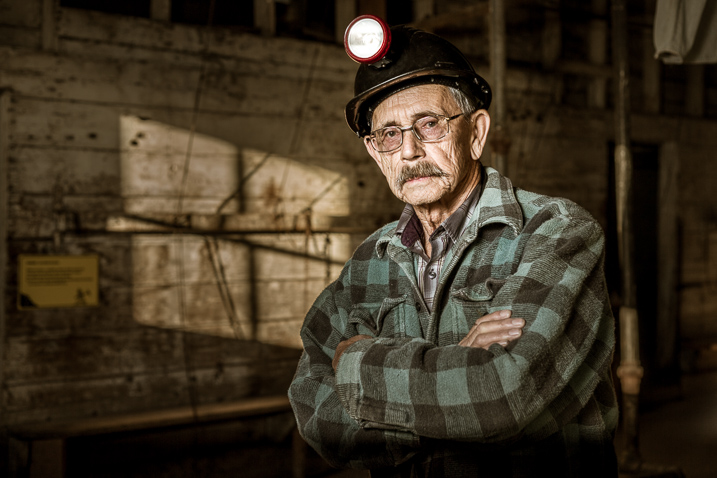
Portrait tips dps717px 08

Portrait tips dps717px 05

Soft light is produced by a very large light source. It is low contrast (or can even be quite flat), less textureenhancing, and is more forgiving and flattering for people photography. Examples of soft light sources are:

  • The sky on an overcast day
  • Large studio softboxes
  • A large reflector like 42” or 52”
  • An on-camera flash that has been bounced off a ceiling or wall

Here are two portraits done using soft light. Which is more appropriate use of this type of lighting for the subject?
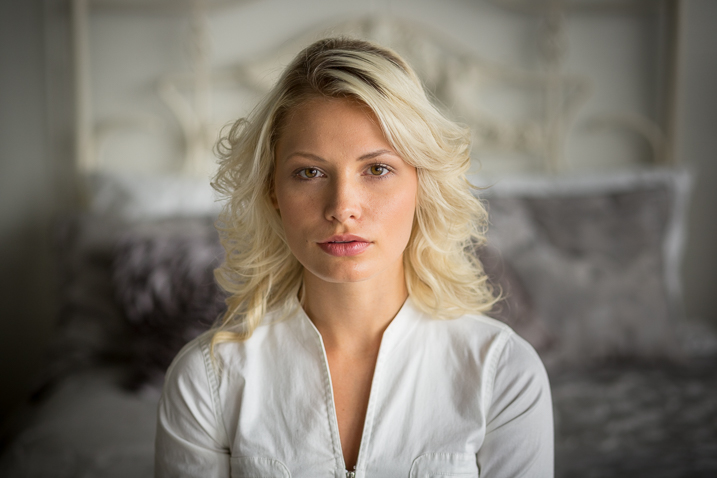
Portrait tips dps717px 09

Portrait tips dps717px 07

So along with the ratio, the quality of light will have a great affect on the mood and feeling of your portrait. Choose soft light for portraits that flatter the subject, and choose hard light for an edgier look with more grit and drama.

#4 Lens selection

The lens you select will change the appearance not only of the subject, but the background as well.

Using a wide angle lens will introduce distortion and cause the subject’s face to look abnormal, sort of stretched. It will also allow you to see a large sweeping view of the background behind them.
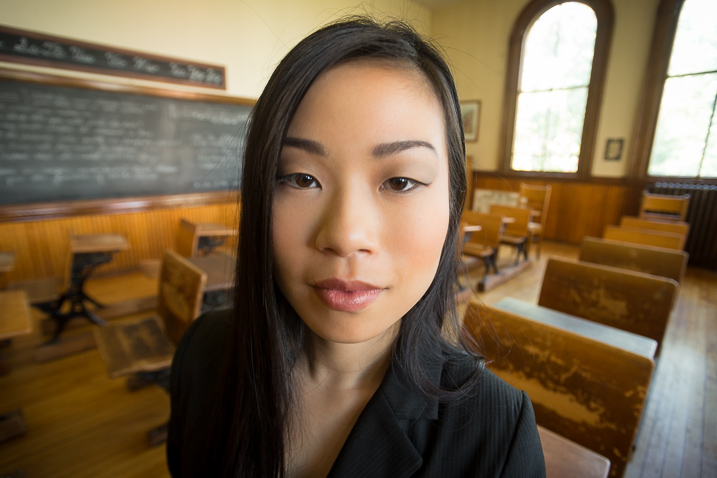
Portrait tips dps717px 13

Notice how the shape of her face and her features are distorted? This is not something most people will desire.

However, there may be instances where you want this look such as a humorous portrait, kids, or an editorial style portrait of a street vendor at a market where you want to see his environment.
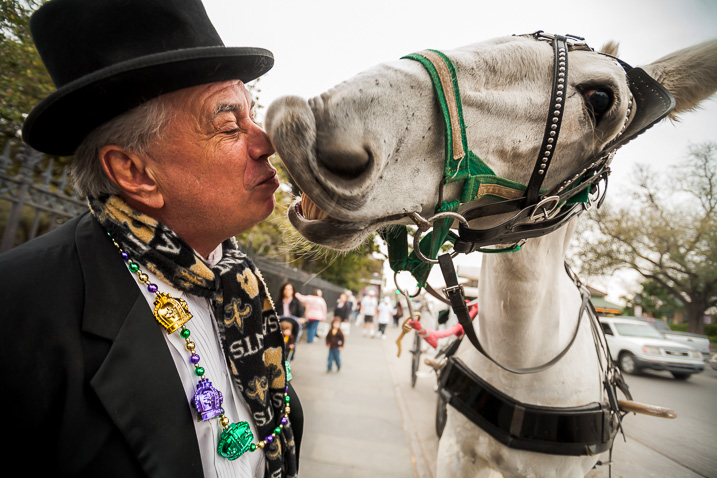
Portrait tips dps717px 12

The wide angle view adds to the comical nature of this portrait.

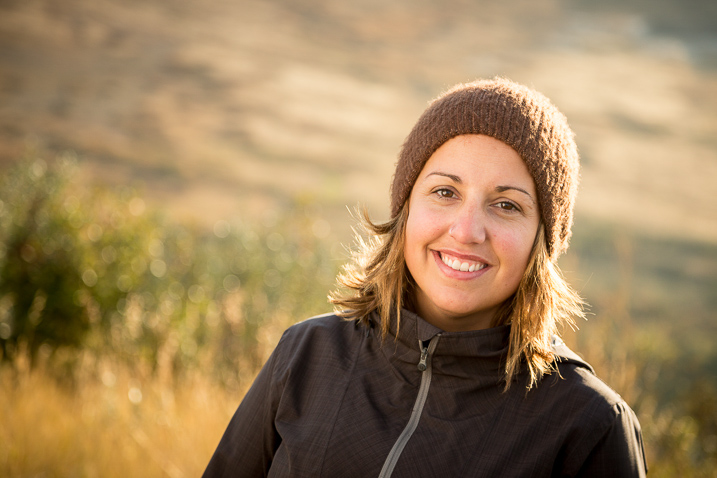
Telephoto lenses compress perspective – this does two things. First it is usually more flattering to the subject, their facial features look less distorted. Second, it simplifies the background by seeing less of it, and often it’s less in focus as well (dependant on distance to the background) putting more emphasis on the subject, which is what you want. Read more at: How to Achieve Blurred Backgrounds in Portraits.
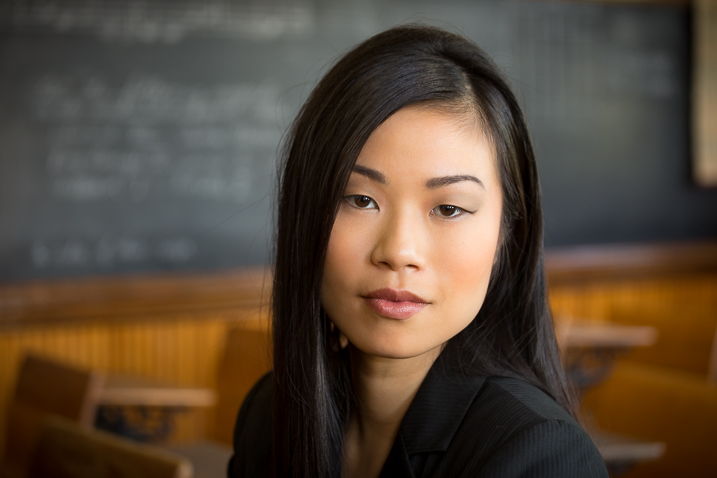
Portrait tips dps717px 14
Same girl as the portrait above. Compare her face in the two images, and take note of the background as well. See how much less of the room, and how it is more out of focus than the wide image above?
Portrait tips dps717px 11
The long lens used for this image has compressed the background and because it is so far away (across the river on the other side) it is really out of focus and provides a soft background to enhance the portrait, not take away from the girl.

#5 Background

One thing many of my students forget to control and think about is the background. It’s so easy to be focused on all the other stuff and working with your subject that you forget to even look at the background.

Two things you want to make sure about for the background are: it makes sense with the portrait, and doesn’t distract the viewer from the subject. There are four things that can do that, watch for them in your background and adjust your camera position or composition accordingly if they show up:

  • Contrast
  • Bright colours (warm tones are the worse for distraction like red and yellow)
  • Sharpness
  • Bright areas
Portrait tips dps717px 15

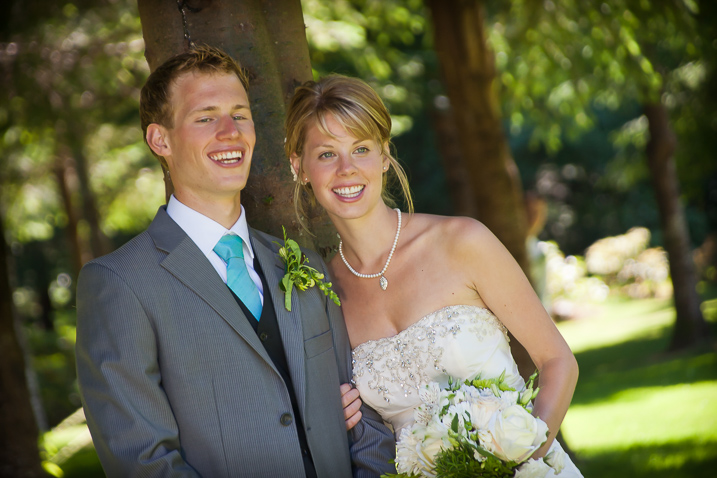
See how the bright areas, which are also high contrast, in the background draw your attention away from the wedding couple?

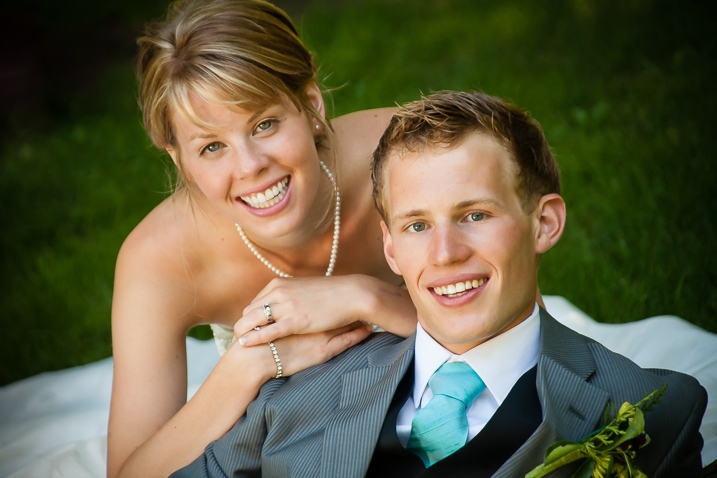
Any or all of those can draw the eye away from the subject if they are in your background. The eye is attracted to the brightest area of an image, as well as the sharpest. So get your portrait subject away from the background far enough to get it out of focus, and watch for hot spots that grab the eye. Sometimes simply moving your camera a foot or two to the left or right can eliminate trouble areas and give you a cleaner background – allowing the subject to be the star.
Portrait tips dps717px 16
Use of multiple techniques here have drastically improved this portrait over the one above. The background is now solid, out of focus, and it does not take your eye away from the couple but rather compliments the overall portrait.

#6 Exposure and metering

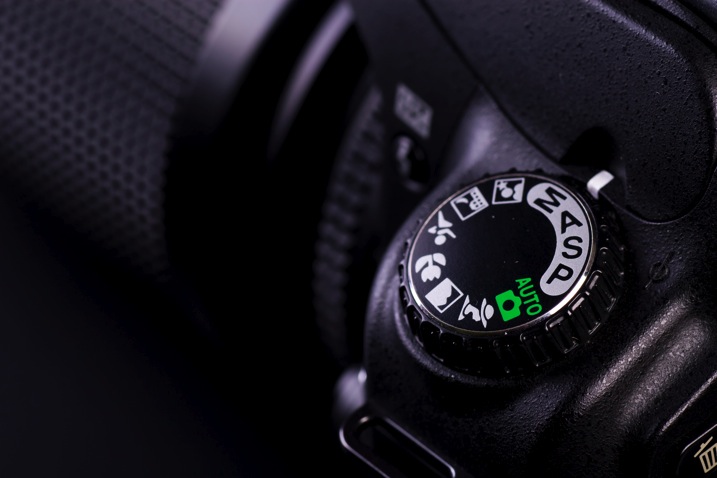
For a portrait where the subject is not moving, I almost always use the following camera settings:

  • Manual shooting mode
  • Single shot drive mode (when I press the button it takes one image only)
  • Single point focus (not multi or zone)
  • One-shot or AF-S focus mode to focus and lock (not continuous)
  • Shade White Balance preset (as I am usually working in the shade, if you’re in the bright sun choose that – but pick one that matches your lighting condition and leave it, anything but AWB!)
  • Shoot in RAW

That gives me the most control over doing one very important thing – having a consistent exposure from one frame to the next. That may not seem like a bit deal but if you ever decide to do portraits for a friend or have real paying clients – you want to be able to show them the images on the back of the camera and not worry about the one in the middle that was black cause you forgot to adjust the exposure.
Photodune 1733468 camera controls m

The other thing it does is makes editing in the post-production stage much faster.

So basically set your exposure, do a test shot (review it for exposure using the histogram), then don’t touch it unless you either move to a new location, or the light changes.

#7 Sharpness – getting it in focus

I already mentioned the settings I use for focus above. Back button focus is something I highly recommend as well. It allows me to lock focus on the subject, precisely on their eye if I’m in close enough, and then recompose my portrait and shoot away. Unless the subject or I move, changing the distance between us, there is no need to refocus.

Here are a few more focus tips from a past article I did: 5 Tips for Getting Sharper Images. Obviously if you’re shooting a moving target, like kids in action, you’ll want to choose different focus settings. Try Continuous focus (Servo or AF-C) and burst mode (continuous shooting mode or drive).

THE AESTHETIC STUFF

#8 Posing the subject

Getting your subject or model into a comfortable, yet flattering pose can be tricky. People are generally nervous when being photographed and will look to you for guidance on how to stand, hold their body, turn their head, and adjust their hands. So you need to have a few ideas ready for them, making sure they can hold it comfortably and they look good at the same time.

Here are a few tips:

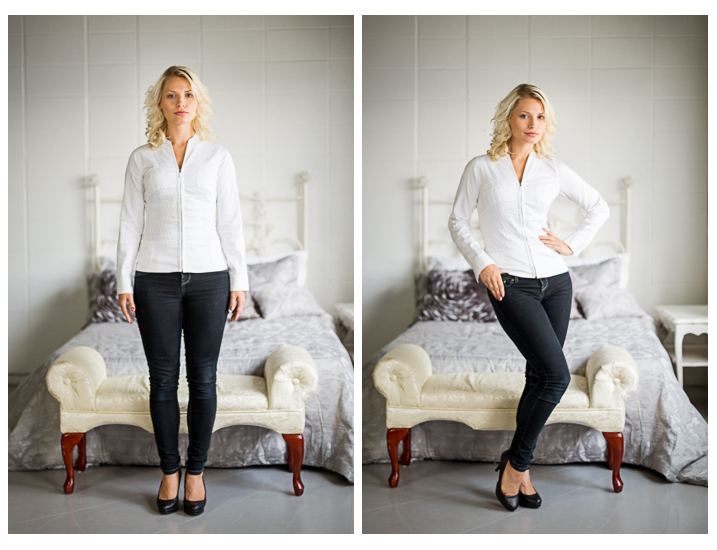
  • You’ve likely heard this before, but if it bends – bend it. Meaning get them out of a stiff body position bending one leg slightly, and bending elbows and wrists.
  • Get them to shift their weight away from the camera (hip away) it will be more flattering that way.
  • Add a slight head tilt for ladies to add a touch of femininity.
  • To get people to turn their body when standing – tell them to turn and point their feet, the body will follow naturally.
  • Turn shoulders slightly to narrow the body width, which is more flattering for most people.
  • Let them pose naturally and just make slight tweaks or adjustments. Watch how they move on their own so it still looks like them.
Portrait tips dps717px 17

Left – stiff and boring. Right – bend the parts that bend and make a more dynamic pose, it’s also more flattering, and in this case feminine.

For more tips on posing read these dPS articles:

  • Portrait Posing Tips- How to Help People to Relax and Take Better Photos
  • Tips for Posing Men
  • Posing Guide for Photographing Women: 7 Poses to Get You 21 Different Photos
  • Or grab the dPS ebook Portraits: Strike the Pose

#9 Facial view and camera position

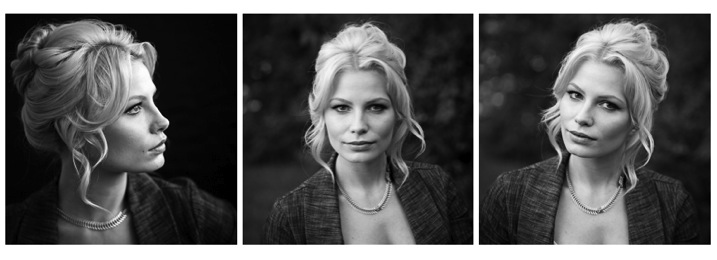
How you position the subject’s face is another factor that determines how flattering the portrait will be, and the mood. Some people look really great in full face view (facing the camera directly) while most benefit from turning slightly to one side, thus narrowing the face a little.

Profile view is something people cannot see in the mirror, so many have never seen theirs, and have no idea what they look like from the side. Only by trying it out will you see and know if it’s flattering for them.

The key to choosing the right angle for their face is to observe them. Do they tend to turn slightly when talking to you? Take note – that is probably the side the subconsciously prefer.
Portrait tips dps717px 18
Three different views of the same girl’s face (above). She has a really gorgeous profile and a square jaw. I think the profile and last image (¾ face view) are the most flattering for her but she looks great in any image. Not all your portrait subjects will have that, so you have to help them look their best by making choices like this. If in doubt, shoot all three and choose later, or let them pick. You’ll learn from the subject what they like and what they think looks flattering.

Tip: for people who have a bump on their nose that do not want it to show – try photographing them facing both ways. One way will show the bump, the other it will be hidden. How you do that is shoot one way with the light say off to camera right. Then trade places with them so the light is coming from the other way and do a second shot. See which shows, and which hides the bump – then you’re ready to go.

What camera position you choose will decide what you’re emphasizing on the subject. A low camera angle can show height (especially if shooting full body) and make someone look taller, but it also emphasizes the body more. Not a good choice if someone wants to appear slimmer. Getting low down near kids level puts you closer to the action and makes them appear less small.

A slightly above eye level camera angle will emphasize the face and minimize the body, a good choice for most people. It also makes kids look smaller and can be effective if that’s the look you want. A really high angle will make the forehead prominentant (perhaps not the best choice for a receding hairline).

Just be conscious that where you place your camera will affect the final look of the portrait.

#10 Expression
Portrait tips dps717px 20

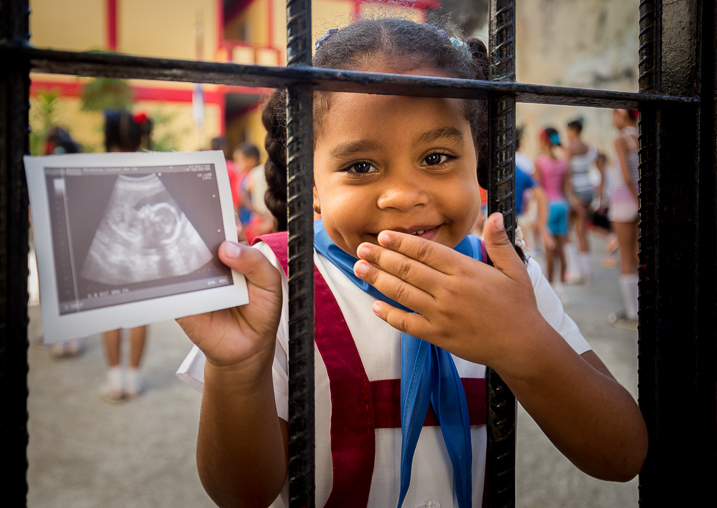
Even though my Spanish is limited I was able to talk to this little girl and got this reaction and expression. She is holding a photo of her auntie’s ultrasound and her new baby cousin to be that she was really excited about. I just asked her to show me her baby primo (cousin) and she did this.

Okay, this is the ultimate thing you need to get right for great portraits. You can nail all nine points above, but if the subject has a bad expression, they will not like the image. There is one big tip I have for getting the best expressions in your portraits – talk to the subject and interact with them. There is one huge barrier to doing that which I see happen all the time.

There is a big black thing in between you and the real person sitting in front of you!

Yes, I mean the camera. Try this exercise if you dare:

Get a friend, or one of your kids or grandkids, to pose for you. Now put the camera up to your eye and take a few shots. How did it feel to you? Did you feel connected to your subject? Ask them how they felt?

Now put the camera on a tripod – yes the dreaded beast we all hate but it a necessary evil – and take a few shots using a remote trigger to fire the camera. How did you feel then? What about your subject? Were you able to make them laugh or smile? I’m going to go out on a limb and guess that you both had a better experience the second time and you got better expressions in the photos.

The key to expression is eye contact and you cannot do that with a camera between you.
Portrait tips dps717px 21
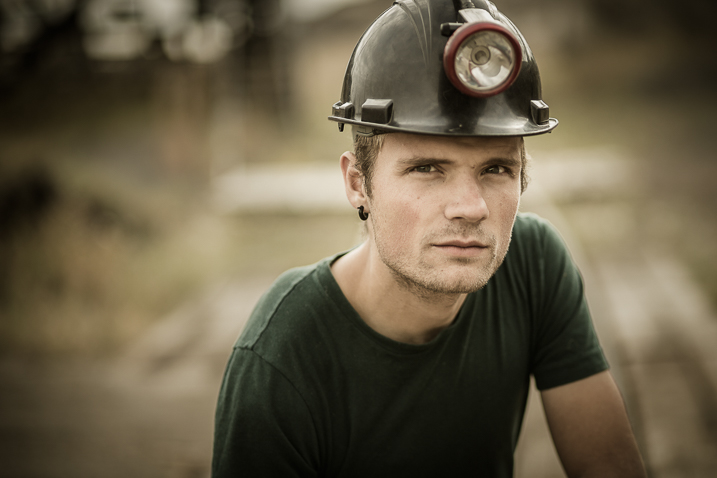
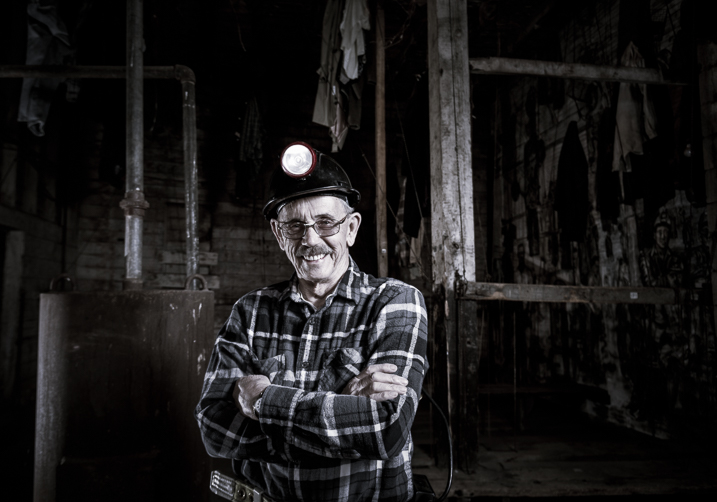
I’ve photographed Bob many times. He is a volunteer at an old coal mine where I do a workshop twice a year. He was a miner way back in the day and is as spry in his 70s as many people who are 40! He loves telling stories about the mine and ghosts so I just get him talking and let him go. We have fun, he loves being a “model” for a day, and it shows in the images.

Try it and see if it doesn’t make a difference. The tripod will also make you slow down and think about your camera, settings, and everything. Your tripod is not evil, it is your friend. Make friends with your tripod and use it.

Putting it all together

Whew! See I told you doing portraits is a lot to think about. But you can do this, you got this. Just take it one step at a time. If you aren’t at the stage of getting all 10 of these things yet, just pick one at a time and work on that. Choose patient models that will help you and practice. The only way to get better is by doing.

My students often ask me, “How do you make it look so easy?” – then answer – I’ve been doing this a really long time and it becomes instinct and subconscious after so many hours. Put in your 10,000 hours and we’ll talk!

If you have any questions or want to share your images – please do so in the comments below.


snapdeal-330-x-220Darlene’s Portrait Fundamentals course is on sale for $ 75 (50% off) now until November 3rd only. Find out more or grab the deal over at Snapndeals.com. Take more professional looking portraits in 30 days! The Portrait Fundamentals course covers everything you need to know, from camera basics to using a multi-flash set-ups. Over 6.5 hours of video lessons with two experiences instructors.

googletag.cmd.push(function() {
tablet_slots.push( googletag.defineSlot( “/1005424/_dPSv4_tab-all-article-bottom_(300×250)”, [300, 250], “pb-ad-78623” ).addService( googletag.pubads() ) ); } );

googletag.cmd.push(function() {
mobile_slots.push( googletag.defineSlot( “/1005424/_dPSv4_mob-all-article-bottom_(300×250)”, [300, 250], “pb-ad-78158” ).addService( googletag.pubads() ) ); } );

The post 10 Crucial Things You Need to Think About for Portrait Photography by Darlene Hildebrandt appeared first on Digital Photography School.


Digital Photography School
 
Comments Off on 10 Crucial Things You Need to Think About for Portrait Photography

Posted in Photography