RSS
 

Posts Tagged ‘Photography’

Product Photography: The Ultimate Guide

25 May

Product photography is one of the more technical types of photography. Whether I decide to shoot natural light or create in my studio, I need to be aware of and control everything in the area. Lighting, product position, depth of field, image stabilization, and the brand itself all come together in a product shoot. So what are the first things Continue Reading

The post Product Photography: The Ultimate Guide appeared first on Photodoto.


Photodoto

 
Comments Off on Product Photography: The Ultimate Guide

Posted in Photography


My Top 5 Photography Documentaries on YouTube

24 May

Surrounding yourself with inspiration is one of the best ways to jump-start your creativity. By viewing the works of others, we connect with our own photographic practice. One of my favorite things to do in a creative lull is to trawl YouTube. I could spend hours looking for interesting photography documentaries to watch and study.

I always feel myself rearing to get photographing by the time the credits roll. So here are a few of the favorites that I like to revisit from time to time. I hope you enjoy them as much as I do!

#1 – The Many Lives of William Klein

William Klein is known for his gritty street photography as well as his fashion work with Vogue. As a creator of some of the most iconic imagery of the 20th century, the American-born French photographer originally trained as a painter. Despite having no formal training as a photographer, Klein won the Prix Nadar in 1957 for New York, a book of photographs he compiled in 1954. Since then, Klein’s work has been praised as uncompromising and revolutionary in both his approach and execution.

The Many Lives of William Klein takes a peek into Klein’s world as he prepares his retrospective exhibition. Smart and sarcastic, Klein recounts memoirs of his photographic past and shares insights into his process and passion for photography.

Note: there is a warning of strong language in this video so if you find that offensive you might want to go to the next one.

#2 – The Colourful Mr. Eggleston

Produced by BBC for its “Imagine” TV series, The Colourful Mr. Eggleston provides a rare look into the life and work of one of photography’s most influential proponents. William Eggleston was born in 1939 in Memphis, Tennessee to a family of plantation owners. He grew up in Sumner, Mississippi and spent six years studying at various art schools, never receiving a degree. When he received his first camera in 1957, a Canon rangefinder, he was hooked. As one of the first art photographers to use color film, he began visually recording the world around him, capturing everyday moments in life in compressed color and light.

Eggleston’s idols, Robert Frank, Henri Cartier-Bresson and Walker Evans roamed the world for photographic subject matter. But Eggleston remained rooted in Memphis. His wife, Rosa, tells the story that one day Eggleston told a friend that there was nothing to photograph because everything in the city was ugly. The friend told him to “photograph the ugly stuff” which set him on a path photographing a contemporary landscape made up of vending machines, light bulbs, power poles, wires, signs, urban decay and occasionally human subjects.

The Colorful Mr. Eggleston follows his photographic process in and around Memphis as he isolates the facets of everyday life that make up the dense, atmospheric imagery of his work.

#3 – The Genius of Photography

The Genius of Photography is a series originally featured on BBC Four that investigates the rich history of photography. Over the six-part series, the documentary explores an aspect of the photographic medium. It covers the earliest incarnations of photography through to modern digital practice.

From art to commercial photography, the series includes interviews and encounters with some of the world’s best including William Klein, Sally Mann, Jeff Wall and many more.

Click here to go to the video.

#4 – Lomography: Shoot from the Hip

The Lomo Camera: Shoot from the Hip is a colorful insight into the history and momentum of the Lomography movement. The philosophy behind Lomography is “Don’t Think, Just Shoot”, encouraging spur-of-the-moment photography not dissimilar to Cartier-Bresson’s decisive moment. The movement is also accompanied by 10 golden rules encouraging spontaneous, active photography with less concern for formal photographic technique.

While Lomography itself can be a bit hit-and-miss, the documentary conveys a world of unfocused color and spontaneity. But the Lomo ethos isn’t reserved only for photographers with plastic cameras; much of the Lomographic practice can still appeal to those with more hi-tech photographic equipment. With rules like “Take your camera everywhere you go” and “Lomography is not an interference in your life, but part of it.”

The Lomo Camera: Shoot from the Hip inspires a fun and creative approach that can be applied across the board photographically.

#5 – The Photographers

Click to go to the video page.

Working for National Geographic is a job that many photographers dream of, but few attain. With some assignments lasting for months, National Geographic’s camera staff aren’t just journalists, they’re artists, braving a myriad of hardships. As one Nat Geo photographer featured on the Photographers, Michael (Nick) Nichols explains, “The toughest part of [the] job often times is not taking photographs but surviving an environment”.

Seeking out “memorable images, unusual subjects, and unexpected moments” in some of the most unique and sometimes inhospitable of locations. The Photographers follows several Nat Geo photographers as they capture iconic shots the magazine has become known for, delivering beautiful and unique imagery and delving into what it is that makes up our world.

Conclusion

Photography documentaries are great because they give us a behind-the-scenes look at someone else’s photographic world. Every photographer works differently. So when we view another photographer’s practice, it’s as if they are passing their own inspiration on to us.

These are only a few of the wide selection of photographic documentaries to find on YouTube. So go ahead, start your own list of favorites and get inspired! Share your list in the comments below as well.

Editor’s list: here are a few others I recommend if you can find them:

  • War Photographer – James Nachtwey. I can’t find the whole documentary on YouTube but you can watch his TED talk here.
  • The Big Bang Club is about news photographers in South Africa during the fall of the Apartheid. This one you might have to pay to watch but it’s really worth it.
  • Double Exposure is about the life of photographer Margaret Bourke-White, one of the earliest women photojournalists. I can’t find it on YouTube but look around maybe you can find a copy somewhere.

The post My Top 5 Photography Documentaries on YouTube appeared first on Digital Photography School.


Digital Photography School

 
Comments Off on My Top 5 Photography Documentaries on YouTube

Posted in Photography


Why You Should Find Your Own Photography Style and Not Conform to Social Media Trends

23 May

Everyone is a photographer. We all love to use our phones, tablets, or cameras to take photos. What’s more, we all share them and publish them for the world to see. This phenomenon has changed photography and photographers.

Not so long ago you needed to have a camera to be able to take a photo, there was no other way. Before the explosion of social media sites hit the internet is was decidedly more difficult to get your pictures published.

Street portrait of an Asian woman in red - Why You Should Find Your Own Photography Style and Not Conform to Social Media Trends

Go Beyond Social Media Norms

With the rise of Instagram, Facebook, Twitter and the proliferation of other media sharing websites, we are seeing and sharing more and more photographs every day. Standing out in such an enormous global crowd is not easy.

So how do you create a unique photography style which does not look the same as most of what’s already out there? Because, let’s face it, so much of it is so similar (and dull.) There are tons of pictures of pets, sunsets, selfies, kids and food, food, food.

Most successful photographers concentrate on one style. This can take years to develop. Dedication and experimentation are keys to attaining a photographic look and feel that is uniquely yours and will be recognized as such. Mastering any form of creative expression does not happen easily or without a lot of practice.

Step Outside Your Comfort Zone, Get Into a New Zone

You need to be willing to step outside your comfort zone. Don’t just keep photographing the same things, in the same way, that you are comfortable with already. Push yourself to do things with your camera that you’ve not experimented with before. Step out and photograph subjects you’ve wanted to but not have been bold enough to do so. You never know what you will discover by trying something different.

Man selling kebabs in Istanbul - Why You Should Find Your Own Photography Style and Not Conform to Social Media Trends

Don’t give up easily either. Giving up will not get you anywhere if you haven’t first shown some commitment to producing some photographs you are content with.

My Story

As a young man, I was painfully shy. I loved photography, but could never bring myself to photograph people. My sister encouraged me. She told me my photos were excellent, but really lacked the inclusion of people.

She was not so happy when she became my subject. I also started photographing friends as we hung out together and became somewhat comfortable photographing people that I knew.

Karen woman hand sewing - Why You Should Find Your Own Photography Style and Not Conform to Social Media Trends

Shortly after I landed a job in the photography department of a daily newspaper, I quickly realized that if I wanted to keep my job I would have to overcome my fear (yes, it was a real fear) of photographing strangers. Everything in me wanted to keep the job at the paper and to succeed as a photographer, so I pressed on and challenged myself to break through.

Now my main love in photography is taking pictures of people. Often they are people I do not know.

Hmong man with one leg sitting against a wall -Why You Should Find Your Own Photography Style and Not Conform to Social Media Trends

Most people will not face the same test to develop their photography abilities as I was confronted with. But I hope my story can inspire you to press on trying new things with your photography and to persevere in going beyond your comfort zone.

Experience and Experiment

As you experiment, keep in mind that your worldview is unique. No one else sees or experiences the world quite the same way you do.

Think about how you can express this through your photography. What do you see that someone else might not? Why do you feel a certain way about the subjects you are photographing? No one else will feel just the same.

Connect with your subject, whether it’s a person, a pet, a landscape or your lunch, and photograph it with feeling. More often than not you will create a strong, more unique image than if you just take a quick snapshot.

Go Beyond Your Gear

As you seek to develop your own unique personal photography style try not to concentrate too much on your equipment. Pouring all your attention into what you’re doing with your camera will not help you connect with your subject and you will produce less dynamic photographs. No matter how technically correct your images are, they will often be rather dull if you are not connecting with your subject.

Ballet dancer practicing - Why You Should Find Your Own Photography Style and Not Conform to Social Media Trends

However, the more comfortable you are with your camera, and the more proficient in knowing what it’s capable of and the best settings to use will help you immensely.

Loving your camera and knowing it well, so you can use it as an integral part of your creative process, will assist you in developing your photography style. The more focused you are on trying to figure out which lens to attach and what shutter speed will be needed, the more likely you are to disconnect with your subject. The more familiar and comfortable you are with your camera the better.

Close up portrait of a young man - Why You Should Find Your Own Photography Style and Not Conform to Social Media Trends

Have Precise Control

Anyone who’s read my articles watched my videos or taken my workshops or online courses will know I always encourage the use of a camera in Manual Mode. Being in precise control of the equipment you are using will definitely facilitate your unique creative growth.

Using settings which give your camera control of the exposure (auto modes) will give you results like everyone else who relies on these settings. In Manual Mode you have the choice to expose your photos as you like, not always as your camera dictates.

You are Unique – Create Unique Photographs

Experiment! Take time and work with a purpose and a goal in mind. Be inspired to step beyond creating just another snapshot for your social media posts and make a point of producing strong photographs expressing your unique perspective of the world you live in.

It’s not easy to do. But press on and don’t give up. Make a start with your first ideas and keep at it. Be flexible and adapt as you develop.

At first, you might love the topic or photography style you’re working on and later find you are drawn to a something a bit different. Go with the flow, so long as you are continuing to produce photographs you are happy with and you can see a progression in what you are doing.

Kayan girl portrait - Why You Should Find Your Own Photography Style and Not Conform to Social Media Trends

To learn the story behind some of these photographs please check out this video:

I’d love to know how you are developing your photography style, whether you are inspired by this article and just starting out, or if you’ve been working on your own particular style for some time. Please share your thoughts and photos in the comments section below.

The post Why You Should Find Your Own Photography Style and Not Conform to Social Media Trends appeared first on Digital Photography School.


Digital Photography School

 
Comments Off on Why You Should Find Your Own Photography Style and Not Conform to Social Media Trends

Posted in Photography


How Much is an Image Worth? Tips for Pricing Your Photography

21 May

One of the questions that a lot of photographers ask, is how much I should charge for my images? It is very hard to do, and hence a lot of artists struggle with it. There is so much more involved, and many don’t quite understand. So, how do you go about pricing your photography?

How Much is an Image Worth? Tips for Pricing Your Photography

Flinders Street Station, this image took me about 3 years to get and I spent hours processing it. Hence it would have a high price on it.

Learn from the masters

There is a great story about Pablo Picasso, the famous artist. It goes like this.

Picasso was sitting in a Paris Café when an admirer approached and asked if he would do a quick sketch on a paper napkin. Picasso politely agreed, swiftly executed the work, and handed back the napkin – but not before asking a rather significant amount of money. The admirer was shocked and asked, “How can you ask for so much? It only took you a minute to draw this.” Picasso replied, “No, it took me 40 years.”

Whether this story is true or not is hard to know for sure, but it has a very good point. Most people do not consider the experience of the artist. Along with that are many other factors, like your education, the cost of equipment, and not to mention the time you spend creating the photo.

How much to charge, as you are going to see, is a complicated question and does depend on many of those factors. They are often things that people don’t really think about. Many photographers just pluck a price out of thin air and go with it. If I’m telling the truth, I have to say I was the same. I would constantly give different prices for my images.

Now I have a system in place and it is all based on the following.

How Much is an Image Worth? Tips for Pricing Your Photography - yellow flowers

I do macro for fun, so this was shot in my garden one morning and processed quickly. The price wouldn’t be high for this image.

Education

You have to take into consideration any education you have done to learn or improve your photography. It doesn’t have to be formal education, like a university degree, but if you have paid money for it, then you need to consider the cost.

Something like a Bachelor of Fine Arts will cost you thousands of dollars. You will never recover your money if you are only charging people $ 20 an image, for instance. How many will you have to sell to pay off the degree at that price?

What about other short courses you may have done? Ones that are just a few weeks long, or those that are done online. You need to think about how much they cost and the time you spend doing the classes and learning to do all those new skills. There are so many online courses, from learning how to use your camera, to how to edit your photos.

dock with blurry clouds - How Much is an Image Worth? Tips for Pricing Your Photography

While I enjoy this kind of photography, it isn’t part of my main body of work. Therefore, it would never be editioned as it isn’t worth as much.

Gear

If you are anything like me, you have spent a great deal of money on your photography gear. Though you also need to think about what you have bought in the past and what you have now. For instance, how many cameras have you had? How many lenses have you had over time?

Consider all your accessories as well. Think about your camera bags, tripods, filters, memory cards, camera straps, etc. These are often forgotten, but they all add up and should be considered when pricing your photography work.

purple flower - How Much is an Image Worth? Tips for Pricing Your Photography

This was taken with a good macro lens and an expensive camera so those factors should be taken into consideration when pricing the image.

Time

Every time you go out to take photos, how much time do you spend in the field? Don’t think just about the length of time it takes to take a photo. You need to think about how far you traveled to get there and back. Did you have to drive around quite a bit?

When I go out shooting I can be gone all day. I might leave early in the morning and not get back until late that night. During that time, I may have traveled over 250 miles or 400 km, and used a tank of fuel. Not to mention having to buy two to three meals. It all adds up and if you are selling your images you need to consider these things as well.

Then what happens when you get home? The images are put onto your computer and then processed. It is going to be different for everyone, but you will likely spend anywhere from 15 minutes to several hours on each image. All this time should be considered when you are pricing your photography.

You should be giving yourself an hourly rate so you can add that up at the end to add to the price. While you may have gotten several images to sell in that one trip, you can divide it up and spread it out over the series.

How Much is an Image Worth? Tips for Pricing Your Photography - dark moody image

This image is a combination of two and I spent many, many hours on it. I would ask for a high price for this one.

Editions

If you plan on selling your work as limited editions, then it will be worth more as you can only sell so many. When you do a limited run of an image they must all be identical and numbered, according to where in the edition they are, for example, 1/10, or 4/10, etc.

An edition is where you decide how many of that image you will sell. The number is up to you, 10, 20 or 100, maybe more if you think the image will be in high demand. However, the more there are in the edition the lower the value will be.

You have to be very organized to edition work and keep very good records. Once the edition is sold, you cannot sell anymore. There is some debate as to whether you can rework the image so that it looks different, but that is perhaps for another article.

dark image of a city skyline - How Much is an Image Worth? Tips for Pricing Your Photography -

This image would be part of my body of work and would definitely be put into an edition, perhaps with a limited run of 10.

Printing

Most know that you have to include the cost of printing. If you are selling the image you need to make sure the print is a good quality. Printing it yourself with a cheap printer and ink is never a good idea. Most of those will fade with time and you will be selling someone a print that won’t last a lifetime or more.

Make sure that wherever you get the work printed that it is archival. There is nothing worse than buying a piece of art from someone and then in 10 years it is gone because it was printed badly.

When you are preparing your work for sale, make sure you get the cost of a professional printing job and include that in the price.

- How Much is an Image Worth? Tips for Pricing Your Photography - lighthouse at night

An image that was done for fun. It would still be printed well, but the price would be lower than others.

Working for free

This may seem like a good idea, it gets your foot in the door, but the reality is that it rarely works. Once people know they can get images from you for free then they will continue to expect that. When you stop, they will just go to the next person. You should always charge for your images and your work.

You should also not sell your images for next to nothing. Think about how you are harming the industry by doing so. If it were any other industry and people were selling their services or products for much less than others it would be considered wrong, or cheap would mean not good. You need to consider every aspect when pricing your photography

sunset lighthouse - - How Much is an Image Worth? Tips for Pricing Your Photography -

This is a bit of a throwaway image, taken during a time-lapse with a few hundred others. Still, it would never be given away for free.

Next time

So when someone asks you how much is your image worth, think about all the things that have been mentioned here. Of course, you are not going to charge thousands, but you want to get some of what you have spent back. Each time you sell one photo you have to work out how you can start to recoup the costs you have outlaid for your photography.

Please share your thoughts, if you have anything to add, on pricing your photography tips in the comments section below.

The post How Much is an Image Worth? Tips for Pricing Your Photography appeared first on Digital Photography School.


Digital Photography School

 
Comments Off on How Much is an Image Worth? Tips for Pricing Your Photography

Posted in Photography


12 Good Reasons Why You Should Start a Photography Blog

20 May

Starting a photography blog was one of the best decisions I have ever made. I never would’ve guessed when I pulled the trigger on my first blog post how much good would come from it.

Hiking trails in the hills of Castlepoint

I talked briefly about starting a blog in this article, 10 Photography Lessons I’ve Learned Over 10 Years, and I decided it would be worth going deeper. The benefits of sharing your photos on your own blog are many, and I’m going to talk about 12 of them here.

This is by no means an exhaustive list, but hopefully, it will inspire you to start a photography blog of your own.

1. Having a photography blog will help you grow

It’s easy to get stale in your photography sometimes. You tend to shoot the same things the same way and post-process using the same presets.

A blog can help inspire you to get out of that stale rut and grow as a photographer because you will naturally want to share something new and exciting. Knowing that people are viewing your photography blog is a great motivator to post a better photo today than you did last week.

Lighthouse on the California Coast - 12 Good Reasons Why You Should Start a Photography Blog

2. You’ll build your own platform

Your blog is yours to do what you want with, and that means you’re building something that is 100% your own. If you only ever post your photos to social media then you’re dependent on those services, and your photography is not their priority.

Building a photography blog that is all about you and your photos will be there as long as you want it to, and it can become a platform that grows over time.

3. Display your photos your way

All blogging services will come with some form of customization, which means you can show off your photography however you want. You can use anything from simple, free themes that look great right out of the box to paid premium themes that give you more features and options.

If you really want full control over how it looks and feels, get a self-hosted blog on your own domain. They’re cheap and easy to set up, and you will own your blog forever. You can even have it double as your photography portfolio website.

Thunderstorm off the coast of Cuba - 12 Good Reasons Why You Should Start a Photography Blog

4. Share more of your photography

Your photography blog can be a great place to share your images that might not be your best work. There are a number of reasons you might want to do this.

You might want to share a collection of photos of a location or subject. You could share your before-and-after photos to illustrate a new post-processing technique. There are many reasons why you might want to share some photos that aren’t good enough for your main photography portfolio, and a blog is a great place to do that.

5. You’ll become a better storyteller

Learning to tell stories with your photos is one of the best ways to improve your photography. A good storyteller will capture people’s interest and emotions. Blogging will help you to become a better storyteller because the images you share come with a story.

The great part about a photography blog is that you can write as much as you want, and it adds to the story of the photo. The process of telling the story about the photo will develop your creative muscles and you will naturally get better at storytelling with your photography.

Friends riding bikes in Tulum - 12 Good Reasons Why You Should Start a Photography Blog

6. People will get to know you better

I like to think of my own blog as not only somewhere to teach travel photography, but where people can get to know me as a real human. I love to write travel stories on my blog, sharing not just my photos, but the stories and experiences that go along with them.

People who find and read your photography blog will see more of who you are than they will on Instagram or Facebook. It can be a place to let people get to know the person behind the camera.

7. You’ll see your growth over time

There’s nothing quite as confronting as looking back through old photos and reading old posts on your blog. It can make you cringe sometimes, but that’s a good thing.

Your blog can be a place where you document your photography journey. You will be able to see your growth over time, which can be incredibly encouraging, especially on those days when you feel like your photography sucks (we all have those days).

hiking trail in the mountains - 12 Good Reasons Why You Should Start a Photography Blog

8. It helps you critically analyze your photos

As you grow as a photographer you get better at looking at your photos more critically and curating them. A photography blog can help a lot with this as well. The process of writing a post about a photo will help you to analyze it better because you spend more time thinking about the whys, hows, whats, and ifs of the photo.

Why did I take that photo? How could I have improved it? What story does it tell? If I used a different lens, how would it have changed it? You’ll be surprised how many more questions you’ll find yourself asking as you write.

9. It can open up new opportunities

Sharing your photos is really putting yourself out there, which can be scary. One of the advantages of that is that it makes it easier for people to find you. Google loves blogs, so you’re far more likely to show up if somebody searches for something you’ve shared on your blog than if you’d just shared it on social media.

Over time, the more you share on your photography blog, the more likely you are to show up in searches. More visibility means greater potential to be discovered by photo buyers or other sites.

sunset reflection in rock pools - 12 Good Reasons Why You Should Start a Photography Blog

10. Writing exercises your creativity

You may not think of it this way, but writing can be an incredibly creative outlet. Your previous classroom experiences may be contrary to this, but it’s true.

Creative writing exercises similar parts of the brain as photography, so it makes sense that they strengthen each other. You may not think that sitting down and tapping away at a computer can help your photography, but it can. A blog is a great place to exercise your creative muscles regularly.

11. You will inspire others

I’ve lost count of how many emails or comments I’ve had from people who have read my blog and felt encouraged or inspired. This relates to my previous point about people getting to know you better.

When people read your blog and begin to get to know you it shows them that you’re just another human with a camera who’s on a journey too. A photo blog makes you more relatable, and people are more likely to be inspired by you if they feel they can relate to you.

silhouette of a tree and the night sky - 12 Good Reasons Why You Should Start a Photography Blog

12. Blogging itself can become another hobby

If you’re anything like me, you probably don’t need another hobby, but hear me out. Blogging just may not be for you. That’s fine.

On the other hand, you might absolutely love it and it may grow from an outlet for sharing your photography, into something that you do for pleasure. You won’t know unless you try.

What are you waiting for?

These are only 12 of dozens of reasons to start a photography blog. I strongly encourage you to give it a go. If you’re one of the many photographers who has a blog but has let it slip, why don’t you to pick it up again? Maybe you’ve been on the fence about it and this article will give you a push.

There are countless blogging platforms to choose from, but I strongly recommend WordPress. I also recommend the free Start a Blog course over at Problogger (another site by dPS creator Darren Rowse).

Do you have a photography blog already? What benefits have come from it? Still on the fence? I would love to hear your experiences or questions in the comments area below.

The post 12 Good Reasons Why You Should Start a Photography Blog appeared first on Digital Photography School.


Digital Photography School

 
Comments Off on 12 Good Reasons Why You Should Start a Photography Blog

Posted in Photography


Video: Soulumination and the gift of photography

19 May

Soulumination is a non-profit organization that provides life-affirming legacy photography to families facing serious medical conditions, completely free of charge. In addition to the services donated by photographers, community volunteers make handcrafted photo albums and other gifts for the families. This video was made by Soulumination photographer Carrie Yuan of Yi Li Photography in order to share the work of Soulumination.

Soulumination volunteers make hand-crafted photo albums and other gifts to give to the families (photo: Wenmei Hill)

Volunteer photographers for Soulumination are invited in as families face serious illness, difficult treatment, joyous recovery and sorrowful loss. The photographer is there to capture those raw moments at times that are often private and filled with emotion. They are doing the most fundamental job of a photographer – ensuring that the family has something they can look back on, hold in their hands, share with others, fill in gaps in memories – in what can be the most difficult of circumstances.

As a volunteer photographer for Soulumination, I am often asked, “How can you do it?” After years of being invited to witness these important, beautiful, and often painful moments, I can’t think of a better answer than photographer Randell Walton’s: “How can I not?”

Soulumination founder Lynette Huffman Johnson and one of the Soul kids show off their Wonder Woman skills (photo: Wenmei Hill)

Although Soulumination is Seattle-based, there are several organizations throughout the world (such as Now I Lay Me Down to Sleep, Shoots for a Cure, and Flashes of Hope) that offer similar services. There are also a multitude of other ways individuals and organizations use photography for charitable causes. What are some groups you know of or participate in?

Articles: Digital Photography Review (dpreview.com)

 
Comments Off on Video: Soulumination and the gift of photography

Posted in Uncategorized


Weekly Photography Challenge: Trees – With Prizes from ViewBug

19 May

Over the last two weeks, you’ve done images of spring in general, and then flowers last week. So for this week’s photography challenge, let’s see if you can see the forest for all the trees!

Image by Adam Welch, dPS writer.

Need some help? Here are some tips:

  • Tips for Better Forest Photography
  • How to Create a Dream Forest in Adobe Photoshop
  • 4 Tips for Taking Better Photographs of Trees
  • Tips for Doing Nature Photography at Your Local Parks

Weekly Photography Challenge – Trees

Joshua Tree National Park, California, by Anne McKinnell

Image by Anne McKinnell, dPS writer.

Simply upload your shot into the comment field (look for the little camera icon in the Disqus comments section) and they’ll get embedded for us all to see or if you’d prefer, upload them to your favorite photo-sharing site and leave the link to them. Show me your best images in this week’s challenge. Sometimes it takes a while for an image to appear so be patient and try not to post the same image twice.

Share in the dPS Facebook Group

You can also share your images in the dPS Facebook group as the challenge is posted there each week as well.

Win Prizes from ViewBug

We’re excited to introduce a sponsor and prizes for this week’s challenge. ViewBug is the World’s biggest photo contest community with over 70 contests always open for submissions. Win prizes, exposure, and the bragging rights. It’s FREE to join! This week, ViewBug will be awarding three winners prizes!

One Challenge winner will receive 1 year of ViewBug PRO ($ 139 value) plus a free photography logo bundle ($ 59 value). Two Runners Up will receive a 1 year of ViewBug Premium ($ 59 value) plus a free photography logo bundle ($ 59 value).

To Enter

Participate in the challenge as you normally would (as described above) by posting your photo. To be considered for a prize you just need to complete the entry form below (or via this link) and submit your photo.

The Contest is open continuously from 05:00am Australian Eastern Standard Time (“AEST”) on May 19, 2018 (03:00pm United States Eastern Daylight Time (“EDT”) on May 18, 2018), through May 26 2018, 04:59am AEST (May 25, 2018, 02:59pm EDT) (the “Contest Promotion Period”).

Full Terms and Conditions Digital Photography School Weekly Challenge Trees – ViewBug T&C.

Winners are announced on the Weekly Challenge Winners page on 2nd of June.

??Loading…

The post Weekly Photography Challenge: Trees – With Prizes from ViewBug appeared first on Digital Photography School.


Digital Photography School

 
Comments Off on Weekly Photography Challenge: Trees – With Prizes from ViewBug

Posted in Photography


7 Travel Photography Hacks to Get You Going Places

17 May

One of the joys of travel is capturing all the new and exciting destination sites from your own perspective. Sometimes you make conscious decisions of what to leave behind and other times you realize you forgot to bring something, only after you got there. Whatever the case, a few travel photography hacks can help you save the day!

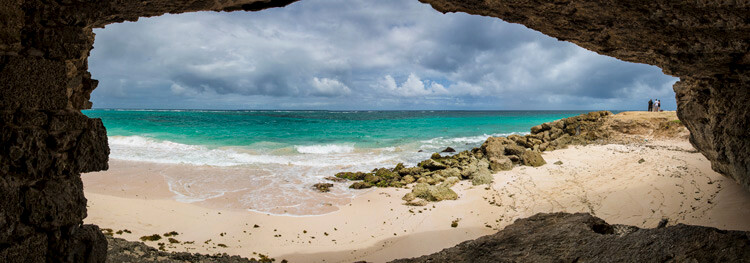
view from a cave of the ocean - travel photography hacks

1. Pack Light

Many times, the biggest challenge in travel photography is whether or not you will be able to capture the essence of the place with the gear you packed. If you are going on vacation, you certainly do not want to take every lens you own. Other than adding weight, there is a chance that much of it will not be used.

 travel photography hacks - lagoon with trees and a boat

This is a good reason to research your destination is to help determine what images you want to capture. Are you going to shoot more landscape scenery or trying to capture the people living there? Your decision will affect what gear you take with you.

blue sky and beach -  travel photography hacks

Additionally, a great way to determine what to take is by reviewing your last trip. Look at what you captured then and decide if it is similar to what you hope to capture now. Many times you will find that most of your photos were taken with the same lens. You can use Lightroom’s filtering system to gather that intel.

For example, if you took both a wide and long zoom lens, but took most shots with the wide lens, then you can safely leave your long zoom behind.

2. Pack Smart

When you decide which lenses you need for your trip, pack well to protect them. It helps to remember that lenses are made mostly of glass, even when built with highly durable exterior bodies. An easy packing hack to avoid damaging your lenses is putting them inside thick socks. This cushions your lens during travel, whether inside your luggage (carry-on only, never check your valuable camera gear) or camera bag.

photo from an airplane window -  travel photography hacks

Optional: further secure your lenses by putting them (sock-wrapped) into shoes/boots.

3. Make a Shot List

You do not have to be a professional photographer to make a shot list. As you research your destination, there are no doubt certain things that you want to see and experience there. As you plan your itinerary, you can make a note of what you want to capture in that location.

b/w architecture image -  travel photography hacks

Take a note of your different points of interest and how you plan to shoot them. Sometimes this simple action can keep you from being overwhelmed when you get there. This will also help you determine what gear to pack (mentioned above).

4. No Neutral Density Filter, No Problem

If you did not pack neutral density filters for your trip, there is no need to kick yourself if an opportunity for a long exposure presents itself. It does take a little familiarity and processing in Photoshop, though. Compose your image and take between 15-20 shots with that composition.

beach shot -  travel photography hacks

15 shots taken of the same scene in short intervals.

You need to shoot in burst mode or ensure that the intervals between your shots are as small as possible. Download your images and load them into Photoshop as layers.

Photoshop layers -  travel photography hacks

15 shots loaded into Photoshop Layers.

Select Auto-Align Layers from the Edit Menu and Auto. Click OK when done. Next, convert your layers into Smart Objects. You do this by selecting the Layer menu, Smart Object and Convert to Smart Object. This step may take a few minutes to process.

When that is finished, go back to your Layer menu and Smart Objects. In Stack Mode, choose Mean (or Median also works well). This process also takes a few minutes to run.

15 images stacked in Photoshop - travel photography hacks

The result, silky smooth water as if it had been shot with a neutral density filter and really long exposure.

Bonus Tip: This method can also help you remove people from your photos.

5. Tripod or Not?

A tripod is that piece of gear that you benefit tremendously from, but when traveling you may be willing to concede. Again it comes down to when and what you are shooting. If you plan on capturing nightscapes or moving subjects, a tripod is a necessity. A good compromise is a tripod that converts to a monopod.

shot of leading lines of a theatre seating area -  travel photography hacks
Conversely you can leave the tripod at home. Depending on where you are going, a tripod can become a nuisance to lug around or may not even be allowed. This is when you have to get creative and make a supporting object your tripod. Tables, walls, rocks or anything stationary which supports your camera will stand-in for a tripod.

b/w statue -  travel photography hacks

6. Batch It!

Chances are that you will shoot a number of images in one location with the same lighting and conditions. A quick way to edit a large number of photos with your style is to batch process them. Batch processing is applying the same edit across multiple images. In addition to Photoshop and Lightroom, there is other photo editing software available that can help you achieve this.

7. Let’s Reflect

There is no need to walk with a bulky or expensive reflector on your trip. Buy a piece of foam board to bounce light into your shadows. This cheap trick can save you from packing more and you only need apply it to some situations.

city at night - travel photography hacks

Conclusion

With travel photography, most times you want to walk around with less gear (for both your comfort and safety). Once you have done your research and know what you want to achieve, there is no need to go with equipment that you will not use. Sometimes a few travel photography hacks can save you in a pinch.

Please share some of your favorites with us in the comments area below.

The post 7 Travel Photography Hacks to Get You Going Places appeared first on Digital Photography School.


Digital Photography School

 
Comments Off on 7 Travel Photography Hacks to Get You Going Places

Posted in Photography


More Lessons from the Masters of Photography: Edward Weston

15 May

In any art form, we have those who seem to transcend the medium itself. Those who by their very accomplishments earn the respect and admiration of those who view their work. We call these esteemed individuals “Masters”. In photography, there great names that we hold high because their photographs move us on some emotional, nearly spiritual plain. We see these people as masters of photography not simply because of their level of technical skill but how their application of those skills makes us feel. At the same time, we strive to reach that same level of proficiency.

In this installment of Lessons from the Masters of Photography, we are going to examine the work of Edward Weston. We will look at the photographs and also the man to see what valuable lessons they can teach us about photography.

Edward Weston

Edward Weston - masters of photography

Edward Weston by Fred Archer- 1915

Weston was born in Highland Park, IL on March 24th, 1886. He began photography at the relatively young age of 16 when he was given a No. 2 Bulls-Eye camera by his father. The camera used 3 ½ inch roll film and Weston used the incredible little box to make photographs around Chicago where he spent a large portion of his childhood.

After moving to California in 1906, he worked as a surveyor and began working in photography essentially as a “door-to-door” photographer. A couple of years later, Weston would return to Illinois to attend the Illinois College of Photography where he became proficient in darkroom and camera techniques. Finally, in 1911, he opened his first studio in Tropico, California. The rest, as they say, is history.

Edward West went on to become one of the most dominating forces in the world of photography and is now considered by many to be one of the first great American photo makers. His work ranges from landscapes to fine art nudes and still life. In this article, we’re going to look at a few of the many lessons you can learn from the great Ed Weston, one of the Masters of Photography.

There are no Rules

How many times have you stopped yourself from placing a horizon dead center in a composition because it isn’t generally considered correct? Have you worn out the Rule of Thirds?

Do you always want to retain detail in the shadows each and every time? If you ever don’t make a photo in a certain way because it isn’t the “correct way”, then you are limiting yourself and your work…and Ed Weston would likely agree with me.

More Lessons from the Masters of Photography: Edward Weston - man looking up on a forest of tall trees

Weston believed there were no set “rules” to composition, He saw photography as a progression in self expression and would photograph the scene or subject based on what he felt, not necessarily based on any set rules.

When you photograph, always remember that while there a few technical constraints the majority of the creative side of your photograph is completely up to you. Be like Edward Weston and don’t hold back just because what you want to do is unique.

Beauty is Everywhere

If you look at some of Weston’s most celebrated works, you’ll see that they consist of everyday items that you might have in your home right this second; lettuce, sea shells, even a toilet. In fact, what is considered to be one of his most famous photographs is nothing more than a bell pepper.

More Lessons from the Masters of Photography: Edward Weston - pepper #30

Pepper #30 by Edward Weston, 1930/Image courtesy Sotheby’s

Weston made the everyday commonality of objects disappear. One of my favorite quotes by him is as follows:

“This then: to photograph a rock, have it look like a rock, but be more than a rock. Significant presentation – not interpretation.”

What’s Weston telling us here? Is he just being overly dramatic as some of us photographers tend to be (as my hand slowly raises)? Or is he saying that we should see the things around us not only as what they are but also what they could be?

sand dunes - More Lessons from the Masters of Photography: Edward Weston

Dunes, Oceano By Edward Weston, 1936

Beauty and therefore photographic material surrounds us all. Don’t overlook something because it appears simple. Instead, attempt to see its beauty photographically and learn to use your camera to show that quality in your work.

Use Simple Techniques in a Grand Way

Something I found surprising as I learned more about Weston is that most of (if not all) of his photographs were contact prints. This means that the negative is placed directly on top of or in very close contact with the printing paper. A contact print is the same size as the negative it is birthed from and in the case of Weston that was usually 8×10 inches.

silhouette of a camera on a tripod - More Lessons from the Masters of Photography: Edward Weston

Can you imagine that? All these great photographs were printed with extremely simple methods using nothing more than a negative, a piece of paper sandwiched in a wooden box, and light. The magic happened when Weston would add in the most important thing of all; his immense skill.

You see, Weston might have used simple tools, but the way in which he used them made all the difference. In your photography, never forget that amazing things can come very very simple means. The important thing is learning how to use the tools you do have expertly. Don’t believe me? That Pepper #30 from earlier…it was shot in a tin funnel on Weston’s kitchen table.

Some Final Thoughts on Edward Weston

I realize as I close out this article that it is March 24th, Edward Weston’s birthday. Oddly fitting as I think back on the legacy and lessons he left us to help better ourselves as photographers.

Weston was a master of making the simple profound. He used simple techniques and wasn’t afraid to bend the accepted “rules” in order to get the photography he saw fit. As you continue on your photographic journey I urge you to learn more about Edward Weston and his wonderful work as you discover more ways to become a better photo maker.

Read other dPS articles on the masters of photography here:

  • More Lessons from the Photography Masters: David Burnett and Vivian Maier
  • Lessons from the Masters: Robert Capa and Jerry Uelsmann
  • Cartier-Bresson and Stieglitz – Study the Masters of Photography to Become a Better Photographer
  • Masters of Photography: Bruce Davidson, Master of the Subway
  • Masters of Photography – Yousuf Karsh Portrait Photographer
  • Masters of Photography – Ansel Adams
  • Photography Lessons I Learned Growing Up Around Ansel Adams

The post More Lessons from the Masters of Photography: Edward Weston appeared first on Digital Photography School.


Digital Photography School

 
Comments Off on More Lessons from the Masters of Photography: Edward Weston

Posted in Photography


Free Versus Paid Photography Portfolio Websites – Which is Best for You?

13 May

One of the joys of photography is sharing it with the world. Once upon a time, a photography portfolio was a collection of prints, but digital photography and the internet have changed everything. Photography portfolios these days come in many forms, and they are almost exclusively online.

So, do you need a portfolio, and how do you decide where to proudly display your photos for the world to see?

Long exposure landscape photo of rocks at sunset, Mt Maunganui, New Zealand - photography portfolio

Why You Need a Photography Portfolio

You may be asking why you need a portfolio at all. Maybe you’re happy keeping your photos to yourself and never sharing or printing them for anyone else to see? It’s your photography, and you can do what you like with it. But, there are a few benefits that only come from sharing your work, though.

A photography portfolio allows other people to see and enjoy your creations. I’m betting you love not only the process of creating images but also the final product. So why not let others appreciate your artwork too?

You will be driven to stretch yourself and work on improving your photography if you put it out there for others to see. This is often a quiet voice nudging you to try a new technique or take a workshop or develop your post-production skills. A portfolio opens your photography up to critique, which is a little daunting, but I’ve found it to be positive and helpful most of the time.

noosa heads sunshine coast queensland australia - photography portfolio

A portfolio is also necessary if you ever plan to sell your photography. This isn’t for everyone, and I wouldn’t recommend that this be your primary motivation, but it’s worth considering. You may not think you want to make money with your photography, or not yet at least, but if and when that time comes, you will be better prepared if you already have an online presence and portfolio.

Free Versus Paid Photography Portfolio Websites

The options for displaying your photography portfolio online can be a little overwhelming. A quick google search for “photography portfolio website” returns 48 million results. The first question you need to ask is whether a paid or free service is best for you? There are many options within each category, but they each have their pros and cons.

It’s also worth noting that “photography portfolio” doesn’t necessarily look how you expect. In fact, you may already have a portfolio online, you just aren’t thinking about it in that way yet. Let’s look at a few of the options and you’ll see what I mean.

Free Services

If you’ve ever shared any of your photos online, whether on social media or on a photo-sharing website, then you already have an online portfolio. Although not generally considered portfolio websites, some social networks actually make great free portfolios.

Photo sharing websites are a great place to display your portfolio for free. They’re aimed more towards photographers than most social networks, so often include features that may assist you in using them as your primary portfolio.

Sunrise at Urangan Pier, Hervey Bay, Fraser Coast, Queensland, Australia - photography portfolio

Pros

Other than being free, the biggest advantage of free services is the volume of traffic. The larger websites are among the biggest on the internet, so the potential for people seeing your photos is far greater. With all these visitors and traffic comes community. The ability to engage with other users is a huge advantage in my opinion. They have become the modern camera club. They are places where you can not only find an audience for your work, but other photographers to inspire you and network with.

Free services are constantly pushing forward with new features and technology, so you get to be on the cutting edge. The regular updates can be frustrating at times, but I think the good far outweighs the bad in this regard.

These are also the places that you are likely to be found by buyers. One of my first magazine features was an image that was found on Flickr by a photo editor searching for a specific image to buy. Again, this isn’t for everyone, but something worth considering if you are wanting to sell your photos.

Landscape photo of Two Mile Bay, Lake Taupo, New Zealand - photography portfolio

Cons

There are downsides to using a free service, though. The biggest one for me is that you are depending on someone else’s platform to build your portfolio. Their primary interest is profit, not making you rich or famous. They can and will change things whenever they like and you have no say in the matter. If they close down or are sold to a new owner, that can mean a lot of hard work goes down the drain.

You have little or no ability to customize your profile page, meaning you have no options for how your portfolio looks. This may not be something you’re concerned about, but it’s worth considering. Free services make money by either selling ads (social networks) or offering premium features to users (photo sharing sites). This is fine, as it keeps the service free for those who don’t want to pay, but it means you’ll miss out on some of the best features the service has to offer.

You’re probably already using one or more free portfolio services, or are at least aware of them. Let’s take a look at a few of the biggest ones and see if they’re right for you.

Flickr

The photo-sharing website Flickr has been around forever and was one of the first places I began sharing my photography when I started out. With around 75 million users, it is a giant in the photo-sharing world. Flickr’s biggest strength lies in its communities. I have been involved with many Flickr groups where I have met lots of other photographers and learned a ton.

flickr free vs paid photography portfolio websites

Flickr’s popularity has declined over the last few years as users have moved on to other things, and the Yahoo-owned website (recently acquired by SmugMug) hasn’t done itself any favors by being incredibly slow to innovate and keep up with the competition.That being said, it still has a thriving photography community and is worth considering.

500px

Like many Flickr users, I abandoned ship when I discovered 500px, a newer photo sharing website that offered many of the same features but with a fresh new user experience. 500px also used an algorithm that meant you were far more likely to see amazing photography on its “popular” page. The standard of photography seemed higher, so it naturally attracted a lot of photographers.

500px has never reached the same volume of users as Flickr, with current numbers sitting around 12 million, but the service has added new features like communities and their “Marketplace”, which is essentially a way to license your images to sell as prints or stock.

500px free vs paid photography portfolio websites

500px has made headlines recently in the photography world after it was sold to VCG, the “Getty Images of China”. This has been a hugely controversial issue for 500px users, and there has been a mass exodus of previously loyal users. Don’t let that be the deciding factor for you, as 500px still has a lot to offer as far as free portfolio websites go.

Instagram

You may think of Instagram as just another social network, but you might be surprised how many photographers are now using it as their primary portfolio.

I’m sure I don’t need to tell you that Instagram is currently the world’s number one photography app, and for good reason. People want to go where the masses are. With over 800 million users, there is no question as to whether it’s a place to consider sharing your portfolio.

instagram free vs paid photography portfolio websites

Instagram can be used in many different ways, but if you choose to use it as a portfolio, you must learn to be selective about what you share. Try to resist the temptation to share every photo. Curate your feed well, and you will have a portfolio that will attract people to it. If you must share photos of your cat, try using Instagram’s awesome Stories feature.

Pinterest

Just like Instagram, Pinterest has grown into a social network with a massive number of users, and it has the added advantage of being heavily visual. It’s a great place to be able to share your portfolio with the potential of being seen by a large audience.

Pinterest allows you to create boards and then “pin” your photos to as many boards as you like. You can create a different board for each photography category or location, such as “Weddings” or “Australia”. You can even have a “Portfolio” board where you only pin your best photos.
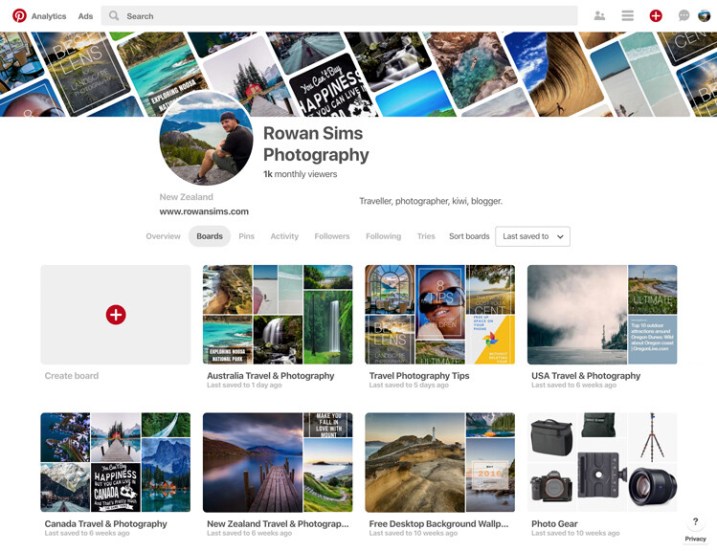
pinterest free vs paid photography portfolio websites

Pinterest also allows you to pin web pages, so if you have a blog you can pin your posts. The ability for others to re-pin your pins to their own boards means your work can be seen by a lot more people. You can also create inspiration boards for re-pinning other photographers’ pins. With all these features, Pinterest is definitely worth considering as a place to share your photography portfolio for free.

Paid Services

When it comes to paid photography portfolio websites, there aren’t as many options, but the ones that are available give you pretty amazing bang for your buck. Most professional photographers use one of these services these days, but that doesn’t mean you have to be a professional to use one.

They all have a range of options that vary in cost and features, but if you are considering a paid service for your portfolio, I’m sure you can find something that will fit your budget and needs.

Pros and Advantages

As with the free options, these services have their pros and cons. The biggest advantage, in my opinion, is the ability to customize how your portfolio looks and feels. You can change colors, layouts, text, logos, etc., all without needing to know how to code websites.

noosa national park sunshine coast queensland australia - photography portfolio

Most of them include unlimited storage for your photos, meaning you can upload as many high-resolution images as you want. This not only means you never have to delete another photo to make space for new ones, but you also have a copy of your photos backed up in the cloud.

The ability to sell your photos as prints or license them as stock directly from the website is a major attraction for many photographers. Each service’s e-commerce system works differently, but if this is a feature you want, you will find something that works for you. Some paid portfolio websites also allow you to deliver image files directly to clients, which works great if you’re a wedding or portrait photographer, or if you want to deliver files directly to a magazine, etc.

If you have a blog, some of these services will allow you to integrate your domain with your portfolio. For example, you can make your portfolio URL something like “portfolio.yourdomainname.com” rather than “yourname.photoshelter.com”. Visitors to your portfolio won’t even know that they’re on another website.

Driftwood bench seat on sand dunes overlooking Mount Maunganui Beach at sunset. - photography portfolio

Cons or Disadvantages

As you’re paying for premium features, there aren’t as many disadvantages of using a paid service. The main one is that they don’t have the social element that you get with photo-sharing sites or social networks. Getting your portfolio in front of eyeballs is a lot harder without the ability for viewers to engage with your work like they can on social media.

Although you have far more options to customize the way your portfolio appears, you’re still at the whim of the website that it is hosted on, and therefore how it functions. If you don’t like the features a website offers, it’s take-it-or-leave-it.

The following paid photography portfolio websites are by no means an exhaustive list, but these are some of the largest and most popular amongst photographers.

PhotoShelter

This is the first paid portfolio service I used for my own photography. PhotoShelter offers some of the best photography portfolios money can buy. Their websites look and work great, and their e-commerce features are second-to-none.

You can sell and license your photos directly through the website, and they even offer self-fulfilled printing if you want to print and ship images yourself. Although it’s one of the most expensive services, PhotoShelter is a solid option.

photoshelter free vs paid photography portfolio websites

SmugMug

I switched from PhotoShelter to SmugMug a few years ago after running an experiment to see how the two big boys compared in terms of Google search traffic. SmugMug won hands-down, so I moved my portfolio over. The two are very comparable in terms of cost and features.

If you want a beautiful portfolio website that works well and offers unlimited storage, I would definitely consider SmugMug. They also offer a solid e-commerce system, although they let themselves down with their refusal to allow self-fulfilled printing, despite users requesting it for years.

smugmug free vs paid photography portfolio websites

Zenfolio

I haven’t used Zenfolio personally, but from what I’ve seen and heard from other photographers, it’s a service worth considering. Their websites look great, although aren’t as customizable as the competition. Zenfolio is one of the more affordable services available, especially if you aren’t planning to sell your photos. It’s definitely, worth a look.

zenfolio free vs paid photography portfolio websites

Editor’s note: I personally use Zenfolio (screenshot below) and have used their print fulfillment services for clients, as well as for file downloads. It all works seamlessly and you can set your own prices with the Pro or Advanced plans. So, I can add my recommendation for this service. 

Zenfolio photography portfolio of Darlene Hildebrandt, dPS Managing Editor.

Self-Hosted Website and Portfolio

The last option sits somewhere between paid and free, and is yet another option to consider. If you want total freedom to customize and run your portfolio website however you want, you need your own self-hosted website.

The easiest way to do this is with an installation of WordPress on your own domain. It’s cheap and easy to set up with a service like BlueHost. Once it’s up and running, the options for your portfolio are endless. There are many free and paid gallery plugins, and if you want to sell your photos you can do it directly from your own website with a plugin like WooCommerce, all without having to pay anyone else a commission, so you get 100% of the profit.

If you have time (and are technology savvy) and you like to have total control over how things look and work, this is a great option. It does require a lot more user input, though, so be careful about rushing into it. If you prefer something that’s easier to set up and does most of the heavy lifting for you, one of the paid services is probably best.

tea tree bay sunset noosa heads queensland australia - photography portfolio

How do you choose?

With so many options, it’s hard to know which is best for you. The good news is that whatever you choose, nothing is permanent. I have used almost all of the services that I’ve mentioned in this article. They all worked for me at the time that I used them, and then I moved on when they no longer served my needs.

Try one or two of the free ones and see if you like them. If you think one of the paid services might be for you, they all offer free trials, so you don’t need to commit until you’re ready.

Whatever you decide, remember to have fun and don’t take it too seriously. Sharing your photos with the world can be one of the most enjoyable parts of photography. I would love to know about your experiences with portfolio websites. Have you used any of the websites mentioned? Are there any others you would recommend? Questions? Let me know in the comments area below.

The post Free Versus Paid Photography Portfolio Websites – Which is Best for You? appeared first on Digital Photography School.


Digital Photography School

 
Comments Off on Free Versus Paid Photography Portfolio Websites – Which is Best for You?

Posted in Photography