RSS
 

Posts Tagged ‘Photography’

How to Capture Motion Blur in Photography (6 Tips)

19 May

The post How to Capture Motion Blur in Photography (6 Tips) appeared first on Digital Photography School. It was authored by Darren Rowse.

capture motion blur in photography

Are you looking to capture motion blur in your photography?

While photographing motion blur might seem difficult, it’s actually pretty easy; with a bit of camera know-how, you’ll be taking stunning photos like a pro.

capture motion blur photography

And that’s what this article is all about: giving you the tools and techniques you need to get beautiful results!

Note that motion blur can look great in any photography genre, so don’t try to limit yourself. Instead, embrace the power of the blur!

1. Slow down your shutter speed

Here’s the fundamental motion blur tip:

Use a slow shutter speed.

You see, the reason for motion blur is simply that your camera’s shutter remains open for a significant period of time. In other words: you get motion blur when your shutter speed is long, whereas you freeze the action when your shutter speed is short.

So the number one tip for capturing movement is to select a longer shutter speed.

motion blur in front of buildings

If your shutter speed is too fast (e.g., 1/4000s), you’re not going to capture much movement. But if you dial in a lengthy shutter speed (e.g., five seconds) you won’t need your subject to move much at all before you start to see blur.

How long should your shutter speed be? Here, the speed of your subject comes into play. A moving snail and a moving racecar will give you very different results at the same shutter speed. The slower your subject, the slower the shutter speed needs to be to create blur.

The other factor that comes into play when determining shutter speed is how much light exists in the scene. A longer shutter speed lets more light into your camera and runs the risk of blowing out or overexposing your image. Below, we’ll cover some ways to let less light in (so you can use long shutter speeds without overexposure concerns).

Bottom line:

There’s no one-size-fits-all shutter speed for motion blur. It’ll depend on the speed of your subject, the brightness of the scene, and how much motion blur you want to capture. The key is to experiment!

2. Stabilize your camera

There are two ways to get a feeling of motion in your images:

  1. Have your subject move.
  2. Have your camera move.

But for the type of photo we’re after today, it’ll be the subject that’s moving. In such cases, you need to do everything you can to keep your camera perfectly still. Otherwise, you’ll capture a blurry subject – but you’ll also end up with a blurry background.

How do you stabilize your camera?

boats in the water

A tripod is ideal, but you can also place your camera on some other steady object (e.g., a table or a bench). I’d recommend using a remote shutter release or a self-timer mechanism; that way, you can trigger the shutter without touching your camera (because the more you touch your camera, the more likely it is that you’ll introduce blur).

3. Try Shutter Priority mode

As you know, the shutter speed is crucial to achieving a beautiful blurred look. Even small changes will have a big impact upon your shot – so you should use a camera mode that gives you full control over your camera’s shutter.

You have two options. First, you can switch your camera to full Manual mode. It’ll work well, and it’s a good idea for more experienced photographers – but in Manual mode, you’ll also need to select your aperture and ISO (and you’ll need to make sure that the shutter speed, aperture, and ISO interact to create a perfect exposure). So if you don’t yet feel confident working in Manual mode, you have another option:

Shutter Priority mode.

With Shutter Priority, you set the shutter speed (and the ISO, if you so choose), but your camera will set the aperture to ensure the shot is well exposed. It’s a very handy mode for motion blur photography because it ensures you get the movement effect you’re after while also capturing generally well-exposed images.

motorcyclist motion blur photography

How to compensate for long shutter speeds when there is too much light

Remember what I said about a long shutter speed?

The longer the speed, the more light that will get into your camera, and the brighter your photos will be.

So unless you compensate for this, whenever you try to capture motion blur, you’ll end up with overexposed shots.

Below, I’ll suggest three easy methods for preventing this overexposure.

(Note: A fourth method is to simply wait for the light to change – i.e., for it to get darker. Many shots that incorporate blur are taken at night or at dawn/dusk for this reason.)

1. Use a small aperture

Here’s the first, and simplest, method of preventing overexposure:

Narrow the aperture.

Because the narrower the aperture, the less light that will hit the camera sensor.

If you’re shooting in Shutter Priority, your camera will actually narrow the aperture for you. As soon as it detects a slow shutter speed, it’ll close down the aperture and deliver a well-exposed shot.

But if you’re shooting in Manual mode or Aperture Priority, the aperture can generally be changed via a dial on your camera.

One thing to bear in mind:

Adjusting the aperture won’t just affect your photo’s exposure. Aperture also affects the depth of field, which refers to the amount of the scene that’s sharp. A wide aperture creates a limited depth of field, like this:
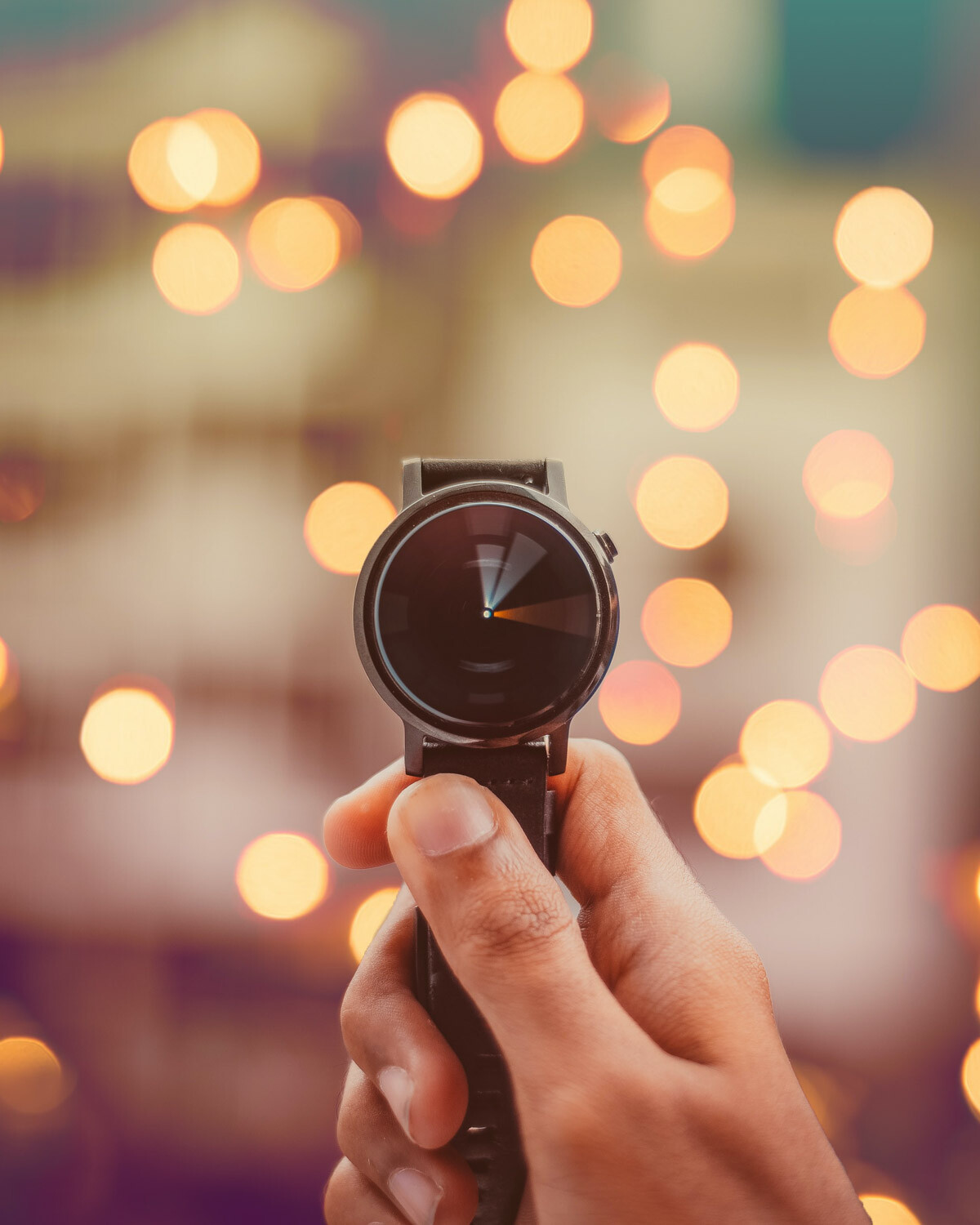
watch with spinning hands capture motion blur photography

Whereas a narrow aperture ensures the entire scene is sharp throughout:

capture motion blur photography car driving

So while it’s easy to combine a deep depth of field with a well-exposed motion blur image, working with a shallow depth of field while also ensuring well-exposed motion blur can be tough. If you’re after a shallow depth of field effect, you’ll need to counteract overexposure another way, as I explain in the next section:

2. Decrease your ISO

If you’ve tried narrowing your aperture and still aren’t getting you the results you need, or if you’re after a shallow depth of field, here’s an alternative method for preventing overexposure:

Drop your ISO.

ISO impacts the sensitivity of your digital camera’s sensor to light, where a higher number will induce greater sensitivity (and therefore a brighter exposure) and a lower number will induce less sensitivity (and therefore a darker exposure).

train moving fast with platform

You can adjust your ISO in Manual mode or Shutter Priority mode, so simply dial in a low ISO (such as 100) and watch as your exposure decreases. Of course, there’s a limit to how low you can drop your ISO; once you get to ISO 100 or ISO 50, your camera won’t allow you to go any further. But it’s always worth checking whether a lower ISO is an option because it’s a simple way to prevent overexposure.

3. Try a neutral density filter

Say you’re after a motion blur photo, but you just can’t get the exposure dark enough. You’ve narrowed the aperture, you’ve dropped the ISO, but your shots keep coming out overexposed.

You still have another, more dedicated option:

A neutral density filter. It’s a piece of glass that blocks light from passing through your lens – sort of like sunglasses – and lets you use a long shutter speed while preventing overexposure.

For example, if you’re shooting a seascape in bright sunlight and you want to blur the water, you’ll end up with a blown-out, overexposed scene – even with a narrow aperture and low ISO. But pop a neutral density filter over your lens, and you can slow the shutter speed right down while keeping a perfect exposure.

long exposure seascape blur

(By the way, a polarizing filter can have a similar effect, though it’ll also impact the look of your images by cutting out reflections.)

Note that neutral density filters come in many strengths. You can get a basic, subtle ND filter, one that’ll slightly darken the scene. Or you can buy an ultra-powerful, 10-stop ND filter, which will allow you to dramatically lengthen your shutter speed in bright sunlight.

A quick note: two more creative techniques to try

If you want to capture images with motion blur but you’re looking to come away with uniquely artistic results, here are two other techniques to consider:

  • Slow sync flash. This lets you capture a relatively sharp subject while creating a moving, blurry background, and it’s a great way to create in-your-face shots.
  • Panning. Here, you simply follow a moving subject with your camera; the subject will generally come out nice and sharp, while the background stretches and blurs.
panning with motorcycle

Motion blur in photography: conclusion

Well, there you have it! Six easy tips to capture motion blur in photography.

So remember these tips. And the next time you’re after some creative motion blur photos, you’ll get stunning results!

Now over to you:

Have you tried taking motion blur photos? Did it go well? Do you have any tricks or tips? Share your thoughts (and images!) in the comments below!
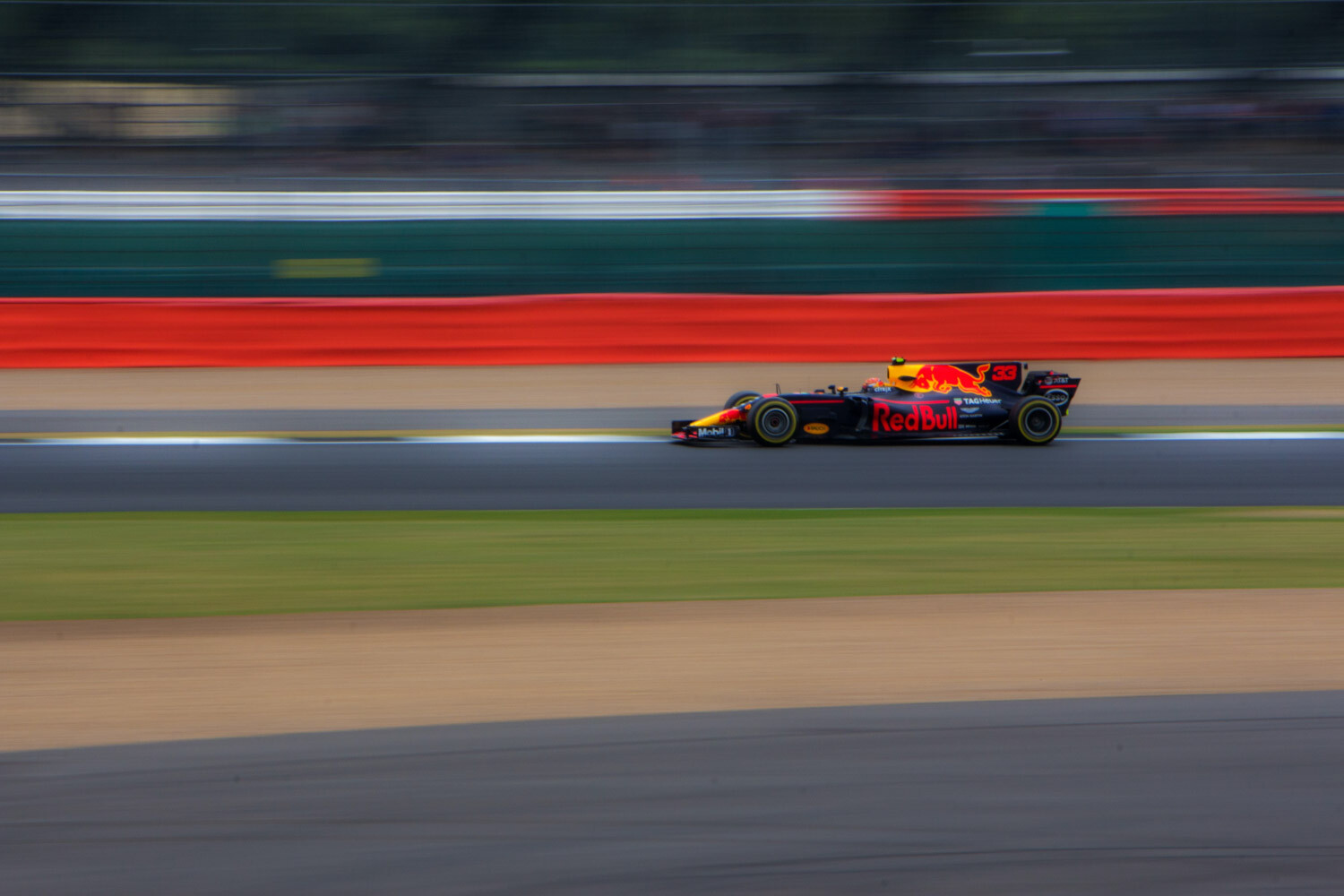
capture motion blur photography racecar

The post How to Capture Motion Blur in Photography (6 Tips) appeared first on Digital Photography School. It was authored by Darren Rowse.


Digital Photography School

 
Comments Off on How to Capture Motion Blur in Photography (6 Tips)

Posted in Photography


The Weekly Photography Challenge – Toys

15 May

The post The Weekly Photography Challenge – Toys appeared first on Digital Photography School. It was authored by Sime.

This week our challenge is inspired by some posts I’ve spotted over on THIS website showcasing some great product photography! After reaching out, we have a handful of images to share for a little inspiration!

A big thanks to Oziii Obsessions Photography for his help with this challenge!

oziiiobsessions_toy_photography

Toy photography is super fun! you can make it as realistic or as far from realistic as you like, and just have fun with it! Toys, Jedi, Dolls, , Lego, Cars..

I’ve just found a small plastic man wearing a hiking backpack on my desk, I don’t know what adventures he’ll have this week, but I’ll be posting them in our Facebook group if you’re interested!

The Weekly Photography Challenge – Toys

Toy photography isn’t about merely taking a toy, snapping a photo and “job done” it’s well, have a read over here! ‘Getting Started in Toy Photography on dPS’

Don’t have time for a read, here’s a summary “The challenge of Toy Photography is to make the toy “lifelike”; to remove that “plastic-feel” to it and to make it more human. Most Toy Photographers put their subjects into everyday, mundane scenes. You are limited only by your imagination”

The Weekly Photography Challenge – Toys

Still stuck? There’s another great article over here – clickety click – that might give you a splash of inspiration.

Make sure to use the hashtag #dPSToyPhotoChallenge if you’re posting on social media, or share your photo in the comments on this post, you can find details on how to do that below.

Great! How do I upload my photos?

Upload your photo into the comments field (look for the little camera icon in the Disqus comments section below this post) and they’ll get embedded for us all to see. Or, if you’d prefer, upload them to your favourite photo-sharing site and leave the link to them.

Weekly Photography Challenge – Looking Up

Most of all, make a NEW photo for this challenge and have some creative fun with it!!

–Simon

The post The Weekly Photography Challenge – Toys appeared first on Digital Photography School. It was authored by Sime.


Digital Photography School

 
Comments Off on The Weekly Photography Challenge – Toys

Posted in Photography


Photography Aspect Ratio: What Is It and Why Does It Matter?

12 May

The post Photography Aspect Ratio: What Is It and Why Does It Matter? appeared first on Digital Photography School. It was authored by Andrew S. Gibson.

photography aspect ratio a quick guide

What are aspect ratios in photography? How does an aspect ratio affect your images? And how can you change the aspect ratio once you’ve taken a photo?

In this article, I’m going to give you a quick introduction to photography aspect ratios – so that, by the time you’ve finished, you’ll understand what they are and how you can use them to improve your own images.

Let’s get started.

photography aspect ratio comparison

What is a photography aspect ratio?

An aspect ratio is the dimensions of an image expressed in a ratio form. You determine the aspect ratio by comparing an image’s width and height, then writing it as a width:height ratio (such as 3:2 or 4:5).

The aspect ratio of your images is initially determined by the dimensions of your camera’s sensor. Because sensor dimensions are fixed, it’s easy to take the aspect ratio of your images for granted.

But it is important to think about the aspect ratio when taking photos. Your camera aspect ratio has compositional implications – and I highly recommend you consider this when out with your camera.

Also, a quick note: While your camera aspect ratio is technically fixed, many newer digital cameras allow you to change the aspect ratio in the camera’s menu. Plus, you have the option of adjusting an image’s aspect ratio in post-processing, so it’s more flexible than you might think!

Why does aspect ratio matter?

Different aspect ratios will produce different types of compositions.

For instance, a square, 1:1 aspect ratio tends to produce very balanced, often confined images.

A 4:5 or a 3:2 aspect ratio offers a bit more space within the frame.

And a 16:9 aspect ratio gives a lot of room for expansion along the image edges.

Of course, the effect of the aspect ratio depends somewhat on the type of scene you’re photographing, and certain scenes naturally lend themselves to certain aspect ratios. That’s why it’s essential to think carefully about the aspect ratio before pressing the shutter button; different aspect ratio choices can dramatically affect the composition.

Common camera aspect ratios

Virtually every camera sensor offers one of two aspect ratios:

3:2 aspect ratio

A 3:2 aspect ratio is used by 35mm crop-sensor and full-frame DSLRs, some Leica medium format cameras, most mirrorless cameras, high-end compact cameras, and most 35mm film cameras. This aspect ratio has been with us ever since Leica made the first 35mm film cameras in the early 20th century.

3:2 aspect ratio

Now, a full-frame 35mm sensor measures 36 mm x 24 mm. You can express this figure as a ratio: 36:24. Mathematicians always like to simplify ratios so the relationship between the two numbers is easy to visualize, and in this case, you can divide both dimensions by twelve.

That gives you 3:2.

As you’re likely aware, crop-sensor cameras have smaller sensors, measuring approximately 22.5 mm x 15 mm (though the exact measurements vary depending on the brand and model). Despite the different sensor sizes, the ratio between the width and the height remains the same, conforming to a 3:2 aspect ratio.

4:3 aspect ratio

The 4:3 aspect ratio is used by Micro Four Thirds cameras, many compact cameras, some medium format digital cameras, as well as medium format film cameras using the 6 cm x 4.5 cm format.

4:3 aspect ratio

3:2 vs 4:3 aspect ratio

Now let’s compare the two common camera aspect ratios. In the diagram below, you can see the 4:2 aspect ratio (left), plus the additional space included by a 3:2 sensor:

4:3 vs 3:2 aspect ratio

Clearly, the 3:2 aspect ratio used by most DSLRs and mirrorless cameras is slightly longer than the 4:3 aspect ratio used by Micro Four Thirds cameras. The difference may not seem like much, but it has a major effect on the composition. Take a look at the following images to see why.

Here’s the original shot, taken with a 3:2 aspect ratio:

3:2 camera aspect ratio

And here’s the same image, but cropped to the 4:3 aspect ratio, as if it had been taken with a Micro Four Thirds camera:

4:3 camera aspect ratio

Do you see the difference? It’s subtle, but it’s there. The 35mm frame is longer.

And that can be challenging when it comes to composition because you have to find a way to effectively fill that length.

Landscape photography, in particular, often benefits from a compressed frame, and that’s one of the reasons for the popularity of 7:6 medium format cameras and 5:4 view cameras among landscape film photographers.

Here’s what the same landscape would look like cropped to these formats:

5:4 photography aspect ratio
7:6 photography aspect ratio

For me, the 7:6 aspect ratio is too short, but 5:4 is a very pleasing aspect ratio to work in.

Aspect ratio examples

Now, after seeing the photos above, you might be thinking that the difference between aspect ratios is not a big deal. And often, when you are shooting in the landscape format (i.e., with the camera positioned so that the frame is horizontal), the difference is minimal. It’s not so difficult to work with any of the aspect ratios I’ve presented above.

But if you switch to the portrait format (i.e., with a vertical frame), it’s a different story. A 3:2 frame suddenly becomes a lot harder to fill effectively, and the composition often benefits from cropping to a shorter rectangle. Here are some examples to show you what I mean:

2:3 aspect ratio example
3:4 aspect ratio example
4:5 aspect ratio example

The difficulty I had with the landscape above is that there was too much empty sky in the original image. I solved the problem by cropping off the top, and the final 4:5 aspect ratio seems to work nicely.

Of course, not all images will benefit from this type of crop. But if you find yourself struggling to fill the frame, especially if you have a 35mm camera with a 3:2 frame, you may want to try a different aspect ratio.

By the way, here is the first image cropped to a couple more common aspect ratios.

The panoramic format (16:9):

16:9 aspect ratio example

And the square format (1:1):

1:1 aspect ratio example

Adjusting the aspect ratio in-camera

As I mentioned above, many digital cameras let you adjust the aspect ratio in the camera menu. And if you have a camera with an electronic viewfinder, you may see the cropped image in the viewfinder itself.

If your camera doesn’t have an electronic viewfinder, you’ll need to use Live View to take advantage of the aspect ratio function. The camera will display the cropped image on the rear LCD screen.

But there’s a major caveat:

If you use a non-native aspect ratio while shooting in JPEG, your camera will crop the image when you take the photo, and there’s no way to resurrect the edges of the frame. So if you later decide that you want a 3:2 aspect ratio instead of a 1:1 aspect ratio, you’re out of luck.

However, if you use a non-native aspect ratio while shooting in RAW, the camera will save the entire image in the original aspect ratio, and you can change your mind about the crop in post-processing.

Cropping in post-processing

It’s often easier to crop in post-processing than in the field. Plus, if your camera doesn’t have an aspect ratio function, cropping during editing is the only way to adjust the aspect ratio.

In pretty much every dedicated editing program, cropping is easy.

For instance, in Lightroom, just click the Crop icon, then select an aspect ratio from the Aspect menu:

adjusting the aspect ratio in Lightroom

Photography aspect ratio: conclusion

As you now know, aspect ratio is a big deal. It’s always a good idea to think about aspect ratios while shooting – and then, if necessary, adjust the aspect ratio in post-processing.

Now over to you:

What’s your favorite aspect ratio? And do you think about aspect ratio while taking photos? Share your thoughts in the comments below!

Which aspect ratio is best?

There is no one best aspect ratio – it all depends on the look you’re after! Some scenes benefit from square (1:1) aspect ratios, whereas others look great with a 4:3 or a 5:4 aspect ratio. I’d recommend playing around in a program like Adobe Lightroom.

What aspect ratio do professional photographers use?

That depends on the photo. As discussed in the article, landscape shooters tend to favor squarer aspect ratios such as 4:5, though if you’re a panorama photographer, a 16:9 frame (or wider!) might be preferable. Portrait photographers tend to avoid narrow aspect ratios, but there are times when a portrait looks good as a 9:16 composition.

What is the aspect ratio of 8×10 photos?

8×10 photos have a 4:5 aspect ratio.

The post Photography Aspect Ratio: What Is It and Why Does It Matter? appeared first on Digital Photography School. It was authored by Andrew S. Gibson.


Digital Photography School

 
Comments Off on Photography Aspect Ratio: What Is It and Why Does It Matter?

Posted in Photography


Film Photography: A Guide (and How to Get Started)

10 May

The post Film Photography: A Guide (and How to Get Started) appeared first on Digital Photography School. It was authored by Carl Spring.

a guide to film photography

Film photography is gaining in popularity.

At the start of the digital revolution, film was the realm of those who did not want to move to the new way of working (and those folks were usually harassed on forums and message boards).

But these days, film photography has a much different reputation. While some photographers see film as the preserve of hipsters trying to look cool, for many, film is a more organic method of photography. It allows you to slow down, focus on getting the shot, and experience a wait before seeing the results.

In this article, I’ll guide you through the process, equipment, and reasons to start shooting film.

film photography 2 rolls of Porta film and one of HP5
Working with film means locking in your ISO and look for the next 36 shots.

What is film photography? 

Film photography is the process of using chemicals to create a photograph. Film in roll form has been around since 1885. The film roll was invented by Peter Houston, who then licensed it to George Eastman (of the Kodak company). Kodak still dominates film photography to this day. 

Without getting too complicated, film photography works by exposing silver halide crystals to light. The more light that comes in contact with the crystals, the darker the crystals become. Afterward, the film can be processed to create a negative (the inverse of the final image), and this can be exposed onto light-sensitive paper to create a final print.

Slide film is also available, which works slightly differently – but let’s not overcomplicate things too much!

Film photography of a bride on a balcony
Shooting with off-camera flash on a film camera can be daunting. Here, I used my digital camera as the meter for my film exposure.

Film vs digital: Why should you consider shooting film?

As I explained above, the process of creating a photograph on film is a science. It involves chemicals, darkness, and all sorts of other cool stuff. Anyone who has ever processed their own film images will talk about the feeling they had when they first saw a print come to life in the developer. It is a magical experience, and one that takes a lot of time and effort. But it is this time and effort that makes film photography so rewarding.

Let’s take a closer look at the many reasons you should shoot film over digital:

1. Film stops you from being sloppy

Film photography is much more deliberate than digital photography. Each time you press the shutter, there is a cost attached. So you quickly learn to nail the technical elements and the composition. Shooting a 36-exposure roll of film will cost you roughly $ 1 per image. So if you go out and shoot 200-300 images, as many of us do on a digital shoot, you will suddenly see how cheap digital photography is.

An out-of-focus film shot of a couple
This shot shows how sloppy technique will hurt you when shooting film. I captured it using autofocus – but as the light dropped, so did my ability to focus, leading to a blurry result.

Also, when you can shoot bursts of 100 images, you don’t really need to wait for the perfect moment to unfold. You just shoot until you get it. You don’t need to worry about exposure because you can check the LCD, adjust as needed, and fix it in editing.

Film photography, on the other hand, isn’t about shooting hundreds of images. It’s about shooting a roll of 36 pictures (possibly 2 rolls if you have a great photoshoot). It is about making each exposure count and getting everything right in-camera.

In other words: With digital, it’s easy to become a lazy photographer because there are rarely consequences. With film, you’ll always be on your toes.

Astronaut Buzz Aldrin in space
The best camera is the one you have with you. For NASA, it was a modified Hasselblad. (Photo by NASA.)

2. Film saves you hours in post-processing

Film tends to look great straight out of the camera, whereas digital photos can require hours of post-processing.

In fact, most popular editing styles are film-based. So if you want the look and feel of a polished photo without spending tons of time editing, just shoot film!

Digital photographs edited to look like film are the photographic equivalent of laminate oak flooring. Yes, it’s cheaper. Yes, it’s more practical. But it just isn’t the same as the real thing!

I don’t mean to say that printing film photographs isn’t an absolute art. If you look at some of the notes of Magnum’s master printer, Pablo Inirio, you will see how the process of creating a print from a negative is something that takes a true mastery of the craft. There are definitely no auto buttons in the darkroom.

But overall, the “film” look is pretty stunning – and requires little-to-no actual editing.

A table setting for a wedding on white linen
I could have edited a digital image to look like this, but it would’ve taken time behind the computer. The result you see here is simply how the photo arrived from the lab.

3. Film makes you better at problem solving

In film photography, your ISO is fixed.

So you’re forced to think carefully when doing photography. If the light is dropping and you’re shooting ISO 100 film, you’ll have to figure out how to get more light into the camera, or you won’t get the shot. Should you slow the shutter? At what speed can you still handhold? Are you sure? Should you open the aperture and sacrifice depth of field? How can you still get a great shot in tough conditions?

Film photography throws up a lot of questions, and you only get the answers when you see the developed images.

A model against a black wall
Slowing down is definitely the way to get better film photos.

 4. Film is (potentially) cost effective

Here’s the thing:

As I mentioned above, it costs around $ 1 per shot to do film photography. And that seems like a lot.

But if you look at the cost of a high-end film camera compared to something like the Canon EOS R5 (which is around $ 5000 with a lens), you’ll quickly realize that film photography can be very budget friendly, depending on how frequently you shoot.

Even if you spend $ 1000 on a high-end film camera and lens, it leaves you with a $ 4000 film budget. Additionally, high-end film cameras will keep their value. In fact, many film cameras rise in value. So if you purchase a film camera and sell it 5 years later, you might make a nice little profit in the process. That definitely isn’t true of the latest and greatest digital cameras.

5. Film photography is enjoyable

Ask yourself: What do you enjoy most about photography? Is it taking photos, or is it wading through editing software to find the best image out of 100 almost identical files? Is your enjoyment in seeing the final image, or in spending hours of editing to make it look perfect?

Personally, I am not a fan of editing, especially when I compare it to the enjoyment of taking photos. For you, it may be different, but photographing film sharpens my skills. It helps me get more keepers and means I spend less time behind the computer. 

The easiest analogy I can draw here is with music. I love my phone with thousands of songs on it. The ability to carry every record I ever wanted to in my pocket is amazing, and it is how I listen to 90% or more of my music. However, when I really want to listen to music, I make a coffee, turn on my hi-fi system, and put on a record. It isn’t as convenient, and you have to get up to turn the album over halfway through, but it sounds better. And because I have invested more, I focus more, and I always enjoy it more.

6. It makes you cooler

Let’s face it:

Shooting film just makes you look cooler. 

What equipment do you need for film photos? 

You need a camera and some film. You then need a place to develop it. Pretty simple, really.

Let’s take a closer look at cameras and film:

A 35mm film camera: the Yashica T5. A film photography classic.
Don’t be fooled by the looks; this Yashica T5 packs a 35mm Zeiss lens for amazing image quality.

Cameras

There are three main types of film cameras:

  • Point and shoot
  • SLR/Rangefinder
  • Medium format

Each has its own advantages and disadvantages.

The easiest way to get into film photography is with a good-quality compact camera. It’s the analog equivalent of taking photos on an iPhone. The camera will work out the exposure, leaving you to work on the composition.

There are many compact film cameras out there, ranging from the cheap all the way up to the incredibly expensive. If you want to try shooting film, this is where I suggest you start. You can pick up a decent compact film camera on a well-known auction site for under $ 100.

A film SLR is a lot like a digital SLR except not as good. There are those with autofocus and those without. SLRs without autofocus will add another layer of complexity to taking photographs. Generally, you can find a manual focus SLR for cheaper. Manual focus cameras are also more reliable mechanically due to the smaller amount of internal electronics.

Even if you do use an autofocusing film camera, note that old autofocus systems are not anything like those we enjoy today (though they can make film less daunting). The right option is something only you can decide. 

Finally, there’s medium format. Medium format cameras use much larger film, though with 12-16 exposures per roll. In the same way that a bigger digital sensor improves image quality and gives a shallower depth of field, medium format film creates ultra-stunning results. Many iconic photographs have been taken on medium format film, including shots of the NASA space missions. 

Medium format cameras have some advantages (e.g., many are able to change film partway through a roll). But they also have many quirks, and these can be overwhelming for photographers new to film. Medium format cameras are bulky, heavy, and expensive compared to the other types mentioned here, so I’d hesitate to recommend them if you’re new to shooting film.

If you really want to try medium format film on a budget, you can get a Holga. It uses medium format film in a point and shoot style body with a plastic lens. Holga cameras have a very specific look; just don’t expect images like those shot by a “proper” medium format camera.

A Canon film photography camera in its box
I bought this on a well-known auction site for under $ 50. It came fully working and even included the retro paperwork.

Choosing film

Your film will determine the look of your photography. It also fixes your ISO (i.e., if you put in ISO 100 film, you’ll be shooting at ISO 100 until the roll is finished). So make sure you carefully select your film’s ISO based on the day/time you’re shooting.

Now, each film has distinctive characteristics, such as color vividness and shadow softness. So the film you choose depends on the type of look you want to achieve. The main brands to check out are Kodak, Fuji, and Ilford.

Every film out there has an example photo or two on the internet, so get your Google on and see what looks good. I’d suggest buying a few different rolls of film and finding your own favorite. Trying a new film is part of the fun of film photography!

How to develop your film photos

A Lab-Box developing kit
Products such as this Lab-Box make developing film much easier. And there’s something magical about seeing negatives appear!

The easiest way to develop your film photos is to send them off to a professional film lab. If you’re just starting out with film photography, this is the method I would definitely recommend.

However, many photographers (myself included) like the experience of developing their film at home. It’s a relatively simple process, and if you shoot a lot, it can be cost-effective. The main equipment and chemicals can be bought at many photography stores – some may even offer a discounted kit to get you started.

How to develop film at home is a whole different article. However, if you think you might want to try it, a basic equipment list is as follows:

  • Film changing bag
  • Film tank
  • Developer
  • Fixer
  • Distilled water
  • Thermometer
  • Measuring cylinder

One quick tip for developing your film at home:

Dry it in the bathroom. The moisture from showering will decrease the amount of dust in the air, which will in turn decrease the amount of dust that will settle onto your negatives. 

If you want to take things even further, you can set up your own darkroom for printing – but it’s more expensive and requires a dedicated space.

A guide to film photography: conclusion

Shooting film is a great way to learn more about photography. It gives you new methods of thinking about composition, exposure, and editing; it might even be the thing that can break you out of a creative rut.

As you now know, you can start film photography for cheap, and it may take your photography in a whole new direction!

Over to you:

What do you think of film photography? Have you tried it yet? If so, do you have any advice for beginners? And if you haven’t tried film, what camera and film do you plan to use? Share your thoughts in the comments below!

The post Film Photography: A Guide (and How to Get Started) appeared first on Digital Photography School. It was authored by Carl Spring.


Digital Photography School

 
Comments Off on Film Photography: A Guide (and How to Get Started)

Posted in Photography


7 Tips for Colorful Landscape Photography

09 May

The post 7 Tips for Colorful Landscape Photography appeared first on Digital Photography School. It was authored by Rick Ohnsman.

7 tips for colorful landscape photography

Color evokes emotion – so if you can become a master of color, then your colorful landscape photography will affect viewers on a deep level.

You may understand exposure, control your camera like a wizard, have the best equipment, get to the most exotic locations, and excel with editing. But if you don’t purposely imbue your images with intentional emotion, they will never “speak” to your viewer (or if your photos do speak, they might say the wrong thing).

That’s where color comes in handy. Let’s learn the language of color and how to use it – through seven colorful landscape photography tips (that’ll take your images to the next level!).

Colorful Landscape Photography - How does it feel?
A big reason we love sunset photos is the colors and the way they make us feel. Understanding the psychology of color is beneficial to color landscape photography; it will help you better communicate with your viewer.

1. Learn the psychology of color

The human brain is hardwired to respond to different colors. Psychologists have studied this, advertisers use it masterfully, and to be a good photographer, you need to understand how different colors will make your viewer feel.

colorful landscape photography examples
Each of these images works with one primary color. Note how the color of each makes you feel. Learn how to communcate with color in your photos.

Here are the feelings that colors produce:

  • Red: Exciting, important, passionate, angry, call to action
  • Purple: Beauty, exotic, royal, luxurious, sensual
  • Blue: Calming, serene, trustworthy, cold
  • Green: Peaceful, tranquil, natural, alive, growth
  • Orange – Fun, warm, energizing
  • Yellow – Happy, sunny, bright
  • Brown – Earthy, grounding, strength, dependability
  • Black – Mysterious, elegant, bold, powerful, edgy
  • White – Clean, healthy, pure, sterile, cold

2. Color relationships and the color wheel

In colorful landscape photography, we usually can’t choose our subject’s color. That said, if we understand the different color relationships, we can produce better photos.

You’re likely familiar with the color wheel (displayed below). Take a look at it as we discuss key color relationships:

the color wheel
  • Complementary colors – These colors sit opposite each other on the color wheel. They can work nicely in a photo; for example, blue (often a sky color) and orange/brown (often an earth color). Thus, a sky/land photo can be pleasing because the colors are complementary. Look at some of the examples below!
colorful landscape photography wheat fields
The blue sky and the golden wheat are complementary colors; they’re opposites on the color wheel.
colorful seascape
Here, you see blue water/sky and the complementary golds in the clouds/reflections.
sunrise reflection
Here, golden hour has just begun. The rising sun catches the peaks of the Idaho Sawtooth Range, giving a nice complementary orange to the blue scene.
compositions with complementary colors
Good compositions are further enhanced by the use of complementary colors.
  • Analogous colors – These are what we might call “color families.” For example, blue, blue-green, green, and yellow-green are adjacent to each other on the color wheel and therefore analogous. We can often make pleasing, colorful landscape photos with scenes comprised of analogous colors.
river with green and blue
The lush greens and blues in the Columbia Gorge in Oregon are analogous colors, adjacent on the color wheel. Note how the colors create a calming effect.
  • Color triads – These are three colors equally spaced out on the color wheel. For example, green, violet, and orange. If you look carefully, you will find color triads in nature, and they can help create impactful photos.
colorful landscape photography sunrise
The rolling hills of eastern Washington’s Palouse Country are magical enough on their own. Add a spectacular sunrise with the triad colors of orange, green, and purple, and how can you go wrong?
sunrise hills
Another shot from the same morning as the one above.

3. Pay careful attention to the time of day

You won’t be involved in landscape photography for long before you’ll hear the terms “golden hour” and “blue hour.” Golden hour is the time of the day when the sun is rising or setting. The color of the light is very warm and golden.

Arches National Park colorful landscape photography
The color of the rocks in Arches National Park is further enhanced by golden hour light.
colorful landscape photography trees in a field
These shots were taken about 10 minutes apart. The first shows the warm morning colors of golden hour. As the sun got higher, the light cooled and became bluer. Of course, I also used different white balance settings later in editing. That’s a big reason to shoot in RAW – you can adjust the white balance later without problems.
Yellowstone geyser
These shots of Great Fountain Geyser in Yellowstone National Park were taken the same evening. The first was earlier when the daylight was still bluish. Later into the golden hour, the sky color warmed up. Again, adjusting the white balance enhanced the look I was going for.

Well before sunrise or later in the evening after sunset we have the blue hour. The sky is not dark and black. Instead, it’s very cool and blue in tone. Blue hour can produce interesting light and color with a whole different mood.

blue hour scenes
Leave right after the sun goes down and you’ll miss the blue hour, the time just before dark when the light gets very blue in color. The shot at the bottom right shows two different light sources, the blue hour sky and the warm incandescent lights of Swan Falls Dam. The complementary colors play nicely together.

I’ve seen new and inexperienced landscape photographers come to shoot a sunset and make shots right up until the sun dipped below the horizon. Then they’d pack up and leave. That’s a mistake! The best sky color often comes well after the sun is already down. And if you wait even longer, the blue hour comes and continues until it gets truly dark.

Do enough colorful landscape photography during the sunrise/sunset/blue hour times and you run the risk of becoming a “light snob,” only wanting to make photos when the light and colors are “pretty.” (Shooting during midday? You must be joking!)

However, you won’t always have the luxury of getting to places during great light. Plus, even if you do, conditions won’t always cooperate. Many photographers can make nice photos of a spectacular sunset, but it’s the great photographers who can create impactful images at any time of day in any kind of light (and in any kind of weather).

4. Think about the season

Colorful landscape photography knows no season. There are great images to be made year round. But when planning a photo outing, you may want to consider how to take advantage of the colors of the season.

In the spring, colorful flowers and fresh green fields make for great subjects. Summer brings bright golden days, the sun and sand colors of the beach, bright colors and sunny scenes. Autumn is often a photographer’s dream with fall colors that delight the eye. Winter might be the least colorful season, but brilliant whites and deep cold blues are still impactful.

Colorful landscape photography in the summer
Colorful landscape photography knows no season. These are summer shots, such as “Sailing the Sea and Sky” (left), a midday shot playing to the cool blue colors. The sunset reflection (right) was taken during the golden hours; the warm colors are more pronounced thanks to a smoky sky (the result of nearby forest fires).

In any season, you can use color to communicate with your viewer. How do you want the photo to make them feel? Use color to carry that message: the cool blue tones of a winter’s day, the bright and happy yellow color of a field of flowers, the peaceful greens of a forest, or the fiery reds and oranges of a summer sunset.

When composing, shooting, and editing, give conscious thought to the colors you’re trying to bring out and what they say to your viewer.

cold, snowy barn
Does this shot make you feel cold? That was the idea! I edited to emphasize the blue tones.
Yellowstone trees
This was a bitter-cold, sub-zero day in Yellowstone National Park. The blue sky and stream contrast nicely with the brilliant white snow. The word I want this photo to communicate is “crisp.”

For the best colorful landscape photography, make sure to consider what’s in season. When do the camas flowers bloom? When are the aspens at peak yellow color? When are the fields in the Palouse Country deep green or golden? What is the best time to get a moonless dark night and have the Milky Way high in the sky?

camas fields in Idaho
Late May is when the camas fields usually bloom in Centennial Marsh near Fairfield, Idaho. They only peak for a week or so – and many years the display is not nearly as nice as this.

Knowing when to be at a location for the best colorful landscape photography takes good research and a large measure of luck. It all came together this evening several years ago. It’s never been quite as good since, but each year I still go back.

fall in New England
For great colorful landscape photography, it’s tough to go wrong with autumn in New England. Even then, finding the best locations and hitting them during peak color takes some research.

If you hope to get the very best colorful landscape photos, you need to do your homework, develop good information sources, and be ready to go when things are just right.

The old saying holds true: “Luck happens when preparation meets opportunity.”

5. Shoot when the weather is bad

If you’re a “fair-weather photographer,” someone who only gets out when the skies are clear and the weather is comfortable, then you’re missing some of the best colorful landscape photography.

Here’s another saying for you: “When the weather gets bad, the photos get good.” It may not be pleasant, but I’ll take a cold, stormy day with dramatic clouds, interesting light, and striking color over a clear, cloudless, warm bluebird day (if my goal is impactful landscape photography).

snowy bridge
When the weather gets bad, the photos get good. It was cold and snowing hard when I made this shot of the Rainbow Bridge over the North Fork of the Payette River in central Idaho.

The same goes for rainy, foggy, or snowy days. Don’t think that good color always means contrasty, heavily saturated scenes. Watch for the more muted color and low contrast provided by inclement weather conditions.

Bright, saturated colors might be more impactful, but soft pastels and muted colors create mood and carry a completely different feel and message.

stormy Columbia River Gorge
Stormy, cloudy, and rainy; that’s how I’d describe this day at Vista House overlooking the Columbia River Gorge in Oregon. Fair-weather photographers won’t get the same moody shot on a beautiful sunny day. The blue and purple colors enhance the mood.

Once again, ask yourself, “How do I want to make the viewer feel?” Capture photos that speak your message and use color as your “words.”

6. Carefully edit colors for the best results

There are many good articles about how to edit color. That is not my intent here. Instead, I’ll offer some general things to keep in mind when editing colors in your photos.

selectively edited images
Learn to selectively edit color. The blue areas in the shade and the warmer colors in the sunny clearing (left) were purposely enhanced here. And I gave the red flowers in the foreground some extra pop (right). Use color to draw attention to objects and communicate with your viewer.
  • Shoot in RAW. You greatly limit your options if you only shoot and save JPEG images. The most obvious reason to shoot RAW is the flexibility to adjust the white balance later in editing rather than trying to get it right when shooting. Warming or cooling an image by adjusting the color temperature slider becomes much more difficult if you’re trying to overcome the wrong white balance baked into a JPEG.
colorful landscape photography lake
There was more editing and working with color here than meets the eye, but that’s the idea. Your colors in landscape photography can be vibrant, but they should not look unnatural or scream for attention. If they do, you went too far.
  • Understand the difference between global and local adjustment tools. Sometimes, you might want to adjust the color of the entire image – so global adjustment sliders and controls work fine. Other times, you might want to make the sky bluer without affecting the land below or bring up the saturation of just the red flowers in a landscape; such edits will require the use of local adjustment tools. If your objective is to communicate with color, knowing how to carefully and precisely control specific colors in your image is an important skill to master.
  • Don’t overprocess. How much is too much? That’s a judgment call, but let me express a personal bias. Just as you can over-salt a meal, you can also oversaturate a color photo. Glowing “postcard color” is not a good look if you want to be taken seriously as a landscape photographer. Neither is a grungy HDR. I believe in using color to creatively speak a message, but I don’t want it to shout.
red barn in the snow
Where does your eye go in this shot? Red is a powerful color, and in an almost monochrome scene, the red barn immediately draws attention. (It also complements the cold blue.)

7. Make it monochrome

Sometimes, color is not the best way to give your image the most impact or communicate your message. Here are some reasons you might want to go monochrome instead:

  • The image is more about the “bones” of a good image: shape, form, tone, and texture. The color is an unnecessary distraction.
  • The image is almost monochrome anyway and the color isn’t adding anything.
  • Black and white might better capture the old, nostalgic, or period feel of the image.
  • In some genres of photography such as photojournalism or street photography, black and white offers a gritty reality.
bristlecone pines
These gnarly bristlecone pines in eastern California’s Sierra Nevada mountains are thousands of years old. I knew before I even clicked the shutter that this would be a black and white image. Color would be a distraction, hindering rather than helping the story.
  • You want to create a lot of drama. You can often push a monochrome edit far, whereas the same amount of processing on a color image might look garish or just plain bad.
  • You are unable to get good colors, so you save your image with a black and white conversion. It’s the last reason to favor monochrome, but it happens. That said, the choice to go color or black and white should be intentional rather than a rescue mission. Good photographers know their intent for a shot before they make it. But realistically, the fix for a bad color image might be a conversion to monochrome. While editing, you might think, “I wonder how this will look in black and white?” Also, this circles back to something I said earlier: Always shoot in RAW. Your images will be in color – but should you later decide black and white is preferable, it’s an easy conversion.
black and white versus color comparison
Color or black and white? It often depends on what you want to communicate.

Help your images speak: conclusion

Imagine your photograph is printed and hanging on the wall of a gallery. You are not there, only the image and the viewer.

Now, what do you want the viewer to see, think, feel, hear, smell, and experience when looking at your photo? You are not there to interpret, explain, justify, or defend. Your photo must speak for itself.

Once you determine what you want the image to say, apply all the “visual words” at your disposal, many of which use the language of color. Do it well, and you’ll be a master of colorful landscape photography.

colorful landscape photography silhouetted trees
How does this image feel? What does it say? What’s one word that describes it? Use the power of color to speak to your viewer, and you’ll be on your way to mastering colorful landscape photography.
How can I use color theory in photography?

Understand the relationships between colors, such as complementary colors, analogous colors, and color triads. That way, you can create pleasing color photos.

How can I create better color landscape photos?

When you make a color landscape photo, consider what you want it to communicate to your viewer. Then work with the colors in that image when composing, capturing, and editing – so that the colors of the image “speak” to your viewer. Understand how different colors carry different feelings. Use the feelings to create more impactful images.

Should my landscape photos be color or black and white?

The answer is that it depends. If the idea is to concentrate on the basics, such as the shapes, forms, tones, and textures of an image, sometimes color becomes a distraction. Other times, a color photograph can communicate things a black and white image cannot. Photographers and artists have long debated the merits of each approach. Here is a quote worth considering: “To see in color is a delight for the eye but to see in black and white is a delight for the soul.” – Andri Cauldwell

The post 7 Tips for Colorful Landscape Photography appeared first on Digital Photography School. It was authored by Rick Ohnsman.


Digital Photography School

 
Comments Off on 7 Tips for Colorful Landscape Photography

Posted in Photography


5 Secrets for Creating Perfect Silhouette Portrait Photography

08 May

The post 5 Secrets for Creating Perfect Silhouette Portrait Photography appeared first on Digital Photography School. It was authored by Alana Orth.

5 secrets for creating perfect silhouette portrait photography

Silhouette portrait photography produces some of the most gorgeous images imaginable – which is why I recommend every portrait shooter try a silhouette shot or two.

In this article, I’m going to show you exactly what you need to do for perfect silhouette portraits. I’ll share plenty of tips and tricks I’ve learned from my own time as a portrait photographer. And by the time you’re done, you’ll be a portrait silhouette expert.

So let’s get started.

portrait silhouette photography kissing couple

1. Shoot low and head to toe

Powerful silhouettes start with clear, minimalistic compositions. Here’s what I recommend:

Place the subject’s entire body, from head to toe, against the sky. To pull this off, you’ll need to be lower than the subject, so try lying on your back or stomach.

If you are unable to get low enough, you may need to have your subject get higher; ask them to stand on a rock, small hill, or sand dune. In most circumstances, this will allow you to get an angle that places the subject’s entire outline against the sky. (You can see a variety of examples throughout this article.)

Why is this so important?

If you can’t place your subject’s body against the sky, they will merge with the background, and the recognizable silhouette will be lost. You’ll end up with a lot of confusing darkness, and your viewer won’t be able to immediately tell what’s going on.

Also, pro tip:

It’s so, so, so important that your subject’s feet are outlined against the sky! Legs in a silhouette portrait that are cut off above the feet look like weird, short stumps:

perfect silhouette photography woman by a tree

Even with all this composition advice in mind, there will be times when you just can’t find a suitable spot for a full-body-framed-against-the-sky type silhouette.

And when that happens, you don’t need to give up on silhouettes entirely. Just get closer to your subject and create tighter compositions, focusing on the areas of your subject that are framed by the sky.

couple kissing perfect silhouette

2. Shoot at the right time of day

Silhouettes work best around 20-30 minutes before sunset. The ideal time does vary with the angle you are able to achieve; the greater the height difference between you and the subject, the earlier you will need to take the shot.

Because if you wait too long, the sun will hide behind whatever your subjects are standing on, and the sky might not be bright enough to make a silhouette. 

Shooting too early is also a problem, however; the sky’s colors can be a bit boring and you will have other issues, such as sun flare.

kissing couple perfect silhouette portrait photography

Pro tip: Silhouettes can be taken earlier in the day (i.e., before sunset) if the sun is partially blocked or filtered through strong clouds.

3. Choose your portrait silhouette settings carefully

Perfect silhouettes require careful settings.

Set your camera to Aperture Priority mode and dial in an aperture of f/2.8 and an ISO of 400. Select Evaluative Metering; that way, the camera will consider the whole scene when determining the exposure.

If you fill the frame with your subject’s face or body, the camera will expose for their skin even with a bright background (see the photo below, left).

But if you fill the frame mostly with a very bright sky, then the camera will expose for the sky – bringing out the natural sunset colors and making everything else dark (see the photo below, right).

So place your subject directly against the bright sky and make sure their body takes up a small portion of the frame. The subject will be heavily underexposed, and the sky will retain detail.

The result? A perfect silhouette portrait!

DPS Silhouette 5 DPS Silhouette 6

Both the photographs above were taken with the settings I mentioned above (just seconds apart).

The difference? What was filling the frame – subject or sky.

4. Use perfect silhouette portrait posing

Silhouettes are very forgiving of poor facial expressions (because you cannot see them!). But silhouettes are very harsh when it comes to posing.

Here are a few things to keep in mind when posing subjects for a silhouette:

  1. Hugging poses do not work. A hug silhouette looks like a great big blob monster. Instead, all subjects need to be clearly defined, which means they need to be at least a couple of inches apart from each other. It’s nice for subjects to still be connected – but by holding hands or kissing, not by hugging.
  2. Have your clients look away from the camera. Face profiles look beautiful and natural.
  3. Watch the clothing. Very baggy clothing won’t work well for silhouettes; the shape can become unflattering. It is best to wear form-fitting clothes, as this helps clearly define your subject against the sky.
people holding hands silhouette

5. Take portrait silhouettes whenever you can (because they sell!)

Try to capture at least one silhouette at every photo shoot, whether it is a family portrait, maternity, engagement, or wedding.

Why? Because silhouettes sell!

Here are some reasons why silhouettes are great for client shoots:

  • Silhouettes add variety to the series. Silhouettes are so different in their colors and style – and the variety they give instantly makes any shoot more interesting. Plus, because silhouettes are unique compared to standard portraits, they’re easy to sell individually as a piece of artwork.
  • Silhouettes are perfect for shy clients. Some clients hate the idea of their faces hanging up on the wall. This makes silhouettes the perfect compromise! A silhouette can be marketed to a client as the perfect piece of personalized artwork – without making them feel uncomfortable or self-conscious.
  • Silhouettes look better when printed big! Wide-angle silhouettes and scenic, environmental compositions look great, especially when printed large. So if you do capture wider silhouettes, you can sell them as a large piece of artwork. The client will love it, and it’ll be a more profitable sale for you.
portrait silhouette photography people by a tree

Perfect silhouette portrait photography: final words

Well, there you have it:

Five simple secrets to capture stunning portrait silhouette photography.

Silhouette portraits are a lot of fun – so the next time you’re doing a portrait photoshoot, try a few shots! I’m confident you’ll love the results!

The post 5 Secrets for Creating Perfect Silhouette Portrait Photography appeared first on Digital Photography School. It was authored by Alana Orth.


Digital Photography School

 
Comments Off on 5 Secrets for Creating Perfect Silhouette Portrait Photography

Posted in Photography


The Weekly Photography Challenge – BlackAndWhite

08 May

The post The Weekly Photography Challenge – BlackAndWhite appeared first on Digital Photography School. It was authored by Sime.

Last week I ruffled some proverbial feathers and made sure to mention that we want you to go out and make a NEW photo for this challenge, which is kinda the point of a ‘challenge‘ as there really isn’t a lot that’s challenging about dipping into your Lightroom catalogue and pulling out a photograph from 1984, is there?

This week your challenge theme is #dPSBlackAndWhite (Or, mostly B&W)

Omaha Beach
Omaha Beach

Ideally, being digital photography SCHOOL we want you all to push yourselves with ‘easy’ themes that you have to spend a little time THINKING about how to make an awesome image! THat’s the goal, but, we get it – some people can’t, and so that’s why it’s not a ‘Rule’ it’s more of a guideline. So, that little gem of information out of the way, let’s get on with this week’s challenge which is B&W or, more commonly ‘Black and White’ which we haven’t done for a good while and I thought it might be good to see how you’ve progressed!

B&W Portraits | Still Life | Street | Headshots | …but HOW? click here for a post that might help.

Battersea Power Station
This is Battersea Calling

Because I just had a little mini-rant about making this a new photograph and so on, I popped the camera on the tripod and photographed my guitars – they’ve made their share of grunge-type noises, so I opted for a messy gritty B&W conversion in Lightroom. You can use many different was to convert your photograph to B&W if you shoot it colour in raw, or just use the B&W filters (if your camera has them) options in your camera – most cameras have a ‘creative’ set of filters including B&W.

One thing I have always loved in a B&W image is higher contrast (as is evident) the photo of Battersea Power station and the tree (I like trees, huh) at Omaha Beach are older, depicting my love for gritty, contrasty B&W through the years, and the one below was taken about an hour ago, here in my office. ANyways, enough about me, let’s see what YOU have for B&W theme challenge this week. (Read on below for instructions on how to post)

Black & White Guitars
Washburn, Washburn, Music Man, Washburn

Great! How do I upload my photos?

Upload your photo into the comments field (look for the little camera icon in the Disqus comments section below this post) and they’ll get embedded for us all to see. Or, if you’d prefer, upload them to your favourite photo-sharing site and leave the link to them.

Weekly Photography Challenge – Looking Up

Share in the dPS Facebook Group

You can also share your images in the dPS Facebook group as the challenge is posted there each week as well.

The post The Weekly Photography Challenge – BlackAndWhite appeared first on Digital Photography School. It was authored by Sime.


Digital Photography School

 
Comments Off on The Weekly Photography Challenge – BlackAndWhite

Posted in Photography


11 Food Photography Ideas (for Easy Inspiration)

07 May

The post 11 Food Photography Ideas (for Easy Inspiration) appeared first on Digital Photography School. It was authored by Ana Mireles.

11 food photography ideas for easy inspiration

Are you looking for food photography ideas to get inspired? You’ve come to the right place.

Professional high-end jobs in food photography often have a producer, an art director, a home economist, and a food stylist – or a subset of these. But if you’re just starting out, or you use food photography for your blog, you have to take care of everything on your own.

These food photography ideas are meant to help – and cover lots of key information, from picking the props to editing the photos. So keep on reading!

1. Use non-reflective props whenever possible

One of the most difficult technical challenges in food photography is dealing with reflections. Usually, plates, glasses, and cutlery are made with reflective materials that can be very tricky to photograph. That’s why I advise you to work with matte props if possible.

food photography ideas non-reflective mug vs reflective mug
Canon 70D | 31mm | f/2.8 | 1/8s | ISO 100

Consider the two cups above. To make a good picture with the shiny, ceramic cup, I would’ve spent a lot of time and effort managing the reflections in-camera – and I would’ve probably finished the job in post-processing. But with the matte cup, I had no issues; the downside is that it’s not always easy to find non-reflective props.

Salt-glazed ceramic or terracotta are good choices for plates and bowls depending on the look you want to achieve. As for cutlery, find tarnished silver or wooden utensils. But it needs to make sense with the mood of the photo.

Finally, you can try a matte finishing spray for bottles and glasses. There are some professional options, but you can also experiment with deodorant and hair spray.

2. Practice every chance you get

food photography ideas bread lined up
Olympus OM-D E-M10 Mark III | M.Zuiko 14-42mm f/3.5-5.6 | f/3.5 | 1/20s | ISO 2000

Practice makes perfect, so you should be practicing your food photography as much as possible.

Going out to eat is a great way to practice because it will give you a different setting as well as challenging lighting. Plus, practice photos are also great for your social media; you can post food photos on sites like Instagram to build your brand and grow your business.

You won’t have much control when shooting in a restaurant, especially if you’re using your phone – but that’s a challenge that will help you improve.

And you can do some things, such as:

  • Choose the right camera angle
  • Arrange the elements on the table in a pleasing way
  • Carefully exercise composition guidelines

Actually, if you enjoy it and you become good at it, photographing restaurant food for social media can be your area of specialization. Many restaurants are currently hiring professional photographers to populate their own social media channels.

3. Pay attention to composition

golden spiral food bowl composition
Xiaomi Redmi Note 8 | Native camera app | f/1.8 | 1/35s | ISO 250

Food photography composition refers to the positioning of elements (food, bowls, cutlery, etc.) within the frame. It’s an essential food photography factor because it will define how the viewer perceives the entire scene.

There are many compositional guidelines you can use to make your food photography stand out. Keep in mind that these guidelines aren’t universal; while a “rule” may fit one image, it might not be right for the next one. It all depends on the elements in your scene and what you’re trying to communicate.

For example, straight lines and a square composition convey stability, while diagonal lines and triangle compositions make for a dynamic image.

Most cameras have a grid with the rule of thirds, which is a basic composition guideline that suggests you position key elements a third of the way into the frame. However, many camera apps offer a wider selection of grids, such as the golden ratio – so experimenting with your smartphone can be a good way to train your eye.

Keep in mind that you can always improve the composition in post-processing using the Crop tool. In fact, Lightroom and Photoshop offer composition grids to guide your crops.

4. Learn to use – and prioritize – the camera settings

hand sprinkling seasoning onto food
Canon 70D | 55mm | f/5.6 | 1/200s | ISO 800

There are three settings to consider when you expose your image: the lens opening through which light travels (aperture), how long the light comes in for (shutter speed), and the extent to which the light is amplified by your camera (ISO). But you must be careful because each of these camera settings comes with other effects that can ruin a photo.

So what should you use to adjust the exposure?

Widening or narrowing the aperture will determine how much of your image is in focus. This is known as the depth of field. So if you have a still subject and you’re using a tripod, first adjust the aperture to achieve the desired depth of field. Leave the ISO at 100, then slow down your shutter speed to properly expose the photograph.

Now, with a slow shutter speed, all moving objects appear blurred. If you want to freeze motion, you have to keep a fast shutter speed. So for food photography scenes with movement, you should prioritize the shutter speed. Then set the aperture based on depth of field concerns. Finally, adjust the ISO.

Note: The higher the ISO, the more noise you’ll have in your photo; the lower the ISO, the smoother and sharper the result (all else being equal). So you should always use the lowest possible ISO.

5. Choose the right angle

food photography ideas two different angles of a jar with seeds
Canon 70D | 55mm | f/5.6 | 1/6s | ISO 100

Your choice of camera angle can make or break a photograph. There are three main camera angles in food photography:

  • The top angle. Most commonly known as flat lay, this is a trendy style on Instagram. To create a top-angle shot, you should have the sensor parallel to the subject’s plane. (For top-angle inspiration, search Instagram for the hashtags #flatlayphotography or #flatlaystyle.)
  • 45 degrees. Position your camera at a 45-degree angle from the flat table or surface on which the food lies. This angle mimics the way you normally see food.
  • On a level. For this angle, you must drop the camera down to the subject’s level (your lens will often sit just above the table).

6. Choose the right light

food photography ideas strawberry in dramatic light
Canon 70D | 55mm | f/2.8 | 1/60s | ISO 100

The type of light and lighting setup you use will determine the mood and ambience of your food photography.

Do you prefer to do dark, moody shots or light and ethereal ones? Do you like to use artificial light or daylight? Should the light come from the side, the back, or the front?

There isn’t a hard rule that says what’s right or wrong. Make lighting choices based on what you want the image to communicate.

7. Take some macro shots

macro popcorn piece on kernels
Canon 70D | 200mm | f/5.6 | 1/6s | ISO 100

Macro photography produces magnified food close-ups, and it can be a simple way to add some variety to your food photography.

To achieve macro magnifications, I recommend a macro lens or extension tubes, though you can do near-macro photography with a telephoto lens.

You might capture macro images of a small ingredient, or you can highlight a detail from a bigger dish. It’s a creative approach that can enhance common subjects. Here are a few tips to get you started with macro food photography:

  • Always use a tripod. At macro magnifications, even the smallest movement can change the focus and composition. A tripod will lock in your focus and keep the composition consistent.
  • Use the rear LCD and focus manually. In macro photography, the depth of field is very shallow. If you want to nail the focus every time, you should forget about the viewfinder and work with the LCD screen of your camera. Then you can zoom in and manually adjust the focus.
  • Use the self-timer or a remote release. This will avoid any camera shake from pressing the shutter button.

8. Food is culture, so step out of the studio

food photography ideas food market spices
Canon 50D | 35mm | f/4.5 | 1/25s | ISO 400

As Penny De Los Santos, a former National Geographic, award-winning photographer, says: “A food photographer is a visual food anthropologist. It’s not just about food on a plate; [it’s also about] the moments, the connections, the scenes, the places, the stories.”

Most people think of food photography as a prepped-in-the-studio job or as quick smartphone photos at a restaurant. But photographing a harvest or a food market allows for other types of food photography (that blend with genres such as travel photography and documentary).

So to enrich your food photography experience and to expand your creativity, give this a try!

9. Develop your personal style

artichokes in a basket
Canon 70D | 40mm | f/8 | 2 sec | ISO 100

Food photography is a vast field with many different approaches. What type of food photography do you want to do? Lifestyle photography? Still life? Product shots?

Another way to think about this is to start with the type of subject you want to shoot. You can choose between raw materials or cooked dishes. In any case, the decisions you make will determine your personal style and aesthetic.

Don’t worry, though; you don’t have to decide everything at first. Once you’ve made a few basic choices, your style will develop as you go. Then you can reflect on it, make conscious decisions, and perfect it with time.

But remember that your editing process will influence your style, so pay attention to it, too.

10. Retouch your photos

grapes with and without post-processing
Canon 70D | 45mm | f/7.1 | 1/5s | ISO 200

If you’re not working with a home economist or a food stylist, you might not have the perfect-looking dish or ingredient every time.

That’s where your retouching skills come into play. In Photoshop, you can perfect the edge of a rough cookie, color the border of a not-yet-ripe fruit, or reposition the cherry on top of a cupcake. You can also get rid of any unwanted reflections.

11. Use presets

food photography ideas grapes in Lightroom

Using presets and actions is a great way to speed up your editing and develop a consistent workflow. You can make your own presets, or you can get them from other professionals. There are many options on the market either for free or for sale.

Food photography ideas: conclusion

Well, that’s it:

11 food photography ideas to get your creative juices flowing. So have some food photography fun!

Now over to you:

Which of these food photo ideas is your favorite? Do you have any food photography shots you’re proud of? Share your thoughts (and photos) in the comments below!

The post 11 Food Photography Ideas (for Easy Inspiration) appeared first on Digital Photography School. It was authored by Ana Mireles.


Digital Photography School

 
Comments Off on 11 Food Photography Ideas (for Easy Inspiration)

Posted in Photography


When to Use a High ISO (+ Tips for High-ISO Photography)

04 May

The post When to Use a High ISO (+ Tips for High-ISO Photography) appeared first on Digital Photography School. It was authored by James Maher.

when to use a high ISO in photography

Are there times when a high ISO makes sense? When should you consider using a high ISO? And what ISO can modern cameras handle?

In this article, I’ll explain everything you need to know about high ISOs, including:

  • Whether high ISOs are ever a good thing (spoiler alert: they are!)
  • Tips and tricks for working with high ISOs for great results
  • How to determine the maximum acceptable ISO for your camera
  • Much, much more!

Let’s get started.

When (if ever) should you use a high ISO?

Raising the ISO is one of the most common photographic fears. Photographers – especially beginners – are afraid to boost the ISO past 400 or so, lest they ruin images with ugly, unwanted noise.

Ten years ago, these fears were justified. Raising your ISO to 1600 or 3200 was a no-go for the majority of cameras.

But no longer. Things are changing. These days, it often makes sense to boost your ISO to get better images. In fact, the improvements in camera technology have been such that you can now comfortably photograph at ISO 1600, 3200, and even 6400 with most DSLRs, Micro Four Thirds cameras, and mirrorless cameras.

Here are three simple situations when shooting with a high ISO makes sense:

1. When you’re photographing indoors or at night

If you take your camera indoors, or you shoot at night, you’ll quickly run into a problem:

Your images will be dark and lacking detail.

In such situations, you have three solutions:

First, you can widen your aperture. Often, this can help (and it’s the reason why many night photographers and event photographers work with an ultra-low f-stop). But it’s rarely enough.

Second, you can drop your shutter speed. But unless your subject is completely still and you’re shooting with a tripod, you’ll end up with lots of blur. Not ideal, right?

Which brings me to the third solution:

You can raise your ISO.

when to use a high ISO in photography concert

Will it introduce some noise? Yes. But the noise produced by modern cameras at high ISOs just isn’t that bad; as I mentioned above, you can comfortably boost your ISO to ISO 3200 and ISO 6400 without much loss of quality.

And by raising the ISO, you’ll end up with much brighter images, even indoors and even at night.

2. When you’re photographing fast-moving subjects

The faster your subject, the faster the shutter speed required to render it with zero blur.

For instance, if you’re photographing a runner, you might need a shutter speed of 1/500s. If you’re photographing a moving car, 1/1000s might be more appropriate. And if you’re photographing a diving falcon, 1/3200s is a safe bet.

Unfortunately, even in relatively good light, boosting your shutter speed to 1/3200s will result in a too-dark exposure – unless you raise the ISO, that is.

After all, better to end up with a slightly noisy image than a completely blurry one, right?

So don’t be afraid to increase your ISO when faced with a fast-moving subject.

when to use a high ISO in photography people walking at night

3. When you’re using a long lens

The longer your lens, the easier it is to end up with blur – because subject movement and camera movement are magnified. So with a long lens, you need a fast shutter speed, just the same as if you were shooting a moving subject.

That’s why boosting your ISO is so essential when working with telephoto lenses; it allows you to boost the shutter speed, too, and capture a sharp image.

Sure, when the light is bright, you can keep the ISO at 100 or 200 and end up with sharp, well-exposed images.

But as the light begins to drop, you’ll need to raise your ISO with confidence. That way, you can capture bright and clear photos at 300mm, 400mm, and beyond.

when to use a high ISO shadowy man with briefcase
Canon 5D Mark II | 135mm | f/6.3 | ISO 1600

The high ISO allowed for a 1/320s shutter speed; this accounted for both the motion in the scene and for the longer focal length used.

But doesn’t a lower ISO give better image quality?

Well, yes – and no.

Yes, if you are setting up a studio shot and controlling the lighting. Yes, if you are using a tripod, if you are a landscape photographer, or if there is very strong natural light. Yes, if you don’t have to compromise your shutter speed or aperture settings to expose the shot correctly. A photo taken at ISO 100 will always be significantly sharper and cleaner than a photo taken at ISO 1600, assuming the aperture and shutter speed are the same, and you have complete control over the subject and the lighting.

In every other case, however, the answer is no; a lower ISO will not give better image quality.

Raising your ISO will help you capture a higher quality photograph in many situations. Why? Because it lets you use a faster shutter speed and a smaller aperture to get a sharper result. When creating a technically great photograph – one with minimal blur and proper exposure – getting the aperture and shutter speed settings correct is much more important than using a low ISO.

If you want to know how great event photographers consistently create such bright and beautiful images, it’s not only because they use fast lenses and flashes. It’s because they are not afraid to raise the ISO.

Plus, the look of grain at high ISOs in digital cameras has become more pleasing. The newer camera models have not only reduced the strength of grain (noise) at high ISOs, but they have also created noise that looks more artistic.

ISO has now become a luxury instead of an obstacle. We can photograph in dark areas while handholding the camera when we need to.

crop of the man with a briefcase
Cropped version of the above (ISO 1600) shot. Note the minimal, pleasing grain.

Tips for working with high ISOs

Now that you know when and why high ISOs are important, let’s take a look at some easy tips for improving your high-ISO images:

1. When shooting at a high ISO, get the exposure right

car at night

Here’s the major problem with photographing at a high ISO:

Raising the exposure in post-production will ruin the look of the grain.

Raising the exposure a small amount is usually okay, but if you are photographing with a high ISO, you need to be even more diligent than usual about exposing your images correctly in-camera.

2. Pay attention to color noise versus black and white noise

when to use a high ISO woman smoking at night
Fujifilm X100S | f/2 | 1/125s | ISO 6400

You should carefully evaluate how your camera handles the look of noise in your color images. My Fujifilm X100S, for instance, handles color noise exceptionally well. But other cameras don’t do so well with color noise at high ISOs. 

In many cases, however, the problem can be solved by converting the photo to black and white.

Take a look at the image above. This was taken a while back with a compact mirrorless camera at the very extreme end of its ISO range, 6400. Yes, there is a lot of grain, but it still looks good. I prefer not to go over 3200 with my Fujifilm X100S whenever possible, but without using ISO 6400, I probably wouldn’t have been able to capture this image.

crop of the woman with a cigarette
Cropped version of the woman with a cigarette (above). Very significant grain, but excellent color noise.

3. Test your camera’s ISO to determine acceptable noise levels

While I’ve talked in generalizations up to this point, I do think it’s important to evaluate the ISO capabilities of cameras you own (or cameras you’re thinking of purchasing). You should determine their ISO range, as well as the quantity and quality of noise at different ISOs.

If you’re considering particular cameras but can’t get your hands on a copy to test, there are plenty of in-depth reviews, both on this site and elsewhere. Nearly all of these reviews will discuss high-ISO capabilities, and they’ll often provide sample images.

Of course, if you own the camera already, test it out yourself. Make sure you are using a fast shutter speed and an aperture of somewhere between f/8 and f/16; that way, each image you take is guaranteed to be sharp.

Focus your lens on a nearby object, then take a series of shots, going from ISO 100 all the way to your camera’s maximum ISO. 

Then pull up the images on your computer and zoom into 100% (both in black and white and in color). And decide which ISOs you’re pleased with, and which ISOs you just can’t handle.

If you have a photo printer, I highly suggest printing out your test images to see how the grain looks in real life and to see the differences between images.

It is also important to remember:

If you are regularly printing at smaller sizes, such as 5×7 or 8×10, then you will likely not notice a significant difference between ISO 200 and ISO 1600. But if you prefer to print at larger sizes, such as 20×30, then there will be a noticeable difference. So test it out.

Here are a few examples of noise levels at different ISOs on my old Canon 5D Mark II and Fujifilm X100S:

birds flying around a building when to use a high ISO
Canon 5D Mark II | 28mm | f/9 | 1/500s | ISO 800
crop of birds flying around a building
Cropped version of the above shot. Insignificant grain at ISO 800.
people sitting in the park
Fujifilm X100S | f/9 | 1/250s | ISO 1600
crop of people sitting in the park
Cropped version of the above photo. Note the insignificant and pleasing noise.

Noise can be beautiful!

Now that you’ve finished this article, you know why high ISOs can be useful. And you know when you should consider working at a high ISO.

So don’t be scared. Embrace the noise/grain and create some stunning photos!

Now over to you:

What ISO do you generally shoot at? And how high do you go? Share your thoughts in the comments below!

when to use a high ISO in photography street at night

The post When to Use a High ISO (+ Tips for High-ISO Photography) appeared first on Digital Photography School. It was authored by James Maher.


Digital Photography School

 
Comments Off on When to Use a High ISO (+ Tips for High-ISO Photography)

Posted in Photography


35mm Street Photography Pros and Cons (+ Tips)

03 May

The post 35mm Street Photography Pros and Cons (+ Tips) appeared first on Digital Photography School. It was authored by Kevin Landwer-Johan.

35mm street photography pros and cons

With a 35mm prime lens on a full-frame camera, you’ll capture a field of view a little broader than what you see. This is what makes 35mm street photography so attractive.

Street photography is most impactful when it is realistic – but with a twist. That twist is the photographer’s creative influence. Rather than relying on tricky post-processing, extra long or wide lenses, or any other gear to make an image stand out, a good street photographer will aim to capture life on the highways and byways as they experience it.

In this article, I’ll take a look at some of the pros and cons of 35mm street photography and offer some easy-to-follow tips!

Performers in a street parade 35mm street photography
Nikon D800 | 35mm | f/5.6 | 1/400s | ISO 200
© Kevin Landwer-Johan

5 reasons to use a 35mm lens for street photography

Wondering whether a 35mm lens will work for your street shooting? In this section, I share five reasons to love the 35mm focal length, starting with:

1. It’s how we naturally see (almost)

A 35mm lens on a full-frame camera provides a field of view a little wider than the field of view offered by our eyes. So it takes photos with a natural look.

With wider lenses or longer lenses, distortion can creep into your compositions. Wider lenses tend to distance elements in a composition. Longer lenses have the effect of compressing whatever appears in the frame.

2. A 35mm lens is wide, but not too wide

For street photography, a 35mm lens is wide, but not too wide. It allows you to back away and capture a broader perspective. Generally, it does not introduce distortion.

The very popular 50mm prime can be too tight for a lot of street photography. It narrows your field of view, which can make it harder to capture the full scene.

My first camera, a Nikkormat FTN, came with a 50mm f/1.4 lens. It was a great lens, and I continued using it for 27 years until it would not focus anymore. Then I replaced it with a 35mm f/1.4. I loved the f/1.4 feature on my 50mm, but it never gave me a wide-enough perspective.

Chinese new year parade
Nikon D800 | 35mm | f/5.6 | 1/640s | ISO 200
© Kevin Landwer-Johan

3. 35mm lenses are often physically compact

A 35mm prime can be a relatively small, compact lens. My 35mm f/1.4 is not so small, but it’s also not too big compared to many popular zoom lenses.

And using a less obvious camera and lens for street photography can often help. You and the people you’re photographing can feel more confident because bigger gear can be intimidating. For instance, you may not feel so comfortable with a full-frame body and a 24-70mm f/2.8 zoom lens.

With mirrorless cameras and pancake lenses, you have an even greater advantage. The gear is so much smaller and less conspicuous!

4. You have to “zoom with your feet”

Photographers who love their zoom lenses can scoff at the notion of having to zoom with your feet. But being forced to move often helps me see my subject in more creative ways than if my feet were to remain in one place. This is another positive aspect of using a 35mm prime lens for street photography.

When you have to move, you’ll see the world from different points of view. This will show you more angles, and you’ll see how the light plays differently off your subject depending on your position.

Man with a mask at a Chinese new year parade 35mm street photography
Nikon D800 | 35mm | f/4 | 1/1600s | ISO 200
© Kevin Landwer-Johan

5. You can get gorgeous results at f/1.4

Did I already mention that I love my 35mm f/1.4? Using the widest aperture setting for street photography is not always practical. Focusing is more challenging. But when you want the loveliness of a very shallow depth of field, an f/1.4 lens is perfect.

Many street photographers prefer to work with a narrower aperture setting. I often do. But when I want that background blur, I open up my aperture and maybe get in a little closer.

35mm street photography at night with a tuk tuk
Nikon D800 | 35mm | f/1.4 | 1/60s | ISO 1000
© Kevin Landwer-Johan

5 reasons to avoid a 35mm lens for street photography

While 35mm lenses are great, there are some important drawbacks worth considering. For instance:

1. They’re too standard

As I pointed out earlier, a 35mm lens on a full-frame camera produces a very natural field of view.

But this may not be to your liking.

A wider lens will capture more of a scene. When you can’t back up any farther, it becomes necessary to attach a wider lens to your camera. And a longer lens will get you closer to the action (it may keep you safer, too).

2. You can’t zoom with a prime

Zooming in or out is often the quickest and easiest way to recompose a photo. With a prime 35mm lens, recomposing takes longer because you have to physically move.

A zoom lens is sometimes much more convenient because it lets you stay where you are and keep taking photos.

Tricycle taxi rider and a passing monk for 35mm street photography
Nikon D800 | 35mm | f/1.4 | 1/400s | ISO 100
© Kevin Landwer-Johan

3. You can’t always get what you want

With a 35mm prime lens, you can’t always capture those perfect street photography moments. You may find yourself needing a longer lens to get you closer to the action or to remain inconspicuous.

4. The focal length is long on an APS-C camera

A 35mm lens on a crop-sensor camera is about 50mm. This is restrictive and not so flexible to work with – it’s often just too tight for street scenes.

5. f/1.4 is expensive

A 35mm f/1.4 lens is a serious commitment; it is not cheap.

When I needed to upgrade from my 50mm lens, the price difference between replacing it with another 50mm or buying the 35mm was significant. In the end, though, the 35mm f/1.4 was well worth the investment.

Chiang Mai street scene in the evening with a 35mm lens
Nikon D800 | 35mm | f/2.5 | 1/20s | ISO 200
© Kevin Landwer-Johan

Tips for using a 35mm lens for street photography

Now that you’re familiar with the pros and cons of 35mm street photography, it’s time for some quick-and-easy street photography tips!

1. Know your lens characteristics well

If you work with a lens long enough, you’ll get used to its characteristics. You’ll become intimately familiar with its capabilities.

You’ll get to know intuitively how much depth of field you’ll have in a scene, given your f-stop and distance from the subject. This is a great advantage when capturing images that require a deep depth of field and you need to work quickly.

Bike at a wet market in Korea
Nikon D800 | 35mm | f/2 | 1/320s | ISO 400
© Kevin Landwer-Johan

2. Get in close

Don’t be shy about getting close to your subject when using a 35mm lens for street photography. With a 35mm lens, street photography can be more personal. Getting in close allows you to produce photos with a greater sense of intimacy.

Here’s a fun little exercise to try:

Photograph the same scene with a 35mm lens and a 200mm lens. The photos taken with the 35mm lens will have a different, more intimate feel – simply because you’re closer to your subject when you hit the shutter button.

Portrait of a woman with a 35mm lens
Nikon D800 | 35mm | f/1.4 | 1/100s | ISO 100
© Kevin Landwer-Johan

3. Make street portraits that connect

A 35mm lens helps you truly connect with your subjects. You can be close enough to have a natural conversation. If you are farther back with a long lens on your camera, you will not be conversing from a position that you’d naturally have a conversation in.

Also, a 35mm lens is lovely for street portraits and is not so wide that it produces distortion on your subject’s face.

Street portrait with a 35mm lens
Nikon D800 | 35mm | f/5.6 | 1/160s | ISO 400
© Kevin Landwer-Johan

35mm street photography: conclusion

Whatever style of street photography you love, if you haven’t yet tried a 35mm lens, I highly recommend it.

Even if you often work with a standard zoom, I suggest you go out a few times, set your zoom to 35mm, and don’t change it. You may even learn to appreciate this restriction.

35mm street photography may not suit everyone’s style, but I certainly love it.

Now over to you:

What’s your favorite street photography focal length? Do you use a 35mm lens for street shooting? Share your thoughts in the comments below!

The post 35mm Street Photography Pros and Cons (+ Tips) appeared first on Digital Photography School. It was authored by Kevin Landwer-Johan.


Digital Photography School

 
Comments Off on 35mm Street Photography Pros and Cons (+ Tips)

Posted in Photography