Joe McNally Photography – On location with the Nikon D4
Video Rating: 5 / 5
Joe McNally Photography – On location with the Nikon D4
Video Rating: 5 / 5
[ By Delana in Art & Photography & Video. ]
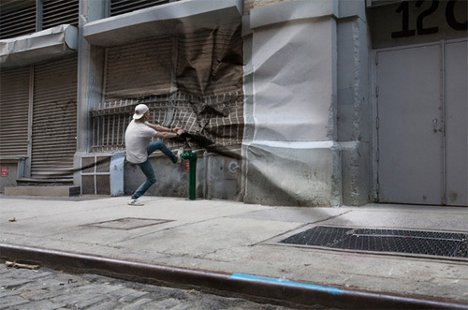
Life feels rather rigid and unyielding sometimes, which is why it’s nice to have art like Jan Kriwol‘s into which we can escape momentarily. Kriwol’s series “Paper Realities” only consists of three photographs, but they are remarkable for their realism and their fun treatment of fantasy.
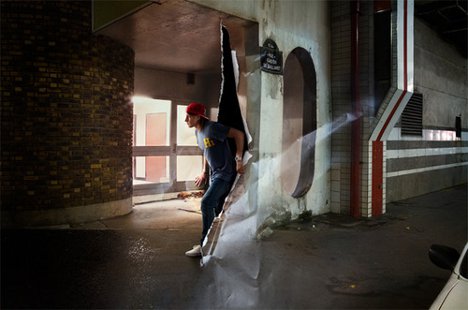
In all three of the photos, the photographer has made the world appear as no more substantial than a piece of paper. A young man casually breaks through a split in the very fabric of space/time in one picture. In another, a man’s powerful jump has caused wrinkles to appear in the paper world. And in the third, a disgruntled figure pulls angrily at a locked storefront, causing sharp wrinkles to appear all around.
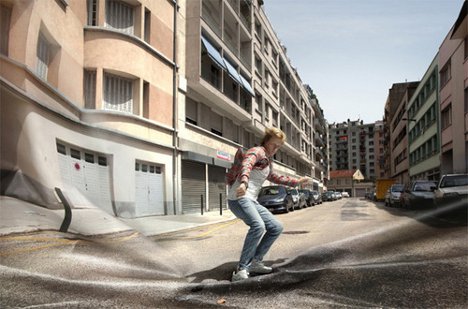
The photographs are simple enough, but they reflect a desire that nearly all of us have had at one time or another: to reach out and change reality. Kriwol’s characters do just that by interacting with their surroundings as if they were no more substantial than a parking ticket.
Creative urban photographers have a way of representing cities in new and different lights.
9 Comments – Click Here to Read More »»
Ephemeral, always changing, portraits are about capturing a person in a precise moment of time. Here are 13 creative portraits and 12 portraiture photographers.
1 Comment – Click Here to Read More
»»


[ By Delana in Art & Photography & Video. ]
[ WebUrbanist | Archives | Galleries | Privacy | TOS ]

www.PhotoEducationOnline.com -A basic overview of photographic exposure and how to use it to improve your image-making.
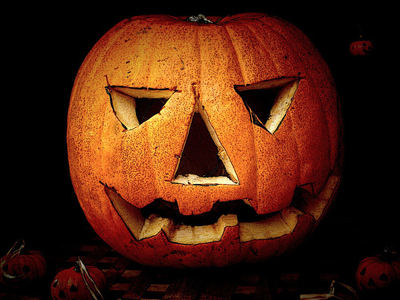
With Halloween just around the corner I thought it was time to update our Halloween Photography Tips article with some new information and photos.
There are plenty of subjects around to photograph at Halloween ranging from the traditional jack-o-lantern through to people in costume, to trick or treat ‘treats’ etc. It’s a time of color, emotion and lots of interesting subjects.
The keys to capturing them are not that different from the normal keys to good composition in photography. As you photograph Halloween this year keep in mind some of the basics of good digital photography. I’ve selected the following tutorials that we’ve written before that should be helpful in your Halloween photography:
Get more tips like this by Subscribing to Digital Photography School
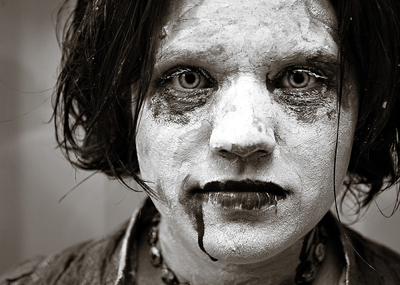 Photo by Sara Heinrich
Before hitting the shutter ask yourself ‘what is the focal point (or point of interest) in this image?’ All good images have something in them that holds the attention of those who view them – learn more about focal points and how to enhance them here.
One way of enhancing the composition of your shots is to place your points of interest inn smart positions. While the rule of thirds can be broken with great effect it’s a useful principle to keep in mind.
Halloween is a time of drama and you can add to this in your images by getting in nice and close and filling the frame with your subjects. Whether it’s people or objects – getting in nice and tight will usually add punch to your shots.
When photographing people one of the most effective compositional techniques is to use the space around their faces effectively by giving more room on the side of their face that they’re looking into.
 Photo jen clix
I suspect that the day after Halloween that photo sharing websites will be filled with images of pumpkins that all look much the same. Make your images stand out by finding fresh perspectives to shoot from.
It’s easy to be distracted by the flashy parts of a time like Halloween but it’s often when you step back, take a look around and notice the smaller details that you find the ‘money shots’. Times like Halloween are filled with all kinds of smaller details and photo worthy moments including decorations, carving the pumpkin, people getting dressed in costumes, sleeping kids at the end of parties, bags full of treats at the end of the night, the ‘fangs’ in Aunt Marie’s mouth, before and after shots of parties, close ups of food etc
Halloween is a time that people gather together and it’s an ideal time to practice your group photo techniques.
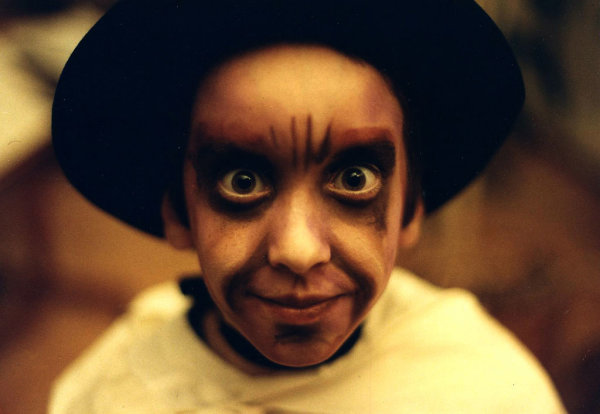
Image by John Althouse Cohen
Halloween parties are a great time to get your camera out for some candid photos of your friends and family having a great time dressed up in all manner of costumes. Check out these 11 candid photography techniques.
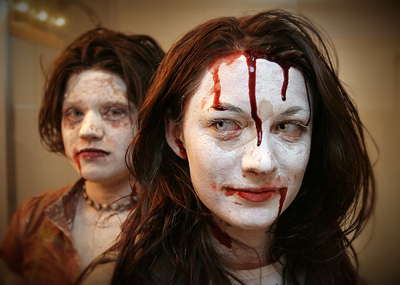 Photo Sara Heinrich
The type of images that come to mind when I think of Halloween are fairly dark and spooky ones – candles in pumpkins etc. After all, the real action of Halloween seems to happen after dark. As a result you’ll want to think carefully about the light sources for your shots.
To really capture the mood of these situations you’ll want to avoid the stark and bright light of flash photography (or will want to at least pull it back a few stops and diffuse it) and so you’ll need to switch off your flash and do one (or all) of three things to some extent (this is from our exposure triangle series of posts):
 Photo base10
Another strategy that I’ve heard of some readers doing at this time of year is diffusing the flash on your camera with colored cellophane to try to lesson its impact upon your shot and also to give the light it produces a glow that might add to your shots – Red might be a good color to try. You’ll probably want to test this before the big night as getting the right density of diffuser will be critical.
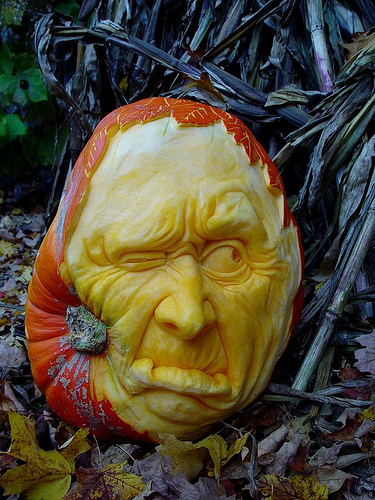
Photographing Jack-o-Lanterns is particularly tricky as to get the full effect of the glowing inside the pumpkin is a bit of a tightrope walk between overexposing and underexposing due to the light and dark patches in the shot you take. Instead of just one candle inside it is probably worth using two or three to give a little extra light. Also take a number of shots at different exposures (exposure bracketing) and you should get one or two that give you the impact you’re after.
Got some Halloween Photos to Share? Post them we’d love to see them over at our Forum.
PS: here’s one more shot from one of our forum members who has submitted some amazing pumpkin carving photographs here:
Post originally from: Digital Photography Tips.
Check out our more Photography Tips at Photography Tips for Beginners, Portrait Photography Tips and Wedding Photography Tips.
Halloween Photography Tips
Portraiture Photography by Jason Todd 11×14 inch book.
Video Rating: 5 / 5

© James Brandon | All Rights Reserved
As photographers and artists, we all hit creative walls. We work and work to improve our skills, and we learn new things, and then it seems we hit a wall. Maybe our images start looking dull to us, like they are missing something. Sometimes I think we over complicate problems like this, searching for some magical trick out there that will give us the creative perspective we are looking for. If you are like me, you know that usually doesn’t work. Instead, here is a collection of tips you can go out and try today to improve your photography and creative eye. Pay no attention to the order, they are all completely random and spontaneous.
I can’t stress enough the importance of art appreciation as a photography. If you want to get better at photography, become an admirer and student of the world of art. Visit a museum and spend the day studying the work of great artists. Better yet, take a pen and paper with you. When a painting or work of art grabs your attention, jot down why. Write down everything you love about it, and the reasoning behind it. If you find something you don’t care for, write that down too.
Museums are abundant in most big cities. In fact, in a lot of cases, they are even free. If they aren’t free, there may still be ways to get in for free. For example, if you have a debit or credit card through Bank of America, you can get in free at over 100 museums nationwide.
Take a day and focus on perspective. Experiment with different camera angles that you may not have tried before. This tip is only limited by how far your willing to get out of your comfort zone. If your shooting a portrait session, bring a ladder with you. If you don’t have a ladder, climb a tree or find a perspective above your subjects head. Not only is this different, looking up is almost always flattering to your subjects features, especially if they are prone to double chins! If you are photographing flowers, consider shooting them from underneath. While this may get you dirty, I promise it will be rewarding. Play with the angle of the sun and capture the translucency of the flower as the sunlight pours through it. A fresh perspective can almost always give you that creative boost your looking for.
Visiting a zoo is one of my favorite things to do as a photographer. Mainly, because I’m doing it simply for me. There is no pressure. I don’t have a client that wants a certain type of image, I don’t feel the need to create a certain look or feel to the photos. It’s just me, my camera and hundreds of exotic animals at my fingertips! Zoos are cheap, and most of them have one day a week where you can even get half off.
Here’s a challenge: When you go, try and conceal the fact that the animals are at the zoo. That means I had to get creative with the way I framed my shots. This can be challenging at times, but it’s very rewarding. If there is a fence, an obviously fake looking rock or object, or if the surroundings just don’t click, don’t take the picture. Or, simply change your perspective until the framing works. This mindset will get your creative juices flowing, and I promise you will have a blast!
That’s right, minimize. While being able to shoot thousands of images is nice, it can also dull your creative thought process. With seemingly unlimited images you can just click away, firing off shots left and right all day long. With this mentality, you’re sure to get a few keepers. Right?
Consider this instead; next time you’re out taking pictures (and not for a client!), take the smallest memory card you have. One that will only allow you a very limited number of shots. And don’t take any other cards. Or, if you only have large capacity cards, just set a limit in your head of only taking 50 images the entire day.
All of the sudden, there is a certain and definite brevity in the amount of images you can take. You can’t just walk around snapping pictures at everything you see. This will take you back to the limitations of film, and you will have to carefully consider each shot you take. The flip side of this is that (again) your creative juices will begin to flow, and you will be more alert and keen to what is going to make a good image.
In his book Visual Poetry, Chris Orwig states that, “Even without taking pictures, carrying a camera enhances life.” I couldn’t agree more. Carrying a camera is an instant way to put your senses on high alert. It causes you to look at the world as if your camera was always pressed to your eye. It gives you a reason to slow down, to take everything in, no matter where you are. Commit to carrying your camera with you everywhere, at least for a certain amount of time. Take pictures knowing full well that the world may never see them. Create photographs of everyday things, moments in time that normally wouldn’t require a photograph. The trick will be to see these subtle events in a new way, and to find a way to make them interesting. Even if you just use your camera phone, this tip is a solid way to improve your creative eye.
The moment you adopt the mindset that you’re the best at something (or even the best in your circle), that’s the moment you become unteachable. Great photographers like Douglas Kirkland always keep the mindset of a beginner. I’ve met my share of people who think they know it all. You know the kind. You try and tell them something that you’ve learned, and they shoot you down, saying they already knew that. Or they refuse to except anything new because they aren’t willing to change their ways. I’m telling you, this is a death sentence to your creativity. Set aside your pride and be willing to learn from others, even if you feel you’re at the top of your game. If are at the top, be willing to learn from others who aren’t.
Pick a color and create a portfolio around that color. If you have time, do this with several colors. Go out and create images that obviously and predominately focus on a single color. If you choose blue, consider subjects where this color is evident. Focus on pictures by water, or the sky. Go out past sunset and into the realm of “nautical twilight,” when the setting sun casts shades of deep blues across the sky and earth. Find textured walls that are painted in different colors and shades of blue. If you choose yellow, scout out a field of sunflowers. Shoot subjects straight into the sun, bathing the frame in golden sunlight. You can make the color even more obvious in post processing by applying filters of your chosen color over the image.
For the most part photographers are nice, generous, and giving people. Sure, there are plenty out there who won’t give the time of day to a photographer looking for a mentor, but who wants to shadow or even follow the work of someone like that? Find a photographer that inspires you and form a relationship with them. Offer to take them out to lunch. If you’re lucky, you will be able to learn from that person, and maybe even shadow them. Ask to hold lights for them during their photo shoots, or just carry around their gear. You will learn a lot just observing how they interact with their clients. If they shoot landscapes, the same applies. Offer to carry their gear as they scour the places they photograph. Invite them out for a photo walk and offer to buy dinner, or even a drink afterward. Becoming a great photographer is a tough road to take by yourself, having a mentor can make the difference between success and failure.
Also known as the Golden Mean, Divine Proportion, the Fibonacci Rule, the Rule of Phi, etc. The Golden Ratio is a common ratio discovered by Leonardo Fibonacci and found throughout nature, architecture, and art. The ratio is believed to make things appealing to the human eye. In nature, it is also believed to be the most energy efficient form of design among living things. There is some debate around it, but it is very interesting. The Golden Ratio is basically the “Rule of Thirds” on steroids. If you have a few minutes, visit YouTube and watch this very interesting (albeit sort of creepy) video of the Golden Ratio. Becoming knowledgeable on topics like the Golden Ratio can drastically increase your chances of creating images that attract viewers attention.
If there is a setting on your camera you are unfamiliar with, go to your camera and dial over to that setting. Now, commit to yourself that you won’t take your camera off that setting until you are fully comfortable with it. If you are only comfortable with automatic, I wouldn’t suggest going straight to manual. But certainly get out of the automatic settings and into the creative ones. You should view the automatic settings on your cameras as poison to your creativity and photographic skill. These settings take away your say in how the image will look, just short of composing the frame and pressing the shutter. Start out with either Av (Aperture Value) or Tv (Time Value) or P (Program) mode. Dedicate at least an entire day to shooting under just that one setting. If you need help, there is always a wealth of information on this site, but the most readily available resource is your cameras manual. Most photographers don’t realize how much they can learn by simply reading the manuals that came with their cameras. I’ve been known to even read my manual on plane rides. What better time than when you have nothing else to do? Once you get one setting down, move to the next one, and work your way up to the infamous “Manual” setting.
There are a number of articles on the web similar to this one, giving a list of ways to get better at photography. Almost all of those lists will tell you to go online and troll the work of other photographers for inspiration. While this may be a good idea in moderation, I’m tempted to take the side of staying away from it. How are you going to develop your own style by mimicking the work of others? How are you going to exercise your creative juices when you get all your ideas off the coat tails of other artists? Owen Shifflett of Viget.com wrote an incredibly interesting (and incredibly popular) blog post called “Consumption: How Inspiration Killed, Then Ate, Creativity,” and I think any photographer or artist, new or seasoned, should read this article.
If you’re preparing for a portrait session of a family, avoid hopping online to scavenge other photographers sites for posing ideas and post processing looks. Where is the uniqueness in that? With the age of the internet, any bit of information is available at our finger tips within seconds. When we immerse ourselves in the work of other photographers, we end up ripping off our own creativity. Instead, sit down with a pencil and paper and start brainstorming. It’s going to be tough, it’s going to take some time, but what if out of all that, you came up with something completely unique? Something completely yours? After all, how do you think all these other poses came to be? What about all the filters, actions, and presets in your post processing? Think about it, and act on it.
Getting better at anything involves getting out of your comfort zone. If all you do is photograph families and seniors, go out and shoot landscapes one weekend. All of the sudden, your images are going to require completely new camera settings. No more people to pose, no more assistants to hold your flash, no more backdrops or props, no more shallow depth of field or fast shutter speed requirements. Now you have to think about your subject in a complete new way. A landscape doesn’t listen to you. You can’t tell it to move the left or right, or use a flash to reveal a bit more light in a certain area. For the most part, landscapes require deep depth of fields, slower shutter speeds, tripods, and a whole new eye for composition and lighting. If you spend time photographing things your not used to, I promise you will come away with new ideas for what you are comfortable shooting. And a deeper understanding of your camera too.
So far (according to the latest poll here at DPS), somewhere around 70% of readers use a tripod less than 50% of the time. Personally, I know very few photographers who carry a tripod around with them. And you almost never see it with amateurs.
Something interesting happens when you attach your camera to a tripod. Suddenly, everything slows down. There’s no more snapping photos left and right and quickly filling up memory cards. When you use a tripod, you really have to take the time to compose your image. This mainly happens because you can no longer move the camera around freely. You now have to adjust the tripod to be level with the horizon. You have to move it left or right manually to adjust the position of your subject. Just by doing this, you have to actually slow down and really think about your image.
Go out and take 10 images hand held, then immediately take 10 more on a tripod. See which set comes out better. I’m willing to bet it will be the latter.
One of the best things you can do as a photographer is network with other photographers. Sure, networking online is a great tool and shouldn’t be overlooked, but having face to face interaction with like minded people is so much better! There are plenty of ways to seek out local photographers. You can join the local PPA division in your city, or just google photography clubs in your area. One of the best clubs I ever joined was a local photography group through Meetup.com. This group has a wealth of very talented photographers and they hold around 4-6 events every month! Whether it’s just doing a photo walk around the city, or getting a VIP pass to the local sports stadiums, these groups are a blast to be a part of!
There you have it, 14 ideas you can implement immediately into your photography. Of course you can’t do all of these at once, but any time you feel you need a boost, be sure to check back here. If you have more ideas and/or tips, I’d love to here from you. If these tips have helped you in any way, I’d love to hear from you as well. Be sure to leave a comment below or send me a tweet (@jamesdbrandon) and let me know your thoughts. Be sure to suggest this page to any other photographers you may know. Thanks and happy shooting!

Post originally from: Digital Photography Tips.
Check out our more Photography Tips at Photography Tips for Beginners, Portrait Photography Tips and Wedding Photography Tips.
14 Ways To Significantly Improve Your Photography Today
www.silberstudios.tv We’re at Silber Studios with our guest Chris Burkard, a freelance surf photographer known for his distinct and creative photos. Unlike many professional photographers, 23-year-old Chris has not had formal training; instead, he developed his photography techniques through lots of practice with composition and natural lighting. His tips on composition and style will help any amateur photographer take better photos. I’m envious of the slew of big-name clients he’s managed to gather. Chris Burkard has been the Senior Staff Photographer for Water Magazine and Surfline.com and has already published his first book, The California Surf Project. Chris won the first annual Follow The Light Foundation grant and has worked with more than 35 national and international surf publications, including Surfer, Surfing Magazine and many others.
Video Rating: 4 / 5
An introduction to using long or telephoto dslr camera lenses. Lots of people have asked to have camera lenses explained and this is just one of our videos which will help you understand all about your camera lenses. To have camera lenses explained in full visit the lenses section of our video site www.photographycourses.biz for unique content that’ll explain all.
Video Rating: 4 / 5
There are several lighting positions that photographers have developed over the years. People like George Hurrell, who used tungsten to shoot stars, used these lighting positions. Learn to identify what a butterfly or Rembrandt light is. Knowing these positions, and where the light placed to create them, will help you see how photographers light their images. These are departure points from which you will create your own look and direction. Its hard to depart from someplace you have never been there. This will teach you the basics and give you a good foundation to build on. This video is not as slick as some of the others we have done but it has great basic instructions on portrait lighting. (Don’t miss the ending its the most exciting part!)
Video Rating: 4 / 5
 This week your photographic challenge is to shoot and share an image on the theme of ‘my neighbourhood’.
This is based on the rise in the interested of street photography and urban photography that we’re seeing among many of our readers – although it also leaves room for you to explore a variety of types of photography.
You might wish to photograph people in your neighbourhood (either posed portraits, environmental portraits or candid street photos), some architecture, abstract objects or anything else that gives us a glimpse into the area you live.
It should be fascinating to see the neighbourhoods of our global audience.
Once you’ve taken and selected the ‘Neighbourhood’ image that you’d like to share – upload it to your favourite photo sharing site or blog and either share a link to it or – embed them in the comments using our embed tool to do so.
If you tag your photos on Flickr, Instagram, Twitter or other sites with Tagging tag them as #DPSNEIGHBOURHOOD to help others find them. Linking back to this page might also help others know what you’re doing so that they can share in the fun.
Also – don’t forget to check out some of the great shots posted in last weeks challenge – Textures challenge where there were some great shots submitted.
Post originally from: Digital Photography Tips.
Check out our more Photography Tips at Photography Tips for Beginners, Portrait Photography Tips and Wedding Photography Tips.
My Neighbourhood: Weekly Photography Challenge