RSS
 

Posts Tagged ‘Photography’

Winners of the 2017 Magnum and LensCulture Photography Awards announced

19 Jul

Winners of the 2017 Magnum and LensCulture Photography Awards announced

Earlier today, Magnum and LensCulture officially announced the winners of their 2017 Photography Awards, doling out prizes in six categories: Documentary, Fine Art, Open, Photojournalism, Portrait and Street.

Each of the ‘Single Image’ award winners (Magnum and LensCulture also gave out awards for best Series) walks away with $ 1,500 in prize money and the serious bragging rights that come with having won an award administered by one of the most prestigious names in photography.

Additionally, all of the winners, finalists and juror’s pics will be screened at various photo festivals worldwide throughout the year.

Press Release:

WINNERS OF THE MAGNUM AND LENSCULTURE PHOTOGRAPHY AWARDS ANNOUNCED

Twelve international photographers have been announced as the winners of the 2017 Magnum and LensCulture Photography Awards. The legendary photography agency, Magnum Photos, and LensCulture have joined forces for the second time to produce this opportunity to recognize, reward and support photographic talent. Each photographer will be awarded a cash prize and will also receive international exposure through Magnum Photos and LensCulture’s combined audience of over 6.5 million. The winning projects will be shown in a digital exhibition at The Photographers’ Gallery in London later this year and exhibited at photography festivals worldwide. Furthermore, the laureates will be awarded access to expert guidance from Magnum and LensCulture.

The twelve winners of the prestigious award hail from all over the world and deal with a diversity of subjects. Nick Hannes, the Documentary series winner, pursued a project featuring the culture of the elite in Dubai, while Lissa Rivera’s striking portraits of her non-binary partner explore contemporary notions of gender and its narratives in today’s society. All told, the series and single image awards include six categories: Street, Portrait, Photojournalism, Open, Fine Art and Documentary.

SERIES WINNERS

Street: Argus Paul Estabrook, South Korea — “Losing Face”?

Portrait: Lissa Rivera, United States — “Beautiful Boy”

Photojournalism: Jason Florio, United Kingdom — “Destination Europe”

Open: Medina Dugger, Nigeria — “Chroma: An Ode to J.D. Okhai Ojeikere”?

Fine Art: Daniel Shipp, Australia — “Botanical Inquiry”

Documentary: Nick Hannes, Belgium — “Bread and Circuses”

SINGLE WINNERS

Street: Hakim Boulouiz, Switzerland — “Choral”?

Portrait: Artur Zdral, Poland — “Kasia”

Photojournalism: Szymon Barylski – “Fleeing Death”

Open: Britta Jaschinski, United Kingdom — “Confiscated”?

Fine Art: Ellie Davis, United Kingdom — “Stars”

Documentary: Retam Kumar Shaw, India – “Street Wrestling”

In addition, twenty-one finalists have also been selected, and each juror has chosen one photographer as a “Juror’s Pick.”

Jurors’ Picks

Edgar Martins, United Kingdom — “Siloquies and Soliloquies on Death, Life and Other Interludes.” Selected by Yumi Goto, independent photography curator, editor, researcher, consultant, and publisher.

Shahria Sharmin, Bangladesh — “Call Me Heena.” Selected by Susan Meiselas, Magnum photographer and MacArthur Fellow.

Christian Werner, Germany — “Road to Ruin.” Selected by Sarah Leen, Director of Photography at National Geographic Magazine.
Sonja Hamad, Germany — “Jin—Jiyan—Azadi: Women, Life, Freedom.” Selected by Lesley Martin, creative director at the Aperture Foundation and publisher of The PhotoBook Review.
Antonio Gibotta, Italy — “Enfarinats.” Selected by Jim Casper, editor-in-chief of LensCulture.

MD Tanveer Rohan, Bangladesh — “Fun Bath.” Selected by David Hurn, Magnum photographer.

Terje Abusdal, Norway — “Slash and Burn.” Selected by Alec Soth, Magnum photographer.

Mirko Saviane, Italy – “B-Uranus.” Selected by Azu Nwagbogu, Founder and Director of LagosPhoto Festival and the African Artists’ Foundation.

Finalists

Zhang KeChun, China — “Between the Mountains and Water”

Thomas Alleman, United States — “The Nature of the Beast: Living On The Land In Los Angeles”

Thom Pierce, South Africa – “The Horsemen of Semonkong”

Sasha Maslov, United States — “Veterans: Faces of World War II”

Roei Greenberg, Israel — “Along the Break”

Paul D’Haese, Belgium — “Building an Imaginary City”

Panos Kefalos, Greece — “Saints”

Jonathan Bachman, United States — “Unrest in Baton Rouge”

Jens Juul, Denmark — “Biotope”

Gregg Segel, United States — “Daily Bread”

Gabriel Romero, United States — “Liberation and Longing”

Emilien Urbano, France — “War of a Forgotten Nation”

Ash Shinya Kawaoto, Japan — “Scrap and Build”

Antonio Faccilongo, Italy — “Habibi”

Ramona Deckers, Netherlands — “Goran in Bed”

Matthew Sowa, United States — “Grandmother’s Room”

Karen Pulfer Focht, United States — “Busiest Brain Surgery Unit”

Farida Lemeatrag, Belgium — “Milo”

Ana Carolina Fernandes, Brazil — “Burning Bus”

Amos Nachoum, United States — “Seal and Penguin”

A.M. Ahad, Bangladesh — “Childhood Covered with Metal Dust”

Winners of the 2017 Magnum and LensCulture Photography Awards announced

Retam Kumar Shaw, India – “Street Wrestling”

Photo © Retam Kumar Shaw. Documentary Single Image Winner, Magnum and LensCulture Photography Awards 2017.

Winners of the 2017 Magnum and LensCulture Photography Awards announced

Ellie Davies, United Kingdom – “Stars”

Photo © Ellie Davies. Fine Art Single Image Winner, Magnum and LensCulture Photography Awards 2017.

Winners of the 2017 Magnum and LensCulture Photography Awards announced

Britta Jaschinski, United Kingdom – “Confiscated”

Photo © Britta Jaschinski. Open Single Image Winner, Magnum and LensCulture Photography Awards 2017.

Surely an elephant foot is of no real use to anyone but the animal itself. These elephant feet were attempted to be smuggled from Africa to the US, but were seized by the American Border Patrol and are currently stored at the National Wildlife Repository Denver, Colorado, USA.

I have been documenting illegally traded wildlife products since August 2016 at borders and airport across the globe.

Winners of the 2017 Magnum and LensCulture Photography Awards announced

Szymon Barylski, Ireland – “Fleeing Death”

Photo © Szymon Barylski. Photojournalism Single Image Winner, Magnum and LensCulture Photography Awards 2017.

Fleeing Death. Refugees in the queue for the checkpoint at Idomeni, Greece. March 6, 2016.

Winners of the 2017 Magnum and LensCulture Photography Awards announced

Artur Zdral, Poland – “Kasia”

Photo © Artur Zdral. Portrait Single Image Winner, Magnum and LensCulture Photography Awards 2017.

Winners of the 2017 Magnum and LensCulture Photography Awards announced

Hakim Boulouiz, Switzerland – “Choral”

Photo © Hakim Boulouiz. Street Single Image Winner, Magnum and LensCulture Photography Awards 2017.

Santa Cruz de Tenerife

Articles: Digital Photography Review (dpreview.com)

 
Comments Off on Winners of the 2017 Magnum and LensCulture Photography Awards announced

Posted in Uncategorized


5 Guidelines of Minimalist Photography to Help Improve Your Work

18 Jul


Minimalism is one of those movements that some people see as a recent fad or newfangled things, like fidget spinners or man buns. In reality, minimalism is a true case of making what was once old new again, and unlike the aforementioned man bun, that’s a good thing.

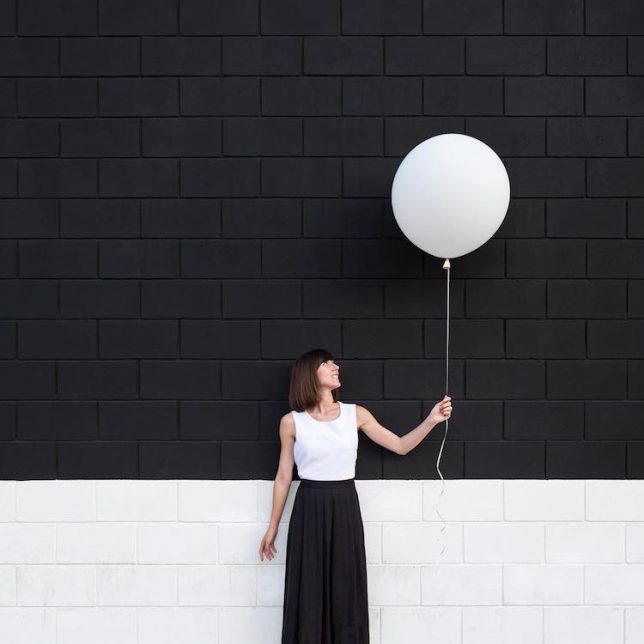
In photography, minimalism is an obvious visual statement; the story of the photograph is simplified, elements are reduced, and clean space is added. Not only has minimalist photography become its own genre (you can see some excellent examples of minimal imagery here), but photographers specializing in the discipline have come into their own, creating a revitalized, attractive space of art for us all to enjoy.

5 Guidelines of Minimalist Photography to Help Improve Your Work

Minimalism (even in photography) isn’t new. Before the term became ubiquitous and synonymous with “new” and “clean”,  the style existed in various forms under other names. It has had a profound and positive influence on photography as it exists in the modern world.

But do you have to fully embrace specializing as a minimalist photographer to benefit from the advantages of the style? Absolutely not! Each of the tips below can work for almost any kind of photography. Let’s explore some of the guidelines and see how you can apply them to your own work, regardless of genre or type.

#1 – Make the story concise

As with any photo, the story is the most important thing to convey to your viewer. In minimalism, you want to tell that story as efficiently as possible. That means clean backgrounds, negative space where appropriate, and a well-defined subject.

We will discuss background and separation of the subject in more detail below, but generally, you don’t want any distracting elements in ANY photograph. Keeping your background clean, whether through blurring, or using a solid color or simple texture can remove any unwanted distractions.

5 Guidelines of Minimalist Photography to Help Improve Your Work

Negative space is defined as the margin around your subject and other important objects in your composition. Properly used, this space accentuates what you actually want the viewer to deem as most important in the photo.

When looking through the viewfinder at a potential shot, take a moment to get a feeling of the complexity of what you’re seeing. If the composition feels muddy or hard to discern, recompose your image to include some extra negative or white space around your subject.

#2 – Isolate the subject

Wide-open apertures along with proper positioning of the subject to background tend to make smooth, creamy backgrounds, separating it from the subject of the photo. This is right up the minimalist’s alley. Having a solid or smoothly blurred background really isolates what you want to highlight in the photo, and keeps the viewer’s eye from being overrun by more complex patterns to distinguish.

5 Guidelines of Minimalist Photography to Help Improve Your Work

In some photos, you may not want that blurred effect on your background. Many landscape photos, for example, are shot using stopped-down apertures such as f/11 or f/16, because you want most of the scene in focus. This is because, in those situations, the entire scene can be the subject. In those situations, using color or patterns are other ways of separating the subject from your background.

But many other types of photos, especially nature and portraiture, benefit greatly from a wider aperture and using that to create separate layers in the image. Experimenting with the effects that aperture and distance have on that separation can provide many different looks for the same composition.

#3 – Use color to your advantage

One of the most powerful methods of constructing a minimalist image is by using color to create a contrast. While you don’t necessarily have to go to the extremes that you would in a completely minimalist photo, picking two or even three colors that juxtapose well with each other and featuring them prominently in the textures of the image can improve the attractiveness of the shot.

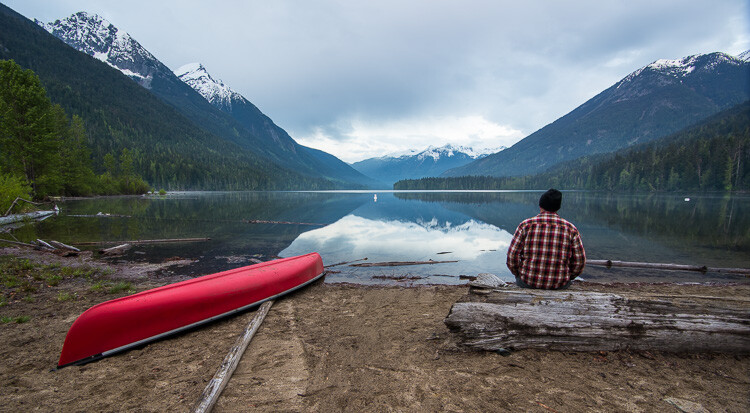
While minimalist photographs tend to use large areas of solid contrasting colors to establish simplicity, other photography can benefit by keeping the color palette small and using colors that work well together or invoke a particular feeling in the viewer. For example, I find one of the most intriguing and pleasing color combinations to the eye to be blue and red, as in this example of the old red rowboat on the shore (bel0w).

5 Guidelines of Minimalist Photography to Help Improve Your Work

Using a color wheel (as shown below), you can identify color harmony, which are complementary color combinations that are pleasing to the eye. Then try to use those color combinations in your images.

Color wheel

Diagram by Wikipedia contributor Jacobolus

#4 – Embrace leading lines

Because minimalist photography tends to feature very simple compositions, lines and textures are often used to improve upon storytelling and point the viewer in the right direction. Finding natural leading lines in your compositions can help guide the eyes of the viewer where you want them to go, which allows you to minimize the number of elements in your photo needed to tell the story.

5 Guidelines of Minimalist Photography to Help Improve Your Work

Lines can be found everywhere; train tracks, roads, sidewalks, and buildings are just a few examples. While they are easy to find, it is just as easy to misuse them and confuse the viewer. If the line is easy to pick out, then it should lead the eyes somewhere relevant. Lines should not lead the viewer randomly away from the subject, or out of the frame with no real destination.

#5 – Find texture and use it

Texture can be a powerful element in a photograph, especially when an entire image is built around it. Obviously most often used when shooting subjects in the natural world around us, textures are a tool that can communicate many things to the viewer, including emotions, mood, light, and darkness.

Because of the limited language of minimalism, texture itself is often used as the subject, usually in the form of repeated patterns. All photography, however, can benefit from its strategic use. What is the effect when the subject features a consistent, repeating texture, as opposed to one that consists of an uneven texture made up of objects of varying size and smoothness?

5 Guidelines of Minimalist Photography to Help Improve Your Work

Texture is a great way to put a large, consistent element in your image without introducing too much distraction.

Can millions of grains of smooth beach sand, saturated with ocean water, serve as a different backdrop than a large area of broken shells and sand mixed together? What type of effect will this have on the viewer’s perception of the image?

Conclusion

As photographers, regardless of skill level, we are destined to be students of an innumerable amount of subjects. We must constantly keep learning, and apply the things we learn to our work, to keep innovating our style, invigorating our images, and keep our viewers interested.

While minimalist photography is very popular today and is an intriguing discipline, it’s not the chosen style for us all. But the ability to take the most important points from that genre and apply it to your own work is what elevates you as a photographer, and keeps you on top of your game.

What are your thoughts on the current state of minimalism, and its influence on art and photography? Is minimalism your favorite photography style? Have some minimalist images of your own to share? Let’s discuss this and more in the comments below.

The post 5 Guidelines of Minimalist Photography to Help Improve Your Work by Tim Gilbreath appeared first on Digital Photography School.


Digital Photography School

 
Comments Off on 5 Guidelines of Minimalist Photography to Help Improve Your Work

Posted in Photography


6 Tips for Posing Hands in Wedding and Portrait Photography

18 Jul

One of the most challenging and misunderstood elements in posing hands and how to use them correctly. Hands are so important in an image because they can say so much. They can convey masculinity, femininity, strength, softness and between couples, they can show love and affection.

6 Tips for Posing Hands in Wedding and Portrait Photography

So the big question is what can we do with hands? How can we make them look elegant and soft? Where should they be placed to convey the most realistic emotion and feeling? Here are a few helpful tips and ideas to keep in mind for your next wedding, portrait, or fashion shoot that may help correct the most common hand posing issues.

#1 – Avoid showing the widest part of the hand

To help make hands look elegant, simply avoid having the back of the hand facing towards the camera as that is the widest part of the hand. This is important because the hands in proportion to the subject’s face can make the hands look larger than they actually are, or can make feminine hands look quite masculine. A simple twist of the wrist, so the smallest part of the hand is showing, is all it takes to change the look and feel of an image from average to wow.

Tips for Posing Hands in Wedding and Portrait Photography

#2 – Soft hands

Female hands need to appear soft, delicate, and elegant. To achieve this, it’s a matter of conveying to your bride or model to relax or soften their hands. A simple way of demonstrating how to do this is to hold your hand out then fully tense it up and then allow it to drop and relax slightly even wiggle the fingers so they are loose. Think of it like a big balloon, you’re just letting out a little air so they don’t look so hard and stiff.

Tips for Posing Hands in Wedding and Portrait Photography

#3- Bend the wrist

Bending the wrist (a slight bend so it’s not straight) is such a simple method to break a straight line and create more shape and texture in a shot. Remember the female form looks best when we can see beautiful natural curves, this includes the wrists.

Tips for Posing Hands in Wedding and Portrait Photography

#4 – Have the hands doing something that appears natural

People often ask, “What can I get my model or bride to do with her hands? I’m stuck for ideas.” This one is one of the simplest issues to address. You could have her holding the flowers, her veil, her dress, fixing her headpiece, adjusting her engagement ring, putting on perfume, touching her man softly, the list goes on. Just make sure it’s something she would normally do so it appears natural, otherwise, it may look a little posed and stuffy.

Tips for Posing Hands in Wedding and Portrait Photography

#5 – Posing hands with couples

When photographing the bride and groom, think about where you would place your hands if you were cuddling your wife, husband, boyfriend, or girlfriend. Have the bride’s hands touching the groom’s hand, forearm, chest, or face in a way that says, “I love you”.

Have the groom’s hands on the bride’s waist or on her hands while saying, “I love where your hands are”. This can really change the feel and emotion of your photos.

Tips for Posing Hands in Wedding and Portrait Photography

#6 – Don’t amputate hands or fingers

When you have two hands overlapping each other it can appear that a hand is missing due to your angle and/or crop. This can happen when the bride has her hands around the back of the groom’s neck or you’re shooting a portrait side-on (as pictured below). The hand closest to the camera is on the other hand making her look like she has no hands or the fingers are amputated. To avoid this just switch hands over so you can see finger tips from one of the hands.

Tips for Posing Hands in Wedding and Portrait Photography

Conclusion

With all these tips in mind, the most important thing to remember is that hands should be placed in a natural realistic location doing something they would naturally do. So I suggest getting a friend or model and going out and just practicing for an hour or so to see what works and what doesn’t. This way you’ll have confidence on your next the wedding day or portrait shoot.

6 Tips for Posing Hands in Wedding and Portrait Photography

The post 6 Tips for Posing Hands in Wedding and Portrait Photography by Andrew Szopory appeared first on Digital Photography School.


Digital Photography School

 
Comments Off on 6 Tips for Posing Hands in Wedding and Portrait Photography

Posted in Photography


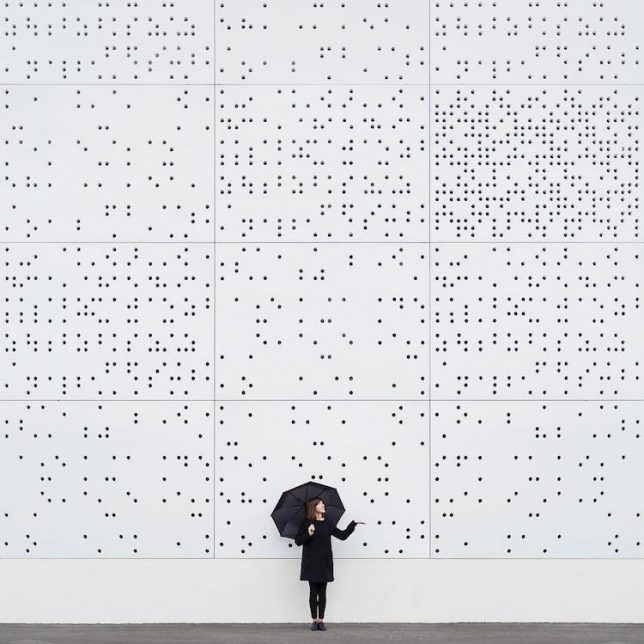
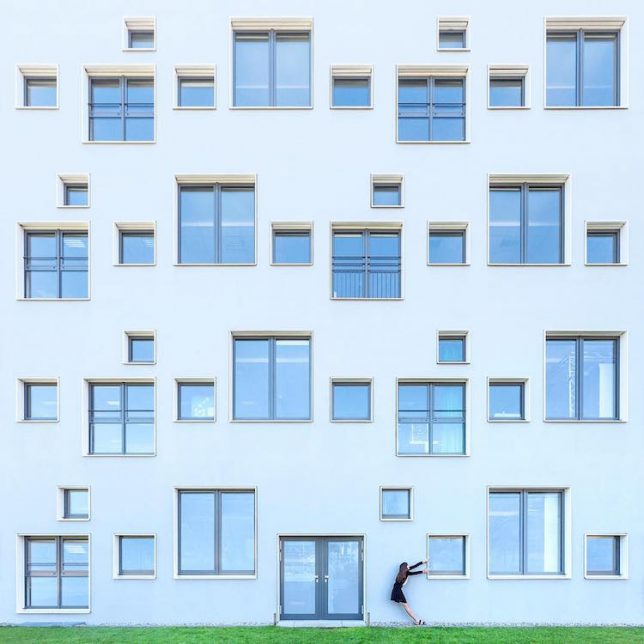
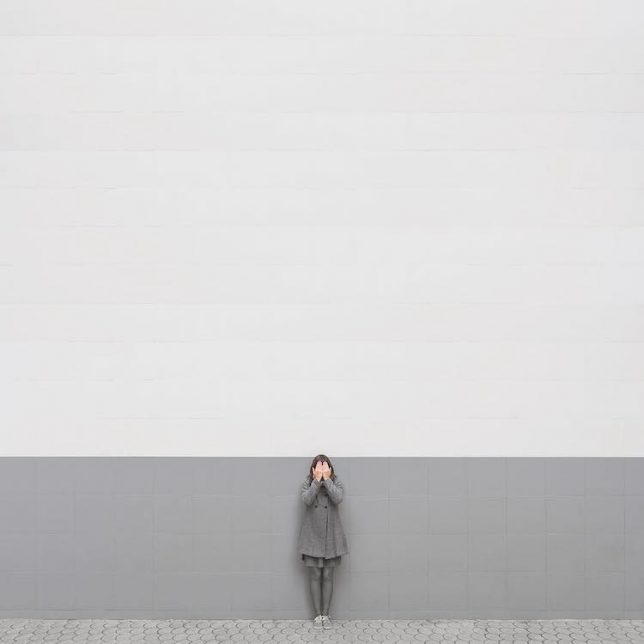
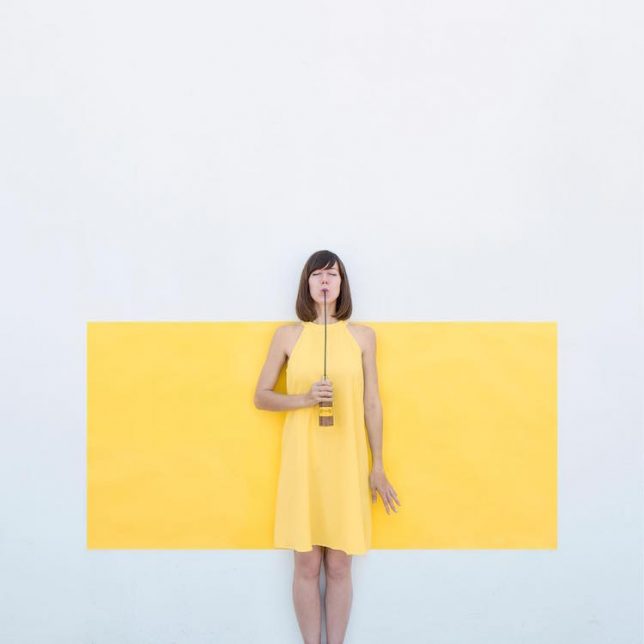
Buildings as Backdrops: Playful Photography Humanizes Built Environments

16 Jul

[ By WebUrbanist in Art & Photography & Video. ]

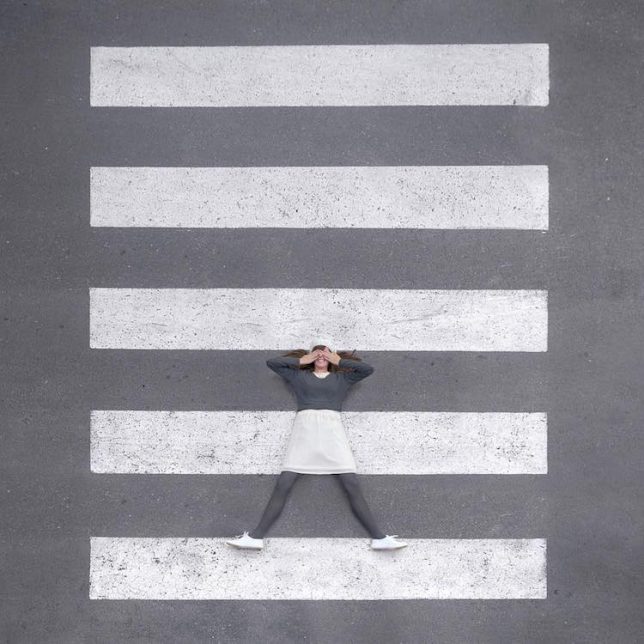
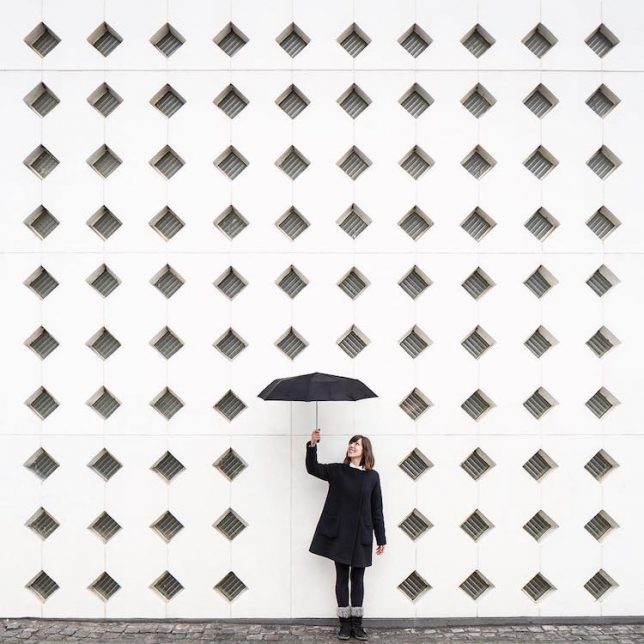
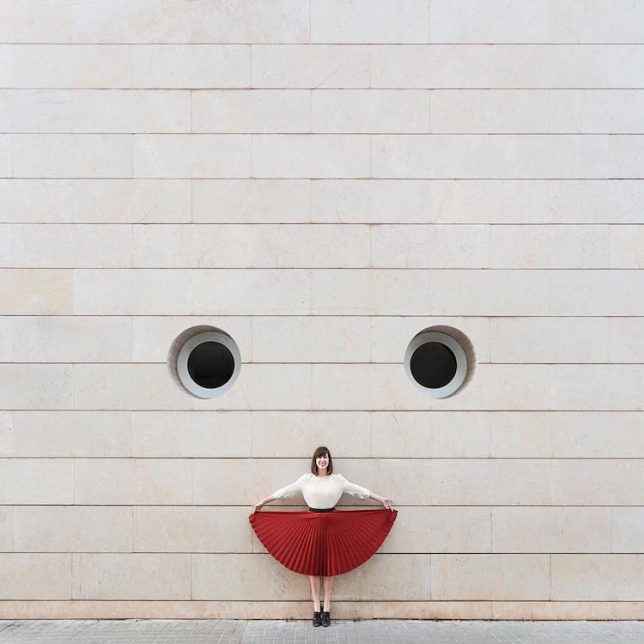
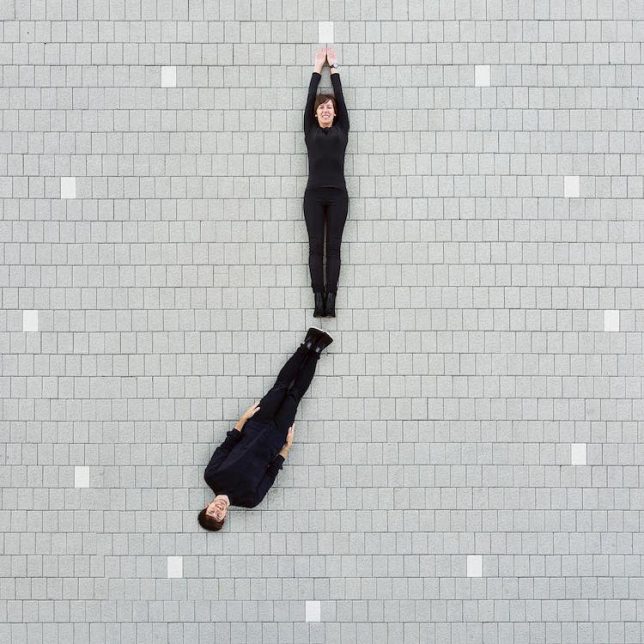
People often play a small part in architectural photography and renderings – not so in this series of travel photographs, which would lovely but otherwise unremarkable without clever human inclusions.

Anna Devis and Daniel Rueda are a design-minded couple, one an illustrator and the other an architect. And they have taken their creative sensibilities on the road, filling in the implicit gaps in built environments across Europe.

The settings represent a range of architectural styles, often bold yet minimalist except for that added element of interactivity, sometimes using props or costumes to turn facades into theatrical sets.

In Denmark, Spain, Italy and other countries they visit, Devis and Rueda take that old idea of a person seeming to ‘tip’ the Leaning Tower of Pisa to new heights. Pixelated surface suddenly become other things, like clocks or canvasses, apparently manipulated by the duo.

That critical personal element that animates each scene also serves as a foil for showing off the patterns and colors of each context, subverting but also highlighting design details. In some cases, added manipulations warp their surroundings as well. For more on their work, follow the pair’s journeys via their Instagram accounts.

Share on Facebook


[ By WebUrbanist in Art & Photography & Video. ]

[ WebUrbanist | Archives | Galleries | Privacy | TOS ]


WebUrbanist

 
Comments Off on Buildings as Backdrops: Playful Photography Humanizes Built Environments

Posted in Creativity


Weekly Photography Challenge – Hiking

12 Jul

Time to hit the trails!

By Loren Kerns

Weekly Photography Challenge – Hiking

This week it’s time to get off the couch and get out into nature. Find a hike to do locally and go for a little trek with your camera. See what you find along the way to photograph. You don’t have to scale mountains or go somewhere exotic or far away. Look in or near your own area.

Bring a buddy or two and photograph your hiking pals. Read this for more help as well: Taking your DSLR into the Backcountry Safely

By True New Zealand Adventures

By Hugo Chisholm

By Paul Rysz

Share your images below:

Simply upload your shot into the comment field (look for the little camera icon in the Disqus comments section) and they’ll get embedded for us all to see or if you’d prefer, upload them to your favorite photo-sharing site and leave the link to them. Show me your best images in this week’s challenge. Sometimes it takes a while for an image to appear so be patient and try not to post the same image twice.

Share in the dPS Facebook Group

You can also share your images on the dPS Facebook group as the challenge is posted there each week as well.

The post Weekly Photography Challenge – Hiking by Darlene Hildebrandt appeared first on Digital Photography School.


Digital Photography School

 
Comments Off on Weekly Photography Challenge – Hiking

Posted in Photography


Do You Need a Photography Resume?

11 Jul

In the photography world, there is a lot of emphasis on having a portfolio, but hardly any attention is ever given to the photography resume. So do you even need a photography resume at all? The question is largely debatable and boils down to the type of photography you are aiming to do. In this post, I’ll highlight some scenarios when you might need a photography resume (along with what to include in it), and when you do not likely need one.

When You Might Need a Photography Resume

In my seven years of working as a freelance corporate photographer, I’ve been asked to present a photography resume only a handful of times. Each time, it was when I was being considered for a part-time or full-time photography role. If you’re applying for a salaried photography position within a company or being listed with a creative agency, this is when you might need a resume.

Do You Need a Photography Resume?

While it’s rare for any commercial client to require a resume for a freelance photography job, it’s still good to have one on hand just in case. But if your target client is non-commercial with a focus on something such as weddings or families, you probably won’t ever need to submit a photography resume.

When You (Probably) Don’t Need a Resume

For most freelance photographers, it’s rare that a client will ask for a resume in order to be considered for a gig. Typically, the emphasis for freelance photo shoots is more on your portfolio and how you handle your correspondence (i.e., email, phone calls, in-person meetings). This is true for both consumer (eg. wedding, family) and commercial (eg. corporate event, headshot) photographers.

Can you imagine a bride asking a wedding photographer for a resume? Or better yet, can you imagine what a wedding photographer’s resume might look like? Having a list of all of the weddings a photographer has ever shot doesn’t matter unless you’re aiming to be a celebrity wedding photographer.

Do You Need a Photography Resume?

Keep a Resume on File

The good news is that resumes aren’t terribly difficult to create, especially with the existence of LinkedIn. For all of the naysayers who don’t find LinkedIn relevant, I admit that it may be more or less useful depending on where you’re located. Here in Seattle, LinkedIn is a very active recruiting tool and social network where you can also store your electronic resume for anyone can see. As a full-time freelance photographer, I think it’s a good thing to have my professional resume seen by as many prospective clients as possible.

What to put on your resume

What should you include on your resume? There are a few staple items that should definitely be included, but the rest of the details depend entirely on why you’re submitting the photography resume in the first place. Personally, I have zero educational background or full-time employment that has anything to do with photography. Yet I still include my education and work experience to show that I have some.

As for my position as a full-time freelance photographer, I list that as my most current work experience. Writing the description for this position was rather awkward at first, but it actually became quite interesting when I put all of the skills I actually perform as a photographer into words. Consider every single part of your photo shoot workflow, from scouting and booking locations to post-production and delivering final photos to your client under tight deadlines. There are a lot of professional skills that go into being a photographer, so detail it out for both yourself and prospective clients. Include the following:

  1. Your name and contact info.
  2. Educational background.
  3. Any relevant experience you have.

Do You Need a Photography Resume?

Focus on Your Portfolio

Instead, what should matter to are these things:

A Curated Portfolio

As a photographer, your portfolio IS your resume. It should contain only your very best work that visually showcases your skills. How many images you choose to include in your portfolio is completely up to you, but generally, 15-20 images per category is a good amount.

Testimonials From Clients

Testimonials are basically your references. They should be short, accurate statements that reflect your process and what your client liked about working with you. Although it’s rare for anyone to actually call and verify your testimonials, they’re still important to include as they give the potential client a glimpse at what others think.

Do You Need a Photography Resume?

By James Royal-Lawson

Client List

Most consumer (wedding, family) photographers won’t need a client list unless the names of the couples and families are recognizable. However, commercial or corporate photographers may want to include a list of notable clients with whom they have worked. Typically, it’s okay to just make a list of client brand names, but you can also include tear sheets (a screenshot or copy of your published final product). This helps prospective clients get an idea of the types of clients and projects you’ve worked with before.

Case Studies

Consider taking your portfolio a step further than the average photographer by including a few case studies. Simply pick your top 3-5 photography clients that you’ve worked with, and include the best 5-10 images to showcase from each project. Use those images along with some personal written commentary that describes how you decided to tackle the photo shoot. Also, consider adding any behind-the-scenes photos or diagrams that show any setup details. Use these case studies to show off how you approach a photo shoot. After all, a prospective client wants to know not only that you can create an image, but what it’s like to work with you.

Do You Need a Photography Resume?

In Conclusion

Depending on your ultimate goal as a photographer, you may or may not ever have to create a photography resume. It depends entirely on what you strive to achieve as a photographer. What are your thoughts on having and using a photography resume?

The post Do You Need a Photography Resume? by Suzi Pratt appeared first on Digital Photography School.


Digital Photography School

 
Comments Off on Do You Need a Photography Resume?

Posted in Photography


How to Adapt to any Situation for Portrait Photography

09 Jul

We all make plans and we all have expectations. Then when portrait photography, we want these plans to work well. We’ve got customers to please, memories to create and stories to tell. Plus clients have expectations. They want their pictures to look a certain way. They’ve hired you to recreate that vision.

As a professional, you need to be ready for anything

So when the best-laid plans fall apart, you’ve got to adapt. If you’re shooting portraits professionally, you need to remember that part of the reason you are being paid is you can produce great images no matter the circumstance. This is the difference between you and an amateur. You have the skills and know how to make any situation work.

How to Adapt to any Situation for Portrait Photography

I used the white sheet and the black couch for this family portrait. Then in post-processing added a vintage feel to the image.

Have a plan and a backup plan

I can’t stress this enough. It’s important to meet with clients and discuss plans for the shoot. Among the topics, you should discuss a backup plan. What will do if the weather doesn’t cooperate for an outdoor shoot? What if the children won’t cooperate by sitting in a tree? There are all sorts of possibilities, and you need to discuss the fact that sometimes the plans may have to change.

How to Adapt to any Situation for Portrait Photography

I had the benefit of a large window behind me but because it was so grey and dark outside I also needed to use my lights.

Sometimes the simple solution is setting an alternate date in case of weather issues. Other times you might discuss the need to use a different location. I love shooting family sessions outdoors. I’ll be honest, I prefer it. Natural light is my best friend, and I have very little patience for setting up studio lights. If at all possible I shoot outdoors. But recently I had a situation where I was unable to set up a “rain date”. The family had only one day together, and if the session didn’t occur on that specific date, well it just wasn’t going to happen. But, I made a mistake, I forgot to discuss alternate plans.

The need to adapt quickly

On the date of the session, the weather was cold, grey, blustery and very unpleasant. We could have shot the session outdoors but the wind wasn’t going to help my cause, and it was too cold outside for their small children. I don’t think the kids would have cooperated. I was lucky, my clients were flexible, and we quickly worked to discuss an alternate plan.

How to Adapt to any Situation for Portrait Photography

The boys loved being able to crawl all over the couch and be silly. I made sure I had mom’s permission first.

They had a beautiful, large bay window. So we shifted some furniture, hung up my large white sheet as a backdrop, and used a large couch as a prop. It wasn’t an ideal setting, but it did the trick. My clients were happy with the results, and that’s all that matters.

How to Adapt to any Situation for Portrait Photography

The boys weren’t centered on the couch but I wasn’t worried, as it was more about capturing their relationship.

Suggestions for making it work on the fly:

  1. Think outside the box. Be creative and look for places that will suit your purpose and still create an eye-catching image. You might use a bedroom or fireplace if you have to shoot indoors. Outdoors, maybe you could shoot underneath a large umbrella or veranda. The front door of a house can be quite attractive as well.
  2. Don’t get nervous. Be calm and confident. This will ensure your clients that you are confident in your abilities. They, in turn, will relax and give you those amazing relaxed smiles you’re looking for and that you want to capture so much.
  3. Always take a portable lighting kit to every session. You never know when you will need it. As much as I hate using the lights they’ve saved me so many times.
  4. Make sure you have a really large backdrop and a white sheet. The white sheet can be pinned to the wall in a pinch or used as a large reflector if need be. I’ve even used the sheet to cover up an ugly floor.
  5. Reassure clients that they are not the first to have plans change suddenly. Even if it is the first time, it’s ever happened to you, tell them it’s no big deal.
  6. Go with the flow. Don’t be rigid, let things unfold as they will. If you always come to a photo shoot with a very specific plan, you may get easily flustered. Just relax and see what happens.
  7. Rely on your skills, they are your biggest asset. Use all the knowledge you’ve gained to help you produce amazing images. Never forget all you’ve learned.
How to Adapt to any Situation for Portrait Photography

In this case, he lay on the floor near the window so we accessed all the light we could possibly get.

Conclusion

Portrait photography is often unpredictable but isn’t that the fun of it all? You never know what’s going to happen. Enjoy the rush that comes from turning a potential disaster into an amazing opportunity. Let it test your skills and push the limits of your creativity. Leave us some your tips for managing the unexpected in the comments section below. Tell us your anecdotal stories. We want to hear it all.

Leave us some your tips for managing the unexpected in the comments section below. Tell us your anecdotal stories. We want to hear it all.

How to Adapt to any Situation for Portrait Photography

He loved to pose for the camera so I let him. I later used a filter to create the vintage film look.

How to Adapt to any Situation for Portrait Photography

The parents relaxed when they saw how much fun the kids were having during the session.

The post How to Adapt to any Situation for Portrait Photography by Erin Fitzgibbon appeared first on Digital Photography School.


Digital Photography School

 
Comments Off on How to Adapt to any Situation for Portrait Photography

Posted in Photography


How to Make $500 a Month From Your Photography Hobby with Microstock

09 Jul

I am an amateur photographer, but I make around $ 500 in revenue from my photos each month. Photography is a hobby for me, but it can be an expensive hobby at times. This money pays for photography software, computer hardware, and lenses, so the hobby I love doesn’t cost a dime. This article will discuss how I did this with microstock, and provide tips on how you can do the same.

How to Make $  500 a Month From Your Photography Hobby with Microstock

Making your first buck

In 2010, I wanted to improve my photography so I purchased an entry-level DSLR and started to actively study how to become a better photographer, mainly from resources on the internet. As I tried different techniques, compositions, and camera settings, I posted my photos to sites like Flickr, Facebook, and 500px. In the beginning, I didn’t get very many views or likes but still enjoyed posting and learning from other photographer’s photos on those sites.

After shooting, learning, and posting for two and a half years, a design company saw a photo of mine on Flickr and asked if they could purchase a commercial license. I did a couple of quick searches about licensing and pricing on the internet, then sold my first commercial license for $ 75. This is the first photo I ever licensed.

How to Make $  500 a Month From Your Photography Hobby with Microstock

Pay for your hobby

Before this first sale, I hadn’t considered selling licenses to my photos. However, I had gotten to the point where I wanted to upgrade my entry level DSLR and lenses to a full frame system but couldn’t justify the cost for my hobby. However, I could justify the cost to myself (and my wife) if the money for the upgrade came from licensing my existing photos.

Microstock

So, I started researching photo licensing and learned about microstock sites. These sites are websites that act as an intermediary between buyers of photo licenses and photographers. They are called “micro” because they typically sell photo licenses for less than where professional photographers have historically set their prices.

As a result, there is a lot of negative information about microstock sites on the Internet. Despite this negative information I decided to try posting my photos on Shutterstock, one of the most popular microstock sites. At the time, I had only made one sale ever so I felt that getting a small payment for each sale was better than no payment at all.

The first month I made less than $ 10 with 55 photos accepted by Shutterstock. However, I kept uploading my photos when I had time. A monthly later I had 100 photos on the site. In my third month, I checked my stats one morning and found I made $ 56 dollars from selling extended licenses from these two photos.

How to Make $  500 a Month From Your Photography Hobby with Microstock

How to Make $  500 a Month From Your Photography Hobby with Microstock

A work in progress – keep at it

This was a bit of beginner’s luck because after that I didn’t have a day with more than $ 50 in sales for many more months. But it kept me motivated to continue uploading my photos to Shutterstock and even upload to multiple other microstock sites as well.

I also started uploading my better photos to art-on-demand sites like Fine Art America. These sites allow you to upload your photos, set a price, and create a storefront for anyone to purchase prints of your photos. When someone purchases the art, these sites handle the payment, printing, and shipping of the photo and send you money from the sale.

Lastly, I upgraded my photo blog to sell licenses directly from my website. Despite the fact that my photos are available on all the popular microstock sites, stock photo buyers continue to see my photos on social media and purchase licenses directly from my website.

How to Make $  500 a Month From Your Photography Hobby with Microstock

Realistic numbers – don’t expect to get rich

Two years after my first photo license sale, my monthly revenue from photos was about $ 500 a month. This $ 500 is an average, with my biggest month was $ 1400, while some months have been lower. Now that my photos have been posted, they can continue to get sales indefinitely. In 2016, I did not have much time for photography and only posted eight photos over the course of the year. However, I still averaged $ 460 a month in revenue from the photos I had posted in previous years.

These revenue numbers are for all the photos I have posted online. I only post my best photos from each day out shooting. My current online portfolio of all my photos is around 700 total. Microstock sites don’t accept all of my images, so on some of the sites, I only have 300 photos accepted and up for sale there. Doing the math, my photos earn less than $ 1 a month on average (per photo). And in reality, it is even less because I have one photo that has earned over $ 4000 over the years, while others have gotten no sales.

How to Make $  500 a Month From Your Photography Hobby with Microstock

However, I am fine with this because I take the photos I want to take and then post to stock sites to see if they sell. Photography is still a hobby and the pleasure it gives me comes first, making money is secondary. Often, the photos I like best are not the best sellers on microstock sites. For example, I prefer the photo of me and my shadow below because I really enjoyed making it, but the snapshot I took of a split trail while on a hike, sells much better.

How to Make $  500 a Month From Your Photography Hobby with Microstock

How to Make $  500 a Month From Your Photography Hobby with Microstock

What sites work best

Although I have posted a portion of my collection to over 20 sites over the years, all of these sites can be categorized into one of two types; microstock and art-on-demand. 75% of my photography revenue has come from microstock sites, while only 8% came from art-on-demand sites. The remaining 17% is through direct sales from my photography website.

I have tried a number of art-on-demand sites over the years but currently only post to Fine Art America because it is the only site where my images consistently sell. I have also tried many microstock sites. Typically, if I hear of a new one, I will upload 100 of my best photos to begin. If I start to get sales, then I will upload the rest of my collection. Here are my top five microstock sites based on earnings. I currently only post to these five sites as I have found the other ones aren’t worth the time it takes to post the photos.

  • Shutterstock
  • 500px
  • Fotolia / Adobe Stock
  • 123RF
  • Big Stock Photo (Owned by Shutterstock)

How to Make $  500 a Month From Your Photography Hobby with Microstock

Last tips for you

If you are an amateur photographer who wants to make additional revenue from photo licenses, here are the steps you can take:

  • Post your photos to social sites. My favorite is 500px, but I have also started posting to Instagram, and I still post to Flickr, which was my favorite a couple of years ago.
  • Setup your own photography blog. My blog does not get as many photo views as my social sites, but all my social sites link back to my photo blog. It makes it easy for potential buyers to purchase licences if they see them on social media. I used Squarespace for my blog because it was easy to set up in one day.
  • Upload photos to Shutterstock. Most microstock photographers who post their revenue on the web list Shutterstock as a top earner. So it is likely that if your photos will sell, they will sell on Shutterstock more than other sites, making it a good place to start.
  • Upload photos to other stock sites. Once you see some success on Shutterstock then go ahead and post your top photos to other microstock sites.

How to Make $  500 a Month From Your Photography Hobby with Microstock

Conclusion

It has been seven years since I decided to take photography seriously and I have improved a lot over the years. However, I still have a lot to learn, but these days the software, courses, and gear that help me make photos are all paid for by revenue from the sale of photo licenses, rather than out of the family budget from my day job.


NOTE from the dPS team: Check out our Going Pro Kit with more stock photo success tips and other ways to make money through your photography

The post How to Make $ 500 a Month From Your Photography Hobby with Microstock by James Wheeler appeared first on Digital Photography School.


Digital Photography School

 
Comments Off on How to Make $500 a Month From Your Photography Hobby with Microstock

Posted in Photography


All Deals are Back – Photography eBooks, Presets and Courses at up to 88% Savings

08 Jul

It has been a big week with our dPS Mid Year Sale and we know thousands of our readers have picked up some great photography training at crazy low prices.

Today we have a special surprise for you – all our deals are back for one last time!

Dps mid year sale deals FB v1

Each of the deals this week have been enjoyed by many readers but whenever we do deals like these we get emails from people to miss out – particularly as we know many of you are celebrating holidays at this time of year.

So – we decided to bring ALL the deals back for a couple of days to give those who missed out the chance to enjoy one of these bargains.

A quick reminder of what’s on offer in our dPS resources store:

  • All of our eBooks are just $ 9 (normally $ 19-$ 49)
  • All of our Lightroom Presets are $ 19 (normally $ 49)
  • All of our Courses are $ 29 (normally $ 99)

And then there’s our 4 deals from our friends:

  • Mastering Shutter Speed Course (save 62%)
  • Phil Steele’s Photoshop Basics for Photographers (save 40%)
  • Cole Joseph’s Photo Collage Tool for Lightroom (save 88%)
  • Richard Scheider’s How to Photograph Fireworks eBook (save 55%)

All of our our dPS products and those from our partners come with no-risk money back satisfaction guarantees. Try them out and if you don’t love them simply let us know and we’ll arrange a full refund – no questions asked.

Whether you pick up just one or create a collection of training to last you the next 6 months – we hope you find something in what’s on offer this week that will help you take your photography to the next level.

But don’t wait too long – these deals will only last a couple more days and then they’ll be gone forever.

The post All Deals are Back – Photography eBooks, Presets and Courses at up to 88% Savings by Darren Rowse appeared first on Digital Photography School.


Digital Photography School

 
Comments Off on All Deals are Back – Photography eBooks, Presets and Courses at up to 88% Savings

Posted in Photography


6 Photography Tips for Cyclists

08 Jul

In this article, I’m going to talk about photography from a cyclist’s perspective, rather than the other way around. So here are some photography tips for cyclists to get the most of out of your cycling journeys.

There are many reasons why people take up cycling; to get fit, lose weight, explore new places, and to have the feelings of exhilaration and freedom are among them. One thing exercise does for you is put you in touch with your own body and highlight any health issues you may have. For photographers, it also opens creative opportunities. On a bike, you’ll travel farther than you can by foot and see more than you would when driving. You can also stop more easily than you can in a car and aren’t forced to bypass great pictures.

6 Photography Tips for Cyclists

Cyclists tend to want slightly different things than regular photographers; they’re looking to record their adventure, rather than passively photograph what’s around them. That adventure might include an amazing sunset or two, but there will be more emblematic photos of cycling itself. Often the bike will be included in the picture, which has more aesthetic appeal to cyclists than non-cyclists. Cycling companions may also feature, of course.

#1 – Camera choices for cyclists

A touring cyclist that bedecks his/her bike with panniers may decide to carry an SLR on a cycling trip. However, most cyclists are looking for a camera that’s light and compact enough to fit in a jersey pocket. A smartphone is an obvious choice since it’s likely to be carried anyway. However, photographers may prefer something with a bigger sensor and higher image quality.

There are a couple of candidates that immediately spring to mind as ideal cyclists’ cameras. The first of these is any of the Sony RX100 series. These are slim enough to be easily carried in a pocket, while also offering high image quality through a relatively large sensor. I sometimes carry this camera, which replaced an old Panasonic LX3. The latter was also okay, but lumpier than the Sony and less easy and comfortable to slip into a pocket.

6 Photography Tips for Cyclists

Sony Cyber-Shot RX100 MK I

Choosing a light camera is especially desirable if you climb a lot of hills when cycling since gravity becomes your worst enemy. It’s no coincidence that the world’s fastest climbers among cyclists are either skinny, short, or both. Even if you’re slim, you don’t want to carry more weight on your bike than is necessary. Along flat roads, this is less of an issue, as wind resistance becomes the biggest obstacle to your effort.

A second camera that is popular among cyclists is the Ricoh GR. This camera isn’t quite as compact as the Sony RX100 but it is ruggedly constructed and offers high image quality. The Ricoh has a fixed wide-angle lens as opposed to the zoom of the Sony, so is a little less versatile. I haven’t used a modern Ricoh GR but can attest to the quality of these cameras having once owned a film version.

#2 – Cycling effort and its effect on creativity

All cyclists enjoy riding their bike, but their reasons for doing so are often quite different. A performance cyclist who trains for races will very often not stop once during a ride, regardless of its length. Such a rider will typically go on long, moderately paced rides to build endurance as well as some high-intensity rides to improve strength and speed. Rides with a relaxed pace are more conducive to taking photos than those where the cyclist is barely able to converse.

Rides with a relaxed pace are more conducive to taking photos than those where the cyclist is barely able to converse.

6 Photography Tips for Cyclists

Touring cyclists, I’d contest, are in a better position to take good photos, since they’re predisposed to admiring their surroundings and less bothered about performance. I’ve tried fast rides (“fast” only to me) and find it immensely difficult to stop during the effort, take a decent picture and move on. Whether it’s lack of oxygen to the brain or low glycogen levels, I always feel my chances of a good picture are reduced on faster rides. Photography, being a contemplative sort of pastime, needs a certain amount of attention before it can be done well.

Photography, being a contemplative sort of pastime, needs a certain amount of attention for it to be done well.

6 Photography Tips for Cyclists

The very act of getting up early for a bike ride may result in photos that you wouldn’t otherwise get. One type of motivation very often benefits another. Thus, even if you’re going on a fast group ride, there might be the chance of a good picture before you even reach the meeting point. Big cycling sportives, which are as much social events as athletic, should also provide a chance for good photos and are usually purposely designed to take in impressive scenery.

Big cycling sportives, which are as much social events as they are athletic ones, should also provide a chance for good photos and are usually purposely designed to take in some impressive scenery.

early morning photography - 6 Photography Tips for Cyclists

Early morning bike rides for me often involve crossing the misty River Seine.

#3 – Planning rides for photography

Cycling adventurers like to explore new roads whenever possible. It’s fun to do this without any preplanning just by taking a random turn here and there. However, you can also plan a route on your computer using tools like Google Maps, MapMyRide, Ride with GPS, and Strava Route Builder. If you have a bike computer capable of navigation, you can load a route into the computer in the form of a TCX or GPX file and then follow its course out on the road.

Strava route builder cycling photography - 6 Photography Tips for Cyclists

Strava Route Builder, which lets you create routes and download them for use in a GPS bike computer.

Some bike computers will randomly generate a route for you, though they might take you along roads or through areas that are unsafe, so you must be a bit wary of that. If you really want to predict photo opportunities, an app such as LightTrac (or PhotoPills) will tell you what time the light will be at its best at any given location. Not everyone wants to plan their journey down to the finest detail, but the possibility does exist.

#4 – Bike Preparation

Non-cyclists are unlikely to “get” this, but people who love to ride bikes also tend to like looking at them. Most cyclists appreciate a stylish or characterful bike. So, what is the best way to prepare a bike for photography?

Here are some slightly tongue-in-cheek details that may make a bike portrait look better:

  • Remove any bidons (water bottles) from their cages for the picture.
  • Ensure the saddle is level.
  • Cut any excess from the steerer tube (an untidy protrusion that often exists when handlebars are lowered).
  • Match the colour of the handlebar tape to the saddle.
  • Line the pedal cranks up with the chain stay so they don’t cut across the bike frame (manufacturers do this in catalogue photos).
  • Install matching tires.
  • Remove saddle bags for the photo. (Impractical for fully loaded touring bikes.)
  • Gum wall tires outline the shape of the wheels nicely, but don’t hide dirt very well. They tend to offer a plusher ride, so you might buy them for aesthetics and comfort. Make sure they’re clean.
fixie bike portrait cycling photography - 6 Photography Tips for Cyclists

Portrait of a single-speed “fixie” bike, often considered to be the height of urban cool.

Clearly, these are not all things that can be addressed out on the road, and you can attend to any or none of them as you please. The stuff you carry on a bike might be part of your adventure, so whether you remove it or not will depend on the story you’re trying to tell. On a bike ride of a couple of hours, most people don’t carry much, so don’t need to include it in a picture.

mountain bike photography touring cycling - 6 Photography Tips for Cyclists

Bike luggage is part of the story when touring.

#5 – Background and composition

However good your bike looks, you’ll let it down if you don’t set it against a pleasing background. If the background complements the color of the bike, so much the better. Nice light helps, too.

If you’re traveling, of course, you’ll want to include some scenery in the picture or any iconic buildings and monuments. The same rules that apply elsewhere also apply here. Keep the composition as simple as possible and don’t include clutter or any unnecessary elements. Pay attention to detail and remove litter and unwanted objects. Use roads to create strong diagonals, which will lead the eye into the picture.

6 Photography Tips for Cyclists

Cyclists well positioned along a road that leads the eye into the picture.

#6 – Photos on the move

Though it’s highly inadvisable among traffic, a lot of cyclists can handle their bikes well enough to be able to take a photo while moving. There are several possibilities here:

  • When moving at the same pace as a companion, you’ll be able to take a portrait with a motion-blurred background.
  • You can take photos of a cycling group up ahead, preferably on a quiet road or cycling path where you don’t endanger yourself or them by taking the photo.
  • You can take a selfie while riding, either from side-on or from the front. Holding the camera/phone at a high angle will capture any cyclists behind you, too.
  • When you’re riding with sympathetic companions, set the camera up before moving for a particular type of shot. For instance, a slow shutter speed will enable you to take a portrait while maximizing the effect of movement.
cycling photography group rides - 6 Photography Tips for Cyclists

When it’s safe to do so, you may want to photograph other participants in a group ride.

Other photo ideas and summary

There are various other types of pictures you might take as a cyclist. If you puncture a tire, you could photograph your bike in its state of disrepair and record the process of fixing it. Then there’s the obligatory café stop that’s part of the group-riding culture.

Photographic subjects on a bike ride are almost limitless, but those most relevant to your journey will often be bridges, roads, tracks, trails, grass banks, sweeping fields and vistas, wildflowers, woodlands, road signs, traffic, tanned legs and cool sunglasses.

Most of all, enjoy your cycling and your photography. The two go hand in hand once you’ve found the right balance of exercise and creativity. Please share your cycling photos and tips below.

The post 6 Photography Tips for Cyclists by Glenn Harper appeared first on Digital Photography School.


Digital Photography School

 
Comments Off on 6 Photography Tips for Cyclists

Posted in Photography