RSS
 

Posts Tagged ‘Photography’

How to do More Creative Wildlife Photography by using Rim Lighting

27 Jul

Wildlife photography is one of the fastest growing hobbies today. With DSLR and lenses getting cheaper by the minute, it is only bound to grow faster. With more and more people taking to wildlife photography as a means to connect with nature and share its beauties, it’s become imperative that you start pushing the bar of your photography ever higher. One of the best and easiest ways to do that is to try out rim lighting shots. If you do not know what that means, you are on the right page – keep reading.

How to do More Creative Wildlife Photography by using Rim Lighting

There are many ways to get creative with your wildlife photography, but in this article I will teach you one of the most impactful. Let’s start with getting to know rim lighting a little better.

What is rim lighting?

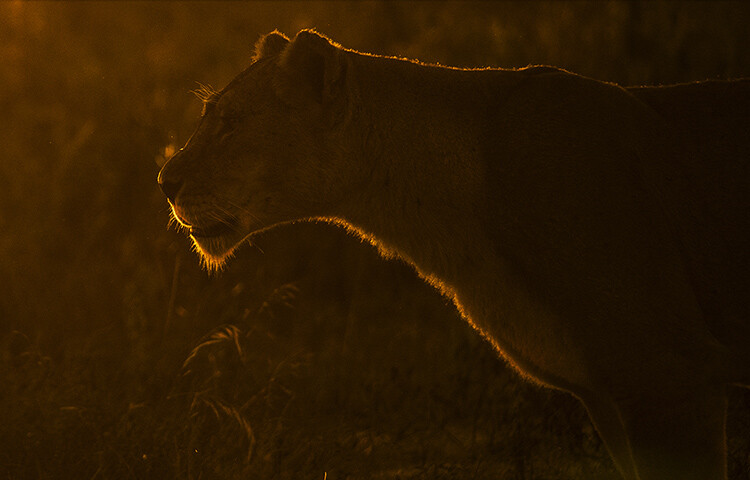
By definition, rim lighting in photography means any image where the light at the edges of the subject seems more intense than the other areas. For example, take a look at the image below.

How to do More Creative Wildlife Photography by using Rim Lighting

Notice how the outline of the giraffes stands out? The rim of the subject looks well-lit. Quite simply, that’s what rim lighting is about.

How do you achieve rim lighting?

First and foremost, you need to position yourself such that the subject stands between your camera and the light source (more often than not, that will be the sun in nature photography). Rim lighting will happen in the natural world only if you can see the rim, lit up with your eyes. Some of the easiest subjects for this are animals that have a lot of fur and are not too smooth coated, for example, bears, giraffes, lions, or deer with antlers.

Take a look at the visual below for a quick understanding on positioning yourself.

750

Guidelines

There are a few guidelines that you need to adhere to while trying to obtain a rim-lit image:

  • Rim lighting happens best when the sun is low in the sky, so try to look for a subject around that time.
  • A dark background is necessary (check all the images in this article) so make sure that you try this in an area where your background is conducive to good results.

Speaking about the camera now, composition aside, rim-lit photography can be done using one of two approaches.

Approach #1 – Exposure Compensation

Using exposure compensation is the easiest way to execute rim-lit shots. Once you have ensured that you are able to see a rim-lit subject just go ahead and try a test shot with a little underexposure. Take a look at the sequence of images below.

How to do More Creative Wildlife Photography by using Rim Lighting

Make note, by default when using the built-in metering system in your camera, more often than not the image in such scenarios (a lot of black and little bit of white) will turn out to be a bit washed out. It is just that the camera does not know what is the most important part of the image and makes an error in judgement (it tries to average the exposure).

Knowing where to stop with regards to exposure compensation is a subjective call. You could be happy with the second or the third image above. Just know that the more you underexpose the darker the surroundings will get.

This is a perfectly valid way of getting a rim-lit shot, but I generally recommend the second approach. The simple reason being that exposure compensation doesn’t reset itself. If you forget your camera is set at an EV of -2, it would mean disaster for the next few shots where you may not be trying to create a rim lighting shot.

How to do More Creative Wildlife Photography by using Rim Lighting

Approach #2 – Exposure Lock (AE-L)

This approach is slightly more advanced in terms of understanding. Imagine yourself standing in front of a monkey with the sun setting behind him and the immediate background being dark trees. Now, do the following:

  • Point your camera toward the sky. Half press your shutter-release button to activate metering.
  • Next, press the Exposure Lock Button (AE-L or * button) which often resides right where your right-hand thumb would rest.
  • Now, recompose your image with the subject as needed and click.

What happens is that when you point your camera towards the sky and ask it to meter from there, it takes a light reading from the bright sky and sets up a shutter/aperture combination accordingly. Let’s assume for a minute that the value came out to be 1/2000th at f/4.

Now, if you press the Exposure Lock button, the camera will lock on to these readings and will not change them for your next set of clicks. So when you recompose and photograph the monkey, the camera uses the locked in settings thus rendering only the areas in the frame that are as bright as the sky correctly. In this recomposed image, the only area that is as bright as the sky is the outline of the monkey, giving you a nice, well exposed rim-lit image.

How to do More Creative Wildlife Photography by using Rim Lighting

Practice around home first

Go ahead, practice the AE-L at home and then get out there and try a couple of rim-lit shots. Here is what you can do at home, before heading out to the wild.

Catch hold of a friend or family member and make them stand in front of a car at night. They should be covering the headlight of the car completely. If you stand at the other end with your friend in between yourself and the light source, you should be able to see his entire body with rim lighting.

Now that you know how to get a subject, go out there with your camera and start trying the exposure compensation trick to get some fabulous rim-lit images. Please share your rim-lit wildlife images below as well as any questions you may have about this technique.

How to do More Creative Wildlife Photography by using Rim Lighting

The post How to do More Creative Wildlife Photography by using Rim Lighting by Rahul Sachdev appeared first on Digital Photography School.


Digital Photography School

 
Comments Off on How to do More Creative Wildlife Photography by using Rim Lighting

Posted in Photography


5 Questions to Ask Yourself to Help Improve Your People Photography

27 Jul

They say the lines on a person’s face can tell a thousand stories. Getting the photo that tells those many stories is the holy grail of photography. So what can you do to create standout people photography, especially if you don’t already know the person?

The approach that every people photographer takes is different, but below are five questions that all most will have asked themselves. Each photographer may answer the questions differently and yet still produce amazing results, as photography styles are all different, of course. To improve your people photography, take the time to look at these questions, and ask how they apply to you.

5 Questions to Ask Yourself to Help Improve Your People Photography

This is a photo of a Shaman from Malaysian Borneo. A connection had already been formed with this man after my friend told him I’d photographed for National Geographic. So we were able to use off-camera flash as he posed for us.

1 – Long lens or short lens?

The chances are when you start photographing people you’ll use a longer focal length. This can be true of people who you know, it’s especially true of people you don’t know. Photographers who enjoy street photography will tell you that using a 50mm lens is best. But the truth is that it really depends on the situation.

The long lens

This really means any lens over 85mm on a full frame camera. The nice thing about these lenses is that you can photograph from a distance that’s non-invasive. This is great because you don’t need to interact with the person you’re photographing, and this is terrible because you don’t need to interact with the person you’re photographing.

There are good reasons for and against direct interaction with your subject, something we’ll come to later. The reason you may come to use a long lens is that it compresses the scene, and allows you to focus in on the person, without outside distracting elements.

5 Questions to Ask Yourself to Help Improve Your People Photography

A longer lens was used in this photo, resulting in a simpler photo.

The short lens

This means lenses 50mm or below, with the 50mm lens being the street photographers go-to lens. Using a lens like this will force you to interact with the person you’re photographing on some level. It’s far better to build a rapport with the person than going with hit and run. Besides the advantages you will gain from building rapport, wider lenses also allow more context to be seen in the frame.

5 Questions to Ask Yourself to Help Improve Your People Photography

Using a wider lens can improve your portraits. This was photographed at 50mm, and more of the story behind the scene can be seen.

Now, of course, you can get prime or zoom lenses that are both long or short in focal length. When it comes to people photography, the larger aperture that prime lenses offer is a great advantage. Photographing people with prime lenses is, therefore, best and will to improve your portraits.

2 – What technique works best?

There are many different approaches to people photography to improve your portraits. As discussed above, choosing your lens will help. Applying techniques like bokeh can also get you better results. A few ideas that might help you are described here.

Shoot from the hip photography

This means leaving your camera at your hip and photographing without lifting your camera to your eye. How can this be good photography you may ask? Those experienced at this technique know how to use their camera, and can pre-visualise the result without needing to confirm it with their eyes.

  1. To take photos like this focus the lens to a set distance in front of you.
  2. Use an aperture of f/11 or smaller to have more depth of field.
  3. Choose an ISO that allows for a fast enough shutter speed to avoid motion blur.
  4. Make sure your camera isn’t too crooked, although some angles can work for this style of photography.
  5. Walk past the location you wish to photograph, and hit the shutter as you’re walking or with a brief pause.
5 Questions to Ask Yourself to Help Improve Your People Photography

This scene from the New York subway was photographed from the hip.

Use the light

The correct use of light will always improve your people photography. There are occasions when natural or artificial light can drastically improve your photo. At night you will need to look for a strong artificial light that people can stand near, during the day a shard of sunlight through a gap in the roof could also be used.

Here are some tips for using light to your advantage:

  1. Take up position away from the light source. You will want people walking towards you and into the lit up area.
  2. Wait until the magic moment comes, and the person’s face is well lit by the source of light.
  3. Have your camera focused on the area where the person will become lit up, and switch the camera to manual focus.
  4. Expose for the person’s face. This will mean the background appears very dark, or even black. The background may be at a -2 or -3 exposure value.
  5. Wait for people to walk into the lit up area, and then photograph them. You will need to wait patiently for people to walk by, into the correct area.
5 Questions to Ask Yourself to Help Improve Your People Photography

This man was lit up by artificial light, giving the photo a low-key, high-contrast look. Learning how to use light will improve your people photos.

Patience

Waiting for people to walk into the light isn’t the only time patience will be needed. You might have a natural frame like a doorway, so you will need to wait for someone to walk through it. This approach is not unlike fishing, and the time spent waiting for the right moment can be calming. The most important thing is to make sure your composition and camera settings are already set. Now it’s just a waiting game for somebody to walk past. Alternatively, you could speed things up by asking a friend to walk into the frame.

Forming relationships

5 Questions to Ask Yourself to Help Improve Your People Photography

The value of building relationships in photography is important, it will improve your portraits. This was the first time I saw the monk, Cheongsan. I didn’t interact with him at all, and this is the result.

The very best way to take photos of people, time permitting, is to form a bond with them. Taking the time to interact, and find out about the person you want to photograph will almost always give you a much better photo. The chances of them giving you permission to photograph will be much higher, and you can control the scene more.

Once you have permission you then have the choice between a staged or candid photo, since you can ask the person to ignore you when you are shooting. The chance to get a great photo that you can share with them can form a lasting connection with you as a photographer. The level of interaction also depends on time, whether it’s 30 minutes or several hours. The types of photos you may get if you’re able to revisit the person on several occasions will also improve dramatically.

5 Questions to Ask Yourself to Help Improve Your People Photography

The next time I saw Cheongsan, I made the effort to approach him. As a result, he let me take this photo and gave me a business card.

3 – Do you ask for permission?

When the person you’re photographing is your friend or a model, then in most cases asking permission would not be needed, and indeed might be strange to ask. Photographing a stranger is a different proposition though, so to ask or not to ask, that is the question.

There is no one correct answer to this conundrum, but certain situations may dictate your actions. If you want a truly natural moment, with no hint of a staged photos then you’ll want to try and avoid asking permission. The caveat to that statement is that if you have time to build a friendship with those people you wish to photograph in a natural way this is also possible, after getting permission to take the photograph.

5 Questions to Ask Yourself to Help Improve Your People Photography

The next time I visited Cheongsan, I had contacted him ahead of time and asked if I could take some photos of him. You will improve your people photography even more by setting up a shoot with someone.

Asking permission is the polite thing to do, and will often improve your photos. You need to have thick skin when asking people though, as asking on the spot will lead to many rejections. You need to ask yourself how you can form a relationship with someone even quickly to smooth this process, so you’re more likely to have the person say yes. Is the person you want to photograph a vendor, for instance. Perhaps you need to show some goodwill and buy one of the things they’re selling. If you’re in a country where English is not spoken asking permission may involve the use of body language. So perhaps learning a few polite words like please and thank you for going along with those non-verbal cues would be prudent.

The general rule on whether you should ask permission is up to you. When the photo you’re taking is in that person’s personal space, it’s much better to ask permission.

5 Questions to Ask Yourself to Help Improve Your People Photography

I loved this man’s glasses and general style, so I asked if I could take his picture. I got a posed photo, but loved the way he posed.

4 – Candid versus staged?

This is related to the question above, but you can get candid photos even after asking permission. If the quest here is for authenticity, can you capture a great moment with your camera that’s natural? This is the aim of many photographers. However, if your aim is to tell a story through a series of photos you should really try and get a mixture of both. On an individual basis, let’s weigh up both the pros and cons of candid and staged photos.

Candid captures

This requires a keen eye, sharp reflexes, but also absolute patience. When walking around taking photos you have to be hyper aware of your surroundings in order to get photographic moments that last the blink of an eye. Photographing split second moments means you need to be utterly absorbed in your surroundings, you need to become the surroundings.

You almost have to achieve an internal meditative state. Staying on the move means you are going to the moment of capture. This means you need to be very quick to catch it. Alternatively, you can find a location, compose your photo, and then wait for the right moment to come to you. This approach can take hours, so you will need a lot of patience!

5 Questions to Ask Yourself to Help Improve Your People Photography

This photo taken was taken in the harbor in Yangon. There is nothing staged about it, I just had to wait for the right moment.

Staged shots

Once the photo is going to be staged, you have a lot of control over how the photo is taken. At this stage the person you’re photographing has consented and will be actively involved in how the photo is produced. When done well, this often leads to a more striking photo than one produced candidly, you are in the realms of a visual storyteller.

The photograph could be a simple head shot, or a more complex photo when your model interacts with their surroundings. As the photo is staged, you can ask your model to stand in the best position for available light, and the background. Your model should be well lit, with the eyes illuminated by the light in the frame. If you have off-camera flash with you, you might even consider using this to really improve your portraits.

5 Questions to Ask Yourself to Help Improve Your People Photography

In this photo, I asked the lady if she would pose for me. After getting permission, I was able to set up the photo and use off-camera flash to light her face.

5 – Where should you take people photos?

The answer to that is anywhere there are people, which is more or less everywhere. You can also choose a location to visit such as a market. Below are a few ideas you can try, though you may have some better ideas specific to where you live.

  • The market – This is the stock location for many people wanting to take people photos. There will always be people at the market. You can take photos of the vendors, customers, or the vendors and customers interacting. The downside is the people working in the market may not like yet another photographer take photos of them. This is where building relationships with the people in the market can help.
  • Public transport – A great reason to avoid the taxi, and leave your car at home. Getting on public transport is a great way to explore a location, and the people there. Be aware that in some locations you will need to get permission from the transport operator, as well as the people you are photographing.
  • A harbor – Anywhere there is a river will likely have a harbor. The life of people working in these places can produce great photographs. You will need to be prepared to wake up early in the morning to see the fishermen at work. This is another great example of how building relationships help, you might be invited onto one of their boats if you get to know a fisherman.
  • Festivals – This could mean a cultural festival such as Chinese new year, or a rock concert. Festivals will have people dressed in attention grabbing clothes that look great when photographed. You may find people more open to having their photo taken at an event as well, because they’re having a good time, and are often dressed well.
5 Questions to Ask Yourself to Help Improve Your People Photography

Visiting places people work can be good locales for people photography. A sulfur mine is an extreme example, however, going to extremes will improve your photos though.

Getting model releases, and paying your model

Whether or not to pay for a photo is another question many people ask about. It is up to you to judge each situation for yourself. Photos being taken for a specifical commercial usage are the types of images where you should pay the model a percentage of your fee. When the photos you are taking are for personal use, paying the model is at your discretion. Chances are you will find someone who will let you take their photo for free, so it’s a nice gesture to send them an image once you have processed them.

Once you decide to pay the person to take their photo, it’s unprofessional not to get a model release. If the person you’re paying won’t sign a model release then don’t pay them, and move onto somebody else. The reason you are paying for a photo is you intend to use it for promoting your work, or for direct commercial usage. This means you need to get a model release, and there are apps available for smartphones that make this very easy.

5 Questions to Ask Yourself to Help Improve Your People Photography

This is one of the miners at Kawah Ijen in Indonesia. He signed a model release and was paid for this photo.

It takes practice to improve your people photography

Now it’s your turn. It’s time to go out and practice your people photography in your local area. Are there any ways that you like to take portraits that are different from this article? I’d love to hear your ideas as well, so please share them in the comments below.

What’s your favorite people photo you’ve taken? Again share your great photo with us, and describe how you went about taking it. Finally, get out there and get some new people photos. Hopefully, some of the ideas in this article will help improve your images.

The post 5 Questions to Ask Yourself to Help Improve Your People Photography by Simon Bond appeared first on Digital Photography School.


Digital Photography School

 
Comments Off on 5 Questions to Ask Yourself to Help Improve Your People Photography

Posted in Photography


6 Tips for Improving Your Food Photography Instagram Game

27 Jul

Interest in food photography is on the rise thanks to platforms like Instagram and the ability to snap a quick photo of every meal thanks to smartphones. If you’re seeking to one-up your food photography game, you may not need much to make an impact. Keep the camera you have and don’t add any gear to your toolbox. Instead, adjust your perspective and add simple elements to make your dish more natural-looking.

Here are six tips for different food photography angles that you can capture of a dish to get unique shots. All the photos were taken using a DSLR camera and natural light.

1. 45-Degree Angle Shot

This is the most common food photography shot out there: the 45-degree angle shot taken from the perspective of someone sitting at the table. There’s nothing wrong with this shot, as it’s the common view of a dish that most diners can associate with. But it’s a little boring in the sense that almost everyone with a camera will automatically snap this angle.

6 Tips for Improving Your Food Photography Instagram Game

2. Top-Down-Shot

Another food photography angle that is becoming increasingly popular, but can be a little more difficult to achieve is the top-down shot. It’s a bird’s eye view of the dish that can be hard to do from high tabletops or without a wide-angle lens.

This also may or may not be a flattering angle for your food (for example, typically not the best angle to photograph sandwiches or burgers). However, this shot is most effective for showing off a dish with lots of components that can’t be easily seen from the 45-degree angle. It also works very well for displaying a full table spread with many dishes.

6 Tips for Improving Your Food Photography Instagram Game - overhead shot

3. Macro Shot

Now we’re treading into slightly more advanced food photography territory. The macro shot is an extreme close-up image that often reveals fine details that aren’t easily seen by the naked eye. Historically, this type of photo was difficult to achieve without a proper camera and macro lens.

However, many smartphones and even entry-level cameras come equipped with a macro mode that enables you to capture close-up shots. Use that mode to get a new view of your food. Below is a sous-vide egg covered in caviar and flecks of gold. Given its small size, it is best photographed in macro mode to show off those small details.

6 Tips for Improving Your Food Photography Instagram Game - macro

6 Tips for Improving Your Food Photography Instagram Game - macro egg

4. With Another Dish

Don’t just photograph the dish by itself. Instead, show some scale or just add an extra element to the background by sliding in another dish. When possible, make that extra dish complimentary to your main subject. For example, a burger with fries, or a Caesar salad with entrees.

6 Tips for Improving Your Food Photography Instagram Game - other plates

5. Incorporate Restaurant Interior

Besides focusing on the food, take a look at your surroundings and see if there are any interesting elements in the restaurant that might make for a good photography background. The examples below utilize a restaurant’s unique wallpaper and a patio wall of ivy as makeshift photo backgrounds.

6 Tips for Improving Your Food Photography Instagram Game - ice cream

6 Tips for Improving Your Food Photography Instagram Game - background

6. Use Your Hands

After you’re done capturing beauty shots of a perfectly composed dish, take it apart! By adding hands or even utensils pulling food apart, this adds authenticity, as it shows someone actively engaging with the dish. In some instances, this action is almost essential for showing food in its best light. Consider pasta or noodles. Oftentimes, it is covered in sauce or garnishes, making it difficult to see the noodles underneath. This is easily addressed by having a fork or chopsticks dig in there and pull up a bunch of noodles. The same goes for burgers and sandwiches. Photograph it whole, but then slice it in half to show a more organic side to the dish.

In some instances, this action is almost essential for showing food in its best light. Consider pasta or noodles. Often pasta is covered in sauce or garnishes, making it difficult to see the noodles underneath. This is easily addressed by having a fork or chopsticks dig in there and pull up a bunch of noodles. The same goes for burgers and sandwiches. Photograph it whole, but then slice it in half to show a more organic side to the dish.

The same goes for burgers and sandwiches. Photograph it whole, but then slice it in half to show a more organic side to the dish.

6 Tips for Improving Your Food Photography Instagram Game - noodles

A noodle soup dish served as-is, where the noodles are very hard to see.

6 Tips for Improving Your Food Photography Instagram Game - noodles and hand

The above noodle dish being pulled apart by chopsticks.

6 Tips for Improving Your Food Photography Instagram Game - burger

A burger by itself.

6 Tips for Improving Your Food Photography Instagram Game - burger sliced

That same burger sliced in half and held up by a hand.

In Conclusion

Food photography needn’t be super complicated with tons of lighting and food styling. Instead, you can create beautiful and unique food photos by just changing your perspective and adding a few simple elements to give your photos a more natural feel.

Do you have any food photography tips of your own? Feel free to add them in the comments below!

The post 6 Tips for Improving Your Food Photography Instagram Game by Suzi Pratt appeared first on Digital Photography School.


Digital Photography School

 
Comments Off on 6 Tips for Improving Your Food Photography Instagram Game

Posted in Photography


Ten expert tips for successful macro photography

23 Jul

Thomas Shahan’s tips for successful macro photography

Thomas Shahan is a macro photographer and artist from Tulsa Oklahoma who specializes in entomology and traditional relief printmaking.

Thomas’s interest in macro photography began when he started watching jumping spiders in his backyard. After studying art at the University of Oklahoma, he left for Oregon to work in the Oregon Department of Agriculture’s entomology lab. There, he worked as a digital imaging specialist, taking high magnification focus-stacked photographs and SEM images of arthropods – good practice for macro photography.

In this article, Thomas shares advice for successful closeup photography of bugs, insects and small animals. Click through for his top tips, and be sure to check out the video we made with Thomas recently, embedded at the bottom of each page.

All images by Thomas Shahan, used with permission.

Tip #1: Bugs are everywhere

Wolf Spider – sp, hogna, shot in Norman, Oklahoma using a Pentax 50mm F1.7, reversed on tubes at ~F16 equiv.

You don’t need to travel to exotic locations to take pictures of bugs – they’re everywhere. A few minutes spent turning over stones and logs in your back yard, or local park will reveal plenty of creepy-crawlies.

Bugs are most active in the middle of the day but they can be found at any time, even at night.

Tip #2: Learn about your subjects

A jumping spider – sp. psecas, shot in Peru with a Vivitar 55mm F2.8 at ~F10 equiv, on a 2x teleconverter.

Sure, to begin with you might just explore your yard and see what you come across, but the more you know about bugs and insects, the more likely you’ll be able to find them, and get the shot that you want.

Perhaps you live in a part of the world where a certain species is particularly common. Perhaps the particular spider, or fly that you want to photograph only comes out at a certain time of the day, or likes to hang out in a particular kind of environment. The more you know, the better your chances of finding it, and getting a great shot.

Tip #3: You don’t need expensive gear

We were using the Fujifilm GFX 50S for our recent shoot in Idaho, but you don’t need such expensive equipment to get great macro shots. Thomas’s usual setup (pictured here) is centered around a midrange Pentax DSLR, and a collection of second-hand lenses and extenders.

A newer camera with a good live view mode and a dedicated macro lens will certainly make life easier, but they’re not essential to getting great shots.

Tip #4: Use diffused light

A bess beetle – sp. passalid, captured during our shoot at the Ketchum Bug Zoo, Idaho.

Many bugs, like this bess beetle are glossy, so try to shoot them under diffuse light, to avoid distracting ‘hot spots’ on their shells. Experiment with different kinds of diffusion material for both natural and flashlight.

Tip #5: Small apertures increase depth of field

A tarantula, captured during our shoot at the Ketchum Bug Zoo, Idaho.

Shooting at small apertures will give you more depth of field, meaning that more of your picture will be in focus. This is essential when taking pictures of very small insects and bugs, but also useful with larger animals, like this tarantula (shot at F10).

The downside of shooting at small apertures is that it cuts out a lot of light, so you should experiment with using flash as your main light source. A relatively low flash output should work in daylight and it won’t scare away your subject.

Tip #6: Shoot Raw, at low ISOs

A bearded dragon, captured during our shoot at the Ketchum Bug Zoo, Idaho.

Shooting in Raw mode will let you get the best possible resolution out of your camera, and keeping your ISO sensitivity as low as possible means that you won’t need to worry too much about noise levels. Shooting Raw also gives you a lot of scope for post-capture tonal adjustment.

Tip #7: Don’t be afraid to crop

A bess beetle – sp. passalid, captured during our shoot at the Ketchum Bug Zoo, Idaho.

Don’t worry if your lens can’t focus super close – if you’re working with a high megapixel camera, you can always crop in afterwards. This image of a bess beetle is a pretty heavy crop from the GFX 50S’s 50MP sensor, but the output resolution is still very good, at around 15MP.

Tip #8: Focus manually

A jumping spider – sp. Habronattus americanus, shot in Oregon with a Vivitar 55mm F2.8 at ~F16 equiv, on a 2x teleconverter.

If you are working at very close distances, turn off AF and focus manually, then bracket focus by moving your camera slightly back and forth.

Tip #9: Experiment with color and contrast

Madagascar hissing cockroach – sp. gromphadorhina, captured during our shoot at the Ketchum Bug Zoo, Idaho.

Experiment with color and contrast. Simple colored backgrounds can be very effective. Here, a bright red piece of cardboard contrasts with the warm tones in the carapace of a Madagascar hissing cockroach.

Tip #10: Take a lot of pictures!

Horsefly – sp. Tabanus, shot in Tulsa OK with a Vivitar 55mm F2.8 at ~F10 equiv, on a 2x teleconverter.

Macro photography is fun, but it’s tough – especially when it comes to flies and other small, fast-moving animals. Increase your odds of getting a great shot by taking lots of pictures!

Thomas Shahan’s tips for successful macro photography

We recently spent a couple of days with Thomas down in Ketchum Idaho, to get a feel for how he approaches one of the most challenging kinds of photography there is – macro shots of bugs and small animals.

Check out more of Thomas’s work on Flickr


This video is sponsored content, created in partnership with Fujifilm. What does this mean?

Articles: Digital Photography Review (dpreview.com)

 
Comments Off on Ten expert tips for successful macro photography

Posted in Uncategorized


10 Photography Bad Habits for You to Conquer

21 Jul

Let’s define what a bad habit is first; A habitual behavior considered to be detrimental to one’s wellbeing. However, this can be extended into learning a new skill set (like photography) where you may develop habits that can inhibit your learning progression, or even cause you physical injury.

How to Conquer Your Photography Bad Habits

Magnolia bud, not 100% sharp as I hadn’t taken my tripod with me

Before you can fix or adjust a bad habit, first you have to identify it. There is a good chance that a majority of photographers pick up or share the same habits, so maybe you can learn from my list. Possibly you are doing some of the same things. If you are lucky you aren’t doing all of them and this will help you avoid picking up any new photography bad habits.

There is little as heartbreaking as downloading your photos from a shoot to find you did a really stupid thing like have your ISO really high, or the wrong white balance setting or some other silly thing. Take the time to develop good habits and break any bad ones you might have.

How to Conquer Your Photography Bad Habits

Macro image of a gerbera, achieved by allowing sufficient time and patience to set up the shot and my gear correctly.

Confession Time

Most of the following are simple stupid things, stuff that doesn’t take a lot of time to think about or do but is easy to put aside for later. Except later usually doesn’t come, and then you pay the price.

Bad Habit #1 – Batteries not charged and ready

Failing to check and charge spare camera batteries when they need it is an issue. Nothing worse than being in the middle of a great shoot, having to switch batteries to find that all your spares are flat.

10 Photography Bad Habits for You to Conquer

Bad Habit #2 – Memory cards not empty and ready to use

Forgetting to take the CF card out of the camera and wipe it before reusing is bad habit number two. I have multiple spare cards so leaving one in the computer isn’t a deal breaker, but I am bad about formatting the card and dumping the previous images before a new shoot.

10 Photography Bad Habits for You to Conquer

Bad Habit #3 – No cleaning routine

Another photography bad habit is not completing a regular cleaning routine after each shoot. Living in a coastal area means always being aware of salt spray off the sea. You should have a regular cleaning routine for your camera, lenses, any accessories and don’t forget the inside of your camera bag as well. The life of your expensive camera gear will be extended. Also if your lenses and filters are clean, there is less to handle (fix) in the post-production stage.

10 Photography Bad Habits for You to Conquer

Bad Habit #4 – Not checking camera settings

Are you guilty of this one – not checking how the camera is set up before a new shoot? Time to fess up – this is my personal worst habit and it has cost me some good shots over the years.

Before you go out on your next shoot, allow time to go over your gear, check that you have everything you need, and set your camera up to your preferred base starting point. A few minutes spent here is an investment that saves you hassles and disappointment later.

10 Photography Bad Habits for You to Conquer

Shot unnecessarily at ISO 400 because I forgot to check my camera settings BEFORE the shoot.

Bad Habit #5 – Underestimating travel allowance time

Underestimating your travel allowance time so you can get on site and scout out in advance can be a problem. Sometimes it’s hard to find a particular spot, or the sun is setting as you are driving home from work. There are a Lot of reasons for you to be in a hurry to get to somewhere with your camera. But, make life less stressful by allowing plenty of travel time and plan out your route in advance. Get there early.

10 Photography Bad Habits for You to Conquer

Bad Habit #6 – Not stopping when you see a shot

Have you ever seen a possible shot while driving and not stopped?  I often think I will get it on the way back, but the light changes and the shot is gone forever. Of course, habit five applies here as well, if you have allowed sufficient travel time and built in a buffer for possible stops along the way, then you can stop.

10 Photography Bad Habits for You to Conquer

Bad Habit #7 – Not protecting your gear properly

Not protecting my gear as much as I should.  Doing things like putting my tripod legs in the sea, forgetting to use my rain cover for the camera, relying on the weather sealing to protect my camera and lens in a drizzle. Guilty!

If you do use your tripod in water, learn how to take it apart and clean it. They get a surprising amount of sand inside the legs which can eventually rust. Use proper rain gear to take care of your equipment.

10 Photography Bad Habits for You to Conquer

Bad Habit #8 – Not using a tripod

Sometimes I’m lazy about taking my tripod with me. It’s heavy and carrying it everywhere can be annoying sometimes. However, for landscapes and long exposures, it is a necessity.

10 Photography Bad Habits for You to Conquer

This bokeh shot was only possible while using a tripod.

Bad Habit #9 – Getting caught in the excitement

Getting caught up in the excitement of an event or happening and forgetting to take my time and plan for strategic shooting.

This is possibly less of a habit and more something you learn with time and experience. But learning how to distance yourself from the excitement of what is happening in front of your camera is a necessary skill to help you compose and capture meaningful images, rather than “spray and pray”.

10 Photography Bad Habits for You to Conquer

Taking myself off to the side of this light display, after capturing the usual images I decided to have a play with some ICM – Intentional Camera Movement.

Bad Habit #10 – Afraid to hit delete

Being afraid to delete images. While there is some merit in keeping images that you can come back to and edit later when your skills might have improved, part of your journey in learning to improve is being able to critique your own work. Learn to identify average shots, poor composition, dull lighting and other things that lessen the quality of your images, and don’t be afraid to cull them. If nothing else, it will help extend the life of your computer hard drive capacity.

10 Photography Bad Habits for You to Conquer

It’s a nice memory of a fun birthday lunch but it’s not the most amazing photo ever!

Conclusion

“I don’t have time to do it now” or “I’ll do it later” are two of the worst mental habits you can get into as a photographer. Learn to stop yourself when you think these things, then take the time to do whatever it was you were going to put off.

Being a photographer means you need to cultivate the art of patience. With patience, you also have to learn to allocate your time effectively and efficiently. Spending time looking after and checking your gear in advance of a shoot, will save you from making mistakes or wasting time later on fixing them.

Your photography bad habits may well be different to mine, so make a list of your own personal ones. Don’t try to fix them all at once. Pick the two that have the most impact and concentrate on fixing those. Over time you may find that the good habits you develop make it easier to quit the bad ones.

Keep an eye out for developing new bad habits in the future too. It’s easy to tell ourselves we won’t, but trying to be perfect is one of the worst habits of all. Do the best you can on the day, and hopefully every day it gets easier, and your good intentions become habits. Positive outcome!

The post 10 Photography Bad Habits for You to Conquer by Stacey Hill appeared first on Digital Photography School.


Digital Photography School

 
Comments Off on 10 Photography Bad Habits for You to Conquer

Posted in Photography


How to Find Animals for Wildlife Photography Beginners

21 Jul

Wildlife photography may seem like an attractive field of photography to you, but one of the most daunting things for beginners is how to actually go about finding the animals in the first place. Thanks to mankind’s destructive nature we’re used to seeing fleeting glimpses of animals, often far away, prompting heated debates between groups as to what is that winged black speck in the distance.

5 Beginner Tips to Help You Find Animals for Wildlife Photography

Two female red grouse amongst the heather on a British moorland.

As a newcomer to wildlife photography, you may find yourself wondering how on Earth you are supposed to get even remotely close enough for a picture. Sure, you can maybe settle for an atmospheric habitat shot, with the subject small in the frame, but you’d be forgiven for wanting close-up portraits of animals too.

So let’s look at some of the ways you can achieve those super detailed close-up shots, showing every part of fur or feather.

1. Wildlife Parks and Reserves

5 Beginner Tips to Help You Find Animals for Wildlife Photography

One of the first pictures I ever took was in a wildlife reserve, and of this slightly soft Mandarin Duck.

One of the first places I visited when I first embarked on my journey as a wildlife photographer was a small wetland reserve. This reserve had some birds kept in open enclosures, as well as a river which was host to many wild ducks. Ducks tend to move slowly, at least when swimming casually along and are fairly easy to get close to (especially in a reserve frequented by well-intended people).

The best attraction for me, though, was the woodland hide. Situated in a quiet clump of trees, this woodland hide looked over a feeding station for wild birds. It was visited by mainly small passerines, such as great tits and bullfinches, but occasionally the odd predator would drop in such as a sparrow hawk.

5 Beginner Tips to Help You Find Animals for Wildlife Photography

Even small woodland birds are interesting and exhibit great behavior if you watch for a long time.

If you can find yourself a local reserve like this one, or just a public wildlife hide in a good spot, put in the hours and try to think outside the box. You’ll most likely come away with some decent images that you can be proud of.

2. Get a Wildlife Blind

Not happy with a public hide? Get your own wildlife blind – a camouflage tent, if you will – and set it up wherever you think wildlife may frequent. This might even be in your backyard, and if you set up a small feeding station there you could have all sorts of birds and small mammals visiting. Bird feeders filled with sunflower seeds will quickly attract small passerine birds, with squirrels most likely making a visit there too.

5 Beginner Tips to Help You Find Animals for Wildlife Photography

Wildlife blinds can get you close to all sorts of rare animals, like this black grouse.

Working in hides requires a lot of patience. In the past, I spent 15 hours a day for two weeks in a hide waiting for brown bears make an appearance. But even with animals that are visiting regularly, you’ll need to put in the hours to capture interesting behavior and something more than just a simple “bird on a stick” portrait shot.

3. Try Using a Trail Camera

If you’re really stuck for ideas or want to track down something a little more interesting, try setting up a small Bushnell trail camera in likely locations for animals. Such locations might be runs in a woodland (trodden down trails in the grass you can see, where animals move regularly). The camera will sit and watch 24/7 for you, triggering when something moves by. They’ll record video or take photos that you can later review, unveiling the secrets of a particular area to you.

5 Beginner Tips to Help You Find Animals for Wildlife Photography

Track down regular haunts of hard-to-spot animals like foxes by using a trail camera.

Some animals are nocturnal, and in those cases, you could even try setting up a DSLR camera trap, although these are usually used by more practiced wildlife photographers. I wouldn’t recommend trying out this technique just yet if you are very new to the game, and instead, stick to the trail cameras for finding locations.

4. Practice Your Fieldcraft Techniques

If you want to be a successful wildlife photographer, then you need good fieldcraft skills. You need to learn how to remain concealed, and silently approach animals without them noticing you. This involves learning to properly observe your subject. Only move when they are distracted. You should never approach an animal that is clearly alert and wary that something is nearby. Wait until they’re relaxed and unaware, before continuing to move closer.

5 Beginner Tips to Help You Find Animals for Wildlife Photography

Practicing your fieldcraft skills lets you get closer to animals without the need for a blind.

But learn the limits. There’s going to be a point you need to stop, otherwise, you would be standing nose to nose with a moose or something similar. You’ll need to practice stalking techniques, with many failures no doubt, before you get it just right. Simple things like thinking about the material your clothes are made of, in order to prevent loud noises when your walk, will make all the difference.

Once you’ve done that, you’ll find yourself able to spot an animal at a distance and get closer and closer. It takes time, but it’s great fun and it definitely makes the final image more worthwhile thanks to the hard work you put in. I love to try stalking red deer – they’re big, charismatic subjects but they’re really wary of people. They’ll happily stare at you standing still, but once they spot you moving towards them they’ll run a mile.

5. Keep Alert

Many of my wildlife photos are opportunistic. It doesn’t hurt to drive around with your camera in the passenger’s seat, keeping your eyes peeled for wildlife. In an ideal world, you’d have someone driving for you so you can pay 100% attention to the surrounding areas, rather than having to focus on the road.

5 Beginner Tips to Help You Find Animals for Wildlife Photography

Using your car as a hide can be a great way to find wildlife over a large area, like I did with this cuckoo bird.

Cars can be the best wildlife blinds available. Animals are so used to seeing them that they are mostly ignored. While you may get a photo from your car, this is also a great way to find the regular haunts for a particular animal. Dawn and dusk are the best times to start exploring when animals are generally most active.

Conclusion

Do you have any other tips for doing wildlife photography and finding animals to photograph? Please share in the comments below.

The post How to Find Animals for Wildlife Photography Beginners by Will Nicholls appeared first on Digital Photography School.


Digital Photography School

 
Comments Off on How to Find Animals for Wildlife Photography Beginners

Posted in Photography


Concert Photography 101: Cameras and Lenses for Beginners

20 Jul

If you’ve ever wondered how to become a concert photographer, one of the very first steps is to acquire the right gear. You’ve probably been to a concert or festival and seen music photographers hauling tons of equipment such as two camera bodies and enormous lenses. While it’s certainly ideal for a professional to have this much stuff (and then some), most beginners or amateurs absolutely don’t need this much gear to get started. Read on for some of my suggestions on how to gear up as a beginning doing concert photography.

Concert Photography 101: Cameras and Lenses for Beginners

Concert photography rules

Before we get into gear, let’s discuss your typical concert photography setting. Whether you’re shooting a big arena show or a small, casual performance in a bar, concert photography rules are more or less the same. You get to shoot for the first three songs only, and cannot use a flash or strobe of any sort. With these two rules in mind, this means that you need gear that allows you to adjust and shoot quickly and pull off shots in a low lighting setting.

What kind of camera do you need?

First off, invest in a solid DSLR camera. While there are point and shoot cameras that could arguably get the job done, you need the lens choices that come with DSLRs. It doesn’t really matter what brand you choose. What does matter is being comfortable using it and knowing that you have a wide variety of lenses to pair with it. Canon and Nikon are two of the biggest camera brands that are among the most popular for concert photographers.

Crop Sensor or Full Frame?

When researching DSLR camera options, you’ll have a choice between investing in a crop sensor or full frame camera. The differences between the two types of DSLR cameras is best explained in this article.

To quickly summarize, crop sensor cameras are typically smaller in size and much cheaper than full frame cameras. The main disadvantage to crop sensor cameras has to do with their smaller sensor sizes that will impact available ISO options, thus resulting in slightly noisier or grainy photos than full frame cameras. In short, start out with a crop sensor camera if you’re on a budget, and aim to upgrade to a full frame camera the further you get in your concert photography career.

Concert Photography 101: Cameras and Lenses for Beginners

Canon 5D Mark III (full frame) on the left and a 6D on the right.

Suggested concert photography cameras

Full Frame

  • Canon EOS 6D
  • Canon 5D Mark IV
  • Nikon D810
  • Nikon D750
  • Nikon D610

Crop Sensor

  • Canon 7D Mark II
  • Canon 77D
  • Canon 80D
  • Canon EOS Rebel T6i
  • Nikon D500
  • Nikon D7500
  • Nikon D5600
  • Nikon D3400

What are the best concert photography lenses?

After you’ve invested in a DSLR, be sure to budget for the purchase of accompanying lenses, which can end up being just as expensive as the camera body. Generally speaking, you shouldn’t use the kit lens that automatically comes with your DSLR camera.

Most of these kit lenses are fine for shooting in ample lighting conditions, but they won’t perform well in the low light settings of concerts. Instead, what you want is a fast lens with a wide aperture (or f-stop) of between f/1.2-f/2.8. This will help you capture moving subjects in dark settings.

Concert Photography 101: Cameras and Lenses for Beginners

Canon 24-70mm f/2.8 and 70-200 f/2.8.

Start with prime lenses

For beginning concert photographers on a budget, prime lenses are your best bet. While these lenses have fixed focal lengths, meaning you can’t zoom with them, their low f-stops mean they will shoot better in low light. Prices and exact lens models will vary according to which camera brand you’ve chosen. Since I’m a Canon shooter, these lenses are geared toward Canon.

  • 50mm f/1.4 (or the cheaper 50mm f/1.8) – for Nikon try the 50mm f/1.8G
  • 85mm f/1.8 – for Nikon try the 85mm f/1.8G
  • 35mm f/1.4  – for Nikon try the 35mm f/1.4

Put these lenses on your wish list

Pretty much every professional concert photographer will have two go-to lenses on hand: a 24-70mm f/2.8 midrange zoom lens, and a 70-200mm f/2.8 telephoto lens. Neither of these lenses is cheap and should definitely be considered a long-term investment. But if you can afford one or both, don’t hesitate to add these lenses to your concert photography kit.

Concert Photography 101: Cameras and Lenses for Beginners

Keep an eye on third party brands

While it’s certainly ideal to purchase lenses in the same brand as your DSLR camera manufacturer, there are many third party companies producing cheaper and sometimes even better options. Great lens options exist from Sigma, Tamron, and Tokina, to name a few. Again, the specific options will depend on the DSLR camera body you’ve chosen, but here are a few possible options for Canon shooters:

  • Tokina 11-16mm f/2.8 (for Canon EF-S/crop sensor or Nikon DX)
  • Sigma 17-50mm f/2.8 (for Canon EF-S/crop sensor or Nikon DX)
  • Sigma 24-70mm f/2.8

If you’re on a budget

It’s a reality that concert photography equipment isn’t cheap. But there are some ways to score more affordable camera gear. First, look into used or refurbished camera bodies and/or lenses. As long as you purchase from an accredited source, you can save hundreds of dollars on gear.

On the flip side, keep in mind that camera gear retains its value as long as you take care of it. So if you buy a lower-end camera or lens and want to upgrade later on, it’s pretty easy to sell off your old gear to help you invest in newer options.

Finally, look for older models or previous versions of gear. For example, you could spring for the brand new Canon 5D Mark IV camera body, or you can save over $ 1,000 by investing in the older yet still very functional Canon 5D Mark III. The same is true for many other camera bodies and lenses on the market. It all depends on your budget and what kind of features you absolutely need to have.

Concert Photography 101: Cameras and Lenses for Beginners

In Conclusion

Consistently pulling off pro-quality concert photos often requires investing in pro-grade camera gear. But it’s best to start small and to upgrade over time as your skills and budget increase. What are your go-to concert photography cameras and lenses? Let me know in the comments below!

Concert Photography 101: Cameras and Lenses for Beginners

The post Concert Photography 101: Cameras and Lenses for Beginners by Suzi Pratt appeared first on Digital Photography School.


Digital Photography School

 
Comments Off on Concert Photography 101: Cameras and Lenses for Beginners

Posted in Photography


7 Travel Photography Tips I’ve Learned from People in the Industry

20 Jul

Like any profession, over the years and countless hours of working and talking to people in the industry, you will pick up tips, advice and even things to avoid. This will ultimately help you improve and possibly make your photography business more profitable. Here are some of the main tips that I have picked up over the years from people in the travel photography industry.

7 Travel Photography Tips I've Learned from People in the Industry - new zealand

#1 – Blue Sells

If you were to line up a whole load of travel magazines next to each other, you will notice that the vast majority of their front covers have something in common, the color blue. Whether it is the sky or water, magazine covers tend to feature photos of gorgeous sunny days rather than moody, dark and atmospheric conditions.

I had always noticed that my “gorgeous sunny weather” shots outsold the photos with other types of conditions. But it wasn’t until the editor of a travel magazine told me the reason that I understood why. They found that historically, issues with beautiful sunny shots on the front cover sold much better than issues with dark and moody conditions. The reason is that most people going about their day aspire for tranquil and beautiful holiday conditions. So, while a stormy landscape photo might look more dramatic and striking, the average holidaymaker doesn’t want to go somewhere and experience a storm.

7 Travel Photography Tips I've Learned from People in the Industry - Scotland

#2 – Avoid “Tourist” Shots

I remember asking a picture editor once for the single biggest piece of advice they could give me and they responded with, “Don’t send me tourist shots.” But what does that mean? After all, if you are in a city and have to photograph the most famous landmark then how do you avoid tourist shots. Once I delved in a little deeper, I realized what he meant was that he didn’t want just another shot of the famous landmark taken at eye level because he could get thousands of them through any stock agency.

Instead, he wanted to see a photo that demonstrated an experience, feeling or mood. This was a few years back and more and more I have been asked by picture editors and stock agencies I work with to try to show these “experiences” in the photos. So rather than taking a photo of the landmark, it might be worth photographing a couple enjoying an ice cream in its shadow. The key is to look beyond the obvious shot and look for a moment or composition that can convey an emotion.

7 Travel Photography Tips I've Learned from People in the Industry Turkey

#3 – Give Them People

Often the easiest way to capture unique photos that don’t look like tourist shots is to include people. But including people in your photos can also convey a sense of scale, portray an emotion or a feeling and often tell a much more intriguing story. One of the best bits of advice I was given was that including people can also help you capture different types of shots from the same location. That, in turn, means you can maximize your stock shots from a single location.

For example, take any scene in front of you. If you capture that scene with a couple admiring the view holding hands it tells a completely different story than capturing the scene with someone running or cycling. So you suddenly go from one photograph per location to three. Move slightly around the scene and capture a few different scenarios and you can suddenly end up with a whole load of different stories from practically the same spot. As any stock photographer will tell you, it’s a numbers game and the more photos you have the better your chances of selling some.

 7 Travel Photography Tips I've Learned from People in the Industry Turkey

Taken from the same location as the photo above but a completely different message.

#4 – Check Every Photo, Every Time

Photography is a competitive industry. You are often competing with pretty much everyone with a camera to try and get work or make sales. The last thing you want to happen is to have a photo that has been chosen by a client come back to you because it isn’t focused properly or you haven’t removed the dust particles. Not only is it embarrassing, but it can also hurt your chances of working with that client further down the line.

So don’t try and cut corners. You worked hard to capture the photo so do it justice and make sure it looks its best when it’s going in front of someone else. Check every inch of the photos you intend to send out to clients. View them at 100% in post-production and make any corrections or edit as necessary. Be professional in your approach from start to the finish.

7 Travel Photography Tips I've Learned from People in the Industry

#5 – Face the Opposite Way

It doesn’t matter where you are in the world, there will usually be a spot marked “sunset viewpoint” or similar where everyone will go to capture their photos. Often this is because that particular spot offers the best view. But sometimes it is because it is the easiest and most convenient place for lots of people to get to or stand.

One bit of advice that has been floating around for many years and has been said by numerous photographers, is that when you get to one such location, face the other way. Go against the crowd and photograph what is behind everyone. Clearly this advice shouldn’t be taken literally as sometimes photographing the other way wouldn’t give a good photo. The point is to look beyond the first and most obvious location and viewpoint.

If you are prepared to do your research beforehand and are willing to put more of an effort in than the average tourist, you will undoubtedly end up with better photos.

7 Travel Photography Tips I've Learned from People in the Industry

#6 – Step Closer

The world famous war photographer, Robert Capa said, “If your pictures aren’t good enough, you aren’t close enough.”. This is something that most amateur photographers struggle with for travel photography and photographing people. It often means having to get close to your subject and they then might notice you.

The truth is that usually, the worst that can happen is that the person you want to photograph will just say no. But getting closer means having to be right in the middle of the action and that you also have to engage with that person and build a connection, if even briefly. This, in turn, will transfer into your photographs and give you a much better and more intimate photo than if you were standing 300 yards away with a telephoto lens.

7 Travel Photography Tips I've Learned from People in the Industry - Italy

#7 0 Don’t Be Shy

One of the biggest things that you may realize as a photographer is how accommodating and intrigued most people are about your profession. I have not kept a tally of the number of conversations I’ve had with total strangers all based around photography, but it’s been a lot. One thing I learned is that sometimes when you have a camera on your shoulder it can work to your advantage (and sometimes it can work against you) as people may help you capture the photo that you want to take.

But you have to be willing to ask. If you don’t ask you will not get. For example, one of the best places to take photographs of a city is from your hotel room. I’ve lost count of the number of times that I have been upgraded to a room with a better view by simply asking and explaining the reason for it. This extends to if you want to photograph people, places, and so on. Don’t be shy, just ask. The worst that could happen is being told no.

7 Travel Photography Tips I've Learned from People in the Industry Thailand

I took this photo of the Bangkok skyline from my hotel room.

Conclusion

Over the years you will pick up your own tips and advice that you have been given or have derived from your own experiences. In the meantime, hopefully, the ones above can be as helpful to you as they have been for me.

Do you have any other bits of advice that you have been given? Please share below.

The post 7 Travel Photography Tips I’ve Learned from People in the Industry by Kav Dadfar appeared first on Digital Photography School.


Digital Photography School

 
Comments Off on 7 Travel Photography Tips I’ve Learned from People in the Industry

Posted in Photography


7 Different Ways to Approach Macro Photography

19 Jul

Macro photography is one a genre that many people love. But the expense of buying a top lens to take close up photos can make it restrictive or impossible to do. However, there are many ways of approaching this kind of photography, and not all of them have to break the bank.

Here are seven different approaches to macro photography. We’ll start with what most people think of, and cover other ways to help you do macro photography when you don’t have a big budget to do what you love.

7 Different Ways to Approach Macro Photography - orange flower

105mm Macro lens with auto-focus. I have used the same flower for all the photos. They were taken as close to the flower as the lens would allow for focusing. A full frame camera was used to take the images, except for the last one.

#1 – Dedicated Macro Lens

Getting yourself a macro lens is one if the best ways of doing close-up photography. These lenses are specifically designed to allow you to focus very close to your subject. With most macro lenses, you can get as close as about four inches or 10 centimeters (compared to “regular” lenses which close focusing distance is usually around 12 inches or more). That is with autofocus on, but if you turn it off you will be able to focus even closer.

Manual focusing seems to be the preferred way of doing macro photography. If do some reading, you will find a lot of photographers prefer to use their macro lenses this way. It allows them to get even closer. This, then, might be where you ask the question, “Why should I bother buying a macro lens that has autofocus?”

Many of the top lenses manufacturers make options for macro photography. They are high-end, and the quality is as you would expect those brands to produce. However, they are also very expensive and you can expect to pay quite a bit for a dedicated macro lens.

Many other companies are now also making macro lenses. Some don’t have autofocus, but if you are happy using manual then they may be a better (or less expensive) alternative for you. They are often around half the price of the big brands, so if you can’t afford one of the top models, then this could be a much better fit for you.

7 Different Ways to Approach Macro Photography

Shot with a 105mm Macro lens using manual focus.

#2 – Zoom Lenses

When many people start doing macro photography they often start with a zoom lens and do their best to get as close as possible. Depending on the focal length of your lens you can get pretty close to your subject. You may not get tiny bugs on your flowers from the garden, but you will get whole flowers.

There are some zoom lenses that also have a macro ability which makes it easier for you to get great photos and it allows you to focus in closer. Often zoom lenses will only focus if you are a few feet away from your subject. If you have one with the ability to get closer, then you will be able to get fairly good “almost macro” images.

7 Different Ways to Approach Macro Photography

Image taken with a zoom lens and the focal length was 300mm.

#3 – Lensbaby Velvet 56

The Velvet 56 by Lensbaby is a special lens that can be used for taking normal photos, but what a lot of people use it for is macro photography. It looks like a normal prime lens, but it has a very short depth of field, which makes it ideal for macro photography. You can change the aperture to give you very little in focus or a lot.

A lot of macro photographers who start using the Velvet 56 fall in love with it and find it difficult to use other lenses again.

7 Different Ways to Approach Macro Photography

This image was taken with the Lensbaby Velvet 56.

#4 – Lensbaby Composer Pro and Optics

This is a unique system where the first part, the Lensbaby Composer Pro, fits onto your camera like a lens. It is made up of two parts which are connected by a ball-like socket so you can move the outer part around to put your focus point and plane where you want. Into this, you put an optic that will give you the desired effect you want. There are many different types of optics, however, the Sweet 35 and Sweet 50 are the most popular ones for macro photography.

The Composure Pro and optics gives you a lot of opportunities to get some interesting and different effects. You can change the point of focus to anywhere you want in the image. You can also decide what depth of field you want to get. Macro images that are very different to what you can achieve with other types of macro lenses are possible with this system.

Read my overview of the Lensbaby system here: Overview of the Lensbaby System – Is it for you?

7 Different Ways to Approach Macro Photography

This image was achieved by using the Lensbaby Composer Pro with a Sweet 50 optic.

#5 – Extension Tubes

You can also get extension tubes that will fit in between your camera and your lens. These will make your lenses get closer to your subjects (and shift the focusing distance). Your 50mm lens with extension tubes, and you can start taking photos that are very close to those from a macro lens. It should be noted that there are differences though, and a dedicated lens for close ups is easier to use.

Extension tubes are usually bought in a group of three, you get a 12mm, 20mm and a 36mm. You can use them individually, or combine together. You can get one that will not allow the lens to communicate with your camera, they are usually much cheaper. So look for what they call automatic rings, with Autofocus. I use Kenko Automatic Extension Tubes.

You have to be careful with the rings as they are not very heavy and if you put a big hefty lens on your camera and don’t give it enough support, then you risk damaging the connection between the lens and camera.

7 Different ways of approaching macro photography

Shot with a 50mm lens on its own.

7 Different Ways to Approach Macro Photography

Shot with a 50mm lens and a 36mm extension tube.

#6 – Close-Up Filters

There are many filters available for your lenses and you can also get ones that help you get really close to subjects. They are called close-up filters and are like magnifying glasses. You are quite limited in what you can do with them, and they can be hard to use.

When you go looking for close-up filters you will find different levels of magnification. It would be tempting to get lots of them, but you really only need a couple. The one I have is a +5 from B+W.

I also use the close-up filters on my macro lens as it allows me to get even closer to the flowers I’m trying to photograph. Sometimes you have to use everything you have to get as close as possible.

7 Different Ways to Approach Macro Photography

105mm macro lens with a +5 close-up filter.

#7 – Phone

Most cell or mobile phones have quite good cameras now and you can get some really good images with them, including macro photography. You can find the option for macro photos in your settings. Though my Samsung Galaxy S7 Edge doesn’t have a specific macro one, there are some that will help you get better photos.

With the phone, you can get just as close to your subject as you can with most macro lenses. That makes it great, however, it can be much harder to get a good image. It is very hard to hold the phone steady enough to get good photos. It takes a lot of practice to get good images.

Many companies now produce lenses that you can use with your phone including a macro lens which can be a great way for doing this kind of photography.

7 Different Ways to Approach Macro Photography

This macro image was taken with the Samsung Galaxy S7 Edge Phone.

In the end

There are so many different approaches, and while seven have been mentioned here, there may be a lot more. Whichever way you choose to go, you have to find the method fits within with your budget and the amount of time you want to spend photographing subjects at a macro level.

What do you use to do macro photography? Do you have a different approach you can share with us?

The post 7 Different Ways to Approach Macro Photography by Leanne Cole appeared first on Digital Photography School.


Digital Photography School
 
Comments Off on 7 Different Ways to Approach Macro Photography

Posted in Photography


Weekly Photography Challenge – Green

19 Jul

Take a look at these 19 bright and colorful images of green things.

By Ram Yoga

Weekly Photography Challenge – Green

This week your job is to seek out anything green and photograph it. Find some good light, make a creative composition, and do your best for this week’s challenge.

By PicturesFromWords

By VirtualWolf

By Hamish Irvine

Share your images below:

Simply upload your shot into the comment field (look for the little camera icon in the Disqus comments section) and they’ll get embedded for us all to see or if you’d prefer, upload them to your favorite photo-sharing site and leave the link to them. Show me your best images in this week’s challenge. Sometimes it takes a while for an image to appear so be patient and try not to post the same image twice.

Share in the dPS Facebook Group

You can also share your images on the dPS Facebook group as the challenge is posted there each week as well.

The post Weekly Photography Challenge – Green by Darlene Hildebrandt appeared first on Digital Photography School.


Digital Photography School

 
Comments Off on Weekly Photography Challenge – Green

Posted in Photography