RSS
 

Posts Tagged ‘Photographs’

Macro photographs reveal the tiny, brutal world of ant warfare

30 Jul

ants2.jpg

Think ants are only interested in crashing your summer picnic? When they’re not after our stray watermelon slices, it seems they’re busy in engaging in ant-to-ant combat. Alex Wild’s macro photography reveals the warring nature (and surprisingly frightening jaws) of these seemingly unassuming insects. His photos reveal fights over territory, conflicts between colonies and brutal take-downs that rival UFC brawls – all going on otherwise unnoticed at our feet.

News: Digital Photography Review (dpreview.com)

 
Comments Off on Macro photographs reveal the tiny, brutal world of ant warfare

Posted in Uncategorized


5 Ways to Strengthen the Message and Story of Your Photographs

12 Jul

A Guest Post by Sergey Sus/

Photographers decide what is in the frame and what is not. We cant always control every single item the frame. We can however, control of position relative to the subject and when we press the shutter button. Here are 5 ways to to improve our photographs.

Obvious Subject

Ways 1

Our brains analyze what the eye sees instantly. The subject and story of a photograph must be identified quickly by the viewer. If the viewer cant figure out what the subject is…. all interest is lost.

Brightest

Our depth perception of a photograph creates a 3D effect. The brighter objects appear nearer, darker objects recede further back. If the subject is ‘near’ to the viewer it has to be brighter then the rest of the frame. Dodging in post processing accentuates the subject while burning recedes.

Sharpness

Ways 2

Human brain focuses on sharp items in a photograph next. Photos with shallow depth of field are so pleasing to our eyes – we dont need to search for a subject as its the only sharpest part of the photo.

Size

The largest item in a photo – and our eyes go straight to it as we begin to ‘digest’ the photo. It is possible to have the subject as the smallest item in the picture, what then? Make it the sharpest and brightest!

Color

Ways 3

The 3 primary colors Red, Green and Blue – the colors which are noticed first. When photographing people outside in a park – get as little of the 3 primary colors in the frame. Sounds easy? Well, when in a park green and blue are unavoidable. If those colors are minimized and then desaturated in post the subject will stand out more in the final photograph.

Sergey Sus is a Los Angeles based photographer telling telling real stories, individual, professional and family. Problem solver, artist and teacher. His work can be found on http://www.sergeys.us/.

Post originally from: Digital Photography Tips.

Check out our more Photography Tips at Photography Tips for Beginners, Portrait Photography Tips and Wedding Photography Tips.

5 Ways to Strengthen the Message and Story of Your Photographs


Digital Photography School

 
Comments Off on 5 Ways to Strengthen the Message and Story of Your Photographs

Posted in Photography


How to Create Realistic Looking HDR Photographs

11 Jul

By Sean Ogle.

HDR photography has gotten a bit of a bad reputation, simply because so many people don’t know how or when to use it.

It kind of reminds me of my first experiences using Photoshop in high school. The only thing I knew how to do was open a photo, head to the filters, and create surreal, barely recognizable images.

That’s what I see many photographers doing with HDR today. They open up Photomatix or HDR Efex Pro and start making photos that look overly processed, overly saturated, and basically just all around over done.

Sure, there are people that like this look, but those photos overshadow the true benefits that HDR can bring to the table.

My favorite photos are the ones that look almost too real. You can tell they’ve been edited, but you aren’t exactly sure how.

With that said, the most practical use of HDR is when you’re trying to create a more realistic depiction of what your eye is actually seeing in any given scene.

This could be a landscape photographer trying to capture the perfect sunset over an ocean, or perhaps a real estate agent that’s trying to accurately show the interior of a home.

This shot of from the Jersey Shore is a good example of that:

NewImage

Without HDR there’s no way I’d be able to get the detail in the foreground, while also bringing out the colors of the sky.

What’s important here is the average person wouldn’t be able to tell this was an HDR image.

So what are some of the key components to making a realistic looking HDR shot?

Let’s take a look.

Take it Easy on the Saturation

This is one of the easiest mistakes to make with HDR. We tend to be drawn towards bright and vibrant colors, but when editing, even slight adjustments can have very significant effects.

Had I not touched the saturation with the photo above, this would look like a big orange mess after the initial HDR processing.

This is particularly important to keep in mind if you’re shooting outdoors in grassy park or forested areas. Green and yellows are the hardest colors to accurately reproduce when doing HDR, and the secret to getting them correct is to significantly reduce the saturation.

NewImage

HDR was used in this case in order to bring out the detail of the clouds, which were extremely dramatic in person. However, the saturation was turned down to -35% in HDR Efex Pro to create this image. Without doing that, the green looked completely unrealistic, and the foreground didn’t accurately capture the high desert surroundings.

Use a Tripod

Yes, this is an HDR 101 tip, but it’s extremely important. When going for realism, you want things to look as crisp and clean as possible. While the latest software actually does a surprisingly good job at correcting for minor shifts in images due to camera shake or a handheld series of brackets, it still isn’t perfect, and can leave things looking slightly fuzzy.

The biggest selling point for a realistic image is it’s clarity and this will work against you if you aren’t careful.

Consciously Make Adjustments to “Structure”

This is perhaps the biggest secret towards getting realistic HDR shots. Your eyes can see a lot more detail than a photo can capture. By very sparingly adjusting the structure setting (or the balance between HDR “strength” and “smoothing” in Photomatix), you can bring out just enough “pop” to make what might otherwise be a dull image seem much more lifelike.

Never use any settings or presets that are labeled “strong”, “grungy”, “accentuated”, “grainy” or anything similar. These are pretty much a dead giveaway that your photo is going to look fake. For many amateur photographers, it’s these effects that make a photo look “cool”, but if you’re going for realism, these are deal breakers.

However, like most aspects of HDR, structure can very easily be overdone.

Pay Attention to Your Histogram

The natural eye has a much higher dynamic range than a camera sensor, and because of this, if your brackets don’t capture the full range of light, you could find yourself with an image that isn’t quite the way you remember a scene looking.

As much as possible you want your underexposed shots all the way to the left, and your overexposed shots all the way to the right on your histogram. You may need to take more than 3 shots in order to capture the full range.

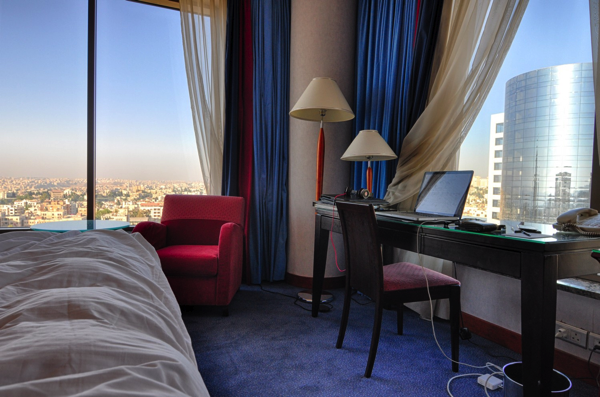
When shooting interiors with windows this is especially important. You don’t want whatever is outside to get blown out, so by making sure you’ve captured the full dynamic range you’ll be able to create a more realistic representation of the room and not lose any detail in the windows.
NewImage

One Final Thing to Keep in Mind

Every shot you take should have a purpose, and when you’re shooting, you should be very deliberate about that.

When you don’t have an idea of what you want the final result to be, it can be really easy to go overboard, and end with something that’s much more surreal than you were expecting.

If you’re shooting interior real estate, make sure you’re not losing detail outside. If you’re shooting landscapes, spend extra time adjusting for structure and saturation.

HDR is one of the very best ways to create stunning, realistic images, but only if you have the discipline to properly edit them.

Sean Ogle is an HDR photographer and entrepreneur. He specializes in helping people build small businesses that allow them to do more of the stuff they like to do. He also golfs way more than the average person probably should. DPS readers can grab his book 50 Tips to Improve Your HDR Photography for free here.

Post originally from: Digital Photography Tips.

Check out our more Photography Tips at Photography Tips for Beginners, Portrait Photography Tips and Wedding Photography Tips.

How to Create Realistic Looking HDR Photographs


Digital Photography School

 
Comments Off on How to Create Realistic Looking HDR Photographs

Posted in Photography


How to Prepare your Photographs for Stock Submission

10 Jul

Post processing is an important part of photography. No matter how good you are at photography, your commercial success depends entirely on your final product. Using Adobe Lightroom and other post processing software, you can transform your photograph into a truly remarkable commercial success. Stock Photography is one of the most proficient ways of earning money for photographers but it Continue Reading

The post How to Prepare your Photographs for Stock Submission appeared first on Photodoto.


Photodoto

 
Comments Off on How to Prepare your Photographs for Stock Submission

Posted in Photography


Rare Visions of the Past: 30 Old Color Photographs

03 Jul

[ By Steph in Art & Photography & Video. ]

Oldest Color Photos Main

The black-and-white shades of old photos can reduce the immediacy of the images, making them feel as if the people and events they captured existed so long ago as to be irrelevant to our current lives. But look at those same photographs in color, and you’ll marvel at how much is still the same. These 30 images were taken before color photography was widely available, powerfully preserving Nazi Germany, Depression-era America, early 20th century Paris and Russia during the Revolution.

Nazi Germany

Oldest Color Photos Nazi Germany 3

Oldest Color Photos Nazi Germany 1

Oldest Color Photos Nazi Germany 2

The vivid reds of the Nazi banners against a cheerful blue sky make these images of 1930s Berlin even more unsettling than they would be in black and white. Made available for the first time by the National Archives of Norway, the images ere taken by Thomas Neumann and kept hidden away for decades.

Other color photos from that era were taken by ardent Nazi Hugo Jaeger, who had access to Hitler himself and his upper echelon, capturing private moments of the Third Reich. Upon seeing his images, Hitler declared, “The future belongs to color photography.”

Early 1900s Paris

Oldest Color Photos Paris 1

Oldest Color Photos Paris 2

Oldest Color Photos Paris 3

Taken at the turn of the century, these photos reveal the Golden Age of Paris in all its charming beauty. Captured using Autochrome Lumiere technology, an early color photography process, the images give us a look at cityscapes, the Eiffel Tower, street scenes, museum displays and even an image of fireworks that looks like it could have been taken in the modern era.

America in the Depression Era

Oldest Color Photos Depression 1

Oldest Color Photos Depression 2

Oldest Color Photos Depression 3

The Library of Congress has preserved thousands of color photos taken by photographers working for the U.S. Farm Security Administration, and later the Office of War Information, between 1939 and 1944. These photos are particularly intriguing because they capture scenes from that period of time that we don’t often see – migrant workers and poor laborers working on farms, as well as those most affected by the Depression, living in Dust Bowl states like Oklahoma.

Next Page:
Rare Visions Of The Past 30 Old Color Photographs

Share on Facebook


[ By Steph in Art & Photography & Video. ]

[ WebUrbanist | Archives | Galleries | Privacy | TOS ]


WebUrbanist

 
Comments Off on Rare Visions of the Past: 30 Old Color Photographs

Posted in Creativity


4 Essential Ingredients for Great Landscape Photographs

27 Jun

When you are out in the field and you’re not sure if your the image you are making is any good, go through this quick mental checklist to see if your image contains these four essential ingredients.

1. Good Light

Light is by far the most important element of a landscape photograph. A photograph of a stunning location taken in harsh mid-day light will fall flat. A photograph of a boring location taken at that perfect moment when the light is magical will turn into a unique and memorable photograph.

I don’t actually believe that there is any kind of light that is inherently bad. You just have to know what to do with the light conditions that you are given.

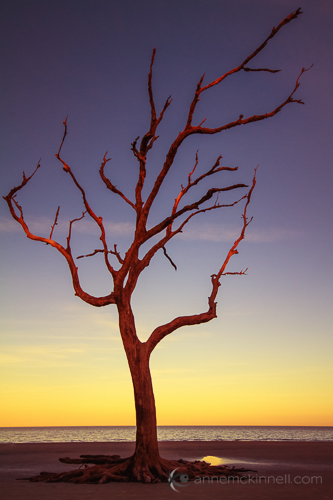
Driftwood Beach on Jekyll Island, Georgia, USA, by Anne McKinnell.

Driftwood Beach on Jekyll Island, Georgia, USA.

The golden hour light of sunrise and sunset are usually a favourite time for photographers. My favourite time is the blue hour: twilight. It’s hard to go wrong with these two types of light.

When you have a day with bright harsh sunlight, take advantage of the opportunity to look for interesting shadows.

The white sky of an overcast day is an excellent time to photograph close-ups.

And what about those stormy days? Those can be the best of all with the dramatic clouds that accompany a storm.

2. Main Subject

The next thing is to make sure you have a main subject. That may sound pretty obvious but keep it in mind. You may find yourself, as I sometimes do, making an image of some general landscape without a clear subject. It’s just some land with some trees and maybe some water. You need to decide what the subject is and that will help you make an image that is more compelling.

Little Finland, Nevada, USA, by Anne McKinnell.

Little Finland, Nevada, USA.

When I get to a location I like to think of what it is about that place that grabbed my attention and I make that the main subject. That’s not to say you cannot then turn your attention to another main subject later, but if you have too many subjects in your scene, none of them with be the main subject and your image will be too general to be interesting.

While we’re thinking about the main subject, what is it about that subject that you like? Having descriptive words in your head when you are making an image will help you focus and bring that description into the image. What is it about the lake you like? Is it the reflection? The shape? The peacefulness? How it is so clear you can see the bottom? Not only will this help you convey meaning in your image, but it will help you write about it later.

3. Clean Background

Just as important as the main subject is what is behind it.

Clutter and distracting elements can ruin an otherwise good image. This is where perspective becomes important. You must find an angle to photograph your subject so there are no distracting elements in the background. That can mean getting up high and shooting down on your subject so the background is filled with only one texture, or getting low and shooting upwards so the background is filled with only sky.

Try to isolate your subject and simplify the image as much as possible.

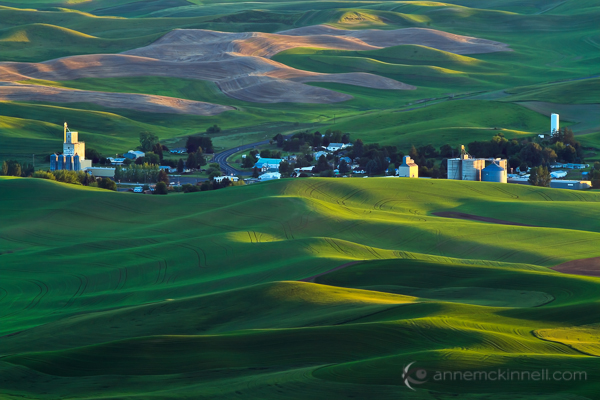
Steptoe Butte in the Palouse Hills of Washington, USA, by Anne McKinnell.

Steptoe Butte in the Palouse Hills of Washington, USA.

4. Interesting Composition

I like to think of photography as the opposite of painting. Painters start with a blank canvas and start adding things to it, whereas photographers are presented with a scene full of details and must start eliminating things from it until it contains only the most important elements of the scene. Then, those elements must be arranged to create an interesting graphic design.

Remember the building blocks of composition that you can rely on to create interesting graphic designs:

  • lines
  • curves
  • textures
  • patterns
  • shapes
  • colours
  • frames

The “trick,” if there is one, is to make all four of these things come together. It will take patience, perseverance, and a little luck.

Post originally from: Digital Photography Tips.

Check out our more Photography Tips at Photography Tips for Beginners, Portrait Photography Tips and Wedding Photography Tips.

4 Essential Ingredients for Great Landscape Photographs


Digital Photography School
 
Comments Off on 4 Essential Ingredients for Great Landscape Photographs

Posted in Photography


In-Depth QA: Martin Prihoda Photographs Priyanka Chopra for GQ India

04 Jun

Long-time readers will remember photographer Martin Prihoda, who was originally based in Vancouver before packing up and relocating to Mumbai. Or as he still often thinks of it, Bombay. (Martin, on the distinction: "You do business in Mumbai. You party in Bombay.")

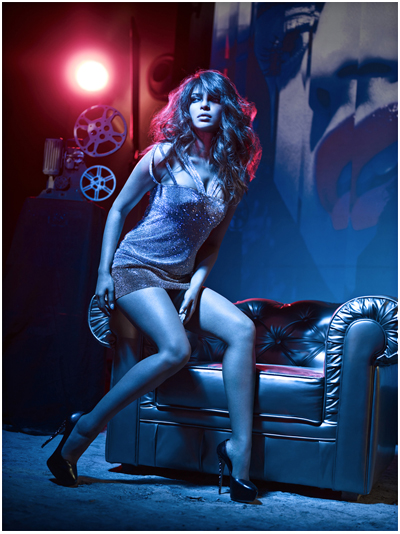
His recent cover shoot of Indian actress Priyanka Chopra for GQ India represents a major departure from his previous use of color and light. So I contacted him for a QA.

My questions (and his generous answers) follow, along with more images form the shoot. To see any image bigger (and other images from the shoot not seen here) click through to his blog, Atomic Safari.

Read more »
Strobist

 
Comments Off on In-Depth QA: Martin Prihoda Photographs Priyanka Chopra for GQ India

Posted in Photography


Vertical Horizon: Urban Photographs Turn City Upside Down

08 May

[ By WebUrbanist in Art & Photography & Video. ]

vertical horizon hong kong

Hong Kong has to be one of the most-photographed cities on Earth, but these shots present a rarely-seen perspective by documentarians or pedestrians … unless they look straight up.

vertical urban photo shoot

From Vertical Art Space: “Romain Jacquet-Lagreze is a French graphic artist with a Masters in multimedia and art from East Paris University. His interest in photography began during his period of working in Los Angeles and Tokyo, and subsequently blossomed into a passion after his arrival in Hong Kong.”

vertical urban built environment

His Vertical Horizon series emphasizes the vast scale of tall structures, but also the “heterogeneous character” of the built environment – traditional alongside modern, scrappy versus refined, small set against large.

vertical city landscape photos

While some of his images are taken from the top down, or at an angle, many of the most powerful ones are straight-up vertical captures. Somehow, these more predictable approaches lack the striking gravitas of their deceptively-flat  cousins.

Share on Facebook


[ By WebUrbanist in Art & Photography & Video. ]

[ WebUrbanist | Archives | Galleries | Privacy | TOS ]


WebUrbanist

 
Comments Off on Vertical Horizon: Urban Photographs Turn City Upside Down

Posted in Creativity


6 Easy Ways to Give your Photographs a Compelling Narrative

10 Apr

Everybody loves a good story. Knowing this fact is what separates a good photographer, from an exceptional one. With this knowledge, a photographer has a whole breath of tools at their command to trap the viewer, and cause them to be spellbound! Below I have listed 6 of the best ways to give your photographic approach the artistic edge of Continue Reading

The post 6 Easy Ways to Give your Photographs a Compelling Narrative appeared first on Photodoto.


Photodoto

 
Comments Off on 6 Easy Ways to Give your Photographs a Compelling Narrative

Posted in Photography


Elemental Elegance: 14 Amazing Photographs of Elements

16 Mar

[ By Delana in Gadgets & Geekery & Technology. ]

elemental photography

We all learned about the periodic table of elements in high school, but for most of us that’s where our knowledge of the elements ends. Japanese chemist and photographer R. Tanaka is showing the world just how beautiful the elements are with his fascinating set of elemental photographs.

elemental scientific photography

photographs of elements

The extreme close-ups of the elements show a seldom-seen world full of incredible shapes and unexpected colors. The crystalline structure of certain elements resembles trees, leaves, and other parts of the natural world at large.

gorgeous elemental photography

scientific photographs of elements

Other elements resemble alien shapes or objects from a long-lost civilization. From sulfur to phosphorus to colorful bismuth, the elements are all amazingly detailed and surprisingly photogenic. These are the building blocks of our world, and they are far more complex and lovely than most of us realize.

scientific elemental photography

Taken together, the series seems like a catalog of the most beautiful parts of our natural world. The gorgeous organic shapes are like the most intricate sculptures ever, captured in photographs to showcase their most delicate and ethereal qualities.

Share on Facebook


[ By Delana in Gadgets & Geekery & Technology. ]

[ WebUrbanist | Archives | Galleries | Privacy | TOS ]


WebUrbanist

 
Comments Off on Elemental Elegance: 14 Amazing Photographs of Elements

Posted in Creativity