RSS
 

Posts Tagged ‘Photographers’

Guide to Winning Guest Blogging for Photographers

25 Oct

Guest blogging is one of the marketing techniques that many bloggers and site owners make use of and serves at least two purposes. Firstly, it’s great exposure for the guest blogger, and secondly, it’s a new post for the site owner that they haven’t had to spend any time creating. You may be a brilliant blogger with huge experience and Continue Reading

The post Guide to Winning Guest Blogging for Photographers appeared first on Photodoto.


Photodoto

 
Comments Off on Guide to Winning Guest Blogging for Photographers

Posted in Photography


Photographer’s Guide to iPhone 6: Capabilities, Tips & Gadgets

08 Oct

After many months of waiting, the iPhone 6 and its big brother, the iPhone 6 Plus, have finally arrived! Apple made the decision to keep the 8-megapixel sensor for the iPhone 6 iSight camera, despite other smartphones which have up to 20-megapixel cameras. However, the iPhone 6 camera is not the same as the one you’ll find in the iPhone Continue Reading

The post Photographer’s Guide to iPhone 6: Capabilities, Tips & Gadgets appeared first on Photodoto.


Photodoto

 
Comments Off on Photographer’s Guide to iPhone 6: Capabilities, Tips & Gadgets

Posted in Photography


5 Tips for Newbie Landscape Photographers

07 Oct

It doesn’t matter if you are a seasoned photographer or a beginner, most photographers want to learn how to make great landscape images. Once you have shot a few hundred sunset shots and a few sunrise shots, you may think you know how it’s done. Then you get out into the wild on a crisp early morning, before sunrise, and try and get some dramatic mountain scene or amazing seascape. Suddenly it’s not that easy. Landscape photography requires more than simply setting up and waiting for the shot. Sometimes you have to go back to a scene four or five times to get the shot you want.
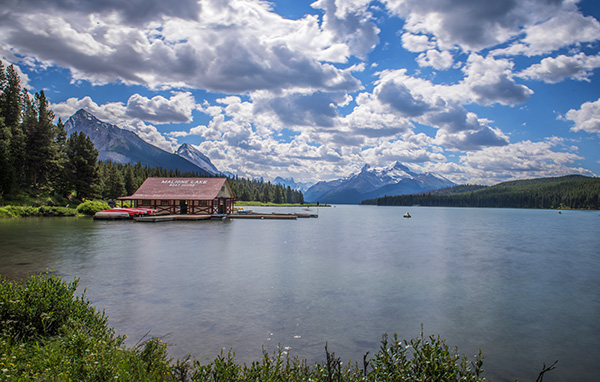
Canadian Rockies DL1_2975 LR

The majestic beauty of the Canadian Rockies

Landscape images can be seductive. When done properly, those viewing the image are transported to that place, they can feel the crisp mountain air or the warmth of the desert. So, you might be asking “How do I get those kinds of shots?” or “I think landscape photography is too difficult, am I good enough?” This article will answer these questions and a few more hopefully. The truth is, landscape photography is not difficult, but it does require dedication and passion. It will often require being up before sunrise, staying out late into the evening, or even early hours of the morning. It also requires good knowledge of your gear. Let’s take a look at how you can start getting better landscape images.

1. How to find good landscape photography locations?

Depending on where you live, you may have to drive somewhere to get some great landscape scenes. That may not be far, or you may need to get out of your city or suburb. What I often do before I visit a new place is google the area for dramatic landscapes. I will do a search like landscape scene canadian rockies and see what comes up. Sometimes you will see a vista that you didn’t know was in the area and you can start getting some ideas of what you will able to shoot.You can do the same on 500px or even Flickr; do a quick search for the name of the place you are visiting and see what comes up. From there you can narrow down what type of scene you want to shoot. Maybe you want to shoot from the mountain tops overlooking the city, a seascape, or even a forest scene.

Once you have some idea of what you want to shoot you then need to figure out the lighting. My go to tool is The Photographer’s Ephemeris. What I love about it is that I can simply drop a pin on a map and immediately see where sunrise and sunset will be, as well as moonrise. It gives me the direction of the sun and what time sunrise and sunset will happen. You can decide what time of day will work best for the shot you are planning.

2. What time of day is best for landscapes?

The Golden Hours are the best time for dramatic colours in landscape photography. You can also use blue hour to make some beautiful shots too; I prefer it for cityscapes, the city lights contrast beautifully off the blue sky. Golden Hour is your guide here. You will need to shoot at sunrise, sunset, or both, but plan beforehand though. There is nothing more frustrating than arriving at a scene, only to find out that as the sun is setting and your subject is in shade. If possible, visit the scene the day before at the time you anticipate shooting and watch where the light moves, that way you will know exactly where to set up your shot.
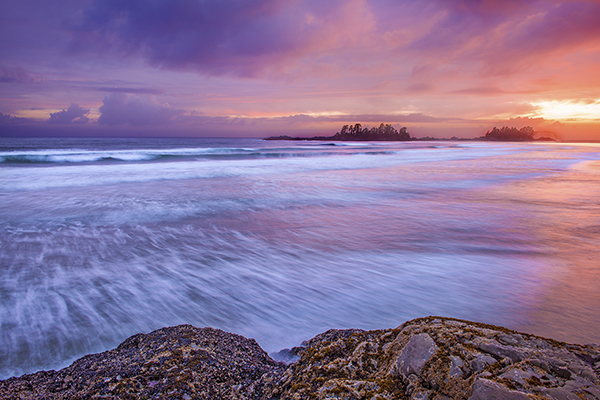
Moving water and a warm sunset make for a great landscape scene

Moving water and a warm sunset make for a great landscape scene

3. What camera gear do I need for landscape photography?

A Camera

Of course, this is a critical part of the whole formula, however, getting great landscape images does not require a 40 megapixel camera. You can shoot landscapes on any DSLR with 10 megapixels and more. The reason you don’t want to be shooting landscapes on a four megapixel camera is that you might shoot a great scene. Afterwards, you may want to print the shot nice and big and hang it on your wall, but if the resolution is too low, you may struggle to print a decent size image.

A Tripod

Yes, you will need a tripod. If you are shooting at sunrise or sunset, the amount of light will be minimal. You need to shoot at longer shutter speeds so you need to have your camera on some sort of support. A sturdy tripod will make all the difference. The beauty about a tripod is that once you have set up your composition, you can simply keep clicking away and not worry about composing your image each time, unless you move the tripod.

A Cable Release

I took a while to buy a cable release (remote trigger) when I first started photography, but once I had it, I wondered why I took so long to get one. A cable release allows you much more freedom. You can simply hold it in your hand, stand away from the camera and release the shutter whenever you want. Also, I like to observe the whole scene, rather than just looking through the viewfinder. I connect my cable release (I use a wired one), step away, and start shooting. Be sure that once you have locked focus to switch your camera to manual focus (or use back button focus),  especially if you are shooting at sunset. If you don’t, what can happen is that as night falls, the camera may struggle to lock focus and this could waste time. The best idea is to set your focus while the scene is still well lit, click it onto manual focus and then shoot away.

Filters

Graduated Neutral Density filters have long been the tool of choice for landscape photographers. This is still largely true, however, in recent years, many photographers have started to do more blended images. What that means is that you will expose for the bright part of the scene and take the shot, you will then expose for the dark part of the scene and take that shot. Very often, the bright part will be the sky and the dark part the foreground. Afterwards in Photoshop, you can then blend the two best exposed shots together. This is a very effective technique in tricky lighting conditions and sometimes can work better than a filter. I use a combination of both techniques. I will take some shots with a filter, then take some at different exposures and see what works best afterward.

The important thing is to make sure you get the best shots while you are out in the field. There is nothing worse than coming back from an early morning or late evening shoot to see that your images did not work out well because you exposed incorrectly. Getting the exposure right in the camera is key. It takes practice, so your first attempts may not be very dramatic. Keep working on it though, you will learn how to see the light, how to use the filters, and how to expose correctly if you practice enough.
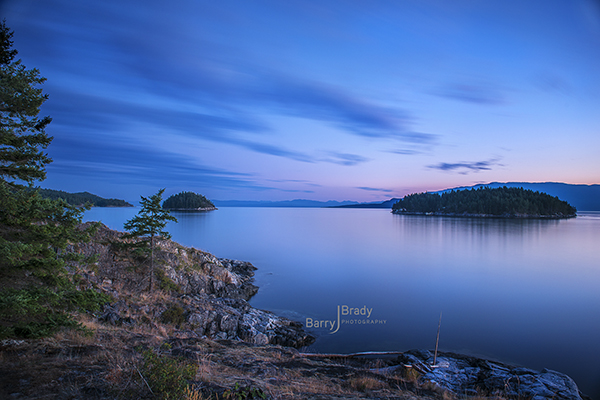
A neutral density filter was used to make the exposure longer  and to soften the water

A neutral density filter was used to make the exposure longer and to soften the water

Lenses

For the most part, a wide angle lens will work best for landscapes. You want to capture as much of the scene as possible in your shot to make the image look majestic and sweeping, and a wide angle lens creates that effect. Be careful not to use a fisheye lens; the distortion may not work well in a landscape shot. When you use a wide angle lens, it is a good idea to have foreground interest, that means, have something in the foreground that anchors the image. If you don’t have foreground interest, thats okay, you can still get some good shots. You will find though, the images with foreground interest tend to work better. You may also want to shoot landscape images with a zoom lens. This can work well, but not on every scene. Try it out, but if it’s not working, switch back to a wider angle lens.
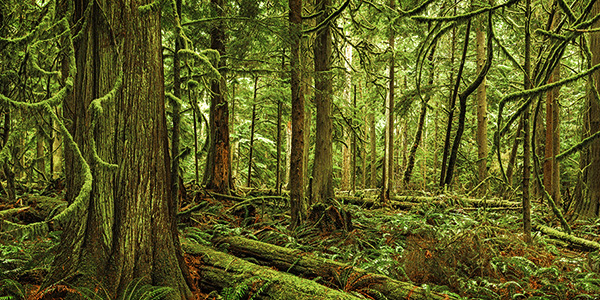
Stitched Panorama

This was not a wide angle shot, but it still works well

4. What settings should be used?

Exposure settings

There are no formulas for how to get the best landscape shot; there are a few guidelines though. First, you will generally want everything in your scene to be in focus. That means your aperture should be at f/8, f/11 or f/16. Once that is set, then you will need to set your shutter speed accordingly. You may have to take your shutter speed down to a few seconds to get a properly exposed shot. Thats okay, it adds to the image. Long exposures work really well when there is moving water or clouds in the scene; the water becomes soft and silky as do the clouds. Sometimes, the trees in your scene may wave in the breeze and the blur from that can work well too.

Another setting to look out for is your ISO. I recommend not to shoot in Auto ISO. This will create all kinds of problems especially at sunset. Your camera will see that the light is fading and it will simply bump up the ISO to compensate for the loss of light, this may result in digital noise, not very good for your landscape scene. Set your ISO to 100 (or as low as your camera goes) and keep it there. Only adjust your shutter speed to make sure you get the shot and of course, you will need to be on that trusty tripod!

White Balance

This is a creative choice. Start out shooting your scene in daylight white balance. Avoid using auto WB as this function will try and neutralize the colours in your scene. You want as much colour depth in your scene as possible, so start off with the daylight preset. You can then use the white balance creatively, for  example, using the Fluorescent preset will add magenta to your scene, Cloudy and Shade will add orange or red, and Tungsten will add blue. If you want to emphasize any of these colours in your scene, switch to the WB that will boost that. So, if you are shooting a sunset, use cloudy or shade to boost the reds and oranges. If these don’t work well for the scene, stick to daylight as it will render the colours in the scene correctly.

5. What’s next?

Once you return from your shoot, download your images and take a look through them. Normally, you will be doing this very late at night, so it is best to leave them until the next before you start editing them. Whatever your editing suite of choice is (Lightroom or Photoshop) you can get to work on them there. If you have shot some bracketed shots, you can do all that blending in Photoshop. The only guideline here is to take your time editing the images. Choose only the best images to be edited. You may find that you will shoot 100 images but only three or four are worth editing, thats okay. Edit only the best images and spend time making them look as dramatic as the scene you saw! For some quick tips on how to get your images to pop take a look at this article, you can also browse through this list of articles on Photoshop to get some in depth techniques.
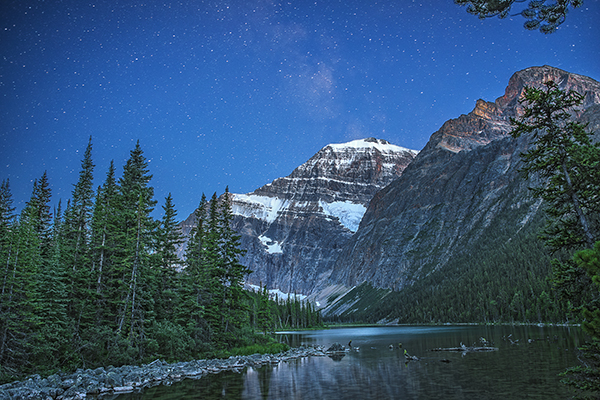
A blended shot, the foreground was shot earlier in the evening and the stars much later. This was blended in Photoshop afterwards

A blended shot, the foreground was shot earlier in the evening and the stars much later. This was blended in Photoshop afterward.

So, to wrap it all up, landscape photography is a combination of skill and patience. Skill takes time to develop, and patience enables you to wait for the right scene to unfold. In this fast paced digital life, there is something calming about shooting landscapes. You have no control over the weather, you have no control over the light, you simply have to be there, and press the shutter release if the conditions are right. The beauty is that, if the conditions do work out, the reward will be unreal. You will have some great images and you will have spent some quiet time in nature, enjoying a beautiful sunrise or sunset. The most important tip is to take your time. Don’t rush the process, don’t pack up until you are certain you cannot get a better shot than the last one you just made. Always go out and have fun, even if the light doesn’t play along or the weather is not what you hoped for, use it as a practice session and pretty soon, you will be capturing those breathtaking scenes with ease!

The post 5 Tips for Newbie Landscape Photographers by Barry J Brady appeared first on Digital Photography School.


Digital Photography School
 
Comments Off on 5 Tips for Newbie Landscape Photographers

Posted in Photography


Wilderness photographers caught up in U.S. Forest Service permit proposal

02 Oct

A proposed directive from the U.S. Forest Service that aims to protect federal wilderness from commercial exploitation may end up restraining photographers as well. Under the proposed restrictions, any individual or entity poised to reap commercial gain from photographing or filming federal lands in the U.S. will need a permit. Read more

Articles: Digital Photography Review (dpreview.com)

 
Comments Off on Wilderness photographers caught up in U.S. Forest Service permit proposal

Posted in Uncategorized


David Gibson: „The Street Photographer’s Manual“

29 Sep

Ein Beitrag von: Tilman Haerdle

David Gibson lebt in London und ist eines der Gründungsmitglieder des Straßenfotografie-Kollektivs in-public. Neben seiner eigenen fotografischen Aktivität leitet er regelmäßig in aller Welt Workshops zum Thema Straßenfotografie. Jetzt hat er mit „The Street Photographer’s Manual“* ein Buch vorgelegt, das Interessierten als Leitfaden zur Straßenfotografie dienen soll.

Als ich über den Blog von in-public vom Erscheinen dieses Buchs erfuhr, dauerte es nicht lange, bis ich mich entschloss, es mir auch zu kaufen. Da ich mich vorher intensiver mit der Interpretation von Straßenfotografie aus der Sicht der in-public-Fotografen auseinandergesetzt hatte, kam dieses Buch, zudem noch mit dem Versprechen, ein Handbuch der Straßenfotografie zu sein, genau zur rechten Zeit.

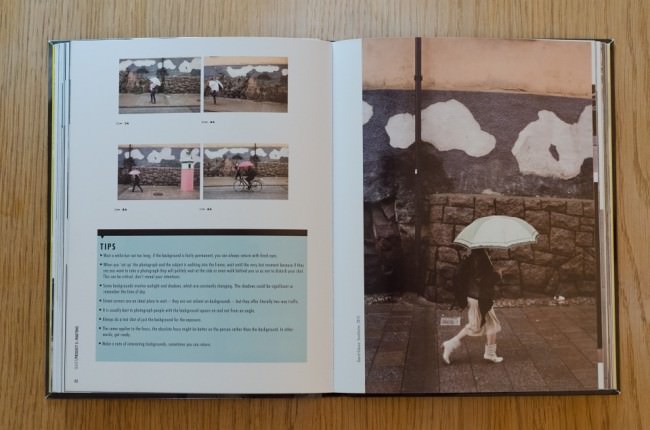
The Street Photographer’s Manual © David Gibson

In seiner tongebenden Einleitung befasst sich Gibson mit der Frage, was Straßenfotografie überhaupt ist. Rein formal kann man hier einige Regeln exemplarisch nennen:

  • Keine gestellten Bilder
  • Bilder sollten nicht zugeschnitten oder anderweitig wahrheitsverfälschend bearbeitet werden – es zählt das fotografierte Bild
  • Gegenstand der Straßenfotografie ist der Mensch und Anzeichen seiner Existenz in unserer Umwelt – es müssen also nicht notwendigerweise Menschen zu sehen sein

In der Fotografie geht es um Beobachtung, nicht um die Manipulation von Bildern.

Elliott Erwitt –

The Street Photographer’s Manual © David Gibson

Die Abgrenzung zu fast jeder anderen fotografischen Kategorie ist damit einfach möglich, er gibt jedoch zu, dass der Übergang zur dokumentarischen Fotografie fließend ist. Bilder, die diesen Regeln genügen, mögen dem Genre der Straßenfotografie zuzuordnen sein, doch gibt sich Gibson mit diesen elementaren Grundsätzen, die er durch Zitate wie das obenstehende in den Text einwebt, nicht zufrieden.

Bei mir blieb nach diesem Abschnitt das Gefühl, dass die Haltung des idealen Straßenfotografen schon fast spirituell zu nennen ist. Ob man diese Maximen in voller Konsequenz umsetzt, bleibt am Ende jedem selbst überlassen.

Jenseits des Formalen betont Gibson, dass die Beschäftigung mit Straßenfotografie zwingend erfordert, dass man jegliche Berührungsängste aufgibt, dass der Gedanke an Zurückweisung oder Ablehnung durch die fotografierten Menschen kein Hinderungsgrund sein darf, ein Bild zu machen. Für viele Einsteiger ist das ein harter Brocken, typischerweise ist man lange Zeit eher zu weit von den fotografierten Menschen weg.

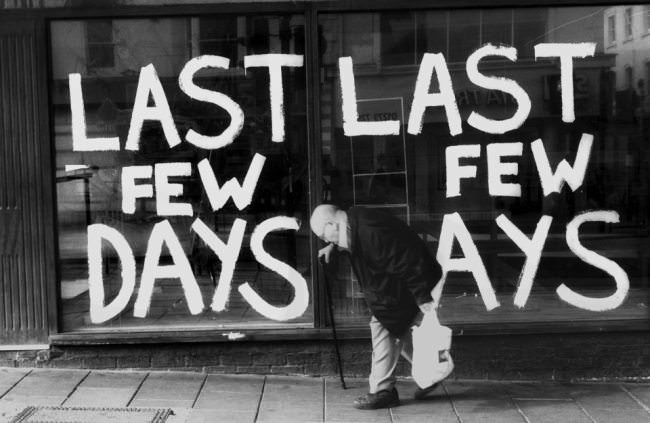
Ein gebeugt gehender alter Mann vor einem Schaufenster mit der Aufschrift „Last few days“.

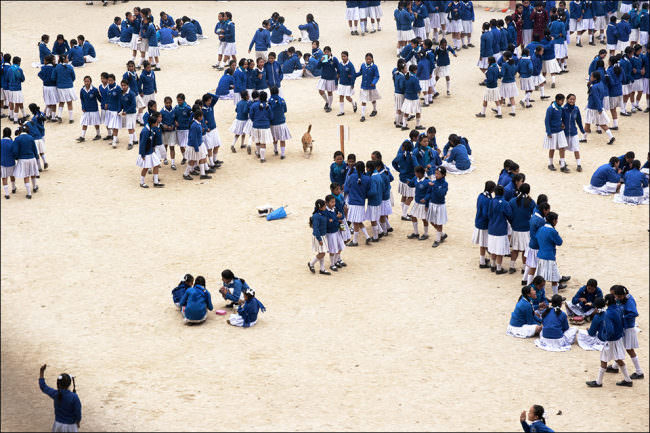
Viele Mädchen in blau-weißer Schuluniform.

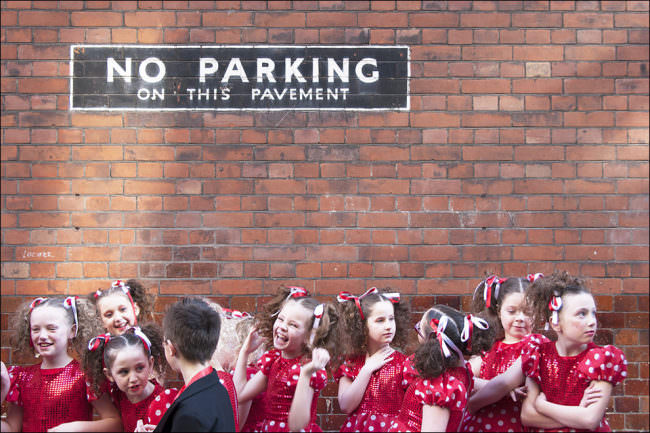
Viele Mädchen in roten Kleidern und ein Junge im Anzug vor einer Backsteinmauer mit der Aufschrift „No parking on this pavement“.

Gibson befasst sich ausführlich auch mit Fotografen-Kollektiven. Er identifiziert den Straßenfotografen als Einzelgänger, wenn er fotografiert, der jedoch den Austausch mit Gleichgesinnten sucht, um von der Rückmeldung anderer zu lernen und selbst durch das Wahrnehmen anderer Fotografien andere Sichtweisen zu erfahren.

Neben den exklusiven, kleinen Zirkeln von Kollektiven wie Street Photographers, in-public, Burn My Eye oder nicht zuletzt auch Magnum geht er auch auf den Austausch auf sozialen Plattformen wie beispielsweise Flickr und Facebook ein. Gerade letzteres identifiziert er als möglichen, aber nicht für jeden passenden Kanal zur Kommunikation mit Gleichgesinnten und Fans.

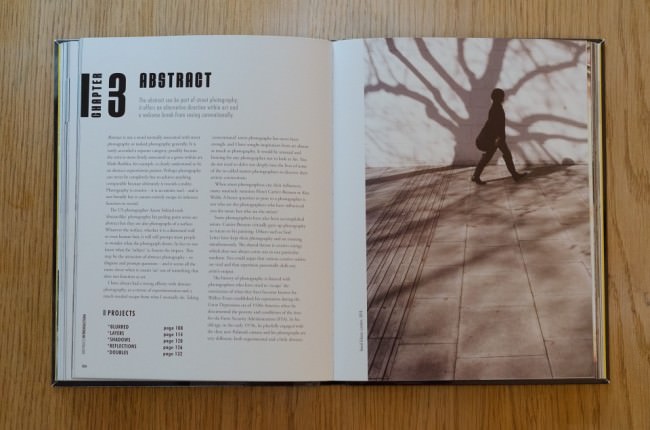
Das Buch und ein gutes Foto haben Gemeinsamkeiten: Struktur. Gibson gelingt es, durch die Unterteilung des Buches in grössere Kapitel, die die sehr knappen Titel „Busy“, „Quiet“, „Abstract“, „Still“ und „Subjects“ tragen, und Projekte, die die Maximen der Kapitel mit Leben füllen, das weite Feld der Straßenfotografie in begreifbare Abschnitte zu unterteilen.

Über allem liegt ein großer Bogen, das Buch beginnt mit viel Energie und wird immer langsamer, bis es im Kapitel „Still“ dann fast zum Stehen kommt. Das letzte Kapitel „Subjects“ markiert eher einen Abschluss und Ausblick, als noch wirklich zur Reihung der vorderen Kapitel zugehörig zu sein.

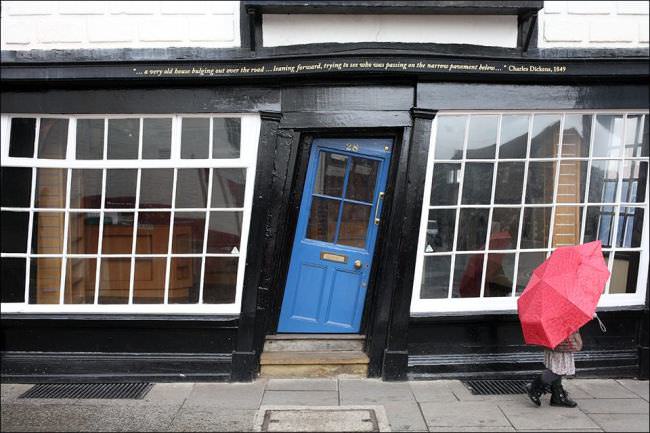
Eine Person mit rotem Regenschirm vor einer schiefen Fassade mit blauer Tür.

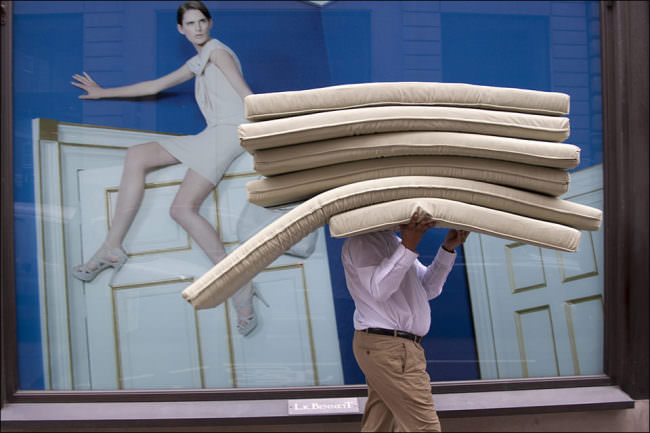
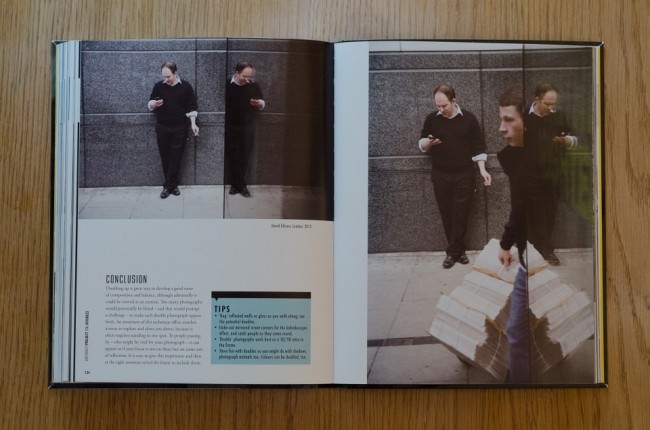
Ein Mann trägt einen Stapel Matrazen vor einem Bild einer Frau, die auf einer Tür sitzt.

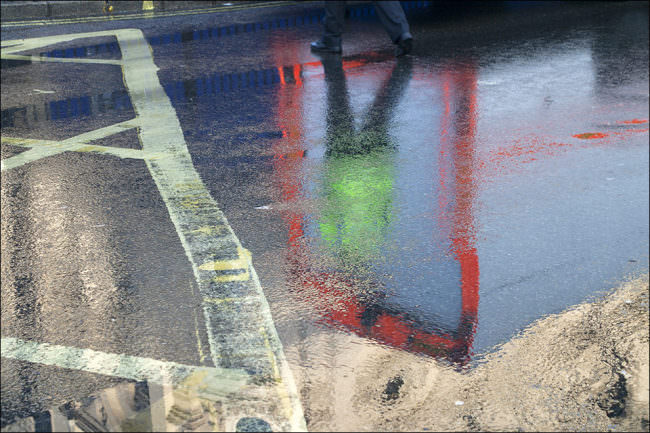
Bunte Spiegelungen auf nassem Asphalt.

Die Wahl seiner Projekte, wie beispielsweise „Order“, „Following“, „Blurred“ oder „Doubles“ mag willkürlich erscheinen, doch sie ergibt Sinn. Vor allem hat diese Strukturierung zumindest mich dazu gebracht, zu hinterfragen, was ich überhaupt darstellen will.

Die einzelnen Projekte führten dazu, dass ich mir beim Fotografieren Gedanken darüber gemacht habe, aus welchem Grund ich genau jetzt den Auslöser drücken will. Die Menge meiner Bilder wurde dadurch nicht weniger, da ich gleichzeitig versucht habe, Situationen aktiver zu bearbeiten und nach Möglichkeit von einer Szene mehr als nur ein Bild zu machen, wenn sie mir interessant erschien. Gibson selbst zur Wahl seiner Projekte:

Es ist wichtig zu wissen, dass die Straßenfotografie keine exakte Wissenschaft ist, dieses Buch also eher wie eine Auswahl verschiedener Gitarrenakkorde – und -einstellungen – sowie ein paar empfohlener Lieder zu verstehen ist.

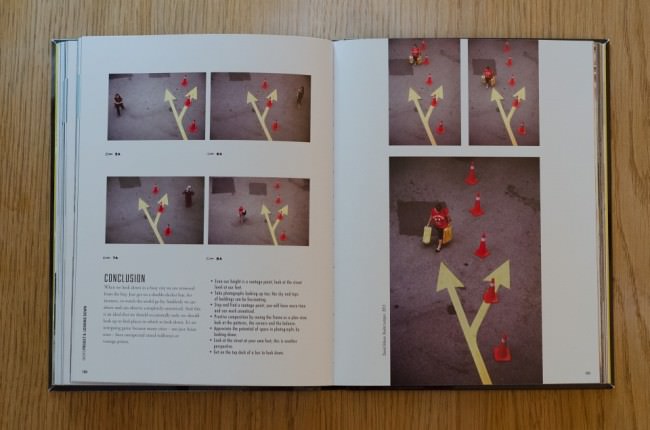
The Street Photographer’s Manual © David Gibson

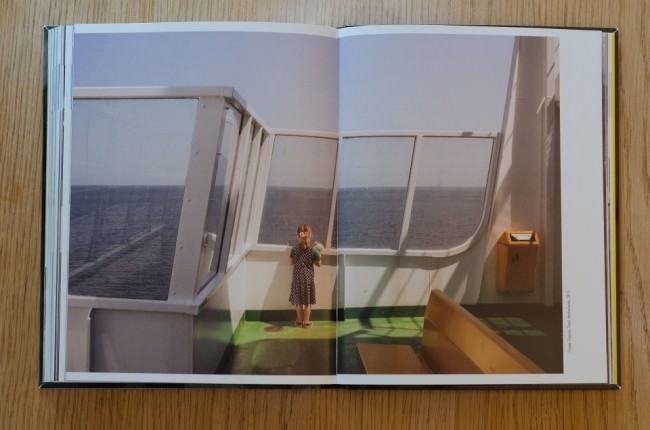
Während Gibson in der Beschreibung der einzelnen Projekte in der Regel auf seine eigenen Bilder zurückgreift und dabei auch nicht davor zurückscheut, zur Illustration des Auswahlprozesses schwächere Bilder zu zeigen, schiebt er zwischen jedes Projekt Kurzportraits von zum Kapitelthema passenden Fotografen ein. Die Bandbreite reicht hier von „Ikonen“ wie Saul Leiter über in-public-Kollegen wie Blake Andrews oder Matt Stuart bis hin zu nur echten Insidern bekannten Fotografen wie Oliver Lang oder Shin Noguchi.

Überhaupt bietet das verwendete Bildmaterial genügend Grund, das Buch auf einer zweiten Ebene zu verstehen, eben nicht nur als Lehrbuch, sondern als exemplarisch für Gibsons Sichtweise der Straßenfotografie.

Somit ist auch klar, dass das Buch nicht nur für Einsteiger in die Straßenfotografie interessant ist. Der Novize profitiert von vielen Anregungen, die einen einfachen Einstieg in dieses Genre ermöglichen. Als erfahrener Straßenfotograf hat man seine Freude am ausgewählten Bildmaterial und an der Möglichkeit, die Entscheidungsprozesse des Autors bei der Bildauswahl nachvollziehen zu können.

The Street Photographer’s Manual © David Gibson

Einziger Kritikpunkt ist die Erscheinungsform als, wenn auch großes, Taschenbuch. Eine etwas robustere Ausführung und Bindung mit Seiten, die auch aufgeschlagen bleiben, wäre schöner gewesen. Dafür ist der Preis mit unter 20 € für ein Buch in dieser Kategorie recht attraktiv.

David Gibson bietet regelmäßig Workshops zum Thema Straßenfotografie an. Termine veröffentlicht er auf seiner Website und auf Facebook.

The Street Photographer’s Manual © David Gibson

Informationen zum Buch

Autor: David Gibson
Taschenbuch: 200 Seiten
Verlag: Thames & Hudson
Sprache: Englisch
Größe: 23 x 17,8 x 2 cm
Preis: 17,30 €

* Das ist ein Affiliate-Link zu Amazon. Wenn Ihr darüber etwas kauft, erhält kwerfeldein eine kleine Provision, Ihr zahlt aber keinen Cent mehr.


kwerfeldein – Fotografie Magazin | Fotocommunity

 
Comments Off on David Gibson: „The Street Photographer’s Manual“

Posted in Equipment


Opinion: Why the death of the point and shoot benefits photographers

19 Sep

The death of the point-and-shoot compact has been disastrous for all the major camera manufacturers, but it’s not all bad news. Manufacturers  are clambering over themselves to offer the most attractive features to the last group of people willing to pay for a good camera, spurring the kind of innovation we’ve not seen in a long time. Find out why we think photographers are reaping the greatest benefits from the decline of the point-and-shoot. Read more

Articles: Digital Photography Review (dpreview.com)

 
Comments Off on Opinion: Why the death of the point and shoot benefits photographers

Posted in Uncategorized


8 Essential Tips for Travel Photographers

09 Sep

#1 Great travel photos are planned

Just think about what you are going to do, understand the scene, watch the light, the movement of people inside the image. When you take your pictures you have to consider all factors: from the time of day and the light, to the emotional preparation of the characters. It is true that luck exists, that someone at some time photographed just that smile, that you can collect stolen photos using a long lens. But few stolen photos have survived to become part of the history of travel photography.

DPS Plan your photos 8953

#2 The hair in your soup: An error for some people is something creative for others

A hair is a hair, but one thing is having it on your head and another quite different story is finding it in your soup. An error for some people is something creative for others.

Some questions customers usually ask me when traveling together are:

  • Is it okay if I use an aperture of f/8?
  • Hey, what is the right speed for this?
  • Does it matter if it comes out fuzzy?

My answer is always the same: It depends on what you want to do and what you want to highlight.

In sports photography you usually want to focus movement, and for this purpose you use high sensitivity (ISO) and high speed (shutter speed); but great photographers – specialists in their field – leave images fuzzy to emphasize movement, and get splendid results.

The important thing is that viewers of your photo understand the way you have used the error: if you intended to show movement, the viewer must understand it that way. Otherwise the result is just a blurred picture.

DPS  A hair 5636

#3 Eyes are the magnet of every photo

Look into people’s eyes, make personal contact. Eyes say a lot about people’s emotions, so much so that in many cultures people don’t want to look you in the eyes because they fear that you will be able to guess what they are thinking. Look for the light in the eyes – or total darkness. They are a magnificent photographic story line.

DPS  Eye contact

#4 One good photo a day – nothing else – nothing more

There is no rush. You don’t have to go off shooting like crazy. One photo a day is much more than the greatest photographers achieve when traveling. Don’t rush when shooting the photo. Take your time to take a good photo rather than waiting for luck to achieve what you are not capable of doing calmly.

#5 Forget about the long lenses if you are actually interested in real people on the street

The long lens is the perfect instrument to get away from people, and keep them at a distance. It isn’t the best method to create emotions and capture them in a photo. Get close. Look into people’s eyes. Create an emotion! The vast majority of Magnum’s photographers specializing in people prefer 24mm, 28mm or 35mm lenses.

If you want to grow as a photographer, use prime lenses: they force you to be fully aware of the frame and to take your time. If you are too far away, get closer. If you are too close, move away. I assure you that you will notice a tremendous improvement in your photos. If you don’t own fixed lenses, set your lens to the 35mm position using a band-aid.

#6 Many good pictures are made on your knees

Yes, on your knees. You’ll see how your whole concept of photography changes. I always get irritated by tourists taking pictures standing, from above, of a monk who is sitting on the floor. If you want people to have respect for you, the first thing you have to do is to show respect for others. Get down to their same height.

DPS  On your knees

#7 Find the best light and walk uphill or look for the worst light

Get up very early or wait for dusk. The best light appears with sunrise and lasts for the next 20 minutes or at nightfall. Walk where nobody else walks. In cities and villages, you will most certainly find more opportunities than most photographers, by going uphill, because most people look for what is easiest and requires less effort.

It always depends on what you want to show. Many great pictures are made at the worst moment: when the sun is at its zenith. This situation is exceptional for emphasizing shadows and highlighting hard heat conditions.

DPS  The worst Light 88

#8 Don’t act like a pro

Don’t work, just take photos. Many professional photographers who have lost their way in the struggle to create saleable images come to my courses. Try to keep up your freshness. Remember what it was that originally attracted you to photography. Don’t be afraid of taking photos your colleagues don’t like, and especially don’t be afraid of taking photos that don’t sell.

The post 8 Essential Tips for Travel Photographers by Harry Fisch appeared first on Digital Photography School.


Digital Photography School
 
Comments Off on 8 Essential Tips for Travel Photographers

Posted in Photography


3 Essential Photoshop Tools for New Portrait Photographers

29 Aug

Opening Photoshop for the first time is kind of like going on your first date; your hands sweat, your eyes glaze over, you completely lose all sense of direction and time. At least that was the scenario for me.

Portrait

Photoshop is an incredibly complex program that can be used as an artistic tool for positive enhancement, or gross distortion when it comes to portraiture. It’s all too easy to over-edit, get carried away with the sheer number of the tools at your fingertips, or attempt elaborate cover-up schemes for poorly shot images when first starting out. There are certain tools I grasped at the beginning of my learning curve, however, that were essential for editing clean and simple portrait images. Three years after my initial dumb-struck encounter, and countless hours of reading and practicing later, there are three tools that I still use in almost every photo I push through Photoshop. I’ve since discovered that users at every stage continually apply these tools to their photography workflow, as well.

Everyone has to start somewhere, so if you know nothing else about it yet, start by familiarizing yourself with these three Photoshop tools and you’ll build a solid foundation for taking your portrait photography editing to the next level.

1. Curves

The “S-curve” is one of the most common techniques in editing that packs an instant punch. I guarantee that a large majority of photographers working on everything from landscapes, to boudoir images, use this tool at some step in their Photoshop workflow. There are many different effects that you can achieve using the Curves tool, so the trick is to just play around with it a little to see what works best per image; there’s no specific settings within the tool that will always achieve great results. Much of it is about preference. You can achieve bold, colorful, contrast or a soft matte finish, simply by just readjusting the points on the curve. Extreme curves will give some strange discolorations, though, so for clean portrait editing, stick to small adjustments.

Curves

before-after-curves

2. Clone (stamp) Tool

Clonetool

This is especially helpful for fixing blemishes or small imperfections on skin, but has countless other applications as well. To use, just hover your mouse over the area you want to copy, press the Option key for Mac (Alt for Windows) and click. This “clones” the area you want to replicate. Release the option/alt key, navigate your cursor over the area you wish to fix, then click again. This will replace the “bad” area with the “good” area.

Lesson learned: don’t try to do all your skin smoothing with the clone tool. It will look way over-done and it’s far too time-consuming to match up every pixel. This was clearly not my smartest idea, I admit. Save yourself the trouble—there are better ways!

As I got better with my precision of this tool, I was able to use it for things like removing stray hairs, filling in patches of sand or grass, and other little pesky details as well. It really is a crucial tool to master.

Before after clone

3. Dodge and Burn

Dodge and burn

Dodge and Burn are technically two different tools but are often used in conjunction with each other. They are a power duo with subtle but impressive impact. I use it most commonly on eyes to give them that extra sparkle. To understand the function of each, think of it this way: when you “dodge,” you’re dodging the shadows in order to brighten your highlights and when you “burn,” you’re burning in the shadows and making them darker.

Befor eafter dodge burn

When I use these tools for eyes, I decrease the opacity to about 30% and “dodge” the iris, then I “burn” the shadows in the ring around it as well as the eyelashes. Again, make sure you don’t go overboard and give your client ghostly bright eyes, but a little adjustment goes a long way in those close-up shots! You can also use these tools to add color and contrast to skies, or add interesting light to specific areas of your image.

As with all the Photoshop tools, the successful edit hinges on the user knowing what to use when, and how to use in moderation. If you are a beginner, I hope this helps give you some direction about where to begin and rid you of the deer-in-the-headlights look for good!

The post 3 Essential Photoshop Tools for New Portrait Photographers by Leah O’Connell appeared first on Digital Photography School.


Digital Photography School
 
Comments Off on 3 Essential Photoshop Tools for New Portrait Photographers

Posted in Photography


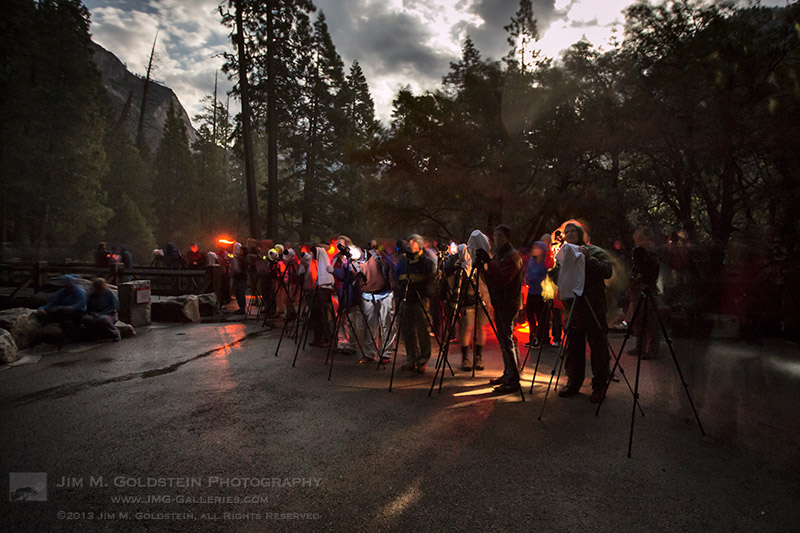
Moonbow Photographers in Action

22 Aug

Most years I venture out to photograph moonbows in Yosemite National Park, but this year I’m wondering if conditions will make it worth while. The extreme drought conditions across the state of California have resulted in low snow levels across the Sierras.  While I’m sure there will be enough snowmelt to keep Yosemite’s falls flowing the question is for how long and at what intensity. We’ll have to wait and see if there is a great but short period to photograph moonbows or if a slow and steady melt will result in consistently poor conditions. Time will tell.

Copyright Jim M. Goldstein, All Rights Reserved

Moonbow Photographers in Action

The post Moonbow Photographers in Action appeared first on JMG-Galleries – Landscape, Nature & Travel Photography.


Related Stories

  • Moonbow Photographers in Action – Enclosure
  • Return of Film: Snowy Sunrise at Gates of the Valley
  • Exhibit & Book Not To Miss – Carleton Watkins: The Stanford Albums
Feed Ads by FeedBlitz
powered by ad choices


JMG-Galleries

 
Comments Off on Moonbow Photographers in Action

Posted in Equipment


How to Photograph People: 7 Tips for Photographers Who Never Photograph People

19 Aug

lynseymattingly7

No matter what type of photography you specialize in or prefer, at some point you will find yourself having to photograph a human, or multiple humans. For favor, for fun, or because they share your genetic make-up or home address. If you own a fancy camera, there you will be at least once in your photographic life (but probably many more) where you will find yourself taking a portrait. Taking pictures of people is much different than beautiful mountains, scenic oceanscapes, historic architecture, butterflies, plates of food, or whatever it is that you usually photograph. Here are some basic tips to get the best portrait possible, especially for you if don’t usually see a human on the other side of the lens.

#1 Be realistic

Don’t overpromise your abilities or expect too much out of yourself. If someone asked me to take a picture of the snowcapped Rocky Mountains, which, as they have been my entire life, are right outside my window and something I know like the back of my hand, it would not be a good picture. I lack the skills for landscape photography, and more importantly, the interest. In my favor though, people aren’t likely to ask me to take a landscape image near like a non-portrait photographer will be asked to take portraits. Be upfront if you are willing to try it so that in the event it doesn’t go as planned, it won’t bother you enough to affect how you feel about photography in general.

lynseymattingly2

#2 Simplify everything

Backgrounds, clothing, props, light, etc. – simplify everything. Give yourself a running start out of the gate by having a solid foundation to work with. Look for flat or level backgrounds, horizon lines that don’t run through people’s heads, even lighting, and solid colors. I can’t emphasize this enough. The details which are the focus should only relate to the person, whether it’s a portrait of just the face or a full body, everything else should compliment this, or completely disappear to the viewer’s eye.

lynseymattingly5

#3 The easiest setting I know

At the risk of starting a heated discussion or this becoming a dumping ground for comments debating otherwise, I am going to share what I consider to be my best general setting and equipment advice.

First a few disclaimers: I shoot Canon and have no idea if these will translate to something else. Also, you must promise you will not be upset if this doesn’t work for you; sometimes finding what doesn’t work is just as important as finding what does (I tell myself this often to justify my many mistakes). Lastly, taking a great portrait is a lot more complicated than just one setting, but you have to start somewhere. There are likely to be people who disagree with my advice and I hope that this could start a supportive discussion on what has worked for others, rather than unhelpful commentary. Now, on with it…

  • Using natural light only if at all possible, dial in your ISO for something that makes sense; ISO 200 if it’s bright, 400 if it’s cloudy but even, 600 if it’s darker.
  • Shooting in Aperture Priority mode will allow you the most room for error, and is how many portrait photographers shoot regularly.
  • I like the f-stop to be at f/2.2 for one or two people, and f/2.8 or f/3.2 for groups of three or more (obviously this is speaking very generally and would best be used as a starting point to find what works for you). These settings will give you that “portrait blurry background effect” known as good bokeh.
  • Shooting in RAW will give you more wiggle room later when editing, though it takes more space on your memory card.
  • Use a prime lens if you can; I shoot nearly everything I take with my 50mm L1.2. This is a fancy lens no doubt, but any prime lens will typically be faster (have a larger maximum aperture) than a zoom lens, and with everything else going on, I find that using my feet as my zoom is one less adjustment my eyes and hands have to do.
  • I typically underexpose my images one stop. This works for me because I like to get the details and then bring it back up as needed myself in post.

This may not work for you, and there is absolutely no shame in running everything you aren’t sure about on auto. This doesn’t make you less of a photographer. All it means is that you think in this scenario, your camera – a magnificent piece of machinery that was created by thousands of professionals over decades with countless research, information, and experience – might guess better than you. That’s all.

lynseymattingly1

#4 Shoot from their eye level or higher, and at an angle

While photographing a person from below and not capturing an amazing view of 15 chins they don’t even have is possible, it’s not easy. For the best, most flattering set-up, shoot at their same eye level or above. I often have people kneel down and look up at me while I remain standing. As someone who has 20 different chins that only come out and play for pictures, I’m sensitive about this one and I find that even a child with the most adorable chubby cheeks and double chin is best photographed on a level playing field.

Additionally, taking pictures of someone straight on is both unflattering and uninteresting. Asking them to twist at the waist, shoulders, or neck and not face their body square-on, but rather follow their face’s direction will not only be much more forgiving to any subject (every single human has one eye that is smaller than the other – I’ve researched it), but will also make for a more professional finished portrait.

lynseymattingly3

#5 Don’t command a smile

Don’t command a smile, or instruct “cheese!” or say “hold still!”, or anything that could be interpreted as you attempted to force your feelings, or agenda, onto your subject. Even if you are going for a serious tone, and are trying to catch an image when they don’t realize or least expect it, you are much better off engaging them in conversation than setting up the moment and expecting a single second of utter perfection. A true portrait is genuine at its very least.

lynseymattingly6

#6 Resist the urge to run your final images through every Photoshop trick you’ve ever learned

If you don’t usually photograph people, the idea of playing around with editing tools might be fun. There are so many! This one turns their eyes into laser beams. This one makes their skin look like pure plastic perfection. It’s fascinating, I get it. However, if you’re wanting to stick to the basics, there isn’t much that needs to be done. Clean up blemishes with the Spot Healing Brush Tool, run a basic sharpen (I like the oddly named Unsharp Mask at 60%/2.0/0), and adjust your color and levels if needed. If I get stuck while editing an image, I ask those thousands of professionals what they think by running auto color, tone, and contrast just to see what it does. It nearly always takes everything too far, but it gives me an idea of where I want to go sometimes, just by showing me where I don’t.

lynseymattingly4

#7 Don’t try to turn it into something it’s not

Oh how I wish this image had a little more POW. A little zing. I’d love it if her entire face was showing and her hair was either more haphazard, or more perfectly fanned out. I wish there was more background showing. However, this is not a picture for a fashion magazine cover, but rather an image of my stepdaughter I took with my iPhone. We were on a walk and I spotted the purple flowers on the ground and told her to go lay in them. And because all of my stepdaughters do whatever I say, and think that I am totally magical, she raced right over and did it. Then an enchanted unicorn wandered up and flew us home. It’s drastically cropped, not necessarily for effect, but because she was giving me a snarl and wearing a very busy shirt. Is this a portrait? To me, it is. It’s a perfectly fine, authentic image and the subject herself loves it.

That is probably the most important thing when taking pictures of people.

Do you have any other tips you’d like to share? Please leave a comment below.

The post How to Photograph People: 7 Tips for Photographers Who Never Photograph People by Lynsey Mattingly appeared first on Digital Photography School.


Digital Photography School
 
Comments Off on How to Photograph People: 7 Tips for Photographers Who Never Photograph People

Posted in Photography