RSS
 

Posts Tagged ‘Photographer’

Hasselblad Foundation awards $110,000 prize to Dutch portrait photographer

12 Mar

$ (document).ready(function() { SampleGalleryV2({“containerId”:”embeddedSampleGallery_8867908717″,”galleryId”:”8867908717″,”isEmbeddedWidget”:true,”standalone”:false,”selectedImageIndex”:0,”startInCommentsView”:false,”isMobile”:false}) });

The Hasselblad Foundation has announced that Rineke Dijkstra is the winner of its 2017 International Award in Photography and the 1,000,000 Swedish Krona (approx. $ 110,000/€100,000) prize that goes with the award. The Dutch photographer specializes in portraiture and was recognized by the jury for her concentration on human themes in her photography in a time when portraiture is being watered down in some areas.

‘At a moment when the portrait image dissipates itself in an economy of narcissism and fractal celebrity, Rineke Dijkstra reminds us of the photographic portrait’s public potential,’ said Duncan Forbes, Chair of the Jury.

Dijkstra’s long-term projects depict people going through transitions and different stages of life, and members of the jury compared it to the portraits typical of Dutch painters in the 17th century.

The prize will be awarded in October at the Hasselblad Center in Gothenburg, and the center will house an exhibition of her work.

For more information see the Hasselblad Foundation website.

Press release

Rineke Dijkstra
Hasselblad Award Winner 2017

The Hasselblad Foundation is pleased to announce that Dutch artist Rineke Dijkstra is the recipient of the 2017 Hasselblad Foundation International Award in Photography to the sum of SEK 1,000,000 (approx. EUR 100,000). The award ceremony will take place in Gothenburg, Sweden, on October 9, 2017. A symposium will be held on October 10 in honor of Rineke Dijkstra, followed by the opening of an exhibition of her work at the Hasselblad Center, as well as the launch of the book Rineke Dijkstra – Hasselblad Award 2017.

The Foundation’s citation regarding the Hasselblad Award Winner 2017, Rineke Dijkstra:

“Rineke Dijkstra is one of the most significant contemporary artists working in photographic portraiture. Her large-scale photographs focus on the thematics of identity, typically capturing her subjects at moments of transition or vulnerability. Working in series, Rineke Dijkstra’s images recall the visual acuity of seventeenth-century Dutch portraiture, offering intimate portrayals of her sitters whilst also suggesting the situated aspects of their being. Rineke Dijkstra’s investigations in portraiture also include video. Her fixed-camera video studies yield images that appear to be moving photographs, revolutionizing our understanding of the fluid boundary between the still and moving image.”

The Hasselblad Award Jury that submitted its nomination to the Hasselblad Foundation’s Board of Directors, consisted of:

Duncan Forbes, Chair
Curator and writer based in London and Los Angeles, and Visiting Research Fellow at the Institute for Modern and Contemporary Culture, University of Westminster, London

Jennifer Blessing
Senior Curator, Photography, Solomon R. Guggenheim Museum, New York

Simon Njami
Curator and Writer, Paris

Esther Ruelfs
Head of Photography and New Media Department, Museum für Kunst und Gewerbe
Hamburg

Mark Sealy
Curator and Director, Autograph ABP, London

“Rineke Dijkstra’s photographs and films speak brilliantly to the intricacy of the portrait image: its embodiment in time; its capacity to reveal history; the contingency of the act of exchange between sitter, photographer and spectator; and, ultimately, photography’s revelation of the self. At a moment when the portrait image dissipates itself in an economy of narcissism and fractal celebrity, Rineke Dijkstra reminds us of the photographic portrait’s public potential,” notes Duncan Forbes, Chair of the Jury for the Hasselblad Award 2017.

“Rineke Dijkstra has developed an impressive body of work focusing exclusively on portraiture. Her close studies of the transformation of young people into adults are captivating. Furthermore, we are proud that Rineke Dijkstra is the first Dutch recipient of the Hasselblad Award,” states Christina Backman, Managing Director of the Hasselblad Foundation.

About Rineke Dijkstra
Over the past thirty years, Rineke Dijkstra has been established as one of the most prominent and internationally acclaimed artists working within the genre of photography and video portraiture. Her large-scale photographs and films often focus on children, adolescents, and young adults, offering subtle explorations of the formation and representation of identity. Rineke Dijkstra pursues an existential photography, but one that encourages us to focus on the exchange between photographer and subject and the relationship between viewer and viewed.

Among her earliest work from the early 1990s is a series of photographs depicting mothers and their newborn children moments after the delivery, as well as portraits of bullfighters directly after leaving the ring. In these works, Rineke Dijkstra aimed at capturing contradictory emotions – exhaustion, joy, fear, relief – experienced simultaneously in extreme circumstances. In the series Beach Portraits (1992–2002), she portrayed children and teenagers on beaches in Eastern and Western Europe, and the USA. As they are standing in front of her large format camera, she poignantly reflects their vulnerability and self-awareness during a period of transition from children to adolescents.

A notable characteristic of Rineke Dijkstra’s oeuvre is her long-term projects, photographing the same people over several years, witnessing the changes as well as the distinctive traits in their personalities. The most noted and still ongoing of these projects started in 1994, when Rineke Dijkstra encountered and photographed a six-year-old Bosnian girl named Almerisa Sehric in a Dutch refugee center for asylum-seekers. She has continued to photograph Almerisa every few years, documenting her transition into a teenager, then a young adult becoming a part of Dutch culture, and eventually becoming a mother.

Portraying an individual and her personal journey from being a refugee to being part of a new society, this body of work has been highly relevant for more than twenty years. It continues to resonate in the current political climate, contrasting the way in which asylum seekers and migrants are often merely described as numbers.

The series Olivier (2000–03) visualizes another kind of physical and psychological development, namely that of a young man becoming a soldier – from his enlistment with the French Foreign Legion through his years of service. Similarly Rineke Dijkstra has photographed new initiates to the Israeli army, such as the female soldier Shany, whom she photographed on her first induction day in uniform, until after she quit the army (2002–2003).

Since the mid-1990s, Rineke Dijkstra has expanded her unique modes of portraiture to video, offering sensitive studies of young people. Video works such as The Buzz Club, Liverpool, UK/Mystery World, Zaandam, NL (1996–97), and The Krazyhouse (Megan, Simon, Nicky, Philip, Dee), Liverpool, UK (2009), show teenagers from local clubs dancing to their favorite music in multi-channel video installations. The two video works I See A Woman Crying (Weeping Woman), and Ruth Drawing Picasso, both made in 2009 at Tate Liverpool, focus on children’s attentive response to artworks. In more recent video works from 2014, Rineke Dijkstra has filmed girls rehearsing at a Russian gymnastics school or auditioning for the prestigious Vaganova Ballet Academy in St. Petersburg, portraying humanity in beauty, and perfection.

Rineke Dijkstra was born in 1959 in Sittard, the Netherlands. She lives and works in Amsterdam, where she was educated at the Gerrit Rietveld Academy. A large retrospective of Rineke Dijkstra’s work was shown at the Solomon R. Guggenheim Museum, New York and San Francisco Museum of Modern Art in 2012. She has had major solo exhibitions at the Museum für Moderne Kunst, Frankfurt am Main (2013), the Stedelijk Museum (2012), the Jeu de Paume (2004), and the Art Institute of Chicago (2001). Her works have also been shown at Tate Liverpool (2010) and Bonniers Konsthall, Stockholm (2011). Her publications include Portraits, edited by Hripsimé Visser and Urs Stahel (München: Schirmer/Mosel, 2004) and Menschenbilder, edited by Ute Eskildsen (Göttingen: Steidl, 1998). Coinciding with the exhibition at the Hasselblad Center, a retrospective of Rineke Dijkstra’s work will be held at Louisiana, Museum of Modern Art, Humlebæk, in the autumn of 2017. Both exhibitions make up the first larger presentation of Rineke Dijkstra’s work in Scandinavia.

About the Hasselblad Foundation
The Hasselblad Foundation was established in 1979 under the terms of the last will and testament of Erna and Victor Hasselblad. The purpose of the Foundation is to promote scientific education and research in photography and the natural sciences. The Foundation’s annual international award for outstanding achievements in photography, awarded in 2017 to Rineke Dijkstra, is considered one of the most prestigious photography awards worldwide.

The Foundation holds a photography collection focusing on Hasselblad Award Winners and Nordic photographers. The Hasselblad Center is the Foundation’s exhibition space, situated in the Gothenburg Museum of Art. Further stipends for studies and residencies are awarded each year, and the Foundation itself is actively engaged in the field of academic and artistic research through the publication of books, the organization of symposiums, and other public events.

Articles: Digital Photography Review (dpreview.com)

 
Comments Off on Hasselblad Foundation awards $110,000 prize to Dutch portrait photographer

Posted in Uncategorized


5 Ways Patience Makes You a Better Photographer

09 Mar

It’s interesting that on websites like Digital Photography School you will find lots of articles on gear and photographic techniques, but far fewer on the mindset of the successful photographer. I’ve always believed that the key to understanding why people are successful lies in the way they think. For example, if you want to build a business that turns over a million dollars a year, then you would learn a great deal from talking with people who have already achieved that.

It’s the same with photography. One of the mindset skills that is important to cultivate is patience. It’s surprisingly difficult to do. Much has been written about our western culture of instant gratification and shortening attention spans. Many people are naturally impatient – it is natural to want results now rather than wait.

5 Ways Patience Makes You a Better Photographer

With all this in mind, let’s look at some of the ways that patience can make you a better photographer.

1. Patience gives you time to explore the scene

It’s so often tempting to find an interesting scene, take a few photos, then move on to look for something else.

But what if you waited? Maybe the right person needs to enter the frame to complete the composition. Perhaps you have to wait until somebody finishes what they are doing and moves out of the way. Maybe you just need to work the scene more, trying different angles and focal lengths and taking the time to look beyond the obvious.

Patience will help you do that.

For example, I had to sit and observe the scene below and wait for the right person to enter the frame. He finally did – and I got this photo.

5 Ways Patience Makes You a Better Photographer

2. Patience helps you build rapport with a model

Patience is a great characteristic to have in all dealings with people, but it’s especially helpful when photographing people. It takes time to gain somebody’s trust, to get to know them, and for them to open up and give you expressions that reveal character and emotion. It requires an emotional investment on your part, and it greatly helps if you are genuinely curious and interested in your model. An interesting conversation, a discovery of common experience or interest often leads to better, more revealing portraits.

You’ll get even better results if you work repeatedly with the same model. That requires the patience to build a friendship and working relationship, and the understanding that you might only start making your best portraits on the third or fourth shoot, not right away.

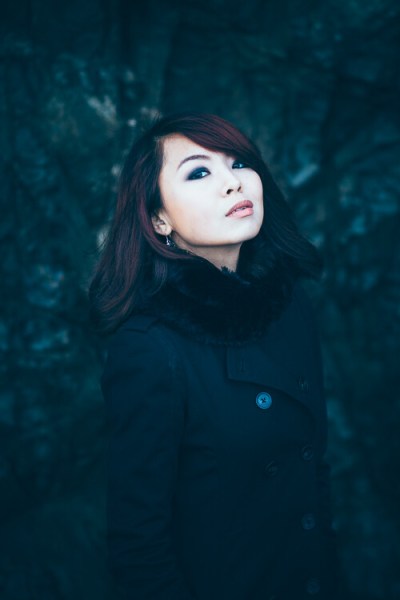
This is one of my favorite photos of this model, and it came on our third shoot. I would never have made it without the patience to build our working relationship.

5 Ways Patience Makes You a Better Photographer

3. Patience helps immensely with long exposure photography

Long exposure photography is different from other types of landscape photography in that the shutter may be open for as much as five or six minutes. This is a long time to wait, and it can be difficult to know what to do.

I like to use that time purposefully, when I can, by exploring different compositions and angles of view with my iPhone (whose camera has nearly the same angle of view as my Fuji 18mm lens). This way I am working on my next photo while the camera is exposing the frame.

If I am not thinking about other photos then I like to relax, breathe in the air, and contemplate the scene. It’s a chance to chill out and enjoy the view, rather than rush from one viewpoint to another.

5 Ways Patience Makes You a Better Photographer

4. Patience helps you find the best light

You’ll find the best light for most types of landscape, travel, and architectural photography at the beginning and end of the day, when the sun is low in the sky and golden light rakes across the scene. This is called the golden hour and it’s when most scenes look the most beautiful.

When you find an interesting place it takes patience to wait until the sun is lower in the sky, or discipline to wait and return when the light is better. The reward when you do so is beautiful light and more powerful images.

The light changes with the seasons as well as the time of day, and it takes patience to return to a scene at different times of year to explore it in different lighting conditions. I used to live near the beach where I took the photos below. Patience helped me build a series of images shot in different seasons and different types of light.

5 Ways Patience Makes You a Better Photographer

5 Ways Patience Makes You a Better Photographer

5 Ways Patience Makes You a Better Photographer

5. Patience helps you build a body of work over time

One of the easiest ways to improve your photography is to assign yourself projects that you can tackle over time. Projects are interesting because they focus your attention on a theme that you can explore in depth. This takes time, patience and sometimes determination. There may be times when things don’t go your way, when creativity doesn’t flow, or when people let you down. Patience helps you push through these negative events and go on to complete your project.

This photo was taken as part of a long-term project photographing circus performers.

5 Ways Patience Makes You a Better Photographer

Learn how I created this shot here: How to Create Beautiful Light Painting Images With an Illuminated Hoop

The long-term view

One thing that all these ideas have in common is taking the long-term view. It’s all about considering what you’d like to achieve in photography over the next few years and how you are going to do so.

If, for example, you decide that you would like to spend more time taking photos of people, then there is some hard work in front of you in terms of finding interesting models and arranging shoots. Patience is required, but so is the ability to look into the future and think about your photography related goals, and the body of work you are building. Thinking ahead like this helps you act purposefully and constructively. Good luck!


If you enjoyed this article and would like to learn more about the creative side of photography then please check out my ebook Mastering Photography.

The post 5 Ways Patience Makes You a Better Photographer by Andrew S. Gibson appeared first on Digital Photography School.


Digital Photography School

 
Comments Off on 5 Ways Patience Makes You a Better Photographer

Posted in Photography


Malta’s Azure Window, a photographer favorite, collapses in storm

09 Mar
Photo by Berit Watkin. Used under CC license 2.0

The Azure Window rock formation, familiar to photographers and Game of Thrones fans, collapsed into the sea in gale force winds early Wednesday.

Authorities say that the collapse was unavoidable, and no man-made intervention could have saved it. Part of the stack supporting the formation’s ‘bridge’ collapsed in 2012, and in 2016 officials imposed a fine for walking on the arch.

The loss of the rock formation is being mourned today by both locals and visitors who had photographed it in the past.

Have you photographed the Azure Window? Do you have memories of visiting it to share? Let us know in the comments.

Articles: Digital Photography Review (dpreview.com)

 
Comments Off on Malta’s Azure Window, a photographer favorite, collapses in storm

Posted in Uncategorized


Photographer Edin Chavez shares his favorite Miami Beach photo spots

26 Feb

$ (document).ready(function() { SampleGalleryV2({“containerId”:”embeddedSampleGallery_6758783119″,”galleryId”:”6758783119″,”isEmbeddedWidget”:true,”standalone”:false,”selectedImageIndex”:0,”startInCommentsView”:false,”isMobile”:false}) });

When a nagging desire to unleash his creative juices wouldn’t leave him alone, Edin Chavez left a successful self-made painting business to pursue photography. He’s now a Miami-based commercial photographer with clients like Nikon, National Geographic and Corona on his resume. Photography has brought him all over the world, but it’s Miami where he honed his skills and found his first go-to photo spots.

He recently shared ten of his favorites with Resource Travel, where you’ll helpfully find embedded Google Map widgets so you can hone in on exactly the right spots. Head over to the full post – after all, it takes an insider to tell you that the Best Buy parking garage is one of the best places for a sunset view of the city.

Read ’10 Best Photography Spots in Miami Beach’ at Resource Travel

Articles: Digital Photography Review (dpreview.com)

 
Comments Off on Photographer Edin Chavez shares his favorite Miami Beach photo spots

Posted in Uncategorized


Get your pictures in front a NASA photo editor by entering Astronomy Photographer of the Year 2017

24 Feb
Serene Saturn Winner Planets, Comets & Asteroids 2016 © Damian Peach (UK)

The Insight Astronomy Photographer of the Year 2017 competition is set to open next week offering space photographers the chance to have their work judged by a picture editor from NASA as well as to win the top prize of £10,000. The competition is open to professional and amateur photographers who can choose from nine categories in which to enter their images. Entry is free but restricted to ten images in total all of which need to have been taken since January 1st 2016.

The winner of each category will receive a £1500 prize while those in runner-up positions get £500 and Commended images win £250. There are an additional two special awards for The Sir Patrick Moore Award Best Newcomer and for Robotic Scope Image of the Year – both of which earn the photographer £750.

Joining the judging panel this year is photographer Rebecca Roth, the Image Coordinator and Social Media Specialist at NASA’s Goddard Space Flight Center in Maryland. She will judge alongside a collection of astronomers and astro-photographers as well as presenters from the BBC Sky at Night TV program. Photographer Wolfgang Tillmans is also on the judging panel.

The competition is open for entries from Monday February 27th and closes on Friday April 7th. It is run by the Royal Observatory Greenwich in the UK along with the BBC’s Sky at Night magazine. The Royal Observatory is a charitable organization and has some terms regarding additional uses beyond the realms of the competition that entrants should acquaint themselves with before submitting their work.

For more information see the Royal Museums Greenwich website and the terms and conditions page.

Press release

INSIGHT ASTRONOMY PHOTOGRAPHER OF THE YEAR 2017 ANNOUNCES COMPETITION DATES AND WELCOMES REBECCA ROTH OF NASA TO THE JUDGING PANEL

The Royal Observatory Greenwich, in association with Insight Investment and BBC Sky at Night Magazine, announces the dates for the Insight Astronomy Photographer of the Year 2017 competition – its annual global search for the most beautiful and spectacular visions of the cosmos, whether they are striking pictures of vast galaxies millions of light years away, or dramatic images of the night sky much closer to home.

Now in its ninth year, the hugely popular competition will open to entrants on Monday 27 February giving them a chance of taking home the grand prize of £10,000. Entrants will have until Friday 7 April to enter up to ten images into the various categories of the competition via www.rmg.co.uk/astrophoto.

The competition also welcomes Rebecca Roth of NASA to the judging panel. Based in Washington D.C. Rebecca is a photographer, photo editor and social media specialist, currently working as the Image Coordinator and Social Media Specialist at NASA’s Goddard Space Flight Center. Rebecca has worked at NASA for nearly 8 years and is charged with sharing amazing images of our universe with the media and with the public through channels such as Instagram, Twitter and Facebook. Prior to working at NASA, Rebecca worked as a photojournalist and photo editor for outlets including National Geographic Television & Film, Roll Call Newspaper, and USA Weekend Magazine. Of her latest role as a judge for the Insight Astronomy Photographer of the Year 2017, Rebecca has said, “At NASA Goddard, we build spacecraft and instruments, and invent new technology to study the Earth, the sun, our solar system, and the universe – a favorite part of my job is sharing images of these spacecraft and the images they produce with the public. This will be an exciting and unique opportunity to see the spectacular images of space captured by the public themselves and discovering their photographic interpretations of the night sky and beyond.”

Insight Astronomy Photographer of the Year 2017 has nine main categories:

– Skyscapes: Landscape and cityscape images of twilight and the night sky featuring the Milky Way, star trails, meteor showers, comets, conjunctions, constellation rises, halos and noctilucent clouds alongside elements of earthly scenery.

– Aurorae: Photographs featuring auroral activity.

– People and Space: Photographs of the night sky including people or a human interest element.

– Our Sun: Solar images including solar eclipses and transits.

– Our Moon: Lunar images including lunar eclipses and occultation of planets.

– Planets, Comets and Asteroids: Everything else in our solar system, including planets and their satellites, comets, asteroids and other forms of zodiacal debris.

– Stars and Nebulae: Deep space objects within the Milky Way galaxy, including stars, star clusters, supernova remnants, nebulae and other intergalactic phenomena.

– Galaxies: Deep space objects beyond the Milky Way galaxy, including galaxies, galaxy clusters, and stellar associations.

– Young Astronomy Photographer of the Year: Pictures taken by budding astronomers under the age of 16 years old.

There are also two special prizes: The Sir Patrick Moore Prize for Best Newcomer is awarded to the best photo by an amateur astrophotographer who has taken up the hobby in the last year and who has not entered an image into the competition before, and Robotic Scope, acknowledges the best photo taken using one of the increasing number of computer-controlled telescopes at prime observing sites around the world which can be accessed over the internet by members of the public.

Entries to the competition must be submitted by 7 April 2017, and the winning images will be showcased in the annual free exhibition at the Royal Observatory Greenwich from 14 September 2017.

Photographers can enter online by visiting www.rmg.co.uk/astrophoto and each entrant may submit up to ten images to the competition.

Articles: Digital Photography Review (dpreview.com)

 
Comments Off on Get your pictures in front a NASA photo editor by entering Astronomy Photographer of the Year 2017

Posted in Uncategorized


2017 Underwater Photographer of the Year: winning photos announced

19 Feb

2017 Underwater Photographer of the Year

‘Dancing Octopus’ Gabriel Barathieu/UPY 2017 

The winners of the 2017 Underwater Photographer of the Year compeition have been announced, and the photos are absolutely spectacular. The overall winner was Gabriel Barathieu with his image of an Octopus taken in the Lagoon of Mayotte on Mayotte Island.

He says, ‘In the lagoon of Mayotte, during spring low tides, there is very little water on the flats. Only 30 cm in fact. That’s when I took this picture. I had to get as close as possible to the dome to create this effect. The 14mm is an ultra wide angle lens with very good close focus which gives this effect of great size. The octopus appears larger, and the height of water also. Also, I didn’t need flash because I had lots of natural light.’

2017 British Underwater Photographer of the Year

‘Out of the Blue’ Nick Blake/UPY 2017

Kukulkan Cenote, Yucatan Peninsula, Mexico

Kukulkan Cenote on Mexico’s Yucatan Peninsula forms part of the Chac Mool system and is noted for the spectacular light effects as the sun penetrates the darkness. I left my strobes behind for the natural light shot I wanted and positioned myself in the shadows of the cavern. Moving my eye around the viewfinder, I could see that the rock outline of the cavern around me made for a pleasing symmetry and I adjusted my position to balance the frame. The light show flickered on and off as the sun was periodically covered by cloud and as it reappeared, I beckoned to my buddy and dive guide, Andrea Costanza of ProDive, to edge into the illumination of some of the stronger beams, completing the composition. My journey from diver to underwater photographer has brought many amazing photographic opportunities and I feel humbled and privileged that this image has achieved such recognition.

2017 Up and Coming Underwater Photographer of the Year

‘Oceanic in the Sky’ Horacio Martinez/UPY 2017

The Brothers, Egypt

This was my first Red Sea experience, and my first live-aboard-based photo workshop, so everything was interesting… but arduous. We were on the last dive of the day and I ventured a tad deeper to get closer portraits of the Oceanic White Tips, when I noticed this shark patrolling in the distance. I took a few shots to expose for the sun beams and the surface, and was pleased by the dreamlike effect. Oceanics are great subjects for close ups as they are anything but shy. Yet, every now and then it is great to try and capture their apparent loneliness, their wandering, and their independence in the big blue.

2017 Most Promising British Underwater Photographer

‘Orca Pod’ Nicholai Georgiou/UPY 2017

Tromso, Norway

Orcas are easily the most beautiful, intelligent and confident animals I’ve ever had the honor of spending time with. This photo was taken during an amazing week freediving with wild Orca in Norway. The days are quite short in winter and the water was around 5 degrees but we wore a thick wetsuit and of course with Orca around, the cold was quickly forgotten. The light had a really nice colour from the setting sun as this graceful pod of Orca swam by nice and close. It was a moment which will be hard to top and I’m glad to have this image to share it.

2017 Underwater Photography Awards

‘Frozen Hunting’ Fabrice Guerin/UPY 2017 

Andenes, Norway

Judge’s comments:

A stunning behavioral image of a humpback in shallow water scattering herring taken in very tough conditions. The photographer did very well in very dark waters to record this breath-taking scene sharply.

2017 Underwater Photography Awards

‘Finally Whalesharks’ Patrick Neumann/UPY 2017

Gorontalo, Indonesia, Central Sulawesi

Although I have been diving for more than 30 years with over 3000 dives, I had never saw a Whaleshark before. When I was working on a liveaboard in Thailand twice the whole boat saw one but not me and my group. Among my friends it was already a running gag. If you want to see Whalesharks don`t dive with Patrick. On our latest trip through Indonesia a friend told me that recently there are some around the Gorontalo area so we changed our plans and went there to end my whaleshark dilemma. We drove out to the divesite and everything was perfect. Very good visibility, no waves and a bright sunny day. Now only the big guy had to be there to make it really happen. When we entered the water there was not one Whaleshark… but 6 of them! You can imagine my happiness.

2017 Underwater Photography Awards

‘Views at Dawn’ Pasquale Vassallo/UPY 2017

Miseno, Gulf of Naples, Italy

Over the past few months, my photographic work has focused primarily on the large presence of species of jellyfish Rhizostoma pulmo, in the Gulf of Naples. In this picture a couple of crabs, Liocarcinus vernalis species, are its tenants.
When the jellyfish rub the sandy seabed, the crabs jump on it and get carried to different areas.

2017 Underwater Photography Awards

‘Humpback whale feeding on krill’ Jean Tresfon/UPY 2017

A few miles offshore from Hout Bay, Cape Town, South Africa

Every summer hundreds of humpback whales gather off the Cape Town coast in a massive feeding aggregation. Working as part of a film crew I was privileged to have a chance to photograph this phenomenon. Although the water visibility was really good, inside the krill patch it was much reduced. Without warning the whales appeared just metres away with their pleats distended as they surfaced with huge mouthfuls of krill. Realising that they must be feeding deeper down I descended into the darker water to find the thickest concentration of krill. Suddenly a humpback appeared right in front of me, its huge mouth wide open as it sieved the water for the tiny crustaceans. I took several images before it disappeared into the gloom and then I was surrounded by a multitude of massive bodies as the rest of the pod took its turn to feed. Not a little intimidating! 

2017 Underwater Photography Awards

‘Big Red’ Guglielmo Cicerchia/UPY 2017

Giannutri Island, Italy

During the dive I found a fishing net in which many fish were trapped still alive. They were struggling to get free. Using a slow shutter speed and zooming during the exposure I wanted to emphasize the attempt to break free from the fishing net. 

2017 Underwater Photography Awards

‘Imp of darkness’ Damien Mauric/UPY 2017

Isla Fernandina, Galápagos Islands, Ecuador

On his visit to the Galapagos islands, Charles Darwin was revolted by the animals’ appearance, writing: “The black Lava rocks on the beach are frequented by large, disgusting clumsy Lizards. They are as black as the porous rocks over which they crawl & seek their prey from the Sea. I call them ‘imps of darkness’. They assuredly well-become the land they inhabit.” The marine iguana are all but monsters. Endemic to the Galapagos, it’s a rare privilege to share a moment underwater with this animal now considered as an endangered species.

2017 Underwater Photography Awards

‘Green Turtles in the rays’ Greg Lecoeur/UPY 2017

Tenerife, Spain

During a diving trip to Tenerife, I came across these green turtles. It was early morning and the sunbeams pierced the surface. I adjusted the setting of my camera and I waited for the turtles to come close enough to trigger my camera. After a little while, the turtles were circling around us and it was a great opportunity to photograph them.

2017 Underwater Photography Awards

‘Clownfish Swirl’ Katherine Lu/UPY 2017

Semakau, Singapore

I shot this photo in the local waters of Singapore where the visibility is 3m on average. Scuba divers I know are always surprised that I dive there and most don’t even know there is great macro right off our shores. I wanted to do something different and turn a nudibranch commonly found in our waters into a piece of art. I have always been fascinated by bubbles and the inspiration for this photo came about when I was reading about aquatic plants that produce oxygen bubbles from photosynthesis. The images of the bubbles sticking to the green leaves had an abstract quality and hence came the idea to create Nudibranch Art.

2017 Underwater Photography Awards

‘Prey?’ So Yat Wai/UPY 2017

Anilao, Phillipines

This photo was shot during a blackwater dive in Anilao. Even though the larvae mantis shrimp (left) is very small, it still a predator which uses its raptorial appendages to hunt. Has it spotted the prey and is ready to pounce?

2017 Underwater Photography Awards

‘Competition’ Richard Shucksmith/UPY 2017

Shetland Isles, United Kingdom

I was out off the coast making images for SCOTLAND: The Big Picture – a project about re-wilding that produces images to amplify the case for a wilder Scotland. Hundreds of gannets were circling the boat looking for the fish that were being thrown over the side. Suddenly a single bird dives and the others seeing it as an indicator and 20, 30, 40 birds are diving at once. Because of this behaviour competition between gannets is always going occur creating several gannets diving for the same fish. I could hear the birds as they hit the water right above my head just before they appeared in front of the camera. A great experience. 

2017 Underwater Photography Awards

‘Capturing History’ Tanya Houppermans/UPY 2017

Wreck of the U-352, North Carolina, US

An underwater photographer lines up a shot of the conning tower of the wreck of the U-352 off the coast of North Carolina, USA. During WWII, German U-boats patrolled the waters just off the east coast of the U.S. In May 1942 the U-352 fired upon the USCGC Icarus but missed. The Icarus retaliated, and sunk the U-352 in 120ft of water 26 miles southeast of Beaufort Inlet. During this particular dive the visibility was especially good, so my goal was to capture wide angle images with as much of the wreck in the frame as I could get. As I was lining up the shot, a fellow photographer was focusing on the conning tower, so I decided to include him in the image to give a sense of scale to the wreck.

Articles: Digital Photography Review (dpreview.com)

 
Comments Off on 2017 Underwater Photographer of the Year: winning photos announced

Posted in Uncategorized


5 Creative Exercises to Help Make You a Better Photographer

13 Feb

It’s tempting to think you need a new piece of photography equipment to become more creative. While sometimes it’s true, (macro photography, for example, is much easier with a macro lens) creativity works best within restraints.

Creative photography exercises

So, how do you become more creative without buying more gear? Here are some ideas to take you out of your comfort zone and give you new skills to master.

1. Find a new subject

Every photographer has a favorite subject and others that they photograph rarely, if at all. For me, that would be any kind of still life, including food photography. The first challenge is to find a new subject. It should be something that you haven’t photographed before. Even better if it helps you learn new photography techniques.

For example, are you a landscape photographer who has never taken photos at night? Then set yourself the challenge of taking some great photos of the night sky. You won’t need any extra gear – just the desire and drive to learn a new skill.

Once you’ve found a new subject ask yourself the question, “How can I take this to the next level?”

For instance, in my case (using the earlier example of food photography) it’s easy to go to a restaurant or cafe, order some food, and take a photo of it. There’s hardly any work involved as it’s the chef’s responsibility to make the dish look good, as this photo below shows.

Creative photography exercises

It’s a lot harder to do the same yourself at home. Preparing the dish from scratch and presenting it properly so it looks delicious is much more difficult. But you’ll learn a lot more about food photography from the process.

2. Find themes and projects

A theme is a connection between photos. One way to identify the themes running through your work is to pick your favorite 10-20 photos taken in the last 12 months. Examine your choices analytically. What subjects are you photographing the most? What lenses do you use most often? Are your favorite photos color, black and white, or a mixture of the two?

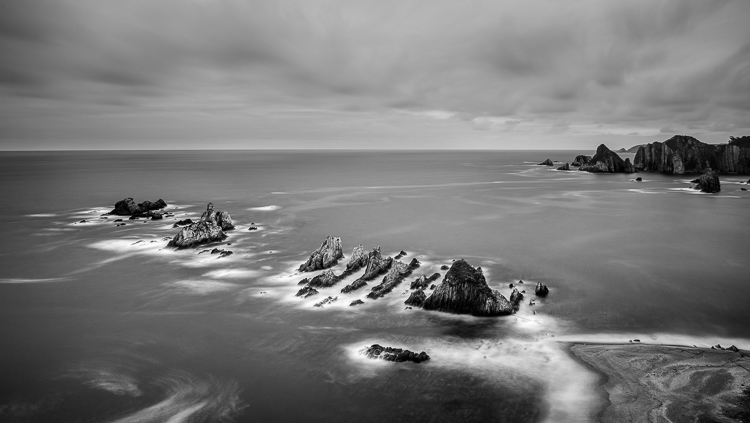
You are looking for themes that help you decide what you want to photograph next. When I did this exercise I saw that two themes dominated – long exposures and street photography. This is a long exposure photograph from Spain.

Creative photography exercises

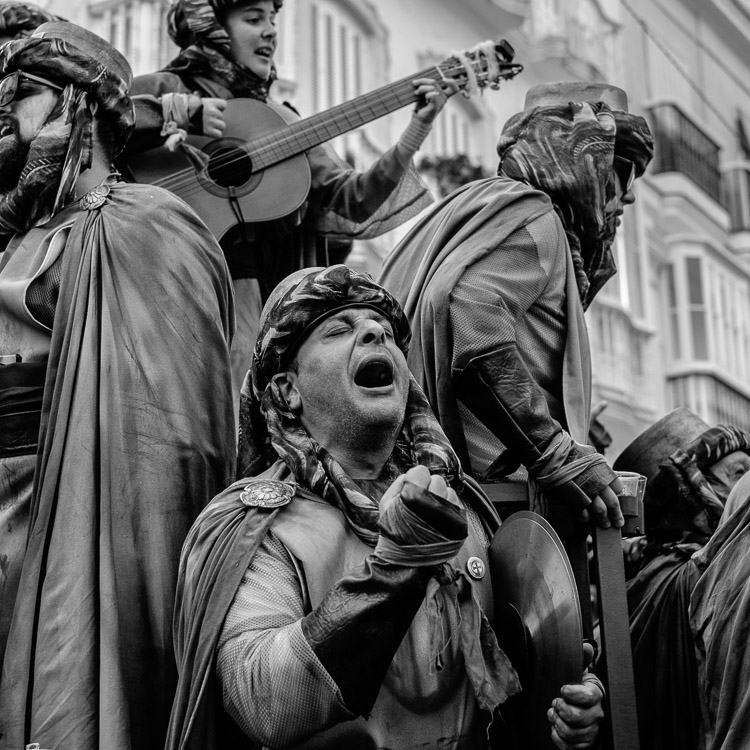
This is a street portrait taken at Carnival in Cadiz.

Creative photography exercises

As a result, this coming year I will find some new locations for long exposure photography, and more cultural events to photograph. The idea is to build a body of work around an interesting theme. The project will grow as you pursue it.

3. Find new light

Let’s say you are a portrait photographer who works in natural light. You like to be on location with your models at the end of the day and work during the golden hour.

If this is you, what other types of light could you shoot in? If you normally shoot outdoors, what about an indoor location? If you like working on sunny days, how about a cloudy or rainy day?

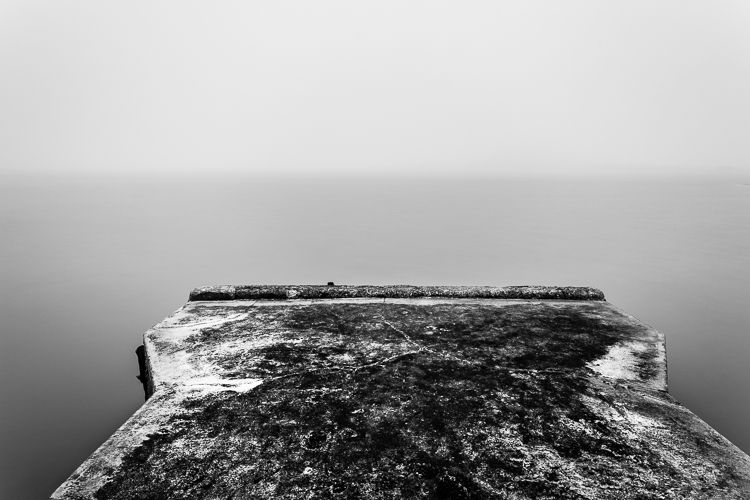
I lived in Wellington, New Zealand for several years. There were only two or three foggy days during that time. It was a new type of light for me – here’s one of the photos I took in the fog.

Creative photography exercises

You can apply this to any genre of photography. Think about the type of light you prefer to work in, and then change it around by trying something different.

4. Use the wrong lens

The earlier exercise of picking your best images from the previous 12 months should highlight the lenses you prefer to use for your favorite subjects. What happens if you try something different?

The idea here is to use the wrong lens for the job, or at least a lens you’re not accustomed to using.

Imagine, for example, that you are a photographer who only ever uses telephoto lenses to shoot portraits. What happens if you use a wide-angle lens instead? How can you make it work? Yes, the portrait will look horrible if you get too close to your model with a wide-angle lens. But what about taking a more environment approach? The model becomes part of the scene and the wide-angle lens helps you capture it. The exercise will force you to see differently and find creative ways to use unfamiliar equipment.

But what about taking a more environmental approach? The model becomes part of the scene and the wide-angle lens helps you capture it. The exercise will force you to see differently and find creative ways to use unfamiliar equipment. I made this portrait with a 24mm lens. It’s okay, but the distortion means it probably wasn’t the best lens to use.

Creative photography exercises

Here’s another photo, taken with the same lens. I used it to photograph the model in a natural environment and it worked much better.

Creative photography exercises

Conclusion

Hopefully, these creative exercises will help you become a better photographer. Feel free to adapt and combine them. For instance, what happens if you shoot a new subject with the wrong lens in a new type of light? You won’t know until you try it, but you’ll have fun finding out.


If you enjoyed this article and would like to learn more about the creative side of photography then please check out my ebook Mastering Photography.

googletag.cmd.push(function() {
tablet_slots.push( googletag.defineSlot( “/1005424/_dPSv4_tab-all-article-bottom_(300×250)”, [300, 250], “pb-ad-78623” ).addService( googletag.pubads() ) ); } );

googletag.cmd.push(function() {
mobile_slots.push( googletag.defineSlot( “/1005424/_dPSv4_mob-all-article-bottom_(300×250)”, [300, 250], “pb-ad-78158” ).addService( googletag.pubads() ) ); } );

The post 5 Creative Exercises to Help Make You a Better Photographer by Andrew S. Gibson appeared first on Digital Photography School.


Digital Photography School

 
Comments Off on 5 Creative Exercises to Help Make You a Better Photographer

Posted in Photography


Create a Portfolio That Shows the Photographer as Well as the Photographs

13 Feb

portfolio-review

When it comes to telling their own story in images, photographers often struggle. While their photos and galleries may be memorable and unique their websites and portfolios are too frequently dull, derivative and, to a buyer who sees one slideshow after another, instantly forgettable. Instead of showing who they are, the websites become a collection of what they’ve shot, a series of images with no connection to the person who took them or the photographer the buyer will be booking.

According to one expert, it’s only when photographers see their websites and their portfolios not as marketing devices intended to show their skills and range but as autobiographies — as an opportunity to tell their own stories and show who they are — that they stand out and win jobs.

“The best portfolios, to me, are materially self-portraits regardless of the subject matter,” says Allegra Wilde. “This is not about a romanticizing the suffering or narcissistic artist. The kind of imagery I am talking about is much less likely to be forgotten by the viewer, or in the case of the pros, the buyer.”

For Wilde, who started her career selling ad space at Workbook before becoming the company’s Director of Talent and Agent Branding, a portfolio (and now a photographer’s website) should flow. The presentation should have a rhythm, match the work and, most importantly, tell the story of the photographer.

It Takes a Hero to Be a Successful Photographer

That’s not something that all photographers want to do — or think of doing as they create a site to pitch for work. Building a website that doesn’t just show pictures but shows who you are means putting yourself as well as your images on display. The personal projects become more important as they reveal the questions you address in your images, the aesthetic that attracts you, the messages you want your photos to communicate and the way you want them to speak. Buyers are invited to judge the photographer and their interests as easily as they judge the quality of their work. It’s not a display that makes all photographers comfortable.

“The most successful photographers (or any other artists for that matter), always take some kind of leap into discomfort,” says Wilde. “Usually this level of discomfort is rooted in their own personal ‘exposure,’ or fear that no one will like their images or hire them. These heroes of photography, (yes, I call them ‘heroes,’ because it takes enormous courage to do this) make images from a very naïve place, usually self-reflective and quite emotionally ‘naked.’”

After operating a couple of private online forums — one for photography and illustration agents; the other for ad agency photo editors and buyers — Wilde now runs Eyeist, her own photography review service. The company employs a team of photographers, buyers and photography business experts to examine photographers’ websites and portfolios, and recommend improvements. Photographers can register and upload images for free then book a review when they’re ready. They’ll be asked for “tons of info” about their images, their aims for the review and their development as a photographer before they select (or ask for) a reviewer and choose the kind of review they want. The fees range from $ 100 for a basic review consisting of an audio commentary critiquing up to 30 images to $ 350 for help with editing and sequencing a series of images so that it showcases the scope and storyline of a project. So far the company has provided around 200 reviews for photographers who range from students, emergent photographers and enthusiasts to full-time professionals.

The reviewers look at whether the words the photographer is using to describe his or her images actually match the images they’re showing. Often, says Wilde, the two things differ so the reviewer will focus first on repairing that disconnect. They’ll then start thinking about suggesting ways in which the photographer can create images that help them achieve their goals, change those goals or address their presentations and marketing.

Reviewers Reignite a Photographer’s Passion

The result should be not just a plan that a photographer can follow to improve their appearance, but a renewed interest in creating images that have something to say.

“It wasn’t enough to give the photographer a road map for improvement. You have to ignite (or re-ignite) their passion about their own work,” says Wilde. “That way, they have a much better internal sense of how to make progress and become much more open to creative ideas that they might not have entertained before.”

None of these recommendations, says Wilde, compare to the sort of congratulatory comments that you’ll find placed by friends or family at the bottom of a Flickr set or a Facebook album. Those comments might make you feel good but they won’t point out the flaws that are preventing you from winning work.

Overall, Eyeist’s reviewers tend to find two mistakes in photographers’ presentations. The first is the tendency of photographers to aim at a particular market or follow a popular style in the hope that joining the crowd will bring success. In fact, says, Wilde, it just brings them more competition. And the second is not pushing their images hard enough or spreading them widely enough so that both the photographer and the photographs connect with the right buyers.

“I know this sounds crazy in this day and age of photo sharing, social and business networking with photographs, but many photographers either undersell their work by not marketing it enough, or, by overselling it — by first dumbing down the work (making it more generic to follow the marketplace), and/or by constantly promoting and posting their images and assignments without any personal context,” says Wilde. “This makes it hard for the viewer, and especially the buyer, to ‘invest’ in the work, and to engage with the photographer personally as a possible collaborator.”

At a time when social media has made branding personal, photographers are going to have to learn to step out from behind their cameras and put themselves on display. They don’t have to shoot self-portraits but the way they show their work has to be about them as much as about the subjects of their images.


Photopreneur – Make Money Selling Your Photos

 
Comments Off on Create a Portfolio That Shows the Photographer as Well as the Photographs

Posted in Equipment


Pulitzer-prize winning photographer Jack Dykinga reflects on his career

29 Jan
A collection of Jack Dykinga’s Press Passes from his years in Photojournalism.
Photo by Jack Dykinga

Jack Dykinga’s career started in photojournalism during the Civil Rights Movement in the US during the 1960’s and 70’s. Despite winning a Pulitzer Prize during his tenure at the Chicago Sun-Times, he’s never allowed himself to get too comfortable with one style. He later shifted his focus to fine art and landscape photography, a career move that’s not too common among photojournalists.

Arizona State Trust land near Redrock, AZ with summer monsoon storm, flashes of lightning and a partial rainbow over the saguaro cacti in the Sonoran Desert Arizona. Photo by Jack Dykinga

He’s now offering a retrospective on his unique career in his book ‘A Photographer’s Life’. His recent interview with Resource Travel also reveals some interesting insights. He has this to say about finding success in any field of photography:

‘I’m a tried and true pro and I know exactly what buttons to push and what I need to do to capture the story, but it still boils down to your impression, your curiosity, what it is that piques your interest. That varies from photographer to photographer. From that, you apply your set of skills and your style artistically — so you’re doing both journalism and art at the same time. That’s the most successful type of photography.’

Yosemite National Park, CAL/Bridalveil Falls pours into Yosemite Valley’s coniferous forest under shroud of fog. California, 1987 Photo by Jack Dykinga

The full interview over at Resource Travel is well worth your time. Do Dykinga’s words ring true for you? Let us know in the comments.

Articles: Digital Photography Review (dpreview.com)

 
Comments Off on Pulitzer-prize winning photographer Jack Dykinga reflects on his career

Posted in Uncategorized


Shealah Craighead named Trump’s official photographer

28 Jan
 

Hanging out with these guys during an event I had the pleasure of photographing. Thanks Anna Roger’s for capturing the laughter! You’re hired! Shamless promo I know…just couldn’t contain my excitement of getting in a photo with both the former President @georgewbush and possible future President @marcorubiofla #shamlessselfpromotion #president #gwb #pastmeetspresent=future!

A photo posted by Shealah Craighead Photography (@shealahdcphoto) on

News outlets are reporting that Pete Souza’s shoes have officially been filled: Shealah Craighead has been named the official White House photographer under President Trump. Craighead has previously worked with a number of political figures – she was First Lady Laura Bush’s personal photographer and in 2008 followed Governor Sarah Palin on the campaign trail. Other clients include Vice President Joseph Biden and wife Jill Biden, along with Florida Governor Rick Scott.

$ (document).ready(function() { SampleGalleryV2({“containerId”:”embeddedSampleGallery_6469220198″,”galleryId”:”6469220198″,”isEmbeddedWidget”:true,”standalone”:false,”selectedImageIndex”:0,”startInCommentsView”:false,”isMobile”:false}) });

You can see more of Craighead’s work on her website and by checking her out on Instagram and Twitter.

Articles: Digital Photography Review (dpreview.com)

 
Comments Off on Shealah Craighead named Trump’s official photographer

Posted in Uncategorized