RSS
 

Posts Tagged ‘Photographers’

Fundy Suite offers wedding photographers tiered pricing for album design and sales tools

18 Mar

Fundy Software, maker of album-building and sales tools for wedding photographers, is updating its software set with additional features and a new tiered pricing structure.

The Fundy Suite of software is now available in Lite, Pro and Studio configurations. For $ 199, Fundy Suite Lite includes basic album and wall art design tools. The $ 349 Pro Suite includes more features like larger albums, and the Studio version can be used by up to five computers for $ 499.

A set of Pro Enhancement features are available for a $ 179 yearly subscription, adding skin retouching via Athentech’s Perfectly Clear, and access to Design Proofer tool for client communication. The Pro Enhancement subscription also allows for free updates to Fundy’s software.

Fundy Designer takes a template-free approach to album creation, with an emphasis on easy and quick operation with its automatic populating feature. It’s integrated with popular printing services like Miller’s.

Do you use Fundy Designer? What do you think about this update? Let us know in the comments.

Press release

Fundy Designer Launches All-In-One Suite for Professional Wedding and Portrait Photographers

Also announces fully integrated Pro Enhancements that includes acclaimed Design Proofer, one-click retouching, and free upgrades for existing users 

Portland, OR—March 20, 2017—Fundy Software, creator of Fundy Designer,
the award-winning professional photography software company known for its design software, Album Builder and Gallery Designer, and it’s workflow and in-person sales tools, today announced its newly revamped product line offering Lite, Pro and Studio all-in-one suite licensing options starting at $ 199. For a limited time all licensing options offer a 3 month FREE subscription of Pro Enhancements.

People are rediscovering and gravitating back toward prints as a preferred way to save and share memories and tell the stories and backdrops about their lives. Fundy Designer, revered for its ease-of-use and powerful tools, is used by professional photographers worldwide to design, sell, and proof from one application. Photographers worldwide attest to reducing design time by 4x while increasing studio revenues by 3x utilizing Fundy Designer. 

“Our newly revamped product line and attractive price points reflect the rapid growth and popularity the Fundy Suite has achieved since its launch in 2008. Our new tiered pricing gives a pathway for professional photographers to add significant revenue to their business and expand their product offerings as their business grows,” said Andrew “Fundy” Funderburg, founder of Fundy Software. “Additionally, our new Pro Enhancements perfectly fits our company mission to help professional photographers design better and do more so they can get back to the moments that matter to them most to their clients,” continued Funderburg.

Using the Fundy Suite, professional photographers can easily and quickly create customized albums and beautiful wall art. Fundy is also a sales tool that enables professional photographers to conduct sales sessions with their clients either in-person or virtually from anywhere in the world.

With Pro Enhancements such as one-click skin retouching from Perfectly Clear, and the Fundy Design Proofer, professional photographers can save countless hours, drive design approvals and impress clients.

“Fundy is an invaluable sales tool because helps photographers upsell without ‘selling’. Presenting to clients within Fundy makes it easy for clients to visualize what their album or wall art will look like in their home. How can they say no when they’re seeing the photos they love most curated exactly to their home,” says Rich and Christine Yodsukar, who own The Yodsukars, a luxe LA-based wedding photography and cinematography studio.

The Fundy Suite Lite is the perfect starting point, priced at $ 199, for the emerging pro. Allowing them to design and sell the most popular album and wall art in the industry. The Fundy Suite Pro, priced at $ 349, add more professional options such as previewing custom framed prints and designing larger albums that are coveted by high-end brides. The top-tier Fundy Suite Studio, priced at $ 499, is created for the large studio, allowing up to five computers to run the Suite simultaneously.

“As a sales tool Fundy makes it easy work with clients in-person or online which is a game-changer and a huge advantage for my business. Fundy has helped me double my business since we started using the new sales tools in 2016, says Mike Allebach, named “2016 100 Best Wedding Photographer/United States and Canada” by SLR Lounge.

Fundy Designer v7, released in 2016 set a new standard for photography design software, with top wedding and portrait photographers who use it earning as much from album sales as they do from actual wedding shoots every year.

Articles: Digital Photography Review (dpreview.com)

 
Comments Off on Fundy Suite offers wedding photographers tiered pricing for album design and sales tools

Posted in Uncategorized


PDN announces its 30 emerging photographers of 2017

08 Mar

$ (document).ready(function() { SampleGalleryV2({“containerId”:”embeddedSampleGallery_3599555540″,”galleryId”:”3599555540″,”isEmbeddedWidget”:true,”standalone”:false,”selectedImageIndex”:0,”startInCommentsView”:false,”isMobile”:false}) });

PDN has announced its annual list of 30 emerging photographers to watch, chosen from a pool of almost 300 photographers. To qualify, photographers must have been working professionally for five or less years. Among the photographers included in the list PDN Senior Editor Conor Risch sees themes that reinforce the importance of finding meaningful personal work, and the value of creative problem solving to keep clients coming back. 

Take a look above at a few of our favorite images from these emerging photographers, and visit PDN’s 30 2017 site to see the full list.

Articles: Digital Photography Review (dpreview.com)

 
Comments Off on PDN announces its 30 emerging photographers of 2017

Posted in Uncategorized


Behind the scenes with Seattle PI photographers

06 Mar

Grant Hindsley and Genna Martin, the two staff photographers for the Seattle PI. The PI published its last print edition in 2009 and has been online-only ever since.

Photojournalism isn’t what it was. Gone are the days when newspapers and photo agencies employed armies of staffers and stringers, around the world, and gone too (sadly) are the days when newspapers and current affairs magazines could rely on newsstand sales and advertising to invest in their reporting. There are fewer magazines around now than there were, and fewer newspapers. Those publications that do still exist tend to operate on tighter budgets, with fewer full-time staff members. Many have stopped printing altogether, and exist now only online. The Seattle PI is one of them. 

‘Genna Martin and Grant Hindsley bring compassion and joy to their jobs and it shows in their work.’ (Sarah Rupp – Executive Producer, Seattle PI)

In this article, we go behind the scenes with Grant Hindsley and Genna Martin, staff photographers for the Seattle PI, following them on two assignments – the Seattle Women’s March, on January 21st, and the annual King County homelessness survey, a few days later. 


January 21st


Grant Hindsley has the flu.

‘I slept between every one of my assignments yesterday, I was so out of it’. One of those assignments was a protest at the University of Washington where a man was shot and badly wounded, in circumstances that remain unclear. Grant captured images leading up to the confrontation, and graphic images of the aftermath, most of which will remain unpublished.

‘I feel a bit better today, but as soon as I stand still or sit down I start coughing again’. As I am about to find out, Grant doesn’t stand still or sit down much. As one half of a two-person photography team at the Seattle PI, there’s not much opportunity for time off. 

A line line of people, numbering more than 100,000, march through Seattle downtown during the 2017 Women’s March. 

Photograph: Grant Hindsley for the Seattle PI. Used with permission.

Today, I’m tagging along with Grant as he covers the Women’s March, which is due to start in half an hour or so, from a park in Seattle’s Central District. In an early sign that the city’s attendance estimate of 50,000 people might be a little conservative, there are no cabs available, bus lines stretch for entire city blocks, and demand for ride-sharing services has sent Uber and Lyft prices sky-rocketing to more than $ 120 for the 2-mile trip.

Running late, we cram our gear into Grant’s girlfriend’s tiny car (‘it’s easier to park’) with the idea of jumping out as close as we can to the rally point, then walking the rest of the way. Hopefully, issuing parking tickets won’t prove to be a major law-enforcement priority for Seattle’s finest this Saturday.

‘Grant likes the slow photo, the in-between or off moments. He shoots the fringes of events, the stuff that people usually miss or overlook’ (Genna Martin)

As the first marchers join the route, photojournalists and camera-toting enthusiasts have formed a loose line at the vanguard of the group. They look a bit like a participants in a police search line, except that instead of having their eyes glued to the ground, the photographers have their lenses aimed at the marchers. And instead of walking forwards, they’re walking backwards.

An experienced photojournalist from another publication is attempting to corral the photographers to a traffic island a little further down the road, at a point where they can all get an unobstructed shot of the head of the march.

Police clear the route ahead of the women’s march, as it  begins.

Photograph: Grant Hindsley for the Seattle PI. Used with permission.

I ask Grant about working alongside other photographers at big events – is there some kind of honor code, when it comes to getting in the way of someone else’s shot, or lining up with them to take the same picture? ‘Not really, we tend to just work around each other, but it depends. If there are a lot of press at a relatively small event, then you’re all going to get the same picture anyway, that’s just the way it goes. Nobody has ever really gotten in my way when I’m working.’

‘Actually’ he says, after darting into the crowd and snapping a couple of shots, ‘that’s not true. Broadcast guys tend to shove you around a bit. If I ever have to throw an elbow out at anyone it’s usually at a broadcast guy’. 


What’s in Grant’s bag?

  • Canon EOS-1D X
  • Canon EOS 5D Mark III
  • Canon EF 35mm F2 IS (‘go-to’ lens)
  • Canon EF 70-200mm F2.8 IS L II
  • Canon EF 85mm F1.8
  • Bag: Think Tank Shape Shifter (v1)

You must have shot a lot of protests at this point, I ask Grant – what kind of images do you try to capture?

‘My first internship was at the AP and one of the things I learned there was not to take pictures of signs. I mean, you can, and sometimes it just can’t be avoided, but signs are mostly just words, and if words were all we needed we’d just send writers to these things, not photographers’.

There’s no arguing with that logic, but signs are unavoidable at a march of this size. Almost everyone, from toddlers to wheelchair-bound pensioners is carrying some kind of a sign or banner. ‘What I try to do is avoid redundancy’, Grant tells me. But he’s not worrying about his employment prospects: ‘Images from protests can end up just all looking the same. I try to find pictures that will still make sense after the march is over, which put it in context. I shoot a lot more events than I used to so I look for something weird that tells the story.’

‘A lot of photographers lean back on the super wide at F16, and spray, but I never really shoot wider than 35mm.’ (Grant Hindsley)

‘The most meaningful encounters I’ve had come from intimate story telling. Sometimes that amounts to years of photographing the same subjects, sometimes it’s something quick that strikes deep’.

A father and son watch the progress of the march through Seattle’s downtown.

Photograph: Grant Hindsley for the Seattle PI. Used with permission.

Initially though, Grant admits, he’s just grabbing as many pictures as he can, as the march starts winding through Seattle’s Central District, en route to the Seattle Center three and a half miles away. ‘My approach is to take a lot of pictures early on, to cover myself, and start sending them in before things get too busy. Once I know I’ve got a few images in the bag, that’s when I slow down and start looking for more interesting scenes’. 

‘Anyone can take a pretty picture. It can be with a phone or with $ 100,000 of equipment, but everyone can do it with some practice. Photojournalists on the other hand, are trained in serendipity’ (Grant Hindsley)

Filing images on the go isn’t entirely straightforward. Grant plugs his battered iPhone directly into his Canon EOS 5D Mark III using a jerry-rigged USB cable and Lightning Port adapter, ingests images into his phone’s camera roll, then emails them back to the office. It’s slow, and the fragile wired connection breaks frequently. And literally. 

A participant in the march pauses to become the subject of a quick portrait. 

Photograph: Grant Hindsley for the Seattle PI. Used with permission.

With one camera plugged into his phone, and a CF card clamped between his teeth, Grant continues shooting with his second camera, a Canon EOS-1D X, with a 35mm F2 attached. Both cameras and lenses are owned by the PI, but remain in his possession as his everyday kit, and get used for everything from taking pictures of an unseasonal snowstorm to Seahawks games. Cameras and lenses alike are shiny and scuffed from use. 

Governer Jay Inslee speaks to one of the participants in the Women’s March, in Seattle.

Photograph: Genna Martin for the Seattle PI. Used with permission. 

Towards the end of the afternoon, Grant drops by the Seattle PI office to file some images. While he’s doing that, I meet up with Genna Martin – the other half of the PI photo team, who’s been covering the march too.

Genna was named 2015’s Best New Journalist by the regional chapter of the Society for Professional Journalists, and today, she’s filing images from inside the nearby Komo News Plaza, alongside Bettina Hansen from the PI’s main rival, The Seattle Times. They’re discussing an image shot earlier by another Seattle Times staffer, veteran photojournalist Alan Berner. Grant and I bumped into him on the march, posted up on a busy corner, standing on a step stool to get shots of the participants snaking along 4th Avenue.

Photograph by Alan Berner, Seattle Times.

Used with permission (see the full Seattle Times gallery here)

In Bettina’s opinion ‘it’s the shot of the day’. Taken from a slightly elevated position (probably the step-stool), the picture shows the march receding to infinity. A relatively shallow depth of field highlights four figures standing side by side, wearing the pink ‘pussy hats’ that have become emblematic of the event. Walking into the sun, all four figures are also wearing sunglasses. There’s plenty of signage in the photograph, but the signs aren’t the main focal point of the image, and they’re mostly outside of the zone of focus.

So why is this such a good image? ‘It has everything’, Genna explains. ‘The symmetry, and the central positioning of the four main subjects. It has everything you’d want from a picture of a march. And it’s not a sign picture’.

‘I hate sign shots. I hate protest photos that are just about the sign, and not about the person holding it.’ (Genna Martin)

Another Seattle Times photographer, Erika Schultz, is also here covering the march. Between them, Erika and Bettina have almost 25 years of professional experience, and have been recognized with several major awards. Alan Berner adds another 30+ years of experience, and even more awards, including the title of NPPA Regional Press Photographer of the Year seven times. The two publications might be rivals, but the only rivalries in this group are friendly. Every year, the PI’s ‘Photographs of the Year’ slideshow is hosted in a bar run by Bettina’s fiancé. 

The march ends around sunset, when the final participants arrive at Seattle’s iconic Space Needle. Genna and I join up with Grant, and together we shoot a few pictures of the crowds before heading off to find some dinner. The last of the day’s images are filed by 7pm, over slices of pizza in Grant’s apartment.  

See Grant and Genna’s images from the march


January 27th


A few days after the Women’s March, on January 27th, I join Genna for a very different assignment – shooting the annual King County Point in Time (PIT) Count. This is a survey of homelessness, which takes place all over King County on a single night (in fact a very early morning) in January.

Volunteers gather in the early hours of the morning, before embarking on Seattle’s annual ‘Point in Time’ homelessness count. 

Photograph: Genna Martin for the Seattle PI. Used with permission.

Tonight, between 2-6am, volunteers will comb through Seattle, counting sleeping bags, tents, occupied vehicles and encampments. Once collated, the results of the count will become one of the metrics used to determine public policy around homelessness. Grant shot last year’s count, and when it came up in conversation a few days ago he offered me the kind of cheery ‘well, I hope you have fun!’ that strongly suggests that he thinks I won’t.

‘Genna is a marvelous, classic photojournalist but with a fresh twist. So often she sees things I just glance over. Her eye is always on the story and the people and she really feels for the people she photographs.’ (Grant Hindsley)

Volunteers gather at a center on Alaska Way at 2am. When we arrive, the center is packed with volunteers, guides, and puffy-eyed journalists. Across the crowded main room, several boom microphones are visible, arcing over the assembly like construction cranes. Local broadcast news crews are doing the rounds, alongside several photographers – including Erika Schultz of the Seattle Times.

There’s another crew here, too. A big one, made up of strikingly similar-looking men carrying new and very expensive equipment. They’re doing their best, pushing through the crowded room with stabilized Sonys held aloft, attempting overhead tracking shots with pivoted carbon-fiber stabilizing rigs that resemble hip-bones from some prototype killer robot. They’re wearing secret service-style earpieces, and won’t say who they’re shooting for.


What’s in Genna’s Bag?

  • Canon EOS-1D X
  • Canon EOS 5D Mark III
  • Canon EF 24-70mm F2.8 II
  • Canon EF 70-200mm F2.8 II
  • Canon EF 35mm F1.4 II
  • Canon EF 50mm F1.8
  • Safety glasses and mask (for protest coverage)
  • Duct tape.

There’s a rumor that the mayor is going to address the media before the groups of volunteers leave for their search areas, but he’s running late. He might not turn up at all, but should we wait, I ask Genna, to see if he shows up? It’s already close to 3am and she’d rather get going. ‘I’ve seen the mayor plenty of times, and I’ve not seen him even more times than that’.

A group of volunteers consults a map. 

Photograph: Genna Martin for the Seattle PI. Used with permission.

Our group is assigned to a relatively affluent area of Seattle, near the University of Washington. Mostly made up of members of a UW ‘Service Sorority’, our group is impressively perky for 3am, and apparently they’re planning on attending class in a few hours. As we start walking, I’m at the opposite end of the stamina scale, and I get the sense that Genna is somewhere in the middle.

One of several tents under a bridge in our search area. This is a non-invasive survey, so all photographs must be taken using only natural light. 

Photograph: Genna Martin for the Seattle PI. Used with permission.

Most of our search area is residential, and even though it’s a clear, relatively mild night, very few people are sleeping outdoors. Despite the lack of activity, Genna and I are quite enjoying ourselves, combing through the bushes with by the light of our iPhone screens, and peering into alleyways.

It is, we decide, a bit like a scavenger hunt. Albeit one which, we shamefully concede, ‘you shouldn’t really want to win’.

‘Realising that you don’t have to shoot everything is the first step. And from there, being able to calm down and focus in on particular moments, and good photos, rather than just photos that show what’s happening’ (Genna Martin)

Inevitably, the few times when we do come across a huddled figure, or a tent, are occasions for muted celebration. The volunteers get to put a checkmark in a box on their list, and Genna gets to take pictures of something actually happening. The survey is meant to be non-invasive. The aim is to observe and report, not engage or disturb. I hope we didn’t wake anyone up.

Compared to the women’s march, Genna takes relatively few images. As we were trudging through the darkened streets, she shared some good advice, from Dan Bates, one of her former colleagues at the Everett Herald: ‘Look for hundred dollar bills rather than a bunch of quarters’ I.e. it’s better to get one good picture than lots of mediocre ones.

Volunteers record the location of a tent found during the survey.

Photograph: Genna Martin for the Seattle PI. Used with permission.

Genna got her start at the Everett Herald in 2011. I asked her why she decided to take up photojournalism: ‘When I was in 8th grade, my class went on a trip to Washington D.C. We went to the Newseum and there was an exhibit there on Pulitzer Prize winning photos and the stories behind how they were made. I was enthralled and from that moment on I was set on having a career as a photojournalist’.

Her work has made a difference, too. In 2014, when Oso resident Tim Ward lost his wife and his home in a landslide, Genna’s work on a profile on Ward lead to hundreds of donations from members of the public, to help him get back on his feet. Ward recently re-married and moved to Florida.

‘I think most of the photos we take will make a difference to someone at some point. Whether its the person in the photo who gets to feel special because they’re in the news for a day, or a historian 50 years from now’ (Genna Martin)

Of all the assignments that Genna has done since joining the PI, tonight’s is probably among the least eventful. As well as the Oso landslide, she photographed the horrific collision of an amphibious ‘Duck’ tour vehicle on Seattle’s Aurora Bridge in 2015, and she’s been in harm’s way a number of times, covering natural disasters, protests and violent incidents. Her forearm still bears a vivid scar caused by a police stun grenade deployed during Seattle’s May Day protests in 2016, and a couple of nights after the homelessness count, she’ll be ‘lightly pepper-sprayed’ (her words) while covering a sit-in at Seattle-Tacoma International Airport. 

Protesters occupy an area of Sea-Tac airport, following the overnight imposition of a travel ban by the Trump Administration.

Photograph: Genna Martin for the Seattle PI. Used with permission.

For his part, over the course of a 7-year career, Grant has survived his fair share of protests too, outrun some ‘wicked storm fronts’ and been chased with a machete. 

Tonight is quiet by comparison. At 5am we decide we’ve done enough and head home, leaving our group to complete the survey. On the way back to Genna’s car, we spot another group of volunteers at the end of a road, the outline of a robot-like stabilizing camera rig clearly visible in the early morning mist, silhouetted under a street light. Good luck to them.

I’m fast asleep by the time Genna has her images processed and uploaded to the PI’s servers.


The Seattle PI has a proud tradition of high-quality photojournalism and despite tight budgets and a small staff, both photographers turn in high-quality work, day after day and week after week.  

Genna offered her thoughts on why their job matters:  

‘Photojournalists are the witnesses of history. They go to things so you (the public) don’t have to. They provide a living record. A photo of a person or event is always going to provide a better connection to the reader than words will’. 

In Grant’s words: ‘a photograph is one, single powerful moment in time. Writing is an analysis after the fact. Video is wonderful, but it is not timeless and it is harder to take in than a photograph.’

Oh the glamor. Grant rests his back while Genna organizes images from the Seattle Center lawn, at the end of the women’s march. 

As Genna told me, ‘seeing is believing’ might be a cliche, but there’s a reason for that. Just recently, her photographs of the protest at Sea-Tac airport were used to prove that Port of Seattle police pepper-sprayed protesters – something they initially denied.

Following Grant and Genna was an amazing experience. Although I was shooting literally alongside them, both photographers captured images which I simply didn’t see. Grant describes it as ‘a learned ability to be in the right place at the right time’, to which I would add ‘and point your camera at the right place, at the right time, too’. 


Our thanks to Genna Martin, Grant Hindsley and Sarah Rupp of the Seattle PI. Also Alan Berner, Bettina Hansen and Erika Schultz of the Seattle Times for their help in putting together this article.

Articles: Digital Photography Review (dpreview.com)

 
Comments Off on Behind the scenes with Seattle PI photographers

Posted in Uncategorized


A Photographer’s Shutter Speed Cheat Sheet as a Handy Reference for You

01 Mar

To take your photography to the next level and achieve perfectly exposed photos, it’s important to understand and master shutter speed and its relationship to Exposure. However, what’s even more exciting and challenging is using shutter speed as an artistic tool to achieve stunning effects.

Whether you want to master shutter speed as part of Exposure Triangle or use it artistically, the Shutter Speed Cheat Sheet makes things much easier!

Shutter Speed Cheat Sheet DPS 700px

Full Stop, ½ Stop, 1/3 Stop

The equation behind the relationship between Exposure and Shutter Speed is straightforward; by doubling or halving the shutter speed you are changing the exposure value by 1-stop. However, the introduction of digital cameras changed everything by no longer restricting how much we can change the shutter speed. Some cameras allow us to change the speed by half or even a third of a stop. Use the Shutter Speed Cheat Sheet to help you estimate and calculate your exposure.

Safe Shutter Speed

Using the right shutter speed is vital in photographing moving objects. Look at the Shutter Speed Cheat Sheet to see how speed directly affects image sharpness.

googletag.cmd.push(function() {
ruleset_slots.push( googletag.defineSlot( “/1005424/_dPSv5topic-rhs(300×250)”, [300, 250], “pb-ad-0” ).addService( googletag.pubads() ) ); } );

Light

The Cheat Sheet illustrates how a faster shutter speed means that less light reaches the camera sensor and a longer shutter speed means that more light reaches the sensor.

Artistically Shooting with Shutter Speed Cheat Sheet

Birds in Flight 1/2000

Wildlife photographers typically use a 1/2000th of a second shutter speed to ensure birds in flight are sharp. Ultimately, you can reduce the speed to 1/400th to give the bird a sharp body and blurry wings.

Action Sports

Shutter speed is crucial in fast-moving sports like football and soccer where a shutter speed between 1/500th and 1/1000th freezes the action to create crisp and sharp images.

Street Photography 1/250th – 1/500th

googletag.cmd.push(function() {
ruleset_slots.push( googletag.defineSlot( “/1005424/_dPSv5topic-rhs(300×250)”, [300, 250], “pb-ad-1” ).addService( googletag.pubads() ) ); } );

Most streets are in constant movement with pedestrians and vehicles. That is why shutter speed is critical to produce the right exposure and to avoid soft or blurry images.

Shutter Spped Cheat Sheet StreetPhotography

Street Photography 1/250th, f/8, ISO 100.

Landscapes 1/125th – ¼

Shutter speed varies across landscapes and techniques. When using a tripod, a slower shutter speed of 1/8th or ¼ of a second is acceptable. However, to avoid blurry images when shooting hand held, you need to use a faster shutter speed.

Shutter Spped Cheat Sheet Landscapes

Landscape 1/125th, f/8, ISO 100.

Panning Cars 1/15th – 1/60th

Panning is an artistic effect created when a slower shutter speed of 1/15th to 1/60th is used to track a moving object like a car. This causes the car to stay in focus while its surroundings are completely blurred.

Waterfalls 1/8th – 2 seconds

Capturing fast-moving water with a longer shutter speed creates a visual effect of motion blur which does not exist in reality.

Shutter Spped Cheat Sheet RunningWater

Waterfall 1/6th, f/20, ISO 100.

Blurring Water half – 5 seconds

For slower moving water like ocean, lakes, and rivers you need to use a shutter speed slower than half a second to create dreamy landscapes and seascapes with silky, smooth water.

googletag.cmd.push(function() {
ruleset_slots.push( googletag.defineSlot( “/1005424/_dPSv5topic-rhs(300×250)”, [300, 250], “pb-ad-2” ).addService( googletag.pubads() ) ); } );

Shutter Spped Cheat Sheet Water

Slow Moving Water 4 seconds, f/6.3, ISO 100.

Fireworks 2-8 seconds

Capturing fireworks can be exceptionally difficult. A faster shutter speed yields a speck of light across a dark sky and a slower speed creates a blurry, overexposed image. Try using a 3-5 second shutter speed for optimal results.

Stars 15–25 seconds

Like fireworks, shooting the stars requires balance. A faster shutter speed produces tiny and dim stars, but a longer shutter speed (over 30 seconds) produces a trail effect. For the brightest and clearest stars, try a shutter speed between 15 and 25 seconds.

Star Trails

Take advantage of the earth spinning on its axis by opening the shutter speed long enough to capture the star trail. This is often done with a 15-minute (or longer) shutter speed (exposure time). However, you can create the same effect digitally by taking a series of photos (100+) with a 30 seconds exposure each. Later, blend the images together using editing software to create a gorgeous trail effect.

googletag.cmd.push(function() {
ruleset_slots.push( googletag.defineSlot( “/1005424/_dPSv5topic-rhs(300×250)”, [300, 250], “pb-ad-3” ).addService( googletag.pubads() ) ); } );

The post A Photographer’s Shutter Speed Cheat Sheet as a Handy Reference for You by Viktor Elizarov appeared first on Digital Photography School.


Digital Photography School

 
Comments Off on A Photographer’s Shutter Speed Cheat Sheet as a Handy Reference for You

Posted in Photography


Women Photograph is a directory of female photographers

22 Feb

Women Photograph is an online directory of female photographers. What started as a spreadsheet has grown to a database over 500 members strong thanks to its creator Daniella Zalcman, a freelance documentary photographer. We asked her a few questions about her experiences, the directory and its origins.


What has your own experience been like as a female photographer in a male dominated field?

At the beginning, it was definitely tough. I started stringing as a news photographer in New York when I was 19, and it was very much a boy’s club back then. Getting anyone to take me seriously was always a challenge, and I can’t tell you the number of times I had a male photographer try to adjust the settings on my camera for me or make a joke about the size of my lens. There was a lot of casual sexual harassment that I think I and many of my female colleagues normalized for a long time — sometimes it’s just easier to shrug and move on. But I’ve done enough shrugging.

Now, I’m a relatively established photographer and I spend most of my time working on long form documentary projects on my own. I rarely interact with news photographer scrums, or even assigning editors, so I’m able to avoid the more frustrating interactions. But I see young women coming up in the field, and I see the attrition rates between photojournalism school and photographers in the first 3-5 years of their careers, and I know what they’re going through. And something needs to change.

What inspired you to create Women Photograph? How did it start?

It started with a Google Form last July. I was frustrated by the number of photo editors who were telling me they didn’t know where to find women photographers, so I wanted to have a resource on hand that would render that excuse invalid.

How many photographers are included now?

Right now, the private database (which includes more complete information like e-mails, phone numbers, languages spoken, geographical areas of expertise, HEFAT/PPE info, and so on) has 525 members. The site is a little slower to build out because it requires that each photographer send me an image and I’m manually entering them all — so it’s probably at around 300 right now.

What’s the response to it been like so far?

It’s been great! It’s provoked a lot of good conversations, which is really what I’m hoping for. If the presence of this site at least makes photo editors who traditionally rely on the same cadre of male news photographers think about their hiring practices, then I think that’s a good start.

Why do you think it’s important to hire female photographers?

This isn’t just about equality in hiring practices — though obviously that’s important to me too. It’s about making sure that the people in charge of visually documenting our diverse, complex world are diverse themselves. We can’t look at everything through a predominantly white, male gaze — that’s irresponsible and, frankly, colonial. We need our storytellers to be as diverse as our audience and our subjects.

Articles: Digital Photography Review (dpreview.com)

 
Comments Off on Women Photograph is a directory of female photographers

Posted in Uncategorized


Valentines for Photographers

06 Feb

Are you in love with a photographer?

They’re quite loveable (if we may say so ourselves).

Well, we just so happen to have made the perfect Valentine for your favorite photo snapper.

Print one of our Valentine’s for Photographers, pick up a prezzy from the Photojojo Shop and your love is sure to develop into something special.
(…)
Read the rest of Valentines for Photographers (0 words)


© laurel for Photojojo, 2017. |
Permalink |
No comment |
Add to
del.icio.us

Post tags:


Photojojo

 
Comments Off on Valentines for Photographers

Posted in Equipment


50 Sweet Valentine Gifts for Photographers and Their Sweethearts

26 Jan

The season for love is here but finding a perfect gift for your lover isn’t easy. Whether you’re an amateur photographer or a real pro, you can give your sweetheart a photography Valentines gift that would be a winner for sure. I know you want to make this Valentine’s day unforgettable. Here I showcase 50 amazingly creative and romantic Valentine Continue Reading

The post 50 Sweet Valentine Gifts for Photographers and Their Sweethearts appeared first on Photodoto.


Photodoto

 
Comments Off on 50 Sweet Valentine Gifts for Photographers and Their Sweethearts

Posted in Photography


500px launches Directory to help photographers connect with clients

25 Jan

Photography website 500px has launched a new directory that aims to help photographers find new clients – and vice versa. The directory currently has more than 50,000 photographers listed across 191 countries and more than 11,000 searchable locations, according to 500px. This public launch follows the directory’s beta arrival back in December.

Photographers utilizing the directory can establish their own user profile, set rates for offline work, and directly communicate with clients. 500px says it will use the directory to locate photographers for ‘large corporate customer photography-on-demand assignments’ globally, and that clients can also use the directory to locate suitable photographers for their projects.

Currently all 500px users can access the entire directory right now, but the company says the directory will only be available to paid tier users starting in early April. Those interested can access the directory’s ‘Join’ page here.

In addition to the directory news, 500px has announced a new partnership with Adobe that’ll involve some of the best 500px photos being made available in the Adobe Stock Premium collection. 

Via: 500px

Articles: Digital Photography Review (dpreview.com)

 
Comments Off on 500px launches Directory to help photographers connect with clients

Posted in Uncategorized


10 Tips to Help Photographers Avoid Back Problems

21 Jan

Studies state that one time or another, about 80% of the world population experiences some kind of back problems or pain. This is either due to nerve and muscular problems, degenerative disc disease, arthritis or some kind of trauma. Age, poor physical fitness and being overweight may explain some causes of back pain, but the main reason responsible is for sure bad posture.

A lot of jobs require physical efforts like lifting, pushing, or pulling while twisting your spine, but sitting at a desk all day may be just as bad, as a static posture increases stress in the back.

Nick Haskins

By Nick Haskins

Photographers are for sure high-risk candidates to back pain, either for carrying heavy cameras or bags on their necks or shoulders or by spending a long time at their computers editing images. Every photographer I know always complains about how bad their back hurts after a long shooting session or many hours editing images.

For many years I was one of those photographers with constant back pain. I was always trying to relieve it with pain medication or visits to a chiropractor until the day I woke up with my left arm completely numb. The doctor told me I had two really bad herniated discs in my cervical and that I needed surgery to fix it.

It was not an easy surgery let me tell you; the recovery was long and painful and it all made me realize that I could have avoided reaching this point if I had paid more attention to my posture. So here are some tips I have learned along the way that can help you take better care of your back while doing your photography work, so you can avoid what I went through.

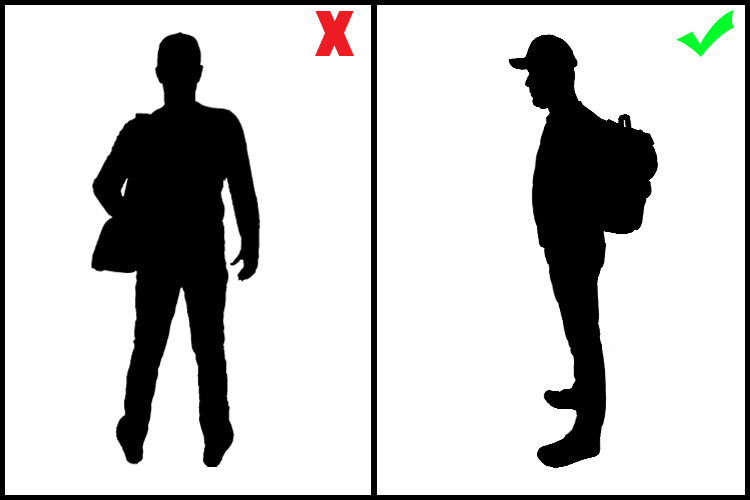
#1 – Trade your shoulder bag for a backpack

10 Tips to Help Photographers Avoid Back Problems

A shoulder bag is a signature style for most photojournalists, and it is indeed practical when you need to have easy access to your equipment while on the move. But it is also a big enemy of your posture, as it puts all the weight in one of your shoulders making your spine curved and unbalanced.

Backpacks distribute the weight equally on both shoulders, making it a much better solution for carrying your equipment. Rolling trolleys are an even better option, but they are not as practical if you need to move fast and don’t have smooth terrain.

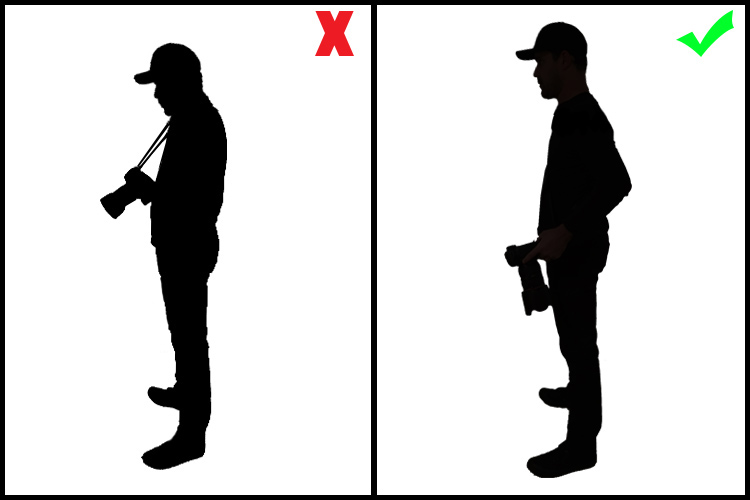
#2 – Trade the neck strap on your camera for a sling strap

Having a heavy camera and lens hanging from your neck by a strap is obviously a really bad idea. It causes a lot of stress on your neck, leading to issues with either the spinal discs or in the joints of the cervical spine. Sling straps minimize the impact of the camera’s weight, hanging it from the shoulder and across the torso. This makes it easier for you to move around and reach the camera, reducing the impact on your neck.

10 Tips to Help Photographers Avoid Back Problems

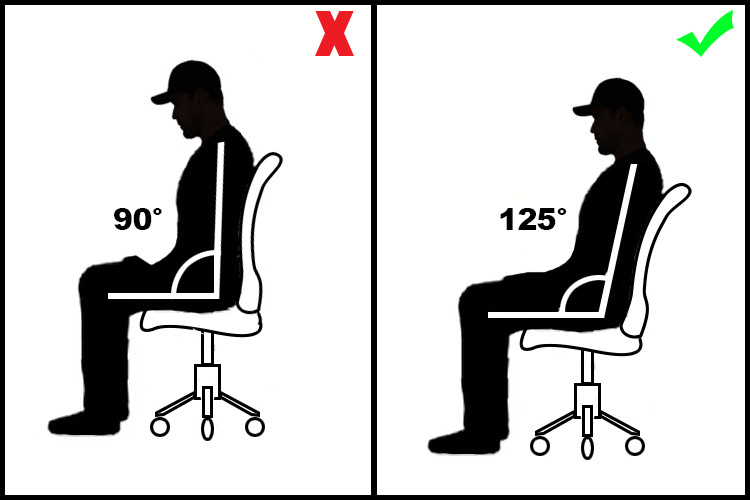
#3 – Get a good office chair

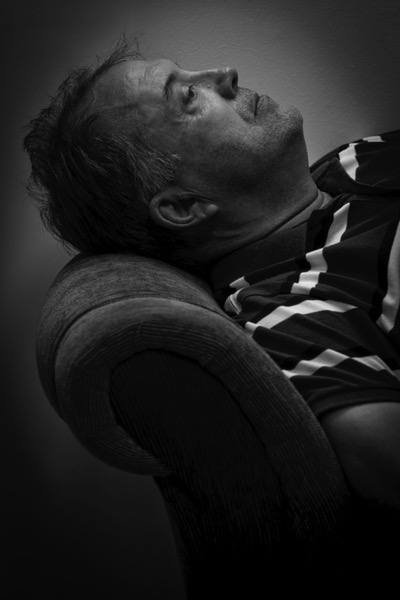
If you spend a long time working on your computer, then a good office chair is something you must invest in. It is really important that your chair is adjustable, and can be regulated to your size, and the position you adopt in relation to the table and the computer you are working on.

The optimal angle position between your legs and back is around 125 degrees.

10 Tips to Help Photographers Avoid Back Problems

Also avoid chairs with wheels that cannot be blocked, as they tend to move back and forward leading you to bad posture while seated. Also, avoid arm rests as they might cause pressure on the elbow tendons leading to tendinitis and ulnar nerve compression.

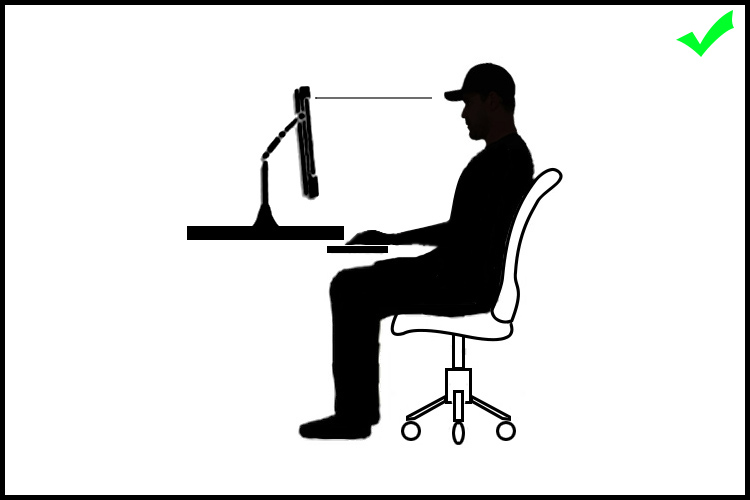
#4 – Adapt the computer position to your body

Almost everyone uses their computer in the worst possible position as they are most of the time located very low, especially if it is a laptop.

Hunching over and looking down for a long time causes really bad stress on the cervical spine and neck muscles, This can lead to a stiff neck, headaches, and in a long run degenerative spinal problems. The correct thing to do is to place your computer monitor in a position that you can look straight ahead without having to curve your neck.

10 Tips to Help Photographers Avoid Back Problems

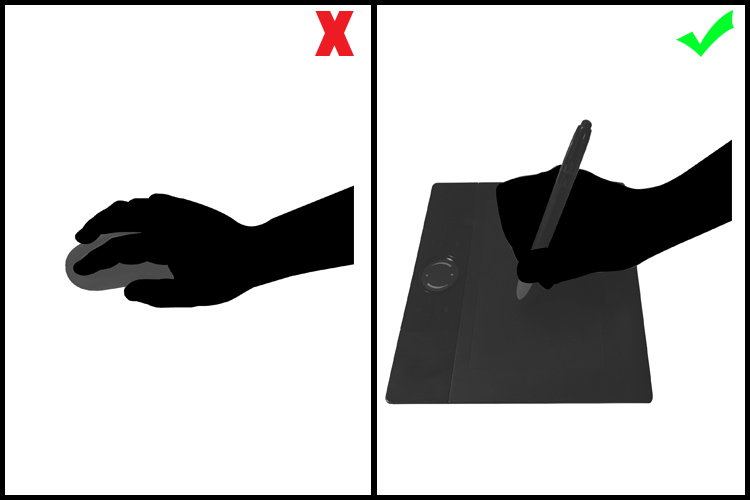
#5 – Use a pen and tablet instead of a mouse

A mouse is a fundamental piece of hardware for most people’s computer work, but at the same time, it is a bad ergonomic tool. It forces your hand to stay in an unnatural position, leading in the long run, to hand, wrist, shoulder and arm problems like tendinitis and arthritis.

The use of a pen and tablet, besides giving you much better control of design functions in image editing software, allows a much more natural hand position, avoiding health problems.

10 Tips to Help Photographers Avoid Back Problems

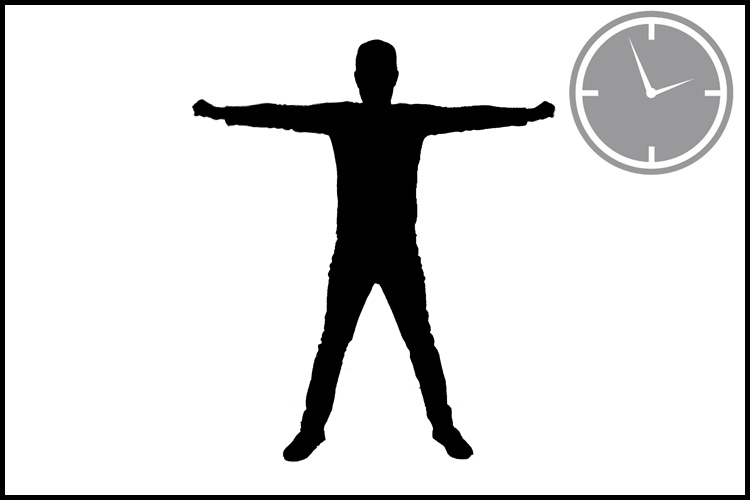
#6 – Take regular breaks and stretch your body

A common mistake we all make is to stand in the same position for long periods of time whether it is photographing, driving, standing at a desk, or simply just relaxing on the couch.

It is fundamental to take small breaks in your daily activities and simply just stretch, allowing the fibers in your muscles to move and avoid cramps and contracting.

10 Tips to Help Photographers Avoid Back Problems

#7 – Get your blood flowing

Poor circulation is the starting point to a lot of really serious health problems. Of course, we would all like to have a healthier life, eat better, and exercise more, but the truth is that it takes a lot of time and discipline.

A great way to overcome this is to turn your regular activities into small exercises.

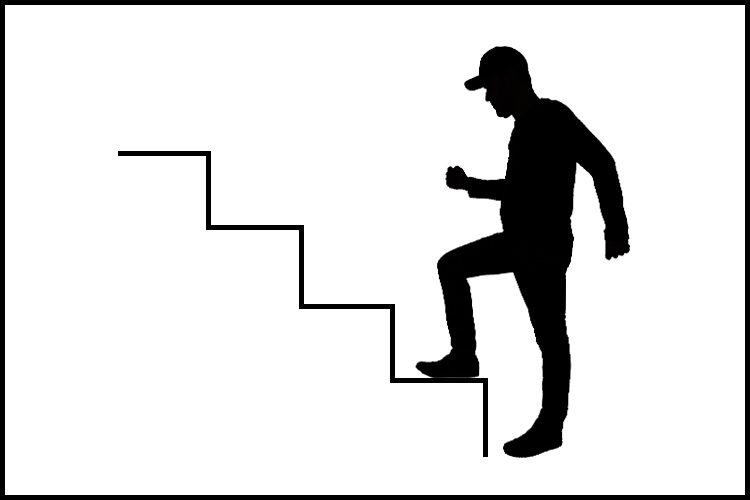
Simple things like taking the stairs instead of the elevator, or turn a walk down the street to the coffee shop into a power walk, just by adding more movement to your arms while you walk, can make a big difference in your overall physical condition.

10 Tips to Help Photographers Avoid Back Problems

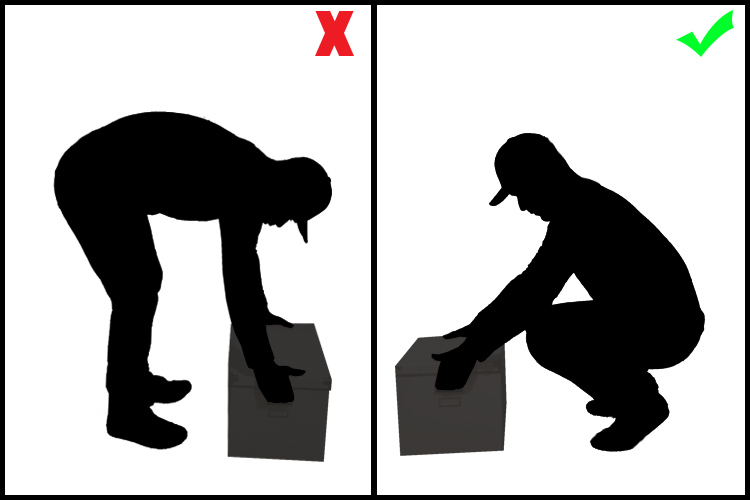
#8 – Always lift with your knees, not your back

Most severe back injuries come from trauma or heavy weight lifting. Trying to pick up something heavy from ground level, using just your back, is a true recipe for a disaster like a herniated disk.

The trick here is to always keep you back straight and use your knees as a lever to lift up the weight. Your legs muscles are much stronger than your back, trust me.

10 Tips to Help Photographers Avoid Back Problems

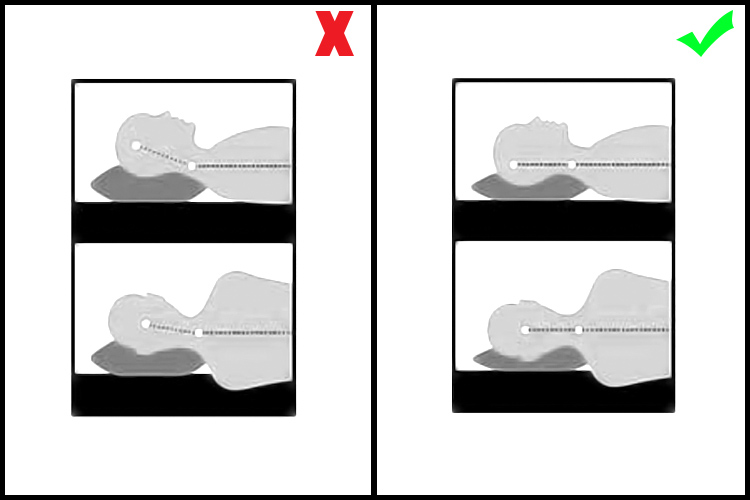
#9 – Adjust your sleeping position

We spend roughly one-third of our lives sleeping, so if we worry about our posture during the day, we should also worry about our posture while we sleep.

Most hard working people I know are so tired when they get to bed, that they just lay down, close their eyes and get to sleep right away. Most of the time that’s in really awkward positions and they spend most of the night wrestling with their pillow or sinking in really bad mattresses.

The best sleeping position is a really controversial discussion as it is a personal thing due to your body shape, weight, breathing difficulties, etc.

We move a lot in our sleep, but whether you sleep most of the time on your back, side or stomach, always try to have a mattress and pillow that keep your spine as straight as possible. You will rest a lot better and wake up a lot more fresh.

10 Tips to Help Photographers Avoid Back Problems

#10 – Hydrate yourself properly

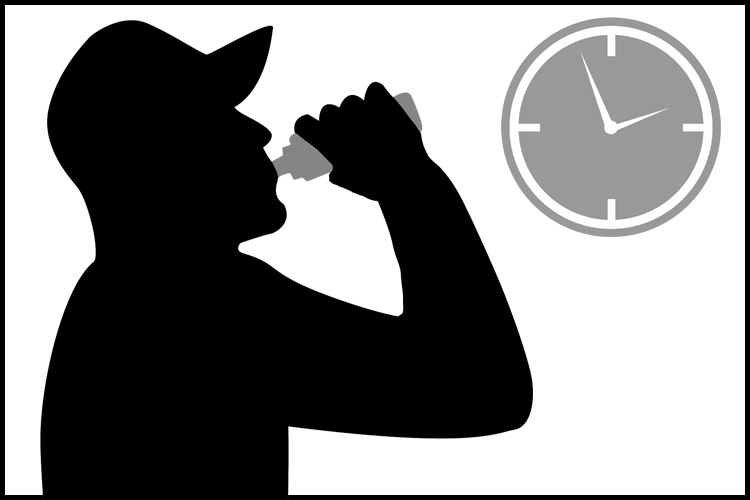
Our body is 90% water, but yet we tend to forget how much we need to drink water just to be alive.

If you are a busy person, it’s not easy to reach the 2 liters per day of optimal water intake. But if you just make an effort and carry a water bottle around with you and drink regularly during the day you will see that your internal organs will function a lot better, your skin will look younger and your joints and bones will not get old so fast.

10 Tips to Help Photographers Avoid Back Problems

Conclusion – over to you

So there it is, a small list of simple tips that might make a significant change in your life.

They may seem obvious for most people, but the fact is that we are all so busy with our daily life and work routines, that we seem just to forget to take care of ourselves and only realize when it is just too late.

What about you, do you have some tips we could add to this list to help other photographers avoid back problems?

googletag.cmd.push(function() {
tablet_slots.push( googletag.defineSlot( “/1005424/_dPSv4_tab-all-article-bottom_(300×250)”, [300, 250], “pb-ad-78623” ).addService( googletag.pubads() ) ); } );

googletag.cmd.push(function() {
mobile_slots.push( googletag.defineSlot( “/1005424/_dPSv4_mob-all-article-bottom_(300×250)”, [300, 250], “pb-ad-78158” ).addService( googletag.pubads() ) ); } );

The post 10 Tips to Help Photographers Avoid Back Problems by Ivo Guimaraes appeared first on Digital Photography School.


Digital Photography School

 
Comments Off on 10 Tips to Help Photographers Avoid Back Problems

Posted in Photography