RSS
 

Posts Tagged ‘Photograph’

Tutorial: How to photograph wine on clear plexiglass

17 Jul

Photographer Dustin Dolby of the YouTube channel workphlo is used to doing a lot with a little. In this tutorial, he uses a couple of flashes, a piece of clear plexiglass, and his know-how as a product photographer to capture a classic wine look, taking you along every step of the way. He even shares a neat trick for capturing a perfect masking frame for use in post.

The tutorial is a little over 19 minutes long, so we wouldn’t call this “quick and easy,” but Dolby does show you the entire process, sharing a ton of great techniques along the way.

The first part of the tutorial covers all of the frames Dolby needs to shoot to put together the perfect wine shot later. That includes a main shot, a brighter photo to bring out details in the label, and three frames with a stripbox placed directly behind his bottle to create a perfect high-contrast black-on-white masking frame to use in Photoshop later.

Then, starting at the 6:25 mark, he jumps into Photoshop to show you how to create that perfect mask and then run you through the many cleanup, correction and compositing steps that turned these two photos:

Left: Main lighting setup | Right: Label detail shot

Into this final shot:

The final photograph after cleanup and compositing in Photoshop. © Dustin Dolby

Watch the full tutorial above to see how this shot came together from start to finish, and then leave Dustin a comment or question either on this post, or on his YouTube videos.

Articles: Digital Photography Review (dpreview.com)

 
Comments Off on Tutorial: How to photograph wine on clear plexiglass

Posted in Uncategorized


Worth a Thousand Words: The Story of a Photograph

08 Jun

Whether an image is spectacular or otherwise, a photograph is a representation of all the words that we choose to say…or not say. Photography is a medium, unique to perhaps all other mediums, which has the potential to convey thoughts and feelings without saying a word. You might say it’s worth a thousand words.

In today’s current photographic climate which is saturated with selfies, cellphone snaps, and impromptu portraits, have we forgotten the weight a photograph can carry? It’s an easy mistake to make and also a crime that we all commit from time to time. In case you have managed to forget, allow me to remind you of just how important the photographs you make can truly be.

Worth a Thousand Words: The Story of a Photograph

Photographs represent ourselves and how we see the world

The images that spew forth from our cameras are more than just bits of film or clusters of ones and zeros. Photographs are representations. Not just representations of time and events, of light and shadows, and splashes of vibrant colors. No, a photograph speaks to our own emotions and to the thoughts and emotions of others. They allow us to express our own feelings and inner workings in a uniquely personal way.

The photo could be a portrait that snatches a piece of the person’s elation or sorrow. It could be a photo of a morning sunrise reaching up over a snow covered mountain. Whatever the image is, there lives inside it the potential power to unveil a moment of emotionalism that may otherwise have remained covered.

Worth a Thousand Words: The Story of a Photograph

Like all forms of art, that power connects our mind (or even our soul) to that of the viewer, however briefly.

Photographs are records of reality

I’m about to say something that is completely arguable, non-provable, and likely inflammatory – even though it’s not intended to start a debate. Brace yourselves because here it goes….

Photography is one of the only artistic mediums that can portray the static reality of time and events fluidly mixed with personal expression.

Worth a Thousand Words: The Story of a Photograph

What I mean is that a painting displays a world that is filtered through the artist’s physical movements. The same is true for sculpture and other tactile forms of art. While the beauty and emotive content are absolutely the same in these other mediums, photography differs immensely in that it records the same world we all see, free of physical (usually) interruptions brought on by the photographer.

Worth a Thousand Words: The Story of a Photograph

The inherent merits of photography are that our images capture still moments of reality which is readily viewed all around us. A photograph, after all, is just a picture of “something.” Hence, it’s simply a record of different points of reality. The magic happens, and thus the art, when the image is captured in such a way that it become more than just the sum of its parts.

Worth a Thousand Words: The Story of a Photograph

It transcends the simple nature of being just a picture. If that sounds a little deep that’s because it is – but it’s also true. Making an image is more than just pressing a button. It’s a capture of a moment in time that will never come again. Always remember that every photograph you make has the ability to transport a viewer to a place and time they have never been and could never have witnessed otherwise.

Photographs are mechanisms of change

Photographs show what is good and right with our world. Just as true, photographs document what is all too often ugly, cruel, and evil as well. This duality itself is beautiful because it means that photography can be a powerful conduit for change. As first-hand accounts of events and human nature, photographs are visceral mechanisms that can spur awareness and make people take notice.

Worth a Thousand Words: The Story of a Photograph

Photos help in raising political advocacy which can affect the policies of entire nations and governments. They show the wonders of our natural world so that those places can be protected for the countless generations which will come after we are gone. They demonstrate the determinants of pollution, climate change, and species degradation that might otherwise have gone unnoticed.

Worth a Thousand Words: The Story of a Photograph

Seeing, after all, is believing. And nothing makes people see more than does a strong photograph.

Never forget…

Not all photographs have to be powerful expressions for social change or be plastered on the covers of national magazines in order to be important. I mean, making photographs is just plain fun…especially to fellow photo geeks like me. Sometimes we make images that are only meaningful to us and eventually end up in the trash bin.

Worth a Thousand Words: The Story of a Photograph

Still, we should never forget the weight that our work can and does carry. Our photographs speak loudly and sometimes they whisper. But they do speak. Always remember that. Be mindful of what your photographs might say…and just as importantly, the words they leave out.

The post Worth a Thousand Words: The Story of a Photograph by Adam Welch appeared first on Digital Photography School.


Digital Photography School

 
Comments Off on Worth a Thousand Words: The Story of a Photograph

Posted in Photography


How to Photograph Your Museum Visits – Turn Limitations Into Creative Challenges

20 May

Do you feel frustrated that you are not allowed to make selfies in museums? Did a light reflection ruin the photo of your favorite artwork? Are the other visitors always in the way of your perfect shot? Then this article is for you, to help you photograph your next museum visit!

Museums are a great place to get inspiration, however, the great teams behind every exhibition have to be more concerned with the preservation of the artworks than about your photo. Therefore, photographing in a museum poses two big challenges.

First, the multiple rules that you have to follow, remember to always be respectful of them because they exist for a reason. Second, the fact that you can’t alter the conditions in which you have to shoot. But this doesn’t mean that you can’t make great photos, actually, you can turn it around and use these limitations to take your photography to the next level.

Every museum has different rules so I’ll cover some of the most common:

NO SELFIE-STICK

Many museums of the world like the Palace Museum in Beijing, the Van Gogh Museum in Amsterdam, the Metropolitan Museum of Art in New York, and many others have banned the selfie-stick. Not to worry, this shouldn’t stop you from making a memory of yourself with your favorite artwork.

Whether it’s in a frame or a display case, most objects in museums are protected by glass. So, you can use your reflection on the glass to make a selfie. You can also use mirrors and other reflective surfaces you can find.

How to Photograph Your Museum Visits - Turn Limitations Into Creative Challenges

Crystals, Teylers Museum, Haarlem, The Netherlands.

How to Photograph Your Museum Visits - Turn Limitations Into Creative Challenges

Albergo Diurno Venezia, during the exhibition Senso 80 by Flavio Favelli, Art Week Milan 2017, Milan, Italy.

In order to work with reflections, you need to understand how light works. Without going into a complicated physics lesson, what you need to know is that light travels in straight lines.

Light Diagram How to Photograph Your Museum Visits - Turn Limitations Into Creative Challenges

Which is also why you can get those annoying light flares that can ruin your photos. So you need to be very aware of all the other objects in the room to avoid unwanted reflections.

Reflection Mistakes - museum

Me As Mapplethorpe, 2009. Gillian Wearing RA, (based upon the Robert Mapplethorpe work: Self Portrait, 1988) exhibited at Gemeente Museum, The Hague, the Netherlands.

Now that you know how it works, you know how to move around the space in order to control your reflection. A few tips to consider though:

  • The darker the background, the better you will see the reflection. For example, if you are doing the selfie in front of a black and white photo, position yourself in a way that you will be reflected in the darkest part of the photo, so you will stand out more. If you are wearing white or a light color shirt that’s even better.
  • Try different positions so that you are not blocking an important part of the artwork. You can even try interacting with it.
  • If there is a metallic surface or a mirror in the piece, use it to your advantage, and acknowledge your presence (smile, wave, etc.) so that it doesn’t look like a mistake.
  • Locate the light source and then position yourself in a way that the bouncing trajectory doesn’t hit the lens of your camera, but it does hit any objects you want to reflect.

NO FLASH

This is one of the most universal rules in museums. This is because the hundreds of thousands of visitors that some artworks attract would sum to a great amount of light that some materials cannot take without damage. So you’ll have to make the best with the lighting of the museum that is designed to either preserve the delicate artworks, or to set a mood that complements a whole concept of the exhibition.

In other words, more often than not it will be very dark. This is where the settings of your camera (and even some smartphones) come in.

Since this article is not about exposure I won’t go into a lot of detail, but I will give you a quick guide to adjust it to better photograph in low light. The correct exposure depends on three things:

ISO

In photography this stands for International Standard Organization just like every other ISO that you’ve heard about. What it standardizes in this case is a scale for measuring sensitivity to light. The higher the ISO number you choose, the higher sensitivity your device will have. A lot of people are afraid to go very high because there is the risk of getting noise in your image, which is like the grain that used to be in film photography.

Nowadays most cameras can keep the quality even at higher numbers, so try all the settings out to determine which one is the highest you can go with your own equipment. However, in my experience, you get less noise from a high ISO than going lower and then trying to correct the underexposure in Photoshop later. Here is an example:

ISO 320 museums

This image was taken at ISO 320.

Versus . . .

ISO 3200 museums low light

This image was taken with an ISO of 3200.

Aperture (f-number)

The simplest explanation I can offer is that the aperture is the hole in your lens that lets in light. Therefore the bigger the hole, the more light will enter.

But here is the tricky part, the aperture reference scale is inversely proportional. So, contrary to what you might think, a smaller number means a bigger hole and therefore more light. For example, a photograph taken with f/8 will be lighter than the photo taken with f/11.

This setting also controls the depth of field of your image (the area that will be in focus). So be careful moving this one because you might loose some sharpness in areas that are farther away from your point of focus if you use smaller f-numbers. Notice in the image below how the objects are loosing focus towards the back.

Depth of field museums

Crystals, Teylers Museum, Haarlem, The Netherlands.

Shutter Speed

This setting controls how much time you expose the sensor to light. Since the sensor (or film) is accumulative, the more time you expose it, the lighter your image will be. Shutter speed is very straightforward and it could be your best choice, except that anything moving will look like a blur if you go too slow.

Even if everything is still, if you are not using a tripod, YOU are the one moving. So don’t let it stay opened too long. In some museums you’re allowed to use a tripod if you pay an extra fee, so feel free to ask.

It is also useful to know that telephoto lenses need a faster shutter speed to avoid blur than the wide angle lenses. So you can also consider re-framing your image like the next example.

Shutter speed 1/8th, f/5.6, ISO 800, focal length 55mm.

Shutter speed 1/8th, f/5.6, ISO 800, focal length 22mm.

You can also use this setting in a creative way. For this photo I wanted the tram passing in between the two pieces of the sculpture to leave a blurry line to have a more dynamic result and also show more context on how the sculpture was meant to interact with the space.

Shutter speed 1/2 second, f/11, ISO 400; focal length 18mm.

Shutter speed 1.3 seconds, f/11, ISO 400; focal length 18mm.

Now that you know what each setting does, you can adjust them to your needs. Keep in mind that they are interrelated, so if you move one you need to correct the others accordingly. For example, if you close your aperture because you want more depth of field, remember to compensate it by leaving the shutter open for a longer time, or by making your ISO more sensitive (higher number). Always keep an eye on your exposure meter!

NO TOUCH

Given that you can’t change your surroundings or rearrange the artworks, you will have to be extra creative and flexible.

Take care of composition.

When photographing an artwork in a museum, don’t try to just reproduce it. To do that it’s always better to buy the postcard or the catalog. What you do want is to capture what it’s transmitting to you. Use the architecture of the gallery, make it interact with the other pieces of the exhibition, try to capture the ambiance. In other words, make it your own. Notice how in this example I didn’t photograph any specific artwork, just the space and the atmosphere.

Composition museums

Rijksmuseum van Oudheden, Leiden, the Netherlands.

Change your position.

Retaking the topic from the No Selfie-stick, if you need to avoid reflections and you can’t move the artwork or the lighting, then reposition yourself. Do this also to play with perspective, to include or exclude objects from your frame, and just try as many angles as you can.

For this next image, I was playing with perspective and the position of the circular lamps in order to make them look like the aura of the statue.

Position museums

Rijksmuseum, Amsterdam, the Netherlands.

Be aware of other visitors.

It will be very difficult for you to have the museum to yourself, so try to be respectful of others and don’t get in the way. Don’t be afraid to include people in your photo as well, just be sure to wait until the right moment so that they complement your image.

Mirrors museums

Het Dolhys, Haarlem, the Netherlands.

Silhouette museums

Museo de la luz, Mexico City, Mexico.

COPYRIGHT

Last but not least, there is one rule that you won’t see on the museum signs, but it exists and it’s very important – the issue of copyright.

While getting inspiration from other artists it’s great, remember that you are photographing the work of a fellow artist so it is covered by copyright. This can apply from the artwork being exhibited to the architecture of the museum so it can be a very complicated issue to understand.

I advise you inform yourself about it in more depth. A general rule of thumb that you can always follow is that you can’t use the image for commercial purposes without permission and/or retribution from the creator. And in any other context for educational purposes (e.g. this tutorial or giving a conference) you should always give the credits. Let’s be respectful of one another.

Next time you go to a museum you can both get inspired and creative. Enjoy and share your photos!

The post How to Photograph Your Museum Visits – Turn Limitations Into Creative Challenges by Ana Mireles appeared first on Digital Photography School.


Digital Photography School

 
Comments Off on How to Photograph Your Museum Visits – Turn Limitations Into Creative Challenges

Posted in Photography


Tips for Location Scouting to Get the Perfect Sunset Photograph

12 May

Location scouting to find the ideal spot is just as important as what camera settings you use. Don’t miss this important first step in order to get your perfect sunset photograph.

Scouting is part of the photography process

“Hi. Are you a photographer?” a young voice called to me.

“Hello,” I turned back and replied to a smiling and inquisitive face. It was a little girl with a point-and-shoot camera.

“Yes, I am,” I nodded in affirmation. The backpack and tripod were a dead giveaway.

“This is so beautiful,” and after a moment of watching me, “Aren’t you going to take a photo?” the girl continued, as she scrutinized me searching for something in between granite boulders on the beach but not taking photos.

location scouting

Composing for the water channel.

Mother Nature had put on a mesmerizing show of stormy clouds and light at Camps Bay Beach in Cape Town, and it seemed that almost everyone had their cameras and cell phones pointed towards the far horizon. Our brains are programmed to do routine work subconsciously, like changing gears of a car.

For a landscape photographer, scouting for a good location is part of the job. It can be a challenging, albeit fun routine, and I was doing exactly that an hour prior to what was going to be a stunning sunset. In fact, I find it quite therapeutic to search for a good spot. You pay attention to details and discover small wonders in the process.

Tips for Location Scouting to Get the Perfect Sunset Photograph

Lightning strike while location scouting.

The question from the little girl triggered a lot of possible answers in my mind. “I am trying to make a good photo,” could be one of the answers, but it would have confused her even more, so I told her that I was looking for an interesting pattern of rocks for my sunset shot. My quest resumed after she and I finished chatting.

Tips for Location Scouting to Get the Perfect Sunset Photograph

Nature’s wonder.

What makes a good photo?

In my journey of landscape photography thus far, I have learned that the main characteristics to look for are good light and composition. After you find these, you need good camera settings and technique to capture the moment.

What can you do to take a better photo?

The light is not within your control. But you need to gain knowledge of the terrain, keep an eye on the weather and clouds, and possibly go around dawn or dusk to get softer colors and light.

The choice of composition is yours based on your own style and preferences. As a landscape photographer, you need to have an aesthetic sense that attracts viewers to your images, a style that will become your own. Composition is a topic in itself, but obviously, the key is choosing a location that provides good subjects (e.g. a waterfall, mountains, icebergs, boulders, trees, rocks) or something that appeals and possibly tells a story.

Camera settings and techniques come with experience. Do not compare it to the value of the equipment you own – the simplest equipment can take a great shot. The only way you can get better is by taking photos, learning more about the basics, and correcting yourself after making mistakes. If you can invest in the best camera, filters, tripods and other accessories, then that’s a bonus. Whatever equipment you own, you must know its full capabilities and how to make good use of it.

Tips for Location Scouting to Get the Perfect Sunset Photograph

Camp Bay boulders.

How did I make a good photo that day?

The day I met the girl, I was at one of the most picturesque beaches in the world, Camps Bay. The location and subjects were there, but I still had to work to narrow down my composition for the sunset.

I needed to make decisions such as; Am I going to set up on the sand or in between the boulders? Should I go on the mossy rocks or stand in the water?

The light, as per my assessment of the weather forecast, was going to be perfect if the clouds allowed the sun to peek through the horizon. I brought the lens and camera of my choice, filters, shutter release, and tripod to take photos in low light.

After some exploration, I settled upon a water channel between two massive granite boulders. My test shot looked promising. My hunt for an agreeable foreground was finally over. The water would make interesting patterns through that small ally, and the leaden clouds and orange sun would be my background.

Tips for Location Scouting to Get the Perfect Sunset Photograph

Test shot with minimal post-processing.

I took another test shot and soon realized that the sun was going to be behind the boulder on the left, and I would miss it in my photo as I had miscalculated the angle. I re-evaluated the scene and adjusted my perspective to align the composition with the drowning sun. Careful use of camera settings, a polarizer, and a soft graduated ND filter yielded a result that I was satisfied with. Mission accomplished!

Tips for Location Scouting to Get the Perfect Sunset Photograph

The water channel.

Conclusion and video

As you will see in the video (and image) below, I took an additional photo of this channel from a higher vantage point as well.

So the next time you see a landscape photographer rushing to and fro on a location, you must know that he is busy making a photo, as pressing the shutter button is only the last part of the job!

I hope these tips are helpful. Please share your questions and comments below.

Tips for Location Scouting to Get the Perfect Sunset Photograph

Water channel from above.

The post Tips for Location Scouting to Get the Perfect Sunset Photograph by Mujahid Urrehman appeared first on Digital Photography School.


Digital Photography School

 
Comments Off on Tips for Location Scouting to Get the Perfect Sunset Photograph

Posted in Photography


How to Photograph in the Harsh Midday Sun

05 May

It’s all about the light! The golden hour when the sun is just above the horizon shining its low angle golden rays on the scene; sunrise and sunset when the clouds light up pink, orange, and red; and the blue hour when the sun is below the horizon but it is not yet totally dark. Those are the best times to photograph.

But midday? That’s when tourists make snap-shots, right?

Well, yes, but that doesn’t mean there aren’t options for you too. You just have to know what to do when the sun is high in the sky shining its harshest light on a day with no clouds to soften the rays.

How to Make the Most of Harsh Midday Sun

We don’t always have the option to shoot on the edges of the day when the conditions are best. On a recent trip, I was in between two destinations and had a few spare hours to visit a small village on route. It turned out to be an amazing location, but the light was harsh and the buildings were white. I could barely look at them let alone photograph them. I had to put my harsh light tactics to the test.

Here are some midday photography tips to help you:

1. Look for shade

The first thing I did was look for shady spots under trees and on the opposite side of the bright white buildings I was facing. Shade provides a nice soft, even, light, which is perfect for colorful subjects and ones with interesting shapes. I especially like to photograph flowers under soft light because the delicate nature of the subject lends itself to soft light.

How to Make the Most of Harsh Midday Sun - lotus flower

2. Look for shadows

Subjects with really distinct shapes will also have very distinct shadows in the harsh lighting conditions of midday. So you can make your photograph all about the shadows. Look for patterns in shadows, leading lines made by shadows, and shadows that create interesting shapes in your frame. Remember, you don’t necessarily have to include the object itself, sometimes just the shadow makes your photo a bit more mysterious.

Shadow Patterns - How to Make the Most of Harsh Midday Sun

3. Look for reflections in water

Whenever there is a body of water near a subject that has harsh light on it, you’ll get a bright reflection. This works best when the subject being reflected has a lot of color. Ideally, the subject will be in direct light and the water will be in the shade. Again you don’t have to include the object with the direct light on it. Sometimes photographing just a reflection can make an interesting abstract image.

Half Dome reflects in the Merced River in Yosemite National Park - How to Make the Most of Harsh Midday Sun

4. Use the time for scouting

When all else fails, rather than photographing, you can use the time to scout out locations for the future. Walk around, find a great subject and play with different compositions. Make “sketch” images by trying different compositions and choosing which one has the most impact. Then, when you find it, make a note of the exact location and make an image so you remember your camera angle.

It’s also a good idea to take note of how long it takes you to walk to that location, what the trail or route is like, and anything you may want to make note of should you need to return in the dark, like before sunrise for example. You’ll thank yourself later when you don’t have to guess at a location and composition before you can really see what is in your frame.

Mono Lake Tufa State Natural Reserve, California - How to Make the Most of Harsh Midday Sun

5. Rest up

When you’re on a long trip, sometimes it’s best not to wear yourself out by doing three photo shoots a day. Of course, you’re going to go out for sunrise and sunset. During the day you might want to clean your gear, get out some maps and do some planning, research stuff on the internet, or even take a nap.

Sometimes the best thing you can do for your photography is simply to have a rest so you have lots of energy for your next outing.

Conclusion

What tips to you have for working with the midday sun in your photography? Please share them in the comments below.

The post How to Photograph in the Harsh Midday Sun by Anne McKinnell appeared first on Digital Photography School.


Digital Photography School

 
Comments Off on How to Photograph in the Harsh Midday Sun

Posted in Photography


How to Photograph the Images Needed For Focus Stacking

28 Apr

This tutorial will help make it much easier for you to take the photographs needed for focus stacking. This is the best and the easiest way to achieve the results you want. There are a few details along the way, but the bonus is that there are also other photographic situations where you will be able to apply the same technique.

How to Photograph the Images Needed For Focus Stacking

What is focus stacking and why is it needed?

When your camera is really close to the subject, depth of field will be very shallow. For example, if you are using a 100mm lens, at a distance of 50cm (nearly 10 inches from your subject) with an aperture as small as f/16, the area which is acceptably sharp is just 1.9 cm (about 3/4 of an inch). Reduce the distance to subject to only 25cm (less than 5 inches) and the depth of field reduces to only 0.36 cm (1/6th of an inch).

How to Photograph the Images Needed For Focus Stacking
The only way to conquer this issue in order to get a greater depth of acceptable sharpness in a final photograph is with computational photography. That means using software to blend together a number of photographs which have been taken with different points of focus. This computational process is called focus stacking.

Input

The recommendation made in this article is an application of the old computer acronym of GIGO. Garbage In, Garbage Out. If you input rubbish, the output will be rubbish. To achieve the best results with focus stacking, you need to produce the photographs which are technically the most suitable for the focus stacking process.

How to Photograph the Images Needed For Focus Stacking

Processing

A while back, I decided that I wanted to make some images that would look good in a home or workplace, which would reflect the Filipino environment. With various adjustments, the five photographs shown in color above were combined to produce the image below (and a lot more like it!).

How to Photograph the Images Needed For Focus Stacking

If you like the idea of producing something like this, with sharp focus through the whole frame, it needs a little attention to start. This soon becomes quite easy, and you may find that it is actually a lot of fun. Find your own subject, then follow along with this method for producing your focus stacking images.

The actual processing of the images is a sequence of steps, and I would be happy to go through my approach for you at another time. Although there are other specialist programs for producing a focus stacked image, you will most likely use Photoshop. Of course, there are tutorials on how to do this here on dPS; A Beginner’s Guide to Focus Stacking.

How to Photograph the Images Needed For Focus Stacking

The Method – Part One – It is a Surprise

At this point in most focus stacking tutorials, you will see somebody holding a set of focusing rails. Forget it! No further expense is required here. They might then talk to you about focusing manually. Forget that too! No need for any delicate touch with this method. You do not even need a cable release. This is absolutely all you need.

How to Photograph the Images Needed For Focus Stacking
In the past, I had not even bothered to install Canon’s software offerings. Yes, the surprise news might just be that it is Canon EOS Utility which will serve you best for shooting focus stacking images.

As far as I have been able to determine, Nikon users will find that Nikon Capture includes a Camera Control component. I do not have the facility to put that to the test, but I imagine it works just as well. If you shoot Nikon and give this a try, do tell us how it worked for you in the comments section below.

The magic trick – the secret sauce – the silver bullet, for making images for focus stacking is the Canon EOS Utility program. It allows total remote control of the settings of your camera when shooting tethered to your computer.

How to Photograph the Images Needed For Focus Stacking

Plug and play!

Once you have your shot set up, you can control everything from your computer. If that happens to be an adjacent laptop, that will work the best. However, the photographs which follow below were produced with everything controlled from a computer in another room, fully 10 meters, more than 30 feet away from the set.

The Method – Part Two – The Mechanics

This type of photography, which I think of as “constructed photography”, does take a little while to set up. Follow these steps:

  • Put your camera on a tripod.
  • Compose your shot.
How to Photograph the Images Needed For Focus Stacking

You need to make two measurements.

  • Measure from the focal plane of the camera (the mark indicated above) to the front of the object which you are photographing (A), as shown above.
How to Photograph the Images Needed For Focus Stacking

The circle with a line through it indicates the focus plane – this is where your lens focuses the image onto the sensor.

  • Measure the depth of the object, from the point which is nearest to the camera, to the point farthest away. I have found that a steel rule or tape measure works well enough for these tasks.

Standard issue.

  • Now take a test shot.
  • Use a small aperture, like f/10, then check the exposure. I tend to look at the LCD screen which gives the RGB histograms. This allows you to judge the exposure, exposing to the right if you like, but also to check that none of the individual colour channels is overloaded. That is prone to happen in photographs which have one subject filling the major part of the screen. At this stage, exposure is not critical, you are only trying to achieve a guide shot.
  • Make a note of the settings which have given a reasonable exposure.
  • Cover the viewfinder to prevent possible light leakage.
  • Switch off image stabilization, it is always the best practice to do so when your camera is on a tripod.
  • It is not essential, but you might choose to put your camera into manual focus.
How to Photograph the Images Needed For Focus Stacking

Manual focus, stabilizer off.

  • Again, not essential, but you might choose to put your camera in Manual shooting mode.
How to Photograph the Images Needed For Focus Stacking

Switch to Manual Mode

Now the magic begins, the bit which makes me smile at how brilliant and easy it is.

The Method – Part Three – Computing

Connect your camera to your personal computer using Wi-Fi, a USB or Ethernet cable, whatever works best for your setup. I like cables, so I use a USB cord.

Run the EOS Utility software. Your camera should be discovered quite easily.

How to Photograph the Images Needed For Focus Stacking

The EOS Utility dashboard.

Choose “Remote shooting” and the screen below will appear.

How to Photograph the Images Needed For Focus Stacking

You are in control

From the comfort of your computer, you can release the shutter, the ultimate cable release, and do pretty much whatever else you like. As advised, you can switch off autofocus, and switch to Manual Mode without even touching the camera. In fact, adjustments can be made to all the usual camera settings for shooting. Most importantly for this exercise, you can switch to Live View shooting. Do so, and you will see a screen like this.

How to Photograph the Images Needed For Focus Stacking

The Remote Live View window. This is where the fine focusing happens.

The first thing to do is to fine tune the exposure. Controlling your camera from EOS Utility soon becomes quite easy, and intuitive. You can actually learn a lot about exposure by experimenting with the exposure triangle of ISO, shutter speed, and aperture all from your computer, with the benefit of Live View in grand scale.

One extra benefit of shooting in Live View is that you will have locked the mirror up, and removed any chance of vibrations from that source.

How to Photograph the Images Needed For Focus Stacking

You can click on the screen arrows, even use the scroll wheel on your mouse to make adjustments.

Take a shot and it will soon appear on your screen. This is not an article on ETTR (Exposing To The Right), but there is a good one here; Exposing to the Right. You can now adjust the exposure to try and get as much data onto your sensor as possible (the premise of ETTR). Take your time and take as many shots as you like. Check the histogram, check what you can see on the screen, and get the exposure exactly to your liking.

I do tend to prefer a shorter exposure. In the interests of sharpness, if I can get a compromise between ISO, and aperture which gives me an exposure of less than 1-second, I believe that is a good step in the direction of sharper photographs.

For this particular exercise, there are all sorts of detailed decisions, but the most important part of this screen is the Focus Adjustment and the Zoom View.

How to Photograph the Images Needed For Focus Stacking

Double clicking on the area highlighted, shown towards the bottom of the screen capture of the Remote Zoom View window (shown above), will bring you to this window below.

How to Photograph the Images Needed For Focus Stacking

Zoom View – allow you to easily get the nearest point of the image sharp as possible.

You now have turbocharged, hyper control of your focus. Not until you take the plunge and try this method, and find out that you can focus to the width of a hair, will you realize how brilliant it is. There is even the facility to zoom in further still.

I believe you will find the focus adjustment intuitive. There are three different levels for adjusting focus in either direction, “<<< / << / <” and “> / >> / >>>”. This is very useful in a way that no focus rails or manual adjustment could ever be. The bonus is that you will have no physical contact with the camera whatsoever.

The Method – Part Four – Finally

Martin Bailey is a photographer who goes into admirable detail. He is of the opinion that if you start photographing to the rear of the object, and work forward, Photoshop handles the process better. I do not see the evidence so clearly but, experience tells me, he is very likely right.

Another piece of advice would be to shoot a little wider, do not frame as tightly as you might usually. It gives you a little more room for maneuvering if you need to make adjustments.

How to Photograph the Images Needed For Focus Stacking

You now need a Depth of Field (DoF) calculator. There’s a wide choice, there are many that are readily available for your computer, phone, and for use online. I happen to use, Simple DoF (iOS only, see Android options here), as shown in the screenshots. Let’s apply it to a situation.

How to Photograph the Images Needed For Focus Stacking

The depth of field required for this scene is about 20cm (8 inches) To determine what you need, measure from the part of the object nearest the camera to the point furthest away. Divide that by the Depth of Field of 3.39cm (let’s call it 3.4cm), which tells us we will need 5.88 images. That means that we will need to take six evenly spaced images from the back to the front, in order to get every part of the image in focus. Here they are!

How to Photograph the Images Needed For Focus Stacking

Focused at the rear, on the plastic case of the ruler.

How to Photograph the Images Needed For Focus Stacking

Moving forward, picking a point about 3cms (just over an inch) closer each time.

How to Photograph the Images Needed For Focus Stacking

Focused between 6 and 7 inches.

How to Photograph the Images Needed For Focus Stacking

Shot 4.

How to Photograph the Images Needed For Focus Stacking

Coming forward.

How to Photograph the Images Needed For Focus Stacking

Focus closer 3cm, about an 1 inch, each time.

How to Photograph the Images Needed For Focus Stacking

Finally, focused sharply on the front edge of the ruler.

You can go to whatever lengths of precision you like. Experience allows me to trust my judgment of distance, and I am happy to err on the side of taking too many shots. If I reached the front edge of the saucer and found that I had taken eight shots I would be perfectly happy with that. As it happens, it seems that I took seven.

Here is the image produced from all the above by following the focus stacking processing routine in Photoshop.

How to Photograph the Images Needed For Focus Stacking

The final focus stacked image.

You should always be looking for ways to improve. As I have said, better results from less effort is a good thing.

Next

I think that to be certain of producing the highest quality product, the next time I do a project like this, I would refine my technique a little further.

I would actually put a rule next to the object but, unlike this time, do so temporarily. In this specific example, I would decide to take 3cm as my Depth of Field. I would then focus a shot on the 0cm mark of the ruler. I would then use the focus controls in EOS Utility to nudge the focus to 3cm and see how many clicks of the “>”, “>>” or “>>>” buttons it took to move the point of focus 3cm. It might, for example, be three clicks of the “>>>” button. Again, sticking with this example, I would then know that I needed to take seven shots. I would then take a shot focused on the back edge, click “>>>” three times, take another shot, click “>>>” three times again … and so on. As I said at the start, what could be easier?

Summary

This leaf was 10cm, that is 4 inches from front to rear. I do not think there is a way to produce this final image without using the technique of focus stacking. What you have read above is the best, and the easiest way to produce the shots.

How to Photograph the Images Needed For Focus Stacking

Waving goodbye?

I am all for spontaneous, shooting on the run, shots. However, if you want to shoot in a more controlled way, I think you might find the control offered by Canon EOS Utility to be a lot of fun. I do!

Once you have been introduced to it and learn some of the power of the software, you may well find yourself using it for other projects. This last week, I have used Canon’s EOS Utility to produce some product shots. The proof is in using it, and I hope you can see that it is something you can try if you want to do focus stacking.

The post How to Photograph the Images Needed For Focus Stacking by Richard Messsenger appeared first on Digital Photography School.


Digital Photography School

 
Comments Off on How to Photograph the Images Needed For Focus Stacking

Posted in Photography


How to Photograph People Outdoors Without Using a Reflector

28 Apr
How to Photograph Outdoors Without Using a Reflector

Subject: Kota Wade

You just got booked for a marvelous portrait photo shoot out in a gorgeous natural landscape. You run out the door, with camera gear in tow. Then you arrive at the location, the fresh air filling your nose, the beautiful natural world flourishing all around. You meet with your lovely portrait subject. The sun is beating down on you from above. Then it hits you… you forgot your reflector at home.

Or maybe you don’t have a reflector, maybe you just never felt the need to spend money on one. All of this is totally okay because there are some tips and tricks to take stunning photographs without the use of a reflective disc! Keep reading to learn more.

How to Photograph Outdoors Without Using a Reflector

Subject: Bina Monique

What is a reflector?

A reflector is a simple tool that redirects existing light. A reflector does not illuminate, it merely allows you to manipulate the light that you already have.

Photographers use reflectors to fill shadows, which is why you often see them used in outdoor settings where you cannot control the light. Being at the mercy of the sun, you add a level of control to your situation with the use of a reflector. However, there are ways to take advantage of your situation without one.

How to Photograph Outdoors Without Using a Reflector

Subject: Skylar Roberge

Find even lighting

Essentially, part of the trouble with shooting outdoors comes from the lighting. Clients often see a clear blue sky with the beaming sun and think that is an absolute joy for photographers. But we shooters silently scream in agony at the prospect of overblown highlights, underexposed shadows, and the dreaded contrast.

What’s the best solution for this? Find some even lighting!

Positioning your subject under a tree, in the shadow of a building, or simply positioning yourself so that the sun hides behind a mountain can all make for some nice even lighting. Although the background might be overexposed if you are simply using a small patch of shadow, try to change your perspective to make the most of the situation.

How to Photograph Outdoors Without Using a Reflector

ISO 400 – Shutter Speed: 1/100 – Aperture: f/2.8
Even Lighting: Rooftop overhang

Make even lighting

Are you out in a field or a desert and don’t have access to any form of even lighting? Is the sun too bright to have on your subject’s face? Then it’s time to get creative!

You can make your own even lighting utilizing things you may already have in your car. Use an umbrella and position that over your subject, or to block out the sun in your frame. You can use a vehicle windshield cover or shade to do the same.

How to Photograph Outdoors Without Using a Reflector

ISO 1250 – Shutter Speed: 1/500 – Aperture: f/2.8
Even Lighting: Umbrella

Use the contrast to your advantage

Are neither of the aforementioned tips applicable to your scenario? Well then, this is where we get inventive.

Photography is an art form, and artists are creative, imaginative, and inspired. Instead of fighting against the contrast, why not use it to your advantage? Work your shoot around the contrasting shadows and highlights, and create dramatic photographs. Several well-known clothing designers, such as Prada and Dolce & Gabbana, use contrast in their fashion editorials to stage a theatrical scene and illicit an intense response in the viewer.

How to Photograph Outdoors Without Using a Reflector

ISO 200 – Shutter Speed: 1/1000 – Aperture: f/2.8

Shoot at the right time of day

When a choice presents itself, shooting at the correct hour of the day can ease your lighting woes. The golden hour is infamous for being an excellent time to photograph. Aiming to photograph when the sun is low and producing a more even light removes the need for a reflector.

How to Photograph Outdoors Without Using a Reflector

ISO 1600 – Shutter Speed: 1/640 – Aperture: f/2.8

Fill shadows by finding a natural reflector

Various surfaces can double as reflectors, such as water or windows from a building. Positioning your model just right can garner the same effect as if you had a reflector yourself.

How to Photograph Outdoors Without Using a Reflector

ISO 2000 – Shutter Speed: 1/320 – Aperture: f/2.8
Reflector: Car windshield, parked to his right side

Fill the shadows in post-processing

The computer is your friend, and it is okay to use programs to help you bring your vision to light (no pun intended). Shooting in RAW format (an image file that contains minimally processed data from the image sensor of a camera – Raw files are named so because they are not yet processed) gives you better control over your image when you edit it. RAW files have more shades of colors compared to JPEG files, higher image quality, significantly better control over editing lightness, white balance, hue, saturation, etc., and all of the changes made on a raw image file are non-destructive. You can use any post-production software to lighten the shadows in your image and darken the highlights.

Original image before processing.

How to Photograph Outdoors Without Using a Reflector

After processing.

There you have it, sounds like you have a solution to your no-reflector problem.

The post How to Photograph People Outdoors Without Using a Reflector by Anabel DFlux appeared first on Digital Photography School.


Digital Photography School

 
Comments Off on How to Photograph People Outdoors Without Using a Reflector

Posted in Photography


How to Photograph Hummingbirds

16 Apr

NOTE: Get Jim’s e-book Fundamentals of Photography Made Easy now 30% OFF at Snapndeals, only until April 25th AUS time.


Birds have captivated wildlife photographers from the beginning of photography, and no group of birds is more intriguing than hummingbirds. It’s not difficult at all to photograph a hummingbird when you see one in a garden hovering above a flower. But unless you do it right your efforts will only result in mediocre pictures.

Photograph hummingbirds 02

The challenge with hummingbirds

The challenge itwo-foldld: First, you want the tiny birds to fill a significant part of the frame, and second, you want the birds to be sharp. Blurred wings are fine for snapshooters, but for serious photographers nothing less than tack sharp wings will do.

The wings of hummingbirds beat about 80 times per second. The range of shutter speeds that we normally use for fast moving subjects is between 1/250th and 1/1000th of a second. This is too slow to freeze the wings. 1/2000th and 1/4000th of a second are not even fast enough to get sharp pictures and to reveal the detail in individual feathers. Some cameras go up to 1/8000th, but even if this were fast enough to get tack pictures of hummers, the light would be so reduced that you would be forced to shoot with a large lens aperture and a high ISO – neither of which are ideal solutions.

Add flash

The technique that works is to use flash. However, it’s not very straightforward at all. The typical flash duration (the length of time that the flash tube is actually illuminated during an exposure) is typically about 1/1000th of a second when used on manual. However, when the power output of the flash unit is reduced to 1/16th power, the flash duration becomes much shorter, about 1/16,000th of a second. This is definitely fast enough to freeze the wings of hummingbirds as you can see in these photos.

The setup

The setup I use consists of four elements:

Photograph hummingbirds 03

  1. Four flash units (I use Canon 430EX Speedlites). Two flashes are placed in front of the setup, one on either side. One flash is used as a backlight to give a little separation between the subject and the background, and one flash is placed to illuminate the background. Metal stands support the flash units.
  2. A 24×36″ photographic print of out of focus foliage is placed in the background. I have several different prints that can be easily changed. The large prints are simply clamped to a piece of foam core.
  3. A wireless transmitter sits on top of the camera to trigger the strobes. Units that work well for are the Canon ST-E2 or the Pocket Wizard. For Nikons, the built-in commander mode works.
  4. A flower that can hold the nectar is clamped to a support like a metal stand, the back of a chair, or anything that is sturdy. The same sugar water that is used in hummingbird feeders (the nectar) is placed in the flower using a syringe so the birds hover above the flower to drink.

Shoot in burst mode

At 1/16th power (all the flash units are set to the same power output), the recycle time is very fast – it’s almost instantaneous, in fact. That means I could shoot as rapidly as I can press the shutter. I fire in rapid succession each time a bird comes to feed. It’s impossible to ascertain whether or not the wings are in an attractive position when I snap the shutter, so I have to take a lot of pictures to get a winner.

Photograph hummingbirds 06

Refinements

To vary the exposure for each flash unit, I simply move the flash closer or farther away. Three or four inches makes a significant change in exposure. In this way, I could adjust the lighting ratio based on what I se on the LCD monitor. A handheld light meter is not needed at all.

With two flash units in front of the hummingbirds, you will get two catchlights in their eyes. This is unnatural looking because in nature, there is only one light source, the sun. Therefore, in post-processing, I clone out one of the dots of light using the clone tool or the spot healing brush.

Photograph hummingbirds 04

Note: These photos were taken during a photo tour I led to Costa Rica.


NOTE: Get Jim’s e-book Fundamentals of Photography Made Easy now 30% OFF at Snapndeals, only until April 25th AUS time.

The post How to Photograph Hummingbirds by Jim Zuckerman appeared first on Digital Photography School.


Digital Photography School

 
Comments Off on How to Photograph Hummingbirds

Posted in Photography


How to Photograph Northern Lights (The Aurora Borealis)

15 Apr

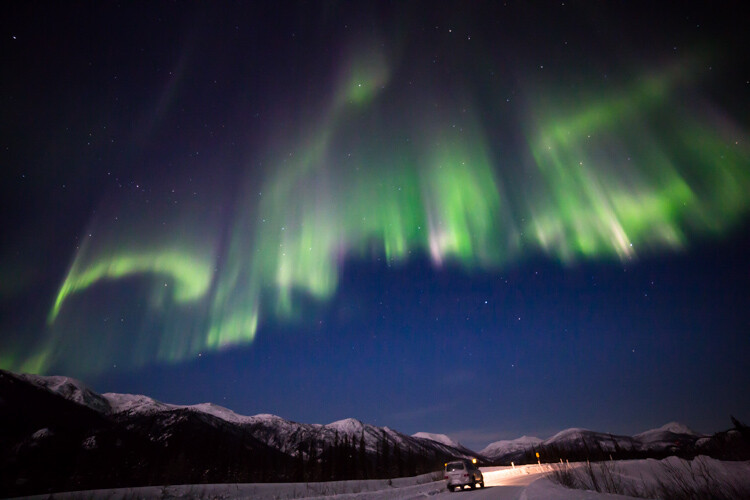
A trip to photograph Northern Lights (also called The Aurora Borealis) often tops the wish list for many photographers. For good reason too; the aurora is a natural phenomenon unlike any other. Lights dancing over the frozen winter landscape is ethereal, beautiful, and at times, jaw-dropping. Living in Alaska has provided me the opportunity to shoot the lights more often than most, and yet more than once, I’ve had to stop clicking and just watch the curtains shift and dance. In fact, let that be my first tip if you are planning an aurora

In fact, let that be my first tip if you are planning an aurora photo shoot – occasionally just stop and watch. Seriously, put that camera down for a moment and relish the sight. Okay, now let’s figure out how to photograph the Northern Lights.

How to Photograph Northern Lights (The Aurora Borealis)

Gear

Tripod

You need one. There is no faking this one, get one and use it. If it’s brutally cold (which, let’s face it, it probably will be) you’ll appreciate carbon over cold-channelling aluminum, but either will work. Bring it, use it, no excuses.

Camera

I’ve seen beautiful images of the Northern Lights made with everything from good point and shoot cameras to high-end mirrorless and DSLRs. So don’t feel too restricted by your choice of camera. That said, a camera with low noise at high ISO is definitely preferable. Though not absolutely necessary, the ability to change lenses, too, is a major asset.

Lenses

As a general rule, you want a lens that is wide and fast (has a large maximum aperture). The faster the better. My primary aurora lens is a 14mm f/2.8, but I’m eyeing a 20mm f/1.8 for the extra speed. All lenses will need to be manually focused, so make sure that is straight-forward. A variety of focal lengths, either in the form of a zoom, or a choice of lenses is also helpful. I’ve used everything from a 70-200mm to my fixed 14mm to photograph Northern Lights.

How to Photograph Northern Lights (The Aurora Borealis)

I’ve got to admit, living in the far north has its advantages. I merely needed to step out my front door to make this image. (If you are wondering what that strange U-shaped white form in the sky is, it’s the exhaust trail from an aurora research rocket fired off by the University of Alaska Fairbanks).

Remote Release

Though not absolutely necessary, a cable or wireless release for your camera will help reduce camera shake when you click the shutter. A jiggly blur in the stars can ruin an otherwise good shot. If you don’t have a release, use the camera’s self-timer, many have a 2-second setting which is useful. Keep in mind that using a timer rather than a release will slow you down.

Clothing

Maybe I should have put this one at the top of the gear list, because it is probably the most important thing for a successful winter shoot of any kind. Right now, as I’m writing this article, I’m sitting in a cabin 70 miles north of the Arctic Circle in the Brooks Range of northern Alaska. I’m leading an aurora photo tour, and the warmest night-time temperature we’ve seen so far was -35F (-37c). Good clothing has not just been important, but vital.

How to Photograph Northern Lights (The Aurora Borealis)

Right now, as I’m writing this article, I’m sitting in a cabin 70 miles north of the Arctic Circle in the Brooks Range of northern Alaska. I’m leading an aurora photo tour, and the warmest night-time temperature we’ve seen so far was -35F (-37c). Good clothing has not just been important, but vital. I don’t want to go into too much detail here, but a thick down coat with a hood, down or synthetic fill pants, mittens, liner gloves, face masks, and warm hats should all be on your list.

That said, I do want to take just a second to talk about footwear. Trips like the one I’m currently leading are not the time to toy around with light winter boots. This is not the time for fashion. Pack boots, god-ugly bunny boots, mukluks, and other extreme-cold footwear, a couple sizes too big (to account for thick socks and toe warmers) are what you are looking for. Nothing will wreck a night of photography more quickly than painfully cold, or (please no) frost-bitten toes. Enough said.

How to Photograph Northern Lights (The Aurora Borealis)

Interesting foregrounds are an important part of any image, and aurora shots are no different. In this case, I climbed a rock outcrop and used a wireless trigger to make this image.

The Day Before

Prefocus – autofocus rarely works in the dark, so you’ll need to manually set your focus. The first thing I do when I’m leading a photo workshop or tour is to take my clients out in the daylight, before our first night chasing the lights, and have them set their focus to some distant mountaintop. After making sure it is tack sharp, I hand out small pieces of electrical tape and have everyone tape the focus in place so it won’t shift around accidentally.

With the excitement of the first aurora show, no one has to worry about messing with their focus points, or worse, find their shots heartbreakingly soft. A caveat: You still need to check your focus periodically. I’ve found that some lenses will shift their focus point slightly when there are extreme temperatures. Pixel-peep occasionally and adjust as necessary.

How to Photograph Northern Lights (The Aurora Borealis)

When the lights are directly overhead, sometimes pointing your camera straight up can be the best option.

In the Field

Have patience. The aurora is a fickle lover, and she only appears when she wants. Even when the forecasts are coming together and everything seems set for success, the lights may take awhile to appear, they may erupt when you don’t expect it, or clouds may obscure the sky. Plan several nights to account for bad weather or uncooperative conditions. Be prepared to stay up late, and again, be patient.

Exposure

How to Photograph Northern Lights (The Aurora Borealis)

This is one of my first images of the aurora. The lights were bright, and while I managed to capture some color, the 20-second exposure blurred the details into an indistinct curtain. I know better now.

In the days of film and early days of digital, long exposures of 15 or 30 seconds for the aurora were the name of the game. This allowed the lights to appear bright and colorful, but details within the aurora, the pillars, and beams blurred away leaving behind an indistinct curtain. Technology has moved beyond this.

You want the shortest shutter speed possible that allows sufficient brightness and low noise. ISOs in the 1600-6400 range are typical. I start with a setting of f/2.8, ISO 1600 or 3200, for 5 seconds. From there, depending on what the lights are doing, the amount of moonlight, and other factors, I’ll adjust up and down.

Last night, for example, for about 10 minutes the lights brightened and started moving VERY fast. Sacrificing some noise, I went to ISO 6400, f/2.8, and a 1-second exposure. The shots needed a bit of noise reduction in post-processing, but I was able to capture the details of the curtains, and that sharpness in the aurora makes the images successful. A shutter speed just a second or two longer would have blurred the lights.

How to Photograph Northern Lights (The Aurora Borealis)

In contrast to the previous image, for this shot of a very fast moving display, I used a shutter speed of just one second at ISO 6400, f/2.8. As a result, the pillars of light and details in the curtains are sharp.

Composition

When the aurora is hopping, your attention will shift to the sky and away from the foreground. This is natural, but try to pay attention to your composition, just as you would with any landscape image. In the dark, a poorly framed image may not stand out the way it does in daylight. But, I’ll guarantee that you’ll notice when the photos appear on your computer the next morning, and you’ll kick yourself.

Consider where you are, provide some context, avoid distractions, and compose carefully.

How to Photograph Northern Lights (The Aurora Borealis)

A red aurora is a very rare thing indeed. Of the hundreds of nights I’ve spent shooting the Northern Lights, this one had the deepest, brightest reds I’ve ever seen. (FYI, I used my headlamp to light paint the trees in this image.)

Where and When to Photograph the Northern Lights

Choosing the right location for an aurora trip is a big decision. The Aurora Borealis can be seen around the planet’s northern regions. Scandinavian countries, Iceland, northern Canada, and of course Alaska, are popular destinations. While your budget and available time may limit you, it is important to consider the likely weather conditions, local tours, lodging and transportation options, and seasons.

The aurora is primarily a winter phenomenon. In the far north, nights don’t get dark enough in the summer for the lights to appear. Here in Alaska, you can see the lights from late August or early September through mid-April, but prime time is late September through early April.

How to Photograph Northern Lights (The Aurora Borealis)

The nearly full moon in this image was not enough to blow out the bright display of lights, but it takes strong aurora to overcome a full moon. Moonlight is great for foregrounds but can cause issues with visibility of the Northern Lights. If you are shooting the aurora for the first time, I recommend making your trip around the new moon.

Research weather patterns. Some months are more likely than others to have clear skies. In Alaska, March is the driest month with the best chance for clear skies, but other locations will differ.

Moonlight is another thing to consider. While great lights can occur regardless of how bright the moon is, during the dark nights of a new moon, even low-grade aurora displays will appear more distinct against the darker sky.

Getting Help

How to Photograph Northern Lights (The Aurora Borealis)

One of my clients on an aurora photo workshop photographs the northern lights in the Brooks Range of northern Alaska.

Like any discipline of photography, learning to shoot the aurora takes practice. This can make aurora photography a frustrating pursuit for people new to it or with limited time. Organized workshops or tours, or private photo-guide services are a great way to assure some success. Even if you prefer to shoot independently, hiring a local expert for a night to get you started may help you dodge the usual pitfalls and find the best locations to shoot.

How to Photograph Northern Lights (The Aurora Borealis)

Patience Pays Off

Last night it was bitterly cold here in the Brooks Range. We started the night about 9:00 p.m. by driving 50 miles north to a spot high above tree line, a stone’s throw from the continental divide. There, we waited in the moonlight for the Northern Lights to appear. They didn’t, not for the three hours we sat patiently watching the sky. I had a sinking feeling that we were about to get skunked.

Half past midnight we gave up, turned around, and headed back to our rented cabin. Another hour later we pulled in and started unloading the gear. I glanced toward the sky, and there, sure enough, was a single, pale band of northern lights. It was nearly 2:00 a.m., and I’ll admit, my warm bed was sounding really good. But stubbornly, we reloaded our camera bags and tripods and drove a few miles back up the road where the mountains loomed close. When the lights exploded 20 minutes later, we were ready. Our cameras popped in the frigid air as the aurora swirled. We made some of the best images of the trip there.

How to Photograph Northern Lights (The Aurora Borealis)

Be Ready

We were patient, had the right clothing to handle the -40 temperatures, and had our cameras and settings ready. That’s really the core lesson here: be ready. The lights sometimes don’t last long and if you are fiddling with camera focus, or clothed improperly, you’ll miss it. However, preparation and research will greatly increase your chances of success. A chance to photograph Northern Lights, or simply observe them, is not an opportunity to squander.

The post How to Photograph Northern Lights (The Aurora Borealis) by David Shaw appeared first on Digital Photography School.


Digital Photography School

 
Comments Off on How to Photograph Northern Lights (The Aurora Borealis)

Posted in Photography


10 Things to Photograph Indoors When There’s Bad Weather Outside

07 Apr

No matter where in the world you live, there are some seasons that are more conducive to outdoor photography than others. That said, bad weather is no excuse to stop learning about photography! Here are 10 beginning photography exercises to try the next time you’re cooped up indoors due to bad weather. Each exercise includes a subject theme, discussion about the type of skills you’ll practice with that particular subject, as well as some questions and/or ideas to walk through in order for you to really take your understanding to the next level.

1. Flowers

bad weather

Pick up an inexpensive bouquet of flowers the next time you’re at the grocery store and bring it home. Pop the flowers in a vase, and start shooting!

If you choose a bouquet with a range of colors (including white flowers if possible), you’ll be able to practice properly exposing your images across the dynamic range. Photographing flowers is also a great opportunity to play around with different apertures. If you’re currently shooting in Auto, pop your camera over into Aperture Priority mode, and give things a try. How does changing from f/2.0 to f/5.6 affect the image? Which look do you prefer?

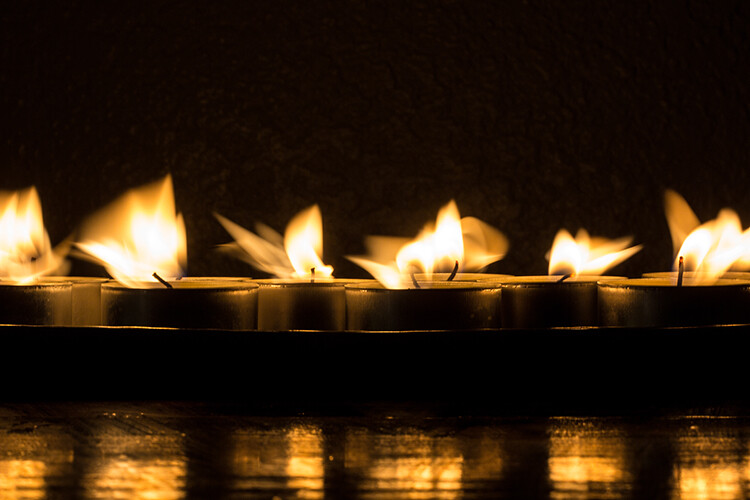
2. Candles and/or a Fireplace

bad weather

There are a few different benefits to spending some time photographing a flame. Whether you’re photographing a collection of candles or a fireplace, try experimenting with different exposure lengths in Shutter Priority mode. Try both long and short exposure times, and also be sure to note how the shutter speed affects the overall exposure of your image. Does a longer shutter time translate to a lighter or a darker overall image? How could you balance out a longer shutter opening without overexposing the entire image?

Another benefit to photographing flames is that it also makes you consider composition in a way that many subjects do not, especially in terms of reflections. Try putting a mirror or other shiny surface underneath a candle and photographing it. How does the reflection of the flame affect the overall image? Do you want to include the reflection in your image, or do you prefer to crop it out?

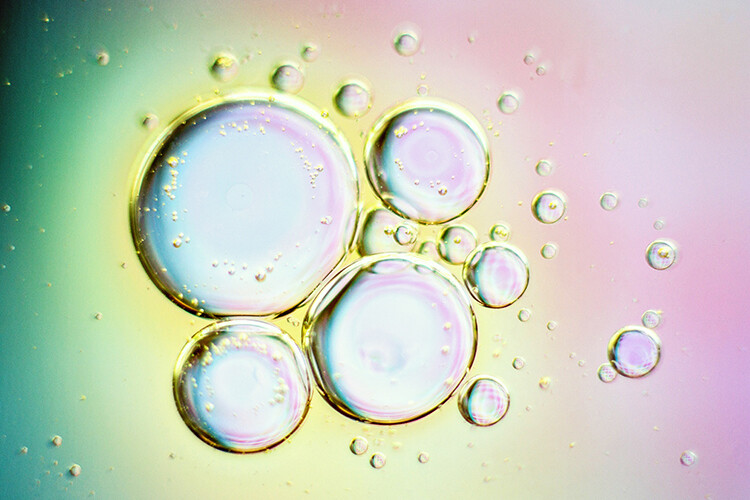
3. Oil and Water

This simple project packs a big punch!

bad weather

Equipment and supplies

A macro lens will help you out tremendously here, but if you don’t have one, extension tubes are also a great option. This image was taken with a $ 15 set of extension tubes and a 50mm lens. Basically, all you need is a clear glass dish, two cups, colorful paper, water, and olive oil.

Setup

First, take your colorful paper, and set it on a table or counter. Then take your two cups and set them on top of the paper, several inches away from each other. Next, take your glass dish and set it on top of the cups, so that it’s elevated off of the colorful paper. Add a little water, then a little olive oil, and be ready to photograph the bubbles that appear. You may want to spend some time experimenting with photographing the glass dish at differing heights above the paper underneath. Experiment with different types of colorful paper; scrapbook paper is a great resource for this. Try differing amounts of oil and water, and see how those small changes affect your image.

This is a great opportunity to experiment with macro-like photography in a way that has a pretty big impact. If you are using extension tubes rather than a macro lens, keep in mind that your extension tubes may or may not work with your camera’s autofocus. If you’re having trouble getting the bubbles to come into focus, you may need to focus manually (try the LiveView focus technique).

4. Food

bad weather

Photographing food is a great opportunity to play around with styling, as well as post-processing. It’s my humble opinion that much of your direction in terms of styling and processing will come from the food itself. In this case, I had a rustic loaf of bread that was covered in different seeds. It reminded me of rustic, communal dinners, and so I wrapped it in a tea-towel and stuck it directly on my table (something that happens with fair frequency to loaves that have just come out of the oven around here). I also knew from the get-go that I’d apply a more matte post-processing technique than I usually use in portraits in order to echo the rustic feel of the bread.

On the other hand, what approach would you take to styling and photographing a sleek cheesecake? Or a classic fruit salad? This short little exercise allows you to push yourself in terms of styling and post-processing, trying out skills and techniques that you may not typically use, as well as spending some time thinking about what types of styling and post-processing would best represent the subject.

5. Window Silhouettes

bad weather

I don’t know about where you live, but around here it can often be rainy and sunny at the same time. If you find yourself faced with similar weather, it’s a great opportunity to try doing a window silhouette.

Window silhouettes are a great exercise if you are learning photography because it will help you understand how your camera sees light. If your camera is on auto, and you focus directly on your subject, what does your camera try to do? If you move your focal point off of your subject, what does your camera “see” then? Does it affect the focus of your image? What happens if you try out the different metering modes? Does one seem to be more effective than the others in creating a silhouette?

6. Food Coloring and Water

bad weather

Grab a tall glass or vase, fill it with water, and then drop a couple of drops of food coloring into it.

This is a simple and colorful way to examine both shutter speed and light. Try using a short shutter speed. What does the image look like? Try using a long shutter speed. How is that image different?

In addition, try shooting with all different types of light. The transparency of the water is a great opportunity to practice capturing backlit images.

7. Interiors

bad weather

You don’t need to have perfectly clean or perfectly decorated rooms in order to gain valuable experience and knowledge from photographing them. Just a pick a room and go for it.

Experiment with light sources. How does the final image look when you use only natural light? What happens when you use only overhead and/or floor lights with the curtains closed? How does the image look when you use a combination of natural light and accent lighting? Think both in terms of exposure, and also the color balance of the image. Which look do you personally prefer?

8. Books

bad weather

I’m a huge bookworm, so it’s no surprise that I really enjoy photographing books in all sorts of scenarios. I love the texture of the pages, I love the different colored spines. I love basically everything about books!

Photographing books is also a great way to learn about aperture. Pick any book, and crack it open. Look for a short passage that you enjoy. Set your camera to Aperture Priority mode, and start with the lowest number you’re able to select (f/4 or f/2.8 for example). Set your focal point to your desired passage, and shoot. How much of the image is in focus?

Now set your aperture to one or two numbers higher than your first setting. How much of the image is in focus this time? Continue shooting up and down your available aperture range, noticing how the image changes as you do so. When might you want to use an image with only a sentence or two in focus? When might you want an image that included more of the book in focus?

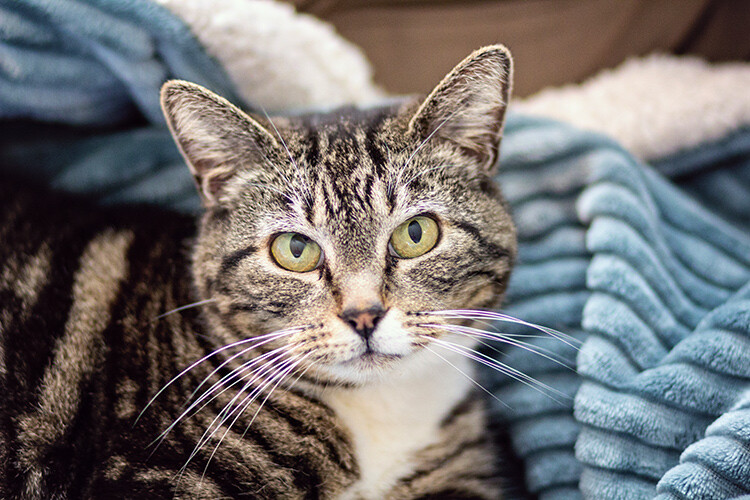
9. Pets

bad weather pets

Photographing a pet can often present many of the same challenges that you might experience when photographing children. Certainly, this will depend greatly on the type of animal you have as well as their temperament, but it holds true for our cat.

She moves quickly and is often not super interested or cooperative when I’m attempting to photograph her. So, trying to photograph our cat is a good opportunity to practice shooting candidly, as well as waiting patiently for just the right moment. Our cat is obviously never going to walk right in front of me, sit, and smile for a photo. Instead, it’s my responsibility to sit on the couch with my camera, waiting patiently. When she decides to come over and investigate, I’ll be waiting and ready. (Read: 9 Tips for Taking Better Photos of Cats) 

10. Craft Supplies

bad weather

Craft supplies are a great tool for photographic exercises because they’re usually a good source of color. Play around with color and group items randomly. Then group similar colors together.

Next, pick one single item or color to focus on. Photograph it alone, as well as grouped with the others. Is the image stronger with only one color or with many? Do you prefer the colors to be randomized, or grouped together?

Conclusion

Have you tried any of these approaches? What other ideas do you have for bad weather, indoor photography exercises that would help beginners understand an element of photography better?

The post 10 Things to Photograph Indoors When There’s Bad Weather Outside by Meredith Clark appeared first on Digital Photography School.


Digital Photography School

 
Comments Off on 10 Things to Photograph Indoors When There’s Bad Weather Outside

Posted in Photography