RSS
 

Posts Tagged ‘People’

A Common Misconception About Street Photography – Just Take Photos of People Walking

15 Oct
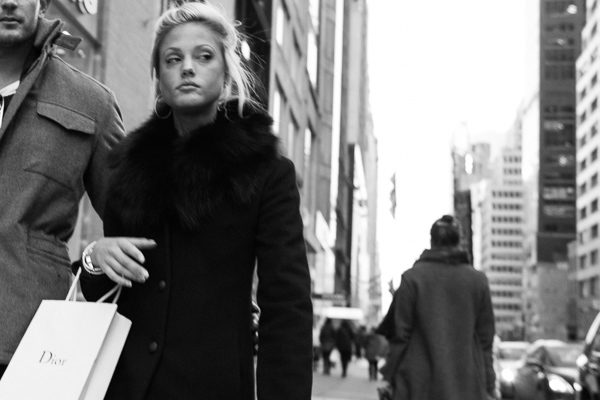
Dior, 5th Avenue.

Dior, 5th Avenue, NYC

A common misconception about street photography is that it is that it is about capturing any person that looks slightly interesting walking down the street in front of an interesting background. It’s actually about trying to capture a story, idea, or emotion through an image. While this largely can take place on the street, it can be captured anywhere.

What comes to mind when you see the term street photography? Is it a person walking down the street?

Whether or not you you have practiced street photography, I am assuming that you have come across this idea or seen images like this – a person with a blank look just walking down the street. Maybe they have some interesting clothes, beautiful hair, or the background looks interesting. But nothing is happening. There is no idea or emotion present.

Go beyond shots of people walking

Good street photography, and good photography in general, goes beyond that. Street photography is not just about capturing images of people. It is about capturing candid and natural photographs about life. There has to be something there.

My favorite street photographs make me feel like there’s something behind the curtain. Of course there needs to be something interesting and beautiful on the surface. There has to be a mix of both content and form, but behind the curtain there is some sort of idea or feeling, something that makes you think.

I can’t tell you how many boring shots I have of a person with a blank look walking down the street. We all take these kinds of images. There is a lot of spontaneity and hand-eye coordination in this type of photography and most of the time you see the potential for the shot, react to take it, but there’s just nothing there. That is normal.

Go for the expression

SoHo

The above image has a lot going for it. The main subject is up close and sharp, the angle is dynamic, the woman looks interesting and fashionable, the lighting is great, and the background is colorful and interesting. However, this image lacks for me what the top image has. There is no expression or emotion. It’s tough for me to feel anything under the surface of the image. Because of this I consider this image to be good but not great.

What we are looking for however, is something to be there. This could be a strong facial expression whivh is one of the first things that I look for when I’m out there doing street photography, particularly the look in someone’s eyes. Fashion, the background, the light, are all important elements of a strong photograph and you should pay attention to them, but in my opinion, a good expression can trump them all. The photograph at the top of this article is a person walking down the street, but there is so much more to the photo than that, because of her facial expression.

Watch for gestures

Gesture, SoHo

An example of gesture, SoHo. NYC

Gesture is also very important. I prefer to think of gesture as an expression with the body. Pay attention to how people carry themselves and what hints that might give us about them. A facial expression could be considered a gesture as well, but look at the hand in the top image. The way the hand is position with the sharp nails makes it look like a claw. When you mix that with the facial expression, this becomes a very frightening image, at least to me. Or take a look at the gesture of the legs above with the weight all on one leg and the other turned gracefully. You can get a sense of this person just from that body position.

Also, a street photograph does not have to have people in it. This goes beyond an urban landscape. Search for images that have the same effect as a good street photograph with a person. Search for an image that give us hints about life or makes us think or feel something, without people in the shot.

Gowanus

Gowanus, Brooklyn NYC

The more you get involved with this type of photography, the more you will notice themes and consistency in your work and hints beneath the surface of your photographs. Focus on this when editing and group similar photographs together. This all takes time to develop and the more you think about your photography in this way, the more it will improve.

What do you focus on when you do street photography? Do you have any other tips to share? Please do in the comments below.

The post A Common Misconception About Street Photography – Just Take Photos of People Walking by James Maher appeared first on Digital Photography School.


Digital Photography School

 
Comments Off on A Common Misconception About Street Photography – Just Take Photos of People Walking

Posted in Photography


7 Tips for Interacting with People to Create Better Portraits

30 Sep

Sassy kid

Interaction is the basis of a portrait session, in every single way. In the most obvious ways, for example, you must interact with the client to set up the session, during the session, and when the images are done.

The portrait session is also an interaction with self, both for you the photographer and for your subject. You the photographer, who is creating with integrity, must meet with yourself inside to bring about bold creativity. The subject, likewise, is faced with many insecurities that they may have very little experience with in their day to day lives. They are in a vulnerable position. The portrait session brings about all kinds of internal interactions.

The photos themselves are a form of interaction with the future. The way a portrait portrays someone goes a long way to communicating who they are – or, at least, who they’d like to be seen as, which is important in its own right.

It’s for this reason that developing habits for skillful human interactions is so important. They make everyone more comfortable, but, more so, it means capturing images of someone who is comfortable at the moment the image was taken.

The way someone responds to you is the way they will look in their images. The difference may be imperceptible to a stranger, or when simply viewed at a glance; but a strained smile, or nervous eyebrow might be clear as day to the people who care about them. You as a photographer are not a plumber who can still fix the pipes, even if your subject is having a bad time. Among the most important tools you have is the one that elicits an honest and flattering response from the subject:

The way you interact with people is key
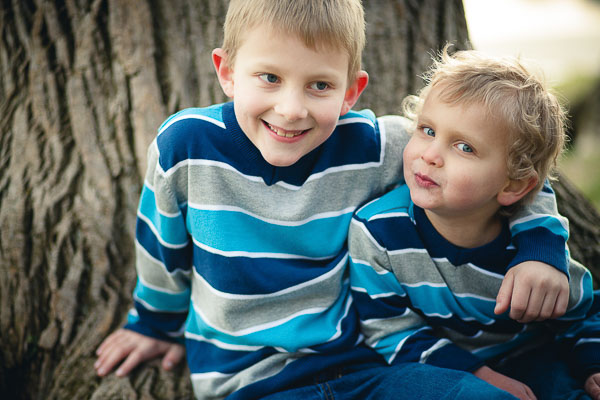
Casual kids

Everyone is a Little Kid

If you who wish to bring about a truth and transparency in your subjects, you can take a clue from the rules of photographing little kids; don’t slow the child down for your shot – you keep up with the kid!

Your goal is to keep your subject engaged and having a good time during their session, so what is true of working with children is also true for adults. It’s important to move at their pace. Adults get bored when you move too slowly and then you have pictures of bored adults trying really hard not to look bored. When you’re moving too fast, adults get anxious. They start having trouble understanding and interpreting your instructions. Then, you have photos of anxious adults trying really hard not to look anxious.

Getting a sense of your subject’s natural pace is all about how you interact with them. You can’t simply bark orders at your subject. You can’t withdraw into a technical and creative cocoon, sticking your lens out just far enough to take their picture. You have to actually engage with them personally. Allow time in between arrangements and locations to chat. Be open with your subject; make yourself vulnerable to them. Remember, that is the challenging posture a portrait session puts the subject in: vulnerability.

Pay attention to the things your client is saying, and the jokes they are making. If they say something like “I’m sorry, I must be terrible to work with” pay attention! They are blaming themselves, but it is likely because you are moving too fast and failing to communicate. The client is likely to blame themselves since they have seen all of your amazing photos and assume that all those people must have been able to keep up. Take this as a personal critique to communicate more openly and slow down.
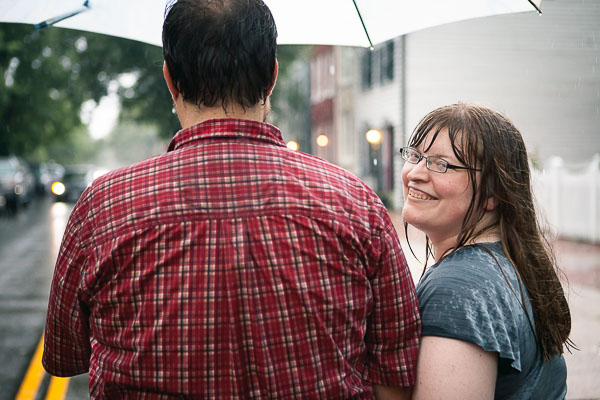
Unexpected circumstances

Learn to Speak in Positive Terms and Say Positive Things

As you are open and communicating with your subject, remain positive as much as possible. When you have to be honest about something challenging or difficult, do so in positive terms. This takes practice, but it’s beneficial to your own well being as well.

I’m not advocating lies, or even twisting the truth. I’m talking about finding a legitimate perspective in whatever you’re saying, so that some form of positivity is also in view.

For example, say you’re shooting in a local park and the shot you’re working on just isn’t working the way you want. When you know the shot that you wanted is dead, there’s no reason to keep wasting time; you should just move on. If you say “Ugh, this spot just isn’t working out, let’s look somewhere else”, you would be telling the truth, but in a negative way, with the focus on what isn’t working right. That’s not the important part. Instead, if you say “Hmm, this spot isn’t turning out how I’d hoped, I think there might be something even better over in that direction” it sounds more hopeful, positive, and encouraging.

Both of those statements are essentially the same. But in the first, the emphasis is on a problem right then and there. In the second statement the problem is acknowledged, but the emphasis is on something positive “over in that direction”.

Keeping an attitude like this helps your subject remain optimistic about the result, which is important. As your subject’s optimism goes down, they will have to work harder to appear comfortable and relaxed. So even if you’re struggling in the beginning, and your subject might have objectively good reason to become more pessimistic, if you allow that to happen, you’ll be damaging your chances of recovering later.

Stay positive!
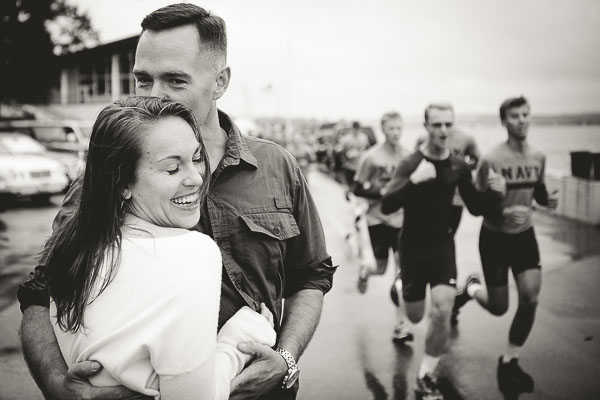
Naval Academy Runners Romance

Use Humor as a Diffuser

The situation your subject is stepping into is a vulnerable one. It’s your job to scrutinize how they look in order to present them in their most flattering light. Most of us feel uncomfortable being under the microscope like, especially concerning the way we look. People don’t like their looks being judged poorly and they spend a great deal of time, energy and money to avoid it. In fact, hiring you might itself, be a part of that desire.

So part of your job is to diffuse that feeling. You need to keep your subject comfortable, which typically means obscuring the overt need to scrutinize them and the way they look. An excellent method for this, without having to resort to being deceitful, is to place yourself under their microscope.

If you make a mistake, be open about it and laugh it off. By presenting your own momentary shortcomings, you make yourself vulnerable, and by contrast make them feel less vulnerable. You’re not lying, or manipulating them. You’re just levelling the playing field.

Likewise, if your subject has said or done something embarrassing, you can use humor to turn the embarrassment on yourself. For example, if my subject accidentally steps in a puddle of water and seems embarrassed, I might use the opportunity to tell them about the time I fell in the water during a portrait session. It’s humanizing.

By positively applying humor to your own shortcomings, you’re able to change the tone of the session from one where the subject feels that they must perform for you, into one where they must engage with you.
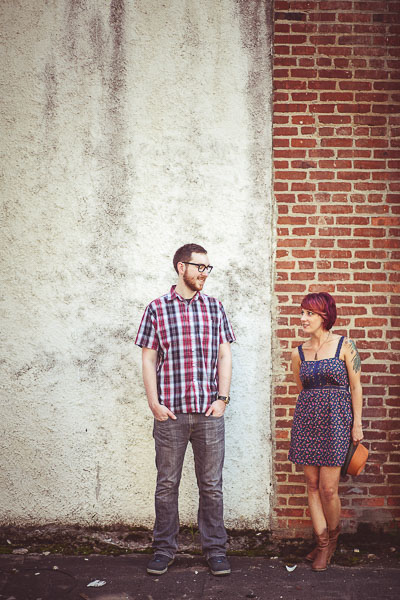
Engaged couple two tones

Speak in Terms Relative to Your Subject

In many cases, unless your subject has been trained as a model, they’re going to spend a fair amount of their mental energy trying to interpret what you’re telling them to do.

If you say, “tilt your head”, that means a lot more to your subject than that specific thing you want them to do, so for them, it has almost no meaning at all. Instead, you could say “tilt your forehead toward your toes”, or “bring your left ear closer to your left shoulder”. The same goes for the direction they’re facing and movements you need them to make. If you tell them to “step forward” they will often move in whichever direction their feet are facing, or they’ll feel confused about what you want them to do, and shuffle around awkwardly. Instead, you could say, “take a step toward me”.

These are specific instructions which are relative to your subject, rather than your vision. Giving subject-relative instructions also sounds a bit funny to many people at first so it acts as an excellent ice breaker too.

If you master no other subject-relative language, master your subject’s left and right. Instead of saying “step to the left”, say “step to your left”. By giving your subject terms that they do not have to interpret, they can devote more mental energy to the intangible elements of the shoot – like having a good time, or interacting with you.
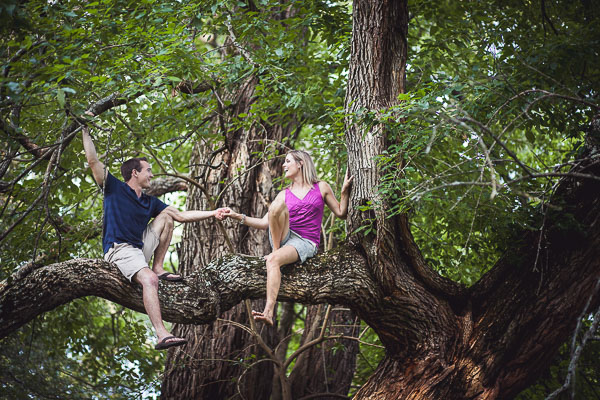
Engaged couple in a tree

Demonstrate Posing

This is an extension of speaking in subject-relative language, except it takes it one step further. Taking a moment to demonstrate how you’d like your client to pose can have multiple benefits.

First, demonstrating a pose can often act as an icebreaker, since the motions you will ask your subjects to carry out sometimes feel a little silly, even though they look great in a photo! When you demonstrate the pose, the subject has a chance to see you feeling a little silly, or not feeling silly and also not minding.

Second, as with speaking in terms relative to them, demonstrating a pose helps remove a big chunk of the subject’s need to interpret what you want them to do. They can more easily just go for it and try, rather than timidly wondering if they’re “doing it right”.
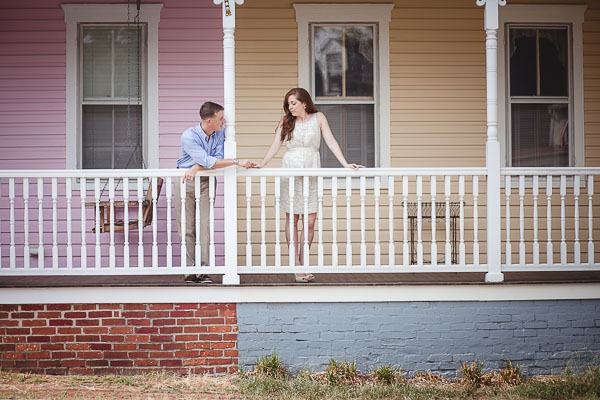
Relaxed romance

When I demonstrate a pose for a subject, I tell them what I’d like them to do, as I do it.

So, I may sit down in the spot I’d like my client in and say, “Okay, I’d like you to sit right about here”. Then I’ll sit down and say, “You can cross your legs like this, or something like this, if it feels more natural for you” as I demonstrate a couple of different acceptable positions for their legs. Then I might point over to where I’m planning on shooting from and say “I will be shooting from right over there, so you’ll want to look in that direction”.

By the time the client sits down, they have a kind of template for what to do and can act more confidently in giving it a try. This also has the added benefit of allowing you to help your subject find their way into a pose that is more natural for them, rather than putting them in a position you’d never see them use in real life.

For more on posing check out this dPS eBook – Portraits: Striking the Pose

Be a Constant Stream of Affirmation for Your Subject
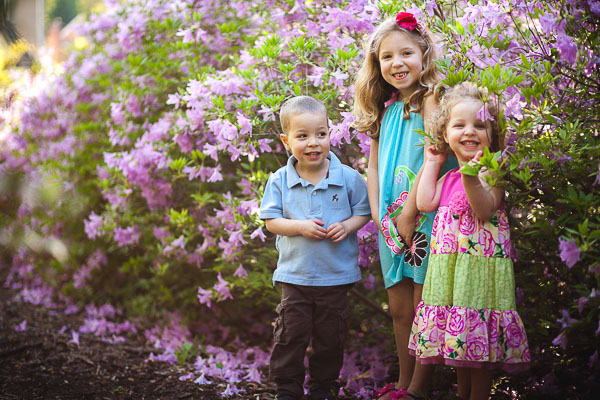
Hide and seek

I’ll say it again; remember what a vulnerable situation your subject is in when they’re in front of your camera. One of the simplest ways to offset that feeling for your subject is to be a constant stream of affirmation.

  • Thank you!
  • You’re doing a great job
  • Yes! That’s perfect, hold onto that!
  • You’re looking great!

Of course, you’re walking a line here, because what if your client isn’t doing a “great job” and they are in fact making your job a lot more challenging. Well, get over it. It’s your job as a photographer to work with who your customer is; some people are easier going with pictures, others need more attention, but the images will be yours and so the responsibility is too.
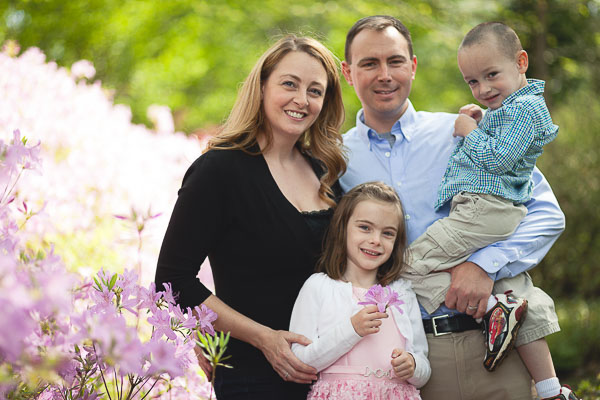
Friendly family

I wouldn’t advise lying if you’re struggling to get something you like while working with your subject. But affirmation is still important. Perhaps even more so. The thing about affirmation in this context is that it doesn’t necessarily have to be affirming anything the subject themselves is doing. Of course, that certainly works best to mitigate the feelings of a subject who is insecure about their appearance, or feels bad at photos. But simply affirming that the shoot is going well and you are excited is often enough to let the subject relax. Keep them coming – seriously, about every 15-20 seconds while you’re behind the camera.

  • Wow, this shot is coming out even better than I expected!
  • I love this background!
  • You and I are like a dream team!
  • The textures in this foreground are so interesting and juxtapose just right with your dress!

Easing a subject’s sense of vulnerability by making positive exclamations about the shoot makes sense logically too. By helping the subject to realize that they are only a part of what you’re paying attention to will relieve the pressure, and let them relax.
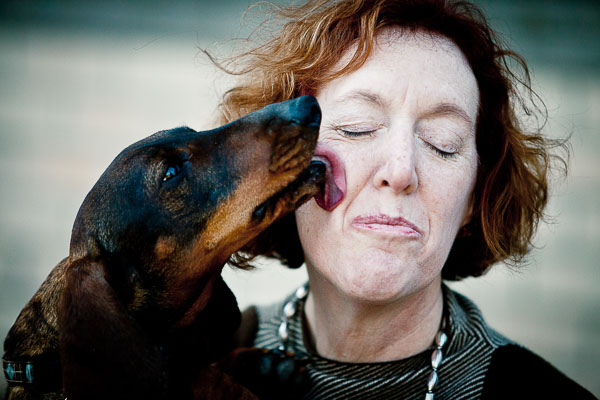
Dog kisses

Don’t Laugh at Anything that Shows up on the Viewfinder

Here’s what I want to leave you with. This advice, I believe, carries with it the heart of everything I’ve said here.

Never laugh at something that shows up on your camera’s screen.

I’m sure you can understand why – your subject’s vulnerability, of course. How might they interpret your laughter? It’s possible that you’ve cultivated an atmosphere of humor. Maybe you have consistently made yourself the butt of many jokes, and your subject might have joined in the fun and so maybe at this point it’s okay to laugh a little, as long as you’re laughing together. But let’s be honest, the average subject is pretty insecure. They’ll probably think you’re laughing at them and they’ll clam up.

But all of that is quite obvious. People don’t like to be laughed at. That’s not what is so important about this though. It’s not that you’re laughing, it’s not even why you’re laughing. It’s why your subject thinks you’re laughing. Truth is not important, your subject is going to respond to what they think, regardless of whether that is true or not.

It’s not that laughing is a problem. It’s that the subject thinks you’re laughing at them in some way. And it’s not just about laughing.

Let’s say you’re having some annoying problem with your camera for some reason. As you’re trying to work it out, you become visibly frustrated. Your subject probably doesn’t know what camera problems look like and their sense of vulnerability is causing them to take on a lot of blame. It’s not that you’re frustrated, it’s that you’re subject thinks you’re frustrated because of them.

Subjects place themselves in a position of vulnerability with photographers to a degree few other professions have access. Doctors and lawyers are a good example example. Doctors need access to the skin and the stuff underneath. Patients have to reveal their bodies to doctors – a vulnerable feeling indeed. Defence lawyers need access to the minute and truthful details of a defendant’s life. You as a photographer need access to their spirit – people must be who they really are with you.

You must take great care not to trample the spirit of your subjects. You must do mental, emotional, and creative gymnastics to avoid crushing the delicate structure of trust and assured respect. That allows their spirit to be reveal itself in honest smiles, cracked jokes, and a temperament of self-confidence standing in front of the camera.

Without your subject’s spirit, there is little reason for the photo.

Do you have any other tips for working with people and taking better portraits? Please share them and any stories you have in the comments below.

The post 7 Tips for Interacting with People to Create Better Portraits by William Petruzzo appeared first on Digital Photography School.


Digital Photography School
 
Comments Off on 7 Tips for Interacting with People to Create Better Portraits

Posted in Photography


How to Photograph People: 7 Tips for Photographers Who Never Photograph People

19 Aug

lynseymattingly7

No matter what type of photography you specialize in or prefer, at some point you will find yourself having to photograph a human, or multiple humans. For favor, for fun, or because they share your genetic make-up or home address. If you own a fancy camera, there you will be at least once in your photographic life (but probably many more) where you will find yourself taking a portrait. Taking pictures of people is much different than beautiful mountains, scenic oceanscapes, historic architecture, butterflies, plates of food, or whatever it is that you usually photograph. Here are some basic tips to get the best portrait possible, especially for you if don’t usually see a human on the other side of the lens.

#1 Be realistic

Don’t overpromise your abilities or expect too much out of yourself. If someone asked me to take a picture of the snowcapped Rocky Mountains, which, as they have been my entire life, are right outside my window and something I know like the back of my hand, it would not be a good picture. I lack the skills for landscape photography, and more importantly, the interest. In my favor though, people aren’t likely to ask me to take a landscape image near like a non-portrait photographer will be asked to take portraits. Be upfront if you are willing to try it so that in the event it doesn’t go as planned, it won’t bother you enough to affect how you feel about photography in general.

lynseymattingly2

#2 Simplify everything

Backgrounds, clothing, props, light, etc. – simplify everything. Give yourself a running start out of the gate by having a solid foundation to work with. Look for flat or level backgrounds, horizon lines that don’t run through people’s heads, even lighting, and solid colors. I can’t emphasize this enough. The details which are the focus should only relate to the person, whether it’s a portrait of just the face or a full body, everything else should compliment this, or completely disappear to the viewer’s eye.

lynseymattingly5

#3 The easiest setting I know

At the risk of starting a heated discussion or this becoming a dumping ground for comments debating otherwise, I am going to share what I consider to be my best general setting and equipment advice.

First a few disclaimers: I shoot Canon and have no idea if these will translate to something else. Also, you must promise you will not be upset if this doesn’t work for you; sometimes finding what doesn’t work is just as important as finding what does (I tell myself this often to justify my many mistakes). Lastly, taking a great portrait is a lot more complicated than just one setting, but you have to start somewhere. There are likely to be people who disagree with my advice and I hope that this could start a supportive discussion on what has worked for others, rather than unhelpful commentary. Now, on with it…

  • Using natural light only if at all possible, dial in your ISO for something that makes sense; ISO 200 if it’s bright, 400 if it’s cloudy but even, 600 if it’s darker.
  • Shooting in Aperture Priority mode will allow you the most room for error, and is how many portrait photographers shoot regularly.
  • I like the f-stop to be at f/2.2 for one or two people, and f/2.8 or f/3.2 for groups of three or more (obviously this is speaking very generally and would best be used as a starting point to find what works for you). These settings will give you that “portrait blurry background effect” known as good bokeh.
  • Shooting in RAW will give you more wiggle room later when editing, though it takes more space on your memory card.
  • Use a prime lens if you can; I shoot nearly everything I take with my 50mm L1.2. This is a fancy lens no doubt, but any prime lens will typically be faster (have a larger maximum aperture) than a zoom lens, and with everything else going on, I find that using my feet as my zoom is one less adjustment my eyes and hands have to do.
  • I typically underexpose my images one stop. This works for me because I like to get the details and then bring it back up as needed myself in post.

This may not work for you, and there is absolutely no shame in running everything you aren’t sure about on auto. This doesn’t make you less of a photographer. All it means is that you think in this scenario, your camera – a magnificent piece of machinery that was created by thousands of professionals over decades with countless research, information, and experience – might guess better than you. That’s all.

lynseymattingly1

#4 Shoot from their eye level or higher, and at an angle

While photographing a person from below and not capturing an amazing view of 15 chins they don’t even have is possible, it’s not easy. For the best, most flattering set-up, shoot at their same eye level or above. I often have people kneel down and look up at me while I remain standing. As someone who has 20 different chins that only come out and play for pictures, I’m sensitive about this one and I find that even a child with the most adorable chubby cheeks and double chin is best photographed on a level playing field.

Additionally, taking pictures of someone straight on is both unflattering and uninteresting. Asking them to twist at the waist, shoulders, or neck and not face their body square-on, but rather follow their face’s direction will not only be much more forgiving to any subject (every single human has one eye that is smaller than the other – I’ve researched it), but will also make for a more professional finished portrait.

lynseymattingly3

#5 Don’t command a smile

Don’t command a smile, or instruct “cheese!” or say “hold still!”, or anything that could be interpreted as you attempted to force your feelings, or agenda, onto your subject. Even if you are going for a serious tone, and are trying to catch an image when they don’t realize or least expect it, you are much better off engaging them in conversation than setting up the moment and expecting a single second of utter perfection. A true portrait is genuine at its very least.

lynseymattingly6

#6 Resist the urge to run your final images through every Photoshop trick you’ve ever learned

If you don’t usually photograph people, the idea of playing around with editing tools might be fun. There are so many! This one turns their eyes into laser beams. This one makes their skin look like pure plastic perfection. It’s fascinating, I get it. However, if you’re wanting to stick to the basics, there isn’t much that needs to be done. Clean up blemishes with the Spot Healing Brush Tool, run a basic sharpen (I like the oddly named Unsharp Mask at 60%/2.0/0), and adjust your color and levels if needed. If I get stuck while editing an image, I ask those thousands of professionals what they think by running auto color, tone, and contrast just to see what it does. It nearly always takes everything too far, but it gives me an idea of where I want to go sometimes, just by showing me where I don’t.

lynseymattingly4

#7 Don’t try to turn it into something it’s not

Oh how I wish this image had a little more POW. A little zing. I’d love it if her entire face was showing and her hair was either more haphazard, or more perfectly fanned out. I wish there was more background showing. However, this is not a picture for a fashion magazine cover, but rather an image of my stepdaughter I took with my iPhone. We were on a walk and I spotted the purple flowers on the ground and told her to go lay in them. And because all of my stepdaughters do whatever I say, and think that I am totally magical, she raced right over and did it. Then an enchanted unicorn wandered up and flew us home. It’s drastically cropped, not necessarily for effect, but because she was giving me a snarl and wearing a very busy shirt. Is this a portrait? To me, it is. It’s a perfectly fine, authentic image and the subject herself loves it.

That is probably the most important thing when taking pictures of people.

Do you have any other tips you’d like to share? Please leave a comment below.

The post How to Photograph People: 7 Tips for Photographers Who Never Photograph People by Lynsey Mattingly appeared first on Digital Photography School.


Digital Photography School

 
Comments Off on How to Photograph People: 7 Tips for Photographers Who Never Photograph People

Posted in Photography


Perspectival Street Artist Pierces People in New Photo Shoot

02 Jul

[ By WebUrbanist in Art & Street Art & Graffiti. ]

street art neon colors

Known for his geometric art installations, Aakash Nihalani is back with a mind-bending sequence of shots that show humans interacting with his reality-warping work.

street art bent blue

street art abstract geometry

street art person pairs

street art interactive geometry

In Landline, individual and paired persons become part of the project, standing in front of urban surfaces and seemingly skewered by abstract shapes.

street art skewered figures

pierced orange rectangle neon

White shirts become backdrops for black squares sliced from each set of outfits, shot through in turn by bright neon pink, green, orange and blue rectangles.

street art straight yellow

"Landline" by Aakash Nihalani

"Landline" by Aakash Nihalani

For more of this artist’s work, including additional closeups that show the trick behind each sequence, you can follow his posts on Eye Scream Sunday.

Share on Facebook


[ By WebUrbanist in Art & Street Art & Graffiti. ]

[ WebUrbanist | Archives | Galleries | Privacy | TOS ]


WebUrbanist

 
Comments Off on Perspectival Street Artist Pierces People in New Photo Shoot

Posted in Creativity


Beginner Tips for Posing People with Confidence

12 May

How to pose models

In earlier articles I gave you advice about planning a portrait shoot and some reasons for using natural light. Now it’s time to take a look at something that many photographers find difficult – posing.

The reason posing can create problems is because inexperienced models will look to you for direction. If your model is waiting for you to tell her what to do and you freeze up or don’t have any decent ideas you will struggle to create good photos. It’s up to you to take charge and tell the model how to pose. The key is preparation – you need a set of poses you can suggest to the model.

Before the shoot

Here are some points to think about before the shoot:

What kind of shoot is it? The posing requirements for a family portrait are very different than a fashion shoot. You can think about posing once you’ve decided what type of photo you are going to create.

Look for inspiration online. Chances are you have a few favourite photographers you follow on websites like Flickr and 500px. You will find some good poses in their portfolios. Download your favourites to your smartphone (or use Pinterest to create a mood board, covered in more detail in my article How to Plan the Perfect Portrait Shoot). Then you have something you can show to your model. Don’t try and commit the poses to memory – you will forget them under pressure.

Match the pose to your model. This is important. You’ll see some wonderful poses in fashion magazines. But many of them need a professional model to carry them off. Your model may not be able to do that, especially if she has a different body type than the people in the magazine.

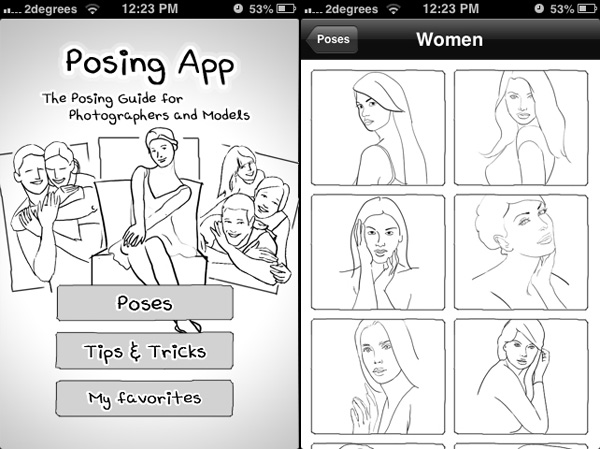
Buy the Posing App. It gives you over 300 poses that you can access on your smartphone. The best way to use it is to select five to ten and make them your favourites. Then you can show them to your model so she understands the what you’d like her to do.

How to pose models

Screen shots from the Posing App. The line drawings are easy to understand and follow.

The author of the app has written several articles about posing for Digital Photography School you will find useful (click the link to see a list).

During the shoot

No matter how experienced or inexperienced your model is, here are some tips to help you find the perfect pose during the shoot:

Build rapport. This is essential. If your model likes you and sees what you are trying to achieve she will work harder. If you talk to her about things she likes you will see more life in her eyes and get better expressions, including natural smiles. She will be more relaxed. If your model is tense, you are going to struggle to get natural looking portraits. Take the pressure off her and bring it back on yourself. Assure her that if the photos don’t work out that it’s your fault, not hers. Build her confidence.

Look for natural expression. As you talk to your model you will notice natural expressions and mannerisms that you can use. Don’t be afraid to say “hold that pose” or “do what you did just now again”.

How to pose models

I noticed the model had a interesting mannerism so I asked her to repeat the gesture. This portrait is one of her favourites

Adapt poses. When you suggest a pose, such as one used in another photo or from the Posing App, treat it as a starting point, then adapt it to suit your model. If she looks unnatural in a certain pose, then adapt it so it suits her body and the clothes she’s wearing.

How to pose a model

The pose on the left is one I found in the Posing App. For the second portrait I asked my model to drop her left arm so I couldn’t see it. Don’t be afraid to tweak poses, sometimes a small change makes a big difference.

Simplify. Keep everything as simple as possible. That applies to composition and the clothes and jewellery worn by your model. If she has too much jewellery on, ask her to remove some. It will improve the composition. If you’re struggling to find a good full-length pose, move in closer and shoot from the waist up, or do a head and shoulders portrait. The background will go more out of focus, and there will be less of the model in the photo.

How to pose models

Simplification in action. The closer you crop, the easier it is to pose your model. This is a good technique to use if you are struggling to make a certain pose work.

Pay attention to detail. Especially hands, which often look better side on to the camera. Look at photos where the model’s hands look elegant or are otherwise well posed, and ask your model to do the same. Check her hair to make sure stray strands aren’t blowing across her face or eyes. Look at her clothes to make sure they aren’t wrinkled or creased in a strange way.

Find something for your model to lean on. This makes it much easier to find a natural looking pose.

How to pose models

Two different ways to use a wall to give a model something to do. The Posing App has lots of poses for leaning.

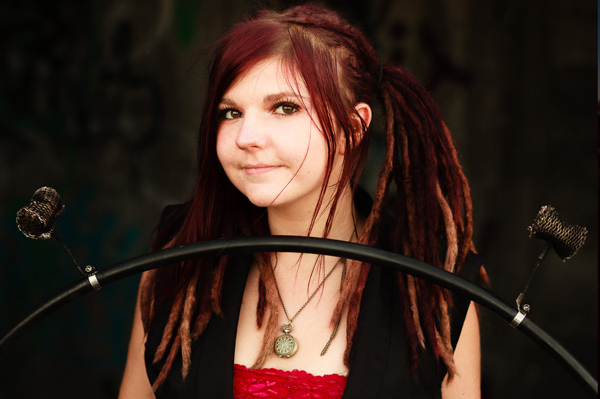
Use props. If the model has something to hold or otherwise interact with, it gives her something to do. If she is having fun you’re more likely to get a great expression.

How to pose models

The model in this photo is into hooping. Using the hoop as a prop gave her something to hold and added interest to the portrait.

How to pose models

I suggested the model bring her horses along to the shoot. The horses are a natural prop and her interaction with them led to photos like this one.

Over to you

Do you have any tips for our readers about posing models? What has worked for you? Tell us about your experiences in the comments.


The Natural Portrait photography ebookThe Natural Portrait

My ebook The Natural Portrait teaches you how to take beautiful portraits in natural light. This 240 page ebook, published by Craft & Vision, takes you through the entire process of natural light portrait photography through from finding a model, deciding where to shoot, working with natural light and post-processing your images. Click the link to learn more or buy.

The post Beginner Tips for Posing People with Confidence by Andrew S. Gibson appeared first on Digital Photography School.


Digital Photography School

 
Comments Off on Beginner Tips for Posing People with Confidence

Posted in Photography


Valley of the Dolls: Missing People Replaced with Puppets

07 May

[ By WebUrbanist in Destinations & Sights & Travel. ]

valley of the dolls

It sounds like the premise of a science fiction film, but deep in a rural valley of Japan there is a town where eerily lifelike dolls have been slowly replacing actual residents of Nagoro for years – today, the fakes outnumber real people ten to one.

After leaving town for just over a decade, local artist Ayano Tsukimi returned home to find many of his friends, family and neighbors had died or moved away – the population was down to just a few dozen.

valley dolls street view

valley dolls street side

While creating a scarecrow for her garden, she decided to model the figure after her father, which turned out to be just the beginning. Thus began a strange art project to create full-sized doll versions of all those who had vanished – hence, Valley of the Dolls (not to be confused with the even-creepier Island of the Dolls in Mexico).

valley dolls installation art

valley dolls sculpture project

Over the last 10 years, she has created over 350 dolls, many visible to people passing through the town and seemingly engaged in everyday activities – gardening, walking, reading and fishing. The classrooms of a disuses local school have been repopulated with students and teachers, too, forever waiting silently for class to begin (or end).

valley dolls road side

valley of dolls

valley of dolls image

The documentary by Fritz Schumann (embedded above) goes into the story and motivations of the artist: “Tsukimi discovered her craft almost by accident. When seeds that she planted failed to grow, she decided to build a scarecrow in the likeness of her father. It was only then that she fell upon the idea to recreate the village she once knew. The dolls are made with straw, fabric, and old clothes, much like a humble scarecrow, and Tsukimi is constantly making new figures to replace ones that have worn out.”

Share on Facebook


[ By WebUrbanist in Destinations & Sights & Travel. ]

[ WebUrbanist | Archives | Galleries | Privacy | TOS ]


WebUrbanist

 
Comments Off on Valley of the Dolls: Missing People Replaced with Puppets

Posted in Creativity


Tips for Boosting Your Confidence Doing People Photography

03 Apr

Feelings follow actions

We all know most people aren’t comfortable being photographed. What’s less well documented is many photographers actually feel nervous about photographing people.

It’s understandable when you think about it. Since we know that the people we’re photographing don’t want to be photographed, we feel we’re invading their space. We also feel just as ‘on show’ as the subject. We have to perform, be charming, build rapport, make people smile, effortlessly change the settings on our camera and ultimately show them how great they look in the photo. It’s a lot of pressure!

But hey, there’s never going to be a big sympathy movement for photographers, so we have to overcome our confidence demons on our own. I know how you feel. I used to quiver with fear when photographing people, too. Over the years I’ve picked up many helpful tricks and now I can actually enjoy the spotlight and hectic pressures of a large wedding. Here are a few for you:

Tips for boosting your confidence doing people photography

Plan the photo before you speak to them

Plan the photo Plan the photo3

Once someone has agreed to be photographed you don’t want to be standing there flapping about wondering what you’re going to do with them. Have a clear image in your head that’s based on the available light, backgrounds, and the message you want to convey through the environment and their pose.

Think about why you wanted to photograph them in the first place and then use your composition, posing and photographic skills to tell the story. The better prepared you are the more confident you’ll feel. You’ll be able to give your subject instructions and explain why you’re doing what you’re doing.

For example, you could say “Your hair looks fantastic and if we take the photo over here then the sun will create a beautiful halo as it shines through it.” The model will feel great, you’ll feel in control and you’ll really sound like you know what you’re doing.

Help your model feel confident

Help model feel confident 2 Help model feel confident

The more relaxed your model is, the easier the process will feel for you too. Stay positive. Even if you can see you’ve screwed up a photo just keep sounding positive. Tell them how well they’re doing and never let silence descend. As soon as you stop talking, your model will instantly tense up. Imagine someone staring at you without talking and you’ll know how the model feels.

Often when we’ve just gotten started I’ll say, “Right, I’m just going to take a couple of practice photos to make sure I’ve got the exposure perfect, so you can pull funny faces at me if you like.”. Whether they pull a face or not they’ll often be more relaxed or even smiling naturally at this point. Because of this, some of the best images in a session can be your first.

How to keep the conversation going

Keep conversation going

We’ve already established that silence is kryptonite for a photography session, but what do you say to help take the model’s mind off the photography? As a portrait and wedding photographer I prepare what I’m going to say during the session almost as much as I plan the photos.

Here is a selection of the techniques I use in different circumstances:

  • When photographing a group I might ask everyone to look at the person with the smelliest feet, or who spends the most time in the shower, etc.
  • I ask them to keep their eyes open for as long as possible. You start with a glazed expression but as their eyes begin to dry out they start to smile and then laugh. I turn it into a competition if there are several people.
  • Do you have any nicknames for each other?
  • For group photos I have a method for avoiding people blinking. I ask everyone to shut their eyes and then open them on the count of three. Just after I say ‘three’ I tell them to remember where I’m standing!
  • I ask them to guess the two people I get told I look like (it’s the comedian Harry Hill and the TV chef Heston Blumenthal, by the way)

Keep conversation going2

For travel portraits some of the above ideas might work, but you can also just ask simple questions like:

  • What do you love most about this place?
  • Is there anywhere you recommend I go?
  • Where’s the best place to eat?
  • Do you have any hobbies?
  • Don’t forget to tell them how beautiful their country and food is!

To help make the conversation even more natural I sometimes use a tripod and remote shutter button once I have the photo composed. This means I can maintain eye contact and build rapport more effectively. It helps the model feel like they’re in a proper conversation rather than staring at a piece of machinery.

Talk with them first

For a posed photo you should speak with the model first, whether you’re photographing a stranger or an old friend. Tell them why you want to take their photograph (I love your hair, you look cool, etc.) so the model isn’t left wondering.

When I’m on holiday I like to chat with the locals before I ask for the photo. Maybe I’ll buy something from their shop or pretend I need directions to get the conversation going. Once you start chatting and build rapport it feels much easier and more natural to ask for the photo.

*Note: for more read:  Practical Tips To Build Your Street Photography Confidence  for Tips for Photography People when Travelling. 

Talk with model first Talk with model first3

Camera tricks for the super-nervous

If you’re really too shy to speak with people, or want a reportage style – then the obvious solution is to use a long lens. However, it can feel a bit creepy doing this and it’s even more embarrassing when you get caught!

An alternative is to put your camera on a tripod and use a remote shutter. This way people don’t realize you’re taking a photo at that exact moment because you’re not looking through the viewfinder. You then wait for people to walk into your composition and fire the shutter at the right moment. You’ll have to pre-focus the camera and use a deep depth of field to increase your chances of a sharp image.

Another method is to use a wide angle lens and place the person you want to photograph at the edge of the photo. The camera won’t be pointing at them so your motive is less obvious.

Camera tricks for the nervous

Feelings follow actions

When talking about building confidence most people talk about ‘positive thinking’. Psychological tests have shown that in reality feelings follow actions. What this means is that if you act like you feel confident then you’ll actually become confident.

If you smile, project your voice, dress sharp and stand up tall you’ll actually start to feel more assured.

Do you have any techniques, games or phrases you use when photographing people? Write them in the comments box below – we’d love to hear them. If you really want to step out of your comfort zone try How to Photograph Strangers: the 100 Strangers Project.

The post Tips for Boosting Your Confidence Doing People Photography by Dan Waters appeared first on Digital Photography School.


Digital Photography School

 
Comments Off on Tips for Boosting Your Confidence Doing People Photography

Posted in Photography


Spite Houses: 12 Structures Built Just to Annoy People

31 Mar

[ By Steph in Architecture & Houses & Residential. ]

Spite Houses Main

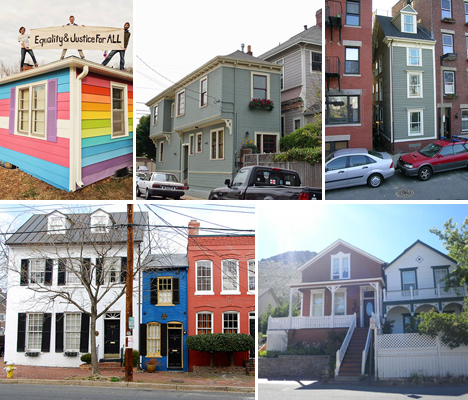
These houses, apartment buildings and commercial structures weren’t built as they are because the owners really loved the view or particularly wanted a five-foot-wide house just inches from the neighboring building. They came into being out of pure spite, or gleeful revenge, or the desire to seriously annoy adjacent property owners and city planners. Here are 12 amazingly spiteful structures, starting with a very recent example that riled up members of a certain infamously hateful church.

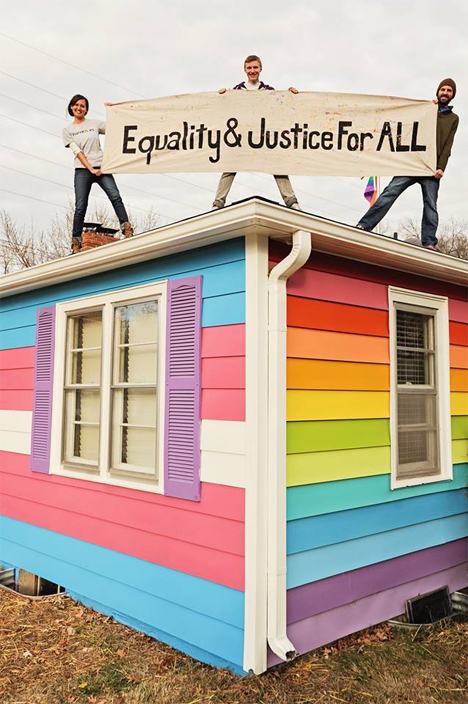
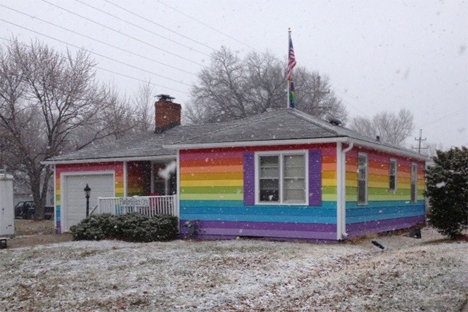
Gay Pride Flag Spite House Across from the Westboro Baptist Church

Spite House Gay Pride Westboro 1

Spite House Gay Pride Westboro 2

A house across the street from the Westboro Baptist Church compound is now one big gay pride flag thanks to a man whose nonprofit group Planting Peace purchased the home and painted it in rainbow colors. That’s probably not exactly a welcome sight for members of the church, who are known for their virulently anti-gay views and for picketing military funerals. Five local Kansas City painters declined to participate in the job after learning what Jackson had in mind, but ‘Equality House‘ was finally completed and unveiled in March 2013. The house got lots of attention for the right reasons, but of course, the church had a typical response to it: “We thank God for Sodomite Rainbow House!” they said in an email to TIME, claiming it helps bring attention to their message.

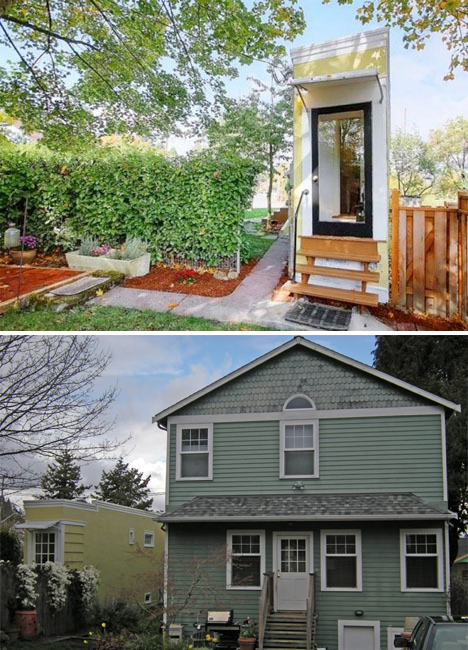
Pie-Shaped Montlake Spite House, Seattle

Spite Houe Montlake Seattle

Measuring just 55 inches across its narrowest point, this wacky pie-shaped house was reputedly built to cut off a larger home from the street. According to local legend, a neighbor approached the owner of the land to purchase the plot in 1925, but at an insultingly low price, spurring the owner to build the ‘Montlake Spite House‘ in retaliation. Another story claims that the house was built when the wife of the owner was given the tiny, awkardly-shaped lot in the divorce settlement, while her ex got the rest of the property. The most recent homeowner has said that for the most part, the narrow profile of the house wasn’t a problem, except when she was cooking: she had to stand to one side to open the oven door to avoid pinning herself to the wall. The house recently sold for almost $ 400K.

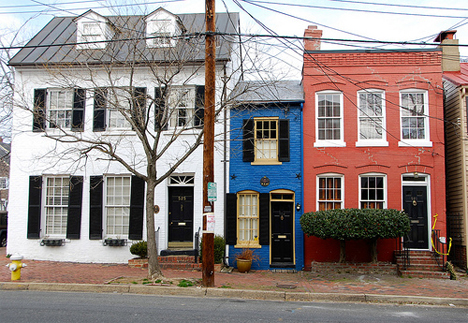
Hollensbury Spite House, Alexandria, Virginia

Spite House Hollensbury

John Hollensbury, the owner of the white and red houses pictured, was sick of loiterers hanging out in the alley. So he built the Hollensbury Spite House, a 7-foot-wide, 25-foot-deep dwelling in the Old Town district in Alexandria, Virginia. The house’s two main walls are the brick walls of the adjacent structures, making it more of an enclosed alleyway than an actual house, but it has been used as a residence ever since.

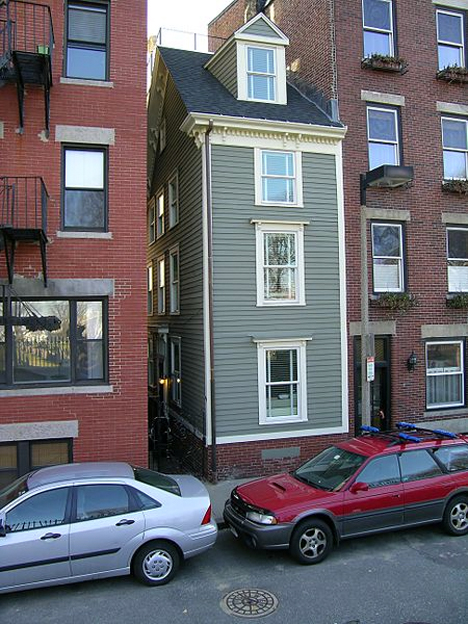
The Skinny House of Boston, Massachusetts

Spite House Skinny Boston

Boston’s narrowest house measures just 10.5 feet across at its widest point, with the smaller portions about 6.5 feet wide, and can only be entered through a small alley. The four-level house was built shortly after the Civil War when two brothers inherited land from their deceased father. The legend claims that while one brother went away to serve in the war, the other built a large home, leaving the soldier little more than an alleyway. So when he returned, the soldier built the narrow house to ruin his brother’s view and cut off air and sunlight to the larger home.

Next Page – Click Below to Read More:
Spite Houses 12 Structures Built Just To Annoy People

Share on Facebook


[ By Steph in Architecture & Houses & Residential. ]

[ WebUrbanist | Archives | Galleries | Privacy | TOS ]


WebUrbanist

 
Comments Off on Spite Houses: 12 Structures Built Just to Annoy People

Posted in Creativity


The Rewards of Photographing People When You Travel

27 Jan

One of the most rewarding aspects of photography is that you can use the camera to connect with complete strangers, especially when you travel.

Unless you are heading to the wilderness, the scenery alone is only a part of any trip.  The people and culture you encounter is the other part.  A travel album feels much more complete when you include images of both scenery and people.  Or even better, images that combine the scenery and the locals.

asking

Maybe it’s a portrait of a seller at a local market, or an interesting person that you pass while walking down the street, or even your tour guide.

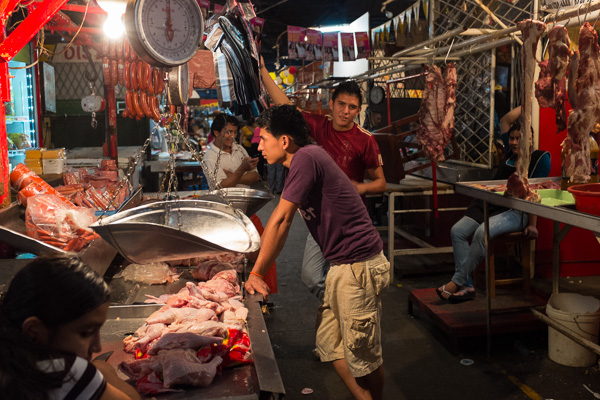
Not everybody will be happy to allow you to photograph them.  In the market in Managua shown in the above and below photos, every other person I asked said no to a portrait, but they still said no kindly.  Even though I didn’t speak the language, a little nod of the camera and a smile would let the person know that I wanted to photograph them.
That feeling you get when they give you permission to take their portrait, is worth almost as much as the photo itself. It is a powerful connection that will provide some of your favorite moments while traveling, and perhaps you’ll make a new friend.

Managua Market, The Rewards of Photographing People When You Travel
Whenever I travel, I try to capture three different types of images.  I try to mix together photographs of the scenery, (whether it be nature or architecture) portraits of people, and candid photographs of people and daily life.  I don’t always succeed at all of these, but I try.

So here are a few tips to help you capture better portraits when you travel.

Be respectful and careful of the local culture and laws

In certain countries, candid photography or even portraits of people are either not allowed or are looked down upon, while in other places, people are more likely to react with excitement.  Different countries and cultures have different views on this type of photography, so make sure to do your research or ask someone with experience.
Always use judgement when photographing people.  It’s not too hard to tell someone that does not like having their picture taken.

Managua Market, The Rewards of Photographing People When You Travel

Get close and focus on the subject’s eyes

By far, the most important rule when taking a portrait of a person’s face is that their eyes are sharp.  Focus directly on their face, or their eyes if you are close up.  It is not good if their ear is sharper than their eye.
And get close.  The portrait doesn’t need to be of their whole body.  Try some portraits with just the face and upper torso.

Soho Skater, The Rewards of Photography People When You Travel

Managua Market, The Rewards of Photographing People When You Travel

Pick a background and wait there

This works for both portraits and candid shots.  You’re going to come across interesting people spontaneously in your travels, but when you have some time, find an interesting background and wait for an interesting person.  Either capture the candid shot or ask them for a portrait, or both.

chicken_stall

Take your time

If someone gives you permission to take their portrait, you owe it to them to create the best portrait that you can. Taking a quick shot, saying thank you, and scurrying away nervously is a waste of time for both of you.

Don’t take too long, but make sure your settings are correct, the background, and angle of the subject to the main light source is ideal (and if it’s not, tell them where they should move), and that you are composing correctly.  The first compositional aspects that I try to figure out are whether I want to create a vertical or horizontal portrait and how close I want to get.

market

Expression and posture

When you first meet someone and instantly have to take their picture, getting them to give a strong, natural expression is just not always possible. Even if you are nervous and have no clue what you’re doing, try to act like you know what you’re doing.  The more confident you seem, the better they’ll feel.

Soho Portrait, The Rewards of Photographing People When You Travel

First tell them where they should stand.  Some people will be naturals, but many will look for some direction from you and will be uncomfortable until they get it.  Telling them where to stand, and to do so in a natural posture that feels comfortable to them is a way to make them more relaxed.  Otherwise, a lot of people will just stand stiffly, while waiting for some direction.

Throw out a positive word or two.  A simple, “That looks great” will mean a world of difference in making them comfortable, because they will think they are doing something right.  Even ask them to make up a pose for you!  A portrait is a collaboration.

A good trick to use when you don’t like their expression or they seem uncomfortable is to have them move over a step or two and reposition.  It’s something simple that can break them out of an uncomfortable posture or expression and have them start all over again.

And if they smile, tell them not to!  Natural smiles are good, but a forced smile can kill a portrait.

Start with one person

The biggest problem I encounter is that people who love the idea of capturing people when they travel still don’t follow through on it.  They seem to carry the feeling that they might be doing something wrong, or they might anger someone, or even more likely they simply don’t feel comfortable with approaching someone.

jugglerMany don’t seem to ever get over the initial hump of capturing that first portrait on a trip.  That’s unfortunate, because once you get past that, you’ll be hooked.

You probably know this already, but many people enjoy having their photo taken.  A significant percentage of people will be flattered when you ask.  A camera is a great connector between people.  Almost everyone knows what it is.

So start with one person.  The next time you are out there, just tell yourself that you will capture one portrait of a stranger over the course of the day.  All it takes to start is one.


Read some other articles on travel and people photography here:

  • How to Capture the Essence of a Place – Travel Photography Tips
  • Terrified of Street Photography? So Am I! Here’s How I Do It
  • Transcending Travel – a dPS ebook

The post The Rewards of Photographing People When You Travel by James Maher appeared first on Digital Photography School.


Digital Photography School
 
Comments Off on The Rewards of Photographing People When You Travel

Posted in Photography


7 Ways of Marketing Your Photography to Get People to Notice You

01 Jan

Irony is hard at work in photography: Taking pictures appears to be the easiest aspect of working in the industry, yet the business side of photography is what confounds many a photographer. What’s going on here? Surely, not every photographer has mastered taking good shots, so how can he find that easy while finding it hard to take a business Continue Reading
The post 7 Ways of Marketing Your Photography to Get People to Notice You appeared first on Photodoto.


Photodoto

 
Comments Off on 7 Ways of Marketing Your Photography to Get People to Notice You

Posted in Photography