RSS
 

Posts Tagged ‘Parks’

US Judge rules against county seeking to ban drone flights in their parks

18 Feb
The Michigan Coalition of Drone Operators celebrates their victory outside of the Genesee County courthouse.

On February 10th, the Honorable Judge Joseph Farah handed down a ruling in favor of the Michigan Coalition of Drone Operators (MCDO) after Genesee County, in Flint, tried to establish an ordinance banning drones in their parks. The three-month-long legal battle was ignited after R. Jason Harrison was arrested in December 2018 for flying legally in a park. Harrison’s drone and accessories were confiscated and he was issued a misdemeanor.

Even though the ticket was dropped, Harrison sought the counsel of Dean Greenblatt, an aviation attorney licensed in both Michigan and Florida. Greenblatt had the following to say to DPReview regarding the situation:

‘I understand that this case is the first to attempt enforcement of statewide preemption statutes regarding drones. It is the first legal challenge in Michigan, and presumably the first legal challenge to a preemption statute anywhere in the country.’

What happened to Harrison isn’t unusual for remote pilots operating in a majority of states across the US. 33 of them don’t have the proper State Legislation in place. This allows local governments to establish their own laws regarding drone use. Even though the Federal Aviation Administration (FAA) has jurisdiction over national airspace, local municipalities in these 33 states can override the government agency by passing rules that regulate the land. Many public parks in California, for example, prohibit people from launching an unmanned aerial vehicle on their premises. This creates hassles for commercial drone operators and confusion for casual users less familiar with local ordinances.

Even though the Federal Aviation Administration (FAA) has jurisdiction over national airspace, local municipalities in these 33 states can override the government agency by passing rules that regulate the land.

There isn’t a central database or uniform resource dedicated to city-specific rules surrounding drone use. It’s not uncommon for someone to check in with an airspace application like Kittyhawk, AirMap, or UASidekick and believe they’re conducting a legal flight….only to be approached by a local law enforcement officer and told to land immediately. Conducting a Google search with the name of the city you plan to fly in along with the terms “drone” or “UAV” is necessary to find out if they have any UAS laws in place.

Michigan is one of the 17 states with a law that specifically prohibits local governments from creating or enforcing their own drone ordinance. MCL 259.305, which is part of Act 436 passed in 2016, specifically states the following about drone use: ‘[e]xcept as expressly authorized by statute, a political subdivision shall not enact or enforce an ordinance or resolution that regulates the ownership or operation of unmanned aircraft or otherwise engage in the regulation of the ownership or operation of unmanned aircraft.’

Genesee County argued that it was exempt from state law and amended its park rules in response to the charges brought against them by the MCDO. Newly-created legislation, to justify their ban of drones, stated the following:

‘Section P910615-Aircraft and Drones

No person shall, upon the property administered by the Commission: Make any ascent or descent, operate or possess any balloon, airplane, parachute, drone, manned or unmanned aircraft on Commission properties or waters, except in designated areas, without first obtaining written permission from the Commission or except as may be necessary in the event of an emergency.’

Judge Joseph Farah signed off on his ruling against the illegal banning of drones in Michigan state parks.

After a series of hearings that took place in October and November, Judge Farah ruled that the state of Michigan’s legislature was clear, binding, and could not be overridden by local lawmakers. Another person who would agree with this sentiment, and even take it a step further, is the FAA’s former Administrator, Daniel Huerta.

In a 2017 keynote address for the InterDrone conference, Huerta stated “legally, the (FAA) has regulatory authority over all U.S. airspace. But successfully blending unmanned aircraft into busy airspace will require state, local, and tribal governments to build upon existing federal efforts to develop and enforce safety rules.”

In a recent development, Genesee County made the decision to override Judge Farah’s ruling and risk being in contempt of court. This stems from their new claim that drone flights within the Class C airspace of KFNT, a ‘no-fly zone’ covering some of the county’s parks, were unlawful. This particular airport participates in the Low Altitude Authorization and Notification Capability (LAANC) making it possible for professionals and hobbyists to fly up to a certain altitude with real-time approval.

Greenblatt had the following to say about Genesee County’s newfound defiance: ‘any attempt to enforce a drone ban or “no-fly zones” as labeled in the “Amendment” will be met with a motion to hold the County in contempt and to enforce the injunction.’ Inaccurate and incorrect interpretations of airspace rules is the exact issue that led the State Legislature to enact the drone preemption statute; that is, to prevent a patchwork of local regulations by non-experts.

The MCDO did not seek out any monetary damages from Genesee County. Instead, the group hopes that Judge Farah’s ruling sets a precedent not only for the state of Michigan, but the other 17 states with similar preemption laws should someone find themselves in legal trouble. The final goal is for the remaining 33 states to take up similar legislation to prevent a patchwork of confusing local ordinances and protect the rights of those looking to legally operate drones in national airspace.

Articles: Digital Photography Review (dpreview.com)

 
Comments Off on US Judge rules against county seeking to ban drone flights in their parks

Posted in Uncategorized


Amusement Parks to go to This Summer months months months

26 Jun

As summertime time approaches, quite a few vacationers pack up and head to a amount of of North America’s most well-known amusement parks. When hordes of thrill seekers head in to the domestic staples like Disney and Cedar Trouble, many of America’s best subject issue parks deliver different hours of spouse and youngsters entertaining with distinctive touches you will not routines within the mega-parks. Tourists in search of to improve up the Disney routine undoubtedly have to study out the subsequent amusement parks home page.

Indiana Seaside entrance front, Monticello, Indiana

Indiana Seaside entrance has every thing you can want along with the strategy park, which include things like thrilling rides also a h2o park, with distinct touches together with lake-front cabins and cottages, a boardwalk, in addition being a whole golfing schooling education class. In essence by far the most worthwhile portion is generally that Indiana beach is refreshingly affordable.

Knoebels, Elysburg, PA

Knoebels payments by alone as conventional subject matter make any difference park, showcasing free of charge of demand admission and fairly priced journey price ranges. This Pennsylvania strategy park has rides which will go on to help keep the many family and friends shoppers joyful, furthermore the park is harmless ample to permit additional mature tiny styles operate wild freely.

Storyland, Glen, New Hampshire

Nestled in New Hampshire’s White Mountains, Storyland will be the quintessential spouse or partner and youngsters amusement park. You’ll find much more than numerous sights for youthful youngsters, and almost all rides make certain it truly is feasible for additional mature individuals right now and kids to journey, so homes could potentially get satisfaction from jointly. Not similar to a large amount of overpriced matter parks, Storyland’s meals items and souvenirs are within your means.

The post Amusement Parks to go to This Summer months months months appeared first on Photonovice.

Photonovice

 
Comments Off on Amusement Parks to go to This Summer months months months

Posted in Equipment


Tips for Doing Nature Photography at Your Local Parks

18 Mar

For myself and many other photographers, probably you included, one of the more difficult parts of the hobby is figuring out where to shoot things like nature photography.

If you have a big trip or a vacation planned, whether it be an exotic location or somewhere not so far away, then that question is answered for you. But for evening shoots after work, spontaneous sessions or weekend outings, a bit of planning is necessary. Enter the wonders of your local parks!

Tips for Doing Nature Photography at Your Local Parks

A park can take many forms and can exist in any location, and almost any country. It is generally defined as a “large public green area, used for recreation”. They come in all sizes, and each features their own unique variety of plants, animals, and landscapes.

Parks can be as small as a local city or county park, a larger state park, all the way up to a massive national park. Their common thread is that they have been well-defined and set aside for public use, and are perfect areas to practice nature photography.

Why shoot at a park?

Parks are unique and useful to us photographers because they can be a testing ground for new equipment, a safe practice area for new techniques, or a fully-realized background for your real work.

Parks are attractive because they are a (usually) safe, well-defined area, a miniature representation of the local environment. They give you a small, diverse biosphere of flora and fauna, all wrapped up in one package.

Tips for Doing Nature Photography at Your Local Parks

Parks are also numerous, and you have a lot to choose from, regardless of size or classification. Even national parks, with the fewest number of all the types, are plentiful. Over 100 countries worldwide have lands designated as national parks, including 59 in the United States alone. This doesn’t even count other sites in the national registry, such as forests, seashores, and historic sites.

The bottom line is you’ll never have a lack of subject matter when visiting one of these areas.

Preparing for the shoot

Preparing for a photo shoot in a park isn’t really any different than most other outdoor environments. You’ll want to pack and check all of your normal gear, including:

  • Camera body – If you’re hiking to a location, you’ll probably want to keep the number of bodies down to one; otherwise, maybe bring a film or instant camera as well for backup.
  • Lenses – Again, you don’t want to weigh yourself down too much, but always bring lenses to cover most of the situations you’ll find yourself in. If you’re shooting landscapes, bring a wide-angle prime lens, or at least a zoom that covers focal lengths down to 18 to 24 mm.
  • Tripod – Some camera bags and backpacks have holders for your tripod. Otherwise, take this into consideration as tripods are often not heavy, but bulky and unwieldy to carry while tromping through the park with your other gear.

Tips for Doing Nature Photography at Your Local Parks - use a tripod

  • Filters and other accessories – Don’t forget the little things such as UV filters, neutral density filters, remote shutter releases, and microfiber cloths to keep lens glass clean.

Since you’re shooting outside, you also need to be prepared for events and conditions outside your control, such as the weather. Depending on the size of the park, there may be hiking and long walking involved. So, you’ll also need to plan ahead and consider items such as:

  • Appropriate clothing – Long sleeves and long pants for mosquito-prone environments, hats, extra dry socks for long hikes.
  • Items to protect against the sun – Sunscreen and sunglasses.
  • Defensive items to keep yourself safe – A knife, or bear spray, if you’re traveling into areas where bears are known to live.
  • Location tools – To help identify where you are and where you’re going, such as a GPS receiver, paper maps (absolutely the best idea), and a compass.

Safety

As with any outdoor excursions, you’ll need to plan ahead a little, both physically and mentally, when venturing out into a park, especially a state or national park or forest.

First, just make sure you know what you’re getting into. If you’re going to a large, sprawling national park and have never been to the area before, then it’s pretty tough to physically scout the location before your shoot. The best you can do in that situation is to do as much research as you can online, or talk to friends or co-workers that have been to the area before.

For a smaller park, or one that’s close by, the best idea is to scout the location first. What hazards are present? Native animals? Plants?

Here in Florida, we have a tree (uncommon, but it exists in the wild) called a Manchineel. Everything about it from the leaves to the wood itself is extremely toxic. Even brushing up against it can end badly. These are the kinds of things you want to research well before you explore a park, especially the larger ones that may take you into more remote areas.

photo of a lake - Tips for Doing Nature Photography at Your Local Parks

Wildlife dangers

On the fauna side of possible dangers, you have the local wildlife. Here in Florida, it’s primarily alligators and snakes, although some areas of our state are habitats for small populations of bears and panthers. First aid and snakebite kits are a smart idea for almost any wilderness area around the world. Other areas of the United States and around the world have larger animals that can pose a serious threat to explorers and photographers, such as bears.

Black bears alone exist in approximately 40 of the 50 states in the U.S., and they, along with the other species, need to be respected and avoided. Many photographers and tourists have been making headlines in recent years by getting too close to bears, without thinking of the possible outcomes to themselves or the bear.

While unprovoked attacks aren’t very common, it is very easy to surprise or startle a bear, and it’s always recommended to carry bear spray in the wild when in bear territory.

What to Shoot

The possibilities of subjects in an outdoor park are almost endless. Some of us will go just to shoot a sunrise or sunset, while others want to take home photos of local wildlife.

Landscape photographers can focus on grabbing a shot of that sunset, or other features of the environment, such as lakes, mountains, and rivers. Open, panoramic scenes captured with wide-angle lenses are a favorite, as are forests, trees and the changes in the color of leaves. Flowing water such as waterfalls or fast moving rivers are good candidates for a long exposure photo, and even plains and prairies can be framed into beautiful minimalist compositions.

Tips for Doing Nature Photography at Your Local Parks

There is a never-ending variety of flora and fauna that can be photographed, such as flowers, trees, plants, and animals such as small mammals, reptiles, and an endless variety of birds. Many parks have some species that are concentrated in that area and offer opportunities for us photographers that we can’t get anywhere else.

Here on the west Florida coast, my nearest state park is home to the Florida Scrub Jay, endemic to this area, and concentrated higher in this one park than anywhere else. It’s almost a rite of passage to photograph one. Many parks around the world are home to their own species as well.

Tips for Doing Nature Photography at Your Local Parks - bird

Environmental Awareness

Finally, we need to address an overall importance when discussing capturing images of our beautiful environment; we as photographers need to be nature’s greatest champions.

I would suspect that most of us who love to be outdoors, already have a desire to be careful when enjoying our parks. But as we’ve seen recently in the news, not all of us take that into consideration. The commonly heard phrase, “leave nothing but footprints” may sound cliche, but it really is a best-case scenario of what we should strive for as we enjoy the great outdoors.

Tips for Doing Nature Photography at Your Local Parks - bird photo

The plants and animals that make their home in these areas were likely there long before we visited. It is our responsibility to leave the areas as we found them, without adding or taking away anything from the environment. This will ensure that future generations of photographers and explorers will be able to enjoy those areas too.

What was your best experience visiting and photographing a park for nature photography? Where do you want to go that you haven’t been yet? And what tips would you give others who are ready to visit and document the great outdoors? Please comment and let’s discuss below.

The post Tips for Doing Nature Photography at Your Local Parks by Tim Gilbreath appeared first on Digital Photography School.


Digital Photography School

 
Comments Off on Tips for Doing Nature Photography at Your Local Parks

Posted in Photography


5 Tips for Doing Photography in National Parks

22 Feb

I am a national parks buff – I mean I am really crazy about traveling to national parks all over the world. As a family, we have been known to pack our bags at the drop of a hat, load up the car and head out for a visit to our fabulous national parks. National parks provide some of the best landscapes and vistas you can find.

Because much of the land and natural resources are protected, you really get to see nature at its very best. There is so much to see, do, explore, and of course, photograph. Photography in national parks offers incredible opportunities to create some amazing photos and memories!

Photography in National Parks -1

Additionally, there are a huge number of photographers who make a living photographing landscapes, animals, and vistas in these national parks – talk about it being a dream job.

But photography in the national parks is not an easy slam-dunk. There is a lot of preparing to do before and during a photography trip to a national park. Here are a few things to keep in mind when planning a trip to photograph your favorite national park.

#1 Preparation for a national park photography trip

Let’s just start from the very basics on how to prepare for a trip to photograph national parks. First and foremost, the National Park Service in the United States has a certain set of rules and guidelines for photography in the national parks. Before you plan a trip specifically for photography, make sure you have familiarized yourself with the latest rules and regulations.

This article in Backpacker Magazine is quite informative, but if you are confused on what is allowed and not allowed, feel free to call the park services directly. The rangers in almost all the parks we have visited have been very well informed and are very helpful with rules around photography. In a nutshell:

  • Drones essentially are banned from National Parks and if caught, you can be fined.
  • Permits are not needed if you are using basic tools (tripod, camera, and a lens) to photograph vistas that are accessible to the public.
  • Permits are needed for commercial filming (still and video) and sets that involve props and/or models.
  • You will likely need a permit to enter an area not accessible to the public.
  • Backcountry rules may differ from front country rules, so definitely call the park to confirm.

Keep in mind that these rules are applicable for parks here in the US. If you are traveling outside the US, check with the local park authorities and/or check in other travel forums. Being prepared is an added bonus that will really pay off in the long run. The last thing you want is to get to your location only to find out that you don’t have the right paperwork and/or permit.

Photographing National Parks -2

Parks in India don’t have much of a hiking concept – most people prefer to go on safari to see the wildlife.

For example, parks and historic monuments in India that require an entrance fee have specific fees for Indians versus foreign tourists and an additional fee per camera (still and video). Some places don’t even allow camera bags and tripods – you have to check your camera bag pack into a locker prior to entry to the park.

#2 Rules and Regulations – Dos and Don’ts

Along the lines of rules and regulations, there are some basic dos and don’ts when it comes to visiting and photographing inside national parks. Most parks are very good about letting you know what is allowed and what is not allowed. Signs, posters, and even handouts are available in plain sight. Playing ignorance is not an option and isn’t going to let you off the hook.

Stay away from wildlife and help them remain wild

My friend works for the Yellowstone National park and every spring she puts up this message on her Facebook page, “Welcome to the season of the crazies. May this season be shorter than the last!”

While it might be amusing and make you smile, this is quite serious to the men and women who work at Yellowstone. People (a.k.a visitors and some photographers) seem to want to go to any lengths to get a selfie or award-winning photograph with bison, bears, and the hot thermal features that Yellowstone is so famous for.

People have lost their lives trying to get the perfect shot! Nothing is worth losing your life over and endangering the lives of innocent animals whose habitats we are encroaching upon. (Note: if an animal attacks you, it may get put down, so by not following the rules you’re endangering their lives as well as your own.)

 Photographing National Parks -7

It is amazing how many people think that just because bison are herbivorous it is safe to get close to them! The people in the car did something right by just stopping the car to let the bison go and taking photos from inside the vehicle!

Never feed wildlife just for the sake of a photo

I have seen this happen time and time again. One time, my daughter was so angry to see a group of people who were feeding a bunch of squirrels lettuce and nuts, that she went up and chastised them and reported them to a ranger! Any activity that alters the natural behavior of animals is unacceptable no matter what the reason.

Never jump the fence and get off the trail

Getting off trail affects the land, the soil, and the environment. Trail markings are there to keep visitors safe and out of harm’s way. Every season rangers and outdoor crew hike the trails to ensure they are safe and can handle visitor foot traffic.

Yet people seem to ignore the signs to stay away so that they can get the epic shot – standing on the edge of a rock, diving into a pond at the base of a waterfall, or climbing the face of a mountain and take a selfie.

Photographing National Parks - 11

This is pretty much the scene at most of the waterfall/bridges in Yosemite National Park – but what you don’t see here is that there is an even bigger crowd on the other side of the bridge climbing on slippery rocks with the most illogical footwear!

#3 Playing fair and playing well with others

I really love reiterating this one time and time again. Over Christmas break, we traveled as a family to Zion National Park. If you have been to Zion you know that capturing the sunset against the Watchmen tower formations are iconic and almost every photographer (amateur or professional) is looking to capture that epic sunset.

Crowds start to gather almost an hour or more before sunset and getting a prime spot can get competitive and sometimes ruthless! There is also a path that leads down from the bridge to the water’s edge for tourists and anyone looking to hike along the river. One evening we were waiting for the sun to set, cameras ready to fire, when a few families decided to walk down to the river essentially getting into the frame of each and every photographer waiting on the bridge above.

Suddenly someone in the group decided to shout at the visitors – essentially asking them to leave the area. I was so mortified and embarrassed about being on that bridge that day with all those people. The National Parks and all its beauty is for everyone to enjoy – being a photographer does not take precedence over being a visitor taking in all of Mother Nature’s beauty. Thankfully a few others felt the same way and spoke up to let the photographer know we didn’t agree with his sentiments.

Long story short, be respectful and aware of your surroundings. These special areas are for all to enjoy – you don’t have special privileges just because you have a camera (however big or small). Most people are well aware of photographers and if they see you all set up, will try and avoid getting into your shot or quickly move away. If this doesn’t happen, just move or patiently wait it out. I never ask people to move just because they are in my shot, especially in national parks.

Article Photographing National Parks -10

A typical scene in Yosemite waiting to photograph Half Dome right at sunset.

Photographing National Parks -12

Those people right by the water – they have the right idea – getting out and enjoying their National Parks. It is we photographers that sometimes don’t quite know how to have fun.

#4 Making the most out of the trip

Before heading out, do some research on what the areas are famous for. Is it the epic vistas? Is it the magical sunset and sunrise glows? Or maybe it’s the wildlife? What are some of the famous monuments and landscapes to photograph and what are some of the lesser known areas?

Just because an area is not on the “must photograph list” does not mean it is not spectacular in its own right. Once you know what all YOU want to photograph, plan your time wisely. Look for road closures and construction notices. If possible stay in the park. This eliminates the need to travel into and out of the park daily – some of the popular parks have major clogs at the entrances especially during popular times. This can cause a lot of traffic delays and you might just miss that epic sunset (and I speak from experience!).

#5 Getting the shot

Now that you have planned your trip, figured out what and where you want to photograph, you understand the rules and know what to do and what not to do, here are some ways you can actually get those epic photographs.

Get out before sunrise and stay out after sunset

Get out when it is still dark outside and experience a different side of the park. Chances are the only other people out at this time of the day are photographers and people who really want to enjoy some quiet and solitude. This is a time when the park is quiet and animals tend to be out and about.

Morning mist, if present, adds so much interest and drama to a photo. In addition, the wind is usually calm at this time of day, making for easy reflection shots. The same holds true for sunset shots. The average person will spend a few minutes admiring the sunset and get back inside. Stay out past sunset and you have some incredible lighting all to yourself!

Photographing National Parks -3

Yellowstone in the winter after the sun sets is the place to really enjoy all the wildlife. Coyotes enjoy a bison kill.

Find your primary subject and then try something new

When you find an interesting subject, try to look at it from different angles. This not only will change your perspective, but also allow you to see how the light affects and changes the image. Try it with the sun on the side, at the back, and in front by simply moving your feet.

Photographing National Parks -8

I am not an equestrian photographer by any means, but when we came across the wild horses in Roosevelt National Park, I just had a mental picture of photographing them galloping across the road. Sure enough, while we pulled over to admire them, a few folks just drove on by and the horses got spooked and took off! So I got the shot I wanted!

Enjoy your surroundings beyond your viewfinder

I am very very particular about this! There have been numerous occasions where I have not looked past the viewfinder and come home feeling frustrated and irritated. Travel and the outdoors mean the world to me, photography is just icing on the cake. If I don’t get to enjoy my cake, just filling up on the icing, it is a moot point, don’t you agree?

So during the day when the light is not that great, I try to put the camera in my backpack and enjoy time with my family hiking the park. Plus this gives me a chance to scout locations to visit later in the trip, specifically for photography.

Hike into the backcountry – away from the crowds

I find that most people in the parks stay in or near their cars when taking pictures. To get a different picture (literally) find a trail and head out. You may find that you can leave the crowds behind, have a better experience, and make better pictures.

Be sure to plan ahead by checking out the park’s map for safety tips and any route closures. And of course, follow all safety rules of hiking in the trails and in the backcountry.

Photographing National Parks -6

As a family, we really love to camp and backcountry really gives us the opportunity to get away from it all and enjoy the outdoors together. Gear is obviously not a priority here – so this was shot using a small 35mm film camera – a perfect companion for a 5-day camping trip.

Conclusion

I hope these tips were helpful. One of the most important events in history was the establishment of the world’s first national park on March 1st, 1872. Since then, thousands of national parks, national monuments, and preservation areas have been set aside for the enjoyment and pleasure of the common person.

So get out there and enjoy nature while creating some amazing photos and share your images of national parks near you in the comments section below.

The post 5 Tips for Doing Photography in National Parks by Karthika Gupta appeared first on Digital Photography School.


Digital Photography School

 
Comments Off on 5 Tips for Doing Photography in National Parks

Posted in Photography


End of Elevated Parks? UK Garden Bridge & US Pier 55 Projects in Doubt

28 Apr

[ By WebUrbanist in Architecture & Cities & Urbanism. ]

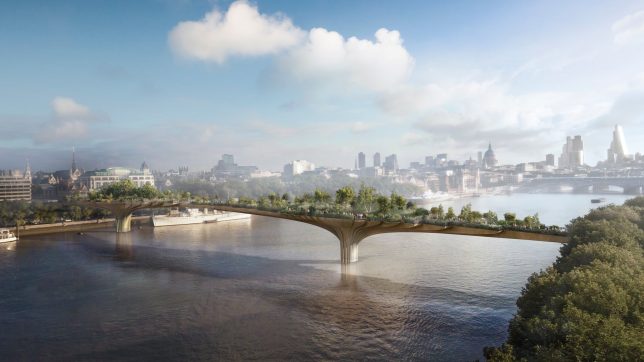
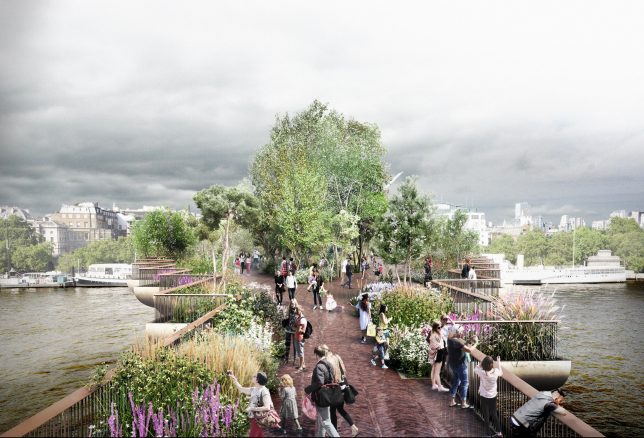
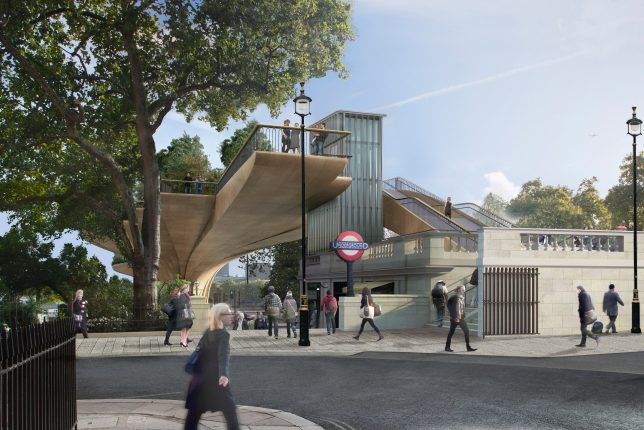
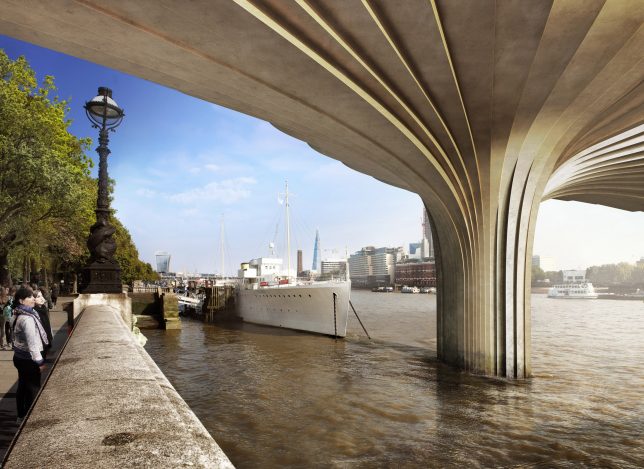
It has been a challenging few weeks for architect Thomas Heatherwick, whose proposals for elevated green urban spaces in both London and New York City face uncertain futures. While the specifics vary, there may be lessons for elevated parks that spans both cases — and if these fail to move forward, it could spell the end of a decade-long trend for lofted public parks.

The Garden Bridge project in London has long been criticized based on its cost and officials are getting serious about making sure the investment (especially tax dollars) will pay off. The design has been touted as a kind of High Line Park for England’s capital, but unlike the High Line it is a brand new construction project (not adaptive reuse) and not positioned to revitalize areas of its city.

At the heart of the issue, unsurprisingly, is money: an initial projection of £60,000,000 has blossomed into an estimated cost of around £200,000,000. Shockingly, even cancelling the project now would result in a bill of over £40,000,000, despite the fact that construction has not even started. While £70,000,000 in private funding was secured at the outset, the rest would have to be covered by taxpayer money, which is less than popular with the public. As of now, the mayor’s financial inquiry has resulted in a recommendation to scrap the project.

According to a governmental report on the project, “Decisions on the Garden Bridge were driven by electoral cycles rather than value for money,. From its inception when there was confusion as to its purpose, through a weak business case that was constructed after contracts had been let and money had been spent, little regard has been had to value for money.” It is unclear whether the project is stalled or slated for abandonment, but it looks unlikely to proceed at this point.

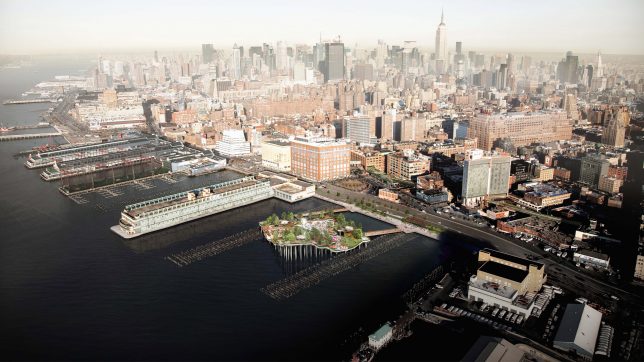
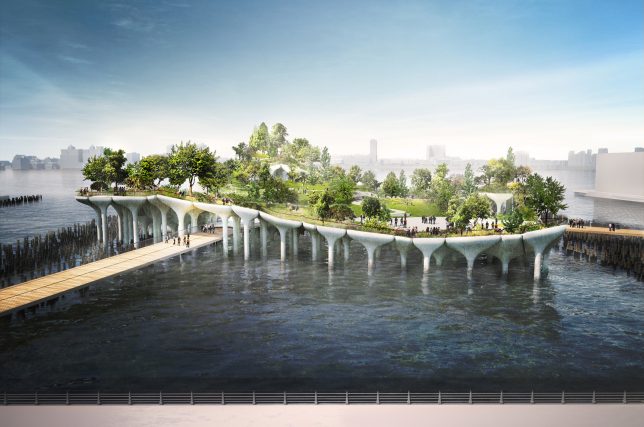
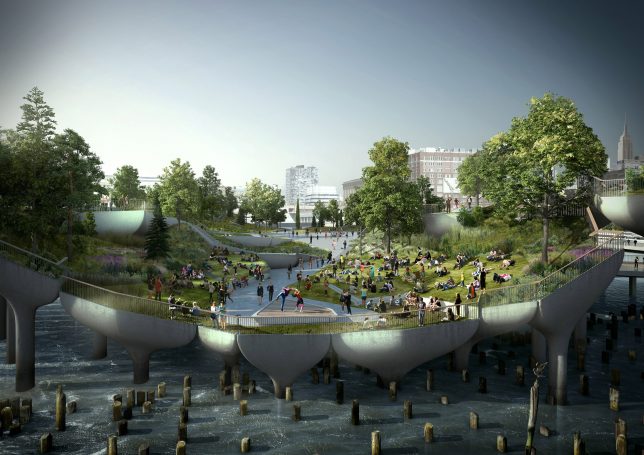
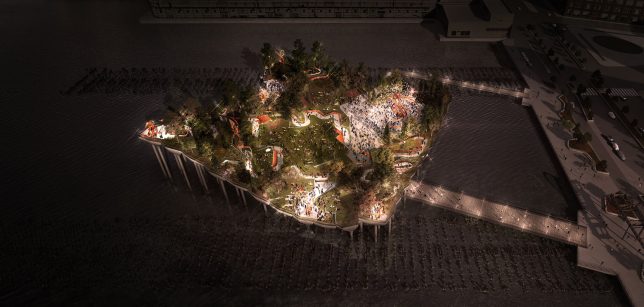
Meanwhile, across the pond, Heatherwick’s proposed Pier 55 project (images by Luxigon), an elevated park stretching out over the water next to Manhattan, is also stalled out, at least for now. Its permit was recently revoked in part based on environmental studies that concluded it would disrupt local marine habitats. There are also concerns that it will block views along the waterfront.

The 10,000-square-foot, $ 200,000,000 park was designed to replace a disused pier in the heart of New York City, but once again it lacks some of the conditions that made the High Line a viable solution, particularly its lack of reuse. Perhaps the elevated parks trend is coming to an end, or (more likely): it is too often pitched as a solution, even in cases where there is no obvious problem to be solved.

Share on Facebook


[ By WebUrbanist in Architecture & Cities & Urbanism. ]

[ WebUrbanist | Archives | Galleries | Privacy | TOS ]


WebUrbanist

 
Comments Off on End of Elevated Parks? UK Garden Bridge & US Pier 55 Projects in Doubt

Posted in Creativity


National Geographic and NASA celebrate National Parks with images from space

22 Apr

$ (document).ready(function() { SampleGalleryV2({“containerId”:”embeddedSampleGallery_5505857540″,”galleryId”:”5505857540″,”isEmbeddedWidget”:true,”standalone”:false,”selectedImageIndex”:0,”startInCommentsView”:false,”isMobile”:false}) });

If you’re unable to take advantage of free National Park entry this weekend, you can still enjoy the grandeur of some of the US’s best-loved National Parks thanks to National Geographic and NASA. To celebrate National Parks week they’ve published some of their favorite photos of parks – from space.

We were pleased to discover that Grand Prismatic looks just as colorful from space as it does from the ground. Maybe we can keep it that way if we don’t trample all over it, hmm?

Take a look at a few of the images above and see more over at National Geographic Travel.

Articles: Digital Photography Review (dpreview.com)

 
Comments Off on National Geographic and NASA celebrate National Parks with images from space

Posted in Uncategorized


Underpass Art & Parks: 15 Fun Projects Reclaiming Disused Urban Space

13 Apr

[ By SA Rogers in Architecture & Cities & Urbanism. ]

Climbing walls, skate parks, art installations, theaters and even miniature marinas take advantage of the cathedral-like spaces beneath highways and bridges, revitalizing formerly disused and depressed square footage in urban areas. In cities around the world, underpasses are often fenced off, strewn with trash and generally unappreciated, but these intervention projects reclaim the space in fun and creative ways that benefit the community.

Folly for a Flyover by Assemble, England

“Starting with the idea that how spaces are imagined is often as important as their physical characteristics in determining their use, the Folly reclaimed the future of the site by re-imagining its past,” says ASSEMBLE of its ‘Folly for a Flyover’ installation beneath a disused motorway underpass in Hackney Wick. “The new ‘fairy tale’ for the site described the Folly as the home of a stubborn landlord who refused to move to make way for the motorway, which was subsequently built around him, leaving him and his pitched roof stuck between the East and Westbound lanes. The Folly hosted an extensive program of cinema, performance and play… by day the Folly hosted a cafe, events and boat trips exploring the surrounding waterways; at night, audiences congregated on the building’s steps to watch screenings, from blockbusting animation classics to early cinema accompanied by a live score.

A8ernA, Zaanstad Underpass Installation by NL Architects

Another underpass project offering access to the adjacent waterway is A8ernA by NL Architects, located on the river Zaan in the Zoog aan de Zaan village near Amsterdam. The architects describe the new highway, built on columns, as a “brutal cut in the urban tissue.” Their installation attempts to heal this cut while taking advantage of the cathedral-like space, creating an “optimistic intervention” encouraging a new type of urban life, and includes a supermarket, flower and fish shop, parking, a park and a ‘graffiti gallery.’ There’s also a skate bowl, a mini-marina, a soccer field and a small hilly park.

Underpass Park, Toronto

Toronto’s Underpass Park is not only the most extensive park to ever be built beneath an overpass in Canada, but one of the most unusual parks of its kind throughout the world. Transforming a derelict and underused space into a new urban neighborhood feature and pedestrian passageway, the park turns what was formerly a barrier between the north and south parts of the community into a connection. Murals by world-renowned graffiti artists, playgrounds, sculptural installations, sports fields and other amenities draw locals in to engage with the space on an unprecedented level.

Ballroom Luminoso Installation by JB Public Art, San Antonio

The I-35 freeway underpass in San Antonio briefly became ‘Ballroom Luminoso’ thanks to a public art installation by JB Public Art, featuring six color-changing chandeliers made of recycled bicycle parts and sprockets. After dark, the lanterns would light up, casting intricate gear-shaped shadows all over the concrete structure.

Seattle’s Fremont Troll

Frequently popping up in movies and television shows set in Seattle, the Fremont Troll is a public sculpture by four local artists set beneath a bridge in the Fremont neighborhood. The piece won a neighborhood competition in 1990 as an idea to revitalize what was, at the time, a dumping ground. The troll sculpture is clutching an actual Volkswagen Beetle.

Next Page – Click Below to Read More:
Underpass Art Parks 15 Fun Projects Reclaiming Disused Urban Space

Share on Facebook


[ By SA Rogers in Architecture & Cities & Urbanism. ]

[ WebUrbanist | Archives | Galleries | Privacy | TOS ]


WebUrbanist

 
Comments Off on Underpass Art & Parks: 15 Fun Projects Reclaiming Disused Urban Space

Posted in Creativity


This video is great reminder why you should follow posted signs in National Parks

04 Feb

The 61G lava Ocean Entry event happening on Hawaii’s Big Island has been in the news a lot lately. If you somehow haven’t yet seen the dramatic footage of red-hot lava spewing from the side of a cliff, well, you’re in for a treat. But as enticing as it might be to onlookers and photographers trying to get a better view, mother nature just provided a gentle reminder why you should stay a safe distance away.

See also: exhibit B. It may seem obvious that the edge of a cliff next to a lava ‘firehose’ as it’s called is nowhere for a tripod, but not everyone seems to get that. A park official tells ABC News that she sees people crossing boundaries from designated viewing areas to unsafe zones every day. Geologists are monitoring the area daily for signs of trouble, but the most recent collapse occurred without warning.

Photo courtesy USGS. The image above shows the cliff pre-collapse.

Consider this your daily reminder to obey posted signs in natural areas and to get your shot from a designated viewing area – lava or no lava.

Articles: Digital Photography Review (dpreview.com)

 
Comments Off on This video is great reminder why you should follow posted signs in National Parks

Posted in Uncategorized


Google brings the National Parks to your living room with 360-virtual tours

26 Aug

In honor of the National Parks Centennial birthday celebration, Google has partnered with the National Parks Service to bring a unique and exciting virtual immersion experience to your fingertips. The Hidden Worlds of National Parks is a new exhibit that is part of Google’s larger Arts and Cultures Exhibit and Documentary series. In this new series, users will be able to visit and interact with some of the more obscure National Parks in the United States, such as the Dry Tortugas in Florida and the Kenai Fjords in Alaska through VR and 360 degree video tours. 

In the video experience a National Parks service ranger will guide you through one of the five park options. Users will be taken on unique guided tours such as a hike through the lava flows in Hawai’i, a kayaking trip through the Fjords in Alaska or a snorkeling trip through the coral reefs in the Dry Tortugas of Florida.  

The virtual tours are available online and in the Google Arts & Culture App which is available for both iOS and Android device platforms. 

Articles: Digital Photography Review (dpreview.com)

 
Comments Off on Google brings the National Parks to your living room with 360-virtual tours

Posted in Uncategorized


We Are Not Amused: 15 Creepy Abandoned Theme Parks

30 May

abandoned-theme-park-1a
Once delightful domains of sight and sound, these creepy abandoned theme parks now moulder away in silence attended only by shadows and memories.

abandoned-theme-park-1b

What a dump… er, no, not this charmingly manicured abominable snowman in particular but the entire abandoned Miracle Strip Amusement Park in Panama City Beach, Florida.

abandoned-theme-park-1c

abandoned-theme-park-1d

The park closed in 2004 and “enjoyed” a whole half-decade of unhindered deterioration until the site was finally demolished in 2009, as disturbingly documented by Flickr user Steve Sobczuk. You’ve gotta admit, the Dante’s Inferno ride never looked spookier than it did in its dying days.

No Hue

abandoned-theme-park-2a

abandoned-theme-park-2b

abandoned-theme-park-2c

Ho Thuy Tien is an abandoned water park and aquarium located in Huong Thuy, a district of Hue, Vietnam. Urbex explorers like Courtney Lambert of A Great Perhaps had best navigate those slimy water slides with care – the park’s aquarium once housed a trio of very hungry crocodiles who were abandoned along with the rest of the park in 2013. Fear not, animal lovers: thanks to Lambert alerting PETA and the WWF, the crocs were moved to a wildlife park in northern Vietnam.

Petrified

abandoned-theme-park-3d

abandoned-theme-park-3c

abandoned-theme-park-3b

Prehistoric Forest Amusement Park in Michigan’s otherwise pleasant Irish Hills opened in 1963 but by the 1980’s, changing trends in recreation and tourism saw visitors and revenues enter an irreversible slide. We’d like to say an asteroid gave the struggling tourist trap its death blow but the truth is far less dramatic – the park was sold by its original owners in 1997 and closed for good in 1999.

abandoned-theme-park-3e

abandoned-theme-park-3g

abandoned-theme-park-3f

In Prehistoric Forest Amusement Park’s heyday, as many as 70 fiberglass statues of dinosaurs, mammoths and the odd Neanderthal Man (kidnapped by students in 1985 and deposited in front of Saline High School) dotted the park’s forested grounds. A few still stand today; most have been damaged or destroyed by vandals. Kudos to KE Photography & Video (whose video of the abandoned park in winter can be viewed here) and Flickr user Wolly Shambler for capturing and posting the images above.

Darkest & Disturbingest Africa

abandoned-theme-park-5b

abandoned-theme-park-5a

The former Umoja Children’s Park is located in Chake-Chake, a town on the Tanzanian island of Pemba, just north of Zanzibar in the Indian Ocean. If the eerie, rusty caterpillar ride looks familiar, it’s the same kind of “Happy Worm” kiddy ride as one reputed to be in the infamous Pripyat amusement park near Chernobyl, Ukraine. You know the one… THIS one:

abandoned-theme-park-16

Joyless

abandoned-theme-park-6a

abandoned-theme-park-6b

One of six Joylands in the USA, the former Joyland Amusement Park in Wichita, Kansas, operated from June 12th, 1949 through 2004, and then again for a short time under new ownership in 2006. The park suffered extensive vandalism during almost a decade of neglected abandonment, a sad fact reflected in the images above.

abandoned-theme-park-6c

abandoned-theme-park-6d

By the summer of 2015, the park’s last remnants (the roller coaster, to be exact) had been dismantled and the site bulldozed flat as the Kansas prairie. Flickr user Krisi Metzen snapped these scenes of a joyless Joyland in October of 2013.


WebUrbanist

 
Comments Off on We Are Not Amused: 15 Creepy Abandoned Theme Parks

Posted in Creativity