RSS
 

Posts Tagged ‘Paper’

Flat-Pack Bicycle Helmet: Portable Paper Head Protection for Cyclists

01 Jan

[ By WebUrbanist in Design & Products & Packaging. ]

paper-bike-helmets

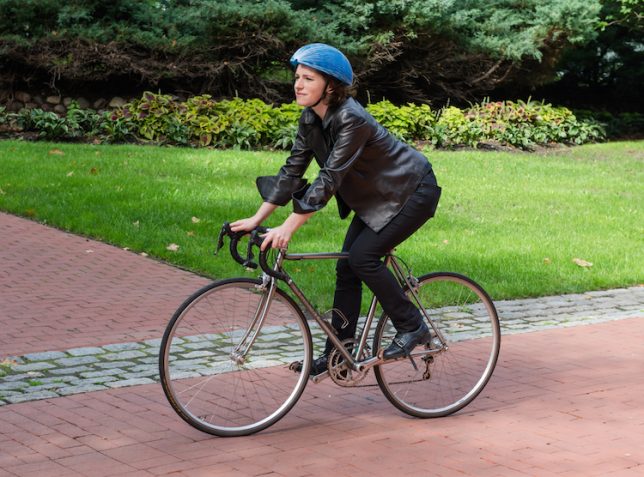
As urban cycling continues to increase in popularity, bike commuters still face the same challenge: carrying a clunky helmet with them wherever they go. For part-time, on-demand cyclists in places with bike share programs the problem is even more pronounced: hopping a ride is simply not a safe option unless they happen to have headgear handy.

paper-helmet

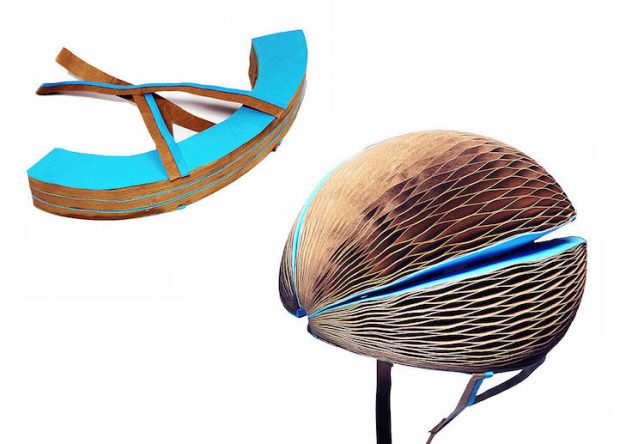
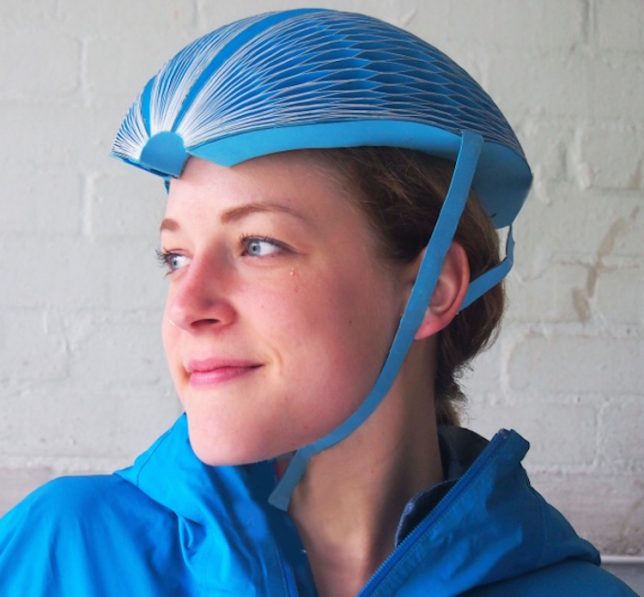
Hence the EcoHelmet by Isis Shiffer, a graduate of the Pratt Institute of Design in New York. Her collapsible helmet is designed to be low-cost (around $ 5) and easy to pack into vending machines paired with bike sharing stations.

safe-bike-paper

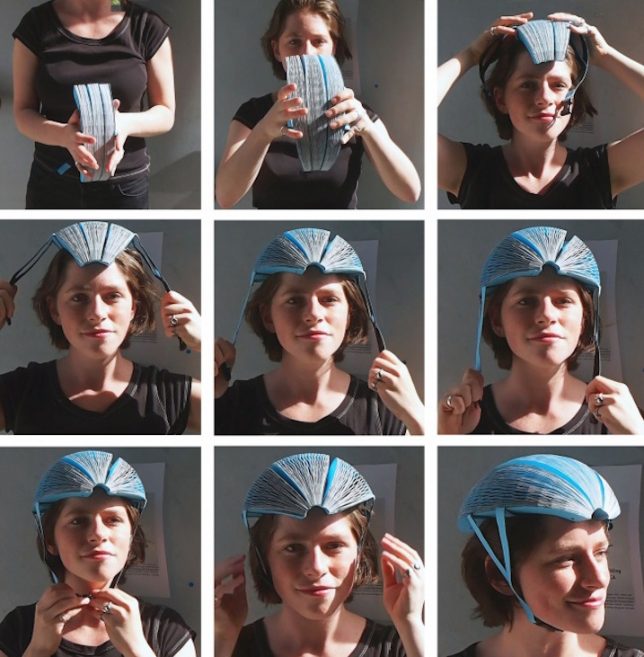
Recycled paper is woven into a folding honeycomb structure that is light, durable and portable, forming a protective cover in moments. A waterproof coating also protects the helmet from rainfall. Paper sounds like an implausible material, but the design has passed European safety reviews and is looking for approval in the United States. Still skeptical? The video below features some impressive impact tests — sure, the helmet may need to be replaced after an accident, but if it does the job in the moment that is what really matter.

collapsing-helmet-design

The low price tag presumably makes these cheap enough that riders won’t balk at buying one even for a single ride (though hopefully they would save and store them for future trips given how compact they are when folded up.

Share on Facebook


[ By WebUrbanist in Design & Products & Packaging. ]

[ WebUrbanist | Archives | Galleries | Privacy | TOS ]


WebUrbanist

 
Comments Off on Flat-Pack Bicycle Helmet: Portable Paper Head Protection for Cyclists

Posted in Creativity


Art in the Shadows: Everyday Objects Cast Unexpected Shapes Onto Paper

10 Dec

[ By SA Rogers in Art & Drawing & Digital. ]

art-in-the-shadows-3

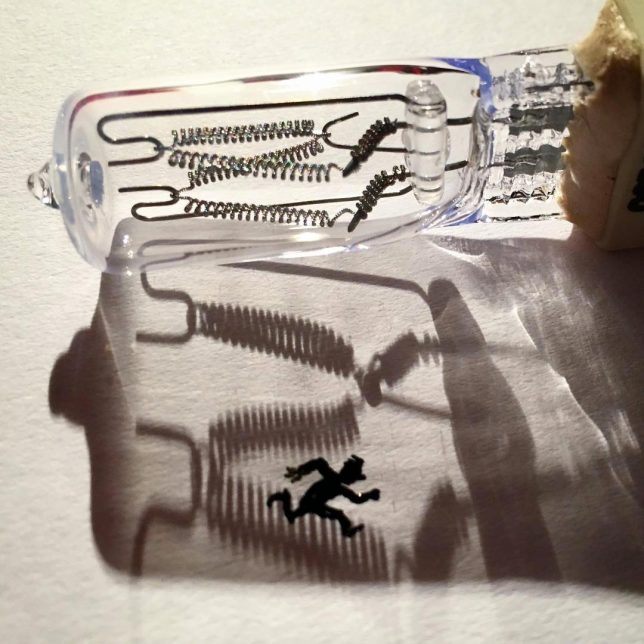
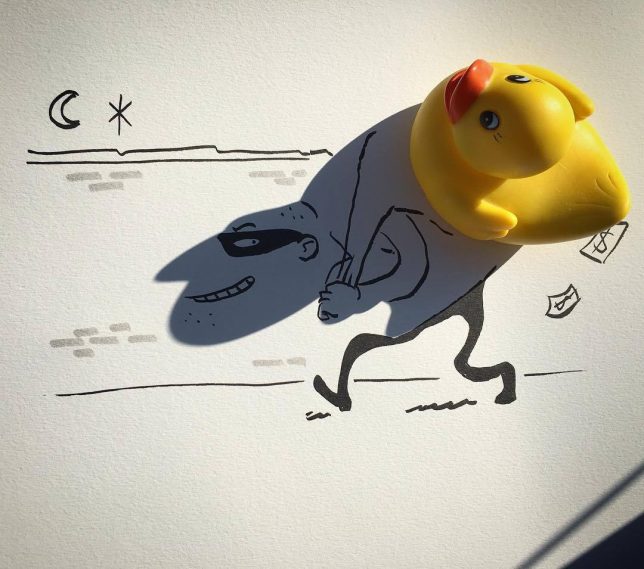
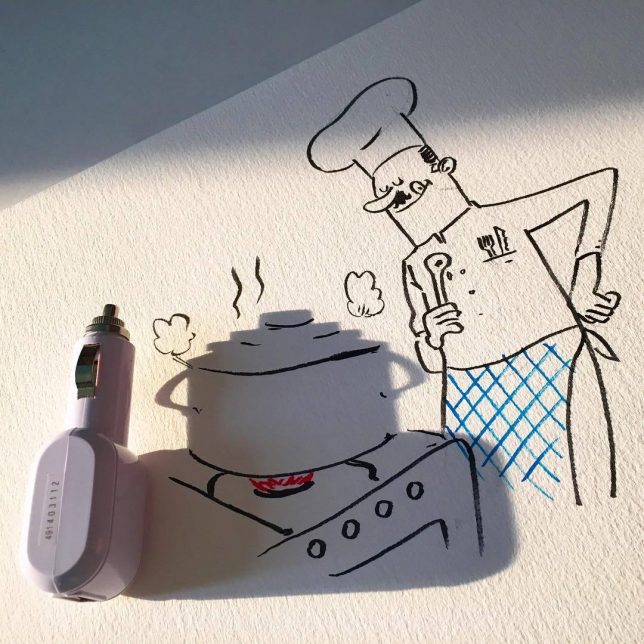
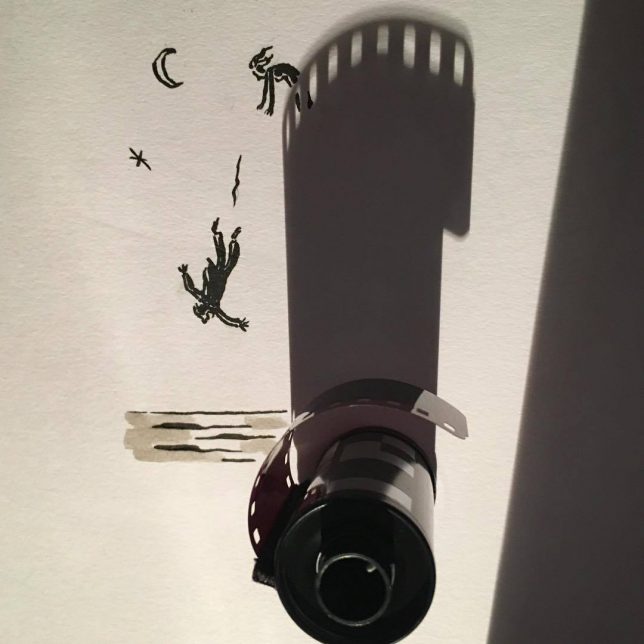
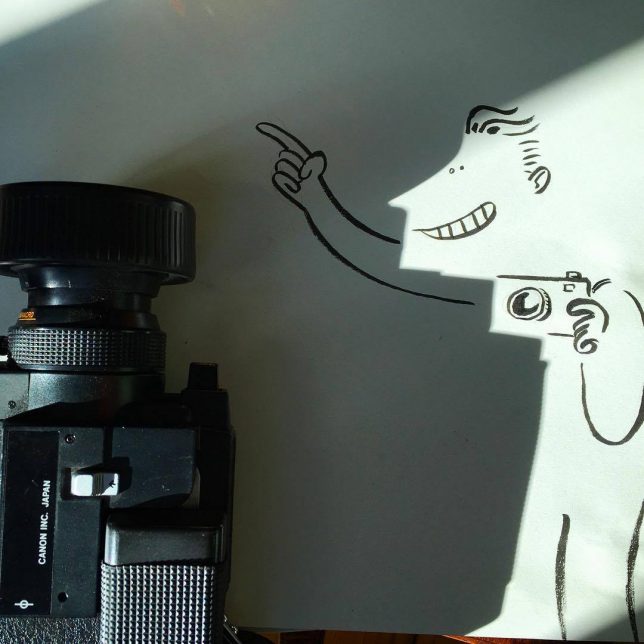
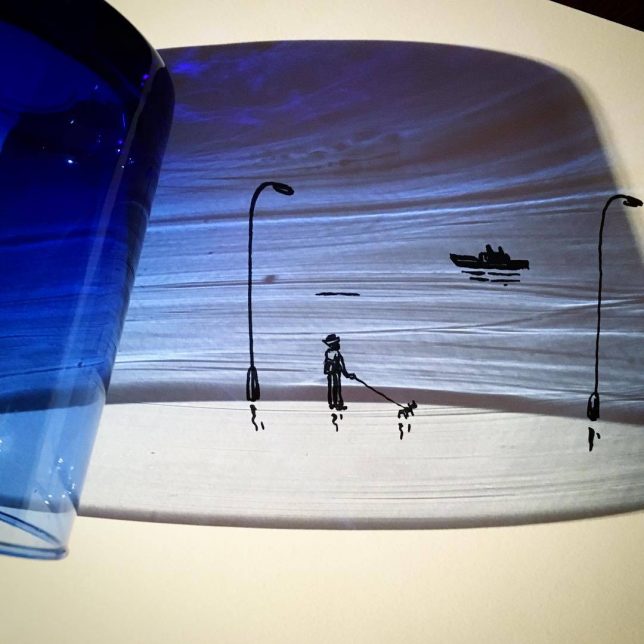
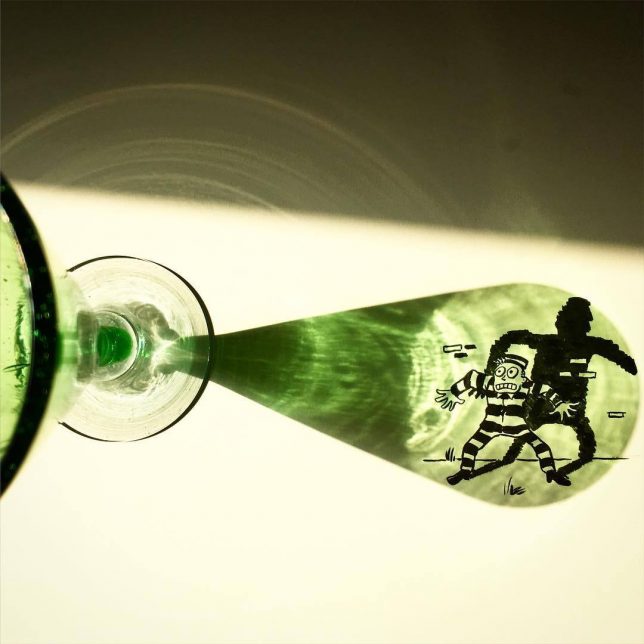
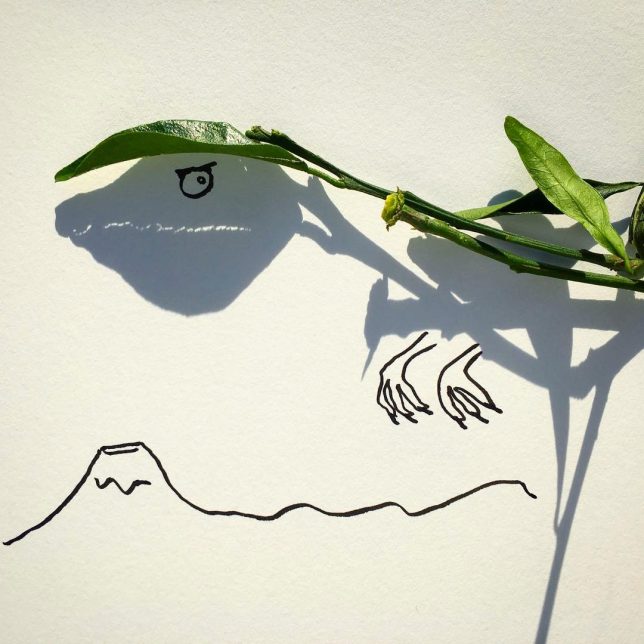
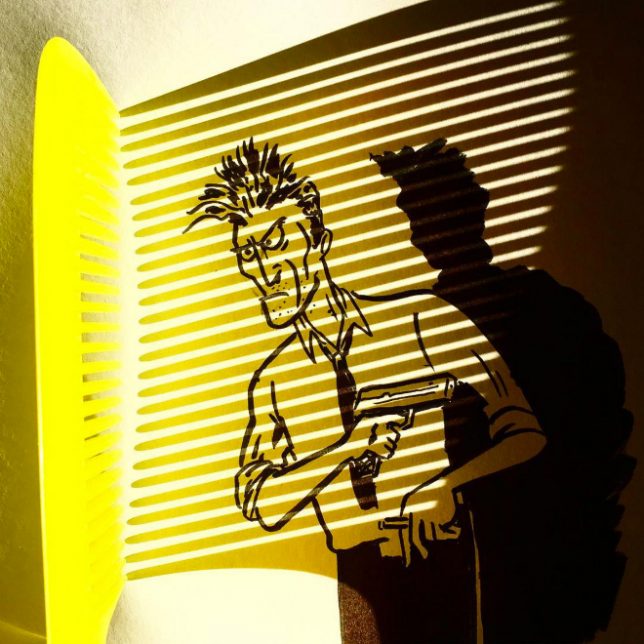
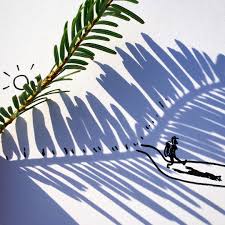
Has doodling ever been more creative than this? While most people wouldn’t give a second’s thought to the shape an everyday object’s shadow casts upon adjacent surfaces, artist Vincent Bal looks at them and sees the beginnings of a character or scene. It might be a phone charger, a fallen leaf, a drinking glass or a Christmas ornament, but in its shadow, Bal sees far more than the object itself.

art-in-the-shadows

art-in-the-shadows-2

art-in-the-shadows-5

art-in-the-shadows-6

art-in-the-shadows-7

Each of Bal’s quick and clever illustrations is a testament to the creativity of an artist’s brain. Calling his work ‘shadowology,’ Bal plays around with silhouettes and light sources to find inspiration for sketches most people would never dream up. It takes the game of finding shapes in the clouds and applies an artist’s hand to the process, embellishing the shapes into something more.

art-in-the-shadows-8

art-in-the-shadows-9

vincent-bal-2

vincent-bal-1

Calling himself a ‘filmmaker and doodler and procrastinator from Belgium’, Bal shares his work on his popular Instagram account and sells prints on Etsy.

Share on Facebook


[ By SA Rogers in Art & Drawing & Digital. ]

[ WebUrbanist | Archives | Galleries | Privacy | TOS ]


WebUrbanist

 
Comments Off on Art in the Shadows: Everyday Objects Cast Unexpected Shapes Onto Paper

Posted in Creativity


Miniature Cities in Motion: Tiny Animated Metropolis Made of Paper

15 Nov

[ By SA Rogers in Art & Sculpture & Craft. ]

paperholm

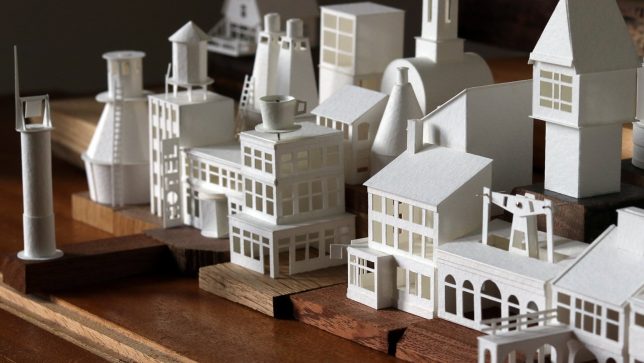
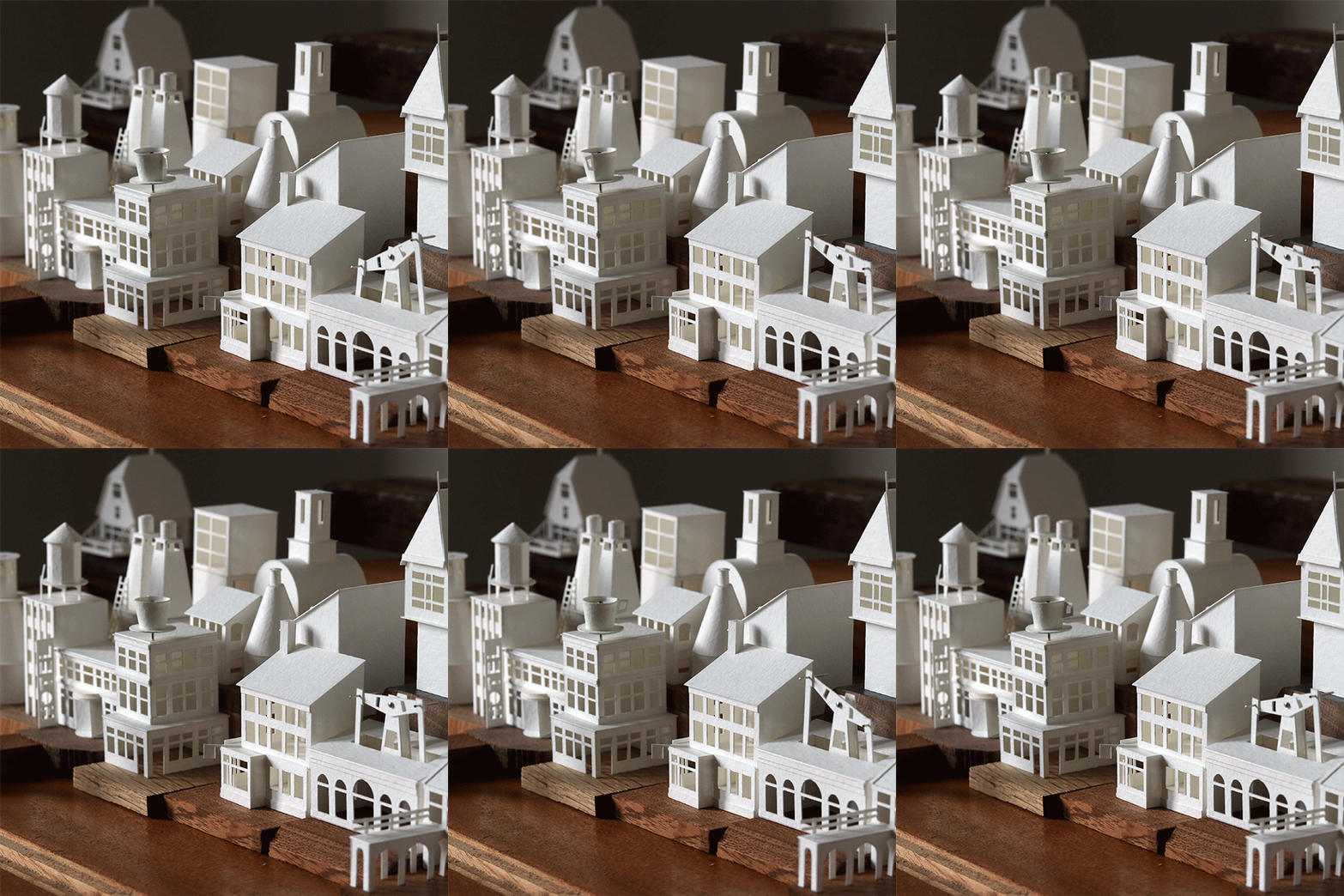
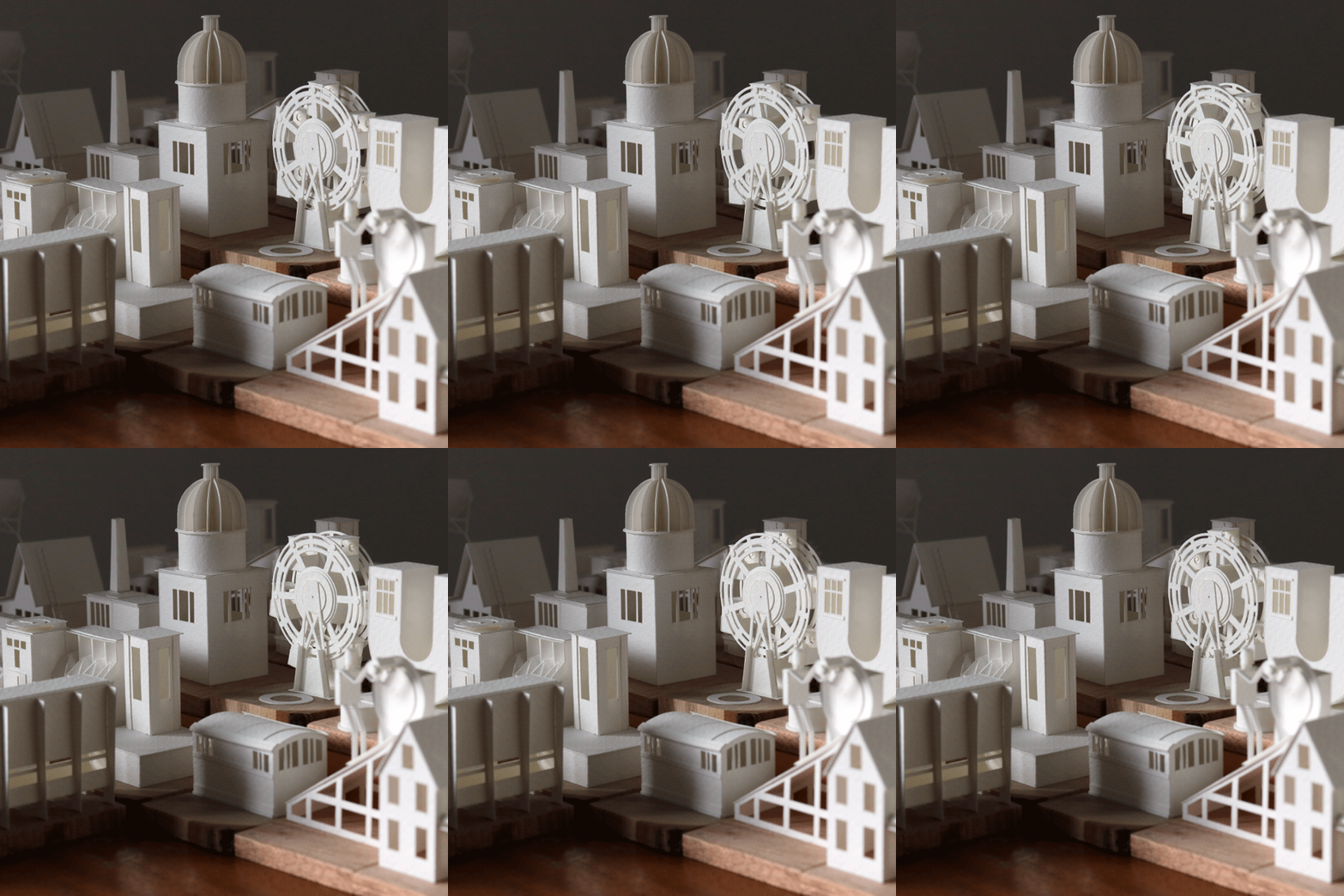
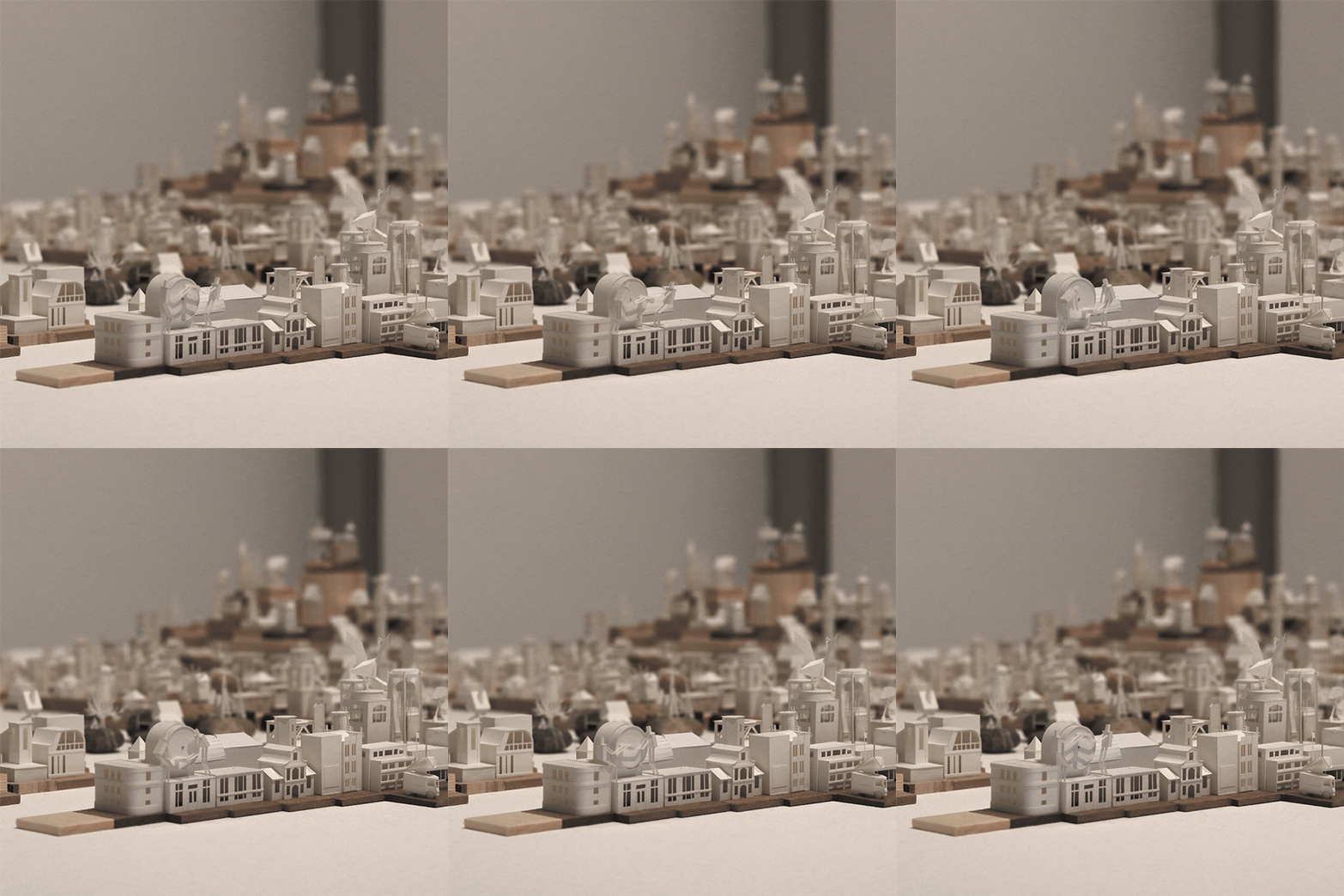
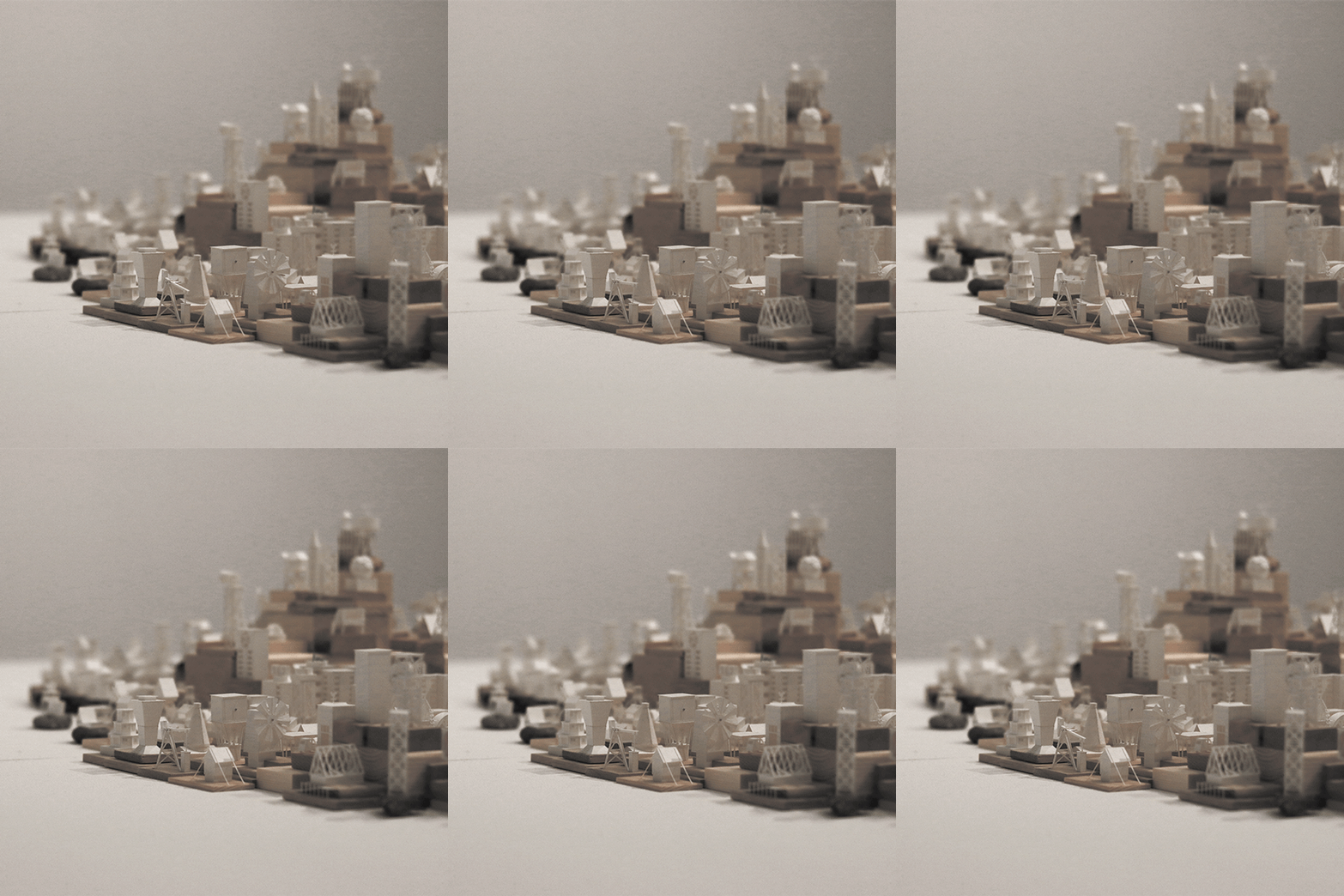
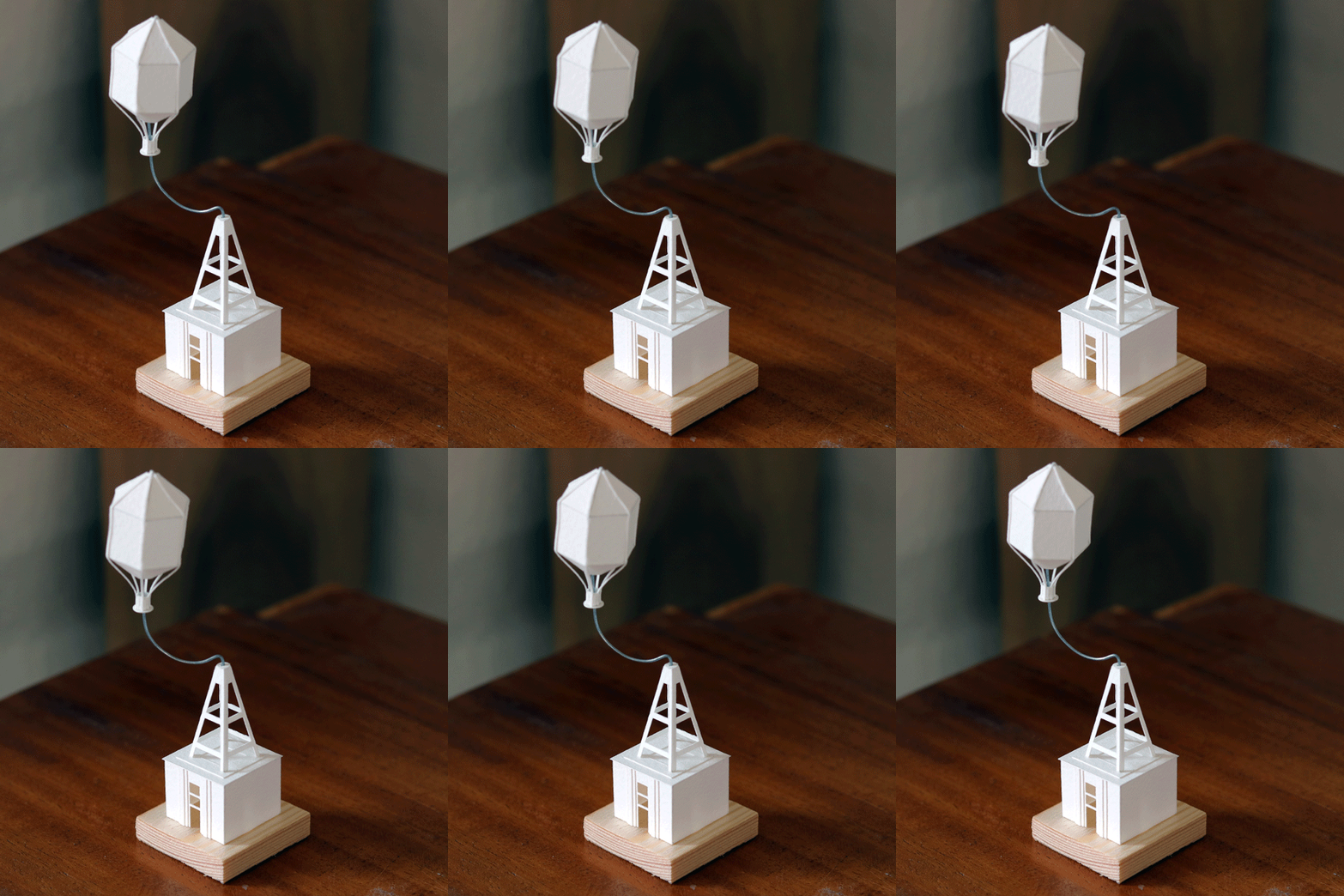
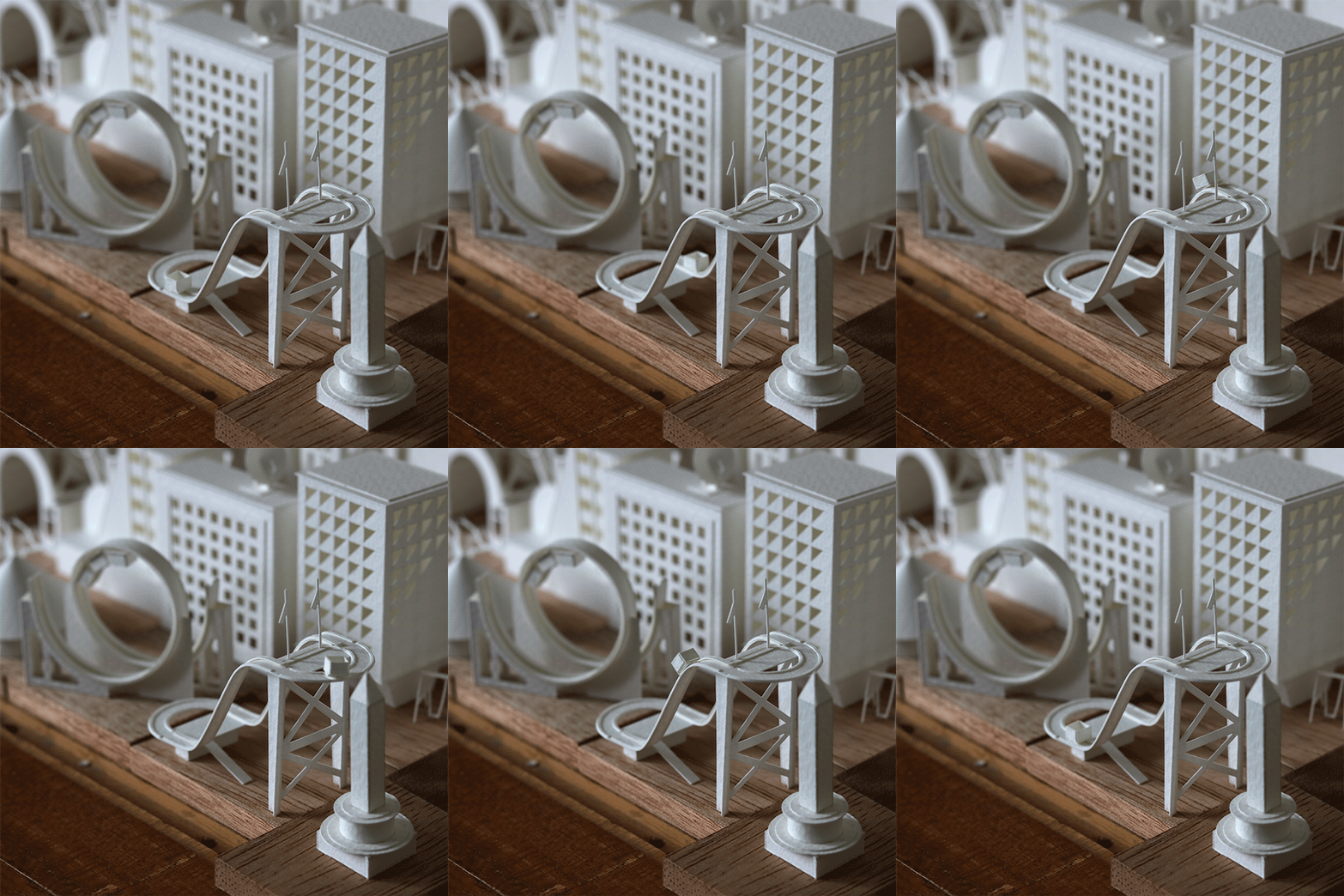
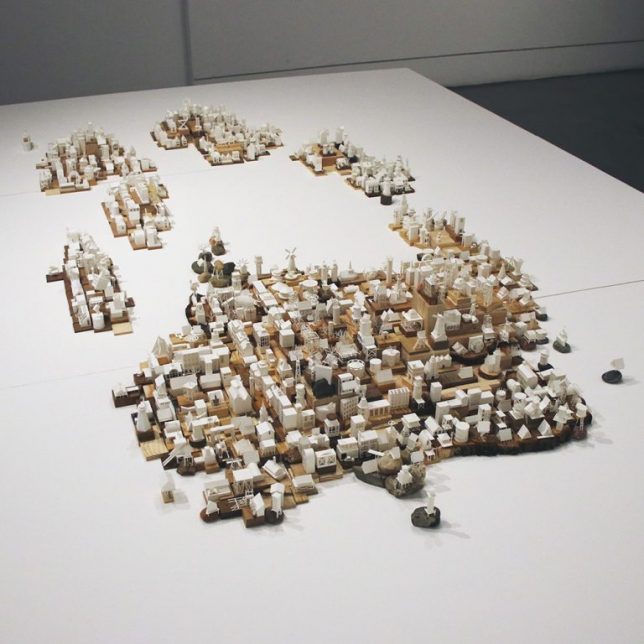
Diminutive flags wave in the wind, ferris wheels the size of clock gears turn, cranes rise and fall and tiny cars zoom around in this three-dimensional world made out of paper. Artist Charles Young has been working on his ‘Paperholm’ project for years, typically completing one miniature building every single day, mounting them to wood or stone and creating stop-motion animations from their moving parts.

paper-cities-1

paper-cities-3

paper-cities-4

Today, Young has amassed over 635 paper buildings, rollercoasters, vehicles and other elements of his miniature cities, putting them together into an impressively well-organized whole. A graduate of the Edinburgh College of Art with both bachelor’s and master’s degrees in architecture, Young initially took on the 365-day project to explore architectural forms in paper, hand-cutting them from watercolor paper and assembling them with PVA glue.

paper-cities-5

paper-cities-7

The first time Young created an animated GIF of one of his creations, he just wanted to demonstrate how smoothly a particular element spun in a circle. This turned out to be a pretty cool way of showing them off. He sketches, cuts and assembles each structure in a single sitting.

paper-cities-2

paper-cities-6

The resulting city is gleaming white and surprisingly well realized considering its two-dimensional origins. Each element is individually documented on the Paperholm tumblr so you can see how it works, and then take in entire blocks of the tiny creations as a whole.

Share on Facebook


[ By SA Rogers in Art & Sculpture & Craft. ]

[ WebUrbanist | Archives | Galleries | Privacy | TOS ]


WebUrbanist

 
Comments Off on Miniature Cities in Motion: Tiny Animated Metropolis Made of Paper

Posted in Creativity


Painting with Paper: Quilled Portraits Reveal the Expressiveness of Aging

13 Sep

[ By SA Rogers in Art & Sculpture & Craft. ]

brodskaya quilled paper 4

Expanding upon a previous body of work that’s more graphic in nature, paper artist Yulia Brodskaya presents a new portrait series capturing the expressive qualities of aging faces in vibrant hues. The Russia-born artist and illustrator is known for rolling strips of paper into ‘quills’ and painstakingly gluing them together into colorful, three-dimensional designs. The new portraits are named Jade, Topaz and Amethyst, and reveal a more painterly method that tightly packs folded pieces of paper into each composition.

brodskaya quilled paper 7

brodskaya quilled paper 5

The effect mimics the look of brushstrokes, with wrinkles, folds and other sculptural details rendered in lush jewel tones for an expressionistic result. The former graphic design major discovered her love for the tactile qualities of paper art and abandoned computer programs, producing hundreds of projects and commissions over the last 7 years.

brodskaya quilled paper 8

brodskaya quilled paper 3


“The new expressive way of using the strips of paper that I discovered recently (and first time used as a primary technique in the Wimbledon artwork) is really exciting – it allows me to achieve more ‘sketchy,’ artistic look for the paper art and I’m excited to keep experimenting with it (though it’s a shame that this method is not much faster than the neat and refined way of gluing strips one by one)… Despite the slow process I enjoyed working on this portrait tremendously: the abundance and richness of colors makes me feel good,” says Brodskaya.

brodskaya 9

brodskaya 10

brodskaya 11

brodskaya 12

“I used to say that I’m ‘drawing with paper’, now I found a way of ‘painting with paper.’ These artworks are all about color and the unique tactile feel that paper strips add to it. The portrait resembles an oil/acrylic painting (especially from the distance,) but with a paper twist…”

Share on Facebook


[ By SA Rogers in Art & Sculpture & Craft. ]

[ WebUrbanist | Archives | Galleries | Privacy | TOS ]


WebUrbanist

 
Comments Off on Painting with Paper: Quilled Portraits Reveal the Expressiveness of Aging

Posted in Creativity


Fujifilm says photographic paper prices will increase starting in October

25 Aug

Fujifilm has announced an upcoming price increase that will be applied to photographic papers starting this October. The company says it expects the price increase will be ‘of at least [a] double digital percent,’ though a specific percentage has not been provided at this time. The price change will be implemented across the globe.

The company cites a decrease in demand for photographic papers as the cause, saying that while it has made changes to its production to deal with a ‘rising expense ratio,’ it expects that demand will continue to decrease in the future, necessitating a price increase.

Via: Fujifilm

Articles: Digital Photography Review (dpreview.com)

 
Comments Off on Fujifilm says photographic paper prices will increase starting in October

Posted in Uncategorized


Street Origami: Vivid Urban Art Installations in Folded Paper

03 May

[ By Steph in Drawing & Digital. ]

Screen Shot 2016-05-02 at 5.33.35 PM

Busting out beyond small proportions, delicate materials and indoor settings, origami has a chance to bloom, bringing bold colors and unexpected patterns to urban surfaces around the world. Paris-based street artist Mademoiselle Maurice installs large-scale origami artworks on public walls, ceilings, crumbling stone castles and even beach rocks, everywhere from Singapore to San Francisco. While some of her creations are made on canvas or installed in galleries, others are made to be destroyed, as ephemeral as real flowers blossoming and then dying on a branch.

origami street art 1
origami street art 2
origami street art 3
origami street art 4

Maurice says she was first inspired to work with origami while living in Tokyo for a year. She was there when the devastating earthquake, tsunami and nuclear power plant explosion occurred in 2011, and wanted to make art reflecting how she felt about the tragedy. Her first project came from the legend of 1,000 origami cranes, an ancient tale promising that anyone who manages to fold that many tiny paper cranes will be granted a wish by the gods.

Screen Shot 2016-05-02 at 5.32.40 PM
Screen Shot 2016-05-02 at 5.32.54 PM
Screen Shot 2016-05-02 at 5.34.21 PM

Screen Shot 2016-05-02 at 5.34.59 PM

Growing up in the urban confines of Paris, which she found rather grey and monotonous, Maurice wanted to add more color to the world with works that “emanate a carousel of emotion.” In the past five years, the young artist has collaborated with heavyweights like Louis Vuitton, Google, Vice Magazine and Issey Miyaké, and her work has been installed in Italy, the Netherlands, Sweden, China, Vietnam, Australia, Mexico, the U.S. and many more countries.

origami street art 5
origami street art 6
origami street art 7

“This is my way to stay discrete and not to impose myself too much on the walls,” Maurice said of her choice to use paper outdoors. “But otherwise I love doing something telling me that it will not last, ‘dust thou shalt return to dust.’”

Share on Facebook


[ By Steph in Drawing & Digital. ]

[ WebUrbanist | Archives | Galleries | Privacy | TOS ]


WebUrbanist

 
Comments Off on Street Origami: Vivid Urban Art Installations in Folded Paper

Posted in Creativity


Paper Westeros: Game of Thrones Intro Recreated in Moleskine Notebooks

28 Apr

[ By Steph in Art & Sculpture & Craft. ]

game of thrones opening 1

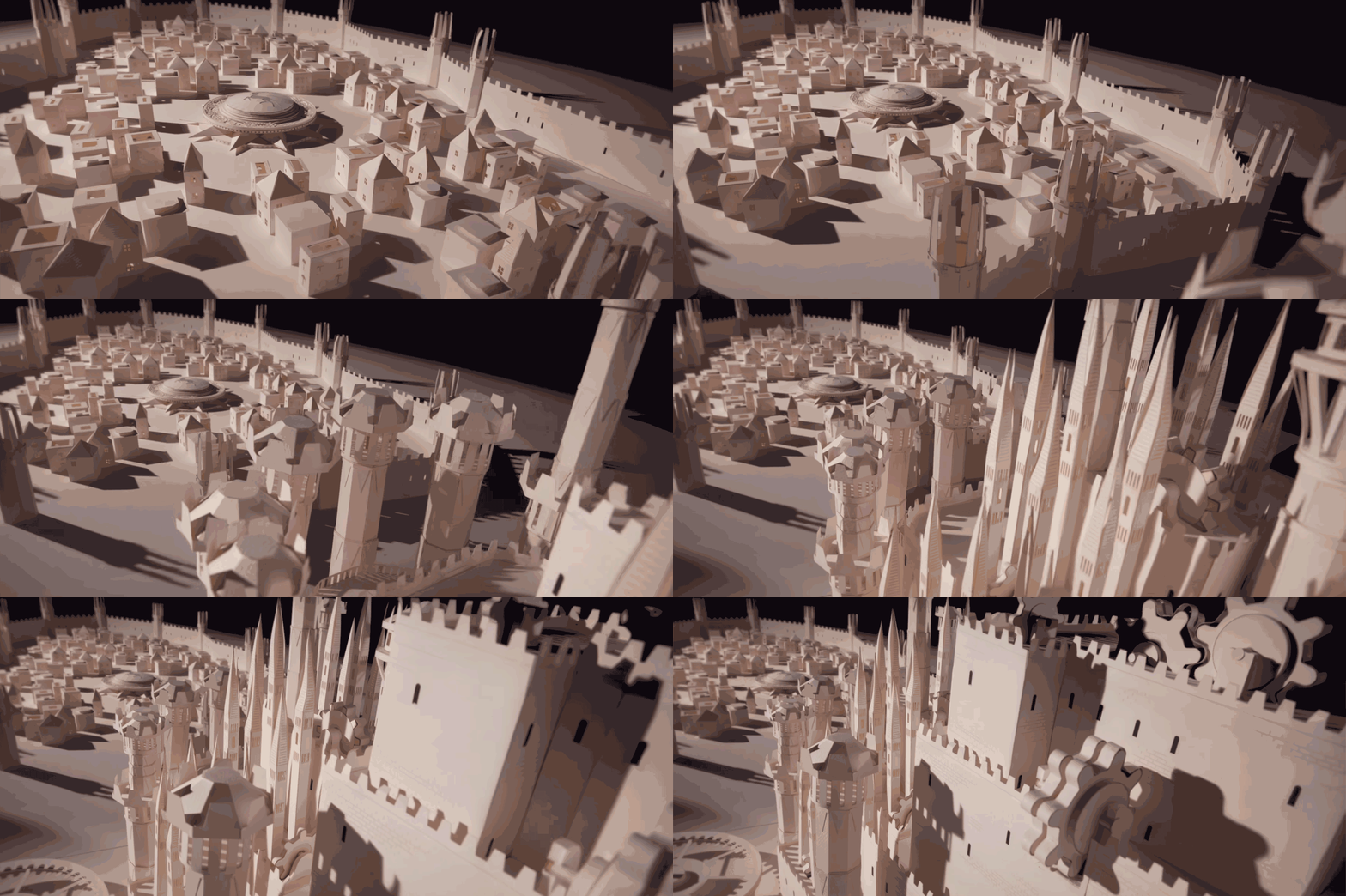
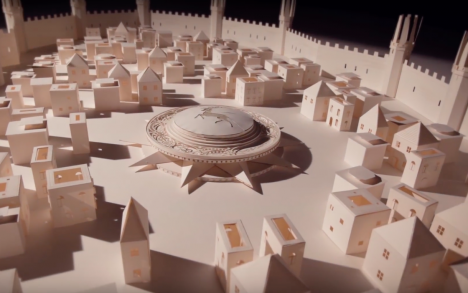
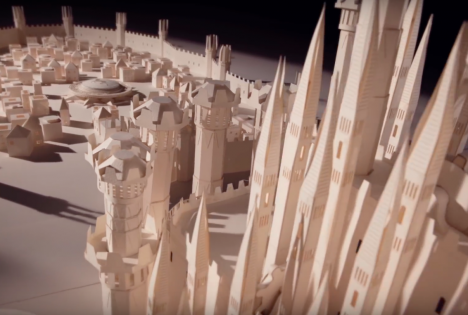
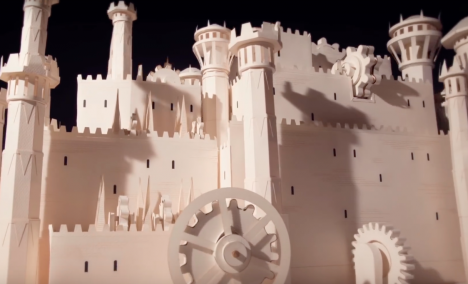
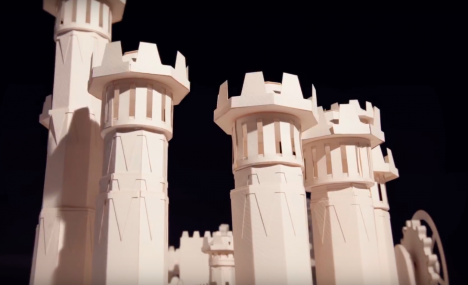
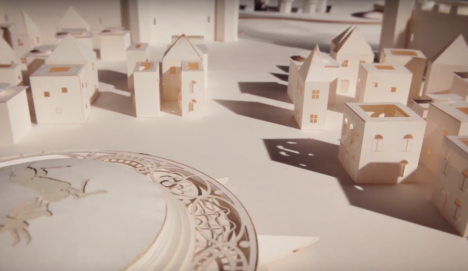
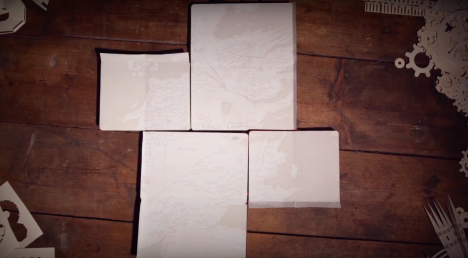
A snippet of the imaginative and ever-changing opening sequence of HBO’s Game of Thrones series is recreated in stop-motion using over 7,600 paper cutouts made with Moleskine notebooks in this 40-second video. Made by Milan-based animation studio Dadomani to promote the brand’s new Game of Thrones notebooks, the moving models mimic the computer animation seen on the show, wherein three-dimensional structures emerge from the surface of a map and spring to life.

Screen Shot 2016-04-27 at 5.38.46 PM

Screen Shot 2016-04-27 at 5.39.05 PM

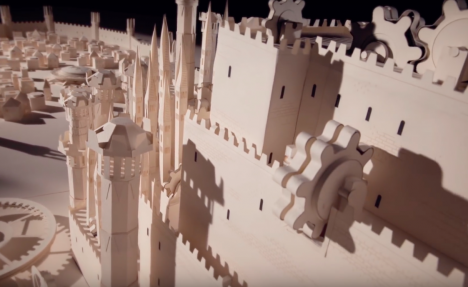
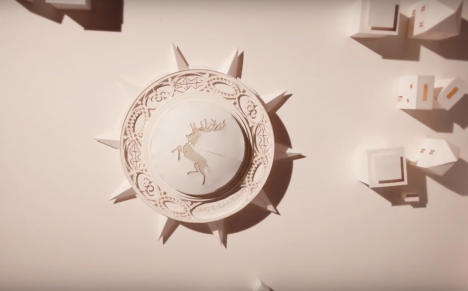
Opening with a view of the sigil of House Baratheon, the video sweeps through King’s Landing as paper gears turn and spires begin to retract. The tiny paper houses disappear as the stag-topped sigil spins, and the camera pans out to a classic Tolkien-style map of Westeros before the scene splits into four pieces.

Screen Shot 2016-04-27 at 5.39.19 PM

Screen Shot 2016-04-27 at 5.39.35 PM

Screen Shot 2016-04-27 at 5.39.48 PM

Screen Shot 2016-04-27 at 5.39.58 PM

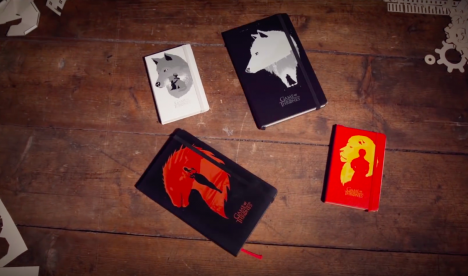
These four components are revealed to be the individual notebooks in Moleskin’s Game of Thrones series, each covered with the dire wolves of the Starks, the Targaryen dragon and the Lannister lion. A fifth notebook, the collector’s edition only available in Moleskin stores, features an image of the Iron Throne. The silkscreened covers were designed by emerging artist Levente Szabó, and each notebook retails for $ 19.95 – $ 25.95.

Screen Shot 2016-04-27 at 5.40.17 PM

Screen Shot 2016-04-27 at 5.40.35 PM

Screen Shot 2016-04-27 at 5.40.50 PM

The designers of the original animation took inspiration from Leonardo da Vinci’s machines to achieve an effect appropriate for the fantasy series, which is set in a fictional country in a time period recalling the real-world Middle Ages. The cog-filled engines beneath the surface of the map that power all of the movements above represent the secret machinations of the series’ main families, the Houses of Lannister, Baratheon and Stark, along with all of their allies and enemies. Check out how the paper version was created in the video above.

Share on Facebook


[ By Steph in Art & Sculpture & Craft. ]

[ WebUrbanist | Archives | Galleries | Privacy | TOS ]


WebUrbanist

 
Comments Off on Paper Westeros: Game of Thrones Intro Recreated in Moleskine Notebooks

Posted in Creativity


Rainbow Nests: What Wasps Build with Colored Construction Paper

14 Apr

[ By WebUrbanist in Art & Sculpture & Craft. ]

colored wasp nests

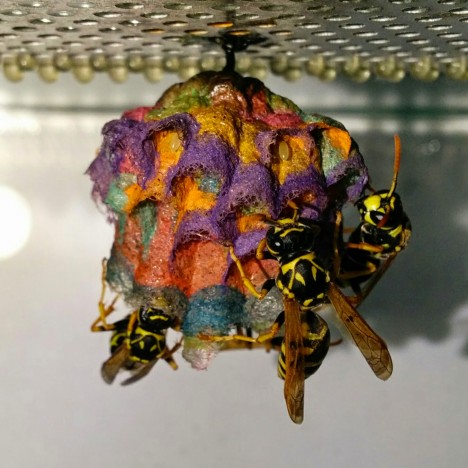
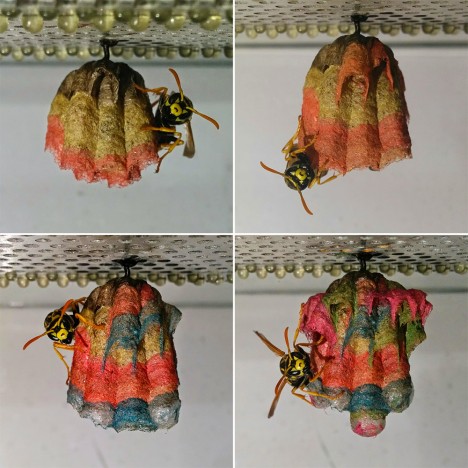
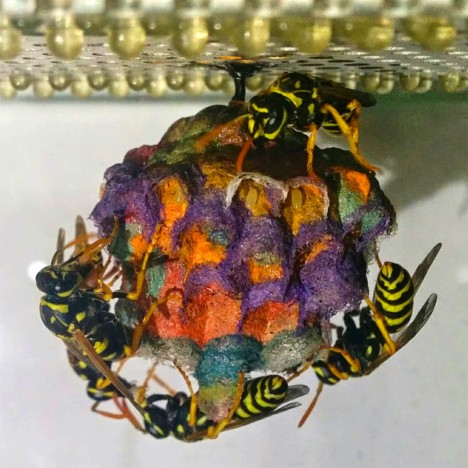
Worker wasps build with the materials available in their environment, including different hues and shades of paper, which can lead to radical rainbow homes when properly apportioned.

colored paper creations

Biology student Mattia Menchetti began giving a group of European paper wasps a variety of colored papers in a specific sequence in order to facilitate their creation of colorful nests.

colored wast colony

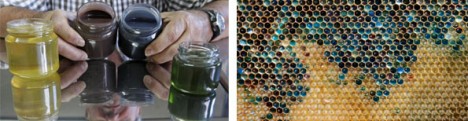
The effect is quite compelling, but wasps are not the only creatures that can take on colors from their surroundings and incorporate them – bees and ants have been known to as well.

bee honey france mandm

In one instance, an M&M production plant in France was found to be responsible for changing the color of honey created by a local bee hive. Apparently, the honey tasted fine, but of course, putting such oddly colorful honey on the market is a tough sell.

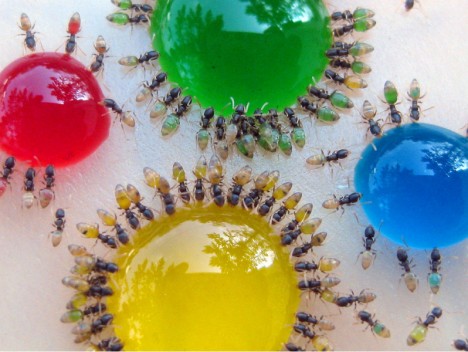
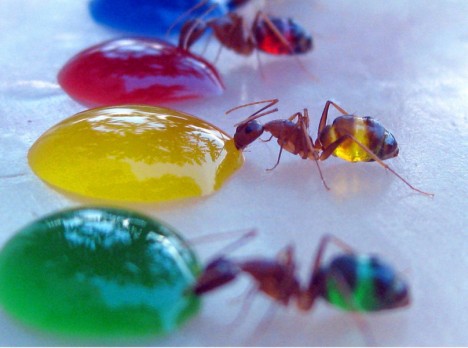
colored ant drink

In another instance, we can see the effects of giving colored sugary water to translucent ants, whose bodies then take on the spectrum of looks found in their drinks.

colored ant colony

In this case, a scientist named Mohamed Babu from Mysore, India shot a series of photos of the colony consuming this liquid sugar water (via Colossal).

Share on Facebook


[ By WebUrbanist in Art & Sculpture & Craft. ]

[ WebUrbanist | Archives | Galleries | Privacy | TOS ]


WebUrbanist

 
Comments Off on Rainbow Nests: What Wasps Build with Colored Construction Paper

Posted in Creativity


Fuji Crystal Archive Deep Matte Paper is Freaking Amazing

04 Apr

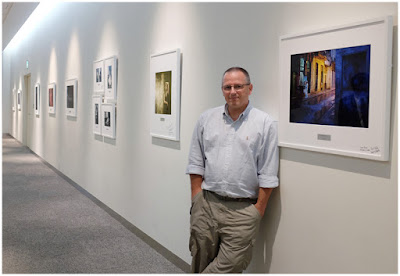
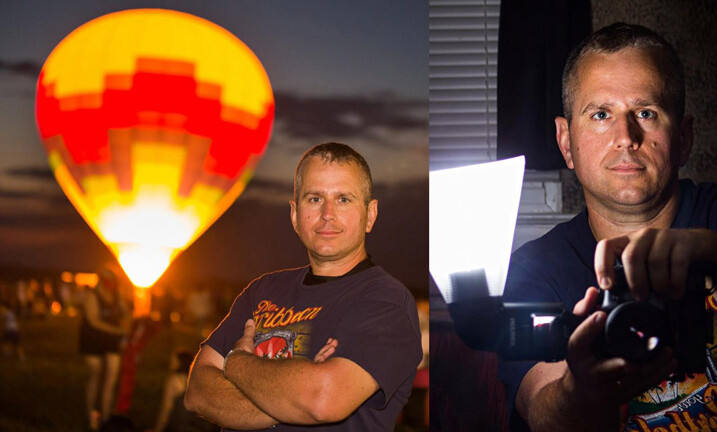
That’s me, above, in 2013. I made a trip to Japan for some meetings with Fuji. It was me, three other photogs and a room of Fuji engineers for two solid days of “How can we make our cameras better?” discussions. Because that’s how they do.

One of the highlights of the trip was seeing my work displayed at Corporate HQ at Fujifilm Square in Tokyo. (Pic, above, by Zack Arias.) One of the lowlights was realizing how much better these prints were than anything I could get done in the US.

Sigh.

I just assumed it was some sort of Fuji in-house magic file tweaking or something. Or more likely, Fuji’s continuous custody of the whole vertical process, right back to the film SIM.

Then it happened again in the 5th Anniversary event in Tokyo earlier this year: Gorgeous print, followed by the instant pang of sadness that I cannot get it done to this quality in the US.

An Import You’ll Wanna Drive

Well, it turns out that you can. I found it while auditioning several labs for printing of an image of mine that is to be sold be sold at a local gallery. Short version: I have found the paper I am gonna marry, and it is Fujicolor Crystal Archive Deep Matte.

The prints are hard to describe. They are beautiful and painterly; somehow muted and saturated at the same time. If you want a mental picture, it feels like a Gregory Crewdson image. As for the paper itself, the substrate is quite substantial and the surface is beautifully non-reflective.

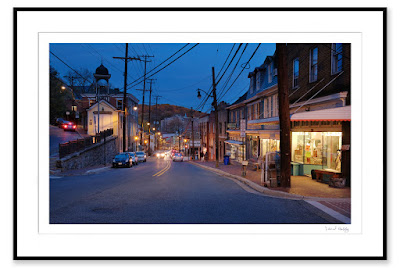
Here’s the file/framed mock-up. The thing is, the print looks significantly better than the file. And I can’t remember ever thinking that before — other than those two times in Japan.

I have not tried it with anything subtle yet as far as the files go. But on my color-drenched citiscapes, it looks phenomenal. So much so that I am getting several of my existing prints reprinted on this paper.

They tell me at the lab that it is great for B&W, too. You’d better believe I am gonna be trying that.

The paper is silver halide based, and designed for large format and Frontier laser printers, according to Fuji’s poop sheet.

It uses CP-RA (or RA-4) process, and is said to be archivally stable for 100 years on display, 200 in storage. (Okay, I’ll be dead by then. But this print will still be beautiful.)

Do yourself a favor and try this stuff. You just need two things: A really competent lab, and Fuji Deep Matte paper. I’m using AdoramaPix and letting them drive on the color correction. (New paper, new printer, what do I know, right?) And I was super happy with the result.

Pick your favorite file and go big, as in 16×20 or larger. Because the beauty of this paper is that it somehow seems to both accentuate detail and mask noise. I don’t know how it does that. But holy crap.

$ 5 to Try It

And here’s something cool: if you want to try it as a one-off, AdoramaPix has a refer-a-friend special that’ll get you $ 5 off on $ 15 or more if you are a new member. And since a 16×20 print there is $ 16.99, it qualifies and drops this little experiment to $ 11.99. Not bad.

If you give it a try at this link, the referral code should auto-populate. And a quick heads-up, some folks are saying they can’t find the “deep matte” option. Here’s how to do it:

Sign up using the code. Go to ->Photo Prints, ->Upload Photos Now (upload your image) ->#3 Paper Finish and ->”Deep Matte Finish”.

It’s only available for 16×20 and up. And these guys being a pro lab, I suggest you let them color correct for you. (If you want to marry them later, you can easily download their ICC profiles and drive the car yourself then.)

So that’s my Epiphany of The Day, if you will. Suffice to say I am done auditioning prints.

Try it and let me know what you think.

Strobist

 
Comments Off on Fuji Crystal Archive Deep Matte Paper is Freaking Amazing

Posted in Photography


How to Create Awesome Portrait Lighting with a Paper Bag an Elastic Band and a Chocolate Donut

12 Feb
Paperbag main 717

I photographed Luke Deslandes with a homemade modifier and a lighting kit that can be created for less than $ 200

One of my favourite TV series from the 90s was MacGyver, an action-adventure series about a US government secret agent with a fabulous mullet, who improvised and built complicated devices from household objects such as rubber bands, paper clips, pens and a Swiss Army knife.

The show was so incredibly popular that the term MacGyver made its way into the dictionary:

MacGyver (v): To make or repair (an object) in an improvised or inventive way, making use of whatever items are at hand:

  • He MacGyvered a makeshift jack with a log.
  • He has a shock of short red hair and a pair of rectangular-framed glasses, MacGyvered with duct tape.

The other week I was caught short on a night shoot because I’d misplaced my small softbox modifier, and needed to come up with a way to soften and control the from my speedlight to create portrait lighting.

I searched my entire kit and car, found nothing useful, then I asked myself, “What would Macgyver do?”. I rummaged through my bag and found a chocolate donut (Nutella filled, so good!) in a white paper bag, and a hair elastic which would be perfect substitutes for the softbox I’d forgotten to bring to the shoot.

The really cool thing about lighting is that the basic principles will work with any kind of light, regardless of budget, or the type of modifier used. So whether you’re working with a $ 150 lighting kit (similar to the one I used for these images) a $ 1,500 hit, or $ 15,000 one, the light will still react in the same way.
light-modifers

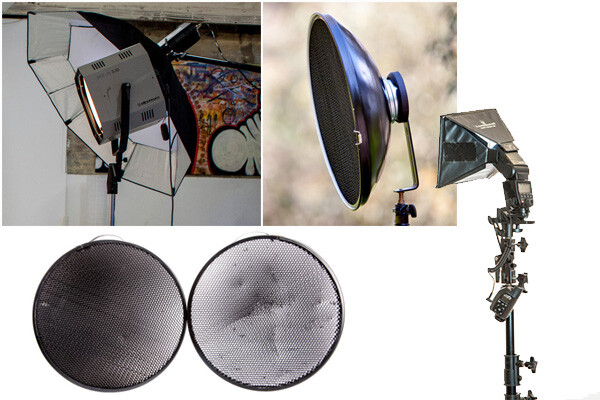
One of the best lessons I learned from working with film and television crews is that ordinary household objects can be used to shape and train light. I’ve seen soft light created using sheets of Perspex, calico, and even shower curtains. A light modifier is basically designed to do two things:

  1. It controls the shape of the flash
  2. It controls the quality of light coming from the flash
Light Shapers SQ copy

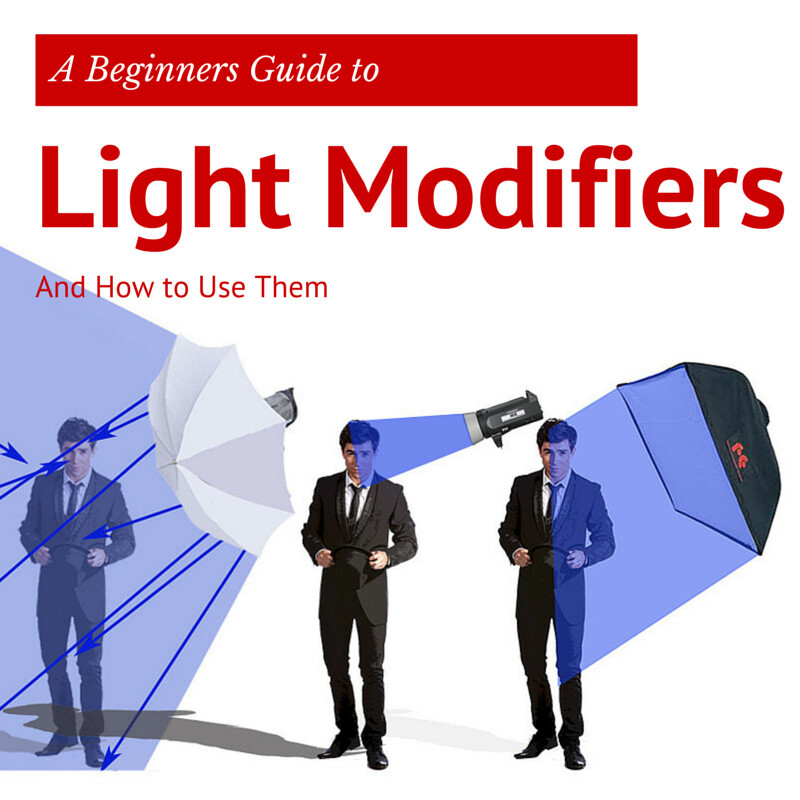
Some modifiers, like umbrellas, will spread the light over a large area and soften the quality of the light. Other modifiers like grid spots contain the light to a very small area and create a hard quality of light (click image above to read more).

The main differences between the high-end options, and MacGyvered lighting are: light quality, consistency, and build. A light modifier that has been cobbled together using found objects is not going to look pretty, and you may attract some odd looks from passers by. On a positive note, I believe a MacGyvered light modifier is a perfect way to get your head around how lighting works, and to vary your lighting styles without having to empty your bank account.

This is how I created my mini softbox using a paper bag, an elastic band, and a chocolate donut.

The Gear
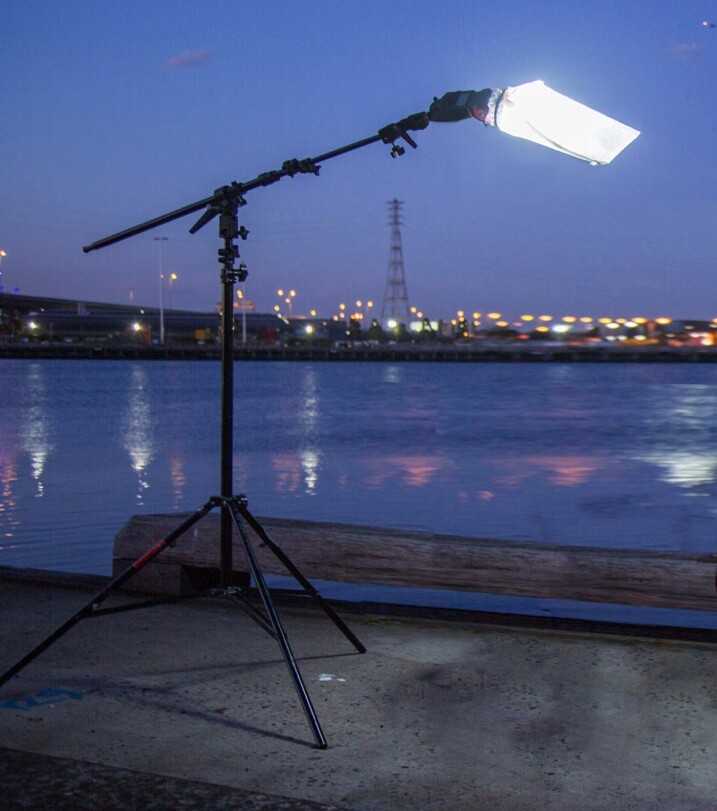
Boom 750
Booms are an awesome way to add light above your model, as they allow the freedom to work without stands getting in the way of your shot. Using a boom is also the best way to position the light exactly where you want it.

I’ve created this lightweight location boom by using a mini-boom arm on an umbrella bracket, attached to a light stand. Always remember to use a weight on the light stand, to avoid it tipping over in high winds. You can buy a sandbag, or MacGyver your own using two-litre drink bottles filled with water in a canvas bag.

A cheaper alternative to the boom is to use a light pole, and to ask a friend to hold it for you. If you are new to working with off-camera flash, I suggest you read one of my previous blog posts: A Beginner’s Guide to Working With Flash Off-Camera.It will walk you through the step-by-step technique of shooting with off-camera flash .

  • A Yongnuo YN-560II speedlight – under $ 80
  • Yongnuo RF-603N flash triggers $ 30
  • CowboyStudio umbrella mount bracket with swivel tilt bracket $ 16
  • LumoPro LP605 compact 7 foot stand with ground spikes $ 45
  • Sandbag $ 7
  • LumoPro mini-boom/reflector arm $ 40
  • Tripod
  • Nutella donut in a white paper bag – you can use plain donut but they are not as good! <$ 1
  • One Hair elastic <$ 1
  • Canon 5DMK111 (use your own camera)
  • Canon 24-105mm L series (use the lenses you have already)

The Way
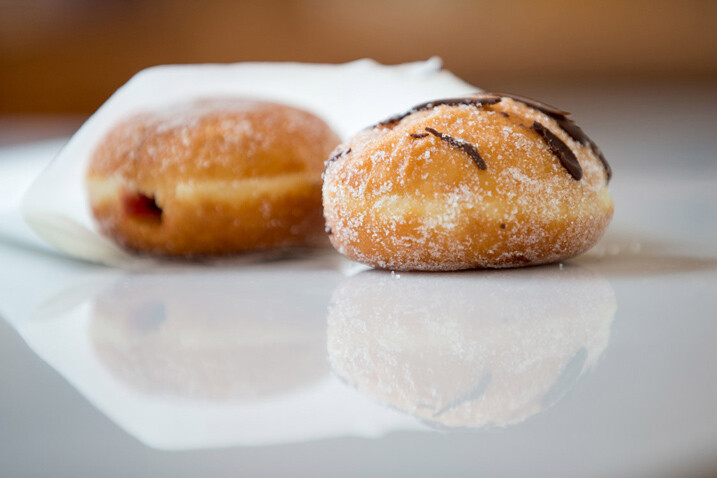
Paperbag 2 717

Carefully remove the donut from the bag, being careful not to get any Nutella smeared on the bag. Divide the donut into two equal portions. Offer one half to your model and eat the other half. If you can’t find Nutella donuts in your neck of the woods, you can substitute with any other pastry served in a white paper bag.

If you prefer a cleaner style of shooting, just ask for an extra bag when you buy your donut. You can also skip this part altogether, but it’s not as much fun, and just find a white paper bag similar to the one I’m using (see below). They vary in size and thickness so look for bags that are free of any advertising.
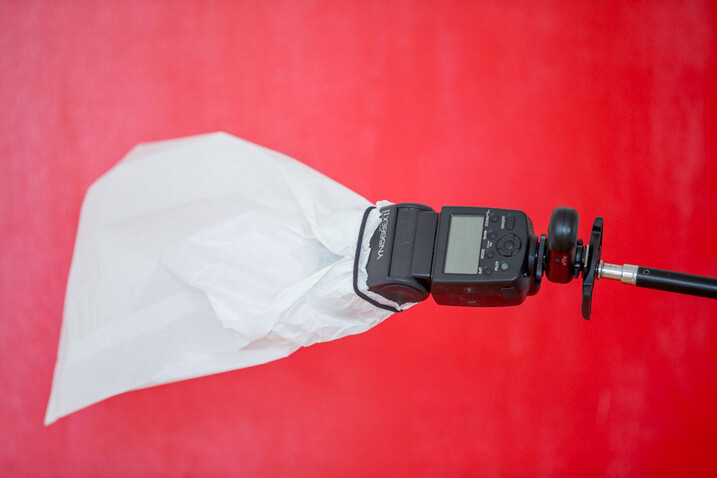
Paperbag 3 717

Place the bag over the flash and secure using the hair elastic. Electrical tape will also work, but it tends to leave a sticky residue on the flash.
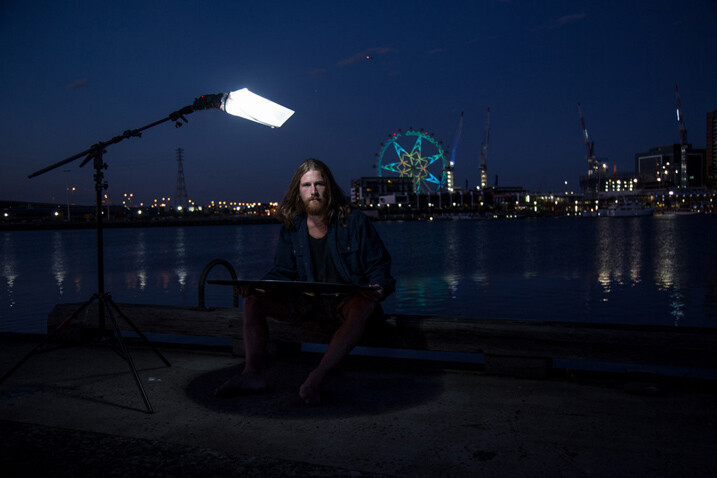
Paperbag 4 717

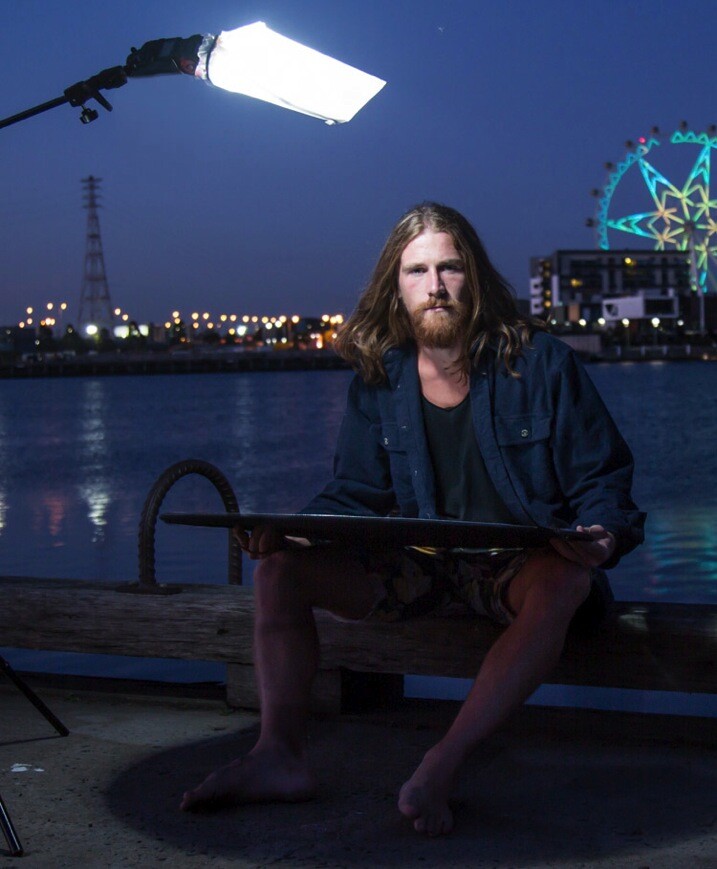
Position the light directly above, and slightly to one side, your model’s head. This lighting style is called loop lighting. I think it’s a flattering style because it leaves the face in partial shadow, and creates the illusion that the face is slimmer.

It’s called loop lighting because of the loop-shaped shadow the nose casts on the side of the model’s face. How prominent the shadow is, depends on how much fill light is used. I use this style of lighting for 80% of my studio and location shoots, as I believe it is one of the most natural-looking lighting techniques.
Paperbag 5

Adding Fill Light

Using one light from overhead looks great, and adds definition to the model’s bone structure. As I prefer a softer lighting style, I’ve also added a white reflector to my shot.

I placed the reflector on Luke’s (my model) lap because I was shooting very tight headshots. If I were shooting a ¾ or full-length portrait, I would position the reflector on the ground, just out of the shot. The reflector fills in the shadows caused by the flash overhead. You can modify the amount of fill light by how close you place the reflector in relation to your light source. The closer the reflector is to the light, the more evenly lit your portrait will look. If you prefer more contrast or mood to your lighting, move the reflector further away from the light or don’t use one at all.
Paperbag_6-717

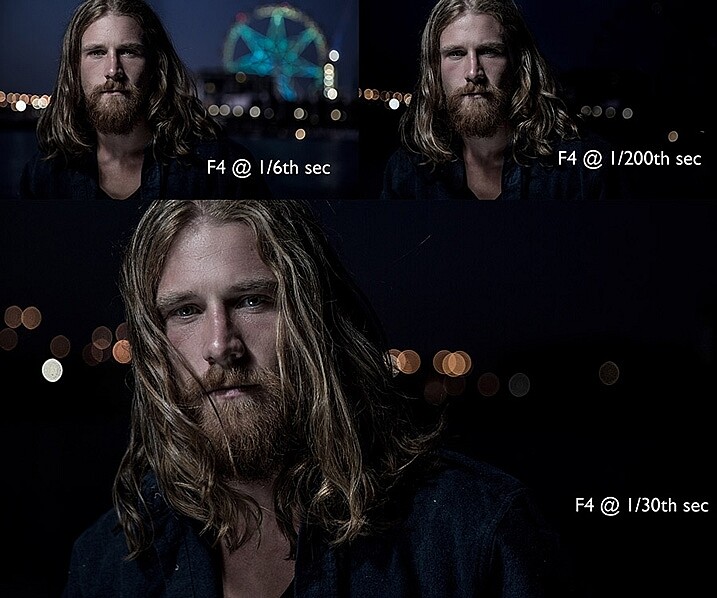
Changing the shutter speed controls how much ambient light there is in the image. To create a brighter background, I selected a shutter speed of 1/6th second. Shooting at 1/200th of a second removes most of the ambient light and creates a moodier image. I wanted to create the goldilocks effect, not too heavy, and not too light, but just right.

The Final Image

Paperbag final 717

Here are a few more awesome Macgyver lighting hacks that my podcast listeners have shared with me.

Ping pong balls and empty toilet rolls
Brett Ferguson 01

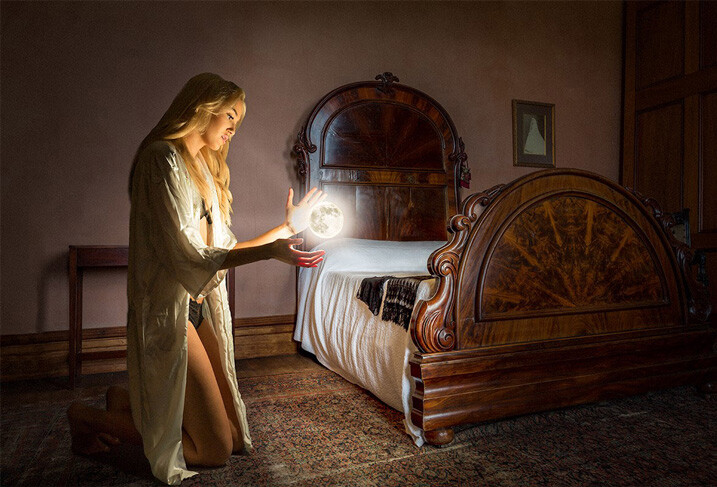
This gorgeous image by Brett Ferguson was created with a light modifier Macgyvered together with a ping pong ball and empty toilet rolls.
Brett Ferguson 02

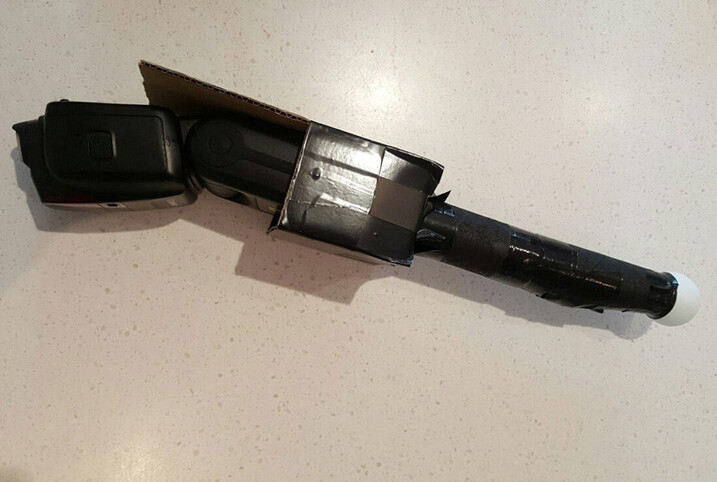
Hey Gina Milicia, here is a Macgyver light modifier for you. I needed a spot light source to light the model in a convincing way. It was really important to have a soft glow, and realistic shadows, to emulate what the moon would look like. I used a ping pong ball at the end of two empty toilet rolls and then rigged some cardboard to hold the flash. The flash head fits in nicely, and the centre of the toilet rolls are white, allowing it light up to the ball. This image (edited) was shot at 47mm on a 24-70mm f2.8L II lens on a Canon 5D3 at 1/80th, f/3.5 and ISO 500.

You can see a larger version of the finished image at www.brettferguson.com.au.

The Pringles gridspot
GlennDube 717

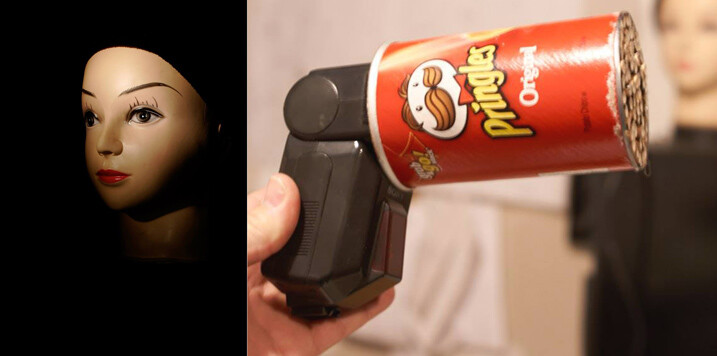
Photographer Glen Dube has Macgyvered this brilliant grid spot using a Pringles container and straws.

This is basically just a Pringles can, with the bottom cut out and replaced by straws, hot glued in place. But I found coloured straws tainted the light, luckily my wife found some paper straws that have a nice bright white inside. The end of the can you get the chips out slides right over all the flashes I have, except this really old Vivitar that has the zoom function on the outside. Pringles has been helpful in providing a variety of lengths of cans for us.

The length (and diameter) of the straws determines the size of the spot and there are even online calculators. I found the flashes zoom function has little effect but the calculators are accurate for determining the spot sizes. The paper straws let you have a sharper fall off (as the plastic straws are translucent and spill light outside the circle). I used 60mm straws, which at 1 meter (3′) gives me a 180MM (7.1″) diameter spot that gets wider the farther away the light is from the subject.

Pop-up flash modifier
Andrej Valko 717

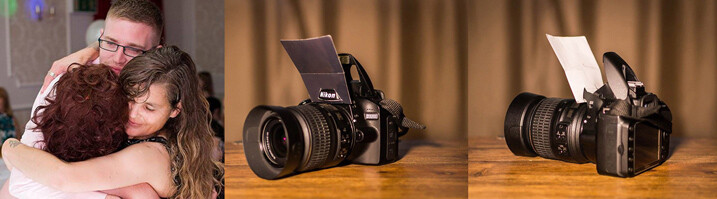
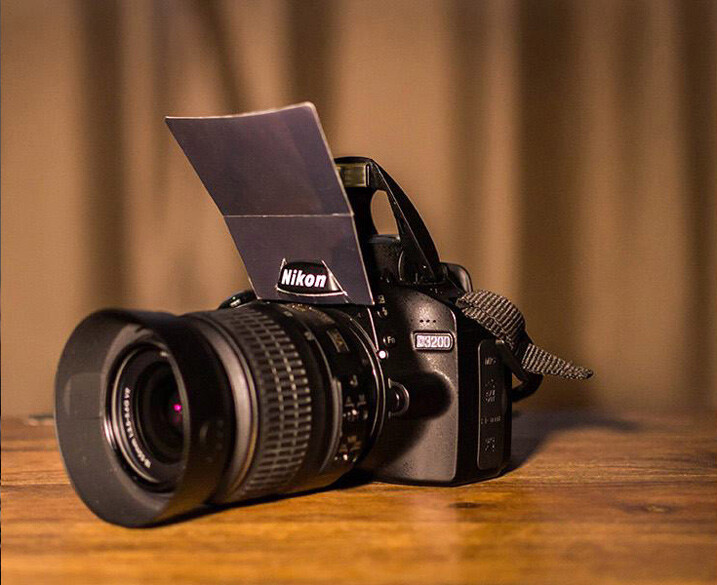
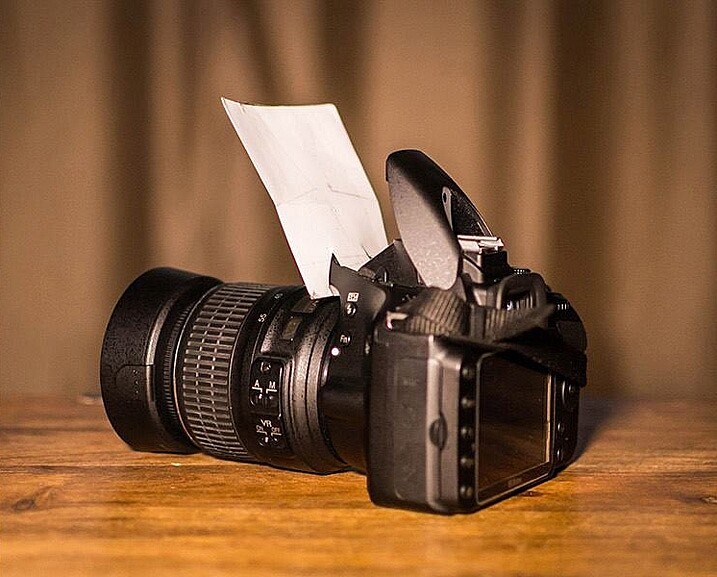
Photographer Andrej Valko created this really simple portable pop-up flash modifier using cardboard.

I saw this idea a couple of years ago – a bounce card for the on-camera flash. I thought: how hard can it be to make one. So I did – I printed black on one side of heavy photo-paper so it didn’t look conspicuous from the front. It was white on the other side to bounce light. I taped it with clear tape so it reflected light more efficiently (it also made it a bit more durable), and I cut it to suit my camera.
Andrej Valko 2

Andrej-Valko-3

It was easy to mount (it just slid in), easy to carry (in a back pocket just like a business card) and it bounced light off the walls and ceiling, as well as off my face! And I, the crazy photographer, shot a wedding reception with just the bounce card! (I didn’t have a single flash unit at the time.) I still cannot believe I actually used this to shoot a wedding.

The drawer liner modifier
MikeHickman 2 717

Photographer Mike Hickman created this modifier using a translucent drawer liner.

My “ugly” modifier created from translucent drawer liner which I have used almost exclusively during events, including weddings. The idea came from here.

Cost is about $ 10 for a full liner made by Contact, and attached with Velcro strips for about an additional $ 6. Makes three or four, depending on size. Also, folds up to stick in your pocket when changing locations and I have two in my camera bag at all times. Can’t do that with too many other modifiers!

There are so many awesome ways to MacGyver light modifiers. Do you have one you are particularly proud of? I’d love to see it. Please share your ideas in the comments below.

fastflash_bookIf you want to learn more about using flash for creating portraits, pick up Gina’s brand new dPS ebook: Fast Flash for Portrait Perfection. Now on sale for an introductory price for a limited time only.

googletag.cmd.push(function() {
tablet_slots.push( googletag.defineSlot( “/1005424/_dPSv4_tab-all-article-bottom_(300×250)”, [300, 250], “pb-ad-78623” ).addService( googletag.pubads() ) ); } );

googletag.cmd.push(function() {
mobile_slots.push( googletag.defineSlot( “/1005424/_dPSv4_mob-all-article-bottom_(300×250)”, [300, 250], “pb-ad-78158” ).addService( googletag.pubads() ) ); } );

The post How to Create Awesome Portrait Lighting with a Paper Bag an Elastic Band and a Chocolate Donut by Gina Milicia appeared first on Digital Photography School.


Digital Photography School
 
Comments Off on How to Create Awesome Portrait Lighting with a Paper Bag an Elastic Band and a Chocolate Donut

Posted in Photography