RSS
 

Posts Tagged ‘Panasonic’

Fujifilm and Panasonic collaborate on ‘industry-leading’ organic/CMOS sensor

12 Jun

Organic3.png

Fujifilm and Panasonic have announced the joint development of a sensor technology that combines a light-sensitive coating on top of a CMOS chip. The companies claim higher dynamic range and sensitivity than current CMOS sensors, along with the ability to receive light at steeper angles – making it easier to design cameras with wide-angle lenses and allowing lenses to be mounted nearer to the sensor. The announcement extends from the work Fujifilm has been conducting on organic (carbon-based) photo-senstive materials and combines it with CMOS underpinnings developed by Panasonic. The result is a chip that uses CMOS technology only for circuitry – with the organic layer taking over the role of converting light into electrons.

News: Digital Photography Review (dpreview.com)

 
Comments Off on Fujifilm and Panasonic collaborate on ‘industry-leading’ organic/CMOS sensor

Posted in Uncategorized


Panasonic Lumix ZS30/TZ40 Review

04 Jun

Panasonic Lumix ZS30:TZ40 Review.jpg

For camera makers the bad news is that smart phones and their inbuilt cameras are hurting the sales of compact digicams.

The good news is that it probably means more people are taking more pictures and shooting video — but not with digital cameras.

Not for me. Ergonomics comes into it: I find holding a smart phone far from an ideal way to fire off a shot and even worse when it comes to shooting video.

With the latter in mind, let’s face it, a video camcorder is the ideal shape for shooting video, digicams/DSLRs and CSCs come in second and way down the list is a smart phone or, even worse, a tablet.

Then, when it comes to a camera like the TZ40 (or the ZS30 as it is known in North America), the game changes radically.
Panasonic Lumix ZS30:TZ40 Back.jpg

Panasonic Lumix ZS30:TZ40 top.jpg

Panasonic Lumix TZ40/ZS30 Features

Let’s look at the specs:

The lens is designed by Leica. Its range is 20x, zooming from a 35 SLR equivalent of a wide 24mm to a tele 480mm focal length.
Harbour Bridge full tele 4.JPG

Harbour Bridge full wide 3.JPG

The camera is stabilised and compensates for five types of movement: horizontal, vertical, axis of rotation, vertical rotation and horizontal rotation. So there, smart phones!

The CMOS sensor captures a maximum image size of 4876×3264 leading to a 41x28cm print.

Video is captured at the Full HD resolution of the 1920×1080 pixels in either MPEG4 or AVCHD formats. And note: you can shoot stills mid video recording.

The DMC-TZ40 can easily ‘talk’ to a compatible smart phone easily, allowing still and video shooting to be controlled from the smart phone screen with the help of the supplied Panasonic
Image App for iOS and Android phones. Users can also see what the camera lens is seeing live from their phone at 30 fps, then set zoom, focus, shutter release, shutter speed, aperture and exposure compensation, as well as capture video remotely.
$  10 note.jpg

Opera House and ferry 4.JPG

Level Shot is a feature new to the TZ Series which detects the horizontal angle of view and keeps the image straight: useful for shooting ‘blind’. The video is cropped to allow the feature to come into play. I managed to make this feature work but found the straightening effect to be relatively minor. Still, it may help many a topsy turvy videographer!

Besides this, there’s also an on screen indicator for camera level.
The TZ40 will shoot at 10 fps in full resolution using the mechanical shutter and 5 fps with continuous AF.

The GPS function shows the name of the country, state, city and key landmarks using an internal data library. The area information covers over 200 countries or regions and more than a million landmarks worldwide.

The 7.6cm LCD screen is a touch screen, which makes it very useful when you’re shooting in a tight corner.

Panasonic Lumix TZ40/ZS30 Controls

The camera is small and light, only gaining depth when the lens protrudes.

Top deck: centre is the mode dial with positions for intelligent auto, PASM, two custom settings, panorama shooting, scene and creative control modes; the zoom lever is centred by the shutter button and flanked by the power and video record buttons.

Rear: WiFi button; map/exposure button; replay; jog dial with positions for exposure correction, self timer, flash options and macro … the menu button is in the dial’s centre; beneath this is a button for display options and another for quick menu access.

The scene and creative control modes are interesting.
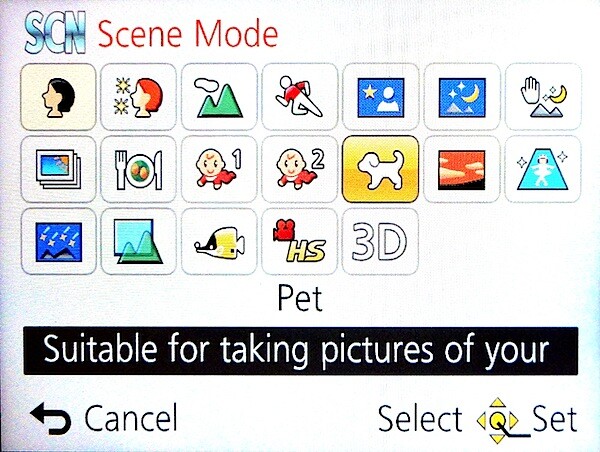
Scene modes.jpg

The former offers 19 options: soft skin; scenery; babies or pets; starry sky; handheld night shots etc. Purists may scoff at these, but the options sure help novices to bring home the bacon!
Creative Control.jpg

Creative control: you get a choice of retro, expressive, high key, etc. Creative control lets users apply a filter effect while shooting, while another mode, creative retouch allows effects to be added to shots after capture.

In the creative panorama mode you can add the above filters post-shoot.

In High Dynamic Range (HDR) mode the camera takes an undisclosed number of shots at different exposure levels and then automatically merges them to preserve details in the highlights, mid-tones and shadows.
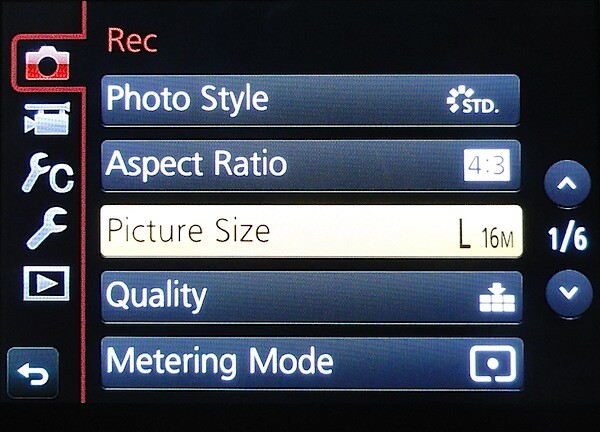
Menu.jpg

The menu display is clear and obvious.

Startup Time

Startup from cold took just over a second; follow on shots came as fast as the shutter button was hit.

Distortion

A good performance, with no evidence of distortion at either the wide or tele ends of the zoom

Panasonic Lumix TZ40 ISO Tests

Panasonic DMC-TZ40 ISO100.JPG

Panasonic DMC-TZ40 ISO400.JPG

Panasonic DMC-TZ40 ISO800.JPG

Panasonic DMC-TZ40 ISO1600.JPG

Panasonic DMC-TZ40 ISO3200.JPG

Panasonic DMC-TZ40 ISO6400.JPG

Noise began to appear at ISO 1600 and the image became a little murky.

By ISO 6400 noise was well up, the image even murkier and definition far lower.
Swimmers 30_.JPG

Panasonic Lumix ZS30/TZ40 Verdict

Quality: above average

Why you’d buy the Panasonic Lumix TZ40/ZS30: small, pocketable; 20x zoom is a useful range; wide range of features; good stabiliser.

Why you wouldn’t: can’t think of any reason!

There is little to fault with this camera, however I question the placement of the video record button a few mills away from the power on/off button. Too often did I hit the one when aiming for the other!

I may have gone overboard on this little device but I hope my review serves to remind people that there are well-featured digicams out there that are far superior to smart phones that seemingly offer similar capabilities. Go get ‘em!

Available in black or white.

Panasonic Lumix TZ40/ZS30 Specifications

Image Sensor: 18.1 million effective pixels.
Sensor: 11mm CMOS.
Metering: Multi, centre-weighted, spot.
Lens: Leica DC Vario-Elmar f3.3-6.4/4.3-86mm (24-480mm as 35 SLR equivalent)
Exposure Modes: Auto, Program AE, shutter and aperture priority, manual.
Shutter Speed: 15-1/1200 second.
Memory: SD/SDHC/SDXC plus 12 MB internal.
Image Sizes (pixels): Stills: 4876×3264 to 480×480.
Movies: 1920×1080, 1280×720, 640×480, 320×240.
Continuous Shooting: 5 and 10fps.
Viewfinder:7.6cm LCD screen (920,000).
File Formats: JPEG, MPO 3D, MPEG4, AVCHD.
ISO Sensitivity: Auto, 100 to 6400.
Interface: USB 2.0, HDMI mini, DC input.
Power: Rechargeable lithium ion battery.
Dimensions: 1205x59x28 WHDmm.
Weight: 198 g (with battery and card).
Price: Get a price on the Panasonic Lumix TZ40 at Amazon.

Post originally from: Digital Photography Tips.

Check out our more Photography Tips at Photography Tips for Beginners, Portrait Photography Tips and Wedding Photography Tips.

Panasonic Lumix ZS30/TZ40 Review


Digital Photography School

 
Comments Off on Panasonic Lumix ZS30/TZ40 Review

Posted in Photography


Panasonic updates 12-35mm F2.8 firmware to improve video stabilisation

15 May

panasonic-1235-520.png

Panasonic has issued a firmware update for its Lumix G X Vario 12-35mm F2.8 ASPH Power OIS fast standard zoom for Micro Four Thirds cameras (H-HS12035). Version 1.2 improves the stability of the optical image stabilisation during movie recording. It’s available to download now from the LUMIX customer support site – click through for the link.

News: Digital Photography Review (dpreview.com)

 
Comments Off on Panasonic updates 12-35mm F2.8 firmware to improve video stabilisation

Posted in Uncategorized


Panasonic adds ten unique designs to their budget-friendly Lumix XS1

27 Apr

DMC-XS1PZK05-trans.png

Panasonic is now offering its Lumix DMC-XS1 compact camera – which was first introduced at CES in January – with ten custom ‘skins’. The themes for these skins include pop art, gift wrapping, floral nature, digital, texture, and Japanese traditional. The XS1 features a 16 megapixel CCD, 5X (24-120 mm) optical zoom with image stabilization, a 2.7″ LCD, and 720p video recording. Pricing for the new ‘skinned’ models isn’t available quite yet, though the traditional red, silver, and black XS1 sells for $ 129. We don’t know yet if these designs will be available outside of the US in the future.

News: Digital Photography Review (dpreview.com)

 
Comments Off on Panasonic adds ten unique designs to their budget-friendly Lumix XS1

Posted in Uncategorized


Panasonic Lumix DMC-GH3 Review

25 Apr

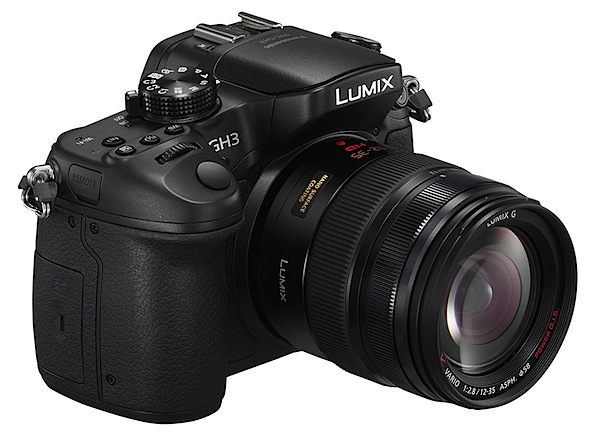
Panasonic Lumix DMC-GH3 Review.jpg

For whatever reason it was a long wait for the Panasonic Lumix DMC-GH3 — I counted about six months. Worth waiting for?

Yes, for a number of reasons, not all directly to do with image making either.

As a MILC (mirrorless interchangeable lens camera) this is as fully featured as you can get and then offers more in the rugged department: it has a magnesium alloy, full diecast body, coupled with splash and dustproof construction, achieved by tightly sealing sections of the camera body.

Test lens was the Lumix G Vario Power OIS f2.8/12-35mm, equating to a 24-70mm lens in a 35 SLR.
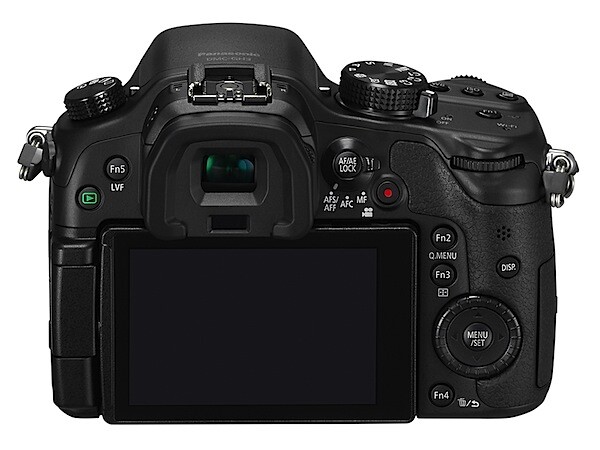
Panasonic Lumix DMC-GH3 Back.jpg

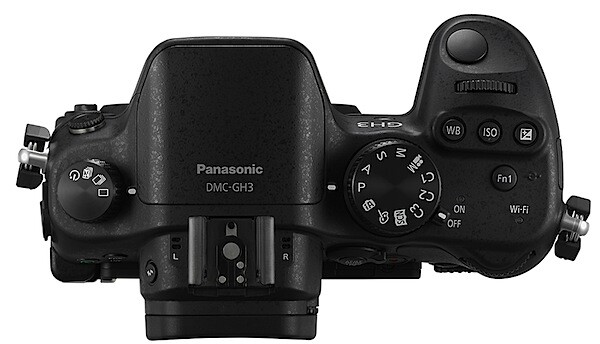
Panasonic Lumix DMC-GH3 Review Top.jpg

Panasonic Lumix DMC-GH3 Controls

There’s a ton of external controls planted on the GH3′s body.

Top deck: at left is a tiny wheel that gives access to single shot or burst shooting as well as the self-timer and an auto bracketted exposure option.

The mode dial has eleven positions: PASM; ‘creative’ video shooting; three custom modes; stills creative control; 13 scene modes (inc portrait, backlit, children’s faces etc); intelligent auto; intelligent auto plus.

By now you will have sussed out that this camera attempts to straddle two levels of user: the expert who wants precise control of image capture and the dabbler, keen to fiddle with images.
Menu.jpg

Pool 3.JPG

Further along the top deck is the prominent on/off lever; three buttons that take you to ISO, AWB and exposure compensation; there is a front and a rear rotating dial that take you through a number of options; the shutter button is right at the front of the pronounced speed grip. And then there is the first of five Function buttons, with the other four sprinkled around the rear surface of the camera.

Rear: replay; Function buttons 2, 3, 5; auto focus and exposure lock button; video record; display options; a rotating control dial and concentric menu button.

So you can see, as I said: ‘There’s a ton of external controls …’

Panasonic Lumix DMC-GH3 Features

The 16.05 megapixel Live MOS sensor can capture a maximum image size of 4608×3456 pixels, or 39x29cm as a print.

Video? You can shoot Full HD in either MPEG4 or AVCHD. I was able to shoot stills while recording video with no apparent interruption to the latter. The AF tracked seamlessly mid video recording … a great performance.

Video users will appreciate the enhanced handling of the program material as it embeds SMPTE-compliant time code either in Rec Run or Free Run count-up methods; this makes it easy to synchronise multiple video shots or sound sources in post production.

In video sound recording, the DMC-GH3 has Dolby Digital for AVCHD Progressive /AVCHD videos, and linear PCM (LPCM) for un-compressed MPEG4 video. There are two 3.5mm terminals for an external microphone and headphone.

The camera uses OLED displays both in the rear LCD and the turret finder: while both displays are excellent, the former suffers in bright sunshine.

In the design of the GH3 great attention was paid to minimising sensor noise, preventing sensor noise from entering the output signal and preventing noise from entering the signal processing circuit, power supply and grounding lines. Sensitivity ranges from ISO 200 to ISO 12800, but you can extend this to ISO 25600 by accessing a special function.
Cinema 1.JPG

Foot plate.JPG

More

The camera’s HDR mode takes three shots at different exposure levels and automatically combines them to produce a single image. Other shooting functions include Time lapse shooting and multiple exposures using four shots to combine into one.

The rear LCD screen can rotate 180 degrees laterally and tilt 270 degrees vertically.

Continuous speed: the GH3 can shoot at 6 fps in full res of 4608×3456 (maximum 18 consecutive shots in RAW+JPEG) and 20 fps at 2336×1752 pixels (maximum 80 consecutive shots in JPEG).

I much appreciated the on screen distinct level gauge, which detects the horizontal/vertical angle of view as well as sensing if the camera is tilted forwards or back.

The touch screen can be more useful than you think: just by touching the subject you want as your point of focus, the camera will focus on the subject and take the picture automatically.

In Creative Control mode you can access a range of additional image effects. You set the effects to add by selecting example images and confirming them on the screen. Such effects as expressive, retro, high and low key, mono. etc.

Panasonic Lumix DMC-GH3 ISO Tests

Panasonic DMC-GH3 ISO 125.JPG

Panasonic DMC-GH3 ISO 400.JPG

Panasonic DMC-GH3 ISO 800.JPG

Panasonic DMC-GH3 ISO 1600.JPG

Panasonic DMC-GH3 ISO 3200.JPG

Panasonic DMC-GH3 ISO 6400.JPG

Panasonic DMC-GH3 ISO 12800.JPG

Panasonic DMC-GH3 ISO 25600.JPG

Going well at ISO 1600. Still clean at ISO 3200. OK at ISO 6400. Noise becoming visible at ISO 12800 but colour OK. At ISO 25600 noise is well up and there are signs of a colour shift.

Panasonic Lumix DMC-GH3 Review Verdict

Quality: excellent colour, tops in the sharpness dept.

Why buy the Panasonic Lumix DMC-GH3: built in flash with a GN of 12 (ISO 100 in metres) that covers a 24mm range; access to a wide range of lenses, inc Leica’s optics.

Why not: too many pro-ish controls for some users; too many amateur options for pros!

To me, this would make an excellent camera for an ambitious beginner: you could start by using it as a point-and-shoot, then gradually move upwards as you learn the more complex controls.

Panasonic Lumix DMC-GH3 Specifications

Image Sensor: 16.05 million effective pixels.
Metering: Multiple, centre-weighted and spot.
Effective Sensor Size: Four thirds 17.3×13.0mm CMOS.
Lens Factor: 2x.
Compatible lenses: Micro Four Thirds.
Exposure Modes: Auto, Program AE, shutter and aperture priority, manual.
Shutter Speed: Bulb, 60 to 1/4000 second; flash sync 1/160 sec.
Burst Speed: 6 fps.
Memory: SD/SDHC/SDXC cards.
Image Sizes (pixels): 4608×3456 to 1712×1712. Movies: 1920×1080, 1280x720p, 640×480.
Viewfinders: Turret finder (1.74 million pixels), 7.6cm LCD screen (614,000 pixels).
File Formats: JPEG, RAW, JPEG+RAW, AVCHD/MPEG4, MPO (3D).
Colour Space: Adobe RGB, sRGB.
ISO Sensitivity: Auto, 200 to 12800.
Interface: USB 2.0, AV, HDMI mini, WiFi, DC input.
Power: Rechargeable lithium ion battery, AC adaptor.
Dimensions: 133x93x82 WHDmm.
Weight: Approx. 550 (inc battery).
Price: Get a price on the Panasonic Lumix DMC-GH3 (body only) or the Panasonic Lumix DMC-GH3 with Panasonic H-FS 45-150mm Lumix G Series Lens.

Post originally from: Digital Photography Tips.

Check out our more Photography Tips at Photography Tips for Beginners, Portrait Photography Tips and Wedding Photography Tips.

Panasonic Lumix DMC-GH3 Review


Digital Photography School
 
Comments Off on Panasonic Lumix DMC-GH3 Review

Posted in Photography


Panasonic develops Lumix G Vario 14-140mm F3.5-5.6 ASPH. Power OIS

24 Apr

panasonic_14-140_3p5-5p8.png

Panasonic has created the Lumix G Vario 14-140mm F3.5-5.6 ASPH Power OIS, a second-generation 10x zoom for Micro Four Thirds cameras. The lens offers a smaller, lighter, less-expensive alternative to the original G Vario HD 14-140mm F3.5-5.8 ASPH Mega OIS. The latest version features three aspheric and two ED elements and an internal focus design with linear stepper motors to make the most of the faster focus processing of the latest Micro Four Thirds bodies.

News: Digital Photography Review (dpreview.com)

 
Comments Off on Panasonic develops Lumix G Vario 14-140mm F3.5-5.6 ASPH. Power OIS

Posted in Uncategorized


Panasonic unveils Lumix DMC-G6 16MP mid-level mirrorless camera

24 Apr

panasonic_dmcg6.png

Panasonic has announced the Lumix DMC-G6 – the latest in its mass market series of DSLR-styled mirrorless cameras. The G6 gains considerably improved movie capabilities, including full exposure control, an external mic socket and the sensor from the GH2. It also adds the NFC-aided Wi-Fi for simple remote control and image download that we first saw in the GF6.

News: Digital Photography Review (dpreview.com)

 
Comments Off on Panasonic unveils Lumix DMC-G6 16MP mid-level mirrorless camera

Posted in Uncategorized


Panasonic announces Lumix DMC-LF1 Wi-Fi-enabled enthusiast compact

24 Apr

panasonic_dmclf1.png

Panasonic has announced the Lumix DMC-LF1, the first in a new line of Raw-shooting enthusiast compacts. The LF1 marries the sensor from the LX7 to a longer, slower lens and adds an electronic viewfinder. The camera combines a 12MP 1/1.7″ CMOS sensor with a 28-200mm equivalent F2.0-5.9 lens and finds room for a 202k dot-equivalent electronic viewfinder. It becomes the fifth Panasonic model to offer Wi-Fi for remote control and wireless communication that can be set up using NFC.

News: Digital Photography Review (dpreview.com)

 
Comments Off on Panasonic announces Lumix DMC-LF1 Wi-Fi-enabled enthusiast compact

Posted in Uncategorized


Just Posted: Panasonic Lumix DMX-G6 Preview

24 Apr

G6previewblock.jpg

We’ve just posted our Panasonic Lumix DMC-G6 preview, covering Panasonic’s newest Micro Four Thirds mirrorless interchangeable lens camera. The G6 comes barely a year after the G5, and offers several updates, including a 1.44 million-dot OLED electronic viewfinder and the same sensor as the GH2. Its body has also been restyled and the touch-sensitive technology of its fully-articulated screen has been upgraded. Like its little brother the GF6, the G6 also includes built-in Wi-Fi connectivity with Near Field Communication (NFC). Click through for our hands-on preview.

News: Digital Photography Review (dpreview.com)

 
Comments Off on Just Posted: Panasonic Lumix DMX-G6 Preview

Posted in Uncategorized


Just Posted: Panasonic Lumix DMC-GH3 review

16 Apr

GH3.jpg

Just Posted: Our Panasonic Lumix DMC-GH3 review. The GH3 is the latest model in Panasonic’s range-topping series of Micro Four Thirds cameras that aims to offer a tool as suited to keen film makers as enthusiast photographers. The GH3 has added a host of video industry-requested features as well as promising the best-yet stills image quality from a GH camera. However, the last year or so has seen other camera makers take an interest in movie shooting, so has Panasonic done enough to stay ahead? Read our review to find out.

News: Digital Photography Review (dpreview.com)

 
Comments Off on Just Posted: Panasonic Lumix DMC-GH3 review

Posted in Uncategorized