RSS
 

Posts Tagged ‘Panasonic’

Panasonic unveils tiny Lumix DMC-GM1 ILC and compact 12-32mm lens

17 Oct

GM_s_front_H_FS12032-small.png

One of the original promises of the Micro Four Thirds system was to permit the design of small mirrorless cameras. Today Panasonic released its Lumix DMC-GM1, a tiny camera which can literally fit in the palm of your hand. Don’t be fooled, though: it shares the same 16 megapixel sensor as the GX7 and also offers silent shooting at shutter speeds as high as 1/16000 sec, Wi-Fi, and 1080/60i video recording. It’s bundled with a new 12-32mm F3.5-5.6 lens (also available separately) that rivals a pancake lens for compactness when ‘collapsed’.

News: Digital Photography Review (dpreview.com)

 
Comments Off on Panasonic unveils tiny Lumix DMC-GM1 ILC and compact 12-32mm lens

Posted in Uncategorized


First impressions review: Tiny Panasonic GM1 under the microscope

17 Oct

specs.jpg

It’s not every day when you see a mirrorless interchangeable lens camera that can fit in the palm of your hand. That’s why we jumped at the chance to take a look at Panasonic’s new Lumix DMC-GM1, which offers many of the features of its larger siblings, in a much smaller package. Read our first impressions review after the link.

News: Digital Photography Review (dpreview.com)

 
Comments Off on First impressions review: Tiny Panasonic GM1 under the microscope

Posted in Uncategorized


Panasonic Lumix DMC-GX7 samples gallery updated

10 Oct

D8959A4BA6094431A49A0BE6BFE10BDE.jpg

We’ve been taking plenty of photos while working on our upcoming review of the Panasonic Lumix DMC-GX7. Our samples gallery has been updated with an additional fifteen photos to tide you over until the review is posted. Follow the link to see glass sculptures, a beautiful sunset, and a defunct nuclear plant.

News: Digital Photography Review (dpreview.com)

 
Comments Off on Panasonic Lumix DMC-GX7 samples gallery updated

Posted in Uncategorized


13 September, 2013 – Panasonic GX7 Field Report

13 Sep

Though Compact System Cameras, including MFT, remain underdogs in North America and European markets, this is currently the segment with the most innovation.

I recently had an opportunity to work for a week in Mexico with the new Panasonic GX7shipping very soon – and found it to be the best MFT camera yet. Both stills image quality and video capability are first rate.

My Field Report on the Panasonic GX7 is now online. 

"Having been to Antarctica with Michael and Kevin, I would say after having traveled the world and shot nearly my entire life as an exhibiting photographer,  it was one of my highlights in my life and I talk about it, all the time.  The images and experience of seeing something visionary and nearly extinct from the world, to see and experience the wildlife and scenery that does not fear humans is amazing.  The images I shot there won me two Smithsonian awards and nearly 18 other international awards". – Tim Wolcott

 Find Out More Now
These Expeditions Will Sell Out Quickly. They Always Do


The Luminous Landscape – What’s New

 
Comments Off on 13 September, 2013 – Panasonic GX7 Field Report

Posted in News


Panasonic Lumix DMC-FZ70 Review

27 Aug

Panasonic Lumix DMC-FZ70.jpg

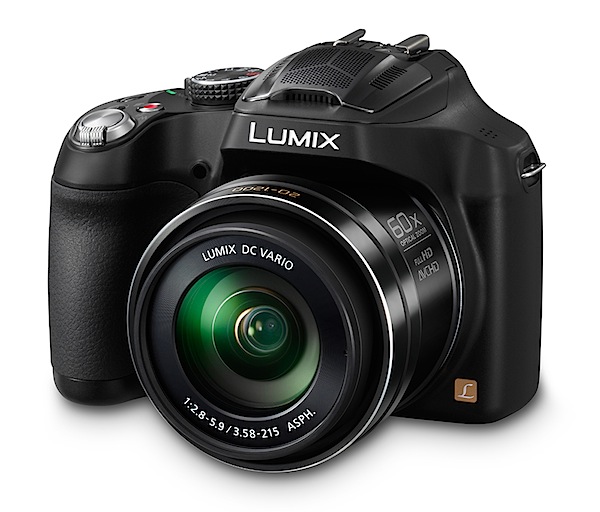
What a whopper! It looks like a compact digital camera but sure as hell offers far more than your average CDC.
Narrabeen lake tele 2.JPG

Narrabeen lake wide 1.JPG

The 60x zoom runs all the way up to a 35 SLR equivalent of 1200mm but — note this! — it begins from a super wide 20mm equivalent. That means you can shoot close shots of sports players from the sidelines and then cover cramped interiors with the same camera. You can also buy a 1.7x tele conversion lens that will take the focal length to 2040mm! Beat that!

The maximum image size is 4608×3456 pixels, large enough to make a 34x29cm print.

Video can be shot in either AVCHD or MPEG4 formats at Full HD 1920×1080 pixel resolution. But no, you can’t shoot stills mid video recording.

Another spec to die for is a 9fps continuous shooting rate at full resolution; moderating this is a continuous rate of 5fps with full AF in play.

Panasonic Lumix DMC-FZ70 back.jpg

Panasonic Lumix DMC-FZ70 top.jpg

Panasonic Lumix DMC-FZ70 Features

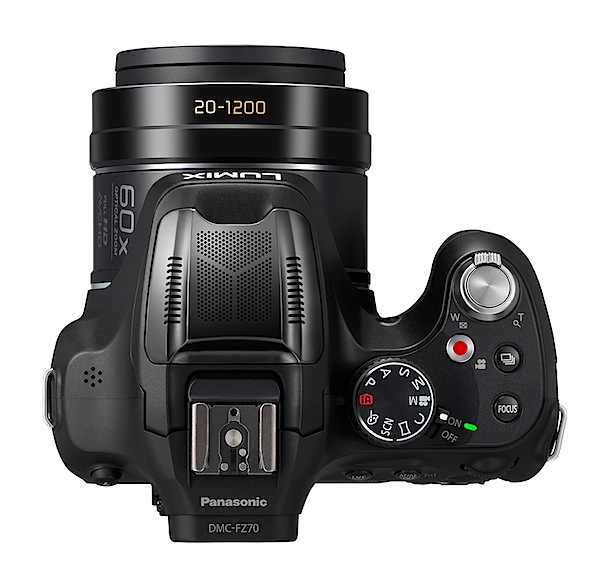
Controls: the top deck houses the mode dial with positions for intelligent auto, PASM, creative video, custom mode, scene mode, panorama shooting, scene and creative control modes.
Scene mode.JPG

Creative control.jpg

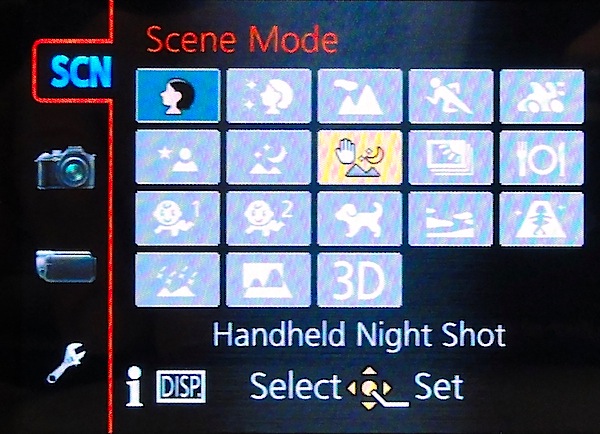
In scene mode you can choose from portrait, scenery, panning, HDR and 14 other settings. This feature alone should tell you heaps about the intended market: those with tonnes of ambition but little real photographic knowledge.

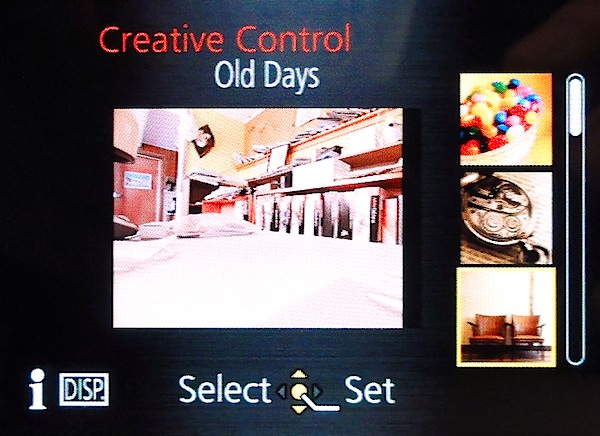
Creative control takes you further and into a re-rendering mode that can impart to a picture the feelings of a retro or old days look, high or key, sepia, dynamic monochrome, impressive art, high dynamic, cross processing plus a miniature or toy effect plus quite a few others.

Close to the mode dial is the shutter button, encircled by the zoom lever; the red video record button; a burst shooting button; and finally, a button that can lock in focus mid shoot … haven’t seen one of these before.

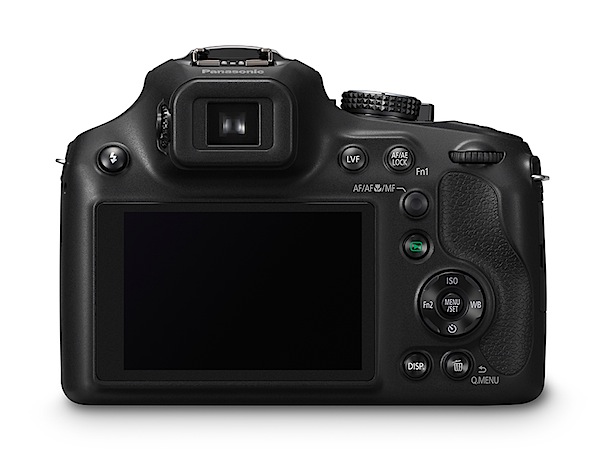
The camera’s rear has the flash activation button at extreme left; top viewfinder focus; a button to switch between the turret finder and the rear LCD screen; one to lock focus and exposure; the rotating rear dial that takes you through selection of settings; replay; the four way jog dial that offers control of ISO, white balance, self timer and function selection; centred is the menu button.

Lower are buttons for display options and access to a quick menu.

Battery and memory card are loaded via a door at the base of the camera.

I found the control arrangement to be entirely logical and non-confusing.

Menu.jpg

The menus are similarly well laid out and abundantly clear in their intent.
Narrabeen lake island.JPG

Family and kayaks 1.JPG

Some Notes

I had taken temporary ownership only a matter of hours before I took it out on a shooting essay: I found the camera to be well-balanced and easy to operate, even tapping controls during a video shoot.

The zoom needs special mention: don’t think for a moment that you can hand hold it with the focal length anywhere past 10x. No way José!

The zoom action is smooth and, amazingly, provides minimal steps along way. The stabiliser is most effective. A fine effort.

Notable is the wind noise protection thanks to a special wind shield built onto the microphone’s housing.

The rear LCD screen is of course virtually useless for viewing outdoors, so the top viewfinder comes in to play, although it offers less resolution.

The panorama mode offers four options: pan left or right; pan up or down.

Startup Time

It took two seconds to power up and let me take my first shot. Follow ons came in as fast as I could tap the button.

Distortion

No problems at the wide or tele ends of the zoom. A fine piece of glass.

Panasonic Lumix DMC-FZ70 ISO Tests

Panasonic Lumix DMC-FZ70 ISO 100.JPG

Panasonic Lumix DMC-FZ70 ISO 400.JPG

Panasonic Lumix DMC-FZ70 ISO 800.JPG

Panasonic Lumix DMC-FZ70 ISO 1600.JPG

Panasonic Lumix DMC-FZ70 ISO 3200.JPG
Only by ISO 1600 did some noise appear but with sharpness still acceptable; by ISO 3200 a blue colour cast appeared over the image, with noise up and sharpness down.

Panasonic Lumix DMC-FZ70 Review Verdict

Quality: average.
Why you’d buy it: that 60x zoom! excellent AF and stabiliser action; feels good in the hand.
Why you wouldn’t: bulky for some.

I well remember handling my first camera with a 10x lens …it was a Kodak I think! I thought the world had taken a turn for the best. Now look where we are!

Top gear.

Panasonic Lumix DMC-FZ70 Specifications

Image Sensor: 16.1 million effective pixels.
Sensor: 11mm CMOS (6.17×4.55mm).
Metering: Multi, centre-weighted, spot.
Lens: Leica DC Vario-Elmar f2.8-5.9/3.58-215mm (20-1200mm as 35 SLR equivalent)
Exposure Modes: Auto, Program AE, shutter and aperture priority, manual.
Shutter Speed: 8-1/2000 second.
Memory: SD/SDHC/SDXC plus 200 MB internal.
Image Sizes (pixels): Stills: 4608×3456 to 480×480.
Movies: 1920×1080, 1280×720, 640×480.
Continuous Shooting: 9fps max.
Viewfinder: Turret (202,000) and 7.6cm LCD screen (460,000).
File Formats: JPEG, RAW, MPO 3D, MPEG4, AVCHD.
ISO Sensitivity: Auto, 100 to 6400 (with boost).
Interface: USB 2.0, HDMI mini.
Power: Rechargeable lithium ion battery.
Dimensions: 130x97x118 WHDmm.
Weight: 606 g (inc battery).
Price: Get a price on the Panasonic LUMIX DMC-FZ70 at Amazon.

Post originally from: Digital Photography Tips.

Check out our more Photography Tips at Photography Tips for Beginners, Portrait Photography Tips and Wedding Photography Tips.

Panasonic Lumix DMC-FZ70 Review


Digital Photography School

 
Comments Off on Panasonic Lumix DMC-FZ70 Review

Posted in Photography


18 August, 2013 – Panasonic FZ70 Field Report

18 Aug

I received two new cameras for testing recently, the Panasonic GX7 and the Panasonic FX70. The GX7 is coming with me to Mexico on vacation this week, and I’ll be putting it through its paces there with a variety of lenses, shooting both stills and video.

My review of Panasonic’s latest superzoom, the FZ70 is now online.


"Having been to Antarctica with Michael and Kevin, I would say after having traveled the world and shot nearly my entire life as an exhibiting photographer,  it was one of my highlights in my life and I talk about it, all the time.  The images and experience of seeing something visionary and nearly extinct from the world, to see and experience the wildlife and scenery that does not fear humans is amazing.  The images I shot there won me two Smithsonian awards and nearly 18 other international awards". – Tim Wolcott

 Find Out More Now
These Expeditions Will Sell Out Quickly. They Always Do


The Luminous Landscape – What’s New

 
Comments Off on 18 August, 2013 – Panasonic FZ70 Field Report

Posted in News


New test scene beta begins with Panasonic Lumix DMC-GX7 samples

15 Aug

Screen_Shot_2013-08-14_at_12.13.57_PM.png

We’ve been working on a brand-new studio comparison scene for some time, and we’ve decided to give you a sneak peak, using images from the new Panasonic Lumix DMC-GX7. We’ll be speaking more about this new scene (and the new interface that goes with it) very soon, but for now we wanted to let you have a look, try it, play around and tell us what you think. As well as the new scene, you’ll notice two new options – ‘daylight’ and ‘low light’ simulation modes and the option to ‘normalize’ resolution to simulate print and web output, as well as 100%. Click through for a link. 

News: Digital Photography Review (dpreview.com)

 
Comments Off on New test scene beta begins with Panasonic Lumix DMC-GX7 samples

Posted in Uncategorized


Panasonic Lumix DMC-GX7 Real-world Samples

14 Aug

Screen_Shot_2013-08-14_at_9.23.21_AM.png

We’ve just published a gallery of real-world samples shot using the Panasonic Lumix DMC-GX7. The GX7 is Panasonic’s latest Micro Four Thirds interchangeable lens camera, and one of the company’s most interesting models yet. It features a new 16MP sensor, tiltable EVF and LCD, and offers several enthusiast-friendly features including highlight and shadow tone adjustment, an electronic (entirely silent) shutter and in-body image stabilization – a first for Panasonic. Click through for a link to our gallery of real-world shots. 

News: Digital Photography Review (dpreview.com)

 
Comments Off on Panasonic Lumix DMC-GX7 Real-world Samples

Posted in Uncategorized


Panasonic Lumix DMC-FZ70 Sample Images

13 Aug

Screen_Shot_2013-08-12_at_5.07.02_PM.png

We’ve just posted a 39-image gallery of real-world samples shot on the Panasonic Lumix DMC-FZ70 zoom compact. Spanning the equivalent of 20-1200mm the FZ70’s lens is the largest zoom available in a consumer compact, and we’ve spent a few days testing it out in a variety of situations, to see what this new superzoom can do. Click through for a link to our gallery of real-world samples. 

News: Digital Photography Review (dpreview.com)

 
Comments Off on Panasonic Lumix DMC-FZ70 Sample Images

Posted in Uncategorized


Panasonic Lumix DMC-G6 Review

02 Aug

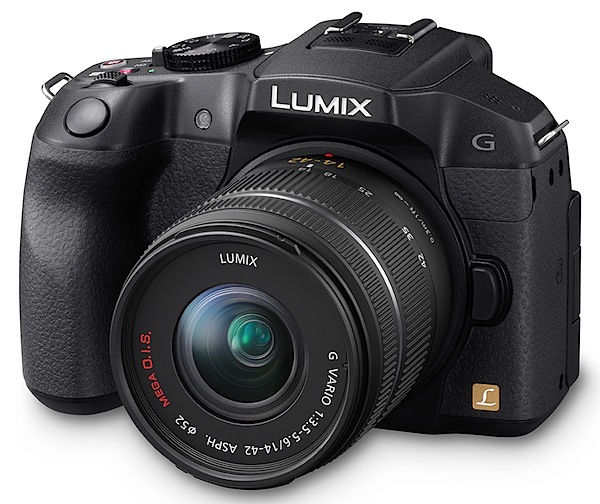
Panasonic Lumix DMC-G6 Review.jpg

If it looks like a DSLR, feels like a DSLR, works like a DSLR and takes pictures like a DSLR, it probably is a DSLR. Izznit?

Nup. This ‘un is a MILC — mirrorless interchangeable lens camera … one of the many models now proliferating on the market like rabbits.

In reality, the major difference between this MILC and true blood DSLRs is that, with the former, the top Live viewfinder presents an electronic view of the shot you’re about to fire, while the DSLR delivers an optical view, thanks to a prism and a series of mirrors …just like the ole time film cameras used to do!

True, the electronic view is not as razor sharp as the optical, it does look a bit ‘electronic’ and very alike to the view delivered on the rear LCD screen, but when you’re outdoors, as many of you know, the rear screen can be washed out in bright light, so Live View to the rescue.
Panasonic Lumix DMC-G6 back.jpg

Panasonic Lumix DMC-G6 Review Top.jpg

The review camera was furnished with a Panasonic-made G Vario lens of f3.5/14-42mm specs.

The G6 is a welcome addition to the lineup. In stills, it can pull a maximum image size of 4608×3456 pixels, leading to a 39x29xcm print.

In video capture, it can shoot AVCHD or MPEG4 formats at Full HD 1920×1080 pixel resolution using a Class 4 card or better. And you can shoot stills while recording video. Auto focus tracking locks on the subject and maintains focus even as it moves.

Panasonic Lumix DMC-G6 Handling

It sure feels like a DSLR! And it is a comfy feel in the hand, mostly thanks to the pronounced speed grip and overall good balance.

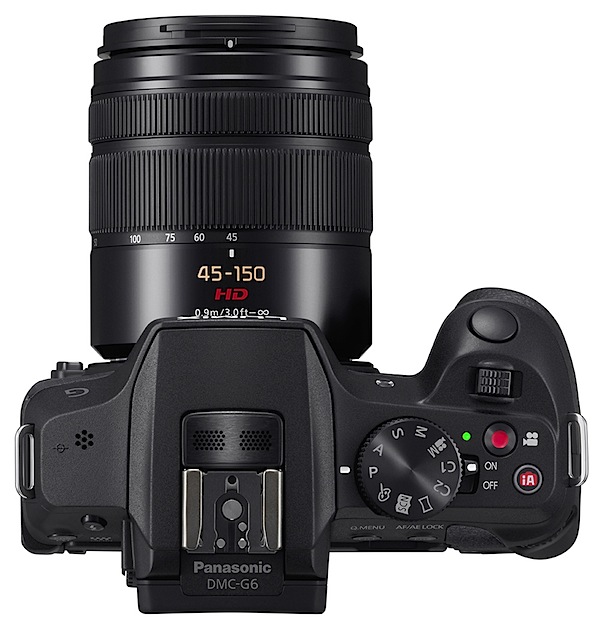
Top deck controls: there’s a hot shoe on top centre to accept an auxiliary flash (in addition to the lower powered internal flash beneath the hot shoe).
Creative Guides.JPG

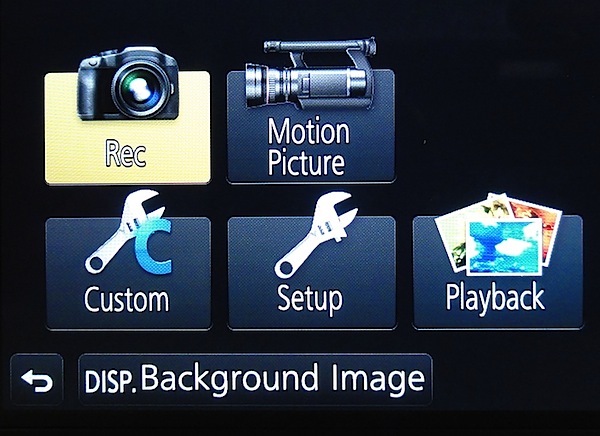
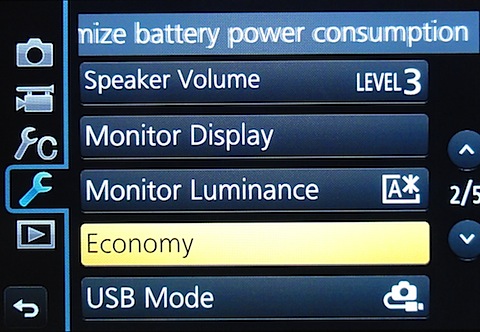
Panasonic Lumix DMC-G6 Menu 1

Panasonic Lumix DMC-G6 Menu 2

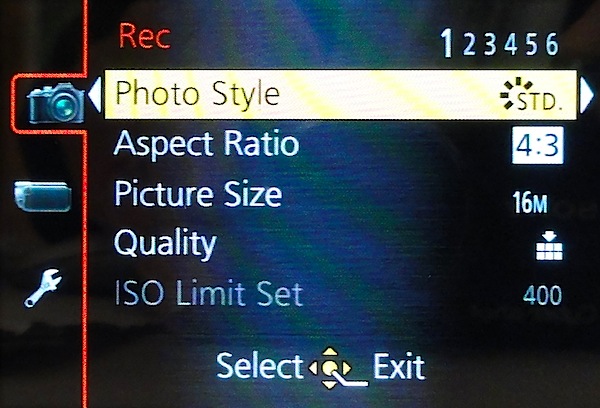
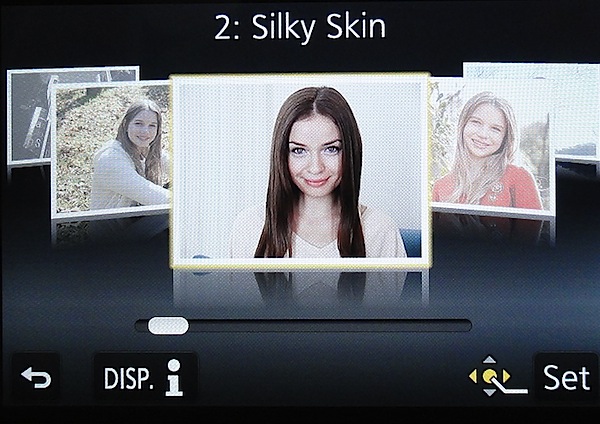
Farther right is the mode dial with positions for PASM, creative video, two custom modes, panorama, a scene guide and a creative control mode. The scene guide offers 23 sample pictures shot by pro photographers which you can use as a helper in making your own shots …like silky skin, glistening water etc. The creative control mode has 19 filters (old days, sunshine, retro, etc. The effect parameter of each mode is adjustable.

And, for what it’s worth, the camera can only shoot panos while held in an horizontal attitude, unlike the methods that some other cameras can deliver.

If you want to shoot in auto mode you move your finger farther right and tap a tiny red button marked ‘iA’. The power lever is set into the side of the mode dial. Close by is the familiar video record button, hemmed in by the mode dial, power lever and intelligent auto button …it is not the most ideal position for this button and takes quite a bit of precise pressure to operate.

Forward on the top deck is a control I had not seen before: a lever that could be used in either of two ways: it could drive any exposure compensation you desire by +/- five f stops; or with specific power-driven lenses, it can operate the zoom. Additionally, just to the rear and over the corner edge of the camera is a control dial which adjusts aperture or shutter while in those modes.

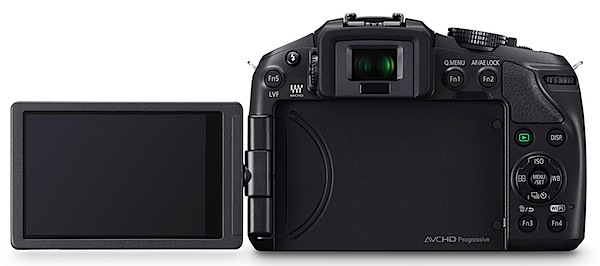
Rear: the 7.6cm LCD touch screen is a vari-angle screen that can be rotated 180 degrees laterally and 225 degrees vertically. At the extreme left is the internal flash release and a function button that switches between top and rear finder; to the right are two more function buttons. Flanking the screen are the replay button, another for display options plus two more function buttons. The jog dial has positions for menu; ISO setting; direct setting of options for AWB, colour balance etc; continuous shooting and self timer; AF options.

A 3.5mm terminal is set into the camera’s right side to accept an external microphone.

Overall, not a fully packed brigade of external controls. The viewfinder menu is not overly complex.


Narrabeen lake 2.JPG

Seats 2.JPG

Trees 2.JPG

Panasonic Lumix DMC-G6 Features

A Wi-Fi connection allows users to connect the G6 to their smart phone or tablet at a touch, while still and movie shooting can be driven remotely from the smart phone screen.


Roof original.JPG

Roof retouched.JPG

And a couple of unusual features: time lapse and stop motion video shooting; a novel Clear Retouch function lets you edit out unwanted parts of a picture after shooting by simply tracing over them on the monitor with a fingertip; I tried this and it works (above)! But only with large areas of unwanted image data: don’t think you can remove wicked Uncle Ted from a family group shot!

Panasonic Lumix DMC-G6 ISO Tests

Panasonic Lumix DMC-G6 ISO 160.JPG

Panasonic Lumix DMC-G6 ISO 400.JPG

Panasonic Lumix DMC-G6 ISO 800.JPG

Panasonic Lumix DMC-G6 ISO 1600.JPG

Panasonic Lumix DMC-G6 ISO 3200.JPG

Panasonic Lumix DMC-G6 ISO 6400.JPG

Panasonic Lumix DMC-G6 ISO 12800.JPG

Panasonic Lumix DMC-G6 ISO 25600.JPG
It’s only at ISO 6400 that the image begins to degrade. Much the same at ISO 12800.

By ISO 25600 the show’s over: much noise, artefacts and a washed out image.

Panasonic Lumix DMC-G6 Review Verdict

Quality: above average.
Why buy the Panasonic Lumix DMC-G6: looks and works like a DSLR.
Why not: a bit complex for the raw amateur.

If you get the feeling that this camera attempts to bridge the needs of the enthusiast and the dabbler, you’re right. Just check out the creative and scene guides.

However, I would not be unhappy to use it on an advanced shoot!

Panasonic Lumix DMC-G6 Specifications

Image Sensor: 16.1 million effective pixels.
Metering: Multiple, centre-weighted and spot.
Effective Sensor Size: Four thirds 17.3×13.0mm CMOS.
Lens Factor: 2x.
Compatible lenses: Micro Four Thirds.
Exposure Modes: Auto, Program AE, shutter and aperture priority, manual.
Shutter Speed: 60 to 1/4000 second; flash sync 1/160 sec.
Burst Speed: 7 fps.
Memory: SD/SDHC/SDXC cards.
Image Sizes (pixels): 4608×3456 to 1712×1712. Movies: 1920×1080, 1280x720p, 640×480.
Viewfinders: Turret finder: 1,440,000 pixels. 7.6cm LCD screen (1,040,000 pixels).
File Formats: JPEG, RAW, JPEG+RAW, AVCHD/MPEG4, MPO (3D).
Colour Space: Adobe RGB, sRGB.
ISO Sensitivity: Auto, 160 to 12800 (25,600 with boost).
Interface: USB 2.0, AV, HDMI mini, WiFi, DC input.
Power: Rechargeable lithium ion battery, AC adaptor.
Dimensions: 122x85x71 WHDmm.
Weight: Approx. 390 (inc battery).
Price: Get a price on the Panasonic Lumix G Series DMC-G6 with 14-42mm II Lens Kit or body only.

Post originally from: Digital Photography Tips.

Check out our more Photography Tips at Photography Tips for Beginners, Portrait Photography Tips and Wedding Photography Tips.

Panasonic Lumix DMC-G6 Review


Digital Photography School

 
Comments Off on Panasonic Lumix DMC-G6 Review

Posted in Photography