RSS
 

Posts Tagged ‘Over’

Photographer sues New York Times over age discrimination and ‘full-time freelancer’ status

21 Oct
Photo by Haxorjoe

The New York Times and its photography director Michele McNally have been hit with a lawsuit by former Times’ photographer Robert Stolarik. The lawsuit claims that Stolarik, age 48, was discriminated against due to his age, and was also misclassified as a ‘full-time freelancer’ for nearly a decade.

According to the complaint—which was filed on July 6th in New York and covered at that time by Bloomberg BNA—Stolarik began working for the Times as a photographer in Colombia in 2000, followed by additional work in Venezuela until 2002. Stolarik then resumed working for the Times in 2004, the legal document explains, ultimately resulting in nearly a decade of full-time work.

However, despite working full-time, the lawsuit claims that Stolarik was paid under a 1099-MISC form as a freelancer—a classification that deprived Stolarik of the benefits that would have come with full-time employment, including health insurance.

The complaint alleges that editors managed Stolarik in the same manner as employees, including giving specific start times for his assignments which regularly comprised 8-hour shifts. Stolarik claims that he was denied overtime pay for extended shifts and that he was not compensated for the time he was required to spend editing photos outside of his assignment hours.

The allegations continue from there, claiming that Stolarik ‘regularly sought’ a staff photographer position with the NYT, making his desires known both in writing and orally. Age discrimination allegedly prevented him from getting a full-time role with the company, though. The complaint states that “Stolarik was told on numerous occasions by various editors that he was too old” to get the staff position he sought.

One Times editor is accused of having asked Stolarik if he was under 30 years old, abandoning an effort to get him a staff position after learning that he was, at the time, 37. Another editor reportedly told Stolarik that he should be ‘concerned about’ his age in regards to his desire for a staff position, telling him on multiple occasions that he was too old to be an employee.

During his years spent freelancing for the Times, the lawsuit states that Stolarik’s requests for a staff role were ignored in favor of hiring photographers who were under the age of 30. The lawsuit also claims that the Times regularly gave assignments to its freelancers under the age of 30 versus its freelancers over the age of 30.

Furthermore, the lawsuit claims that the Times denied Stolarik assignments due to a wrongful arrest he suffered in the Bronx while on assignment for the company. Per the complaint, an NYPD officer had ordered Stolarik to stop taking photographs. The altercation resulted in Stolarik’s ‘violent arrest,’ which snowballed into the Times’ alleged decision to decrease the photographer’s assignments with the company.

Finally, the lawsuit also states that Stolarik’s lawyer sent a letter to the Times’ general counsel claiming that he had been discriminated against due to the arrest he suffered while on assignment, as well as his age. This complaint allegedly resulted in McNally ordering Times editors to stop giving Stolarik assignments altogether.

Among other things, the lawsuit seeks back pay, unpaid wages, overtime pay, and unpaid benefits in actual damages totaling at least $ 500,000, as well as compensatory damages, interest, costs and disbursements.

As Ramin Talaie points out on Medium, this lawsuit serves to highlight growing issues with the so-called ‘gig economy,’ which classifies workers as independent contractors despite work arrangements that may mirror that of employees. The classification gives companies a way to save money, but saddles the worker with self-employment tax while eliminating the protections and benefits that come from employee classification.

The full complaint can be read here.

Articles: Digital Photography Review (dpreview.com)

 
Comments Off on Photographer sues New York Times over age discrimination and ‘full-time freelancer’ status

Posted in Uncategorized


EyeEm now lets you collect multiple model releases at once over text message

11 Oct

$ (document).ready(function() { SampleGalleryV2({“containerId”:”embeddedSampleGallery_9500155877″,”galleryId”:”9500155877″,”isEmbeddedWidget”:true,”standalone”:false,”selectedImageIndex”:0,”startInCommentsView”:false,”isMobile”:false}) });

If you license images of people, you know how much of a pain it can be to gather the appropriate model releases. For every photo, you need a new release, even if you’re uploading 20 photos of the same person from the same photo shoot. Well, no longer. EyeEm just introduced a multi-release feature that lets you handle multiple releases at once; what’s more, you can do it all over text message.

The feature is very straightforward, as EyeEm shows in this short demo video:

It’s a 5-step process.

  • Step 1: Log on to EyeEm on the web, open the notifications pane, and go to To Dos.
  • Step 2: Click “Releases for multiple photos”
  • Step 3: Select all photos that show the same person
  • Step 4: Click next and fill out the model’s name
  • Step 5: Click next and share the link with your model through your favorite messaging app—SMS, WhatsApp, FB Messenger, and more are all available.

That’s it. The model can select only the photos they want to release, and once they’ve signed you will receive a confirmation email.

This might seem like a small feature, but if you’re a prolific stock photographer, generating multiple releases this easily removes a serious pain point. Plus, these releases can be used on other platforms as well, including Getty, Adobe, Alamy, and others.

To learn more about the feature or give the EyeEm app a go for yourself, head over to the EyeEm Blog by clicking here.

Articles: Digital Photography Review (dpreview.com)

 
Comments Off on EyeEm now lets you collect multiple model releases at once over text message

Posted in Uncategorized


Judge determines FAA drone rules take precedence over local regulations

27 Sep

A court has ruled that federal drone laws trump local drone regulations in instances where the two are in conflict, setting a new and very important precedent for commercial and recreational drone pilots alike. The ruling was passed down by US District Judge William G. Young during a legal case involving the city of Newton, Massachusetts, and its drone regulations that are even more restrictive than the FAA’s rules.

According to the Wall Street Journal, the lawsuit was brought by Newton resident Michael Singer, who challenged four Newton provisions including a requirement to get permission before flying a drone over private property. The city had argued that the FAA allows for the local co-regulation of civilian drones, but Judge Young ruled otherwise, in part because the local regulations were sometimes in direct conflict with the FAA’s.

For instance, whereas the FAA allows small drones to be operated below 400ft, the city of Newton’s provisions banned the operation of drones below that altitude if they were over private property. This left pilots only one legal option: get permission from each property owner over whose property the drone would pass. Otherwise you’d either be violating Newton’s laws or the FAA’s regulations.

Referring to this particular law, Judge Young stated, “This thwarts not only the FAA’s objectives, but also those of Congress for the FAA to integrate drones into the national airspace.”

Newton drone provisions that weren’t challenged by the lawsuit have been left in place, and the city has indicated that it may appeal the ruling.

Articles: Digital Photography Review (dpreview.com)

 
Comments Off on Judge determines FAA drone rules take precedence over local regulations

Posted in Uncategorized


Nikon Asia accused of sexism over D850 promotion that featured 32 men and 0 women

15 Sep
32 photographers featured… all of the men.

Nikon Asia is taking some serious heat today after a Nikon D850 promotion featuring 32 photographers caught the eye of the blog Fstoppers. The issue with this so-called “awe-inspiring” promotion? It featured 32 men, and 0 women, a realization that has led to wide-spread criticism of the promotion and of Nikon as a whole.

The original article didn’t hold back, claiming that “Nikon thinks [the D850] is too much for women to handle,” since the company didn’t select a single woman photographer for this particular promotion. Responses online were equally harsh, with some users asking Nikon when the female version of the D850 would come out… and if it would be pink:

Others implied they would be taking their business elsewhere:

The controversy has gotten so much attention online, in fact, that CNN Money picked up the story.

For its part Nikon Asia did respond on Twitter, thanking users for “challenging us to do more” to support its female photographers. According to that statement, Nikon Asia did invite women to be part of the promotion (no word on how many) but none were able to participate. Here is the full statement:

All in all, it’s been a very bad 24 hours for Nikon. But inflammatory as the original story is and obviously unacceptable as this all-male promotion was, it’s worth pointing out that this doesn’t seem to reflect Nikon’s philosophy as a brand, and particularly not Nikon USA.

The D850 has been promoted like mad, and one of the main photographers spreading the word around the United States is Dixie Dixon. When we reached out to Nikon for comment on this story, the company was adamant about its support for all photographers, sending us the following statement just a few minutes ago:

At Nikon, we champion all passionate photographers. Women are an integral part of the photography community and we are dedicated to celebrating any talented storyteller and their work. We appreciate you raising this concern and we will continue to support the immense creative talent of female photographers in the US and globally.

Nikon—and more specifically Nikon Asia—certainly made a big mistake with this promotion. And given the attention this story has gotten (and will continue to get) it’s safe to say they’ll never host an all-male event or promotion again, nor should they. But to say “Nikon thinks [the D850] is too much for women to handle” is a stomach-churning extrapolation to make… albeit a very click-y one.

Articles: Digital Photography Review (dpreview.com)

 
Comments Off on Nikon Asia accused of sexism over D850 promotion that featured 32 men and 0 women

Posted in Uncategorized


PETA and David Slater settle copyright lawsuit over monkey selfie

14 Sep
Photo: David Slater

PETA has announced that it has settled its copyright lawsuit against photographer David Slater over his iconic “monkey selfie,” a self-portrait allegedly taken by a macaque named Naruto. The image went viral a few years ago, ultimately catching the attention of PETA, who argued that Naruto—not Slater—was the image’s legal copyright holder. This spurred a lawsuit that has dragged on for about two years.

The legal issues began shortly after the monkey selfie went viral. Various sites used the image without Slater’s permission and refused to cease use on the claim that Slater didn’t own the copyright. The U.S. Copyright Office didn’t prove helpful in the matter, having issued an official guidance stating that copyright could only be granted to a work that was created by a human.

PETA swooped in soon after, hitting Slater with a lawsuit in 2015 on behalf of Naruto, the macaque it claimed captured the photo (there’s some debate on this topic). The resulting legal spat drained Slater financially, but things began looking up this past summer when courts questioned whether PETA even had the legal standing to bring a lawsuit on Naruto’s behalf, among other things. As anticipated, the courts’ push against the lawsuit has seemingly spurred a settlement.

According to an announcement posted to PETA’s blog on Tuesday, Slater has agreed to settlement terms that require him to donate 25% of future revenue from the image to charities that protect macaques like Naruto. PETA still maintains that Naruto and other macaques like him are, “worthy of having legal ownership of their own intellectual property and holding other rights as members of the legal community.”

The settlement was not a victory for the photography community, however. NPR reports that both Slater’s legal team and PETA have jointly requested that the 9th Circuit Court throw out a ruling made by a lower court that found animals incapable of owning copyrights.

Articles: Digital Photography Review (dpreview.com)

 
Comments Off on PETA and David Slater settle copyright lawsuit over monkey selfie

Posted in Uncategorized


A Toddler Peers Over the US-Mexico Border Fence for JR’s Latest Installation

12 Sep

[ By SA Rogers in Drawing & Digital. ]

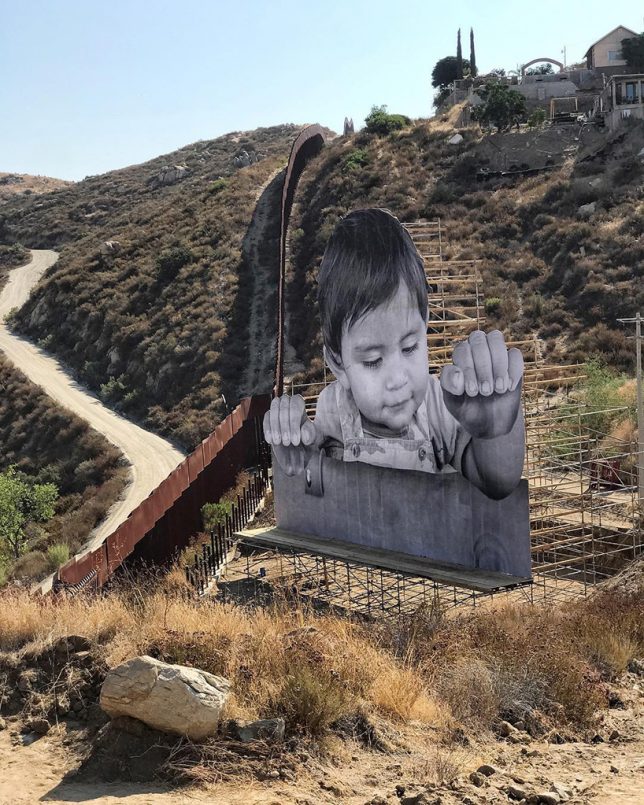
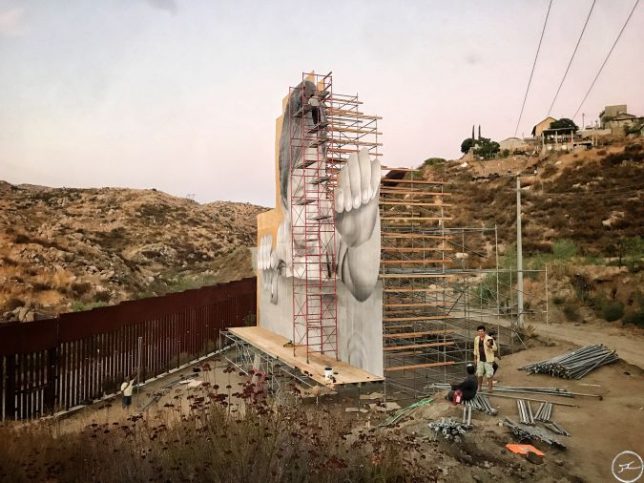
Set on scaffolding just across the rust-red fence marking the border between Tecate, California and Mexico, street artist JR’s latest installation is a towering statement on immigration issues in the United States. A one-year-old boy named Kikito peers over to the other side with all the innocence and naiveté of childhood, just days after the current U.S. administration announced its intention to end the DACA (Deferred Action for Childhood Arrivals) immigration program.

The site-specific work is precisely angled to create the illusion that the child is grasping the top of the fence, looking out onto the Californian terrain. Like most of JR’s works, the 70-foot-tall image is rendered in black and white; the child is from the local community on the Mexican side of the border. Curated by Pedro Alonzo, the work asks onlookers to consider the fate of the 800,000 ‘Dreamers’ whose parents wished them a better future.

“Some people dream about fantasy worlds, I dream about walls,” JR told The New York Times in a phone interview. “I wonder, is this kid worrying about what will happen? What does he think? At one year old, you don’t see the frontier or which side is better… people will always migrate. When we built walls, people built tunnels. When we closed places, they went by water. The history of humanity is the story of people migrating.”

“For this little kid, there are no walls and borders.”

The installation will remain in place through October 2nd, and you can pinpoint its exact location at JR’s website.

Share on Facebook


[ By SA Rogers in Drawing & Digital. ]

[ WebUrbanist | Archives | Galleries | Privacy | TOS ]


WebUrbanist

 
Comments Off on A Toddler Peers Over the US-Mexico Border Fence for JR’s Latest Installation

Posted in Creativity


World’s Largest Bicycle Parking Garage Stores Over 6,000 Rides in the Netherlands

03 Sep

[ By WebUrbanist in Architecture & Public & Institutional. ]

The Netherlands, where bikes outnumber citizens, is well known for its cycle-centric transportation infrastructure. In Utrecht, over 100,000 cyclists ride through the city every day, connecting between home, school, work and public transportation. Now open, this newly-built bicycle parking lot can already house 6,000 rides at a time, but is aiming to more than double that capacity by the end of the year.

It actually looks a lot like a conventional parking lot, filled with ramps and arrows pointing cyclists through the structure, crisscrossed with walking paths for people traveling to and from their personal vehicle. Dense stacking allows for layered storage across the multiple levels of the structure.

Eventually, the parking structure will store a remarkable 33,000 bicycles by 2020, which, to most people, might sound like a lot of bikes. But the design, patterned after Tokyo’s amazing underground bike parking station, has people worried — not because it could be overbuilt, but because the capacity might not match the demand.

As popular as cycling already is in the region, the number of people on bikes continues to grow and the Netherlands has long had storage space issues related to this growth. One cycling organization quoted John Lennon to make the point: “life is what happens while you are busy making other plans.” They say politicians are still being too slow to make decisions and implement plans to increase bike-supporting infrastructure. Still, too many riders and fewer seems like a good problem for a city to have.

Share on Facebook


[ By WebUrbanist in Architecture & Public & Institutional. ]

[ WebUrbanist | Archives | Galleries | Privacy | TOS ]


WebUrbanist

 
Comments Off on World’s Largest Bicycle Parking Garage Stores Over 6,000 Rides in the Netherlands

Posted in Creativity


French President Macron takes legal action against photographer over invasion of privacy

19 Aug
Photo: Kremlin.ru

French President Emmanuel Macron has filed a legal complaint against a photographer over allegations that he violated the presidential couple’s privacy while they were on a holiday vacation. According to UK newspaper The Telegraph, Macron and his wife were on a private holiday in France when an unnamed photographer failed to honor their request for privacy.

The photographer is accused of stalking the president and his wife during their stay in the French city of Marseille, having at times acted in ‘a risky and perilous manner’ while ignoring warnings from Macron’s security personnel to back off. None of that got him arrested, however; it was the photographer’s alleged unauthorized entrance into the couple’s private property that led to the cops being called and a legal complaint being filed.

The unnamed photographer reportedly told French newspaper VSD that he was subjected to a police search, which included having officials search his bags and gear. He complained of being treated like a criminal and being forced to remove his watch and shoelaces, and characterized the police officers’ search of him as ‘totally illegal.’

Articles: Digital Photography Review (dpreview.com)

 
Comments Off on French President Macron takes legal action against photographer over invasion of privacy

Posted in Uncategorized


Oldest known portrait of a US president unearthed after over 100 years in storage

18 Aug

The oldest known original photo of a U.S. president will go up for auction at Sotheby’s on October 5th, the auction house has revealed. The daguerreotype is a black and white silver-plate portrait of John Quincy Adams, who is featured sitting in a chair as a Massachusetts congressman following his term as president.

The photo was originally gifted by Adams to Vermont congressman Horace Everett, who remained in possession of the photo until the time of his death.

Though the photo had remained at Everett’s house since it was first gifted to the congressman, it was only recently realized to be a photo of Adams. The image was taken by photographer Philip Haas in Washington DC, according to journal entries made by Adams, who described visiting the photographer’s studio twice in March of 1843. The previous oldest original portrait of a president was also of Adams, taken only a handful of months later in August 1843.

The back of the framed portrait features Everett’s name, as well as the initials ‘J. Q. Adams,’ the date ‘Feb. 1843,’ and a bookplate that reads, ‘Presented by J.Q.A to his Kinsman H.E. 1843.’ The auction house has the portrait listed with an estimated sale price of $ 150,000 to $ 250,000.

Articles: Digital Photography Review (dpreview.com)

 
Comments Off on Oldest known portrait of a US president unearthed after over 100 years in storage

Posted in Uncategorized


DJI releases offline mode to calm fears over privacy and security

16 Aug
Photo by Aaron Burden

Earlier this month, drone maker DJI took a huge PR hit when the US Army abruptly stopped using the company’s drones due to ‘cyber vulnerabilities.’ The decision was revealed in a leaked memo, and DJI was left defending its privacy and security practices to a suddenly skeptical public. Today, the company takes its privacy efforts a bit further with the release of a ‘Local Data Mode’ that allows pilots to fly their DJI drones without an internet connection.

The mode was announced yesterday, and it does exactly what it sounds like: when enabled, it stops all data transfer and connectivity between DJI’s apps and the internet. It’s like incognito mode for drones.

DJI uses that internet connection to “ensure a drone has the most relevant local maps and geofencing data, latest app versions, correct radio frequency and power requirements, and other information that enhances flight safety and functionality,” but the company understands that not all customers need or want this functionality to be on all the time.

“We are creating local data mode to address the needs of our enterprise customers, including public and private organizations that are using DJI technology to perform sensitive operations around the world,” DJI Vice President of Policy and Legal Affairs Brendan Schulman says in the press release. “DJI is committed to protecting the privacy of its customers’ photos, videos and flight logs. Local data mode will provide added assurances for customers with heightened data security needs.”

Despite the timing of the release, DJI has told the New York Times that the company has not been in touch with the US Army about its security concerns, and besides, this update seems to have been in the works since before the memo in question went public. Still, this ‘offline’ option feels like a win for privacy advocates and the military alike.

Local Data Mode will be available in DJI’s fleet of apps “starting in the next several weeks”—these include DJI GO, DJI GO 4, DJI XT Pro, DJI Pilot and Ground Station Pro. But be warned, due to some local regulations and/or requirements, it might not be available in all areas.

To find out more, read the full press release below:

Press Release

DJI Develops Option For Pilots To Fly Without Internet Data Transfer

New Local Data Mode Provides Enhanced Data Privacy Assurances

August 14, 2017 – DJI, the world’s leader in civilian drones and aerial imaging technology, is developing a new local data mode that stops internet traffic to and from its flight control apps, in order to provide enhanced data privacy assurances for sensitive government and enterprise customers.

DJI’s flight control apps routinely communicate over the internet to ensure a drone has the most relevant local maps and geofencing data, latest app versions, correct radio frequency and power requirements, and other information that enhances flight safety and functionality. When a pilot enables local data mode, DJI apps will stop sending or receiving any data over the internet, giving customers enhanced assurances about the privacy of data generated during their flights.

“We are creating local data mode to address the needs of our enterprise customers, including public and private organizations that are using DJI technology to perform sensitive operations around the world,” said Brendan Schulman, DJI Vice President of Policy and Legal Affairs. “DJI is committed to protecting the privacy of its customers’ photos, videos and flight logs. Local data mode will provide added assurances for customers with heightened data security needs.”

Because it blocks all internet data, use of local data mode means DJI apps will not update maps or geofencing information, will not notify pilots of newly-issued flight restrictions or software updates, and may result in other performance limitations. However, it will provide an enhanced level of data assurance for sensitive flights, such as those involving critical infrastructure, commercial trade secrets, governmental functions or other similar operations.

“We are pleased about how rapidly DJI’s customer base has expanded from hobbyists and personal drone pilots to include professional, commercial, government and educational users,” said Jan Gasparic, DJI head of enterprise partnership. “As more of these customers have asked for additional assurances about how their data is handled, DJI has moved to address their needs by developing local data mode to provide enhanced data management options for customers who want to use them.”

DJI recognizes the importance of data privacy to its customers. DJI does not collect or have access to user flight logs, photos or videos unless the user chooses to share those by syncing flight logs with DJI servers, uploading photos or videos to DJI’s SkyPixel website, or physically delivering the drone to DJI for service.

DJI publicly committed to protecting its customers’ data privacy in April 2016. In a March 2017 white paper, DJI became the first major drone manufacturer to advocate for protecting the privacy of drone users as the United States and European governments develop regulations to monitor drone flights. No other civilian drone manufacturer there has been as vocal as DJI in protecting the operational and data privacy interests of drone users.

“Local data mode will allow customers to get the most out of their DJI flight control apps while providing added assurance that critical data is not inadvertently transmitted over the internet,” Schulman said. “We are pleased to be able to develop local data mode as part of our drive to serve our customers’ needs as well as advocate for their interests.”

Local data mode has been in development for several months and will be included in future versions of DJI apps, starting in the next several weeks. DJI’s apps include DJI GO, DJI GO 4, DJI XT Pro, DJI Pilot and Ground Station Pro, which run on smartphones and tablets that control the drone or connect to the drone’s remote control unit. The local data mode feature may not be available in locations where an internet connection is required or highly advisable due to local regulations or requirements.

Articles: Digital Photography Review (dpreview.com)

 
Comments Off on DJI releases offline mode to calm fears over privacy and security

Posted in Uncategorized