RSS
 

Posts Tagged ‘Only’

Wilderness Protection – Only As Strong As The Wilderness Act

20 Aug
Caribou Pass, Arctic National Wildlife Refuge

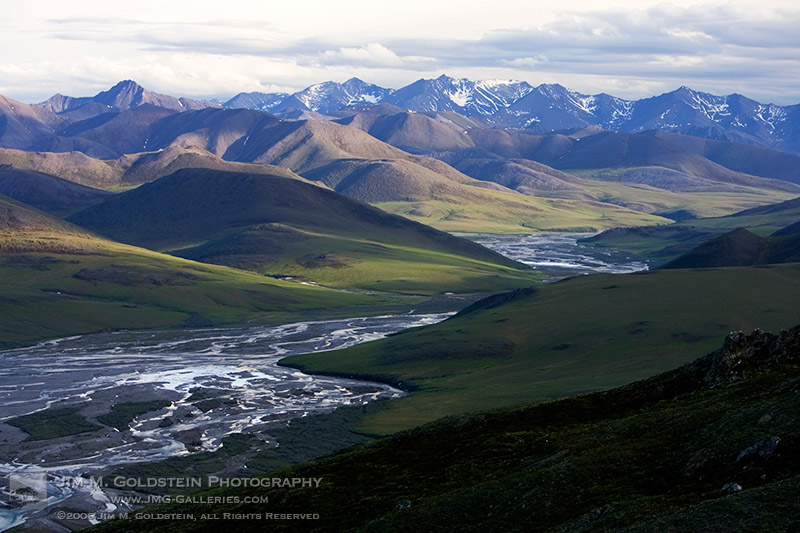
View of the Kongakut River Valley, looking south towards the Brooks Mountain Range over Caribou Pass at midnight

This weekend an interesting OpEd hit the New York Times titled Rethinking the Wild,  The Wilderness Act Is Facing a Midlife Crisis. If you haven’t read it I highly recommend you do, as you’ll hear much of this narrative in the coming months and years as various forces continue to try to chip away at it to weaken it if not undo it.

The Wilderness Act of 1964 did something amazing, it protected 9.1 million acres of federal land and now protects 109.5 million acres. This act oversees the protection of national parks, national forests, U.S. fish and wildlife services and the bureau of land management. What this piece of legislation defined as wilderness is such:

DEFINITION OF WILDERNESS 
(c) A wilderness, in contrast with those areas where man and his own works dominate the landscape, is hereby recognized as an area where the earth and its community of life are untrammeled by man, where man himself is a visitor who does not remain. An area of wilderness is further defined to mean in this Act an area of undeveloped Federal land retaining its primeval character and influence, without permanent improvements or human habitation, which is protected and managed so as to preserve its natural conditions and which (1) generally appears to have been affected primarily by the forces of nature, with the imprint of man’s work substantially unnoticeable; (2) has outstanding opportunities for solitude or a primitive and unconfined type of recreation; (3) has at least five thousand acres of land or is of sufficient size as to make practicable its preservation and use in an unimpaired condition; and (4) may also contain ecological, geological, or other features of scientific, educational, scenic, or historical value.

The Rethinking the Wilderness Act OpEd” in short argues “we need to accept our role as reluctant gardeners.” Unfortunately this argument assumes that we have a full understanding of our environment and opens the doors to the organizations and people the act was put in place to protect the land from. Who will the “gardeners” be and what will their motivation be? Yes climate change is real, but it is also a very convenient excuse and lever for foes of the Wilderness act to weaken its strict protections.

The OpEd had one incredibly relevant quote that still holds true from Frank Egler:

“Ecosystems are not only more complex than we think, they are more complex than we can think.”

Humanity suffers from a good deal of well intentioned ignorance when it comes to our environment.  While we’ve made great strides technologically advancing our civilization, but we’ve done a very bad job managing and fully understanding the impact we make on our environment. Just because we can make changes, even well intentioned changes, it doesn’t mean that we fully understand environmental systems let alone the ramifications of counter efforts.   Case in point, as a teenager in the 80′s & 90′s they had signs up in Yosemite stating that Mirror Lake was drying up and was due to disappear in a decade or two. Now they know its a seasonal lake that ebbs and flows with snow melt. It’s a good thing they didn’t build a dam to try and preserve the lake.

Climate change certainly is happening, but nature is resilient. It will only remain resilient and in a wild state when left alone and protected as it has been, strictly as wilderness, free from natural resource hungry companies (oil, mineral, developers, etc.) To experience true wilderness you should make every effort to visit a U.S. National Wildlife Refuge. They’re not as easily accessible as National Parks, but you’ll quickly get an idea of how strictly these lands are protected. My favorite National Wildlife Refuge is the Arctic National Wildlife Refuge (pictured above), but many smaller refuges are near major urban centers. If you’re a nature or wildlife enthusiast then pay close attention to up coming discussions on revising the Wilderness Act as what you know and love may be irrevocably changed.

Copyright Jim M. Goldstein, All Rights Reserved

Wilderness Protection – Only As Strong As The Wilderness Act

The post Wilderness Protection – Only As Strong As The Wilderness Act appeared first on JMG-Galleries – Landscape, Nature & Travel Photography.


Comments

  • Thanks for share by Jane Martin

Related Stories

  • Wilderness Protection – Only As Strong As The Wilderness Act – Enclosure
  • Exhibit & Book Not To Miss – Carleton Watkins: The Stanford Albums
  • Exhibit & Book Not To Miss – Carleton Watkins: The Stanford Albums – Enclosure
Feed Ads by FeedBlitz
powered by ad choices


JMG-Galleries

 
Comments Off on Wilderness Protection – Only As Strong As The Wilderness Act

Posted in Equipment


The Only Three Lenses You Need for Travel Photography

29 Jul

The only three lenses you need for travel photography anywhere in the world are a fisheye lens, a 50mm, and a 135mm (or similar telephoto).

You can agree and finish this article right here, or you can read on to see exactly why I would choose only these three lenses to take with me anywhere in the world.
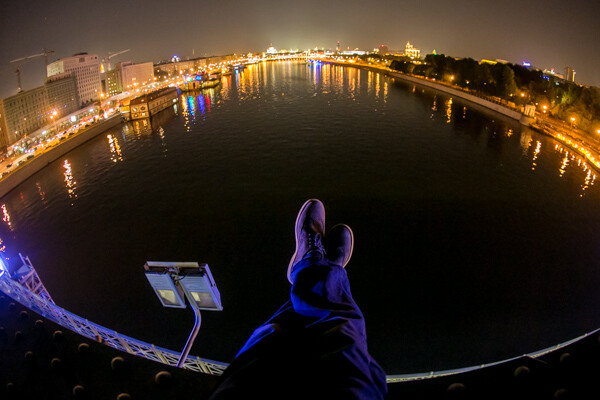
Canon fisheye 15mm 2.8

Night shot from atop a bridge in Moscow, using the Canon fisheye 15mm f/2.8

Before I say anything else, the fisheye I have in mind has an aperture of f/2.8, the 50mm has an aperture of f/1.4, and the 135 has an aperture of f/2.0. Popular, cheaper variations on these lenses would be the 24mm f/2.8, 50mm f/1.8, and the 100mm f/2.8 Macro. I’d also like to address what I imagine a popular response to this article might be: “What about the 24-105mm?” This lens is weak for a couple of reasons. The maximum aperture on this lens is f/4, which ends up being very limiting if you are trying to travel light (and going without an off camera flash).  Also, prime lenses are always superior in quality to zoom lenses. There are less moving parts and the image quality is cleaner. If you think having just one lens to cover a greater range is easier, just remember what you gain in convenience (by having one lens) you lose in quality, weight, and ability to “see” in the dark.

Each of these lenses are used for very specific reasons. Just as we wear different shoes for different purposes throughout our week, such as; sneakers for exercise, dress shoes for work, and slippers around the house – we use different lenses to convey different feelings, emotions, and to use as different tools to capture our experiences. Some lenses really are better than others for certain things. For example, portraits are best taken with lenses between 85mm and 135mm. The distortion to the face/ears is minimized and the truest proportions are found in this range.

On the other hand, you wouldn’t normally reach for a lens like this when shooting a landscape scene (there are always exceptions to every rule, and it’s fun to see what happens when you break the general guidelines). Great lenses for landscapes tend to be a bit wider, somewhere between 15mm and 50mm. I recently took only these three lenses with me on the Trans Siberian Railway from Russia through Mongolia into China. Here are MY reasons for bringing the 15mm Fisheye, 50mm f/1.4, and the Canon 135mm f/2.0 with me on this trip of a lifetime.

The Canon Fisheye 15mm f/2.8
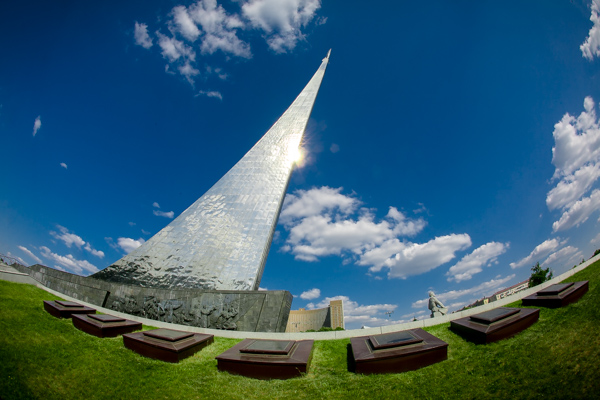
canon fisheye 15mm

From Moscow, Russia

The Canon 15mm lens is my antidote to boring building pictures. When traveling abroad (or around your own town/city/village), interesting buildings are inevitably photographed. Oh, that old bridge with locks attached to it? Better take a picture. Oh, look at that old cathedral in the Kremlin, better take a picture. If it’s there, it must be important. Well, you can add your photo to 1.5 million other photographs right there on Flickr or Google images that look exactly like the one you just took.

What will you do to differentiate yourself? How can you take a picture that will make someone pause for more than half a second?  Ad companies are excited when someone spends 4-8 seconds looking at a photo. Can you get someone to look at one photo for that long? What would it take? For me, I decided I would never take boring, straight photos of buildings ever again. I’d either edit them in unusual ways (like creating an HDR image, or process it in very contrasted black and white), at unusual times of day, or I would attempt to photograph it differently than every other tourist before me.

canon fisheye 15mm

The subways in Moscow, Russia

Canon fisheye 15mm 2.8

Selfies are easy with the fisheye lens. That bag on my shoulder could hold my camera, three lenses, my laptop, batteries, some magazines and a book.

Shooting with a fisheye lens can be really fun, actually. Hold your camera up to your eye with a fisheye lens on, move the camera upwards and watch the horizon bend down sharply at the sides, creating a “globe” feel to your image. Tilt the camera down and watch the earth curve up like a big “U”. Buildings become warped and distorted in unusual ways, like a piece of Gaudi’s architecture. Stand in the middle of the street and point the camera straight upwards and watch the buildings on the side loom over you, like in a Dr. Seuss book.

canon fisheye 15mm

My bunkmates on the Trans Siberian Railway

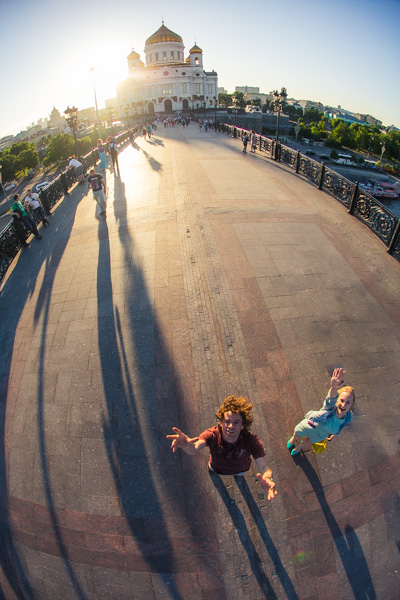
Fisheye lenses can capture an entire room, cabin of a train, or a bathroom easily. They make selfies on your DSLR incredibly easy. You can take incredible photos of the stars at night. And best of all, they are great for doing the Camera Toss. (I suppose I should recommend NOT trying this ever, anywhere). Fisheye lenses add an element of fun and whimsy to travel photos, which I find otherwise a bit boring and predictable. It’s also an incredibly light and compact lens to travel with, which is why I always bring it along on my trips now.
canon fisheye 15mm

My camera toss, where I throw my camera with a fisheye lens high up into the air to capture a scene like this

The 50mm f/1.4

The 50mm lens is a standard, go-to, all-around lens. And while the Fisheye lens brings a lot of whimsy and fun to my travel pictures, some scenes just don’t call for that. I’ve heard it said that the 50mm is the closest representation to what we see naturally with our eyes. This lens is my best choice of the three options for Canon 50mm lenses. For only about $ 300, this lens has fantastic optics and a powerful aperture. It’s made of real glass lenses unlike the cheaper, lower quality 50mm f/1.8. And it focuses fast, unlike the much more expensive 50mm f/1.2, which happens to be twice as heavy.
Canon 50mm 1.4

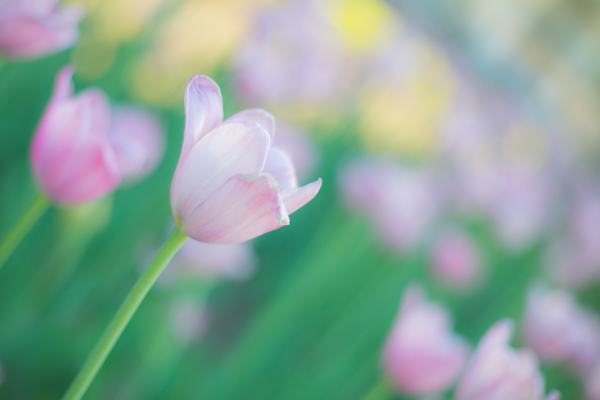
A garden scene in Moscow, Russia taken with the 50mm f/1.4. Such lovely bokeh!

This is a great, inconspicuous lens on a camera body because it doesn’t stick out too much like a 70-200mm would, and the quality is just superb, as I’ve already said. It is extremely lightweight, and you could honestly walk around the entire day with just this lens. What I associate most with the 50mm f/1.4 lens is street photography. I love to take that lens and get lost down side streets and alleyways. I like to take photos of strangers on the street with this lens. The focal length is just right, so it feels as though the viewer is standing there by him or herself. It captures just enough of a scene to convey what is there.

Canon 50mm 1.4

A retired math teacher from Texas on the Trans Siberian Railway

The 50mm f/1.4 is also a great lens for portraits (though I prefer the 135mm f/2.0). It produces lovely bokeh. It forces you to get up close to your subject, making the portrait more intimate. You can’t hide behind a telephoto like the 135mm or a 70-200mm. You are an arm’s distance away, and being that close sometimes shows up on the subject’s face in interesting ways.

low light with the Canon 50mm 1.4

My Mongolian host preparing milk tea in the yurt.

The last thing that I think the 50mm f/1.4 does best, is capture images in low light situations. Trying to capture dinner in a restaurant at night using candlelight only? Totally possible. That light reflecting across the river at night? 50mm does it best! Sleeping in yurts for four nights in a row? Getting that delicious yurt light from the top of the tent is easy with the 50mm.

Canon 50mm 1.4

Taken in the back alleys of Beijing, China with my 50mm lens, my favorite street photography lens.

Fun fact: of my top 200 images from the trip, 112 of them were taken with the 50mm.

The 135mm f/2.0

The granddaddy of all these lenses, the 135mm f/2.0 has a special POW feel to it. Because it is a telephoto, it pulls the background in for a nice compact feel to the images. It is a great portrait lens as it completely obliterates the background in a sea of dreamy bokeh. And one special fact about the Canon 135mm f/2.0: it has the ability to focus at a distance of 1 meter (3 feet), which makes it almost like a macro lens.
Canon 135mm 2.0

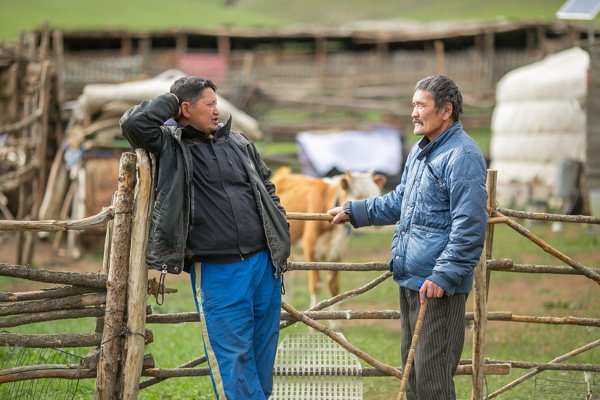
My host on the left, after we road horseback from one village to the next, in Mongolia. Taken with the 135mm f/2.0

This lens is fun for me because it has similar properties to the 70-200mm, but it weighs nearly half as much, which will save your back and shoulders after a long day of walking around. This is a fun lens to spy on people from afar, if you are afraid of the straight-on street style encounters you get with the 50mm. This is actually a really interesting lens to do landscapes with if you have enough room. Look at this side-by-side comparison of basically the two same scenes, and look what the 135mm does to the mountains and landscape in the background. It really pulls them towards you, the viewer and truly implies the scope of the scene.

Fisheye versus 135mm

The same view from the fisheye and the 135mm. Notice the mountain with the bright spot in the background of the fisheye; it’s almost non-existent. With the telephoto the mountain becomes a major player in the photo.

Canon 135mm 2.0

Taken on my way to the oldest and deepest freshwater lake in the world. Lake Baikal, in Siberia, Russia.

canon 135mm 2.0

In the Kremlin, Moscow, Russia. This is one instance where I enjoy breaking the rules and using a telephoto lens to capture an idea of a building, rather than the whole thing with a 50mm or Fisheye lens.

I hope these images and words have inspired you. It’s really fun to limit yourself to prime lenses and feel how they work (and don’t work) in various situations. Being that close to just a few lenses over a month of travel really allows you to get to know the equipment well. So now let’s see some travel photos you’ve taken with prime lenses!

The post The Only Three Lenses You Need for Travel Photography by Phillip VanNostrand appeared first on Digital Photography School.


Digital Photography School
 
Comments Off on The Only Three Lenses You Need for Travel Photography

Posted in Photography


Insiders Only: 70+ Best Online Marketing Tools for Photographers

16 Jul

As a beginner photographer with over 5-year background in the Internet Marketing, I understand the importance of establishing a firm online presence. I surely need to master my shooting and retouching skills, but I also pay attention to the business side of my hobby to ensure that there’s a market for my product and it’s growing along with the quality Continue Reading

The post Insiders Only: 70+ Best Online Marketing Tools for Photographers appeared first on Photodoto.


Photodoto

 
Comments Off on Insiders Only: 70+ Best Online Marketing Tools for Photographers

Posted in Photography


Wilderness Protection – Only As Strong As The Wilderness Act

07 Jul
Caribou Pass, Arctic National Wildlife Refuge

View of the Kongakut River Valley, looking south towards the Brooks Mountain Range over Caribou Pass at midnight

This weekend an interesting OpEd hit the New York Times titled Rethinking the Wild,  The Wilderness Act Is Facing a Midlife Crisis. If you haven’t read it I highly recommend you do, as you’ll hear much of this narrative in the coming months and years as various forces continue to try to chip away at it to weaken it if not undo it.

The Wilderness Act of 1964 did something amazing, it protected 9.1 million acres of federal land and now protects 109.5 million acres. This act oversees the protection of national parks, national forests, U.S. fish and wildlife services and the bureau of land management. What this piece of legislation defined as wilderness is such:

DEFINITION OF WILDERNESS 
(c) A wilderness, in contrast with those areas where man and his own works dominate the landscape, is hereby recognized as an area where the earth and its community of life are untrammeled by man, where man himself is a visitor who does not remain. An area of wilderness is further defined to mean in this Act an area of undeveloped Federal land retaining its primeval character and influence, without permanent improvements or human habitation, which is protected and managed so as to preserve its natural conditions and which (1) generally appears to have been affected primarily by the forces of nature, with the imprint of man’s work substantially unnoticeable; (2) has outstanding opportunities for solitude or a primitive and unconfined type of recreation; (3) has at least five thousand acres of land or is of sufficient size as to make practicable its preservation and use in an unimpaired condition; and (4) may also contain ecological, geological, or other features of scientific, educational, scenic, or historical value.

The Rethinking the Wilderness Act OpEd” in short argues “we need to accept our role as reluctant gardeners.” Unfortunately this argument assumes that we have a full understanding of our environment and opens the doors to the organizations and people the act was put in place to protect the land from. Who will the “gardeners” be and what will their motivation be? Yes climate change is real, but it is also a very convenient excuse and lever for foes of the Wilderness act to weak its strict protections.

The OpEd had one incredibly relevant quote that still holds true from Frank Egler:

“Ecosystems are not only more complex than we think, they are more complex than we can think.”

Humanity suffers from a good deal of well intentioned ignorance when it comes to our environment.  While we’ve made great strides technologically advancing our civilization, but we’ve done a very bad job managing and fully understanding the impact we make on our environment. Just because we can make changes, even well intentioned changes, it doesn’t mean that we fully understand environmental systems let alone the ramifications of counter efforts.   Case in point, as a teenager in the 80′s & 90′s they had signs up in Yosemite stating that Mirror Lake was drying up and was due to disappear in a decade or two. Now they know its a seasonal lake that ebbs and flows with snow melt. It’s a good thing they didn’t build a dam to try and preserve the lake.

Climate change certainly is happening, but nature is resilient. It will only remain resilient and in a wild state when left alone and protected as it has been, strictly as wilderness, free from natural resource hungry companies (oil, mineral, developers, etc.) To experience true wilderness you should make every effort to visit a U.S. National Wildlife Refuge. They’re not as easily accessible as National Parks, but you’ll quickly get an idea of how strictly these lands are protected. My favorite National Wildlife Refuge is the Arctic National Wildlife Refuge (pictured above), but many smaller refuges are near major urban centers. If you’re a nature or wildlife enthusiast then pay close attention to up coming discussions on revising the Wilderness Act as what you know and love may be irrevocably changed.

Copyright Jim M. Goldstein, All Rights Reserved

Wilderness Protection – Only As Strong As The Wilderness Act

The post Wilderness Protection – Only As Strong As The Wilderness Act appeared first on JMG-Galleries – Landscape, Nature & Travel Photography.


Related Stories

  • Exhibit & Book Not To Miss – Carleton Watkins: The Stanford Albums
  • Exhibit & Book Not To Miss – Carleton Watkins: The Stanford Albums – Enclosure
  • Return of Film: Snowy Sunrise at Gates of the Valley
Feed Ads by FeedBlitz
powered by ad choices


JMG-Galleries

 
Comments Off on Wilderness Protection – Only As Strong As The Wilderness Act

Posted in Equipment


Email Insiders Only: 2014 SEO Guide for Photographers

05 Jul

Your portfolio website could be the most beautiful, functional and user-friendly site in the world, but if no one ever sees it, then what’s the point? If no one visits your precious site, it wouldn’t do you any good. So you have to make search engine giants like Google, Yahoo or Bing notice you and send loads of targeted traffic Continue Reading

The post Email Insiders Only: 2014 SEO Guide for Photographers appeared first on Photodoto.


Photodoto

 
Comments Off on Email Insiders Only: 2014 SEO Guide for Photographers

Posted in Photography


Check out the Big Bang Bundle: A Design Bundle Worth $15K for Only $49…Insane!

19 May

Yup, you read that right: If you want value on top of value that you can’t beat or find anywhere else, then you absolutely have to make plans to check out the Big Bang Bundle from Inky Deals. You won’t regret it, and you’ll be surprised at the insane degree of value that you’ll find there. Calling all photographers: This Continue Reading

The post Check out the Big Bang Bundle: A Design Bundle Worth $ 15K for Only $ 49…Insane! appeared first on Photodoto.


Photodoto

 
Comments Off on Check out the Big Bang Bundle: A Design Bundle Worth $15K for Only $49…Insane!

Posted in Photography


If you could only see

20 Apr

Die Serie „If you could only see“ von Andrea Hübner entstand an einem grauen Novembertag. Eine perfekte Atmosphäre für die geplanten Aufnahmen, die an die Bücher von Jane Austen und Charlotte Bronte erinnern. Die Location hatte Andrea bei einem kleinen Spaziergang entdeckt. Leonies Gesicht passte für sie perfekt zu der Idee, die sie im Kopf hatte.

Ich hätte mir kein besseres Modell vorstellen können. Die Kleidung hatten wir vorab zusammen ausgesucht, die Frisur habe ich geflochten, bevor wir uns auf den Weg zur Location gemacht haben. Alles harmonisierte für mich an diesem Tag wunderbar und so ging ich zufrieden und mit vollen Speicherkarten nach Hause.

© Andrea Hübner

© Andrea Hübner

© Andrea Hübner

© Andrea Hübner

© Andrea Hübner

© Andrea Hübner

© Andrea Hübner

Andrea Hübners Bilder begleiten uns schon lange. Bereits 2010 schrieb sie für uns einen Gastartikel und erklärte ausführlich, was die analoge Fotografie für sie bedeutet. Die Serie „If you could only see“ zeigt eine ihrer digitalen Arbeiten.

Mehr von Andrea findet Ihr auf ihrer Homepage, auf Facebook oder auf Flickr.


kwerfeldein – Fotografie Magazin | Fotocommunity

 
Comments Off on If you could only see

Posted in Equipment


Adobe Lightroom goes mobile, but only for subscribers

09 Apr

adobe3b.jpg

Adobe has released Lightroom mobile for Apple’s iPad as a companion app to the Lightroom desktop application. The app offers many of same image editing and organizing functions found on the desktop version. It also uses cloud technology to synchronize your edits across various devices with the image catalog on your desktop computer. Learn more

News: Digital Photography Review (dpreview.com)

 
Comments Off on Adobe Lightroom goes mobile, but only for subscribers

Posted in Uncategorized


CP+ 2014: Fujfilm interview – ‘The only way is to keep innovating’

15 Feb

fuji.jpg

We’re at the CP+ show in Yokohama, Japan where Japanese camera and lens manufacturers show off their latest products to a domestic and international audience. Today, Toshihisa Iida, senior sales and marketing manager at Fujifilm found time to sit down with editor Barnaby Britton to discuss a range of topics including the reception of the new X-T1, firmware updates to older and existing models and the possibility of larger-format X-Trans cameras in the future… click through to read the full interview.

News: Digital Photography Review (dpreview.com)

 
Comments Off on CP+ 2014: Fujfilm interview – ‘The only way is to keep innovating’

Posted in Uncategorized


Grab Our Best Selling Landscape Photography eBook for $7 – Today Only

19 Dec

On the seventh day of Christmas dPS gave to me …

The biggest discount on the sale on our biggest-selling eBook of the year!

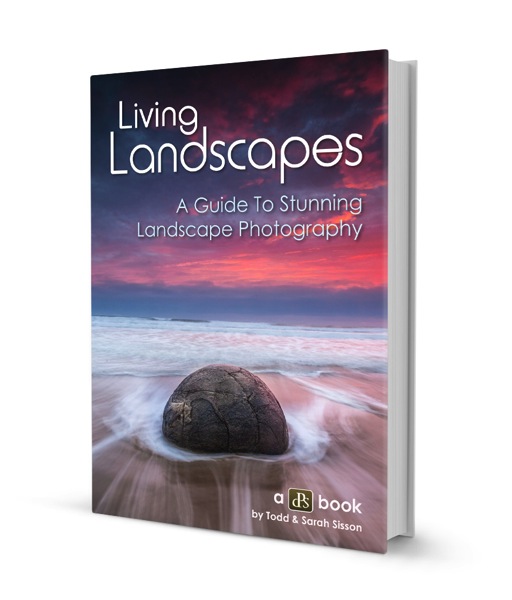
Living Landscapes today is yours for just $ 7. Grab it here.

Landscapes cover

When we released it earlier this year Living Landscapes sold like hotcakes.

Not only that – the feedback we’ve received from readers and reviewers has been phenomenal.

We’re going to let this eBook and price stand for itself and simply say … If you like taking landscape photos – Don’t miss this one!

Get It by itself or Bundle it With 4 More Great eBooks from Jay Patel

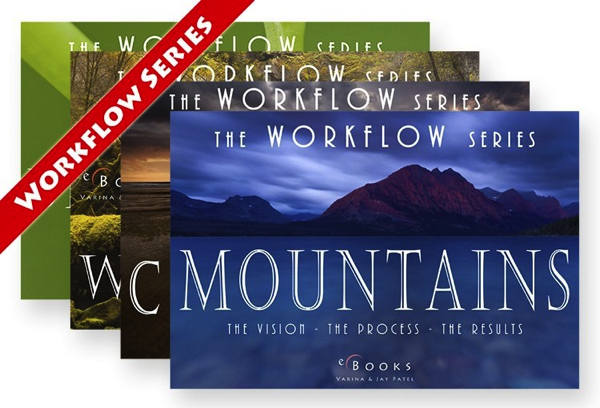
Now if you’re really wanting to take your outdoor photography to the next level then you’ll want to check out this 2nd deal today because you can also get Living Landscapes bundled together with world renowned photographer Jay Patels’ workflow series.

NewImage

This collection of 5 books will transform your outdoor photography.

In this bundle you get Living Landscapes plus:

  • The Workflow Series: Coastlines
  • The Workflow Series: Waterfalls
  • The Workflow Series: Mountains
  • The Workflow Series: Details and Macro

All for just $ 24.99 — that’s $ 5 a book!

Day 7 of the dPS 12 days of Christmas is going to be big. Do not miss out.

Whether you’re just getting Living Landscapes or you want the full bundle of 5 eBooks – Grab them here fast because this deal is available today only.

The post Grab Our Best Selling Landscape Photography eBook for $ 7 – Today Only by Darren Rowse appeared first on Digital Photography School.


Digital Photography School

 
Comments Off on Grab Our Best Selling Landscape Photography eBook for $7 – Today Only

Posted in Photography