www.talkingmuffin.com www.sonia1234321.com
A video review of my new lens, the Nikon 70-200 2.8 VR and Nikon’s 2x teleconverter. This lens was purchased for my portraiture work but today I took it to a country park to test it out as a setup for wildlife photography to play with the teleconverter. The lens is fantastically sharp and I try to cover all the main points about this lens that make it worth the money it costs. A very good lens for all kinds of work. I hope to show it again in a video of how I use it most and where I think it is best, portraiture. Any questions or comments, fire away! Review of this lens on my blog – wp-photography.co.uk www.wp-photography.co.uk www.twitter.com/wpphotographyuk www.facebook.com/wpphotographyuk
Video Rating: 4 / 5
We take a look at the new 24-megapixel Nikon D3200 DSLR. How does it compare to the D3100? What’s new? Kai takes it out to take pre-wedding photos for a lovely couple. *Free Photoshop Effect not included in the camera. Pricing reference: www.digitalrev.com
Video Rating: 4 / 5
This is a film Nikon asked me to shoot to show the capabilities of the D800 in different shooting scenarios as a professional DP. The film was shot almost entirely on the D800, with just a few shots on the D4. Mainly using the Nikkor 24-70mm F2.8, but also a few shots on the 105mm Macro (for the close ups of the eyes). The film was lit and professionally graded and edited in Los Angeles. Didn’t have very much light with me, so it was challenging at times, but a good representation of what the average amateur or semi-professional shooter might have with him in terms of equipment etc. I mainly used 1/100th degree shutter, as it improves almost all video without becoming visibly narrow and “shuttery”. All in all, the camera is very good in video mode and easy to use. Access to the only three things that are important when shooting video; shutter, ISO and F-stop was easily reached through dedicated buttons, rather than being hidden in some deep crap menu like on most other cameras. Very little rolling shutter, no visible artifacts and a decent exposure latitude. Not as good as a Red or an Arri Alexa, but for a DSLR it’s pretty impressive. As with all digital cinematography, you need to protect your highlights at all costs. Do not fall into the trap of “ISO-ing” up to compensate for not having any lighting like 99% of the clips on YouTube do. That will burn backgrounds/highlights into unrecoverable oblivion and look shit. Sometimes this means having no information in the …
Video Rating: 5 / 5
The new Nikon D5100 DSLR short film. Filmed in 1080p HD and edited in Final Cut Pro 7 I also used Magic Bullet Looks to add some really nice effects in the post production stage, enjoy! Music: Bloc Party – Like Eating Glass
Video Rating: 4 / 5
Hands on overview and analysis of the 24.3MP, full-frame Nikon D600 (99 body only). Shot at Nikon Press Preview event in NYC on Sept. 12, 2012. Video includes a look through the camera viewfinder as well as close ups on components inside the camera body, such as 24.3MP FX-format CMOS sensor, 150K shutter mechanism, and EXPEED 3 Processor Circuit board. Other features covered include its Full HD 1080p (at 30fps) recording, large 3.2-inch LCD monitor, 5.5fps burst shooting, bright optical viewfinder, and compatibility with broad Nikon accessory lineup of lenses and flash units. Shown with new AF-S NIKKOR 24-85mm f/3.5-4.5G ED VR (MSRP with camera: 99.95), as well as WIFI accessory WU-1b and battery grip MB-D14. For more info, visit www.mcnamarareport.com.
Video Rating: 4 / 5
Finally, Here is the review of the Nikon Coolpix L100! I got this wonderful camera for my birthday, June 6th 2009. It has a HUGE 15x optical zoom, and an awesome 10.1 megapixel Nikkor Lens sensor. Please rate, comment, and subscribe! Enjoy!
Video Rating: 4 / 5
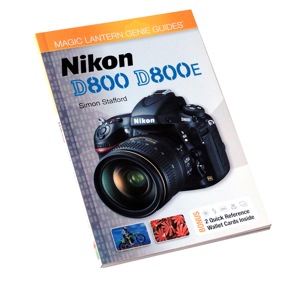 Like many books and movies, if you’ve read the book you’ll want to see the movie.
Similarly, if you own a Nikon D800/D800E you’ll want to read this guide book. Or even more significantly, if you’re thinking about buying one of these cameras, you will definitely want to read this book.
No doubt you’ve already read my review of the remarkable Nikon D800E camera.
Now, about the book ….
Unlike some guide books that I’ve read, this one is all meat and no potatoes, no embellishments, no guff about what a wonderful camera it is, classic lineage etc.
There is however a useful intro to explain the differences between the D800 and D800E models: the only difference being the structure of the filter array covering the image sensor.
Having spent many hours poring over the Nikon manual PDF when reviewing the D800E I wish that I had seen this Magic Lantern guide first!
You get an idea of the book’s helpful approach from the first diagrammatic, explaining the camera controls: clearly laid out, using an image of the camera’s top, sides and rear. Along with explanatory text, the camera pictures and text are close by, so you are not forced (as in the Nikon manual) to thumb through hundreds of pages.
I have rarely found the manufacturer’s original manual to be 100 per cent useful so it’s gratifying to dip into a sample of this book and see how it treats an otherwise mundane function:
‘Mirror up: Locking the reflex mirror into its raised position helps to reduce the vibrations that can often occur, particularly at slow shutter speeds … once the mirror is raised, it is not possible to compose via the viewfinder, and TTL exposure metering and autofocus will not be possible.’
Although the book totals only 128 pages, there is a heap of info within them, although some may find the small six point sans serif type a bit hard to read; it gets even worse when you get to the index at the back of the book where the text shrinks to 5 point type. To be hyper critical, the pictures are also a little on the small side.
But … the info is simply written and leaves no detail unclear. Another extract: ‘Spot metering: This metering pattern is highly specific, as it covers a circle approximately 0.16 inch (4 mm) in diameter.’
For good measure there are helpful paras on peripherals such as memory cards and batteries as well as outlines on the camera’s file formats, JPEG, RAW and TIFF.
An area often skimped in makers’ manuals is the camera’s movie modes; this book answers this criticism by opening the whole subject, clarifying many topics such as shooting stills mid-movie as well as what operational info is displayed in Live View when video recording is under way.
Useful ‘freebies’ are the six quick reference cards tucked into the book’s front and rear covers, carrying concise info on auto focus, setting ISO, flash ranges, sync speeds etc. Slipped into your pocket these would be enormously helpful on a shooting safari where carrying the whole book would be a problem.
Overall, I wish that one brave manufacturer should step out of line and supply a manual such as this with the original camera … and not the pitiful publications normally tucked into the box.
On the other hand, I do feel that the type size in Simon Stafford’s book is far too minuscule. I realise larger type would call for a bigger book or more pages, leading to an increased purchase cost but it would make the book far more accessible and useful.
Author: S Stafford.
Publisher: Pixiq.
Distributor: Capricorn Link.
Length: 128 pages.
ISBN 978 1 4547 0401 0.
Price: Get a price on Magic Lantern Guide to Nikon D800/D800E
Post originally from: Digital Photography Tips.
Check out our more Photography Tips at Photography Tips for Beginners, Portrait Photography Tips and Wedding Photography Tips.
Magic Lantern Guide to Nikon D800/D800E Review
This video was shot with the Nikon D3100. Lens: Nikon AF-S Nikkor 50mm f1.4 G Visit us at www.artoftheimage.com for more on the Nikon D3100
Video Rating: 4 / 5
