RSS
 

Posts Tagged ‘Night’

How to Photograph a Tent and the Night Sky

10 Nov

In this Adorama video tutorial host Corey Rich shows you how to photograph the iconic (as he puts it) glowing tent and starry sky photo. It’s easier than you think! Watch the video and scroll down for some added bonus tips below:

He also mentions a second episode of shooting around a campfire at night, you can watch that video below as well or check out my own article here on dPS: 5 Tips for Creating fun Campfire Photos

I tend to disagree with two things he mentioned: shooting with a tripod lessens your creativity and shoot in burst mode to make sure you have it in focus. For me just the opposite is what I tell my students. I find that using a tripod makes you slow down for sure – but that’s more often than not a good thing.

Shooting to quickly is the cause of many issues such as not checking your composition or exposure closely, and getting carried away with the shot and not thinking it all the way through. In a scenario like this you have time to do test shots as the light goes down so do those hand held and once you find your perfect spot, set up and shoot on a tripod to get the sharpest images.

As for shooting in burst mode, that’s a bit of a pet peeve of mine. I come from the days of film where every button press cost money in terms of film and processing so you shot a lot more deliberately. Shooting a whole bunch of shots on burst mode might get you a good shot but I personal find that slow and methodical will get better results and way less culling and editing later.

Where do you stand on these two issues?  Tripod or not? Burst mode or decisive moment? Discuss  it in the comments and share any tent or campfire photos you’ve taken as well.

The post How to Photograph a Tent and the Night Sky by Darlene Hildebrandt appeared first on Digital Photography School.


Digital Photography School

 
Comments Off on How to Photograph a Tent and the Night Sky

Posted in Photography


Collection of Starry Night Images

27 Sep

Photographing the night sky is challenging and also very rewarding. Doing it well takes patience and skill. In this collection I’ve searched for some outstanding starry night images for you.

Let the star gazing begin!

Photograph A Legend of Starry Night by Shawn Yang on 500px

A Legend of Starry Night by Shawn Yang on 500px

Photograph Home on the Range by Ben Canales on 500px

Home on the Range by Ben Canales on 500px

Photograph Starry night in Santorini by Luca Bettarini on 500px

Starry night in Santorini by Luca Bettarini on 500px

Photograph Black Magic! by Piyush Hatolkar on 500px

Black Magic! by Piyush Hatolkar on 500px

Photograph the road by jonathan sander on 500px

the road by jonathan sander on 500px

Photograph ~ Early morning ~ by Prakash Bajracharya on 500px

~ Early morning ~ by Prakash Bajracharya on 500px

Photograph Medieval Vortex by Javier Martinez Moran on 500px

Medieval Vortex by Javier Martinez Moran on 500px

Photograph Galaxy love by Leung King Lun on 500px

Galaxy love by Leung King Lun on 500px

Photograph The Sky Watcher by Nimrod Genisher on 500px

The Sky Watcher by Nimrod Genisher on 500px

Photograph Starry Night by Vahid Varasteh on 500px

Starry Night by Vahid Varasteh on 500px

Photograph The Path to God by Hammad Iqbal on 500px

The Path to God by Hammad Iqbal on 500px

Photograph Starry Night by Alan Aurmont on 500px

Starry Night by Alan Aurmont on 500px

Photograph Life Struggles by Royce's NightScapes on 500px

Life Struggles by Royce's NightScapes on 500px

Photograph Starry night by Jorge Maia on 500px

Starry night by Jorge Maia on 500px

Photograph Past Life by Ben Canales on 500px

Past Life by Ben Canales on 500px

Photograph Mobius Arch by Sungjin Ahn on 500px

Mobius Arch by Sungjin Ahn on 500px

Photograph Night Train by Aaron J. Groen on 500px

Night Train by Aaron J. Groen on 500px

Photograph Stars over Teton homestead by Royce's NightScapes on 500px

Stars over Teton homestead by Royce's NightScapes on 500px

Photograph Starry lighthouse by Ivan Pedretti  on 500px

Starry lighthouse by Ivan Pedretti on 500px

Photograph Starry road by Ivan Pedretti  on 500px

Starry road by Ivan Pedretti on 500px

Photograph Starry Night over Crater Lake by Rick Parchen on 500px

Starry Night over Crater Lake by Rick Parchen on 500px

Photograph Starfalls by Ben Coffman on 500px

Starfalls by Ben Coffman on 500px

Photograph Stars over Historic Ward Charcoal ovens by Royce's NightScapes on 500px

Stars over Historic Ward Charcoal ovens by Royce's NightScapes on 500px

Photograph In the Still of the Night by Jessica Hendelman on 500px

In the Still of the Night by Jessica Hendelman on 500px

Photograph All That Glitters – Milky Way Above Yosemite Forest by Jim Goldstein on 500px

All That Glitters – Milky Way Above Yosemite Forest by Jim Goldstein on 500px

Photograph Stargazing Through A Window by Jerry Patterson on 500px

Stargazing Through A Window by Jerry Patterson on 500px

Photograph Reflection of the Galaxy | Pfeiffer Beach, California by Ali Erturk on 500px

Reflection of the Galaxy | Pfeiffer Beach, California by Ali Erturk on 500px

Photograph Earth, Air, Fire and Water by Greg Gibbs on 500px

Earth, Air, Fire and Water by Greg Gibbs on 500px

Photograph Andromeda Galaxy by Rogelio Bernal Andreo on 500px

Andromeda Galaxy by Rogelio Bernal Andreo on 500px

The post Collection of Starry Night Images by Darlene Hildebrandt appeared first on Digital Photography School.


Digital Photography School

 
Comments Off on Collection of Starry Night Images

Posted in Photography


‘Cities at Night’ project puts citizens to work identifying images of Earth

21 Aug

Got a few minutes to spare? You’ve got enough time on your hands to help a group of researchers tackle a massive problem. Cities at Night is a project aiming to recruit help from ordinary citizens in classifying images of Earth at night taken by astronauts aboard the International Space Station. An effort of Universidad Complutense de Madrid staff and students, their main goal is to better understand and reduce light pollution. See how you can help

Articles: Digital Photography Review (dpreview.com)

 
Comments Off on ‘Cities at Night’ project puts citizens to work identifying images of Earth

Posted in Uncategorized


How to do Long Exposure Photography and Light Trails at Night

03 Jun
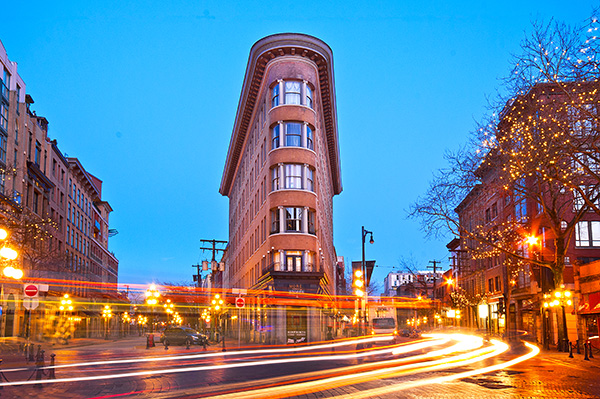
Gastown Light Trails

Gastown light trails, Vancouver, Canada

Before I understood how photography worked, I was always intrigued by light trails in images. I never understood how that happened. When I began to study photography, one of the first assignments I did was an advanced course on night photography. I decided I would try and capture some light trails. I set up my camera, made sure the settings were correct and waited. A few cars went past, but my timing was off and the shots were not great. I continued to wait. After about an hour of trying and experimenting, I got the shot I was looking for. It was like magic to me. The car was not in the shot but the lights seemed to float in mid air. I was hooked. This was something that mystified me for a long time and, I had managed to get it right.

What was so mesmerizing for me was that the image I saw on my LCD screen was not what I saw in real life. The camera had managed to capture a scene that my eyes could not capture in the same way. This seemed amazing to me. I soon realized that the camera was able to “see” things differently to the way my eyes saw them. I spent many nights trying to capture light trails in various locations. I was also doing lots of reading and research and came across a technique called long exposures. This too was amazing. It had the ability to alter a scene in such away that it looked totally different to the way our eyes normally see it. Again I was hooked and still, to this day, long exposures and light trails are some of my favourite techniques in photography.

Long exposure photography and light trails have similar techniques, it is the subject matter that differs, so I will discuss each technique separately and tell you how to get the best results in both.

How to do long exposure photography

Shooting long exposures effectively requires that you should be shooting in Manual mode as much as possible. If you are not sure how to shoot in Manual, take a look at Getting off Auto – Manual, Aperture and Shutter Priority modes explained to learn more about these modes. To be able to get sharp and effective long exposure images, here is a checklist of item you will need.

1. What equipment is needed to shoot long exposures?

  • A tripod – this is a good piece of equipment to have in most instance, but is a critical piece of equipment for shooting long exposures. Make sure your camera is properly mounted onto the tripod before you start shooting.
  • A camera – obviously you will need a camera, but many people assume you can only do this type of photography with an SLR. Some advanced point-and-shoot cameras can also do long exposures if they have a Shutter Priority function. Take a look in your camera’s manual to see if it has this function, you may be surprised.
  • Cable release – your camera will be on a tripod, so it should be very still, however, sometimes the action of pressing the shutter release button can cause the camera to move slightly and this movement can cause your image to blur very slightly. You may not notice this on the LCD screen, but when you open the image on your computer, it will be evident. I recommend getting a cable release (also called a remote trigger). It is simply a cable that attaches to your camera and acts as a shutter release button. Using a cable release means you can set up your camera, step away from the tripod and press the button without touching the camera. Cable releases can be wireless too. If you don’t have a cable release or don’t want to buy one, you could use your camera’s self-timer function to trigger the shutter.
  • Warm clothes and comfortable shoes – depending where you live, and the time of year you plan to be shooting, you may need to dress warmly. Long exposures work well after dark and it may get cold, so be sure to wear warm clothes. Be sure that you have comfortable footwear too as you may be standing for a few hours.

2. What subjects are best for long exposure photography?

Long exposures work well for certain types of subjects like seascapes, landscapes and cityscapes. The key to getting a successful long exposure image is to have something in your image that is perfectly still and something that is moving. Water, clouds and trees blowing in the wind all work well if the rest of the scene is stationary. This difference between the elements in the scene will create drama and will add significant value to your image. The viewer will be seeing something that cannot be seen with the naked eye. The reason why long exposure images are so compelling is that they warp time. Water looks like a soft mist, trees look like a dull blur and clouds become long and streaky. This is what makes a familiar scene more compelling.
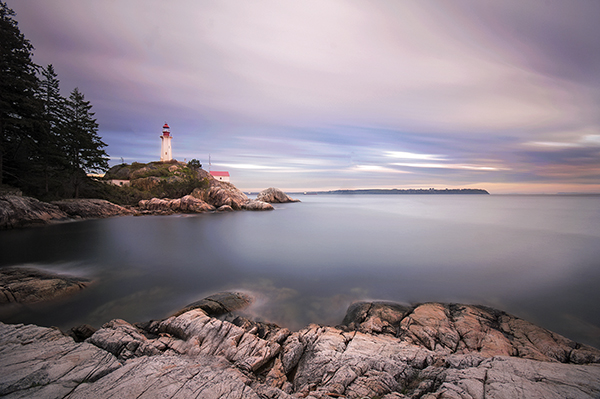
Long Exposure scene in Vancouver BC

Long exposure scene in Vancouver, Canada

3. What camera settings should be used?

Long exposures are ideally shot on Manual mode. If you are not sure how to shoot in Manual mode, you can use one of the other semi-manual modes such as Aperture priority or Shutter priority. Here are some quick pointers on the settings:

  • Shutter speed – depending on the light in your scene, your shutter time will need to be at least a 10 to 15 seconds, or longer if necessary. If you are doing a seascape and the water is moving quickly, then a few seconds may be long enough to make the water look misty.
  • Aperture – you will want to have your aperture set at anywhere between f/8 and f/16. This again, will be determined by how much light is in the scene and how long you want to expose for.
  • ISO – keep your ISO settings as low as possible, ISO 100 is what I use for long exposures.

4. When is the best time of day to shoot long exposures?

It’s normally a good idea to shoot long exposures as the sun is setting, or just after sunset. My suggestion is to be on the scene an hour before sunset. That way you can test some shots, make sure your composition is good and be sure all your settings are correct. Then wait. Personally, sometimes I will simply sit there and enjoy the scene, other times I may listen to some music, but I like to be relaxed and ready for when the light starts to work. Normally you will want to start shooting about 15 minutes before the sun has completely set and up to an hour after it is below the horizon.

The important part is to be willing to experiment. Each time you decide to shoot long exposures will be a little different. The light may be brighter than you think, the sunset may not be as dramatic as you hoped, or the shot may not be just as you imagined. Be patient and experiment. I will sometimes go back to a location two or three times to try and get the shot I am looking for. Once I have it though, the sense of reward is fantastic and the patience and effort is paid off!
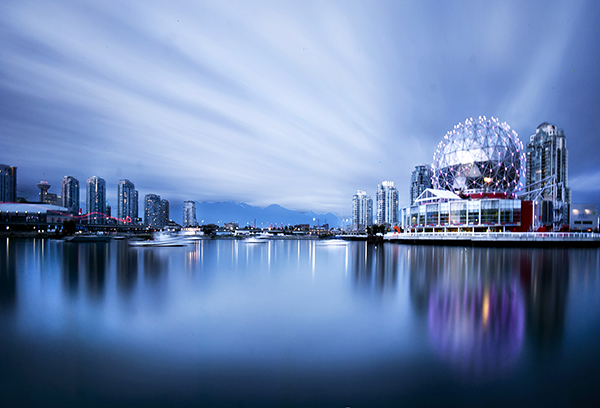
Long Exposure of Science World in Vancouver

Long exposure of Science World in Vancouver

How to shoot light trails

Much of the advice for shooting light trails is very similar to the tips above. The key difference is in the timing and location of your shoot.

1. What equipment is needed to shoot light trails?

  • Same as above 

2. What subjects are best for light trails?

For light trails to work, you need to have something with lights moving through your scene. A car, a bus, a train and even an aircraft can work. Be sure to be out of the direction of the vehicle you are photographing. Please do not stand in the middle of the road, or on train tracks. Position yourself in a safe place to make this work. Always be aware of your surroundings. It is easy to become immersed in what you are shooting and lose sight of where you are standing. Be safe, first and foremost!
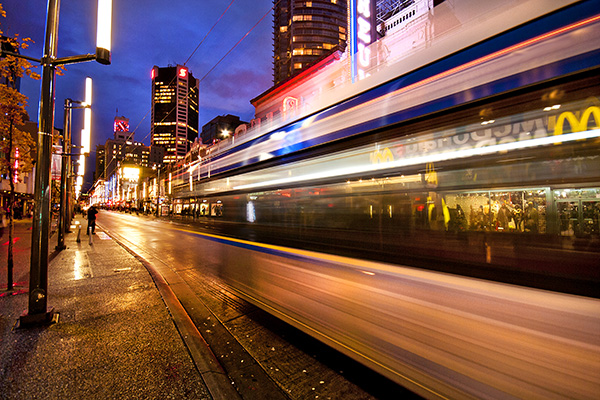
A moving bus in the scene made this shot more dynamic

A moving bus in the scene made this shot more dynamic

3. What camera settings should be used?

Light trials, like long exposures are ideally shot in Manual mode.

  • Shutter speed – depending on the light in your scene, your shutter time will need to be at least 10 to 15 seconds, or longer if necessary. Make sure that your shutter speed is long enough to capture longish light trails. You don’t want to cut them off too soon as you will have some short trails in your image that may look strange.
  • Aperture – you will want to have your aperture set at anywhere between f/5 and f/11. This again, will be determined by how much light is in the scene and how long you want the exposure.
  • ISO – keep your ISO settings as low as possible, ISO 100 is what I use for light trails. If your ISO is set to 500 or higher, your exposure will be shorter and you run the risk of overexposing the highlights ESPECIALLY when shooting car headlights.

4. When is the best time of day to shoot light trails?

Light trails can be shot in the early evening, or after the sun has set. Each scene will be different, but sometimes it is too light to get effective light trails just after sunset. You may need to wait until 30 minutes after the sun has set to get longer light trials.

The important part, once again, is to be willing to experiment. Try different times after sunset and see what works for you. Spend time behind your camera perfecting your timing. Scout locations during the day that you will think will work for light trails and then go and try it out.
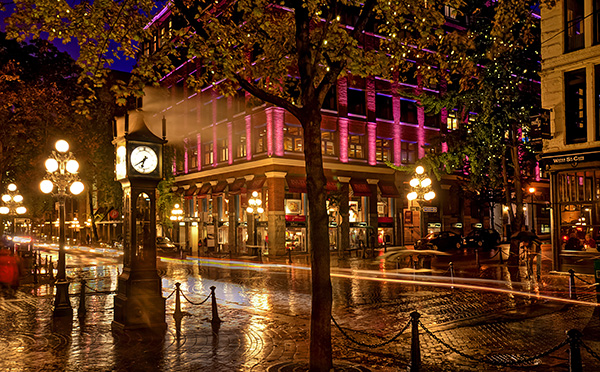
Steam Clock in Gastown, light trails on the road

Steam Clock in Gastown, light trails on the road

Photographing after dark can be very rewarding. It is worth the effort to learn how to use these techniques to bring new images into your portfolio, and to have new skills which will enable you to shoot under any lighting conditions. Experiment and enjoy! Happy shooting.

The post How to do Long Exposure Photography and Light Trails at Night by Barry J Brady appeared first on Digital Photography School.


Digital Photography School

 
Comments Off on How to do Long Exposure Photography and Light Trails at Night

Posted in Photography


2 Night Photography Video Tutorials

26 May
David Kingham

David Kingham

This week’s collection of amazing images I shared a bunch of night photography, specifically those of the night starry sky, and hopefully you’re already thinking about how to shoot for this week’s photography challenge starry night photography.

So I went and found a couple of video tutorials to help you out on this mission.

First, this one by Adorama TV hosted by Mark Wallace. He walks through all the equipment he’s using, camera settings and it even includes a background serenade by some local coyotes.

In this second video host Jim Harmer shows you how to photograph the starry night sky and the Milky Way including a little tip about how to get foreground objects sharp in your final image.

I hope you enjoyed those. Please remember to hop over to the weekly challenge and show us your night photos there!

The post 2 Night Photography Video Tutorials by Darlene Hildebrandt appeared first on Digital Photography School.


Digital Photography School

 
Comments Off on 2 Night Photography Video Tutorials

Posted in Photography


Weekly Challenge – Starry Night Photography

24 May

This week we had some Beginners Tips for Night Sky and Star Photography by one of our newest dPS writers, Phillip VanNostrand. Earlier today I shared a collection of Dreamy Star Photography.

By Dennis Behm

So, now it ‘s your turn. Get out into the night and photograph some stars for this week’s challenge:

Starry Night Photography

Here are a few more starry night photos to get you motivated, inspired and ready to go shoot.

By Bill Shupp

By Kris Williams

By slworking2

By Tom Bricker

By David Kingham

By Brian Hawkins

Need more help with some tips and tutorials? Try these:

  • Lake Tekapo Under the Stars
  • The Night Sky In Landscape Photography
  • Tips for Photographing Star Trails
  • Photography Under the Stars

Share your starry night photography

Simply upload your shot into the comment field (look for the little camera icon in the Disqus comments section as pictured below) and they’ll get embedded for us all to see or if you’d prefer upload them to your favourite photo sharing site and leave the link to them. Okay, ready to impress us?


The post Weekly Challenge – Starry Night Photography by Darlene Hildebrandt appeared first on Digital Photography School.


Digital Photography School

 
Comments Off on Weekly Challenge – Starry Night Photography

Posted in Photography


Beginners Tips for Night Sky and Star Photography

21 May

Star Photography

My favorite type of personal photography is taking night shots of the stars (long exposure pictures). I am often busy shooting pictures of people at weddings, or apartments, or models, and it’s important for me to make sure I take pictures for fun regularly. Taking pictures for no one other than myself is highly rewarding, soul filling, and fun! I also love taking travel photos and HDR photos, in this article we will take a close look at exactly how you can take your own epic star photographs.

star photography

30 seconds at f/2.8, ISO 1250

What you need to take jaw-dropping pictures of stars

To take your star pictures, you only need three things:

  1. a full-frame camera (for better ISO capabilities)
  2. a fisheye lens (for the widest view of the sky)
  3. a tripod (for stability during 15 second photos)

(Note: You can do this with a cropped sensor camera, without a tripod, and without a fisheye lens. It will just be a little harder and slightly less jaw-dropping)

star photography

25 seconds at f/2.8, ISO 1600

Camera settings

You can nail this shot almost every time with these settings:  25 second exposure, f/2.8, ISO 1600

If your lens doesn’t open up to f/2.8 you can try 30 seconds at f/4 with ISO 1600.

Note: this kind of photography won’t work if there is a full moon out (or even a half moon). Don’t compete with large light sources, the stars will be over powered. The best location for star photography is way out in nature, away from city lights that cause “light pollution.”

star photography

13.0 seconds at f/2.8, ISO 1600

Why to use these settings

The most important component of these settings is the 25 second exposure. An exposure longer than about 25 seconds will start to show star trails. Photographing star trails is a legitimate type of photographyon its own, but not the type of photography you are trying to do here. Since you are limited to about 15-25 seconds max shutter speed, you still need to let in more light. The largest aperture you can find on a fisheye lens is f/2.8, and still your picture might not be quite bright enough to look stunning. So this is where the ISO comes into play. On a full-frame camera like the 5D Mark III or the Nikon D800 you can bump the ISO up to around 2000 without seeing much noise. You’ll learn how to reduce noise in Lightroom in the next section for a super clean photo.

star photography

Editing in Lightroom

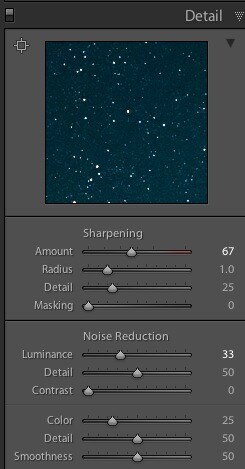
I do extensive retouching in Lightroom after I take my photos. I’ll usually boost the exposure up by a stop or more and I’ll use Noise Reduction under the Detail section to reduce any unwanted “noise” (those pesky extra white, red or blue pixels that show up when you push the ISO too high). Here is a standard star photo of mine and the Lightroom settings I used to create it:

star photography

25 seconds at f/2.8, ISO 1600

Here are the Lightroom settings I used to edit the above photo:

star photographystar photography

1) You can see in the first panel that I bumped the whites up to +46 and brought the blacks down to -52. I really wanted to emphasize the stars against the dark sky and this is a good way to do that. Pushing the clarity up to +55 also helps define the stars against the sky, making them nice and crispy. I boosted the saturation to bring out any colors that are in the sky.

2) In the second panel you can see that I sharpened up the image a bit, also to emphasize the stars. At the same time, I brought up the noise reduction to 33 to smooth out some of the noise that might show up, and I brought up the color to 25 for the same reasons.

Pro tips

star photography

Here is where you can have fun with the editing. Play around with the split toning sliders to make the colors in your sky appear magical. In the photo above you can see a little bit of turquoise in the lower part of the sky, and that comes from boosting that color in the Shadows of the Split Toning slider here:

star photography

You can also affect the color of the sky by playing around with the temperature and hue sliders to get some pretty magnificent looking star photos. Take a look at this one photo rendered three different ways:

Another pro tip that you may have noticed in all of the photo examples I gave here is this – shoot your stars in context. It really tells a great story to see a silhouette of a pine tree or a house in the background, and it shows the magnitude of the scene when you have an object in the foreground to compare to the stars.

Lastly, make sure you know which direction the Milky Way is. You can use an app like Sky Map to see exactly what stars are in the sky above you.

Have fun shooting, and please share your pictures below!

star photography

The post Beginners Tips for Night Sky and Star Photography by Phillip VanNostrand appeared first on Digital Photography School.


Digital Photography School

 
Comments Off on Beginners Tips for Night Sky and Star Photography

Posted in Photography


Blood moon eclipse: Night of April 14-15

13 Apr

5280605799_1c821fa4d7_o.jpg

Photographers and astronomy fans in North America are gearing up for a rare meteorological event the night of April 14-15. According to Sky and Telescope magazine, on April 15th, the lunar eclipse will begin around 1:20am ET. While astronomers race to observatories, many photographers will take to the outdoors to capture this unique event. Here are a few tips for those looking to capture a good image of the moon. Learn more

News: Digital Photography Review (dpreview.com)

 
Comments Off on Blood moon eclipse: Night of April 14-15

Posted in Uncategorized


Do you pack up and leave after sunset and miss the fun of night photography?

11 Feb

There’s no question that the best light occurs during the golden hours, but does that mean that you should pack up your cameras after sunset and miss all the fun of night photography?

city-skyline-example

Absolutely not!

Fun of Night Photography

Night photography offers so many great opportunities for photographers that it’s something that shouldn’t be overlooked. In fact – I think it should be experienced by everyone.

Of course photographing at night means that you’re going to be pushing your gear to its limits. High ISOs, long shutter speeds, fast lenses, tripods, remote shutters, and patience are a must when it comes to photographing after the sun has set, but the results will be worth it.

So what is there to capture at night, and more importantly how do you go about capturing each of these subjects?

City Lights

Walking-the-city

Cities are great places to take photos any time of the day, but at night, cities come to life. Just think of Times Square in NYC or the Vegas Strip for example. Of course, not everyone’s going to have access to such iconic locations, but that doesn’t mean that your local city won’t offer you the goods.

When photographing a city you have so many options open to you; from skylines, to the simple every day things that make cities run. Things like the traffic, the people, and the objects they use to get around are a great start. This photograph of a bike, chained to a parking meter, in front of a church lit up for the night, is a great example of what can be found walking the city streets.

For more tips and examples on photographing cities at night check out these great posts:

  • Nightscapes: Photographing the City at Night
  • 41 City Skylines to Inspire You

The Night Sky

When it comes to capturing the night sky there are two basic ways that you can go about doing this. You can either show the vastness of space and showcase the number of stars in the sky, or you can capture the motion of the Earth’s rotation by creating star trails.

night-sky-photography

Night photography showing vast open sky and stars

The basic concepts for capturing both types of night sky photos are the same. You’ll need a tripod, a wide angle lens, and you’re going to be working with a large aperture in most cases.

When it comes to the shutter speed and ISO that is where things start to differ between the two types of shots. As the Earth’s rotation is what causes star trails to form, you have to limit your shutter speed in order to capture a single frame shot before this rotation creates the trailing effect.

Startrails-OneWS

Night photography capturing star trails over a long period of time

A general guideline for this is known as the 600 rule which basically states that the longest shutter speed you can use is determined by dividing 600 by your focal length corrected for 35mm. So if you’re using an 18mm lens on a 1.5x crop sensor DSLR you’d take 600 divided by 27 (18mm x 1.5 crop factor) which would mean that the longest shutter speed you can use would be about 22 seconds. To control this you’re going to need to set a rather high ISO. However, with modern DSLR cameras being as good as they are with noise these days, this is becoming less and less of an issue.

However, if you DO want to capture the star trail effect, then the object is to capture the motion that you were trying to avoid before. Often times star trail photographs are created by stacking multiple long exposures of the same scene over a long period of time. Since shutter speed is not going to be an issue here it’s much easier to use longer speeds which will result in less frames in the end. You’ll also be able to use lower ISO and smaller apertures here if you prefer.

Here are some more great posts to send you in the right direction for taking better photos of the night sky

  • Tips for Photographing Star Trails
  • How To Take Better Photos of The Stars

Light Trails

light-trails-example

Light trails are a lot of fun to photograph and can be done just about anywhere you can find a busy road.

In general any shutter speed from one second, to a few seconds, should be enough to give you the look you’re after. But it doesn’t just come down to finding a road with traffic and photographing it – make sure you’re aware of your composition as well.

light-trails-example-2

As roads make for great leading lines, try to use those to your advantage. You can either shoot from above the traffic on a bridge or a building, or your can try and get down low and shoot from a median or side walk. No matter where you’re shooting from you’re going to want to be super aware of your surroundings and never do anything that would put your life in danger – no photograph is worth getting hit by a bus over.

For more tips and examples on light trails check out these posts:

  • How to Shoot Light Trails
  • 9 Tips for Capturing the City in Motion

What else?

What else can you think of for night photography? I know I left at least one big one off this list and I did that on purpose as I have no experience in light painting – oops did I just give one away?

The post Do you pack up and leave after sunset and miss the fun of night photography? by John Davenport appeared first on Digital Photography School.


Digital Photography School

 
Comments Off on Do you pack up and leave after sunset and miss the fun of night photography?

Posted in Photography


Weekly Photography Challenge – Night Photography

25 Jan

Earlier I shared 35 stunning night photography images. I hope you got inspired by them because now it’s your turn!

By Simon & His Camera

This week’s challenge is night photography!

There are so many things you can do at night including:

  • city lights
  • night portraits
  • star trails
  • light painting
  • night sky, stars and the Milky Way
  • the moon
  • fire spinning (steel wool)
  • HDR is great at night especially on neon and city lights
  • car light trails
  • ghost making

By Justin Brown

By jason

The possibilities go on and on so you have no excuse for lack of subject matter or ideas. So grab your tripod (you’ll need it), your remote trigger, and a friend (helps if you’re light painting and is infinitely more fun than by yourself) and head out into the night to take some photos.

Need some tips on night photography?

Check out these articles:

  • Introduction to night photography
  • Nightscapes: Photographing the City at Night
  • Moon Photography: 6 Tips for Better Moon Photos
  • Light Painting Part One – the Photography
  • Photography in the Moonlight
  • Tips for Photographing Star Trails

By Bill Dickinson

By Adrien Sifre

Share your night photography images!

Once you’ve taken your ‘night photos we’d love to see them in comments below. Simply upload your shot into the comment field (look for the little camera icon in the Disqus comments section as pictured below) and they’ll get embedded for us all to see or if you’d prefer upload them to your favourite photo sharing site and leave the link to them.

The post Weekly Photography Challenge – Night Photography by Darlene Hildebrandt appeared first on Digital Photography School.


Digital Photography School

 
Comments Off on Weekly Photography Challenge – Night Photography

Posted in Photography