RSS
 

Posts Tagged ‘never’

Here’s why your beloved film SLR is never going digital

11 Oct

There may be pent-up demand for a device that’s going to let you dust off your beloved Nikon F-something and shoot digital with it, but that doesn’t mean a crowdfunded project is going to make it possible. Or, at least, not in a way that’s worth the hassle.

Large companies with dedicated engineering departments have worked on the task, yet no such product has yet been produced. That, along with a list of seemingly intractable technical hurdles, lead me to think that it’s not ever going to happen, no matter how desirable it might be.

The wisdom of crowds

The latest crowdfunded attempt to bring digital capability to old Nikon SLRs appears to involve the 1/2.3″-type sensor and lens from an inexpensive action camera and a Raspberry Pi project computer.

“I’m Back” is the latest attempt to bring film cameras into the digital realm and it appears to do a reasonable job of addressing some of the challenges that sank Silicon Film and subsequent crowdfunded attempts to do the same:

  • Syncing the SLR shutter and digital exposure
  • A means of changing the digital settings
  • Keeping the cost reasonable

However, it’s unclear or arguable how well it addresses other potential stumbling blocks:

  • Sensor/film plane alignment
  • Compatibility across the dwindling supply of film SLRs
  • Space for batteries and processing hardware

And, with its use of a compact camera sized sensor fitted behind what looks remarkably like the lens from an inexpensive action cam pointed at a ground glass screen, there’s every chance it fails to clear a fairly significant hurdle:

  • Sufficient image quality to make the whole ordeal worthwhile

A history of failed attempts

Companies with significant backing and extensive engineering resources have failed to solve this problem, which doesn’t make it an obvious candidate for crowd-funded projects.

Nikon itself clearly investigated the problem, since it got as far as patenting a system for adjusting the sensor, relative to the film plane. But it noticeably hasn’t ever released the fruits of this research.

We wrote at the time about why we didn’t think it would lead to a product. We’ve also covered reports of why Silicon Film never delivered.

Do it yourself

If you’re really dedicated, can handle a craft knife with some precision and don’t mind sanding down the delicate components of several hundred dollars-worth of modern ILC, then you too can mount a Sony NEX upside down in the back of your SLR. So long as you remember to fire both shutters in sequence. (Despite my sarcasm at the impracticality, it’s an impressive piece of handiwork).

But, realistically, if you really want to use your old SLR, I’d recommend going out and buying a roll of film. The recently resurrected Ektachrome, perhaps. Or, and I know this is going to sound radical, you could shoot with a camera that’s been designed from the ground up to shoot digital. A ‘D’-SLR if you will.

Articles: Digital Photography Review (dpreview.com)

 
Comments Off on Here’s why your beloved film SLR is never going digital

Posted in Uncategorized


Concrete Like You’ve Never Seen It: 15 Unexpected Furniture & Object Designs

21 Sep

[ By SA Rogers in Design & Furniture & Decor. ]

Concrete might typically be cold, hard, impersonal and impermeable, but treat it right and it’ll soften right up into surprisingly comfortable, accessible and usable everyday items, from pens and iPhone skins to rocking chairs and squishy-looking seating. Cast it from pillowy molds, 3D-print it in squiggles, brush it onto highly detailed objects, impregnate it into textiles or imprint it with delicate textures and you’ll have objects full of intriguing contradictions.

Concrete 3D Printer Enables Innovation

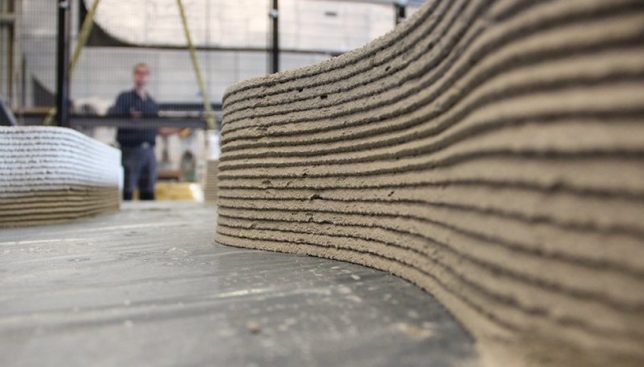
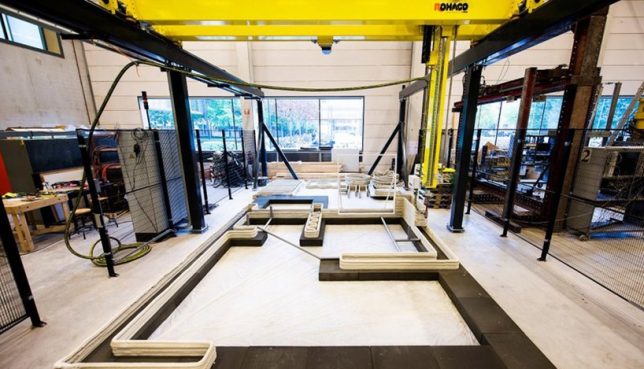
This 3D printer by Dutch company ROHACO spits out concrete in all manner of shapes, even squiggly lines, through a swivel head attached to a hose from a concrete mixer. Not only does this enable concrete to take unprecedented forms, it makes it possible to 3D print entire homes unsupervised, with the kinds of curves and details that would normally take an extraordinary amount of work.

3D-Printed Concrete Canoe

3D printing with concrete makes it possible to produce things like the skelETHon 3D printed concrete canoe, which won first place at the 16th Concrete Canoe Regatta competition in Germany. That’s right, it’s not even the first canoe to be made from concrete! The inner frame of this one is made of concrete reinforced with stiff steel fibers, while the shell is a two- to three-millimeter-thick waterproof concrete skin.

Concrete & Canvas Seating

These objects are a bit of a contradiction: simultaneously appearing soft and hard. That’s because they’re both, technically. ‘Fabric’ is an outdoor seating collection by Miriam Estévez, wherein soft fabric poufs are soaked in a liquid concrete and allowed to dry in order to create a surprisingly strong, durable, waterproof result.

Traditional Chair Covered in Concrete

You might imagine that someone took a mold of a traditional chair and then cast it with solid concrete, producing the detailed form you see before you. The truth is actually much simpler. Bentu Design teamed up with Guangzhou fine arts students to carefully cover an existing chair with concrete mixture, making sure to preserve every detail, from the scallops along the wooden frame at the top to each individual upholstery nail.

Delicate Persian & Islamic Patterned Tables

Concrete doesn’t take on the adjective ‘delicate’ easily, but every now and then, something qualifies. This disc-shaped tabletop, just a few millimeters thick, balances on the neck of a water-filled jug to form a beautiful recycled coffee table. Milan-based design studio Daevas printed the top with a traditional Persian pattern.

Next Page – Click Below to Read More:
Concrete Like Youve Never Seen It 15 Unexpected Furniture Object Designs

Share on Facebook


[ By SA Rogers in Design & Furniture & Decor. ]

[ WebUrbanist | Archives | Galleries | Privacy | TOS ]


WebUrbanist

 
Comments Off on Concrete Like You’ve Never Seen It: 15 Unexpected Furniture & Object Designs

Posted in Creativity


You’ll Never Want to Leave This All-in-One Bed Full of Gadgets & Storage

07 Sep

[ By SA Rogers in Design & Furniture & Decor. ]

Blow-up dolls and boyfriend-shaped body pillows may make you feel a little less lonely, but they can’t give you a massage – unlike this multifunctional bed that performs so many functions, you half-expect it to cook you breakfast in the morning. Sold by a variety of Asian retailers for roughly $ 600 USD, including SG Shop and English TaoBao, this slightly bonkers piece of furniture incorporates virtually everything you can imagine (reasonably) wanting to be built right into your bed, from USB chargers, speakers, power outlets and a pop-out laptop table to an actual built-in massage chair with multiple settings.

Lift up the mattress to find plenty of storage underneath for extra bedding and ubiquitous pillows. There’s also hidden storage in the bench at the foot of the bed, and shelves all along both sides. Optional features include leather upholstery instead of the default fabric, which comes in a multitude of colors, and even a freaking safe to hold your valuables.

If there’s one glaringly obvious feature this bed doesn’t have to offer, it’s a mattress long enough for the average American. The small size measures just 4’11” while the large size adds a foot. So if you’re larger of stature, this bed might not be for you – at least, not to sleep in. It would still make a pretty cool living room lounger. If you were designing your own all-in-one dream bed, what would you add? A mini fridge? A built-in coffee maker?

h/t My Modern Met

Share on Facebook


[ By SA Rogers in Design & Furniture & Decor. ]

[ WebUrbanist | Archives | Galleries | Privacy | TOS ]


WebUrbanist

 
Comments Off on You’ll Never Want to Leave This All-in-One Bed Full of Gadgets & Storage

Posted in Creativity


$11,000 Leica Noctilux lens shattered, or: Why you never check camera gear when flying

19 Aug
RIP Leica 50mm f/0.95 Noctilux. Photo credit: Leica Store Manchester

They say a picture is worth a thousand words. Well, here’s your 1,000 words about why you should never check in your camera gear when flying. This $ 11,000 Leica 50mm f/0.95 Noctilux ASPH lens and the $ 7,000 Leica M10 it was attached to are both broken, possibly beyond repair, after the owner checked them into the hold on a flight instead of carrying them onto the plane.

The lens showed up like this at the Leica Store Manchester, who posted this photo to their Instagram and Facebook pages as a warning for other photographers who have considered checking their camera gear. It might be easier, but you never know what kind of treatment your bag is going to get.

Case in point: the murdered Noctilux above arrived at its destination with two front lens elements shattered… through a filter. What’s left of the poor filter is stuck in the lens’ filter threads. The owner has sent the lens and and camera to a Leica service center, but while the camera might be fixable, we doubt there’s anything to be done about the lens.

Shall we consider this lesson learned?


Photo by Leica Store Manchester and used with permission.

Articles: Digital Photography Review (dpreview.com)

 
Comments Off on $11,000 Leica Noctilux lens shattered, or: Why you never check camera gear when flying

Posted in Uncategorized


Chances are you’ll never see Dunkirk the way Christopher Nolan intended

22 Jul

What happens when one creator’s artistic vision comes into conflict with prevailing standards and industry mores? Christopher Nolan’s Dunkirk gives an insight into the chaos that is wrought as the industry retreats from film.

Christopher Nolan is famously attached to large-scale film when it comes to his productions. For Dunkirk he shot with a mixture of 65mm film and the taller, squarer IMAX 65mm filmstock—a decision that had unexpected benefits. Problems arise, however, when Nolan’s film choice collides with an industry that has largely gone digital—with 2K and 4K projectors being the norm, many theaters simply can’t show the film the way it was shot.

Film fan and president of the University College London film society, Anton Volkov, has put together a great infographic showing not only the different aspect ratios of the formats on offer, but also the relative sizes of the formats from which they’re being projected.

Translation: You end up seeing a different amount of the picture, depending on where you see it.

The digital formats in the infographic above are scaled based on IMAX’s assessment of the pixel-equivalent resolution of the different film formats (Experts at RED appears to suggest lower numbers for film resolution, which would mean the digital formats are slightly under-represented and could be considered closer to the size of 35mm).

Volkov also illustrated the different aspect ratios using this short GIF, from the NolanFans forum:

Note also the shape of the 35mm image. It looks like it’s been horizontally cropped to a very square format, but has actually been horizontally squeezed onto the film using an anamorphic lens (an asymmetrical lens that captures a wider field of view horizontally than it does vertically). This film is designed to be projected with another anamorphic lens to ‘de-squeeze’ the footage back out to its full width.

Of course, even if you are lucky enough to find somewhere able to show 70mm IMAX (we can’t, here in Seattle, as our local IMAX cinema has gone digital-only), there’s still a question mark about whether you’ll be able to appreciate the full resolution.

If you’ve seen the film (whichever crop of it), let us know what you thought?

Articles: Digital Photography Review (dpreview.com)

 
Comments Off on Chances are you’ll never see Dunkirk the way Christopher Nolan intended

Posted in Uncategorized


Never before seen photos of Mount St. Helens eruption found in thrift shop camera

27 Jun
Photographer Kati Dimoff found this camera at a Goodwill in Portland, OR. The undeveloped roll of film inside contained never-before-seen photos of the Mount St. Helens eruption in 1980.

Photographer Kati Dimoff has developed a curious habit. Whenever she enters a thrift shop, she makes a B-line for the used camera section and checks each and every 35mm camera for exposed but undeveloped rolls of film. Recently, this habit yielded an incredible discovery.

On May 26th, Dimoff found herself in southeast Portland, OR. And as is her habit, she stopped by the Goodwill on Grand Ave to have a look at their film cameras. This time, she struck pay dirt.

“I found an Argus C2—which would have been produced around 1938—and it had a damaged roll of kodachrome slide film in it,” she tells DPReview over email. Naturally, she bought it and took it to the folks at Blue Moon Camera and Machine in the St. Johns neighborhood to have it developed.

When I picked up the prints on Monday, June 12th, there was a note on the package that said ‘Is this from the Mount St. Helens eruption?’

Kati tells us Blue Moon Camera is one of the last, best places to get old, expired, and out-of-production film processed, and though they couldn’t breathe color back into the iconic Kodachrome film—the developing chemicals were discontinued years ago—they were able to develop the roll in black and white. What awaited her when she picked up the prints was a short note.

“Blue Moon developed it for me,” she tells us, “and when I picked up the prints on Monday, June 12th, there was a note on the package that said, ‘Is this from the Mount St. Helens eruption?'”

It was. Three of the photos on the roll were taken on or around that fateful day in 1980 when Mount St. Helens erupted violently—considered by many to be the most disastrous volcanic eruption the United States has ever seen.

There were three photos in all. The first, which Dimoff says was likely taken from Highway 30, shows St. Helens in the distance with just a puff of ash coming out from the top. That photo may have been taken during the two months prior to the eruption, when the volcano was occasionally causing earthquakes and venting steam.

The other two photos are more striking. Captured from in front of John Gumm elementary school in St. Helens, Oregon, they show a massive ash cloud—mushroom-like and dramatic.

But this story doesn’t end with three never-before-seen photos of a historic event captured in 1980 and re-discovered in a thrift shop in 2017 (even though that would be enough for us). There was another photograph on the roll: a family portrait.

This photo actually helped Dimoff to identify the owner of the camera. Pictured are Mel Purvis, his wife Karen, his grandmother Faye, and his son Tristan. Mel saw the portrait in The Oregonian and reached out to the paper, who put him in touch with Dimoff.

Now, his grandma’s camera, negatives, and prints are on their way back to their rightful owner.


All photos courtesy of Kati Dimoff, and used with permission.

Articles: Digital Photography Review (dpreview.com)

 
Comments Off on Never before seen photos of Mount St. Helens eruption found in thrift shop camera

Posted in Uncategorized


4 Reasons to Never use the Delete Button on Your Camera

13 Oct

I was walking around a wild horse range in Utah this past summer, backing up, shifting one way then the other, looking for my shot, composing and recomposing when I almost stepped on this:

Never use the Delete Button on Your Camera

I freaked out. Very quietly, since I was almost standing on a snake and I don’t want to disturb him any more than I already had but it was a Xanax moment. My fellow photographer assured me that it was a bull snake out for a sunbath and that no self-respecting rattlesnake would have let me get that close without rattling. After a few muttered words I can’t repeat here and a bit of deep breathing, my hands were steady enough to do what any avid wildlife photographer would do. I photographed it.

Because I was on a wild horse range, I was shooting in burst mode. Each brief press of my shutter captured 5-6 images. A few seconds later, I had 50 shots of a coiled-up, sunbathing snake. Snakes don’t move all that much and ones taking a sunbath don’t really move at all so that seemed like an excessive amount of frames to me. To save memory space on my card, I briefly thought about deleting a few of the images. I forced myself not to delete anything, though. Here’s why.

Reason #1: Chimping and deleting takes you out of the moment

While you’re chimping (looking at the images on the back of your camera) and deleting images, you’re no longer in the moment. You take yourself out of the present and start reviewing images from the past. If you were on a roll or having a moment of magical oneness with your camera and your subject, you’ve just disrupted all that.

When you start pressing the delete button, you’re pressing the disconnect button too. You’ve stopped being an artist to chimp, delete, and save space on your memory card. Will you be able to immediately reconnect with your inner artist when you’re done chimping and deleting? Most of us can’t get back to that creative place quickly or easily so once we get there, it’s best to stay focused there.

Reason #2: You’ll miss some great shots while your head is down

Never use the Delete Button on Your Camera

What are you missing while your head is buried in your camera’s LCD? Think about this. You’ve traveled all the way to [insert your favorite place here] to photograph [insert your favorite subject here] and instead of photographing it, you’ve let your OCD take over and you’re cleaning up your memory card. Is that a good return on your investment? Are you making the best use of the time and money you’ve expended? Or, while you’re chimping and deleting images, are you missing the opportunity to capture the image above?

Or this?

Never use the Delete Button on Your Camera

Or this?

Never use the Delete Button on Your Camera

When you bury your head into the technical parts of your camera, you miss so much. Yes, a quick glance at your histogram is fine. Yes, you can quickly double-check your focus to make sure you’ve nailed it, but then keep shooting before you lose your mojo.

If you’re concerned about space on your memory card, stuff your pockets full of them and change them often. Don’t be the photographer that misses the best moment of the day because you can’t stop yourself from chimping and deleting images.

Reason #3: You can’t really see what you’re deleting

With the haze of sunscreen and the sun’s glare on my camera’s LCD, it was hard to see the details of each image I made. I was shooting the snake with a shallow depth of field but not so shallow that the entire snake wasn’t in focus. I was focusing on his eyes but snake’s eyes are pretty tiny and I wasn’t sure I’d nailed it. Plus, I was still feeling some anxiety.

My hands weren’t really very steady. It was hot out and every time I got low, to put my camera as close to the snake’s eye level as possible, I started to feel even shakier. I couldn’t stay with my knees deeply bent for more than a few seconds. The grass around the snake was also blowing slightly and I wasn’t sure if my camera was grabbing focus on the eyes or the grass. When I uploaded all the images, here’s what I found:


Never use the Delete Button on Your Camera

Never use the Delete Button on Your Camera

In this image, the snake’s eyes weren’t sharp

Never use the Delete Button on Your Camera

Never use the Delete Button on Your Camera

In this image, the blade of grass obscured the snake’s eyes and mouth.

Never use the Delete Button on Your Camera

Never use the Delete Button on Your Camera
In this image, the eyes were sharp and not obscured by grass and Sunny the Bull Snake was sticking his tongue out at me. Winner winner, chicken dinner! I couldn’t see those details on my camera’s LCD screen at all.

Reason #4: Formatting is better for your memory card than deleting

Rather than deleting images, the gold standard is to download your entire card, reformat it, then start shooting again. Every photographer has varying opinions on this but this method seems to save wear and tear on your memory cards.

While they aren’t as expensive to replace as they used to be, they do last longer with more care. Reformatting rather than deleting also seems to prevent your card from corrupting, which saves you the time and expense – and panic – of dealing with that issue. It’s never pleasant to download a card and realize half your day’s shoot is corrupt and won’t load.

Usually, recovery software works and you can eventually retrieve those images. But if skipping in-camera deletion helps prevent corruption, then by all means, let’s all stop doing it.

Those are my top four reasons for not deleting when I’m in the field shooting. Please share in the comments if you have any other reasons for not deleting images in camera. I’d love to hear from you.

googletag.cmd.push(function() {
tablet_slots.push( googletag.defineSlot( “/1005424/_dPSv4_tab-all-article-bottom_(300×250)”, [300, 250], “pb-ad-78623” ).addService( googletag.pubads() ) ); } );

googletag.cmd.push(function() {
mobile_slots.push( googletag.defineSlot( “/1005424/_dPSv4_mob-all-article-bottom_(300×250)”, [300, 250], “pb-ad-78158” ).addService( googletag.pubads() ) ); } );

The post 4 Reasons to Never use the Delete Button on Your Camera by Lara Joy Brynildssen appeared first on Digital Photography School.


Digital Photography School

 
Comments Off on 4 Reasons to Never use the Delete Button on Your Camera

Posted in Photography


Never miss a video: Subscribe to DPReview on YouTube

30 May

We’ve been producing more video content than ever before, including tons of content from our last year’s PIX show, our ongoing series of long-form Field Tests, overviews of the latest cameras and lenses, as well beginners’ technique guides and interviews. We post videos right here on our homepage when they’re first uploaded, but the best way of not missing anything is to subscribe to DPReview’s channel on YouTube.

We’ve organized our content into playlists, so you can head straight for the stuff that most interests you, whether that’s long-form gear reviews or interviews, short overviews of the latest cameras and lenses, or beginners’ technique guides. 

Articles: Digital Photography Review (dpreview.com)

 
Comments Off on Never miss a video: Subscribe to DPReview on YouTube

Posted in Uncategorized


Something we’ve never seen before: LensRentals eviscerates the Fujifilm XF55-200mm F3.5-4.8R LM OIS

27 Feb

Into ‘the land of Fuji’

Roger and Aaron over at LensRentals have been tearing lenses down again. This week they’ve ‘eviscerated’ Fujifilm’s XF 55-200mm F3.5-4.8R LM OIS – the company’s mid-price tele zoom. The name may be redolent of a ‘$ 100 extra for a dual lens kit’ zoom but inside they found surprises at every turn. And not just with regards the number of screws holding the thing together.

The 55-200mm doesn’t have the fastest aperture range but it’s a fast-focusing, weather sealed telephoto zoom that we’ve always been impressed with. Fujifilm has often hinted that the X Series was partly an opportunity for its lens designers to show-off what they could do, so it’s probably to be expected that the designs are quite creative.

The system with the most screws

Having only broken a minor element of the lens in trying to open it up (something Roger didn’t want to embarrass Aaron by mentioning, so we shan’t dwell on it), they found the front section of the lens was held together with a lot more screws than usual. And, that many of these were screwed into metal inserts, rather than easily stripped or broken plastic columns. This turns out to be something of a recurrent feature of the 55-200, prompting Roger’s assertion that: ‘If you want the system with the most screws, you want Fuji, no question.’

Commenter helps Cicala find his orientation

Things got interesting when they dug a little deeper. Having removed the rear screws from their metal-inlaid holes, they discovered two sensors attached around the lens’s rear element. Since the element is static, Roger wasn’t clear what their role was and hoped that he’d be able to rely-on (and recognise) the wisdom of the crowd. He was right to, as pro photographer Trenton Talbot immediately guessed that they were gyroscopic sensors. A look at the way they’re orientated, relative to one another, along with a bit of Googling, suggests he’s right: they appear to be Epson gyro sensors, presumably feeding information to the lens’s stabilisation system.

The ‘R’ is for ‘by-wire’

Digging further into the lens revealed one of the few conventional parts of the 55-200mm’s design: the spring ball-bearings used to provide clicks as you turn the aperture ring. That ring being secured in place with screws, of course. It’s a similar approach to the one we saw in LensRentals’ tear-down of the Sony FE 35mm F1.4 a little while ago: the ring itself doesn’t directly drive anything, its movement is registered with a sensor, then sprung ball bearings are added to provide a stepped feel to the dial. Unlike the Sony, they can’t be disengaged.

Full metal barrel

A few loosened screws later, our intrepid duo found themselves facing a solid-looking metal zoom barrel, attached with three similarly solid ‘keys’ with which the zoom barrel transfers its motion to the mechanisms below. Cicala says he’s impressed with this level of construction on such a modestly-priced lens: another recurrent feature.

Fujifilm takes and eccentric path

Roger noted the ‘complex dance’ performed by the lens elements in Leica’s SL 24-90mm F2.8-4 when he tore that apart. That lens featured six helicoid paths that different elements trace as the lens is zoomed. That’s a $ 5000 lens. By comparison, the Fujifilm drives five groups in a similarly intricate optical shuffle, in a package you can pick up for one tenth of the cost.

Limited degrees of freedom

Down past the IS mechanism and carefully screwed-down aperture assembly, Aaron and Roger reached the focus element. There’s a sensor detecting the position of the focus group within the lens barrel then, on the group itself, what appears to be another one to detect the focus element’s position within the group’s housing.

But, wherever the focus element itself is, you can be fairly sure it’s not crooked: as Roger points out, the twin linear motors (10 o’clock and 2 o’clock in this image) and the rail along which the focus element moves (12 o’clock) are all broad, flat bars, rather than circular rods, meaning the element shouldn’t go askew as it races on its way.

Conclusion

Overall, Cicala says he’s impressed with the construction of the 55-200mm, especially given how much the lens sells for. He also seems pleased by the degree of optical adjustment that can be conducted on the lens, given the challenges of building lenses consistently. ‘This looks like a lens that was designed by people who know how to make reliable lenses,’ he concludes.

When ‘modern’ lens design is discussed, it’s often in terms of the use of Computer Aided Design to develop the optical formulae. But, just like the Sony FE 35mm, the Fujifilm shows an innovative approach to construction and focus drive. LenRentals ventured into the land of Fuji, ‘where things are done differently,’ with some trepidation but seem to have returned with a healthy respect for what goes on there, as well as a couple of screws that were probably supposed to stay there.

Articles: Digital Photography Review (dpreview.com)

 
Comments Off on Something we’ve never seen before: LensRentals eviscerates the Fujifilm XF55-200mm F3.5-4.8R LM OIS

Posted in Uncategorized


Never Grow Up: Man Quits Job, Builds Dream Treehouse Dwelling

13 Feb

[ By Steph in Architecture & Houses & Residential. ]

dream treehouse 12

Fed up with his fast-paced life in New York City, Foster Huntington quit his job, hopped into a Volkswagen van and traveled around the country before settling in Washington state to build his dream treehouse dwelling complete with a skate bowl and wood-fired soaking tub. The photos alone are enough to make anyone daydream about doing the same. Set against a hazy landscape just across the Columbia River from the Oregon border, two compact structures are nestled high up in the fir trees, connected by a meandering bridge.

dream treehouse

dream treehouse 2

dream treehouse 3

The 27-year-old adventurer and photographer gathered a group of friends to help him make his dream into a reality. It took them about a year to complete ‘the Cinder Cone,’ as he calls it, with one building functioning as a sleeping cabin and the other a workshop. Each measures about 200 square feet, and the sleeping cabin has bunk beds and hammocks to fit a group.

dream treehouse 4

dream treehouse 9

dream treehouse 11

The getaway feels like it’s in the middle of nowhere, but it’s close to Portland. The spacious hot tub on a deck further down the hillside keeps things cozy in cold weather, and Huntington and his guests have their own private skate park just a few steps down from the workshop. The friends involved in the building process referred to the Cinder Cone as “big-boys camp” and “Neverland.” It’s all very Portlandia, and The New York Times called it ‘Bro-topia,’ which sounds about right, but it’s hard to deny that the place is incredibly dreamy.


dream treehouse 13

dream treehouse 5

dream treehouse 6

dream treehouse 14

Huntington has produced both a short film and a photo book documenting the building process, and lots of photos – from the very beginning of the project to its enviable usage today – can be seen on his Instagram. 

Share on Facebook


[ By Steph in Architecture & Houses & Residential. ]

[ WebUrbanist | Archives | Galleries | Privacy | TOS ]


WebUrbanist

 
Comments Off on Never Grow Up: Man Quits Job, Builds Dream Treehouse Dwelling

Posted in Creativity