RSS
 

Posts Tagged ‘Nature’

Magic Circle: Laser-Cut Paper Sculptures Inspired by Nature

01 Dec

[ By Steph in Art & Sculpture & Craft. ]

paper bacteria 1

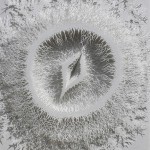
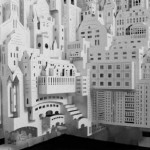
An artist known for spending untold hours painstakingly hand-cutting tiny paper sculptures inspired by diatoms, bacteria, viruses, coral and other natural structures has augmented his process with the precision of lasers. Rogan Brown submerges himself in careful study of the tiniest of living things, such as the microbes and pathogens mimicked in his series ‘Outbreak.’ With ‘Magic Circle,’ Brown places collections of these cut-outs into a large circular display measuring about 40 inches across.

paper bacteria 4

paper bacteria 2

In his paper cuts, Brown “explores the boundaries between observational study and artistic interpretation, existing somewhere between scientific accuracy and pure, unbridled imagination.” While previous works have focused mostly on one type of microscopic organisms at a time, ‘Magic Circle’ brings a variety of them together in one piece.

paper bacteria 3

paper bacteria 6

paper bacteria 7

“This piece is part of a new series of works that mixes hand and laser cutting to create an incredibly detailed and varied visual texture making multiple references: coral, bacteria, pathogens, diatoms, etc… each motif is however completely fictive and imagined; it is this interplay between the imagination and the ‘real’ world that fascinates me, reality is transformed and estranged through the creative process which paradoxically makes the finished work more real and unique.”

paper bacteria 8

paper bacteria 9

‘Magic Circle’ will be on display at Miami’s Aqua Art Fair, December 2nd through 6th. See more impressively intricate paper cuts in a range of styles, from dizzyingly complex patterns to tapestries that span several stories of a gallery.

Share on Facebook


[ By Steph in Art & Sculpture & Craft. ]

[ WebUrbanist | Archives | Galleries | Privacy | TOS ]


WebUrbanist

 
Comments Off on Magic Circle: Laser-Cut Paper Sculptures Inspired by Nature

Posted in Creativity


Out of Africa: The black and white nature photography of Laurent Baheaux

14 Nov

Laurent Baheux began in photography as a sports writer and photojournalist before a safari to Tanzania in 2002 changed his life. There he fell in love with photographing the exotic animals of Africa, preferring a fine art approach that gives his wildlife images a portrait-like quality. Read more

Articles: Digital Photography Review (dpreview.com)

 
Comments Off on Out of Africa: The black and white nature photography of Laurent Baheaux

Posted in Uncategorized


PIX 2015: Connecting kids with nature through photography

31 Oct

We’ve already introduced you to David FitzSimmons, so the topic of his PIX 2015 talk shouldn’t be a big surprise. The author of three photography-based children’s books about creatures of the natural world spoke on the importance of introducing children to the natural world. Read more

Articles: Digital Photography Review (dpreview.com)

 
Comments Off on PIX 2015: Connecting kids with nature through photography

Posted in Uncategorized


Shocking Aftermath: Nature Reclaims Post-Disaster Fukushima

17 Oct

[ By Steph in Art & Photography & Video. ]

fukushima 1

Looking at photographs of highways entirely eaten by vines and destroyed shops filled with trash and cobwebs, it’s easy to downplay their tragedy by comparing them to the set of a post-apocalyptic film. All of these images of Fukushima, Japan, taken four years after the earthquake and tsunami that caused the local nuclear power plant to melt down, almost seem too shocking to be real. But they are, and photographer Arkadiusz Podniesinski doesn’t want you to forget it. Within the exclusion zone, contaminated by radiation, lies a haunting ghost town with signs of its abrupt abandonment strewn everywhere you look.

fukushima 2

fukushima 3

fukushima 5

If this all sounds reminiscent of another nuclear disaster, that’s part of the point of Podniesinski’s photo series. The photographer has visited Chernobyl a number of times over the past seven years, documenting its deterioration and subsequent reclamation by nature in the hopes that he could help remind the world that it’s human error that keeps causing these events to occur.

fukushima 7

fukushima 11

fukushima 12

fukushima 9

“It is not earthquakes or tsunami that are to blame for the disaster at the Fukushima Daiichi nuclear power station, but humans. The report produced by the Japanese parliamentary committee investigating the disaster leaves no doubt about this. The disaster could have been foreseen and prevented. As in the Chernobyl case, it was a human, not technology, that was mainly responsible for the disaster.”

fukushima 17

fukushima 16

fukushima 15

fukushima 10

“I came to Fukushima as a photographer and a filmmaker, trying above all to put together a story using pictures. I was convinced that seeing the effects of the disaster with my own eyes would mean I could assess the effects of the power station failure and understand the scale of the tragedy, especially the tragedy of the evacuated residents, in a better way. This was a way of drawing my own conclusions without being influenced by any media sensation, government propaganda, or nuclear lobbyists who are trying to play down the effects of the disaster, and pass on the information obtained to as wider a public as possible.”

fukushima 14

fukushima 8

fukushima 13

See dozens more incredible images and read the accompanying story of Podniesinski’s journey through the Fukushima Exclusion Zone on the photographer’s website.

Share on Facebook


[ By Steph in Art & Photography & Video. ]

[ WebUrbanist | Archives | Galleries | Privacy | TOS ]


WebUrbanist

 
Comments Off on Shocking Aftermath: Nature Reclaims Post-Disaster Fukushima

Posted in Creativity


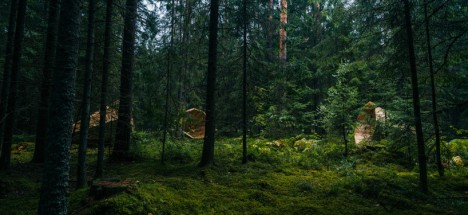
Tone Tunnels: Huge Forest Megaphones Amplify Sounds of Nature

25 Sep

[ By WebUrbanist in Art & Installation & Sound. ]

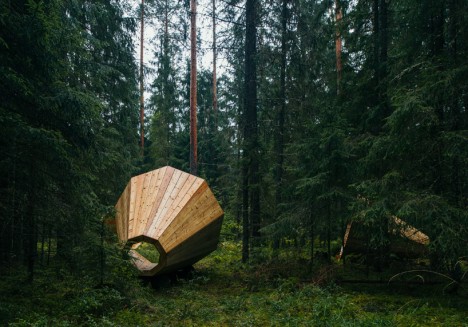
tone tunnel art installatoin

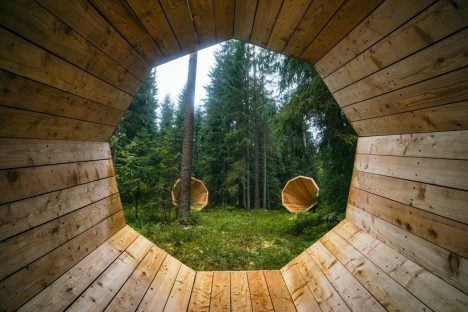
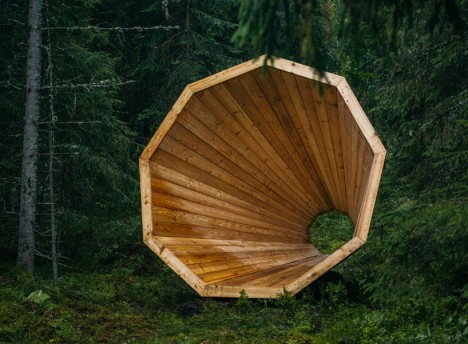
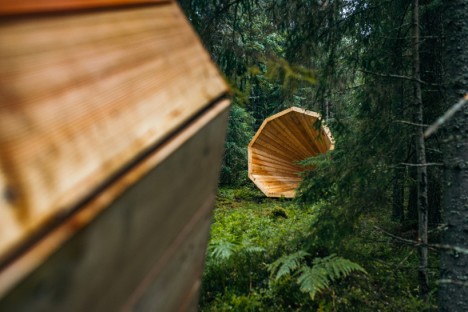
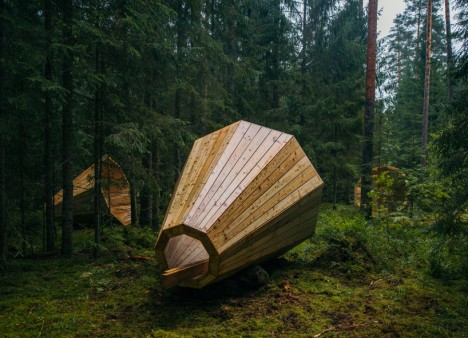
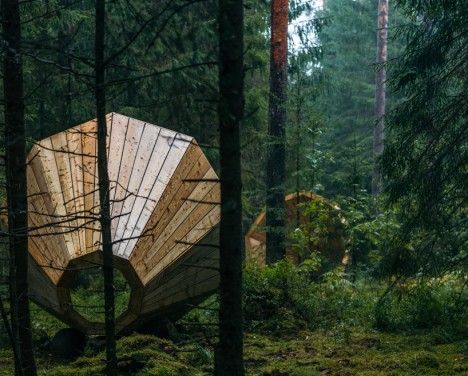
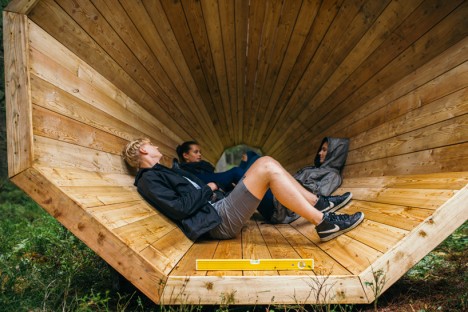
Large enough for visitors to enter and sit within, three gigantic wooden megaphones constructed in the forests of Estonia amplify ambient sounds of the environment.

forest huge megaphone

forest stage hiker

Nearly ten feet in diameter each, huge cones render quiet sounds of rustling leaves and birds chirping remarkably audible.

forest wood projection sounds

forest megaphone design

The Tõnu Tunnel installation was conceived of by interior architecture and design students from the Estonian Academy of Arts and implemented with advice from B210 Architects

forest sound project

forest megaphones

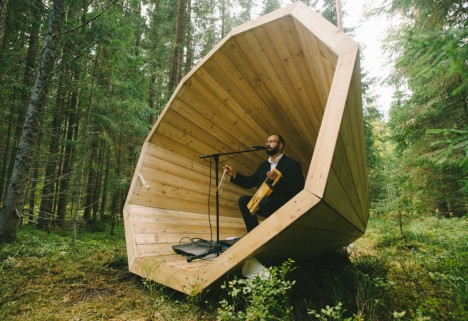
Thanks to their size and shape, the megaphones double as seating and shelter as well with space enough for a few hikers to spend the night.

forest musician

Each space can also be used in reverse as well by musical or other (small groups of) stage performers wishing to project sounds outward, or can double as seating for shows in the round.

forest wood construction project

student construction project

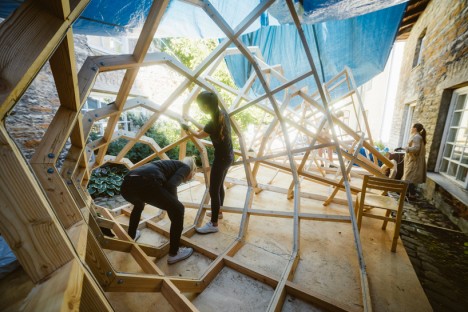
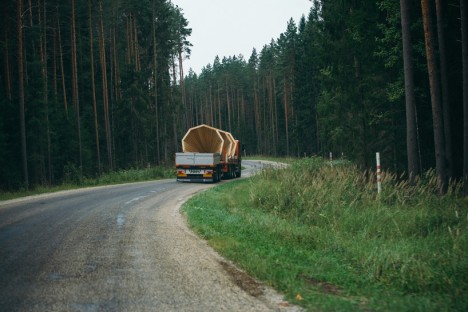
Construction of the megaphones was financed by RMK and the interior architecture department of the EAA. Each was built offsite and carefully transported into place.

truck students construction project

forest student construction

According to Valdur Mikita, a writer and semiotician involved in the project, “The trademark of Estonia is both the abundance of sounds in our forest as well as the silence there. In the megaphones, thoughts can be heard. It is a place for browsing the ‘book of nature,’ for listening to and reading the forest through sound.” 

Share on Facebook


[ By WebUrbanist in Art & Installation & Sound. ]

[ WebUrbanist | Archives | Galleries | Privacy | TOS ]


WebUrbanist

 
Comments Off on Tone Tunnels: Huge Forest Megaphones Amplify Sounds of Nature

Posted in Creativity


Road Trip: The wildlife and nature photography of Dave Welling

13 Sep

Based out of southern California, nature photographer Dave Welling has been volunteer and Director to the Wildlife Waystation hospice center since 1987. This has given him an intimate understanding of wildlife, and he often spends weeks at a time photographing the colorful landscapes and rare specimens that populate his portfolio. Take a look at his work and find out more about him. Read more

Articles: Digital Photography Review (dpreview.com)

 
Comments Off on Road Trip: The wildlife and nature photography of Dave Welling

Posted in Uncategorized


3 Secrets for Creating Beautiful Nature Photos

19 Jun

Secret #1 Start with you

What elements of nature do you particularly like? You may already be clear on this; but even if you are, write it down, as something magical happens when you get things out of your head and living in front of you on paper.

00 Copyright Beth Jennings Photography Digital Photography School Nature 2423

Are you a flowers person? Do you like trees? How about specific elements of nature, for example, mushrooms on forest floors? No answer is a silly answer – just write them all down, no-one is screening what you say.

You have your own take on the world and you need to work out what it is. Then you’ll make nature photos that have a little piece of you in them.

Secret #2 How close is too close?

You can go as far away, or as close as you like when photographing nature. Just so long as the element of nature is clear within the photograph.

Let’s break it down a bit:

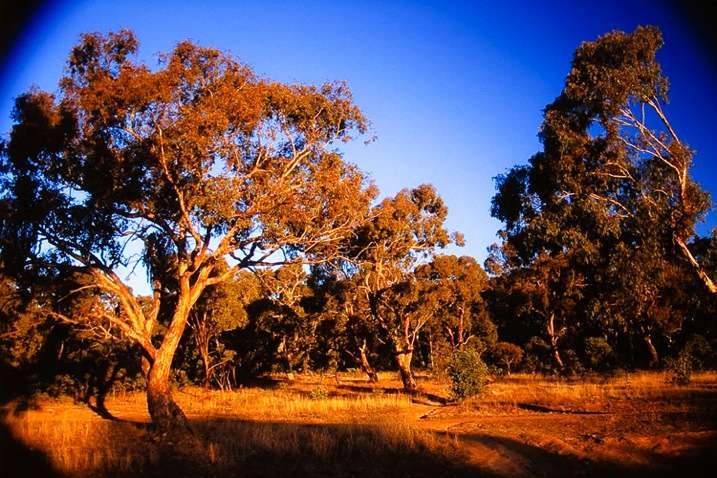
You can get a fair distance from your nature subject and allow it to dominate your frame. These trees were captured in late afternoon light with a polarizing filter to make the blue sky really intense. The light is pouring through – totally natural. Would you believe this was shot on transparency film – no post-production, ha! However, that means I can’t give you the camera settings. (slaps forehead).

Have a guess, what do you think the settings may have been?

Either ISO 100 or 400 because that’s what was available at the time! Handheld – 1/125th of a second or faster. F/? something large to keep the depth of field, maybe, f/11.

01 Copyright Beth Jennings Photography Digital Photography School Nature transparency

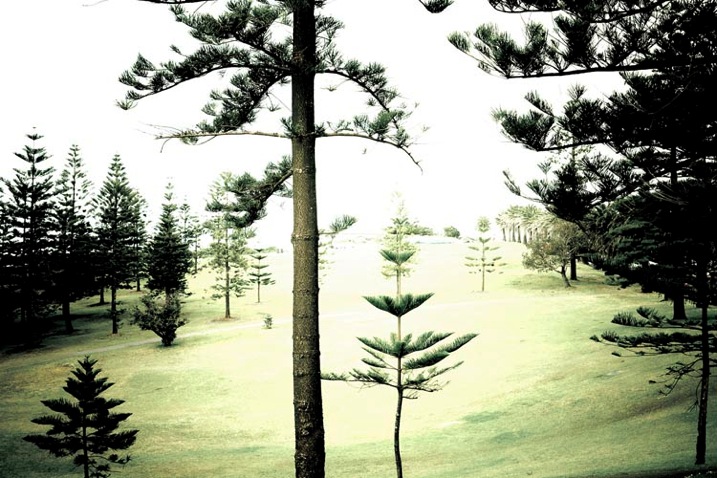
Take a few steps in toward your trees and your composition changes. The trees run right to the edges and now we are so close that some are cropped off. See how the meaning of this picture changes, just by moving in closer? (Yes, it’s a different scene, but work with me here!)

Where the previous picture was about the vast form of the trees, and the setting sun, this one is about the delicate nature of the branches and pine needles. It was taken about 11am on a bright, overcast day. The deep green needles contrast against the light, bright background.

See the careful placement of all the trees in the composition? Look all the way to the edges, then through all the grassy areas. Notice the care in the spatial placement of the trees and the green grass? Take your time, and really see where the elements are falling in the composition.

03 Copyright Beth Jennings Photography Digital Photography School Nature Photography 4348

ISO 400, f/10, 1/160th

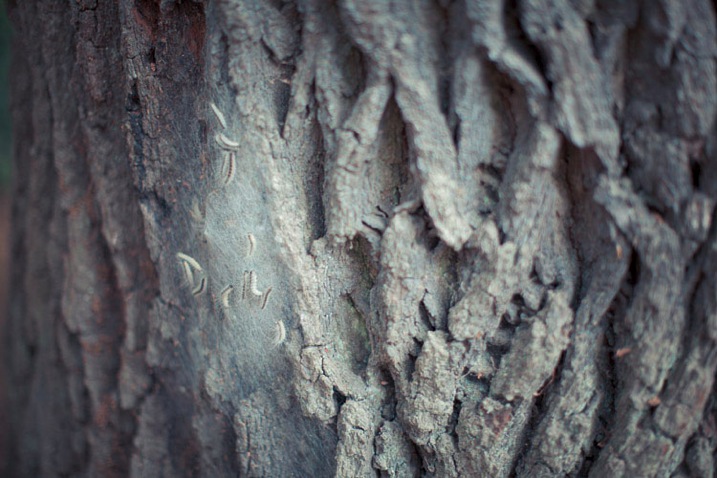
Take a few more steps in on one tree, right up close on the detail. You have a choice now about rendering most of the capture out of focus, or creating lots of depth with the f-stop. This one has a shallow depth of field, to keep the focus on the tiny caterpillars. You can see parts of the texture of the tree to give a little hint as to the environment they live in.

It was late afternoon with dappled, soft light coming through trees. The little creatures were spotted in their web in a soft, spot-lit area.

04 Copyright Beth Jennings Photography Digital Photography School nature 2229

ISO 320, f/1.2, 1/1600th

Secret #3 Move your feet

When you come to photographing nature, it pays not to be too fixated on how you want to photograph your subject in terms of distance to subject, camera angle, and technical settings. Do have ideas in mind, but be open to the possibility that you may see something else (possibly better) on the day.

05 Copyright Beth Jennings Photography Digital Photography School Nature 0332

Walking and looking does wonders. Relax and enjoy your surroundings first. The beautiful things will come to you as long as you don’t force it.

When something catches your eye, go up closer to it, study it, and figure out what element in particular it is that interests you. There is spontaneity in capturing nature in its living, untouched state. The key is being open to the most beautiful, particular and unique elements, and finding your composition, lighting and camera settings to suit.

06 Copyright Beth Jennings Photography Digital Photography School Nature Photography 2 5

It does sound a little new-age, but give this method a try, and hey, it costs nothing but your time to walk around and breathe it in.

So there you have it – three secrets revealed as to how you can create pretty nature images, without it costing you a cent!

What’s your secret to getting better nature photographs? Drop it in the comments area below.

googletag.cmd.push(function() {
tablet_slots.push( googletag.defineSlot( “/1005424/_dPSv4_tab-all-article-bottom_(300×250)”, [300, 250], “pb-ad-78623” ).addService( googletag.pubads() ) ); } );

googletag.cmd.push(function() {
mobile_slots.push( googletag.defineSlot( “/1005424/_dPSv4_mob-all-article-bottom_(300×250)”, [300, 250], “pb-ad-78158” ).addService( googletag.pubads() ) ); } );

The post 3 Secrets for Creating Beautiful Nature Photos by Beth Jennings appeared first on Digital Photography School.


Digital Photography School

 
Comments Off on 3 Secrets for Creating Beautiful Nature Photos

Posted in Photography


6 Reasons to Become a Nature Photographer

15 May

#1 An Ever-Changing Subject

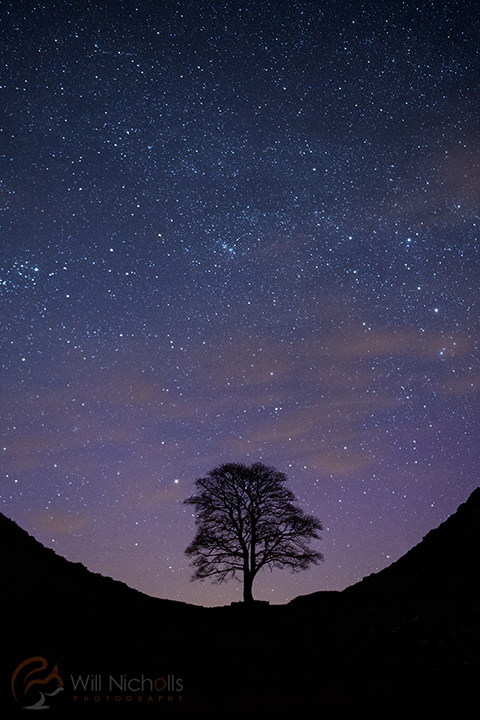
Nature photography never gets boring. Whether it be wildlife or landscape photography you are interested in, there is always a new angle you can introduce to your photos.

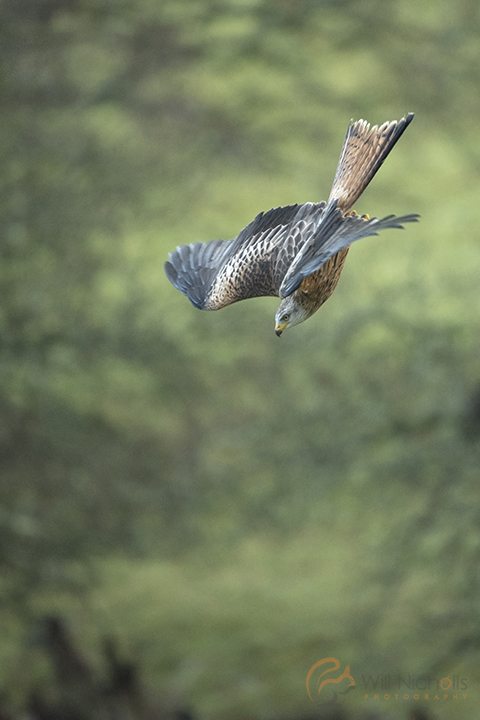
Kite Dive

For landscape photography, the weather is never exactly the same – clouds make unique formations, and the way sun rays cast over the scene in front of you are always very special.

If you take photos of wildlife, then you will be forever capturing moments that will never be repeated. Take the example of two birds fighting on a branch: you will never get a photo of the exact same birds, with the exact same body and wing positions, in exactly the same backdrop. You have an opportunity to record something truly unique.

#2 Be At One With Nature

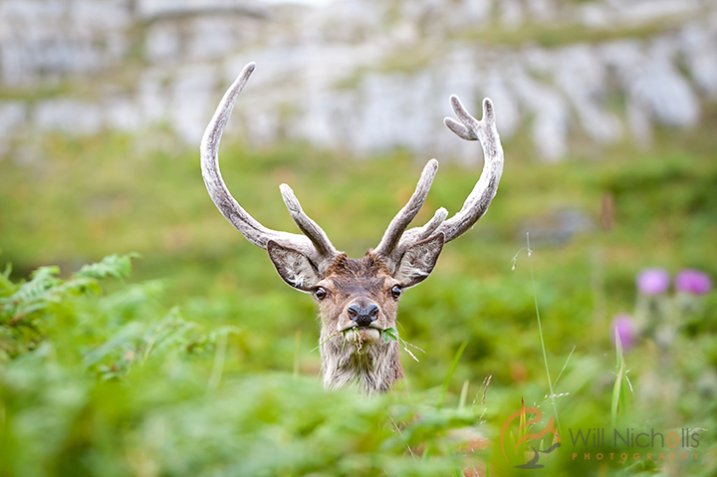
Red Deer Head

There’s no better excuse for getting outside than feeding your thirst for nature photography. Nowadays a lot of people spend too much time indoors, and going outside is extremely beneficial for your wellbeing – that’s for both your health and enjoyment. If you’ve caught the photography bug then getting into the outdoors with your camera becomes something you really enjoy doing.

#3 It’s Easily Accessible

Nature is everywhere – you don’t need to look far to find a beautiful scene or a bird that is willing to come to a bird feeder. You don’t have to book a studio and a model to take photos; just go outside and start clicking that shutter.

Even for those who live in cities, there is wildlife everywhere – you may just not know it yet. At night, deer and foxes come into suburban areas and make for interesting photographs. Venture out into the countryside and you will find rolling hills and endless photographic opportunities.

#4 It’s Relaxing

Nature photography is extremely therapeutic if you can reap enjoyment from it. If you have had a stressful week, heading out to be alone with your camera and the natural world can be a great way to wind down and forget any troubles.

starssmall

#5 Everyone Loves Nature

Most people admire nature in some form. Whether that be appreciating a dramatic, serene landscape or the glint in a swooping eagle’s eye, your photos are going to be appreciated by a wide audience. If you are looking to share something that people can connect with, nature photography is a great way to do this.

When done correctly, nature photos will transport the viewer into your shoes, allowing them to imagine the scene as if they were there with you. Providing this window into the natural world to those who may not be able to access it themselves is a great thing to do.

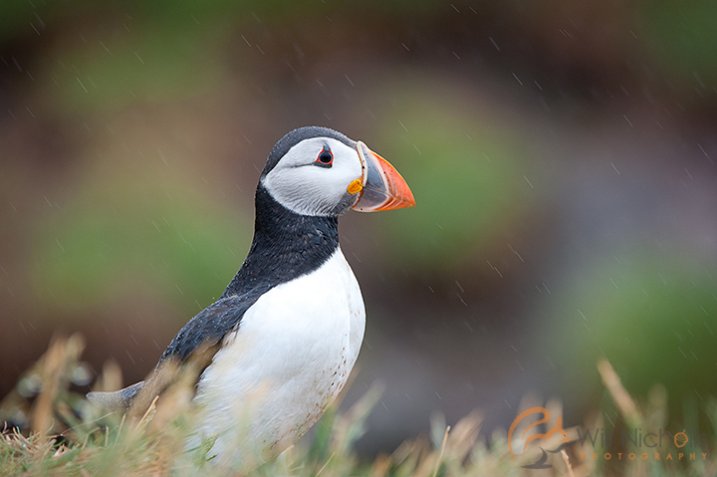
#6 Raising the Profile of the Environment

PuffinInRain

Nature photography helps to raise the profile of our planet and the environment. It allows people to experience things they may not see themselves, and therefore encourages them to care about its preservation. You can, in a small way, help to raise awareness of the natural world and work to promote its conservation.

googletag.cmd.push(function() {
tablet_slots.push( googletag.defineSlot( “/1005424/_dPSv4_tab-all-article-bottom_(300×250)”, [300, 250], “pb-ad-78623” ).addService( googletag.pubads() ) ); } );

googletag.cmd.push(function() {
mobile_slots.push( googletag.defineSlot( “/1005424/_dPSv4_mob-all-article-bottom_(300×250)”, [300, 250], “pb-ad-78158” ).addService( googletag.pubads() ) ); } );

The post 6 Reasons to Become a Nature Photographer by Will Nicholls appeared first on Digital Photography School.


Digital Photography School

 
Comments Off on 6 Reasons to Become a Nature Photographer

Posted in Photography


Street Art Lives: 13 Installations Interact with Nature

04 May

[ By Steph in Art & Street Art & Graffiti. ]

nature street art just cobe

In cities where greenery can be scarce, these art installations call attention to everything from wall-climbing ivy to weeds growing out of sidewalk cracks, turning bushes into luscious manes or tree hollows into canvases for oil paintings. Moss graffiti enlivens urban surfaces without damaging them, grass carpets unfurl across stone streets and mini greenhouses protect even the most modest of plants.

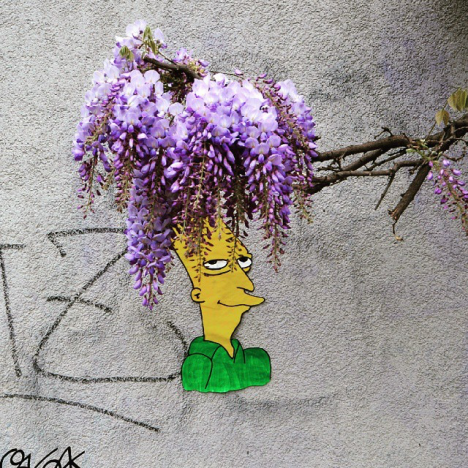
Floral Sideshow Bob by OakOak

nature street art sideshow bob

When French street artist OakOak saw these flowing purple flowers in his hometown of Saint-Etienne, he instantly pictured it as the untamable hair of Simpsons character Sideshow Bob. Careful placement of a paste-up on the wall just beyond the flowers creates a 3D street art effect.

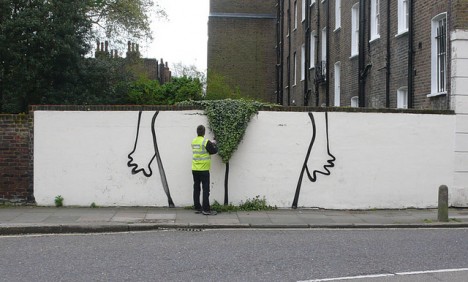
Bush Trimming by Banksy

7513216598_81555a6c1d_z

Ivy draped over the edge of a wall in England gets a ‘bikini wax’ from a worker in this interactive piece by famed street artist Banksy, captured by photographer Duncan Hull.

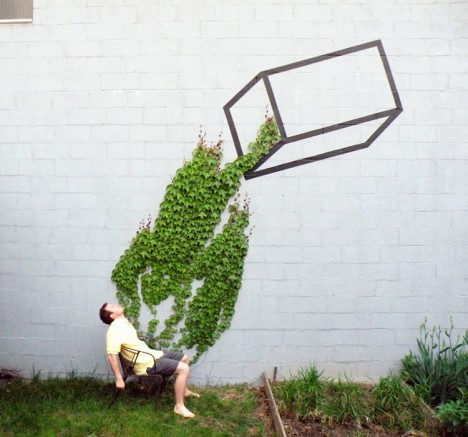
Where the Red Fern Flows by Aakash Nihalani

nature street art aakash

Aakash Nihalani is known for perspective-shifting geometric street art , typically made of cardboard and neon tape. The graphics are placed around New York “to highlight the unexpected contours and elegant geometry of the city.” This piece, entitled ‘Where the Red Fern Flows,’ enhances some wall-clinging ivy in Brooklyn.

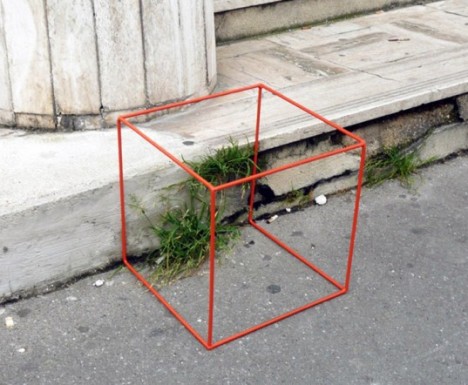
Mini Greenhouses for Sidewalk Weeds

nature street art greenouses 1

Scraggly weeds poking out of sidewalk cracks may not be much to look at, but sometimes their very existence in a concrete urban environment can seem miraculous. A group of art students in France developed simple ‘urban greenhouses’ that highlight the plants and protect them from being stepped on.

JustCobe in Freiburg, Germany

nature street art just cobe

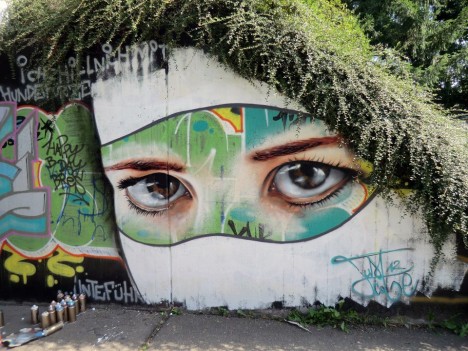
Hyper-realistic eyes make this illusion even more effective as German artist JustCobe puts a curving wall edged with greenery to use in the city of Freiburg.

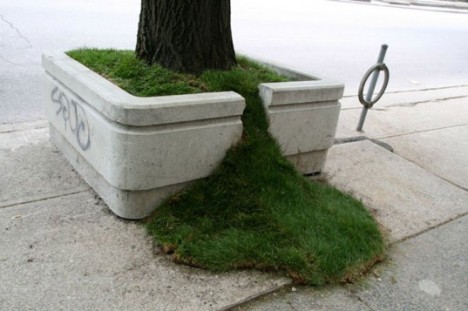
Tree Planter Art for Toronto

nature street art planters toronto

Grass pours out of a cracked concrete planter in Toronto as part of the ‘Outside the Planter’ project, calling attention to the neglected state of these containers around the city and engaging with passersby in a playful way. Dozens of artists participated; this one is by Sean Martindale.

Grass Carpet

nature street art grass carpet 1

nature street art grass carpet 2

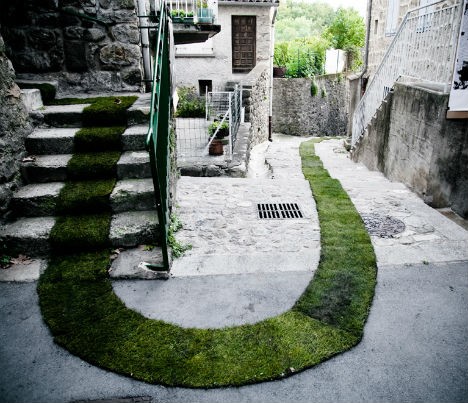
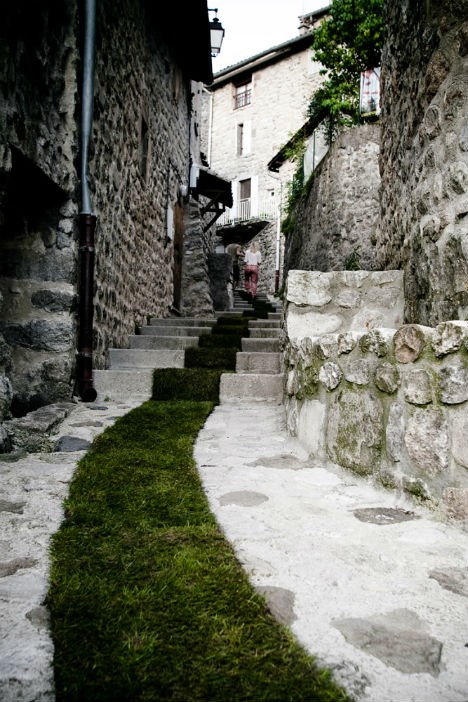
A green carpet weaves through the stone streets of the picturesque French city of Jaujac, traveling up and down stairs, meandering over bridges and traversing a park. Public artists Gaëlle Villedary used 3.5 tons of living turf for the 1400-foot installation, connecting the heart of the village and its inhabitants with the nearby valley.

Next Page – Click Below to Read More:
Urban Art Interacts With Nature

Share on Facebook


[ By Steph in Art & Street Art & Graffiti. ]

[ WebUrbanist | Archives | Galleries | Privacy | TOS ]


WebUrbanist

 
Comments Off on Street Art Lives: 13 Installations Interact with Nature

Posted in Creativity


Video: Capturing nature with the Canon EOS 7D Mark II

11 Nov

When we review high-end DSLRs, one of the most common requests we receive is to get them into the hands of professional photographers that work in the kinds of environments for which they were designed. That’s why when we received the Canon EOS 7D Mark II we joined up with Adam Jones, a professional wildlife and nature photographer, to see what he makes of the new camera. Click through to watch our video

Articles: Digital Photography Review (dpreview.com)

 
Comments Off on Video: Capturing nature with the Canon EOS 7D Mark II

Posted in Uncategorized