RSS
 

Posts Tagged ‘Nature’

Nature Sets the Scene in Hot River, Iceland

27 Sep

Warning: preg_replace(): The /e modifier is no longer supported, use preg_replace_callback instead in /home/forge/content.photojojo.com/content.photojojo.com/wordpress/wp-content/plugins/ozh-better-feed/inc/feed.php on line 134


Photojojo

 
Comments Off on Nature Sets the Scene in Hot River, Iceland

Posted in Equipment


Call of Nature: Waterfront Step Organ in Croatia Turn Waves into Tunes

20 Jul

[ By WebUrbanist in Art & Installation & Sound. ]

oceanfront wave organ

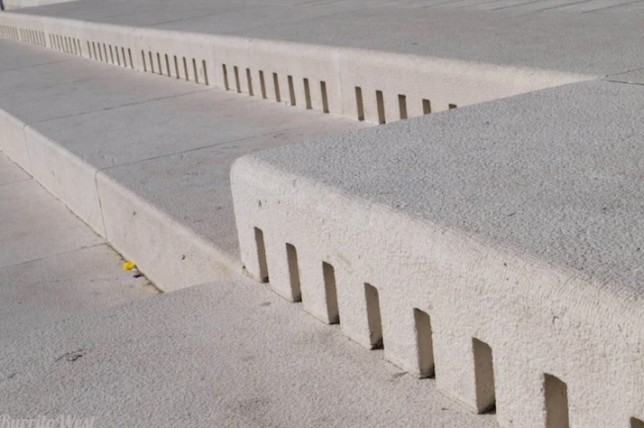
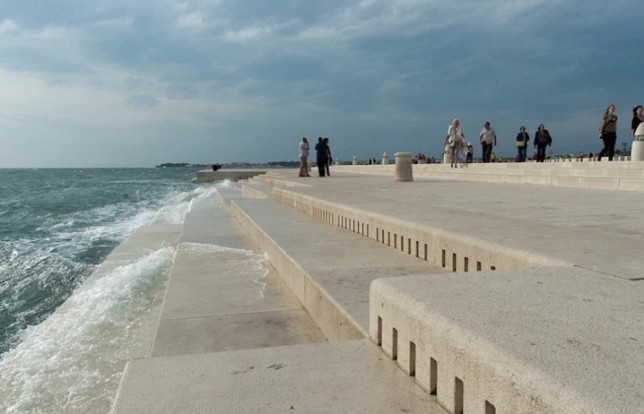
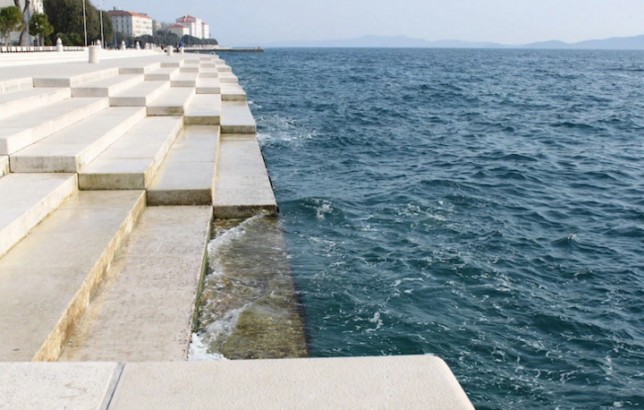
This 230-foot-long musical instrument contains 35 organ pipes and is powered by the Adriatic Sea, producing sounds for visitors that seem eerily composed rather than random.

Whistle holes cut into the stone steps are ‘powered’ by air pushed in by waves of water, creating chords that are strikingly harmonious in nature. The sounds are constantly shifting, but you can listen to a clip above (a .wav file of the waves, if you will).

seafront playable instrument music

The Sea Organ, or the Morske Orgulje, is part of plan to revive Zadar, a city over 3,000 years old that was nearly obliterated in the Second World War. Architect Nikola Baši? wanted to give the place something with character, differentiated from the stark and boring concrete buildings that were created during initial years of rebuilding.

sea organ white steps

The design was inspired by the Hydraulis, an ancient Greek instrument that used water to push air through tuned pipes, but also borrows from the Wave Organ in San Francisco, a likewise seaside device amplifying the sounds of the Pacific Ocean. (images by linssimato, Lisa and J We).

Share on Facebook


[ By WebUrbanist in Art & Installation & Sound. ]

[ WebUrbanist | Archives | Galleries | Privacy | TOS ]


WebUrbanist

 
Comments Off on Call of Nature: Waterfront Step Organ in Croatia Turn Waves into Tunes

Posted in Creativity


How to Practice Low Impact Nature Photography

21 Jun

In many parts of the world, spring has blossomed into summer, furry and feathered babies were being born and summer is on its way. Photographers are pulling out their camera gear and finally heading back outside for some nature photography. I am so ready to get out and photograph the bounty that warm weather brings, I bet you are too. Before you head outside though, here are a few tips on having a little lower impact on the nature you’re photographing.

Low Impact Nature Photography - nature in bloom

Spring has sprung so let’s all get outside and shoot. Canon 5DIII, 70-200 @ 121mm, ISO 500, f/4, 1/750th.

Reduce your carbon footprint

When you do head out to do nature photography, consider your carbon footprint. We lead such comfortable lives these days that’s it’s easy to forget that hopping into the car for a two-hour drive isn’t all that great for our environment. Car-pooling with two or three of your friends is an easy way to reduce emissions. It’s a lot more fun to spend the day shooting with friends, too.

Low Impact Nature Photography - shoot with friends

Planning a day trip or holiday to shoot with your friends is not only more fun, it also helps to reduce your carbon footprint when you carpool and share vehicles.

Doubling up

Another way to reduce your carbon footprint is something I call “doubling up.” Whenever you fly somewhere, research what else you can easily see while you’re there. For example, this fall I’ll be a special guest photography teacher for Big Sky Yoga Retreats “Yogatography,” a combined yoga and photography retreat in Montana.

The ranch I’m staying at is only about a 90-minute drive from Yellowstone National Park so it makes perfect sense to add a few days in the park after the retreat ends. Of course, I also save money by combining my visit to Yellowstone with the Yogatography retreat but more than that, I reduce emissions by flying to Montana once instead of twice.

Low Impact Nature Photography - Mammoth Hot Springs

The last time I was in Yellowstone I was only carrying a little point and shoot while I hiked so I’m pleased to be able to “double up” this fall when I’m in Bozeman teaching and have another crack at shooting Mammoth Hot Springs with some beefier gear.

Heed the signs

Once you arrive at your location, heed the park signs. Often, the signs are meant to protect you from harm. But sometimes they’re meant to protect the wildlife around us.

How to Practice Low Impact Nature Photography

On the left, a sign from Antelope Island in Utah requesting that cars and hikers stay on the road to avoid aggressive wild buffalo encounters. On the right, a funny and scary bathroom sign from a Nevada park. For heaven’s sake, don’t slip. There are rattle snakes!

Several years ago in Utah, I left the trail while I was shooting in Arches National Park. My guide quickly pulled me back and pointed out what I hadn’t seen. Right next to where I’d planted my foot was a type of very slow growing fungal plant life that, when crushed, will not revive for hundreds of years.

How to Practice Low Impact Nature Photography - Arches National Park

It’s hard to see, but tucked in and around the rocks and bushes are delicate fungal plants that are easily crushed when stepped on. Canon 5DIII, 24-105 @ 22mm, ISO 100, f/16, 1.5 seconds.

We all want the best, most unique photographs but if we all leave the trail, our combined impact can destroy the beautiful environments we are trying to capture not to mention causing a lot of potential injury to ourselves.

Share special locations judiciously

While I greatly admire photographers who openly teach and share, consider very carefully whether you should share every amazing location you stumble upon with every photographer you know. Unfortunately, delicate environments can’t handle hordes of photographers. The wear and tear of too many people hiking in and out can destroy the natural beauty of the location itself, even if everyone stays on the trail.

Low Impact Nature Photography - secret location

Canon 7DII, 70-200mm with 1.4xIII extender @ 280mm, ISO 1000, f/5.6, 1/250th.

I love to photograph the tiny Key Deer on Big Pine Key in Florida. When I drive the island, I know just where these little creatures like to hang out. I don’t tell very many people about this location though, because the deer have become too habituated to humans, frequently approaching people and begging for food.

Too many human visitors can also frighten wildlife, disrupt nesting, and impact natural reproductive cycles. While complete secrecy about a magical location seems stingy, consider sharing more environmentally fragile places only with photographers who know and understand the impact they have on where they shoot.

Look, don’t touch!

When I see a lush, velvety plant growing at the Chicago Botanic Garden, all I want to do is run my fingertips across its surface. The rule at the garden, however, is to look and not touch. Sometimes I practically have to put my hands in my pockets to stop myself from touching the amazing specimens on display!

Luckily, they have a wonderful Sensory Garden where visitors are encouraged to physically touch the plant life. The Sensory Garden is mainly a teaching and learning area. But by allowing visitors to touch the plants there, it also helps prevent wear on the rest of the garden, leaving it pristine for the thousands of weekly visitors, many of whom are photographers.

Low Impact Nature Photography - velvet leaf

These broad velvety leaves beg to be touched. Canon 5DIII, 24-105mm lens @ 105mm, ISO 1000, f/4, 1/2000th.

If you’re shooting in a wild and remote place, use the same rule as that applies at the Chicago Botanic Garden, and don’t touch the plant life. Imagine hundreds of people walking through that same wild area and touching the same plant you’re touching. It wouldn’t take much before the plant started to wither around the edges, and ultimately turn brown and die. Next time, before you touch, ask yourself whether you’re truly leaving no impact on the plant. If you are impacting it, perhaps reconsider your actions.

Don’t pick the flowers

It probably goes without saying that when you pick wildflowers you’re impacting the environment in a negative way. Acres and acres of wildflowers are a breath-taking sight. A field left with only one or two flowers standing? Not so much.

Low Impact Nature Photography - field of tulips

Like a field of wildflowers, a picked-over field of tulips wouldn’t be nearly as stunning to photograph as this lush bed was. Canon 5DIII. 70-200mm lens @ 111mm, ISO 250, f/4, 1/1000th.

In some locations, it’s also illegal to pick wildflowers. It’s also illegal to remove shells, bones, pottery shards, and petrified wood from many state and national parks. While we humans seem to have a knee jerk reaction to gather and collect things, leaving plants and artifacts alone preserves them so that all of us can visit, enjoy and photograph them.

Avoid leaving tracks

Is that mud flat, playa or sand dune you’re photographing absolutely pristine? If it is, take care not to walk on it or leave footprints. Don’t drive on it or leave tire tracks either. Environmental recovery from this sort of carelessness can take decades before there will be enough wind or rainfall to smooth out your tracks. You’re not only wrecking the image-making opportunity for the next photographer that comes along, you’re destroying the beauty of the location for everyone who visits it.

Low Impact Nature Photography - Cumberland island boardwalk over dunes

On Cumberland Island, in Georgia, the National Park Service has constructed boardwalks so that visitors can view the dunes without damaging them. Canon 5DIII, 100-400mm lens @ 100mm, ISO 12800, f/8, 1/6000th.

Keep wild animals wild

Because I mainly photograph wild horses, I’m frequently asked if I touch, pet, or ride them. These questions always strike me as naive but, because most people are used to domesticated horses, perhaps they think that wild horses tolerate or accept humans more readily than other wild animals. They don’t.

Low Impact Nature Photography - cautious wild horse

Does this wild stallion look like he wants to be petted? He doesn’t. His ears are pinned back and he has an eagle eye on me too. Canon 5DIII, 100-400 @ 400mm, ISO 1250, f/6.7, 1/500th.

The same rules apply to wild horses that apply to any other wild animals. No matter how sweet or cuddly a wild animal seems, never approach, feed, touch, hug, or pick it up. Wild animals are often so much bigger than we are and even if they fearfully strike out with mildly aggressive behaviors, you can be seriously injured. Always keep a safe distance between you and the animal you’re photographing and, in some cases, shoot from the car or another protective structure like a blind. If, as a photographer, you’re afraid you’ll be too far away, buy or rent a bigger lens.

If you’re afraid you’ll be too far away to get a good photo, buy or rent a bigger lens.

Low Impact Nature Photography - don't feed wild anmals

Visitors to Big Pine Key often get too close to the Key Deer that live there. This woman fed the deer her lunch leftovers (!!) and then tried to pet them. This is the perfect example of what not to do when you’re photographing wild animals.

These rules may not seem like much “fun” but they are for the animals’ safety as much as for yours. Animals that become too accustomed to humans become less wild, more dependent on humans for their food, and ultimately nuisances when they start to forage for food in suburban areas. When too many wild animals invade populous areas, they are often culled, which is just a more politically correct word for killed. Keep your distance and keep wild animals wild, free, and alive.

Pack it in – pack it out

You’ve probably heard this bit of advice before. Whatever you carry in with you when you head into a refuge, preserve, or wilderness area, you should also plan to carry out with you. Garbage littering the landscape doesn’t make a very pretty picture. Of course, you can just “Photoshop it out in post-processing” but for the environment’s sake, and for the safety of the animals who might ingest any garbage left behind, take everything you brought in with you back out when you leave.

Low Impact Nature Photography - trash in water

The Salt River Wild Horse Management Group volunteers do an amazing job of regularly cleaning up the river but too many people toss their trash into it rather than carrying everything out with them when they leave. Even the day after a massive clean up effort, these wild horses were drinking next to floating trash. Canon 5DIII, 100-400 with 1.4xIII extender @ 560mm, ISO 1250, f/8, 1/500th.

An even nicer thing to do is to leave the area cleaner than you found it. On your way out, pick up the garbage other less savvy hikers and photographers have left behind and dispose of it appropriately once you get back home.

Leave Fido at home

If you’re a weekend warrior type of photographer – and many of us are – it might seem like a natural thing to bring your faithful pup along with you. In a very few situations, bringing your dog (or any domestic animal) may work out just fine, but at best bringing your dog along is a distraction from making images. At worst, your dog can wreck a field of flowers or scare off wildlife (or get injured).

Low Impact Nature Photography - dogs on boat

These two dogs are having a much better time relaxing at sea than they would be out hiking while you photograph wildlife. Canon T3i, 55-250 @ 240mm, ISO 200, f/6.3, 1/320th.

Perhaps if you’re a macro flower photographer, your well-behaved and leashed dog won’t a problem. He can rest on the path while you shoot. A puppy however (at least any that I’ve ever met) probably won’t be content to relax on the trail. Instead, he’ll be crashing through the flowers, possibly damaging them, and rendering them less likely to be image-worthy for the next guy that comes along with a camera.

Domestic animals affect the behavior of wild animals

If you’re photographing butterflies, birds, or wild animals, your dog should really stay at home for his safety, as well as the other animals. I’m sure that some of you are scratching your heads right now and exclaiming how well-behaved your dog is, but seriously… I’ve been out there on the range photographing wild horses when someone shows up with their “amazing dog.” The horses’ behaviors always change as they become aware of the dog.

Low Impact Nature Photography - alert wild stallion

This stallion has just sighted a hiker and her two dogs on the river bank. He’s alert and ready to protect his family. Canon 5DIII, 100-400 @ 241mm, ISO 500, f/4.5, 1/3000th.

Your dog might be cool with wild animals but the wild animals are immediately on alert. Remember, dogs are instinctually predatory animals and other animals recognize that. The behavior dynamic shifts when you bring your dog, no matter how amazing he is. Yell at me all you want, but please, leave Fido at home. Your dog impacts the environment and not in a good way for photography.

Reduce nature’s impact on yourself

I was in North Carolina a few weeks ago hiking on Shackleford Banks and photographing the wild horses. The first thing I did when I got back to my rental house was to shower off the sweat, sand, sunscreen and bug spray. As I toweled my hair dry, I kept itching my ear. That’s when I discovered the tick. Thankfully it wasn’t attached yet and I could just pick it off my skin but, ugh, so gross.

Low Impact Nature Photography - wear protective clothes

Photo Credit: Eden Halbert. Here I am in on Shackleford Banks in 80F+ degree weather, covered head-to-toe in UPF 50 quick dry clothing. Depending on your environment, wear a hat, sun- and bug-protective clothing, sunscreen and bug spray. Don’t forget to bring and drink plenty of water.

To reduce nature’s impact on you, my recommendation is to wear a hat, sun- and bug-protective clothing, sunscreen, and bug spray. Plus, remember to do what I forgot to do. After your photography hike and before you get into your car, check yourself, your clothes and your camera bag for ticks, burs and other clinging critters.

Teach others

Finally, set yourself up as a good example for your fellow photographers. More often than not, when another photographer crashes around like King Kong, it’s not with the intent to be destructive. It’s usually because he/she doesn’t know any better. If you model more appropriate behaviors, and explain why all these strategies are so important to preserving nature, your friends will follow your lead.

What strategies do you use to lower your impact on the nature and wildlife you photograph? Please share your thoughts in the comments. The dPS community would love to hear from you.

The post How to Practice Low Impact Nature Photography by Lara Joy Brynildssen appeared first on Digital Photography School.


Digital Photography School
 
Comments Off on How to Practice Low Impact Nature Photography

Posted in Photography


Green House: 17 Residential Designs Intertwined With Nature

14 Mar

[ By SA Rogers in Architecture & Houses & Residential. ]

water lily house

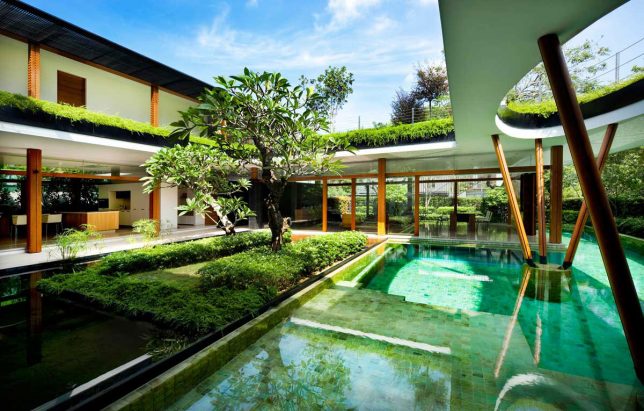
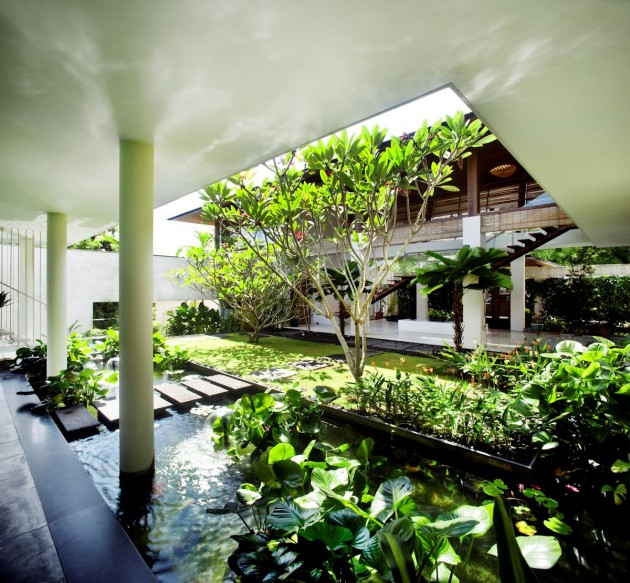
Replicating parks in the middle of largely-concrete cities or merely connecting tropical homes to the lush vegetation that’s already growing right beyond the walls, these homes integrate living plants, water features and direct access to the sky. Prioritizing a connection with nature – and all the natural daylight that comes along with it – these modern home designs are breezy and bright yet private, often placing their courtyards centrally like secret gardens or building around existing mature trees.

Rattan House, Sun House, Water Lily House, Willow House & Cluny House by Guz Architects

rattan house

rattan house 2

rattan house 3

cluny house

willow house

sun house

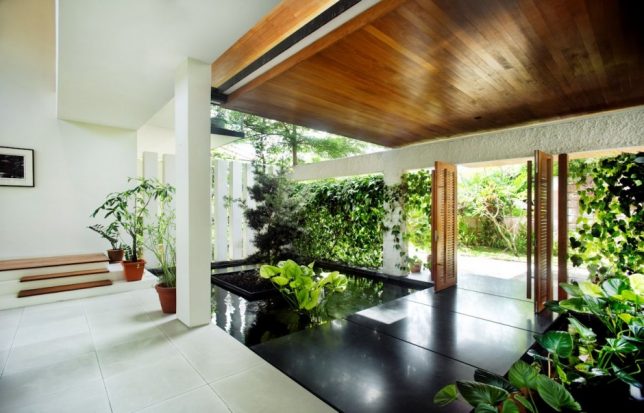
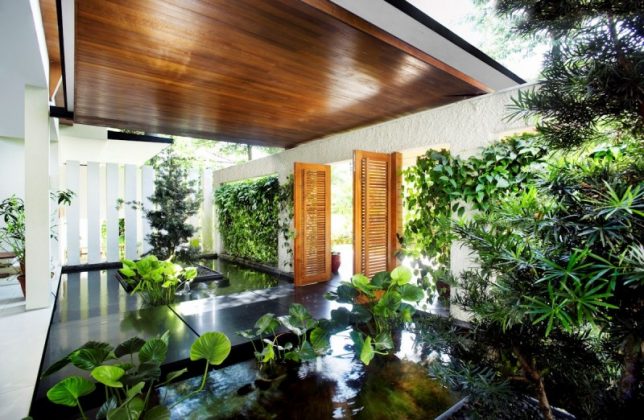
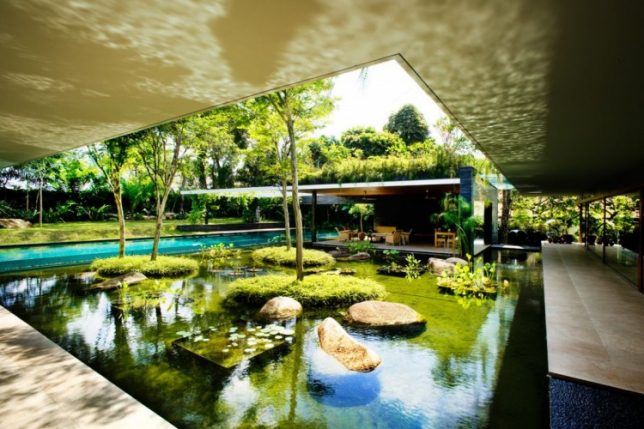
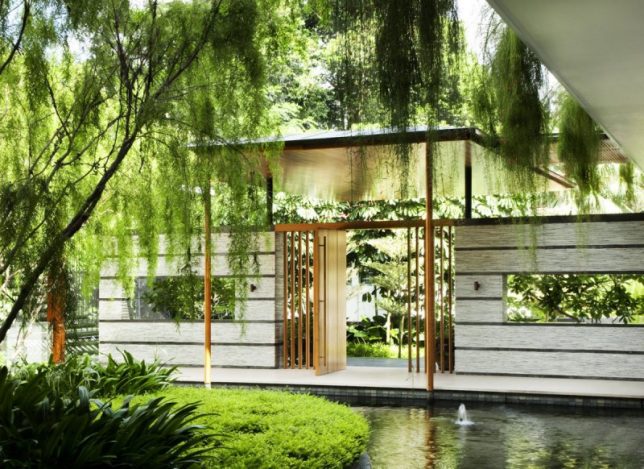
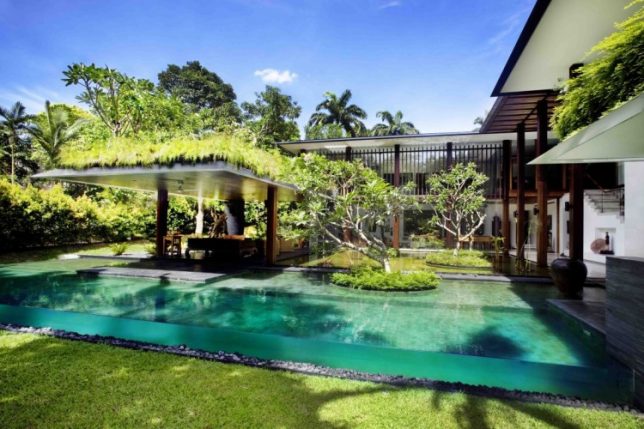
Has any architecture firm mastered the form of the nature-influenced luxury tropical home quite like Guz Architects? Working primarily in temperate climates like that of Singapore, this firm consistently produces jaw-droopingly beautiful residences full of lushly planted courtyards, green roofs, swimming pools that transition into seemingly natural decorative water features, living trees and lots of blurred lines between indoors and out. For example, the center of Cluny House is a generous fish pond filled with tiny tree-covered islands overlooking a lap pool. Willow House features a ground-level reflecting pool with glass walls to make water a more visual element of the home, with greenery dripping down from the edges of the terrace above.

Jardins House by CR2 Arquitetura

jardins house 1

jardins house 2

jardins house 3

jardins house 4

jardins house 5

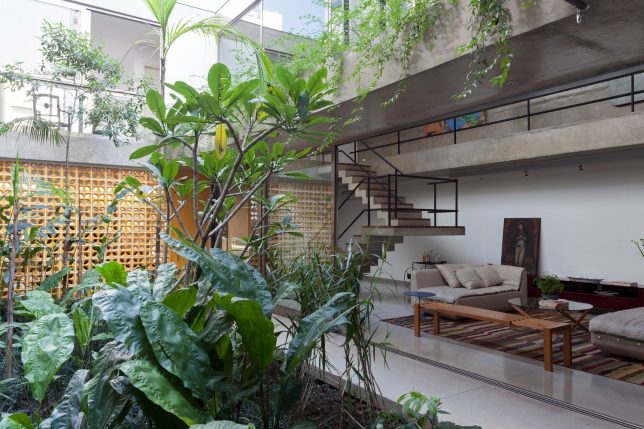
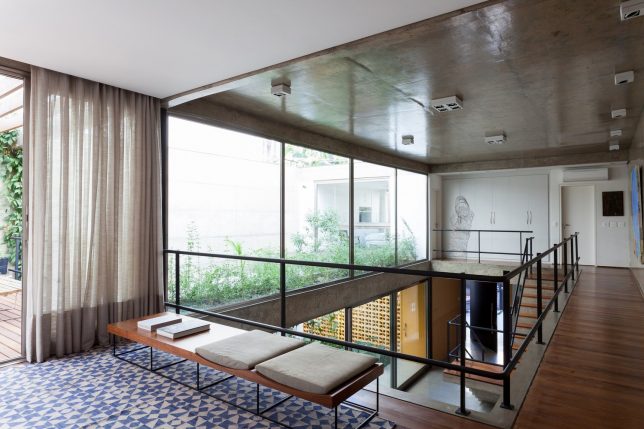
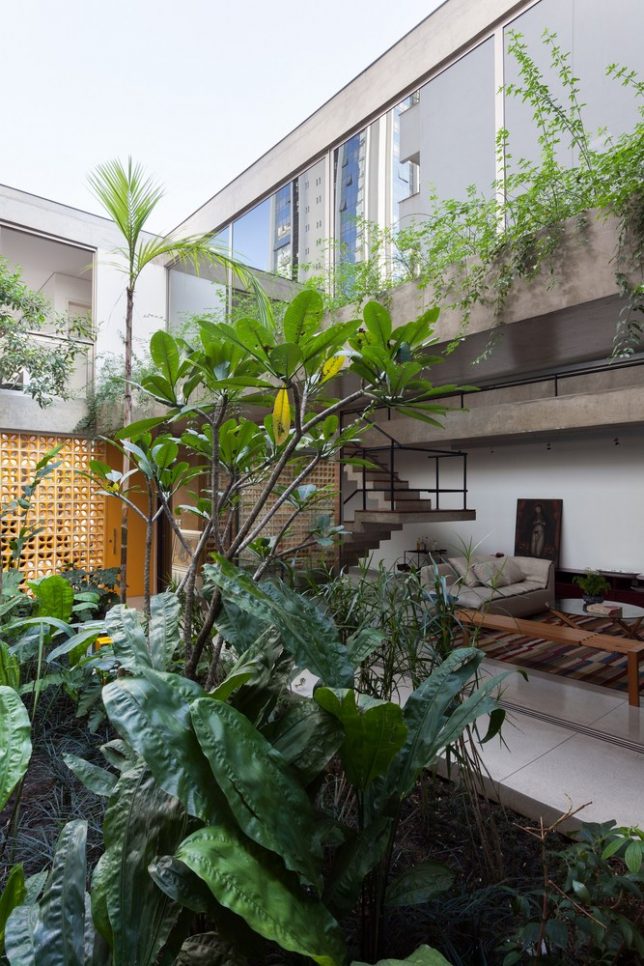
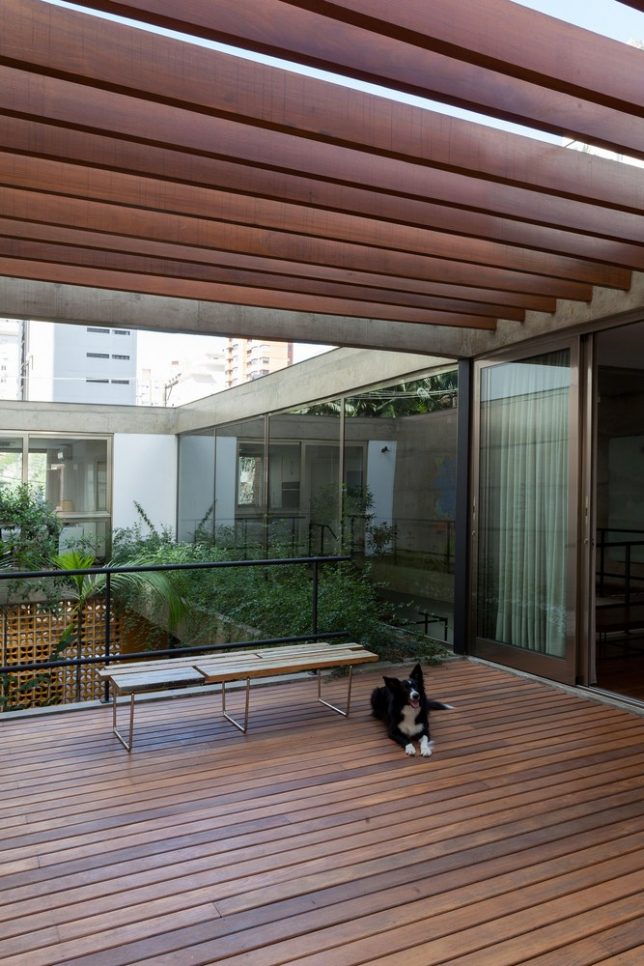
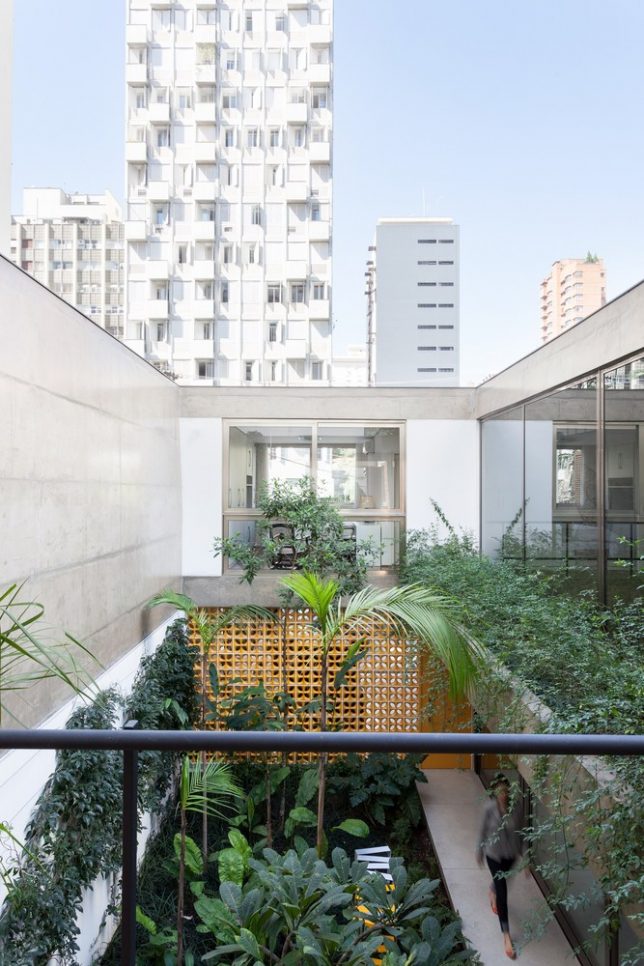
The fittingly named Jardins House by CR2 Arquitetura is an oasis in the middle of a city, replacing an industrial building. The architects created a series of voids within the structure to house gardens that would be naturally illuminated from above without compromising the privacy of the residents.

Mirante House by FGMF Arquitetos, Brazil

mirante house 1

mirante house 2

mirante house 3

mirante house 4

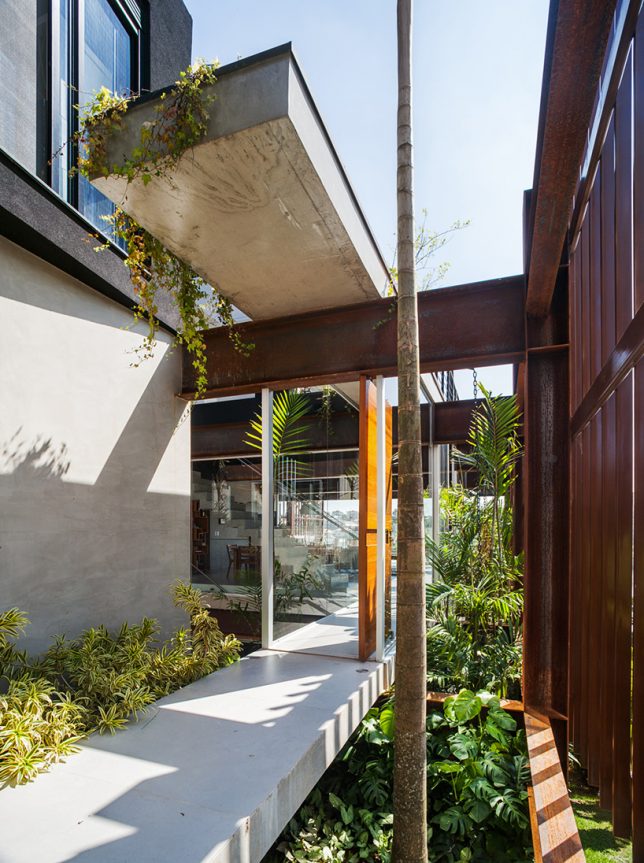
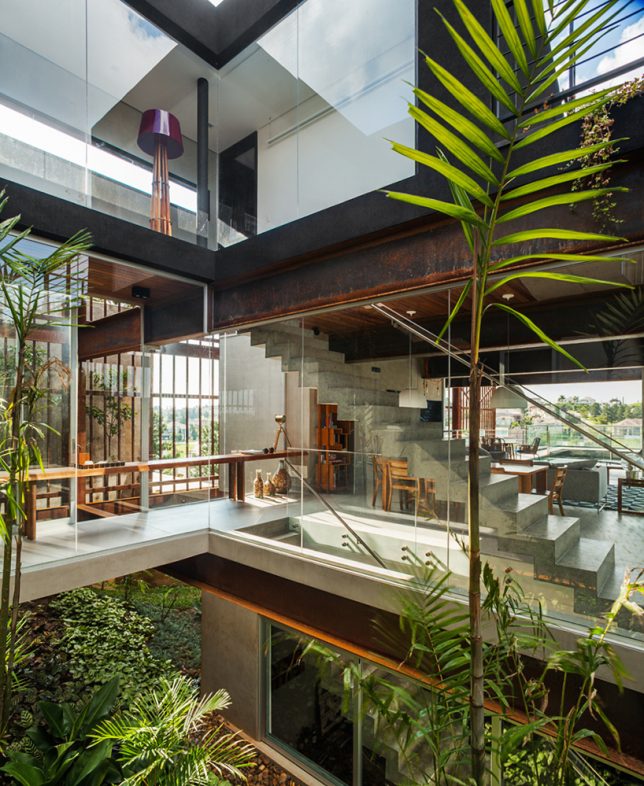
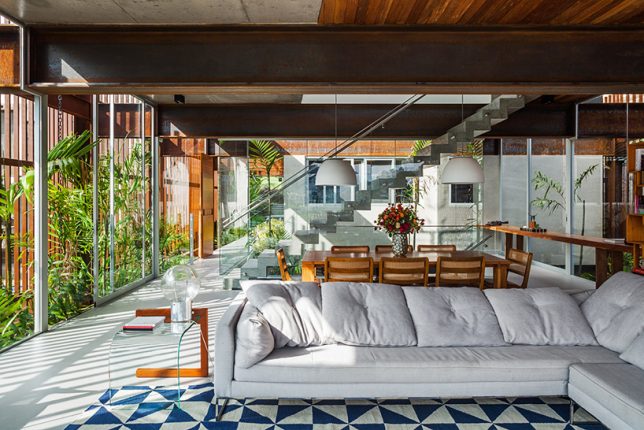
Every sightline in Mirante House by FGMF Arquitetos is directed through the glass to the valley below, with an open scheme of interior spaces divided by transparent walls. Nature seems to invade the home at every turn, with planter boxes installed in every space and most rooms looking down onto the central courtyard.

Living Garden House by KWK Promes

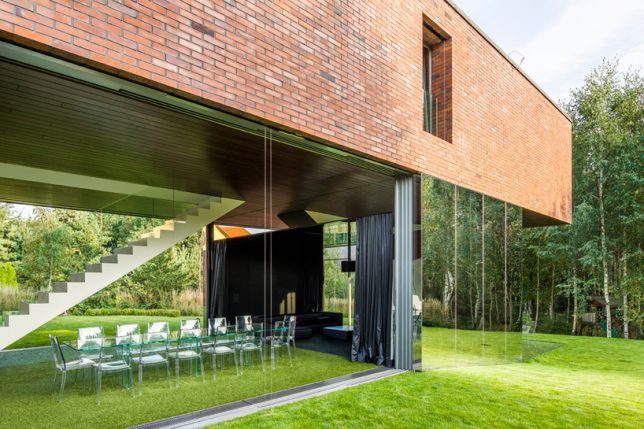
living garden house

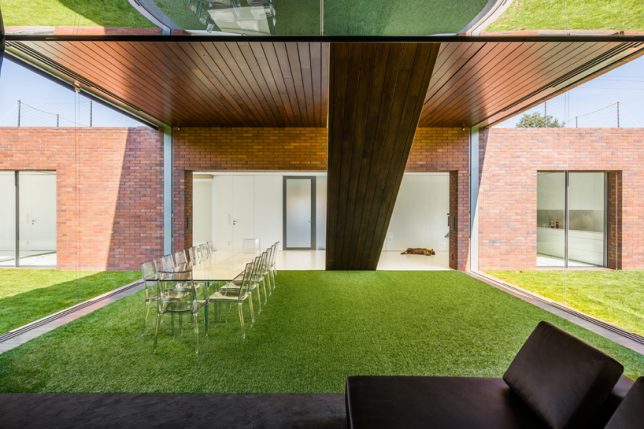
living garden house 2

living garden house 3

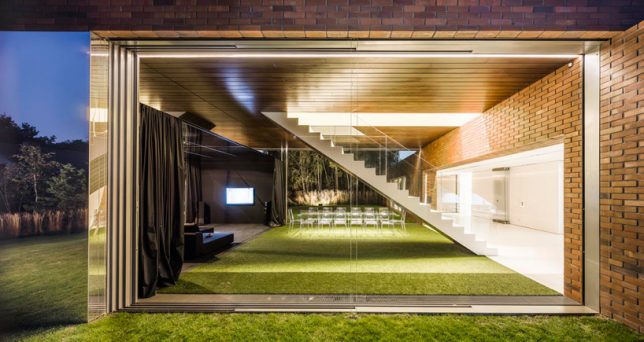
living garden house 4

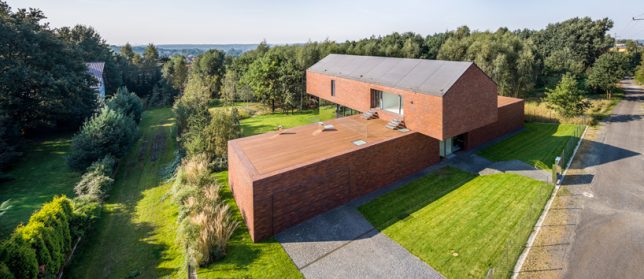
While glassed-in ground floors connected to the outdoors aren’t unusual in tropical settings, this home by KWK Promes uses the scheme a little differently. Rather than opening onto swimming pools or courtyards, the glass room at the base of the home is part of the lawn, so residents can feel like they’re still lounging in the warm grass even in the middle of winter. The glazing opens this lounge to the open air when desired. The home consists of two volumes, one essentially cantilevered over the other (supported by this glass room) while the street-facing facades are nothing but brick for privacy.

Sunken Pavilion by Act Romegialli

sunken pavilion

sunken pavilion 2

sunken pavilion 3

sunken pavilion 4

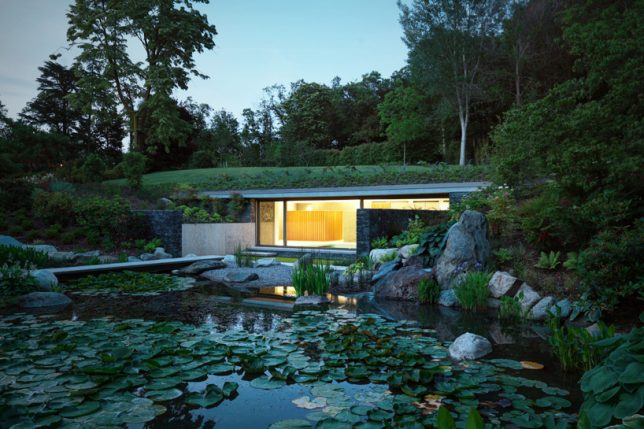
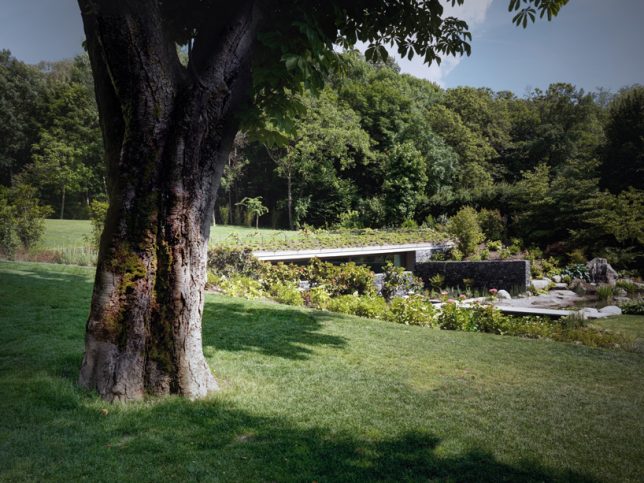
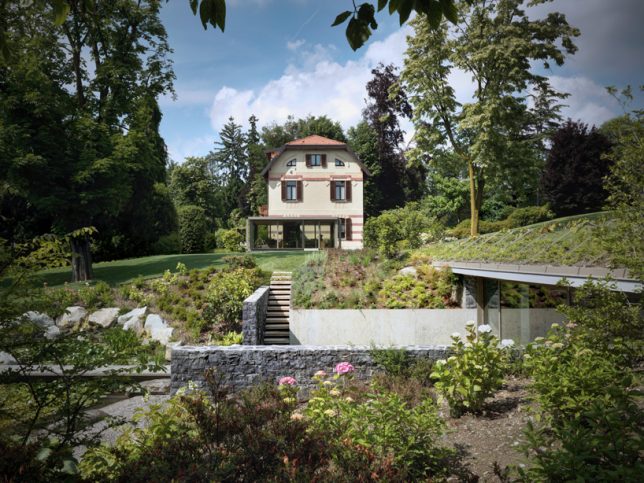
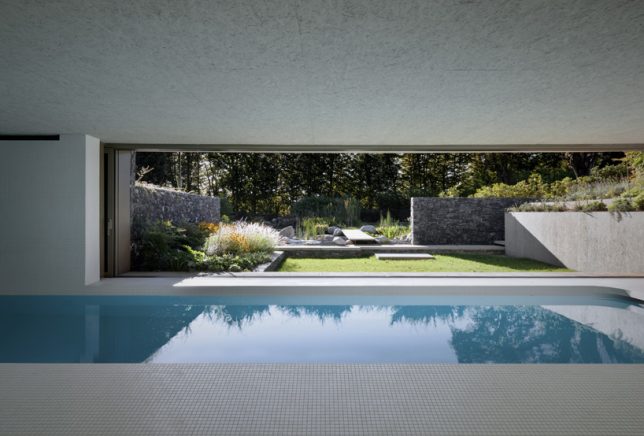
Take the steps on the lawn or navigate a subterranean tunnel to access an enclosed swimming pool and gym from the original home in this addition by Act_Romegialli. The swimming pool structure is essentially sunken into the ground with its glassed facade peeking out at an artificial pond full of water lilies. This keeps the structure naturally cool and focuses views on nature rather than neighbors.

Next Page – Click Below to Read More:
Green House 17 Residential Designs Intertwined With Nature

Share on Facebook


[ By SA Rogers in Architecture & Houses & Residential. ]

[ WebUrbanist | Archives | Galleries | Privacy | TOS ]


WebUrbanist

 
Comments Off on Green House: 17 Residential Designs Intertwined With Nature

Posted in Creativity


Fog waves: photographer Nick Steinberg captures nature in motion

01 Jan

Fog Waves: Capturing Nature in Motion

Imperial Flow by Nick Steinberg

As you can see the fog kind of arcs up in that one spot. What amazes me most about fog is the fact that no two shots are ever the same. This is what I call, “subtlety of movement” where there are small windows of opportunity with fog as it evaporates, moves in, and undulates. This requires decisive action, tests your skills, and requires one to be “present” in the moment, and “ride” along with it.

Landscape and cityscape photographers have a love/hate relationship with the fog that inundates the San Francisco Bay area. It can make for some spectacular and moody photos, but it can also leave the area un-shootable – that is unless you seek higher ground. Nick Steinberg and other photographers in the Bay Area have formed a group that they call the “Fogaholics”.

The group consists of around 20 photographers that watch forecasts religiously and seek out the best foggy shooting conditions possible. When the fog rolls in, they make their way to Mt. Tamalpais, which sits at 2,572ft above sea level. This unique vantage point gives them the opportunity to photograph some amazingly beautiful conditions. With the help of an ND filter and exposure times sometimes exceeding two minutes, Nick is able to capture the fog waves as they make their way inland.

To see more of Nick’s work be sure to visit his website and Instagram.

Fog Waves: Capturing Nature in Motion

Fog Waves by Nick Steinberg

This was my original shot entitled fog waves. I couldn’t believe my eyes when I discovered how, when the fog was at the perfect height and density, it would create wave-like movements as it contoured the land. On this particular evening, not only did we have amazing fog flow, but a nice vibrant sky to match.

Fog Waves: Capturing Nature in Motion

Wavy Gravy by Nick Steinberg

I would say the fog on this summer evening was purely magical. It had the perfect consistency that was so delicious. You can even see the Transamerica pyramid sticking out of the fog in the distant San Francisco skyline. An evening to remember!

Fog Waves: Capturing Nature in Motion

Awake in Dream by Nick Steinberg

Mt. Tamalpais is one of my favorite places on earth! On this night I went up there on a whim. I didn’t expect much, but to my surprise, there wasn’t a single person in sight and the fog rolled in perfectly. It truly felt like I was in a dream world!

Fog Waves: Capturing Nature in Motion

Fire Waves by Nick Steinberg

Out of almost daily trips to Mt.Tam in the summer of 2016, I would say that this was by far the best flow i’d seen. Normally the rangers kick everyone out around sunset, but on this evening they came really late and allowed me to get some rare footage of fog coming in at twilight. What I loved about this one was the layers of fog coming through the trees. The beautiful and vibrant red sky was unfortunately lit up due to a nearby fire.

Fog Waves: Capturing Nature in Motion

Candy Land by Nick Steinberg

On this night I was going for a little different feel to add some foreground interest to the fog waves. I can’t help to think that the fog looked like fluffy marshmallows flowing across the land during my long exposure.

Fog Waves: Capturing Nature in Motion

Lunar Fog Waves by Nick Steinberg

On this evening me and about 4 friends decided to get some different vantage points by hiking “off the beaten trail” to get some moonlit fog flowing in. At first, the fog wasn’t flowing, but within no time it was spilling over and creating, “the wave.” While it was a pretty tough hike, it was by far one of the most magical experiences shooting up there that evening.

Fog Waves: Capturing Nature in Motion

Heaven on Earth by Nick Steinberg

There’s something about being up there and experiencing the fog flowing like this that is somewhat of a spiritual experience.

Fog Waves: Capturing Nature in Motion

Fog Sweep by Nick Steinberg

This is a little bit of a closer, intimate view of the fog waves flowing through the nearby town of Mill Valley and the little houses down there. I wonder if the people who live there understand how beautiful it is from above.

Fog Waves: Capturing Nature in Motion

Rip Curl by Nick Steinberg

Another close up, intimate view of the extreme fog waves as it contours the land. Shooting Fog is a study and each day is a little bit different flow. On this day, it was particularly active.

Fog Waves: Capturing Nature in Motion

Summer Waves by Nick Steinberg

A typical summer evening up on the mountain. By typical I mean amazing and magical!

Articles: Digital Photography Review (dpreview.com)

 
Comments Off on Fog waves: photographer Nick Steinberg captures nature in motion

Posted in Uncategorized


Trinity River Park: Huge New 10,000 Acre Urban Nature District for Dallas

18 Dec

[ By WebUrbanist in Architecture & Cities & Urbanism. ]

green-park-dallas

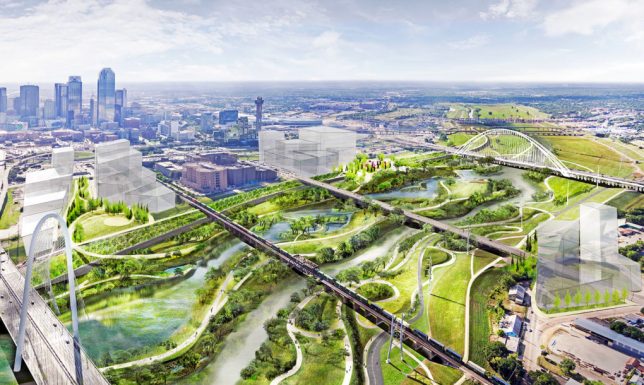
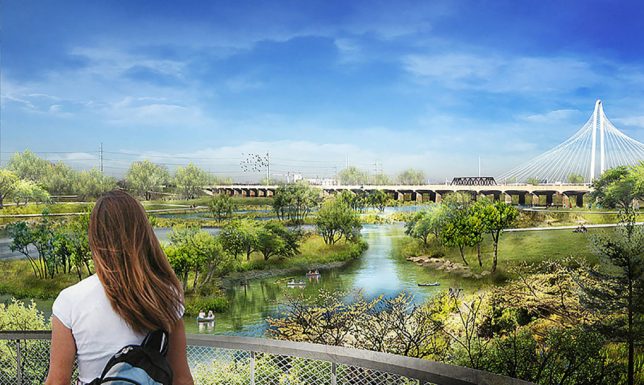
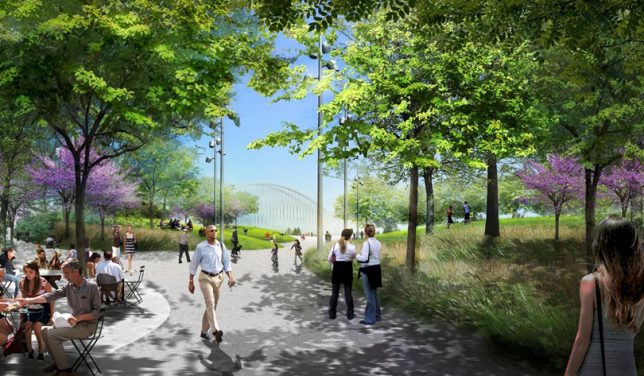
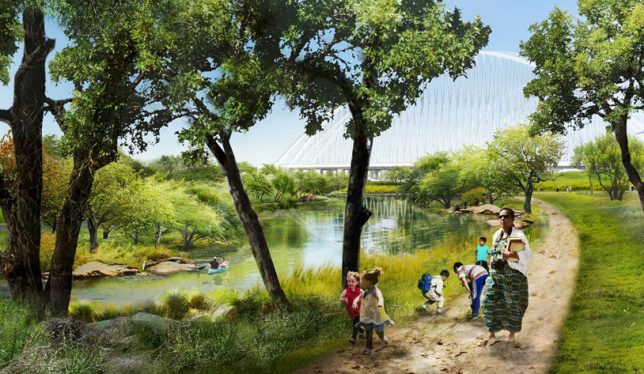
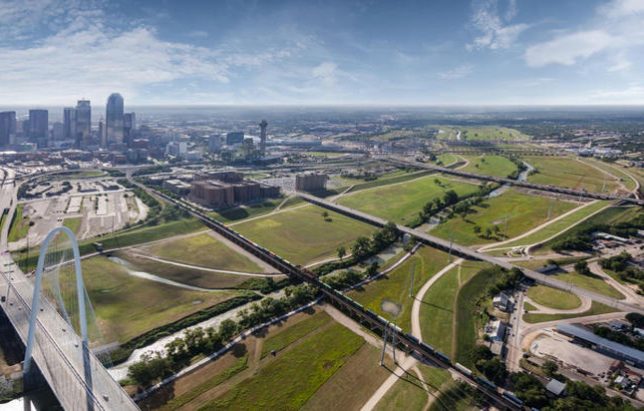
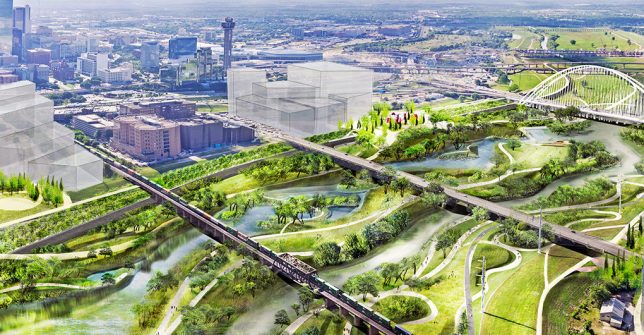
Designed to restore and augment the city’s floodplain, this new green recreation space features thousands of acres of forest as well as playgrounds, lawns and trails. Upon completion, it will be one of the biggest urban green space initiatives in the country.

park-view-flood-plain

In a state not exactly known for its greenery (or environmentalism), this project in Texas by Michael Van Valkenburgh Associates is designed in part to address a critical and ongoing issue: flooding damage during severe weather events.”I believe we can create the most value and the greatest benefit to our citizens when we complete projects around nature,” said mayor Mike Rawlings  of the project.

trinity-park-paths

trinity-park-renderings

The park aims to serve both recreational and engineering purposes, shoring up the city against future floods while creating a great green asset for citizens and visitors. Developed in collaboration with government engineers, it will be part community resource but also (and critically) part infrastructural insurance against the effects of climate change.

dallas-flood-plain-present

dallas-flood-plain-project

The development is part of a larger series of projects along the flood plain and will link into over seventy miles of regional trails. At an estimated cost of $ 50 million, the park is not cheap but surprisingly inexpensive given its scope and aims. So far, a private donor has stepped forward offering $ 20 million of the funds needed, leaving a smaller bill for the city and state governments as well.

Share on Facebook


[ By WebUrbanist in Architecture & Cities & Urbanism. ]

[ WebUrbanist | Archives | Galleries | Privacy | TOS ]


WebUrbanist

 
Comments Off on Trinity River Park: Huge New 10,000 Acre Urban Nature District for Dallas

Posted in Creativity


National Geographic announces 2016 Nature Photographer of the Year

11 Dec

2016 National Geographic Nature Photographer of the Year

National Geographic has selected the winners of its 2016 Nature Photographer of the Year competition. In addition to overall winners, there were also selections for landscapes, environmental issues, action and animal portraits. This year’s grand prize winner was Greg Lecoeur’s ‘Sardine Run.’

Grand Prize + 1st Place for Action photography: Greg Lecoeur: ‘Sardine Run’

During the sardine migration along the Wild Coast of South Africa, millions of sardines are preyed upon by marine predators such as dolphins, marine birds, sharks, whales, penguins, sailfishes, and sea lions. The hunt begins with common dolphins that have developed special hunting techniques to create and drive bait balls to the surface. In recent years, probably due to overfishing and climate change, the annual sardine run has become more and more unpredictable. It took me two weeks to have the opportunity to witness and capture this marine predation.

2016 National Geographic Nature Photographer of the Year

First Place, Animal Portraits: Varun Aditya: ‘Dragging you deep into the woods!’

I shot this at Amboli, Maharashtra, India, on July 24, 2016, during a morning stroll into the blissful rain forest. Ceaseless drizzles dampened the woods for 10 hours a day; the serene gloom kept me guessing if it was night or day. The heavy fog, chilling breeze, and perennial silence could calm roaring sprits. And there I saw this beauty. I wondered if I needed more reasons to capture the habitat, for I was blessed to see this at the place I was at. I immediately switched from the macro to the wide-angle lens and composed this frame.

2016 National Geographic Nature Photographer of the Year

1st Place, Environmental Issues: Vadim Balakin, ‘Life and Death’

These polar bear remains have been discovered at one of the islands of northern Svalbard, Norway. We do not know whether the bear died from starving or aging, but more likely if we see the good teeth status, it was from starving. They say nowadays that such remains are found very often, as global warming and the ice situation influence the polar bear population.

2016 National Geographic Nature Photographer of the Year

1st Place, Landscape: Jacob Kaptein, ‘Struggle of Life’

Last year I participated in the Marius van der Sandt Beurs. This scholarship stimulates photography by young photographers. For a whole year I was guided by some excellent nature photographers to realize a project I wanted to accomplish. I chose a natural stream restoration project of a nature organization in the Netherlands. The first time I entered this patch of forest, I immediately saw this little beech. I came back several times to photograph it. One evening, just after sunset, all the light conditions were perfect. I stood in the cold water for more than an hour making many photos while I experimented with different shutter speeds.

2016 National Geographic Nature Photographer of the Year

2nd Place, Action: Tori Shea-Ostberg: ‘Approach’

An EF2 tornado bears down on a home in Wray, Colorado, on May 7, 2016. As soon as we were safe, as the tornado roared off into the distance through a field before roping out, we scrambled up the hill to check on the residents. Thankfully, everyone was all right, and we were grateful for that. As I was checking in with a young woman coming out of the basement, we became very aware of a strong new circulation right above our heads. We needed to run for cover and did so before saying a proper goodbye.

2016 National Geographic Nature Photographer of the Year

2nd Place, Animal Portraits: Michael O’Neill: ‘Proud Mama’

A female peacock bass guards her brood in a Miami, Florida, freshwater lake. She will protect her young fry from a variety of predatory fish until they are large enough to fend for themselves. This tropical freshwater species, also known as the peacock cichlid, was introduced in Florida in the mid-1980s from South America to control the tilapia population, another invasive species. Throughout its native range (and in Florida) it’s a prized sportfish known for its fighting spirit.

2016 National Geographic Nature Photographer of the Year

2nd Place, Environmental Issues: Chris McCann: ‘Outside Facebook HQ’

Eighty percent of the San Francisco Bay Area wetlands—16,500 acres—has been developed for salt mining. Water is channeled into these large ponds, leaves through evaporation, and the salt is then collected. The tint of each pond is an indication of its salinity. Microorganisms inside the pond change color according to the salinity of its environment. This high-salinity salt pond is located right next to Facebook headquarters, where about 4,000 people work every day.

2016 National Geographic Nature Photographer of the Year

2nd Place, Landscape: Alessandro Gruzza: ‘Wild Rink’

The first cold days of winter have frozen the surface of a pond, and the first snowfall has revealed its delicate beauty. In low-pressure conditions, southwest winds push the clouds against the vertical peaks of the Pale di San Martino. At dusk, a long shutter speed enhances the movement of the clouds around Cimon della Pala, one of the highest peaks in the Dolomites.

You can see additional photos from the competition on National Geographic’s website.

Articles: Digital Photography Review (dpreview.com)

 
Comments Off on National Geographic announces 2016 Nature Photographer of the Year

Posted in Uncategorized


Virtual Reality Nature: Helmet Lets Humans See the Forest Like Animals Do

05 Nov

[ By SA Rogers in Conceptual & Futuristic & Technology. ]

virtual-reality-forest-1

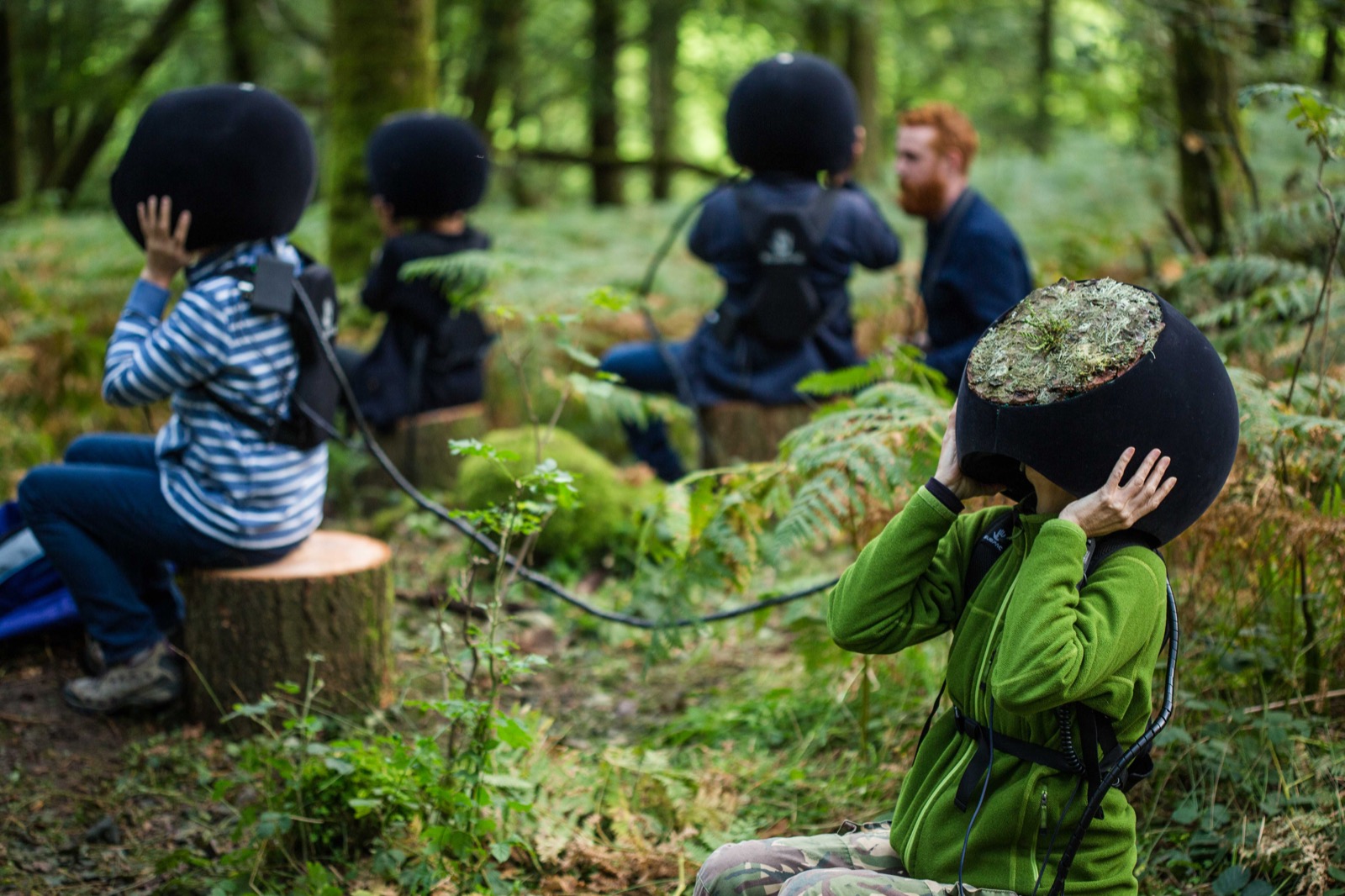
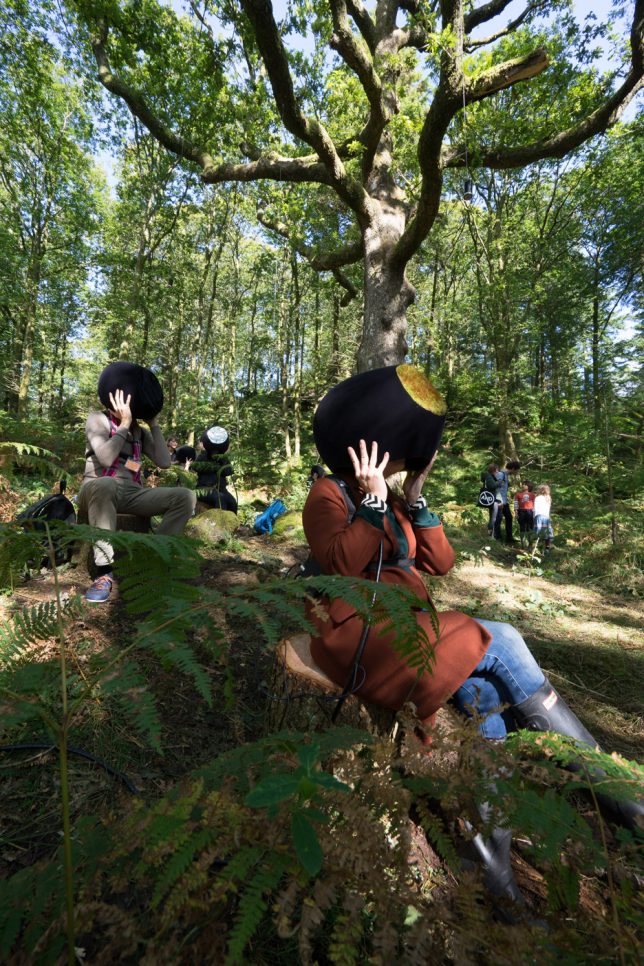
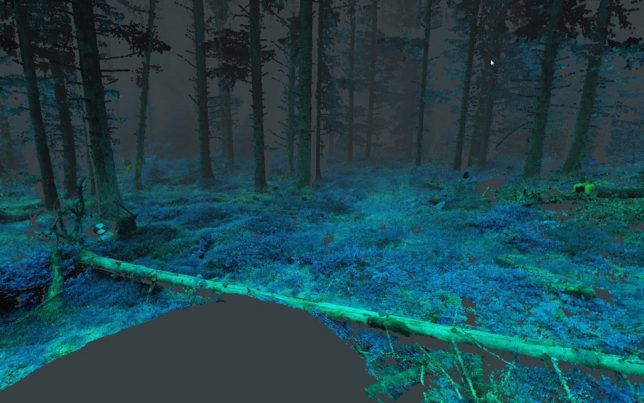
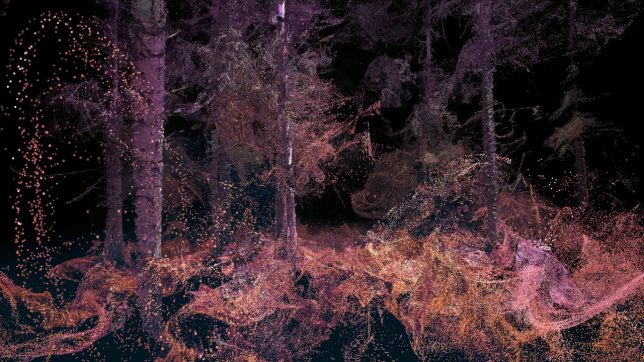
Dragonflies experience their brief lives on this planet 10 times faster than humans, and in 12 color wavelengths as compared to our three, a viewpoint that’s been impossible to comprehend prior to the arrival of virtual reality tech. Thanks to a project called ‘In the Eyes of the Animal’ by the creative studio Marshmallow Laser Feast, we can see the world the way super-sighted creatures do in a feat that’s being called ‘sense hacking.’

virtual-reality-forest-2

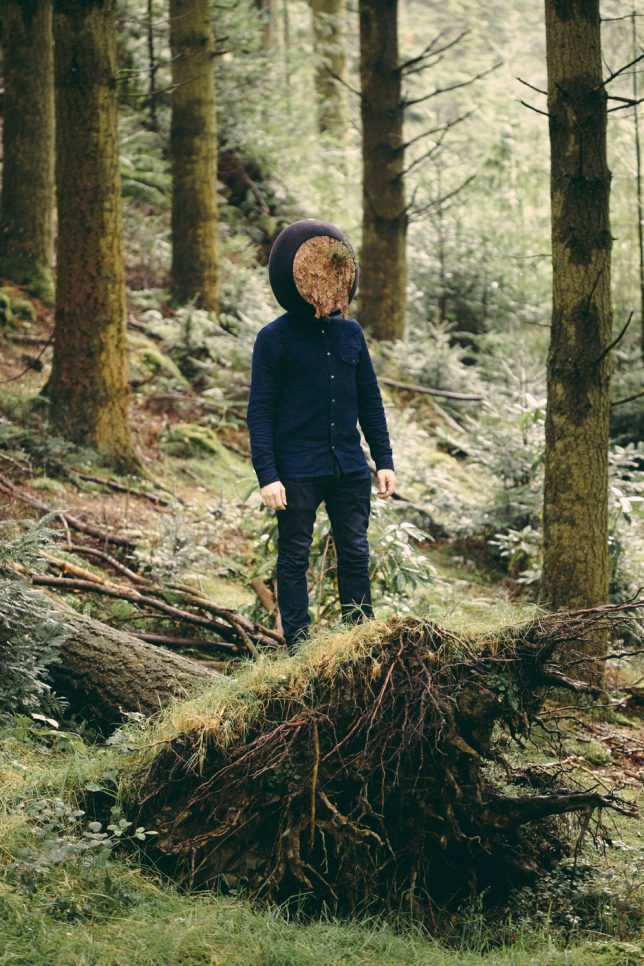
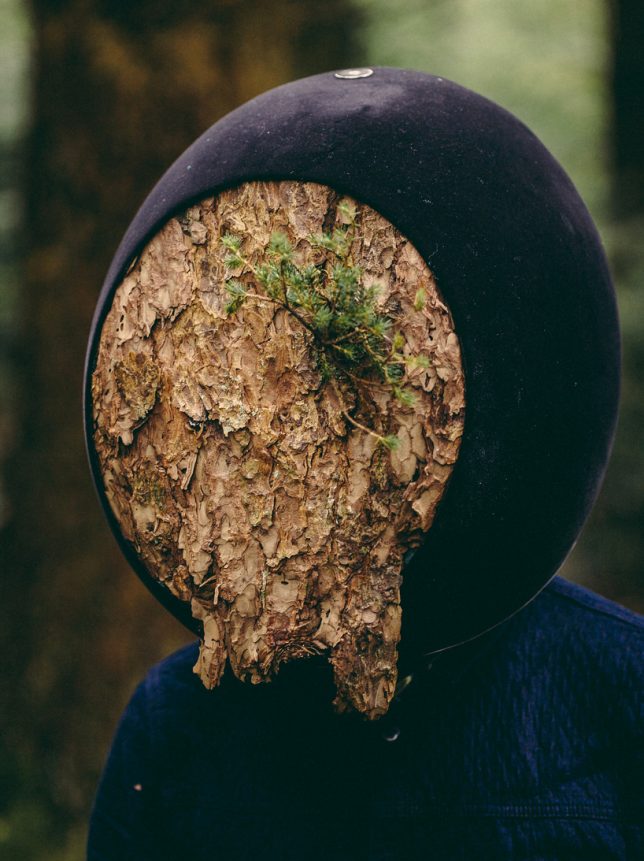
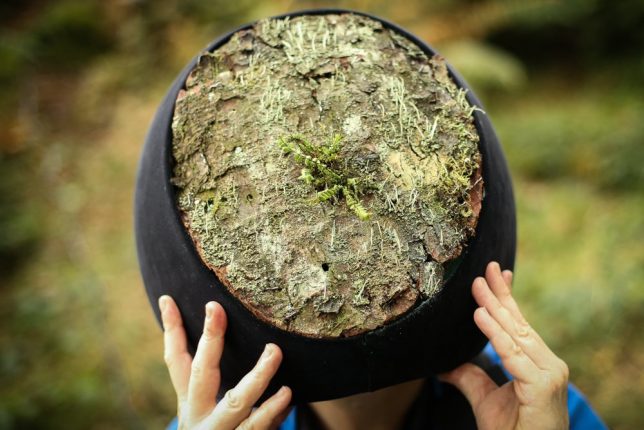
Aerial drone footage, CT scans and LiDAR remote sensing technology taken from the Grizedale forest in the UK gives the team 800 million data points upon which to render a hyper-rich environment in tandem with a real-time visual and audio engine. Visitors to the real, actual forest put on virtual reality headsets obscured with moss to take it all in.

virtual-reality-forest-3

virtual-reality-forest-4

virtual-reality-forest-5

“Visual engine generates and renders whole environment in realtime with certain generative elements which makes each experience unique,” explains Creative Applications Network, . “Visual engine communicates with 3D Audio Engine via OSC [OpenSound Control] to provide positional data as well as head tracking data from the Inertial sensors of the VR headset. The sound uses Binaural audio, a technique mimicking the natural functioning of the ear by creating an illusion of 3D space and movement around the head of a listener as immersive as reality can be.”

virtual-reality-forest-6

virtual-reality-forest-7

The result is an immersive experience at the intersection of science and digital art, and the images of the helmets in use in Grizedale Forest are pretty incredible, like something from a film. If you didn’t get a chance to see it yourself during the installation’s tour of festivals, you can watch the video to see an approximation of what it looks like.

Share on Facebook


[ By SA Rogers in Conceptual & Futuristic & Technology. ]

[ WebUrbanist | Archives | Galleries | Privacy | TOS ]


WebUrbanist

 
Comments Off on Virtual Reality Nature: Helmet Lets Humans See the Forest Like Animals Do

Posted in Creativity


Mount a Canon 5D Mark III to a custom drone and capture the beauty of nature

04 Nov

Polish photographer Miron Bogacki mounted a Canon EOS 5D Mark III to a custom-built octocopter and flew the drone over Northern Poland in the Valley of Drw?ca. We hope that you enjoy the gorgeous video footage he captured as much as we did! To see more of Miron’s work check out his website.

Articles: Digital Photography Review (dpreview.com)

 
Comments Off on Mount a Canon 5D Mark III to a custom drone and capture the beauty of nature

Posted in Uncategorized


What’s In My Bag: A Look at the Camera Gear of a Nature Photographer

27 Oct

Being a landscape or nature photographer is like enjoying ice cream and having unlimited choice in the ice cream shop. There are so many different kinds of images to make, and different ways of making them in the outdoors, that having a wide variety of gear to choose from is important. This article will take you on a little journey through what’s in my bag. From my own camera gear to the different tools that I use to help me photograph the scenes in nature that capture my attention, and turn ordinary life into extraordinary art.

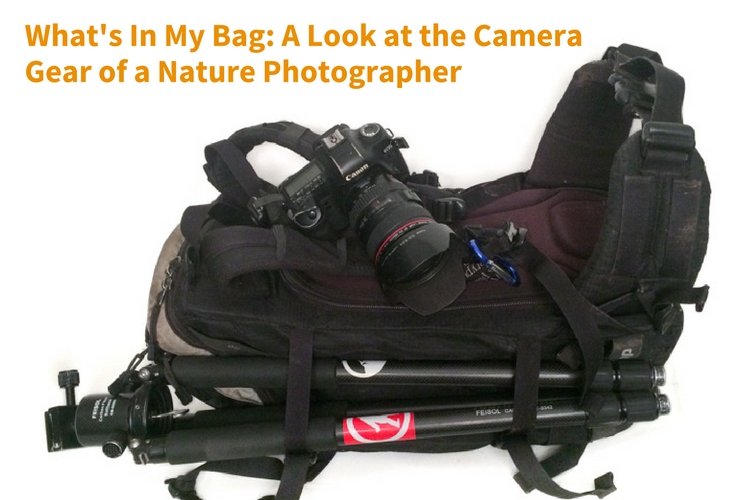
whats-in-my-bag-a-look-at-the-camera-gear-of-a-nature-photographer

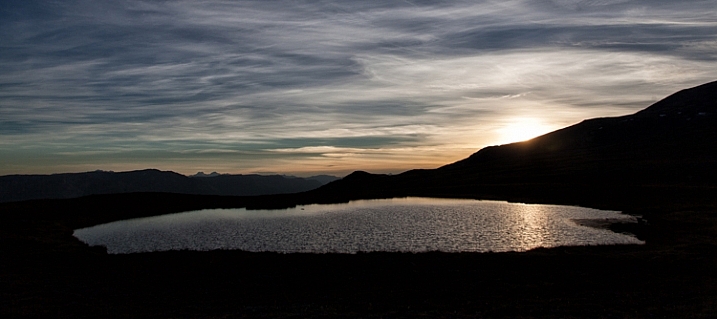
sunset reflected in water

Hudson Bay Mountain Sunset

The Backpack

camera-bag-gear-02

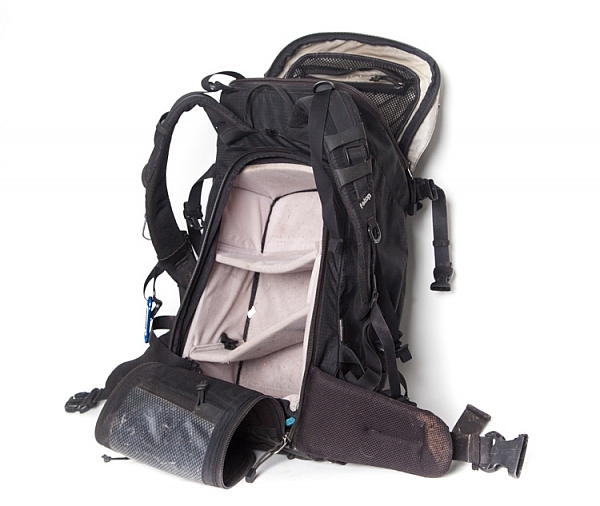
The biggest piece of gear I use is the Tilopa backpack from f-stop. It’s a rugged 50L pack that’s well suited for a wide variety of outdoor scenarios. There are all manner of straps and zippered compartments both outside and inside the pack that are useful for attaching and storing both large and small pieces of equipment. There are three things however that have proven to be especially valuable to me:

  1. Rear Panel Access – instead of just having access to the inside from the top, the Tilopa has a zippered section that allows you access to the bag when you lay it on the ground. This is helpful when you have gear at the bottom of the pack and you don’t want to excavate everything on top of it to get access (as you’d have to do when going in from the top as is typical in a lot of other backpacks).
  2. Internal control unit (ICU) – ICU’s come in different sizes and shapes and allow you to organize and protect your camera equipment. My Tilopa allows for a large ICU with space at the top of the pack for a jacket or food depending on my needs. The backpack also has attachment points that you can use to secure your ICU to the inside of the pack. One really nice feature is that the ICU itself can be zippered shut and removed or carried. If you fly a lot and find that your pack is overweight, you can remove the ICU with your valuable gear and take it with you on the plane while checking the rest of the bag.
  3. Padded Hip Belt – to carry some of the weight on my hips.

Backup Camera Bodies

camera-bag-gear-03

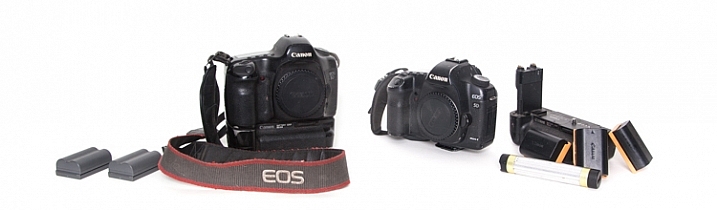
The first digital SLR I owned was the Canon 5D. It was such a huge step up, both in price and quality from its predecessor (a film Canon Rebel). I remember being amazed at how much more of the scene I saw when looking through the viewfinder (thanks to the full-frame sensor). In 2007 I purchased an additional body (Canon 5D Mark II), which meant that I now had a backup. Having two cameras available for use provides a nice sense of security, knowing if one has issues, there won’t be any loss of productivity. The main differences between the two bodies that I appreciate are the live view, greater dynamic range, and higher resolution screen that the 5D MK II provides.

Extra Batteries – Charging Devices

Having spare batteries is especially important when I am out shooting for extended periods of time, or I am photographing winter scenes. I also appreciate having grips for each of my camera bodies that gives me the option of going out with two batteries at a time.

Another situation where a longer battery life is appreciated is when I shoot time-lapse sequences. I can shoot several thousand images at a time and it’s nice to know that I can leave the camera firing away with ample power, and not have to continually come back and check to make sure the battery hasn’t died.

Not only do I have backup camera batteries, but I also had a portable battery charger (Goal Zero Switch 8) for my phone. I say HAD because I used it so much it’s worn out. I am planning on purchasing an upgraded power charger soon. This device can be charged at home by plugging it into a USB port, and then used in the field to recharge a phone (or other devices such as headlamps).

Image Storage

camera-bag-gear-04

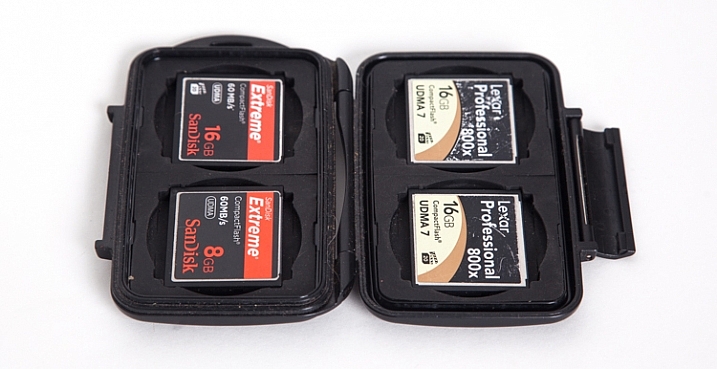
Apart from the Compact Flash (CF) cards in the cameras, I also carry a small (older model) Pelican case with room for 4 CF cards. The majority of my cards are 16GB, but I also carry a 2GB one as an emergency backup in a small pocket in my backpack.

Apart from the flexibility that having multiple cards provides, I sincerely believe in redundancy. You never know when a card might fail, and so to be ready on the occasion that one does, it’s nice to know you can keep shooting. Most of the time I don’t fill the 16GB cards to capacity when I’m out for the day on a photo-adventure. There are occasions however when I’m on a commercial job where having multiple cards is an absolute must.

Lenses

camera-bag-gear-05

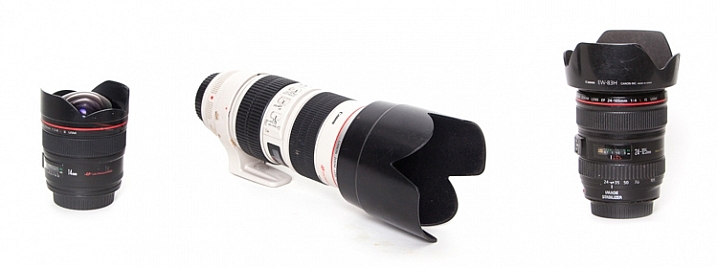
The three lenses I have are all Canon L-series glass.

  • 14mm, f/2.8: This wide-angle prime lens is really useful for capturing wide open vistas. It also comes in handy when you find yourself in tight quarters and don’t have a lot of physical depth between you and your subject. The trick when you’re really close though, is to make sure your main subject is near the center of the frame. Because of the nature of this almost fish-eye lens, objects near the corners of the frame have exaggerated perspectives. It’s almost as if they are unnaturally stretched. (Price it out on Amazon or at B&H)
  • Canon 24-105mm, f/4: This is the lens that I have on my camera the most, primarily because it has the greatest degree of flexibility when it comes to focal length.
  • 70-200mm, f/2.8: Every once and while I go out with the goal of focusing on more detailed aspects of nature, rather than a wide-angle view of a scene. The added focal length as compared to the 24-105mm lens helps me to do that. The large aperture can also provide a nicely blurred background when the need arises.

Tripod

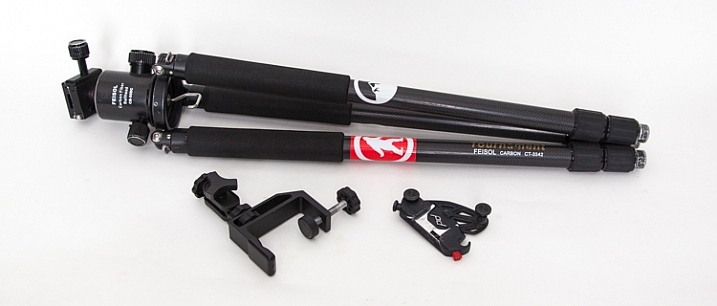
camera-bag-gear-06

My current tripod is the carbon-fibre Feisol CT-3342 with a Feisol CB-50DC ball head. This allows for flexibility when composing your image and also has the capability to rotate when the camera is locked in place (there are degree markings to help when specific movements are required, for example when doing panoramas). There is a tiny removable hook (which you can hang things from) that screws in underneath the head which is useful when it’s windy and you need that extra measure of stability.

The tripod has 3-section adjustable legs that extend or contract with the simple twist of a rubber ring. One of my favourite features (as I do a lot of winter photography), is the screw-in metal spikes that attach to the bottom of the tripod legs. These come in handy when I’m out on ice, or other slippery situations, to keep the tripod secure during each exposure the camera makes.

I also have a small tripod clamp that comes in handy in situations where using a tripod simply isn’t possible.

A relatively new purchase has been the Capture Pro from Peak Design. This is a device that I attach to the shoulder strap of my backpack and then click my camera (with the appropriate shoe) into it. So the camera is always close at hand when I go out on my adventures. It means every time I want to make a photograph, I can just reach down and release the camera from the clip instead of stopping and getting the camera out of the backpack.

Shutter Release Mechanisms

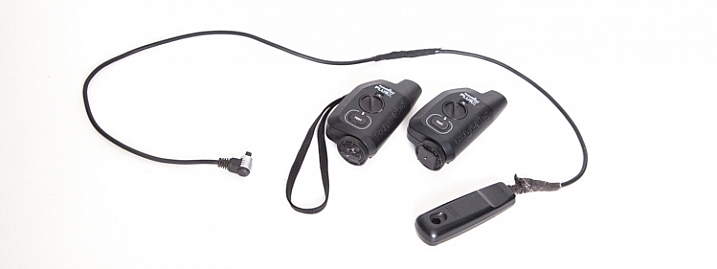
camera-bag-gear-07

There are two different ways that the shutter on the camera can be activated. First of all, a wired shutter release can be plugged into the side of the camera.

You can accomplish hands-free shutter release wirelessly as well. The Pocket Wizard PlusX transceivers are the ones that I use. One gets attached on your camera’s hot-shoe and plugged into the appropriate port on the side of the camera. Then as long as that device and the second one you can hold in your hand (or even on another camera) are both set to the same channel, when the remote device is triggered, the transceiver on the hot-shoe will fire the camera.

Why remote triggering? It’s very useful in low-light situations where a sharp image is required and hand-holding the camera is not possible. It’s also absolutely essential when doing long exposures.

Promote Control

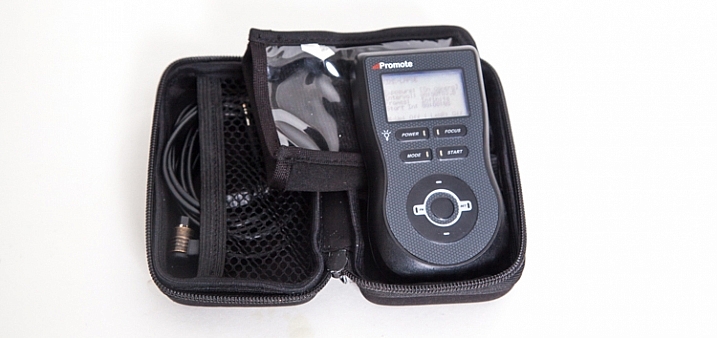
camera-bag-gear-08

This remote control device can be used for a number of different things, including bulb-ramping and focus stacking. However the most commons things I use it for are my time-lapse sequences and HDR bracketing.

LEE Big Stopper

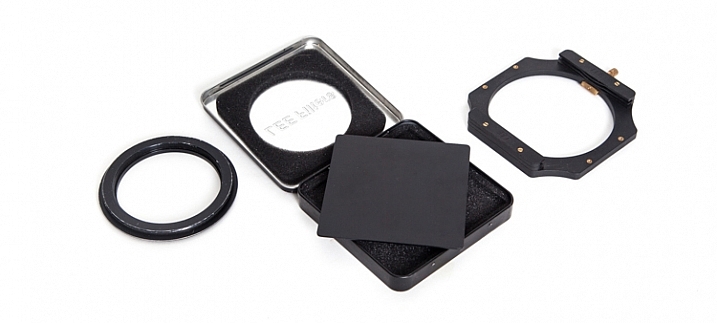
camera-bag-gear-09

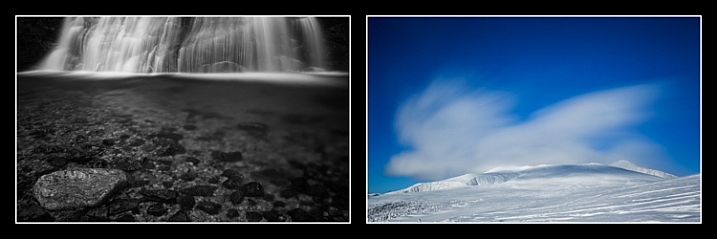
Essentially this is a piece of glass that allows me to make long exposures beyond the normal capabilities of my camera. Practically, it’s a 10-stop neutral density filter that allows me to make a long exposure of a waterfall and turn raging water into silky smoothness. I also use it to capture the motion of clouds in the sky. There is the 4″x4″ piece of glass that slides into a holder, which itself attaches to the camera via a ring that screws into the end of the lens.

Waterfall: 30 seconds, f/4, 12:36pm
Clouds: 30 seconds, f/14, 12:03pm

Other Equipment

There are a few other pieces of equipment that find their way into my pack every once and a while:

camera-bag-gear-10

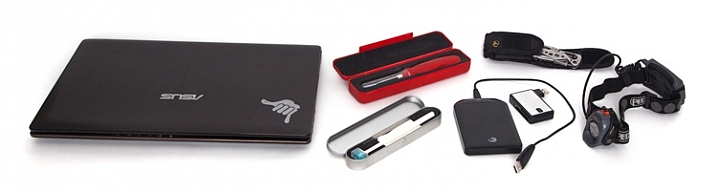
  • Tools for cleaning the camera sensor: I have an older version of the Visible Dust Arctic Butterfly as well as a sensor gel stick.
  • A laptop CF card reader adapter for extended trips where I’m away from my office and need image storage and editing capability.
  • An external hard drive for image backup.
  • Camera battery charging devices
  • Phone for safety
  • Lens cloth
  • Leatherman multi-tool device
  • Headlamp

Final Thoughts on Camera Gear

There you go, a fully-loaded backpack that weighs 35 pounds (15.9 kg). Thankfully not everything comes with me all the time, my back would definitely have something to say about that. With the years I’ve been doing photography, picking and choosing the tools that best suit the goals I have on any given day is what helps me turn ordinary life into extraordinary art.

What tools do you use? Please share in the comments below.

googletag.cmd.push(function() {
tablet_slots.push( googletag.defineSlot( “/1005424/_dPSv4_tab-all-article-bottom_(300×250)”, [300, 250], “pb-ad-78623” ).addService( googletag.pubads() ) ); } );

googletag.cmd.push(function() {
mobile_slots.push( googletag.defineSlot( “/1005424/_dPSv4_mob-all-article-bottom_(300×250)”, [300, 250], “pb-ad-78158” ).addService( googletag.pubads() ) ); } );

The post What’s In My Bag: A Look at the Camera Gear of a Nature Photographer by Curtis Cunningham appeared first on Digital Photography School.


Digital Photography School
 
Comments Off on What’s In My Bag: A Look at the Camera Gear of a Nature Photographer

Posted in Photography