RSS
 

Posts Tagged ‘Nature’

5 Things I Wish I’d Known Before Starting Nature Photography

30 Aug

5 Things I Wish I'd Known Before Starting Nature Photography - rose macro

How do you, as a beginning nature photographer, go about improving? How do you ensure that you gain useful skills as rapidly as possible so that you can start shooting professional quality nature photography?

5 Things I Wish I'd Known Before Starting Nature Photography - flower macro pink

In reality, it’s often difficult for the beginner to recognize how they should learn nature photography.

But I myself am a nature photographer, and looking back the answers to these questions are clear. So I thought I’d make a tutorial that discusses several things I wish I had known at the beginning of my nature photography journey.

Read on. The sooner you know these things, the sooner you’ll begin to take consistently stunning images.

1. Photograph every day

The first thing I wish I had known when starting nature photography is extremely simple,

Photograph every day!

I cannot emphasize this enough.

5 Things I Wish I'd Known Before Starting Nature Photography - flower close up

If you’re truly serious about improving as a nature photographer, you should try to take at least one photograph of nature, every single day. It doesn’t matter if you take it with your DSLR or your iPhone. Just get out and shoot.

You’ve likely heard that practice makes perfect, and this is part of that. But there’s more to it. By photographing every day, you’ll ensure that your artistic eye remains strong.

5 Things I Wish I'd Known Before Starting Nature Photography - yellow flower poppy

What do I mean by that? If you photograph every day, thinking about light, color, and composition will become second nature. You’ll start to see photographic opportunities everywhere.

This is exactly where you want to be as a nature photographer.

2. View the type of photography you want to create

extraordinary-photographs-ordinary-subjects

This is a huge one, as well. If you want to create great nature photography, you have to view great nature photography.

When you view amazing photography, you develop an eye for light, color, and composition without even realizing it.

nature-photography-flower-macro

This is an essential skill for a budding nature photographer. Plus, there’s an added bonus – it’s really fun!

Start by looking up the type of photographs that you’d like to create. You can use a well-organized site like 500PX. Or you can just use Google. The important thing is that you find photography to look at for inspiration.

For instance, if you’re an up-and-coming macro photographer, try viewing the portfolios of photographers such as Mike Moats and Kristel Schneider.

If you’re a beginning landscape photographer, look at the work of Ian Plant and Thomas Heaton.

If you’re a budding wildlife photographer, look to photographers such as Marsel Van Oosten and Matthew Studebaker.

5 Things I Wish I'd Known Before Starting Nature Photography - flower extreme close up

Then expand from there.

The purpose isn’t to memorize their images so that you can copy them in the field. Rather, the goal is to appreciate great imagery, while recognizing (if only subconsciously) what makes it great.

The goal is also to get inspired.

3. Light matters more than you think

I’ve emphasized the need to practice photography every day, and that truly is essential. However, when practicing, there’s something extremely important you need to consider. That is the light.

I’ll state it plainly. Photograph the two hours after sunrise, the two hours before sunset, and during midday only if it’s cloudy.

Otherwise, stay indoors.

extraordinary-photographs-ordinary-subjects
nature-photography-flower-macro

This generally takes some retraining of the brain. It’s easy to think to yourself, “It’s such a nice sunny afternoon; I should get out and photograph!”

But you need to resist this thought. Because photographing during a sunny afternoon will result in harsh, contrasty images that are almost never desirable in nature photography.

Start spending time observing the quality of the light. Notice how nicely illuminated your subject is when the sun is low in the sky. Notice how lovely and soft the light is on a cloudy afternoon. Notice how harsh the light is under the midday sun.

nature-photography-flower-macro
extraordinary-photographs-ordinary-subjects

As a beginning photographer, I often forgot about this rule. So my photographs paid the price. I have thousands upon thousands of photographs that are simply unusable because of the harsh sunlight.

Memorize the rule. You may not be able to see such a difference in your images at present. But in a few years, you’ll thank me!

4. Gear matters less than you think

While light is more important than you think, gear is also less important than you may imagine.

You might think that gear is essential. You may ask me, “Jaymes, if my gear really isn’t important, then why do you spend so much time reading gear reviews and upgrading your equipment?”

But my response is this: gear does matter. High-quality lenses will allow you to capture the detail on a singing bird or the movement of sparring polar bears.

5 Things I Wish I'd Known Before Starting Nature Photography - flower extreme close up - daisy

High-quality cameras will allow you to photograph a wolf under the cover of twilight or a hawk flying directly above.

Yet gear is nothing without the photographers that wield it. A good photographer can get stunning images with any equipment. Whereas a bad photographer cannot create stunning images, regardless of their gear.

extraordinary-photographs-ordinary-subjects
nature-photography-flower-macro

So focus less on making sure you have the right equipment. Instead, practice using the equipment you do have. Try to eke out as much as you can from it.

Eventually, if you work hard enough, you will get beautiful images, high-quality gear or not.

5. Most of the images you take will be terrible

Beginning nature photographers often have a dangerous misconception about nature photography. That is that the best photographers rarely take bad images.

This belief can lead to discouragement on the part of the budding photographer.

5 Things I Wish I'd Known Before Starting Nature Photography - flower extreme close up abstract

This type of abstract photograph comes amid a huge number of deleted images.

After looking through your memory card, to find that only you’ve managed to nail a single image (out of a hundred!), you may want to give up.

Don’t.

Why?

Because most of the early images you take will be terrible, and that’s okay. This is true for nature photographers of all levels. Of course, at the higher levels, the nature photographer’s standards are higher, but the tip still applies.

5 Things I Wish I'd Known Before Starting Nature Photography - flower extreme close up

This is true for me, as well.

I go on dozens of photo shoots each month and take around 600 images per shoot. Yet I’m happy if I get a single image with which I’m really pleased.

Because uncertainty, guesswork, and reaction are part of the game. This is the nature of nature photography.

So let me reiterate. Don’t get discouraged. Most of your shots will be terrible, but it’s the good ones that count.

5 Things I Wish I'd Known Before Starting Nature Photography - flower extreme close up tulip

In Conclusion

Starting nature photography can be daunting for a lot of people. It can be difficult to know how to improve. You want to take stunning images as soon as possible, but you just can’t figure out how.

5 Things I Wish I'd Known Before Starting Nature Photography - flower extreme close up

By understanding the lessons above, you’ll be well on your way to creating beautiful nature images.

Just remember:

  • Shoot every day.
  • View the type of photography you want to create.
  • Light matters more.
  • Gear matters less.
  • Finally, don’t be discouraged if most of your images are terrible.

nature-photography-flower-macro

Someday soon, you’ll be a great nature photographer.

What are some things you wish you had known when first starting out as a nature photographer? Let me know in the comments area below.

nature-photography-flower-macro

The post 5 Things I Wish I’d Known Before Starting Nature Photography appeared first on Digital Photography School.


Digital Photography School

 
Comments Off on 5 Things I Wish I’d Known Before Starting Nature Photography

Posted in Photography


Tips for Photographing Patterns in Nature

24 Apr

Photographing natural patterns is a fantastic project to work on as a outdoor photographer. The process of exploring patterns not only gives a wealth of photographic opportunities, but also provides a perfect opportunity to concentrate your mind on composition, shape, line and form aiding your development as an all-round photographer.

Reed patterns in nature

Gear

One of the best things about photographing patterns in nature is that it doesn’t require any specialist equipment to get started. Any camera from a smartphone to a top-of-the-line DSLR will give you options for capturing wonderful images of natural patterns.

Standard DLSR lenses such as an 18-55mm often have a decent close-up facility to help you fill the frame with larger patterns. While the macro feature on a compact camera can be a great benefit for those wanting to travel light in their photographic pursuits.

Macro lens and camera - patterns

To take things a step further, however, investing in a macro lens is a great way to explore some of the smaller and more obscure natural designs. That will allow you to focus in close on small bark, leaves, and shell designs to explore the natural work in miniature.

Often it’s recommended to pick up a macro lens with a focal length of 100mm or above in order to allow a greater working distance. That will help you to stay out of your lighting as well as give you room to compose. If you are on a tighter budget, shorter length options can still be a great alternative such as a 40mm or 60mm macro.

Alternatively, you can even look into purchasing extension tubes to reduce the close focusing distance of your current lenses. These are affordable ways to get into macro and close-up photography.

Feather patterns

Outside of macro, long lenses can also be put to great use to pick out patterns within a landscape. Working with a long telephoto such as a 70-200mm can help you pinpoint and explore repeating elements within a larger frame. This will help you to extract patterns and textures from wider landscapes, something that can be highly effective for making creative images.

Aside from the camera and lens, tripods are especially handy for slow shutter speed work as well as ensuring maximum sharpness when working with higher magnifications. Alternatively, working with flash can be liberating, allowing you to be more flexible in your approach and light subjects as you see fit for added impact and interest.

Subjects with patterns

Bark details - patterns in nature

When out in the field look for subjects that have repeating shapes or tones. Obvious choices are tree bark, leaves or rocks as they often contain repeating forms and shapes, as well as strong lines to aid composition. Extending from this, look at the wider field of view, repeating trees, sand, and reeds also make for great images.

When looking into your chosen subject, stare at it for a decent amount of time and don’t rush to bring your camera to your eye. What areas strike you as interesting, are there any lines you catch yourself following? These are all important characteristics that make a great pattern picture.

Picking your area of focus, working with standard composition rules can be highly effective. A line or break in the rule of thirds, or a repeating design with a contrast or stop point on one of the intersecting locations can make a simple and highly pleasing image.

Bird nest pattern - Tips for Photographing Patterns in Nature

One of the great things about photographing patterns is often the subjects don’t move hastily, so feel free to really spend some time fine-tuning your composition for utter perfection.

Within subjects, also look for other pictorial qualities that can manifest as patterns. Pay careful attention to the light and shadows. Often the contrast of harsh shadows can make less interesting subjects take on a whole new form, making unique patterns for intriguing images.

Reflections can also offer good opportunities for pattern shots. Ripples in the water reflecting light and color for some pleasing effects can make some stunning abstract compositions.

Rock details - Tips for Photographing Patterns in Nature

Technique

In terms of shooting technique, often you’ll want to maximize your depth of field to ensure the greatest level of detail within your images. This can be done in a number of ways depending on your subject.

Tree patterns - Tips for Photographing Patterns in Nature

Getting sharp images

The simplest method of gaining a large depth of field is to use a small aperture. Shooting above f/8 to ensure a large amount of your frame is kept in focus will help bring out the details of your chosen subjects. If you are working handheld, you might need to use flash or increase your ISO so as to not fall into slow shutter speeds that will see you encounter sharpness issues.

If you are working at an even closer scale, often stopping down won’t be enough to get the depth of field needed to showcase an entire pattern (especially with macro photography). So another method that can be deployed is focus stacking.

This is the process of shooting multiple images, each one in the sequence focused incrementally apart, then brought together in software to maximize the depth of field. This is a more advanced technique, that due to its precision requires a tripod to ensure critical sharpness. If the ultra-close perspective is something you find intriguing, focus stacking is certainly worth exploring.

Web Patterns - Tips for Photographing Patterns in Nature

Finally, sharpness isn’t always a necessity for photographing patterns in nature. Using slower shutter speeds offers fantastic ways to explore shapes and form, rendering obvious structures into abstraction for intriguing images.

One classic example is panning with trees to create a smooth line effect. Simply working with a slower shutter speed of a 1/2 a second and then by panning up and down the tree trunks you can render them into strong and simple abstract line compositions that can be fascinating.

Additionally, anything that moves in the wind can also be worked with slower shutter speeds. The effects of the elements have a marvelous impact for creating stunning patterns in nature pictures.

Tree lines - Tips for Photographing Patterns in Nature

Conclusion

Photographing natural patterns is great fun. Once you’ve started to train your brain to see the variety of striking repeating and abstract patterns in nature, they will soon become visible everywhere.

Exploring them can make the basis of a photographic project or a great way to create images when things just aren’t going to plan with your other subjects. It’s a great way to make the most of any day out with the camera and return home with some striking and interesting frames to boot.

The post Tips for Photographing Patterns in Nature appeared first on Digital Photography School.


Digital Photography School

 
Comments Off on Tips for Photographing Patterns in Nature

Posted in Photography


New dSP Course: How to Shoot Landscapes & Nature Like a Pro

11 Apr

Would you like to learn how a professional landscape photographer composes stunning landscape shots.

Aussie Photographer Johny Spencer has shot and edited 10’s of 1000’s of landscape photos as part of his career as a professional landscape and nature photographer for the National Parks Service.

And he’s partnered dPS to create our latest course, shot in HD video – it’s called Landscapes & Nature Like a Pro.

You’ll take a journey with Johny from his studio to the great Aussie outback where you’ll learn how to:

  • Take long exposure shots for that beautiful silky affect with water
  • Photograph nature up close with macro focusing
  • Compose detailed landscape shots even when the light isn’t ideal
  • Shoot in the forest with dappled light
  • Create amazing panoramas
  • Use water to create stunning reflection images
  • And how to shoot sand dunes, seascapes and wildlife

You’ll get an over the shoulder experience riding along with Johny as he shoots breathtaking scenes on location, then show you all his tips for editing in Lightroom back in the studio.

Here’s Johny Spencer to tell you a little more about the course:

2 Weeks Only: Special Launch Bonuses and Discount

All up there’s over 4 hours of landscape & nature photography training that you can consume at your own pace… as well as two special launch bonuses:

  • Lightroom Preset Pack – worth $ 40
  • 60 Day Community Access (case studies, assignments and photo critiques) – worth $ 40
  • Best of all – to celebrate the release of this brand new course we’re not only offering these launch bonuses but you can also pick it up at 30% off the normal price.

    Hurry this special course launch offering is only available for 2 weeks.

    Check out the some of Johny’s amazing photos and the full course description here.

    Guaranteed to Improve Your Landscape Photography

    As with all of our courses, eBooks and presets this course comes with a 30 day money back guarantee, so if you do access the course and decide it’s not for you, we’ll refund you – no questions asked.

    The post New dSP Course: How to Shoot Landscapes & Nature Like a Pro appeared first on Digital Photography School.


    Digital Photography School

     
    Comments Off on New dSP Course: How to Shoot Landscapes & Nature Like a Pro

    Posted in Photography


    Tips for Doing Nature Photography at Your Local Parks

    18 Mar

    For myself and many other photographers, probably you included, one of the more difficult parts of the hobby is figuring out where to shoot things like nature photography.

    If you have a big trip or a vacation planned, whether it be an exotic location or somewhere not so far away, then that question is answered for you. But for evening shoots after work, spontaneous sessions or weekend outings, a bit of planning is necessary. Enter the wonders of your local parks!

    Tips for Doing Nature Photography at Your Local Parks

    A park can take many forms and can exist in any location, and almost any country. It is generally defined as a “large public green area, used for recreation”. They come in all sizes, and each features their own unique variety of plants, animals, and landscapes.

    Parks can be as small as a local city or county park, a larger state park, all the way up to a massive national park. Their common thread is that they have been well-defined and set aside for public use, and are perfect areas to practice nature photography.

    Why shoot at a park?

    Parks are unique and useful to us photographers because they can be a testing ground for new equipment, a safe practice area for new techniques, or a fully-realized background for your real work.

    Parks are attractive because they are a (usually) safe, well-defined area, a miniature representation of the local environment. They give you a small, diverse biosphere of flora and fauna, all wrapped up in one package.

    Tips for Doing Nature Photography at Your Local Parks

    Parks are also numerous, and you have a lot to choose from, regardless of size or classification. Even national parks, with the fewest number of all the types, are plentiful. Over 100 countries worldwide have lands designated as national parks, including 59 in the United States alone. This doesn’t even count other sites in the national registry, such as forests, seashores, and historic sites.

    The bottom line is you’ll never have a lack of subject matter when visiting one of these areas.

    Preparing for the shoot

    Preparing for a photo shoot in a park isn’t really any different than most other outdoor environments. You’ll want to pack and check all of your normal gear, including:

    • Camera body – If you’re hiking to a location, you’ll probably want to keep the number of bodies down to one; otherwise, maybe bring a film or instant camera as well for backup.
    • Lenses – Again, you don’t want to weigh yourself down too much, but always bring lenses to cover most of the situations you’ll find yourself in. If you’re shooting landscapes, bring a wide-angle prime lens, or at least a zoom that covers focal lengths down to 18 to 24 mm.
    • Tripod – Some camera bags and backpacks have holders for your tripod. Otherwise, take this into consideration as tripods are often not heavy, but bulky and unwieldy to carry while tromping through the park with your other gear.

    Tips for Doing Nature Photography at Your Local Parks - use a tripod

    • Filters and other accessories – Don’t forget the little things such as UV filters, neutral density filters, remote shutter releases, and microfiber cloths to keep lens glass clean.

    Since you’re shooting outside, you also need to be prepared for events and conditions outside your control, such as the weather. Depending on the size of the park, there may be hiking and long walking involved. So, you’ll also need to plan ahead and consider items such as:

    • Appropriate clothing – Long sleeves and long pants for mosquito-prone environments, hats, extra dry socks for long hikes.
    • Items to protect against the sun – Sunscreen and sunglasses.
    • Defensive items to keep yourself safe – A knife, or bear spray, if you’re traveling into areas where bears are known to live.
    • Location tools – To help identify where you are and where you’re going, such as a GPS receiver, paper maps (absolutely the best idea), and a compass.

    Safety

    As with any outdoor excursions, you’ll need to plan ahead a little, both physically and mentally, when venturing out into a park, especially a state or national park or forest.

    First, just make sure you know what you’re getting into. If you’re going to a large, sprawling national park and have never been to the area before, then it’s pretty tough to physically scout the location before your shoot. The best you can do in that situation is to do as much research as you can online, or talk to friends or co-workers that have been to the area before.

    For a smaller park, or one that’s close by, the best idea is to scout the location first. What hazards are present? Native animals? Plants?

    Here in Florida, we have a tree (uncommon, but it exists in the wild) called a Manchineel. Everything about it from the leaves to the wood itself is extremely toxic. Even brushing up against it can end badly. These are the kinds of things you want to research well before you explore a park, especially the larger ones that may take you into more remote areas.

    photo of a lake - Tips for Doing Nature Photography at Your Local Parks

    Wildlife dangers

    On the fauna side of possible dangers, you have the local wildlife. Here in Florida, it’s primarily alligators and snakes, although some areas of our state are habitats for small populations of bears and panthers. First aid and snakebite kits are a smart idea for almost any wilderness area around the world. Other areas of the United States and around the world have larger animals that can pose a serious threat to explorers and photographers, such as bears.

    Black bears alone exist in approximately 40 of the 50 states in the U.S., and they, along with the other species, need to be respected and avoided. Many photographers and tourists have been making headlines in recent years by getting too close to bears, without thinking of the possible outcomes to themselves or the bear.

    While unprovoked attacks aren’t very common, it is very easy to surprise or startle a bear, and it’s always recommended to carry bear spray in the wild when in bear territory.

    What to Shoot

    The possibilities of subjects in an outdoor park are almost endless. Some of us will go just to shoot a sunrise or sunset, while others want to take home photos of local wildlife.

    Landscape photographers can focus on grabbing a shot of that sunset, or other features of the environment, such as lakes, mountains, and rivers. Open, panoramic scenes captured with wide-angle lenses are a favorite, as are forests, trees and the changes in the color of leaves. Flowing water such as waterfalls or fast moving rivers are good candidates for a long exposure photo, and even plains and prairies can be framed into beautiful minimalist compositions.

    Tips for Doing Nature Photography at Your Local Parks

    There is a never-ending variety of flora and fauna that can be photographed, such as flowers, trees, plants, and animals such as small mammals, reptiles, and an endless variety of birds. Many parks have some species that are concentrated in that area and offer opportunities for us photographers that we can’t get anywhere else.

    Here on the west Florida coast, my nearest state park is home to the Florida Scrub Jay, endemic to this area, and concentrated higher in this one park than anywhere else. It’s almost a rite of passage to photograph one. Many parks around the world are home to their own species as well.

    Tips for Doing Nature Photography at Your Local Parks - bird

    Environmental Awareness

    Finally, we need to address an overall importance when discussing capturing images of our beautiful environment; we as photographers need to be nature’s greatest champions.

    I would suspect that most of us who love to be outdoors, already have a desire to be careful when enjoying our parks. But as we’ve seen recently in the news, not all of us take that into consideration. The commonly heard phrase, “leave nothing but footprints” may sound cliche, but it really is a best-case scenario of what we should strive for as we enjoy the great outdoors.

    Tips for Doing Nature Photography at Your Local Parks - bird photo

    The plants and animals that make their home in these areas were likely there long before we visited. It is our responsibility to leave the areas as we found them, without adding or taking away anything from the environment. This will ensure that future generations of photographers and explorers will be able to enjoy those areas too.

    What was your best experience visiting and photographing a park for nature photography? Where do you want to go that you haven’t been yet? And what tips would you give others who are ready to visit and document the great outdoors? Please comment and let’s discuss below.

    The post Tips for Doing Nature Photography at Your Local Parks by Tim Gilbreath appeared first on Digital Photography School.


    Digital Photography School

     
    Comments Off on Tips for Doing Nature Photography at Your Local Parks

    Posted in Photography


    4 Tips for Nature Photography Beginners

    27 Feb

    4 Tips for Nature Photography Beginners - bear

    Nature photography encompasses a range of outdoor photography genres. This includes, but is not limited to, landscapes, weather phenomena, astrophotography, birds, and wildlife. Each of these categories has their respective specialized skills and can be expanded further.

    If you are just starting your quest as a nature photographer, here are a few things to consider:

    4 Tips for Nature Photography Beginners - seascape

    1) What do you want to capture?

    Since nature photography is so vast, you can spend a lot of time in each sub-genre. So an important question to ask yourself is what do you want to capture? Do you want to photograph close-ups of plants and insects? Is your love that of the micro natural world or are you more enthralled by magnificent mountain ranges and lakes?

    4 Tips for Nature Photography Beginners - birds

    Maybe birds and larger animals are more interesting to you than sunsets and sunrises. Knowing what you like and what you want to capture is a great first step.

    2) What equipment do you need?

    When you know what you want to capture, this feeds into the decision of what gear you require. If you are shooting landscapes, you will go for wider lenses as opposed to wildlife and birds, which need more “zoom” or telephoto lenses.

    4 Tips for Nature Photography Beginners - fox sleeping
    A tripod is great for landscapes and astrophotography, but if you are trying to get a bird in flight or an animal in motion, knowing how to use your camera is your best asset.

    3) Location and planning

    What you want to capture drives your choice of location and time of day and season of the year. Scout your landscapes beforehand to see the direction of the sun, any potential safety issues, or terrain considerations. Then return to shoot during a more flattering time of day.

    4 Tips for Nature Photography Beginners - fall trees

    If you are shooting flowers, note the time of year they bloom. With birds, you need to understand a bit about their habitat and the times of day that they are active. If you want to shoot more dangerous wildlife, it is best to go with someone experienced.

    4 Tips for Nature Photography Beginners

    A National Park is a great location for both landscapes and wildlife. Make note that you may need to apply for special permits for some parks and that they also have seasonal or time restrictions in some areas. This will impact your planning if those restrictions include your anticipated shooting times.

    4) Reading the light

    As in the previous tip, the direction of the light can be determined by scouting your location prior. You can also do online research on the area or decipher it from other photos taken there.

    4 Tips for Nature Photography Beginners

    If you are shooting landscapes, arrive about an hour prior to your sunrise/sunset and position yourself. This way you can focus on your composition and maybe even do some test shots. Play around with your white balance, exposures, and different camera angles.

    4 Tips for Nature Photography Beginners - sunset

    If you are waiting for wildlife to show up, use the time to work out what settings you need. When the animal shows up, you will find yourself photographing almost continuously trying to nail that perfect moment.

    Closer shots and flowers give you more time to experiment, but you don’t want your light to be flat. Walk with a reflector or try to find angles that give you shadow, shape, and form.

    4 Tips for Nature Photography Beginners - white flower

    Conclusion

    Nature photography is not only vast but filled with interesting sub-genres and subjects to shoot. As a beginner, most times research precedes shooting. As you learn more about your intended subject and how to capture it, you will become better with time.

    With wildlife, patience is a great asset as you spend more time waiting for a sighting. If you love the outdoors, it’s a great way to explore and preserve those fleeting moments. Determine what you want to capture. Take the gear you need when you scout. Research, plan and try to find the best light. Most of all have fun!

    The post 4 Tips for Nature Photography Beginners by Nisha Ramroop appeared first on Digital Photography School.


    Digital Photography School

     
    Comments Off on 4 Tips for Nature Photography Beginners

    Posted in Photography


    These are the winners of Nat Geo’s Nature Photographer of the Year 2017

    14 Dec

    2017 National Geographic Nature Photographer of the Year Winners

    National Geographic has revealed the winners of their annual Nature Photographer of the Year contest, and as usual, every photo from the Grand Prize winner all the way to the Honorable Mentions and People’s Choice awards are fantastic.

    The Grand Prize this year—and title of Nature Photographer of the Year—went to Jayaprakash Joghee Bojan of Singapore, who captured an intense wildlife portrait of an orangutan crossing a river in Indonesia’s Tanjung Puting National Park. The photo, titled “Face to Face in a River in Borneo,” was selected from over 11,000 entries and earns Bojan $ 10,000 in prize money, in addition to his image showing up in an upcoming issue of National Geographic.

    Speaking of the moment he captured the shot, Bojan told Nat Geo:

    Honestly, sometimes you just go blind when things like this happen. You’re so caught up. You really don’t know what’s happening. You don’t feel the pain, you don’t feel the mosquito bites, you don’t feel the cold, because your mind is completely lost in what’s happening in front of you.

    You can see Bojan’s grand prize winning image, as well as every 1st, 2nd, 3rd, and People’s Choice winner in the slideshow above, or by visiting the National Geographic Nature Photographer of the Year website.

    Press Release

    National Geographic Announces Winners of the 2017 National Geographic Nature Photographer of the Year Contest

    WASHINGTON (Dec. 12, 2017) – Selected from over 11,000 entries, a wildlife photo of an orangutan crossing a river in Indonesia’s Tanjung Puting National Park has been selected as the grand-prize winner of the 2017 National Geographic Nature Photographer of the Year contest. The photo, titled “Face to face in a river in Borneo,” was captured by Jayaprakash Joghee Bojan of Singapore. He has won $ 10,000 and will have his winning image published in an upcoming issue of National Geographic magazine and featured on the @NatGeo Instagram account.

    Bojan took the winning photo after waiting patiently in the Sekoyner River in Tanjung Puting National Park in Borneo, Indonesia. After spending several days on a houseboat photographing orangutans in the park, Bojan learned of a location where a male orangutan had crossed the river –­ unusual behavior that he knew he had to capture. After waiting a day and night near the suspected location, a ranger spotted the orangutan the next morning at a spot a few minutes up the river. As they drew near, Bojan decided to get into the water so the boat did not scare the primate. About five feet deep in a river supposedly home to freshwater crocodiles, Bojan captured the photo when the orangutan peeked out from behind a tree to see if the photographer was still there.

    On capturing the photo, Bojan said, “Honestly, sometimes you just go blind when things like this happen. You’re so caught up. You really don’t know what’s happening. You don’t feel the pain, you don’t feel the mosquito bites, you don’t feel the cold, because your mind is completely lost in what’s happening in front of you.”

    Karim Iliya of Haiku, Hawaii, won first place in the Landscapes category for a photo from Hawai’i Volcanoes National Park; Jim Obester of Vancouver, Wash., won first place in the Underwater category for a photo of an anemone; and Todd Kennedy of New South Wales, Australia, won first place in the Aerials category for a photo of a rock pool in Sydney at high tide.

    The judges for the contest were National Geographic magazine’s senior photo editor of natural history assignments, Kathy Moran, National Geographic photographer Anand Varma, and photographer Michaela Skovranova.

    Contestants submitted photographs in four categories – Wildlife, Landscape, Aerials and Underwater – through National Geographic’s photography community, Your Shot. All of the winning photos, along with the honorable mentions, may be viewed at natgeo.com/photocontest.

    2017 National Geographic Nature Photographer of the Year Winners

    1st Place | Wildlife and Grand Prize Winner

    Photo © Jayprakash Joghee Bojan, 2017 National Geographic Nature Photographer of the Year.


    Photograph by Jayaprakash Joghee Bojan, 2017 National Geographic Nature Photographer of the Year

    A male orangutan peers from behind a tree while crossing a river in Borneo, Indonesia.

    2017 National Geographic Nature Photographer of the Year Winners

    1st Place | Underwater

    Photo © Jim Obester, 2017 National Geographic Nature Photographer of the Year.


    Photograph by Jim Obester, 2017 National Geographic Nature Photographer of the Year

    Blue-filtered strobe lights stimulate fluorescent pigments in the clear tentacles of a tube-dwelling anemone in Hood Canal, Washington.

    2017 National Geographic Nature Photographer of the Year Winners

    1st Place | Landscapes

    Photo © Karim Iliya, 2017 National Geographic Nature Photographer of the Year.


    Photograph by Karim Iliya, 2017 National Geographic Nature Photographer of the Year

    Shortly before twilight in Kalapana, Hawai’i, a fragment of the cooled lava tube broke away, leaving the molten rock to fan in a fiery spray for less than half an hour before returning to a steady flow.

    2017 National Geographic Nature Photographer of the Year Winners

    1st Place | Aerials

    Photo © Todd Kennedy, 2017 National Geographic Nature Photographer of the Year.


    Photograph by Todd Kennedy, 2017 National Geographic Nature Photographer of the Year

    In Sydney, Australia, the Pacific Ocean at high tide breaks over a natural rock pool enlarged in the 1930s. Avoiding the crowds at the city’s many beaches, a local swims laps.

    2017 National Geographic Nature Photographer of the Year Winners

    2nd Place | Wildlife

    Photo © Alejandro Prieto, 2017 National Geographic Nature Photographer of the Year.


    Photograph by Alejandro Prieto, 2017 National Geographic Nature Photographer of the Year

    An adult Caribbean pink flamingo feeds a chick in Yucatán, Mexico. Both parents alternate feeding chicks, at first with a liquid baby food called crop milk, and then with regurgitated food.

    2017 National Geographic Nature Photographer of the Year Winners

    2nd Place | Underwater

    Photo © Shane Gross, 2017 National Geographic Nature Photographer of the Year.


    Photograph by Shane Gross, 2017 National Geographic Nature Photographer of the Year

    Typically a shy species, a Caribbean reef shark investigates a remote-triggered camera in Cuba’s Gardens of the Queen marine protected area.

    2017 National Geographic Nature Photographer of the Year Winners

    2nd Place | Landscapes

    Photo © Yuhan Liao, 2017 National Geographic Nature Photographer of the Year.


    Photograph by Yuhan Liao, 2017 National Geographic Nature Photographer of the Year

    Sunlight glances off mineral strata of different colors in Dushanzi Grand Canyon, China.

    2017 National Geographic Nature Photographer of the Year Winners

    2nd Place | Aerials

    Photo © Takahiro Bessho, 2017 National Geographic Nature Photographer of the Year.


    Photograph by Takahiro Bessho, 2017 National Geographic Nature Photographer of the Year

    Snow-covered metasequoia trees, also called dawn redwoods, interlace over a road in Takashima, Japan.

    2017 National Geographic Nature Photographer of the Year Winners

    3rd Place | Wildlife

    Photo © Bence Mate, 2017 National Geographic Nature Photographer of the Year.


    Photograph by Bence Mate, 2017 National Geographic Nature Photographer of the Year

    Two grey herons spar as a white-tailed eagle looks on in Hungary.

    2017 National Geographic Nature Photographer of the Year Winners

    3rd Place | Underwater

    Photo © Michael Patrick O’Neill, 2017 National Geographic Nature Photographer of the Year.


    Photograph by Michael Patrick O’Neill, 2017 National Geographic Nature Photographer of the Year

    Buoyed by the Gulf Stream, a flying fish arcs through the night-dark water five miles off Palm Beach, Florida.

    2017 National Geographic Nature Photographer of the Year Winners

    3rd Place | Landscapes

    Photo © Mike Olbinski, 2017 National Geographic Nature Photographer of the Year.


    Photograph by Mike Olbinski Photography, 2017 National Geographic Nature Photographer of the Year

    A summer thunderstorm unleashes lightning on the South Rim of the Grand Canyon.

    2017 National Geographic Nature Photographer of the Year Winners

    3rd Place | Aerials

    Photo © Greg C., 2017 National Geographic Nature Photographer of the Year.


    Photograph by Greg C., 2017 National Geographic Nature Photographer of the Year

    On the flanks of Kilauea Volcano, Hawai’i, the world’s only lava ocean entry spills molten rock into the Pacific Ocean. After erupting in early 2016, the lava flow took about two months to reach the sea, six miles away.

    2017 National Geographic Nature Photographer of the Year Winners

    People’s Choice | Wildlife

    Photo © Harry Collins, 2017 National Geographic Nature Photographer of the Year.


    Photograph by Harry Collins, 2017 National Geographic Nature Photographer of the Year

    A great gray owl swoops to kill in a New Hampshire field.

    2017 National Geographic Nature Photographer of the Year Winners

    People’s Choice | Underwater

    Photo © Matthew Smith, 2017 National Geographic Nature Photographer of the Year.


    Photograph by Matthew Smith, 2017 National Geographic Nature Photographer of the Year

    A Portuguese man-of-war nears the beach on a summer morning; thousands of these jellyfish wash up on Australia’s eastern coast every year.

    2017 National Geographic Nature Photographer of the Year Winners

    People’s Choice | Landscapes

    Photo © Wojciech Kruczynski, 2017 National Geographic Nature Photographer of the Year.


    Photograph by Wojciech Kruczy?ski, 2017 National Geographic Nature Photographer of the Year

    Sunset illuminates a lighthouse and rainbow in the Faroe Islands.

    2017 National Geographic Nature Photographer of the Year Winners

    People’s Choice | Aerials

    Photo © David Swindler, 2017 National Geographic Nature Photographer of the Year.


    Photograph by David Swindler, 2017 National Geographic Nature Photographer of the Year

    Green vegetation blooms at the river’s edge, or riparian, zone of a meandering canyon in Utah.

    Articles: Digital Photography Review (dpreview.com)

     
    Comments Off on These are the winners of Nat Geo’s Nature Photographer of the Year 2017

    Posted in Uncategorized


    How to Capture the True Nature of Indigenous Cultures with Sensitivity

    09 Nov

    This article is definitely going to be a switch from my normal contributions here on dPS, but it’s a topic that is quickly becoming relevant in today’s society. As more people travel and snap photos, it’s becoming increasingly popular to shoot photos of various indigenous cultures. Indeed many different indigenous groups offer travel packages where you can experience their culture and way of life.

    Photographing Indigenous Cultures is Important

    How to Capture the True Nature of Indigenous Cultures with Sensitivity

    When you think of photos of indigenous people this image probably doesn’t come to mind but this is “us” too.

    The additional attention is certainly not a bad thing. For far too long various indigenous groups throughout the world have suffered from racism and just plain poor treatment. As a member of an indigenous group, I see a lot of positives in the awakening and the growing awareness of the plight of these groups of people.

    My mother’s side of the family is Algonquin. My ancestors and other members of the Algonquin nation inhabited a large territory that extended through the Ottawa area of Ontario, Canada into the province of Quebec. Algonquin Provincial Park (the largest Canadian Provincial Park) was established in the early 1900’s and essentially annexed my family’s traditional hunting grounds.

    It’s a beautiful park, and many of my relatives were born on our family’s trap lines. After the creation of the park, my family members were considered poachers. (I only mention these facts to establish perspective.) So while the awakening of the public consciousness to the beauty of indigenous culture is definitely a positive occurrence, there are certainly some things to take into consideration.

    How to Capture the True Nature of Indigenous Cultures with Sensitivity

    Originally sewn by my great Aunt Helen. This is the fringe detail on a women’s dress.

    We are friendly and welcoming

    The first being that 100s of years of bad treatment cannot be erased in the blink of an eye. Hard feelings still exist. Canadian indigenous groups are slowly moving toward reclaiming their heritage and learning about the traditions that governments tried to erase. This holds true for so many other indigenous groups around the world. The indigenous groups of Australia have faced similar struggles to their counterparts here in Canada.

    When attempting to make connections with various groups for photography, you may experience some skepticism. Sometimes people are suspicious. We are welcoming and loving people but when you’ve been beaten down as many times as most indigenous groups, you might experience some quiet reticence to requests to photograph various groups.

    How to Capture the True Nature of Indigenous Cultures with Sensitivity

    Photograph by Michelle Glassford Mackenzie

    Educate yourself on the culture

    My second recommendation would be to educate yourself about the people you wish to photograph before your visit. Become familiar with some of the language. For example, in the Algonquin language, you would say “Kwey” meaning “Hello”.

    Knowing some words and showing respect for the culture may allow you to gain a more personal and friendly relationship with the people you wish to photograph. So look up the words. Ask questions of those who speak the language and try to greet people respectfully. Never just jump in and spout words without being sure you know how to use them properly. Generally, “Hello” and “Thank you” are enough.

    How to Capture the True Nature of Indigenous Cultures with Sensitivity

    Used for various ceremonies and during nation gatherings, my aunt also made this drum.

    Get permission

    Thirdly, and I make this point in very general terms, some ceremonies are very special and you always need to ensure you have permission before you photograph the event. In some cultures, photography is not allowed. There have been incidents where photographers have invaded very sacred events and angered the individuals involved.

    Quite honestly, being ignorant and disrespectful just continues to create feelings of hostility and suspicion between indigenous groups and the general public. So please ask questions, be polite, and be respectful. The idea is to move on and repair the divisions created by years of colonial assimilation tactics.

    Indigenous perspective

    Finally, there’s just one other point I wish to make. I hope it doesn’t ruin your desire to learn about and experience an indigenous culture, but I hate to burst your bubble. We (all indigenous people) are regular people. We are not the romanticized “savages” of a bygone era. We get up in the morning and brush our teeth just like you do. Fellow indigenous photographer Nadya Kwandibens sums it up best in her mission statement.

    “We, as Indigenous people, are often portrayed in history books as Nations once great; in museums as Nations frozen stoic; in the media as Nations forever troubled. These images can be despairing; however, my goal seeks to steer the positive course. If our history is a shadow, let this moment serve as a light. We are musicians, lawyers, doctors, mothers, and sons. We are activists, scholars, dreamers, fathers, and daughters. Let us claim ourselves now and see that we are, and will always be great, thriving, balanced civilizations capable of carrying ourselves into that bright new day.”

    If you’re going to photograph our culture then, by all means, go ahead snap away, but please capture us as we are. We are living breathing human beings just like you. Don’t look for the past and the romantic notions of characters like Disney’s “Pocahontas”. (By the way, that whole story is so twisted the truth is buried in myth just like stories of King Arthur)

    Never take that as the truth about the lives of indigenous people. Meet us, know us as humans and capture our heart and soul in the same way you would any other person you meet. Take the advice of my friend Michelle a fellow indigenous photographer.

    How to Capture the True Nature of Indigenous Cultures with Sensitivity

    Photography by: Michelle Glassford Mackenzie

    “While photographing these public yet sacred events one must be both respectful and gracious. Despite being a public event it is best to ask permission to photograph individuals in their regalia, more than often the person will agree. For my photo of the gentleman (above), I asked if he would allow me to photograph him. He replied, only if he could return the favor and photograph me. So after I took this photo, he took my camera and photographed me. Sometimes, it is obvious when a person doesn’t want their photo taken and I will respect their wishes. Other times, you see the joy on their face, as in the female dancer. You don’t necessarily need to capture faces to tell a story, as seen in the photograph of the jingle dress. Also, during these ceremonies, there are Honour Songs and other sacred moments when Photography is not permitted….listen to the MC. Final words….Please be respectful.”

    How to Capture the True Nature of Indigenous Cultures with Sensitivity

    Another shot of the dress. This is a self-portrait.

    Resources to help you

    For those of you wishing to learn more and to explore photographing indigenous cultures, I’m leaving you with a list of resources. Ones which I hope will help you in your quest to capture amazing images and also help in capturing the true powerful nature of indigenous cultures and groups around the world.

    It is my hope that this article helps to continue our journey. Indigenous people are moving towards a brighter future heading down the path towards the revitalization of our pride and our culture. Please don’t hesitate to ask me any questions. If I don’t know the answer, I will find those who do and share with you. This is not just about my family history but about the lives of millions of individuals who are moving forward in a modern society. We are still here, and we are amazing.

    How to Capture the True Nature of Indigenous Cultures with Sensitivity

    An indigenous mother and her children.

    1. The controversial book by Jimmy Nelson – I will let you decide how you feel about the photographs.
    2. Diego Huerto – Same thing with these images? What do you think?
    3. Aaron Huey’s Ted Talk – America’s Native Prisoners of War, a heart-wrenching account of the history of Native Americans from their perspective. Please note Aaron Huey is not an indigenous person.
    4. Matika Wilbur – Compare her photographs of indigenous women to the photographs by Jimmy Nelson and Diego Huerto. I think this difference speaks volumes, especially her Project 562.
    5. An example of the awakening and continued efforts to promote and reconnect with our culture from Windspeaker.
    How to Capture the True Nature of Indigenous Cultures with Sensitivity

    Photography by: Michelle Glassford Mackenzie

    Note from the Editor

    I have photographed a couple of Round Dances, which is a ceremony to celebrate the lives of those who have passed on. It is put on by a local charity organization; they provide the venue, food, and safe place. There were a few rules to doing photography such as no use of flash, and that at certain times no photos were to be taken. I was honored to capture this event and easily and happily abided by those rules. High ISO (12,800 in some cases) and a fast lens (f/1.8) did the trick. Respect is so important. Respect each other and gain understanding. I feel richer for having had these experiences and been allowed to photograph such a sacred event. Here are some of the images I captured – Darlene, dPS Managing Editor.


    The post How to Capture the True Nature of Indigenous Cultures with Sensitivity by Erin Fitzgibbon appeared first on Digital Photography School.


    Digital Photography School

     
    Comments Off on How to Capture the True Nature of Indigenous Cultures with Sensitivity

    Posted in Photography


    dPS Ultimate Guide to Nature and Outdoor Photography

    08 Nov

    Introduction

    High on a ridge in the Brooks Range of Northern Alaska, I had an epiphany. It had to do with photography, sort of. Really, it had to do with the world in which we live. You see, I was climbing this steep slope on a little-forgotten drainage in the western portion Gates of the Arctic National Park. There was no sign that anyone had been this way before, and really, there was no reason that anyone would have.

    When I eventually topped out on the ridge, late on an August evening, the sun still shining from the northern sky, I found a pillar of stone.
    Ultimate guide outdoor nature photography 01

    The rock stood 15 or 20 feet high, a narrow obelisk that looked as though it had been planted, or perhaps grown from the earth itself. It hadn’t of course. The stone had been pushed into its delicate position by the constant slow shift of the thawing and freezing ground below.

    It struck me, in that moment next to the standing stone, that I was about to be the first person to photograph these rocks. Ever.

    In one fell swoop; I realized exactly what it is about photography that I love. It’s seeing things in a way that others have not. Seeing things for the first time. Not just stones on a wild mountaintop, but viewing frequently photographed scenes in a new way. The most photographed landscapes still hold potential for novelty. And creating that novelty in images is one of the great pleasures of the art of outdoor photography.

    Ultimate guide outdoor nature photography 02

    And here is the rub; good outdoor photography is about creating new images, not just copying what has already been done. If there is one message in this article to remember, that’s it.

    A Note on Ethics

    Below, you’ll find many of the tips I’ve learned over the years as an outdoor pro; landscape techniques, macro tips, and an introduction to wildlife photography. From exposure to composition, I’ll cover a lot. But one thing I want to note first, and it’s probably the most important thing I’ll mention is this:

    Do No Harm!

    Ultimate guide outdoor nature photography 03

    Outdoor photography is extremely popular. We landscape and wildlife photographers travel across the planet to make images, and our presence is having an impact on the places we visit. It’s our job to ensure that our actions do not damage the resources we photograph.

    Here are some guidelines:

    Respect other users: What we are doing is no more important than the activities of others. Be respectful of other photographers and non-photographers alike. In some parts of the world, photographers are becoming disliked because of our actions. We cannot allow this to happen. Be kind to others. Your long lens does not give you the right to be a jerk.

    Don’t harass wildlife: I once watched a pair of photographers, quite literally, chase a herd of caribou around the edge of a lake in the Alaska Range. The best images of wildlife are natural images, not shots of caribou fleeing across the landscape. If your presence or actions are impacting the behavior of the animals, it’s time to back off.

    Note: it may also be dangerous! Animals like elk and moose may look harmless but can do a lot of damage. Likewise, too many tourists have gotten too close to bears (with no barrier) and then if the bear attacks a human it could be put down. Don’t endanger yourself or the animals – keep a safe distance.

    Ultimate guide outdoor nature photography 04

    Follow the rules: Most of the refuges, parks, and other lands we photograph have rules in place for a reason. As photographers break those for the sake of an image, it hurts the reputation and possible future access for all of us. Know the regulations and follow them.

    Leave no trace: The next visitor to your location should have no idea you were they before them.
    Landscape Photography

    Above, I related the story of finding the bizarre standing stone in Alaska’s Brooks Range. Those kinds of photography opportunities are by far my favorite. I love shooting someplace where few if any others have been or photographed.

    But mostly, I like the way a piece of dramatic topography under beautiful light looks. I like how it appears to my eye, and I like how it looks through the viewfinder of a camera. When I manage to make an image that brings back all those feelings of the experience, and when I can relive those moments of outdoor beauty over and over again, then I feel very successful indeed.

    Ultimate guide outdoor nature photography 05

    Equipment

    Landscape photography does not need to be equipment heavy. On many excursions, I may carry only a single camera equipped with a wide-angle zoom lens. But when I really want to work a scene, or my sole mission is to make images, then I’ll carry a few more things. Here is my camera equipment list, and some notes on each item:

    • Full frame DSLR: Though not vital, the full frame sensor is useful for taking advantage of wide-angle opportunities.
    • Wide-Angle Zoom: The 17-40mm f/4 and 16-35mm f/2.8 are probably my most-used lenses for landscape photography.
    • Mid-Range Telephoto Zoom: Like the 70-200mm f/2.8. I like the way this lens and those of similar focal length can isolate parts of the landscape.
    • A Compact or Mirrorless Camera: In my case, this is a Panasonic Lumix GX85. This is a great second camera and when I’m traveling light, it’s my only camera.
    • Wide-Angle, and Mid-Range Zoom Lenses for the Mirrorless Camera: To cover similar focal lengths as my full-frame DSLR (minus the extremely wide, sadly).
    • Tripod: Rarely do I leave this behind.
    • Polarizing Filter: Great for removing glare and reflections.
    • Variable Neutral Density Filter: For long exposure work, a neutral density filter is great. The variable filters allow you to adjust the amount of light coming through into the camera.

    Throw in a bag or backpack to carry it all, and this kit will cover about every landscape opportunity you might encounter. While I’m sure each landscape photographer has their own suggestions, additions, or subtractions, these are my necessities.

    See an article I wrote recently for another approach to taking less: How to Find More Creativity Through Using Less Gear. Also read: How to Decide What Gear to Pack for a Wilderness Trip.

    Composition and Exposure

    I always have a difficult time writing about composition and exposure because this is where art becomes a part of the photographic process. Sure, there is a “proper” exposure, in which the highlights aren’t blown out and the shadows retain detail, but a world in which every image was “properly” exposed would be a very boring place.

    Ultimate guide outdoor nature photography 06

    Instead of what is right, it’s better to understand how your settings will impact your image. Then you can decide for yourself what is best for your situation.

    Shutter Speed

    The speed of your shutter indicates how long your sensor is exposed to the light coming from your scene. A fast shutter speed will halt motion, while a long one will blur moving objects.

    In landscape photography, you may want to freeze the motion of a splashing river or leaves blowing in the wind. Or you may prefer them to blur, providing a sense of that motion. The important thing is to understand how your shutter speed choice will either blur or freeze the subject, so you don’t end up in that dreaded (but all too frequent) in-between.

    Ultimate guide outdoor nature photography 07

    Aperture

    Your aperture plays two roles. It controls how much light is allowed into the camera, and it controls the depth of field.

    At a wide aperture, say f/2.8, your lens will allow a lot of light to enter the camera, meaning you can use a faster shutter speed (see above), but it also means you have less depth of field (DOF). Which is to say, that only a narrow portion of your image, from front to back, will be in focus.

    A small aperture like f/16 will mean that a longer shutter speed is required to attain the exposure you want, but more of your image will be in focus.

    Ultimate guide outdoor nature photography 08

    If you want to isolate your subject from your background or foreground then a wide aperture will help you achieve that. However, if you want your image sharp from the foreground to the background, then you need to select a narrow aperture.

    Ultimate guide outdoor nature photography 09

    Most lenses are sharpest a stop or two down from wide open, so for maximum overall sharpness, consider an aperture around f/8 to f/11.

    ISO

    The ISO controls the apparent sensitivity of your sensor to light (I say “apparent” because for a bunch of technical reasons that I really don’t care about, raising the ISO doesn’t actually increase the actual sensitivity, just how the camera’s algorithms report the light in the final image – blah, blah, blah). So, in practice, increasing your ISO will allow you to use shorter shutter speeds at higher apertures. Got that?

    Ultimate guide outdoor nature photography 10

    The drawback is that using a high ISO also tends to create digital noise. However, cameras are getting exceedingly good at controlling noise. With my current equipment, I regularly shoot at ISO 3200, 6400, and occasionally higher without a second thought.

    Coming Together – The Exposure Triangle

    Those three factors (shutter speed, aperture, and ISO) control the brightness, depth of field, and sharpness of your image. They interact with one another, and you can’t change one without adjusting at least one of the others. If you aren’t familiar with how each of these settings impacts the final shot, then go out and spend a few hours experimenting so you understand the exposure triangle.

    Exercise:

    Spend an hour shooting in Manual Mode. Adjust the ISO, aperture, and shutter speed. Assess how each change impacts the final image. Did it get brighter? Darker? Sharper? Did moving subjects blur or freeze?

    Composition

    Ultimate guide outdoor nature photography 14

    The Classic

    The classic landscape shot entails an interesting foreground object that leads your eye back to a dramatic background. It’s classic because it works. But it’s also a formula that is very easy to get wrong.

    Ultimate guide outdoor nature photography 12

    In a simplistic form, a landscape image is composed of a combination of lines, layers, and planes. A line can be a visual element, like the trunk of a tree or a winding stream, or it can be implied, in a way that two interrelated elements cause your eye to move back and forth. Either way, lines are the viewer’s path through the frame.

    Ultimate guide outdoor nature photography 13

    Layers are elements that occur through the depth of the image. These can be any element in the image, grass stems, trees, rocks, rivers, mountains, etc. But they stand alone in successive layers, each a bit further back in the image.

    Ultimate guide outdoor nature photography 15

    Finally, planes are elements that provide a clear sense of depth. Say, a road disappearing into the horizon, or a river winding away up a mountain valley.

    Ultimate guide outdoor nature photography 16

    The ways these things interact are what cause an image to be pleasing to the eye, or to fail. In a classic composition, the foreground element and the dramatic background are tied together through these elements and interact in some way. Perhaps this is color, form, juxtaposition, or some other aspect of interest to the viewer.

    All these aspects of an image become a pleasurable maze for photographers. With practice, you will begin to understand how to make them relate to one another in a pleasing way.

    Landscape Details

    Any natural view will have a number of interesting elements held within such as; a flower, a stone, a shadow, splashing water, or distant peaks. A long lens will allow you isolate those details from the surrounding clutter.

    I use this technique often with mid-range telephoto lenses. Think of this technique as simplifying an image down to its most fascinating component.

    Ultimate guide outdoor nature photography 17

    Ultimate guide outdoor nature photography 18

    A Note on Focal Length

    The focal length of your lens will impact the depth of field of your image. The longer your lens, the shallower your depth of field will be. This makes it very difficult, if not impossible to keep an image sharp from foreground through the background when using a long lens.

    That’s why isolating distant details is a great use of a telephoto lens. Compositions with no foreground generally won’t suffer from the compressed depth of field.

    Ultimate guide outdoor nature photography 19

    With the use of a wide-angle lens, on the other hand, it is much easier to attain a deep depth of field. An aperture that is a stop or two lower will often bring an entire image from foreground to background into focus.

    Ultimate guide outdoor nature photography 20

    Exercise:

    Starting with a mid-range telephoto like a 70-200mm or similar lens, focus on the details of a landscape. Make some photos of these details, moving around to see how the light changes with your angle. Experiment with each.

    Once you are comfortable with the details before you, change to a wide-angle and see if you can find pleasing compositions that incorporate the details you just photographed, but also include the surroundings. As you back up to a wide-angle view, think about the lines, planes, and layers within the image and how they interact. Is the result pleasing or chaotic? What can you do to improve it?

    Macro Photography: The World Up Close

    Through the 100mm f/2.8 macro lens this bright green beetle looked monstrous and surprisingly beautiful. The iridescent carapace practically glittered in the soft light of the overcast day, while the purple highlights of the antennae and around the eyes stood out from the leaf background.

    Ultimate guide outdoor nature photography 21

    It was a rainy day in the rainforest of southeast Mexico, and my fieldwork had been called off due to the weather. I spent my rare morning off gathering some of the many insects that had congregated overnight on the porch, and a menagerie of beetles, spiders, and katydids now sat beneath upturned jars on the windowsill next to me. One by one, I placed them on a clean green background of a Heliconia leaf and made images.

    Ultimate guide outdoor nature photography 22

    Ultimate guide outdoor nature photography 23

    Equipment

    Close-up and macro photography is a specialized discipline, requiring a suite of its own equipment including lenses, flashes, tripod heads, and more. For photographers that specialize in this type of photography, it is a serious investment.
    Fortunately, there are a few shortcuts, which can save you from investing hundreds or thousands in macro-specific equipment.

    Lenses

    Macro lenses allow for a very close focusing distance and are usually equipped with some moderate magnification. 50mm, 100mm, 150mm, and even 200mm are common focal lengths of macro lenses. They tend to be fast, usually around f/2.8 and are pricey pieces of glass.

    If you have the budget for it, by all means, invest in a high-end macro lens, but for those of us with more limited funds here are two alternatives:

    Extension Tubes

    These are exactly what they sound like, simple tubes that go between your camera and the lens. Extension tubes increase the distance between the lens and your sensor allowing a closer minimum focus (but preventing the lens from focusing on distant objects). When applied to a good quality lens, some amazing images are possible.

    Lens Reversal

    Have you ever turned a pair of binoculars around backward and used them as a magnifying glass? If so, this is the exact same principle.

    You take an old, manual lens (focus and aperture), standard or wide-angle lens (never a telephoto), buy a cheap adapter that allows you to attach the front of the lens to your camera, and you get an instant macro. For fifty bucks at a used camera store you can often find a suitable lens, and for another $ 10 or $ 15, you can buy an adapter from Amazon that fits the filter threads on the front of the lens and allows you to click it into your camera. Bingo! Reverse-lens macro created!

    Ultimate guide outdoor nature photography 24

    Lights

    Embrace natural light if you are just starting out in macro photography. Find a place with bright, diffused light, and start there. Once you have a strong grasp on working up close, you may choose to add artificial light.

    From ring lights to external flashes, many macro photographers will use artificial light to cleanly illuminate their tiny subjects with studio-like lighting. If you have a flash, and either a remote cable or wireless triggers, you probably have what you need to get started.

    Start off by attaching your flash near, or directly onto your lens, so the light falls just a few inches in front of the glass. Shadows are emphasized up close, so you want to minimize the distance between the flash and your lens.

    Tripod Heads

    A very useful accessory is the macro tripod head. These allow you to move your camera forward and backward very smoothly and precisely without having to adjust the tripod. With a simple twist of a knob, you can slide your camera forward or backward a couple of inches (or millimeters).

    In the narrow depth of field world of macro photography, this allows you to focus by changing the camera position rather than the focus on the lens. If you get serious about this kind of photography, it is probably a worthwhile investment.

    Read Equipment for Macro Photography – Video Tips.

    Beginning Macro Field Techniques

    Ultimate guide outdoor nature photography 25

    The easiest place to begin with macro photography is a subject that doesn’t move around much, like flowers. Starting with fast-moving insects will be a very frustrating way to learn the process.

    Start out in soft, natural daylight, and forget the flashes for now. Choose a cloudy day, or pick a subject you can easily move into a shady spot. Direct sunlight, just as in human portraiture, is often too harsh and contrasty, resulting in burnt-out highlights or blacked out shadows. Once you’ve figured out the process under steady, natural light, you can integrate flash.

    Composition

    Macro lenses, reversed lenses, and extension tubes all share one common feature: an extremely narrow depth of field. Even with the aperture stopped down, the amount of the image in focus will be measured in millimeters. Because of this limitation, you need to choose your focal point very carefully, it will, after all, be the only thing in focus on your image.

    Ultimate guide outdoor nature photography 26

    Many times I’ve made images of small subjects only to find out later find later that my focal point was off. By all means, compose creatively, but make sure the important part of your image is in focus. For insects or other small creatures, that almost always means the eye. For flowers, you’ll likely want to focus on the stamens and pistils. Be aware, and focus carefully.

    Note on Post-Processing Macro Images

    While a full post-processing tutorial of macro photography is outside the scope of this article, be aware there are focus-stacking techniques. Think of this like HDR for depth of field.

    In essence, you create a series of images in which you steadily move the focus point through the scene so you end up with a series of photos, each with a different slice in focus. Focus stacking then brings those all together into a single image providing otherwise unattainable depth of field. There are more resources available online about this technique if you’d like to learn more.

    Read A Beginner’s Guide to Focus Stacking.

    Wildlife Photography

    More than any other discipline of outdoor photography, wildlife is the place where we as photographers need to be responsible, cautious, and respectful. Earlier, I related the story of watching a group of photographers chase a herd of caribou.

    I dearly wish that had been the only occasion I’ve had to see wildlife photographers acting stupidly, but sadly, my list goes on: a photographer purposely flushing flocks of Sandhill cranes at a wildlife refuge to get flight shots, the abuse of call-back recordings of song-birds which results in nest failures, dangerously close approaches to bears and moose, and on and on.

    Ultimate guide outdoor nature photography 27

    I just can’t write about wildlife photography without saying this: Good wildlife photography is a game of patience. You cannot make shortcuts by chasing, flushing, baiting, or otherwise harassing your subject and expect to get decent images. So please, please, three times, please! Take the time required to make the image, it will be easier on the wildlife, and I promise your results will be far, far superior.

    Equipment

    Though lovely images of animals can, and have been, made with every focal length (some of my favorite images are wide-angles), most wildlife photography involves long lenses. My most frequently used lenses for wildlife photography are Canon’s 500mm f4L (often with a 1.4x teleconverter), 100-400mm zoom, and the 70-200mm f/2.8. None of those are cheap, though.

    Fortunately, there are a growing number of alternatives on the market. Brands like Tamron and Sigma have introduced big telephotos that, although still pricey, come in way under the prices offered by Canon and Nikon. A year or two ago, out of curiosity, I rented Sigma’s 150-600mm Sport lens and was extremely impressed.

    Ultimate guide outdoor nature photography 28

    Come to think of it, I strongly recommend you try lenses out before you buy them. Renting is a great, and reasonably priced, option to try out a variety of lenses. Or, if you don’t shoot wildlife often, you can rent a high-end piece of glass for a single trip, without having to dole out thousands on your own lens.

    Anyway, back to equipment, here is my wildlife kit:

    • DSLR (or 2)
    • 500mm f/4 lens
    • 100-400mm lens
    • 70-200mm lens
    • 1.4x teleconverter
    • A sturdy carbon-fiber tripod with a gimbal head

    Ultimate guide outdoor nature photography 29

    Techniques

    There is a saying in photography: “If your image isn’t good enough, you aren’t close enough.” This is nonsense. However, getting close to animals, either physically, or by using a long lens, is often the easiest way to create a compelling image. There are many exceptions (see composition below), but proximity does help.

    Ultimate guide outdoor nature photography 30

    Getting close requires patience. If you approach an animal on foot, your subject will almost always feel threatened and move away. Humans, after all, are predators, and for most species, nothing good happens from getting close to a predator. That leaves a few options.

    Go where the animals are accustomed to people

    At many wildlife refuges, back gardens, national parks, etc., the animals are used to seeing people or vehicles and will allow you to get much closer (you still need to be cautious particularly around large, or dangerous animals). In such areas, cars can make a great mobile photography blind.

    Animals are also often familiar with people around popular trail systems and will pay little attention to passing walkers. You can use these areas to your advantage.

    Ultimate guide outdoor nature photography 31

    Ultimate guide outdoor nature photography 32

    Use a blind

    Many wildlife refuges are equipped with photography blinds where you are hidden from view of the wildlife. These are great, pre-established places to shoot. You may even consider building your own backyard blind for photographing your local birds and other wildlife.

    Camouflage

    I have a sheet of camo fabric that I’ve cut holes into for my camera lens. I sit on the ground, or a low stool, and throw this over my head and tripod. This portable blind serves well, as long as I have the patience to stay still for extended periods of time. It keeps my form obscured, and animals more willing to approach.

    Patience

    Most of the above techniques also require patience, but simply waiting for the right opportunity is the most straightforward approach to wildlife photography. Find a promising location with good light, and simply wait to see what happens. I bet most of my best images of wild animals have been made this way.

    Ultimate guide outdoor nature photography 33

    Exposure

    I strive for the “proper” exposure in the field. Which, means (if I’m honest) that I leave it up to the camera. Capturing the action, the expression, posture, and the setting are the most important parts of wildlife photography.

    I can fiddle with brightness later in the post-processing, but not if I didn’t capture the image from the start. So I recommend, particularly as a beginner, that you do what I do and let your camera do most of the work.

    Ultimate guide outdoor nature photography 34

    My settings under most conditions with a long lens are something like this: Shutter priority (see below for more on this), ISO 800 (or so), and auto everything else. If for some reason the images aren’t coming out how I want them, I’ll adjust things around, but this is my standard starting point.

    Shutter Speed

    As with any moving subject, you may opt to strive for sharpness, freezing the motion of the animal, or you may be aiming for a more creative motion blur. I often mix it up, shifting from sharp to blur in just a few seconds. This is why I shoot wildlife primarily in Shutter Priority mode, so I can make that change easily on the fly.

    During a recent shoot of a migrating caribou herd, my workshop participants and I had a couple of thousand animals pass by in a single file line. I was constantly changing the shutter speed to get different effects as the caribou trotted past 25 yards away.

    I ended up with a huge variety of shots, from crazy blurs to tack-sharp detail. Variety is important.

    Ultimate guide outdoor nature photography 35

    Ultimate guide outdoor nature photography 36

    Composition

    Get low! Next time you see a wildlife image that you like, take a look at the position from which it was made. I’ll bet you that the perspective is low, probably at eye level of the subject or below. When I’m photographing birds or small mammals, I’ll often lay flat out on my stomach.

    Ultimate guide outdoor nature photography 37

    Humans see the world most often from a standing position; it’s how we are accustomed to viewing things. Photos from that perspective, looking down on our subject, aren’t any different than how we normally see the world. In other words, boring.

    When you drop down, however, you are now seeing the world in an atypical, and therefore far more interesting way. So get low!

    Ultimate guide outdoor nature photography 38

    Portraits

    The simplest of images is the portrait, with a clean background and a sharp subject. Often these will be under flattering front-light. Many wildlife photographers strive for this type of image, and this type of image alone.

    The secret to success in wildlife portraiture is getting close to your subject, and having a setting where the animal can be cleanly separated from its background. A large aperture, like f/4, will help blur the background cleanly. Overcast, soft light or front light is ideal.

    Ultimate guide outdoor nature photography 39

    Action and Motion

    No doubt, a good, clean portrait of a wild animal is a lovely thing and a pleasure to make, but after a time, I find the formulaic view of wildlife rather boring. I like to see behavior, action, and motion in images. These tell a better story, and to me at least, are far more compelling. These kinds of images also require a lot more time in the field.

    Let’s face it; wild animals spend a lot of time just chilling out. Birds perch for extended periods bears sleep or graze, and big cats climb trees and lounge. Action is uncommon, which means you have to spend a lot of time waiting for it.

    Ultimate guide outdoor nature photography 40

    I was photographing at a famous bear-watching spot in Alaska a number of years ago. It was early in the season and the salmon had not yet arrived, but there were bears about, waiting for the fish. I was standing on a viewing platform, watching a single, young Brown Bear standing below a waterfall. There were no fish, and I got the impression he was as bored as I was.

    Tourists and other photographers arrived around me, watched for a few moments, took a photo, and then ambled off after a few minutes with nothing happening. I waited.

    After more than an hour, another bear appeared down the river and waded up toward the falls. It was of similar age, and size, they might have even been siblings that had been separated for a time. But when the second bear appeared, the bored demeanor of the first changed completely. He grew alert, staring at the intruding bear. Then, almost without warning, the first bear charged the second, throwing sprays of river water into the air as it splashed. The second stood its ground and for a few brief seconds, the two fought. They swatted each other with powerful blows and snapped jaws down on shoulders. It was over in 20 seconds, but I was breathless. No damage had been done to either bear and afterward, the two actually stood side by side, rather companionably, for a long while as they waited for salmon to arrive.

    Ultimate guide outdoor nature photography 41

    In those 20 seconds, I captured a series of images missed by dozens of photographers who had come and gone, unwilling to be patient.

    Wide Angles

    When you have a cooperative or curious subject, few techniques will yield a more compelling result than getting close, and low, with a wide-angle lens. A few years ago, when I was guiding on an expedition cruise through the Southern Ocean and Antarctica, I had several such opportunities.

    In the Falkland Islands, a curious Striated Caracara hopped up to have a look at me, while on South Georgia I had a great encounter with a South Polar Skua. The images I made of these two birds are some of my favorites of that journey and perhaps some of my favorite wildlife images.

    Ultimate guide outdoor nature photography 42

    Wide angles show off not only your subject but also the surroundings and can be extremely effective story-telling images.

    The drawback, of course, is that such opportunities are rare indeed. You’ve got to have your subject very close, and that takes time and effort while being prepared when the right opportunity arrives.
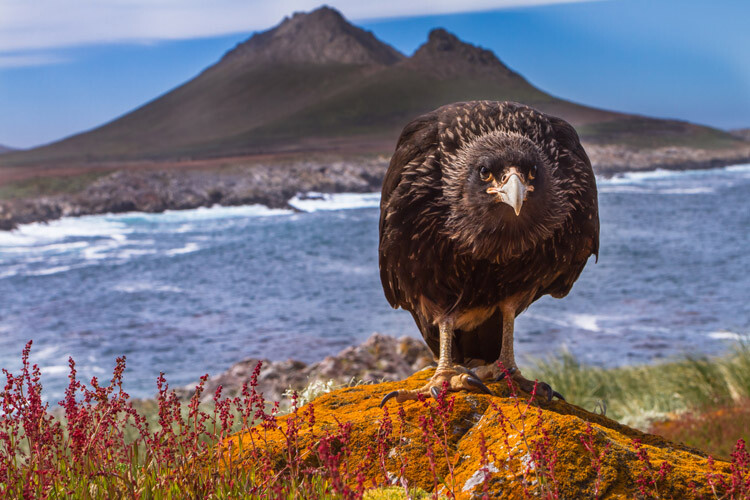
    Ultimate guide outdoor nature photography 43

    To maximize your chances, keep a second camera with a wide-angle lens (heck, even your phone will work) available while out shooting. That way, when a critter draws close and the opportunity for these unique images arrives, you won’t have to fumble with swapping lenses.

    Conclusion

    As I wrote this lengthy piece on outdoor photography, I felt I could have gone on and on about every single aspect of this discipline. There is just so much to know, and to learn; so many subjects to study, understand, and practice.

    Ultimate guide outdoor nature photography 44

    It is daunting, but outdoor photography is as much about the journey as anything else. I love making images that work, don’t get me wrong, but I love even more the process of being outside. I love the way a camera makes me more aware of the play of light, and the movement of animals across a landscape.

    Photography can be a tool toward a better understanding of the world, but we have to use our cameras with respect and caution. Be mindful of your actions, be careful of our impact, and make beautiful photos. Along the way, you may find your experiences, rather than the final images, to be the most rewarding part. Now go explore.

    The post dPS Ultimate Guide to Nature and Outdoor Photography by David Shaw appeared first on Digital Photography School.


    Digital Photography School

     
    Comments Off on dPS Ultimate Guide to Nature and Outdoor Photography

    Posted in Photography


    How to do Abstract Nature Photography

    16 Oct

    Photography, especially nature photography, is the art of capturing a scene to represent a slice – in space and time – of reality. Right? Well, not exactly, not always. That’s definitely part of it, but from very early on in the history of the art, photographers have experimented with the possibilities and limits of technique and imagination to create abstract art. Art that aims not to be accurate, but to let the imagination run free to create an effect disconnected from the obvious.

    Abstract nature photography 01

    So what exactly is abstract photography? And can nature photography be abstracted? Should it be?

    What is abstract photography?

    The word itself comes from the Latin abstractus, which means drawn away or detached, and is often used in opposition to concrete. In terms of art, the abstract is a space for impression and imagination, for the elusive, for fuzzy borders. That doesn’t mean abstract photography is blurry and dim – it can be bright, clear, and sharp. It just doesn’t aim at the common, concrete representation of the world that we’re used to. That’s why abstract nature photography is so intriguing.

    Abstract nature photography 02

    By creating a distance from form, abstract art opens up a space to explore associations, feelings, and reactions. Because it lacks an anchor for your interpretation, there is room for an uninhibited association. Through detachment from the concrete, you’re allowed to create your own way.

    Abstract nature photography 03

    Capturing nature with photography

    In nature photography, most work tries to clearly capture an object, a scene, or a process – to the point where the photography might cross from artistic into scientific. Abstract nature photography is obviously different in that it doesn’t try to represent physical reality. Its potential is to create something ethereal from the ordinary, to find something unique in the mundane.

    To create abstract nature photographs, you need to step beyond the obvious and try to capture a sensation, a mood, a movement – things that might not be part of physical reality, but are just as real to the artist and the viewer. Think of it as music, using very concrete instruments and elements to create a reaction beyond that of the individual notes and sounds.

    Abstract nature photography 04

    Getting started

    To create something abstract, you need to begin with something concrete. Painters create abstract art using concrete tools: their paints, their substrate, brushes or other painting tools, and their imagination.

    Photographers use different tools, but a more significant difference is that the artist is inescapably aware of the reality from which the abstraction in the finished work stems. However, the viewer’s vantage point is the same, whether the piece of art is an abstract painting or an abstract photograph.

    Abstract nature photography 05

    The camera and your imagination are the only limitations on how you create abstract art. Below I list some easy ideas to begin experimenting with because by now I hope you’re intrigued enough to try your hand at abstract nature photography. To be clear, all of these tips also work for abstract art that has nothing to do with nature photography, but they focus on abstract art rooted in nature photography.

    1. Distance

    Getting very close to something or far away from it are great ways to create abstractions. We don’t often get that view in our everyday life, so it’s easy to disconnect what’s captured from what’s immediately familiar.

    Here is an example from the realm of macro photography:

    Abstract nature photography 06

    And an abstract photograph taking advantage of an unusually distant perspective:

    Abstract nature photography 07

    2. Focus

    Just because something is abstract doesn’t mean it has to be blurry or unfocused, but playing with focus is certainly one way to make a scene abstract. This requires that you use manual focus.

    By either squinting or defocusing your eyes, you can get an idea of what the scene might look like as an out-of-focus image. Use that to find an interesting scene – just because something is out of focus doesn’t mean it’s interesting! Play around, and also try combining it with movement (see next point).

    Abstract nature photography 08

    3. Time

    Time is always of the essence when it comes to photography, and abstract photography is no exception. By combining a chosen exposure time with some movement you can create some really interesting abstract art. Your exposure time can be anything from a tiny fraction of a second to several minutes (or even longer), and in terms of movement, it can either come from the subject moving (e.g., light painting), or from the camera moving (e.g., intentional camera movement).

    Abstract nature photography 09

    A bonus for advanced (and daring) photographers

    Early photographic attempts at abstract art were based on the medium itself: the metallic or glass plates or sensitized paper in combination with the necessary chemicals used to create photographs, and light (without a lens). This kind of extreme back-to-basics experimentation also works with a digital camera.

    For instance, through something called refractography, where a naked sensor is exposed to light reflected from a refractive object. It’s both beyond the scope of this article and my photographic experience, so I won’t talk more about it, but I thought it was worth mentioning. A quick warning, though: removing your lens from your camera always exposes the sensor to dust, so doing photography without a lens is obviously not healthy for your sensor. You’ve been warned.

    Abstract nature photography 10

    Conclusion

    For photography newbies, trying your hand at abstract photography is a great way to get to know your camera and try out different photography techniques: using manual focus, light painting, intentional camera movement, and so much more. For more advanced photographers, it’s a fun way to explore and expand your art and to try something new.

    Abstract nature photography 11

    What do you think of abstract nature photography? Have you tried it? Please share your photos and thoughts in the comments below.

    The post How to do Abstract Nature Photography by Hannele Luhtasela-el Showk appeared first on Digital Photography School.


    Digital Photography School

     
    Comments Off on How to do Abstract Nature Photography

    Posted in Photography


    The magic of ultraviolet nature and macro photography

    13 Oct

    Ultraviolet photography is something that relatively few photographers explore, but it’s a fascinating realm to explore with less of an investment in equipment than most people think.

    Much of my photography revolves around the world that we cannot see with our own eyes. This “unseen world” approach can make otherworldly beautiful images from everyday ordinary subjects. Using light beyond our own spectrum is a great way to start these explorations—enter the world of ultraviolet photography.

    To clarify: There are two types of ultraviolet photography. UV reflectance and UV fluorescence. UV reflectance is using a light source that contains UV light (such as the sun or a full-spectrum light source) and collecting only the ultraviolet light that hits the camera sensor. This requires a camera modification similar to what you would do for infrared photography, but on the other end of the spectrum.

    It can reveal hidden patterns in flowers that only insects can see, like a bulls-eye pattern in sunflowers and what effectively appears as a “landing strip” in many flowers to attract pollinators.

    The bottom-right image above is made by collecting UV light. The bottom middle is visible light and the left is an infrared image of the same sunflower. While the dark pattern is certainly interesting, things become almost magical when you make the flower fluoresce (large image). UV fluorescence requires a regular unmodified camera, but careful attention to ensure only pure UV light hits the subject. If anything in the frame fluoresces, visible light bounces back to the camera.

    Interestingly, just about everything in nature fluoresces to some degree. You may have heard about scorpions or certain millipedes glowing under UV light, but if you bring forward enough UV-only light, everything can “glow”. The intensity of the light is key, and it needs to be “pure” as even a fraction of a percentage of spill-over into the visible spectrum will contaminate your results.

    This is a typical setup for an ultraviolet shot. Each of these Yongnuo 685 flashes has been modified to output exclusively UV light, and the process only takes about five minutes. You need to disassemble the flash (Warning: this is high voltage equipment you’re opening up. You can seriously hurt or kill yourself if the flash isn’t properly discharged and you touch the wrong components. If you’re unsure how to deal with equipment like this, give it to a professional.) and remove two pieces of plastic that are in front of the xenon flash tube. These control the flash beam but also block UV light.

    There are two screws and a few clamps under the rubber circles on the sides of the flash, it’s not a complicated procedure. With these gone and the flash reassembled, you need to filter the light down to UV-only. I use a combination of two 77mm filters that do an awesome job: the Hoya U340 and the MidOpt BP365. Each of these filters on their own leak a very small portion of the visible spectrum; one leaks red, the other leaks violet. Together, they block it all. Conveniently, they also allow infrared light to pass through which the camera can’t see either, so they can serve multiple purposes.

    The cost for each flash modification was around USD$ 500, so getting into this area of photography costs less than a good lens.

    With three of these flashes at point-blank range at 100% output, the above image still needed to be shot at ISO 5000. Aphids being feasted on by a ladybug on a plum leaf never looked so bizarre. I’m unsure of the exact reason, but aphids and small spiders tend to fluoresce green.

    Most insect eyes fluoresce blue, but flowers can contain many different colors—a yellow lady slipper orchid maintains its yellow “shoe”, but the ordinarily-green leaves glow red.

    The key here is constant experimentation. Some flowers or insects are completely uninteresting in the way they fluoresce, while others are shockingly vibrant. It’s important to note that nothing can ever see the world this way—it requires that all visible light be filtered from the light source. Insects can see reflected UV, like this cicada image:

    But when you photograph that same cicada in a dark room and collect the visible light? The clear wings turn into a science-fiction shade of glowing blue. The same is true for certain species of dragonflies, though most insects with smaller wings are unresponsive. Some research has been done into this and seems to link the elastomeric protein “resilin” and its nitrogen content to these glowing features but I’m shocked at the lack of scientific articles on the topic.

    As a photographer (and not an entomologist or scientist in any way), I simply explore this unknown realm with childhood curiosity.

    $ (document).ready(function() { SampleGalleryV2({“containerId”:”embeddedSampleGallery_8755985974″,”galleryId”:”8755985974″,”isEmbeddedWidget”:true,”standalone”:false,”selectedImageIndex”:0,”startInCommentsView”:false,”isMobile”:false}) });


    Don Komarechka is a nature, landscape, and macro photographer based in Barrie, Canada. His macro work has been highlighted in international publications. Don is an author, educator, and adventurer with a passion for revealing “the unseen world.”

    To see more of his work, visit his website or follow him on Facebook and Flickr.

    Articles: Digital Photography Review (dpreview.com)

     
    Comments Off on The magic of ultraviolet nature and macro photography

    Posted in Uncategorized