RSS
 

Posts Tagged ‘More’

Firmware update gives Sony QX-series cameras more manual control

19 Dec

Unknown.png

Sony has announced firmware upgrades that enhance the features of its QX-series ‘lens-style’ cameras, which clip on to the front of your smartphone. The update adds Full HD video recording and an expanded ISO range for both the QX10 and QX100, while the latter also receives a shutter priority mode. Sony’s latest PlayMemories Mobile app has more seamless photo browsing and dramatically improved performance on iOS devices. Click through for more.

News: Digital Photography Review (dpreview.com)

 
Comments Off on Firmware update gives Sony QX-series cameras more manual control

Posted in Uncategorized


A Turn of the Head – Creating More Compelling Bird Portraits

09 Dec

The last time I counted, there were about seventy two quadrillion photos of birds on the internet. Therefore, if you’re dedicating your time to try to stand out as a bird photographer, there is a ton of competition out there. However, there is one thing that you can try to incorporate in your photos that will at least have them stand out a little bit.

Creating More Compelling Bird Portraits

Wait for the turn of the head. Sounds pretty simple doesn’t it? It sounds simple, but achieving it is often a bit trickier. Many bird species have their eyes placed on opposite sides of their heads. When photographing birds without their heads slightly angled towards the viewer, the images tend to lack a bit of intimacy. Consider the following two images of a Mountain Bluebird. In the first image, the bird’s head is angled away from the viewer, while the second image features the bird’s head angled just slightly towards the viewer.
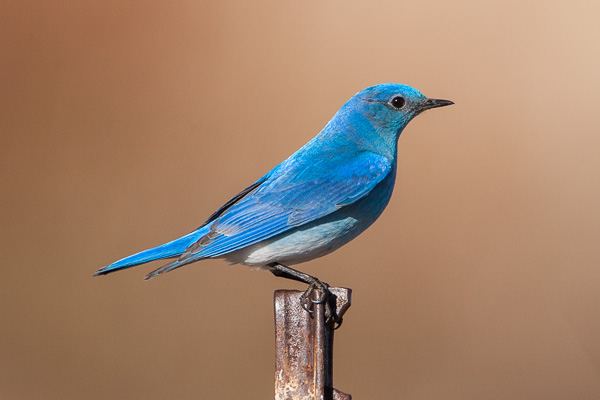
Mountain Bluebird looking away from the viewer
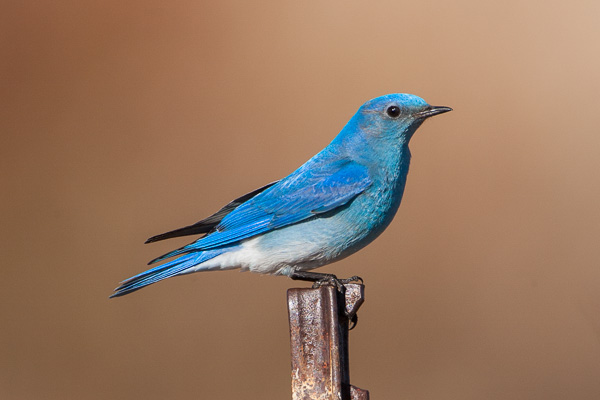
Mountain Bluebird looking away from the viewer

Mountain Bluebird looking toward the viewer

Mountain Bluebird looking toward the viewer

I’ll bet that for most of you, the second image is more compelling just because of that eye contact. Sure the perch is somewhat ugly (it’s the post used to mount the bird box above the ground), but even with an ugly perch, the second image is more compelling. Then if you’re patient, even with an ugly perch, you can still get a compelling image out of it, slight head turn included.
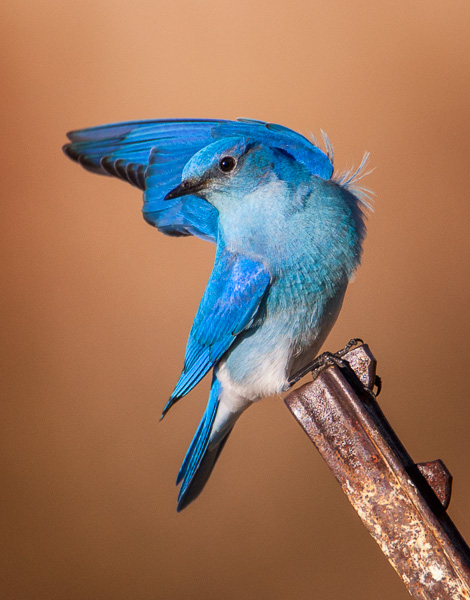
Mountain Bluebird posing pretty

Mountain Bluebird posing pretty

What to look for – subtle differences are huge

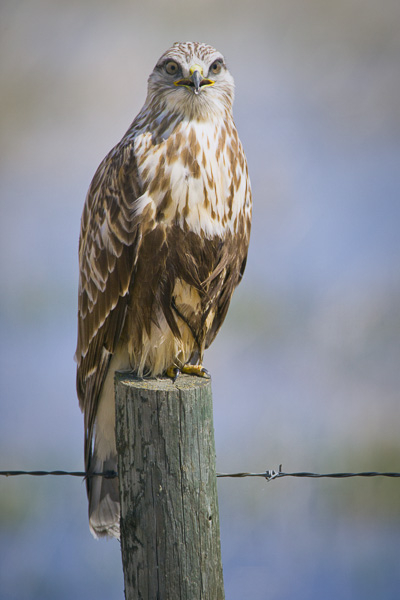
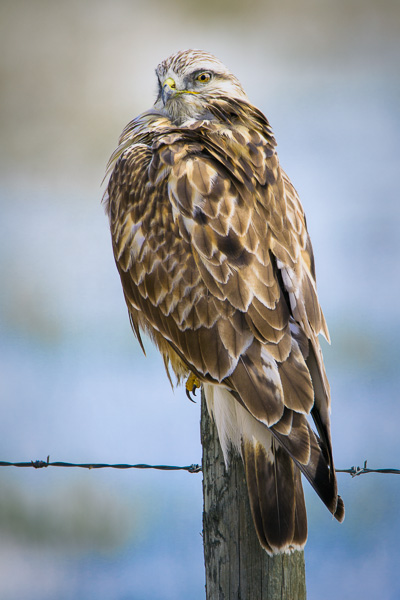
Consider the following three photos of a Rough-legged Hawk.
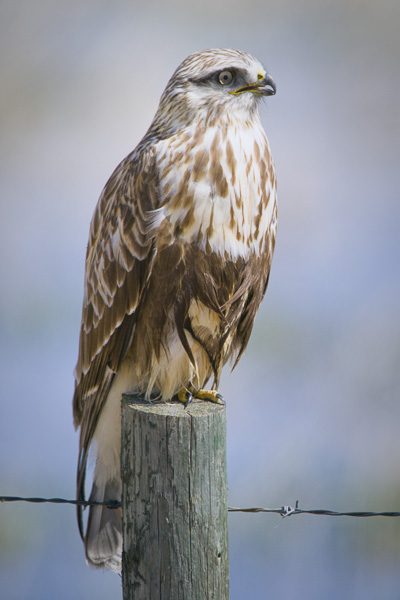
Rough-legged Hawk looking away from the viewer
Rough-legged Hawk looking away from the viewer

© Paul Burwell Photography - Rough-legged Hawk looking directly at the viewer
Rough-legged Hawk looking directly at the viewer

© Paul Burwell Photography - Rough-legged Hawk with the sexy over the shoulder look towards the viewer

Rough-legged Hawk with the sexy over the shoulder look towards the viewer

In the first image, the bird is looking away from the viewer. In the second, he is looking straight on to the viewer, while the third image has my preferred head-turn. In my opinion, in terms of a compelling image, it isn’t even a close comparison. The perch still isn’t ideal (although this is the typical place we find these birds where I live), but the third pose with the head-turn makes that image into a keeper for me.

Patience or initiative gets the head turn

So, is it just a matter of patience and waiting for the preferred head-turn? Sometimes that is true. Other times I try to “encourage” my subject to look my way. How do I accomplish this? I imitate the squeak of a mouse. I purse my lips together and suck in air through my teeth to produce an irritating squeaking sound. Sometimes, not always, but some times, the bird is curious enough to look my direction.

I know of some photographers who prefer to use the “machine gun” approach where they just hammer-down on the shutter button, essentially shooting a slow frame-rate movie.  Occasionally they’ll catch the bird with its head in the preferred position.  I personally don’t favour that approach, but would rather just wait for the appropriate moment and cut down on my post-processing work once I get home.

In terms of the bird looking head-on into the camera, that can occasionally work, but for most birds it just isn’t their best angle. There are definitely exceptions to that and owls are the first bird that springs to mind. Consider this image of the tiny Northern Pygmy Owl for example.
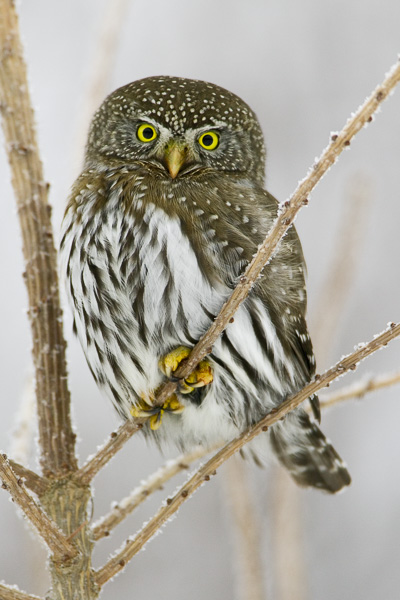
© Paul Burwell Photography - Northern-Pygmy Owl looking frosty

Northern-Pygmy Owl looking frosty

Here are a couple more images to consider:

© Paul Burwell Photography - www.bsop.ca

Ruddy Duck Drake looking towards the viewer

© Paul Burwell Photography - www.bsop.ca

Ruddy Duck Drake looking away from the viewer

I made these two images of the Ruddy Duck just seconds apart. In the first image, the bird looked my way due to my incredible squeaking ability, while in the second, his patience expired and he was off to find his girl friend.

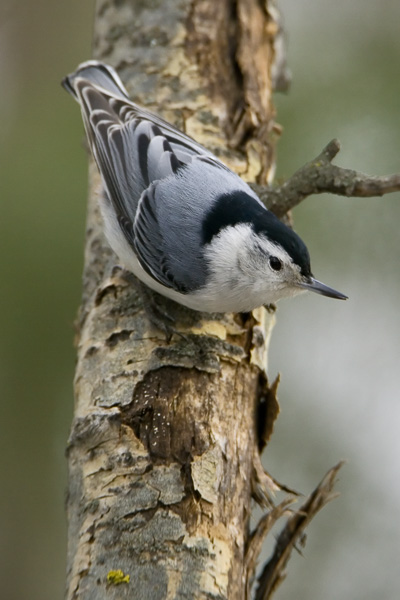
The following two images of a White Breasted Nuthatch also illustrate the point. In both images, the birds are in their traditional upside-down pose on the side of a tree. The difference between the images is that in the first the bird is looking slightly away from the viewer while in the second exhibits that classic slight head-turn towards the viewer that I strongly favour.
© Paul Burwell Photography - www.bsop.ca

White-breasted Nuthatch looking away from the viewer

© Paul Burwell Photography - www.bsop.ca

White-breasted Nuthatch looking towards the viewer

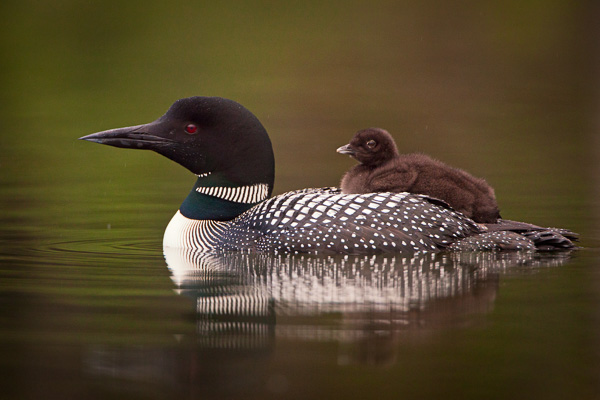
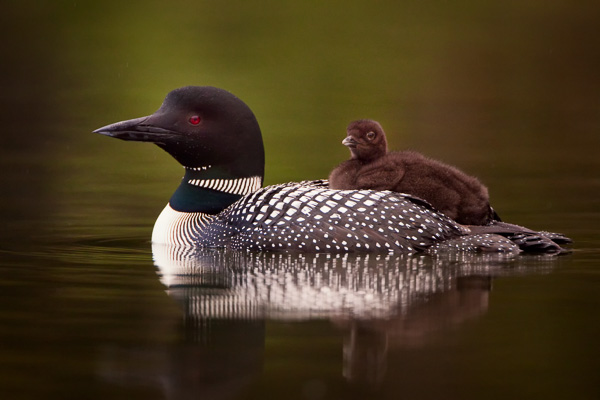
The last two images I present for your consideration are these two images of a Common Loon carrying a chick on its back.
© Paul Burwell Photography - www.bsop.ca

Common Loon carrying a chick on its back with both birds looking away from the viewer
© Paul Burwell Photography - www.bsop.ca

Common Loon carrying a chick on its back with both birds looking towards the viewer

In the first image, both adult and baby are looking away from the viewer. It’s a nice image but lacks a bit of intimacy.  Whereas the second image features both birds looking towards the viewer. The second image is a result of the large goofy photographer, with his lens perilously positioned inches above the water, from an unstable boat squeaking his heart out. For me, there is no comparison between the two images; the second wins easily.

Therefore, the next time you’re out in pursuit of some bird images that might rank in the top thirty-six quadrillion instead of the bottom, look for the opportunity to capture those birds with their heads slightly turned towards you. Whether you achieve it through patience or “the squeak”, I’ll bet you’ll find your images a bit more compelling.

Post originally from: Digital Photography Tips.

Check out our more Photography Tips at Photography Tips for Beginners, Portrait Photography Tips and Wedding Photography Tips.

A Turn of the Head – Creating More Compelling Bird Portraits

The post A Turn of the Head – Creating More Compelling Bird Portraits by Paul Burwell appeared first on Digital Photography School.

Digital Photography School

 
Comments Off on A Turn of the Head – Creating More Compelling Bird Portraits

Posted in Photography


50 More Incredible Tumblr Blogs for Photographers

04 Nov

Tumblr is a magic land of GIFs, memes and photography. If you step into this world, you should know in advance that there is no looking back. Browsing through the images can take you hours, so you may even forget to feed your pet! But no worries: Tumblr will help you go through it – there are tons of cute Continue Reading

The post 50 More Incredible Tumblr Blogs for Photographers appeared first on Photodoto.


Photodoto

 
Comments Off on 50 More Incredible Tumblr Blogs for Photographers

Posted in Photography


Awe-Inspiring Art: 14 More Masters of Paper Sculpture

23 Oct

[ By Steph in Art & Sculpture & Craft. ]

Paper Sculptures Main

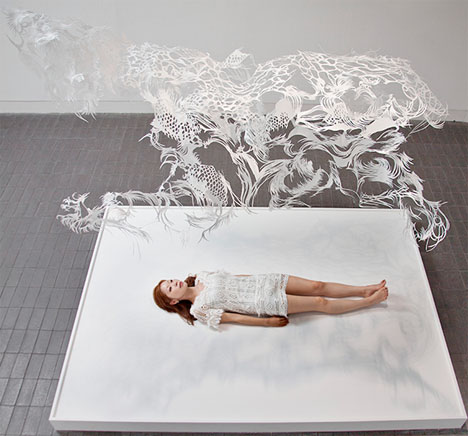
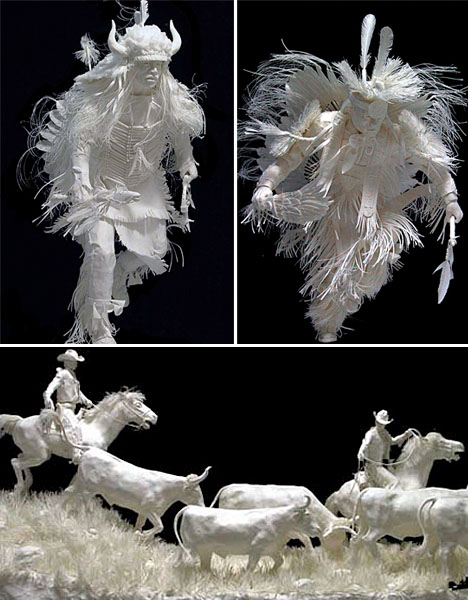
Most artists approach paper as a two-dimensional surface upon which to draw or paint. Others see it in an entirely different way, using it as an architectural material for the most unexpected of three-dimensional works. From wispy, dynamic cut-outs hovering in the air to replicas of entire cities, the works of these 14 (more!) paper artists astonish and amaze.

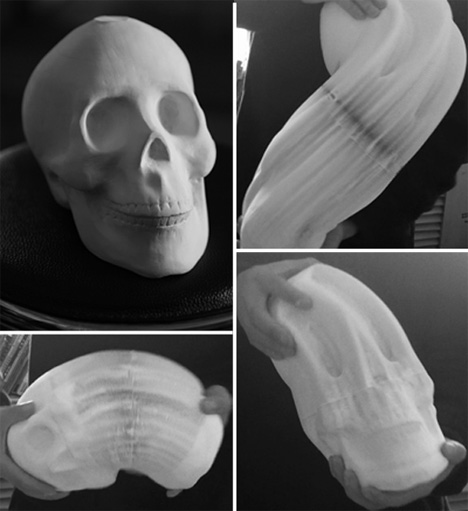
Eerie Flexible Paper Works by Li Hongbo

Paper Sculpture Hongbo 2

Paper Sculpture Hongbo 2

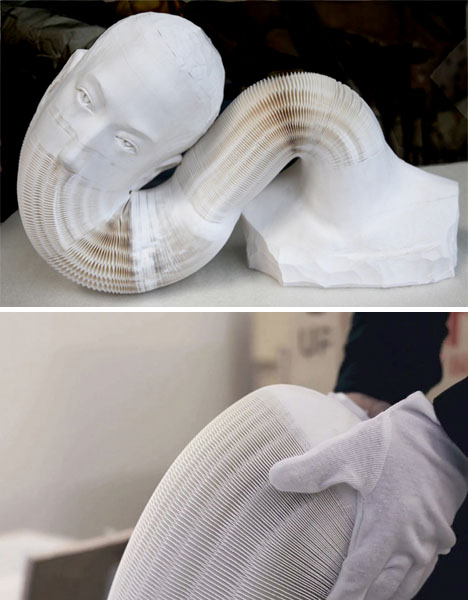
What appear to be porcelain or ceramic sculptures stretch and bend in ways you’d never expect – because they’re made from thousands of layers of paper, glued together into accordion-like configurations. Their true nature is only revealed when they are manipulated. Artist Li Hongbo got his inspiration from traditional Chinese toys made from folded and glued pieces of thin paper.

Hand-Cut Paper Sculptures by Nahoko Kojima

Paper Sculpture Nahoko 3

Paper Sculptures Nahoko 2

Paper Sculpture Nahoko 1

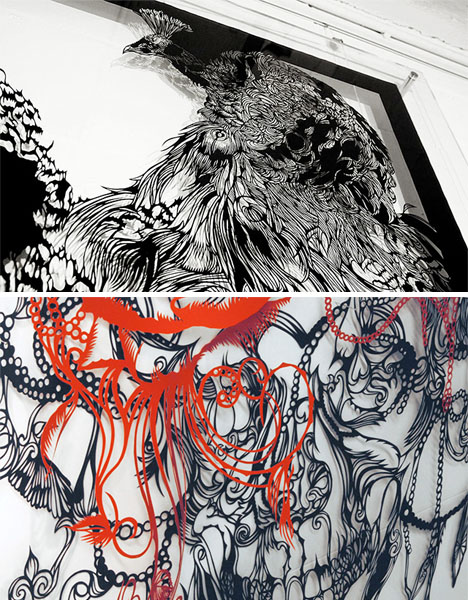
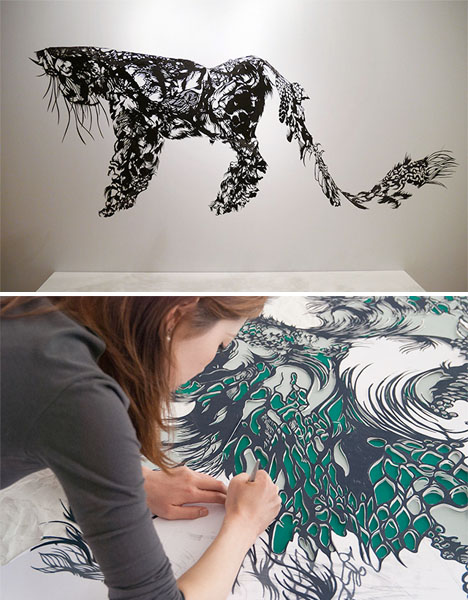
A single sheet of paper becomes a leopard, a peacock, a forest, a skull or a masterful life-sized swimming polar bear in the hands of Japanese paper artist Nahoko Kojima. A single piece can take up to six months to create. Byaku, the polar bear, is inspired by the forces of nature.

Amazingly Intricate Paper Scenes by Allen and Patty Eckman

Paper Sculptures Eckman 1

Paper Sculptures Eckman 2

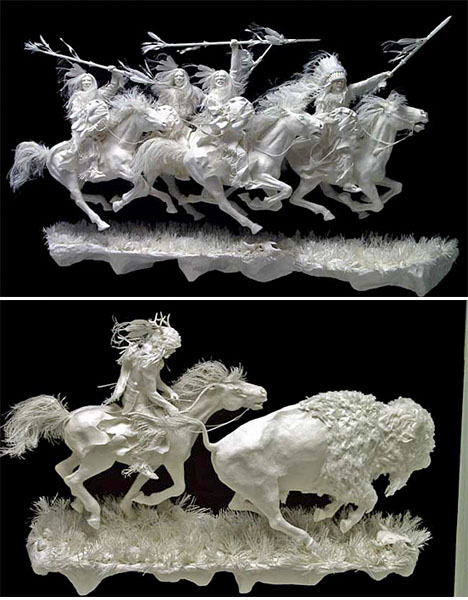
Have you ever seen paper look so dynamic, so infused with life? Allen and Patty Eckman met at Art Center College and soon put their talents to work in collaborative efforts focusing primarily on Native American history. The artists make their own paper pulp, casting it in clay molds to capture this level of detail.

City Maps by Matthew Picton

Paper Sculpture Picton

Matthew Picton creates detailed paper street maps of cities, often using the delicacy of the material to remark upon traumatic events in each location’s past. London in 1940 after Waterloo, Dresden, and Hiroshima all bear the destruction of war in the form of burn marks and tears.

Next Page:
Awe Inspiring Art 14 More Masters Of Paper Sculpture

Share on Facebook


[ By Steph in Art & Sculpture & Craft. ]

[ WebUrbanist | Archives | Galleries | Privacy | TOS ]


WebUrbanist

 
Comments Off on Awe-Inspiring Art: 14 More Masters of Paper Sculpture

Posted in Creativity


16 October, 2013 – Sony Alpha 7R Hands-On & More

16 Oct

We have three new articles being published today. The first is a brief report on the three new cameras that Sony has just introduced. These are going to shake up the industry a bit (as Sony tends to do).

The second article is a hands-on report written following my spending a few days earlier this month working with the exciting new Sony Alpha 7R.

The third is a new essay from our regular contributor Alain Briot titled In Priase of Amateurs.

WIN AN ANTARCTIC EXPEDITION 


The Luminous Landscape – What’s New

 
Comments Off on 16 October, 2013 – Sony Alpha 7R Hands-On & More

Posted in News


More of a good thing: Sony Cyber-shot DSC-RX100 II review posted

24 Sep

rx100ii_news.jpg

We’ve just posted our full review of the Sony Cyber-shot RX100 II. Following on the success of the RX100 is no easy feat, but just the same the RX100 II does so with a new BSI CMOS sensor. Also new to this model is an accessory port/hotshoe, Wi-Fi connectivity with NFC, and a tiltable display. Did Sony make a good camera even better? Click through to read our full analysis.

News: Digital Photography Review (dpreview.com)

 
Comments Off on More of a good thing: Sony Cyber-shot DSC-RX100 II review posted

Posted in Uncategorized


Olympus OM-D E-M1 – Review extended with more AF insights

13 Sep

E-M1.jpg

We’ve had more time to shoot with the Olympus E-M1 and have extended our coverage of its AF performance. In addition to incorporating real-world Continuous Autofocus examples and commentary, we’ve also spent more time shooting with it alongside an E-5, to see exactly how the two compare, and amended our impressions accordingly.

News: Digital Photography Review (dpreview.com)

 
Comments Off on Olympus OM-D E-M1 – Review extended with more AF insights

Posted in Uncategorized


Apple RAW compatibility update adds support for Canon 70D and more

23 Aug

shared:Aperture.png

Apple has released RAW Compatibility Update version 4.08 for Aperture and iPhoto ’11. This update adds support for the Canon EOS 70D, Fujifilm X-M1, Sony RX100 II and five additional cameras. You can download the new software via the System Update feature in Mac OS X or via the source link on the following page. There you’ll also find a full list of the newly supported cameras.

News: Digital Photography Review (dpreview.com)

 
Comments Off on Apple RAW compatibility update adds support for Canon 70D and more

Posted in Uncategorized


5 Steps to Building More Powerful Images

10 Aug

A Guest Contribution by Dan Bailey

We photographers seem to have it easy. Whereas most artists spend anywhere from hours, to months to years to manufacture their creations, we can simply point, press and be done. However, that kind of convenience doesn’t necessarily translate into great imagery.

Shooting powerful photos that have lasting visual appeal requires more than just pointing and clicking; it takes applying some fundamental compositional methods that are designed to simplify your compositions and actively engage your viewers. Here are five steps that will help you strengthen the visual impact of your imagery.

1. Use Awesome Light

Photography is all about light, and it’s the first thing that will make or break the shot. Not matter what you’re shooting, any and every subject will look better in great light. When we think of good light, we often think of Magic Hour, or the stretches of time during sunrise and sunset. As a general rule, shooting during these times will usually give excellent results.

However, be open to shooting at other times of the day, or even using other lighting sources. Fog, diffused window light or a camera flash can all make for compelling illumination. If you become proficient at wrangling the light, you can create great photos under any conditions.

NFLD HIK 100A

2. Have an Identifiable Main Subject

First and foremost, your image should have have a main subject. Period. It needs to be about something. The most powerful photographs are built around a single element that serves as the focal point of the shot. As a photographer, your job is to draw your viewer into the frame, and if you don’t give them something to lock onto, their eyes will wander aimlessly around your picture trying to figure out what they’re supposed to see. If you don’t know what your picture is about, then your viewer won’t either and they’ll just move on.

DSC8929

3. Use Relationships to Tell the Story

A powerful photograph tells a story, which essentially means that it communicates some specific message or invokes an emotional response from the viewer. The best way to do build this story is to establish relationships between your main subject and the other elements inside the frame.

The job of these secondary elements is to compliment, reinforce or contrast the main subject in some way. An effective secondary subject can be as simple as a strong, out of focus background that gives a sense of place, or it can be two or three other things in the photo that give your subject something to play off of and help to establish the narrative of how your subject “fits” within the world of your frame.

Adding strong secondary elements to your photo also gives your viewer something else to explore as their eyes scan the image, and more importantly, it gives them something to think about. Anytime you activate your viewer’s brain, you’ve gone a long way towards creating a compelling image.

UTH 100

4. Create Tension Through Framing

Depending on how you place your subjects in the frame, you determine the experience by which your viewer scans and respond to what’s in your photograph. The human eyes and brain are hard wired to see and recognize patterns, colors and imperfections in the world; it’s how we evolved to identify our surroundings and spot things like food and danger.

By using a mix of hot and cool colors and by placing your subjects in seemingly random areas in the frame, you cause an inherent uneasiness in your viewers. Their eyes will scan your image, trying to find patterns and that may not exist, and so they’ll keep looking, tracking back and forth between your different subject elements, and darting across broad patches of negative space in order to make sense of the photo. By contrast, if your composition is too perfect, or too balanced, your viewer will quickly spot this nice, easy pattern and move on. That’s not what you want.

DSF0787

5. Don’t Show Everything

A common mistake with beginning photographers is to try and show too much. This leads to cluttered, boring images that do little to engage the viewer’s brain. As I said in number 2 above, in order to create a powerful photo, you need a main subject. However, I didn’t say that you had to show the whole thing.

Abbreviating your subjects can be a very powerful method towards creating a compelling shot. Especially if I they’re things that we’re all familiar with. If you only show part of a subject, you automatically activate your viewer’s imagination as they try to picture the rest in their mind. Photography is a two way street: You have creator and viewer, and if you bring your audience into the process, you invite them to become more connected to your shot.

Remember, good photography isn’t about perfectly reproducing your subject, it’s about creating a visual representation that communicates the ideas or emotions that you had about the scene right when you pressed the shutter.

DSC2259

Further Reading

Makingcover125For more creative photography tips, I invite you to check out my eBook Making The Image – A Conceptual Guide to Creating Stronger Images. I’ll even give you a special price! Use discount code DPS you can get eBook for 50% off.

Dan Bailey is a full time professional outdoor, adventure and travel photographer based in Alaska. When he’s not off exploring in the mountains, writing about photography, or flying his little yellow bush plane, he can sometimes be found lurking in the forums right here at DPS.

Check out his blog and find him on Facebook and Google+.

Post originally from: Digital Photography Tips.

Check out our more Photography Tips at Photography Tips for Beginners, Portrait Photography Tips and Wedding Photography Tips.

5 Steps to Building More Powerful Images


Digital Photography School

 
Comments Off on 5 Steps to Building More Powerful Images

Posted in Photography


Lomography raises more than $1M for production of new Petzval lenses

09 Aug

Petzval.png

Lomography’s campaign to raise funds to bring the centuries-old Petzval lens back into production via Kickstarter has now raised more than $ 1 million – ten times the original target. The ‘New Petzval’ lens looks and functions much like the originals, with a brass exterior, and the aim is to produce it in both Canon EF- and Nikon F- mounts. The lens is expected to be available next spring. 

News: Digital Photography Review (dpreview.com)

 
Comments Off on Lomography raises more than $1M for production of new Petzval lenses

Posted in Uncategorized