RSS
 

Posts Tagged ‘Money’

How to Get Started Making Extra Money with Your Nature Photography

16 Sep

Photography is expensive, there’s no doubt about that. Nature photographers have it bad, though, especially if you’re buying long telephoto lenses for wildlife. The Canon 200-400mm lens will set you back $ 11,000 – ouch. So it’s no wonder that many people want to make it in photography and start monetising their work. But can you make money with your nature photography?
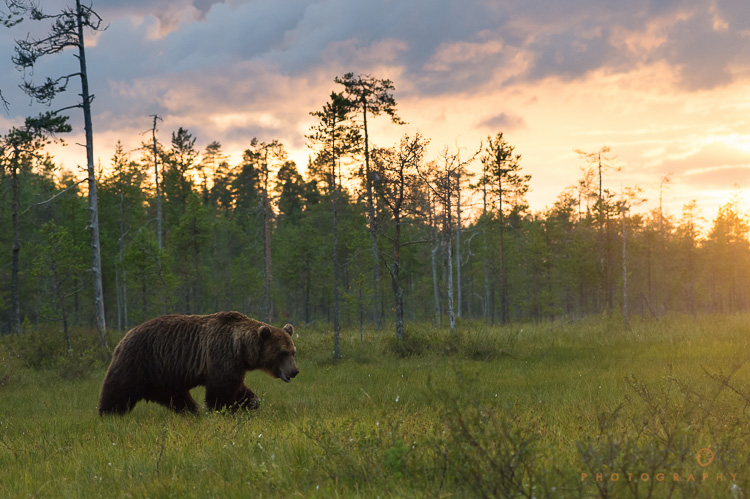
Brown Bear at Sunset

Making money from your photography isn’t easy, and it doesn’t get any easier as a nature photographer either. There’s less demand, and more people doing it. That means increased competition for a smaller slice of the pie. If you want to make money from your nature photos, then you must realize that it’s not easy by any means – but it’s also not impossible.

I’ve been working as a professional nature photographer for about six years now. What I’ve learned over my relatively short career so far is that you need to think outside the box to stay ahead of the competition. A bit of a cliché statement maybe, but one that you’ll have to embrace – especially if you want to be a full-time photographer.

But you’re probably reading this wondering how you can make a bit of extra cash from your photos on the side, rather than an entire life-altering career move. Well, that I can help you with! Let’s take a look at some of the main ways you can start to make money with your nature photography.

Prints and Other Products

The first print I ever sold was in 2008. That’s eight years ago now, and I’ve been doing it ever since. To the surprise of some, people do buy photographs to hang on their walls. This isn’t a space reserved solely for paintings.

Personally, I have my photos printed and framed myself, but you can have this process automated by dedicated web hosts. Zenfolio is a popular choice amongst photographers for a website, and they offer the ability to have orders automatically fulfilled by printing labs. This means you can sit back and relax, selling prints from your website.
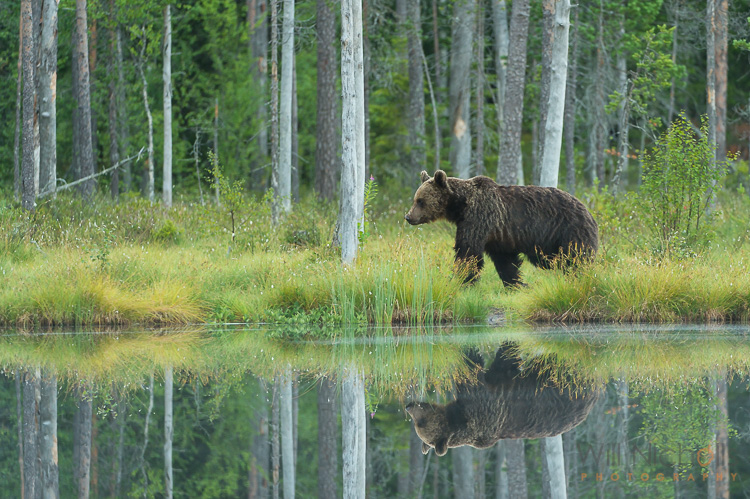
Brown Bear

Beauty and picturesque scenes sell better as prints, rather than action-packed shots.

It’s not just online though. You can sell prints in the real world too! Head to a market or trade show, set up a stall and get selling. It’s great fun talking to customers about your work and to sell your photos this way. Doing just a couple of shows a year can buy you a new camera or lens, so that’s something to think about.

What sells best? Well, I find the more traditional wildlife photography like; clean bokeh shots, cute animals, or dramatic scenes. You’re looking for something that someone will want to look at over and over again. After all, when was the last time you moved a framed picture in your house? They stay up for a long time.

Workshops

If you really know your way around your camera and can take a decent photograph, then this is something you could consider. Day workshops offer clients tuition in photography, let them know your secrets and just help them to take a better photo and understand their equipment. It’s a popular move amongst photographers nowadays, and almost everyone trying to make a living out of nature photography is offering workshops.
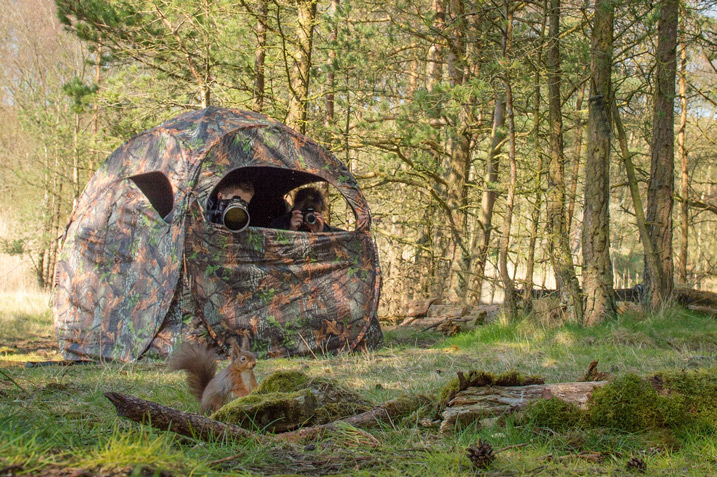
wildlife-photography

The best thing about it is that you can set your own hours and choose when you work. You can fit sessions in on the weekend around your full-time job, and have a little extra money coming in on the side. All of this helps to take the sting out the costs of new photography kit.

There are different types of workshops you can offer. Some photographers partake in one-to-one guiding days, showing clients different locations for landscapes or wildlife sightings while imparting photographic knowledge. Others may rent out a blind they have built to view a particular animal (see image above), something that is often in high demand by those who don’t have the time to create such possibilities themselves.

Sell Stock Images

The stock photography industry is depleting day by day, unfortunately. It used to be the case that you could make a five-figure salary, or more, from stock photography alone. Maybe not just as a nature photographer, but you could definitely make big bucks in comparison to nowadays.
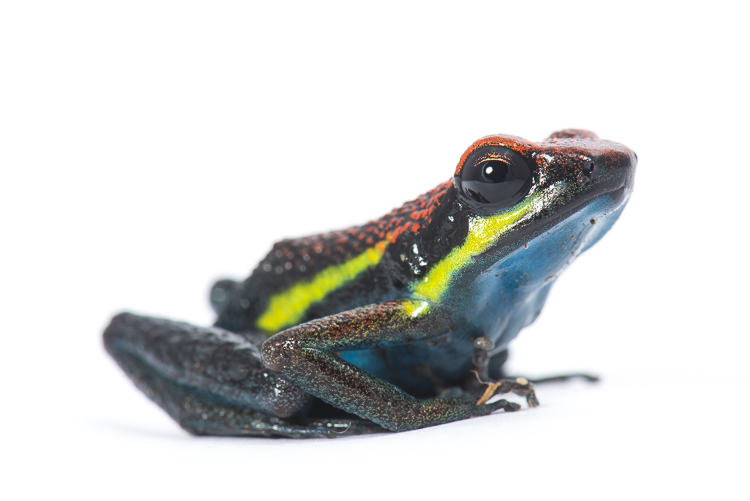
nature-photography-money

But with the rise of microstock, photographers are seeing their earnings decrease. On top of that, many stock websites are taking increased percentages as a commission, leaving photographers with little left of the few sales they may still make.

Despite that bleak picture, there are specialist nature photography stock agencies you can submit to. The likes of Nature Picture Library still sell well, at least in the UK, and photographers are able to make a decent income from them. However, they are very selective about who they work with – you need something unique in your portfolio to be accepted.

Selling to Publications

This is where there is definitely still money. Selling images to newspapers or magazines can be pretty lucrative indeed – the trick is making it a regular gig. Publications are often looking to buy not just one photo, but a sequence of photos that tell a story. That’s where your best chance to get published sits.
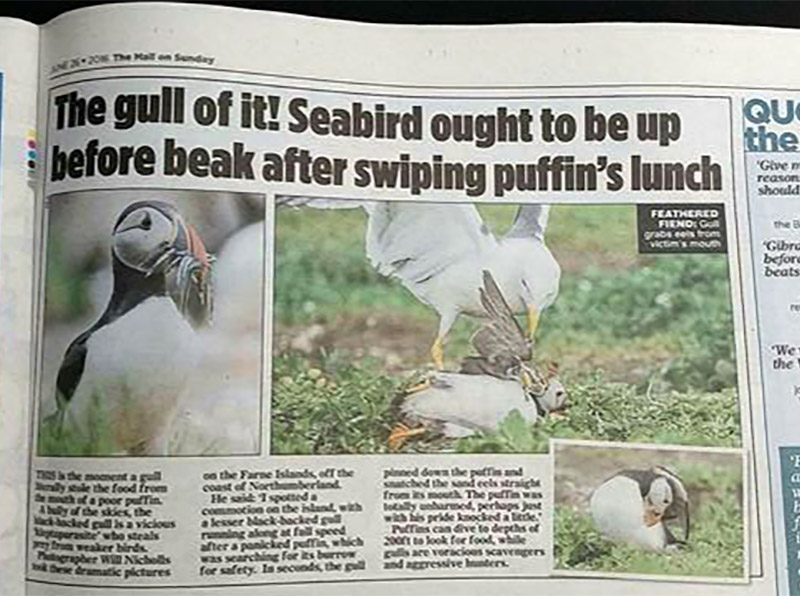
Selling to newspapers and other publications can be a good source of income.

Selling to newspapers and other publications can be a good source of income.

Working with a press agency to get your photos syndicated and in front of the right people is the best way to go about it. While you can contact publications yourself, you’re likely to be ignored and if your photos are used you may have to spend months chasing them for payment. Press agents take the stress out of it. There are plenty around the world, and they’ll take a commission (usually 40-50%) of the sale price for their services. I work with

Press agents take the stress out of it. There are plenty around the world, and they’ll take a commission (usually 40-50%) of the sale price for their services. I work with REX Features, but there are plenty out there such as Caters News and Associated Press. If you think you have a good, fresh sequence of images then send some low-resolution copies over and you’ll soon find out if they are sellable or not.
nature-photography-money

In Conclusion

Here are just some ways that you can make money as a nature photographer. It takes work and dedication, especially if you want to make it a full-time job. It’s definitely not the path everyone will be able to take. But, there’s no harm in trying to make a bit of extra money at first and seeing where it takes you. You just have to take that first step.

googletag.cmd.push(function() {
tablet_slots.push( googletag.defineSlot( “/1005424/_dPSv4_tab-all-article-bottom_(300×250)”, [300, 250], “pb-ad-78623” ).addService( googletag.pubads() ) ); } );

googletag.cmd.push(function() {
mobile_slots.push( googletag.defineSlot( “/1005424/_dPSv4_mob-all-article-bottom_(300×250)”, [300, 250], “pb-ad-78158” ).addService( googletag.pubads() ) ); } );

The post How to Get Started Making Extra Money with Your Nature Photography by Will Nicholls appeared first on Digital Photography School.

Digital Photography School

 
Comments Off on How to Get Started Making Extra Money with Your Nature Photography

Posted in Photography


How to Buy Camera Gear Wisely and Save Money

07 Aug

Many photographers have experienced lens-lust or gear envy, and know the thrill of playing with a new piece of camera gear. But gear can be expensive, and choosing the wrong equipment can be a costly mistake. So how do you know you are purchasing the correct gear, and ensuring that it won’t end up in a cupboard collecting dust?

Here are five tips to help you choose and buy camera gear wisely, and maybe save a little bit of money at the same time.

1. What do you really need?

WideAngle

If you often photograph in tight spaces, or want to explore landscape or architecture photography, a wide angle lens is perfect.

I always advocate working with your current gear until you start to feel its limitations. This way you will have a clearer idea of what specifications or items will help you grow further as a photographer.

If you feel that you’ve reached these limits, but are still confused about which piece of equipment you should buy as your first priority, try taking a few notes during your next shoot. Where do you get stuck? What frustrates you? What would make your photography life easier? What will you be photographing? And what is your next goal? Asking yourself these questions will help refine exactly what you need from your next purchase.

For example, do you wish that your lens would shoot wider, or zoom in closer? Perhaps you really want to try macro photography, or need a tripod to try slow shutter speed waterscapes?

Landscape

A zoom lens can be really useful, allowing you to use it across numerous photography genres from portraiture, events, and even landscapes.

If you shoot a lot of landscapes or architecture, a wide angle lens will be more useful than a telephoto lens. Alternatively, if you photograph families, children, or events, a zoom lens may make it easier to respond quicker to impromptu moments, rather than a prime fixed-focal length lens.

Also, will you fully understand and use all the wonderful aspects of the new equipment? Will it be beneficial to your photography, or will it be so complex that it will frustrate you?

For example, should you spend a lot of money on a professional level lens that shoots at f/2.8 if you do not know anything about depth of field? Do you like the effect of f/2.8? Will you use it regularly? Or would a less expensive lens that goes to f/5.6 do everything you need it to?

MacroShot

A macro lens won’t help with room interior photographs, but is perfect for capturing close up shots of flowers and insects.

Similarly, if you’ve only been shooting on auto-modes, purchasing a camera that has mostly manual options may not be the best choice. Instead, consider a mid-range camera that offers both auto and manual modes, so you can try more advanced techniques, as well as take it out just for fun.

Make a decision about what you really need from your gear, and remember – it’s okay to stick with the equipment you currently own until you are 100% sure of your choice.

2. Know your budget

Unfortunately we do not all have limitless bank accounts, and will have to make decision on how much we can spend. It is a balancing act between deciding on your budget, and researching the actual cost of items. You could choose to spend a bit more now on one item that will fulfil your needs for the long term, or spend less on an entry-level option to build up your experience.

Budgeting

It is important to stick within your budget. If you can’t stretch to afford your ideal gear, consider other options such as buying second-hand, less expensive options, renting, or waiting for the next sale.

Sometimes however what you really want is simply too expensive, so you can choose to wait for the next big sale or look at alternatives, and that’s perfectly okay too. Another option would be to buy the absolute necessities now, while saving for the next items. If you discover you need it sooner, and have not saved enough yet, you can choose to rent gear as needed.

Many stores now also offer payment plans that allow you to take the gear home and pay it off in weekly instalments. This can certainly help with cash flow, but always read the small print, and check the interest rate to see if it will suit your situation.

3. Do your research

50mm apertures
The images above were shot with two different 50mm lenses, using their largest apertures. Do you think you would notice the difference in your own shots? Is it worth the price difference? Flickr can also be a great way to see examples of images taken using specific equipment.

There are so many opinions and reviews posted online that it is easier than ever to do your research. Read personal opinions, website reviews, as well as manufacturers’ specifications, to give you a well rounded opinion and compare them to what you are looking at purchasing. YouTube is a great resource for tutorials, reviews, and box openings. Flickr is also be a good place to find images that have been tagged as being shot with a specific lens or camera – it is a great way to see real-life results.

Your local camera store should not be overlooked either. Go in for a browse, play with the items, listen to advice, and go back a few times if you’re unsure and want to become more familiar with the item before buying it. You want to ensure you are comfortable with the gear you are purchasing, and that it does exactly what you want it to.

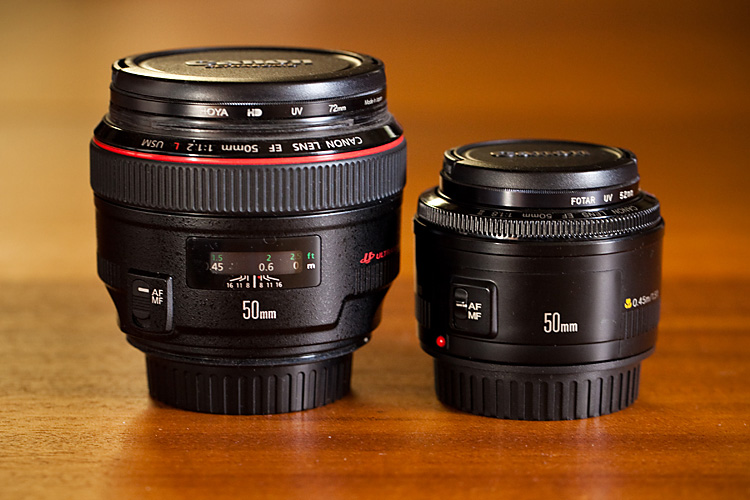
50mm lenses

Here are two different Canon 50mm lenses – one with a maximum aperture of f/1.2 on the left, and the other f/1.8 on the right. Both offer a shallow depth of field, but the prices are vastly different.

Editor’s note: Canon has three 50mm lenses: The f/1.8 version at $ 125 (shown above right), the f/1.4 version at about $ 349 (not pictured), and the f/1.2 monster (above left) which will run you a whopping $ 1349.

If you’re trying out new lenses or a flash, take your camera into the store with a fresh battery and memory card, attach the lens/flash and take a few photos. Test it out in store, see how it works, then go home and review the images. If you’re looking at a new camera body, take your favourite lens and a memory card and do the same. All gear has an adjustment period for becoming familiar with settings and button locations, so this will give you a head start, and an idea of the weight and shape of the item, something you can’t experience by online shopping.

Helpful and knowledgeable salespeople are also invaluable. Many camera store staff on a commission-based pay structure can often be motivated to make a higher-priced sale, so may push you toward the more expensive option. There are those, however, who will provide good advice and non-pushy service, with the hope you will come back to them when you’re ready to buy. If the price is right, it is always good to support your friendly local camera store, as they can be an invaluable resource, especially if something goes wrong.

4. Consider renting

Rental List

Many camera stores and online services offer the opportunity to rent higher priced and specialist equipment. This can be a great way to try before you buy, or to hire gear for one-off assignments.

Did you know you can rent equipment such as lenses and camera bodies, as well as studio flash kits? Many professional photography stores offer this service, and there are several online camera rental services as well.

This option is great for when you are considering professional level gear, or something for a special technical application. You have the opportunity to rent the gear for a day, weekend, or a week, which is a great way to try before you buy.

It is not only a good option for researching a new purchase, but you can hire specialist equipment needed for one-off jobs (like a macro or tilt-shift lens for example), without the cost of purchasing it outright, and with the added advantage of claiming the hire expense as a business expense. A security bond is usually charged, so be sure to read the fine print for the rental terms and conditions.

5. Look for the less expensive option

MacroLens Filter

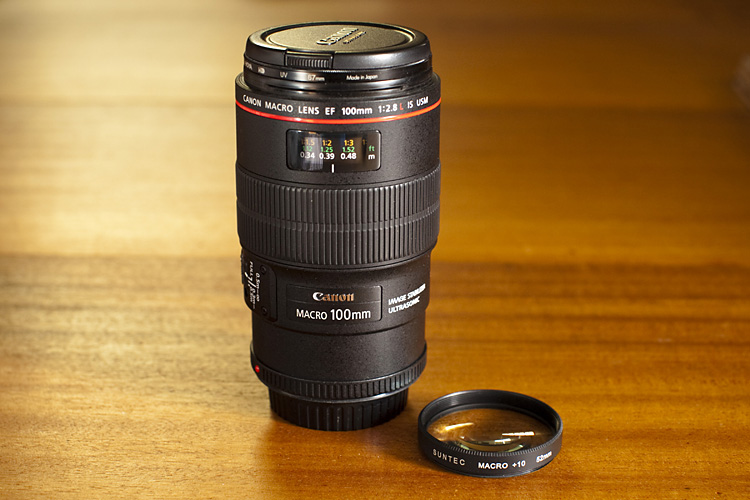
The price difference between a close-up filter set and a dedicated macro lens is over $ 1,000. Each has its own effects, but both are capable of producing quality, and interesting photographs.

If you cannot afford your preferred brand or wish-list item, try searching for a less expensive option. This could mean waiting for a camera sale, purchasing second-hand, a lesser-known brand, or even an alternative method to achieve the same result. These options can be a great way to expand the gear in your camera bag and try new techniques, without spending quite as much money.

For example, we all agree that an f/1.2 lens is drool-worthy, but would the f/1.4 version do almost as good a job? Or instead of purchasing a special macro lens, would close-up filters work instead? Generic, or lesser known brands, are another less expensive option, although they may not have the same quality or life expectancy as the branded versions.

Purchasing second hand equipment may be risky, but with some research, and by asking the right questions, you can often find a bargain. Always consider how much wear and tear the item has had, who has owned it before, and how much life is still left in it. A wedding photographer, for example, will often upgrade their gear and sell off their old cameras. While it might look like a great deal, it’s worth keeping in mind that their gear may have been subject to a lot of wear and tear.

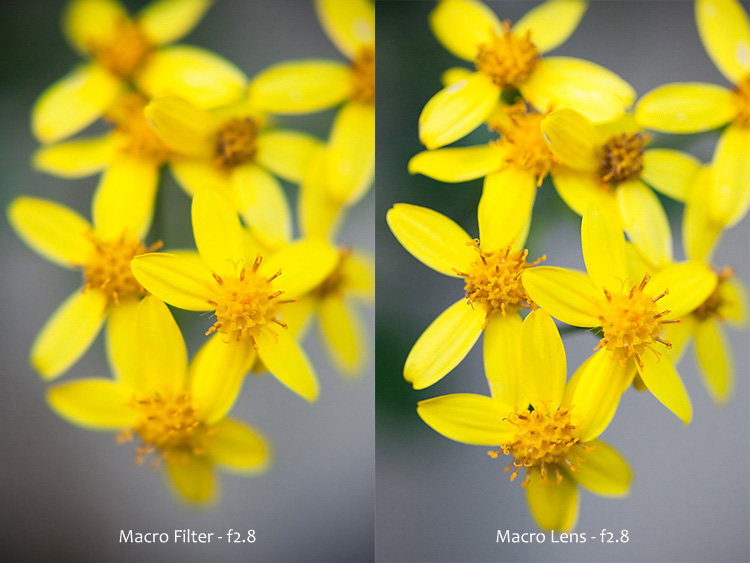
MacroOptions

The same subject, photographed using two different systems – a close-up filter, and a macro lens. Both images were photographed at f/2.8. Filters often create softer images, but are an inexpensive way to enter the world of macro photography.

Scratches and marks can be forgiven, provided they do not affect proper function, while some items have a limited lifetime. When considering a second-hand camera, ask about its shutter actuation, or shutter count, and then compare it to the camera’s life expectancy. This will give you an idea of how many more photos the camera can capture, before the shutter may fail. If photography is your hobby it may take you years to reach this limit, whereas if you’re shooting weddings every week you will reach this number sooner. Shutters are replaceable but it can be expensive, and often camera replacement is more cost effective.

Many of these alternative options are available to purchase in your local camera store, or online. In regards purchasing of second hand equipment, it is worth being cautious: ask lots of questions, request photographs, ask about any return policy, and if you do go ahead, purchasing insurance on postage.

Summary

Hopefully these tips will assist you in choosing your next purchase wisely, one that suits your needs perfectly, and may even help you save a little bit of money too – who knows, maybe just enough to afford that other item you want?

The most important thing, however, is that you use your new gear and enjoy your continuing journey in photography.

googletag.cmd.push(function() {
tablet_slots.push( googletag.defineSlot( “/1005424/_dPSv4_tab-all-article-bottom_(300×250)”, [300, 250], “pb-ad-78623” ).addService( googletag.pubads() ) ); } );

googletag.cmd.push(function() {
mobile_slots.push( googletag.defineSlot( “/1005424/_dPSv4_mob-all-article-bottom_(300×250)”, [300, 250], “pb-ad-78158” ).addService( googletag.pubads() ) ); } );

The post How to Buy Camera Gear Wisely and Save Money by Erinna Ford appeared first on Digital Photography School.

Digital Photography School

 
Comments Off on How to Buy Camera Gear Wisely and Save Money

Posted in Photography


8 Creative Ways to Make Money with Your Photography

30 Nov

Photography doesn’t just have to be a hobby, in fact, it can be a brilliant way to gain some extra money – and quite a lot at that! I’ve put together a list of my favourite ways of making money through photography, and with the ideas ranging from a couple of hours a week to a part-time project, you may find something that catches your eye.

1. Shoot Microstock

Picture 0

Stock image – © Olly Stabler

There are many different microstock sites out there, including Shutterstock and iStock Photo, and by uploading your images you may well be able to earn some extra money. If you excel at taking commercial images, this will be a great idea for you as these are the types of photographs that sell the most. If you are considering this option, make sure you don’t let your passion for photography die out, through a focus on sales statistics and selling stock shots.

2. Network to be a Second Shooter

Through networking using social media, events, and photography clubs, you can build relationships with other photographers. Opportunities will often arise through the relationships you have built, such as requests to work as a second shooter on a project. It may be that a fellow photographer is working an event, and needs you to join them to take photos to build a complete portfolio of photographs from the day. Weddings are probably the most common occasions that require second shooters, so keep an eye out for these jobs.

Picture 1

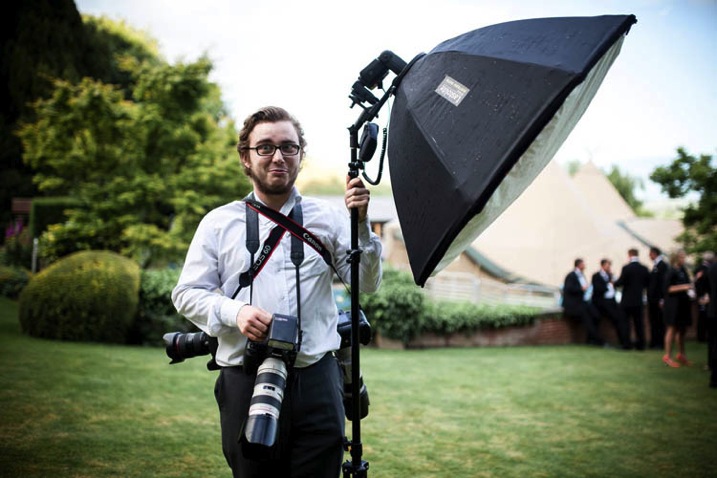
Me as a second shooter – © Scott Choucino

Alternatively, those you have networked with may have to turn down work that is too low-budget for them, and will ask you to work on them instead. Never underestimate the job opportunities that will become available to you through networking. This article tells you everything you need to know about the importance of being a second shooter.

3. Sell Prints

Picture 2

The first of my photos to make it to print – © Olly Stabler

There are many different ways you can sell prints; choose framed copies for larger amounts of money, print on canvases to create a professional look, or prints on their own for those who want to spend less. This will also open up the opportunity to place your work in stores and exhibitions. Having hard copies of your photographs will prove helpful whether you have already received sales, or are searching for prospects.

If you shoot in a studio, I would advise hanging your prints on display, and the larger the prints, the better. Your clients will always take note of them hanging in your studio and these prints will showcase the work you can create, encouraging sales. Upselling to your clients can create big money, with bigger prints bringing in big profit margins. To ensure that your photos print perfectly, check out Image Size and Resolution Explained for Print and Onscreen.

4. Become a Photo Booth Service

Photo booths are a similar price to a full frame DSLR body plus lens, and are extremely easy to operate. There are an unlimited amount of events and options available if you choose this route including parties, weddings, corporate affairs and events. Offering a photo booth service might not be the best option for a budding photographer as artistic photo opportunities are extremely limited, but nevertheless, it is a surefire way to earn money through photography.

Chris Guillebeau

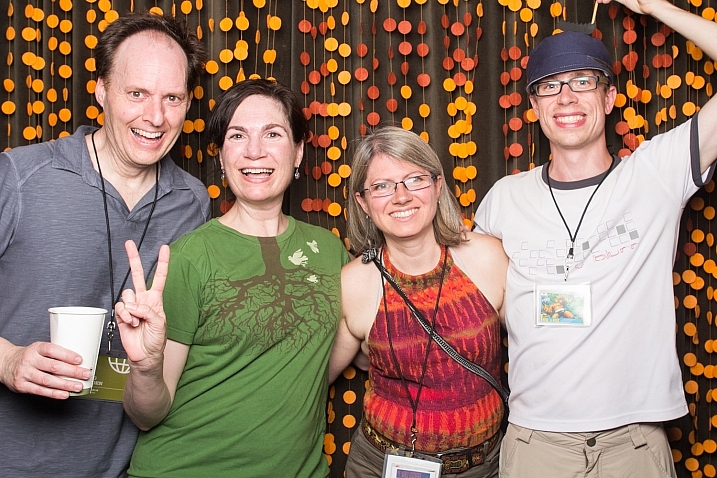
By Chris Guillebeau – Yes that is your very own Managing Editor Darlene Hildebrandt in a Photo Booth at an event in Portland in 2012

IMG 0653

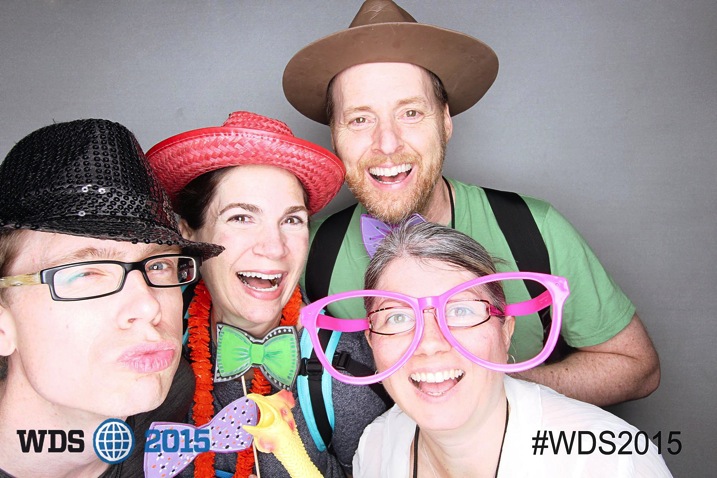
Same group, same event – 2015!

5. Sell an eBook

If you want to share your passion with others by talking about your experiences and discussing hints and tips, creating an eBook may be the way forward for you. This idea will involve little costly investment, but will require a lot of time. There are many benefits of writing an eBook including the fact that it will help you to make a name for yourself within the industry. The best way to encourage the success of your publication would be to outreach to bloggers and ask for reviews; the power of word of mouth is invaluable.

6. Hold a Portrait Party

Picture 3

A headshot taken in my studio – © Olly Stabler

The idea is simple. Invite friends, bloggers, colleagues, and clients to your studio and tell them to bring a couple of friends. This concept will also work in your lounge, your friend’s front room, or pretty much any location you fancy. Shoot portraits of them all throughout the night, you can even put on a show with entertainment and food.

You can then give them the option to buy their photographs, or book a session. Giving out a few free prints will also work in your favour, as you are thanking them for their time; this will also give them examples of your work to show people they know, and could end up resulting in a lot of business.

7. Photograph in Nightclubs

Picture 4

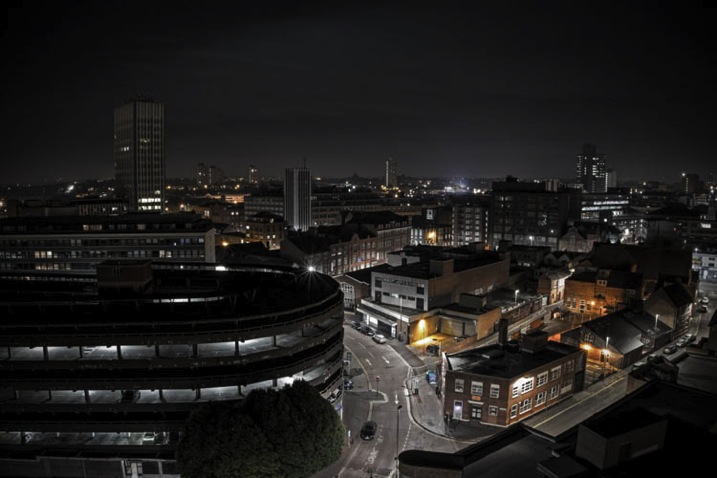
A photograph taken from my nightclub days – © Olly Stabler

Photographing in clubs will help you to learn a lot of skills that you will need for higher paid and more complex jobs. If you are reasonably new to photography, and want to earn extra money as well as build your skill set, this is the one for you. Although the pay isn’t brilliant, you can end up earning a decent amount if you photograph a few student nights a week in university towns and cities. This will also help you to build confidence as a photographer as you will be forced to interact with a lot of people at the same time – an essential quality for a photographer.

Becoming a nightclub photographer is extremely easy to get into, you just need to make sure you have a flash – you can find my recommended products on Amazon.com. The cheaper versions of these flashes do not work with ETTL, which means you will learn how to control flash manually, giving you a full understanding of how flash lighting works – something that is essential if you want to move into higher paying work.

8. Enter Competitions

There are plenty of photography competitions floating around, all with various prizes dependent on those running the feature. Try looking for those that offer a cash prize and enter as many as you can. If you are regularly photographing, you should have a portfolio of images you can enter into competitions. You only need to spend an hour each day searching and applying for these, which may make this option a favourite if you only have a small amount of time to spare. A good place to start is by utilizing databases such as this photo competition website. Remember though, this idea does not guarantee a payout and can be an unpredictable way of making money.

Editor’s note: be sure and read How To Evaluate Photo Contests Before Submitting Your Images And Cash before you enter any contests.

So those are just a few ways you could use your photography to make a little extra money, or start to make the move towards full-time professional. Do you have any other ideas or things you’ve tried? Please share in the comments below.

googletag.cmd.push(function() {
tablet_slots.push( googletag.defineSlot( “/1005424/_dPSv4_tab-all-article-bottom_(300×250)”, [300, 250], “pb-ad-78623” ).addService( googletag.pubads() ) ); } );

googletag.cmd.push(function() {
mobile_slots.push( googletag.defineSlot( “/1005424/_dPSv4_mob-all-article-bottom_(300×250)”, [300, 250], “pb-ad-78158” ).addService( googletag.pubads() ) ); } );

The post 8 Creative Ways to Make Money with Your Photography by Olly Stabler appeared first on Digital Photography School.


Digital Photography School

 
Comments Off on 8 Creative Ways to Make Money with Your Photography

Posted in Photography


Your Money or Your Photographs! Ransomware and How to Survive an Online Stickup

08 Jul

ATTENTION! Your PC is blocked due at least one of the reasons specified below. The warning is dire. You’ve been “caught” doing something illegal. Your photos and other data have been locked away from you because it’s “evidence” against you. But don’t worry, if you pay the “fine,” all will be released and you’re off the hook. Don’t pay and, Continue Reading

The post Your Money or Your Photographs! Ransomware and How to Survive an Online Stickup appeared first on Photodoto.


Photodoto

 
Comments Off on Your Money or Your Photographs! Ransomware and How to Survive an Online Stickup

Posted in Photography


The Top 5 Sales Mistakes Costing You Money Right Now

21 Feb

What would you do if you could book more clients and earn more money with your photography? If you’re like me then you’d probably just blow it all on that new lens you’ve been thinking of buying for the past few months. You likely have a few clients every now and then, but for some reason they’re either not booking you and going with someone else, not buying your prints, or they’re just doing a disappearing act never to be heard from again after your first meeting. The truth is that you’re probably making one or several of the sales mistakes listed below and it’s costing you a lot of money.

Five Sales Mistakes MarkTioxon 0001

1. Being too focused on making a sale and not helping your client

Have you ever helped your friend make a decision on whether or not to buy that new lens or camera body? You probably shared your experience and listed six reasons why they should or shouldn’t make the purchase. You weren’t going to profit from the sale but you helped your friend make the best decision for them and their situation. You didn’t focus on making a sale. You were trying to help your friend, and that’s exactly how you need to handle clients.

You’re the photography expert. They are coming to you for help. Yes they want you to make great photos, but they also want you to lead them through the rest of the process. They need your help to buy the right print packages, canvas wraps, and albums. Basically they need you to help them spend their money! So just help them like you would any good friend (except you probably can’t borrow the canvas prints of their family, like you would borrow a friend’s new lens).

Don’t try to sell to your clients. How do you feel when a bad salesperson starts trying to run their awful pitches on you? Your clients feel the same way and will probably want to run away the moment you start “selling”.

2. Asking questions and not shutting up

Five Sales Mistakes MarkTioxon 0002

Have you ever tried to have a conversation with someone that doesn’t stop talking? They’ll ask you a question and then give you their answer without listening to you. Too many photographers do that exact thing when they’re meeting with clients. They get so excited, and they want to share everything with their clients that they don’t give anyone else a chance to talk. Clients end up thinking that the only reason the photographer asked any questions was just to listen to themselves talk. Or worse, the clients think that the photographer doesn’t care about anything they have to say.

After you ask a question, stop talking. Literally just shut up. Don’t say a word until the other person speaks. When they finish speaking, take a breath and see if they have even more to say while you sit there listening.

You’re not there to ask questions so that you can answer them. You’re there to listen to whatever truths your client will share with you. That’s how you find out how you can help them (refer up above to mistake number one).

3. Not being an expert of your own product

Five Sales Mistakes MarkTioxon 0003

You know why I like tour guides? Because they know EVERYTHING about the tour you’re following them on. They know all the important stats, the history, and answers to almost every question you can come up with. How embarrassing would it be if your tour guide wasn’t very familiar with the exhibits? You’d feel like your time was wasted right?

That’s exactly how clients feel when photographers don’t know their products inside and out. When you don’t know how much your prints costs, or what options are included, or all of the different ways a package can be structured, it makes your clients start to worry about giving you their money. Definitely not what we want our clients thinking about. Sure you’re an expert at photography, but now the client wants to buy. Are you an expert at selling your product?

Or to phrase it better, are you an expert at helping clients buy your product?

You should know your product as well as you know your photography. Remember, your product is more than only the photos you make. In what ways can you help your clients make a buying decision?

4. Missing the most important person at your meeting

Five Sales Mistakes MarkTioxon 0004

Who is the most important person to have at your meeting? The decision maker. It’s a simple answer, but so many photographers have meetings that end up being a waste of time. Have you ever met with a client only to have them say they needed to check with so-and-so before deciding? How much time would you have saved if that person was there for your meeting, or even on the phone? Some photographers never talk to the decision maker even once throughout the whole process. They’ll have three meetings with different people that all have to check with someone else. It’s a complete waste of time.

A worse mistake is when the decision maker is present, but the photographer doesn’t realize it, or they think the wrong person is the decision maker. The photographer spends all his time talking to one person, but ignoring the most important one! Then they wonder why they didn’t book the client. Make sure you have an opportunity to communicate directly with the decision maker, whomever that may be. It’ll save you a lot of wasted effort.

5. Not being brave enough to ask for the sale

Five Sales Mistakes MarkTioxon 0005

I have a friend who does a great sales presentation with his clients. He explains the benefits, makes everyone laugh and they truly feel like he’s helping them with whatever they need. His clients are often ready to buy when he reaches the end of his presentation. They literally want to give him their money and all he has to do is ask.

Instead of asking them to sign the contract or if they’d like to put down a deposit that day, he mumbles something like, “I know this a big decision so go ahead and think about it and let me know what you decide.”

That is not asking for the sale. That’s avoiding asking. That’s putting it off. That’s not being brave enough to ask for your money.

How do you close a deal? You ask for the sale. It doesn’t have to sound like you’re asking for the sale either. There are many different ways to do this. You can ask how they’d like to pay, cash or credit. You can ask which package they’d like to purchase. You can even just ask them if they’d like to sign the contract. I know it sounds crazy, but if you did your job during the meeting, then they’ll be ready to sign your contract right there in front of you.

Five Sales Mistakes MarkTioxon 0006

You’ve done a great job of learning your craft. You’re a great photographer but no one’s hiring you. It’s not your photography that’s the problem. It’s just that you’ve been too busy to focus on the sales part of the business. Not everyone is cut out to make a living at photography but you’re not like everyone else. You can do this. Learn how to correct the mistakes mentioned above and your sales will increase, your clients will be much happier, and you might be at the start of a great photography career. How amazing would that be?

googletag.cmd.push(function() {
tablet_slots.push( googletag.defineSlot( “/1005424/_dPSv4_tab-all-article-bottom_(300×250)”, [300, 250], “pb-ad-78623” ).addService( googletag.pubads() ) ); } );

googletag.cmd.push(function() {
mobile_slots.push( googletag.defineSlot( “/1005424/_dPSv4_mob-all-article-bottom_(300×250)”, [300, 250], “pb-ad-78158” ).addService( googletag.pubads() ) ); } );

The post The Top 5 Sales Mistakes Costing You Money Right Now by Mark Tioxon appeared first on Digital Photography School.

Digital Photography School

 
Comments Off on The Top 5 Sales Mistakes Costing You Money Right Now

Posted in Photography


FREE MONEY: Give Us a RT, We’ll Give You $$$

18 Nov

We’re giving away gift codes in the Photojojo Shop!

You can grab either $ 2, $ 5, $ 7 or $ 10 off anything in the shop, just by following us on Twitter and giving us a RT.

It’s a good ol’ fashion swap. Head to the Shop to get all the detailz. This only lasts one day, so get to it (and get some fun new gear).

Get a jump on things now and grab the stuff your friends and fam really want! Check out these top-notch goodies we’ve hand-picked to maximize your gift giving glory this year.


© laurel for Photojojo, 2014. |
Permalink |
No comment |
Add to
del.icio.us

Post tags:


Photojojo

 
Comments Off on FREE MONEY: Give Us a RT, We’ll Give You $$$

Posted in Equipment


SherpaFund raises money after Everest avalanche

23 May

Screen_Shot_2014-05-22_at_10.28.52_AM.png

In April of this year an avalanche on Mount Everest took the lives of 16 sherpas who were preparing a route for their climbing clients. In the wake of this tragedy, a group of photographers have banded together to create SherpaFund.org, which will sell a collection of photographs to help the Sherpa families in crisis and establish long-term support for the wider community. Learn more

News: Digital Photography Review (dpreview.com)

 
Comments Off on SherpaFund raises money after Everest avalanche

Posted in Uncategorized


Are Lightroom Develop Presets Worth the Money?

27 Mar

Delicious Presets review

I was recently approached by a representative of Delicious Presets to review their product. The review is below, but when I looked at the details on their website it occurred to me that there are other questions to answer:

  1. Are Lightroom Develop Presets (the sort you buy from someone) worth the money?
  2. And if they are, how do you know which ones to buy given that most websites won’t refund your money if you are unhappy with the product?

Let’s start with Delicious Presets, then dig into those later. The promise on the website is that their presets will increase the quality of your processing and save you time in Lightroom.

They seem to be aimed primarily at event and wedding photographers. On the surface, their presets seem expensive at $ 40 a set (you can save money by buying in bundles) but from a business perspective that is a relatively small investment for something that saves you time. An example:  I recently spent around $ 150 on a good quality polarizing filter for a new lens, and you can buy all the Delicious Presets in a bundle for less than that.

Here’s what you get in each set:

  • Between 11 and 13 Develop Presets
  • Delicious Controls, which gives you three sets of presets for taking control of sharpness, grain and tone
  • Plus 37 vignettes and frames

All the presets have been updated to work with Lightroom 5. You can go to the Delicious Presets website and view the details for yourselves.

If you want to learn more about Lightroom Develop presets in general, you should read my article A Concise Guide to Lightroom Develop Presets.

Delicious presets website

Delicious Controls:  Sharpness, Grain and Tone

The Sharpness and Grain presets really do nothing that you can’t do on your own, although it might be nice to use presets created by someone else if you don’t have the time or inclination to work out the sharpness and grain settings that suit your photos. Complete beginners to Lightroom may also find them useful as a way of learning by analyzing how the presets work.

The Tone Control presets are a little more useful and give you some colour grading options that you might not have come up with yourself. But again, they are fairly simple in nature and are really just a set of Split Toning presets that can be applied to either colour or black and white images. They do look nice in black and white and you can tweak the saturation if the tone is too strong for you.

Delicious Controls: Vignettes and Frames

While I can see the use of the sharpness, grain and tone controls as part of a workflow aiming to save you time, I don’t understand the point of the vignettes and frames. The vignettes are rendered useless by The Radial Filter tool in Lightroom 5, a tool that is easier to use and more versatile. The frames are just cheesy.

Delicious Presets Collections

Now let’s look at the preset collections themselves. Lightroom Develop Presets tend to fall into one of two broad categories. The first are one shot Presets – they tend to be presets that you use once. These ones are pretty binary, they either work or they don’t, and the effectiveness depends on your photo. If the preset matches your photo you’ll get a good result, and if it doesn’t, it won’t.

The second category are what I think of as genuinely useful presets. These are a bit better thought out and may be presets that the photographer who created them uses in his own workflow. They may work in modular fashion, so that you can build up the effects by layering them on top of each other. Each preset tends to adjust just one or two settings, so that you can pick which adjustments you want to make. The best ones combine flexibility with consistency, allowing you to create a variety of looks while retaining a consistent feel throughout your portfolio.

The Delicious Presets presets fall into the second category, if used with the Delicious Controls presets.

Delicious Colour Presets

This is a promising set of presets. The key to getting the best out of them is pick one you like and use it as a starting point, tweaking the sliders in the Basic panel until the tonal values are pleasing to the eye. Here’s an example with the Autumn preset:

Delicious Presets review

Another with the Blue Love preset:

Delicious Presets review

Yet another with the Vivid Tones preset. For this example I used the presets in a modular fashion, adding a vignette, grain, sharpening and the Brownie tone using the Delicious Controls presets:

Delicious Presets review

The verdict? I like these and think they have a lot of potential for portrait processing.

Delicious Black and White Pepper Presets

This is another promising set of presets that give you 12 instant black and white conversions. They need a bit of work to get the best out of them, but the potential is certainly there. This example uses the Black Pepper preset:

Delicious Presets review

Below is the Black Pepper preset with the Warm Tone from the Delicious Tone Control presets added:

Delicious Presets review

This is an interesting collection and they are certainly helpful for creating black and white conversions rapidly.

Delicious Analog Story Presets

These presets are aimed at photographers who like the look of photos produced with film cameras. There’s no doubt this is a trend in the world of event photography, and these presets aim to bring that look to you with a click of the button. There are some interesting presets here that complement the Delicious Colour presets nicely. This is the Blue Vintage preset:

Delicious Presets review

Distinct Analog Presets

Another set of analog presets, and I have to admit that these didn’t work well. Most of the presets just looked horrible with this particular photo, although you may of course get a better result with different subject matter. The Love Letter preset didn’t look too bad:

Delicious Presets review

The verdict

If you buy the bundle with all four singles collections you end up with 37 colour Develop Presets and 12 black and white ones. You also get the Delicious Controls which may provide a useful shortcut to some people. But essentially you can achieve the same effects by pushing sliders. The Tone Control part of the Delicious Controls gives some nice tones but the others are not really worth bothering with.

That leaves the Develop Presets themselves. Are they useful? The Delicious Colors, Delicious Black & White Pepper and Delicious Analog Story, yes. Especially if you are willing to use them as starting points and adjust them to suit your photos. The Delicious Distinct Analog is an exception – I didn’t like this one, but it may work well with other peoples’ photos.

Are they worth the money?

I don’t think so. They are too expensive for what you get and you will get better value elsewhere. I think the fair price is around $ 10 a set, although I’m sure many people will disagree. It’s hard to name a fair price for Develop Presets but there are plenty of people selling similar sets for around the $ 10 mark and I don’t see anything special about the Delicious Presets collections that sets them apart.

Don’t forget you can go to the Delicious Presets website and check them out for yourself.

A negative review?

Is this review too negative? I’m the sort of person who speaks his mind and I’m not going to tell you that a product is good value for money if I don’t think is. But, I understand that some of you may see things differently. If you have used any Delicious Preset products, then please let us know in the comments to balance out my point of view. Do you like them? Do you think they are good value for money?

You can also check out the Delicious Presets blog, where they give examples of photos processed with Delicious Presets. Take a look and make up your own mind.

Free Develop presets

There’s no question about value for money with free Develop Presets, but are they worth the time? My favourite free presets are the Signature Collections from OnOne Software. But what are your favourites? Let us know in the comments.

Other Develop Presets

There are lots of Develop Presets out there, and I haven’t tried them all. That’s where you come in. Have you purchased any other Develop Presets? Did you find them useful? Were they good value for money? What are your recommendations? Please let us know in the comments, and hopefully we can build a good list of useful Develop Presets.

Some that I have bought and found useful are the ones sold by Craft & Vision and the Black and White Workflow Collection from Pretty Presets.

Tips for buying Develop Presets

You don’t always have to pay full price for Develop Presets. You’ll often see presets offered for heavily discounted prices at websites like Snapndeals, Photo Deal Cafe and Photo Dough.

Another tip is to sign up for the newsletters of websites that sell Develop Presets. If they have a sale, they will let you know.

For more on Lightroom check out these:

  • Processing an Image in Lightroom 5 – a Video Tutorial
  • 6 of Lightroom’s Hidden Treasures
  • Organizing Images in Lightroom 5
  • Lightroom How To – One Tip and One Trick

Mastering Lightroom: Book Two
Mastering Lightroom Book Two Develop ModuleMy new ebook Mastering Lightroom: Book Two – The Develop Module teaches you how to process your Raw files in Lightroom for spectacular results. Written for Lightroom 4 & 5 it takes you through every panel in the Develop module and shows you how to creatively edit your photos.

The post Are Lightroom Develop Presets Worth the Money? by Andrew S. Gibson appeared first on Digital Photography School.


Digital Photography School

 
Comments Off on Are Lightroom Develop Presets Worth the Money?

Posted in Photography


How Your Pricing Structure Could be Losing you Money

12 Mar

Jackie is the creator of the Portrait Photography Pricing Workbook – on sale now, for a limited time at SnapnDeals.

Are you 100% confident you are making a profit with each and every client?

As artists, photographers may not be as business-minded as they should be. This can get many of us into trouble, both legally and financially. In order to call your photography business successful, it should first and foremost be profitable. If you are not making money from your photography business, you need to call it what it is: a hobby.

How do you make sure you are not losing money, but rather making money and running a profitable photography business? Despite what you may think, it has little to do with the number of clients your business is attracting, or how high or low your prices are. It has everything to do with your pricing structure.

Paper and pen

Here are some questions you need to ask yourself if you think your photography business is losing your money:

What expenses does my business have? Whether it is a reoccurring expense or a variable one, a business expense is a vital factor to consider when pricing your business. An expense for your photography business can include any or all of the following:

  • Studio rental
  • Insurance (liability, equipment, health, and/or disability)
  • Accountant fees
  • Retirement accounts
  • Advertising
  • Loan Payments
  • Equipment purchases
  • Office Supplies
  • Workshops
  • Intern or Assistant
  • Props

These are just some examples of expenses for a photography business. Obviously there are many others that may be specific to yours. Once you total your fixed expenses (expenses that don’t change from month to month or on a yearly basis) and your variable expenses, you can have an idea of how much money you should be making per year in order to at least cover those expenses.

What is my cost of goods sold?

Cost of goods sold is separate from expenses, even though it acts like an expense. The definition of “cost of goods sold” is the cost of materials used to create the product. Basically, it is how much a product costs your business before you turn around and sell it to your client.

In the photography industry, the cost of goods sold can include any of the following:

  • Printing costs
  • Cost to ship the product to you
  • DVDs
  • USB drives
  • Print packaging

Before you set the price of any of your products, you must determine the cost of goods sold of each product. Otherwise, you risk losing money on each sale. Once you figure the cost of goods sold, you can set a break-even price for each product and mark the product up from there.

Calculator

How big are my package discounts?

Along the same lines, you need to make certain your packages are not priced too low. While there should be a discount to the client, you obviously do not want to discount the package to the point where your business is losing money with each sale.

Do I accept credit cards and what is the processing fee?

Even though the credit card processing fee is probably small, it can add up over time or with larger transactions. Think about what percentage of your clients pay with a credit card and integrate that into your pricing structure.

What taxes do I have to pay and what are the rates?

There are several different kinds of taxes you will have to pay as a business owner.  The 4 most common ones for your photography business would be:

  • Federal Income Tax
  • State Income Tax
  • Sales Tax
  • Use Tax

Check out the IRS Small Business and Self-Employed Tax Center to find more tax information (if you are US based). Since each state’s (or your country’s) income, sales, and use tax laws vary, you will have to check with your state’s Secretary of State’s office to get all of the applicable tax information for your photography business.

Finally, I’ll explain a little more about use tax, because it is very commonly overlooked. Use Tax is a tax you are responsible for paying to the state for items your business purchased, but did not pay sales tax on at the time of purchase. Some examples would be a portfolio album for your studio or a lens purchased online. It is typically paid at the same time as your sales tax.

How much time do you want to spend on your business?

This question is crucial. With the rise of digital cameras taking over film, the perception is that running a photography business does not cost much money. While you might be saving money on film and developing, it still is costing you the same amount of time, if not more of your time! However, since the perception is there is no monetary cost with each shoot, it seems easy to charge less for your services and product.

Don’t make this mistake, or you and your business will be headed down a dangerous path. If you are working too much, for too little money, you risk burning out. So, how do you calculate your time into your prices? Everyone’s personal situation is different, so it is difficult to put an exact number on your “time”. What it comes down to is:

  • How many sessions and/or weddings do you want to shoot each year?
  • How much money does your business need to bring in each year?

If you want a low workload, your prices should be higher, if you need to bring in more money. If you can handle a high workload, your prices could be set lower. But, don’t forget to include the factors above, so you aren’t under-pricing yourself and losing money.

Running a photography business encompasses so much more than just the photo shoot! You need to consider all of your time spent on your business, not just the time spent shooting. For instance, managing emails, editing photos, packaging and sending orders, meeting with clients, and holding in-person ordering sessions are all examples of tasks to run your photography business. Make sure you are compensating yourself appropriately for all that time!

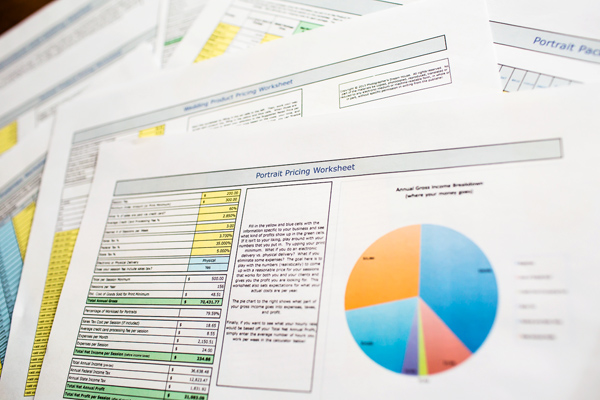
Pricing workbook

These hold true for ALL businesses! I assure you that if you ask yourself these questions and calculate it all out, your photography business will be profitable and not lose you money.

Here are some summary points for you to remember:

  • Total up all your expenses
  • Figure in all taxes and credit card fees
  • Consider the total cost of goods sold
  • Factor in your time, workload, and financial situation!

What if you don’t want to do these calculations manually?

You might want to check out my Portrait Photography Pricing Workbook! You just plug in the numbers and watch the magic happen before your eyes. It will automatically calculate suggested retail prices and what you should be charging based on the points above. On sale now for a limited time only on SnapnDeals.com.

The post How Your Pricing Structure Could be Losing you Money by Jackie Boldt appeared first on Digital Photography School.

Digital Photography School

 
Comments Off on How Your Pricing Structure Could be Losing you Money

Posted in Photography


A Quick and Easy Way to Make Money with your Photography While Having Some Fun

17 Feb

Many photographers have the dream of selling their fine art photography and seeing their prints hanging in collector’s homes. I’m sorry to burst your bubble but that is probably the most difficult way to make money. Even the biggest names in photography don’t make a living solely by selling prints. Yet, it is conceivable to make a little bit of extra cash with your pictures and here is a realistic easy way to make money with your photography.

Everyone loves a card with an old rusty bicycle! ©Valerie Jardin

Everyone loves a card with an old rusty bicycle!
©Valerie Jardin

Think Locally!

Instead of trying to reach the world at large and compete with hundreds of thousands of other talented photographers trying to sell their work, think locally!

You could spend several weekends every year sitting in a booth at an art fair only to sell enough to break even and pay for your entry fee. Yes, art fairs are good exposure, but photography is not the biggest seller and there are usually several photographers trying to sell prints at the same event. Also, those art fair weekends are valuable days for any photographer, wouldn’t you rather be out shooting than selling?

Another option is to show your work at a restaurant or a coffee shop. If you do, make sure there is an opening party to create a buzz around your work and invite everyone you can think of. Do not leave your images on display for more than a month, no one will notice them after a few weeks.

I’m going to tell you a little secret…

Years ago, when I still had a little bit of spare time, I often teamed up with two or three other artists in different media forms and organized private art parties. We combined our contact lists and invited our friends and family to attend an ‘art open house’ for a few hours. We did this several times a year. We took turns hosting the event and split the cost of the snacks and beverages. We also urged people to bring a friend along. By combining our contact lists we would reach a large number of people and always end up with a minimum of 30 to 50 attendees.

Why is it better to have 50 people coming to your open house rather than hundreds walking by your booth during an art show? The people who come to your private art open house are there for the sole purpose of checking out your work, socializing and spending money! I used to sell hundreds of dollars worth of small prints and greeting cards in just one evening, while having the best time socializing with friends and other artists.

A card for Mother's Day... ©Valerie Jardin

A card for Mother’s Day…
©Valerie Jardin

What sells?

Small ticket items! You can always have a few large, framed prints, on display for the wow factor and a possible sale or two – but small items, such as greeting cards, will sell! People are still very keen on greeting cards, especially in North America. I realize that different countries have different customs. You may think that, in this age of electronic mail, physical cards would disappear. On the contrary, e-cards and social media greetings are so common and impersonal, that receiving an actual card in the mail has become a novelty.

The advantage of selling cards is that everyone can afford them and has a use for them. Make sure you have a large variety of cards with your best images. If people can’t decide which ones to choose, they are more likely to buy all of them! Another tip: Display some as a pack wrapped with a bow, they make fun gift ideas for friends, co-workers, teachers, etc. Another tip: Offer a ‘bargain basket’ with a limited selection of discounted cards. Some people will only buy if they feel like they’re getting a good deal. Also, use this phrase as incentive “one free card if you buy ten”. It works!

Everyone knows a musician who would enjoy receiving this card! ©Valerie Jardin

Everyone knows a musician who would enjoy receiving this card!
©Valerie Jardin

How do you make greeting cards?

It takes a little bit of time and effort to make those cards and there are several ways of doing it. You can certainly order your cards already made through a wholesaler. It’s the easiest way to proceed but also the most costly and your profit margin will suffer.

You can make your own! If you have a good quality photo printer, you can download a greeting card template and print them at home on some nice stock paper. Watch out for the high cost of the ink and figure out how much each card is going to cost in ink, paper and envelope. The goal is to make nice cards for as little as possible.

An inexpensive way to do it, but a bit more time consuming, is to affix photographs on stock paper. Pre-scored card paper with matching envelopes can be purchased in bulk quantities at a craft store for a very reasonable price.Your next step is to print your logo and contact info on the back of the cards. The tedious part is to place the photo on the front of the card with double sided permanent tape.

You can wrap each card in a clear sleeve to give them a more professional look. Or ‘go green’ and not wrap them at all. Ordering 4×6 prints online to use on your card stock is cheap, just pennies per print (usually cheaper than printing your own).

Remember, cards you buy at the store are expensive! Yours will be unique and you can easily sell them for $ 5 per card, which adds up when people buy them by the dozen or as a pack to give them as gifts… If you do it right, you can easily make a 300-400% profit on each card.  Remember, the goal is not to make a living by doing this. But you can easily make a few hundred dollars during each party, and feel pretty good about yourself!

Valerie Jardin Photography-17

There is a card for every season!
©Valerie Jardin

The fun part and the bonus for you, the photographer!

Shooting for greeting cards becomes a great photography project. Think of all the different themes you can shoot for: Christmas, Hanukkah, Father’s Day, Mother’s Day, Birthdays, Valentine’s Day, etc. All of a sudden you become a stock photographer for your own little business needs. I used to spend a few hours each week shooting just for my greeting card collection. For example, if I was out shooting for a Father’s Day theme, I would think: golf, fishing, antique cars, etc. Every self-assignment becomes a treasure hunt. It was like shooting for a stock agency. The difference was that I made a lot more money and I had a lot more fun selling those cards than I did with iStock!

This little experiment was serving a dual purpose. I was having fun and learning a lot while working on a photography project that also brought extra cash for trips or photo gear!

Another advantage is that it spreads your name around. Many times people emailed or called me to place an order after receiving one of my cards for a special occasion. Hence the importance of having your contact information on the back of each card! Today I don’t make cards anymore but, ironically, I often get requests from greeting card companies to licence my images for that purpose.

If you love photography and, if you have a little bit of spare time, there is no reason why you can’t make some extra cash selling your pictures. Good luck!

When you start shooting for your greeting card collection, opportunities will present themselves everywhere and your photo walks become fun treasure hunts with a purpose! ©Valerie Jardin

A card for the book worm? When you start shooting for your greeting card collection, opportunities will present themselves everywhere and your photo walks become fun treasure hunts with a purpose!
©Valerie Jardin

Do you have any other little tips that have worked for you to make money with your photography? If so please share in the comments below.

More articles on using your photography to make some extra cash:

  • “Photography Business Secrets” – A Review
  • 5 Things to Consider Before Starting Your Photography Business
  • Top 10 Ways to Sabotage your Professional Photography Aspirations

The post A Quick and Easy Way to Make Money with your Photography While Having Some Fun by Valerie Jardin appeared first on Digital Photography School.

Digital Photography School

 
Comments Off on A Quick and Easy Way to Make Money with your Photography While Having Some Fun

Posted in Photography