RSS
 

Posts Tagged ‘Media’

Fotografie und Social Media – muss das sein?

02 Sep

Vor Kurzem hatten Sebastian und Martin eine kurze Unterhaltung auf Twitter: Martin fragte, ob er in Zukunft Fotos, die er mit der Fuji macht, auf Instagram posten solle. Sebastian meinte, er solle seinen Instagram-Account löschen. Die Diskussion um Instagram, Social Media-Plattformen, Fotografie (und deren Meta-Ebene) führen sie hier nun fort.

Sebastian: Lösch Deinen Instagram-Account.

Martin: Nein. Warum sollte ich?

Sebastian: Weil Du Fotografie magst. Ich finde, Instagram kann man nicht wirklich benutzen, wenn man Fotografie mag. Es ist eine unendliche Suppe an einheitlich brutal zurechtgefilterten und sehr oft auch belanglosen Fotos.

Martin: Das kommt drauf an, wem man folgt. Wie überall.

Sebastian: Ja, bestimmt. Aber ich rede ja auch nicht von der persönlichen Nutzererfahrung. Sondern vom generellen Problem, dass solche Dienste Fotografie entwerten. Drück auf’s Knöpfchen, mach Dein Bild hübsch mit dem Retro-Style, den jeder mag und lass Deine Bilder wie die von jedem anderen aussehen.

Martin: Ich finde nicht, dass diese Dienste entwerten. Denn das Ziel von Instagram ist nicht in erster Linie, großartige Fotografie zu unterstützen, sondern es ist in erster Linie sozial. Das heißt: Wir teilen unser Leben. Und somit all die Dinge, die unser Leben betrifft. Und das posiert nicht. Es ist nicht technisch perfekt. Es ist, wie es ist. Und das mag ich daran.

Sebastian: Lustigerweise würde ich genau das als Argument gegen Instagram ins Feld führen. Die Plattform und ihre Nutzer haben überhaupt kein Interesse an Fotografie, sondern nur daran, sich gegenseitig Bildchen von ihrem Essen und ihren Haustieren zu zeigen. Deswegen kann ich im Gegenzug Plattformen wie 500px und Behance gar nicht hoch genug schätzen. Was benutzt Du denn überhaupt für Internetplattformen und Tools, um Deine Bilder zu zeigen, zu bearbeiten und so weiter?

Martin: Bisher habe ich mit dem iPhone auf der Straße fotografiert. Diese Bilder habe ich in meine „Zentrale“ Tumblr eingestellt und von dort zu Flickr (da bin ich seit 2005), Facebook, 500px und auch Instagram geleitet. Bearbeitet habe ich meine Fotos kaum, nur ein wenig mit Snapseed geradegerückt, Helligkeit und Kontraste angepasst. Fertig.

Sebastian: Bei Facebook und Twitter poste ich inzwischen auch öfter mal Bilder (meist mit Links auf die kompletten Serien anderswo) und bei Tumblr so übrig gebliebenes Zeug. Aber recht widerwillig, wie ich zugeben muss. Ich empfinde es als entwertend, wenn man seine Sachen x Mal in verschiedene Streams irgendwie reinkippt, um da Leute zu erreichen. Ein eigenes Blog oder eine Galerie auf einer Plattform hat doch irgendwie mehr Stil. Ein Bild bei Facebook ist in fünf Minuten untergangen in einem endlosen Stream aus Kram.

Martin: Wieder „nein“. Auf Flickr bin ich, seitdem ich fotografiere und es gibt einige Leute, die dort meinem fotografischen Prozess folgen. Auf Facebook sind einige Freunde und Künstler, deren Meinung ich sehr schätze – und die auch hin und wieder kommentieren. Bei Instagram gibt es eine wachsende Zahl ambitionierter Straßenfotografen, die mit dem iPhone versuchen, das Beste herauszuholen.

Absolute Augenweiden sind da dabei und die sehe ich sonst nirgendwo. Würden wir alle unser eigenen Süppchen kochen, wäre es vielleicht origineller, aber das ist mir nicht in erster Linie wichtig. Ich möchte dort sein, wo die Leute sind, die mir wichtig ist. Deswegen poste ich eher selten auf Google+. Dort kenne ich von den 15.000 Followern vielleicht 10.

Sebastian: Aber das heißt im Endeffekt: „Ich gehe dahin, wo die Leute sind und reibe ihnen permanent meine Bilder unter die Nase.“ Ich könnte mir das niemals antun. Dazu kommen dann noch diese ekelhaften Bewertungsfunktionen auf allen Plattformen und die Tatsache, dass künstlerische Sachen nun einmal von der Masse deutlich weniger geschätzt werden als derber Kitsch (ganz normales Phänomen).

Wenn ich bei Facebook ein sinnloses Katzenbild poste, das ich mal so nebenbei gemacht habe und es 200 Likes bekommt und das aufwändige Naturfoto dann unbeachtet durchflutscht, dann merke ich immer, dass das eigentlich nicht die richtige Herangehensweise für mich ist. Ich finde, da ist das eigene Süppchen, das auch dann genau die Leute anzieht, die sich wirklich genug interessieren, um aktiv danach zu suchen, deutlich lohnender.

Martin: Für mich gibt es hier keinen Endeffekt – dafür ist das Thema zu fluide und verändert sich ständig. „Unter die Nase reiben“ finde ich eine interessante Definition, jedoch führt mich das wieder an den Beginn: Wer meine Fotos mag, darf mir folgen. Wer das Gefühl hat, Fotos unter die Nase gerieben zu bekommen, geht von allein. Finde ich gut und okay.

Und zu einem reifen Interpretationsprozess gehört auch, dass ich einschätzen kann, was ein Like bedeutet. Meine Fotos sind weder auf Instagram noch in anderen Netzwerken großartig erfolgreich. Ich bin es gewohnt, dass Katzenfotos mehr Likes bekommen. Doch die Bedeutung eines Likes ist abhängig davon, vom wem er kommt. Wenn mein Bürokollege Egon von Euwensz ein Foto mag, ist das für mich sehr wertvoll. Der würde meine Fotos gar nicht sehen, wenn ich sie bloggen würde. Weil er keine Blogs liest. Ist auch kein Problem für mich.

Sebastian: Zum ersten Punkt: Da müssen wir wohl zwei Sachen unterschieden – so reine Portfolio-Plattformen oder Facebook-Pages, bei denen der Nutzer selbst entscheidet im Sinne von „Ich abonniere das mal, weil es mir gefällt“, da stimme ich absolut Deiner Meinung zu.

Schwierig wird es bei richtigen Social-Media-Plattformen, bei denen eben das „social“ im Vordergrund steht. Dort ist man ja grundsätzlich mit Leuten aus völlig verschiedenen Kontexten als Privatperson verbunden, die eben teilweise auch gar nichts mit Fotografie zu tun haben. Und genau dort wird es irgendwann penetrante Eigenwerbung, wenn man so agiert.

Zu einem reifen Interpretationsprozess bezüglich Favs, Likes und dem Kram gehört anders herum meiner Meinung nach aber auch, dass man akzeptiert, dass man sich Feedback grundsätzlich schwer entziehen kann. Wenn Dir jemand dumme Kommentare unter Deine Bilder schreibt, kannst Du das nicht „unlesen“, genausowenig wie Du Dich dem entziehen kannst, wenn eines Deiner Bilder auf solchen Plattformen plötzlich „viral“ ist.

Ich glaube, das ist auf Dauer sehr fatal für den eigenen Schaffenprozess, jedes einzelne Bild immer sofort einer Öffentlichkeit zur Bewertung hinzuwerfen. Und das ist auf Facebook, Twitter und Instagram ein viel größeres Thema als auf dem eigenen Blog, wo es solche Mechanismen eben nicht gibt.

Martin: Das mit der Bewertung sehe ich anders. Ich zeige meine Fotos nicht, damit sie bewertet werden. Das war mir zu Beginn sehr wichtig, heute ist mir das nahezu egal. Ich zeige, was ich tue. Wenn das jemandem gefällt, schön. Wenn nicht, auch okay. Und wenn jemand sagt BUUUUUH, sehr gut. Dann habe ich einen Nerv getroffen. Passt für mich. Und in einem Netzwerk, bei dem mich jemand mit Eigenwerbung zuballert, kann ich ohne Probleme entfolgen, entfreunden, was auch immer. Das mache überhall. Kein Problem.

Sebastian: Ich zeige meine Bilder auch nicht, damit sie bewertet werden, ganz im Gegenteil, ich will sie im Netz ganz neutral ausstellen. So sind Facebook, Instagram und Konsorten aber nicht konstruiert. Die gewichten Inhalte nach Bewertung und heben sie hervor oder blenden sie entsprechend aus, denn die wollen ja, dass die Masse massenkompatibles Zeug anguckt und klickt und entsprechend wiederkommt, weil sie dort gut unterhalten wird. Und dann wird das noch extrem mit Dir als Person verknüpft, das heißt, das Bild an sich steht in keiner Weise irgendwo im Fokus.

Die Wirkung nach außen kommt zuletzt noch obendrauf und ist vielleicht sogar das größte Problem. Stell Dir vor, Du liest ein Buch oder gehst in eine Ausstellung und auf jeder Buchseite stehen irgendwelche Leserkommentare von Freunden des Autors unter dem Text oder neben den Bildern hängen Like- und Dislike-Anzeigen von den Arbeitskollegen des Künstlers. Etwas Scheußlicheres kann ich mir überhaupt nicht vorstellen; das macht jede eigene Interpretation und Beschäftigung mit Kunst kaputt. Deswegen deaktiviere ich überall dort, wo es geht, diese Sachen.

Martin: Instagram hebt meine Fotos nicht hervor, wenn sie mehr Likes haben als sonst. Und falls das irgendwann mal kommen sollte (mit „popular“ war es schonmal da), freut es mich, wenn es vorkommt, genauso wie Explore auf Flickr. Was für Dich hier ein Problem ist, ist für mich keines.

Außerdem: Wenn auf instagramm nur Bullshit-Bilder landen (was wie gesagt schwer davon abhängt, wem Du folgst), dann ist das nur noch mehr ein Grund, gute Fotos zu zeigen. Außerdem sage ich da frei nach Martin Parr: Du kannst nur wissen, was gut ist, wenn Du genügend Scheiße gesehen hast. Durch das ansehen schlechter Fotos kann man jede Menge lernen.

Sebastian: Den letzten Satz würde ich direkt umdrehen: Du kannst nur besser werden, wenn um Dich herum Leute und Bilder sind, die besser (vielleicht ist „erfahrener“ das bessere Wort, ich mag bei Fotografie nicht so gern von besser und schlechter reden) als Du selbst sind.

Wenn Du hingegen ständig Lob bekommst, weißt Du gar nicht, ob Du vielleicht der Einäugige unter den Blinden bist. Soziale Netzwerke, die Bilder berurteilen, sind mir jedenfalls höchst suspekt. Kunst ist ja nun keine Demokratie, in der eine Abstimmung funktioniert, die anzeigt, was die meisten Leute mögen. Oder siehst Du das anders?

Martin: Auf gar keinen Fall. Und Likes sagen nichts darüber aus, ob ein Foto gut oder schlecht ist. Sie sagen nur aus, dass es ganz vielen oder vielleicht nur einer Person gefällt. Die Gewichtung, was man dem beimisst, ist wohl das Entscheidende. Aber das pure Zeigen an sich finde ich nicht falsch, sondern wichtig. Warum bist Du eigentlich noch auf Facebook?

Sebastian: Kommunikation, auch Gruppen zu Fotografie und schlussendlich wohl auch das pure Zeigen der eigenen Arbeit. Darauf können wir uns ja offenbar einigen, auch wenn das so ein Sisyphos-Ding ist, das direkt wieder ins Niemandsland ruscht, weil niemand alte Facebookpostings liest.

Nochmal: Es ist ja egal, wie viel Gewichtung man Kommentaren und Likes beimisst. Spätestens durch andere lesende Personen und nach außen durch das System bekommt es Gewichtung. Gerade Facebook zeigt Dir ja oft nur „important posts“ von Deinen Kontakten überhaupt erst an, die durch diese Zahlen bestimmt werden. Und Du kannst ja nicht leugnen, dass Klickzahlen sogar auf vermeintlich seriösen Nachrichtenseiten die Messgröße sind, sich das fortsetzt auf alle diese Plattformen und inbesondere auch Bilder stark betrifft.

Martin: Das stimmt. Jedoch zeigt mir Instagram nicht nur „important posts“ an, sondern alle, denen ich folge. Zurück zum Thema: Die Demokratisierung der Fotografie hat eine Seite, die nicht allen Fotografen gefällt. Leute fotografieren ihr Essen, ihr Essen und … ihr Essen. Dass das vom anspruchsvollen Standpunkt gesehen nicht besonders wertvoll ist, will ich gar nicht widerlegen.

Jedoch das ganze Netzwerk dafür zu verteufeln, ist für mich keine besonders effektive Strategie. Da zeige ich lieber Fotos, die ich aus dem iPhone herausholen kann – und bewege vielleicht auch andere, es mir gleich zu tun. Übrigens gibt es viele Leute (und Freunde), über die ich auf Instagram viel mitbekomme. Das schätze ich sehr. Mit und ohne Anspruch. Allein deshalb würde ich nie auf die Idee kommen, meinen Account zu löschen.

Sebastian: Ich will ja auch gar nicht das ganze Netzwerk verteufeln, sondern eher diese „Ich geh da als ernsthafter Fotograf hin und zeige meine Bilder“-Seite hinterfragen bzw. fragen, ob sie wirklich sinnhaft ist. Als Portal für Katzenbilder und Fotos von Essen kann ich Instagram bequem ignorieren. Aber wie gehst Du mit der Vermischung um? Da stehen dann Deine Fotos neben verwackelten Urlaubsbildern, verschwinden im Stream, weil keiner zurückscrollt und alte Postings anguckt und Du weißt auch nie, ob Du jetzt für Freunde ein Privatbild oder für Follower ein ernsthaftes Foto einstellen sollst oder ob das nicht alles eh dasselbe ist. Es entwertet doch ein bisschen das eigene Tun.

Martin: Ehrlich gesagt habe ich darüber noch nie nachgedacht, egal in welchem Netzwerk. Denn selbiges findest Du auf Flickr, Deviantart, egal wo. Es gibt immer Tendenzen, zu denen ein Netzwerk neigt, aber nie 100% gleiche Fotos. Und wenn Du mein Blog abonnierst, verschwinden meine Postings genauso im Feed-Stream wie sonstwo auch. Ich sehe hier einfach keinen Unterschied.

Dazu kommt: Das iPhone als Kamera wird von immer mehr Menschen ernsthaft benutzt. Und das Netzwerk, das für diese Fotos gemacht ist, heißt instagram. Denn da werden zu 98% Smartphone-Bilder gepostet. Was auch der Grund ist, warum ich meine Fotos von der Fuji nicht dort zeigen werde. Dafür ist das Netzwerk nicht gemacht.

Sebastian: Also siehst Du ja offenbar doch einen Unterschied, wenn Du sagst, dass Du Deine Bilder von der Fuji nicht bei Instagram reinstellen würdest. Das Netzwerk sagt ja nirgendwo ausdrücklich „hier nur Smartphone-Bilder posten“. Instagram, Facebook und Twitter sind meiner Ansicht nach einfach mehr Social Networks, die für Unterhaltung und Kommuikation gemacht wurden. Dazu gehören dann natürlich auch Fotos, aber man sollte sich fragen, ob man Teil dieser sich endlos drehenden Unterhaltungsmaschine sein will.

Flickr, Deviantart und 500px sind für mich eher Netzwerke, auf denen Bilder ausgestellt werden. In ersteren geht es mehr um die Personen und ihre Verbinungen, in der zweiten Kategorie eher um die Bilder. Ich würde sagen, dass es von Vorteil ist, wenn man sich diese Unterschiede klar macht und genau überlegt, wo man seine Bilder überall reinwirft.

Martin: Den Unterschied mache ich deshalb, weil Instagram explizit aus dem Mobilen geboren und für’s Mobile gemacht ist. Das ist der Rahmen. Und Fotos vom iPhone sind für mich dort auch gut aufgehoben. Das ist auch der Grund, warum ich die Fuji-Fotos dort nicht poste. Ich respektiere das ungeschriebene Gesetz, dass dort nur Handy-Fotos gepostet werden. Außerdem glaube ich, dass es völlig egal ist, wo ein Foto zu sehen ist, wichtig ist, dass es überhaupt sichtbar gemacht wird. Ob das nun in einem Café, einer Kneipe oder einem Hochglanzmuseum ist. Das ist nur der Rahmen. Der Inhalt ist, was zählt.

Sebastian: Vor nicht allzu langer Zeit war mein Gedanke auch immer: Vergiss das Medium, nur der Inhalt zählt und das, was Du daraus machst. In Bezug auf verschiedene Netzplattformen würde ich inzwischen aber hinzufügen: Aber manche Kanäle begünstigen sehr stark bestimmte Inhalte und man muss gucken, wo man wirklich reinpasst. Also lösch endlich Deinen Instagram-Account.

Martin: Nein. Warum sollte ich?


kwerfeldein – Fotografie Magazin

 
Comments Off on Fotografie und Social Media – muss das sein?

Posted in Equipment


Hell is Other People: Avoid Your Friends Using Social Media

14 Jun

[ By Steph in Gadgets & Geekery & Technology. ]

Hell is Other People Smartphone App 1
Social media was invented to bring people closer, but the more antisocial among us can use it in a different way: to avoid the people we know. ‘Hell is Other People‘ is an interactive smartphone app that will show you exactly where your friends are based on Foursquare check-ins, and provide ‘safe zones’ where you can hang out without fear of being recognized.
Hell is Other People Smartphone App 2

Using the GPS function on your phone and your contacts’ public check-ins or location updates on Facebook, Twitter, Foursquare and other social media, the app will show you yellow points on a map that indicate where your friends are. The green points represent ‘safe zones.’
Hell is Other People Smartphone App 3

Of course, the map only works if your friends are avid social media users, checking in to virtually every place they go, and you still run the risk of running into them when they’re in route. You also might be relegated to unexpected places in the city. But as creator Scott notes in the video, “It’s kind of nice that I’ve been pushed into parks.”

Share on Facebook


[ By Steph in Gadgets & Geekery & Technology. ]

[ WebUrbanist | Archives | Galleries | Privacy | TOS ]


WebUrbanist

 
Comments Off on Hell is Other People: Avoid Your Friends Using Social Media

Posted in Creativity


Modern digital media collages take Deutsche Börse Photography Prize

12 Jun

Screen_Shot_2013-06-11_at_8.46.15_AM.png

Adam Broomberg and Oliver Chanarin have won the 2013 Deutsche Börse Photography Prize for their War Primer 2 publication — a collection of screen grabs and smartphone images paying homage to Bertold Brecht’s original War Primer project from 1955. Learn more on connect.dpreview.com.

News: Digital Photography Review (dpreview.com)

 
Comments Off on Modern digital media collages take Deutsche Börse Photography Prize

Posted in Uncategorized


BaltoWash, June 7/8th: One-Day Blogging/Social Media Intensive

06 May

Next month, for first time in two years, I'll be teaching a class in the U.S. But it won't be about lighting, or even photography.

During the Flash Bus dates in 2011, we spent about 15 minutes of my session going into an organic approach to blogging and social media. In particular, we discussed how to create positive feedback loops between your online and real-world ecosystems. This small aside created a surprising amount of feedback and interest.

As a result, I have been teaching a full class each year since on the subject at GPP in Dubai. On June 7th and 8th, I'll be teaching a current version of this class in the Baltimore/Washington, DC area.

Who is this appropriate for? A wider range than you might think.

Read more »
Strobist

 
Comments Off on BaltoWash, June 7/8th: One-Day Blogging/Social Media Intensive

Posted in Photography


Warped Reality: Media Mis-Coverage of Invisibility Cloak

17 Apr

[ By WebUrbanist in Gadgets & Geekery & Technology. ]

invisibility cloak

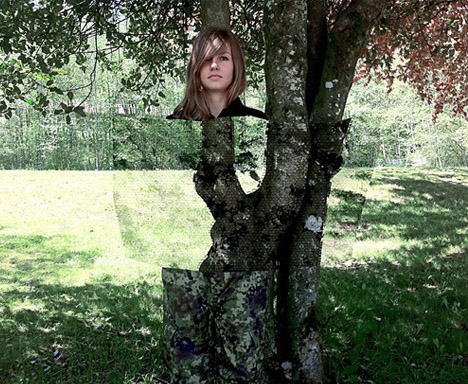
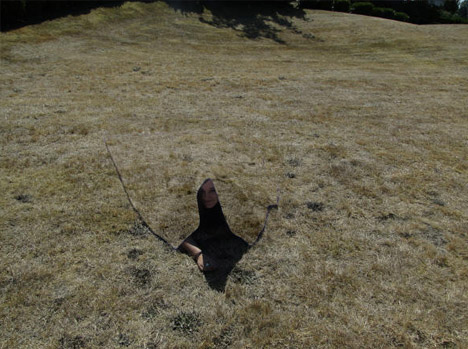
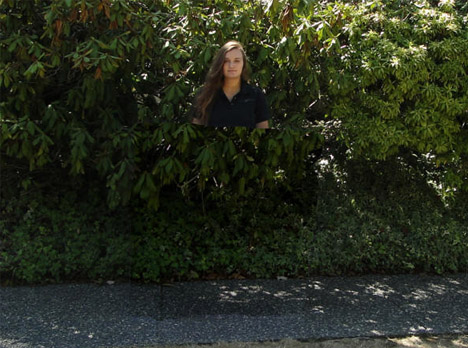
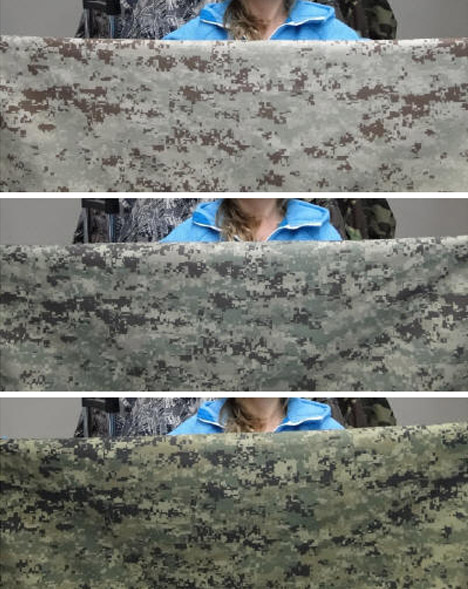
This author would like nothing more than to tell you that the above images are of a real-life working prototype of the most amazing invention of the century. That sentence should be clue enough, however, to the contrary. How is it, then, that these photos misled 5,000 publishers worldwide and, consequently, an awed global audience of millions?

invisibility cloak ground demo

It started with HyperStealth Biotechnology Corp, aptly or ironically a company of self-described “Leaders in Camouflage, Concealment and Deception.” They developed a compelling set of pictures of a next-generation technology designed to work without batteries, mirrors or cameras (perhaps more popular than ever after the special effects of the Harry Potter series).

invisibility cloak tree background

Though they subsequently clarified the photographs were manipulated, their bold headline (“Quantum Stealth; The Invisible Military Becomes A Reality”) suggested to readers – and duped news outlets – that what they were showing were working images of an actual finished product.

invisible changing camouflage material

By the end of 2012, Guy Cramer of Hyperstealth had conducted “20 interviews on this subject” but there were already “over 5,000 worldwide news stories” that had come out in just over a single week, each one dropping a piece or two of critical information. Most prominently: many failed to mention (or perhaps simply did not understand) that the images shown were not a reality.

invisible cloak wall example

To be fair: Guy still claims to have presented the product to multiple governments and militaries, and that what he has does, in reality, work not just at one angle but from all sides – he simply cannot show the prototypes due to high-level non-disclosure agreements. In the interest of playing it safe, this author will not weigh in on the validity of those claims either way.

Share on Facebook


[ By WebUrbanist in Gadgets & Geekery & Technology. ]

[ WebUrbanist | Archives | Galleries | Privacy | TOS ]


WebUrbanist

 
Comments Off on Warped Reality: Media Mis-Coverage of Invisibility Cloak

Posted in Creativity


My New Kickstarter Project: Photographer’s Social Media Mouse

01 Apr

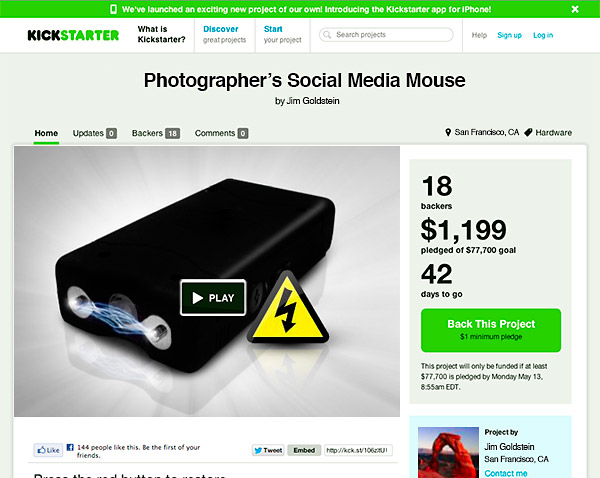
Ever since evangelizing the importance of social media to fellow photographers in 2006, I’ve long yearned for a tool to help balance photo/video editing time with the incredibly important task of marketing myself on social media. After years of research and prototyping I’m happy to announce a new Kickstarter project to realize my dream, a mouse designed especially for photographers who are super active on social media.
I’ve titled this project the Photographers’s Social Media Mouse.

Kickstarter Project: Photographer's Social Media Mouse

How it works is quite simple. Employing Bluetooth wireless technology the Photographer’s Social Media Mouse detects when a photographer has navigated to a web browser. With in 10 seconds of detecting activity on Facebook, Twitter, Google+, Flickr, Instagram, 500px, MySpace, and Friendster a gentle yet firm 7,800,000 volt shock is applied to the finger of the user. The momentary sensation causes brief paralysis in the arm reminding the user that more important editing or business communications are the order of the day.

Additional Features

  • Designed for travel – More comfortable than a touchpad, instant-on performance for maximum productivity on the road
  • Smart power management – Long battery life, on & off switch, power-saving modes and a low-battery indicator light
  • Precision optical performance – 1000-dpi optical sensor technology for incredibly smooth, precise tracking
  • Convenient carrying case – Comes with pouch for easy storage.

Important product information: Batteries are not included, use of mouse is not recommended by left handed users to avoid direct current to the heart and avoid data loss by keeping mouse on an approved non-conductive mouse pad.

Your support is needed to make this a reality. To contribute visit my Kickstarter page.

Product Details
Product Dimensions: 8.5 x 7 x 2.5 inches
Shipping Weight: 11.2 ounces
Shipping: Currently, item can be shipped only within the U.S.

Note: The Photographer’s Social Media Mouse is restricted and cannot be shipped to CT, IL, HI, MA, MI, NJ, NY, RI, and WI. They are also restricted in Annapolis, MD; Baltimore, MD; Baltimore County, MD; Chicago, IL; Dension/Crawford County, IA; Washington DC; and Philadelphia, PA. Any orders for these areas/states will be canceled.

Copyright Jim M. Goldstein, All Rights Reserved

My New Kickstarter Project: Photographer’s Social Media Mouse

The post My New Kickstarter Project: Photographer’s Social Media Mouse appeared first on JMG-Galleries – Landscape, Nature & Travel Photography.


JMG-Galleries – Landscape, Nature & Travel Photography

 
Comments Off on My New Kickstarter Project: Photographer’s Social Media Mouse

Posted in Equipment


We ? Retro Media: Vinyl, VHS, Tapes & Film | Off Book | PBS

17 Jan

We live in a digital world that gives us all the media we could possibly dream of at the click of a mouse, yet many people miss the old school physical formats from our past. Listening to vinyl and cassettes allows us to connect with music in a different way than MP3s. VHS and 8mm create visual aesthetics and atmospheres that are difficult to replicate in digital video. And the surprises inherent to analog instant photography help embed an organic quality to the recording of our memories. The challenges these retro formats present to capturing and experiencing media actually enhance our appreciation for the sound or image, making the art we love a bit more intimate, and real. Here’s a list of all the art used in the episode! docs.google.com Featuring: Eilon Paz, www.dustandgrooves.com Prof. Al Nigrin, Rutgers University Ryan Martin, Dais Records Rebecca Cleman, Electric Arts Intermix David Bias, Impossible Project www.the-impossible-project.com Music: Professor Kliq – soundcloud.com PhatRecords Music – www.youtube.com Jason Day – soundcloud.com Diadainconsupertrafra – soundcloud.com Nic Bommarito – freemusicarchive.org Binarpilot – www.jamendo.com Duckett – ccmixter.org More Off Book: Our last video on The Effect of Color: youtu.be Our short documentary on The Creativity of Indie Video Games: www.youtu.be Taking a look at The Art of Web Design: youtu.be We asked Can Fandom Change Society?: youtu.be An examination of The Art of Animation & Motion Graphics: youtu.be Follow
Video Rating: 4 / 5

Terry White reviews the NEW iPad Camera Connection Kit for iPad, which allows you to download images from a memory card or your camera directly into the iPad. He even shows a tip for Compact Flash users! This video is in support of the written review to appear at terrywhite.com soon!


Mixed Media Painting (Detail) by Choichun Leung / Dumbo Arts Center: Art Under the Bridge Festival 2009 / 20090926.10D.54932.P1.L1.C23 / SML

20 Dec

A few nice visual art images I found:

Mixed Media Painting (Detail) by Choichun Leung / Dumbo Arts Center: Art Under the Bridge Festival 2009 / 20090926.10D.54932.P1.L1.C23 / SML
visual art
Image by See-ming Lee ??? SML
SML Pro Blog: Choichun Leung / 13th Annual DUMBO Art Under the Bridge Festival NYC 2009: Part 10 of 10 / Art + Artists

Choichun Leung
2008
Part of the SCRIPTO series
www.choichun.com/scripto.html

See also Choichun Leung talks about her mixed media paintings (Flickr 720p HD video).

Choichun Leung left Wales when she was seventeen to pursue a degree in metal-smithing at Loughborough college of Art and Design in the UK, afterwhich she studied Buddhist iconography in both Beijing and the Yangkung caves in China’s Shanxi province. In 1988 she moved to London where she studied under the Ray Man Chinese Orchestra as a percussionist and a student of the Gu-qin – a traditional Chinese bass zither. Leung worked in Hong Kong as a background artist for animation film before returning to London in 1992 where she received a grant and Gold Award from the Prince of Wales’ Youth Business Trust for the most innovative new business of the year: a line of symbolic art products using the traditional technique of Chinese paper cutting.

With music and the arts always hand in hand, Leung came to New York in 1994 where she began painting seriously, worked as an assistant to artist Peter Max, and studied music composition. From that point forward, Choichun’s artwork has been inextricably entwined with her interest in music and have continued to influence each other.

As the single mother of a young daughter, Choichun moved to Germany in 2002 to write music, perform and collaborate on an audio/visual project based in Koln. Upon the invitation of a gallery in 2006 she returned to New York. Most recently Choichun has been featured in two solo exhibitions at JLA Baxter House in Manhattan and will take part in a group showing in Hamburg in November 2008. Choichun currently lives in Brooklyn, NYC .

Artist Statement Our lives are as long as we remember. Our memories are imbedded in us like DNA. But what of lives that through trauma or age have lost memory? What of the interplay of conscious thought and the sub-conscious? Which one really drives the show? My paintings are like rorschach tests in reverse, a psychological diary of that moment in time, an investigation of the relationship between past and present, reality and illusion and in effect a blue print to the past self. Through the symbolisms revealed, and the stories or objects we project into the abstract, we expose another layer of ourselves and in turn provide clues to what may not be fully aware. My paintings are simple traces of that activity, void of any meaning, but imbedded with the years of experience that shapes us, yet also holds us hostage.

Choichun never paints from sketches but instead allows the process and medium dictate. Each application is an expressive gesture evoking the emotion and inner psychology of that moment, a conflicted excavation of what may be hidden or imagined. The script like lines emerge as a non-cognitive language or what she has come to identify as ‘glyphs’ – a pictographic personal alphabet; where ‘glyphs’ document the days, weeks and months spent on a piece. The one actual reference that Choichun can identify in her work after the fact springs from her background in music and her fascination with its chaotic notes and interpretive patterns. These can be seen in the work’s fine, rhythmic and frenetic lines as well as in the heavier, poured-on, black & white ‘mono-glyphs’ which overtake the paintings like visual representations of a sound. Choichun paints on both wood panels and canvas, using liquid acrylic, aerosol, oil bars and thread . With sticks, brushes, trowels and vessels: applying the paint and then scratching through the layers to reveal what is underneath, scripting with ‘glyphs’ throughout, painting over, sanding down and repeating this process until an image is revealed or another is hidden.

www.choichun.com

13th annual D.U.M.B.O. Art Under the Bridge Festival® (Sept 25 to Sept 27, 2009)
www.dumboartfestival.org/press_release.html

The three-day multi-site neighborhood-wide event is a one-of-a-kind art happening: where serendipity meets the haphazard and where the unpredictable, spontaneous and downright weird thrive. The now teenage D.U.M.B.O. Art Under the Bridge Festival® presents touchable, accessible, and interactive art, on a scale that makes it the nation’s largest urban forum for experimental art.

Art Under the Bridge is an opportunity for young artists to use any medium imaginable to create temporary projects on-the-spot everywhere and anywhere, completely transforming the Dumbo section of Brooklyn, New York, into a vibrant platform for self-expression. In addition to the 80+ projects throughout the historical post-industrial waterfront span, visitors can tour local artists’ studios or check out the indoor video_dumbo, a non-stop program of cutting-edge video art from New York City and around the world.

The Dumbo Arts Center (DAC) has been the exclusive producer of the D.U.M.B.O Art Under the Bridge Festival® since 1997. DAC is a big impact, small non-profit, that in addition to its year-round gallery exhibitions, is committed to preserving Dumbo as a site in New York City where emerging visual artists can experiment in the public domain, while having unprecedented freedom and access to normally off-limit locations.

www.dumboartscenter.org
www.dumboartfestival.org
www.video_dumbo.org

Related SML
+ SML Fine Art (Flickr Group)
+ SML Flickr Collections: Events
+ SML Flickr Sets: Art
+ SML Flickr Sets: Dumbo Arts Center: Art Under the Bridge Festival 2009
+ SML Flickr Tags: Art
+ SML Pro Blog: Art

Brooklyn Graffiti / Dumbo Arts Center: Art Under the Bridge Festival 2009 / 20090926.10D.54913.P1.L1.C23 / SML
visual art
Image by See-ming Lee ??? SML
13th annual D.U.M.B.O. Art Under the Bridge Festival® (Sept 25 to Sept 27, 2009)
www.dumboartfestival.org/press_release.html

The three-day multi-site neighborhood-wide event is a one-of-a-kind art happening: where serendipity meets the haphazard and where the unpredictable, spontaneous and downright weird thrive. The now teenage D.U.M.B.O. Art Under the Bridge Festival® presents touchable, accessible, and interactive art, on a scale that makes it the nation’s largest urban forum for experimental art.

Art Under the Bridge is an opportunity for young artists to use any medium imaginable to create temporary projects on-the-spot everywhere and anywhere, completely transforming the Dumbo section of Brooklyn, New York, into a vibrant platform for self-expression. In addition to the 80+ projects throughout the historical post-industrial waterfront span, visitors can tour local artists’ studios or check out the indoor video_dumbo, a non-stop program of cutting-edge video art from New York City and around the world.

The Dumbo Arts Center (DAC) has been the exclusive producer of the D.U.M.B.O Art Under the Bridge Festival® since 1997. DAC is a big impact, small non-profit, that in addition to its year-round gallery exhibitions, is committed to preserving Dumbo as a site in New York City where emerging visual artists can experiment in the public domain, while having unprecedented freedom and access to normally off-limit locations.

www.dumboartscenter.org
www.dumboartfestival.org
www.video_dumbo.org

Related SML
+ SML Fine Art (Flickr Group)
+ SML Flickr Collections: Events
+ SML Flickr Sets: Art
+ SML Flickr Sets: Dumbo Arts Center: Art Under the Bridge Festival 2009
+ SML Flickr Tags: Art
+ SML Pro Blog: Art

 
Comments Off on Mixed Media Painting (Detail) by Choichun Leung / Dumbo Arts Center: Art Under the Bridge Festival 2009 / 20090926.10D.54932.P1.L1.C23 / SML

Posted in Photographs


Recommended Reading: Social Media & ­­­­­Copyright

12 Dec
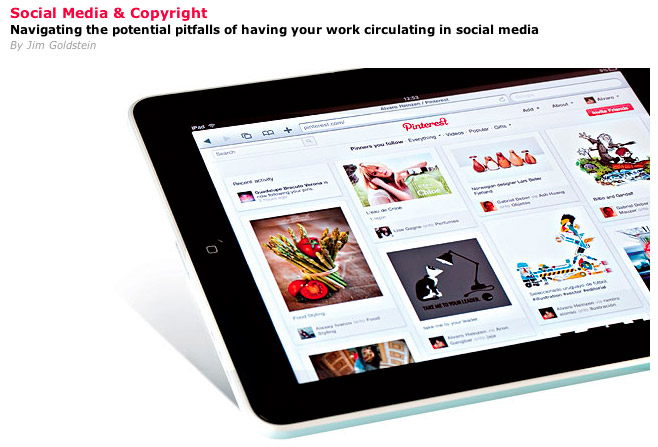
Social Media & ­­­­­Copyright: Navigating the potential pitfalls of having your work circulating in social media

Social Media & ­­­­­Copyright: Navigating the potential pitfalls of having your work
circulating in social media

In case you missed it my article Social Media & ­­­­­Copyright was recently published in Digital Photo Pro magazine. This article is the second part of my earlier article Social-Media Marketing Essentials. Missing from my earlier article was a discussion of copyright concerns most common to photographers and other creatives. If you missed it I highly recommend reading it. While the social media landscape changes quickly the foundational elements of this article will help you keep your sanity for years to come.

Related articles:
How I Evaluate Terms of Service for Social Media Web Sites – Google+ 

Evaluating Terms of Service Documents: Resources

More of my articles on Social Media for Photographers


Copyright Jim M. Goldstein, All Rights Reserved

Recommended Reading: Social Media & ­­­­­Copyright

The post Recommended Reading: Social Media & ­­­­­Copyright appeared first on JMG-Galleries – Landscape, Nature & Travel Photography.


JMG-Galleries – Landscape, Nature & Travel Photography

 
Comments Off on Recommended Reading: Social Media & ­­­­­Copyright

Posted in Equipment


Quad Public Art Project – Film and Media Studies

08 Dec

A few nice visual art images I found:

Quad Public Art Project – Film and Media Studies
visual art
Image by Lafayette College
Seminar Class, Art 335: Studio Theory & Practice, created a public art project. on the quad. Working with archival images and texts, the students developed these stories into full fledged audio-visual presentations that were projected onto Pardee Hall. There was also a live music at the event, which took place on May 3, 2011.

Ashley Juavinett, ’11, provides some music for the event.

OBEY campaign – VISUAL DISOBEDIENCE
visual art
Image by Leo Reynolds
Shepard Fairey OBEY campaign

Car park billboard/hoarding outside
BALTIC Centre for Contemporary Art
Gateshead, Tyne and Wear, England, UK

 
Comments Off on Quad Public Art Project – Film and Media Studies

Posted in Photographs