Three photographs taken by Joseph Nicephore Niépce, a Frenchman born in 1765, will soon be exhibited by the National Media Museum. These particular images, which their creator called ‘heliographs’, were taken during the 1820s, and are part of a set of 16 image located throughout the world. All three images are said to be amongst the earliest of photographs ever taken. Read more
Tag: Media
-
Upload Your Photos to Multiple Social Media Websites with Expojure
How many social media websites do you upload photos to regularly? I have five – a Facebook page, my personal Facebook profile, Google+, Flickr and 500px. Some people have more. For photographers who want to get their work out there, this seems like a must. Yet it’s time consuming and, truth be told, an inefficient way of working.
If this is you, then you’ll be interested in new photo sharing website, Expojure. A startup based in Mumbai, it lets you upload the photos you want to share to a central Expojure account, arrange them in Collections, add keywords, titles, tags and descriptions, then upload them to as many as six photo sharing websites (the five listed above plus SmugMug).
I’ve been using Expojure for a few weeks now and I’m very impressed with the setup. The website is well-designed and easy to use. The layout is simple, doing exactly what most people will need it to, without adding unnecessary extras.
There’s also a plug-in for uploading photos to your Expojure account directly from Lightroom.
How Expojure works
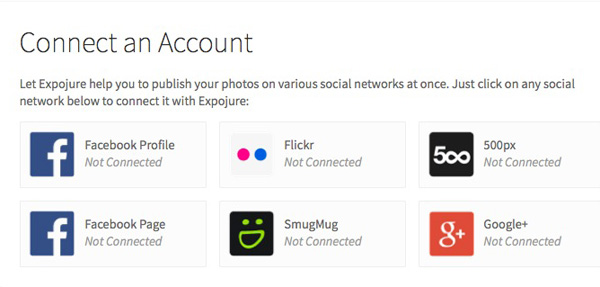
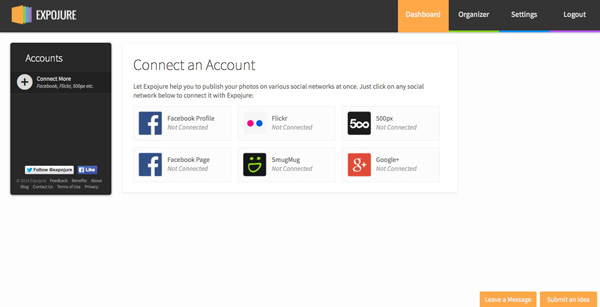
When you sign in to Expojure you’ll see a page that looks something like this – it is your Dashboard. If you’ve uploaded any photos to Expojure already, you will see them here. If not, you’re presented with the option to sign into the photo sharing accounts you wish to use. Just click the buttons to do so. Connected accounts are shown afterwards on the left.
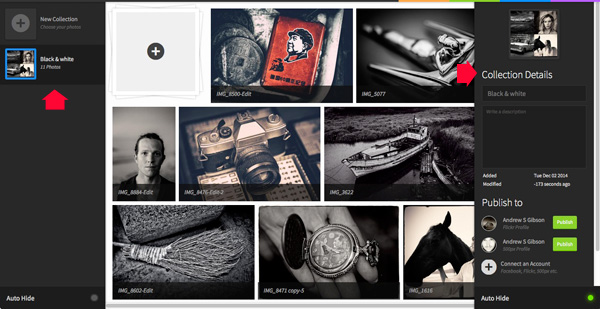
Once you’ve connected to some photo sharing websites, it’s time to go to the Organizer and add photos. Uploaded photos are automatically placed in a new Collection. You can rename the Collection and add a description using the panel on the right. You can also move photos around between Collections.
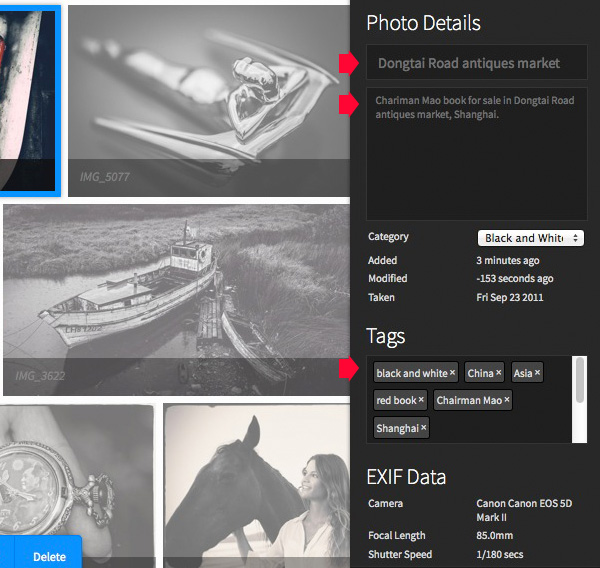
You can add or amend details of individual photos by clicking on them and entering the new information on the right. If you haven’t already added a title, description, or tags now is your chance to do so.
Click the green Publish buttons in the bottom right corner to upload the photos. Expojure places all the photos in the Collection into a new Set on your selected website.
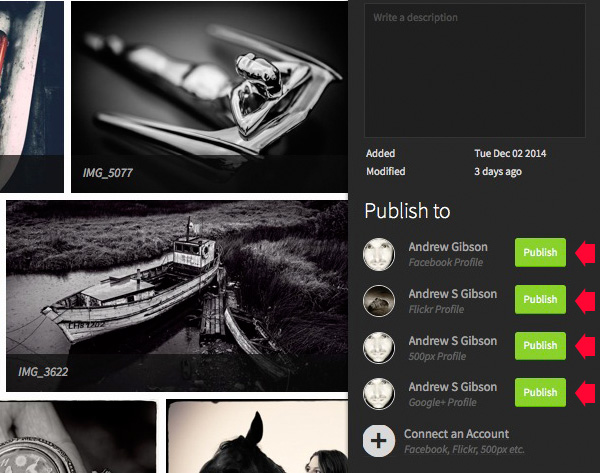
Every photo in the Collection is sent to the chosen website. If you want to upload a single image, you need to create a new Collection and add the chosen photo to that first.
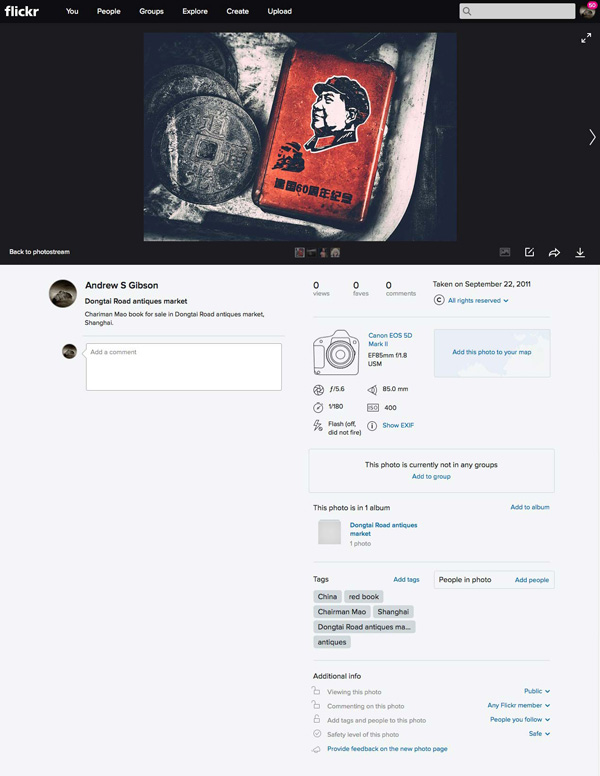
Here’s a photo that I uploaded to Flickr. The title, description, EXIF data and tags have been successfully added. The only thing left to do is add the photo to any Groups or mark the location on the map.
Expojure Lightroom plug-in
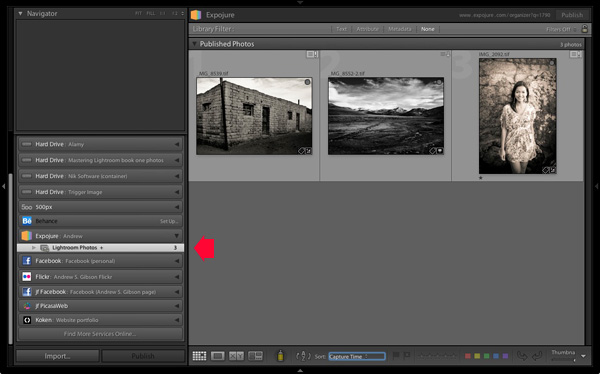
If you click on the Settings tab at the top of the Expojure website page you can download a free plug-in for Lightroom. Use Plug-in manager to add it. It shows up in Lightroom’s Publish Services.
Once installed, you can create new Publish Collections containing photos to upload to your Expojure account. Lightroom uploads them when you press the Publish button. The images are held there until you log in and distribute them to your photo sharing websites.
Notes about Expojure
At the time of writing Expojure is free to use, and has been since the service went live. However, at some point (most likely after this article has been written, but before it is published) Expojure is switching to a subscription model. There will still be a free account, which limits you to uploading 20 photos a week and connection to two social media accounts. Paid accounts retain unlimited photo uploads and unlimited social media accounts.
If you have a free 500px account, you will receive an error message when you upload photos to it. This is because free accounts don’t support Sets. However, your photos are still successfully uploaded to 500px, despite the error message.
Expojure will add more features, and more services to its supported photo sharing websites over the next few weeks. Some of these may be active by the time you read this article.
Alternatives to Expojure
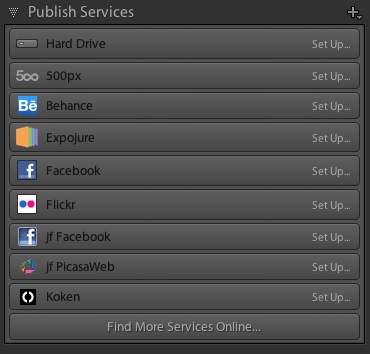
The only alternative to Expojure that I’m aware of is Lightroom’s Publish Services (please let us know in the comments if you know of any others). The benefit of Lightroom’s Publish Services is that it is free (once you own Lightroom). However it’s not as efficient or easy to use as Expojure and doesn’t support websites like Google+ out of the box (plug-ins are available for many photo sharing websites).
Conclusion
Expojure is a well thought out service that greatly simplifies the task of uploading photos to social media websites. If you find the process of adding images to multiple websites frustrating, then please take a look at Expojure’s website, you’ll be glad you did. The video posted at the top of the article gives you a good overview of how it works.
Which photo sharing accounts do you use and how do you manage them? Please let us know in the comments.
The Mastering Lightroom Collection
 My Mastering Lightroom ebooks will help you get the most out of Lightroom 4 and Lightroom 5. They cover every aspect of the software from the Library module through to creating beautiful images in the Develop module. Click the link to learn more or buy.
googletag.cmd.push(function() {
tablet_slots.push( googletag.defineSlot( “/1005424/_dPSv4_tab-all-article-bottom_(300×250)”, [300, 250], “pb-ad-78623” ).addService( googletag.pubads() ) ); } );googletag.cmd.push(function() {
mobile_slots.push( googletag.defineSlot( “/1005424/_dPSv4_mob-all-article-bottom_(300×250)”, [300, 250], “pb-ad-78158” ).addService( googletag.pubads() ) ); } );The post Upload Your Photos to Multiple Social Media Websites with Expojure by Andrew S. Gibson appeared first on Digital Photography School.
-
The Most Valuable Photography Tips Ever – Results of a Social Media Survey
I recently asked the following question on social media: “What was the most valuable photography tip you ever received?” Needless to say, I received a plethora of really useful tips from the audience. Some were spot on, others were debatable. I thought it would be fun to post a few here and expand on them briefly. Let’s get started with the most valuable photography tips ever.
The best zoom lens is your own feet
That is often true but please don’t try it if you are photographing a polar bear and her cubs or a bulky football player running for touch down. Get the right tool for the job! On the other hand, I must say that on any given photography workshop, the day my students do their best work is when they use a fixed focal length lens. I really believe in the power of limitations.
Look for the light
The day I understood how to see the light and how to harness it, is the day my photography took a leap forward. There is no bad light, learn to assess the quality and quantity of light and work with. It’s all about learning to use it to your advantage.
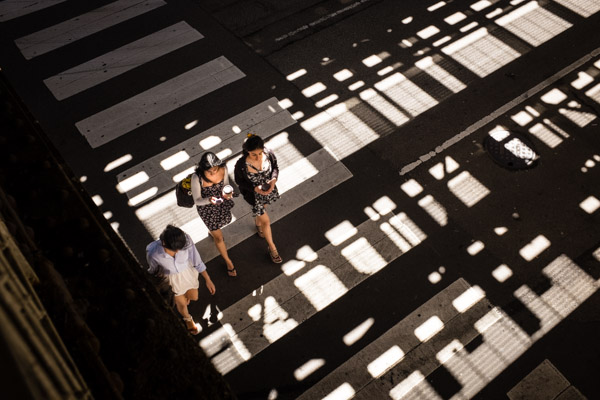
See the light and use it to your advantage.
©Valerie JardinGet close. Then Get Closer
Okay, I had to smile because this one came from one of my former students. I could hear myself say that exact same sentence. Learn to see photographically and make stronger images. Photographers tend to leave too much ‘stuff’ around their subject. The viewer gets lost in the chaos and doesn’t know where to look. Less is often more. It’s important to learn to crop in camera and using a prime lens is a great way to learn to see photographically. Learning to remove distracting elements from your frame before your press the shutter is essential to improving your photography.

Get close. Then get closer!
©Valerie JardinStop thinking and shoot
Before you press that shutter you should know why you composed the way you did. Using the ‘spray and pray’ approach will certainly get you some lucky shots but not much satisfaction. You obviously stopped because you saw something that grabbed your attention, work the scene and follow your instinct. Don’t over analyze at the risk of making a technically perfect image with no story or feeling. Perfection is not always the goal.
Never stop practicing
There is no better way to improve your craft than by exercising those ‘visual push-ups’ daily. You don’t even need to leave the house. Experiment with anything, make an ordinary object look extraordinary. Go ahead and use your camera phone even. The tool doesn’t matter, your vision does.
Don’t use the flash
Okay, I have to use a ‘Sammonism‘* here and remind you to “Turn the darn flash off!” This tip applies to your camera or your phone.
After you’ve taken the shot, look behind you.
For sure! If you are photographing another sunset, the scene lit by the golden light behind you may be even more spectacular.
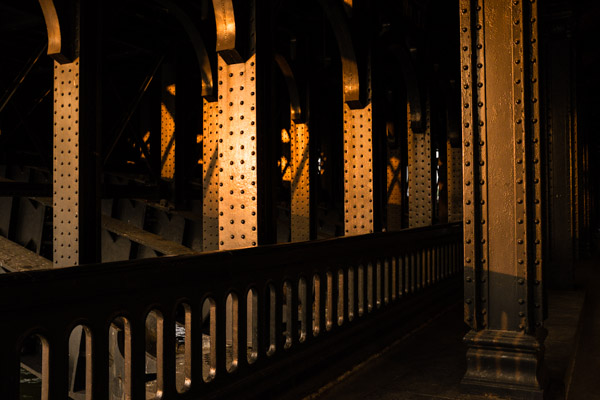
Look behind you! Everyone was looking at the sun setting over the river Seine in Paris, I looked back and was struck by the beautiful golden light hitting the bridge posts. – ©Valerie Jardin
Shoot in manual mode
That may not always be your best choice. If you are shooting landscape then I would say yes, by all means, shoot in manual and take full control. If you are shooting street photography for example, shutter priority or aperture priority may be better choices. There is no coming back to get the shot again, so let the camera do some of the thinking for you or you’ll miss the moment.
Lighten your load and expand you creativity
A comfortable photographer is a happier photographer. Take one camera, one lens and let those creative juices flow. It will save your back too.
Shoot for yourself. Don’t try to get approval of others.
So true, unless you need to please a client, of course. If photography is a hobby, why should you care what other people think of your pictures, as long as you like them? That said, having a critique of your work in order to improve on it is one thing, and I would highly recommend it. But, the need for gratification via ‘likes’ on social media is something you should try to learn to live without. If that is the goal then I would recommend posting a daily kitten picture to get your fix. Then just shoot what you love (if it’s kittens, then it’s a win-win). In all seriousness, not every genre of photography will get ‘Oohs and Aahs’ on social media. For example, street photography is not understood and appreciated by the general public like landscape photography. Is that a reason to shoot landscape if your heart is in street photography? I hope not or you’re a photographer for the wrong reasons. Follow your heart and your work will shine!
Stop reading and start clicking
It’s good to read about photography and get inspiration online and in books but that should not replace your time behind the camera. You are not going to get instantly better after reading an article or watching a tutorial. You are only going to get better if you shoot often. Period.
Slow Down
Having unlimited shutter clicks without a cost factor attached is both good and bad. Good for the learning curve. Bad because it tends to make us lazy. Start shooting as if you were shooting film, make every shot count and you will have more keepers at the end of the day. Slow down and know why you are about to press the shutter.

Practice, practice, practice. Any ordinary object can be a great learning subject to exercise those ‘visual push-ups’ ©Valerie Jardin
Never pack your camera away until you are back home
You never know what is going to cross your path. Keep that camera handy, and always on.
Take the lens cap off
Better yet: Leave it at home.
Happy shooting!
Please share some tips that made a difference in your photography in the comment section below.
*In reference to our friend and photographer extraordinaire Rick Sammon
The post The Most Valuable Photography Tips Ever – Results of a Social Media Survey by Valerie Jardin appeared first on Digital Photography School.
-
Live Google+ Hangout at 10AM PST This Morning About How to Maximize Your Photos Through Social Media
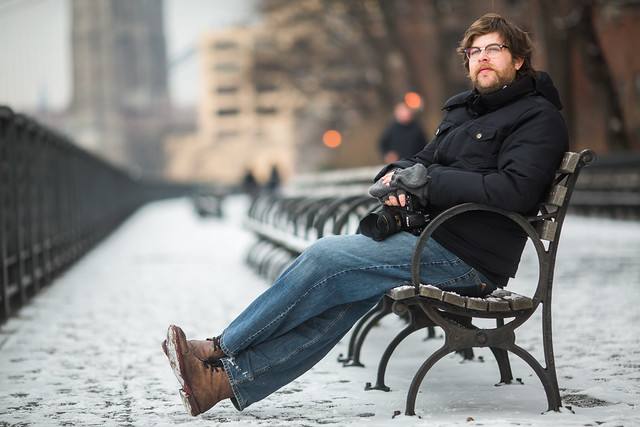
The Smoothest Dude Alive, Daniel Krieger.My good friend Daniel Krieger (aka smoothdude), along with MacPhun’s Laurie Rubin, and I will host a live G+ hangout this morning talking about ways to promote your photography through social media. We’ll record the episode to my youtube account as well in case you can’t make it live and want to watch later.
Come join the show here if you can make it.
-
7 Years of Data: How Social Media Has Impacted JMG-Galleries Web Traffic
At the close of every year I like to take a look at the web metric trends on my web site via Google Analytics and forecast how I might need to adapt over the coming year(s). Yesterday I reviewed the trends of mobile web traffic and today I’ll dive into the larger trends of referring traffic from social media web sites. If you’re familiar with my past writing on social media trends and strategies you’ll know I’ve always been a big proponent of social media and it’s potential to help photographers. In the time I’ve been writing on social media and it’s benefits there has always been the lingering question, “What is the real impact of taking part in Social Media?”. That’s a multi-dimensional question that can be answered in relation to revenue, web traffic, brand awareness, time, mental health, etc. For the sake of simplicity let’s take a look at referring web traffic to my web site JMG-Galleries over the course of 7 years and across 9 social media sites.
First I learned a few things that were not so obvious in the process of evaluating the referring traffic from social media web sites:
- Trends were equally determined by my use of a particular site, as it was about the popularity of that site. (i.e. A site is only as good as you make use of it, no matter how popular/unpopular it may be.)
- Social media sites have a life span and are subject to fluctuations in popularity that may impact traffic to your site.
- The most talked about social media sites (those with great PR) are not always the best performers.
- Honing in on a social media site with the right audience (even if smaller) that is active can often be more important than focusing on a sites total audience size.
All Social Media Sites Compared
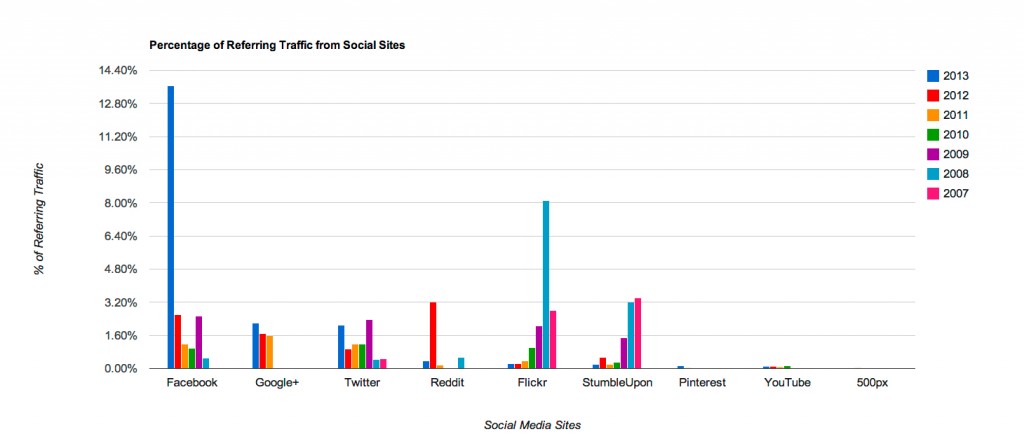
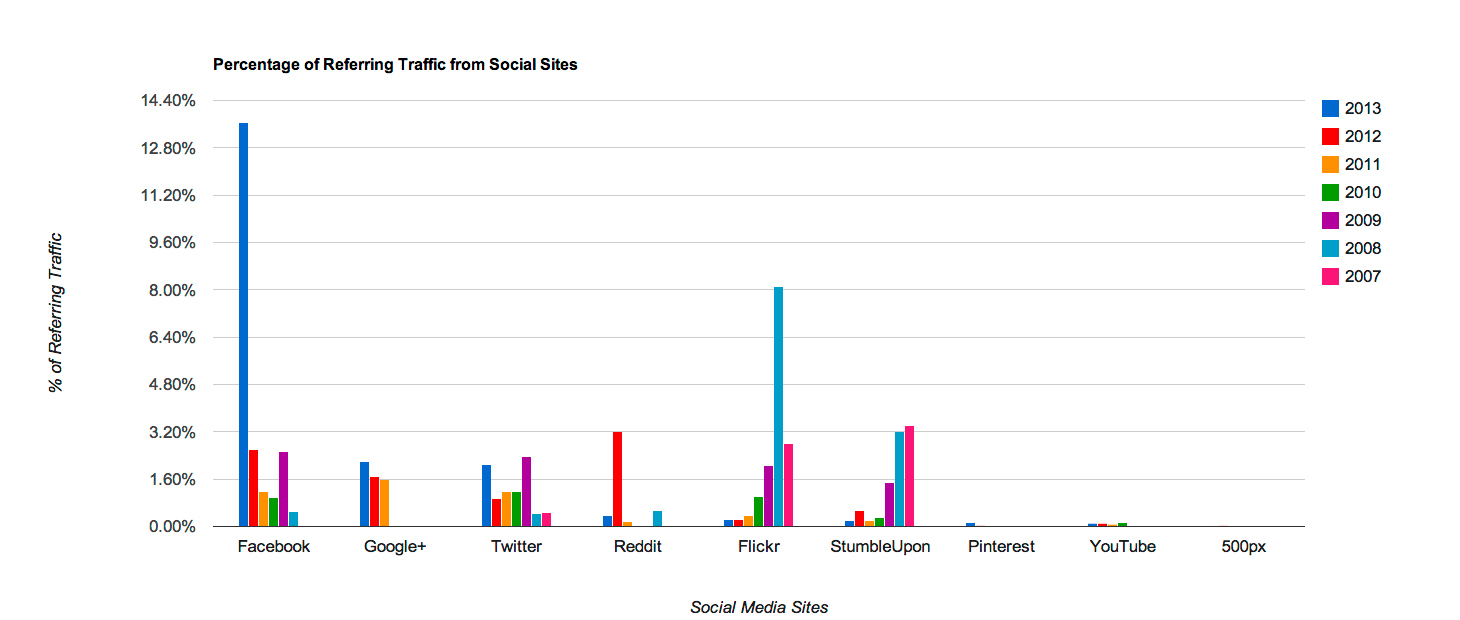
The first thing you’ll likely notice is that the big standouts are Facebook and Flickr, but take note of the year difference (2013 vs 2008). What fascinated me when taking in this data the first time was the rise and decline of certain social media web sites. Part of the fluctuation was a reflection a web sites overall trending popularity by its users and on the flip side my personal increase/lack of interest in a site. The other telling thing about this graph is being able to size up the potential impact of competitor sites (ex. Flickr vs 500px). There’s a lot more to this graph when you dive into each site so let’s get a little more granular…
“Content is King” Sites
Reddit over the lifespan of my web site has always been the source of unexpected and pleasant surprises generating healthy bumps in traffic. I’ve never seeded an article there and only created an account there a few months ago. The community there can be brutal on people that pimp themselves so I advise against trying it. What ultimately caught the eye of Reddit users and generated traffic to my site was informative and thought provoking content. The same is true of YouTube even though I’ve never been a big video creator. What’s cool about YouTube is that it is essentially the 2nd largest search engine (if you lump it in to the search category), so if you create good content there it’s highly likely it will eventually be found. If it’s the right content you might see a delayed impact to referring traffic. Case in point is a review I did of a Canon 800mm f/5.6 lens from BorrowLenses.com. The first 2 months it fell flat but it’s since picked up interest garnering nearly 200K views.Flickr vs 500px
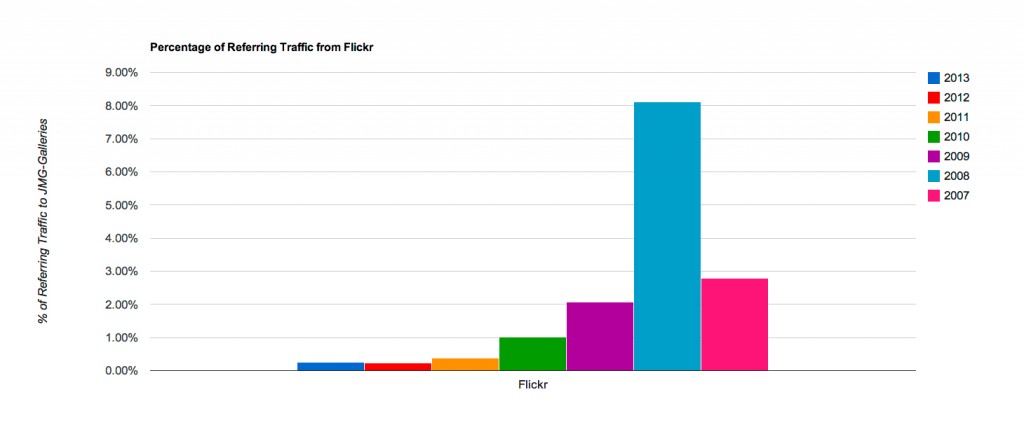
First and foremost I’m not taking a stand on which site is better. While both Flickr and 500px are photo sharing sites I’ve used them differently. I used to plug my web site a lot in image descriptions on Flickr particularly when I was running my podcast EXIF and Beyond. While I still plug my web site in image descriptions on 500px I’ve cut down on my photo sharing on 500px and Flickr. This has been mostly a reflection of my dwindling free time since having my son.
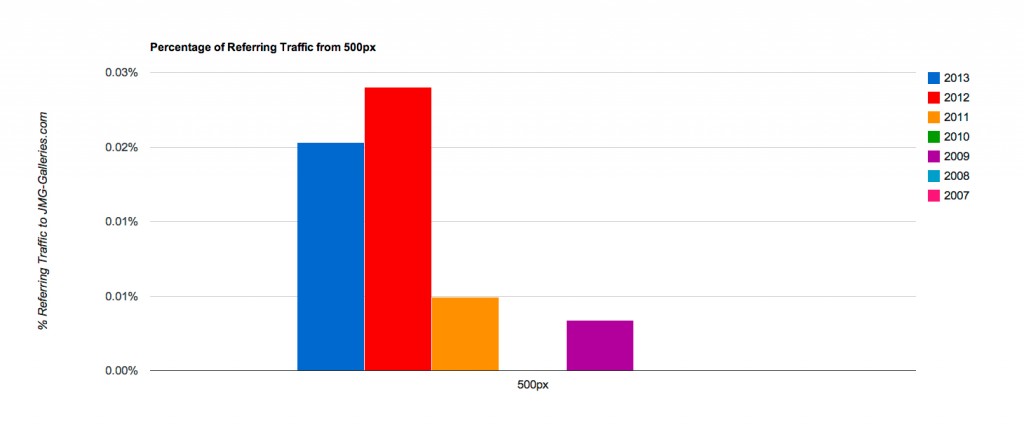
To date I have 63 images on my 500px account and on my Flickr account I have 1038 photos. Given that Flickr performs very well as an image search engine I still receive decent referral traffic from the site even though I’m not very active there. We’ll see how 500px performs over time. One dimension of these two sites that I can’t escape mentioning is that even though Flickr has it’s flaws it still has a robust audience. I nearly wrote it off, but after posting a few photos there this year I’ll continue posting photos there. Both Flickr and 500px have ways of highlighting photos to their larger audience through Explore (Flickr) and Pulse (500px) which can boost traffic to your site. Having your images surface in these algorithm driven highlight systems can be hit or miss and an easy sink hole to get sucked into if you’re big on gaming systems. That said systems that can be gamed are always being changed as was the case with 500px’s Pulse in November.
Hyped Sites Then & Now – StumbleUpon vs Pinterest
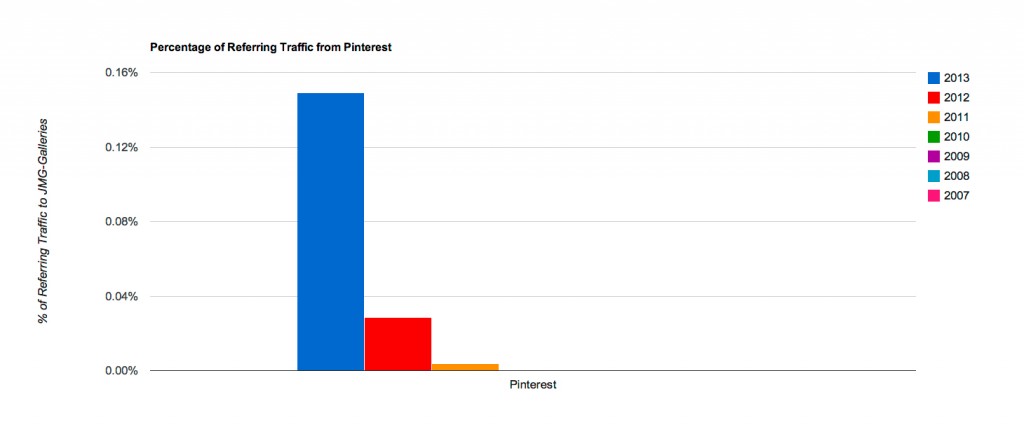
Pinterest took the photography community by storm, albeit more so because of copyright concerns. That never scared me off, but what did was its poor performance. While other photographers hailed it as the biggest thing since sliced bread I’ve never seen it generate great referral traffic. My Pinterest account is still active, I’ll pin my blog posts and announcements there from time to time and I’ll monitor what of my work is being pinned. Other than that I’ve backed off aggressively courting Pinterest users/traffic. One caveat that I will add to this is that Pinterest has the potential to be great for certain types of photography/photographers. The demographic is heavily weighted toward young females, a perfect target audience for wedding photographers.
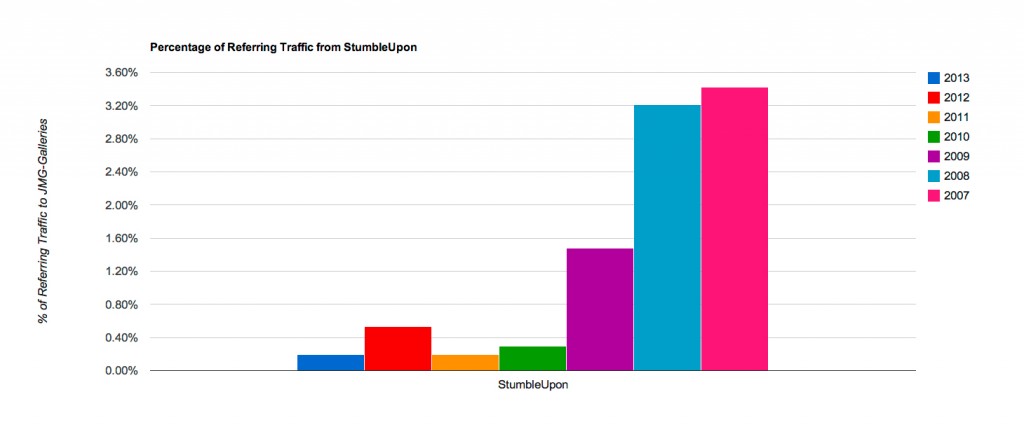
StumbleUpon on the other hand not only received hype it actually performed. I never was an active Stumbler, but my site benefited from the activity of Stumblers that followed my blog. One thing that is obvious from the chart above is that the activity of people coming from StumbleUpon has dropped sharply. My educated guess here is that StumbleUpon has been supplanted by Facebook and/or StumbleUpon users that followed my blog have dropped off for one reason or another. My money is on the Facebook effect.
The Giants – Facebook vs Google+
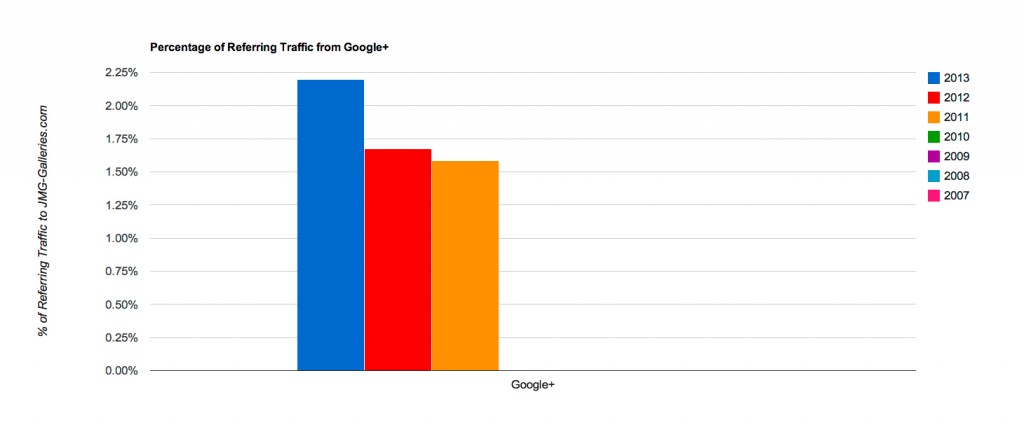
Like many photographers I have a love-hate relationship with Google+ and Facebook. Google+ is very photographer friendly, but it’s a bit all over the place with a semi-scattered feature set (communities, pages, auto-this&that, Picassa integration, circles, etc.) Facebook is the king of social activity, but has shot itself in the foot repeatedly with photographers regarding their terms of use and privacy policies. Google+ is interesting because I have a very large following there, but over time I’ve tried to minimize self-promotion unless something special is happening like an eBook discount, giveaway or blog project. Due to my busy schedule the past year, I have not been posting my photos with the same frequency as when I first started my account. Still my referral traffic is on the rise even with fewer photos shared, but I attribute this to being a bit more focused on my self-promotion amid sharing interesting content from other sources and even other photographers.
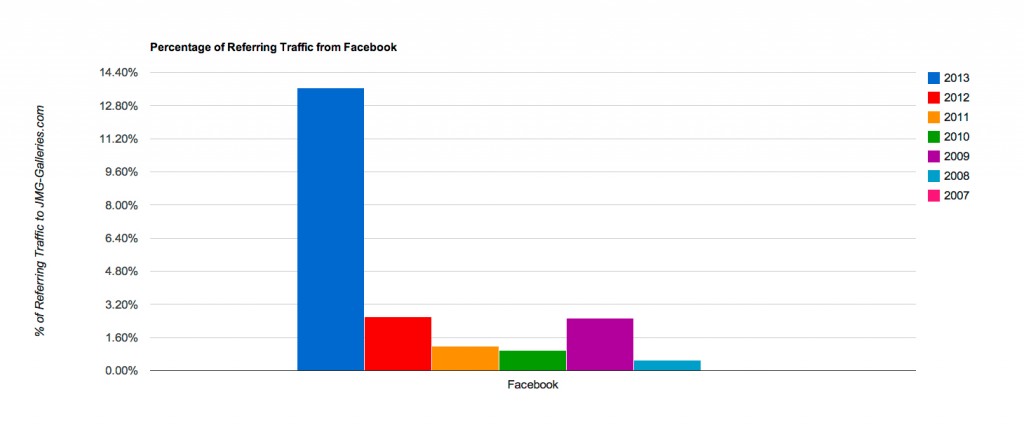
I was quick to create a personal Facebook page when Facebook opened its doors to non-college students (2006), but slow to launch a business page (2010). I was never super active on my personal page, but active enough it would seem. What helped in the early days was connecting my blog to my Facebook page so that new blog posts would display in my timeline automatically. Now I’m less fond of the automatic updates and am leaning toward killing this in 2014. One thing that Facebook deserves a lot of credit for is creating a feature rich business page that has an “easy” time making its way into my fans’s timeline. Google+ could learn a lesson or two on that front. I don’t post a lot on my business page and share photos conservatively. This shows in the lower numbers in the chart above (2011/2010), but the jump in 2013 can be attributed to my sharing photos on my fan page and in groups where some of my updates have gone viral. I also have been experimenting with promoted posts, but those have been directing people to another domain and should have no impact to these numbers. One thing about Facebook that has me on edge is how their timeline algorithm has recently changed and Facebook’s increasing slant toward paid promotion. A publicly traded company has to create earnings, but I don’t have to like it nor take part. We’ll see how things play out.
Twitter
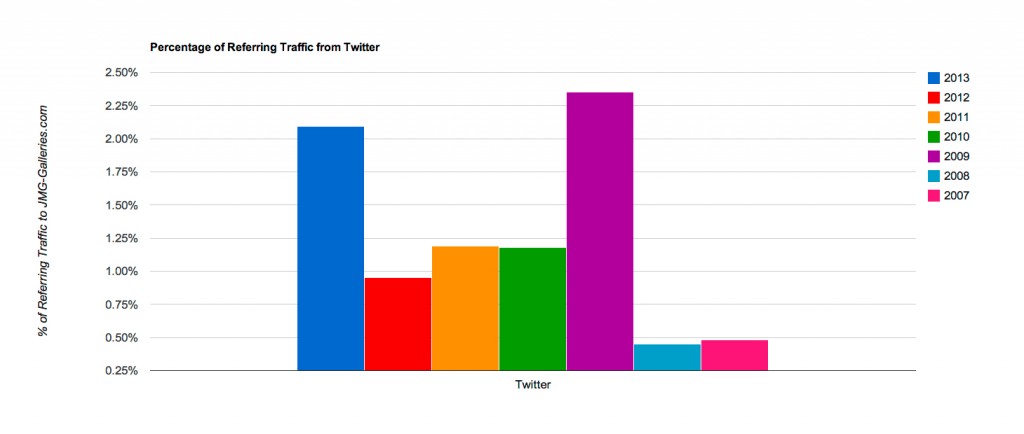
I still love Twitter, but that’s because it compliments my incessant reading and news junkie tendencies. I was rather surprised that the referral traffic wasn’t higher for Twitter, but it’s still decent. 2013 and 2009 were good years for traffic, but I don’t recall doing anything drastically different. I thought posting frequency might be behind the higher referral traffic numbers, but I’ve posted less in 2013 than in years prior and I likely was posting a lot in 2009. Seeing the stark differences in posting behavior I doubt frequency has anything to do with it. Twitter to me also falls under the category of “Content is King” especially if you’re a content creator. If anything I’m guessing great content begets referral traffic especially if your great content is being retweeted and shared.
Concluding Thoughts
As it relates to referring traffic I have no regrets in taking part in Social Media and my prior enthusiasm for it still holds. I think it is still a worthy use of time, resources and money. I’m still digesting this data so I will certainly be taking it into consideration as I plan out and ramp up my social media activity in 2014.Copyright Jim M. Goldstein, All Rights Reserved
7 Years of Data: How Social Media Has Impacted JMG-Galleries Web Traffic
The post 7 Years of Data: How Social Media Has Impacted JMG-Galleries Web Traffic appeared first on JMG-Galleries – Landscape, Nature & Travel Photography.


Related Stories
- 7 Years of Data: How Social Media Has Impacted JMG-Galleries Web Traffic – Enclosure
- Recommended Reading: Make Use Of Instagram
- Recommended Reading: Make Use Of Instagram – Enclosure
-
Accessory review: SanDisk Connect wireless media drives

Looking for an easy way to share your photos with nearby smartphone and tablet users? There are plenty of options, and SanDisk has a couple of their own in a new line of flash memory storage devices with built-in wireless that you can access from any device. We evaluate the devices from a photographer’s perspective on connect.dpreview.com.
-
I’d Plus One That! Why I Think Google’s Shared Endorsements Are a Good Thing for Social Media, Influencers and Consumers

There’s been a lot of talk today online about the upcoming change in Google’s TOS that will allow them to begin selling ads with your endorsement of various products and services on the web. I’ve seen different reactions from some people who dislike this idea and others who are largely apathetic about it.
Because Google gives everyone an opportunity to opt out of shared endorsements, it’s easy to dismiss a lot of the criticism by simply pointing folks to how easy opting out is. Some people are very anti-advertising though and certainly this new advertising channel will naturally be met by some with healthy skepticism. It’s also worth noting that these ads are not going to appear on Google+. Google+ will remain ad free. The new ads simply will use Google+ data to advertise in places where Google is already advertising, like search.
Personally speaking, for myself, I embrace change. In general I’d rather see more change, than less. I think change represents innovation (usually) and I probably tend to look for the positive in change rather than the negative. I’m a glass half full sort of guy when it comes to change.
I think most of us see how today’s announced change in the TOS is good for businesses who advertise. Personal endorsements by our friends are incredibly powerful motivators. Ads which feature personal endorsements by people we know, trust and respect, will be far more effective than other ads that an advertiser might come up with.
I think we can also see where this new product would be good for Google. Google gets paid by the click. If they can run ads that produce way more clicks and are more effective, it would seem to stand that they can make more money selling ads. The more clickable an ad the more revenue per page view it represents.
The last part of this equation though is the user, and I think a lot of people are trying to figure out if this is a good, bad, or indifferent thing for the user.
My opinion is that this is a good thing for the user and here’s why.
1. I believe that this change will push brands, products, services, businesses, etc. to allocate more of their marketing budgets towards social media and social media influencers than in the past. It’s ridiculous to me how much money companies like Canon and Nikon and other old brands, that just don’t get it, spend on things like tired old photography magazines and traditional print media vs. social media.
Social media is the future. By increasing the value of our possible endorsements through advertising buys, companies will spend more time, effort and money to court social influencers.
My favorite lens is the Canon 135 f/2. I love that lens so much. By allowing Canon the opportunity to buy that love in the form of a Google ad and promote it, that gives Canon a more powerful incentive to work with me to be more public about my love for this lens. I love lots of other things too. I’m not shy about telling folks when I like something. I had dinner last night at A 16 in Oakland, and it rocked. I like to spread the good word.
I predict that individuals with large followings on G+ will increasingly be seen as potential partners for brands whose products they use. If you consider yourself a social media type, this will be one more important reason why you’ll want to devote time to building out your presence on G+.
There will be a risk of course that some influencers will be bought off by brands for positive endorsements, but I think most of the time this stuff is pretty easy to sniff out. It’s the true, authentic, natural posts (available for purchase after the fact as ads) that will be most valuable. I bet brands spend more time showing us their cool new tech and products as the value of these ads become apparent and more of their budgets are spent on promoting products to G+ users.
2. When a company buys an ad with your endorsement, this is one more place that your social media footprint is shared on the web. I’m not sure if the endorsements will actually link back to your profile or the actual product review itself, but as I’ve seen it, it will at least include your name and your avatar.
One of the reasons why I never change my avatar is that I believe having a strong avatar that is consistent over the years with your brand helps you build recognition. When I see Robert Scoble’s avatar, I immediately know that it is him — I’m biased of course because I took the photo Robert uses for his avatar.

Even faster than I can read Robert’s name, I know it’s him.
When Facebook first started showing brands that your friends liked, Robert jumped right on that bandwagon. For about 2 months every time I logged into Facebook, I was seeing another brand that Robert liked. Were the brands paying Facebook for that? Probably. But it also constantly reminded me of a good friend and also linked back to him in the like. I have to admit that I ended up liking a lot of the same brands Robert did, when it was something I really liked.
3. Knowing that one of my friend’s has endorsed a product helps *me* make buying decisions. Let’s say I’m in the market to buy a new filter for my camera. Wouldn’t it be a positive for me to know that another photographer I respect (like Joe Azure) seems to like his Lee Big Stop Filter? Isn’t that a lot better than just a generic ad? Especially if I see a lot of my friends endorsing one product, this may be a good signal to me that this product is worth checking out more than others.
I saw a report earlier today that said that by 2014 10-15% of online reviews will be fakes. With all the fake reviews and astroturfing out there, I’m more inclined to trust the word of a friend on a product or service, than a stranger.
This is why I don’t really use yelp anymore. Every time I go to yelp I wonder if the review I’m reading is legit or whether or not someone from India or China has been paid to write it up and give it a five star rating. When I was recently in New York City, rather than rely on a service like Yelp to figure out where to eat, I instead relied on my good friend Daniel Krieger, whose opinion I respect and know I can trust. Would a five star dinner recommendation for a new restaurant in the form of a Daniel Krieger advert get my attention? You bet it would. As a consumer, this is a win for me.
Certainly there may be things that go wrong with the implementation of all of this. What if I’m not really endorsing something but my endorsement is slapped on it? Some of this will likely have to be worked though. As far as the general idea of shared endorsement goes though, I think I like it.
Oh, and by the way, if you were wondering whether or not those sea salt and vinegar chips in the dark blue bag by Kettle Chips were the BEST CHIPS IN THE ENTIRE WORLD? Yep, they pretty much are — and if Kettle Chips wants to send a few bags of those over to our place, my daughters and I would totally be down with that.

-
Proper Disposal of Outdated Media: A Cautionary Tale
If I were to guess, I’d say it’s safe to assume that you’ve accumulated quite a sizable image library. Regardless of whether you’ve been shooting digitally for a decade or even just a year or two, all of those ones and zeros dancing happily inside your computer as image files are piling up. Don’t forget about all of those photos you’ve scanned in from your film days. Digitized any slides lately? How about the photo stream from your phone? Megabytes become gigabytes, gigabytes become terabytes, and over time the sheer volume of data can become mind boggling.
You’re backing it all up, right? Of course you are.
I think that being neurotic about backing up our images is pretty much a universal character trait of photographers. Or should be. When I shoot a wedding the cards are all backed up once before I even leave the venue. When I get home they are dumped from the cards to the computer. Then again to an external hard drive. I can’t think about anything else until the entire shoot exists in three places. I’m a little less uptight about commercial shoots, but only a little. For those, I only require a double backup. But it doesn’t end there. The catalog on my main drive automatically syncs to an external hard drive. Once a month it all gets synced to a second external drive which is stored off-site. And if that’s not enough, I’m starting to use the Copy cloud storage service as well. It’s like wearing a belt AND suspenders.
But technology changes over time, which means that our methods of backing up our data also change. In the grand scheme of things, it wasn’t that long ago that you were backing up your images on CDs. Towering piles of them. The piles began to shrink just a bit when DVDs became a viable option. External hard drives? Awesome. But then the clouds parted and we were suddenly able to store our prized data among them. Over time, those piles of shiny discs become obsolete. Once everything is backed up on current media, the obvious thing to do would be to trash the discs and outdated media, right?
Not so fast. And this is where our cautionary tale really begins.
First, a little background. The photo below is the bridge at Northside Drive and Bankhead Highway in downtown Atlanta. Originally built in 1912, it was a major thoroughfare into the city long before the interstate highway system was even an idea on a drafting board. Years of progress, neglect, and shifting priorities– as well as the fact that the far end of the bridge now simply stops in mid-air 100 feet above some railroad tracks– have transformed it into “The Bridge to Nowhere.” The bridge has become a haven and encampment for some of Atlanta’s homeless population. I’ve photographed it several times over the years.

This particular image did not come from my hard drive or any of my backups. This image came off a Flickr photostream. Not MY Flickr photostream, but A Flickr photostream. This photo had been part of a multi-DVD backup that I simply threw in the trash several years ago when I switched to external hard drives. I have no earthly idea how, why, or where these discs were found, or what possessed the finder to check what was on them. Apparently he/she could not have just been a run-of-the-mill, garbage-picking identity thief like everyone else. No. This culprit was content to post eight of my photos to their Flickr page.

We are practically hard-wired to protect our personal and financial information by shredding or otherwise destroying it before it goes in the trash. Sometimes I even throw pieces of stuff away in different trash cans. Do you really want your images showing up on a photo sharing site without your knowledge? How about a stock agency? Obviously, the answer is a resounding NO. So, what do you do? Simple. Destroy the backup before you dispose of it. Some shredders are powerful enough for discs. If you don’t have a shredder, a hammer, screwdriver, knife, letter opener, or any sharp object can inflict enough damage to the disc surface to prevent anyone from misappropriating your images. External hard drives and jump drives can either be physically destroyed, or be wiped and rendered unrecoverable with programs like KillDisk.
As technology continues its upward march, concerns over the best way to dispose of digital media will hopefully become less and less of an issue. With bigger and bigger file sizes– particularly from cameras with full frame sensors– backup storage options are becoming more and more sophisticated, hopefully making concerns over proper disposal eventually a moot point. In the meantime, however, they’re your photos. Protect them.
Post originally from: Digital Photography Tips.
Check out our more Photography Tips at Photography Tips for Beginners, Portrait Photography Tips and Wedding Photography Tips.
Proper Disposal of Outdated Media: A Cautionary Tale
-
American Society of Media Photographers warns about new Facebook T&Cs

Another day, another controversial change to Facebook’s terms of service. The American Association of Media Photographers has warned its members to ‘beware’ Facebook’s proposed new terms of service, which – the A.S.M.P claims – would allow the social media giant to ‘exploit your name, likeness, content, images, private information, and personal brand by using it in advertising and in commercial and sponsored content – without any compensation to you’. Click through for more details.
-
Recommended Reading: Move Forward With Social Media
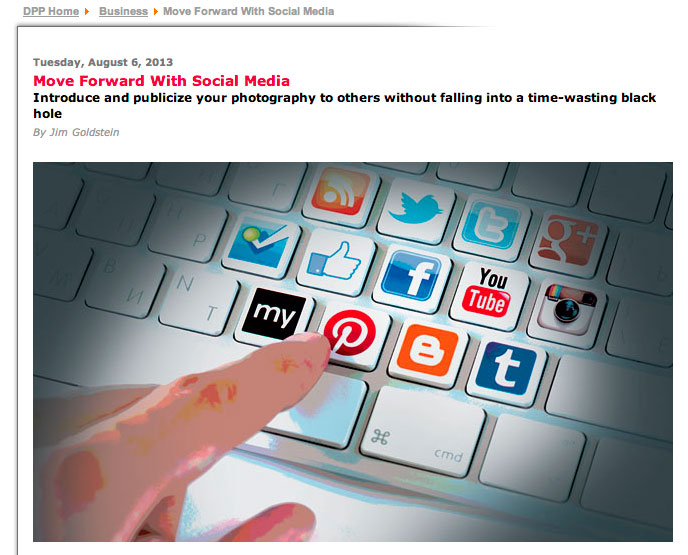
Move Forward With Social Media
Curious how to leverage social media to gain exposure of your photographic work while saving a little time? In the latest issue of Digital Photo Pro magazine I cover this and more in my latest article, “Move Forward with Social Media”. As a bonus I include a web site comparison to help you weight the pros and cons of taking part in each site. Check out the article: Move Forward With Social Media – Introduce and publicize your photography to others without falling into a time-wasting black hole
Also if you’ve missed my other Digital Photo Pro articles you can find them here:
- Search Engine Optimization
- Social Media & Copyright
- Social-Media Marketing Essentials
- Creative Commons
- PLUS Coalition Standardized Licensing Codes
- How I Evaluate Terms of Service for Social Media Web Sites – Google+ (my blog)
- Evaluating Terms of Service Documents: Resources (my blog)
More of my articles on Social Media for Photographers
Copyright Jim M. Goldstein, All Rights Reserved
Recommended Reading: Move Forward With Social Media
The post Recommended Reading: Move Forward With Social Media appeared first on JMG-Galleries – Landscape, Nature & Travel Photography.
Related Stories
- Recommended Reading: Move Forward With Social Media – Enclosure
- Talking Lightroom & Photography
- Talking Lightroom & Photography – Enclosure