RSS
 

Posts Tagged ‘makes’

Lego Limb: Bionic Arm for Kids Makes Prosthetics Playful

15 Aug

[ By Steph in Gadgets & Geekery & Technology. ]

lego arm 4

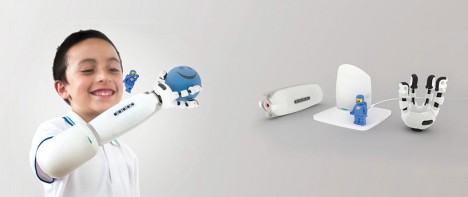
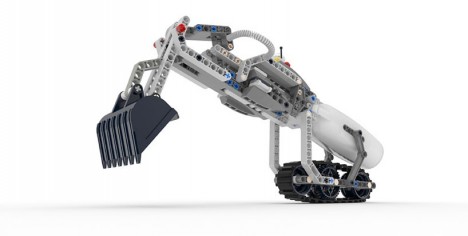
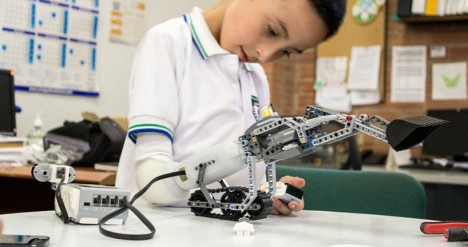
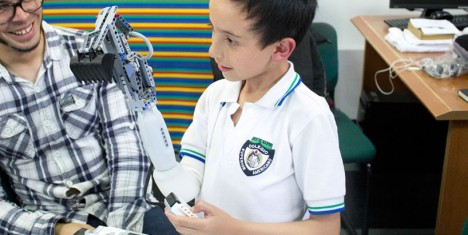
This modular twist-and-lock prosthetic arm for kids is designed specifically for integration with LEGO parts, turning it into a fun toy that makes it easier to engage with other children. A standard gripper makes the ‘Iko’ by Carlos Arturo Torres Tovar practical and functional for everyday use, but it can easily be popped off and replaced with designs of the kids’ own making.

lego arm 6 lego arm 5

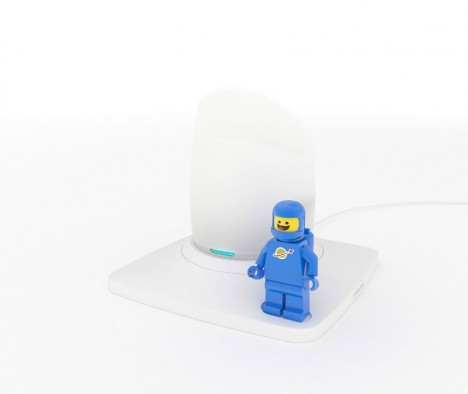
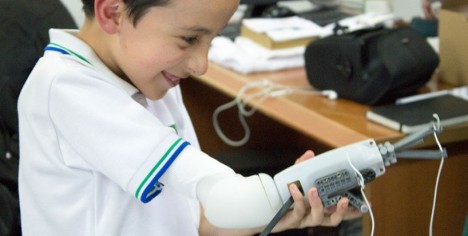
This creative prosthetic system lets children with disabilities use their imaginations to build tools that fit their own needs. The basic system includes a custom-fit prosthetic socket and forearm with a motorized adapter, a removable gripper and an easy-to-use charging station. Kids can swap out the gripper for backhoes and other LEGO creations. The arm can be programmed for various purposes and functions using myoelectric sensors.

lego arm 7 lego arm 2

Tovar came up with the idea while working at LEGO Future Lab, realizing that play is such an essential part of childhood and that a fun prosthetic could make it easier for children to engage with each other without discomfort.

lego arm 3 lego arm 1

“Currently I consider that prosthesis are not really designed for kids, yes they are functional in a traditional way, but kids in disability need more than a traditional tool, the physical aspect is just one of the big challenges of growing up, the psychological and the social aspect are as equally important and I wanted to do something about it.”

Share on Facebook


[ By Steph in Gadgets & Geekery & Technology. ]

[ WebUrbanist | Archives | Galleries | Privacy | TOS ]


WebUrbanist

 
Comments Off on Lego Limb: Bionic Arm for Kids Makes Prosthetics Playful

Posted in Creativity


Panasonic Lumix DMC-GX8 makes leap to 20MP

16 Jul

Panasonic has unveiled the Lumix DMC-GX8 and with it some new advancements for the Micro Four Thirds format. For the first time, a MFT body offers a 20.3MP sensor. AF sees some notable improvements thanks to Depth from Defocus technology, a new Dual I.S. system uses stabilization from the lens and camera body simultaneously, and 4K video is included. Read more

Articles: Digital Photography Review (dpreview.com)

 
Comments Off on Panasonic Lumix DMC-GX8 makes leap to 20MP

Posted in Uncategorized


Singaporean photographer makes 360 degree interactive video of tour of North Korea

14 Jul

A photographer from Singapore has created a navigable 360° video of a tour he made of North Korea. Aram Pan has set out to make a documentary that ‘captures the essence of North Korea through the use of 360° panoramas, photos and videos.’ Through collaboration with authorities in North and South Korea, Aram has gained extensive access to the usually closed country and has been able to tour popular sites as well as meet and photograph local people. See video

Articles: Digital Photography Review (dpreview.com)

 
Comments Off on Singaporean photographer makes 360 degree interactive video of tour of North Korea

Posted in Uncategorized


Fujifilm makes XF 90mm F2 R LM WR official

19 May

Fujifilm has formally announced the 90mm F2 R LM WR, a lens we saw in prototype at this year’s CP+ show in Japan. It gives a 137mm equivalent view on Fuji’s APS-C camera bodies, a popular focal length with portrait and event photographers. The lens uses 11 elements in 8 groups and offers a new Quad Linear Motor with four magnets for higher torque in autofocus. Read more

Articles: Digital Photography Review (dpreview.com)

 
Comments Off on Fujifilm makes XF 90mm F2 R LM WR official

Posted in Uncategorized


2,300 Floating Flowers: Interactive Garden Makes Way as You Walk

01 Apr

[ By WebUrbanist in Art & Installation & Sound. ]

floating plants experienced together

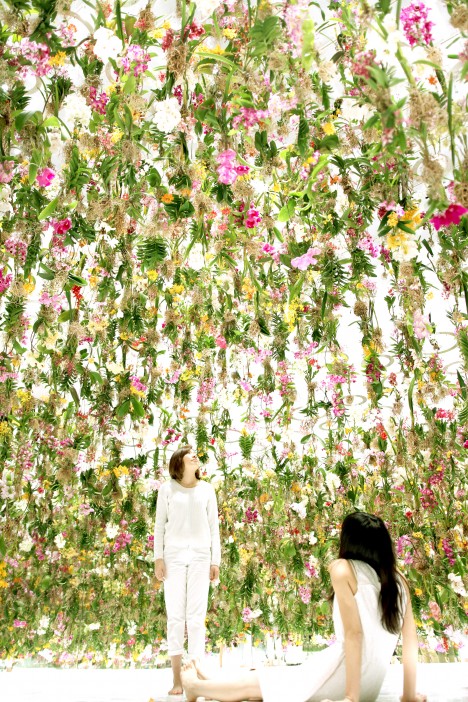
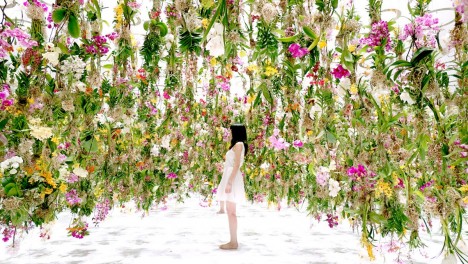
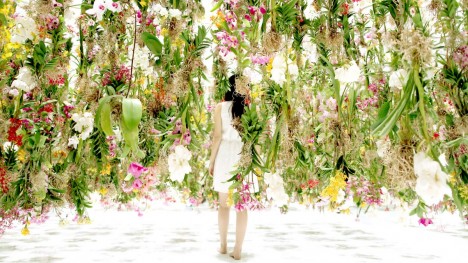
Responding to the movements of visitors passing through the space, this immersive work of installation art puts you in a private bubble in the midst of dense hanging garden – except this remarkable bubble that moves with you.

teamlab floating flower installation

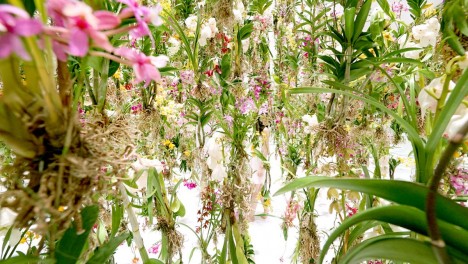
The Floating Flower Garden by TeamLab, a Japanese art collective, is on display in Tokyo, having been extended due to popular demand. Suspended from above, the plants are pulled up or dropped down to both envelop visitors but also given them hemispheres of personal space amid the floating foliage.

floating flower art installation

The idea is to make each guest part of the installation, allowing them to separate from friends and experience it alone or to move in groups and see how the computer system responds in realtime.

floating solo alone forest

Meanwhile, the digital setup is not the only piece that changes things over time: “these flowers are alive and growing with each passing day. Each flower has a partner insect and the scent of the flowers becomes stronger at the time that the insect is most active, as a result the scent of the air in the garden space changes according to the time of day, morning, noon, and evening.”

floating walking bubble interactive

TeamLab believes technology elevates art, but their work also places into pre-modern knowledge and ancient ideas of spatial awareness originating in Japanese philosophy and religion, including Zen gardens. More from the artists: “When a viewer gets close to this flower-filled space, the flowers close to the viewer rise upwards all at once, creating a hemispherical space with the viewer at its center.”

floating garden immersive space

“In other words, although the whole space is filled with flowers, a hemispherical space is constantly being created with the viewer at its center and the viewer is free to move around wherever they want. If many viewers get close to one another, the dome spaces link up to form one single space. In this interactive floating flower garden viewers are immersed in flowers, and become completely one with the garden itself.”

Share on Facebook


[ By WebUrbanist in Art & Installation & Sound. ]

[ WebUrbanist | Archives | Galleries | Privacy | TOS ]


WebUrbanist

 
Comments Off on 2,300 Floating Flowers: Interactive Garden Makes Way as You Walk

Posted in Creativity


H2O to Go: Bike Bottle Makes Water from Thin Air as You Cycle

17 Nov

[ By WebUrbanist in Conceptual & Futuristic & Technology. ]

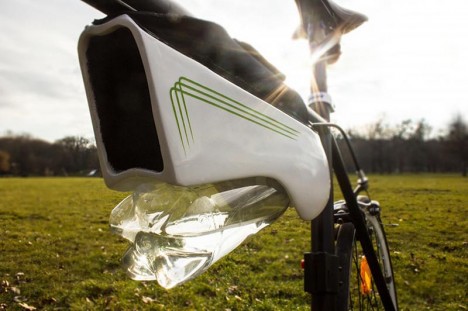
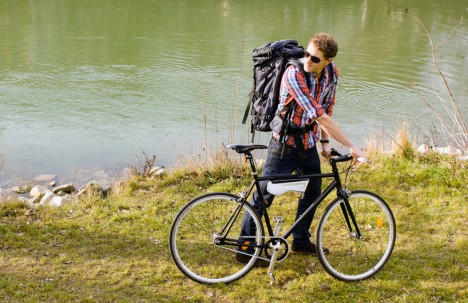
water bottle in situ

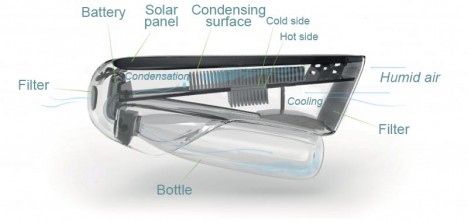
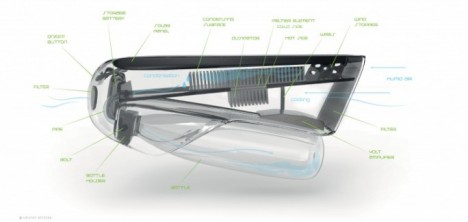
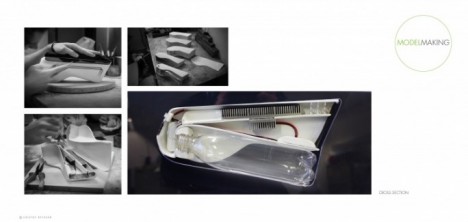
Using air flow and solar energy, this ingenious device creates up to 16 ounces (a half-liter) per hour of drinkable water via condensation as you ride, quenching your thirst just when and where you need it most: while cycling hard in hot and humid climates.

fontus bottle

water bottle explanatory diagram

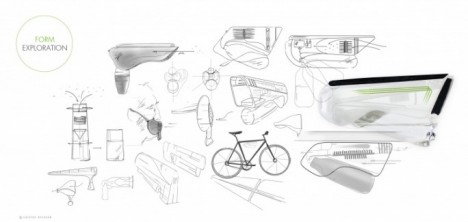
Austrian designer Kristof Retezár has submitted his work on this self-filling water bottle (dubbed Fontus) for award consideration to the James Dyson Foundation. His prototype and proposal cite potential benefits both to athletes but also more broadly to regions where obtaining potable water can be difficult (in many cases, these are also places where many travel by bicycle).

fontus water bottle design

water bottle humidity graph

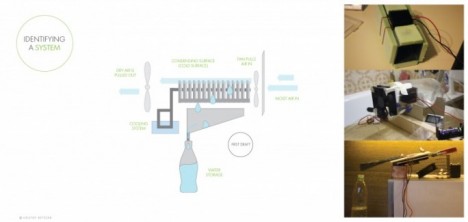
The gadget itself attaches to the frames of bicycles and contains a slot where a standard-sized disposable water bottle can be attached, filled and detached when needed. Retezár experimented with various materials, systems and processes to make a working prototype in his own bathroom, testing under various temperatures and humidity conditions.

water bottle experimental stage

water bottle from air

How does it work? “Basically, condensation occurs when you cool air to its saturation point. Fontus has a small internal cooler that is divided into two halves. A solar panel provides energy to cool the upper half of the condenser, a process that heats the lower half. When air flows past the heated lower half, it makes the top cool even further. Air moving through the chambers is slowed and cooled to condense moisture, which drips down into the bottle.”

water bottle form design

water bottle design prototype

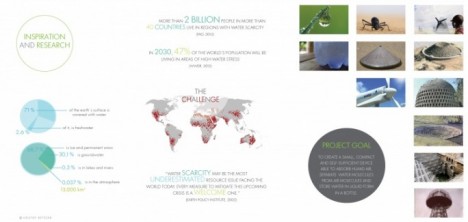
For now, it is a work in progress – whether this design hits mass-production without kinks or complications remains to be seen. The inspiration: “According to UN statistics, More than 2 billion people in more than 40 countries live in regions with water scarcity. In 2030, 47% of the world´s population will be living in areas of high water stress. Water scarcity may be the most underestimated resource issue facing the world today. Every measure to ease this upcoming crisis is a welcome one.”

water bottle modeling process

air condensed water bottle

“Harvesting water from the air is a method that has been practised for more than 2000 years in certain cultures mostly in Asia and Central America. The Earth’s atmosphere contains around 13.000 km3 of mostly unexploited freshwater. This project is an attempt to discover these resources. My goal was to create a small, compact and self-sufficient device able to absorb humid air, separate water molecules from air molecules and store water in liquid form in a bottle.”

Share on Facebook


[ By WebUrbanist in Conceptual & Futuristic & Technology. ]

[ WebUrbanist | Archives | Galleries | Privacy | TOS ]


WebUrbanist

 
Comments Off on H2O to Go: Bike Bottle Makes Water from Thin Air as You Cycle

Posted in Creativity


Dancing Traffic Signal Makes Crossing the Street More Fun

18 Sep

[ By Steph in Art & Installation & Sound. ]

dancing-traffic-signals

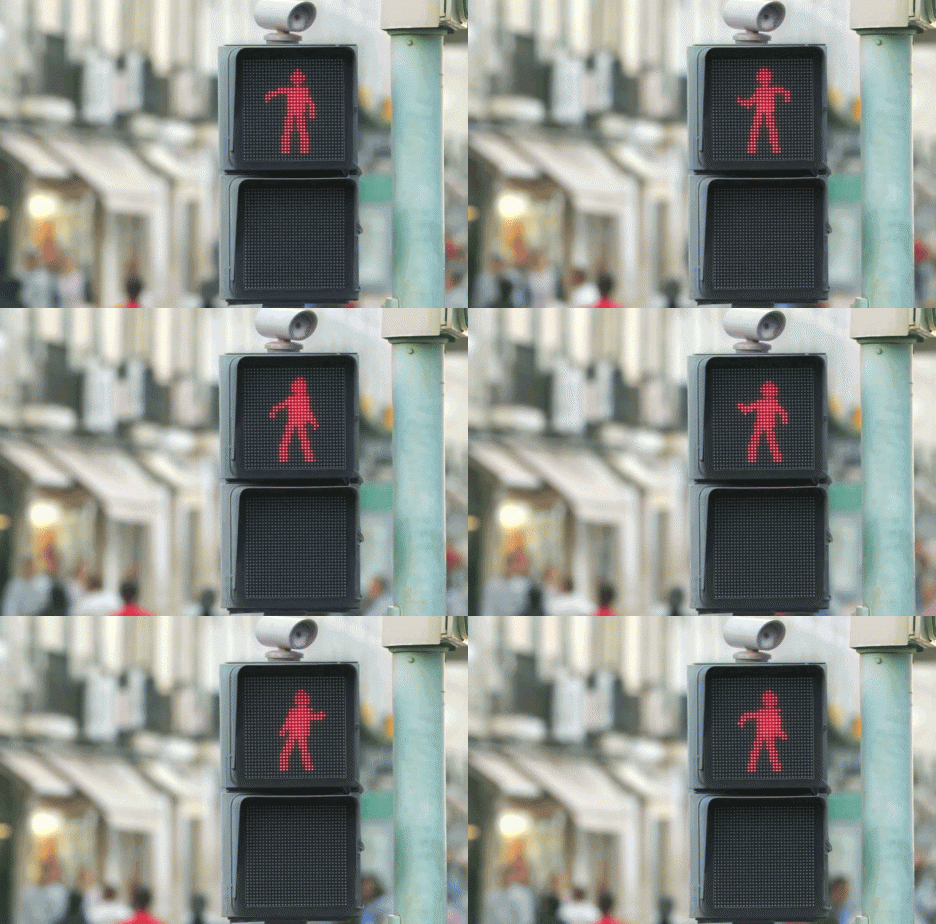
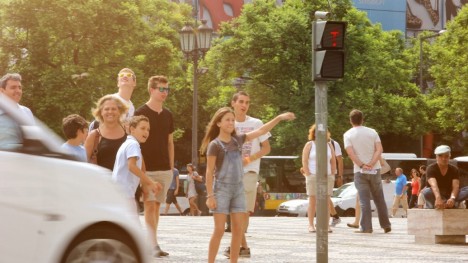
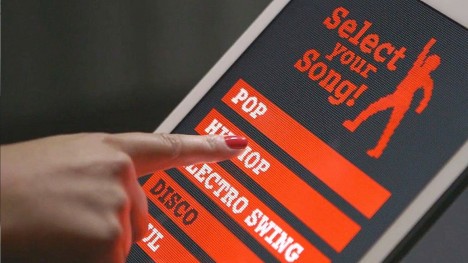
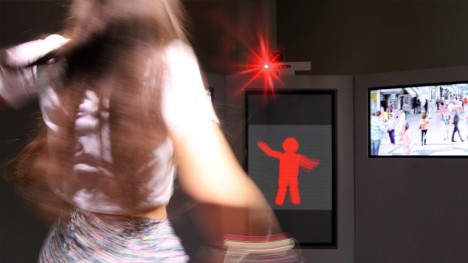
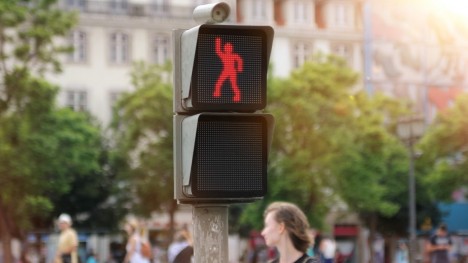
Impatient pedestrians eager to get across the street stop, point and laugh when they realize that the usually-static human figure in the crosswalk signal is dancing maniacally, waving its arms and legs. Not only is the figure dancing, it’s mimicking the real-time movements of passersby in a nearby booth.

Dancing-traffic-signals-5

Dancing-traffic-signals-4

The ‘WhatAreYouFOR’ campaign by Smart aims to make intersections safer by providing some attention-getting entertainment.


The people waiting to cross often can’t help dancing right along with the little figure, unaware that a real person is busting moves in an adjacent plaza, their dancing captured on camera and translated into the red pixelated silhouette.

Dancing-traffic-signals-2

Dancing-traffic-signals-3

dancing-traffic-signals

As a result, according to the creators, 81% more people stopped at the red light, increasing safety all around. “And they even had more fun doing so.”

Share on Facebook


[ By Steph in Art & Installation & Sound. ]

[ WebUrbanist | Archives | Galleries | Privacy | TOS ]


WebUrbanist

 
Comments Off on Dancing Traffic Signal Makes Crossing the Street More Fun

Posted in Creativity


Tamron makes 18-200mm F/3.5-6.3 Di III VC for Canon EOS M

20 Jun

Tamron18-200.png

Tamron has revealed that it will be making its 18-200mm F/3.5-6.3 Di III VC superzoom in Canon EF-M mount. In a week of unparalleled excitement for EOS M owners, it becomes the fifth autofocus lens for the two year old system, and the first from a third-party manufacturer. With a 29-320mm equivalent range, it features a stepping motor for silent autofocus, and optical image stabilization. Sales will start in the USA on June 26, at $ 499.

News: Digital Photography Review (dpreview.com)

 
Comments Off on Tamron makes 18-200mm F/3.5-6.3 Di III VC for Canon EOS M

Posted in Uncategorized


DreamVendor: 3D Printing Kiosk Makes Your Vision Reality

08 Jun

[ By Steph in Gadgets & Geekery & Technology. ]

Dream Vendor 1

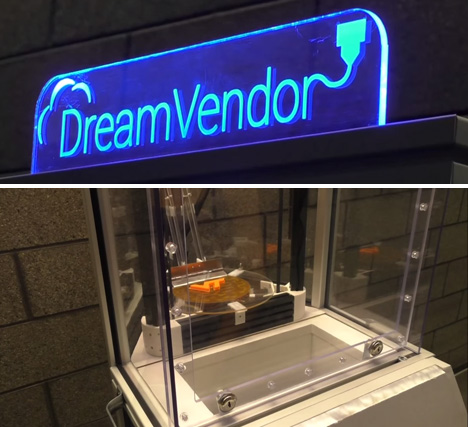
If you could have a vending machine spit out a small object in any shape you could dream up, what would it be? The DreamVendor, an interactive 3D printing station for Virginia Tech students, is envisioned as “a vending machine with an infinite inventory” that’s only limited by the imaginations of those who put it to work.

Dream Vendor 2

Created to enable students to quickly fabricate prototypes for academic and personal design projects, the machine reads CAD files from the user’s SD card, prints the three-dimensional part desired, and dispenses it into a bin when it’s done. The prototype machine is located on the Virginia Tech campus, but soon, new DreamVendors could pop up in retail centers for use by the general public.

Dream Vendor 3

Anyone who walks up to a DreamVendor kiosk – located inside a store, likely beside photo booths and soda machines – can choose to either load their own CAD designs into the system, or choose a pre-designed item to print. Plans are still in the developmental stage, but production is expected to begin next year.

Drea Vendor 4

3D printing pop-up shops have already begun to appear around the world, from a Baltimore studio that will help you create personalized products to a Japanese cafe that will scan your face and turn it into an edible chocolate treat.

Share on Facebook


[ By Steph in Gadgets & Geekery & Technology. ]

[ WebUrbanist | Archives | Galleries | Privacy | TOS ]


WebUrbanist

 
Comments Off on DreamVendor: 3D Printing Kiosk Makes Your Vision Reality

Posted in Creativity


How Self-Portraiture Makes You a Better Photographer

06 May

As long as art has existed, so too has the self-portrait. Van Gogh famously painted more than 30 self-portraits, using the available subject-of-self as both an outlet for his artistic talents, and as a method for perfecting his craft. Rembrandt, as perhaps the most prolific master of the self-portrait, painted, etched and drew more than 100 images of himself throughout his lifetime. One can even imagine the cavemen as having injected some degree of self into the prehistoric images painted on their cave walls.

Nebulous-1

Self-portraiture is NOT the same as a Selfie

But as rich in history as the self-portrait is, its categorization as a photographic ‘art’ is vulnerable due to the endless arms-length phone snaps, or ‘selfies’, now littering the internet. Lately, there has been a blurring of lines between the selfie and the self-portrait. As someone who has focused his own artistic energy toward self-portrait photography, I feel obligated to promote this art form, as self-portraiture provides value in terms of both the photos it produces, and the education if offers you as a new photographer.

The most patient model ever – you!

For me, self-portraiture began as a way to develop my own portrait photography skills, without the need for a model. As you probably know, learning the principles of photography, and the strategies for creating and controlling light, is a time-consuming process. It involves a great deal of trial and error, and asking a model to pose patiently while you make mistake after mistake isn’t always ideal. But you, yourself, are an infinitely more willing subject. Hours pass, memory cards fill with lackluster images, yet you don’t complain. Alone, you’re able to relax and focus on the task at hand: learning to become a better photographer.
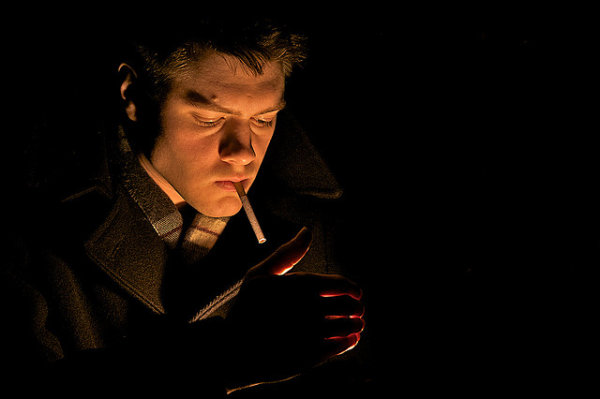
Experimenting with artificial light (orange-gelled strobe imitating fire)

Use self-portraiture as a creative outlet

When enough solitary time passes, you’ll find that you begin to produce decent results. Soon, what began as a learning device morphs into a creative outlet. Self-portraiture is no longer an exercise to be performed in preparation for real photography; self-portraiture has become the real photography. Unlike selfies, your self-portraits are well conceived. The location, framing, lighting, depth of field and posing associated with the images are carefully planned. You work both sides of the camera with increasing efficiency, and the quality of your photography reflects the education received.
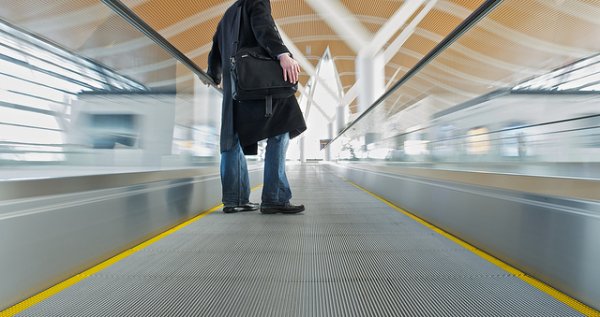
Self-portraiture offered a unique photo opportunity during this extended flight delay in Shanghai

From that point forward, you don’t hesitate to jump into frame should the inclusion of a person improve your photograph. When you want to test a new piece of gear, fine-tune a new technique, or kill a boring Sunday afternoon by setting up your camera, you do so with absolute independence. When photographing other subjects, you borrow from the lessons learned through self-portraiture, and the result is stronger photography, all-around.
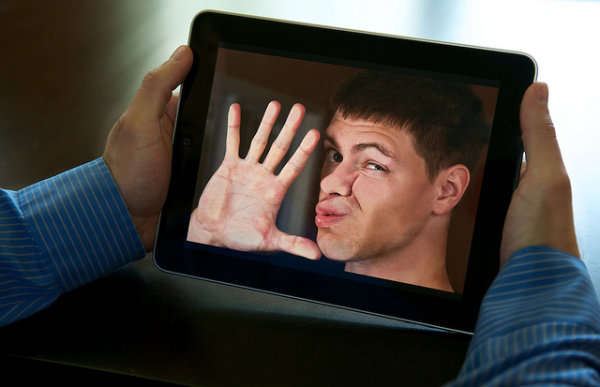
‘Producing’ self-portraits offers both artistic challenges and skill-building opportunities

For those considering an attempt at self-portrait photography, here are a few tips to get you started:

Technique – focus

While taking self-portraits, one of the more difficult aspects to nail down is focus. You don’t have the luxury of pinpoint-focusing on the subject’s face, for example, when you, yourself are the subject. To get around this challenge, it is important to have a stand-in object on which you can focus the camera. I personally use my light stand, as it’s usually with me, and is tall enough to mirror my own height.

First, I determine where, in the frame, I will position myself and I place a ‘mark’ on that spot to ensure I’m continually in the right position. Small rocks, a line of chalk or a crack in the sidewalk have all worked well as my mark. Next I focus my camera on the light stand. Once my focus is perfect, I switch my DSLR to manual focus mode. From that point forward, unless I make manual focus adjustments, the focus will remain unchanged. As long as I stand on my mark, I’ll be in focus. This is particularly important when using shallow depth of field, where a single step forward or backward will cause you to be out of focus, ruining the shot.
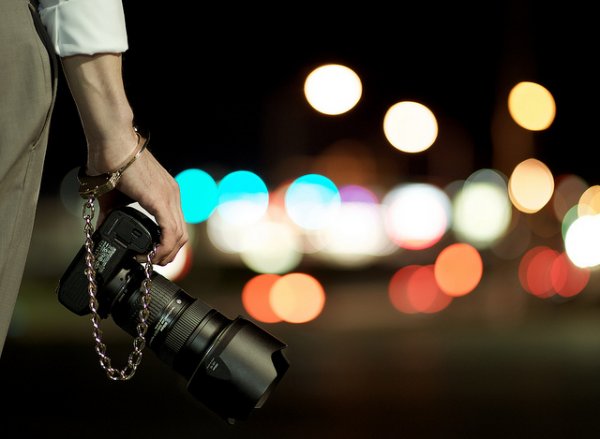
Proper focus was critical to the success of this image, taken at a razor-thin f/1.4

Gear:

  • Tripod – when you’re in front of the camera, you can’t also hold the camera. Therefore, a tripod is an absolute must for serious self-portrait photographers. This is an obvious recommendation, I know. My real tripod tip is this: invest in a quality tripod that’s robust, yet light, so you won’t mind carrying it. Also make sure it offers flexibility with regard to the positions it can assume. If the legs act independently, and if the tripod can effectively hold your camera at heights from ground level to eye-level, it’ll come in handy.
  • Wireless remote trigger – while not essential, a wireless shutter release for your camera is a definite plus. The timer setting built into most cameras can get the job done, but for those serious about self-portrait photography, an inexpensive wireless remote is a no-brainer, and will save you from having to walk back to the camera after each frame.

My flexible tripod, offering a low perspective, and the remote in my pocket, allowed me to work quickly

Planning:

  • Self-portrait photography is a production. The act of selecting the location, framing, camera settings and your own placement within the frame is a slow and deliberate process. Taking self-portraits forces you to consider all of the individual components that combine to make a good photograph, and successfully intertwining these ingredients into a successful end result requires planning. So, plan, and learn to enjoy the process of planning your next photograph. The mental thought process will help your self-portrait photography as well as any other type of photography you choose to tackle.
  • Create and maintain a ‘shot list,’ which includes the theme, location, lighting information, prop information and any other specifics related to your upcoming shots. A shot list will help your photography in a few different ways. First, it will help you plan your upcoming shots, by forcing you to think through all of the photograph’s elements. Keeping a shot list will also cause you to view the world through your own photographic lens. You’ll find yourself on the lookout for new ideas, and will regularly pull out your phone (where my shot list is saved) to add new photo ideas. Finally, and most importantly, keeping a shot list will motivate you to get out and photograph more. It’s like a ‘honey-do’ list for yourself, and a shot that lingers for too long on the list will begin to bother you.
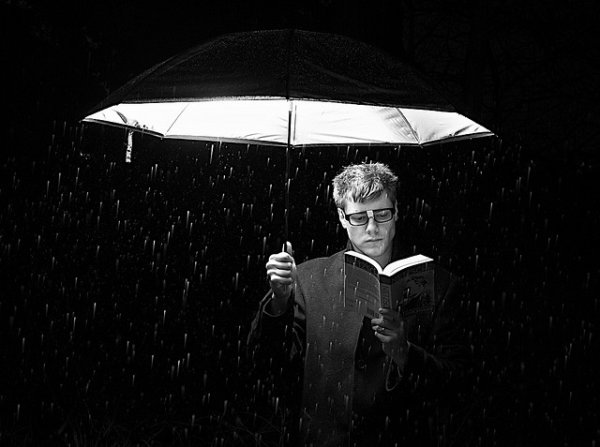
This image was on my ‘shot list’ for more than 3 weeks while I waited for the perfect rainy night

If you are eager to learn the art of photography, getting in front of the camera can provide a boost in your educational journey, and just may evolve into an enjoyable creative outlet.

Have you done any self-portraits? Please share in the comments below.

For more tips on doing self-portraits pick up the dPS ebook The Art of Self-Portraiture or read the 5 Benefits of a self-portrait project.
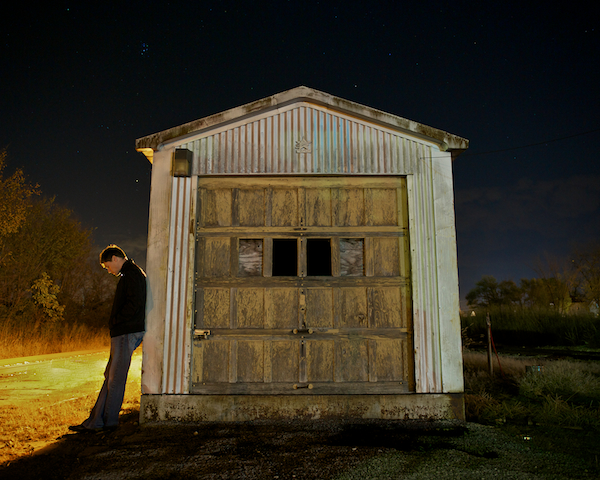
The-Other-Side-Tracks-1

The post How Self-Portraiture Makes You a Better Photographer by Ryan Pendleton appeared first on Digital Photography School.


Digital Photography School
 
Comments Off on How Self-Portraiture Makes You a Better Photographer

Posted in Photography