RSS
 

Posts Tagged ‘made’

Pop Arch: Improbable Design Illustrations Made with Autocad

14 Jun

[ By WebUrbanist in Art & Drawing & Digital. ]

impossible architecture

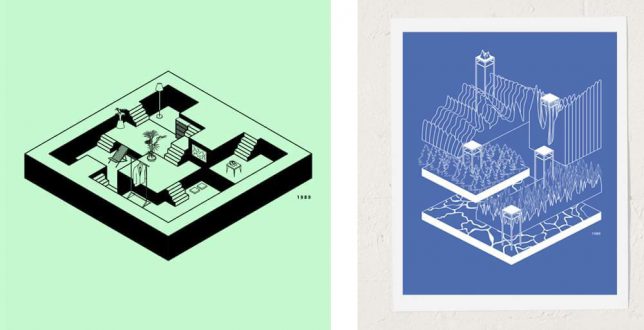
Used by architects and engineers, Autocad and other computer-aided design (CAD) programs have a long history as boring and blunt instruments of drafting, but this architectural illustrator has breathed new life into these drawing and rendering tools.

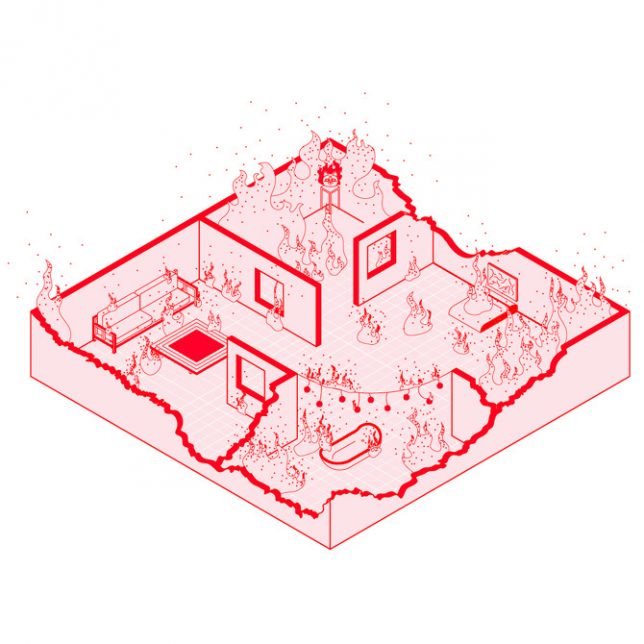
house on fire

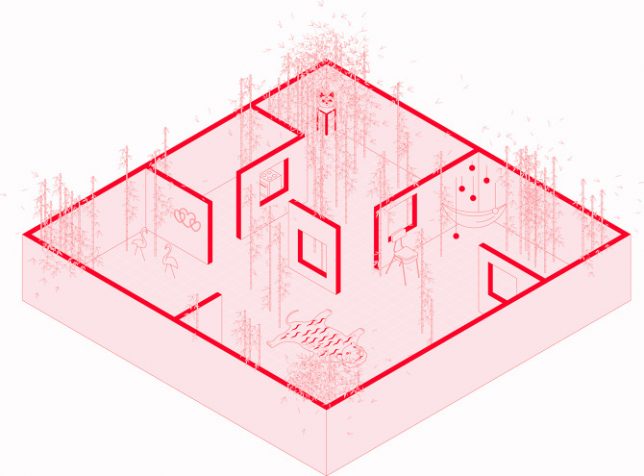
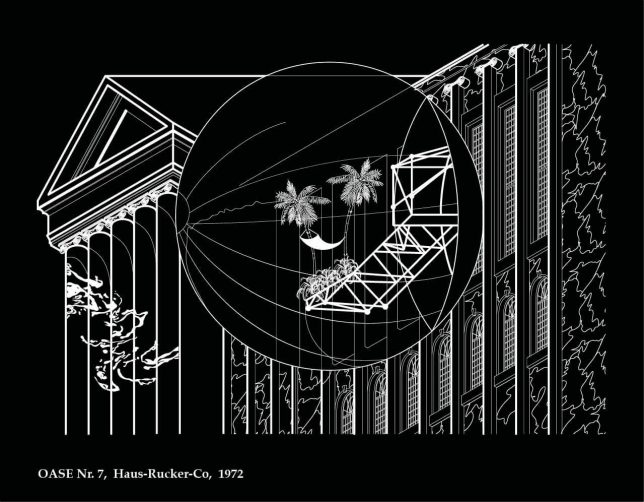
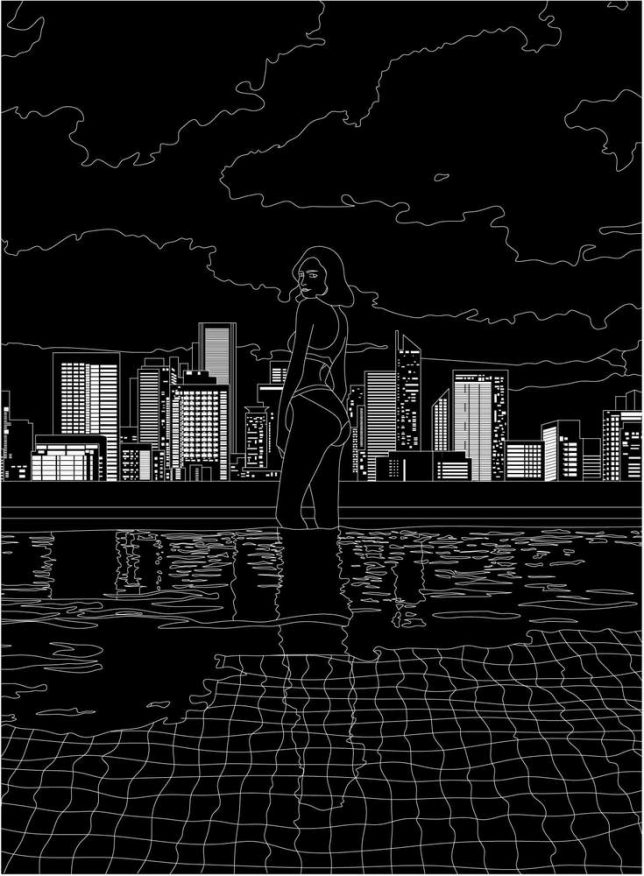
Fabiola Morcillo Núñez is a young Chilean architect who builds imaginary landscapes inspired by exotic architecture and pop art, a sort of modern-day Escher intent on blurring the improbable with impossible.

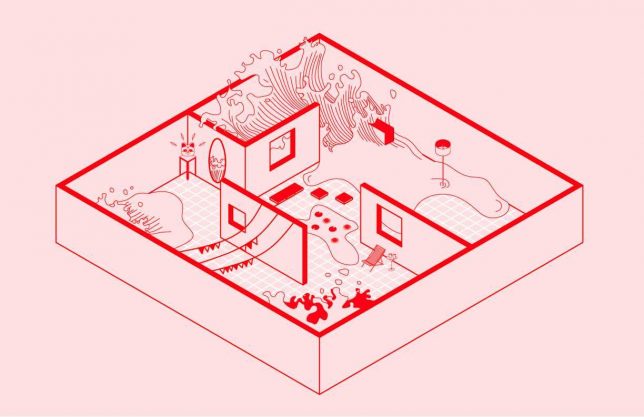
water world

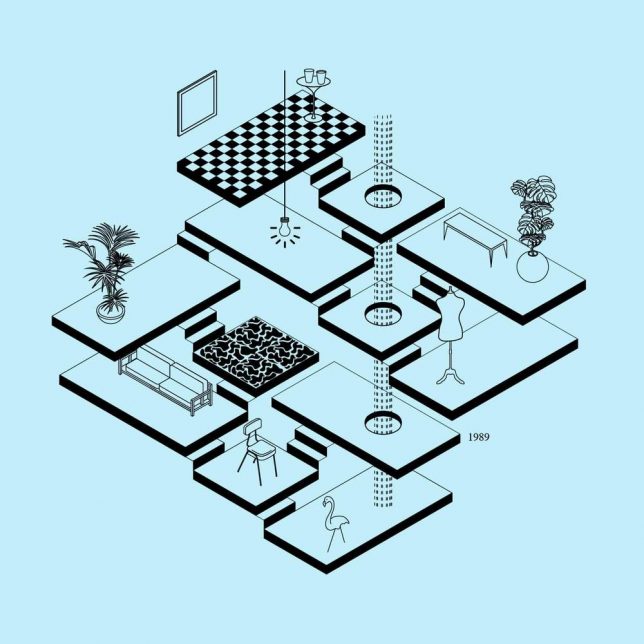
Many of her scenes play on elements believable at first look, like a deconstructed isometric or axonometric drawing of a house … but on fire, or flooded or featuring an impossible room or staircase.

stacked scene

“Architecture as a discursive tool has helped me a lot in constructing my own form of representation,” she says of her work. She is interested in deconstruction, spatial limitations, layers and multiplicity.

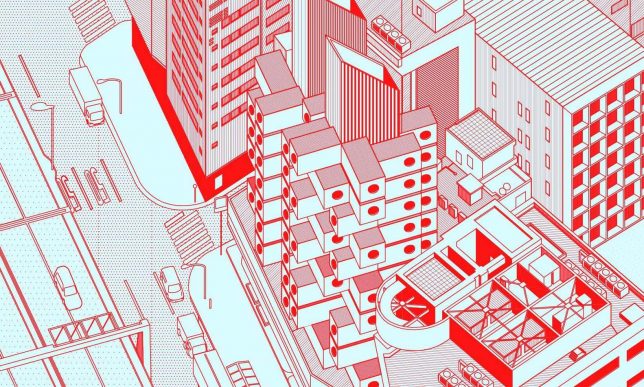
view from above

posterized

MADERA

Her pieces borrow from various sources of inspiration in the media and world around her: “I like to take several references, be alert to life itself, be very observant and have a broad sense of understanding of beauty and the tools of creation that are presented throughout the day, for example; the internet, books, movies, the street, travel, personal stories, aesthetic preferences, dreams, philosophy etc.”

artistic landscape

human figure

Beyond her artistic explorations, Fabiola’s work is an implicit statement about how the tools we use, even the ones with less-rich histories of creative expression, can be turned to new and inspiring purposes.

Share on Facebook


[ By WebUrbanist in Art & Drawing & Digital. ]

[ WebUrbanist | Archives | Galleries | Privacy | TOS ]


WebUrbanist

 
Comments Off on Pop Arch: Improbable Design Illustrations Made with Autocad

Posted in Creativity


Huawei P9 Leica-branded dual-cam made by Sunny Optical

19 Apr

The Huawei P9’s camera may bear Leica’s name, but the innovative dual-cam module comes from Sunny Optical Technology of China. Read more

Articles: Digital Photography Review (dpreview.com)

 
Comments Off on Huawei P9 Leica-branded dual-cam made by Sunny Optical

Posted in Uncategorized


Beyond the Glass Ceiling: 14 Houses & Hotels Made for Stargazing

19 Mar

[ By Steph in Boutique & Art Hotels & Travel. ]

iceland igloo hotels 4

Watch for shooting stars and identify constellations from the comfort of a warm and cozy bed in rooms designed to provide nearly unfettered access to the sky, with transparent roofs blurring the lines between indoors and out. From hotels in some of the world’s prime stargazing locations like Finland and Chile to homes equipped with observatories to a tree house that literally lifts its lid, these see-through structures flood the interiors with sunlight during the day and offer amazing views at night.

Starlight Room

starlight room

starlight room 2

starlight room 3

starlight room 4

starlight room 5

Set on faux skis, with a glass ceiling and walls, the Starlight Room looks out onto the Dolomites in the northern Italian town of Cortina d’Ampezzo for high-altitude views far from light pollution and noise. The tiny hotel room accommodates singles and couples, and contains little more than a double bed and television. Guests arrive via snowmobile or snow shoes, and room service is delivered, though it looks like exiting the cabin to go to the bathroom in the snow might not be the most pleasant experience in the middle of the night.

The Sky Den Literally Lifts its Lid

sky den 2

sky den 4

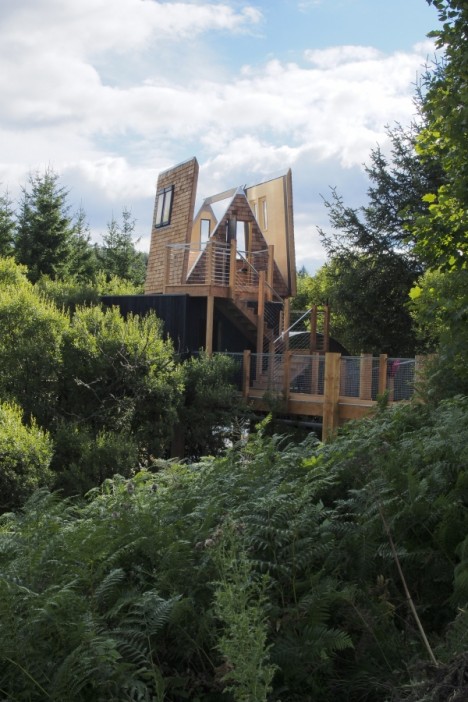
The roof of this tree house by architect George Clark opens to the sky, enlarging the space so it can be used as a protected indoor shelter or an open-air observatory. Located in England’s Kielder Water & Forest Park, the Sky Den has flat-pack furniture built right into its movable walls, so guests can pull down and set up whatever they need to be comfortable, from beds to stools and benches.

Camouflage House
camouflage house 1

camouflage house 2

camouflage house

A habitable greenhouse, Hiroshi Iguchi’s Camouflage House blends into the landscape, with an inner core of private spaces surrounded by a glass enclosure. Almost completely transparent, the house in Nagano, Japan incorporates an interior garden via openings that allow trees to grow straight up the angled roof from the courtyard.

Transparent Ceilings and Floors

glass ceiling house

glass ceiling house 2

glass ceiling house 3

glass ceiling house 4

This four-story house in Shanghai by architect Yung Ho Chang of Atelier FCJZ features a glass roof as well as transparent floors on three levels, so you can see the interior of each floor in addition to the sky. Designed as a concrete box with no windows, the home gets all of its daylight from the ceiling. Talk about radical transparency – the toilet is even visible from just below the dining room.

Bob Hope’s UFO House
bob hope ufo house

bob hope ufo house 2

bob hope ufo house 3

bob hope ufo house 4

bob hope ufo house 5

Designed by John Lautner in 1973, the house Bob Hope lived in for decades with his wife Dolores features a dramatic oculus for daylight and stargazing. The bizarre-looking structure was nicknamed ‘UFO House’ and ‘Volcano Home’ for its unusual shape when viewed from afar. Lautner refused to claim the project as his own work, reportedly because Dolores Hope demanded changes to the interior that didn’t fit his artistic vision.

Next Page – Click Below to Read More:
Beyond The Glass Ceiling 14 Houses Made For Stargazing

Share on Facebook


[ By Steph in Boutique & Art Hotels & Travel. ]

[ WebUrbanist | Archives | Galleries | Privacy | TOS ]


WebUrbanist

 
Comments Off on Beyond the Glass Ceiling: 14 Houses & Hotels Made for Stargazing

Posted in Creativity


Anxious Anticipation: Photos Made to Pump Up Your Adrenaline

09 Mar

[ By WebUrbanist in Art & Photography & Video. ]

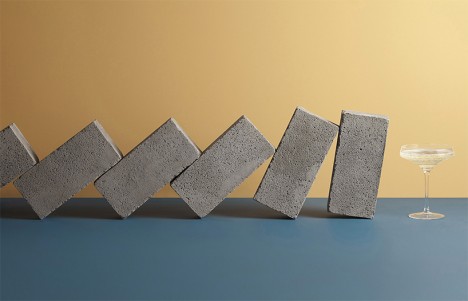
brick dominos wine glass

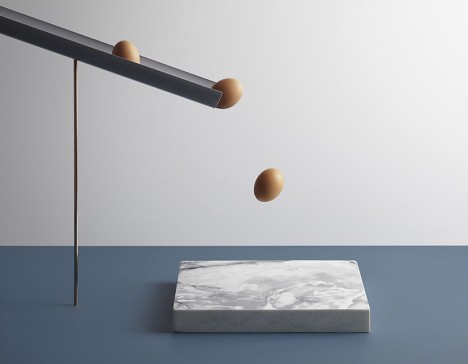
Comprised of hair-raising scenes designed to keep you on the edge of your seat, this series of photos leads your mind to jump forward in time, picturing the catastrophes about to unfold.

eggs onto marble

Photographer Aaron Tilley worked with art director Kyle Bean to create the sequence for Kinfolk Magazine’s “adrenaline” issue. Their collaboration, titled In Anxious Anticipation, evokes a sense of expectant dread, all through still shots that simply lead the brain to fill in the blanks.

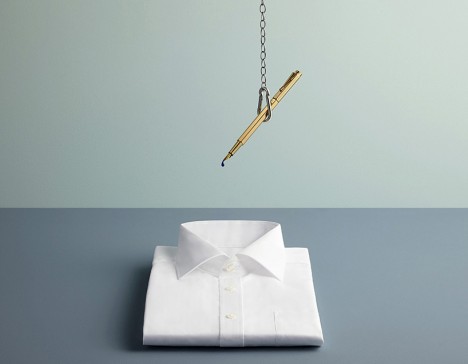
black ink white shirt

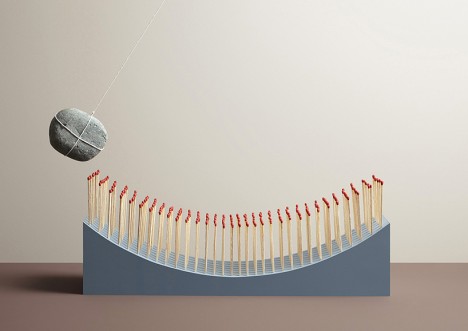
anxious anticipation rock matches

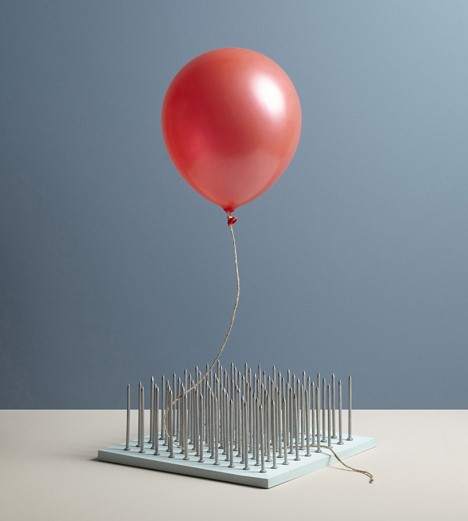
In one, an ink pen is poised to drip on a clean white shirt below. In another, a rock looks ready to light a fire, prepped to swing across a set of strike-anywhere matches.

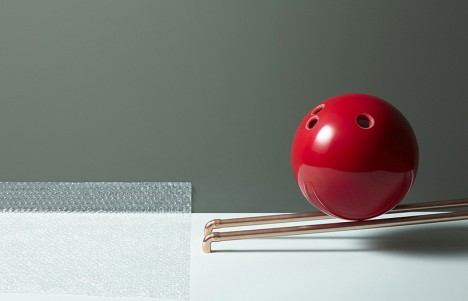
bowling ball bubble wrap

Each picture cues to viewer to complete the sequence, imagining the sight and sound, for instance, of a bowling ball running along and popping an unrolled sheet of plastic bubble wrapping.

balloon hover over nails

From the magazine: “The connection between what the mind perceives and how the body reacts is a curious relationship. Adrenaline flows into our autonomic nervous system when it anticipates that something bad is about to happen—not because something bad is already happening. This hormonal offensive was an essential survival tool for our earliest ancestors that came with our fight-or-flight response, which defends us against immediate threats.”

Share on Facebook


[ By WebUrbanist in Art & Photography & Video. ]

[ WebUrbanist | Archives | Galleries | Privacy | TOS ]


WebUrbanist

 
Comments Off on Anxious Anticipation: Photos Made to Pump Up Your Adrenaline

Posted in Creativity


First “Drawn in Place” Architecture Made with a 3D-Printing Pen

29 Feb

[ By WebUrbanist in Conceptual & Futuristic & Technology. ]

3d printed architecture pen

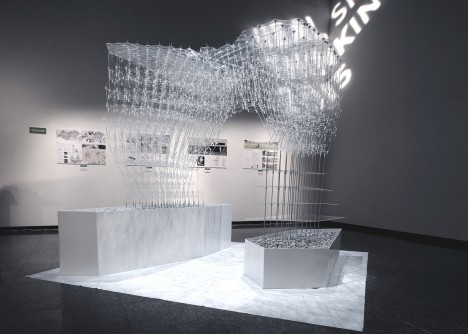
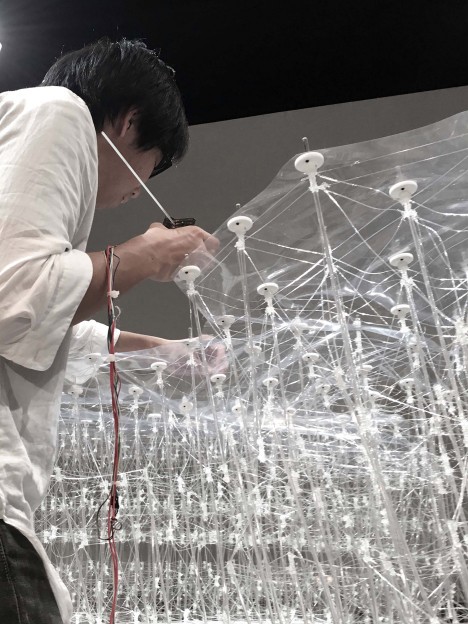
A group of students from the University of Tokyo have created the world’s first work of 3D pen-drawn architecture, extruding thermoplastic filament to generate a structurally-stable arch installation.

3d pen modeling student

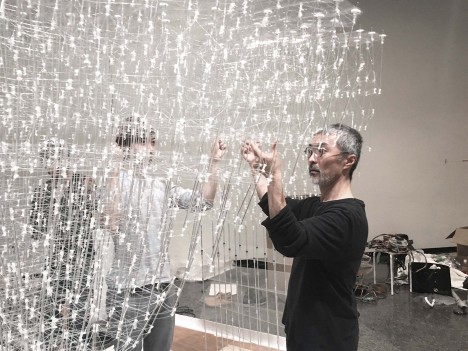
A digital tracking system helped builders connect rods with extruded supports, generating a lattice-like system of interconnected trusses (resulting in a kind of lightweight, smaller-scale space frame). The combination of rigid rods and fluid connectors helps the whole structural network, providing tension as well as compression capabilities.

3d pen in use

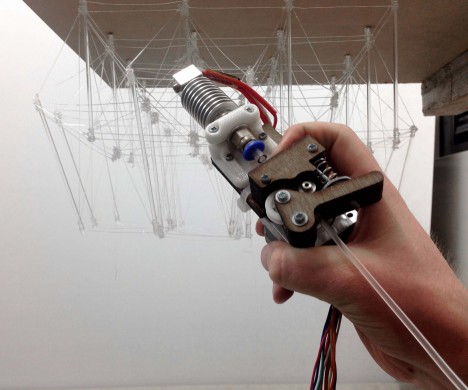
The handheld device enabling the extrusions operates much like a hot glue gun or static 3D printer, heating the constituent material and making it malleable before it hardens upon deployment. Unlike large-scale printers, this approach enables minute on-site work by anyone trained to use the machine, reducing costs and complexity.

3d connected network structure

“Technology has traditionally been used to automate and replace human labour,” design team member Kevin Clement, said in an interview with Dezeen. “The issue with this approach is that it fails to take advantage of human intuition during fabrication. We believe our approach can bridge the current dichotomy between machine and human-made production.”

Share on Facebook


[ By WebUrbanist in Conceptual & Futuristic & Technology. ]

[ WebUrbanist | Archives | Galleries | Privacy | TOS ]


WebUrbanist

 
Comments Off on First “Drawn in Place” Architecture Made with a 3D-Printing Pen

Posted in Creativity


Travel Photography Simplified: 4 Changes that Made me a Better Photographer

19 Feb

Get Viktor’s Lightroom Rapid Editing System for Travel Photography Course 50% off now at SnapnDeals for a limited time only – February 9th-23rd, 2016.

When I look back and analyze how my photography has changed over time, I see that the last couple of years were the most eventful in regards to the evolution of my photography. I see that rapid advances in technology, in combination with my attempts to simplify various aspects of my photography, gradually changed my entire workflow.
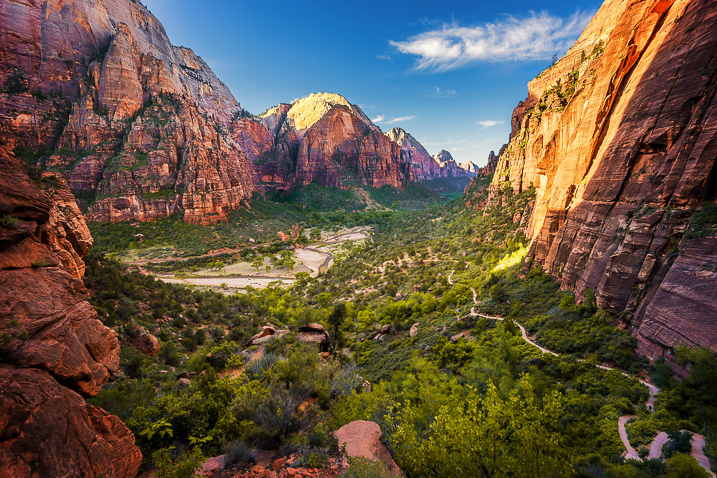
Images Travel Photography Simplified 01

If I had to identify the key moments that triggered the rest of the changes, my switch from DSLR to a mirrorless system would be at the very top of the list.

1. Mirrorless Setup

Depending on the type of photography, the switch to a mirrorless system affects photographers differently. As a travel photographer, the effect of the change was huge for me, and even though the learning curve was steep, it was liberating from the very beginning.

The compactness of mirrorless systems was the most obvious factor for the switch. Here is the breakdown of my camera, plus lenses setup:

  • Sony A6000 (344g, 12oz)
  • Sony 10-18mm (220g, 8oz)
  • Sony 16-70mm (308g, 11oz)
  • Total: 874g (31oz)

It’s hard to believe that a high-quality, wide angle zoom lens (10-18mm) can weigh only 220g (8oz). The full set, including the camera and two lenses that cover 90-95% of my needs, weighs less than 900g (32oz). I call it freedom.
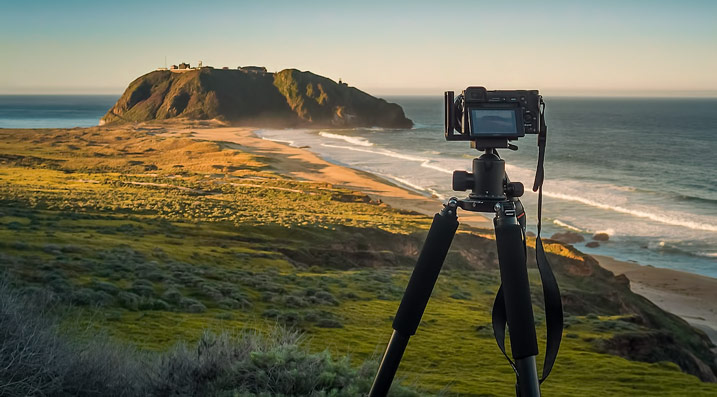
Images Travel Photography Simplified 02

From a practical standpoint, it actually means that I can pack the entire setup into a carry-on when traveling by plane. It also means that I do not have to think about what equipment to bring when packing for a demanding hike. Instead, I bring everything with me.

The other two factors of my switch that impacted my photography were the amazing dynamic range of the Sony sensor and its EVF (Electronic Viewfinder). The extended dynamic range of the sensor allows me to reduce the number of brackets I have to take, to cover the entire dynamic range of the scene. Also, it saves me time editing, since I do not have to use HDR, and Image Blending techniques, as often as before.

The Electronic Viewfinder also allows me to more accurately assess the scene before taking the shot and, as a result, reduces the number of unsuccessful shots.
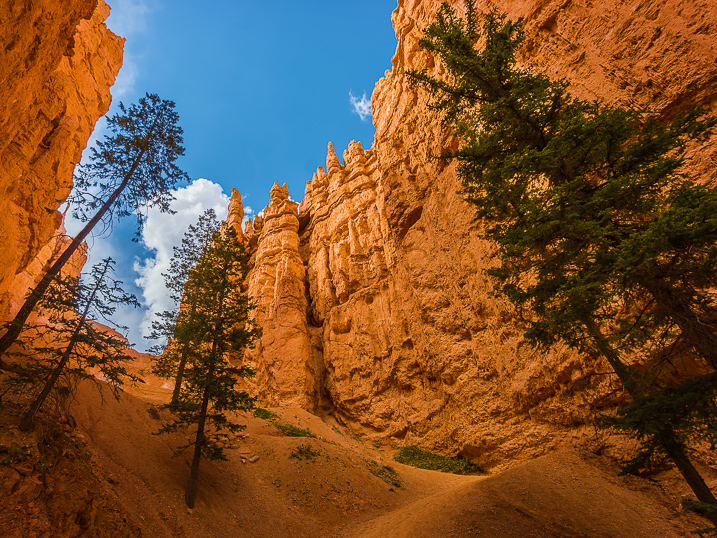
Images Travel Photography Simplified 03

2. Changing Travel Routine

I did not expect that one small change to my travel routine would impact my photography so much. So what was the change? I simply stopped editing photos while traveling. Instead, I began concentrating all my efforts on finding interesting locations and capturing them – nothing else. This new focus makes my trips more enjoyable, reduces stress, and improves my photography in general.

Before, I always loaded all of the new photos at the end of the day to Lightroom using my laptop. While checking the day’s results, I would often start culling and editing.

Now, when I want to check if a shot is successful, I can do it while shooting, simply by wirelessly connecting my camera with my tablet. And, if it is absolutely necessary to post a couple of new photos to social media, I can edit them in seconds using Snapseed on my tablet, then easily post them online.
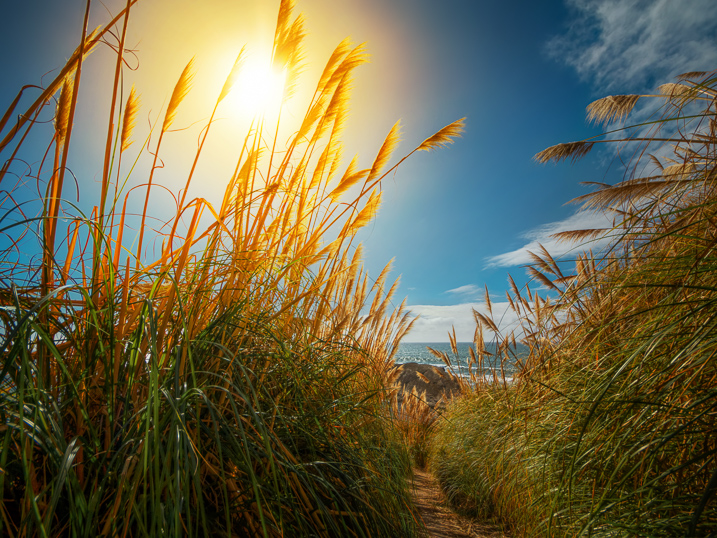
Images Travel Photography Simplified 04

3. Simplified Backup System

Keeping photos safe while traveling is a big issue for any photographer. Up until recently, there was no reliable enough solution for a photographer, like myself, to go on an extended photography trip without bringing a laptop. For years, a laptop was the center of my backup strategy while traveling, which only added unnecessary bulk to my setup.

Finally, I think this is starting to change. For the last few months I’ve been testing a laptop-less travel approach, and I am confident that a new setup this year will completely replace my outdated backup system.

This new workflow is possible because of a device that was recently released: WD My Passport Wireless. The device has a variety of interesting features, but the most important one, from a photography standpoint, is the SD Memory Card Reader. When you insert a memory card into the reader, it automatically backs up all the contents of the card to the drive. Plus, it supports incremental backups, which means that it backs up only new files rather than those previously transferred.
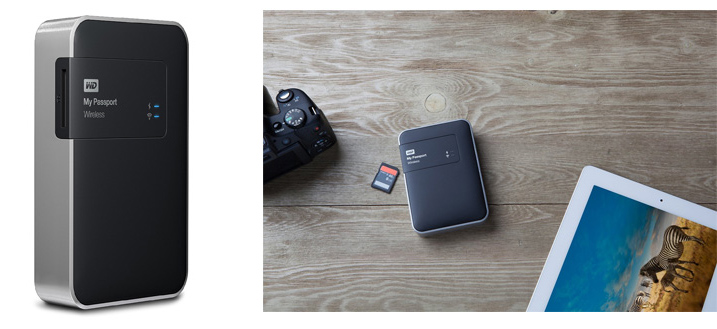
Images Travel Photography Simplified 05

Photo courtesy Western Digital

This device makes it possible to travel without a computer. Also, it minimizes the risk of losing images due to memory card failure. Now, I incrementally backup my new images multiple times throughout the day, and by the end of the day back at the hotel, I already have all of my new images on two devices.

Another feature of the WD My Drive Wireless that excites me as a photographer, is its ability to connect to the drive with a mobile app and grab any photos (JPEGs only) for editing.
Images Travel Photography Simplified 06

4. Rapid Editing

Lightroom is my primary photography editing tool. At some point, I realized that 80% of my editing steps were identical for every photo. This meant that only 20% of my efforts were spent on what really mattered: making every photo unique. I also recognized that if I could automate the 80%, then I could drastically reduce the time I spend in front of the computer.

The obvious choice for editing automation was Lightroom’s preset functionality. The presets allow users to record their editing steps in Lightroom for later use.

The main obstacle in developing and implementing a new system was Lightroom’s presets limitations. You have probably already noticed that it is rare when you apply one of the presets to a photo that are happy with the final results. You still have to dive deeper into the Lightroom editing tools to compensate for the level of exposure, lighting conditions, shadows, and the dynamic range of the scene.

I solved this problem by introducing a two-level editing system which I call Lightroom Rapid Editing. I separated my Lightroom presets into two categories:

Style Presets: The presets that establish the artistic style and reflect our creative vision. For example, a dreamy, warm look or an aggressive and contrasted style, soft black & white or a vibrant cross processed treatment.
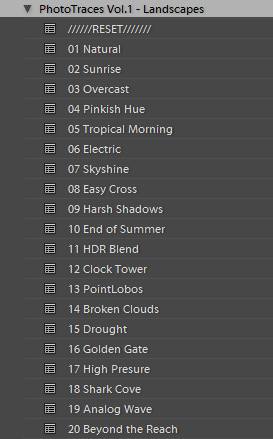
Images Travel Photography Simplified 07

Adjustment Presets: The presets that do affect the style of the photograph but help us to fine-tune the following parameters: exposure, shadow recovery, contrast, clarity, vignetting. I called the collection of the adjustment presets the TOOLKIT.
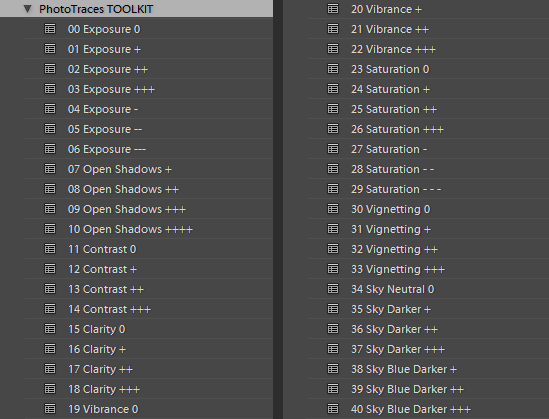
Images Travel Photography Simplified 08

This is how my workflow looked after I implemented the two level preset system:

First, I applied one of the Style Presets. Then, I used the Adjustment Presets from the TOOLKIT to fine tune the image. Simple, effective, and automated. The Lightroom Rapid Editing System reduced my editing time by more than half and made my photography more consistent.

Here is a quick demonstration:

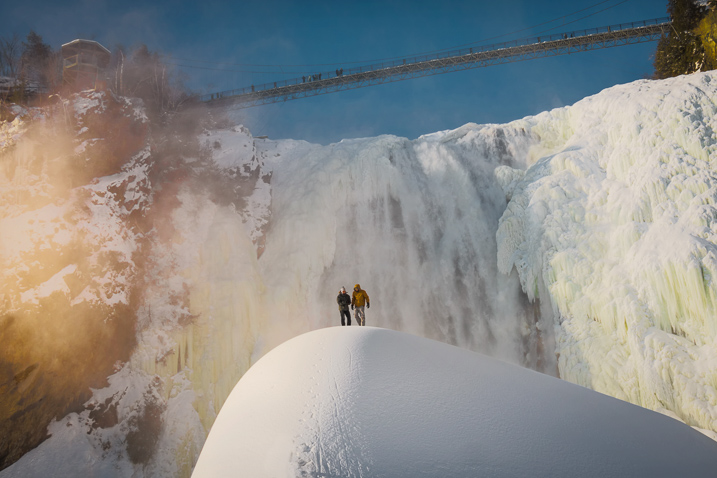
For the demonstration, I selected a photo of Niagara Falls (American and Bridal Veil Falls). The scene was somewhat challenging as the water of the falls, was much brighter than the rest of the scene. I intentionally set exposure for the brightest areas, making sure I preserved enough details in the water. It resulted in an underexposed capture, making it more challenging to edit.
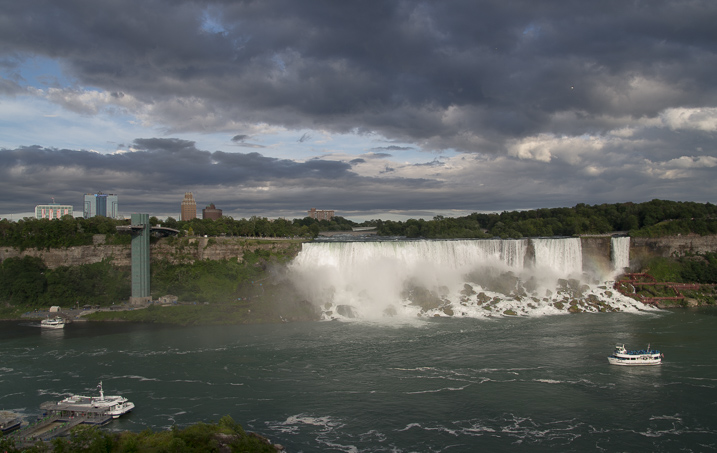
Images Travel Photography Simplified 09

First, I applied one of my favorite presets from the Landscape Collection – Natural. Second, I used the following TOOLKIT adjustments (Adjustment Presets):

  • 01 Exposure +
  • 08 Open Shadows ++
  • 17 Clarity ++
  • 31 Vignetting +

Here is the result. It took me five clicks, and no more than two minutes to complete the editing. To record my editing steps for future reference and easy sharing, I used Lightroom Rapid Editing Formula: Natural (02, 08, 17, 31).
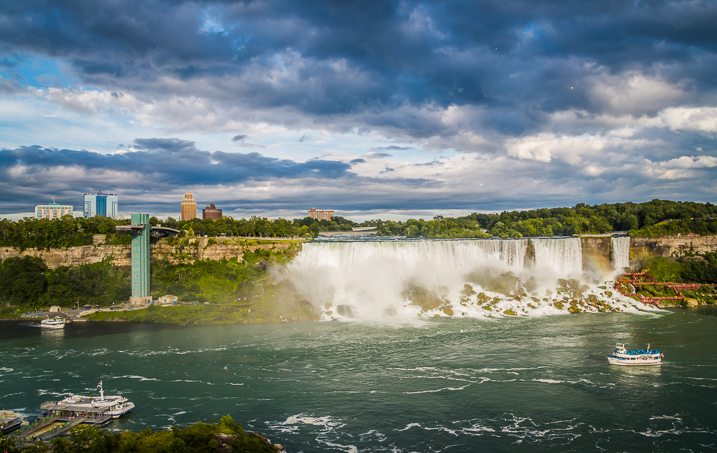
Images Travel Photography Simplified 10

Read a more detailed explanation of my travel photography workflow here: Photo Editing Workflow for Travel Photography

Conclusion

I believe that simplification is the key factor in mastering any complex process. If you reject unnecessary complexity by drastically simplifying it, you can invest more time and effort into what really matters. The changes I listed above did not happen overnight but they were always driven by the desire to simplify my photography.

How have you simplified your photography? Share with us in the comments below.


If you found this helpful, get Viktor’s Lightroom Rapid Editing System for Travel Photography Course 50% off now at SnapnDeals for a limited time only – February 9th-23rd, 2016.

googletag.cmd.push(function() {
tablet_slots.push( googletag.defineSlot( “/1005424/_dPSv4_tab-all-article-bottom_(300×250)”, [300, 250], “pb-ad-78623” ).addService( googletag.pubads() ) ); } );

googletag.cmd.push(function() {
mobile_slots.push( googletag.defineSlot( “/1005424/_dPSv4_mob-all-article-bottom_(300×250)”, [300, 250], “pb-ad-78158” ).addService( googletag.pubads() ) ); } );

The post Travel Photography Simplified: 4 Changes that Made me a Better Photographer by Viktor Elizarov appeared first on Digital Photography School.


Digital Photography School
 
Comments Off on Travel Photography Simplified: 4 Changes that Made me a Better Photographer

Posted in Photography


Extreme made easy: GoPro HERO4 Session review

03 Feb

GoPro HERO4 Session review

Waterproof, ruggedized, incredibly-small and lightweight, the Session is a no-brainer to toss in your bag or coat pocket before heading out on an adventure. 

The GoPro HERO4 Session is the company’s latest action camera release. Unlike GoPros before it, the Session is completely waterproof without the need for any housing. It is also the smallest, lightest GoPro to date, 50% smaller than the HERO4 (Black or Silver) and 40% lighter.

The GoPro HERO4 Session is capable of video capture at the following resolutions and frame rates:

 Video Resolution Frame rate 
1920 x 1440  30 fps, 25 fps
1920 x 1080  60 fps, 50 fps, 48 fps (in Ultra Wide mode only), 30 fps, 25 fps
1280 x 960  60 fps, 50 fps, 30 fps, 25 fps
1280 x 720  100 fps, 60 fps, 50 fps, 30 fps, 25 fps
848 x 480  120 fps, 100 fps

The Session has dual microphones – one on the front and another on the back – for improved audio quality. The camera will automatically choose to prioritize one mic over the over, depending on the scenario. Stills can be captured at a frame rate as fast as 10 fps (limited to 1 sec bursts). Images are captured at 8MP resulting in a 3264 x 2448 still.

The Session can also capture time-lapses. Available intervals include 0.5, 1, 2, 5, 10, 30 and 60 secs.

Auto Low Light, a feature that determines video frame-rate based on lighting conditions, gives the promise of better low light video quality, something that action cams are not particularly good at. It’s worth noting that video files will playback at the selected frame-rate and resolution when using Auto Low Light.

ProTune, an option that allows users to dial in more advanced settings, is available on the HERO4 Session. Selecting ProTune allows users to set their ISO limit (either ISO 400 or ISO 1600), and toggle sharpness on and off. The Session also features a spot meter mode, that, as you may have guessed, determines exposure based on a small point in the center of the frame.

What’s included

In addition to the unit itself, the GoPro HERO4 Session ships with just enough to get you started, including: a standard frame, a low-profile frame, one curved adhesive mount, one flat adhesive mount, a ball joint buckle and mounting buckles. A Micro-USB cable is also included for charging and transferring files directly from the GoPro to a computer.

Compared to Siblings

The price of the GoPro HERO4 Session recently dropped to $ 200. Here’s how it sizes up against GoPro’s other current offerings:

  HERO4 Session  HERO4 Black  HERO4 Silver  HERO+
Max Video Resolution

1440/30p

4K (UHD) 2160/30p

4K (UHD) 2160/15p

1080/60p
Photo Resolution 3264 x 2448 4000 x 3000 4000 x 3000  3264 x 2448
 Waterproof (without a housing) Yes  No  No No
 Max Still Burst 10 fps 30 fps 10 fps 5 fps
 Weight 74 g 152 g 147 g 123 g
 Street price $ 200 $ 500 $ 400 $ 200

Design

The HERO4 unit itself is a tiny 1.5″ cube. The body has only two buttons: the large record button on top, located directly in front of the LCD, and a small Info/Wi-Fi button on the lower portion of the back (see lower image). Press the record button once to turn the camera on and start capture – by default the video will be 1080/30p. Press and hold the record button for two seconds to start a time-lapse. By default it will shoot a photo every half-second. In both cases, hitting the record button again stops capture and powers the device down.

Users can change video and still capture settings, in addition to turning on Wi-Fi by hitting the Info/Wi-Fi button and poking through the options. However, the two-button ergonomics can make for a pretty confusing user experience. We found it much easier to change settings by using the GoPro app. 

The LCD on top displays the battery life, recording mode, resolution and clip length (when capturing video), or the number of photos left (if you’re shooting a time-lapse). A small switch on the side of unit, when pressed, reveals the Micro-SD card slot and Micro-USB port (see below).

The HERO4 Session is impressively tough. The body is coated in a rubber-like material, and the door containing the Micro-USB port and microSD slot appears well-sealed. We’re not entirely sure what kind of glass the front element is made of, but several run-ins with a flying skateboard didn’t even leave a scratch. Seriously, we beat this unit up quite a bit over the course of field testing it, with no damage to speak of. 

Articles: Digital Photography Review (dpreview.com)

 
Comments Off on Extreme made easy: GoPro HERO4 Session review

Posted in Uncategorized


Tetris House: Modular Structures are Made to be Stacked

18 Dec

[ By Steph in Architecture & Houses & Residential. ]

tetris house 6

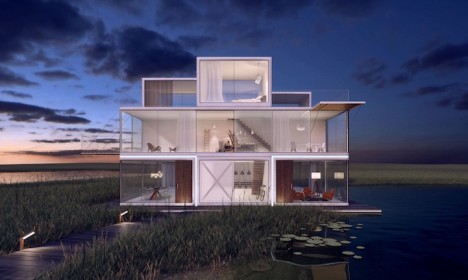
Modular living units in a range of sizes can be stacked, spun and cantilevered over each other to create unique custom dwellings with views in every direction. The Tetris House makes it possible for homeowners to design their homes to their own specifications, from the size of each room to the orientation of the windows, and enables developers to create apartment complexes that can be easily expanded or reduced in size.

tetris house 2

tetris house 3

tetris house 4

Dutch design studio Universe Architecture offers three basic sizes of steel units that can be enhanced with balconies, shutters, glazing and rooftop terraces. Plug three or more units together in pretty much any configuration you can think of, orient some of them to face the sun or your desired view, and stick on some pop-up decks with glass railings to take it all in.

tetris house 7

tetris house 8

tetris house 1

The company teamed up with interior design firm i29 to create minimalist, compact and efficient interiors that can adapt to all the different possibilities in each building’s individual floorpan, adding interior walls, staircases, fireplaces and other basic elements. The prototype will soon be completed in the Netherlands, with plans to expand availability to other countries in the future.

Share on Facebook


[ By Steph in Architecture & Houses & Residential. ]

[ WebUrbanist | Archives | Galleries | Privacy | TOS ]


WebUrbanist

 
Comments Off on Tetris House: Modular Structures are Made to be Stacked

Posted in Creativity


Sigma Announces Protective Lens Made of Clear Glass Ceramic

16 Dec

Sigma has created an all-new protective filter, the Sigma Water Repellent (WR) Ceramic Protector, using Clear Glass Ceramic with water and oil repellent coating. This is the first filter to use such a material in its construction. It promises both lighter weight and higher strength than normal protective filters with minimal effects on transmittance and sharpness.

It will be available in common filter thread sizes between 67mm and 105mm. See the press release below for more info, or take a look at it on their website at: http://www.sigmaphoto.com/wr-ceramic/


Press Release:

SIGMA CORPORATION ANNOUNCES WORLD’S FIRST PROTECTIVE LENS MADE OF CLEAR GLASS CERAMIC

RONKONKOMA, NY — December 16, 2015 – Sigma Corporation of America, a leading DSLR lens and camera manufacturer, today announced the new Sigma Water Repellent (WR) Ceramic Protector, a lens filter that features new Clear Glass Ceramic material and provides enhanced protective qualities. Pricing and availability is not yet available.

This shock- and scratch-resistant Clear Glass Ceramic was developed specifically for Sigma in partnership with a glass manufacturer. Made with a special heat treatment that evenly precipitates microcrystalline spinel throughout the materials, the Clear Glass Ceramic is 10 times stronger than a conventional protective filter and three times the strength of a chemically strengthened filter. The lens protector also contains WR coating, which repels water, dust and oil, and allows fingerprints to be easily removed. This enhanced protection helps to preserve the lens and ensure long-term, top-notch image quality.

“The Sigma WR Ceramic Protector is the latest example of Sigma’s dedication to innovative and first-to-market photography equipment,” said Mark Amir-Hamzeh, president of Sigma Corporation of America. “The new Clear Glass Ceramic protector is the first of its kind and the strongest material used in the industry. It will enable photographers to safeguard their lenses, while maintaining the impressive sharpness offered by high-quality glass, like our Global Vision line of lenses.”  
Key features of the Ceramic Protector include:

  • Scratch-resistant – Sigma’s Clear Glass Ceramic offers a Vickers hardness number of 700HV. The strength of the Clear Glass Ceramic is much stronger than chemically strengthen glass and is; 10 times stronger than conventional filters
  • Thinner and lighter – This new protector is up to 50 percent thinner and is up to 30% lighter than previous Sigma filters
  • High transmittance – Sigma’s Clear Glass Ceramic offers very high transmittance, making it ideal for use as optical glass
  • Water- and oil-repellent coating – The water repellent coating reflects only 0.24 percent of visible light, thereby minimizing flare and ghosting. Its ability to repel both water and oil is also excellent, with water drops bouncing right off, and fingerprints easily to remove

This filter is offered in the most popular filter thread sizes, and is compatible with all Sigma lenses and other lenses that accept front filter threads that are 67mm-105mm diameters. Compatible lenses in Sigma’s Art line include: 35mm F1.4 DG HSM, 30mm F1.4 DC HSM, 18-35mm F1.8 DC HSM, 24-35mm F2 DG HSM, 24-105mm F4 DG OS HSM, 50mm F1.4 DG HSM, 24mm F1.4 DG HSM, 19mm F2.8 DN, 30mm F2.8 DN and 60mm F2.8 DN. Compatible lenses in the Sports line include the 120-300mm F2.8 DG OS HSM and 150-600mm F5-6.3 DG OS HSM. Compatible lenses in the Contemporary line include the 17-70mm F2.8-4.0 DC OS HSM, 18-200mm F3.5-6.3 DC OS HSM, 18-300mm F3.5-6.3 DC OS HSM and the 150-600mm F5-6.3 DG OS HSM. As with all of Sigma’s lenses, the filter is checked with Sigma’s own Modulation Transfer Function (MTF) measuring system, “A1,” in the company’s factory in Japan. 

For information about Sigma, go to www.sigmaphoto.com or follow the company on Twitter, Instagram and Facebook.

Articles: Digital Photography Review (dpreview.com)

 
Comments Off on Sigma Announces Protective Lens Made of Clear Glass Ceramic

Posted in Uncategorized


Painstaking Paper Plane: Model Made from 100 Manila Folders

10 Dec

[ By Steph in Art & Sculpture & Craft. ]

paper plane 1

It only took 100 manila folders, 50 X-Acto blades, a bottle of glue and 1,000 hours of time to create one 1:60 scale model of a Singapore Airlines A380 airplane featuring fully operational sliding doors and properly folding landing gear. This isn’t Luca Iaconi-Stewart’s first model airplane – the 23-year-old, New York-based designer is known for a series of paper planes with amazingly complex parts.

paper plane 9

paper plane 2

paper plane 3

The artist first started building his own miniatures after finding a highly detailed diagram of an Air India 777-300ER online. He replicated the forms in Adobe Illustrator, printed them onto manila and sliced them out with his X-Acto knife. It took Iaconi-Stewart five years to complete a scale model of a Boeing 777, with an entire summer dedicated to perfecting the seats. While economy seats can be finished in a mere 20 minutes, first class seats take eight hours each.

paper plane 6

paper plane 7

paper plane 8

The new Singapore Airlines model consists of 3,000 pieces of folded and cut paper, the smallest being a 2.5 x 1mm pin used to hold each business class seat together. The artist notes that manila folders are surprisingly strong when engineered correctly.

paper plane 4

paper plane 5

Considering that Iaconi-Stewart spent a month designing the engines and fourth months assembling them, perhaps it’s no surprise that his classes at Vassar soon started getting in the way, and he ultimately dropped out to focus on full time model-making. He’s now known as the world’s best paper airplane maker. You can follow his creations on Flickr.

Share on Facebook


[ By Steph in Art & Sculpture & Craft. ]

[ WebUrbanist | Archives | Galleries | Privacy | TOS ]


WebUrbanist

 
Comments Off on Painstaking Paper Plane: Model Made from 100 Manila Folders

Posted in Creativity