Sigma has announced a new superzoom lens for APS-C format DSLRs. The 18-300mm F/3.5-6.3 DC Macro OS HSM takes its place in the company’s ‘Contemporary’ linep, offering a focal range equivalent to 27-450mm. The new lens will be available next month for $ 579 in Sigma, Nikon, Canon Pentax and Sony mounts – the latter two will not feature OS optical image stabilization. Read more
Tag: Macro
-
Readers’ Showcase: Macro photography
While it’s easy to get swept up in the stream of announcements over the next few weeks, it’s also a good idea to remember why we buy that gear – to make great photos. What better way to do it than to showcase the excellent work of our own community? This week we asked users of our Macro and Still Life Photography forum to submit their favorite macro shots for inclusion in our Readers’ Showcase. Unsurprisingly, we saw a lot of great work. See gallery
-
Getting Started Guide to Macro or Close-Up Photography
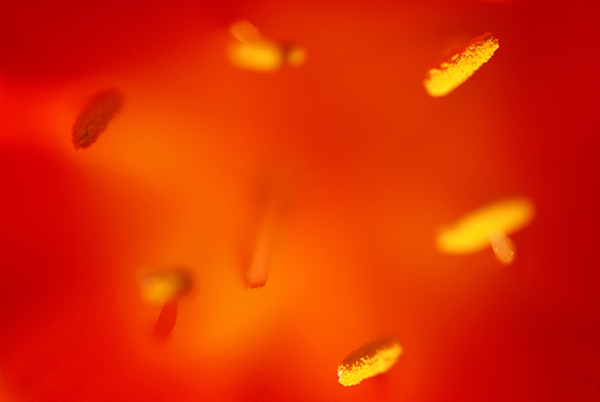
Close-up photos of flowers can make for interesting colours and shapes
There is something magical about seeing a subject up close and personal. This opens up a whole new world of options for you as a photographer. Close-up photography, or macro photography, can be a very rewarding form of photographic expression. The great thing about it is that you can do this from your basement at home, if necessary. Of course you can, and should, go outdoors too and setup shots in a forest or at the sea, but you can also setup shots of everyday subjects and shoot them up close.
Think of an old watch, a flower or even some food items that could be shot on your kitchen table. The shapes, textures and colours come to life in the world of macro photography, but it can be tricky and fidgety. Sometimes beginners are put off by this aspect and assume they need specialist skills to make close-up images. This is not necessarily true. Like any other aspect of photography, you need to understand how your camera works, and work within the limits of the equipment you have. Do you NEED to have a macro lens? In short, no. There are a few other cheaper options that you can experiment with before investing in a macro lens. Let’s take a look at how you can get going in close-up photography. This is really an introduction article, and I will be putting together some more detailed articles on the various aspects of macro photography, but first, let’s start with the basics.
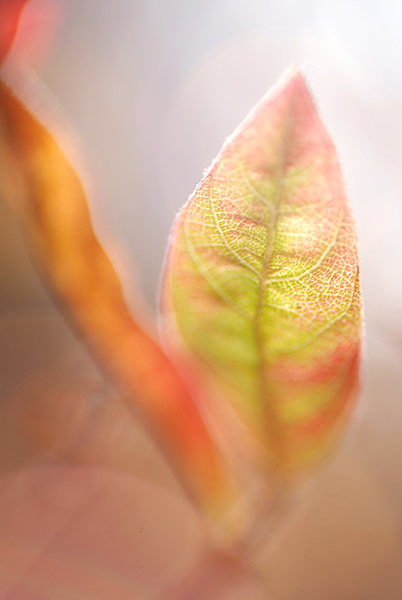
Sometimes overexposing or underexposing can add to the image
1. Get as close as you can
This sounds obvious, but try it. Set your camera up on a tripod, choose a subject (anything will do really) and get your camera up close to the subject. Switch your camera to Manual focus. You can try autofocus, but generally you will be able to focus a little closer on manual focus. If you are using manual focus, the tripod will be important. There is nothing worse than trying to get your subject in focus when you are off balance, or you keep moving, so use the tripod. Once you have your subject in clear focus, look at the composition, just as you would with any other image. Use the various composition guidelines to put your image together and take the shot.
This is just the beginning, you will find that you will make minor adjustments and shoot another shot and so on. I find that when I do close-up or macro photography I get lost in this small world of intimate details. When you look through the viewfinder, try and visualize it as a small world or a small landscape scene. Pretty soon you will find that you will be totally swept up in it and that is the fun part.
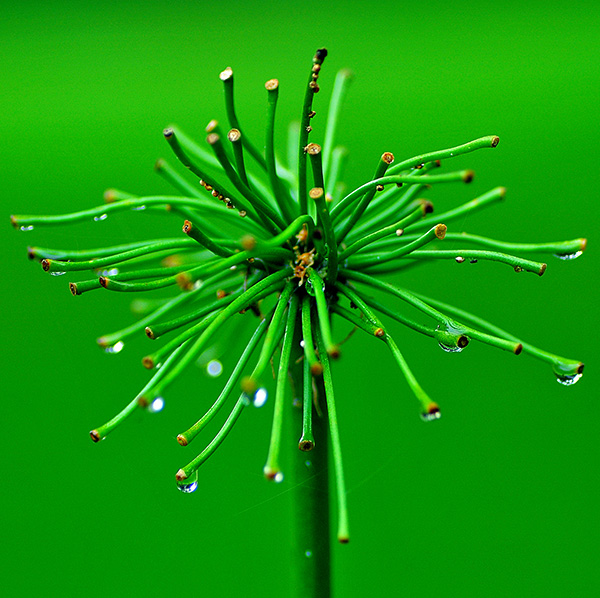
Getting in close will help to isolate the subject and throw the background out of focus
2. Do I need a macro lens?
To do some great close-up shots, you won’t need a macro lens. You can use almost any lens to make close-up images. Bear in mind that each lens has a minimum focusing distance. This can range from a few centimetres (1-3″) to half a meter (20″) depending on the lens. Telephoto lenses will have a longer minimum focusing distance, while medium range lenses (24-70mm) will have a closer focusing distance. The difference between macro lenses and non-macro lenses is that a macro lens has a much shorter focusing distance (30cm/1 foot or closer) in most cases.
Also, a macro lens has a magnification ratio of 1:1. What that means is that the lens can reproduce the subject onto the sensor at it’s actual life size. So if your subject is 20mm in size and it is captured as 20mm on the sensor, that means it has a 1 :1 ratio. Some lenses can only reproduce a 1:2, or 1:3, ratio which means that the subject will be half the size or less, on the sensor, relative to the size of the subject. I would suggest that you try close-up photography with the range of lenses you have. See which one works best. Prime lenses are usually a good place to start as they have great clarity and sharpness. I used my 50mm f/1.8 for a long time before I invested in a macro lens. Once you feel that you are limited by your lenses or that you think macro photography is a genre you want to expand on, only then consider buying a macro lens.
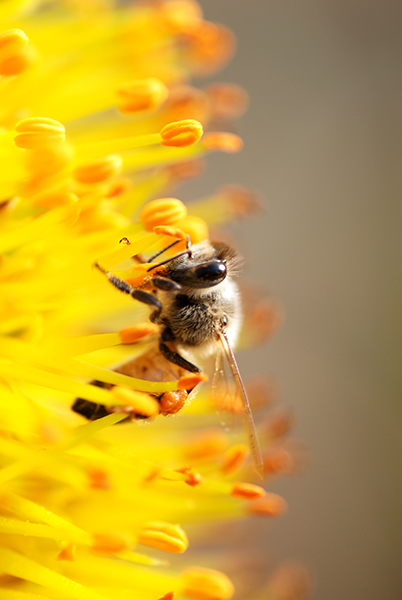
This image was shot with an old 70-300mm lens at f/4
3. What can I photograph?
The beauty of close-up photography is that – when one properly, a shot of a cup of coffee can be fascinating. Suddenly the pattern in the latte cream looks amazing, the bubbles and cup shape become very intriguing. We very rarely look at everyday subjects up close and when we do, they can be really interesting. The same is true for flowers, an aged piece of wood, electronic goods, even a knife and fork, just about anything can become a subject for macro photography.
Some of the more challenging subjects are those that move. Subjects like insects, flowers, leaves, grasses and any other subject that is outdoors. For these, you will need more patience and better timing. Photographing a close up of a flower on a windy day will be really tough. If you want to do macro photography outdoors, maybe start off doing it on a windless day or in a sheltered area. Alternatively, you could go and buy some cut flowers and set them up in a vase, setup the shot and take a few images. The controlled environment of the flowers in a vase will make things much easier. Insects are even more challenging. They sit still for very short periods and move very quickly.
The name of the game to get good insect macro shots, is to be patient. To get some honeybee images in the past, I have set up my camera on a flower and attached my cable release. I then manually focused the lens to the flower and simply waited until a bee or another insect was in the right place and snapped off a few shots. Generally one in ten shots were usable and I was pretty happy with that, but they take time and patience.
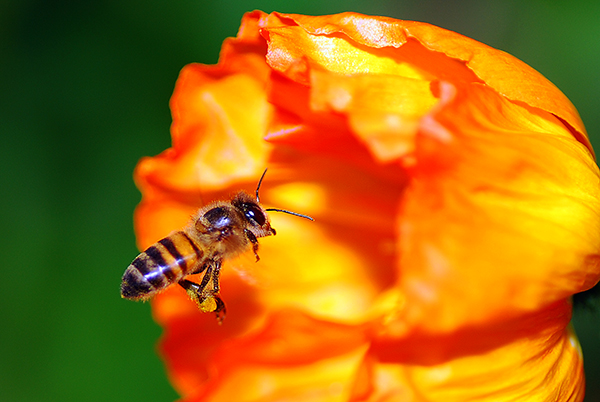
Be patient and setup your shot beforehand when photographing insects
4. Where to from here?
I found that I really enjoyed close-up photography. Once I got into it, I spent many hours trying to get some unusual images of flowers or insects. You may find this too. Get your tripod, cable release, choice of lens and set up a scene either indoors or outdoors. Get in a close as you can and start working with the scene. Change your depth of field until you are happy with what is in focus and what is out of focus. If you are using a macro lens, be careful about shooting with a very shallow depth of field. F/2.8 will mean that a VERY thin sliver of your scene is in focus, and that can be difficult to work with at first. Start at f/8 and work from there.
Experiment with different exposures, sometimes a slightly overexposed macro scene can look good, so play around with that. Above all, have some fun. Use it as an exercise in learning more about photography, and try and get some dynamic images too! In a future article, I will go into more details about settings and exposure modes. In the mean time, start shooting some close up images and let’s see how things look.
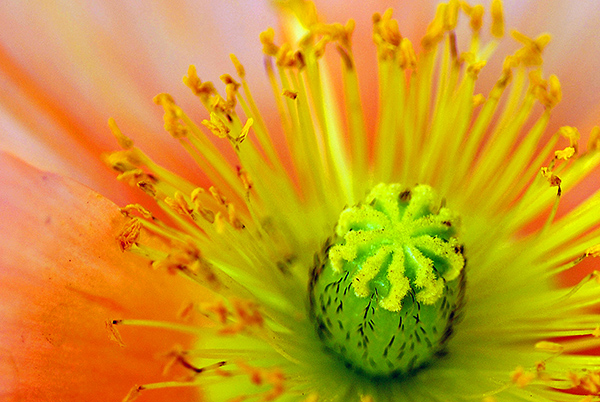
A close-up of a poppy flower, the details are what is mesmerising!
For more information on macro or close-up photography check out these dPS article:
- Equipment for Macro Photography – Video Tips
- 6 Tips for Near-Macro Photography with a Telephoto Lens
- How to Focus-Stack Macro Images using Photoshop
- The Wonderful World of Macro Lenses: Close-Up Photography Lesson #4
- Reverse Lens Macro: Close Up Photography Lesson #3
- Extension Tubes: Close Up Photography Lesson #2
- Getting Up Close with Close-Up Lenses
The post Getting Started Guide to Macro or Close-Up Photography by Barry J Brady appeared first on Digital Photography School.
-
Equipment for Macro Photography – Video Tips
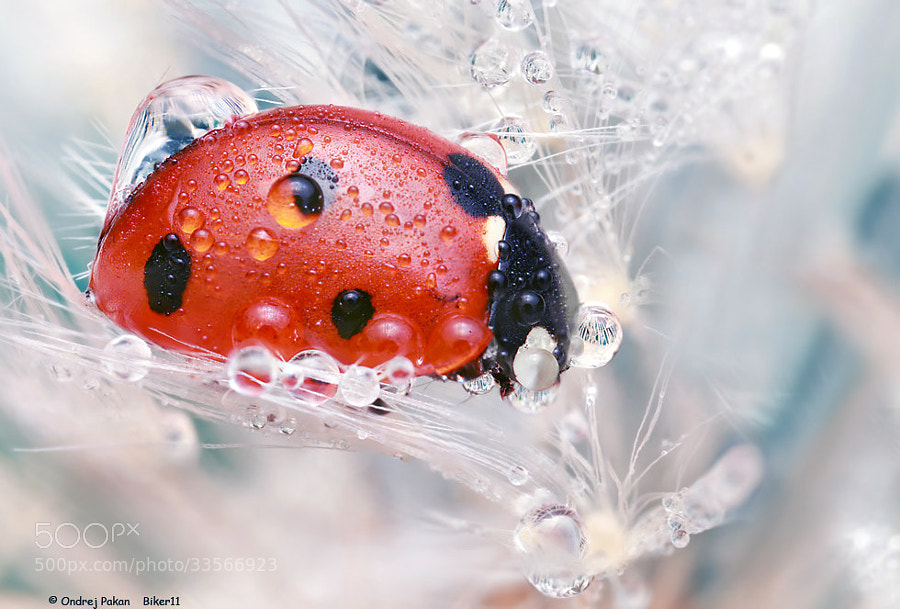
Dreaming by Ondrej Pakan on 500px
Macro photography has become really popular lately and there are many tutorials available on how to do it, including these on dPS:
- How to Focus-Stack Macro Images using Photoshop
- 6 Tips for Near-Macro Photography with a Telephoto Lens
- The Wonderful World of Macro Lenses: Close-Up Photography Lesson #4
But let’s talk a little about the gear needed to do macro photography. Here’s a couple video that walk through some of the options to help you get started. In this video from Tamron see: How-To Macro Photography: Equipment, Lighting Tips and More
In this second video by Anthony Morganti you can learn: What You Need To Get Started In Macro Photography
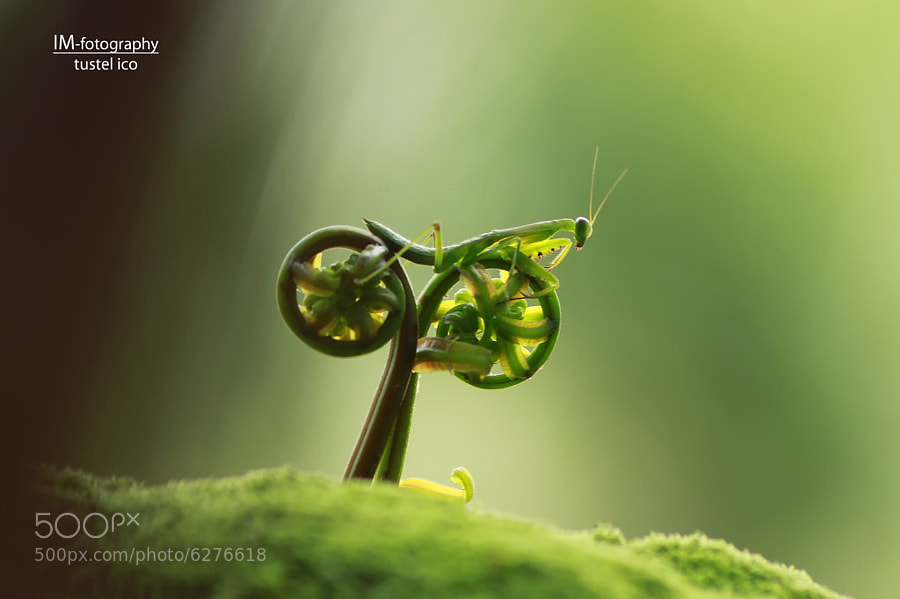
rate my bike by tustel ico on 500px

By Jagadeesh SJ

By Alexey Kljatov

By Julien REBOULET
The post Equipment for Macro Photography – Video Tips by Darlene Hildebrandt appeared first on Digital Photography School.
-
Little beauty: Nordin Seruyan’s macro images

Indonesia-based photographer Nordin Seruyan’s vibrant macro images capture Southeast Asia’s insects in great detail. From praying mantises to spiders to dragonflies, Seruyan’s playful photographs capture common creatures in an uncommonly attractive way. See gallery
-
Sigma 18-200mm F3.5-6.3 DC Macro OS HSM | C samples gallery

Sigma’s 18-200mm F3.5-6.3 DC Macro OS HSM | C is the latest version of its popular stabilized superzoom lens for APS-C / DX format SLRs. It’s smaller and lighter than the previous model (the 18-200mm F3.5-6.3 II DC OS HSM from 2011), but offers an updated optical design with improved close-focusing abilities. Sigma shipped us a sample a few days ago so we could try it out and we’ve been running around (in typically unpredictable Seattle weather) getting some real-world samples. Click through to see the shots.
-
Canon announces entry-level Rebel T5 (EOS 1200D) and macro ring light

There’s a new entry-level camera in Canon’s DSLRs lineup, and it’s the Rebel T5 (EOS 1200D). This model replaces the Rebel T3 (EOS 1100D) and features the company’s familiar 18 megapixel CMOS sensor, DIGIC 4 processor, and 9-point AF system. The T5 also has a 3″ LCD, 3 fps continuous shooting, and 1080p video recording. Canon also announced the MR-14EX II Macro Ring Light, which can be controlled wirelessly using the radio-based ‘RT’ system. Both the camera and ring light are priced at $ 549, with the former including an 18-55mm lens.
-
Zeiss announces Touit 50mm F2.8 Macro for Sony and Fujifilm mirrorless

Zeiss has announced an addition to its Touit family of lenses, in the shape of a 50mm F2.8 Macro. The Touit 2.8/50M is designed for mirrorless cameras with APS-C sensors, and will come in Sony E and Fujifilm X mounts. With an angle of view equivalent to 75mm on full frame, it offers 1:1 magnification for close-up shooting. Like the other Touit lenses it includes autofocus, but no image stabilisation. It will go on sale in March 2014 with a recommended price of EUR 755 (excl. VAT.) or US$ 999 (excl. VAT).
-
Reverse Lens Macro: How to use it as a Great Learning Tool

Reverse Lens Macro: How to Use It as a Great Learning Tool
Yesterday one of my friends called me late and told me that he was going to buy a DSLR and asked me which one he should choose. As a friend, I knew that this was his first camera and he was in fact a complete stranger to the field of photography. I told him to buy a good compact camera in order to get used to the basic concepts of photography and to buy a DSLR only when he feels his equipment is limiting his creativity.
On the other hand are the people how have already bought an SLR, but get confused and overwhelmed by the level of control these cameras offer, and the sheer amount of effort they have to put in to make their photographs look beautiful. I write this article for those people who bought a DSLR, and are in distress seeing none of their photos looking as good as someone else’s.
Considering that you have bought a DLSR and are delving into some advanced levels of photography, let’s see how an interesting and fun technique known as reverse lens macro can teach you a great deal about your camera, light and in effect make the art of photography.
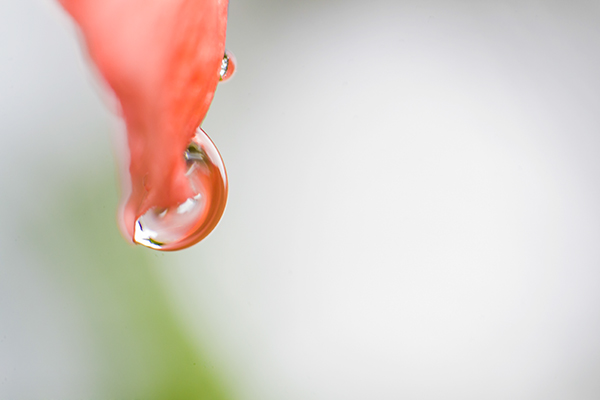
The basic trio of photography
Before understanding reverse lens macro let’s take a look the basic trio that every photographer needs to know to take a well exposed shot:
- Shutter speed
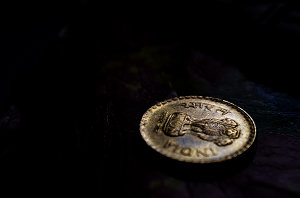
- Aperture
- ISO
Shutter speed is in essence the duration for which light falls on the camera’s sensor, shown in most cameras as 1/250th or 1/30, lower the denominator, the longer the duration.
Aperture is the opening in the lens which controls the amount of light entering your camera and the area in your image which is in sharp focus (aka depth-of-field) usually shown as f/5.6 or f/7.1. The lower the number, the more light getting to the sensor, and smaller the area in focus.
ISO determines just how sensitive your camera’s sensor is to the light falling on it. ISO usually ranges from 50 to above 100,000 in number. Large numbers represent high sensitivity.
Macro and reverse lens macro
Macro photography is a beautiful way to capture subjects as it gives you a very different and up-close perspective of photography. What macro photography does is to help us see the small world around us in a big picture. What your lens in its normal state does is to make the big world around you small, so just think what it will do when used reverse mounted? Yes, make the small world even BIGGER. But the fact is that dedicated macro lenses cost a fortune which puts it out of the reach of many of us. Reverse lens macro technique allows you to get really close without having to lighten your wallet on expensive lenses.
To take reverse lens macro shots, you have to reverse mount your kit lens (as depicted in the picture below).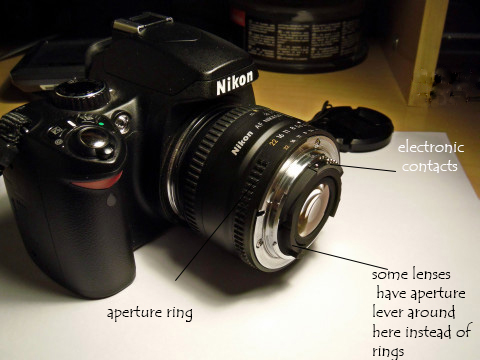
HOW DOES REVERSE MACRO TEACHES YOU ABOUT THE ART OF PHOTOGRAPHY?
Everything is a double-headed sword. So is reverse macro, though it allows us to get really close to your subject it also means you have less light at your disposal, a very tight frame, and a very narrow area which is in sharp focus (depth-of-field). Less light means you will have to adjust shutter speed, aperture and ISO to get good exposure and nice depth of field.
But the best part lies ahead, when you reverse mount your lens, the camera loses all the electronic means to communicate with the lens, so you will have to move your camera back and forth to get your focus right and you have to use the small lever on the back (now front) of the lens for controlling the aperture. An interesting point to be noted is that the actual focal length (55mm gets you closest to the subject for 18-55mm lens) of a lens in normal operation is also reversed, meaning that you can get closest to your subject when the lens is at its widest (18mm for the same lens). Now when you look through the viewfinder you will see the magic unfolding right in front of your eyes!


Suddenly your viewfinder becomes a visual textbook through which you will see all the subtle changes that aperture, shutter speed and ISO makes on your image and how subtle changes to these can bring amazing clarity and depth to your images. At first this may seem a difficult task because of the extreme stillness needed to take them successfully and clearly, but “practice makes perfect”, doesn’t it?
The interesting part being that you can apply the information you learn, when you use your camera normally. Obviously this can also be learned with time and effort but rest assured many get bored or disheartened because their photos are not looking good before they understand how to use the camera. Reverse macro, as mentioned earlier, magnifies the world beyond what our eye can see. It is because of this magnification that the effect the changes you make to (shutter speed, aperture, ISO) have on our image becomes more apparent than in “normal” use. When doing reverse macro I recommend not using a tripod because that way you will also learn to keep your hands steady (a boon when shooting in dim light).

So because you get to see the magic of light unfold right in front of your eyes it registers quickly, and with practice becomes rather instinctive. This will startlingly improve the way you approach photography and ultimately your photos.
As Ansel Adams, a master of photography said “A Good photograph is knowing where to stand”. Understand where you stand now (as a photographer) and where you have to be standing to take photographs that exude beauty and share the emotion of the frame with the viewers.
Happy clicking!
The post Reverse Lens Macro: How to use it as a Great Learning Tool by Sharath Prakash appeared first on Digital Photography School.
- Shutter speed
-
Sigma releases updated 18-200mm F3.5-6.3 DC Macro OS HSM superzoom

CES 2014: Sigma has announced the 18-200mm F3.5-6.3 DC Macro OS HSM | C, a superzoom lens for APS-C / DX format SLRs. With a 28-300mm equivalent zoom range, it’s smaller and lighter than its predecessor, and has a shorter minimum focus distance. It will be available in Canon, Nikon, Pentax, Sigma, and Sony mounts; as usual the Pentax and Sony versions won’t have optical stabilisation. Availability is still to be confirmed but Sigma USA has set a recommended price of $ 399.