RSS
 

Posts Tagged ‘LUMIX’

New test scene beta begins with Panasonic Lumix DMC-GX7 samples

15 Aug

Screen_Shot_2013-08-14_at_12.13.57_PM.png

We’ve been working on a brand-new studio comparison scene for some time, and we’ve decided to give you a sneak peak, using images from the new Panasonic Lumix DMC-GX7. We’ll be speaking more about this new scene (and the new interface that goes with it) very soon, but for now we wanted to let you have a look, try it, play around and tell us what you think. As well as the new scene, you’ll notice two new options – ‘daylight’ and ‘low light’ simulation modes and the option to ‘normalize’ resolution to simulate print and web output, as well as 100%. Click through for a link. 

News: Digital Photography Review (dpreview.com)

 
Comments Off on New test scene beta begins with Panasonic Lumix DMC-GX7 samples

Posted in Uncategorized


Panasonic Lumix DMC-GX7 Real-world Samples

14 Aug

Screen_Shot_2013-08-14_at_9.23.21_AM.png

We’ve just published a gallery of real-world samples shot using the Panasonic Lumix DMC-GX7. The GX7 is Panasonic’s latest Micro Four Thirds interchangeable lens camera, and one of the company’s most interesting models yet. It features a new 16MP sensor, tiltable EVF and LCD, and offers several enthusiast-friendly features including highlight and shadow tone adjustment, an electronic (entirely silent) shutter and in-body image stabilization – a first for Panasonic. Click through for a link to our gallery of real-world shots. 

News: Digital Photography Review (dpreview.com)

 
Comments Off on Panasonic Lumix DMC-GX7 Real-world Samples

Posted in Uncategorized


Panasonic Lumix DMC-FZ70 Sample Images

13 Aug

Screen_Shot_2013-08-12_at_5.07.02_PM.png

We’ve just posted a 39-image gallery of real-world samples shot on the Panasonic Lumix DMC-FZ70 zoom compact. Spanning the equivalent of 20-1200mm the FZ70’s lens is the largest zoom available in a consumer compact, and we’ve spent a few days testing it out in a variety of situations, to see what this new superzoom can do. Click through for a link to our gallery of real-world samples. 

News: Digital Photography Review (dpreview.com)

 
Comments Off on Panasonic Lumix DMC-FZ70 Sample Images

Posted in Uncategorized


Panasonic Lumix DMC-G6 Review

02 Aug

Panasonic Lumix DMC-G6 Review.jpg

If it looks like a DSLR, feels like a DSLR, works like a DSLR and takes pictures like a DSLR, it probably is a DSLR. Izznit?

Nup. This ‘un is a MILC — mirrorless interchangeable lens camera … one of the many models now proliferating on the market like rabbits.

In reality, the major difference between this MILC and true blood DSLRs is that, with the former, the top Live viewfinder presents an electronic view of the shot you’re about to fire, while the DSLR delivers an optical view, thanks to a prism and a series of mirrors …just like the ole time film cameras used to do!

True, the electronic view is not as razor sharp as the optical, it does look a bit ‘electronic’ and very alike to the view delivered on the rear LCD screen, but when you’re outdoors, as many of you know, the rear screen can be washed out in bright light, so Live View to the rescue.
Panasonic Lumix DMC-G6 back.jpg

Panasonic Lumix DMC-G6 Review Top.jpg

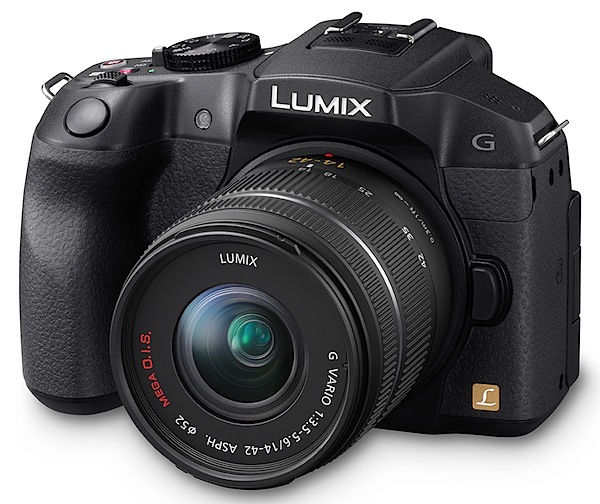
The review camera was furnished with a Panasonic-made G Vario lens of f3.5/14-42mm specs.

The G6 is a welcome addition to the lineup. In stills, it can pull a maximum image size of 4608×3456 pixels, leading to a 39x29xcm print.

In video capture, it can shoot AVCHD or MPEG4 formats at Full HD 1920×1080 pixel resolution using a Class 4 card or better. And you can shoot stills while recording video. Auto focus tracking locks on the subject and maintains focus even as it moves.

Panasonic Lumix DMC-G6 Handling

It sure feels like a DSLR! And it is a comfy feel in the hand, mostly thanks to the pronounced speed grip and overall good balance.

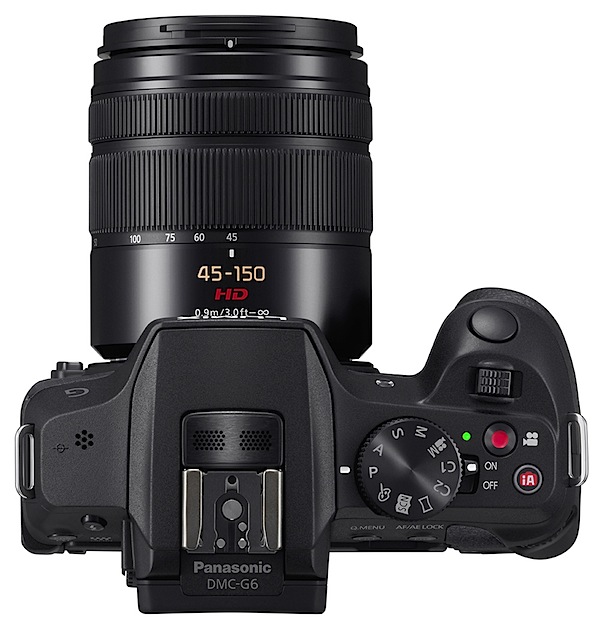
Top deck controls: there’s a hot shoe on top centre to accept an auxiliary flash (in addition to the lower powered internal flash beneath the hot shoe).
Creative Guides.JPG

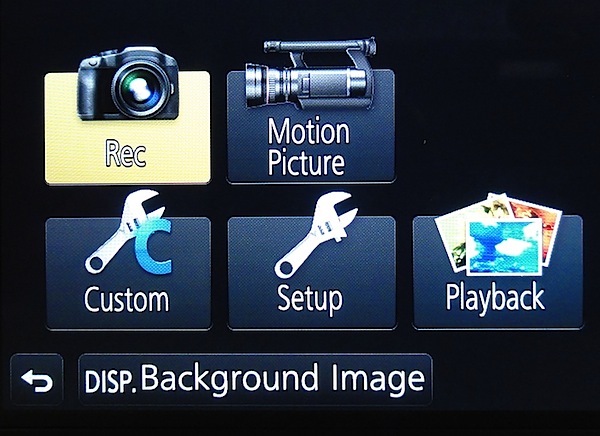
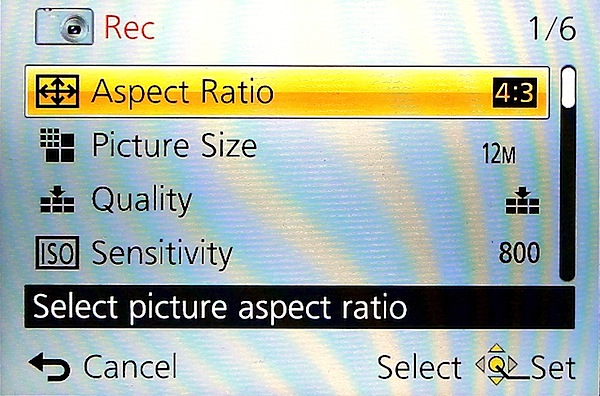
Panasonic Lumix DMC-G6 Menu 1

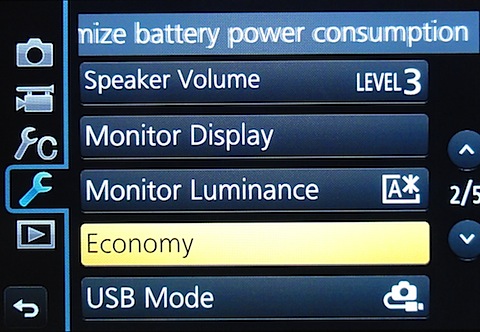
Panasonic Lumix DMC-G6 Menu 2

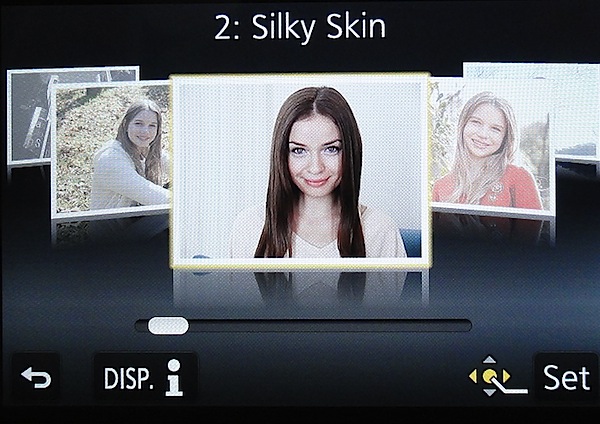
Farther right is the mode dial with positions for PASM, creative video, two custom modes, panorama, a scene guide and a creative control mode. The scene guide offers 23 sample pictures shot by pro photographers which you can use as a helper in making your own shots …like silky skin, glistening water etc. The creative control mode has 19 filters (old days, sunshine, retro, etc. The effect parameter of each mode is adjustable.

And, for what it’s worth, the camera can only shoot panos while held in an horizontal attitude, unlike the methods that some other cameras can deliver.

If you want to shoot in auto mode you move your finger farther right and tap a tiny red button marked ‘iA’. The power lever is set into the side of the mode dial. Close by is the familiar video record button, hemmed in by the mode dial, power lever and intelligent auto button …it is not the most ideal position for this button and takes quite a bit of precise pressure to operate.

Forward on the top deck is a control I had not seen before: a lever that could be used in either of two ways: it could drive any exposure compensation you desire by +/- five f stops; or with specific power-driven lenses, it can operate the zoom. Additionally, just to the rear and over the corner edge of the camera is a control dial which adjusts aperture or shutter while in those modes.

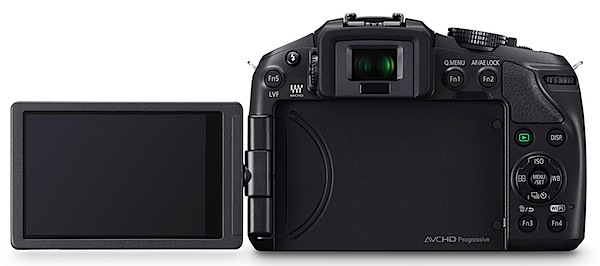
Rear: the 7.6cm LCD touch screen is a vari-angle screen that can be rotated 180 degrees laterally and 225 degrees vertically. At the extreme left is the internal flash release and a function button that switches between top and rear finder; to the right are two more function buttons. Flanking the screen are the replay button, another for display options plus two more function buttons. The jog dial has positions for menu; ISO setting; direct setting of options for AWB, colour balance etc; continuous shooting and self timer; AF options.

A 3.5mm terminal is set into the camera’s right side to accept an external microphone.

Overall, not a fully packed brigade of external controls. The viewfinder menu is not overly complex.


Narrabeen lake 2.JPG

Seats 2.JPG

Trees 2.JPG

Panasonic Lumix DMC-G6 Features

A Wi-Fi connection allows users to connect the G6 to their smart phone or tablet at a touch, while still and movie shooting can be driven remotely from the smart phone screen.


Roof original.JPG

Roof retouched.JPG

And a couple of unusual features: time lapse and stop motion video shooting; a novel Clear Retouch function lets you edit out unwanted parts of a picture after shooting by simply tracing over them on the monitor with a fingertip; I tried this and it works (above)! But only with large areas of unwanted image data: don’t think you can remove wicked Uncle Ted from a family group shot!

Panasonic Lumix DMC-G6 ISO Tests

Panasonic Lumix DMC-G6 ISO 160.JPG

Panasonic Lumix DMC-G6 ISO 400.JPG

Panasonic Lumix DMC-G6 ISO 800.JPG

Panasonic Lumix DMC-G6 ISO 1600.JPG

Panasonic Lumix DMC-G6 ISO 3200.JPG

Panasonic Lumix DMC-G6 ISO 6400.JPG

Panasonic Lumix DMC-G6 ISO 12800.JPG

Panasonic Lumix DMC-G6 ISO 25600.JPG
It’s only at ISO 6400 that the image begins to degrade. Much the same at ISO 12800.

By ISO 25600 the show’s over: much noise, artefacts and a washed out image.

Panasonic Lumix DMC-G6 Review Verdict

Quality: above average.
Why buy the Panasonic Lumix DMC-G6: looks and works like a DSLR.
Why not: a bit complex for the raw amateur.

If you get the feeling that this camera attempts to bridge the needs of the enthusiast and the dabbler, you’re right. Just check out the creative and scene guides.

However, I would not be unhappy to use it on an advanced shoot!

Panasonic Lumix DMC-G6 Specifications

Image Sensor: 16.1 million effective pixels.
Metering: Multiple, centre-weighted and spot.
Effective Sensor Size: Four thirds 17.3×13.0mm CMOS.
Lens Factor: 2x.
Compatible lenses: Micro Four Thirds.
Exposure Modes: Auto, Program AE, shutter and aperture priority, manual.
Shutter Speed: 60 to 1/4000 second; flash sync 1/160 sec.
Burst Speed: 7 fps.
Memory: SD/SDHC/SDXC cards.
Image Sizes (pixels): 4608×3456 to 1712×1712. Movies: 1920×1080, 1280x720p, 640×480.
Viewfinders: Turret finder: 1,440,000 pixels. 7.6cm LCD screen (1,040,000 pixels).
File Formats: JPEG, RAW, JPEG+RAW, AVCHD/MPEG4, MPO (3D).
Colour Space: Adobe RGB, sRGB.
ISO Sensitivity: Auto, 160 to 12800 (25,600 with boost).
Interface: USB 2.0, AV, HDMI mini, WiFi, DC input.
Power: Rechargeable lithium ion battery, AC adaptor.
Dimensions: 122x85x71 WHDmm.
Weight: Approx. 390 (inc battery).
Price: Get a price on the Panasonic Lumix G Series DMC-G6 with 14-42mm II Lens Kit or body only.

Post originally from: Digital Photography Tips.

Check out our more Photography Tips at Photography Tips for Beginners, Portrait Photography Tips and Wedding Photography Tips.

Panasonic Lumix DMC-G6 Review


Digital Photography School

 
Comments Off on Panasonic Lumix DMC-G6 Review

Posted in Photography


Panasonic reveals Lumix DMC-GX7 enthusiast mirrorless camera

01 Aug

GX7s_front.png

Panasonic has announced the Lumix DMC-GX7 – the follow-up to the DMC-GX1 – which is its first mirrorless interchangeable lens camera to include in-body image stabilization. This 16MP, rangefinder-style camera also includes a high-resolution, widescreen EVF that can be tilted upwards 90 degrees. Panasonic claims that their newly designed Live MOS sensor improves both detail and color saturation by 10%. Other features of note include a tilting LCD, a ‘silent shooting’ mode, focus peaking, 1080/60p videos, and Wi-Fi with NFC capability. 

News: Digital Photography Review (dpreview.com)

 
Comments Off on Panasonic reveals Lumix DMC-GX7 enthusiast mirrorless camera

Posted in Uncategorized


Panasonic Lumix DMC-GX7 First Impressions Review

01 Aug

previewstory.jpg

Prior to its announcement today, we had the opportunity to use Panasonic’s new high-end Lumix DMC-GX7 mirrorless interchangeable lens camera. As well as a redesigned 16MP Live MOS sensor, the GX7 features a tilting camcorder-style EVF, a tiltable rear LCD screen and a silent mode designed to capture full-resolution still images without the mechanical shutter. Click through for our hands-on first impressions review. 

News: Digital Photography Review (dpreview.com)

 
Comments Off on Panasonic Lumix DMC-GX7 First Impressions Review

Posted in Uncategorized


Panasonic Lumix DMC-LF1 Review

18 Jul

Panasonic Lumix DMC-LF1 Review.jpg

Over the years I’ve owned a number of digicams just like this one and each has been damned useful. Pop in the pocket. Pull it out. Shoot. And enjoy.

However, in the last 2-3 years they have become really fearsome beasts with tech specs that ring with power.

Not only can these more recent arrivals shoot big, big stills but some have enormous zoom ranges and all can shoot Full HD video.

So who needs a DSLR or a MILC?

This little number from Panasonic is a good example of shooting power but with a certain finesse.
Panasonic Lumix DMC-LF1 BACK.jpg

Panasonic Lumix DMC-LF1 TOP.jpg

Panasonic Lumix DMC-LF1 Features

The lens in particular screams quality: an f2 Leica DC Vario-Summicron 7.1x zoom that equates to a 35 SLR optic of 28-200mm range. The only downer is that you cannot enjoy the full f2 all the way through the zoom range; it soon shrinks to f5.9. But it does mean you can enjoy limited focus effects at the f2 aperture.

Bokeh.JPG

This shot was made at full wide on the zoom and at f2. Notice the limited depth of field.

However, it would be easy to miss the standout feature of this diminutive picture maker: beside the large 7.6cm LCD screen at the camera’s rear, there is also an electronic screen tucked away on the camera’s left top corner (as viewed from the rear). This will win many hearts!

The LF1 offers Wi-Fi connectivity so that users can connect the camera to their smart phone or tablet with one touch to share an image. You can also use a smart phone or tablet as a remote shutter with a monitor.

The CMOS captures a maximum image size of 4000×3000 pixels, enough to make a 34x25cm print.

Video can be shot in either AVCHD or MEG4 formats at Full HD 1920×1080 pixel quality. You can shoot stills mid video recording at a reduced size. If you shoot in AVCHD the maximum recording time is 29 minutes and 59 seconds.
Menu.jpg

Scene modes.jpg

Creative Control.jpg

The control layout is very straightforward:

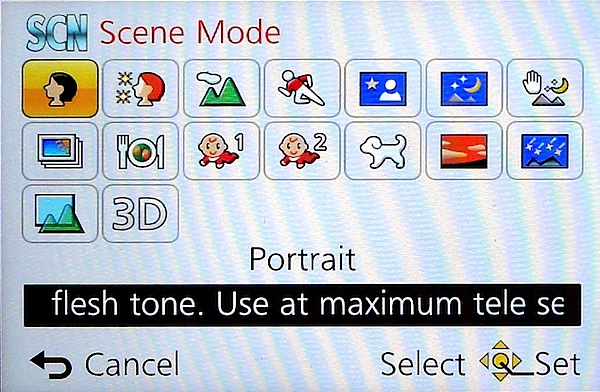
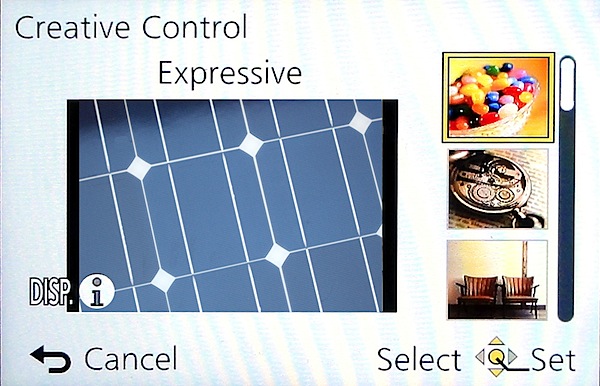
Top deck has the viewfinder mentioned earlier, with dioptric adjustment; then there’s the mode dial with positions for intelligent auto, PASM, two custom modes, panorama shooting, scene modes (16 in all) and creative control with 11 settings, including retro, old days, high and low key etc.

Pano 6.JPG

Panoramas can be shot laterally and vertically left to right, right to left, up or down and stitched in-camera. With the creative panorama function you can apply filter effects of retro, expressive, high or low key etc. The camera does not shoot horizontally panned panos with the camera held vertically, unlike some other cameras … notably Sony’s.

Next to the mode dial is the shutter button set within the lever for zooming; the power switch is at the extreme right end.

Rear: at the extreme left is the button to switch from rear screen to turret viewfinder; next is the WiFi button.

Beneath it is the video record button, shielded from accidental triggering by a protective slice of leatherette; adjacent is the Function and replay buttons.

Lower is the four way control dial with positions for macro shooting, exposure compensation, flash options and continuous/self timer. The menu button is central.

Lower still is a button for display options and one for trash.

Overall, a good layout but one that is badly let down by all the identifying text being too small, printed in off-white and almost impossible to read in dim light. Why not white text?

Composition Guide.jpg

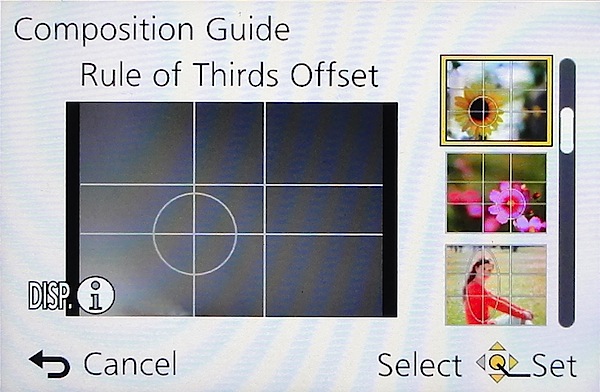
Tap the Function button and you gain access to a rather novel aid: a Composition Guide that makes it easy to shoot a photo with good composition, by choosing from a range of on screen examples: Rule of Thirds Offset, Diagonal Lines, Tunnel etc. A big help for those beset with poor visual acumen. It’s unlikely to prevent cut off heads or feet … but at least your shots will be visually balanced!

Distortion

No distortion evident at either the wide or tele ends of the zoom.

Start Up

In two seconds from startup you can shoot the first shot; follow-ons nearly as fast as you can hit the button.

Panasonic Lumix DMC-LF1 ISO Tests

Panasonic Lumix DMC-LF1 ISO 80.JPG

Panasonic Lumix DMC-LF1 ISO 400.JPG

Panasonic Lumix DMC-LF1 ISO 800.JPG

Panasonic Lumix DMC-LF1 ISO 1600.JPG

Panasonic Lumix DMC-LF1 ISO 3200.JPG

Panasonic Lumix DMC-LF1 ISO 6400.JPG

Panasonic Lumix DMC-LF1 ISO 12800.JPG

Only at ISO 3200 did noise become apparent. At ISO 6400 overall quality declined while noise increased and odd artefacts appeared. Useable? Maybe.

At ISO 12800 the shot was unusable.
Marina.JPG

(insert Marina)

Panasonic Lumix DMC-LF1 Review Verdict

Quality: average.
Why you’d buy it: small, sufficient zoom range for most purposes; shoot RAW files.
Why you wouldn’t: LCD screen is not vari-angle.

A great little number for easy, high quality photography. Available in silver or black.

Panasonic Lumix DMC-LF1 Specifications

Image Sensor: 12.1 million effective pixels.
Metering: Multi zone, centre-weighted, spot.
Lens: Leica DC Vario-Summicron f2.0-5.9/6.0-42.8mm (28-200mm as 35 SLR equivalent).
Exposure Modes: Auto, Program AE, shutter and aperture priority, manual.
Sensor Size: 15mm CMOS.
Shutter Speed (stills): 60 to 1/4000 second.
Continuous Shooting: 10 fps.
Memory: SD/SDHC/SDXC plus 87MB internal memory.
Image Sizes (pixels): Stills: 4000×3000 to 640×360.
Movies: 1920×1080, 1280×720, 1440×1080 and 640×480.
Viewfinder: 7.6cm LCD screen (920,000 pixels).
File Formats: JPEG, RAW, JPEG+RAW, MPO (3D), AVCHD, MPEG4.
Colour Space: sRGB, Adobe RGB.
ISO Sensitivity: Auto, 80 to 12800 (with boost).
Interface: USB 2.0, HDMI mini, WiFi.
Power: Rechargeable lithium ion battery, DC input.
Dimensions: 103x62x28 WHDmm.
Weight: 192 g (inc battery).
Price: Get a price on the Panasonic Lumix DMC-LF1 12 MP Digital Camera (White) or Panasonic Lumix DMC-LF (Black).

Post originally from: Digital Photography Tips.

Check out our more Photography Tips at Photography Tips for Beginners, Portrait Photography Tips and Wedding Photography Tips.

Panasonic Lumix DMC-LF1 Review


Digital Photography School

 
Comments Off on Panasonic Lumix DMC-LF1 Review

Posted in Photography


Panasonic launches Lumix DMC-XS3 slimline zoom compact

18 Jul

XS3_news.png

Panasonic has announced the Lumix DMC-XS3, a budget zoom compact camera that’s just 14mm thick. It sports an optically-stabilised wideangle 5x zoom lens (24-120mm equivalent), a 14.1MP 1/2.3″ High Sensitivity MOS sensor, and can record Full HD video in MP4 format. It includes a range of Creative Filters which can be applied either during or after shooting, and can also be used when shooting panoramas. The XS3 appears to be a Europe-only release, and will be available in September at a price of £119.

News: Digital Photography Review (dpreview.com)

 
Comments Off on Panasonic launches Lumix DMC-XS3 slimline zoom compact

Posted in Uncategorized


Panasonic announces Lumix DMC-FZ70 with 60x optical zoom

18 Jul

FZ70_front.png

Panasonic has announced the Lumix DMC-FZ70, a 16MP compact superzoom with a 60x optical zoom that more than doubles the zoom reach of its 24x FZ60 predecessor. Spanning the equivalent of 20-1200mm, the FZ70’s zoom lens has a maximum aperture range of F2.8-5.9 and is claimed to be both the longest and widest in its class. The FZ70 effectively replaces the FZ60, but the constant-F2.8 Lumix DMC-FZ200 remains in the lineup.

News: Digital Photography Review (dpreview.com)

 
Comments Off on Panasonic announces Lumix DMC-FZ70 with 60x optical zoom

Posted in Uncategorized


Just Posted: Panasonic Lumix DMC-TS5 Review

13 Jul

thisisart.jpg

We’ve just posted our review of the Panasonic Lumix DMX-TS5/FT5. In the latest of our series of reviews of this year’s crop of waterproof tough compacts we’ve put the TS5 through our usual studio and real-world tests to get a feel for how well it performs. On paper, the 16MP TS5 is one of the best specified cameras of its type, offering built-in GPS, Wi-Fi and NFC (near field communication) inside a tough body and Leica-branded lens. Does it live up to expectations? Read our review to find out.

News: Digital Photography Review (dpreview.com)

 
Comments Off on Just Posted: Panasonic Lumix DMC-TS5 Review

Posted in Uncategorized